Checklist
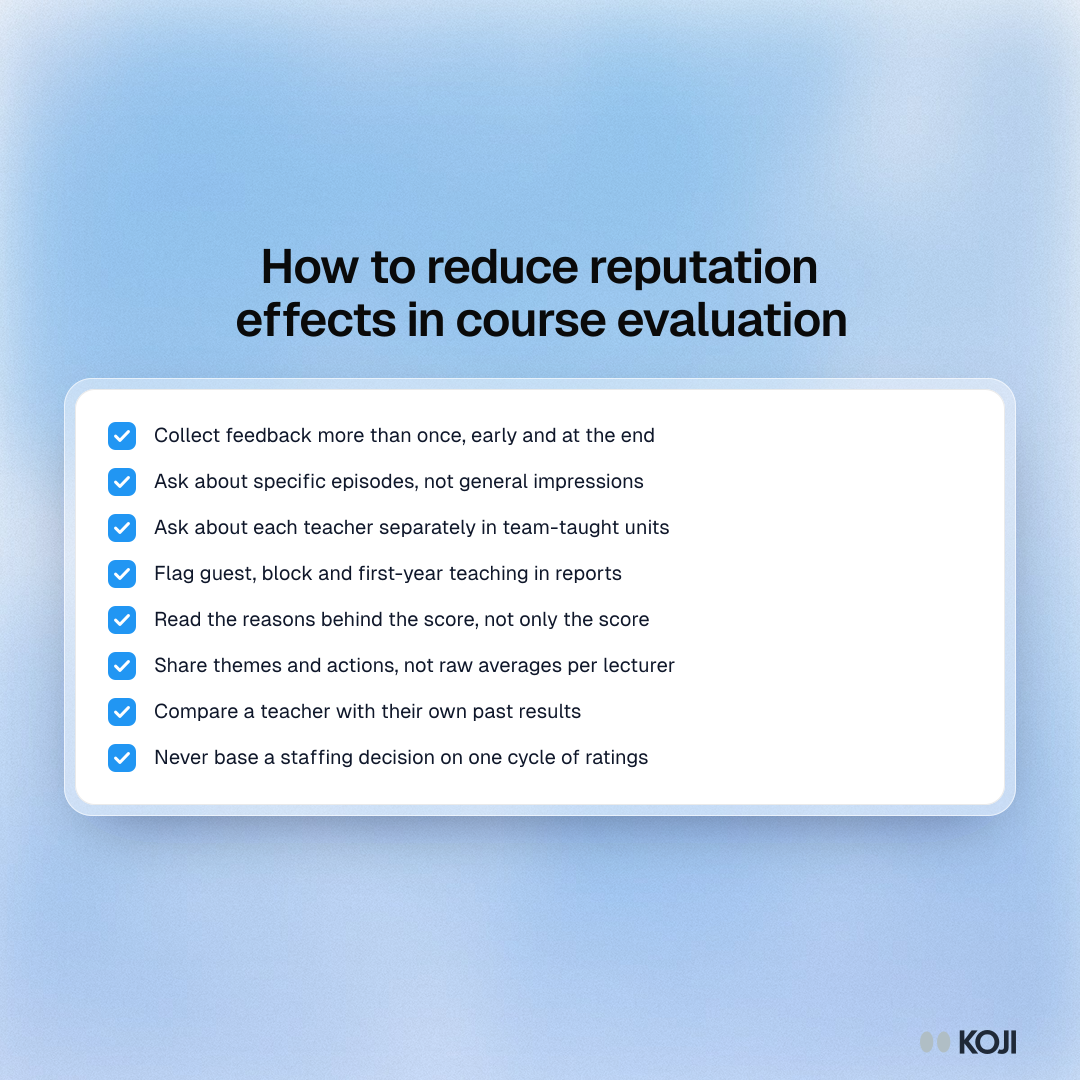
How to reduce reputation effects in course evaluation
Eight checks for when ratings feed decisions about individual staff
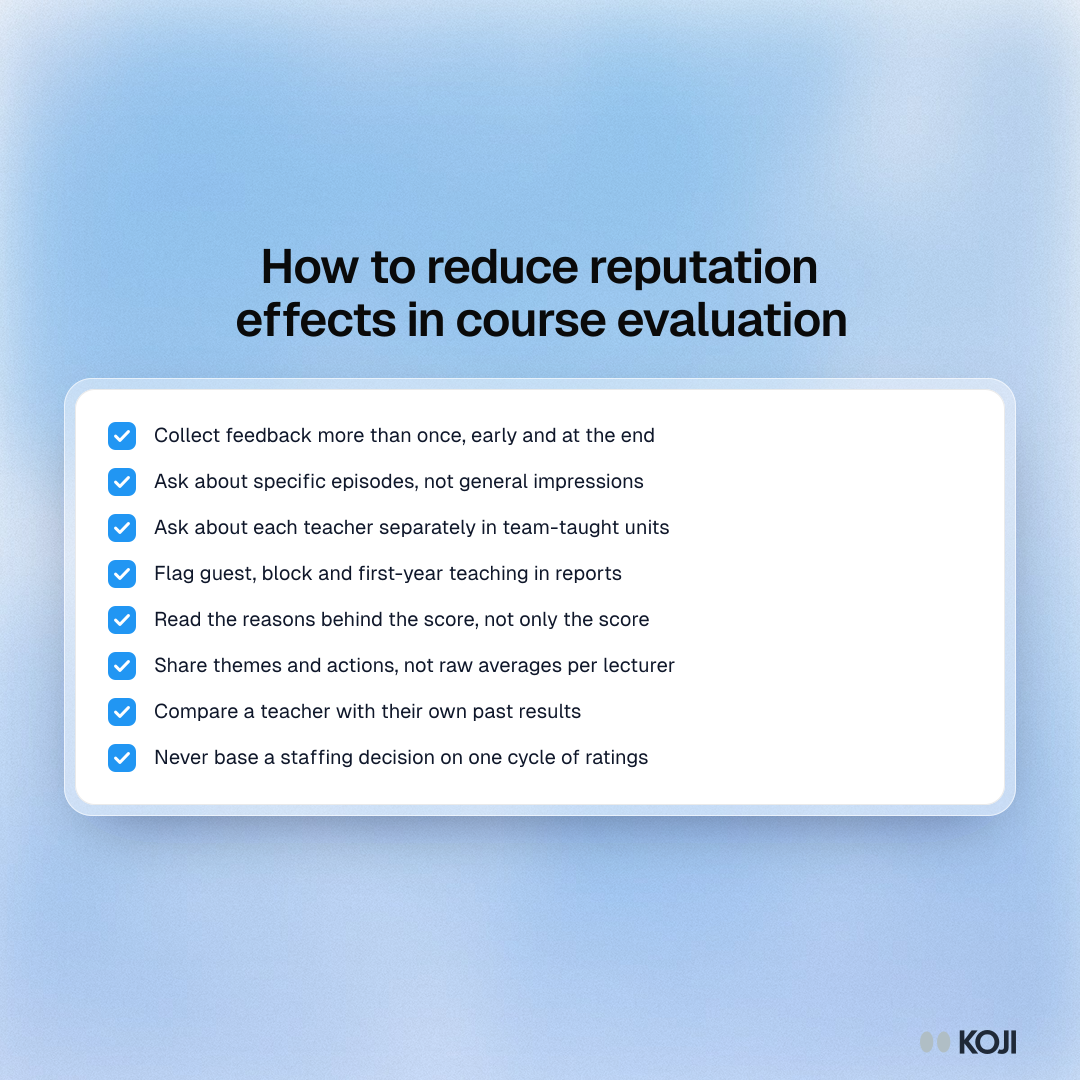
A checklist for evaluation leads who want student ratings to reflect the teaching rather than what students heard before the first class. It draws on the warm-cold effect, which Harold Kelley demonstrated with a real lecturer in 1950, and on later work suggesting the effect fades with more contact. Use it when reviewing how ratings are collected, reported and used for probation or promotion. Koji supports several steps, such as mid-module check-ins and follow-up questions about specific experiences.
What's in this checklist
- Collect feedback more than once, early and at the end
- Ask about specific episodes, not general impressions
- Ask about each teacher separately in team-taught units
- Flag guest, block and first-year teaching in reports
- Read the reasons behind the score, not only the score
- Share themes and actions, not raw averages per lecturer
- Compare a teacher with their own past results
- Never base a staffing decision on one cycle of ratings
Use this image
Free to use in your docs, decks and posts under CC BY 4.0, as long as you credit Koji with a link to this page. To embed it, paste this into your page:
html
<a href="https://www.koji.so/visuals/reducing-reputation-effects-course-evaluation-checklist"><img src="https://www.koji.so/visuals/reducing-reputation-effects-course-evaluation-checklist/reducing-reputation-effects-course-evaluation-checklist.png" alt="Checklist of eight steps to reduce how much a lecturer's prior reputation shapes course evaluation results, from mid-term checks to careful publishing." width="1080" height="1080" /></a>
<p>Source: <a href="https://www.koji.so/visuals/reducing-reputation-effects-course-evaluation-checklist">How to reduce reputation effects in course evaluation</a>, Koji</p>