Checklist
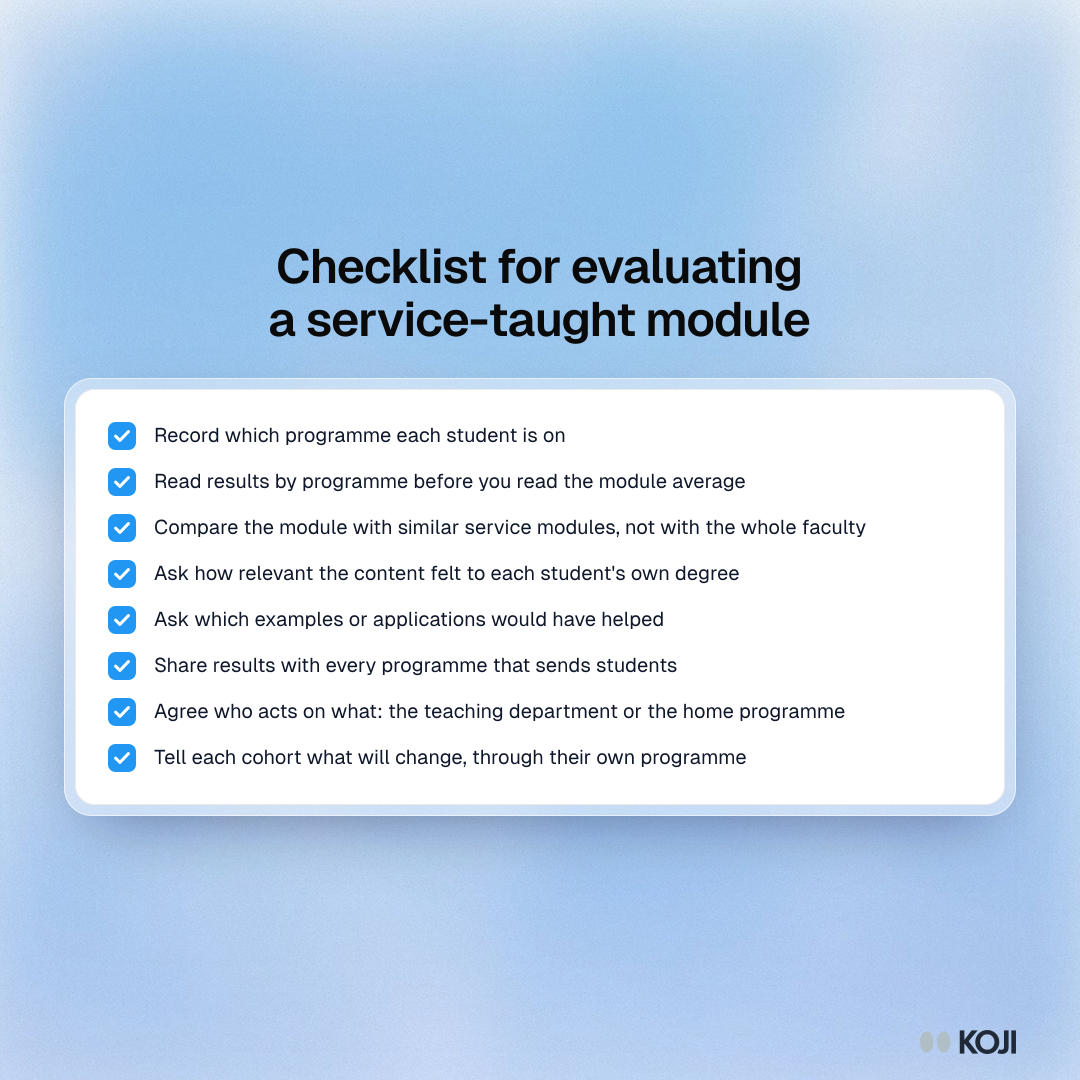
Checklist for evaluating a service-taught module
Eight checks before judging a module that several programmes share
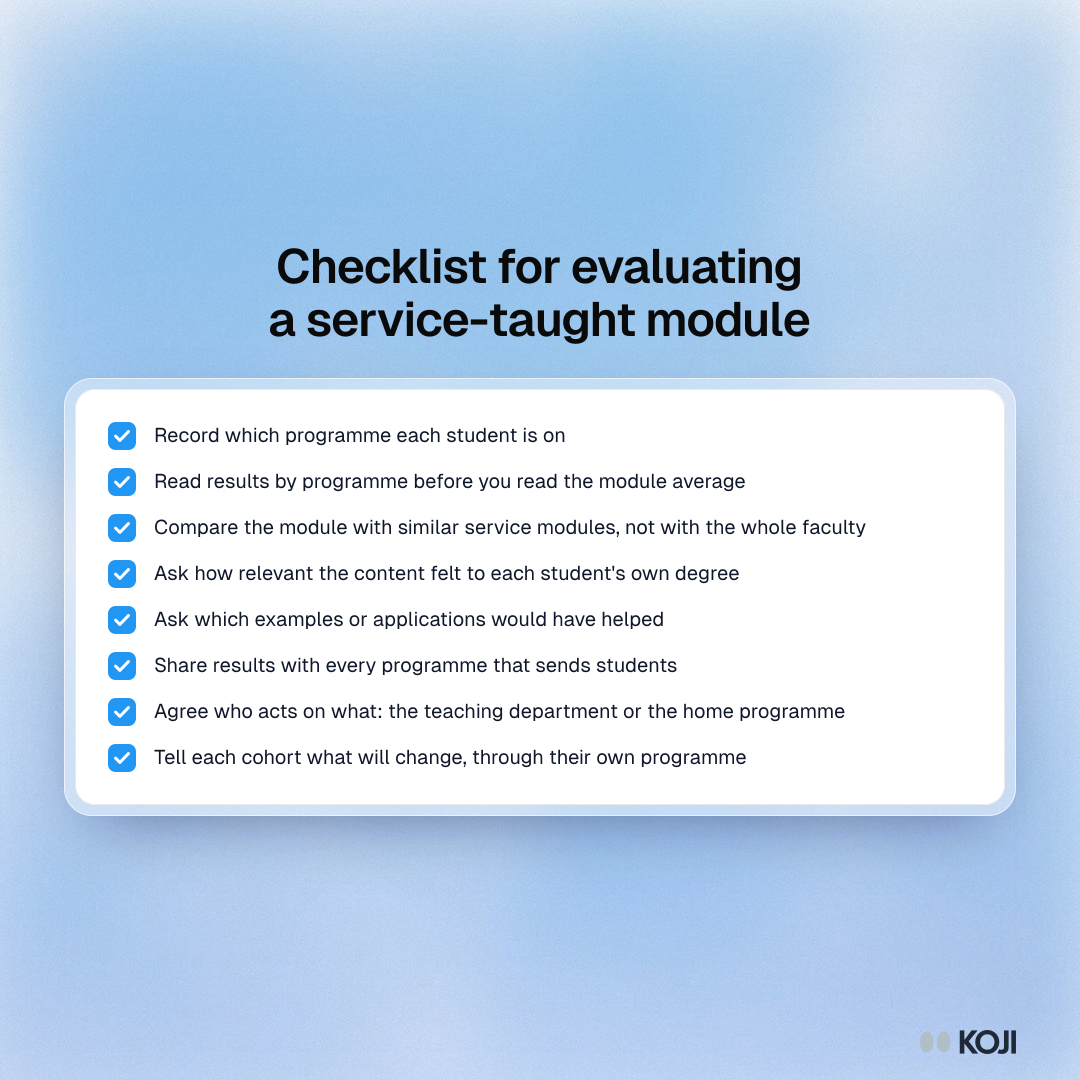
A checklist for quality leads and module coordinators evaluating service teaching, such as mathematics for engineers or statistics for social scientists, where one module serves several degree programmes. It covers splitting results by programme, fair comparison, relevance questions and who acts on findings. Koji can send each programme its own interview link and ask follow-ups that fit that programme.
What's in this checklist
- Record which programme each student is on
- Read results by programme before you read the module average
- Compare the module with similar service modules, not with the whole faculty
- Ask how relevant the content felt to each student's own degree
- Ask which examples or applications would have helped
- Share results with every programme that sends students
- Agree who acts on what: the teaching department or the home programme
- Tell each cohort what will change, through their own programme
Use this image
Free to use in your docs, decks and posts under CC BY 4.0, as long as you credit Koji with a link to this page. To embed it, paste this into your page:
html
<a href="https://www.koji.so/visuals/service-taught-module-evaluation-checklist"><img src="https://www.koji.so/visuals/service-taught-module-evaluation-checklist/service-taught-module-evaluation-checklist.png" alt="Checklist of eight steps for evaluating a service-taught module shared by several programmes, from recording each student's programme to reporting back." width="1080" height="1080" /></a>
<p>Source: <a href="https://www.koji.so/visuals/service-taught-module-evaluation-checklist">Checklist for evaluating a service-taught module</a>, Koji</p>