Guide
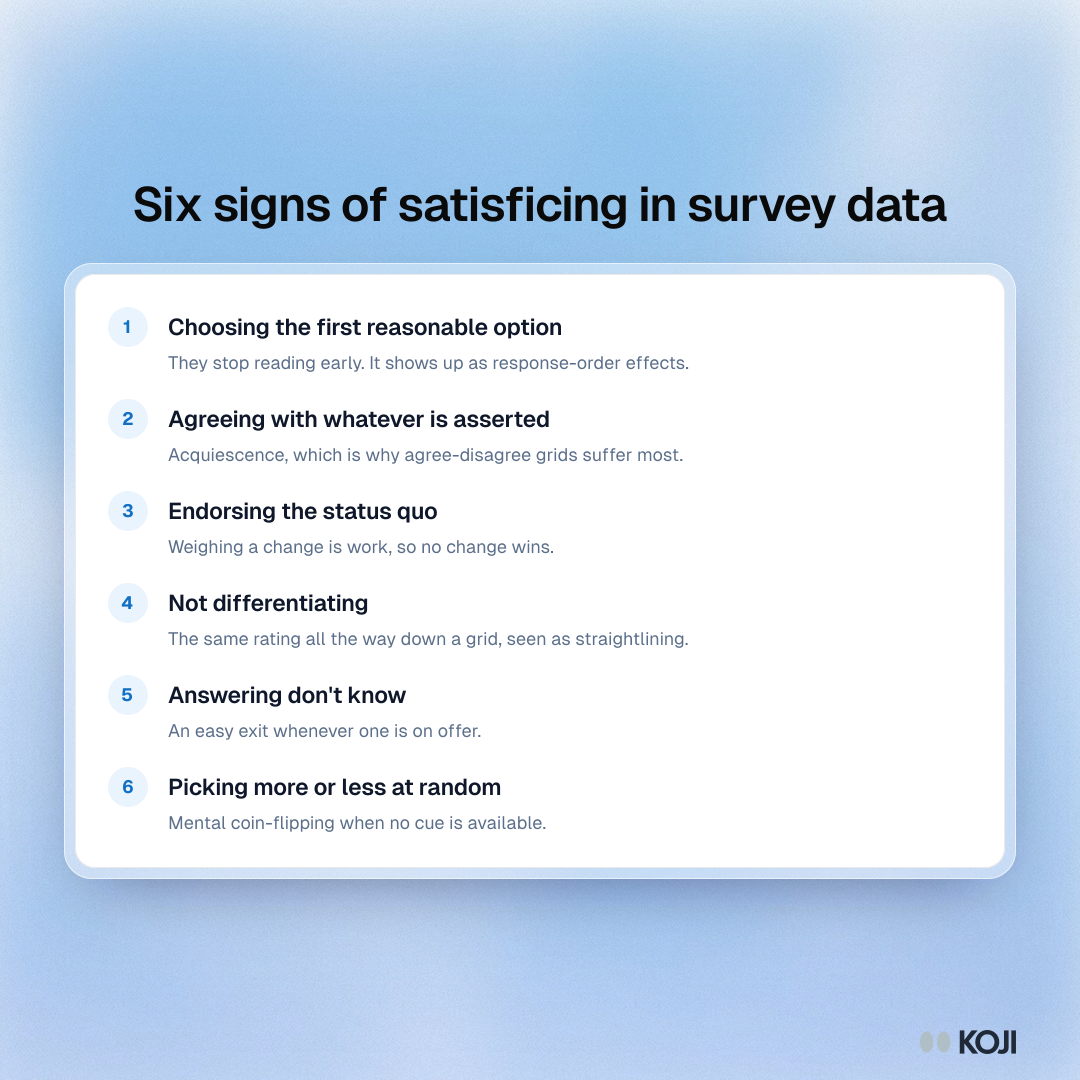
Six signs of satisficing in survey data
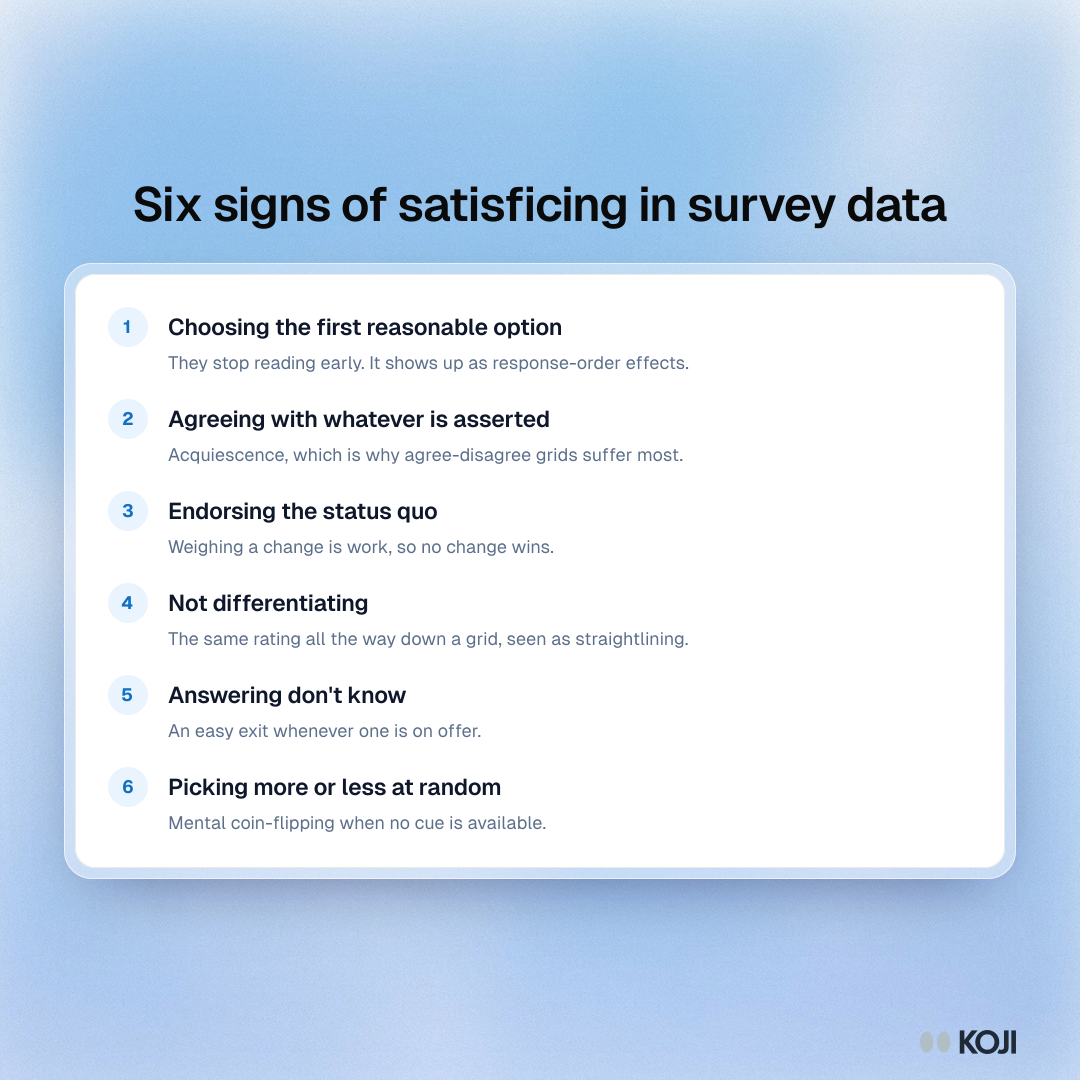
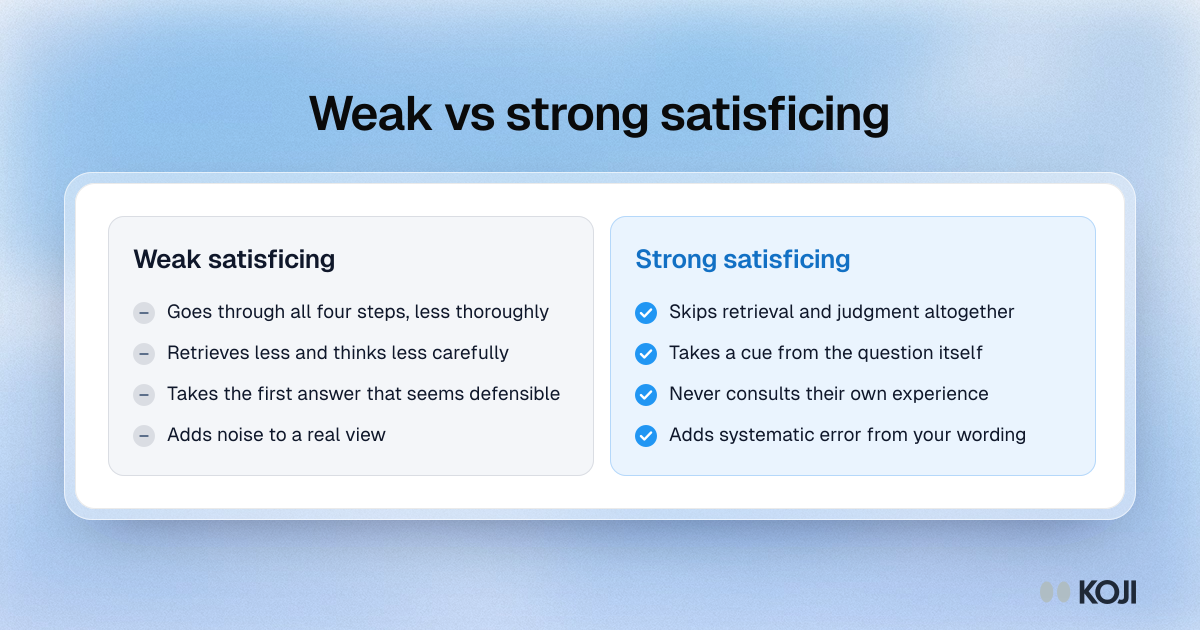
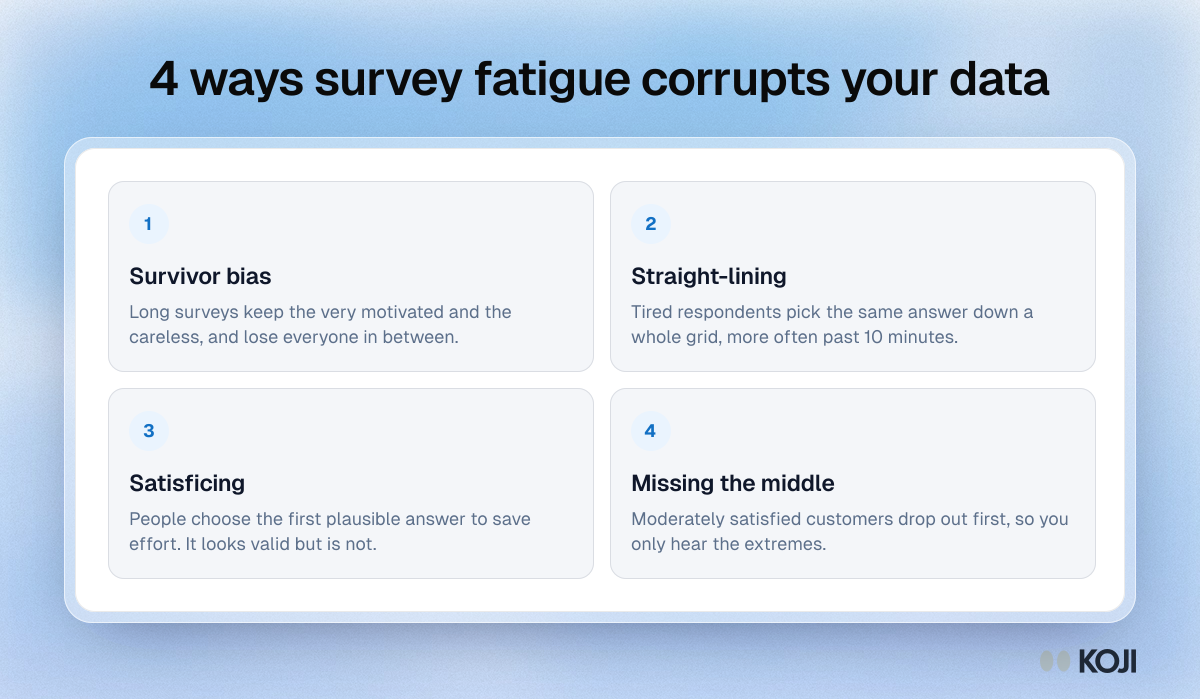
Six tactics respondents use when they satisfice, as catalogued by Jon Krosnick: picking the first reasonable option, agreeing with whatever is asserted, endorsing the status quo, giving every item the same rating, answering don't know, and choosing at random. They look like separate biases but share one cause. Use the list to diagnose a dataset, then lower the effort your questions demand rather than adding a detector for each sign.
Where this appears
What's in this guide
- Choosing the first reasonable option: They stop reading early. It shows up as response-order effects.
- Agreeing with whatever is asserted: Acquiescence, which is why agree-disagree grids suffer most.
- Endorsing the status quo: Weighing a change is work, so no change wins.
- Not differentiating: The same rating all the way down a grid, seen as straightlining.
- Answering don't know: An easy exit whenever one is on offer.
- Picking more or less at random: Mental coin-flipping when no cue is available.
Use this image
Free to use in your docs, decks and posts under CC BY 4.0, as long as you credit Koji with a link to this page. To embed it, paste this into your page:
html
<a href="https://www.koji.so/visuals/six-signs-of-satisficing-in-surveys"><img src="https://www.koji.so/visuals/six-signs-of-satisficing-in-surveys/six-signs-of-satisficing-in-surveys.png" alt="List of six signs of satisficing: first reasonable option, agreeing with assertions, status quo, straightlining, don't know answers and random picks." width="1080" height="1080" /></a>
<p>Source: <a href="https://www.koji.so/visuals/six-signs-of-satisficing-in-surveys">Six signs of satisficing in survey data</a>, Koji</p>