Reference table
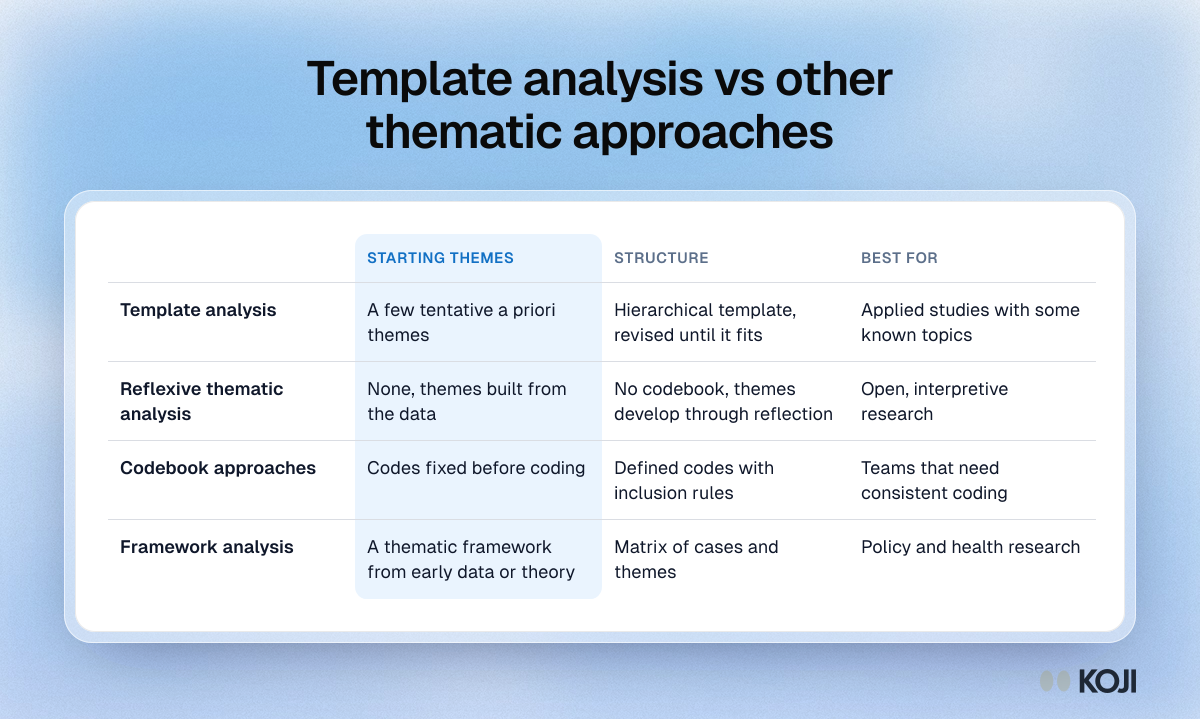
Template analysis vs other thematic approaches
How template analysis compares with reflexive thematic analysis, codebooks and framework analysis
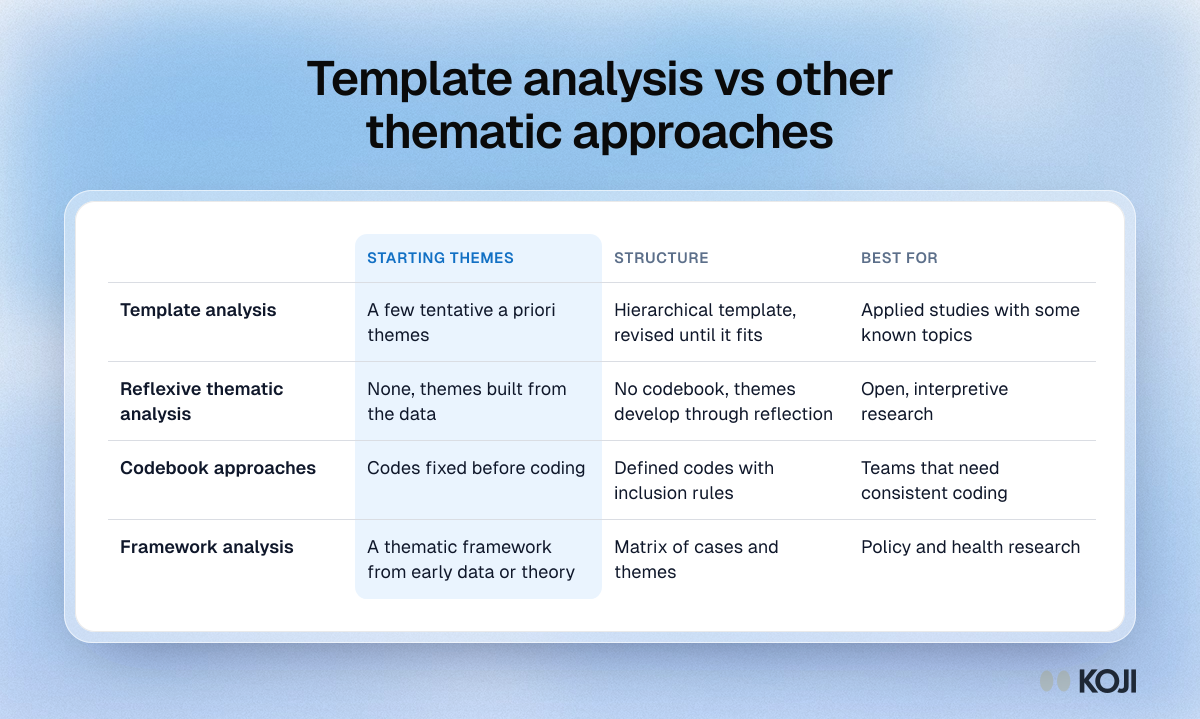
A side by side comparison of four ways to do thematic analysis of interviews: template analysis, reflexive thematic analysis, codebook approaches and framework analysis. It shows where each starts, how it structures themes and which studies it suits. Use it to choose a method before you start coding, whether you code by hand or work from Koji's interview analysis.
Where this appears
What's in this reference table
| Starting themes | Structure | Best for | |
|---|---|---|---|
| Template analysis | A few tentative a priori themes | Hierarchical template, revised until it fits | Applied studies with some known topics |
| Reflexive thematic analysis | None, themes built from the data | No codebook, themes develop through reflection | Open, interpretive research |
| Codebook approaches | Codes fixed before coding | Defined codes with inclusion rules | Teams that need consistent coding |
| Framework analysis | A thematic framework from early data or theory | Matrix of cases and themes | Policy and health research |
Use this image
Free to use in your docs, decks and posts under CC BY 4.0, as long as you credit Koji with a link to this page. To embed it, paste this into your page:
html
<a href="https://www.koji.so/visuals/template-analysis-vs-thematic-approaches"><img src="https://www.koji.so/visuals/template-analysis-vs-thematic-approaches/template-analysis-vs-thematic-approaches.png" alt="Table comparing template analysis with reflexive thematic analysis, codebook approaches and framework analysis on starting themes, structure and best use" width="1200" height="719" /></a>
<p>Source: <a href="https://www.koji.so/visuals/template-analysis-vs-thematic-approaches">Template analysis vs other thematic approaches</a>, Koji</p>