Process
How to analyze think-aloud data
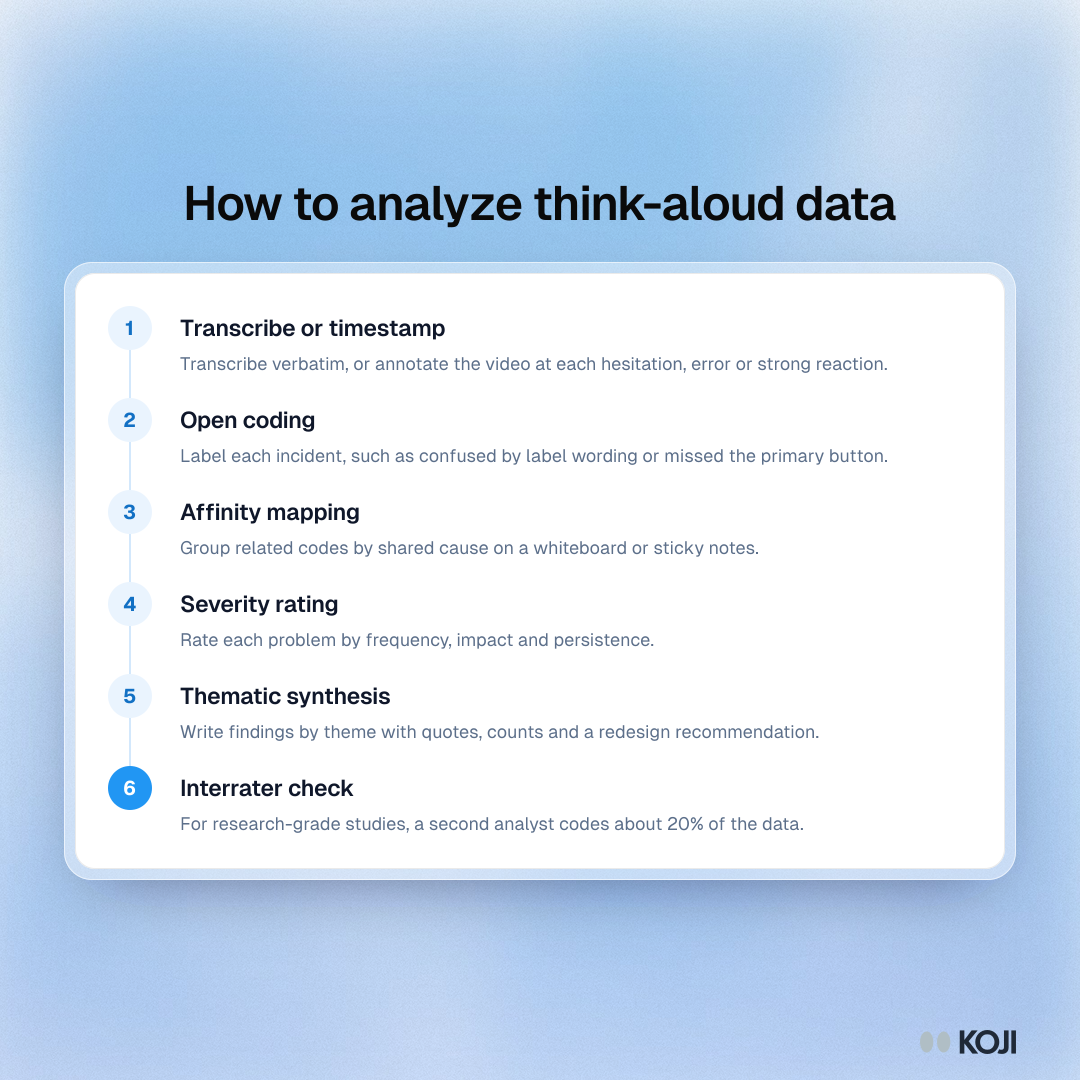
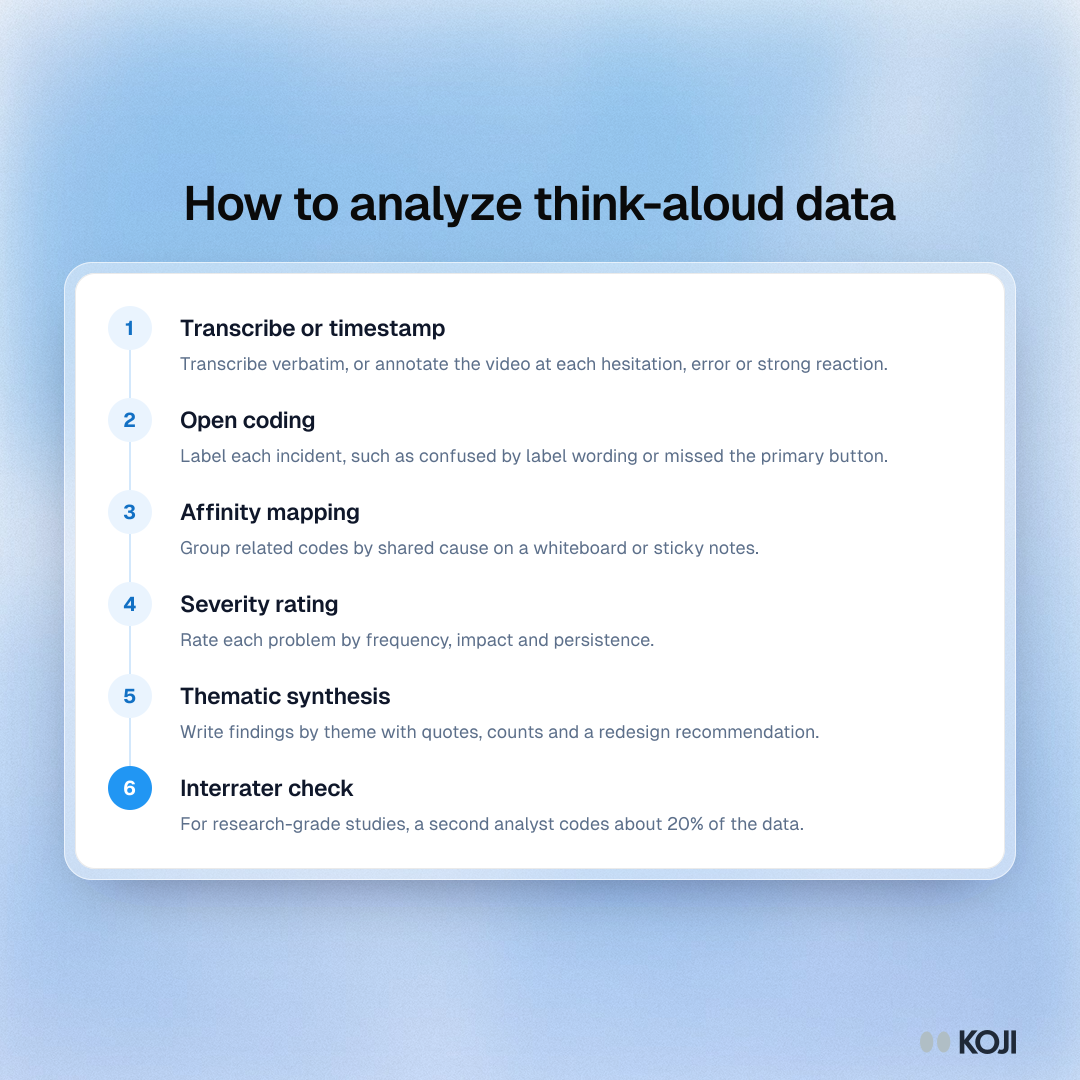
Think-aloud sessions produce hours of talk and clicks. These six steps turn them into findings: capture each notable moment, code it, cluster the codes by cause, rate each problem's severity, write up themes with quotes, and have a second analyst check a sample. Use it as a checklist after your sessions finish.
Where this appears
What's in this process
- Transcribe or timestamp: Transcribe verbatim, or annotate the video at each hesitation, error or strong reaction.
- Open coding: Label each incident, such as confused by label wording or missed the primary button.
- Affinity mapping: Group related codes by shared cause on a whiteboard or sticky notes.
- Severity rating: Rate each problem by frequency, impact and persistence.
- Thematic synthesis: Write findings by theme with quotes, counts and a redesign recommendation.
- Interrater check: For research-grade studies, a second analyst codes about 20% of the data.
Use this image
Free to use in your docs, decks and posts under CC BY 4.0, as long as you credit Koji with a link to this page. To embed it, paste this into your page:
html
<a href="https://www.koji.so/visuals/think-aloud-data-analysis-steps"><img src="https://www.koji.so/visuals/think-aloud-data-analysis-steps/think-aloud-data-analysis-steps.png" alt="Process showing six steps to analyze think-aloud sessions: transcribe, code, map, rate severity, synthesize themes and check interrater agreement." width="1080" height="1080" /></a>
<p>Source: <a href="https://www.koji.so/visuals/think-aloud-data-analysis-steps">How to analyze think-aloud data</a>, Koji</p>