Reference table
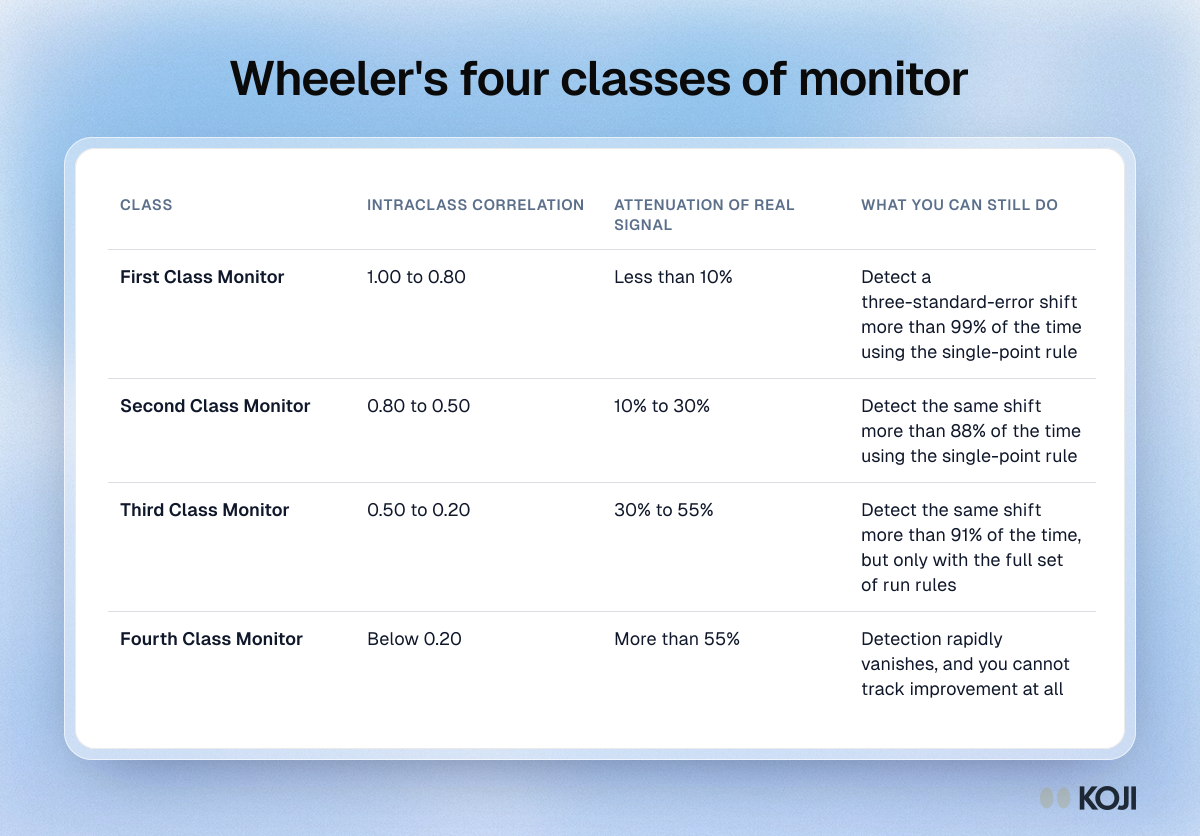
Wheeler's four classes of monitor
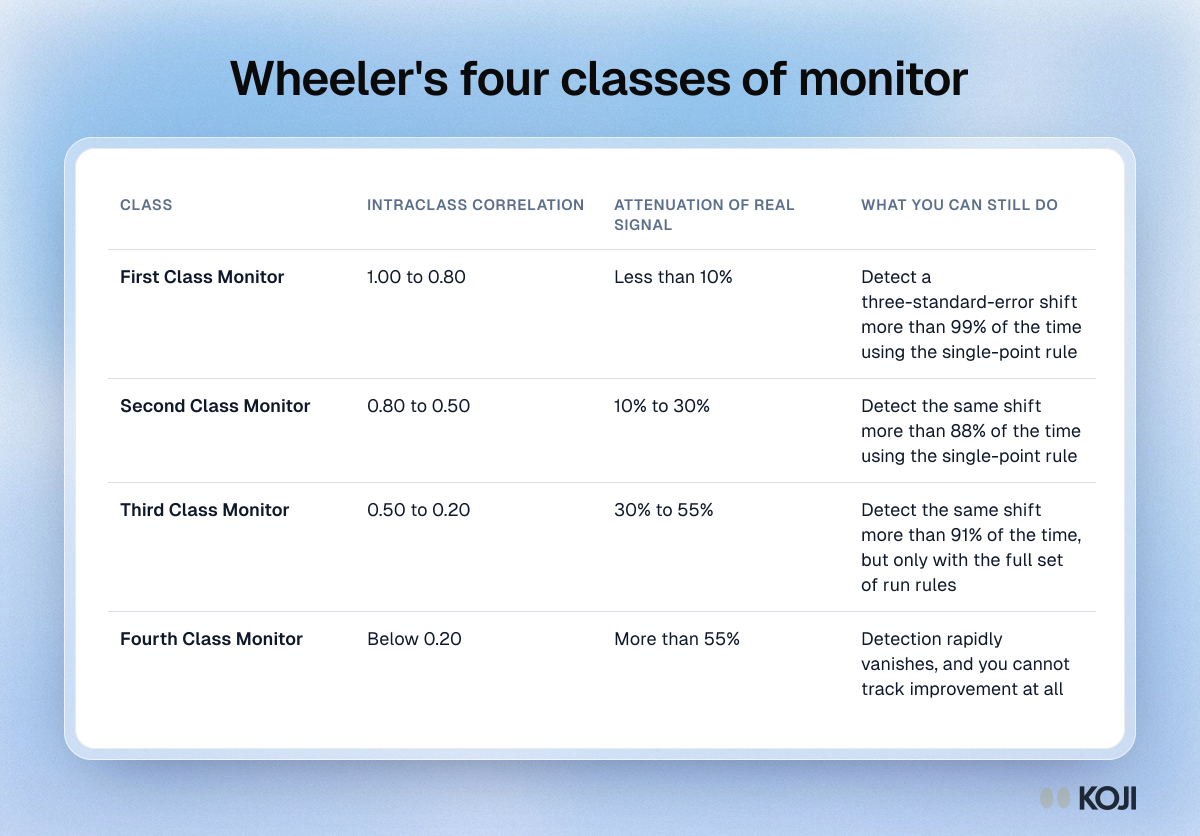
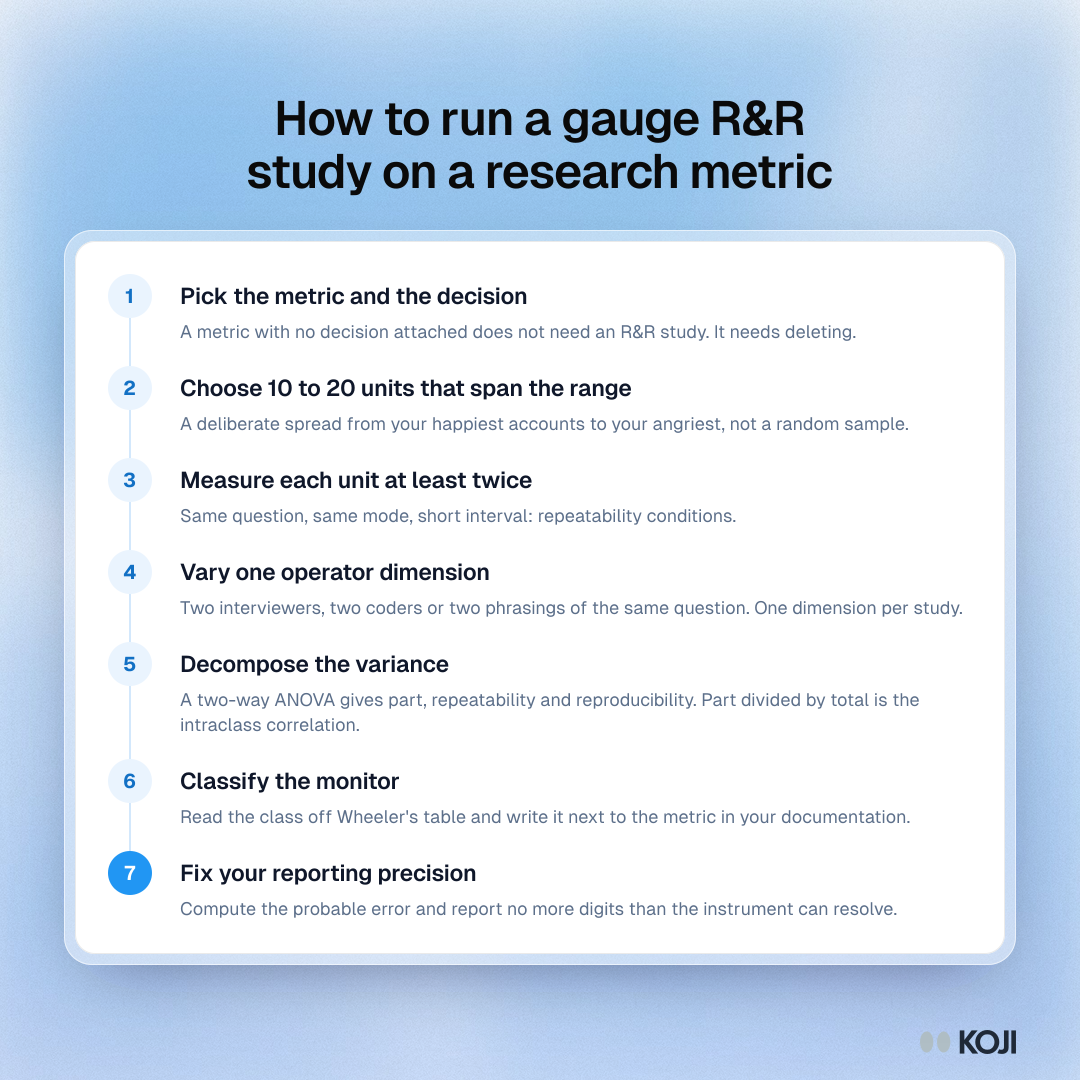
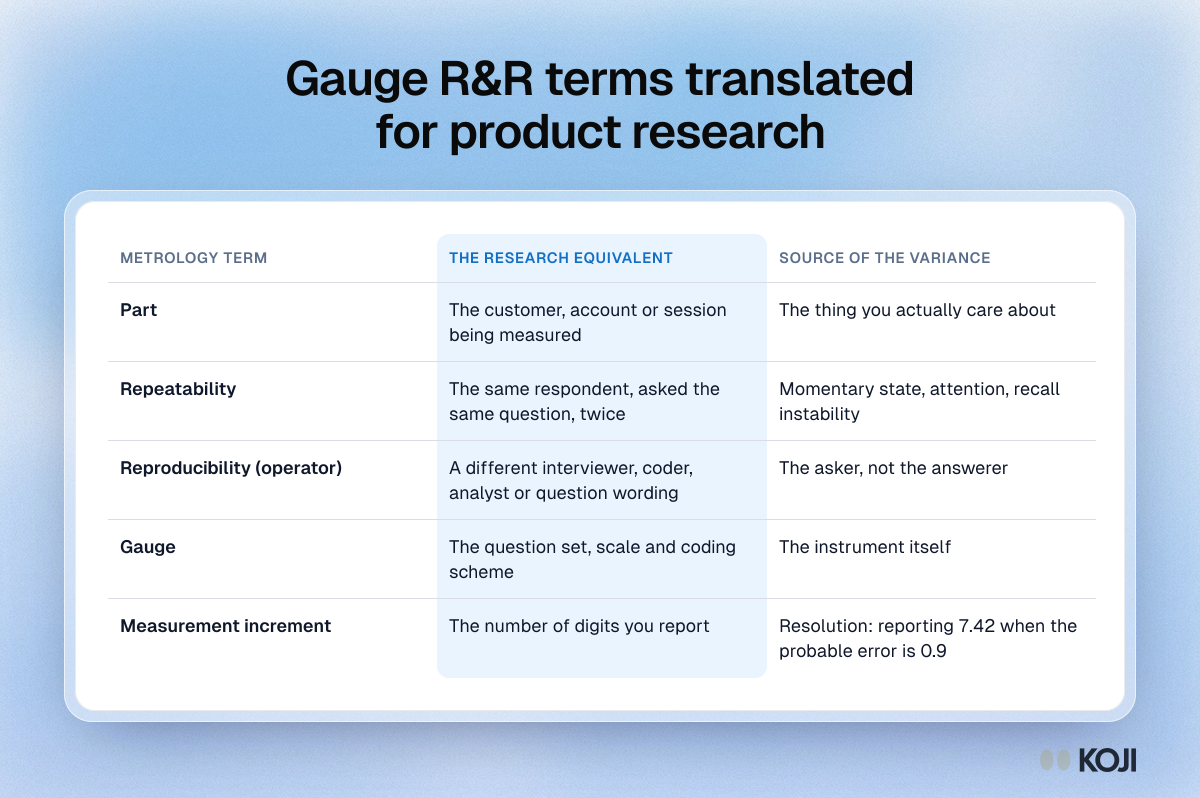
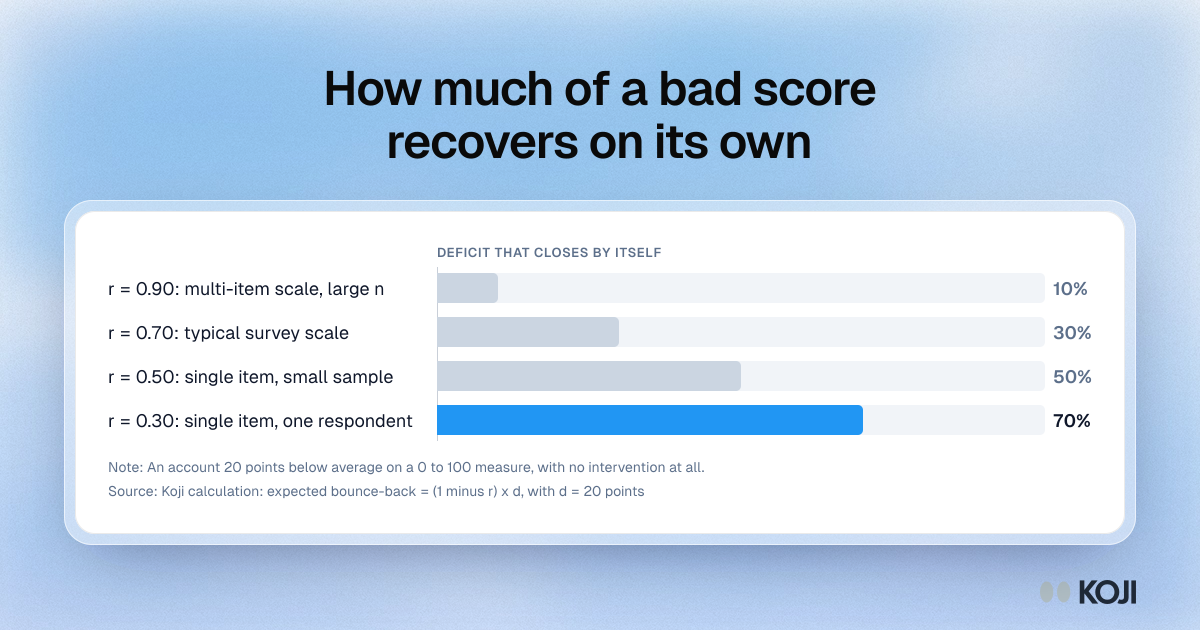
A reference table of Donald Wheeler's four classes of measurement system, defined by the intraclass correlation: the share of observed variance that is real. For each class it gives how much real signal the instrument attenuates and how reliably it can still detect a shift. Research teams can use it to grade a survey or interview metric after a repeat-measurement study, for example by re-running the same Koji study, and to decide how big a difference must be before they believe it.
Where this appears
What's in this reference table
| Class | Intraclass correlation | Attenuation of real signal | What you can still do |
|---|---|---|---|
| First Class Monitor | 1.00 to 0.80 | Less than 10% | Detect a three-standard-error shift more than 99% of the time using the single-point rule |
| Second Class Monitor | 0.80 to 0.50 | 10% to 30% | Detect the same shift more than 88% of the time using the single-point rule |
| Third Class Monitor | 0.50 to 0.20 | 30% to 55% | Detect the same shift more than 91% of the time, but only with the full set of run rules |
| Fourth Class Monitor | Below 0.20 | More than 55% | Detection rapidly vanishes, and you cannot track improvement at all |
Use this image
Free to use in your docs, decks and posts under CC BY 4.0, as long as you credit Koji with a link to this page. To embed it, paste this into your page:
html
<a href="https://www.koji.so/visuals/wheeler-four-classes-of-monitor-intraclass-correlation"><img src="https://www.koji.so/visuals/wheeler-four-classes-of-monitor-intraclass-correlation/wheeler-four-classes-of-monitor-intraclass-correlation.png" alt="Table of Wheeler's four classes of monitor, from First Class at an intraclass correlation of 0.80 or more to Fourth Class below 0.20, with signal lost at each." width="1200" height="836" /></a>
<p>Source: <a href="https://www.koji.so/visuals/wheeler-four-classes-of-monitor-intraclass-correlation">Wheeler's four classes of monitor</a>, Koji</p>