Framework
Five types of analytic memo
The memos that cover almost everything in product and UX research analysis
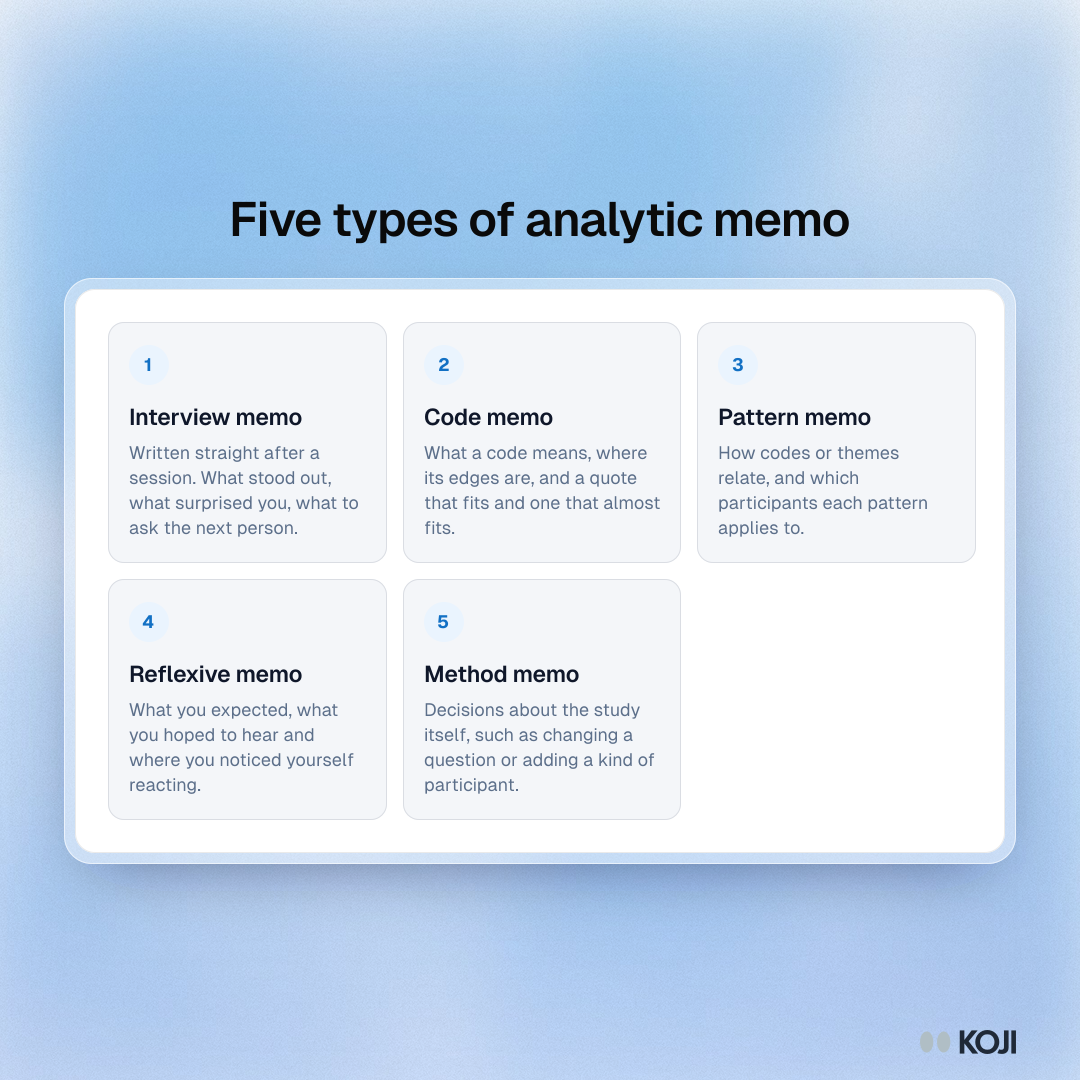
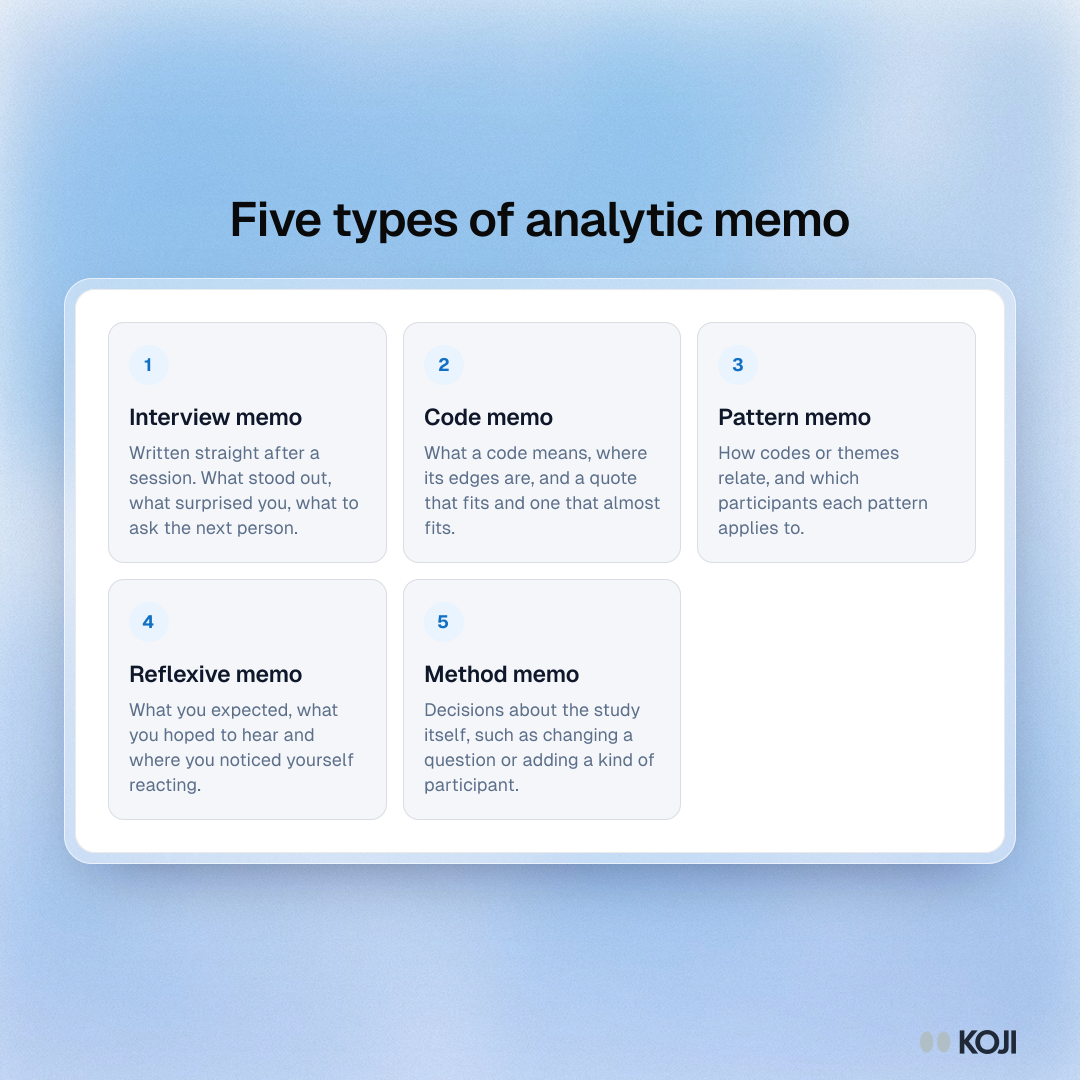
Analytic memos are short notes researchers write during qualitative analysis to record what they think the data means. This framework sorts them into five kinds: interview memos written after each session, code memos that define codes, pattern memos that connect themes, reflexive memos about your own assumptions and method memos about study decisions. Use it to decide what to write next while coding interviews. Koji's per-interview analysis and quoted themes give you a quick starting point for each kind.
Where this appears
What's in this framework
- Interview memo: Written straight after a session. What stood out, what surprised you, what to ask the next person.
- Code memo: What a code means, where its edges are, and a quote that fits and one that almost fits.
- Pattern memo: How codes or themes relate, and which participants each pattern applies to.
- Reflexive memo: What you expected, what you hoped to hear and where you noticed yourself reacting.
- Method memo: Decisions about the study itself, such as changing a question or adding a kind of participant.
Use this image
Free to use in your docs, decks and posts under CC BY 4.0, as long as you credit Koji with a link to this page. To embed it, paste this into your page:
html
<a href="https://www.koji.so/visuals/analytic-memo-types-qualitative-research"><img src="https://www.koji.so/visuals/analytic-memo-types-qualitative-research/analytic-memo-types-qualitative-research.png" alt="Framework of five types of analytic memo: interview, code, pattern, reflexive and method memos, with what each one records during qualitative analysis." width="1080" height="1080" /></a>
<p>Source: <a href="https://www.koji.so/visuals/analytic-memo-types-qualitative-research">Five types of analytic memo</a>, Koji</p>