Comparison
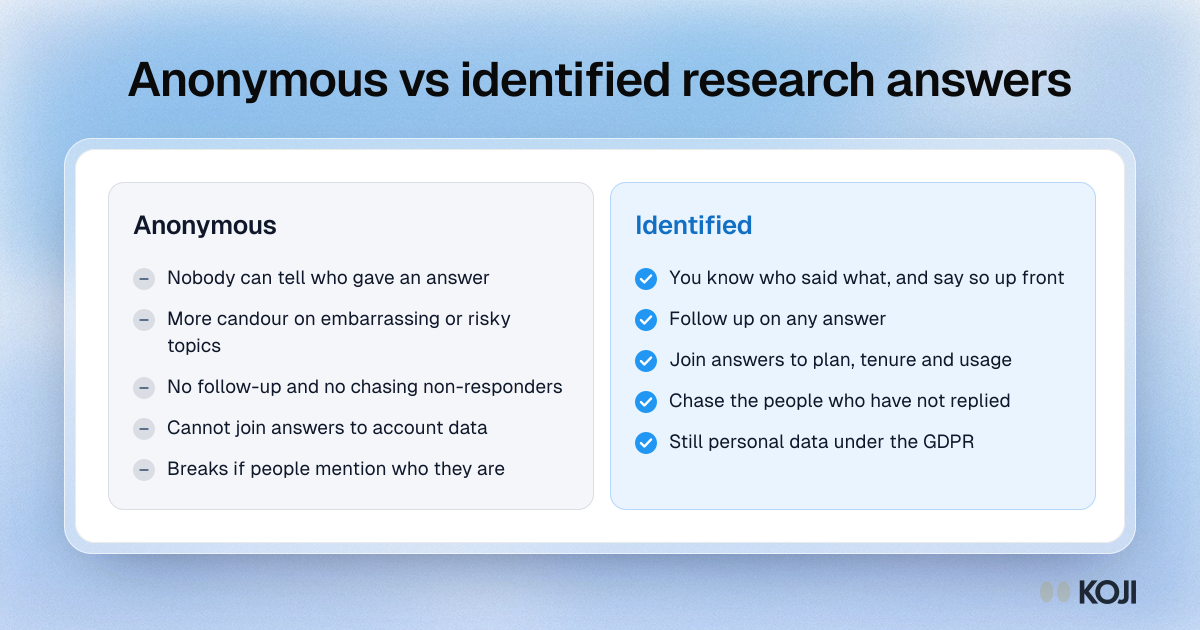
Anonymous vs identified research answers
What each promise lets you do, and what it costs
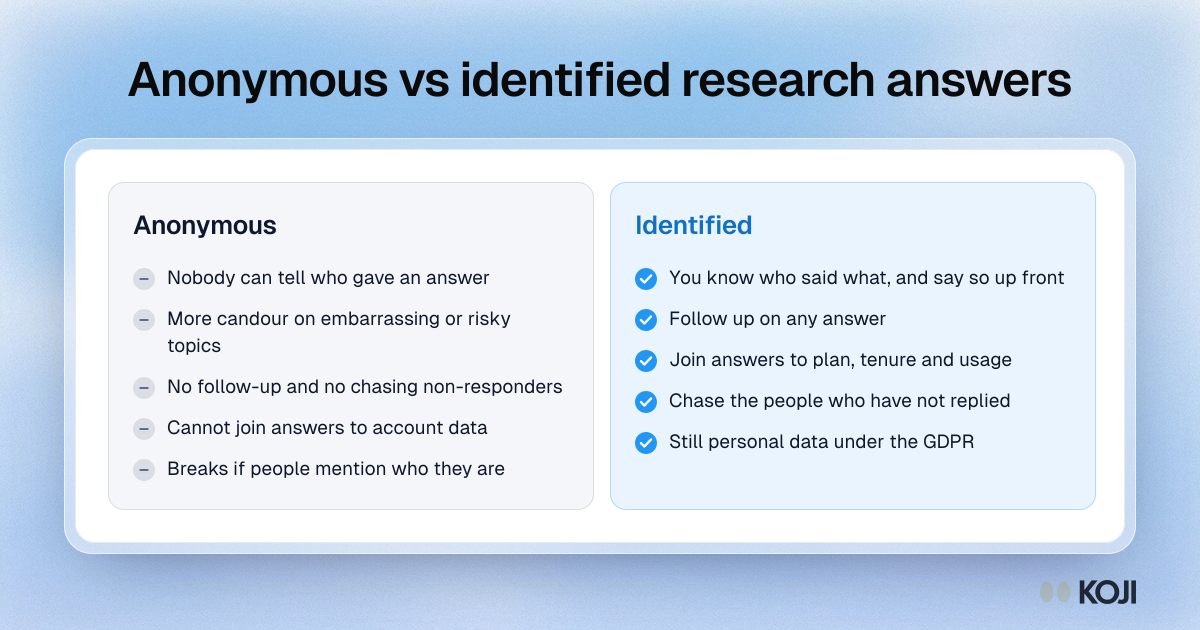
A side-by-side comparison of collecting customer research answers anonymously or identified. Anonymity buys candour on embarrassing or risky topics but rules out follow-up, segment cuts by account data and chasing non-responders. Identified answers allow all three and remain personal data under the GDPR. In Koji, a study can use one shared link or a personal link for each person.
Where this appears
What's in this comparison
Anonymous
- Nobody can tell who gave an answer
- More candour on embarrassing or risky topics
- No follow-up and no chasing non-responders
- Cannot join answers to account data
- Breaks if people mention who they are
Identified
- You know who said what, and say so up front
- Follow up on any answer
- Join answers to plan, tenure and usage
- Chase the people who have not replied
- Still personal data under the GDPR
Use this image
Free to use in your docs, decks and posts under CC BY 4.0, as long as you credit Koji with a link to this page. To embed it, paste this into your page:
html
<a href="https://www.koji.so/visuals/anonymous-vs-identified-research-answers-comparison"><img src="https://www.koji.so/visuals/anonymous-vs-identified-research-answers-comparison/anonymous-vs-identified-research-answers-comparison.png" alt="Comparison of anonymous and identified research answers: what each lets you do, what each costs and when to use it." width="1200" height="630" /></a>
<p>Source: <a href="https://www.koji.so/visuals/anonymous-vs-identified-research-answers-comparison">Anonymous vs identified research answers</a>, Koji</p>