Reference table
Content analysis vs thematic analysis
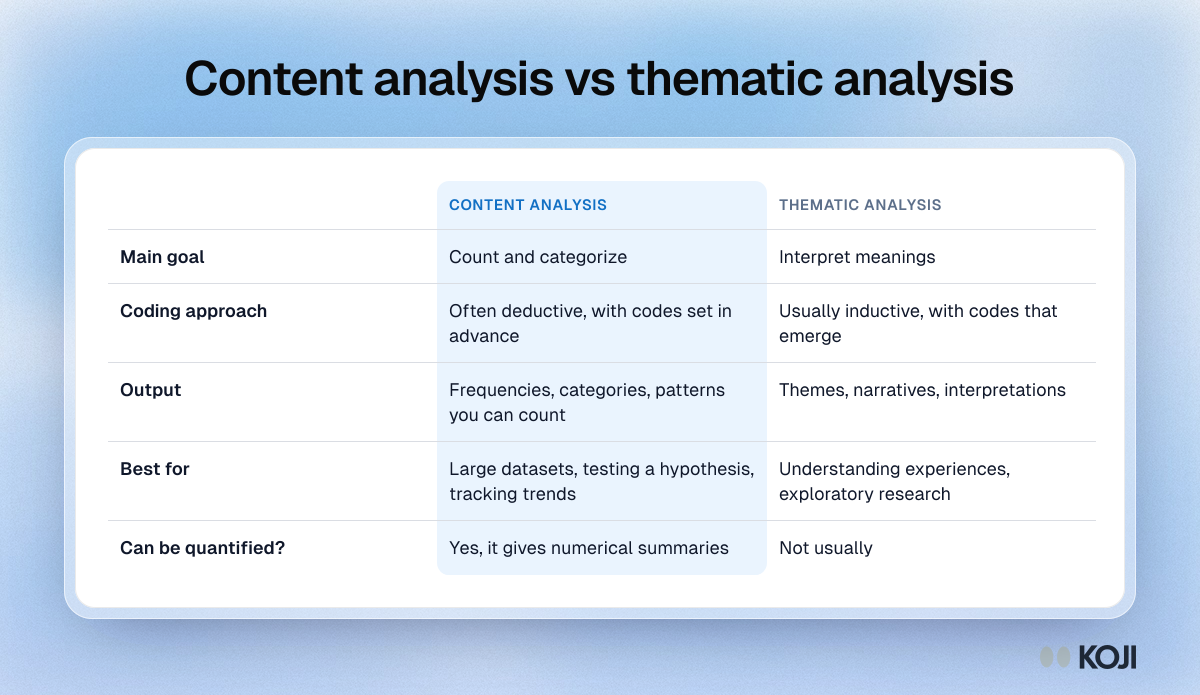
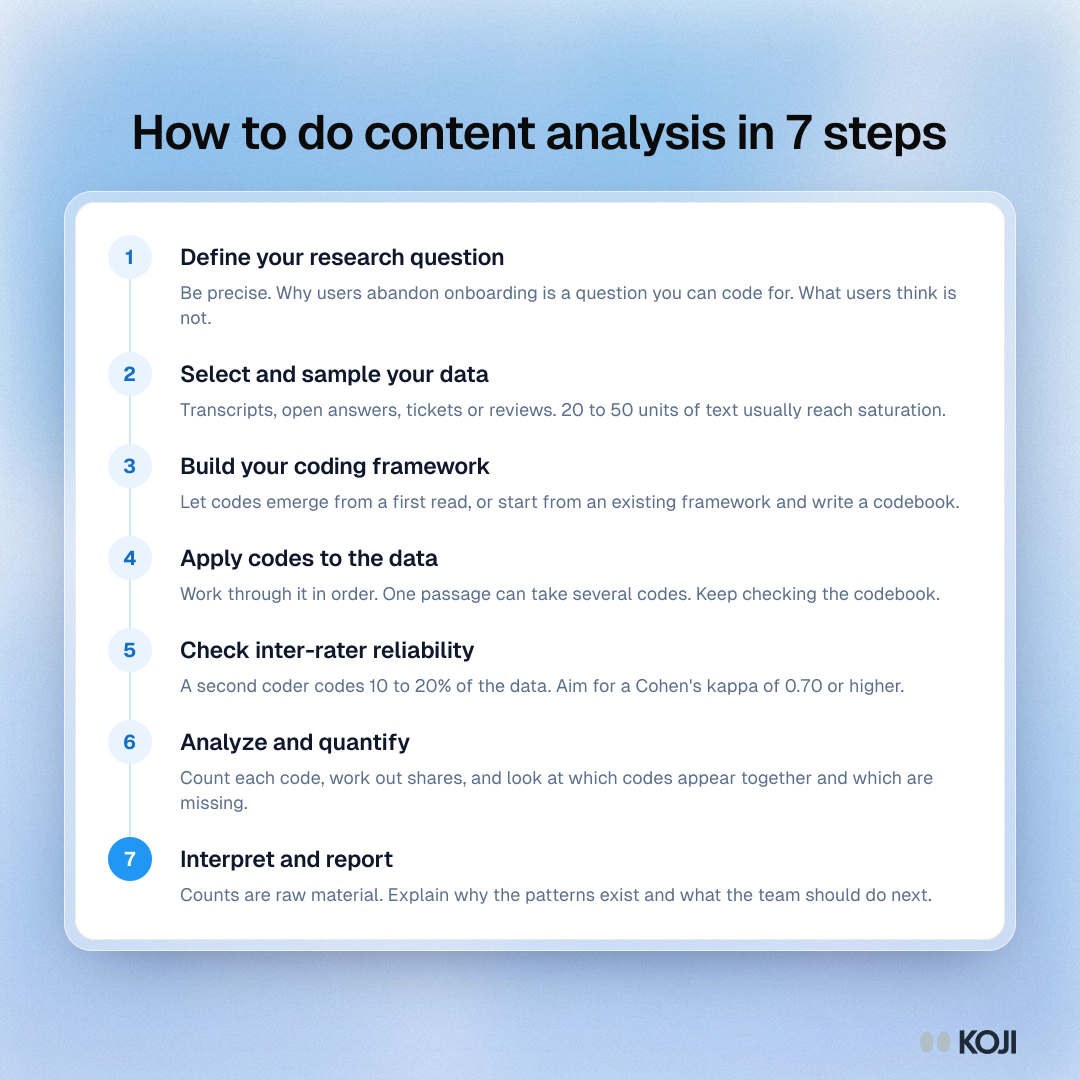
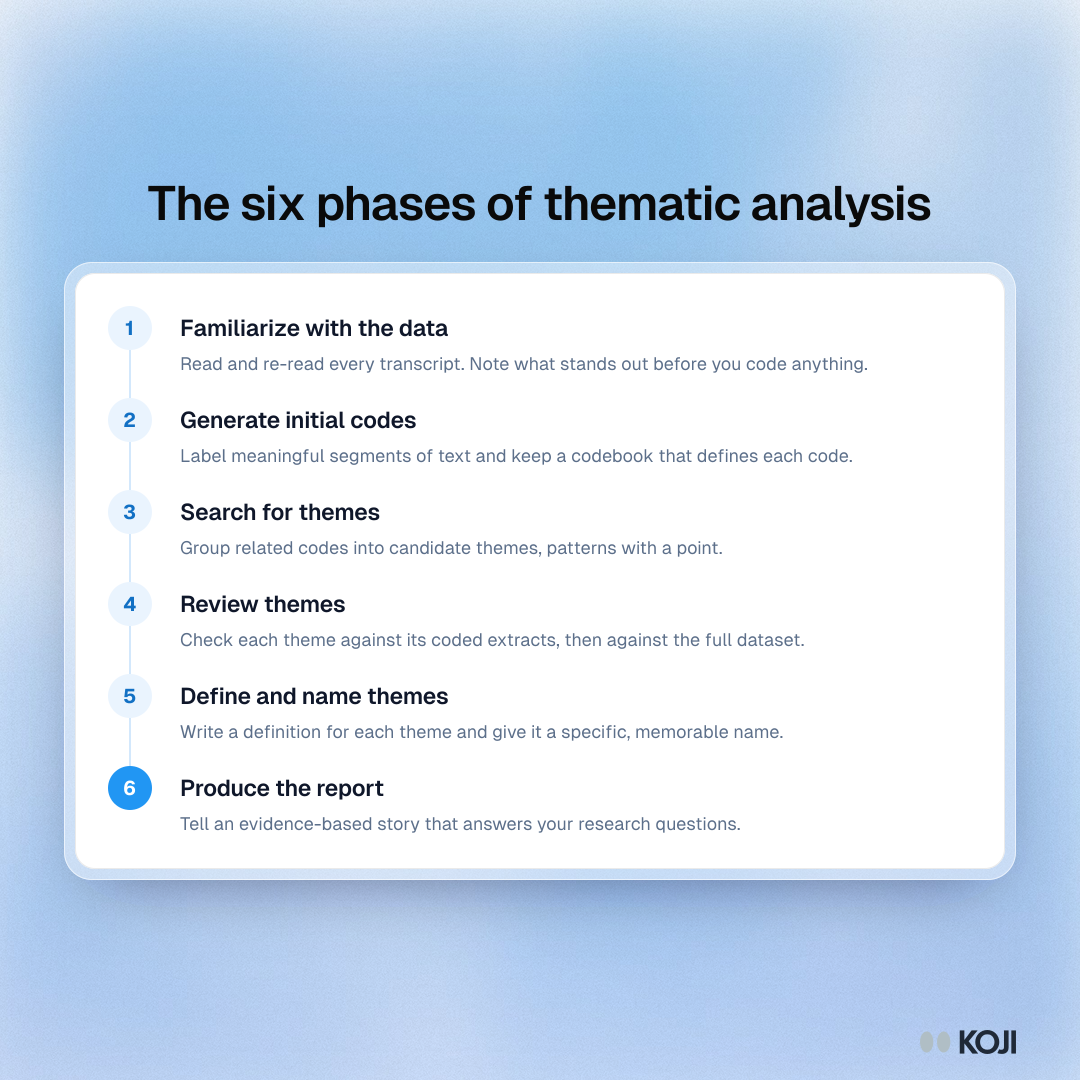
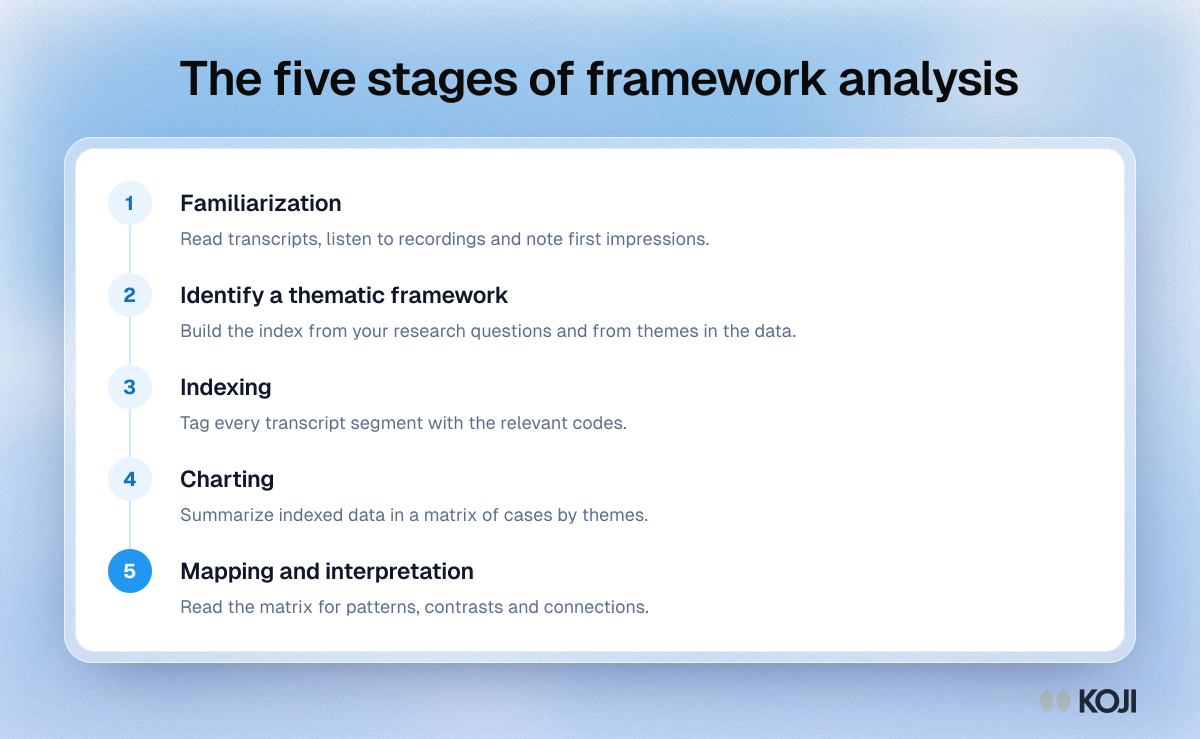
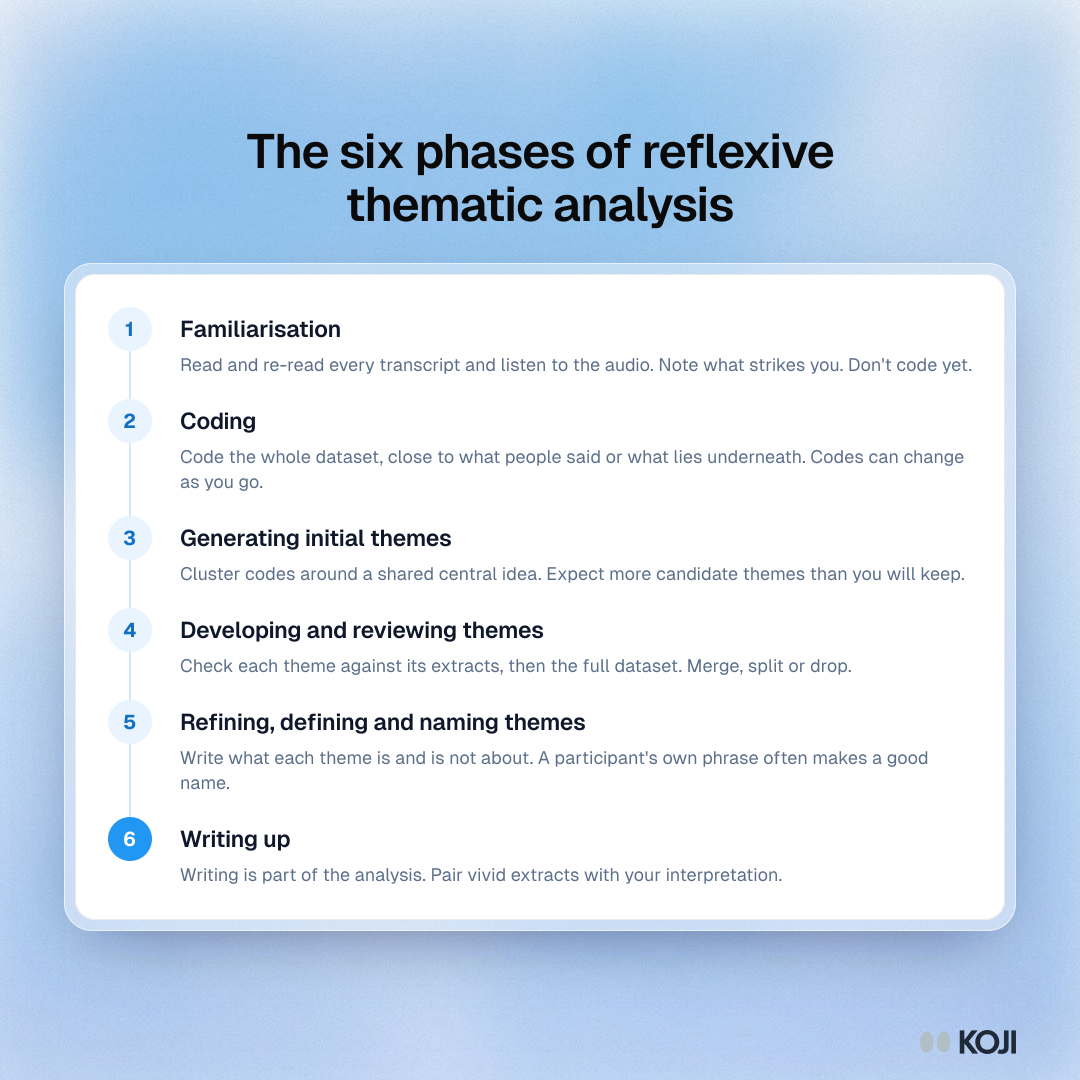
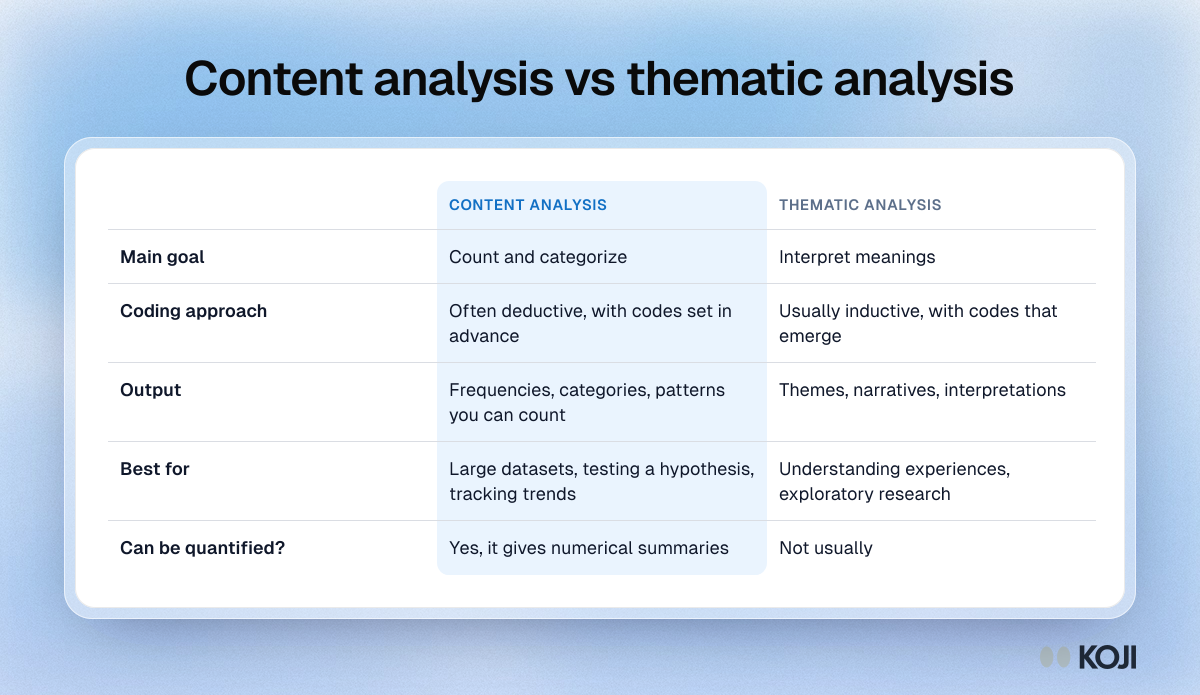
A side-by-side of content analysis and thematic analysis, two ways of coding qualitative text that people often mix up. Content analysis counts and categorizes, often with codes set in advance, and gives frequencies you can compare across studies. Thematic analysis interprets meaning with codes that emerge from the data. Researchers can use it to pick a method before they start coding. Koji's automatic analysis does both on interview data: themes with quotes, and counts for structured questions.
Where this appears
What's in this reference table
| Content analysis | Thematic analysis | |
|---|---|---|
| Main goal | Count and categorize | Interpret meanings |
| Coding approach | Often deductive, with codes set in advance | Usually inductive, with codes that emerge |
| Output | Frequencies, categories, patterns you can count | Themes, narratives, interpretations |
| Best for | Large datasets, testing a hypothesis, tracking trends | Understanding experiences, exploratory research |
| Can be quantified? | Yes, it gives numerical summaries | Not usually |
Use this image
Free to use in your docs, decks and posts under CC BY 4.0, as long as you credit Koji with a link to this page. To embed it, paste this into your page:
html
<a href="https://www.koji.so/visuals/content-analysis-vs-thematic-analysis-table"><img src="https://www.koji.so/visuals/content-analysis-vs-thematic-analysis-table/content-analysis-vs-thematic-analysis-table.png" alt="Table comparing content analysis and thematic analysis by goal, coding approach, output, best use and whether results can be counted." width="1200" height="695" /></a>
<p>Source: <a href="https://www.koji.so/visuals/content-analysis-vs-thematic-analysis-table">Content analysis vs thematic analysis</a>, Koji</p>