Comparison
First-party vs third-party pricing research questions
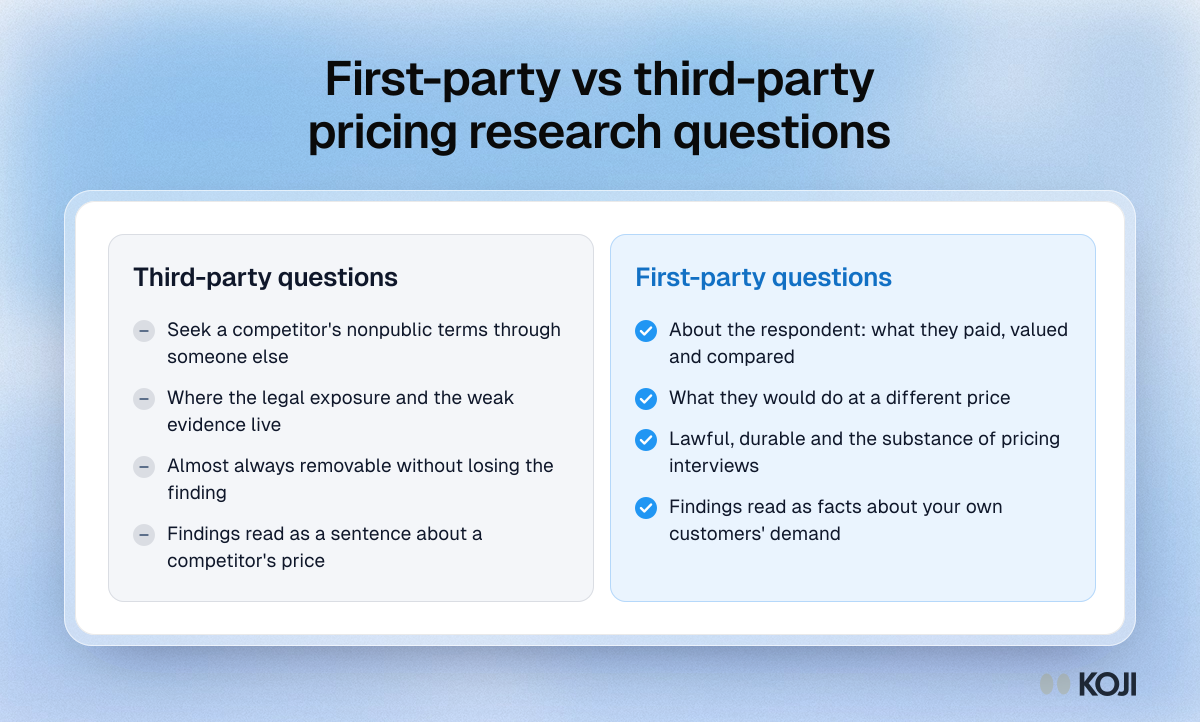
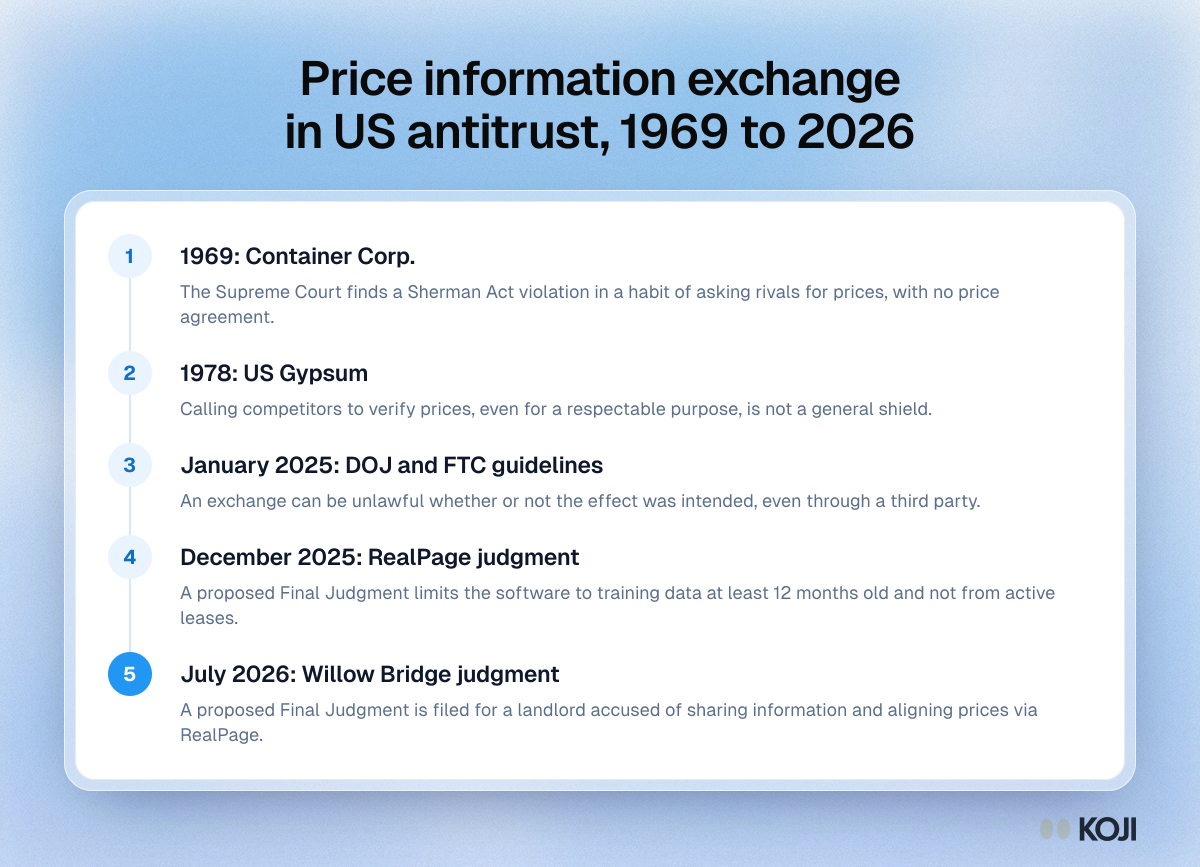
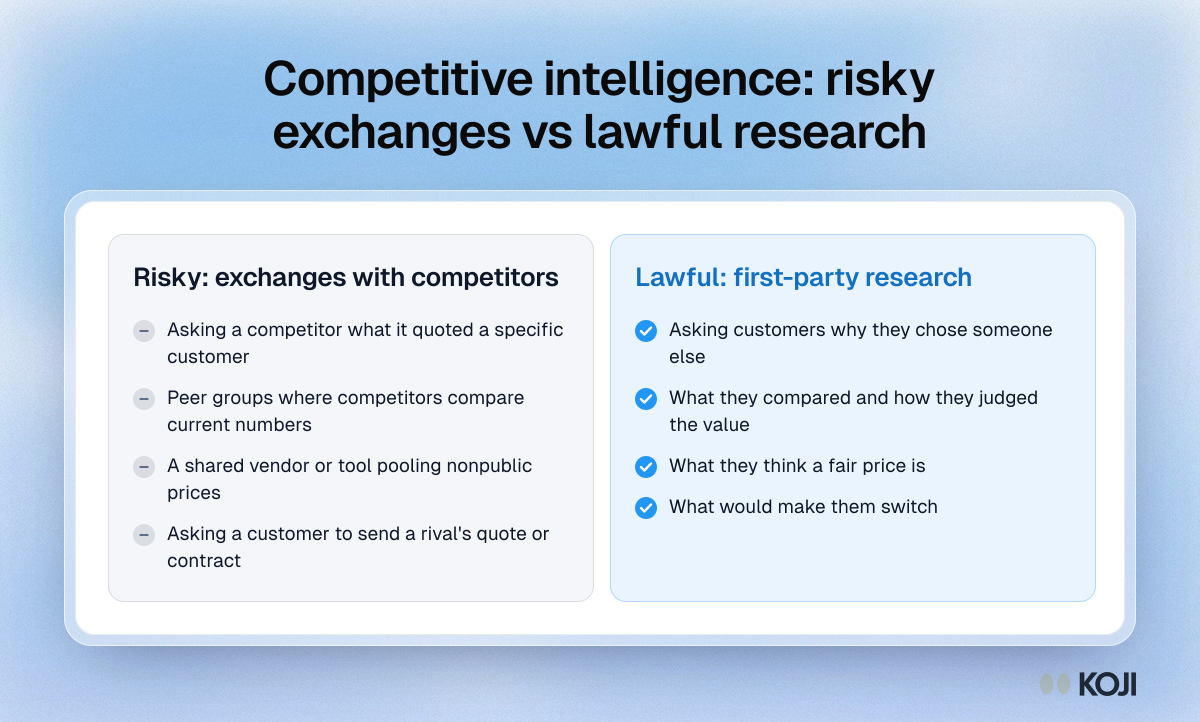
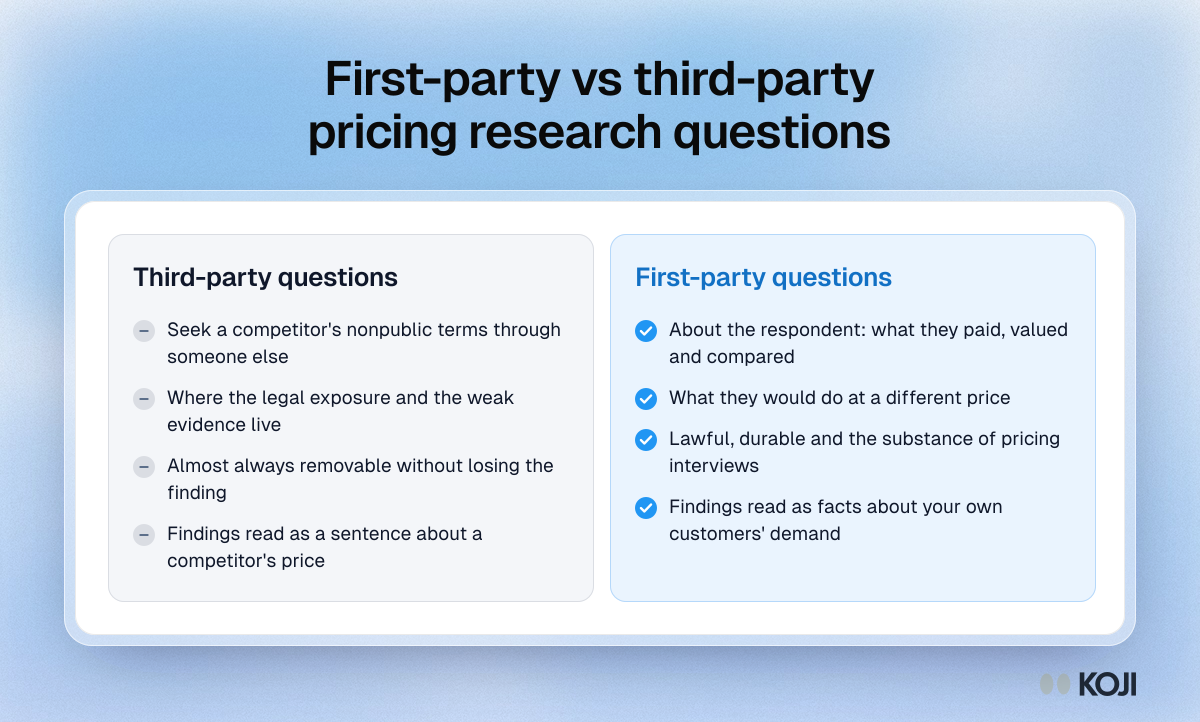
A side-by-side view of the two kinds of question in competitive pricing research. Third-party questions try to learn a competitor's nonpublic terms through someone else and carry the legal risk. First-party questions ask respondents about their own purchases, values and choices, and they hold up. Use it to review a discussion guide before fieldwork. This is background, not legal advice.
Where this appears
What's in this comparison
Third-party questions
- Seek a competitor's nonpublic terms through someone else
- Where the legal exposure and the weak evidence live
- Almost always removable without losing the finding
- Findings read as a sentence about a competitor's price
First-party questions
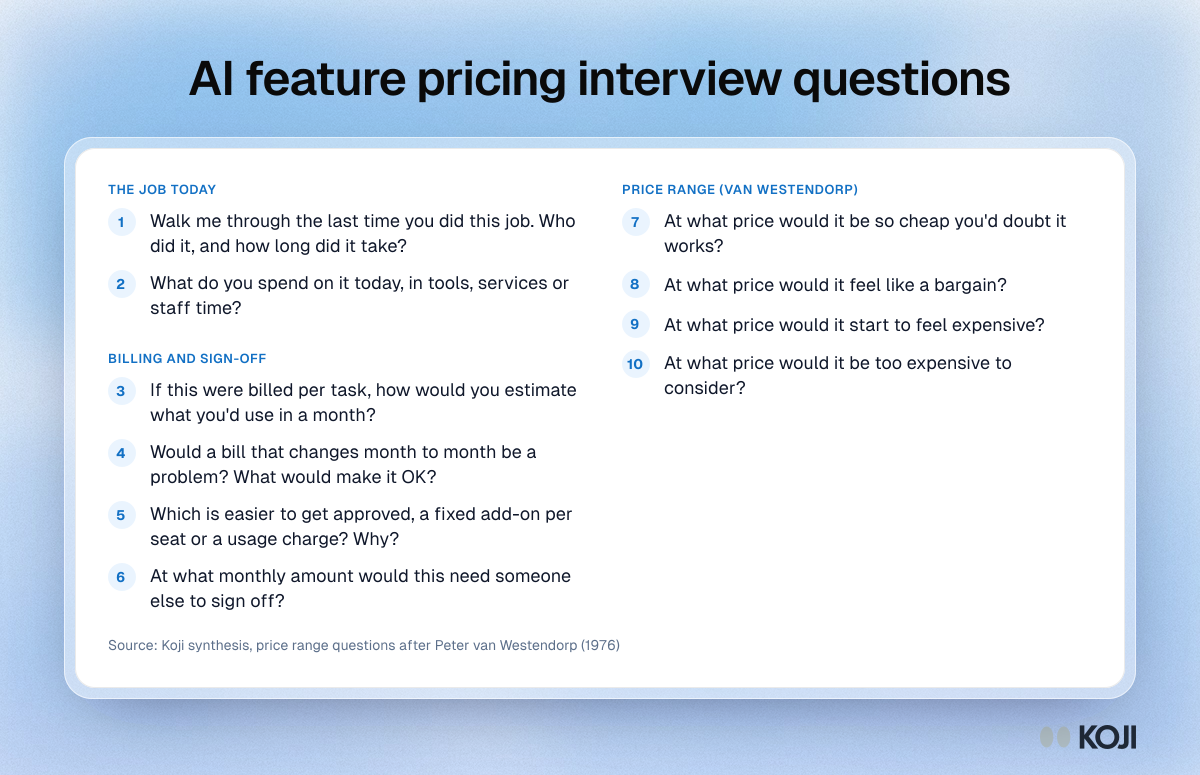
- About the respondent: what they paid, valued and compared
- What they would do at a different price
- Lawful, durable and the substance of pricing interviews
- Findings read as facts about your own customers' demand
Use this image
Free to use in your docs, decks and posts under CC BY 4.0, as long as you credit Koji with a link to this page. To embed it, paste this into your page:
html
<a href="https://www.koji.so/visuals/first-party-vs-third-party-pricing-research-questions"><img src="https://www.koji.so/visuals/first-party-vs-third-party-pricing-research-questions/first-party-vs-third-party-pricing-research-questions.png" alt="Comparison of third-party pricing questions, which seek a competitor's nonpublic terms, with first-party questions about what the respondent paid and values." width="1200" height="722" /></a>
<p>Source: <a href="https://www.koji.so/visuals/first-party-vs-third-party-pricing-research-questions">First-party vs third-party pricing research questions</a>, Koji</p>