Guide
Five common HEART framework mistakes
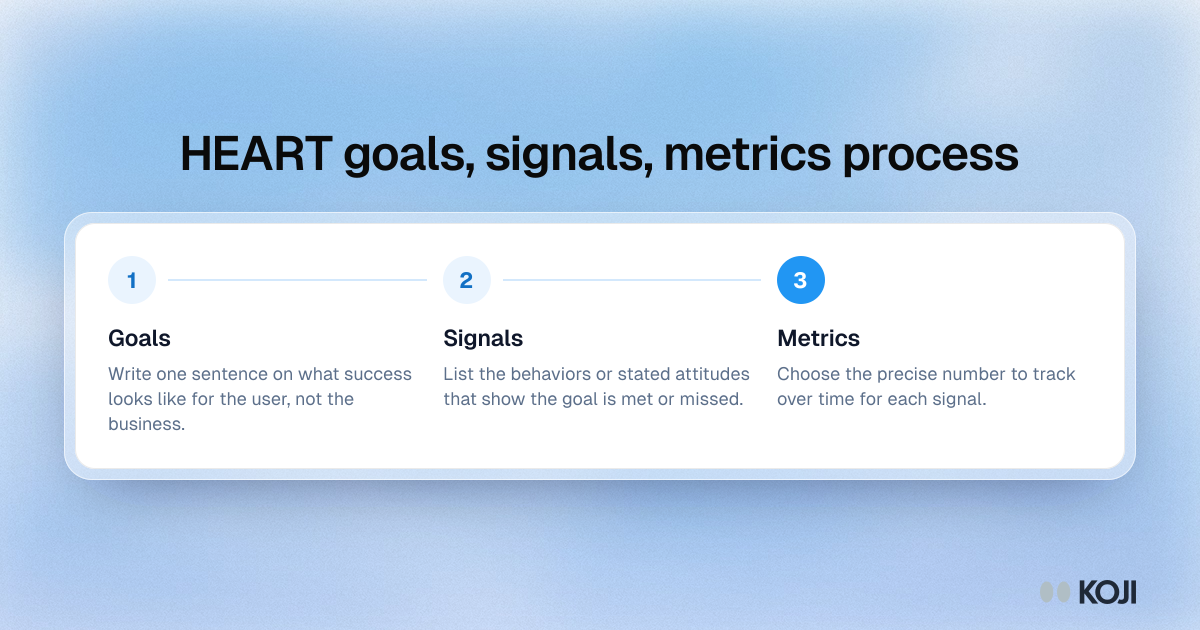
Five mistakes product teams make when they put Google's HEART framework into practice: tracking every category on every project, mixing up engagement and adoption, leaning on quarterly NPS for happiness, counting a click as task success, and reporting numbers with no baseline or target. Use it as a review list before you sign off a HEART measurement plan. Koji can collect the attitudinal half, such as SEQ and satisfaction scores with a follow-up question on each.
Where this appears
What's in this guide
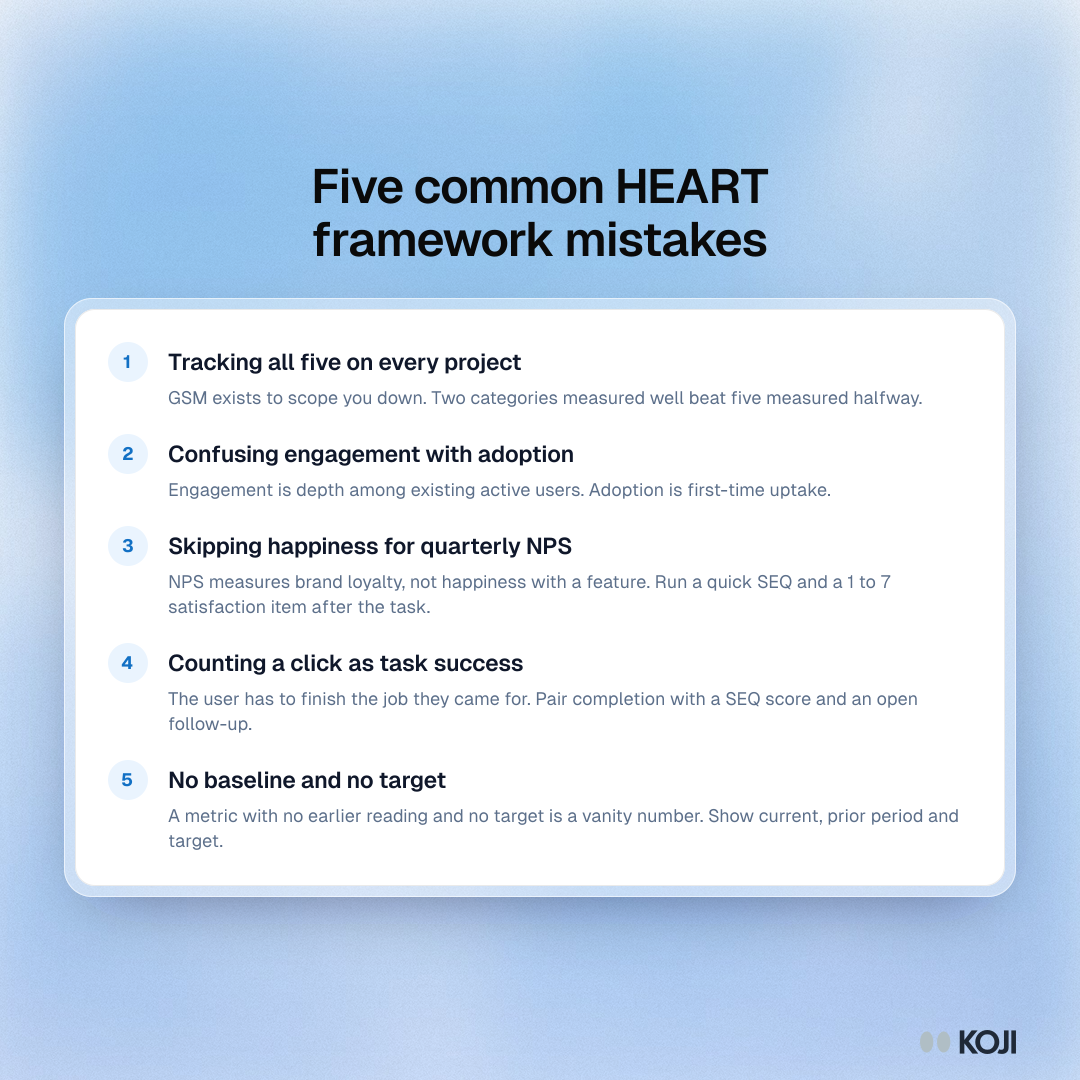
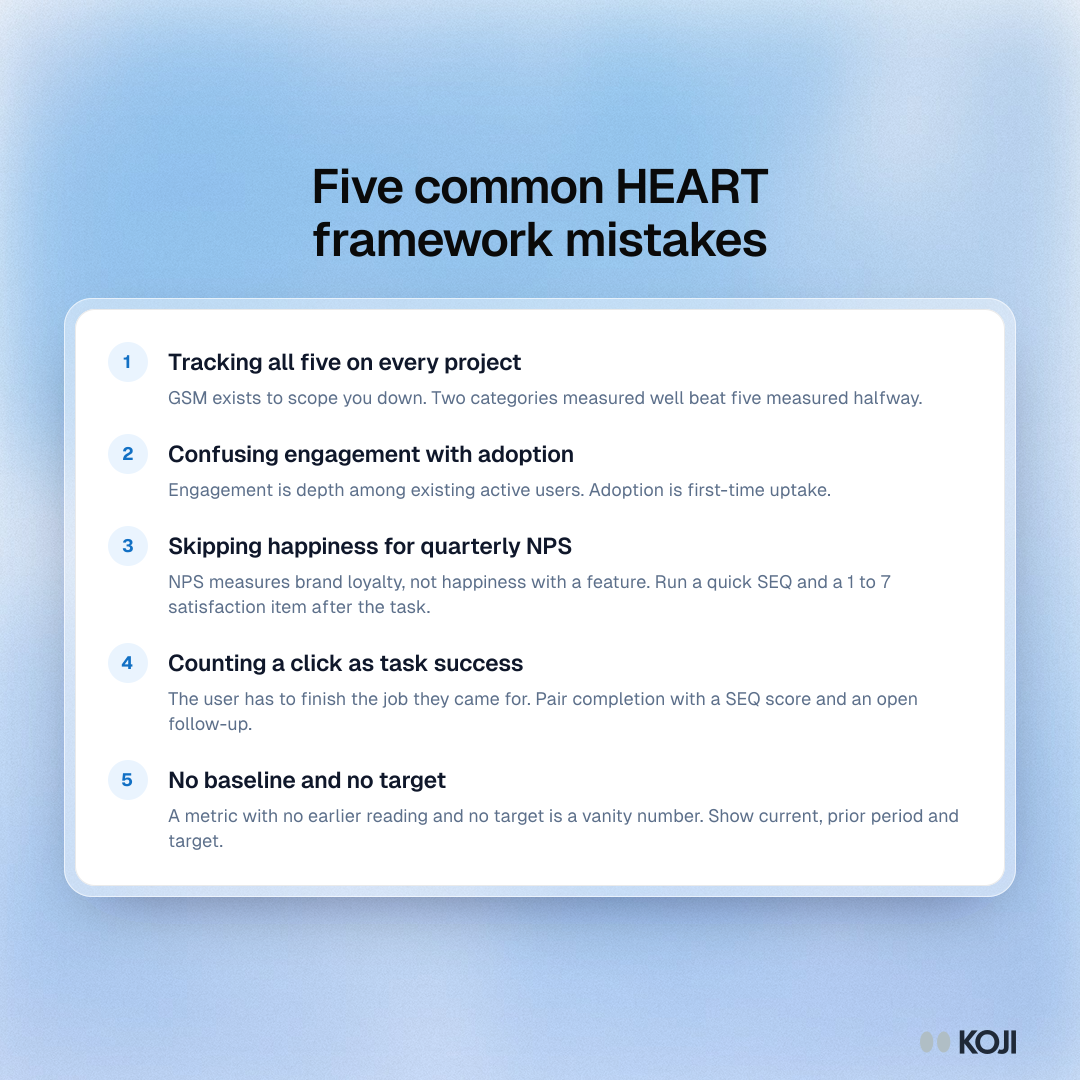
- Tracking all five on every project: GSM exists to scope you down. Two categories measured well beat five measured halfway.
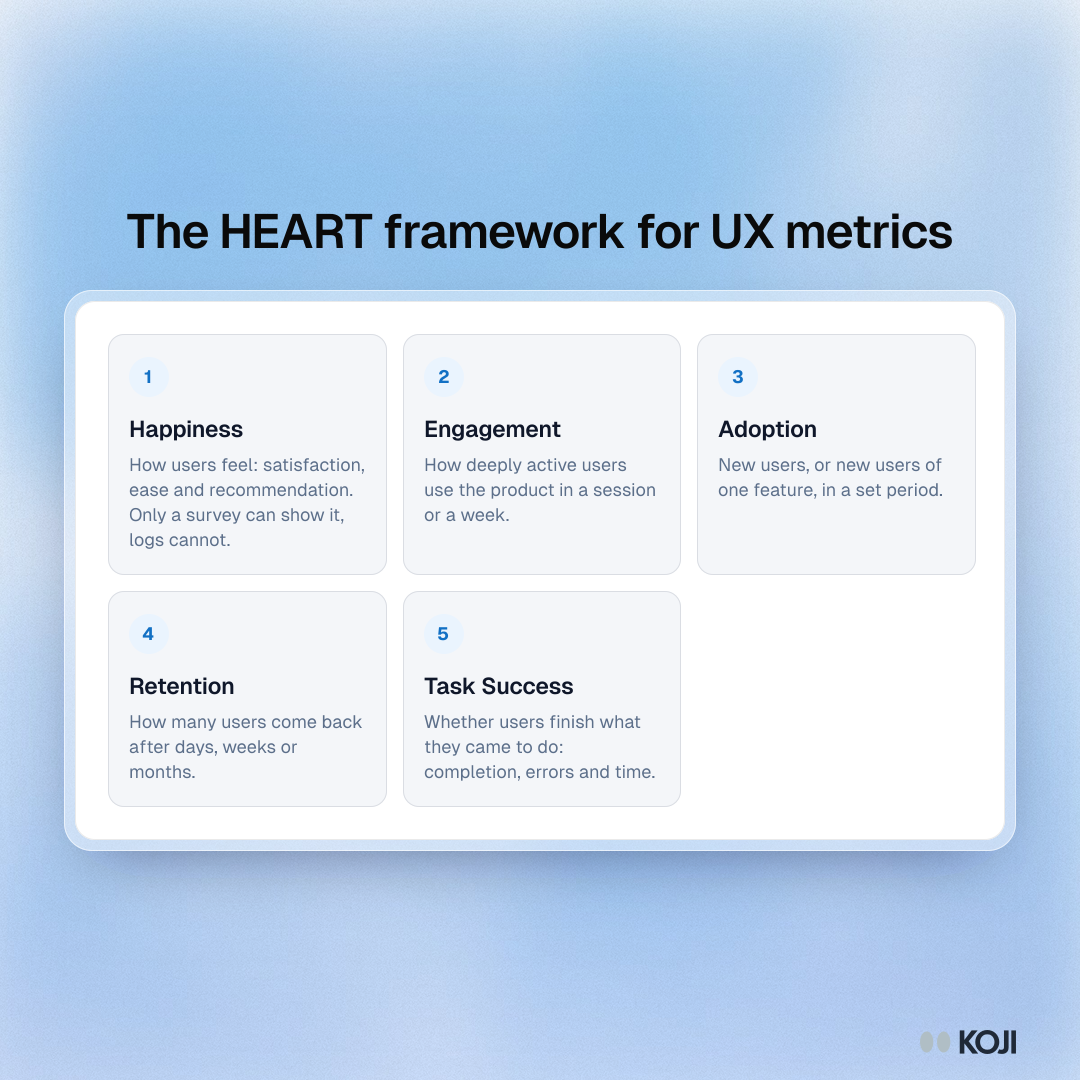
- Confusing engagement with adoption: Engagement is depth among existing active users. Adoption is first-time uptake.
- Skipping happiness for quarterly NPS: NPS measures brand loyalty, not happiness with a feature. Run a quick SEQ and a 1 to 7 satisfaction item after the task.
- Counting a click as task success: The user has to finish the job they came for. Pair completion with a SEQ score and an open follow-up.
- No baseline and no target: A metric with no earlier reading and no target is a vanity number. Show current, prior period and target.
Use this image
Free to use in your docs, decks and posts under CC BY 4.0, as long as you credit Koji with a link to this page. To embed it, paste this into your page:
html
<a href="https://www.koji.so/visuals/heart-framework-common-mistakes"><img src="https://www.koji.so/visuals/heart-framework-common-mistakes/heart-framework-common-mistakes.png" alt="Listicle of five common HEART framework mistakes, from tracking all five categories at once to metrics with no baseline or target." width="1080" height="1080" /></a>
<p>Source: <a href="https://www.koji.so/visuals/heart-framework-common-mistakes">Five common HEART framework mistakes</a>, Koji</p>