Bar chart
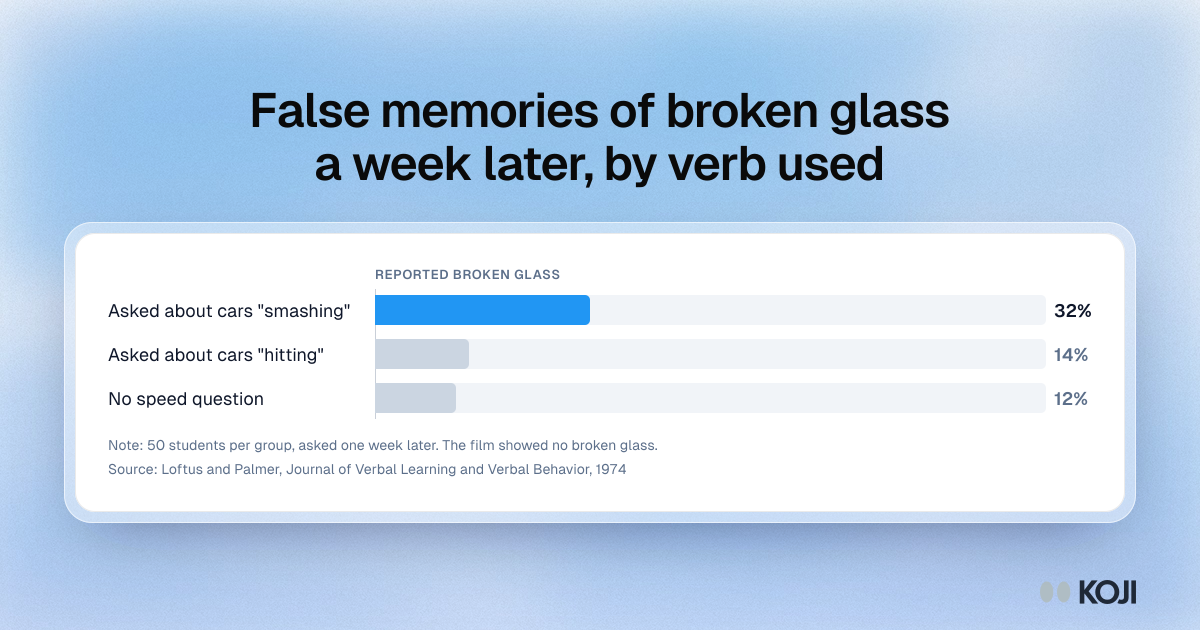
False memories of broken glass a week later, by verb used
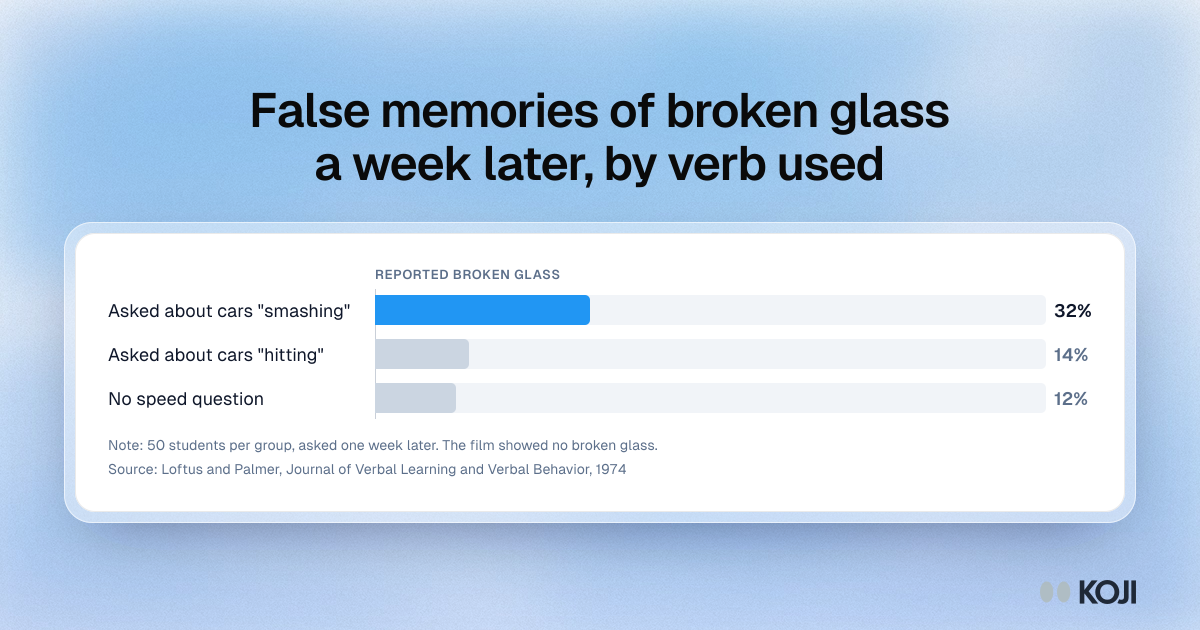
Results from the second experiment in Loftus and Palmer's 1974 study of memory and question wording. 150 students watched a film of a car accident. A week after being asked how fast the cars were going when they smashed or hit each other, 32% of the smashed group said they saw broken glass, against 14% for hit and 12% for a control group. There was no broken glass. A clear example of the misinformation effect for anyone writing interview questions.
Where this appears
What's in this bar chart
| Said they saw broken glass | |
|---|---|
| Asked about cars "smashing" | 32% |
| Asked about cars "hitting" | 14% |
| No speed question | 12% |
50 students per group, asked one week later. The film showed no broken glass.
Use this image
Free to use in your docs, decks and posts under CC BY 4.0, as long as you credit Koji with a link to this page. To embed it, paste this into your page:
html
<a href="https://www.koji.so/visuals/loftus-palmer-false-broken-glass-reports-by-verb"><img src="https://www.koji.so/visuals/loftus-palmer-false-broken-glass-reports-by-verb/loftus-palmer-false-broken-glass-reports-by-verb.png" alt="Bar chart from Loftus and Palmer: 32% of people asked about cars smashing later recalled broken glass, against 14% for hitting and 12% for control." width="1200" height="630" /></a>
<p>Source: <a href="https://www.koji.so/visuals/loftus-palmer-false-broken-glass-reports-by-verb">False memories of broken glass a week later, by verb used</a>, Koji</p>