Comparison
Measurement vs diagnosis in market research
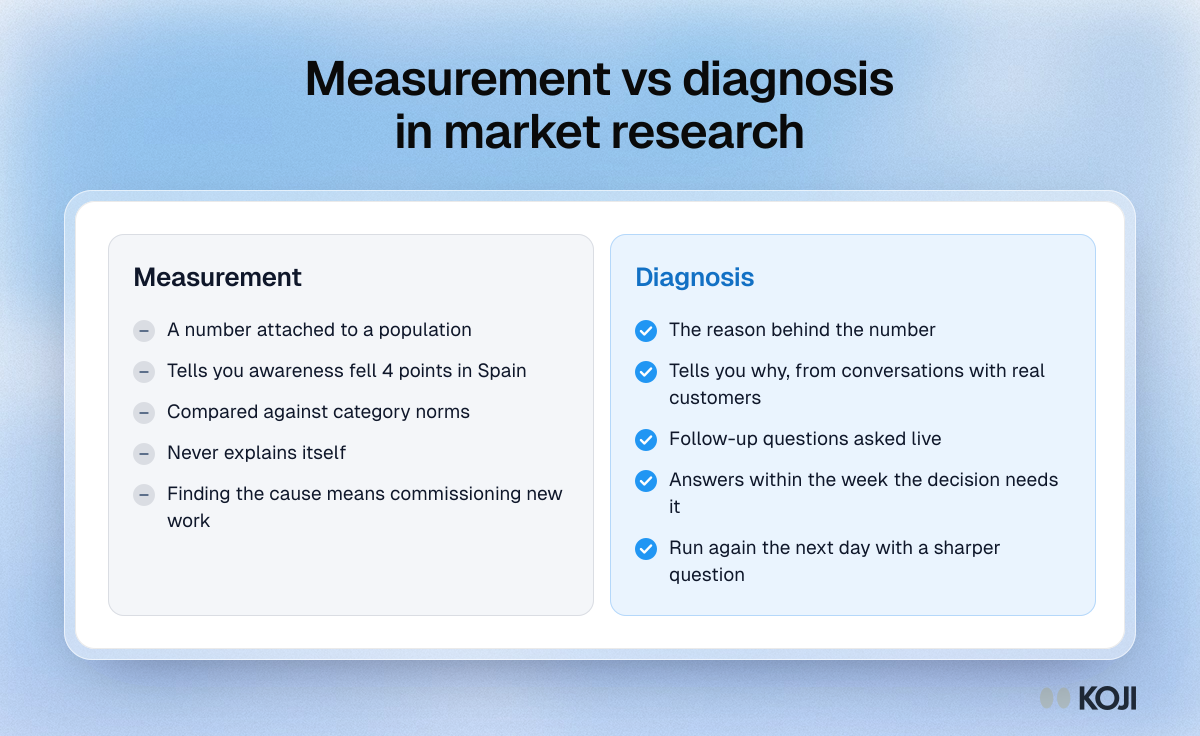
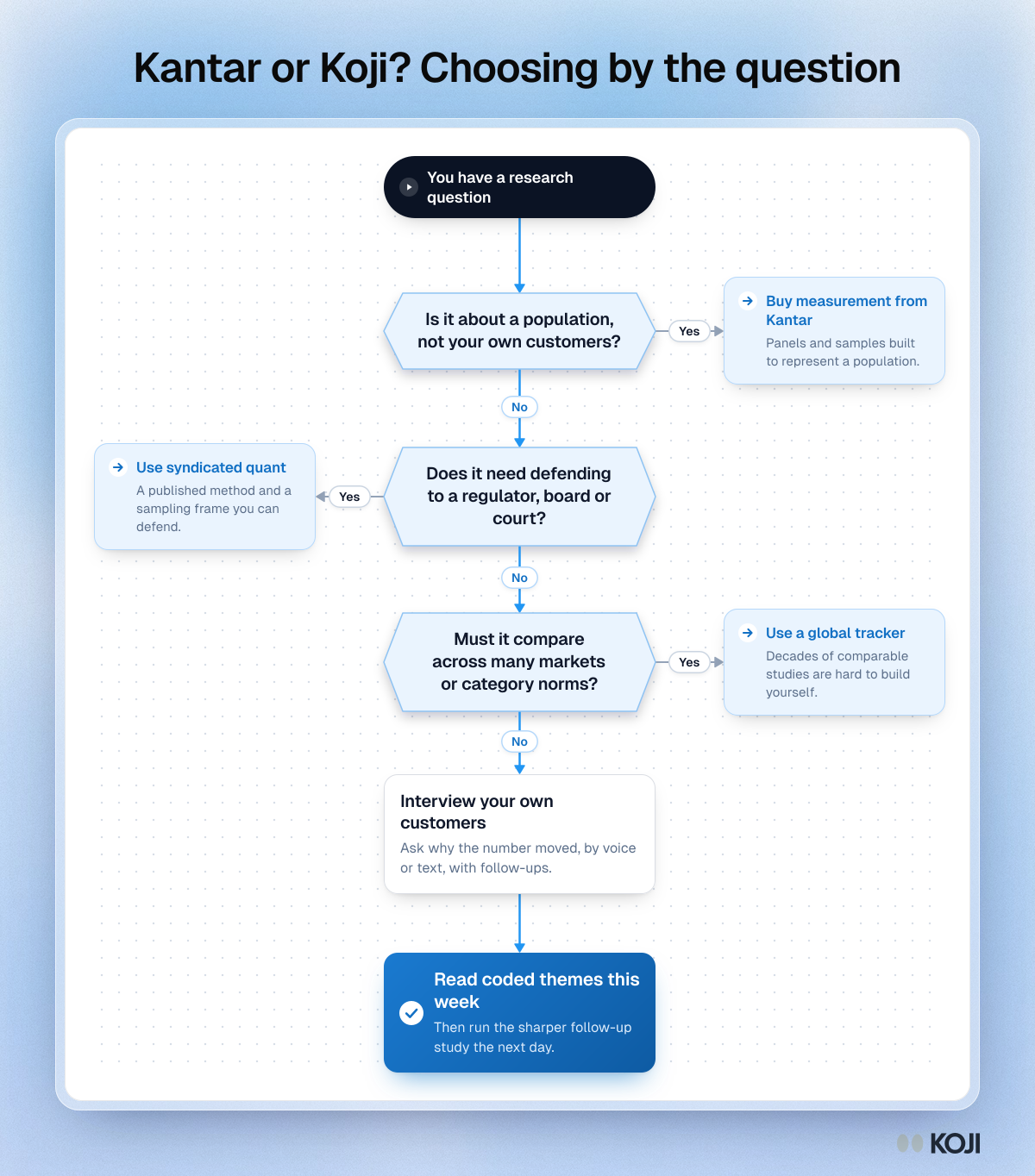
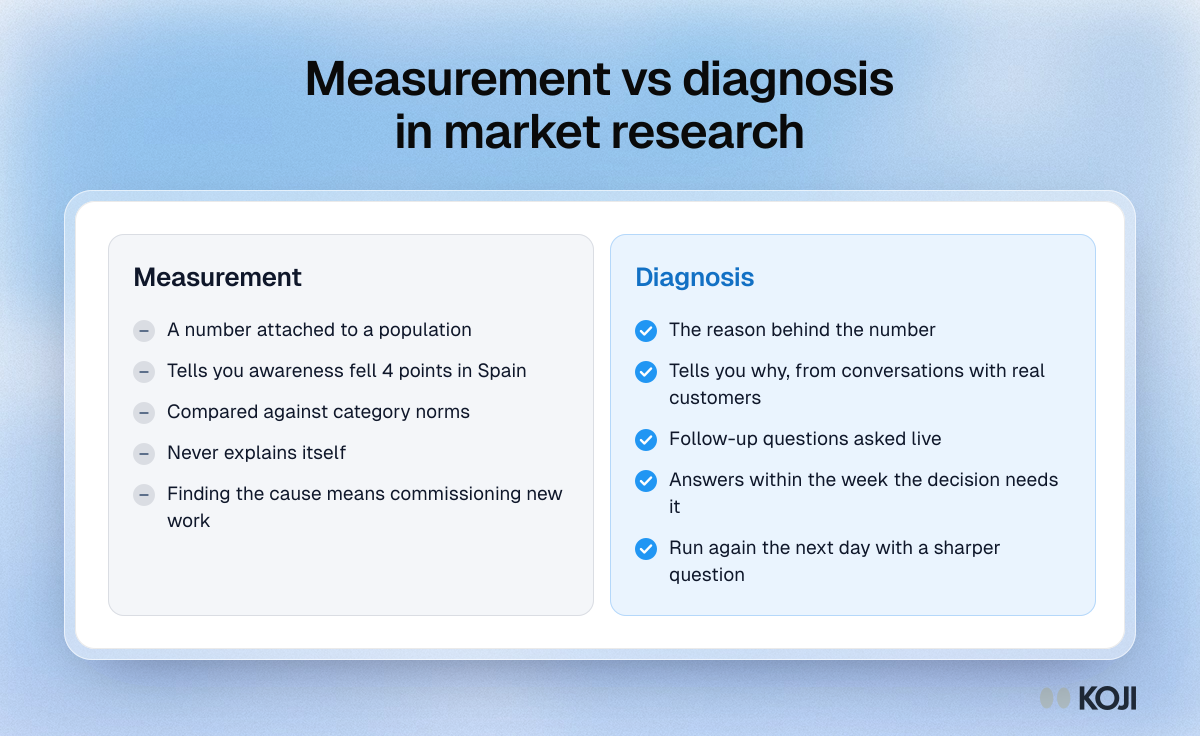
A side-by-side look at the two jobs research does for a brand. Measurement, the strength of syndicated providers and brand trackers, attaches a number to a population and compares it with norms. Diagnosis explains why that number moved, through conversations with the people behind it. Many insights teams buy both. Koji is built for the diagnosis loop, with AI-moderated interviews that return coded themes in hours.
Where this appears
What's in this comparison
Measurement
- A number attached to a population
- Tells you awareness fell 4 points in Spain
- Compared against category norms
- Never explains itself
- Finding the cause means commissioning new work
Diagnosis
- The reason behind the number
- Tells you why, from conversations with real customers
- Follow-up questions asked live
- Answers within the week the decision needs it
- Run again the next day with a sharper question
Use this image
Free to use in your docs, decks and posts under CC BY 4.0, as long as you credit Koji with a link to this page. To embed it, paste this into your page:
html
<a href="https://www.koji.so/visuals/measurement-vs-diagnosis-tracker-vs-interviews"><img src="https://www.koji.so/visuals/measurement-vs-diagnosis-tracker-vs-interviews/measurement-vs-diagnosis-tracker-vs-interviews.png" alt="Comparison of measurement and diagnosis: a tracker gives a number for a population, interviews give the reason behind it within the week." width="1200" height="736" /></a>
<p>Source: <a href="https://www.koji.so/visuals/measurement-vs-diagnosis-tracker-vs-interviews">Measurement vs diagnosis in market research</a>, Koji</p>