Reference table
Personalized pricing: what the evidence shows and what it does not
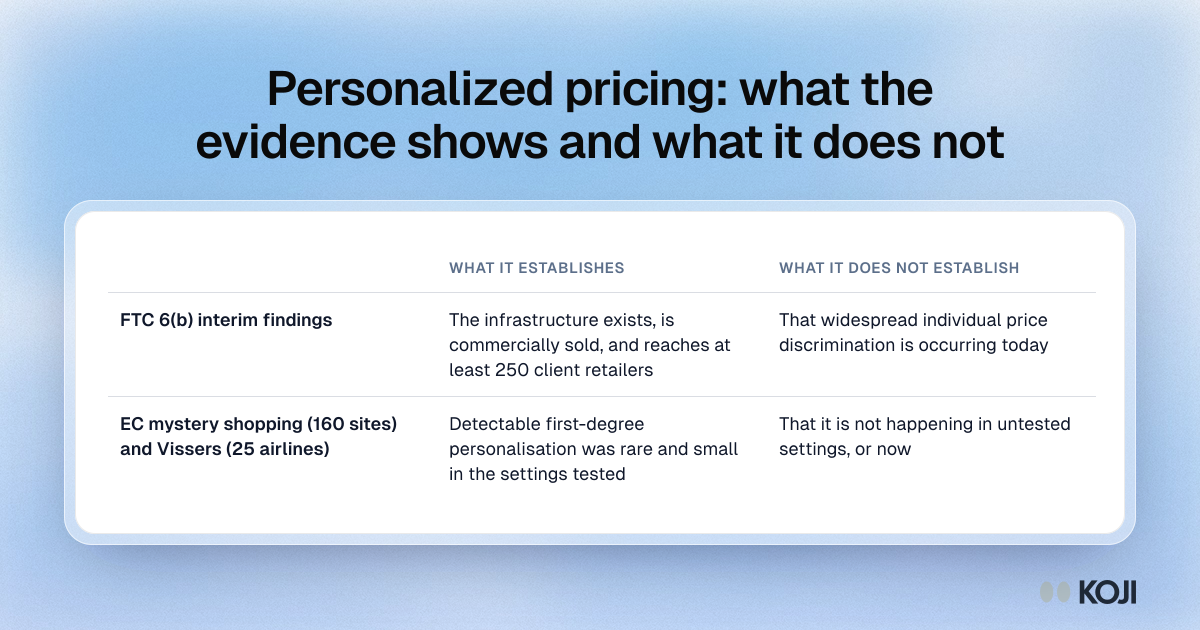
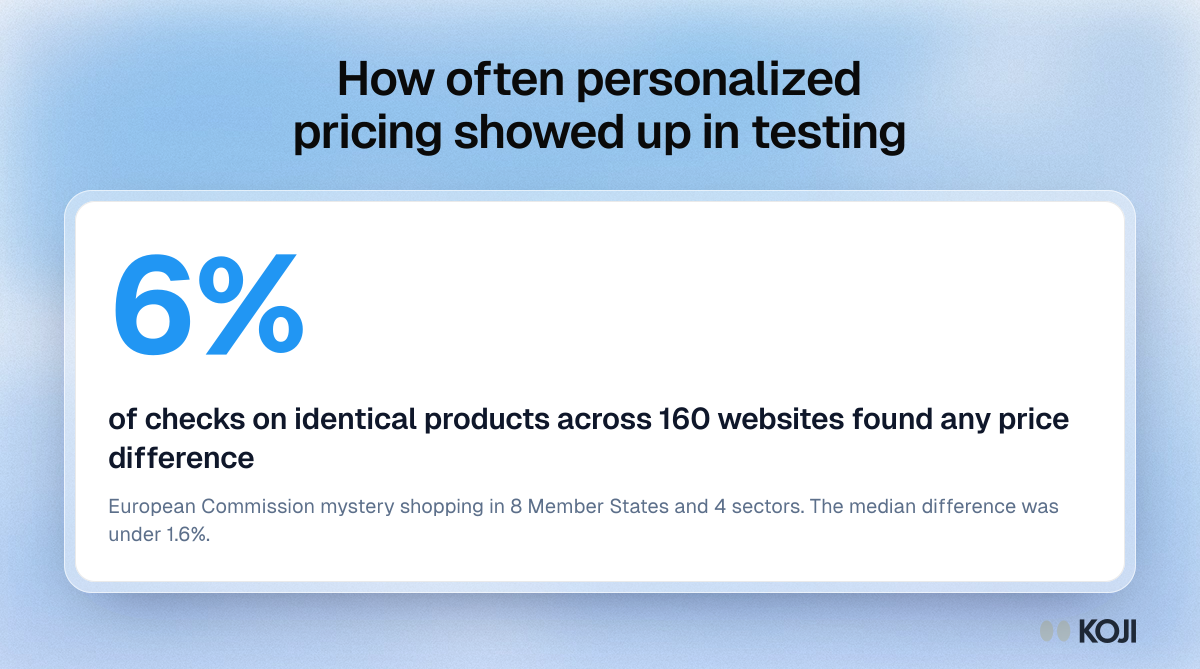
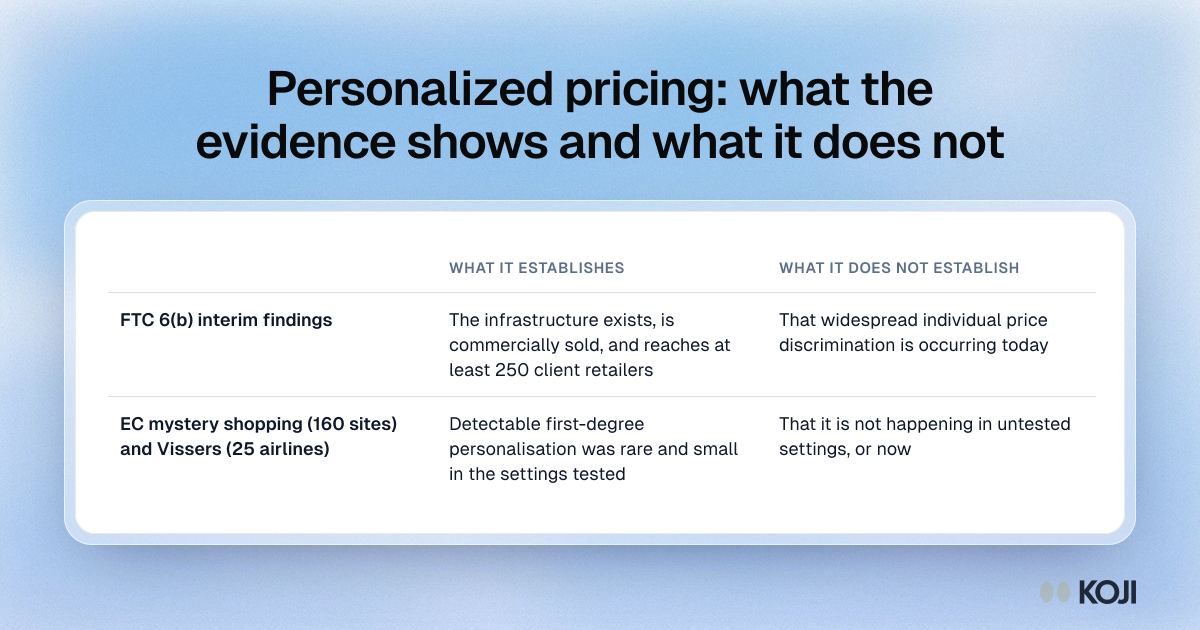
A two-row summary of the evidence on personalized pricing. The FTC's 2025 interim findings show the infrastructure is sold to at least 250 client retailers. A European Commission mystery shopping study of 160 websites, and Vissers and colleagues' test of 25 airlines, found little detectable first-degree personalisation. Pricing and research teams can use it to separate capability from incidence before they plan a study.
Where this appears
What's in this reference table
| What it establishes | What it does not establish | |
|---|---|---|
| FTC 6(b) interim findings | The infrastructure exists, is commercially sold, and reaches at least 250 client retailers | That widespread individual price discrimination is occurring today |
| EC mystery shopping (160 sites) and Vissers (25 airlines) | Detectable first-degree personalisation was rare and small in the settings tested | That it is not happening in untested settings, or now |
Use this image
Free to use in your docs, decks and posts under CC BY 4.0, as long as you credit Koji with a link to this page. To embed it, paste this into your page:
html
<a href="https://www.koji.so/visuals/personalized-pricing-evidence-capability-vs-incidence"><img src="https://www.koji.so/visuals/personalized-pricing-evidence-capability-vs-incidence/personalized-pricing-evidence-capability-vs-incidence.png" alt="Table comparing what the FTC surveillance pricing findings and two price testing studies establish about personalized pricing, and what they leave open." width="1200" height="630" /></a>
<p>Source: <a href="https://www.koji.so/visuals/personalized-pricing-evidence-capability-vs-incidence">Personalized pricing: what the evidence shows and what it does not</a>, Koji</p>