Framework
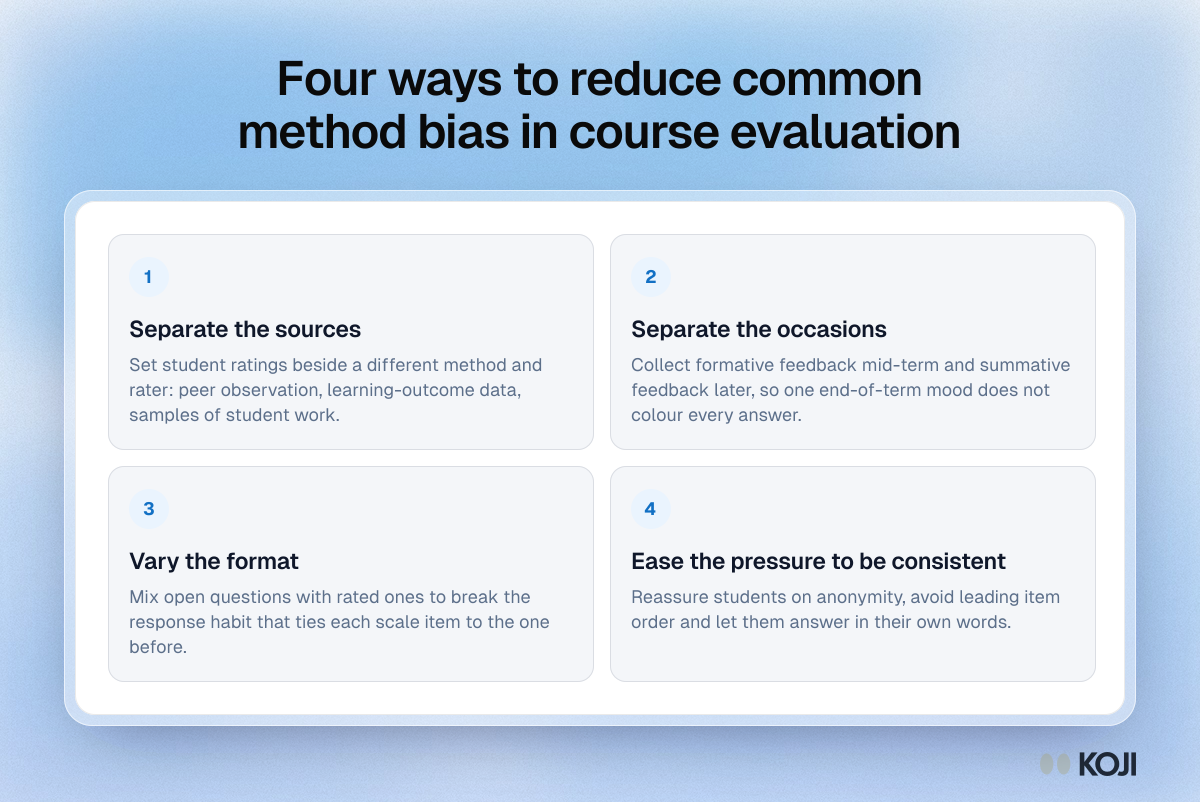
Four ways to reduce common method bias in course evaluation
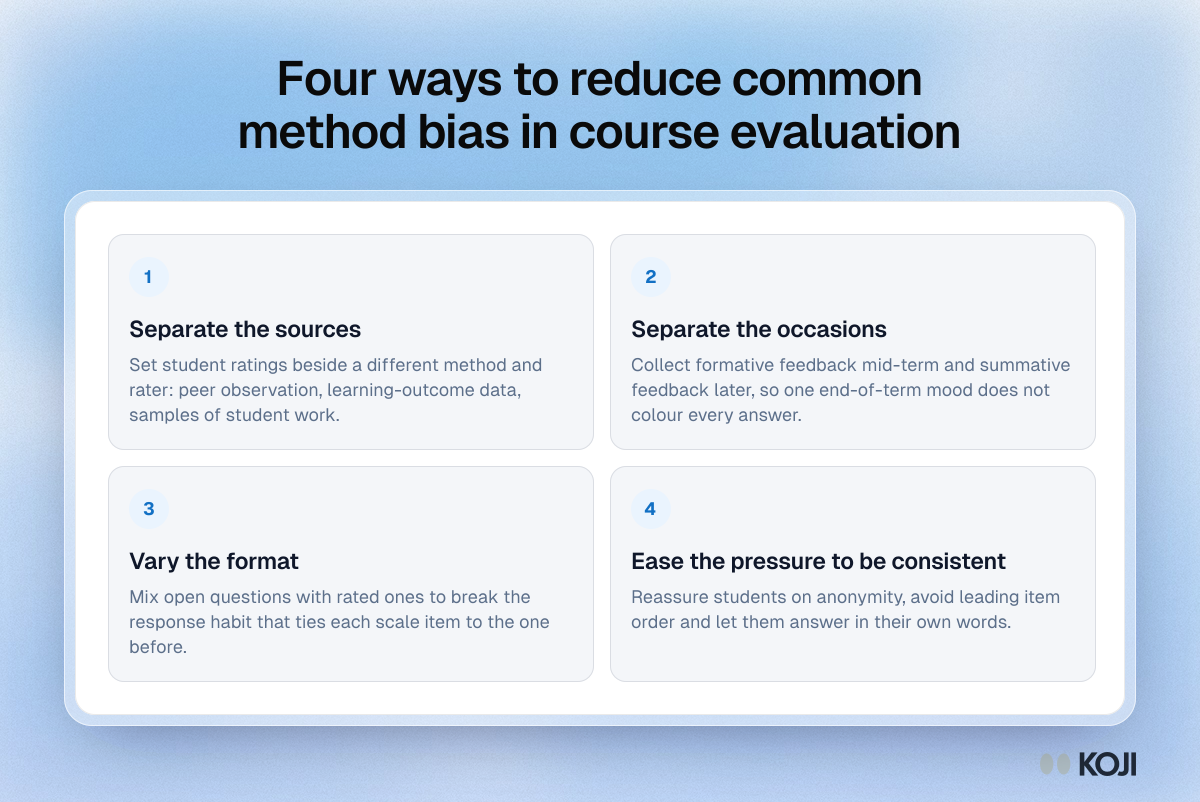
A four-part framework for reducing common method variance in student evaluations of teaching, for quality assurance and institutional research teams. It follows the procedural remedies in Podsakoff and colleagues' 2003 review: change who answers, when they answer and how, and lower the pull to answer consistently. Use it when reviewing an evaluation instrument or a dashboard that reads meaning into within-survey correlations. Koji for Education supports mid-cycle collection and mixes open and structured questions in one interview.
What's in this framework
- Separate the sources: Set student ratings beside a different method and rater: peer observation, learning-outcome data, samples of student work.
- Separate the occasions: Collect formative feedback mid-term and summative feedback later, so one end-of-term mood does not colour every answer.
- Vary the format: Mix open questions with rated ones to break the response habit that ties each scale item to the one before.
- Ease the pressure to be consistent: Reassure students on anonymity, avoid leading item order and let them answer in their own words.
Use this image
Free to use in your docs, decks and posts under CC BY 4.0, as long as you credit Koji with a link to this page. To embed it, paste this into your page:
html
<a href="https://www.koji.so/visuals/reduce-common-method-variance-course-evaluation"><img src="https://www.koji.so/visuals/reduce-common-method-variance-course-evaluation/reduce-common-method-variance-course-evaluation.png" alt="Framework of four ways to reduce common method variance in course evaluation: separate sources and occasions, vary the format, ease consistency pressure." width="1200" height="802" /></a>
<p>Source: <a href="https://www.koji.so/visuals/reduce-common-method-variance-course-evaluation">Four ways to reduce common method bias in course evaluation</a>, Koji</p>