Process
A development-focused evaluation cycle for new lecturers
Five steps that put the conversation, not the score, at the centre of routine evaluation
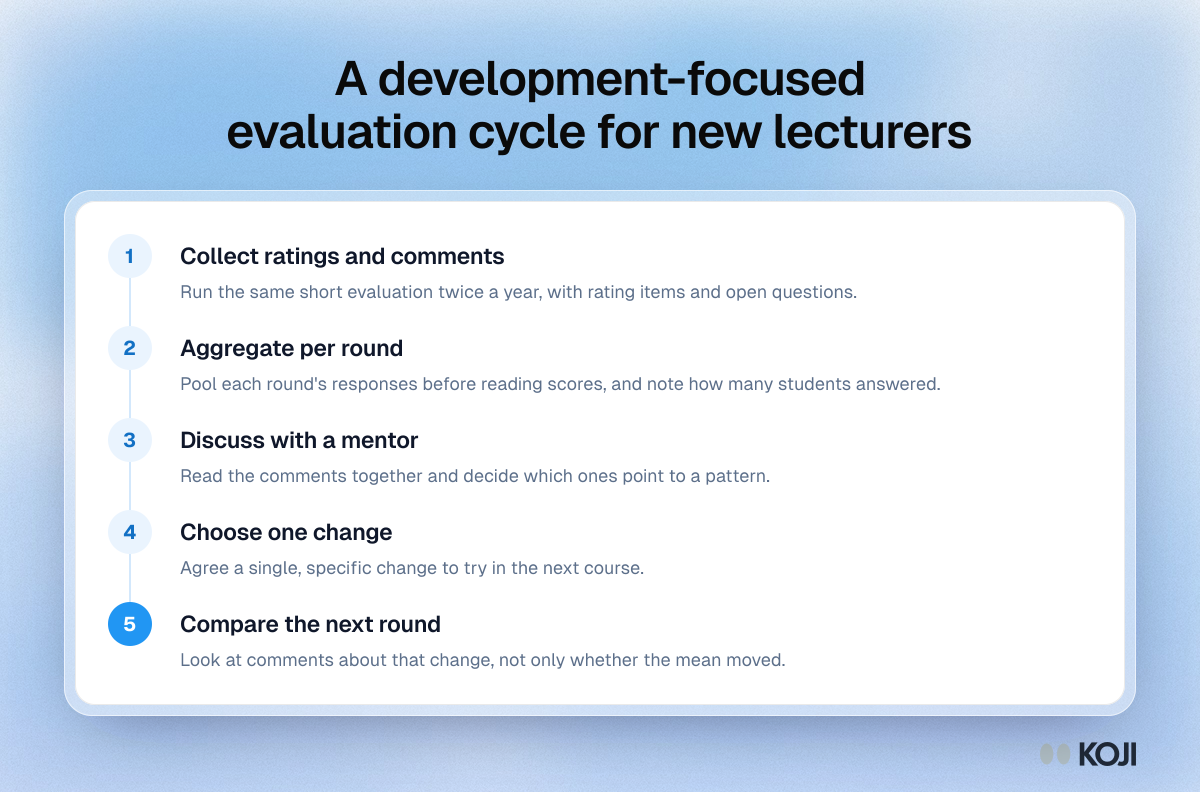
A five-step cycle for using routine student evaluations to help new lecturers develop. It follows a 2026 Utrecht University study of 5,050 evaluations of 42 starting teachers, where scores changed little but teachers valued the comments and the discussion around them. Educational developers and programme leads can use it to plan induction support. Koji can run the evaluation rounds as short interviews with follow-up questions.
What's in this process
- Collect ratings and comments: Run the same short evaluation twice a year, with rating items and open questions.
- Aggregate per round: Pool each round's responses before reading scores, and note how many students answered.
- Discuss with a mentor: Read the comments together and decide which ones point to a pattern.
- Choose one change: Agree a single, specific change to try in the next course.
- Compare the next round: Look at comments about that change, not only whether the mean moved.
Use this image
Free to use in your docs, decks and posts under CC BY 4.0, as long as you credit Koji with a link to this page. To embed it, paste this into your page:
html
<a href="https://www.koji.so/visuals/routine-evaluation-cycle-new-lecturers"><img src="https://www.koji.so/visuals/routine-evaluation-cycle-new-lecturers/routine-evaluation-cycle-new-lecturers.png" alt="Process diagram of an evaluation cycle for new lecturers: collect twice a year, aggregate, discuss with a mentor, choose one change, compare." width="1200" height="792" /></a>
<p>Source: <a href="https://www.koji.so/visuals/routine-evaluation-cycle-new-lecturers">A development-focused evaluation cycle for new lecturers</a>, Koji</p>