Comparison
Self-rated learning vs measured learning
What "I learned a lot" can and cannot tell a programme review
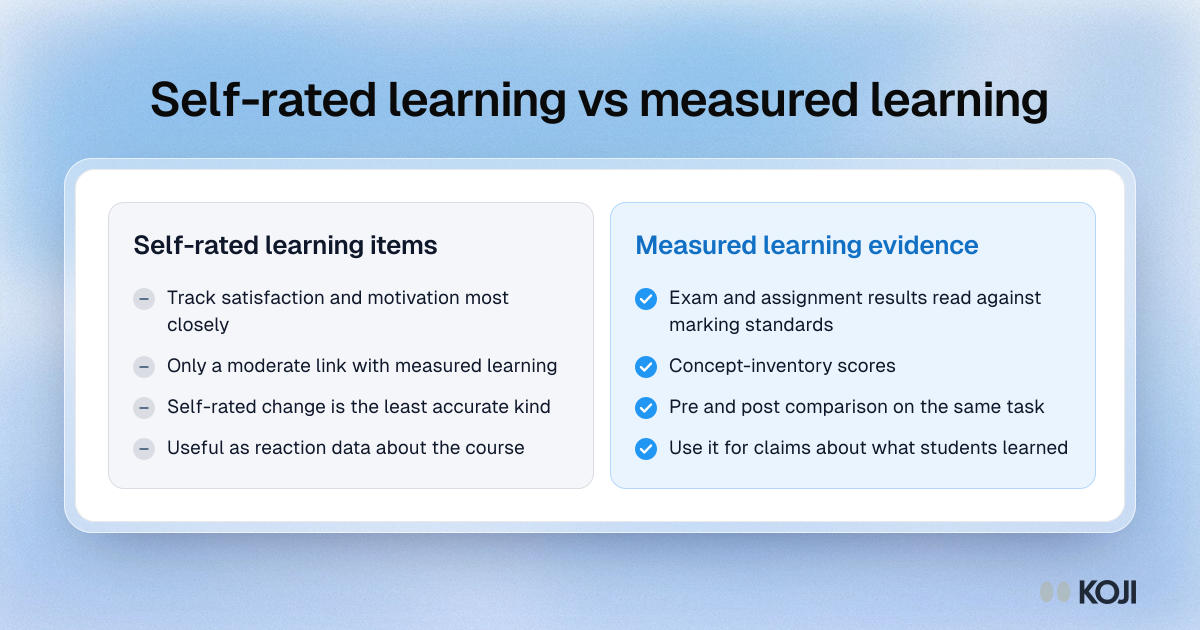
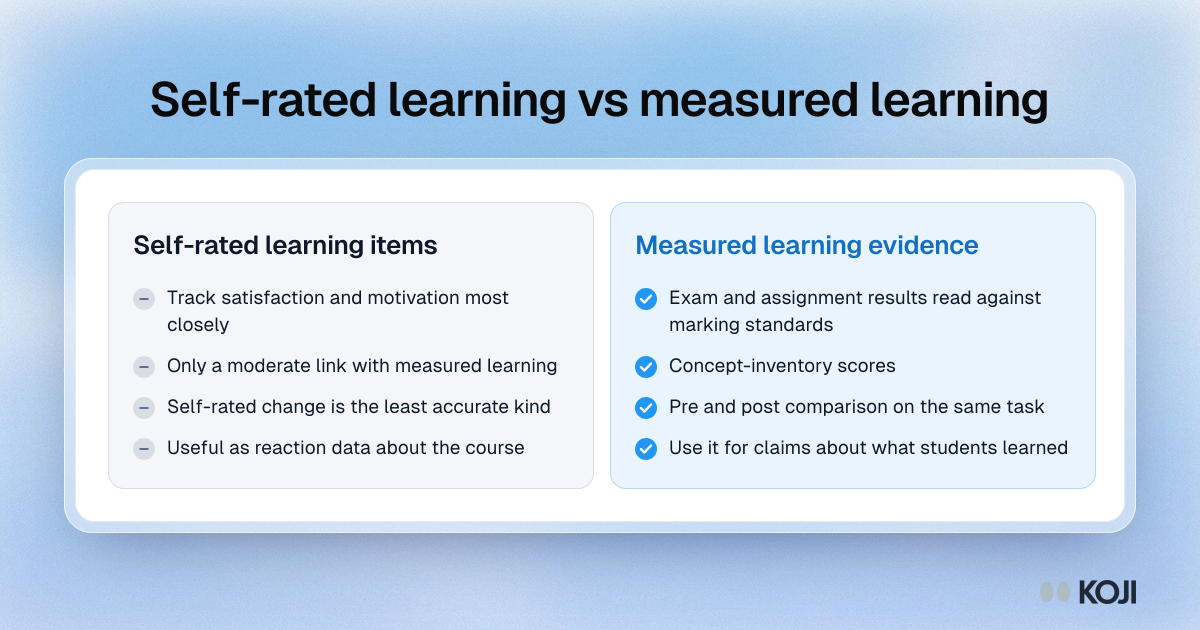
A side-by-side guide for quality officers and programme teams on reading self-rated learning items in course evaluations. A meta-analysis found self-assessed knowledge tracks satisfaction and motivation more closely than measured learning, and a longitudinal study found self-reported gains barely matched measured gains. Use self-ratings as reaction data and keep claims about attainment for measured evidence. Koji interviews can ask students for concrete examples of what they can now do, which teams read alongside assessment results.
What's in this comparison
Self-rated learning items
- Track satisfaction and motivation most closely
- Only a moderate link with measured learning
- Self-rated change is the least accurate kind
- Useful as reaction data about the course
Measured learning evidence
- Exam and assignment results read against marking standards
- Concept-inventory scores
- Pre and post comparison on the same task
- Use it for claims about what students learned
Use this image
Free to use in your docs, decks and posts under CC BY 4.0, as long as you credit Koji with a link to this page. To embed it, paste this into your page:
<a href="https://www.koji.so/visuals/self-rated-vs-measured-learning-course-evaluation"><img src="https://www.koji.so/visuals/self-rated-vs-measured-learning-course-evaluation/self-rated-vs-measured-learning-course-evaluation.png" alt="Comparison of self-rated learning items with measured learning evidence, showing what each can and cannot tell a programme team." width="1200" height="630" /></a>
<p>Source: <a href="https://www.koji.so/visuals/self-rated-vs-measured-learning-course-evaluation">Self-rated learning vs measured learning</a>, Koji</p>