Reference table
Three reasons to stop a study early
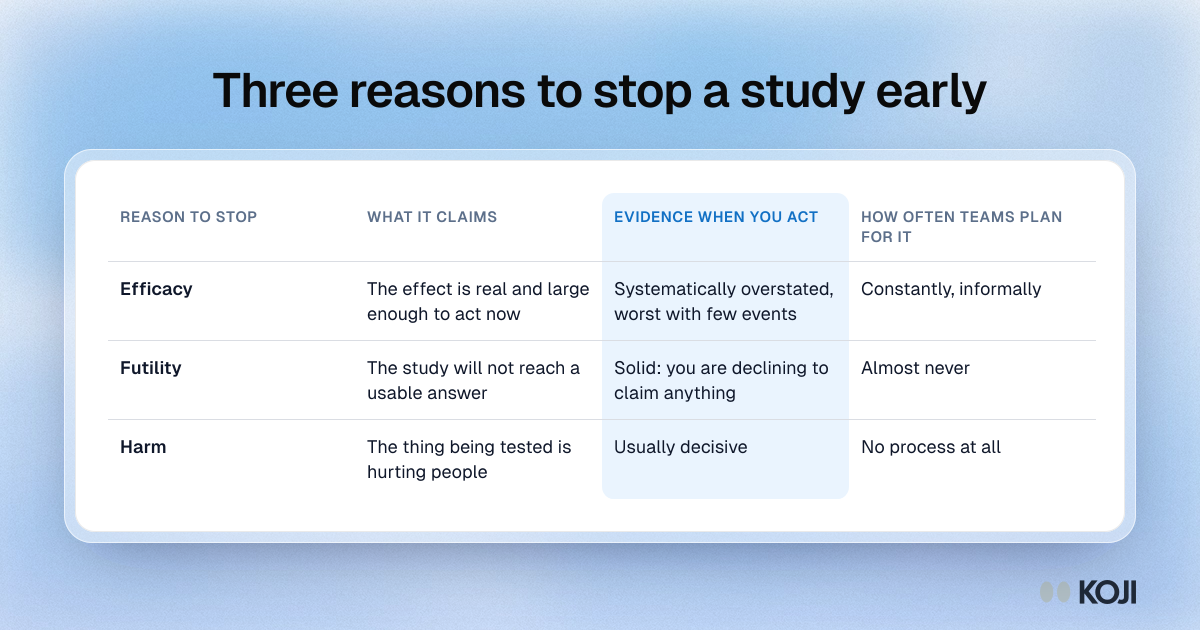
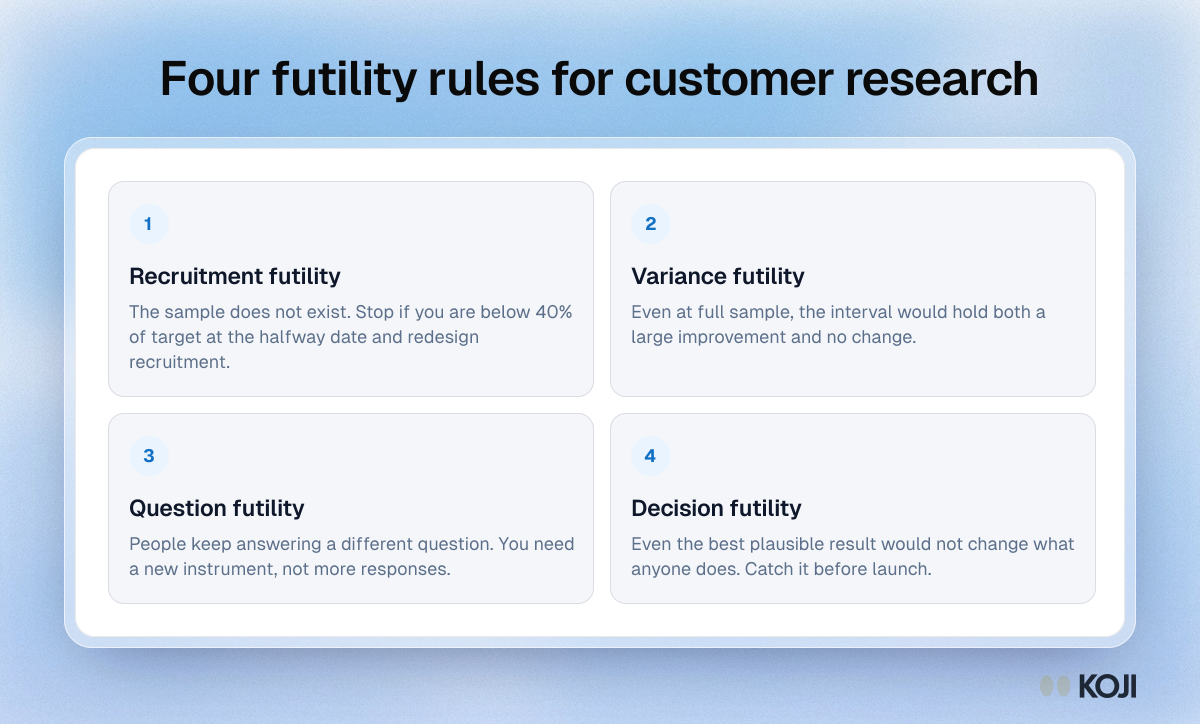
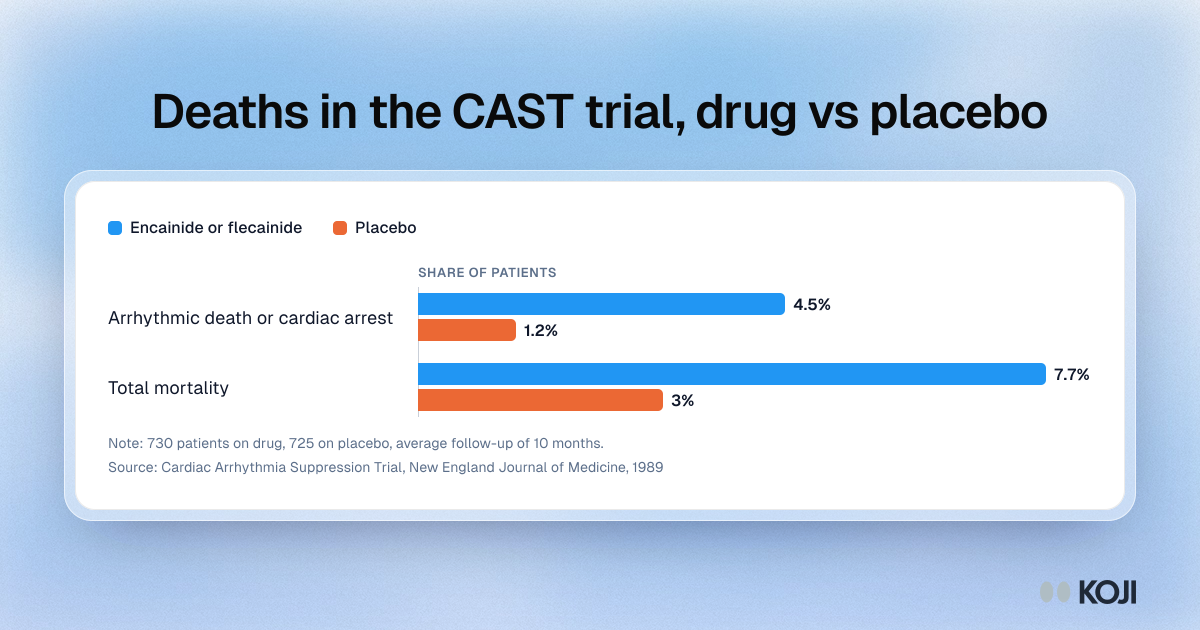
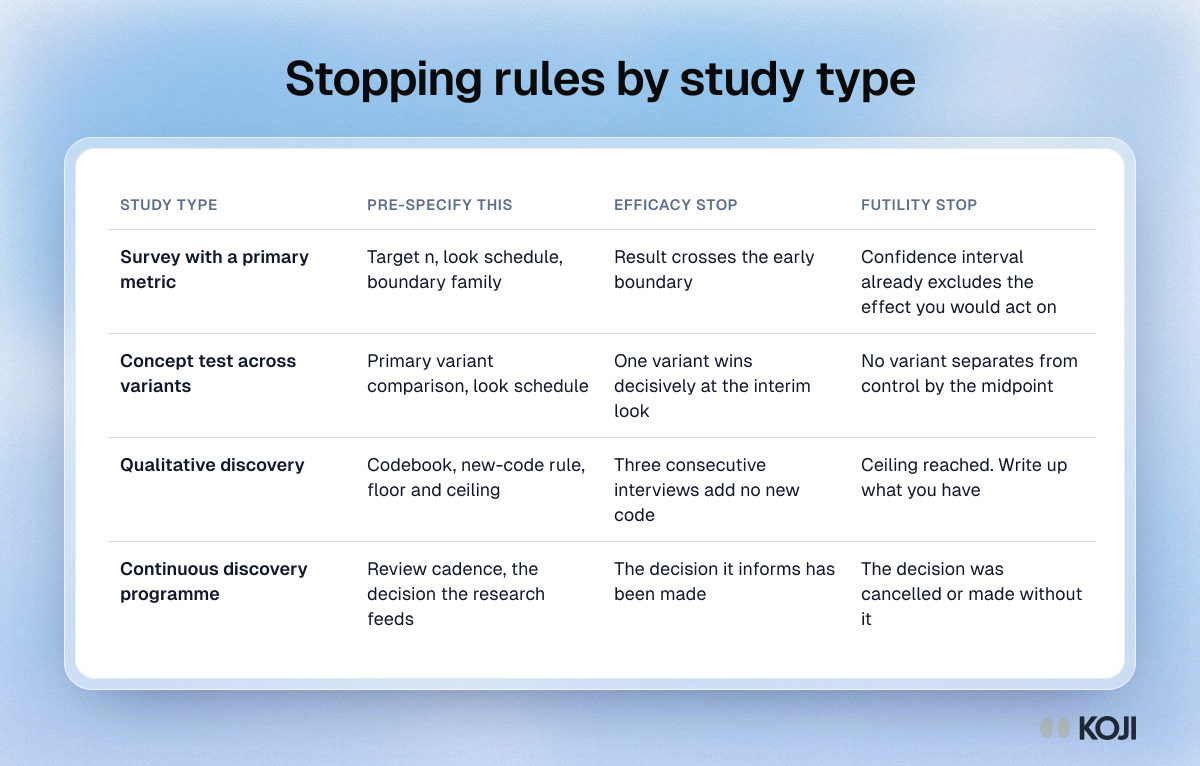
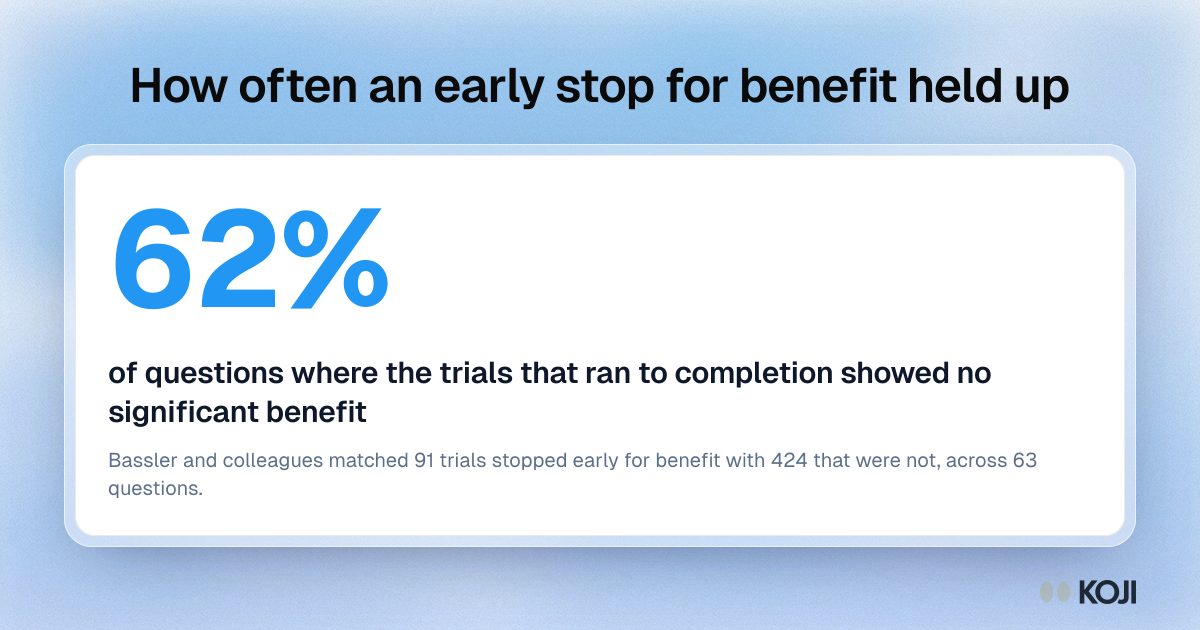
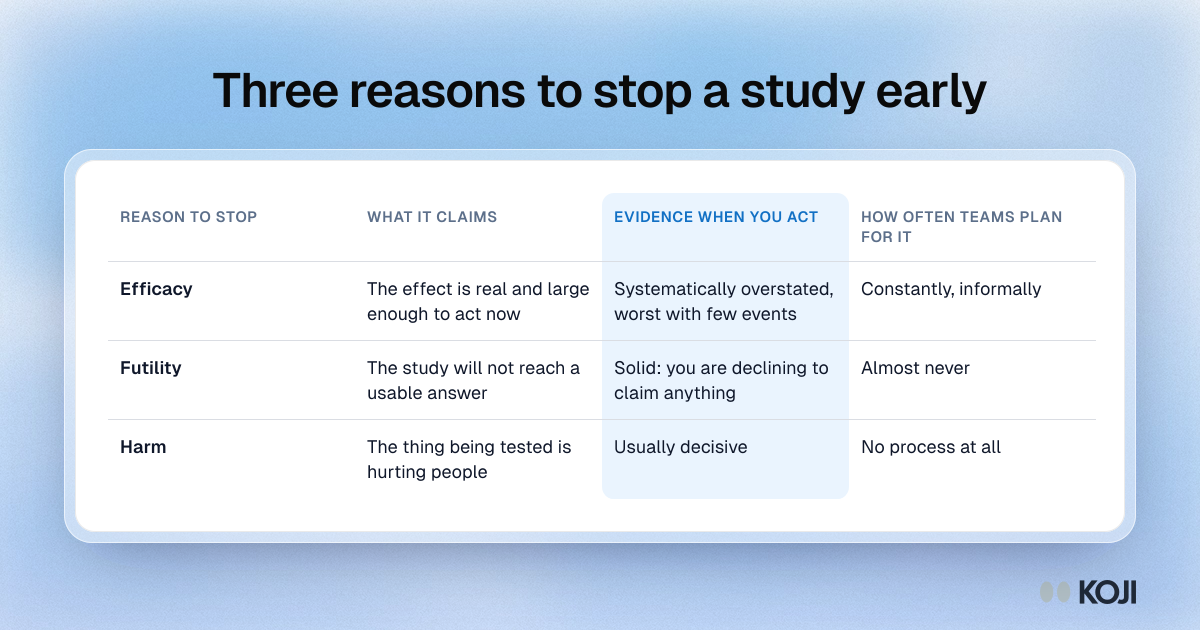
A reference table of the three reasons to stop a running study before its planned end: it worked, it will never work, or it is causing harm. It sets out what each stop claims, how trustworthy the evidence is when you act on it, and how often product teams plan for it. Clinical trials monitor all three, and the table shows why futility and harm deserve a written rule in every research brief, including studies run in Koji.
Where this appears
What's in this reference table
| Reason to stop | What it claims | Evidence when you act | How often teams plan for it |
|---|---|---|---|
| Efficacy | The effect is real and large enough to act now | Systematically overstated, worst with few events | Constantly, informally |
| Futility | The study will not reach a usable answer | Solid: you are declining to claim anything | Almost never |
| Harm | The thing being tested is hurting people | Usually decisive | No process at all |
Use this image
Free to use in your docs, decks and posts under CC BY 4.0, as long as you credit Koji with a link to this page. To embed it, paste this into your page:
html
<a href="https://www.koji.so/visuals/three-reasons-to-stop-a-study-early"><img src="https://www.koji.so/visuals/three-reasons-to-stop-a-study-early/three-reasons-to-stop-a-study-early.png" alt="Table of the three reasons to stop a study early, efficacy, futility and harm, with what each claims, how good its evidence is and how often teams plan for it." width="1200" height="630" /></a>
<p>Source: <a href="https://www.koji.so/visuals/three-reasons-to-stop-a-study-early">Three reasons to stop a study early</a>, Koji</p>