Reference table
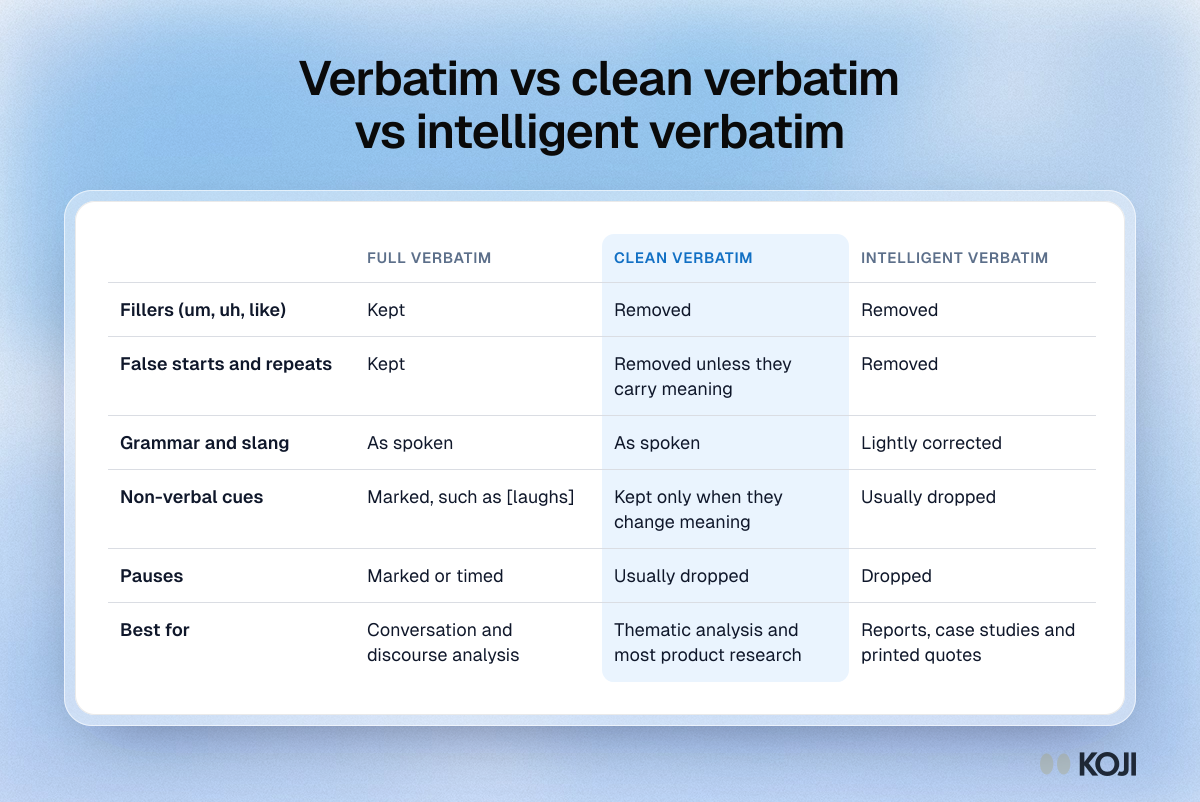
Verbatim vs clean verbatim vs intelligent verbatim
What each interview transcription style keeps, removes and suits
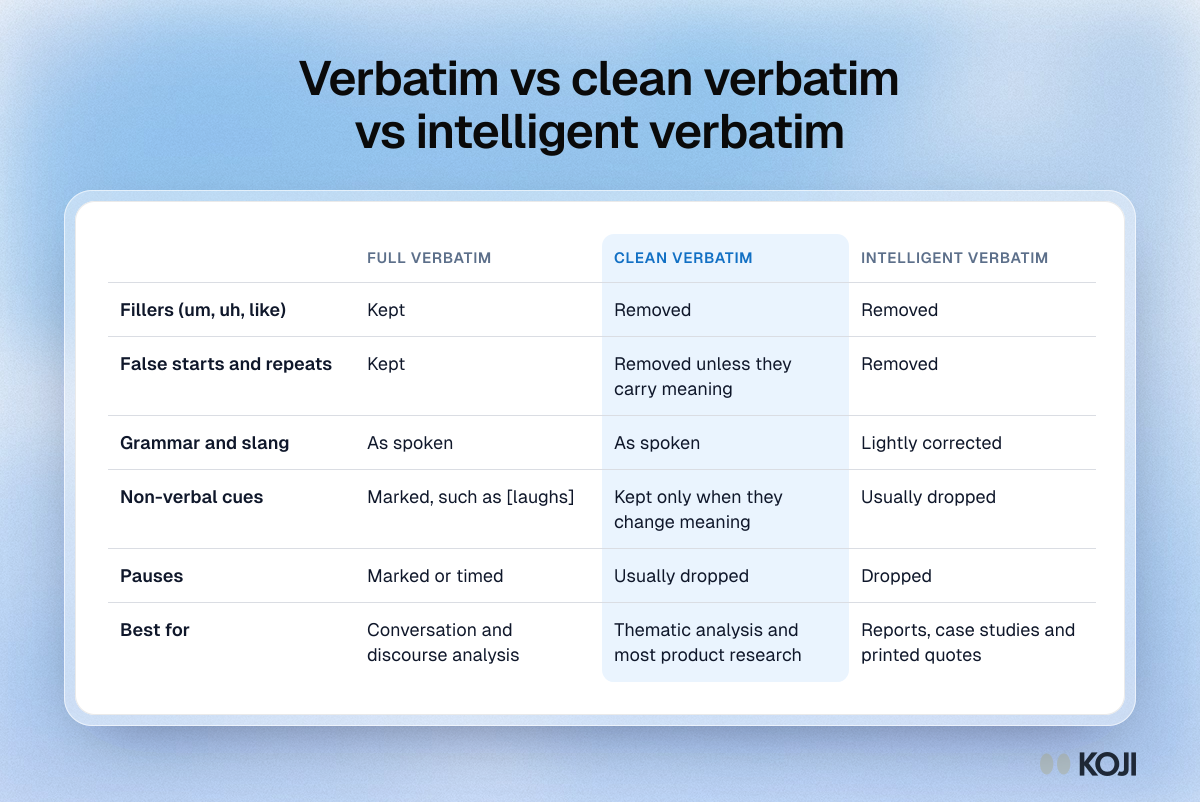
A side by side comparison of the three common transcription styles for research interviews. Full verbatim keeps fillers, false starts, pauses and non-verbal cues; clean verbatim keeps every meaningful word but drops the stumbles; intelligent verbatim also corrects grammar for reading. Use it to agree a transcription convention with your team before fieldwork. Koji keeps interview transcripts and quotes verbatim, so you can apply whichever style you need on export.
Where this appears
What's in this reference table
| Full verbatim | Clean verbatim | Intelligent verbatim | |
|---|---|---|---|
| Fillers (um, uh, like) | Kept | Removed | Removed |
| False starts and repeats | Kept | Removed unless they carry meaning | Removed |
| Grammar and slang | As spoken | As spoken | Lightly corrected |
| Non-verbal cues | Marked, such as [laughs] | Kept only when they change meaning | Usually dropped |
| Pauses | Marked or timed | Usually dropped | Dropped |
| Best for | Conversation and discourse analysis | Thematic analysis and most product research | Reports, case studies and printed quotes |
Use this image
Free to use in your docs, decks and posts under CC BY 4.0, as long as you credit Koji with a link to this page. To embed it, paste this into your page:
html
<a href="https://www.koji.so/visuals/transcription-styles-verbatim-vs-clean-vs-intelligent"><img src="https://www.koji.so/visuals/transcription-styles-verbatim-vs-clean-vs-intelligent/transcription-styles-verbatim-vs-clean-vs-intelligent.png" alt="Table comparing full verbatim, clean verbatim and intelligent verbatim transcription: what each keeps, removes and is best used for" width="1200" height="802" /></a>
<p>Source: <a href="https://www.koji.so/visuals/transcription-styles-verbatim-vs-clean-vs-intelligent">Verbatim vs clean verbatim vs intelligent verbatim</a>, Koji</p>