Comparison
When to use a just-about-right scale
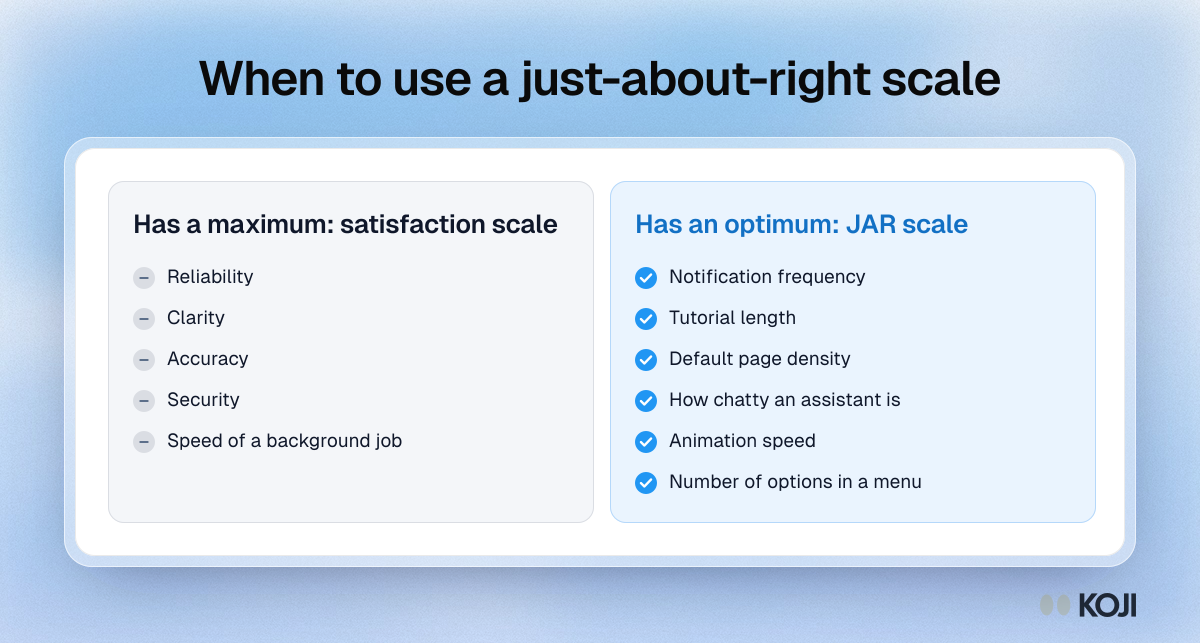
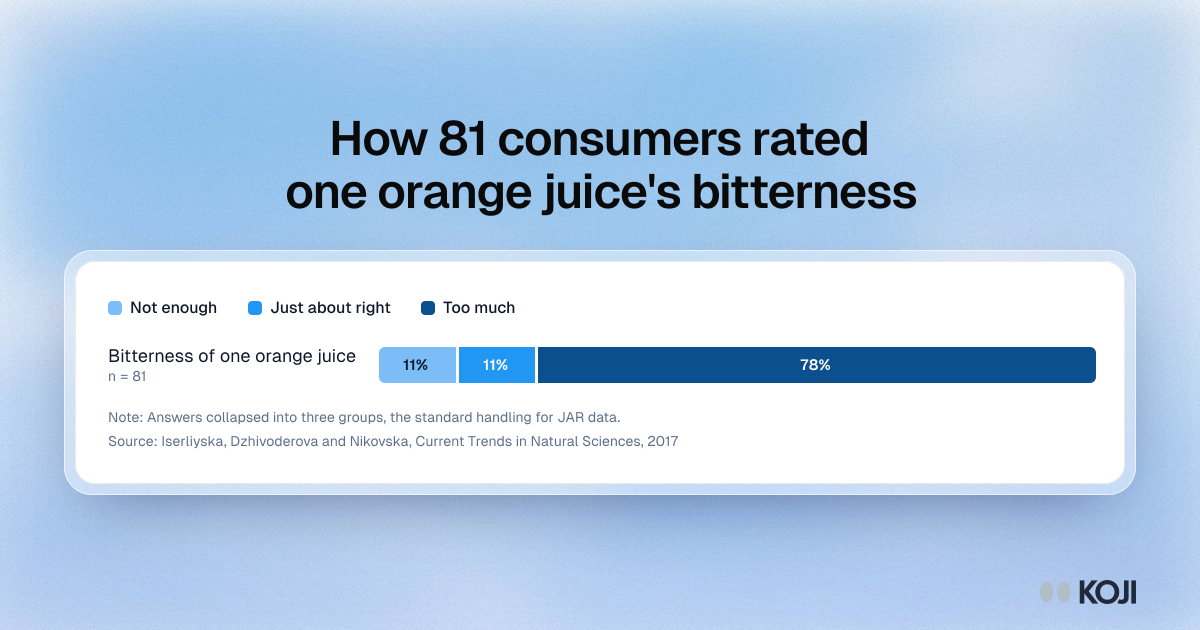
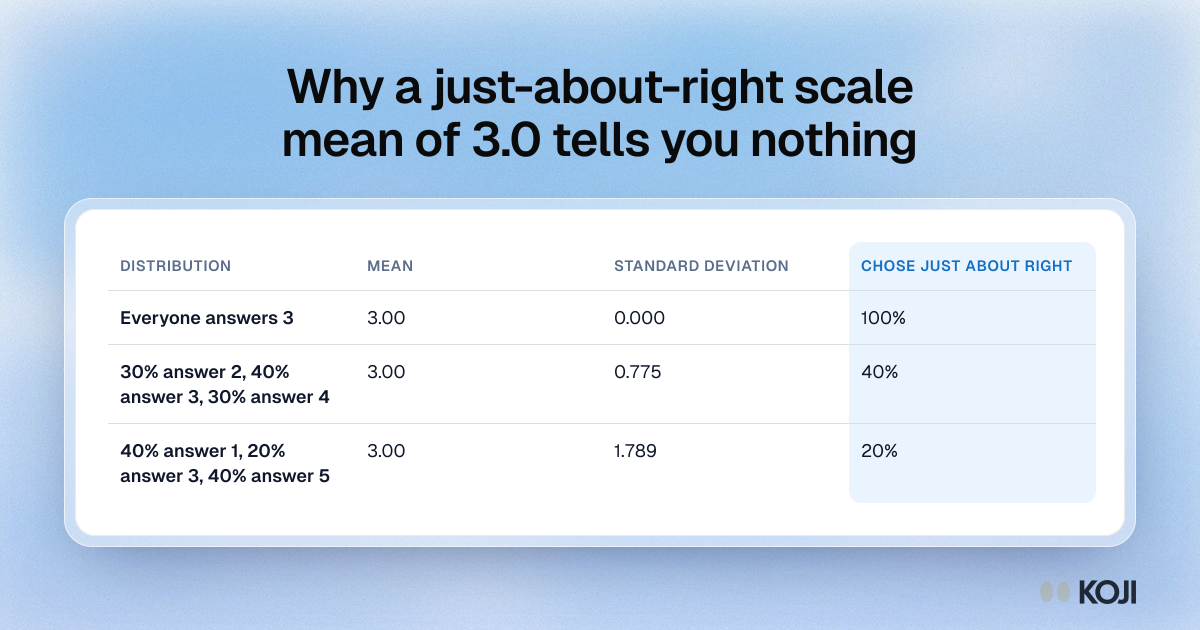
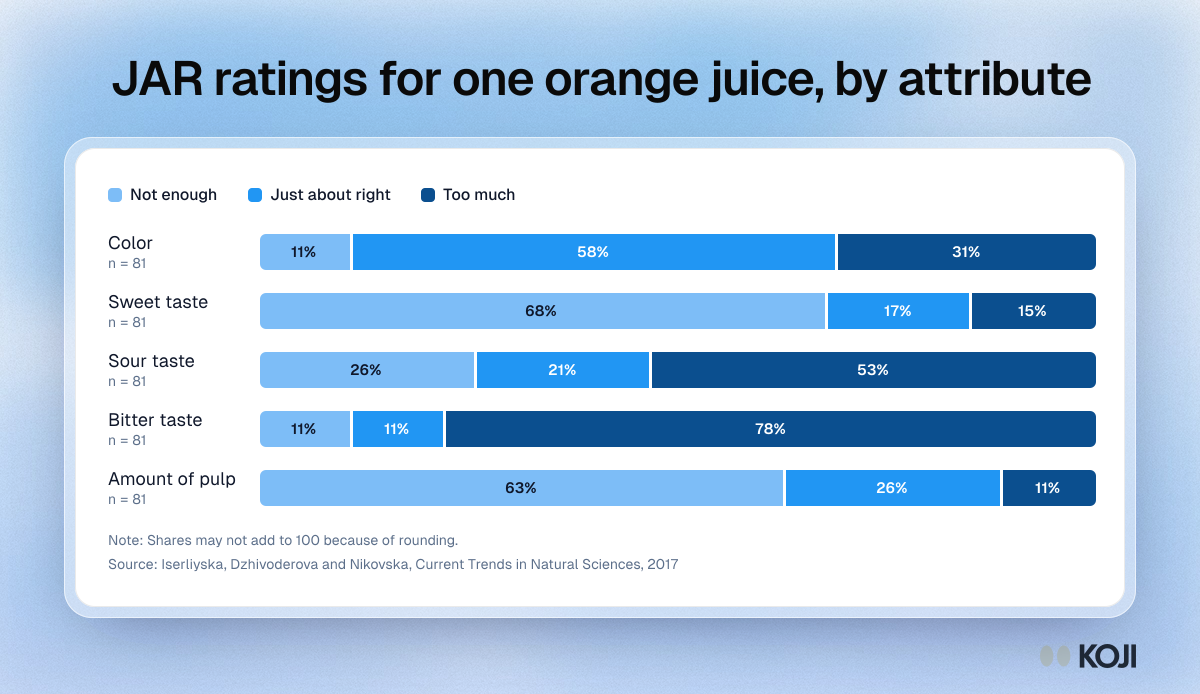
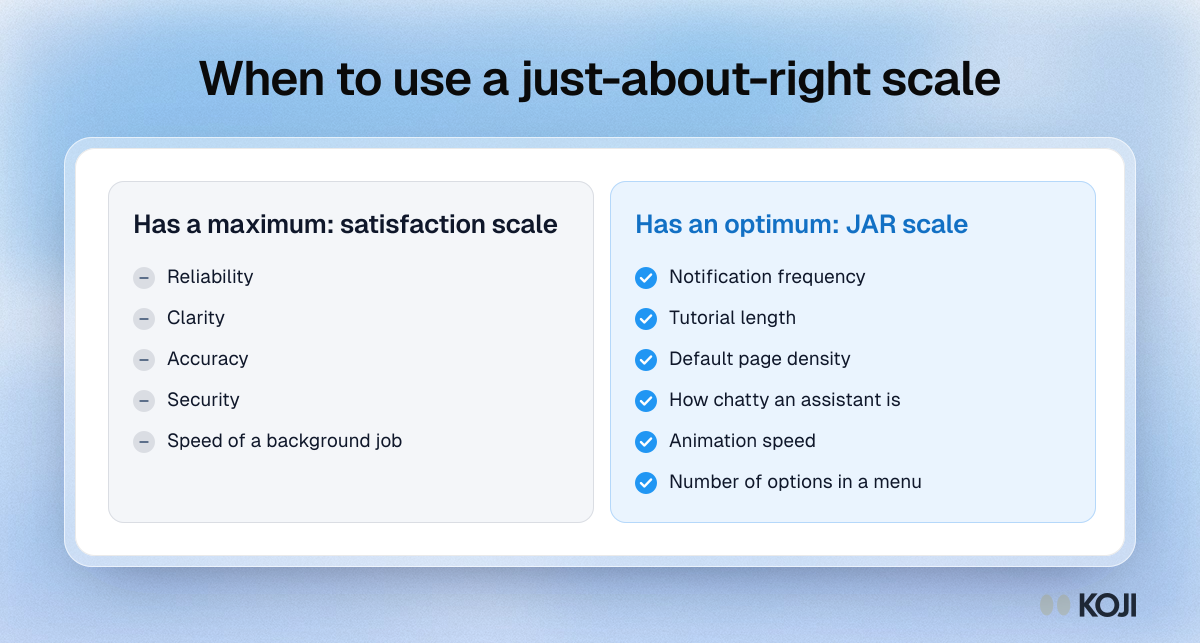
A quick guide to choosing between a just-about-right (JAR) scale and an ordinary satisfaction or agreement scale. Attributes with a maximum, such as reliability, accuracy and security, belong on a satisfaction scale. Attributes with an optimum, such as notification frequency, tutorial length or how chatty an assistant is, belong on a JAR scale. Use it when you write a product survey or interview guide. Koji fields both kinds in one study.
Where this appears
What's in this comparison
Has a maximum: satisfaction scale
- Reliability
- Clarity
- Accuracy
- Security
- Speed of a background job
Has an optimum: JAR scale
- Notification frequency
- Tutorial length
- Default page density
- How chatty an assistant is
- Animation speed
- Number of options in a menu
Use this image
Free to use in your docs, decks and posts under CC BY 4.0, as long as you credit Koji with a link to this page. To embed it, paste this into your page:
html
<a href="https://www.koji.so/visuals/when-to-use-a-just-about-right-scale"><img src="https://www.koji.so/visuals/when-to-use-a-just-about-right-scale/when-to-use-a-just-about-right-scale.png" alt="Comparison of attributes with a maximum, like reliability and accuracy, against attributes with an optimum, like notification frequency, that suit a JAR scale." width="1200" height="643" /></a>
<p>Source: <a href="https://www.koji.so/visuals/when-to-use-a-just-about-right-scale">When to use a just-about-right scale</a>, Koji</p>