Comparison
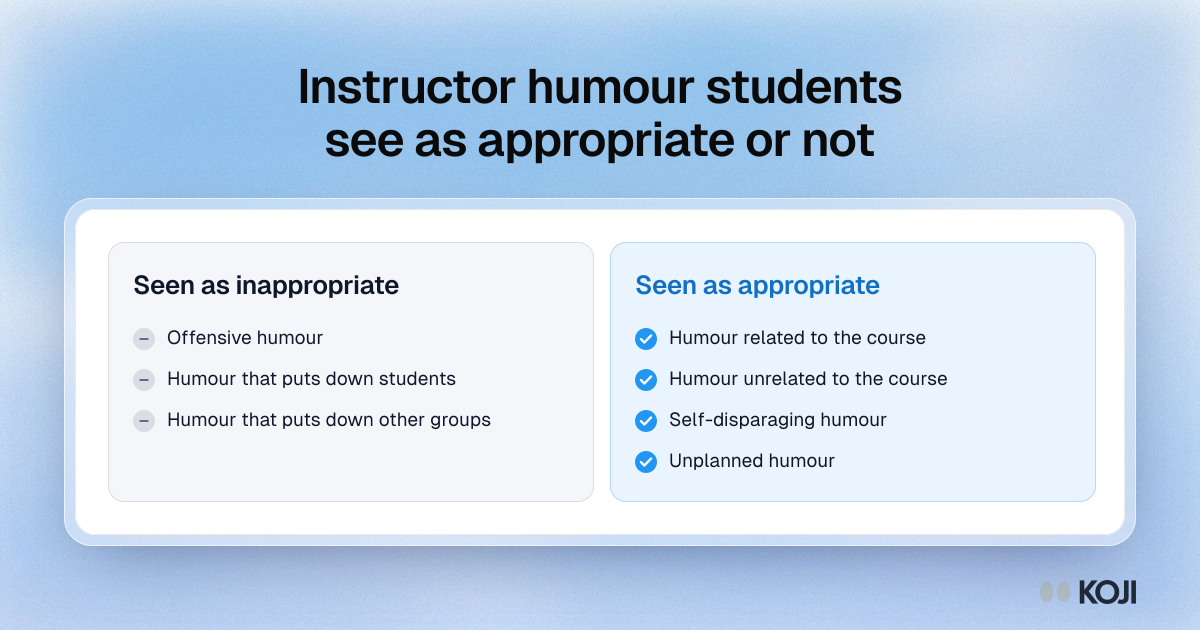
Instructor humour students see as appropriate or not
How undergraduates sorted examples of teacher humour
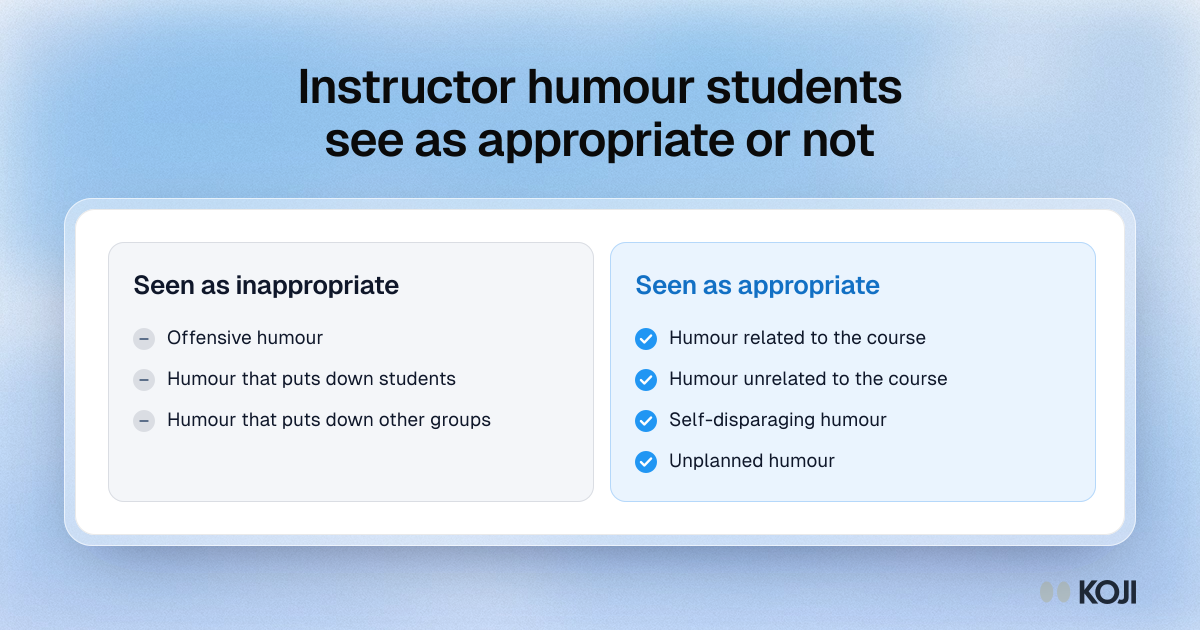
A side-by-side comparison of the kinds of teacher humour undergraduates described as appropriate and inappropriate, from a 2006 content analysis in Communication Education. It helps quality leads and educational developers see why humour can raise or lower course evaluation scores depending on its type. Use it when reading ratings or designing questions about engagement. Koji can ask students what they meant when they call a lecturer engaging or funny.
What's in this comparison
Seen as inappropriate
- Offensive humour
- Humour that puts down students
- Humour that puts down other groups
Seen as appropriate
- Humour related to the course
- Humour unrelated to the course
- Self-disparaging humour
- Unplanned humour
Use this image
Free to use in your docs, decks and posts under CC BY 4.0, as long as you credit Koji with a link to this page. To embed it, paste this into your page:
html
<a href="https://www.koji.so/visuals/instructor-humour-appropriate-vs-inappropriate-types"><img src="https://www.koji.so/visuals/instructor-humour-appropriate-vs-inappropriate-types/instructor-humour-appropriate-vs-inappropriate-types.png" alt="Comparison of teacher humour students see as inappropriate, such as offensive or disparaging jokes, and appropriate, such as course-related or unplanned humour." width="1200" height="630" /></a>
<p>Source: <a href="https://www.koji.so/visuals/instructor-humour-appropriate-vs-inappropriate-types">Instructor humour students see as appropriate or not</a>, Koji</p>