Comparison
Cold-calling: participation gains and anxiety costs
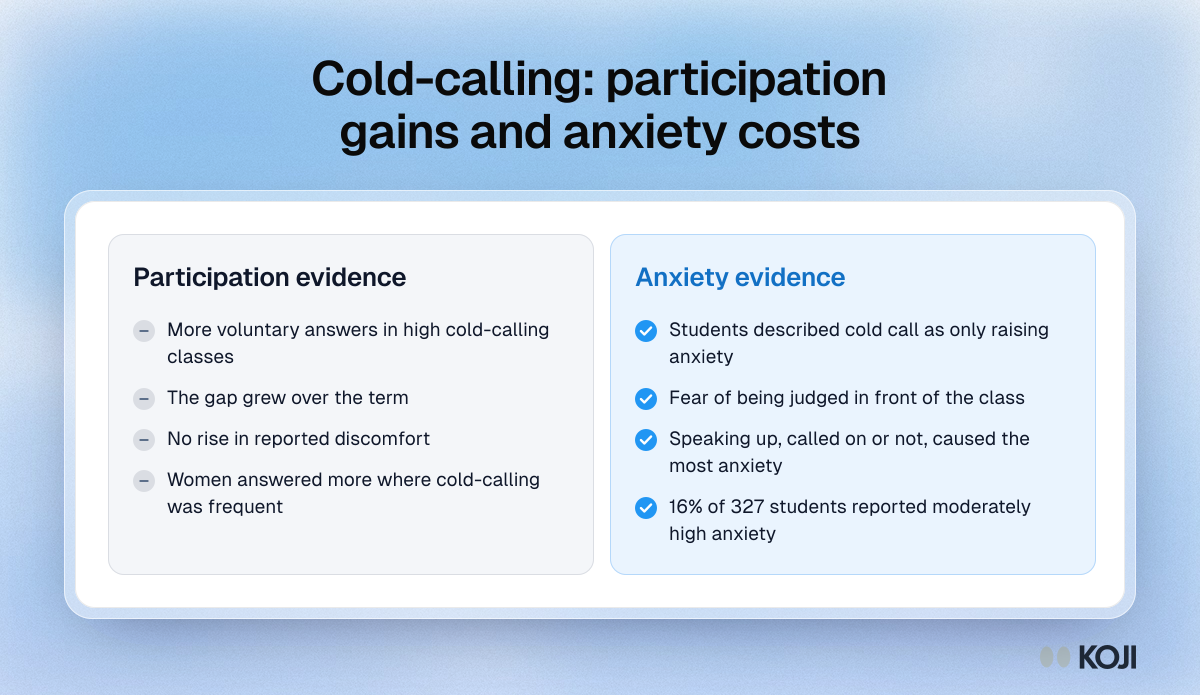
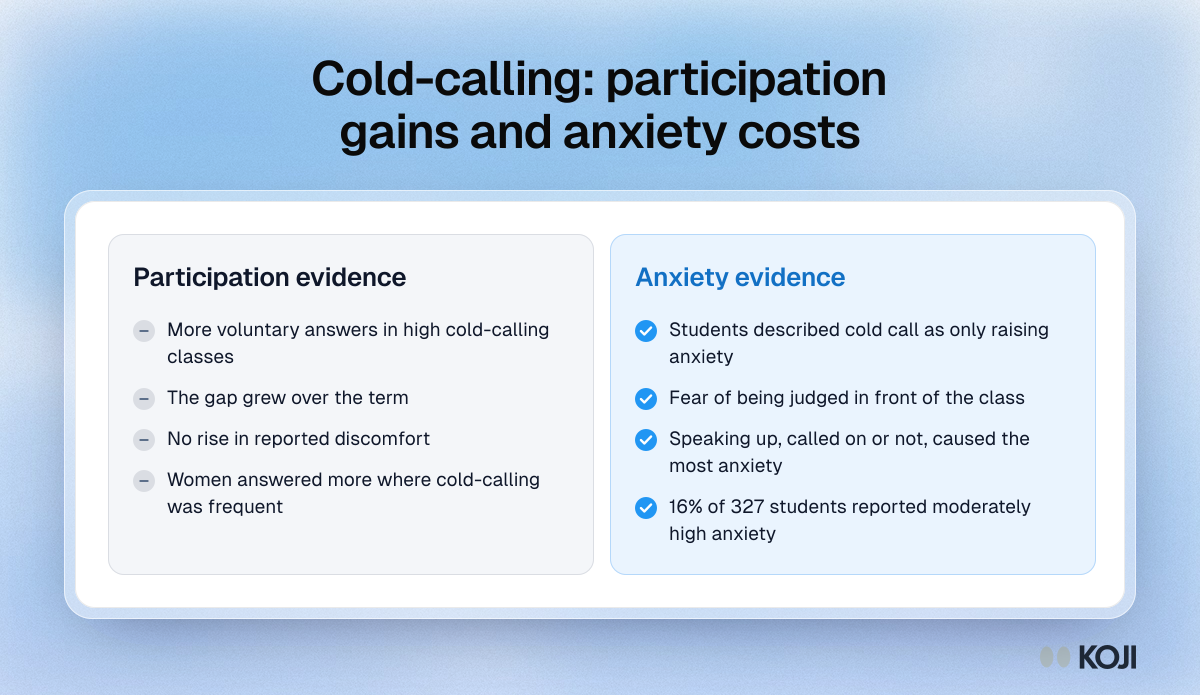
A side-by-side summary of research on cold-calling in university classes. Studies of business school classes found more voluntary participation and no rise in discomfort, while studies of large biology and science courses found students describe being called on as a source of anxiety. It is for programme teams evaluating discussion-based teaching. Koji interviews can ask students how comfortable they felt speaking in class and why.
What's in this comparison
Participation evidence
- More voluntary answers in high cold-calling classes
- The gap grew over the term
- No rise in reported discomfort
- Women answered more where cold-calling was frequent
Anxiety evidence
- Students described cold call as only raising anxiety
- Fear of being judged in front of the class
- Speaking up, called on or not, caused the most anxiety
- 16% of 327 students reported moderately high anxiety
Use this image
Free to use in your docs, decks and posts under CC BY 4.0, as long as you credit Koji with a link to this page. To embed it, paste this into your page:
html
<a href="https://www.koji.so/visuals/cold-calling-participation-vs-anxiety-evidence"><img src="https://www.koji.so/visuals/cold-calling-participation-vs-anxiety-evidence/cold-calling-participation-vs-anxiety-evidence.png" alt="Comparison of cold-calling evidence: participation gains in business school classes against anxiety reported in large science courses." width="1200" height="695" /></a>
<p>Source: <a href="https://www.koji.so/visuals/cold-calling-participation-vs-anxiety-evidence">Cold-calling: participation gains and anxiety costs</a>, Koji</p>