Reference table
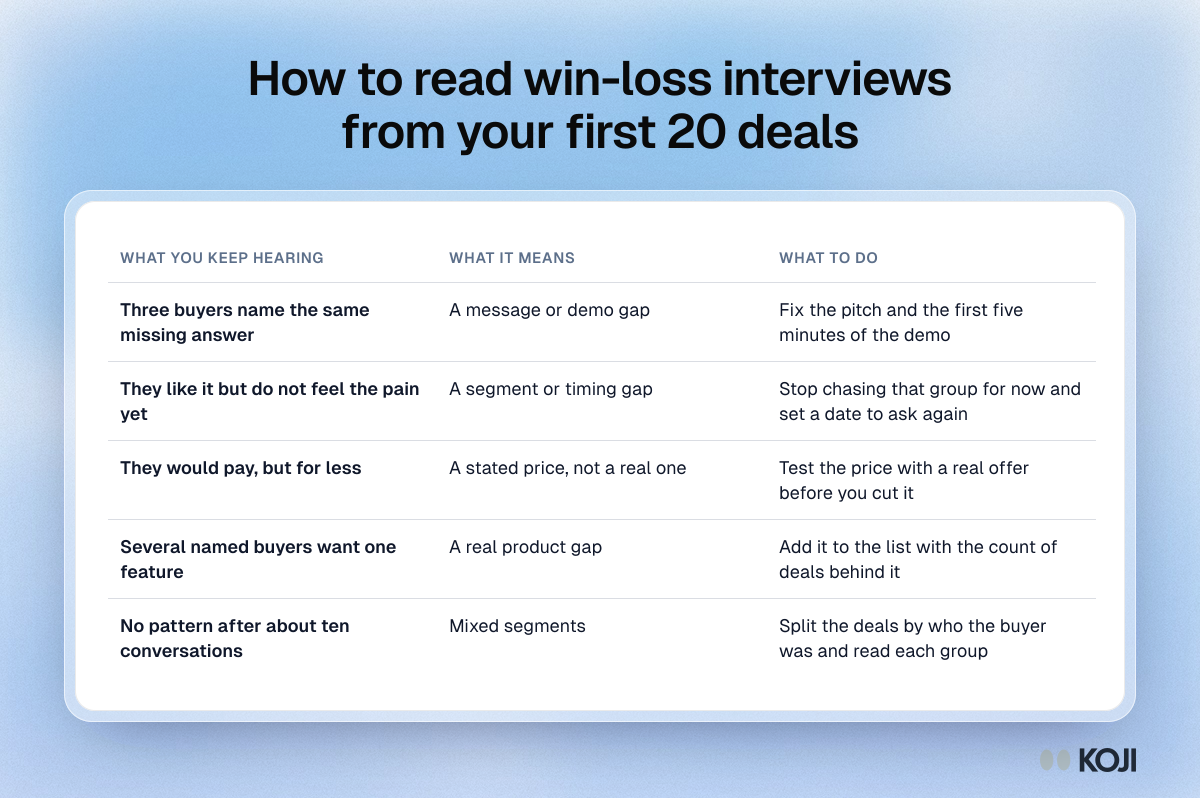
How to read win-loss interviews from your first 20 deals
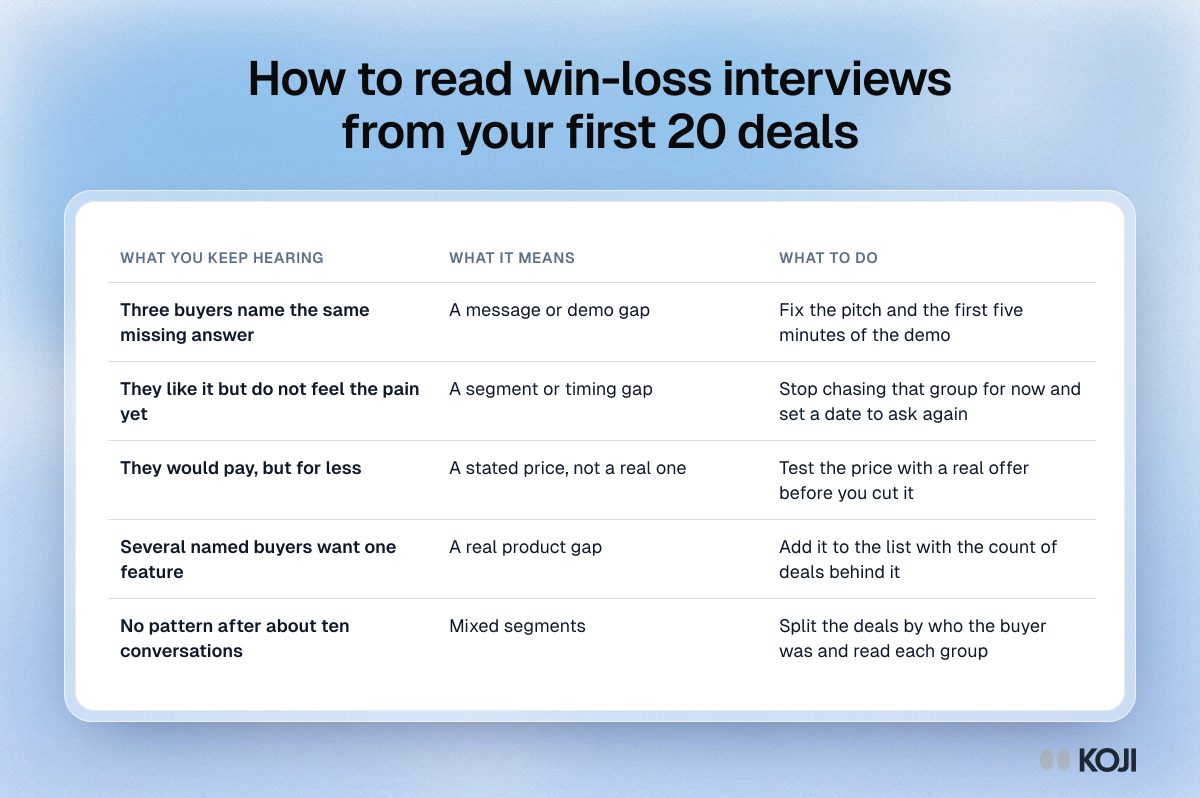
A decision table for reading interviews with buyers from your first 20 deals. Each row pairs something you keep hearing with what it usually means and the single change to make. A pattern needs three or more buyers raising it without being asked, and it should be checked against your wins. Koji shows the quotes behind each finding so you can check them.
Where this appears
What's in this reference table
| What you keep hearing | What it means | What to do |
|---|---|---|
| Three buyers name the same missing answer | A message or demo gap | Fix the pitch and the first five minutes of the demo |
| They like it but do not feel the pain yet | A segment or timing gap | Stop chasing that group for now and set a date to ask again |
| They would pay, but for less | A stated price, not a real one | Test the price with a real offer before you cut it |
| Several named buyers want one feature | A real product gap | Add it to the list with the count of deals behind it |
| No pattern after about ten conversations | Mixed segments | Split the deals by who the buyer was and read each group |
Use this image
Free to use in your docs, decks and posts under CC BY 4.0, as long as you credit Koji with a link to this page. To embed it, paste this into your page:
html
<a href="https://www.koji.so/visuals/first-20-deals-win-loss-decision-table"><img src="https://www.koji.so/visuals/first-20-deals-win-loss-decision-table/first-20-deals-win-loss-decision-table.png" alt="Table matching what founders hear in win-loss interviews, such as a missing answer, no felt pain or a lower price, to what it means and the one change to make." width="1200" height="798" /></a>
<p>Source: <a href="https://www.koji.so/visuals/first-20-deals-win-loss-decision-table">How to read win-loss interviews from your first 20 deals</a>, Koji</p>