Comparison
Student feedback for funding vs for improvement
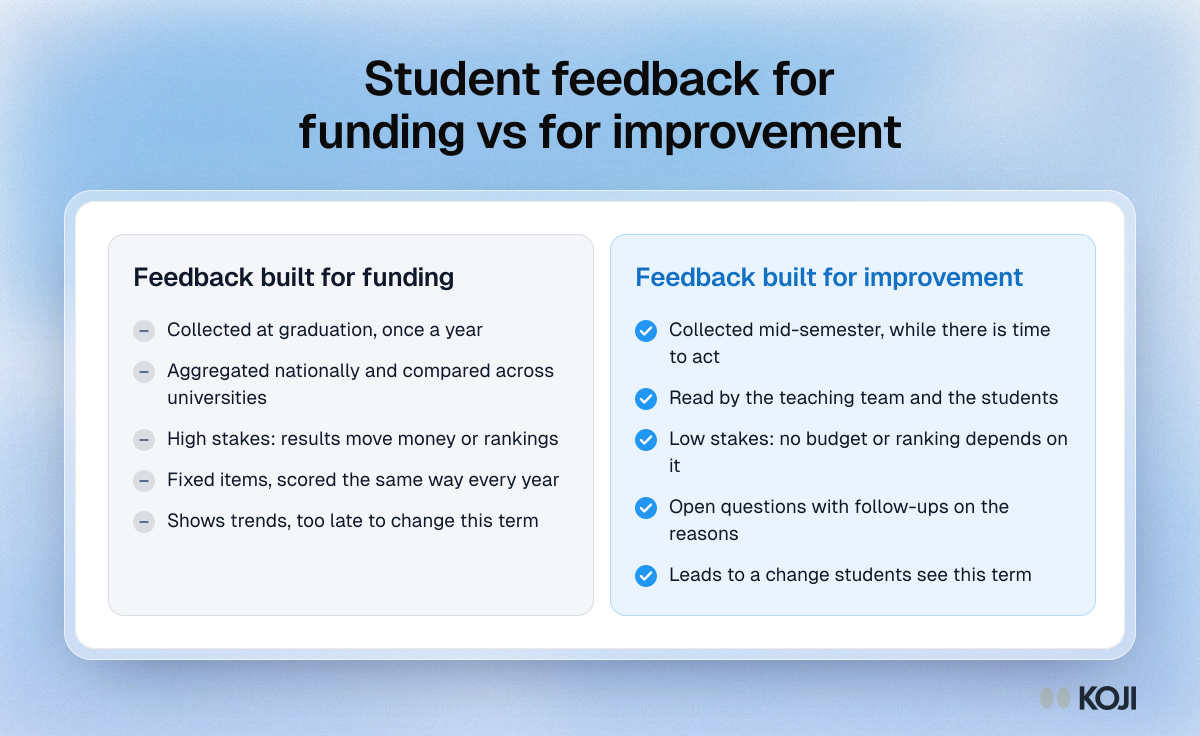
A side-by-side comparison of student feedback designed for accountability or funding, such as a national graduate survey, and feedback designed to improve teaching during a course. It is for quality leads deciding which instrument should carry which job. Keep the two apart, and give the improvement channel its own early, low-stakes tool; Koji runs mid-semester conversational interviews for that side.
What's in this comparison
Feedback built for funding
- Collected at graduation, once a year
- Aggregated nationally and compared across universities
- High stakes: results move money or rankings
- Fixed items, scored the same way every year
- Shows trends, too late to change this term
Feedback built for improvement
- Collected mid-semester, while there is time to act
- Read by the teaching team and the students
- Low stakes: no budget or ranking depends on it
- Open questions with follow-ups on the reasons
- Leads to a change students see this term
Use this image
Free to use in your docs, decks and posts under CC BY 4.0, as long as you credit Koji with a link to this page. To embed it, paste this into your page:
<a href="https://www.koji.so/visuals/student-feedback-for-funding-vs-improvement-comparison"><img src="https://www.koji.so/visuals/student-feedback-for-funding-vs-improvement-comparison/student-feedback-for-funding-vs-improvement-comparison.png" alt="Comparison of feedback built for funding with feedback built for improvement: when it is collected, who sees it, the stakes and what it can change." width="1200" height="736" /></a>
<p>Source: <a href="https://www.koji.so/visuals/student-feedback-for-funding-vs-improvement-comparison">Student feedback for funding vs for improvement</a>, Koji</p>
Related
End-of-term evaluation vs early check-in for student dropout
Bluepulse or AI interviews for mid-semester feedback?
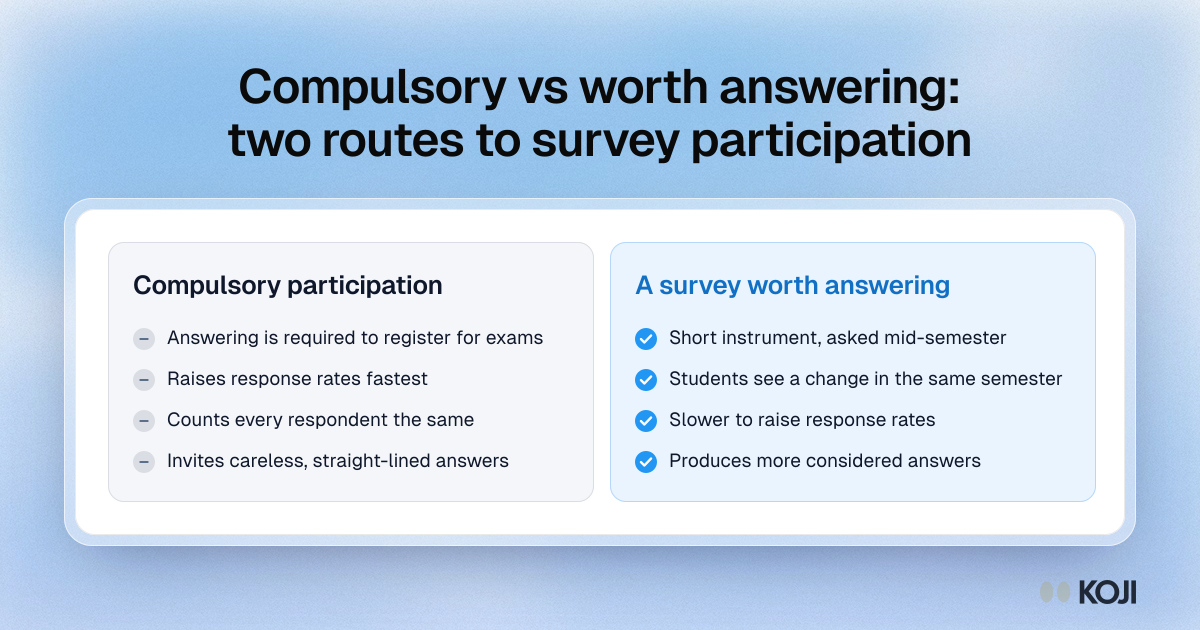
Compulsory vs worth answering: two routes to survey participation
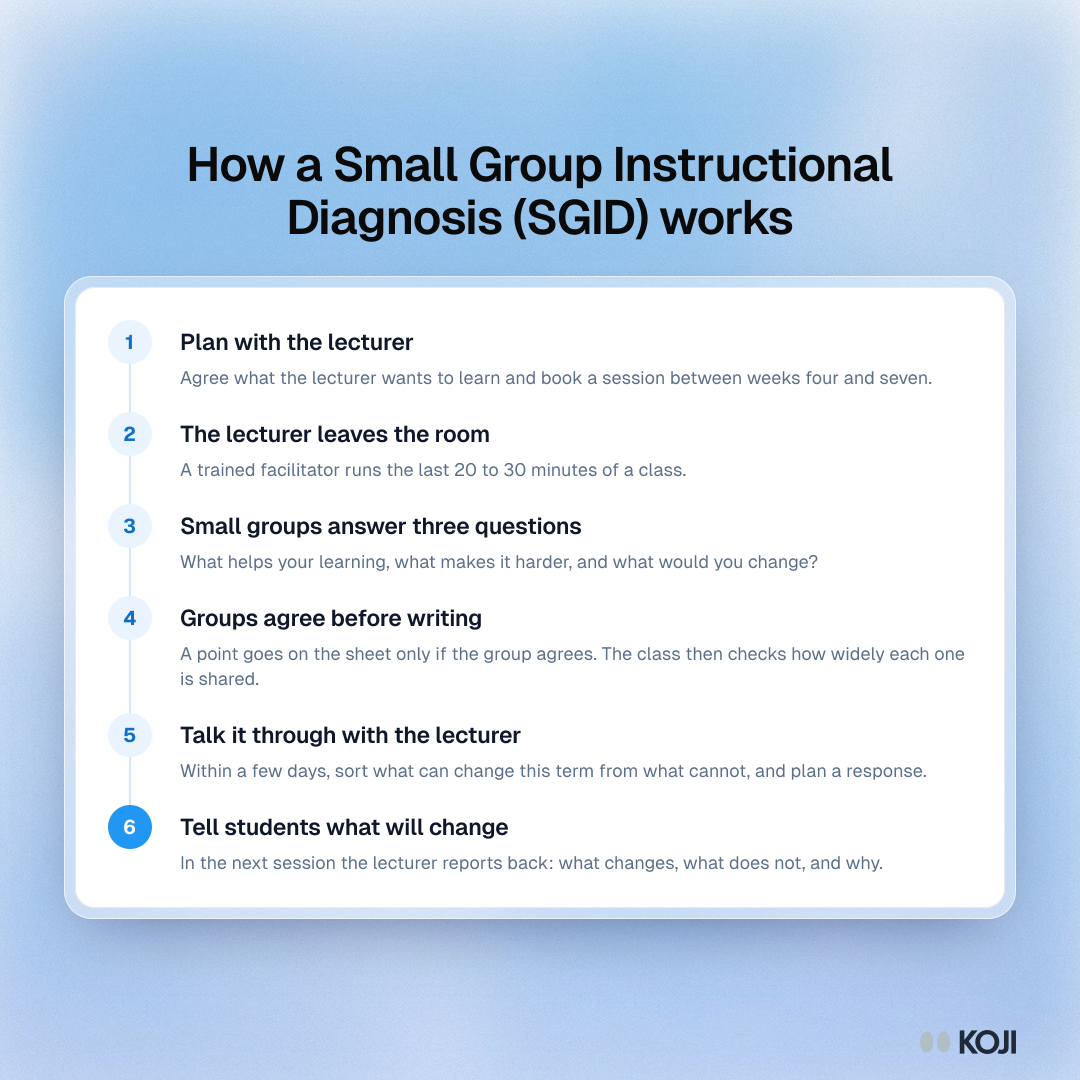
How a Small Group Instructional Diagnosis (SGID) works
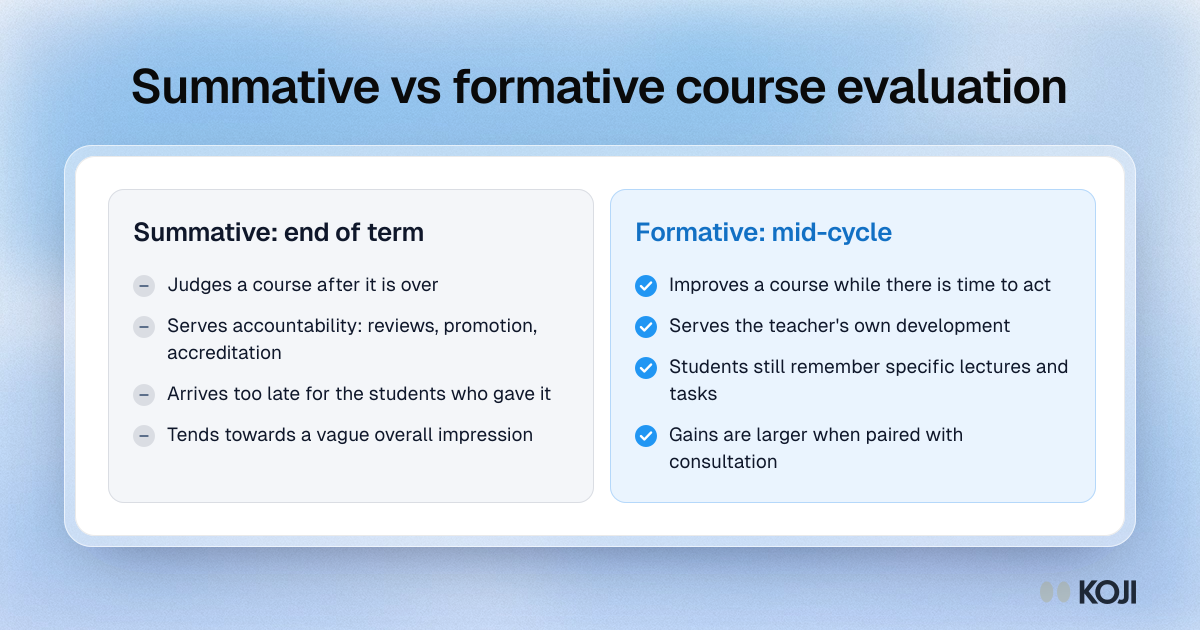
Summative vs formative course evaluation
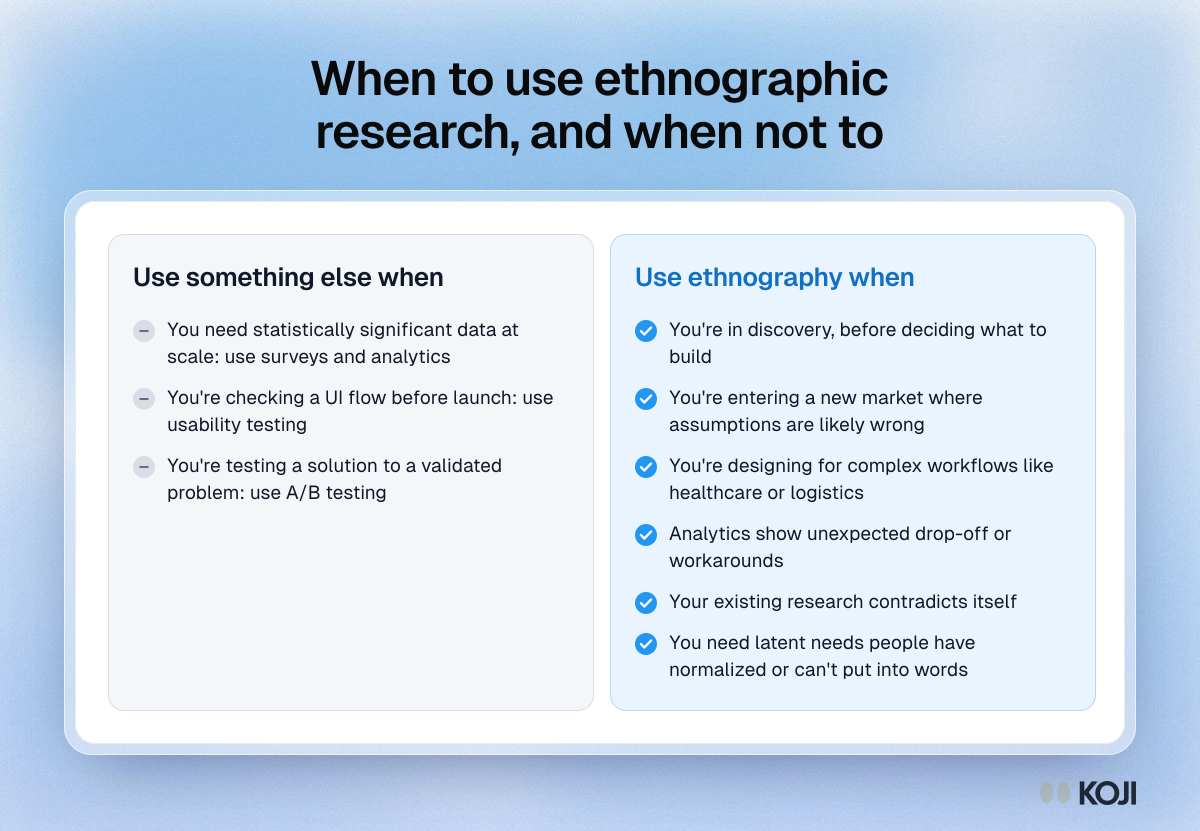
When to use ethnographic research, and when not to