Reference table
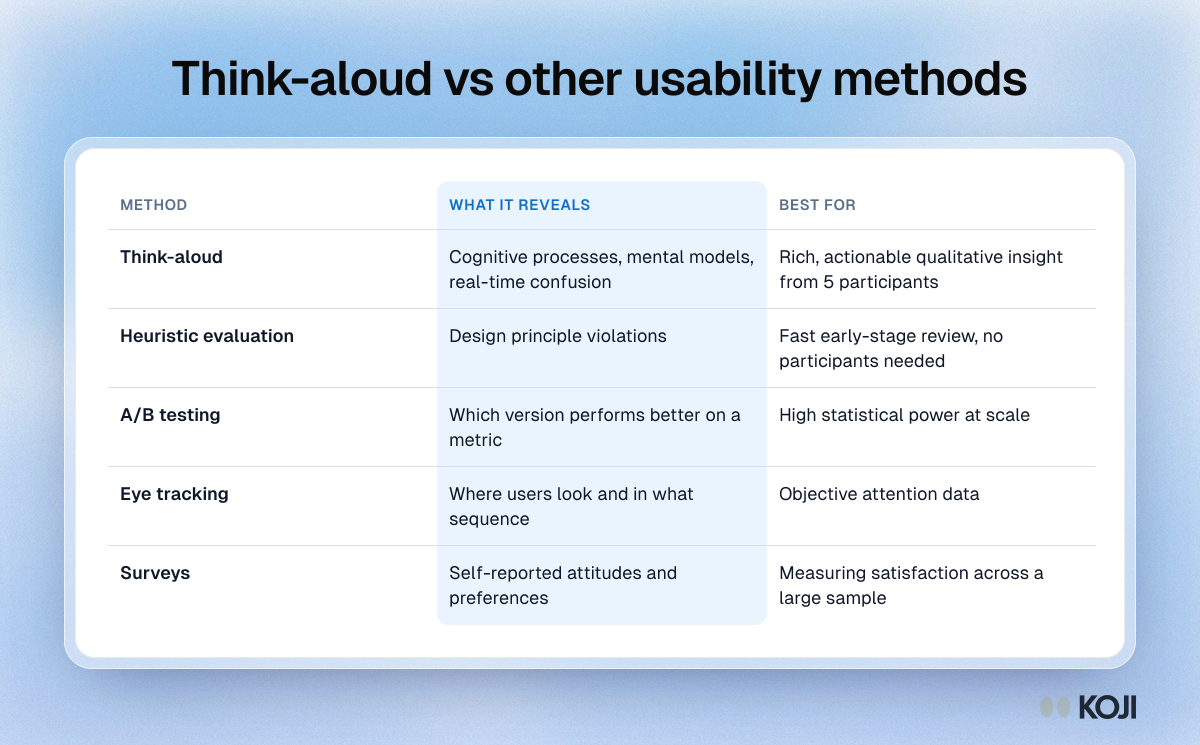
Think-aloud vs other usability methods
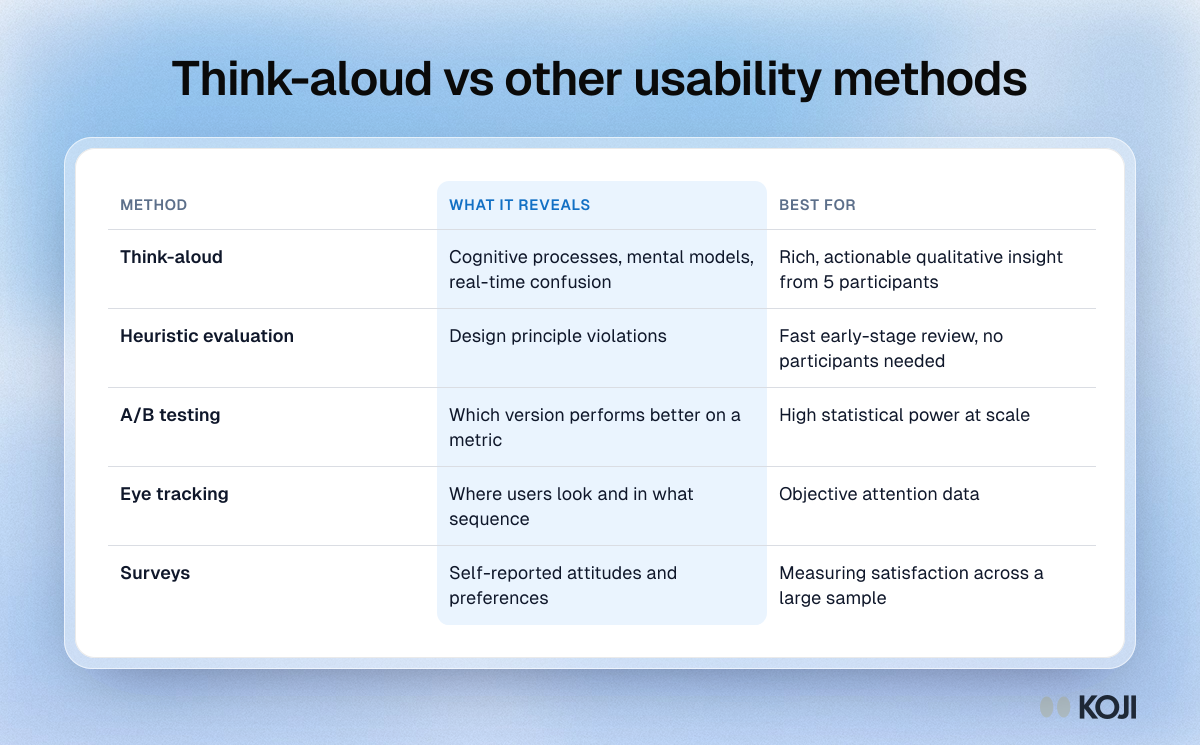
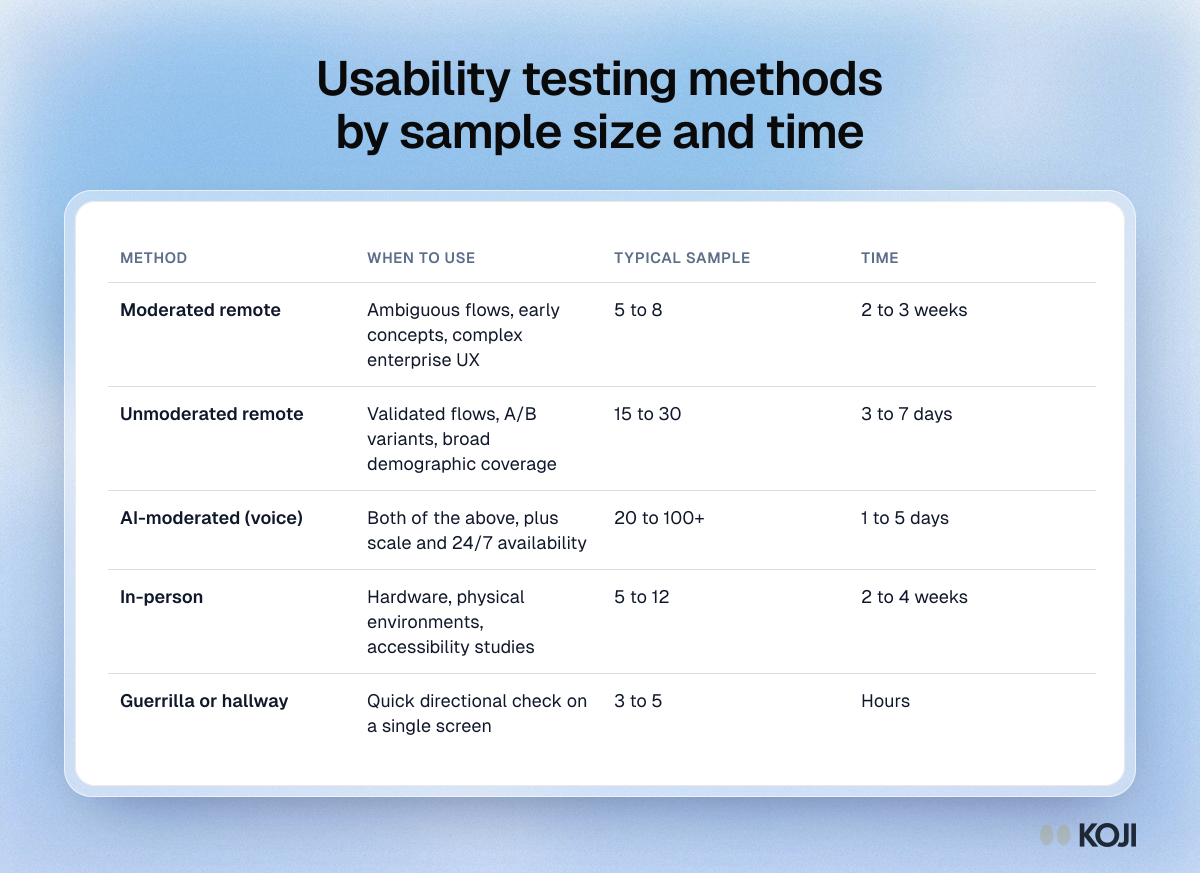
A comparison of five usability research methods: think-aloud, heuristic evaluation, A/B testing, eye tracking and surveys. It shows what each one reveals and the job it does best, from finding real-time confusion with five participants to measuring satisfaction across a large sample. Use it to choose a method, or a pair of methods, for your next usability study.
Where this appears
What's in this reference table
| Method | What it reveals | Best for |
|---|---|---|
| Think-aloud | Cognitive processes, mental models, real-time confusion | Rich, actionable qualitative insight from 5 participants |
| Heuristic evaluation | Design principle violations | Fast early-stage review, no participants needed |
| A/B testing | Which version performs better on a metric | High statistical power at scale |
| Eye tracking | Where users look and in what sequence | Objective attention data |
| Surveys | Self-reported attitudes and preferences | Measuring satisfaction across a large sample |
Use this image
Free to use in your docs, decks and posts under CC BY 4.0, as long as you credit Koji with a link to this page. To embed it, paste this into your page:
html
<a href="https://www.koji.so/visuals/think-aloud-vs-other-usability-methods"><img src="https://www.koji.so/visuals/think-aloud-vs-other-usability-methods/think-aloud-vs-other-usability-methods.png" alt="Table comparing think-aloud with heuristic evaluation, A/B testing, eye tracking and surveys by what each method reveals and what it suits best." width="1200" height="745" /></a>
<p>Source: <a href="https://www.koji.so/visuals/think-aloud-vs-other-usability-methods">Think-aloud vs other usability methods</a>, Koji</p>