Flowchart
Acting on a machine-made feedback theme
Three checks before you change your teaching on the strength of a topic model
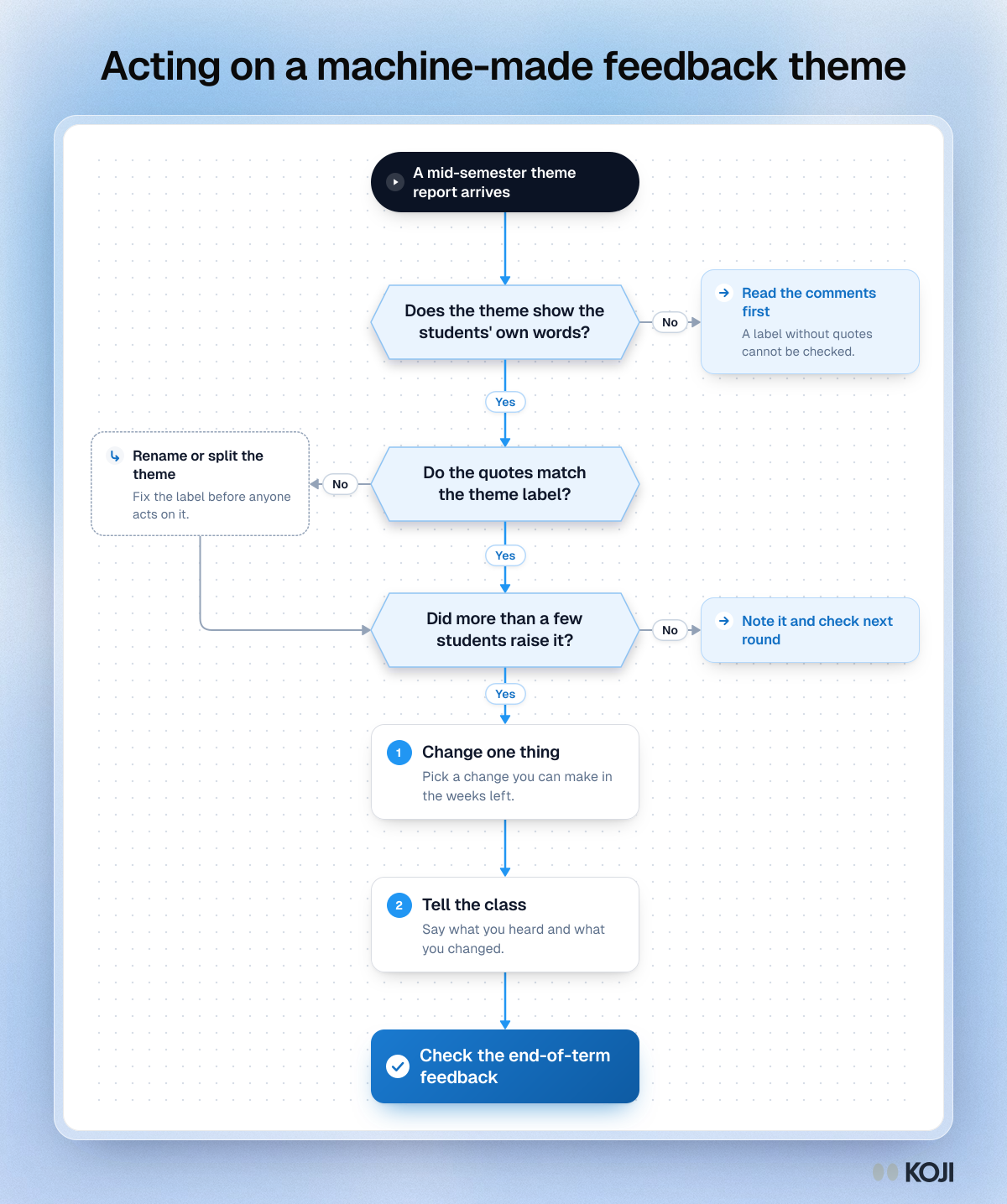
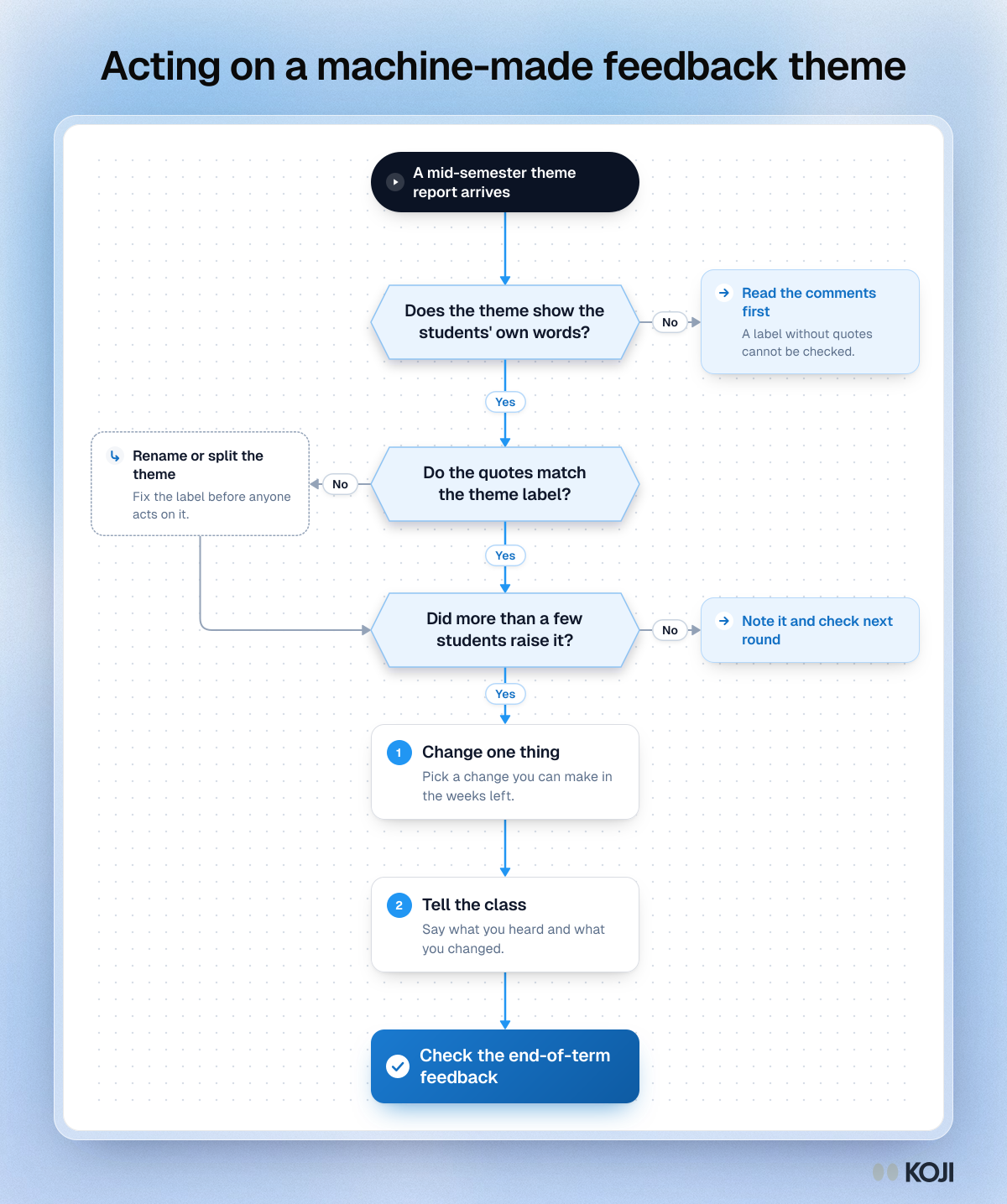
A decision flowchart for instructors who receive mid-semester student comments grouped into themes by machine learning. It asks whether each theme shows students' own words, whether the label fits the quotes, and how many students raised it, before one change is made and reported back. It suits teaching teams and educational developers. Koji reports show each theme with its count and the quotes behind it.
What's in this flowchart
Start: A mid-semester theme report arrives
- Does the theme show the students' own words?
- Yes: go to 2.
- No: Read the comments first. A label without quotes cannot be checked.
- Do the quotes match the theme label?
- Yes: go to 3.
- No: Rename or split the theme. Fix the label before anyone acts on it. Then go to 3.
- Did more than a few students raise it?
- Yes: go to 4.
- No: Note it and check next round.
- Change one thing. Pick a change you can make in the weeks left.
- Tell the class. Say what you heard and what you changed.
- Finish: Check the end-of-term feedback.
Use this image
Free to use in your docs, decks and posts under CC BY 4.0, as long as you credit Koji with a link to this page. To embed it, paste this into your page:
<a href="https://www.koji.so/visuals/acting-on-machine-made-feedback-themes"><img src="https://www.koji.so/visuals/acting-on-machine-made-feedback-themes/acting-on-machine-made-feedback-themes.png" alt="Flowchart for acting on a machine-made theme from mid-semester feedback: three questions, one side step, ending in a check of end-of-term feedback." width="1200" height="1435" /></a>
<p>Source: <a href="https://www.koji.so/visuals/acting-on-machine-made-feedback-themes">Acting on a machine-made feedback theme</a>, Koji</p>
Related
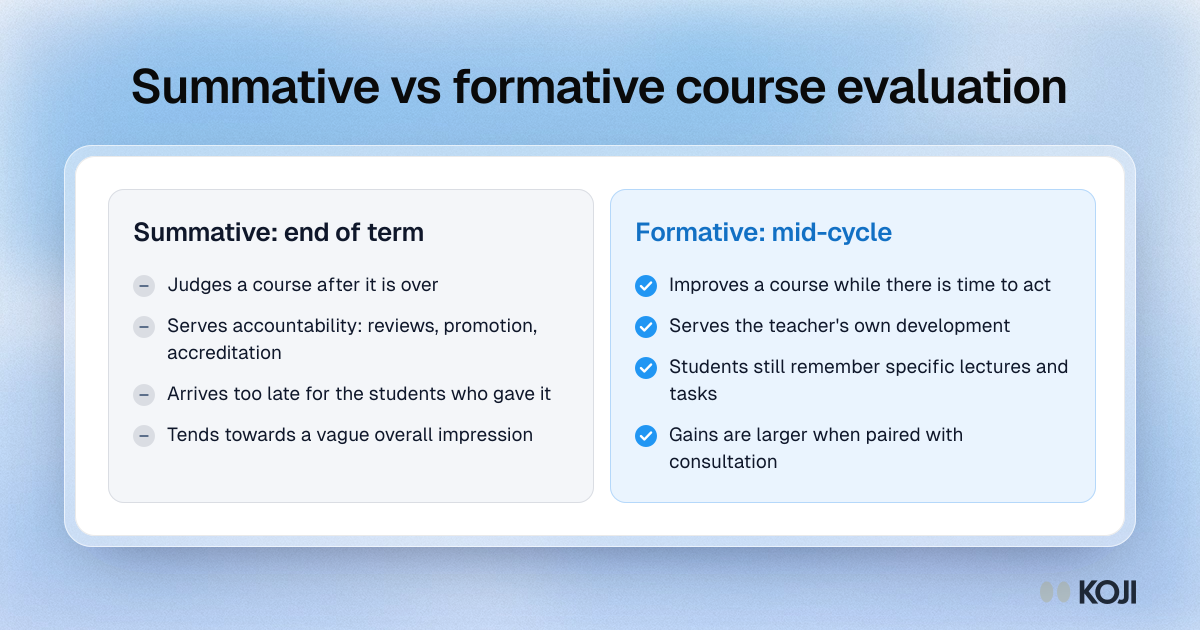
Summative vs formative course evaluation
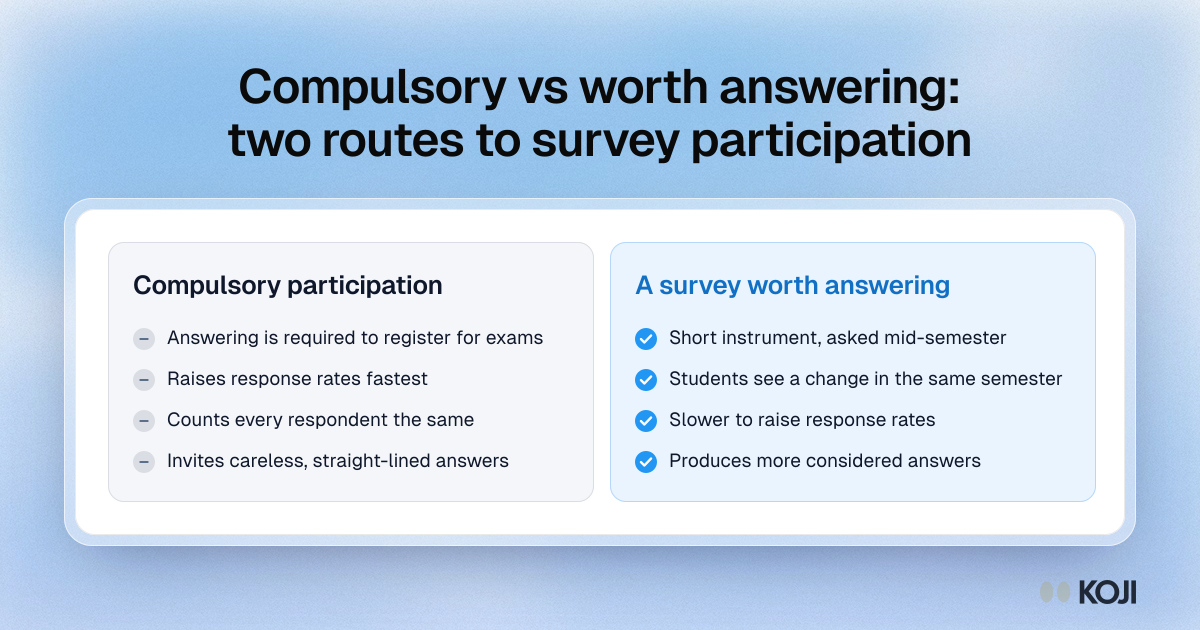
Compulsory vs worth answering: two routes to survey participation
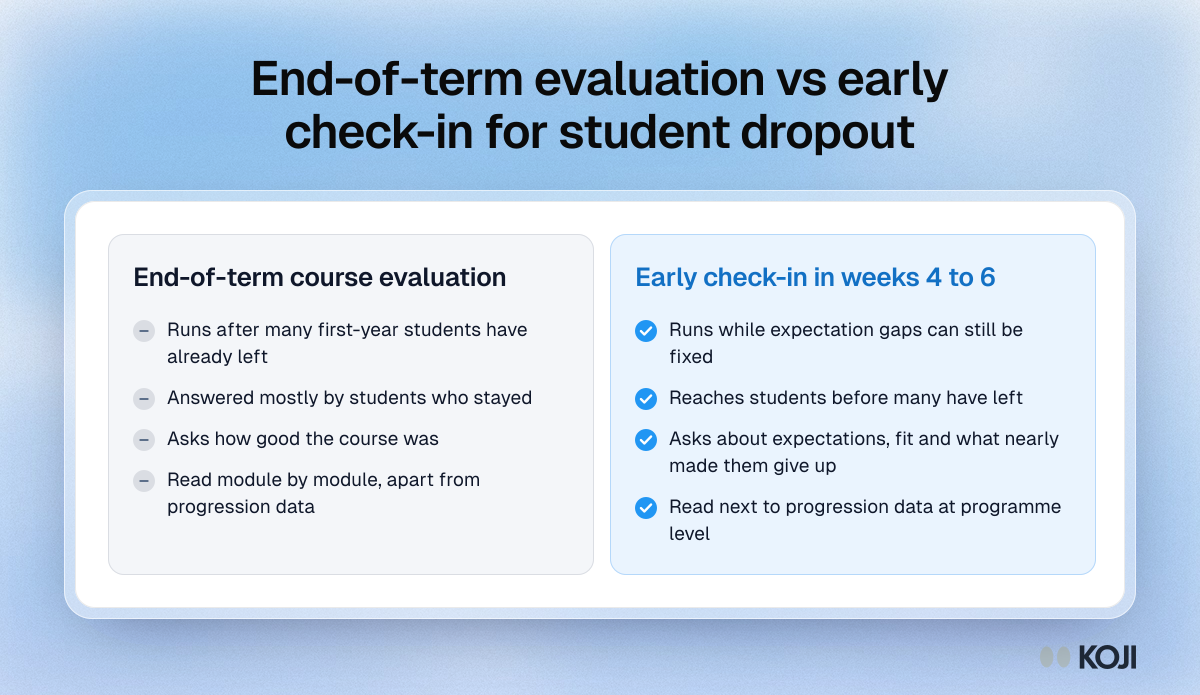
End-of-term evaluation vs early check-in for student dropout
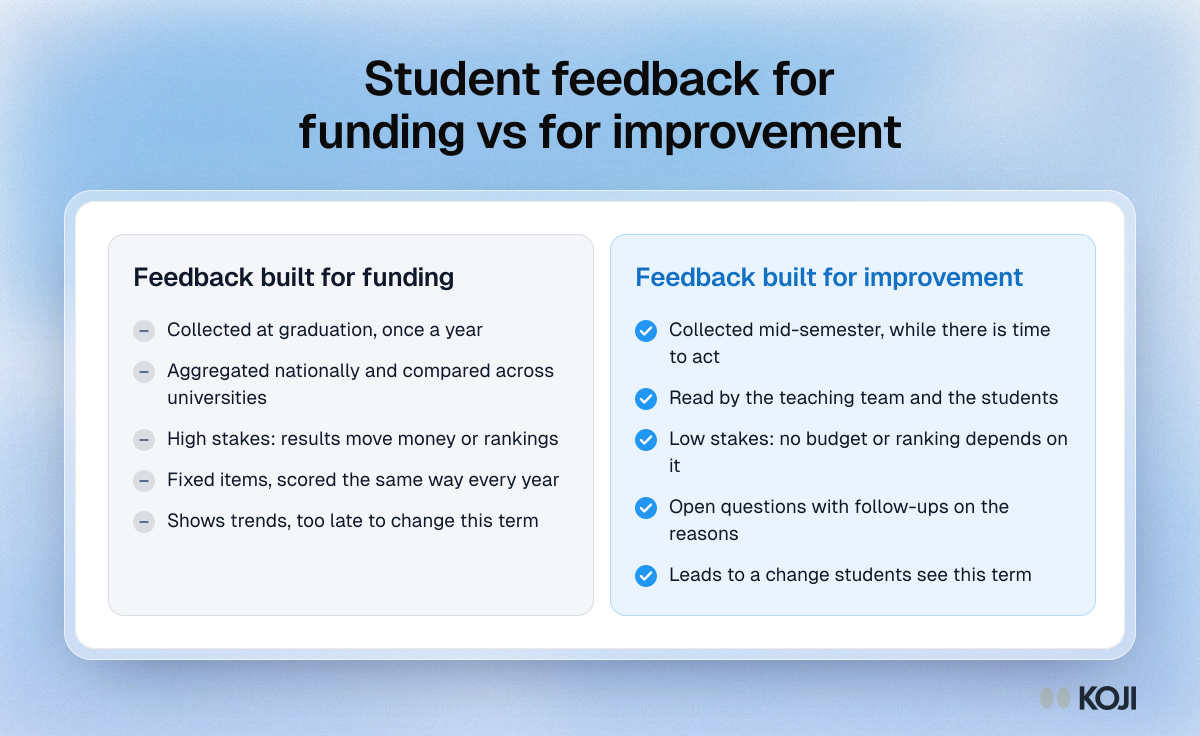
Student feedback for funding vs for improvement
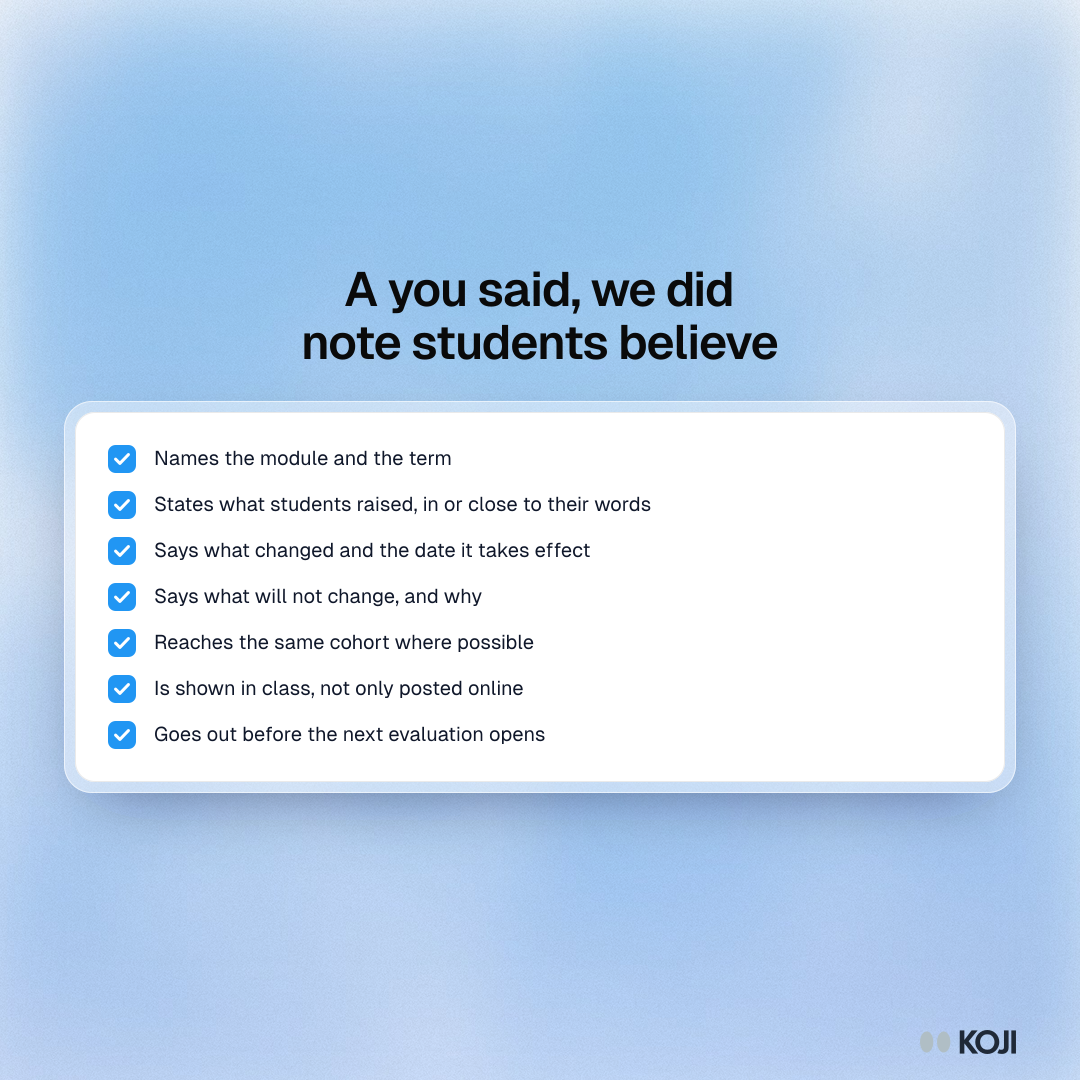
A you said, we did note students believe
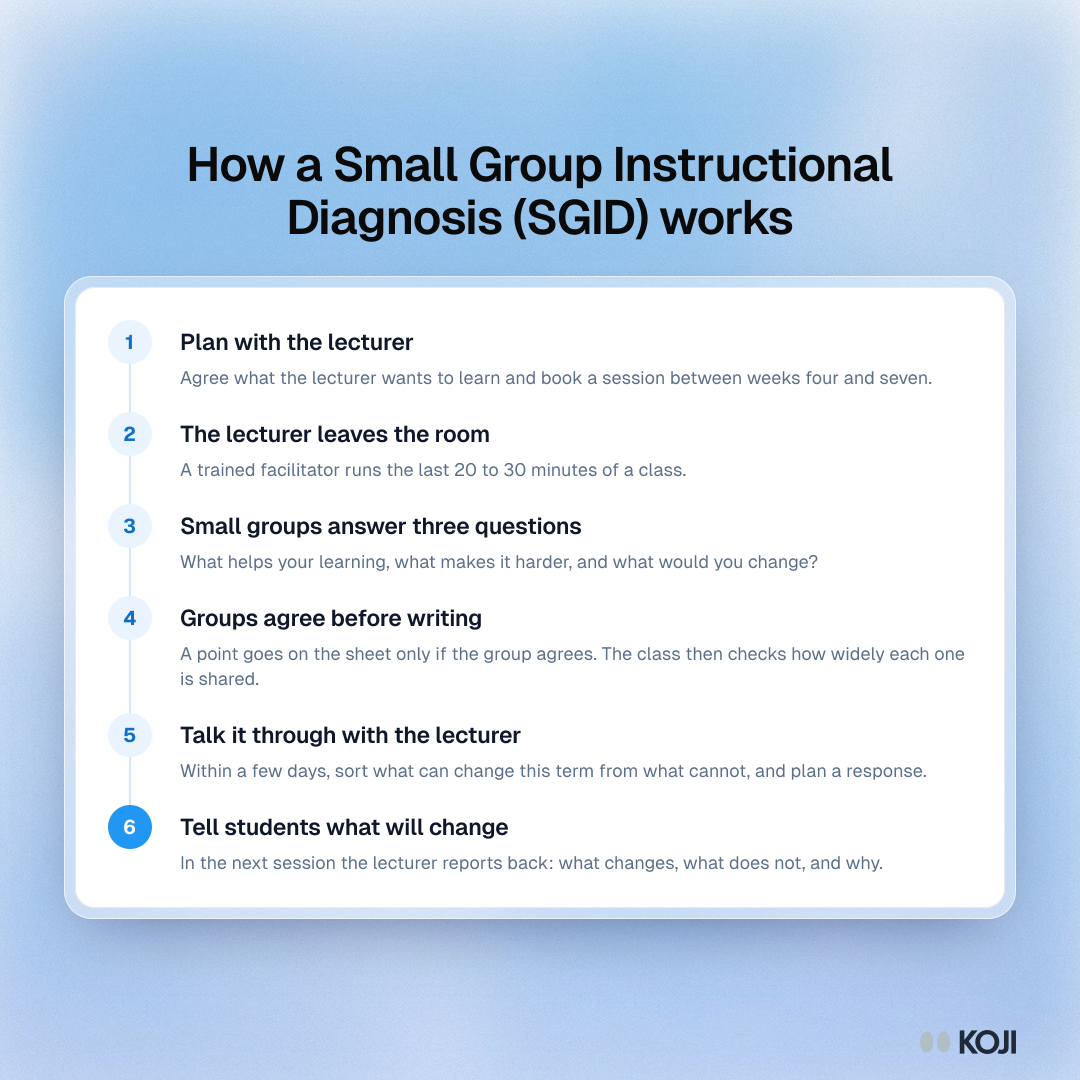
How a Small Group Instructional Diagnosis (SGID) works