Reference table
Usability test debrief methods compared
Moderated sessions, unmoderated tests with a survey, and Koji, on what a debrief needs
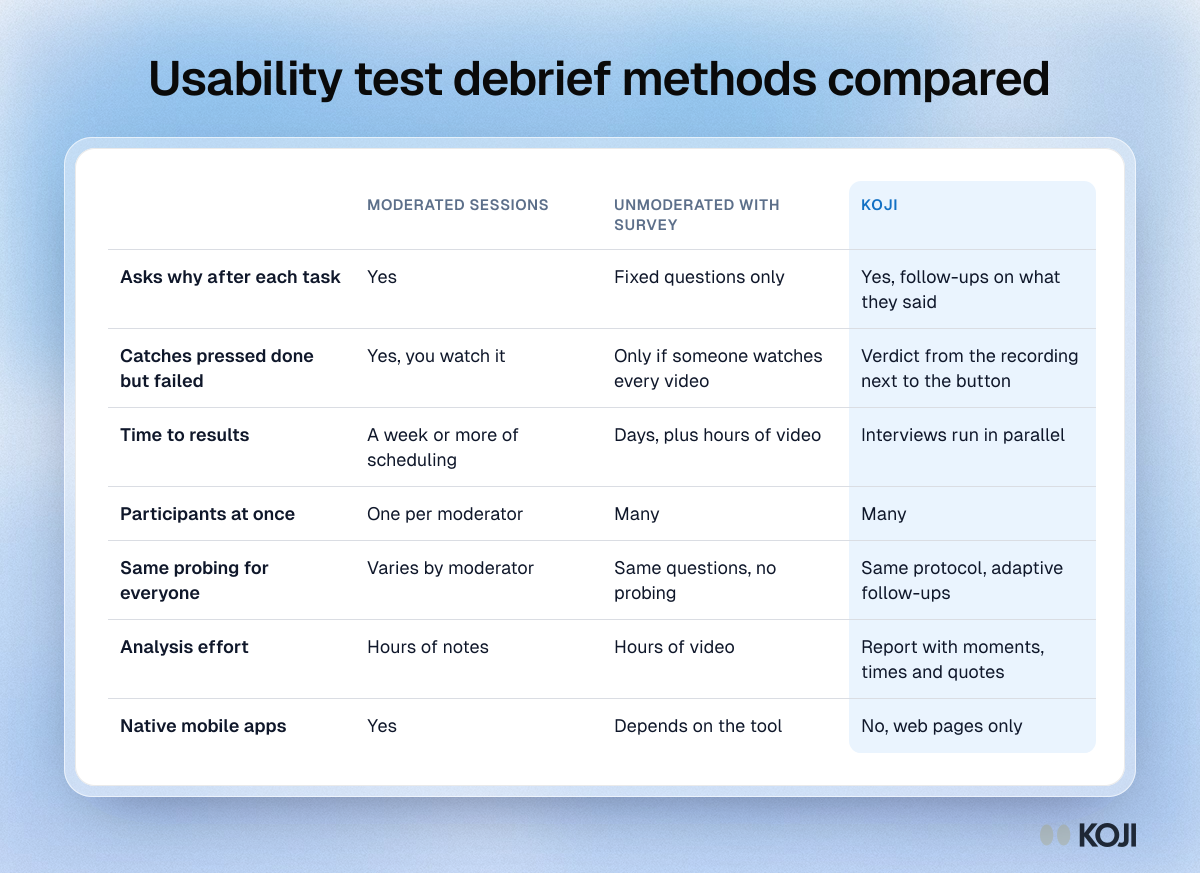
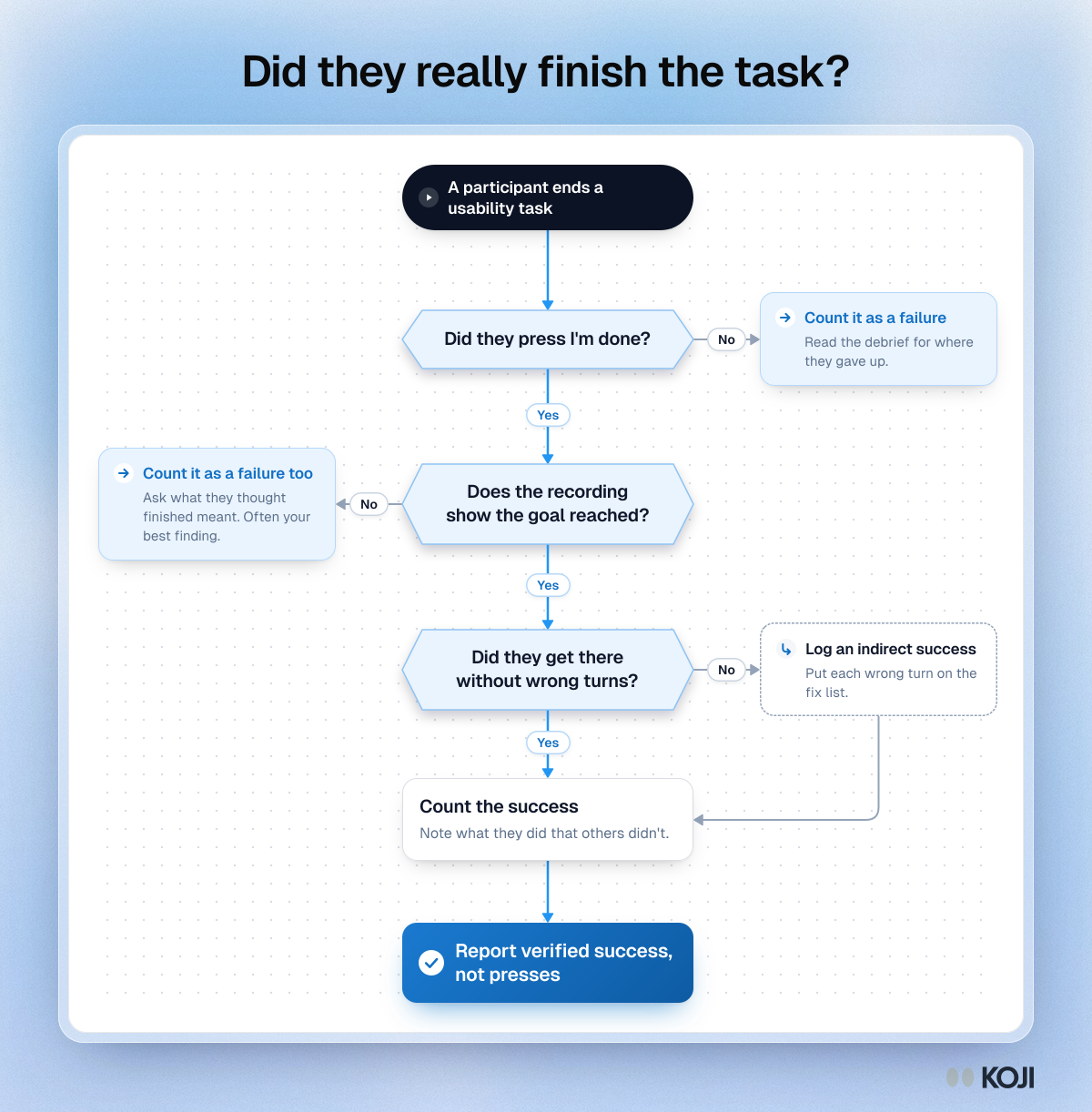
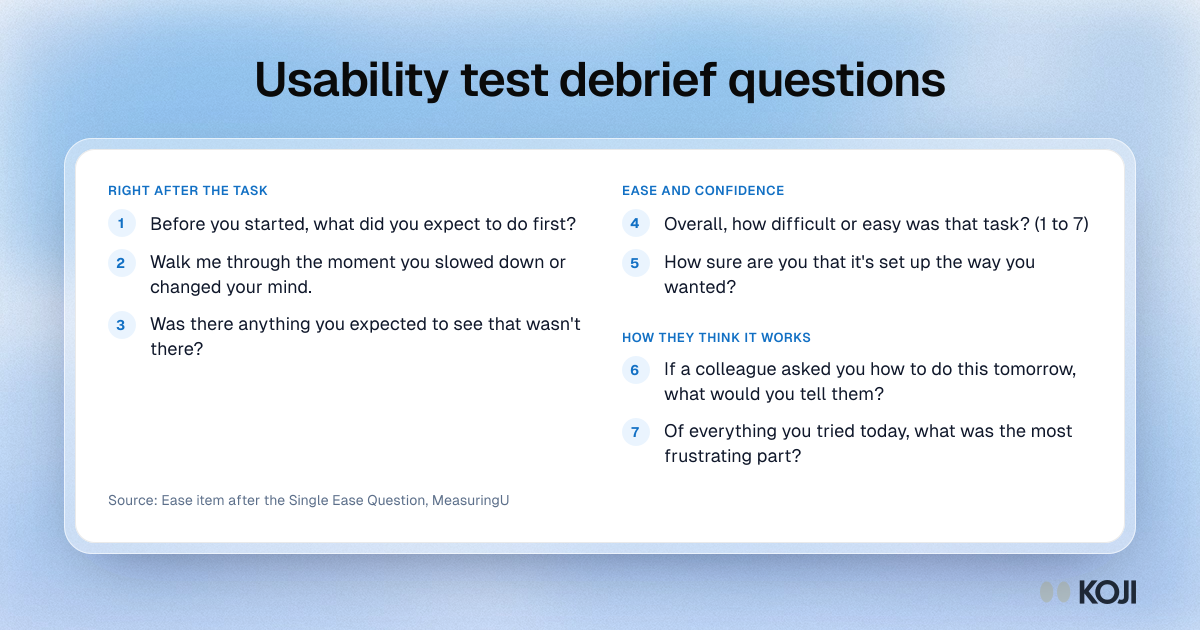
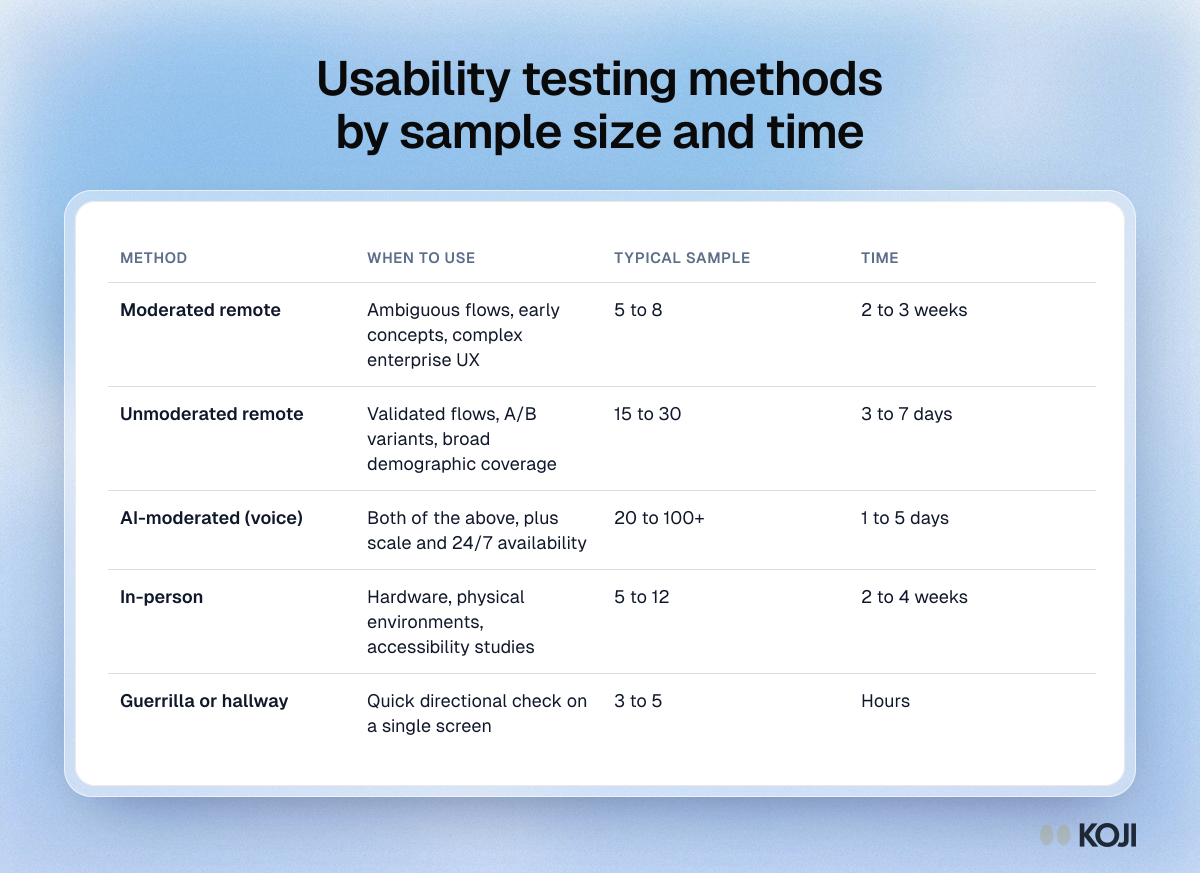
Compares moderated sessions, an unmoderated test with a post-task survey and Koji for running a usability test debrief, on seven criteria: asking why after each task, catching false successes, time to results, scale, consistent probing, analysis effort and native mobile apps. For UX researchers choosing a method for evaluative work. Koji asks follow-ups after every task and shows a verdict from the recording, but tests web pages only.
Where this appears
What's in this reference table
| Moderated sessions | Unmoderated with survey | Koji | |
|---|---|---|---|
| Asks why after each task | Yes | Fixed questions only | Yes, follow-ups on what they said |
| Catches pressed done but failed | Yes, you watch it | Only if someone watches every video | Verdict from the recording next to the button |
| Time to results | A week or more of scheduling | Days, plus hours of video | Interviews run in parallel |
| Participants at once | One per moderator | Many | Many |
| Same probing for everyone | Varies by moderator | Same questions, no probing | Same protocol, adaptive follow-ups |
| Analysis effort | Hours of notes | Hours of video | Report with moments, times and quotes |
| Native mobile apps | Yes | Depends on the tool | No, web pages only |
Use this image
Free to use in your docs, decks and posts under CC BY 4.0, as long as you credit Koji with a link to this page. To embed it, paste this into your page:
html
<a href="https://www.koji.so/visuals/usability-debrief-method-comparison"><img src="https://www.koji.so/visuals/usability-debrief-method-comparison/usability-debrief-method-comparison.png" alt="Comparison table of three ways to run a usability test debrief, Koji highlighted, on follow-ups, catching false successes, speed and analysis effort." width="1200" height="873" /></a>
<p>Source: <a href="https://www.koji.so/visuals/usability-debrief-method-comparison">Usability test debrief methods compared</a>, Koji</p>