Comparison
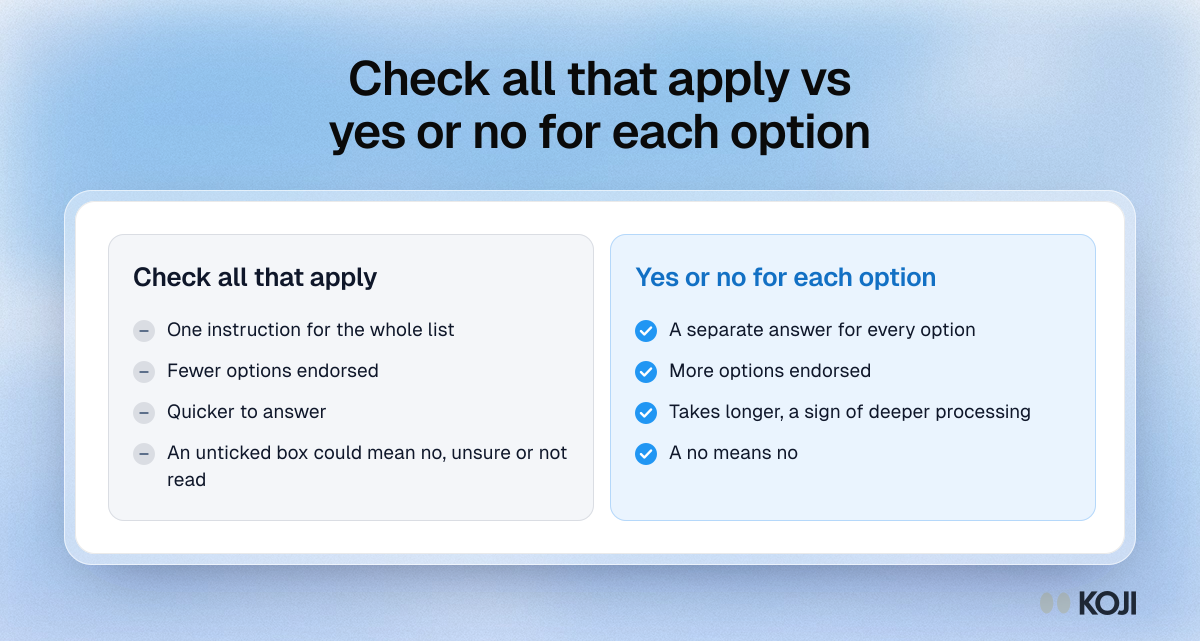
Check all that apply vs yes or no for each option
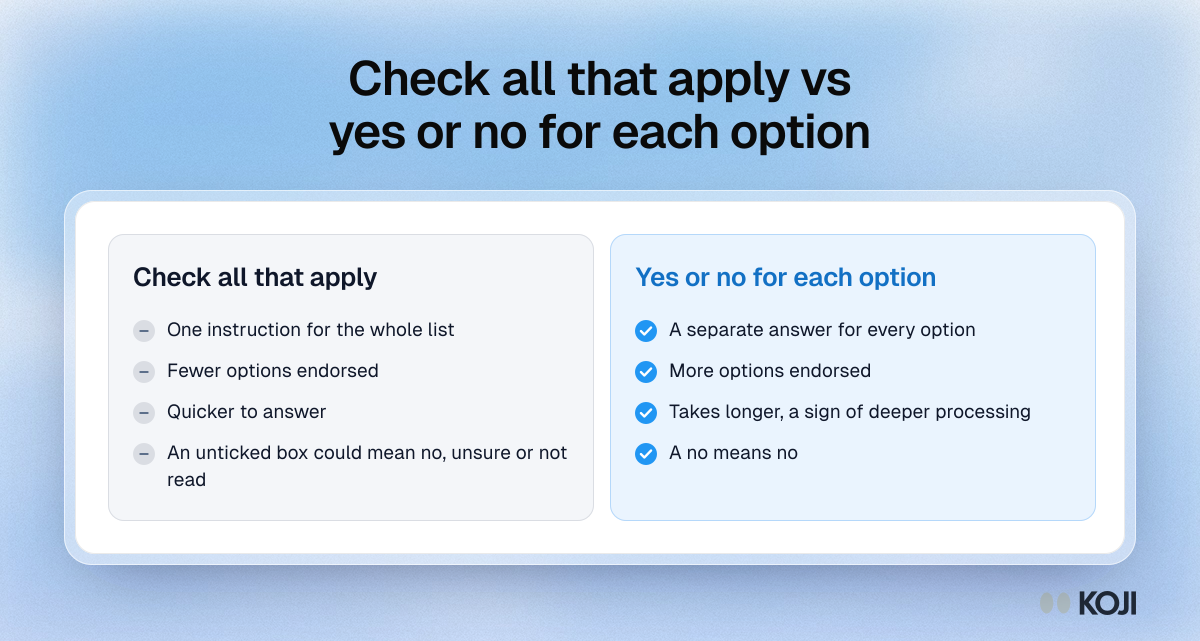
A side-by-side comparison of two ways to ask about a list of options in a survey or course evaluation. In 16 experiments, Smyth, Dillman, Christian and Stern (2006) found that asking yes or no for each option led to more options endorsed and longer answering times than a check-all-that-apply list. Use it when deciding how to ask which services or resources students used. Koji for Education supports both formats.
What's in this comparison
Check all that apply
- One instruction for the whole list
- Fewer options endorsed
- Quicker to answer
- An unticked box could mean no, unsure or not read
Yes or no for each option
- A separate answer for every option
- More options endorsed
- Takes longer, a sign of deeper processing
- A no means no
Use this image
Free to use in your docs, decks and posts under CC BY 4.0, as long as you credit Koji with a link to this page. To embed it, paste this into your page:
html
<a href="https://www.koji.so/visuals/check-all-that-apply-vs-yes-no-forced-choice-comparison"><img src="https://www.koji.so/visuals/check-all-that-apply-vs-yes-no-forced-choice-comparison/check-all-that-apply-vs-yes-no-forced-choice-comparison.png" alt="Comparison of check-all-that-apply and yes/no question formats: asking yes or no for each option gets more options endorsed and more considered answers." width="1200" height="641" /></a>
<p>Source: <a href="https://www.koji.so/visuals/check-all-that-apply-vs-yes-no-forced-choice-comparison">Check all that apply vs yes or no for each option</a>, Koji</p>