Reference table
Three email nudges and course evaluation participation
Results of a randomised field experiment at Erasmus School of Economics
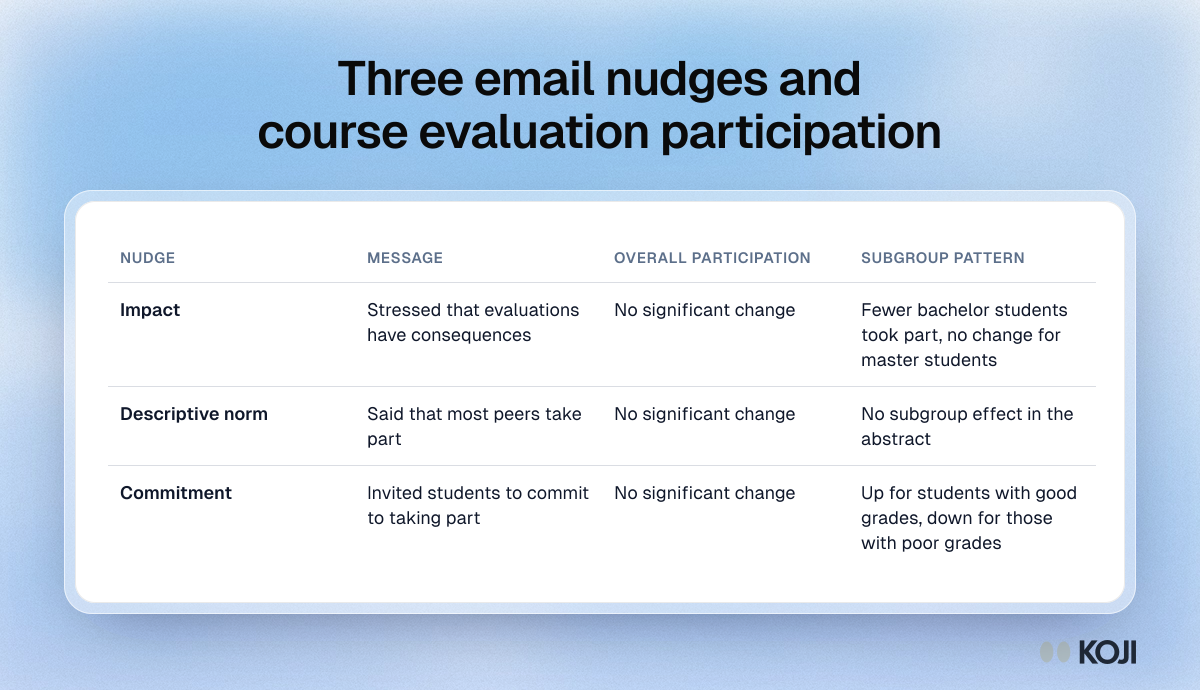
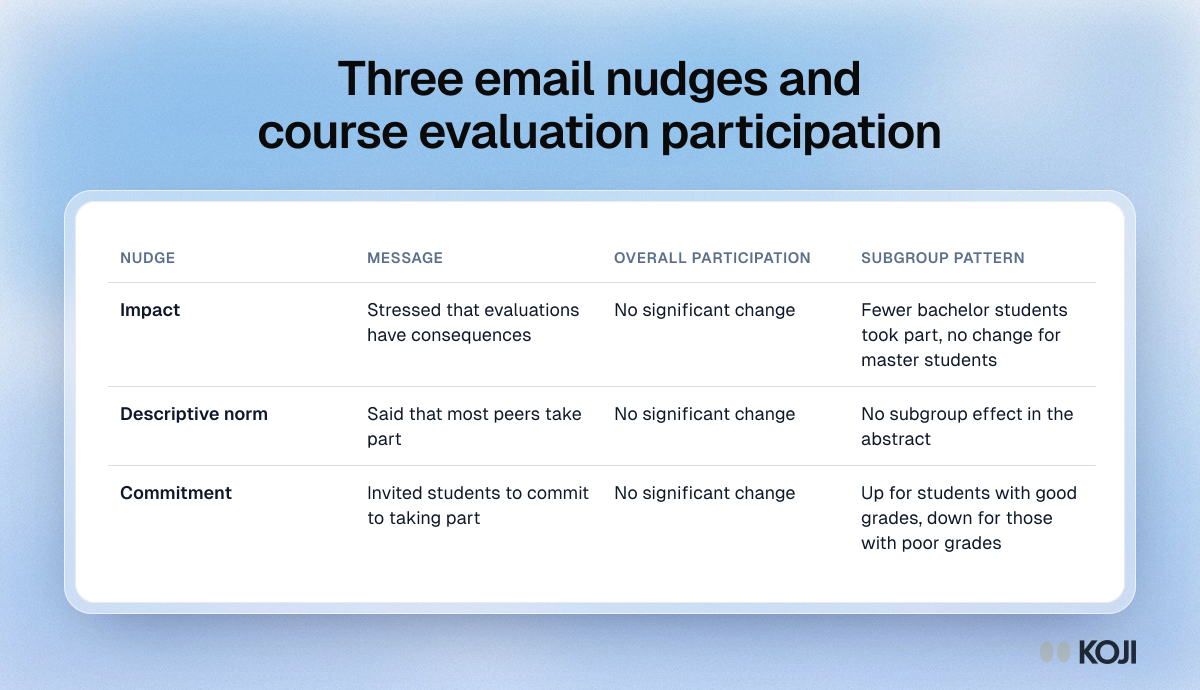
A summary of a randomised field experiment that added three behavioural nudges to course evaluation communications at Erasmus School of Economics: a message about impact, a descriptive norm and an invitation to commit. None raised overall completion, and two changed which students took part. Quality and institutional research teams can use it when deciding whether to reword evaluation invitations. Koji lets teams compare who responded against the class list before and after a change.
What's in this reference table
| Nudge | Message | Overall participation | Subgroup pattern |
|---|---|---|---|
| Impact | Stressed that evaluations have consequences | No significant change | Fewer bachelor students took part, no change for master students |
| Descriptive norm | Said that most peers take part | No significant change | No subgroup effect in the abstract |
| Commitment | Invited students to commit to taking part | No significant change | Up for students with good grades, down for those with poor grades |
Use this image
Free to use in your docs, decks and posts under CC BY 4.0, as long as you credit Koji with a link to this page. To embed it, paste this into your page:
<a href="https://www.koji.so/visuals/course-evaluation-email-nudges-field-experiment-results"><img src="https://www.koji.so/visuals/course-evaluation-email-nudges-field-experiment-results/course-evaluation-email-nudges-field-experiment-results.png" alt="Table of three email nudges tested on course evaluations at Erasmus School of Economics: none raised overall participation, two had mixed subgroup effects." width="1200" height="690" /></a>
<p>Source: <a href="https://www.koji.so/visuals/course-evaluation-email-nudges-field-experiment-results">Three email nudges and course evaluation participation</a>, Koji</p>
Related
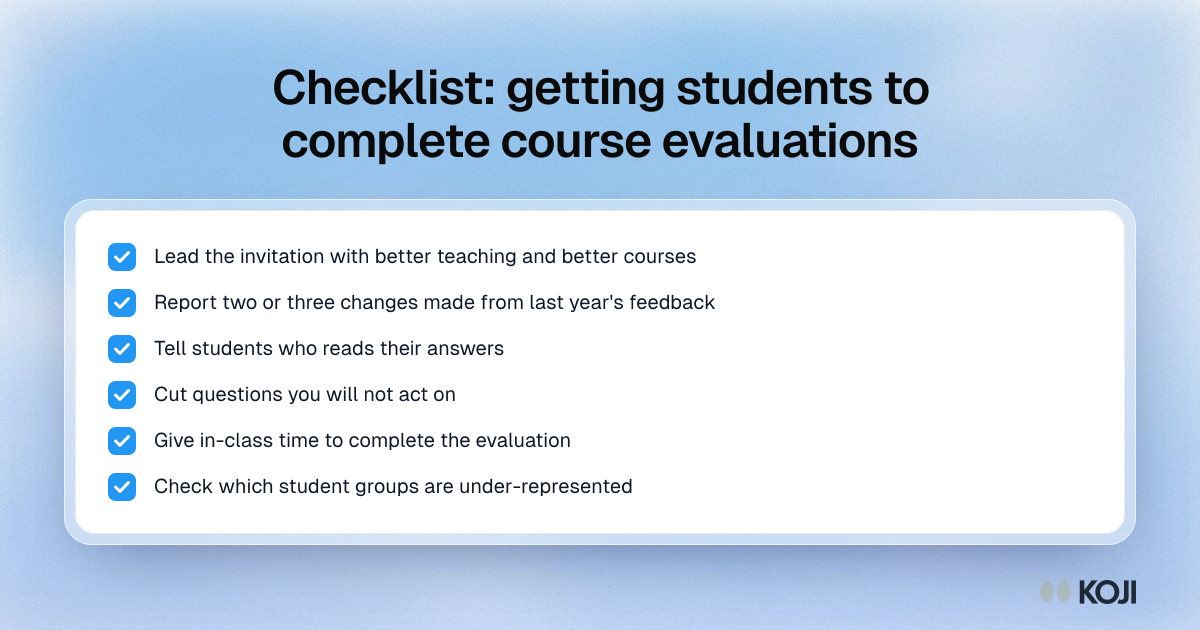
Checklist: getting students to complete course evaluations
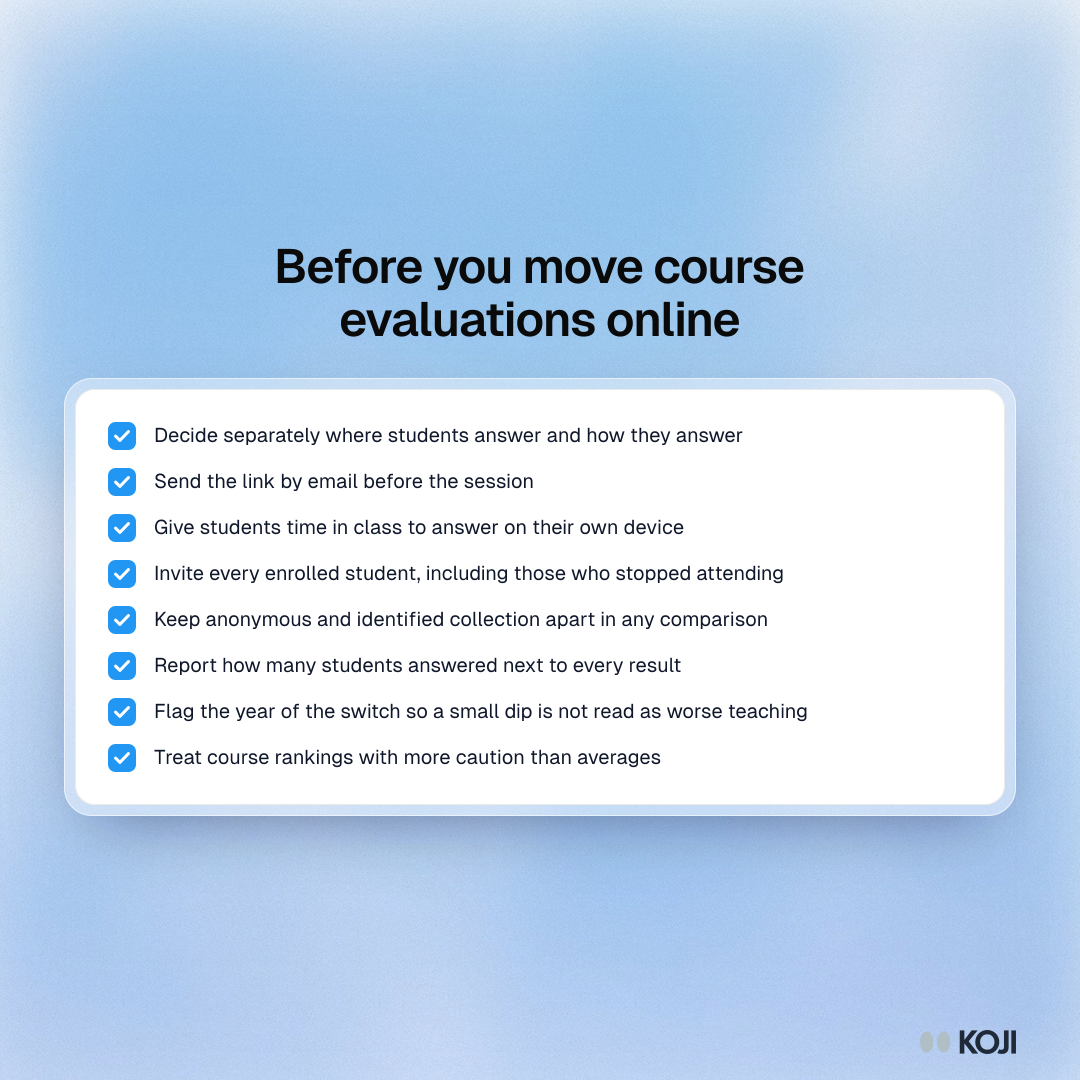
Before you move course evaluations online
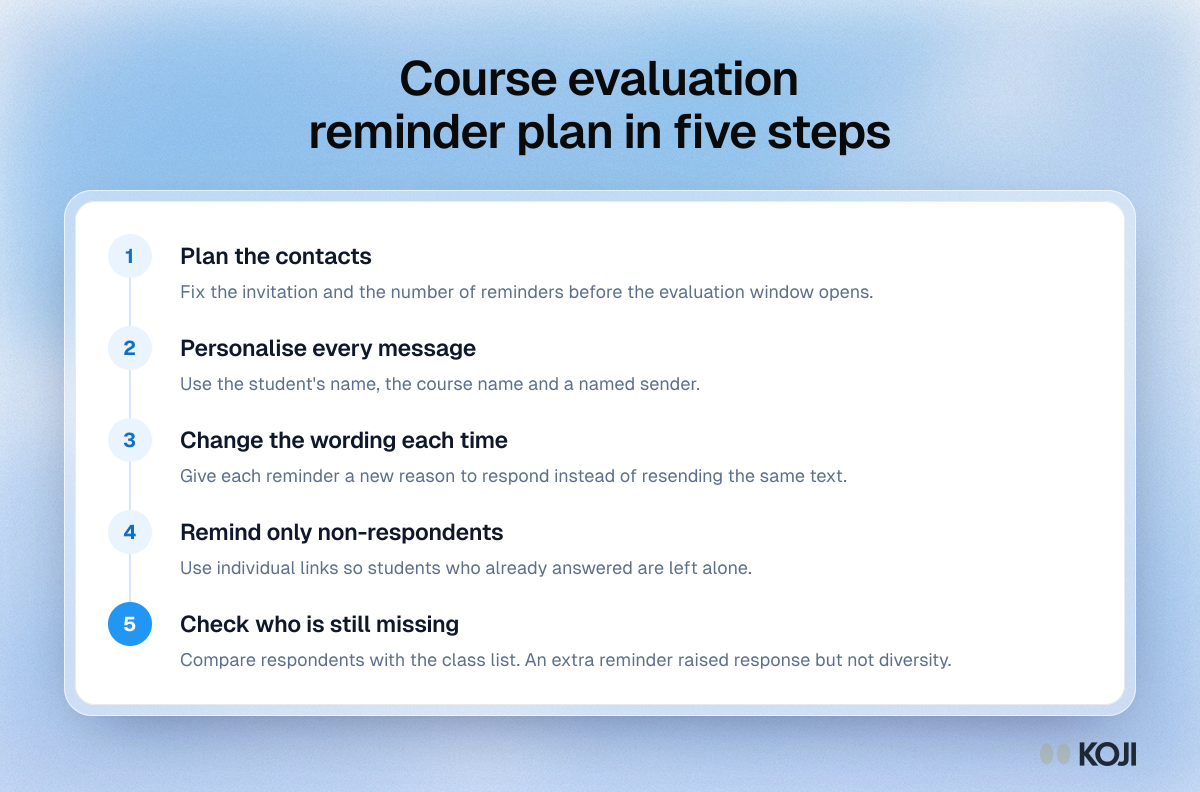
Course evaluation reminder plan in five steps
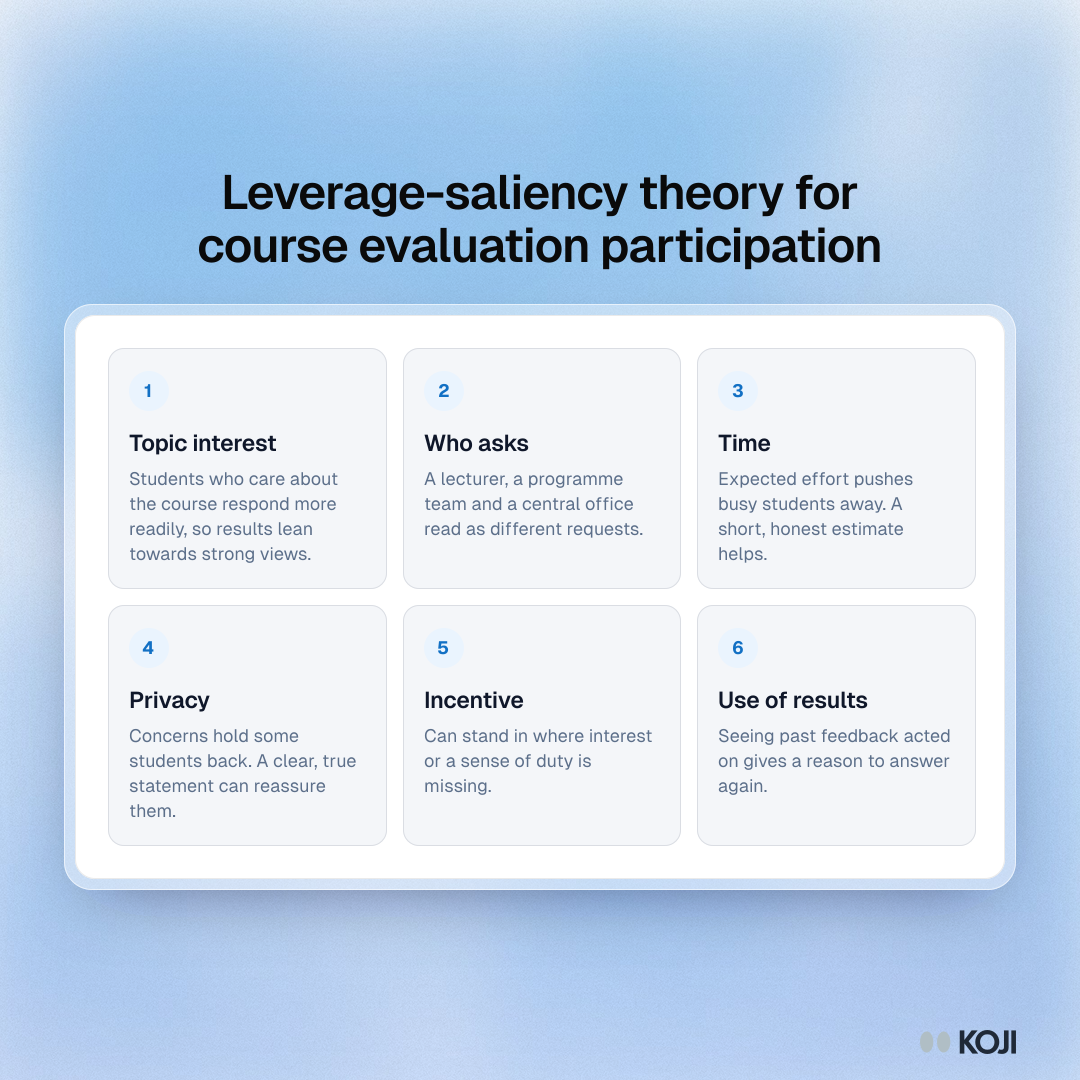
Leverage-saliency theory for course evaluation participation

Personal or anonymous links for course evaluations
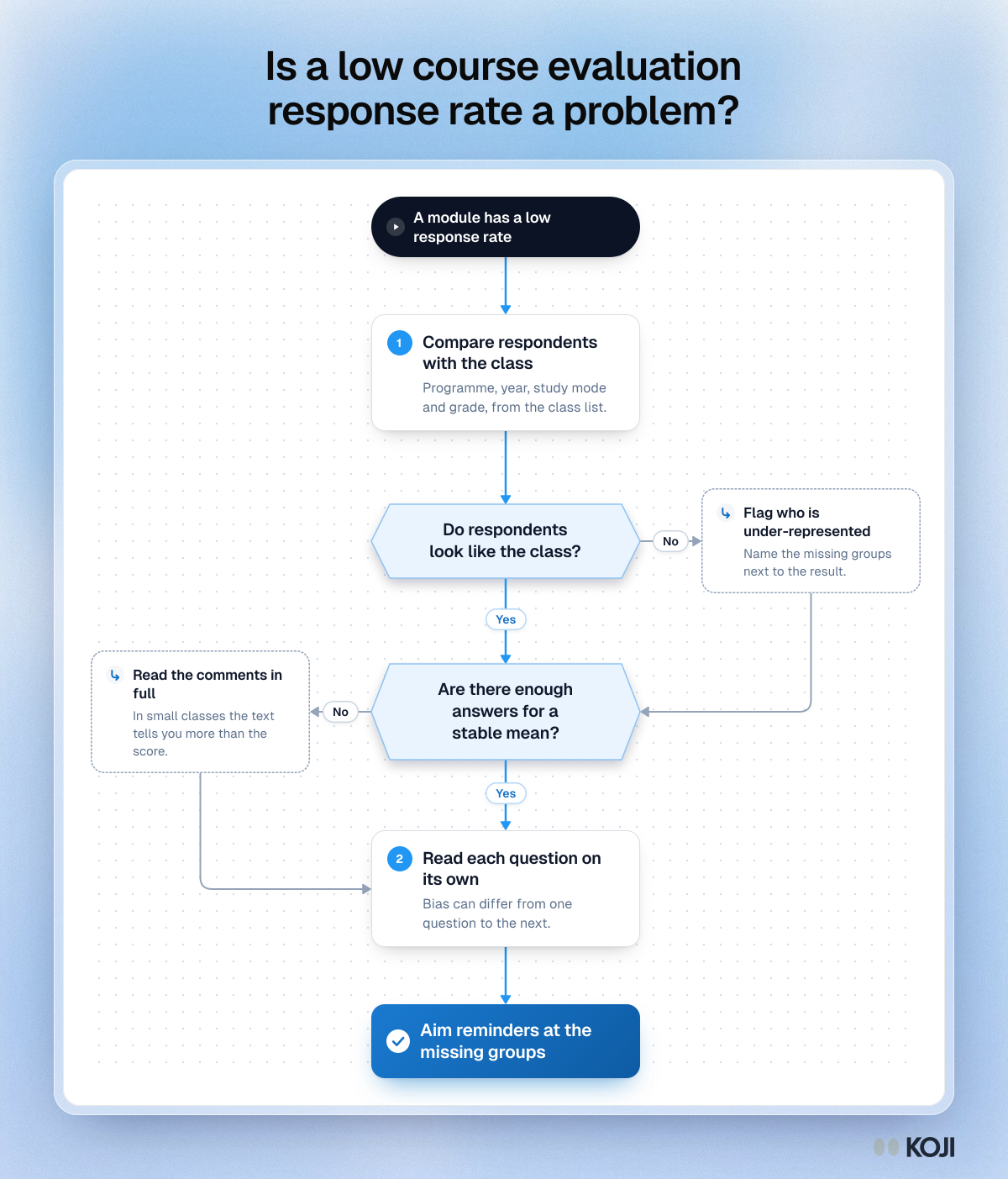
Is a low course evaluation response rate a problem?