Guide
Five weighted scoring model mistakes
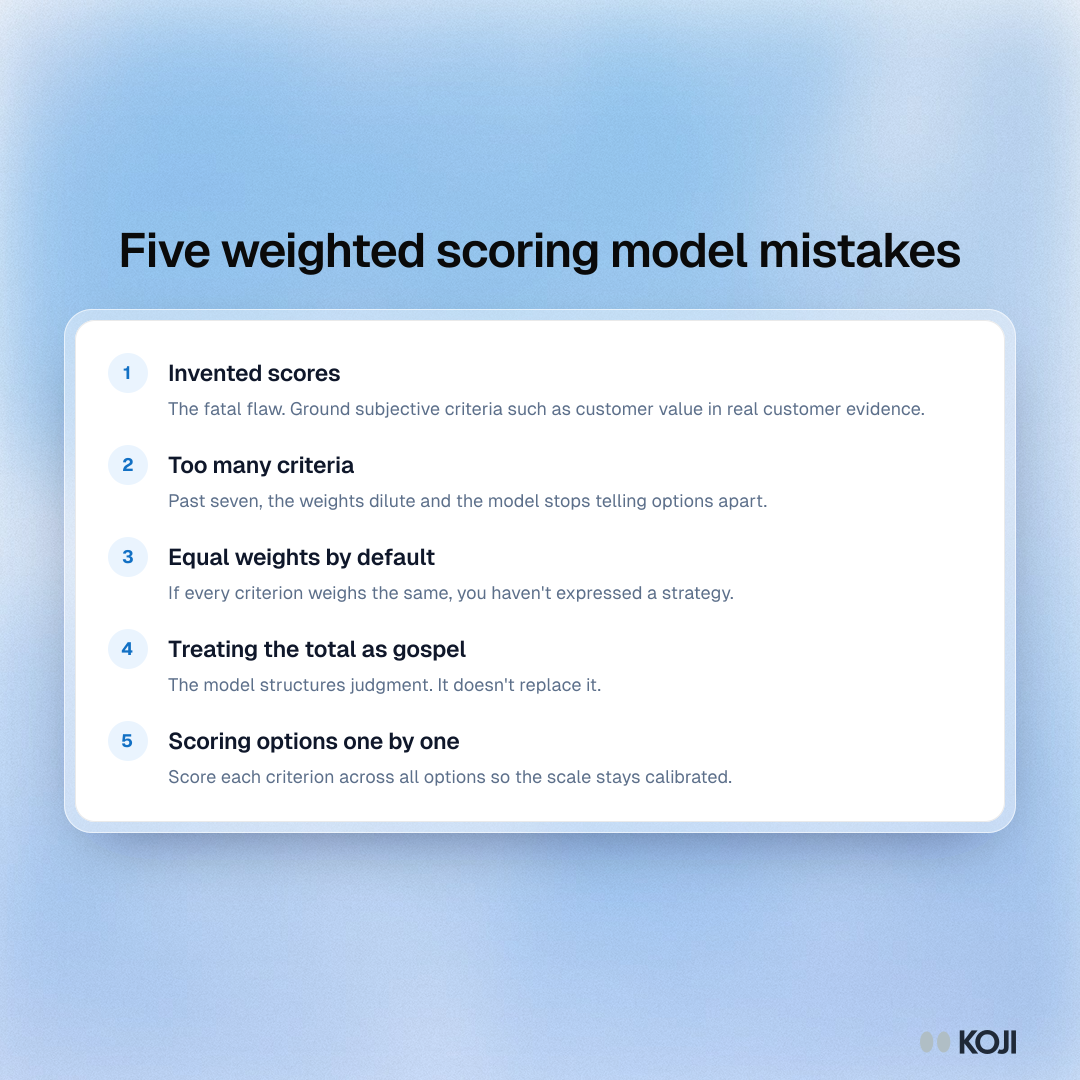
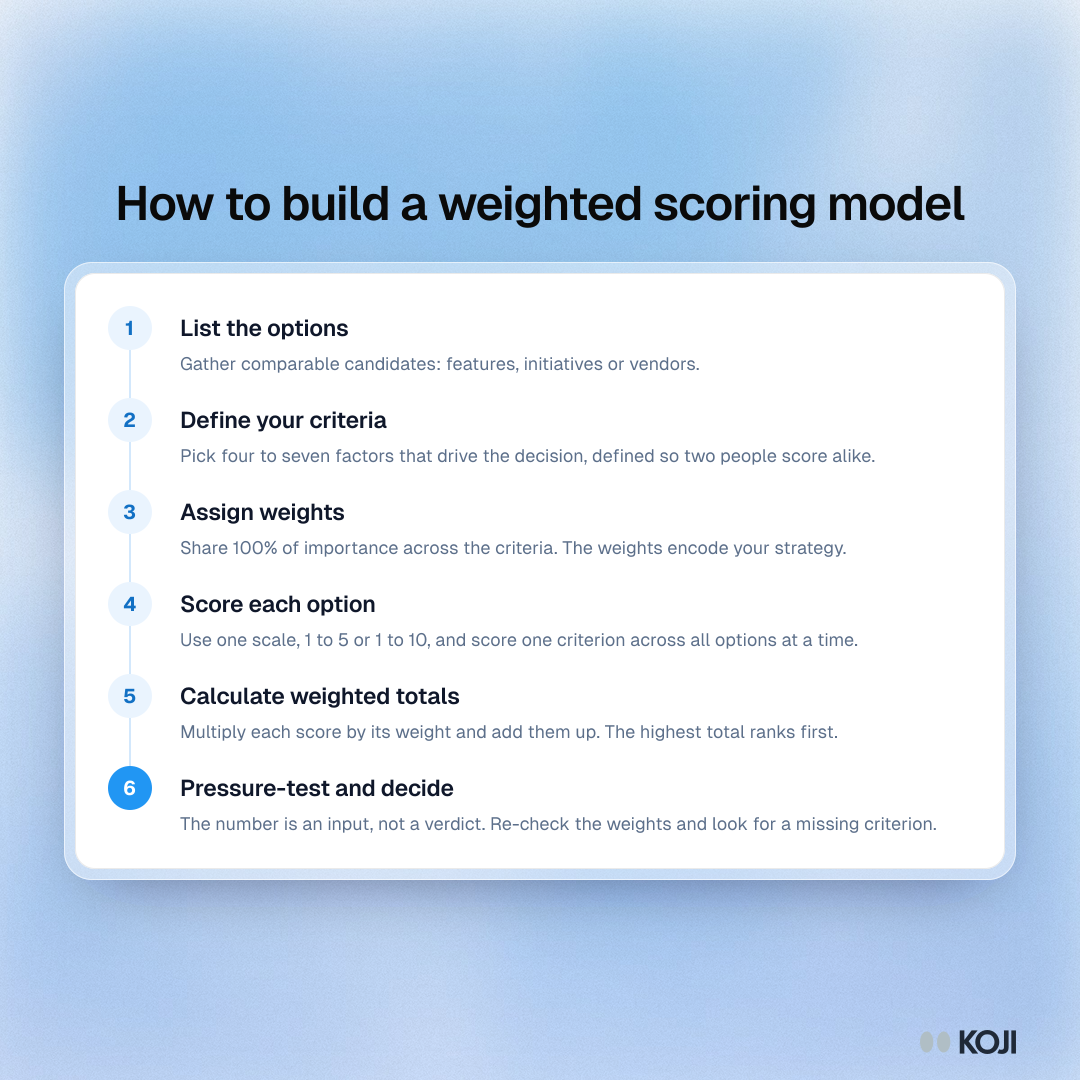
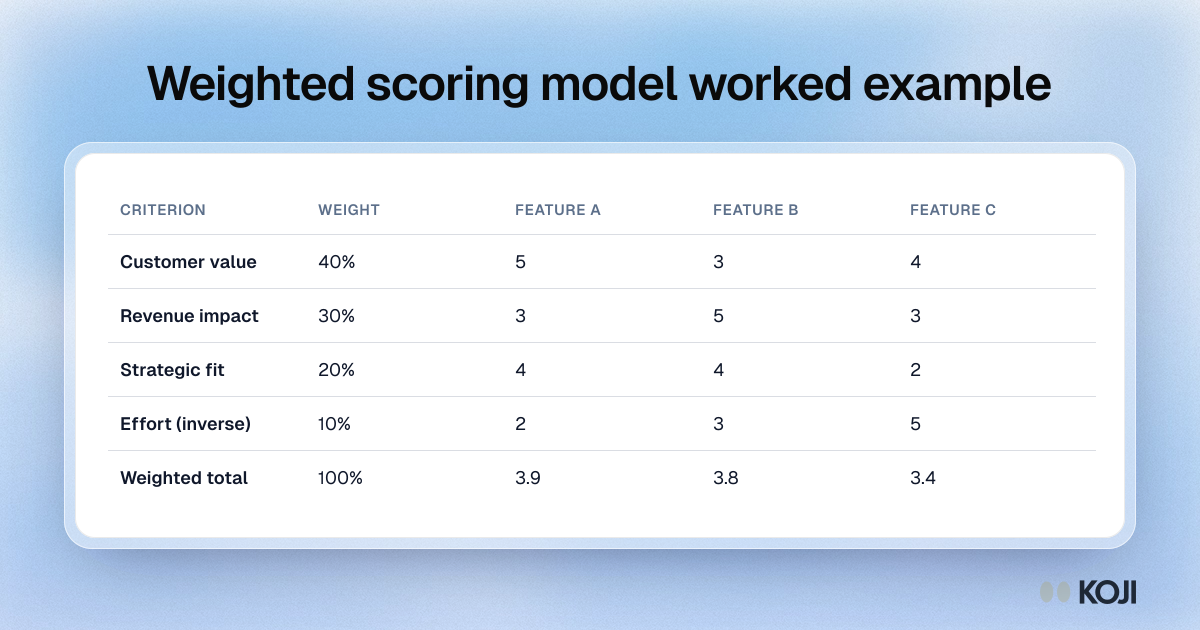
Five mistakes that make a weighted scoring model or decision matrix mislead: guessed scores, too many criteria, equal weights, treating the total as the answer, and scoring one option at a time. Product managers can use it as a review list before a prioritization meeting. Koji helps with the first one by measuring customer value through AI interviews and structured questions instead of guessing.
Where this appears
What's in this guide
- Invented scores: The fatal flaw. Ground subjective criteria such as customer value in real customer evidence.
- Too many criteria: Past seven, the weights dilute and the model stops telling options apart.
- Equal weights by default: If every criterion weighs the same, you haven't expressed a strategy.
- Treating the total as gospel: The model structures judgment. It doesn't replace it.
- Scoring options one by one: Score each criterion across all options so the scale stays calibrated.
Use this image
Free to use in your docs, decks and posts under CC BY 4.0, as long as you credit Koji with a link to this page. To embed it, paste this into your page:
html
<a href="https://www.koji.so/visuals/weighted-scoring-model-common-mistakes"><img src="https://www.koji.so/visuals/weighted-scoring-model-common-mistakes/weighted-scoring-model-common-mistakes.png" alt="Listicle of five weighted scoring model mistakes: invented scores, too many criteria, equal weights, trusting the total and scoring one by one." width="1080" height="1080" /></a>
<p>Source: <a href="https://www.koji.so/visuals/weighted-scoring-model-common-mistakes">Five weighted scoring model mistakes</a>, Koji</p>