Price increase rollout interviews are two short waves of customer conversations that customer success runs around a price change: one before the announcement, to learn what each account values and who signs, and one after it, to hear how the letter landed while there is still time to act. With AI-moderated interviews you can talk to 20 to 30 accounts in each wave without pulling CSMs off their book, and read the answers as one report. By the end of this playbook you will have a two-wave timeline, a copyable interview guide, a triage rule for every account and the exact setup in Koji.
Why price increase interviews matter now
Pricing decides the number. Customer success lives with the result. And the people on the other side of your renewals are getting better at saying no.
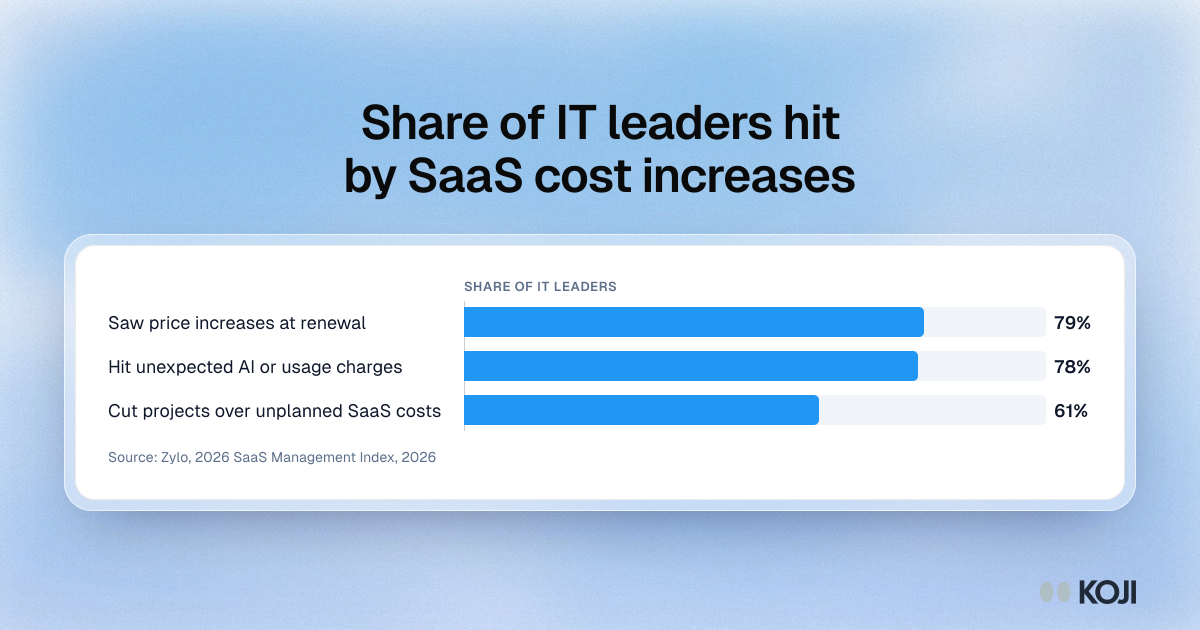
- Increases are now the default at renewal. Zylo's 2026 SaaS Management Index found that 79% of IT leaders saw price increases at SaaS renewal in the past 12 months, and 78% hit unexpected charges tied to AI or usage-based features in the middle of a contract. 61% had to cut projects because of unplanned SaaS cost increases (Zylo).
- Software prices are rising fast. Vertice's SaaS Inflation Index put year-on-year SaaS inflation at 16.4% in June 2026, easing to 12.7% in August before early September data showed 14.3% (Vertice). Your customer's CFO reads those numbers too.
- Most of a planned increase never lands. Simon-Kucher's Global Pricing Study 2025, a survey of more than 2,200 business leaders in 28 countries, found that companies realise 43% of their planned price increases on average, down 5 points in two years. Customer resistance (23%) and competitive pressure (22%) were the top barriers (Simon-Kucher).
- CSMs now carry the revenue but not the training. ChurnZero's 2026 CSM Confidential Report found 83% of CSMs carry some revenue responsibility, only 60% of them feel prepared for it, and 47% had no commercial training in the past year (ChurnZero).
- Retention has less room to give. Aleph and Benchmarkit's 2026 benchmarks of 342 companies put median gross revenue retention at 84% for 2025, down from 88% a year earlier (Aleph).
The communication matters as much as the number. In Chargebee's 2026 Global Consumer Insights survey of 1,454 subscribers in the US and UK, 58% went along with a price increase when the benefits were clearly explained, and acceptance ran from 71% among its "upgrade enthusiasts" to 36% among "flight risks" (Chargebee). That is consumer data, not B2B, but the lesson carries: the same increase lands very differently depending on who reads it and what they were told.
The cost of skipping the interviews is simple to state. Your price increase becomes a discount negotiation run account by account, by CSMs who learn each objection for the first time on the renewal call.
What good looks like
This is not research into whether to raise prices. That decision belongs to pricing and finance, and our price increase research guide covers it. This playbook starts once the decision is made and CS has to carry it through the book.

Photo by Vitaly Gariev on Unsplash
Interview twice, not once. Wave 1 runs before anyone knows. You never mention price. You learn what each account thinks it is paying for, how its budget gets approved and what it would compare you to. Wave 2 runs after the letter, with the accounts that renew first. You learn how the letter read, what they plan to do and what would make the new price feel fair.
Never test the number in wave 1. Asking "would you pay 15% more?" before the announcement leaks the increase, invites a negotiating answer and teaches you nothing you can use. Ask about value and budget. The price reaction comes in wave 2, when it is real.
Sample by renewal date and uplift, not by logo size. For each wave, pick 20 to 30 accounts that renew within six months of the new price taking effect. Cover the biggest uplifts, a spread of health scores and at least five of your smallest accounts, because tech-touch customers read a price letter with nobody to call. If fewer than 40 accounts are affected, interview all of them.
Talk to two people per account. The champion and the person who signs the renewal. The champion tells you what the product is worth. The signer tells you whether that argument will survive a budget review.
Write the letter from their words. The value anchors from wave 1 become the first paragraph of the announcement. If 12 of 25 accounts say the product saves them a weekly reporting job, the letter says that, in their words, before it mentions a number.
Common mistakes
- Asking about the price before it is announced.
- Letting the CSM who owns the renewal run the interview. Customers tell a neutral interviewer things they will not tell the person about to quote them.
- Interviewing only happy accounts, then being surprised by the unhappy ones.
- Waiting for the first renewal call to hear the objections.
- Treating "we will look at alternatives" as a bluff without asking which ones.
- Offering a discount before you know whether the objection is price, timing or value.
The two-wave rollout method
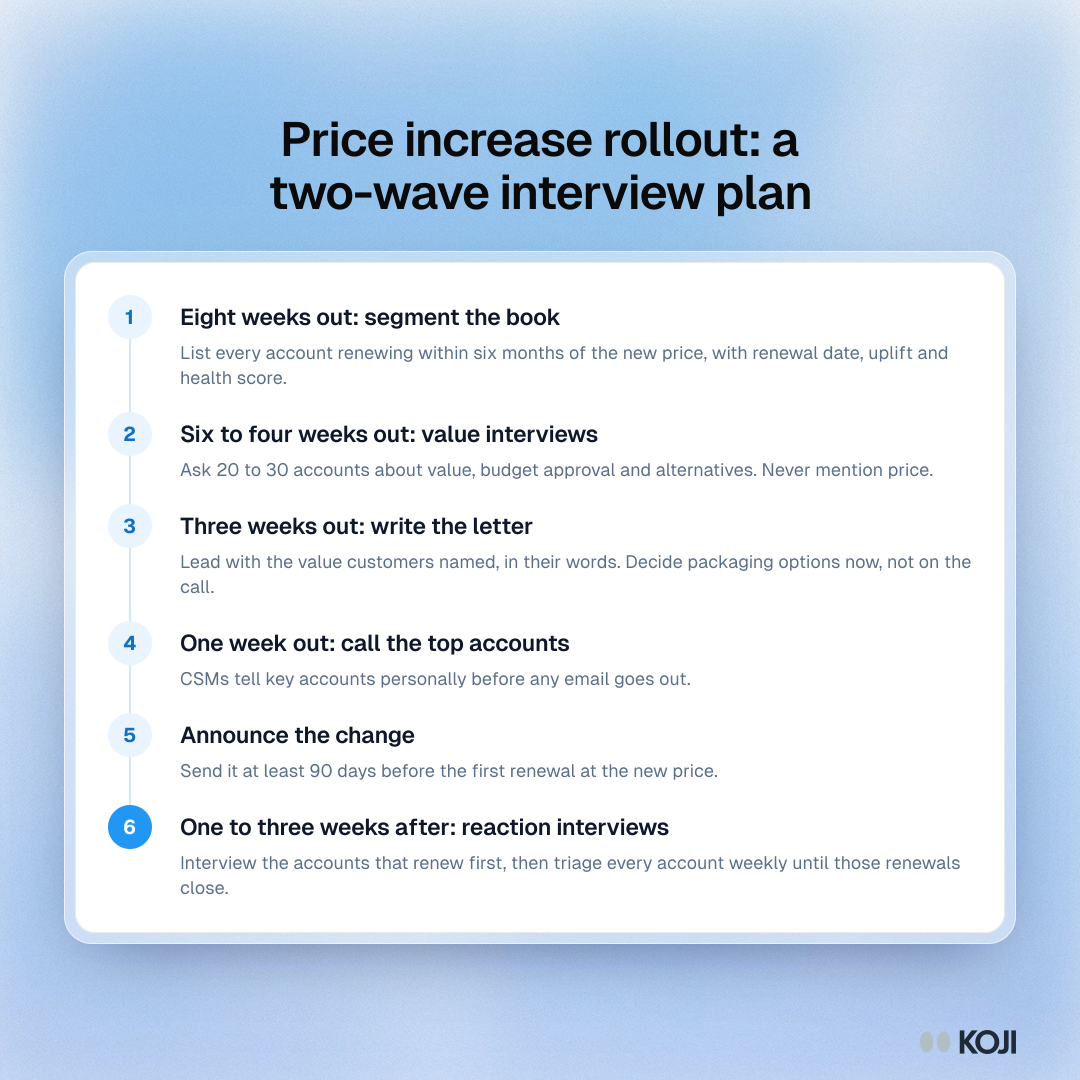
Count back from the day the letter goes out (T).
- T-8 weeks: segment the book. List every account renewing within six months of the new price taking effect, with renewal date, uplift and health score. Pick your 20 to 30 for wave 1.
- T-6 to T-4 weeks: wave 1 value interviews. Value, budget and alternatives. No price.
- T-3 weeks: write the letter and the CSM talk track from what wave 1 said. Name the value customers named. Decide your packaging options now, not on the call.
- T-1 week: CSMs call the top accounts personally before the email. Nobody important should learn about a price increase from a mass email.
- T: announce, at least 90 days before the first renewal at the new price.
- T+1 to T+3 weeks: wave 2 reaction interviews with the accounts that renew first, then triage every account weekly until those renewals close.
What to do with each account after wave 2
Read each account's interview summary and put it through one decision. This is the part teams skip, and it is what turns interviews into saved revenue.
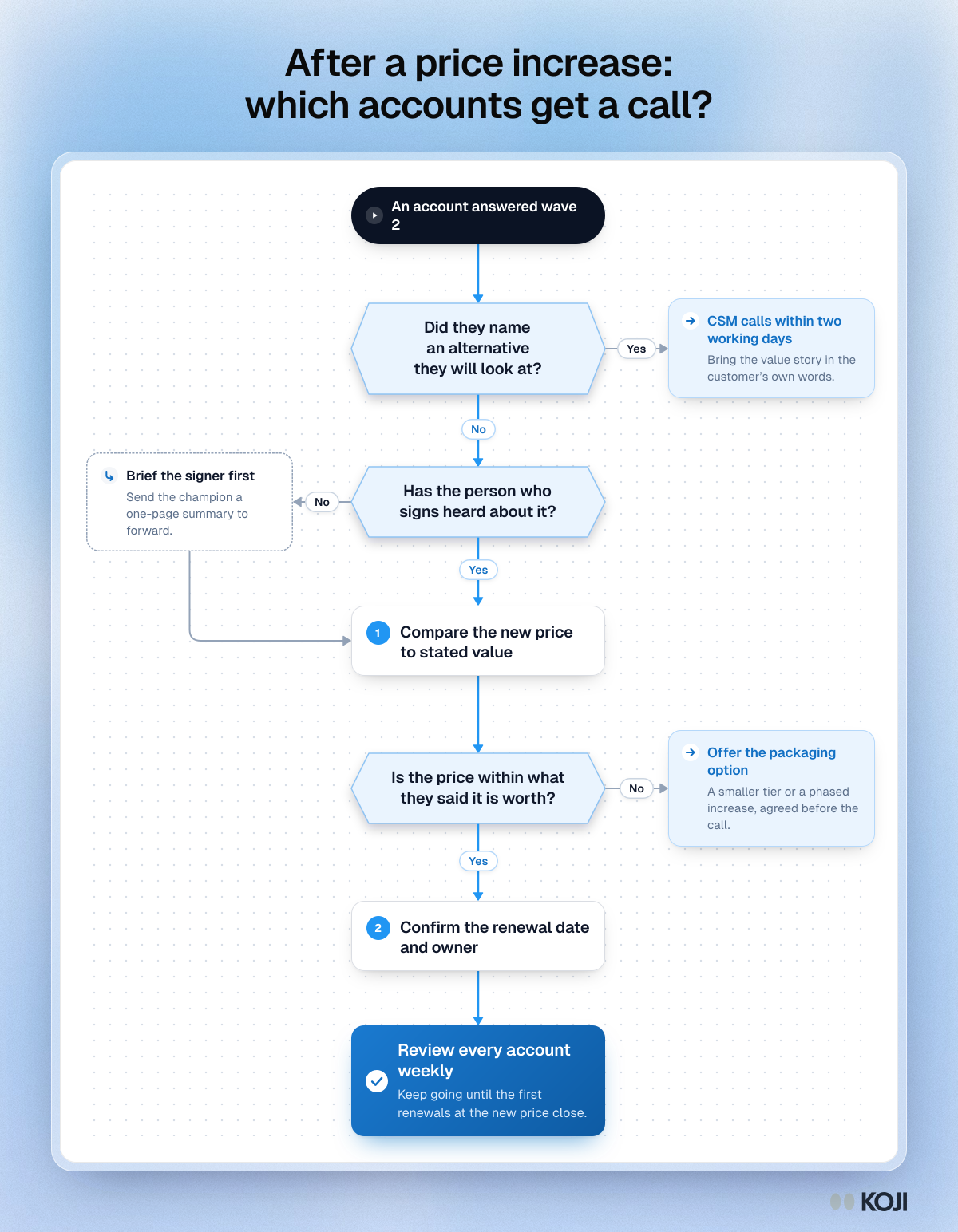
- They named an alternative they will look at: a CSM calls within two working days, with the value story in the customer's own words.
- The signer has not heard yet: send the champion a one-page summary they can forward, then continue.
- The new price is above what they said the product is worth: offer the packaging option you decided on at T-3 weeks, such as a smaller tier or a phased increase. Do not improvise a discount on the call.
- Everyone else: confirm the renewal date and owner, and review the list every week until those renewals close.
How to set it up in Koji, step by step
You can run a first pilot on the Free plan's signup credits. For two waves of 20 to 30 accounts you will want a paid plan with enough credits. Koji's Data Processing Agreement is available to business customers, and Enterprise adds Bring Your Own Key. Interview previews are free and never count as responses.
- Start the study. Open the template gallery in the dashboard and pick QBR Prep Research under Customer Success, or start blank and tell the research assistant: "Interview the champion and the budget owner at accounts renewing in the next six months about what they get from our product, how their budget is approved and what they compare us to. Do not mention price."
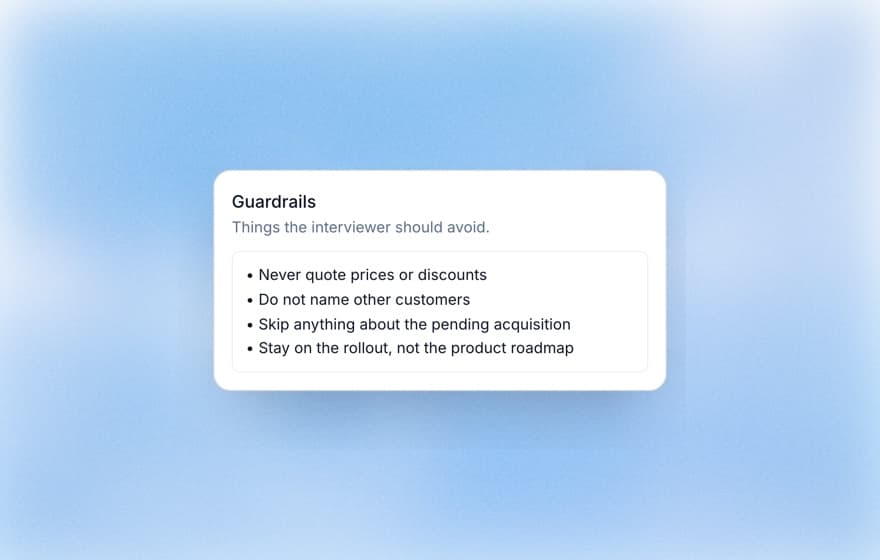
- Shape the research brief. Set the goal and add guardrails so the interviewer never quotes prices, discusses renewal terms or names other customers. Write in the opening that this is a listening exercise and nobody will follow up with a quote.
- Add structured questions where you need a number to compare across accounts: a 1 to 10 scale for how essential the product is, a single choice for who approves the renewal. Keep the story questions open, with two follow-ups each.
- Choose how people answer. Participants can answer by voice or text, and outbound phone calls reach people who will not click a link. Take the interview yourself in Preview before you send it.
- Invite by CSV. Import a list with email, account, role and renewal date. Each person gets their own private link, and extra columns become properties you can use in invitations (importing participants). On a paid plan you can send the invitations and reminders from Koji and add an incentive. Turn on "Remove personal details" if your policy needs names and employers taken out of transcripts.
- Duplicate the study for wave 2. Duplication copies the brief and settings into a new draft. Swap in the wave 2 questions below and invite the accounts that renew first.
Copy this interview guide
Paste the one-line brief into the "What do you want to research?" box, then add the questions. Each wave runs about 10 minutes.
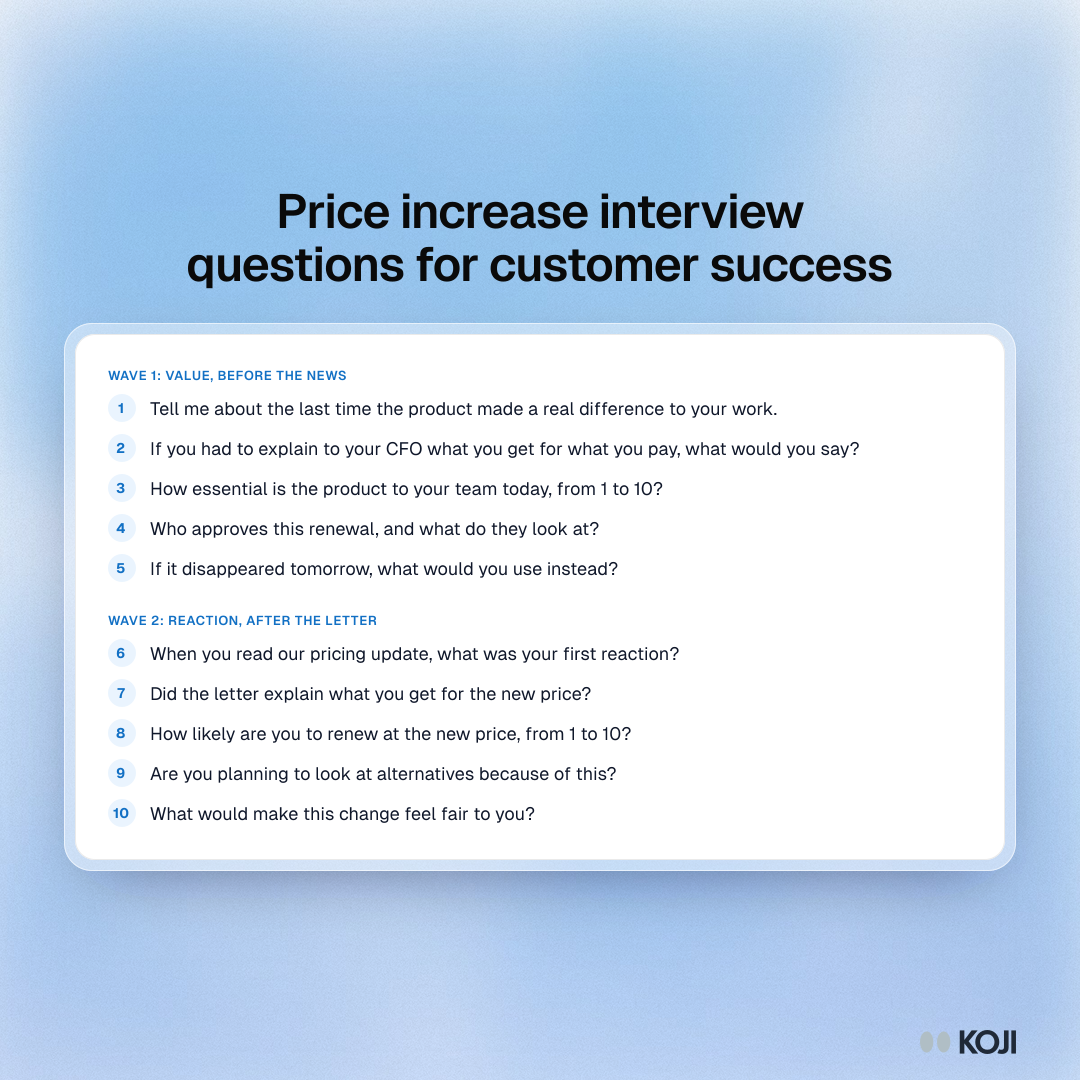
Wave 1 research brief: Interview the champion and budget owner at accounts renewing in the next six months about the value they get from our product, how renewals are approved and what they compare us to, without discussing price.
Opening: "Thanks for making time. I'm an AI interviewer working with [company]. A person on the team reads every answer, and nobody will try to sell you anything afterwards."
- "Tell me about the last time [product] made a real difference to your work. What happened?" Open. Probe: "What would you have done without it?"
- "If you had to explain to your CFO what you get for what you pay, what would you say?" Open. Probe: "Which part would they push back on?"
- "How essential is [product] to your team today?" Scale, 1 to 10. Probe: "What would move that up or down?"
- "Who approves this renewal, and what do they look at?" Single choice: me / my manager / finance / procurement or IT / a committee. Probe: "When does that review happen?"
- "If [product] disappeared tomorrow, what would you use instead?" Open. Probe: "What would that cost you in time or money?"
Wave 2 research brief: Interview the champion and budget owner at accounts renewing first under the new pricing about how they read the announcement, what they plan to do and what would make the change feel fair.
- "When you read our pricing update, what was your first reaction?" Open. Probe: "Who else has seen it?"
- "Did the letter explain what you get for the new price?" Yes/no. Probe: "What was missing?"
- "How likely are you to renew at the new price?" Scale, 1 to 10. Probe: "What would make that a 9?"
- "Are you planning to look at alternatives because of this?" Yes/no. Probe: "Which ones, and when?"
- "What would make this change feel fair to you?" Open. Probe: "Is that about the price, the timing or what is included?"
Closing: "Is there anything you expected me to ask that I didn't?"
What you get
One report per wave instead of 30 sets of call notes: the themes that repeat, how many accounts raised each, and the quotes behind them. Every finding links back to the interviews that support it, and interviews that score under 3 out of 5 on quality are not charged and stay out of the report (how the quality gate works).
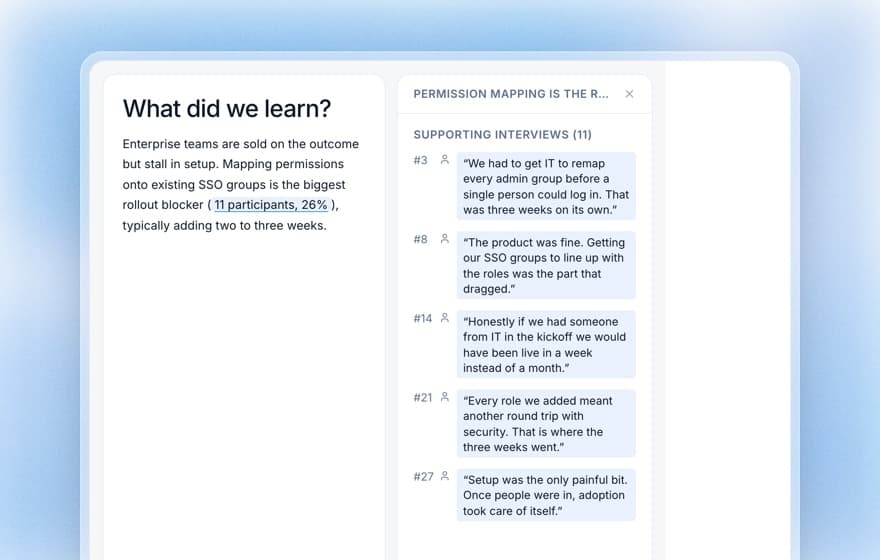
Use it where the rollout is decided:
- The letter: the value anchors from wave 1, in customer words, before the number.
- The CSM talk track: the five objections wave 1 predicts, each with an answer.
- The forecast call: replace "feels fine" with "6 of 24 first renewals named an alternative".
- Pricing and finance: realised price by segment after the first renewals, with the reasons. That is the feedback loop most pricing teams never get.
The same playbook elsewhere
The pattern, "hear the people who will carry a change before and after you make it", runs across roles.
- PE operating partners interview a new portfolio company's customers before repricing, in the 100-day customer baseline.
- Product managers research willingness to pay before launch, in pricing an AI feature.
- Customer success already has the account-level version in the renewal risk interviews playbook. Wave 2 accounts that score low belong in it.
- HR runs the same two-wave shape around pay changes: ask before, listen after.
Why Koji for price increase rollout interviews
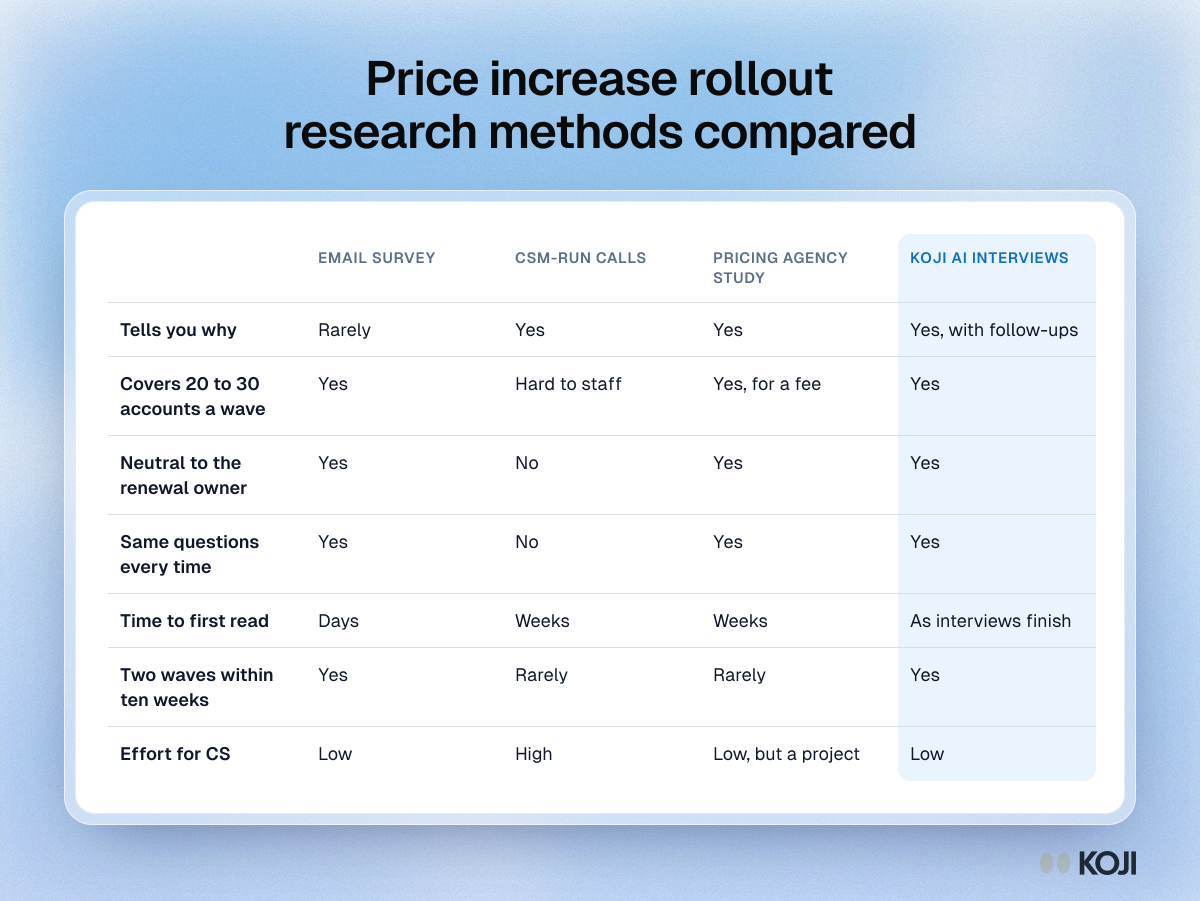
| Email survey | CSM-run calls | Pricing agency study | Koji AI interviews | |
|---|---|---|---|---|
| Tells you why | Rarely | Yes | Yes | Yes, with follow-ups |
| Covers 20 to 30 accounts a wave | Yes | Hard to staff | Yes, for a fee | Yes |
| Neutral to the renewal owner | Yes | No | Yes | Yes |
| Same questions every time | Yes | No | Yes | Yes |
| Time to first read | Days | Weeks | Weeks | As interviews finish |
| Two waves within ten weeks | Yes | Rarely | Rarely | Yes |
| Effort for CS | Low | High | Low, but a project | Low |
In fairness: a survey is fine for a quick count of who noticed the letter. A CSM call wins on trust with your top accounts, which is why step 4 keeps it. A pricing consultancy brings method and benchmarks you will not have in-house, and is the right call for a full repricing. The gap is in the middle: 20 to 30 accounts, twice, inside ten weeks, with someone neutral asking the same questions.
Why Koji for this job:
- Follow-up depth. When someone says "it's getting expensive", the interviewer asks compared to what, and who said so.
- Guardrails. You can tell the interviewer never to quote prices or discuss terms, which is what makes wave 1 safe.
- Open and structured questions in one flow. A 1 to 10 renewal likelihood and the reason behind it, side by side.
- Voice, text and phone. People answer the way that suits them.
- Traceable findings. Each finding links to the quotes behind it, so the letter and the talk track rest on what customers said.
Questions you might have about AI interviews
Will customers talk to an AI about pricing? Wave 1 is not about pricing, which makes it an easy ask. For wave 2, say plainly in the invite that it is an AI interviewer, that a person reads every answer and that you want to hear the honest reaction. Pilot with 10 accounts and check the completion rate before you send the rest.
Will it feel like a sales tactic? It can if the CSM follows up with a quote the next day. Keep the interview and the renewal conversation separate, and say so in the opening. Guardrails stop the interviewer discussing terms.
Where does the account data go? Data is encrypted in transit and at rest, a Data Processing Agreement is available to business customers, and you can have personal details removed from transcripts. Enterprise adds Bring Your Own Key. Have security read the privacy and security guide.
When Koji may not be the right fit
If fewer than 15 accounts are affected and your CSMs already speak to every signer monthly, run the ten questions yourself on calls. If the increase is written into the contract as a fixed uplift that customers agreed to at signing, you need a reminder, not research. And if the pricing decision itself is still open, start with the price increase research guide and come back once the number is set.
Metrics to track
- Share of affected accounts interviewed in each wave, by role
- Objections predicted in wave 1 that showed up in wave 2
- Wave 2 accounts that named an alternative, and how many renewed
- Realised price on the first renewals against the planned increase
- Discounts given, and the reason recorded for each
- Gross revenue retention for the affected cohort against the rest of the book
FAQ
How many accounts should I interview? 20 to 30 per wave, from accounts renewing within six months of the new price. If fewer than 40 are affected, interview all of them.
When should wave 1 start? Six weeks before the announcement. You need three weeks to interview and three to write the letter and talk track.
Should we mention the increase in wave 1? No. Ask about value, budget and alternatives. Testing the number before it is announced leaks it and invites a negotiating answer.
Who should we interview at each account? The champion and the person who signs the renewal. Their answers often differ, and that gap is useful.
What if an account threatens to leave? Treat it as a ticket for a human. A CSM calls within two working days with the value story and any packaging option you agreed in advance.
How is this different from renewal risk interviews? Renewal risk interviews look at each account whatever the cause. This playbook is timed to one event, a price change, and runs across the whole affected book.
Ready to start?
Sign up, open the template gallery, pick QBR Prep Research and paste the wave 1 brief above. See how CS teams use Koji on the Customer Success page, and find every playbook for this audience in the Customer Success use-case library. More to read: health score calibration, customer exit interviews and generating research reports.