If you run a small business, the people who could tell you why they buy are already walking past your till, your inbox and your phone. The hard part is not what to ask them. It is getting ten minutes of their time without a research budget, a panel or an audience. The short answer: ask at the moment of the sale, keep the ask to one line and one link, say what you will do with the answer, and send a text within a day to the ones who agreed. By the end of this guide you will have a script for each channel, a way to tell whether the ask is working, and a first batch of conversations booked this week.
When you need this
You need it when a decision is sitting on your desk and the only data you have is sales. Sales tell you what happened. They do not tell you why a regular stopped coming, why a quote went cold, or why people pick the competitor down the road.
The usual signs: repeat orders are slipping and you cannot say why, you are about to change a price or an offer, or you keep hearing "we'll think about it" and cannot tell what they are thinking about. If you have already read why customers leave a small business, this is the step before it: how to get those customers to talk at all.
The cost of guessing is real. A price or an offer changed on a hunch is hard to undo, and a customer you never asked is one you will not hear from again.
The method in brief
Small businesses have something most startups would pay for: a customer list, or at least a counter. That changes the problem. You are not recruiting strangers. You are asking people who already know you, which is easier and also riskier, because friendly customers are polite. The fix is in how you ask, covered in the Mom Test method: ask about the last time they bought or needed something like it, not whether they like you.
Three ways of asking cover most small businesses:
- In person, at checkout. One sentence from you, a card with a short link for them. Best when you see customers face to face.
- On the receipt or the order confirmation. A line and a short link or QR code. Costs nothing, reaches everyone, converts the fewest.
- A text or email within a day of the sale. Reaches only people who gave you a number or address, and only if they agreed to be contacted. Converts the most.
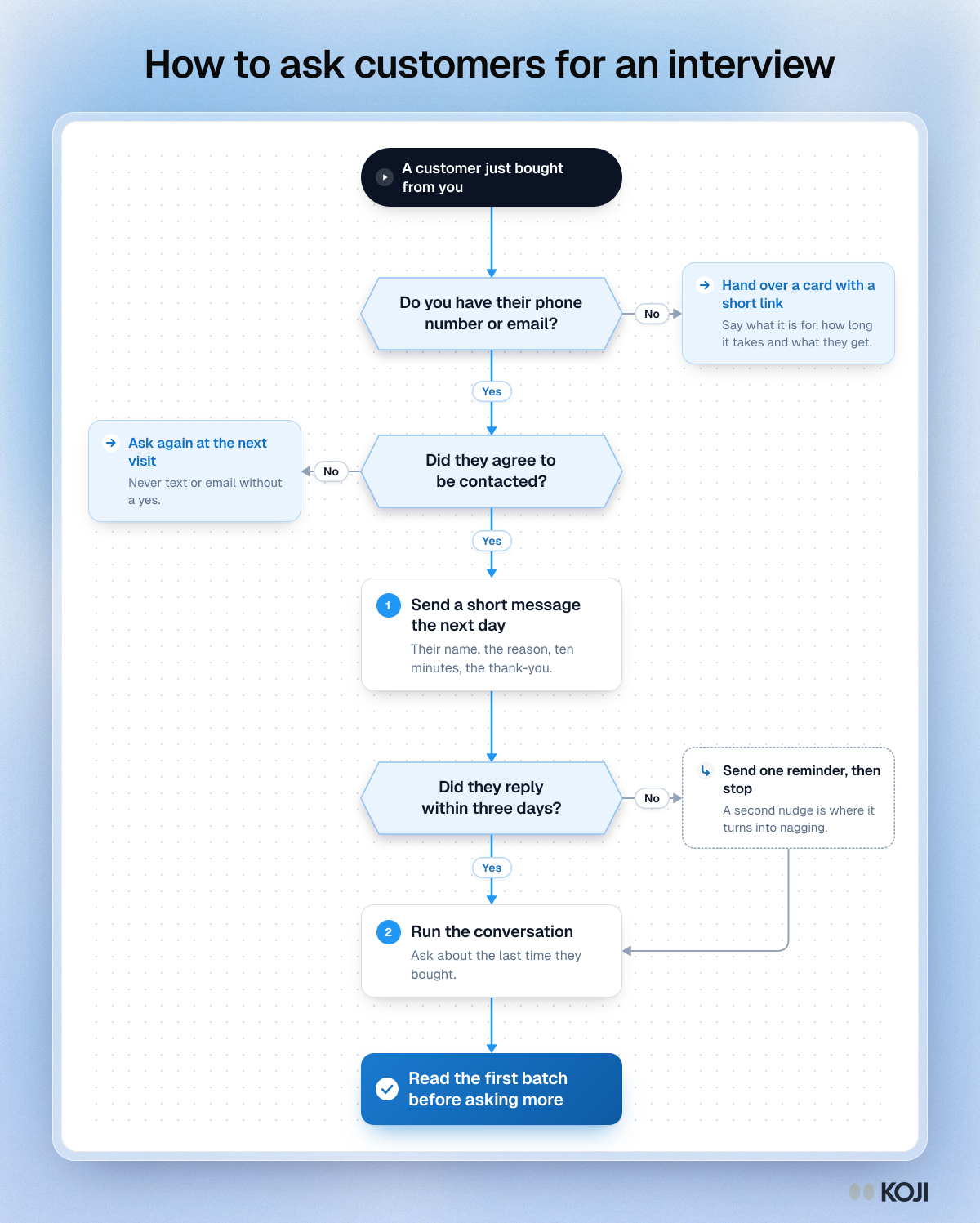
These are not exclusive. The chart below shows which to use when.
What the evidence says about asking
Response rates for "please give us feedback" invitations are often low, so the design of the ask matters more than the size of your list. A few findings worth knowing before you print anything:
- A QR code on its own is a small lift, not a fix. In an experiment by Endres and colleagues in the Journal of Survey Statistics and Methodology (2024), adding a QR code to the mailed invitation raised participation from 3.49% to 4.66%, a gain of 1.19 percentage points [1]. A 2025 experiment on a German family panel found a larger gain of 3.3 points [2], and a Swiss study found a strong shift towards answering on a phone rather than a computer [8]. Other studies in the same family found little or no change. Treat a QR code as a convenience for people holding a phone, and always print the short link next to it.
- Texts are fast, and are not a replacement for email. A Pew Research Center experiment found that text notifications made people respond sooner but did not raise the final response rate over a longer field period compared with email alone [3]. A 2025 Gallup presentation to the American Association for Public Opinion Research reported that text invitations raised response rates across all the demographic groups it tested, including hard-to-reach ones [4]. Both studies are of panels who had agreed to be texted. Your customers must have agreed too.
- A thank-you helps, with diminishing returns. Meta-analyses of survey incentives find that a prepaid reward raises response, and that each extra unit of money buys less [5][6]. For a small business that means a small, sure thank-you beats a big, uncertain one.
- Vendor numbers deserve caution. One research vendor reported that adding a QR code to a retailer's receipt invitation more than tripled responses [7]. That is a single client's report, not a controlled test, so use it to decide what to try, not what to expect.
The honest summary: nobody has published a clean trial for the corner shop. So treat your first fortnight as a test of your own, and measure it (see "Reading the results" below).
Step by step
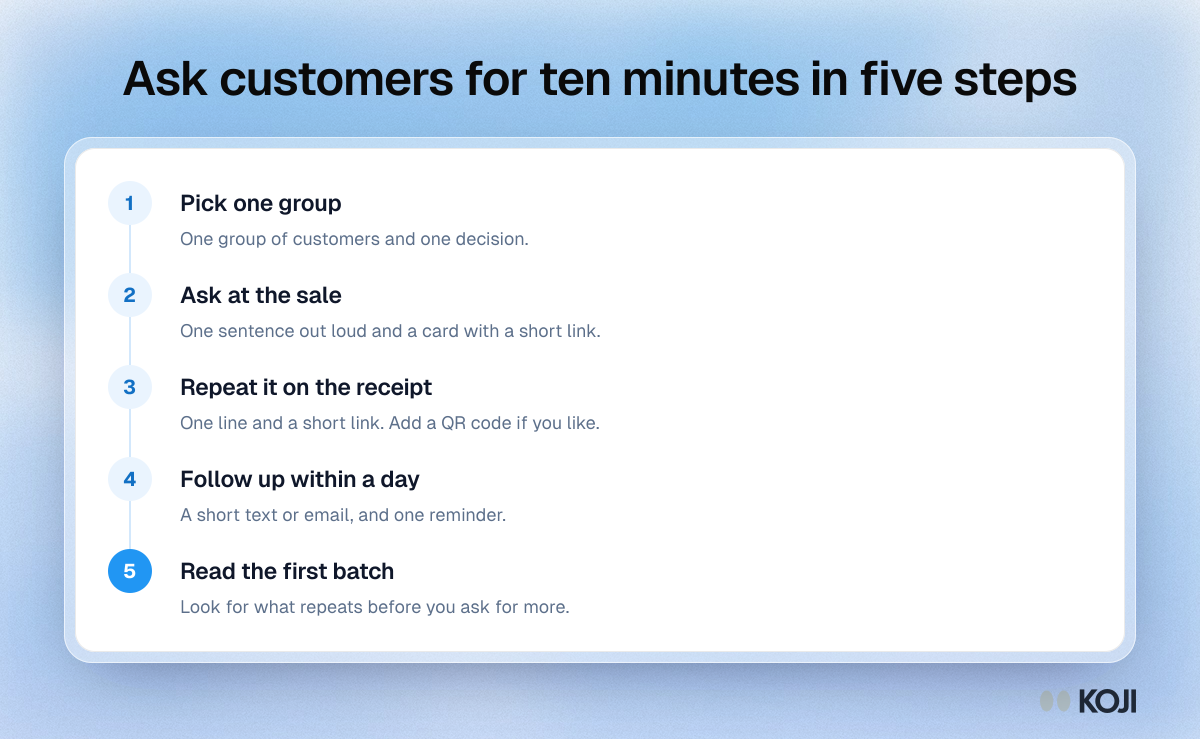
1. Decide who you need before you ask anyone. "Customers" is too wide. Pick one group tied to one decision: people who bought twice and then stopped, people who asked for a quote and did not buy, or your best regulars. If the decision is about price, you want recent buyers. If it is about why people leave, you want people who have not come back in a while, as covered in churned customer interviews.
2. Ask at the moment of the sale, in one sentence. Say it out loud and hand over something: "I'm trying to make this place better. Could I call you for ten minutes this week? I'll send you a coffee voucher." Then give them a card with a short link where they can leave a number or start the conversation themselves. The ask works because the memory is fresh and you are not a stranger. Keep the card to three things: why, how long, what they get.
3. Put the same ask on the receipt or confirmation. One line and a short link: "Two minutes to tell us what nearly stopped you from buying? Thank-you included." Add a QR code if people scan with a phone, with the short link printed beside it for those who do not.
4. Follow up within a day. For anyone who gave you a number or email and agreed to be contacted, send a short message the next day. Use their name, say what the conversation is about, how long it takes, and what they get. Send one reminder after three days and then stop. Check the rules for your country before you text or email people: is it legal to email or text someone for research covers the main ones.
5. Run a first batch and read it before asking for more. For one group with a similar profile, around eight to twelve conversations is a sensible first batch (how many user interviews are enough). Read them, look at what repeats, then decide whether you need more.
What to say, word for word
Keep the in-person ask under ten seconds:
"Can I ask you something? I'm trying to understand why people choose us. Could I have ten minutes of your time this week, by phone or text? I'll send you [a small thank-you] either way."
And the text the next day:
"Hi [name], it's [your name] from [business]. Thanks for coming in yesterday. You said you were happy to chat: could you give me ten minutes this week? Here's a link to pick a time or answer by message: [short link]. As a thank-you I'll send [reward]."
If you only change one thing, change the line that says what they get. "It'll help us improve" is a favour. "Ten minutes and a coffee on us" is a trade.
The question bank
Ask about behaviour you can both remember, not about opinions. These six questions work for most small businesses, in this order.
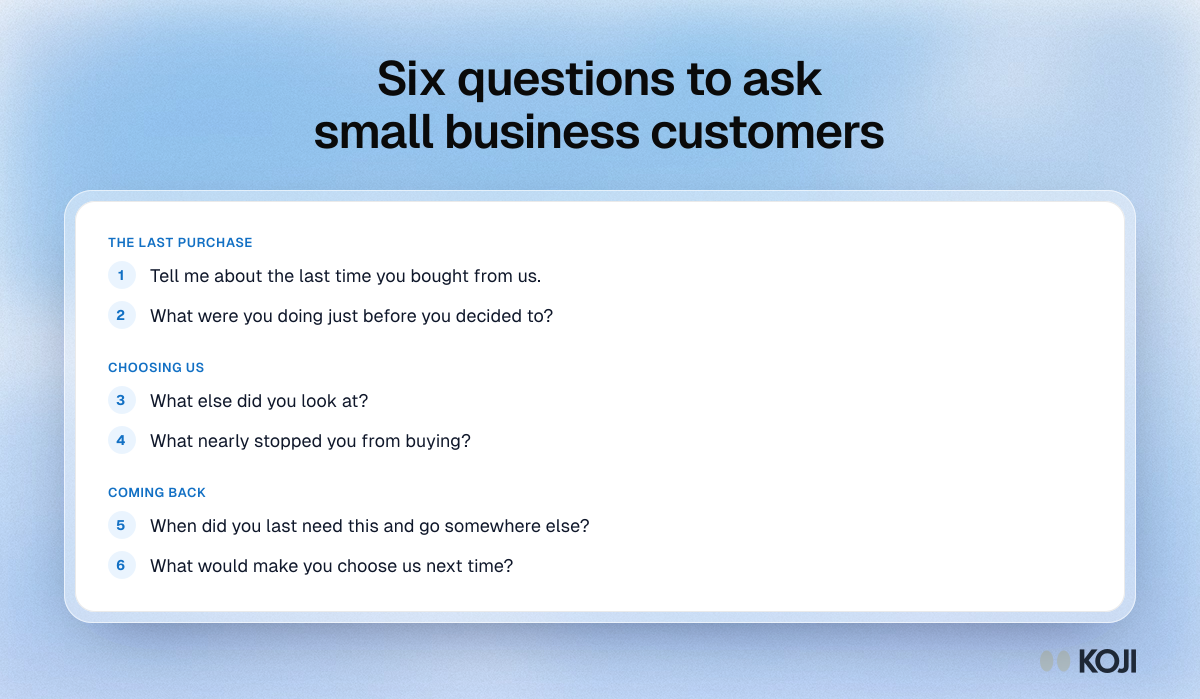
If an answer is vague ("it was fine"), ask for the last time: "When was the last time that happened? What did you do?" The point is to hear the story, not collect adjectives.
A worked example
Say you run a six-person print shop that makes business cards and flyers for local firms. Repeat orders have dropped, and you suspect price but you do not know.

Photo by Michael Krahn on Unsplash
You decide the group is customers who ordered twice in the last year and then stopped. You pull 40 names from your invoices. Because they are existing customers who gave you their email when they ordered, you can contact them about their order. You send a short message offering ten minutes and a voucher. Eleven reply. You also hand a card with a short link to everyone who comes to the counter over the next two weeks, and eight more start a conversation from the card.
You run eleven of the conversations. Five say the second order was late or the proof came back wrong. Three say they moved to an online printer for a repeat job and have not thought about it since. Two say they simply did not need more. Only one mentions price.
What you decide: price is not the problem. You fix the proofing step first, then add a one-click reorder email for repeat jobs. You would not have found either without asking, and a discount would have cost you margin and fixed nothing. This is a made-up scenario. The second guide, why customers leave a small business, shows how to dig into reasons like these once people talk.
Reading the results and deciding
Count two things before you read a single answer.
- Your ask rate: of the people you asked, how many agreed to be contacted? If few agreed, the ask is the problem. Change the reward line first, then who asks, then the moment.
- Your show rate: of the people who agreed, how many actually did the conversation? If few did, the follow-up is the problem. Make it easier: a link that lets them answer by text or voice when it suits them.
Then read the answers. If three or more people in a group of ten tell the same story, treat it as a pattern worth acting on. If every story is different, you are probably mixing groups, so split them and look again. Decide one change, make it, and ask the next batch about the result.
Run it this week with Koji
You can do all of this by hand with a notebook and a phone, and for your first five conversations you probably should. Koji helps when you want people to answer on their own time, including in the evening or in text, and want the answers read for you.
- Start from the question. Describe the decision in one sentence, for example "why do customers who ordered twice stop ordering?", and the research assistant drafts the brief and questions. Replace the draft questions with the six above if you prefer.
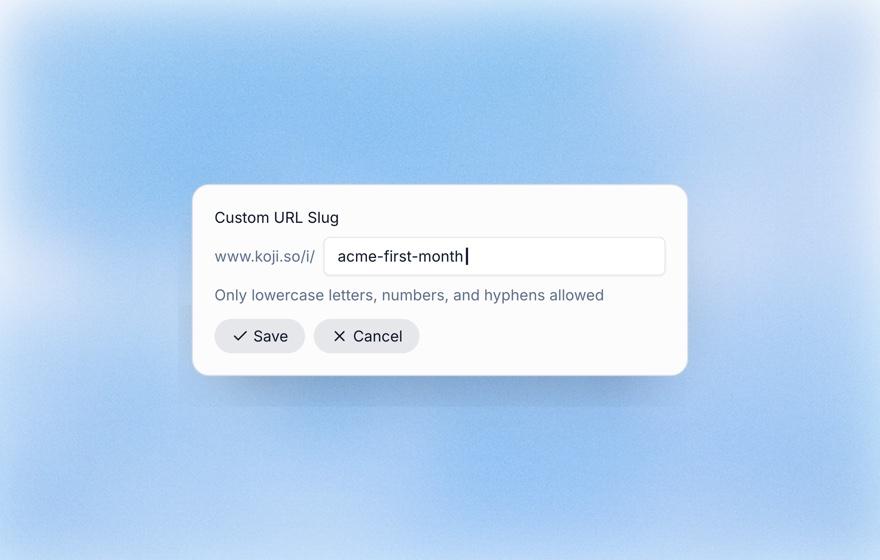
- Set the link. Every study has an interview link, and you can edit its ending to something short and readable so it fits on a card or receipt. Preview the interview yourself first; a preview is not counted.
- Choose how they answer. Text or voice, on their phone, in a language they pick. Your customers need no account.
- Add a screening question if you only want one group, such as people who ordered twice. Anyone who does not qualify is turned away politely.
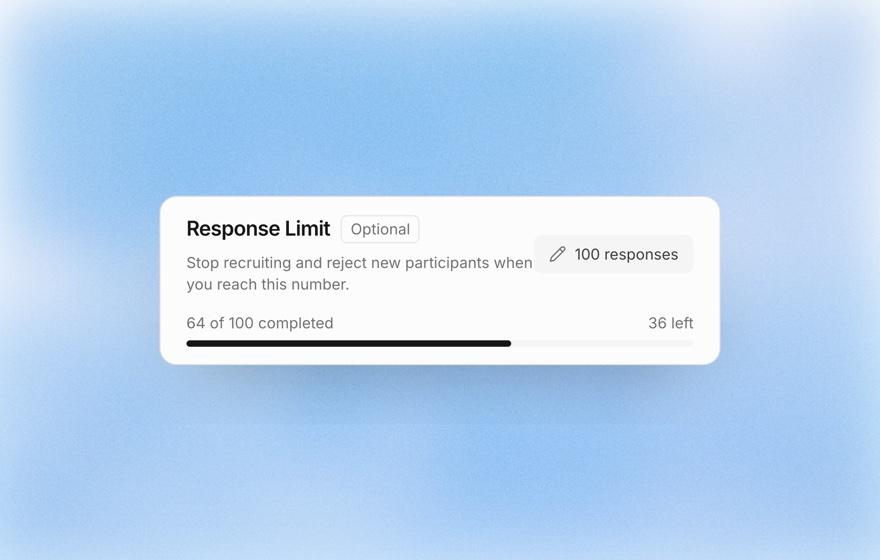
- Cap the number. Set a response limit so a successful ask does not run past your budget.
- Email your own list. Import your customers from a CSV and each gets a personal link, up to 500 rows in an upload, so you can see who has started and who has not. Participants and recruitment email can send the invitation and a reminder in your brand.
- Thank them. Turn on incentives in the study settings and pick an amount per person, from €10 up to €500. You approve each one after you have seen the interview.
- Read it. Koji writes up the themes with the quotes behind them, which you can share as a public report.
Koji does not generate QR codes today. Make one with any free generator pointing at your short link, and print the link beside it. Which plans include each feature is on the pricing page; start with the free account, which includes ten interviews to try the full flow on your own customers.
Common mistakes
- Asking everyone. A wide ask gets a thin, scattered answer. Pick one group and one decision.
- Leading with the survey. "Please rate us" invites a polite score. Ask about the last time.
- Skipping consent. Texting or emailing people who never agreed to be contacted for research costs you trust and can break the law.
- Offering nothing. Even a small thank-you changes the trade.
- Asking the best regulars only. They will tell you what you want to hear. Include people who left.
- Changing four things after three answers. Wait for a pattern.
When research will mislead you
Customers who say yes to an interview are not a random sample. They tend to be your more engaged ones, so a batch built only from volunteers will understate how many people quietly left. Reach the ones who left on purpose, even if fewer reply.
What people say they would do is also not what they will do. So use conversations to find the reasons and the range, then test any change with a real offer, a small trial or a deposit before you commit.
Where this fits
Before this: pick the one decision you are trying to make. After this: why customers leave a small business for the questions to ask once they agree, and what to charge when you sell services for the next decision. Both sit on the small business stage of the founder's research playbook. If you are earlier, how to find 20 people to interview when you have no audience covers the case with no customer list at all. More on Koji for founders.
FAQ
How do I get customers to give feedback without annoying them? Ask once, in person, at the sale, with a clear reason, a time limit and a thank-you. Follow up once. Then stop.
What response rate should I expect? There is no reliable benchmark for a small business. Published experiments on invitations show single-digit lifts from design changes such as a QR code [1][2]. Measure your own ask rate and show rate for two weeks and improve from there.
Do I need a QR code? No. A short link people can type works for everyone. A QR code helps people already holding a phone, and the evidence suggests a small gain, so add one if it is cheap and always print the link beside it.
Is it legal to text my customers for feedback? It depends on the country, and on whether they agreed to be contacted. Get explicit permission at the sale and check your local rules first.
How much should I pay as a thank-you? Enough to be a clear trade for ten minutes: a coffee, a discount on the next order or a small gift card. See research participant incentives for ranges.
One next step: pick the one group and the one decision, write the in-person ask on a card, and use it on the next ten customers.
References
- Endres, K., Heiden, E. O., Park, K., Losch, M. E., Harland, K. K. and Abbott, A. L. Experimenting with QR Codes and Envelope Size in Push-to-Web Surveys. Journal of Survey Statistics and Methodology, vol. 12, no. 4, 2024, pp. 893-905. https://academic.oup.com/jssam/article/12/4/893/7143753
- Schmiedeberg, C., Schröder, J. and Bozoyan, C. Does a QR Code in the Invitation Letter Increase Participation in a Push-to-web Survey? Field Methods, online first, November 2025. https://journals.sagepub.com/doi/10.1177/1525822X241308522
- Pew Research Center. Text Message Notification for Web Surveys, 2016. https://www.pewresearch.org/methods/2016/09/07/text-message-notification-for-web-surveys/
- Rivera. SMS survey invitations in the Gallup Panel. Presentation at the AAPOR Annual Conference, 2025. https://aapor.confex.com/aapor/2025/mediafile/Handout/Paper3480/AAPOR2025_Rivera_SMS_Final_050525.pdf
- Singer, E. and Ye, C. The Use and Effects of Incentives in Surveys. The ANNALS of the American Academy of Political and Social Science, vol. 645, 2013, pp. 112-141. https://econpapers.repec.org/RePEc:sae:anname:v:645:y:2013:i:1:p:112-141
- Mercer, A., Caporaso, A., Cantor, D. and Townsend, R. How Much Gets You How Much? Monetary Incentives and Response Rates in Household Surveys. Public Opinion Quarterly, vol. 79, 2015, pp. 105-129. https://www.bls.gov/cex/workshop/2016/symposium/monetary-incentives-and-response-rates.pdf
- MaritzCX. QR Codes on Receipt-Based Invitations Increase Response Rate (vendor case study). https://customerthink.com/?p=926371
- Lipps, O., Tresch, A. and Durussel, L. Effects of QR codes in a political science probability-based web survey. Survey Methods: Insights from the Field, 2025. https://surveyinsights.org/?p=21234
Further reading
- The Mom Test: how to ask about the past instead of fishing for compliments.
- Research participant incentives: what to offer, and how much.
- User research recruitment emails: templates for the follow-up message.