Free to save and share

Frameworks and cheat sheets for customer research

Every framework, checklist and comparison from our guides, as an image you can download, drop into a deck or share with your team.
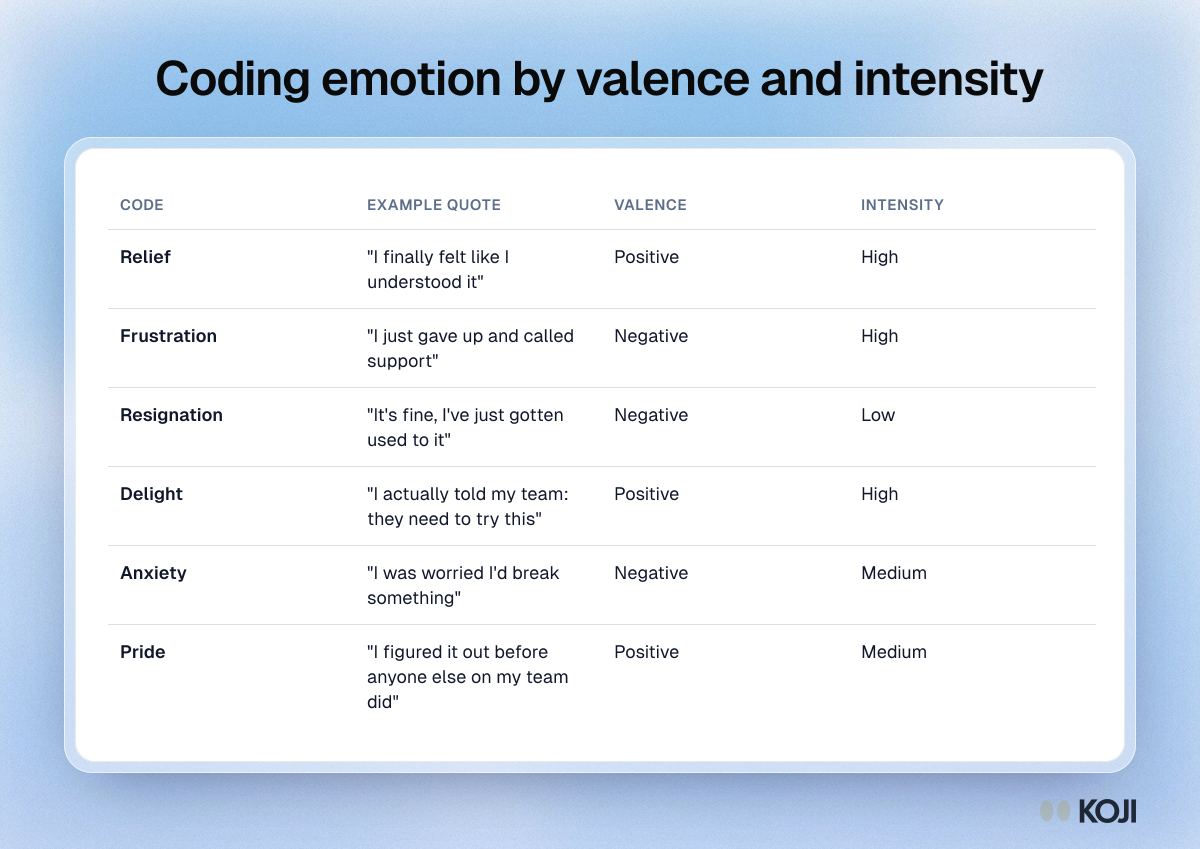
Table of six emotion codes for interviews (relief, frustration, resignation, delight, anxiety, pride) with an example quote, valence and intensity.

Reference table

Coding emotion by valence and intensity
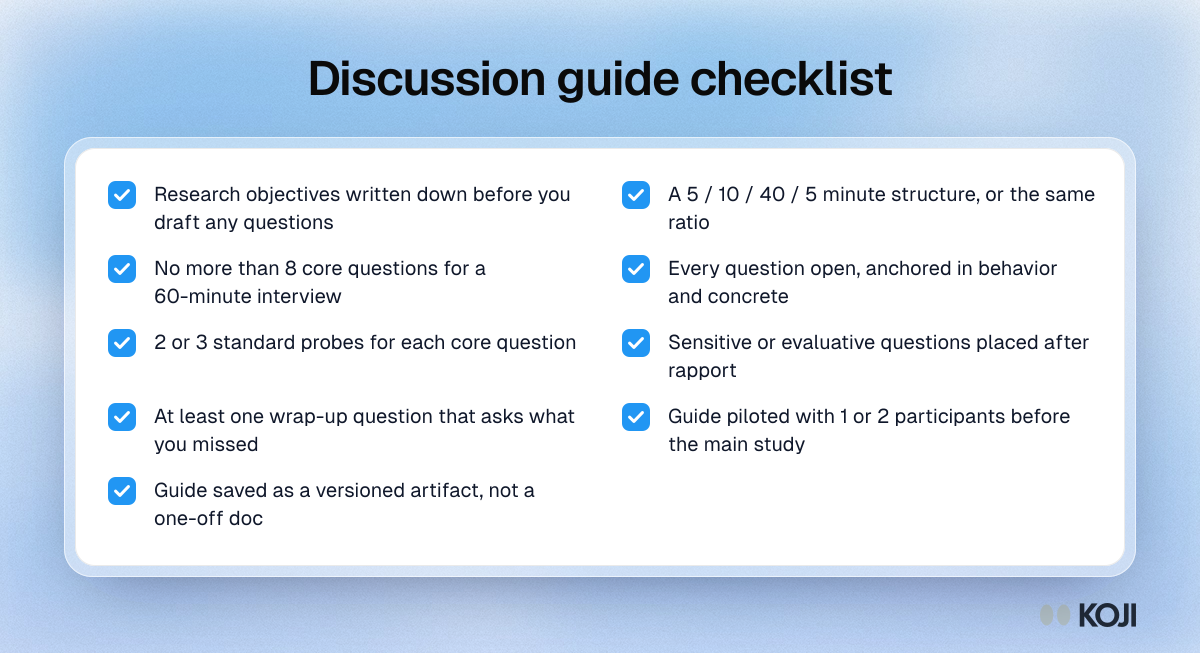
Checklist of nine things to check in a discussion guide before user interviews, from written objectives and timings to probes, a pilot and versioning.

Checklist

Discussion guide checklist

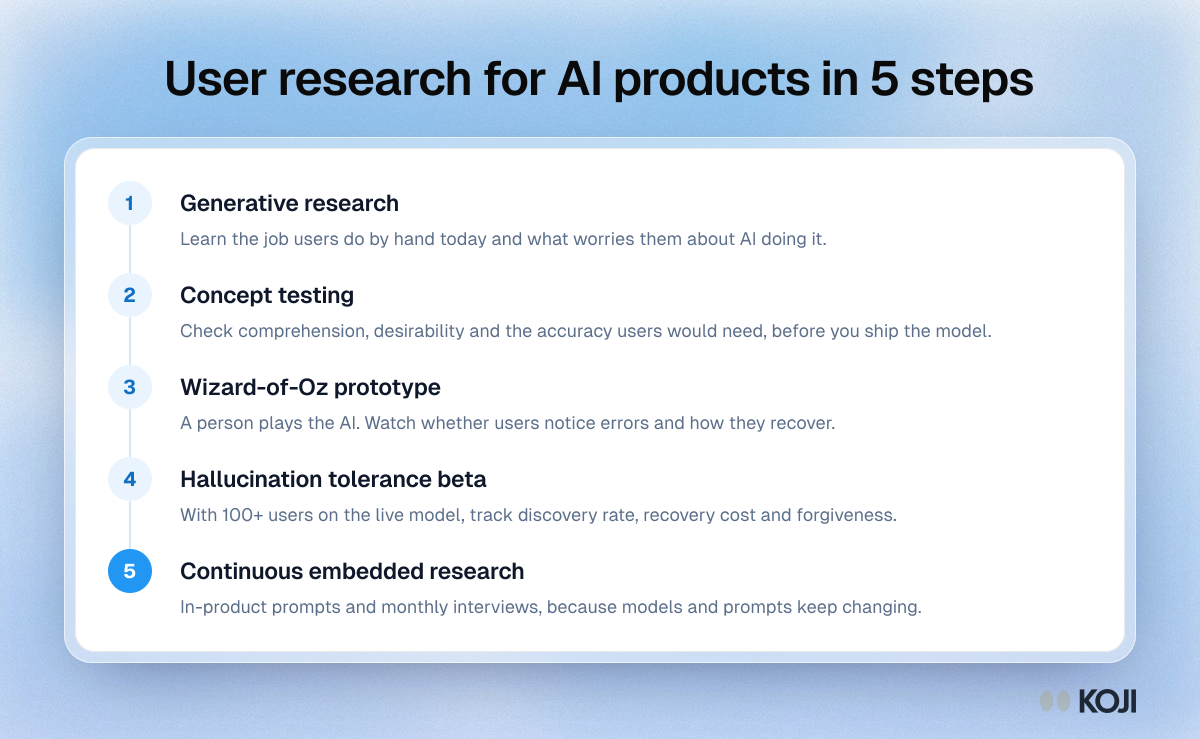
Process with five steps of user research for AI products: generative research, concept tests, Wizard-of-Oz prototypes, a hallucination beta, ongoing research.

Process

User research for AI products in 5 steps
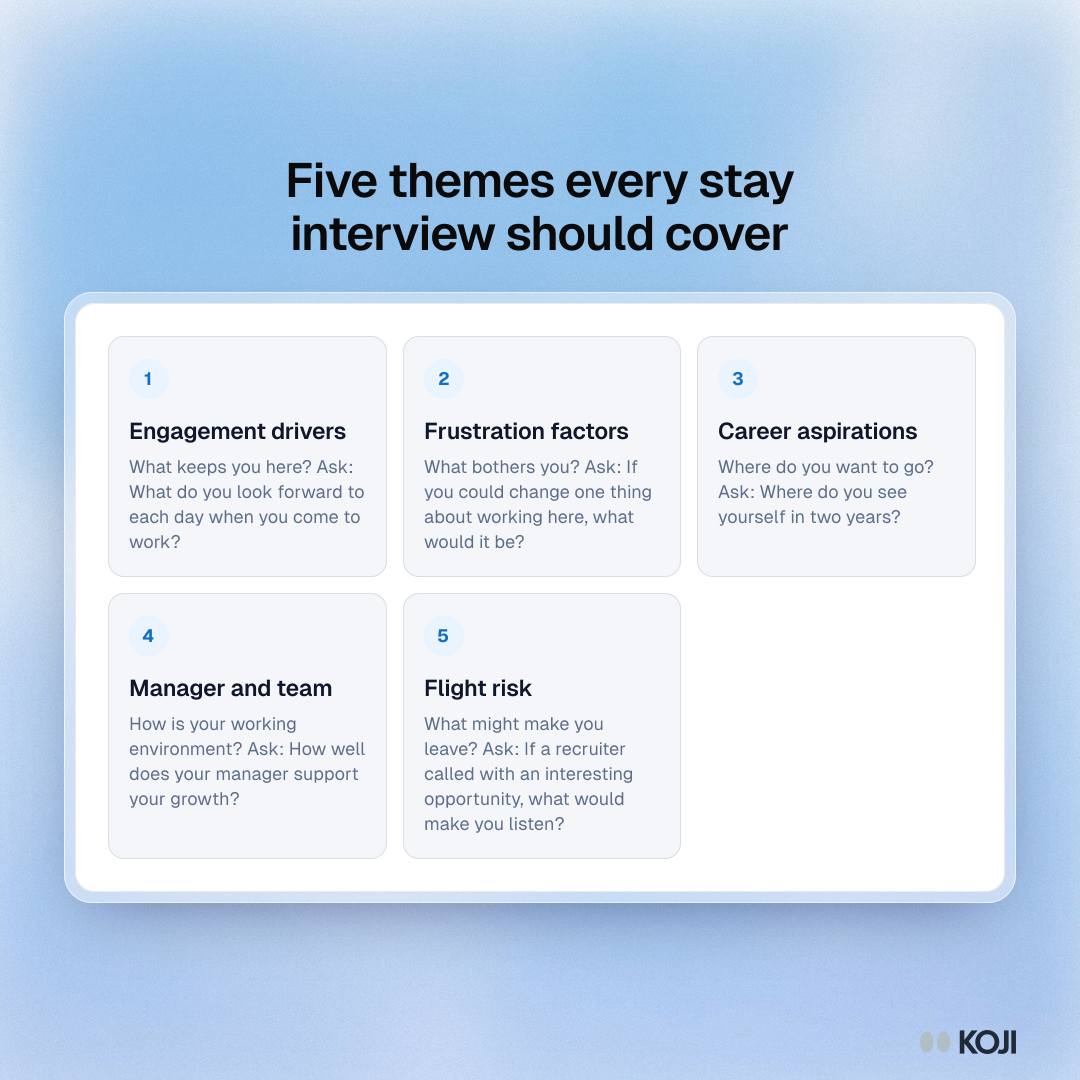
Framework of five stay interview themes, engagement drivers, frustrations, career goals, manager and team, and flight risk, each with a sample question.

Framework

Five themes every stay interview should cover
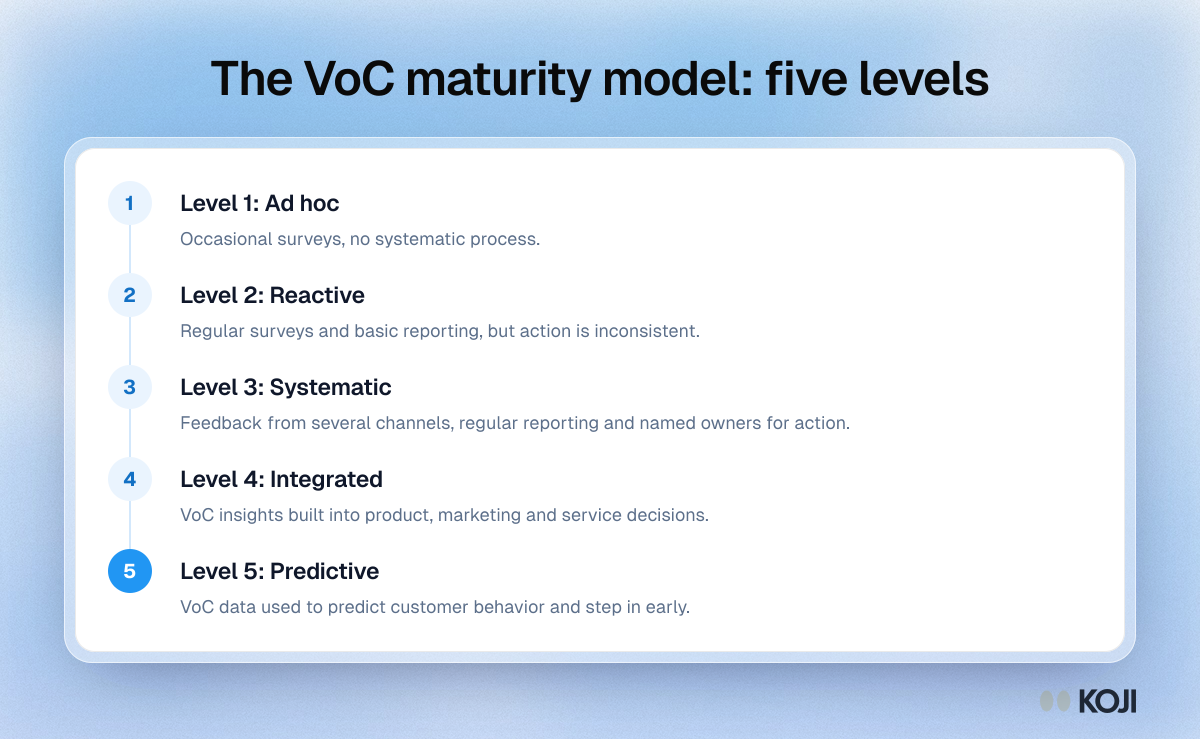
Process showing the five levels of the Voice of Customer maturity model, from ad hoc surveys through reactive, systematic and integrated to predictive.

Process

The VoC maturity model: five levels
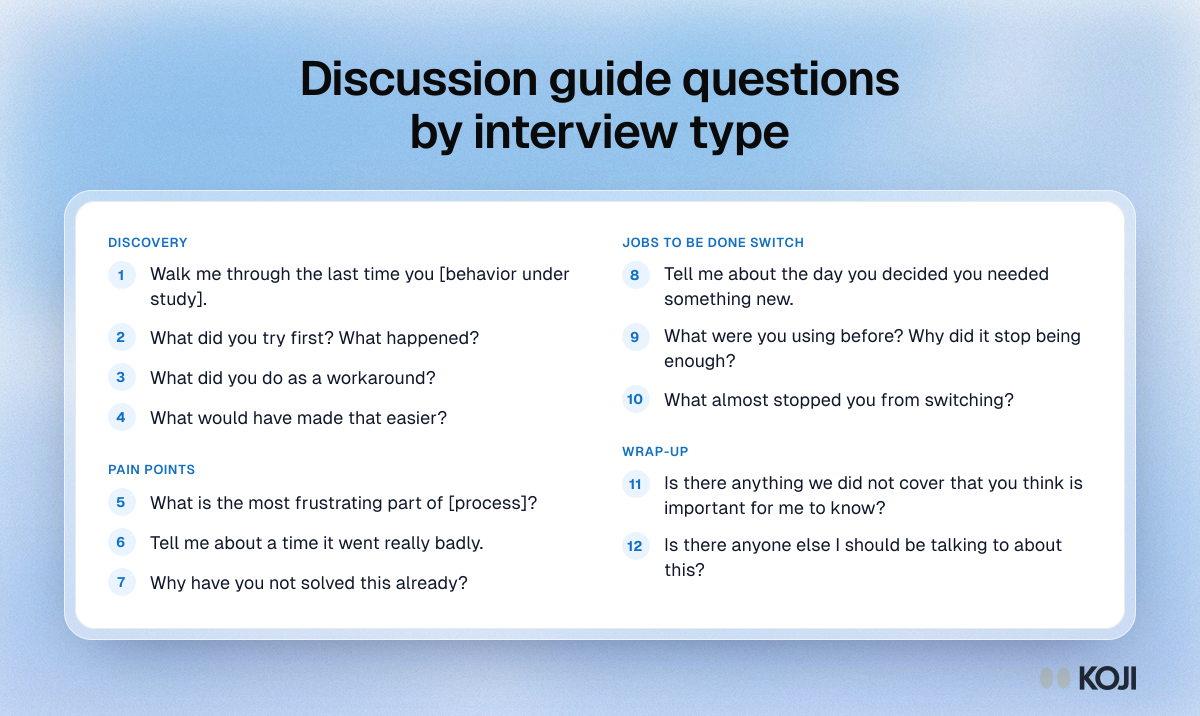
Question bank of discussion guide questions for user interviews, grouped into discovery, pain points, Jobs to Be Done switch and wrap-up.

Question bank

Discussion guide questions by interview type
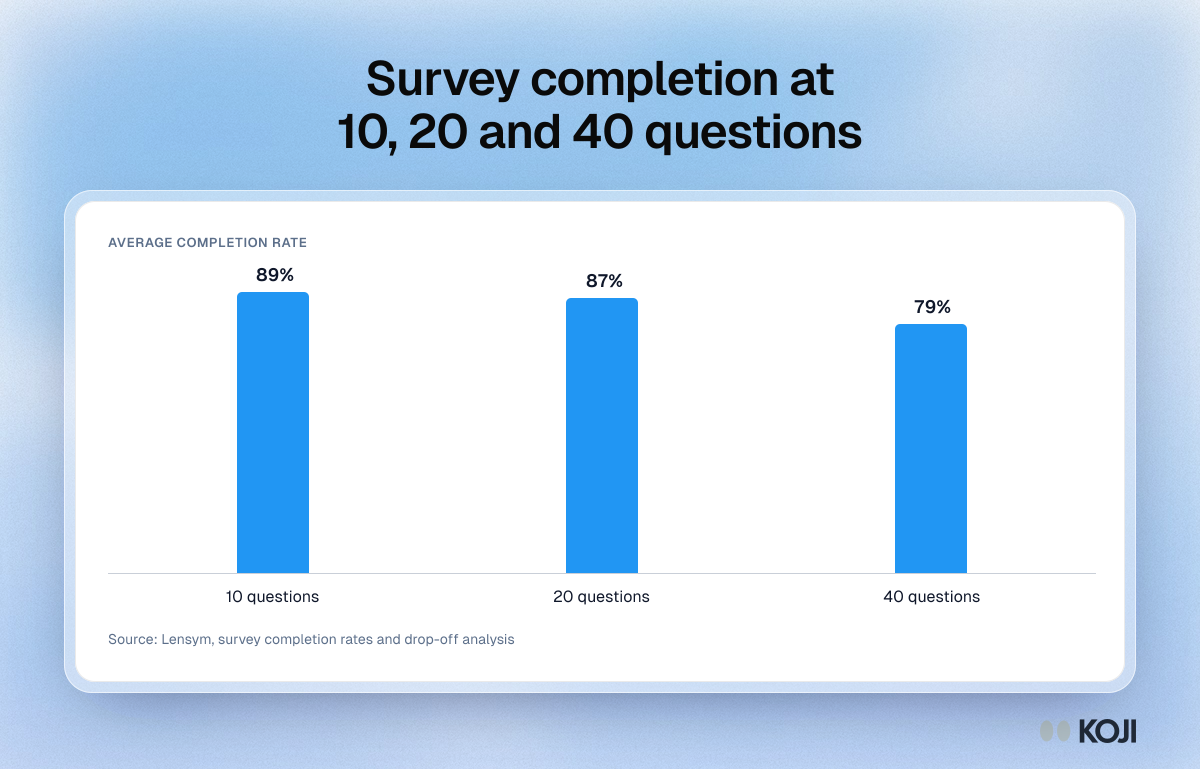
Column chart of average survey completion rate by length: 89% at 10 questions, 87% at 20 questions and 79% at 40 questions.

Column chart

Survey completion at 10, 20 and 40 questions
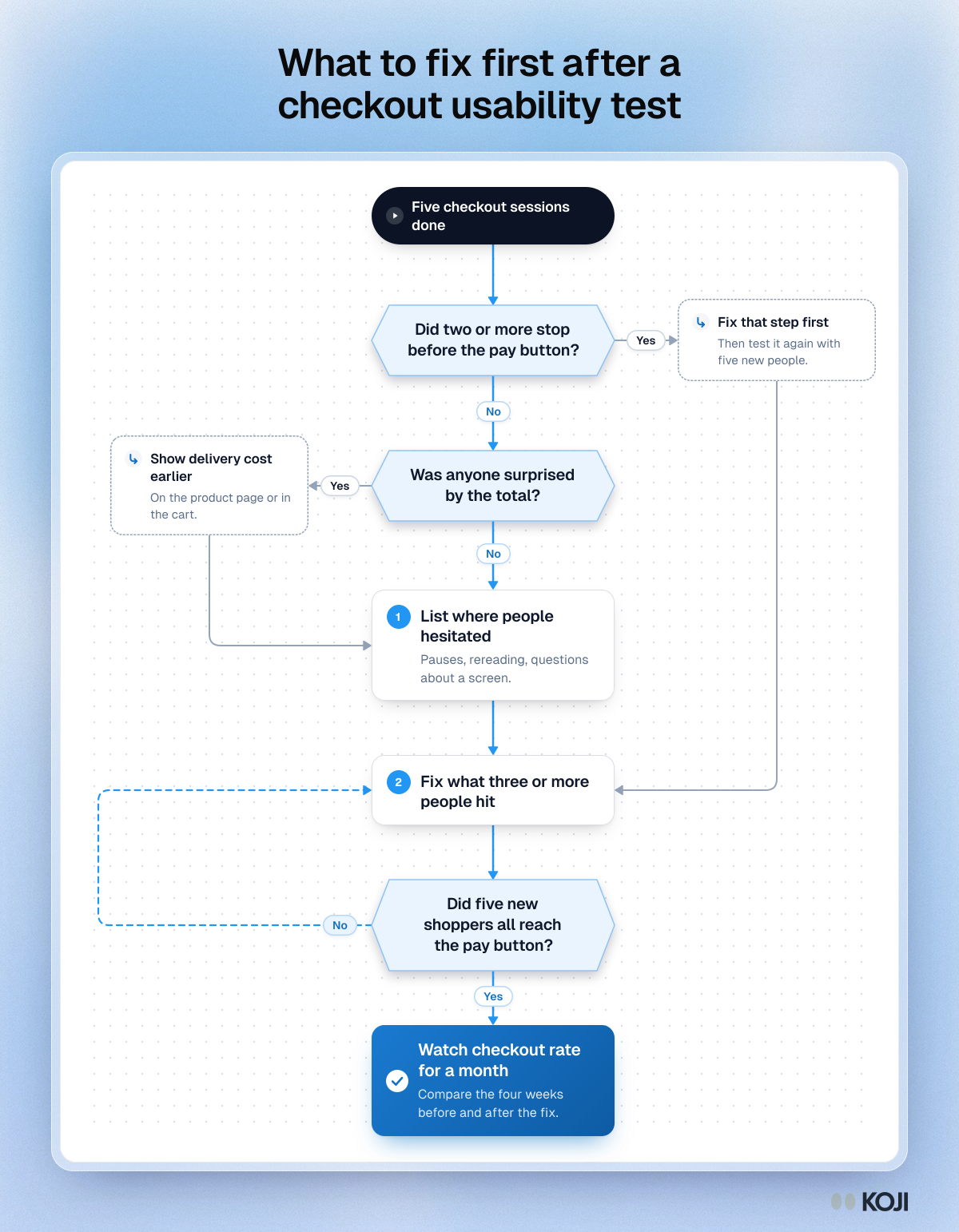
Flowchart for what to fix first after a checkout usability test: three questions, two side steps and a retest loop.

Flowchart

What to fix first after a checkout usability test
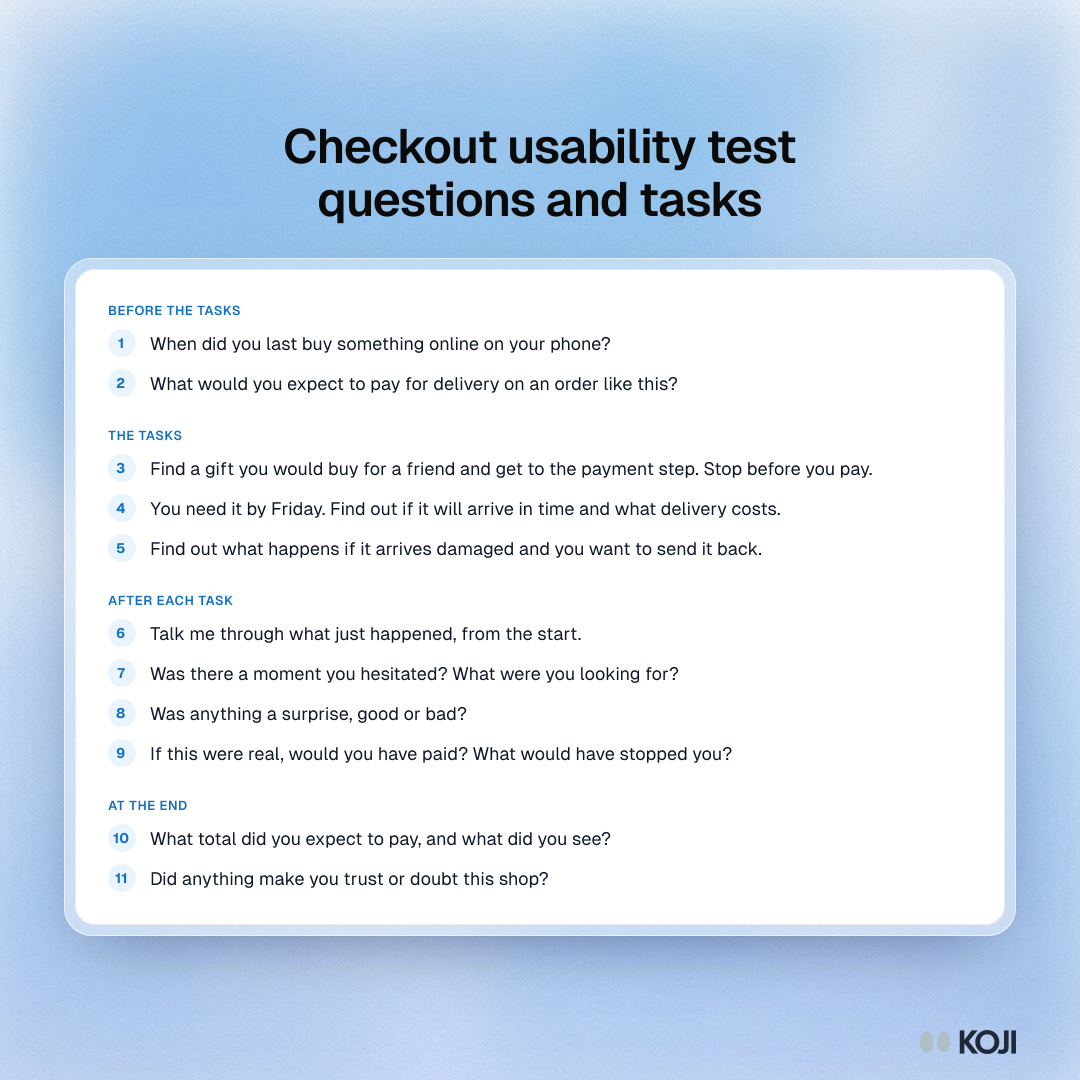
Question bank for a checkout usability test: questions before the tasks, three shopping tasks, questions after each task and questions at the end.

Question bank

Checkout usability test questions and tasks
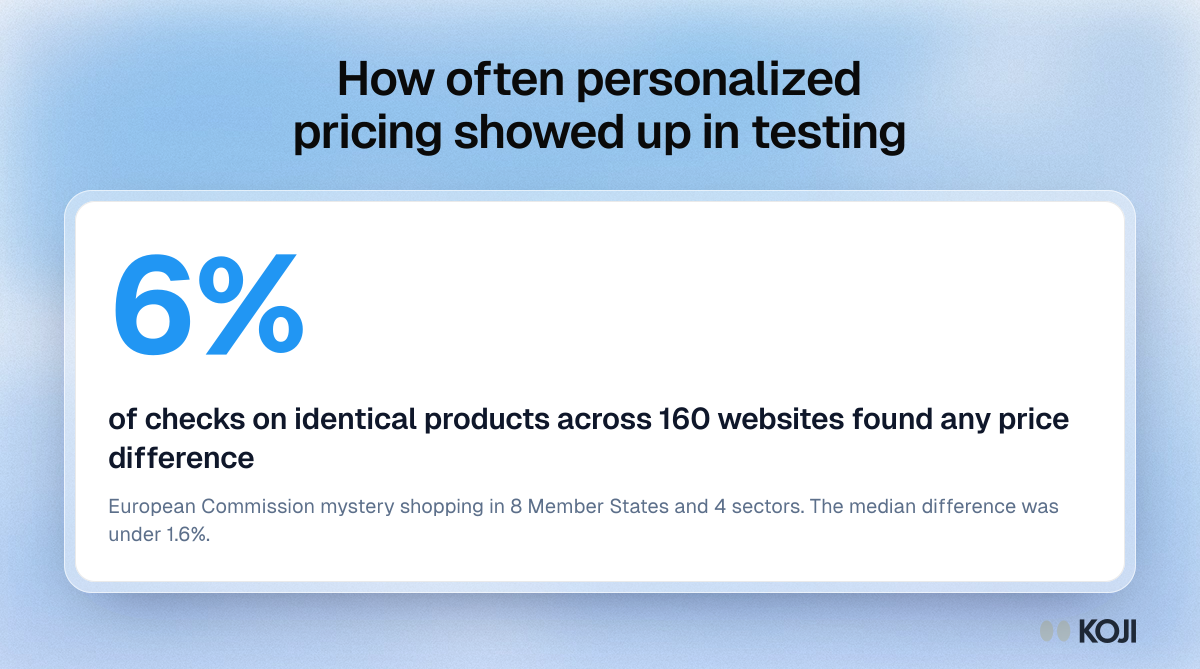
Stat card: price differences for identical products appeared in only 6% of checks across 160 websites, with a median gap under 1.6%.

Key figure

How often personalized pricing showed up in testing
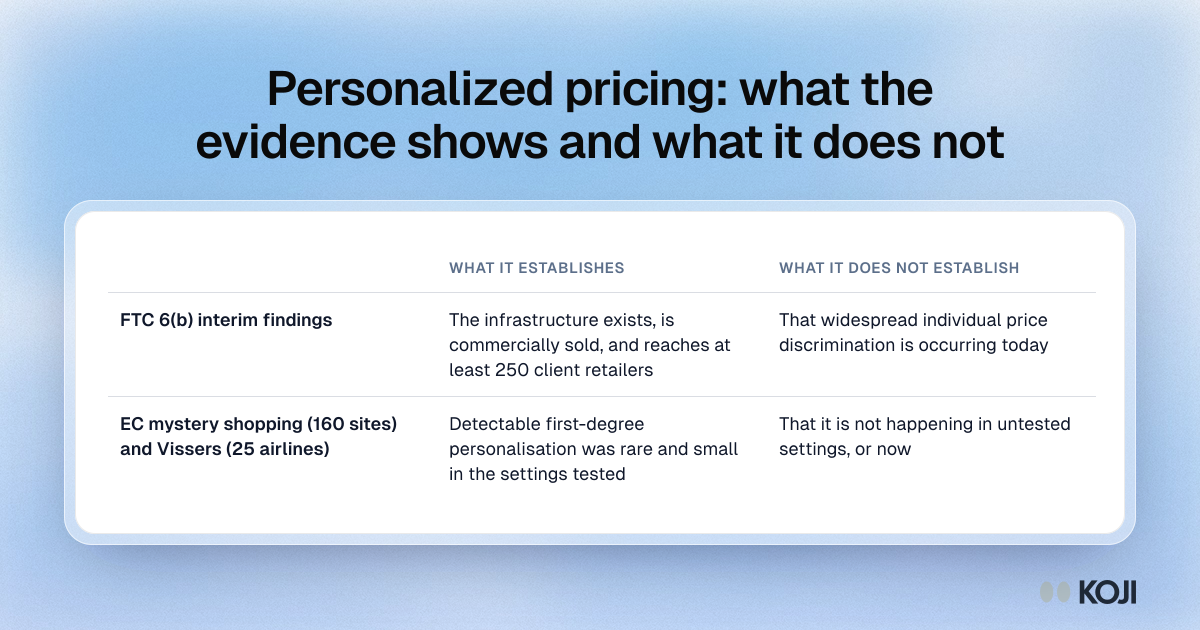
Table comparing what the FTC surveillance pricing findings and two price testing studies establish about personalized pricing, and what they leave open.

Reference table

Personalized pricing: what the evidence shows and what it does not
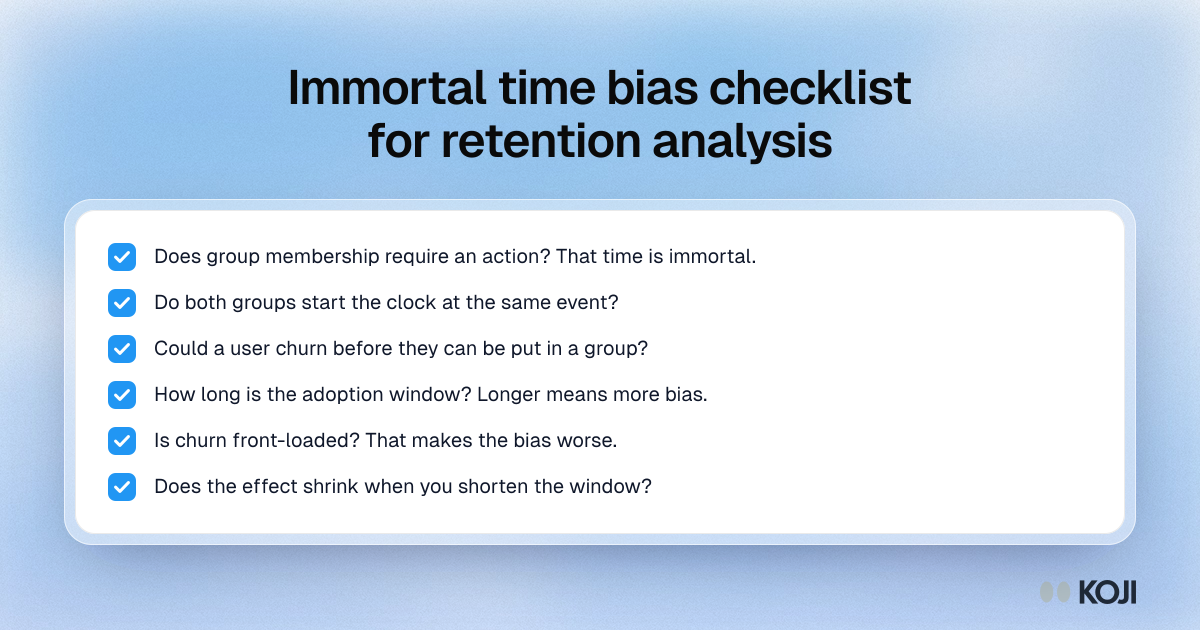
Checklist of six questions to spot immortal time bias in a retention comparison, from group membership rules to shortening the window.

Checklist

Immortal time bias checklist for retention analysis
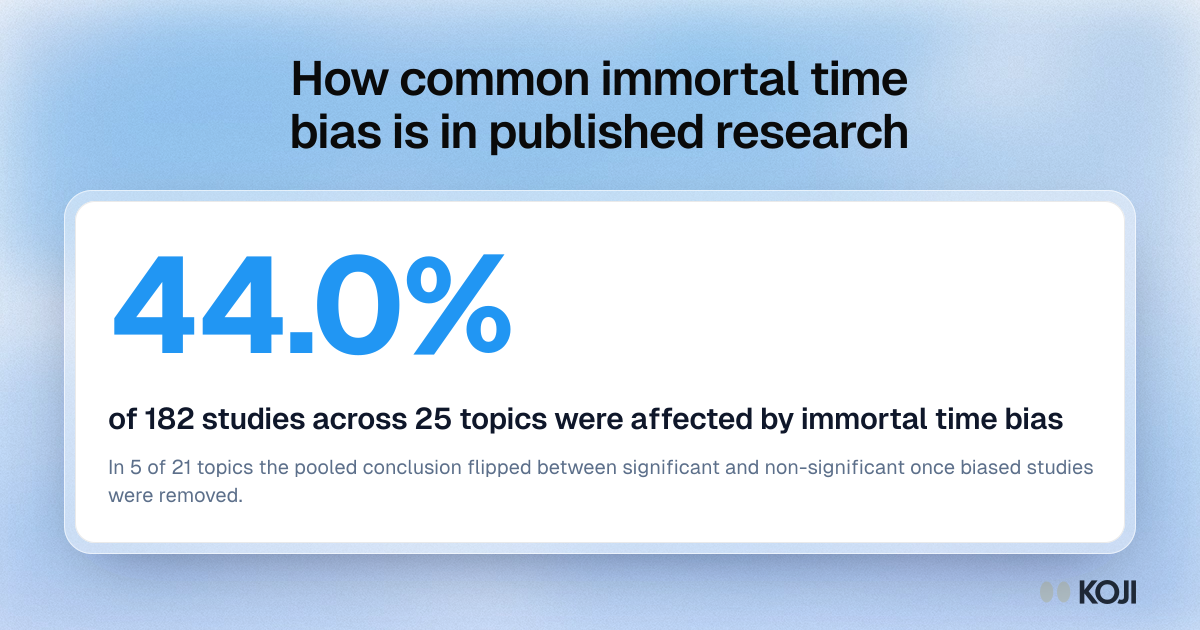
Stat card: 44.0% of 182 studies across 25 topics were affected by immortal time bias, and 5 of 21 topics saw the conclusion flip.

Key figure

How common immortal time bias is in published research
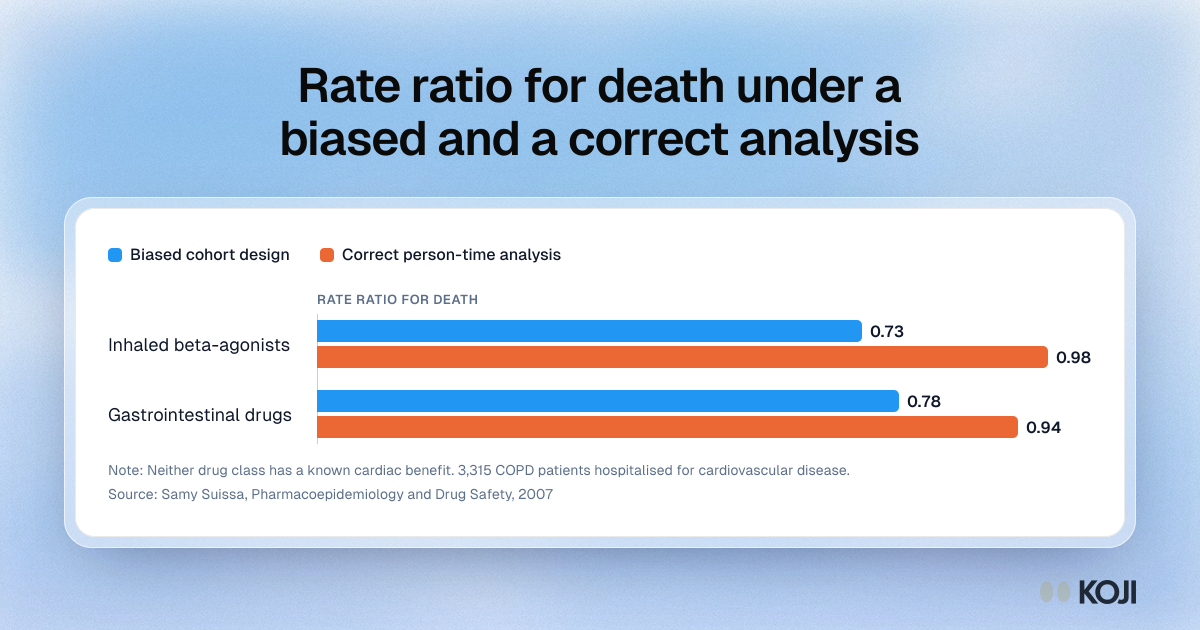
Bar chart of rate ratios for death: 0.73 and 0.78 under a biased cohort design, 0.98 and 0.94 once person-time is allocated correctly.

Bar chart

Rate ratio for death under a biased and a correct analysis
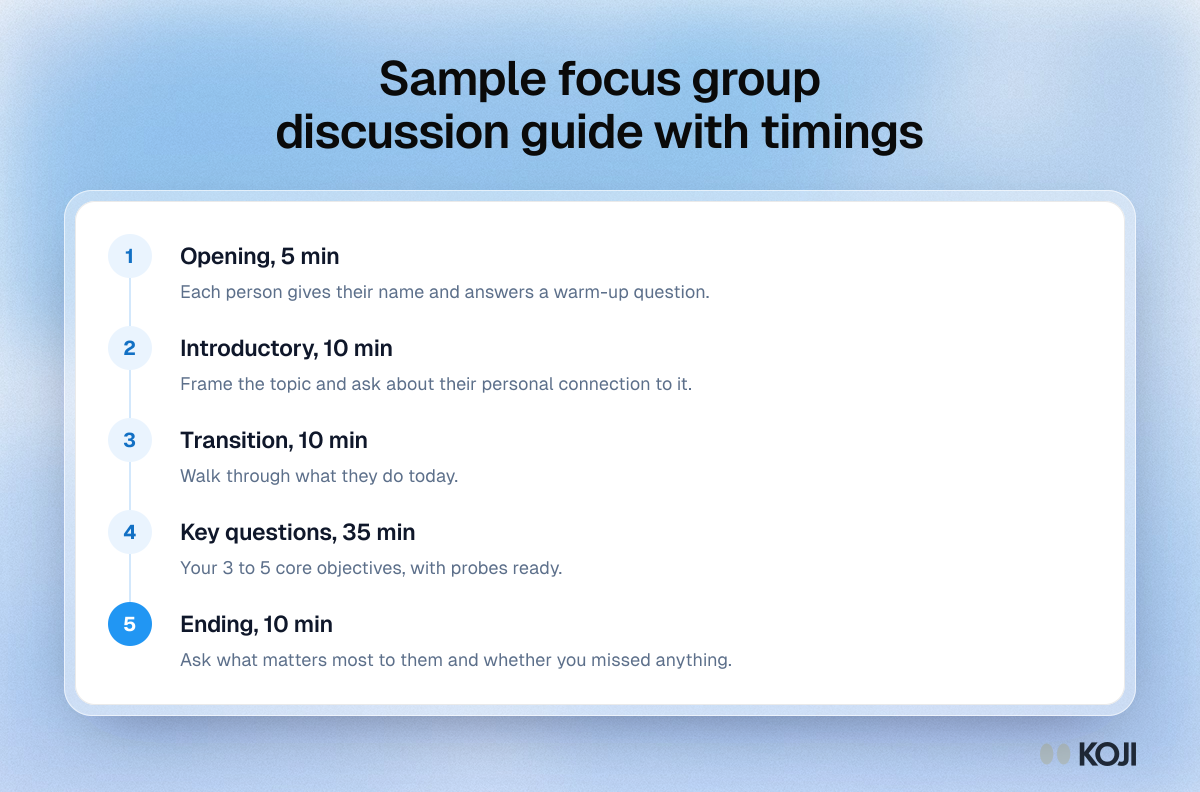
Process showing a five-part focus group discussion guide with timings: opening, introductory, transition, key questions and ending.

Process

Sample focus group discussion guide with timings
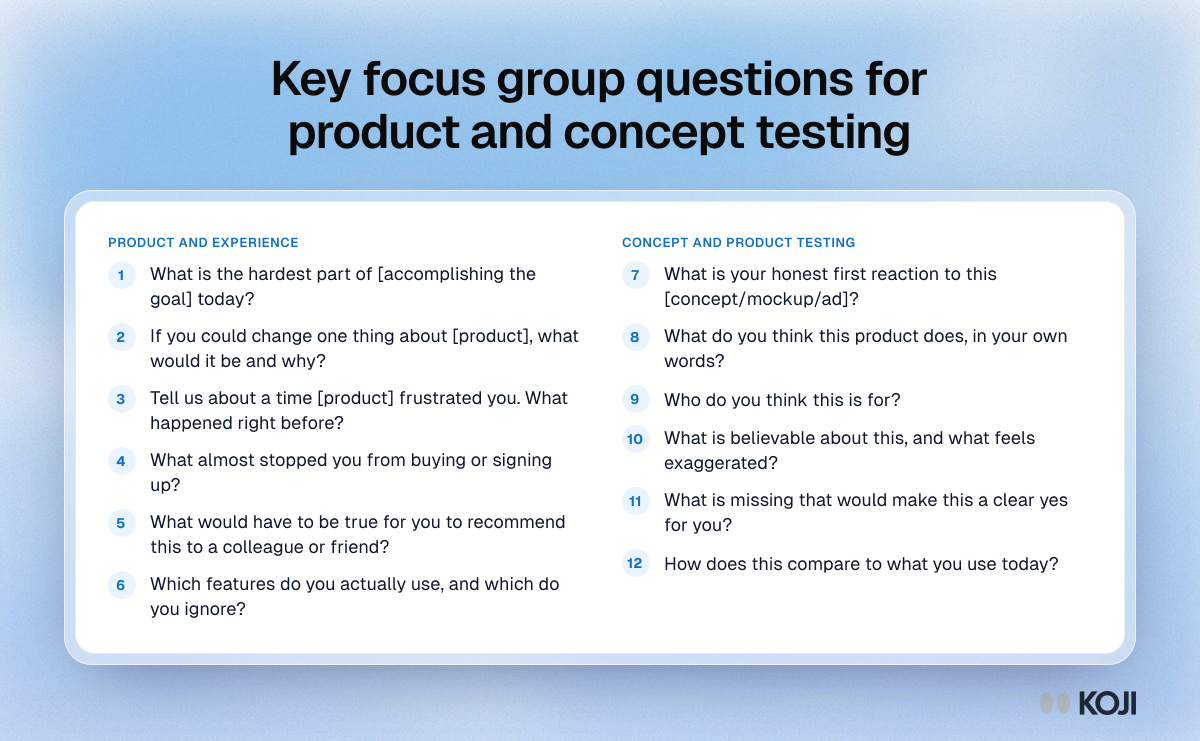
Question bank of twelve key focus group questions in two groups: product and experience, and concept and product testing.

Question bank

Key focus group questions for product and concept testing
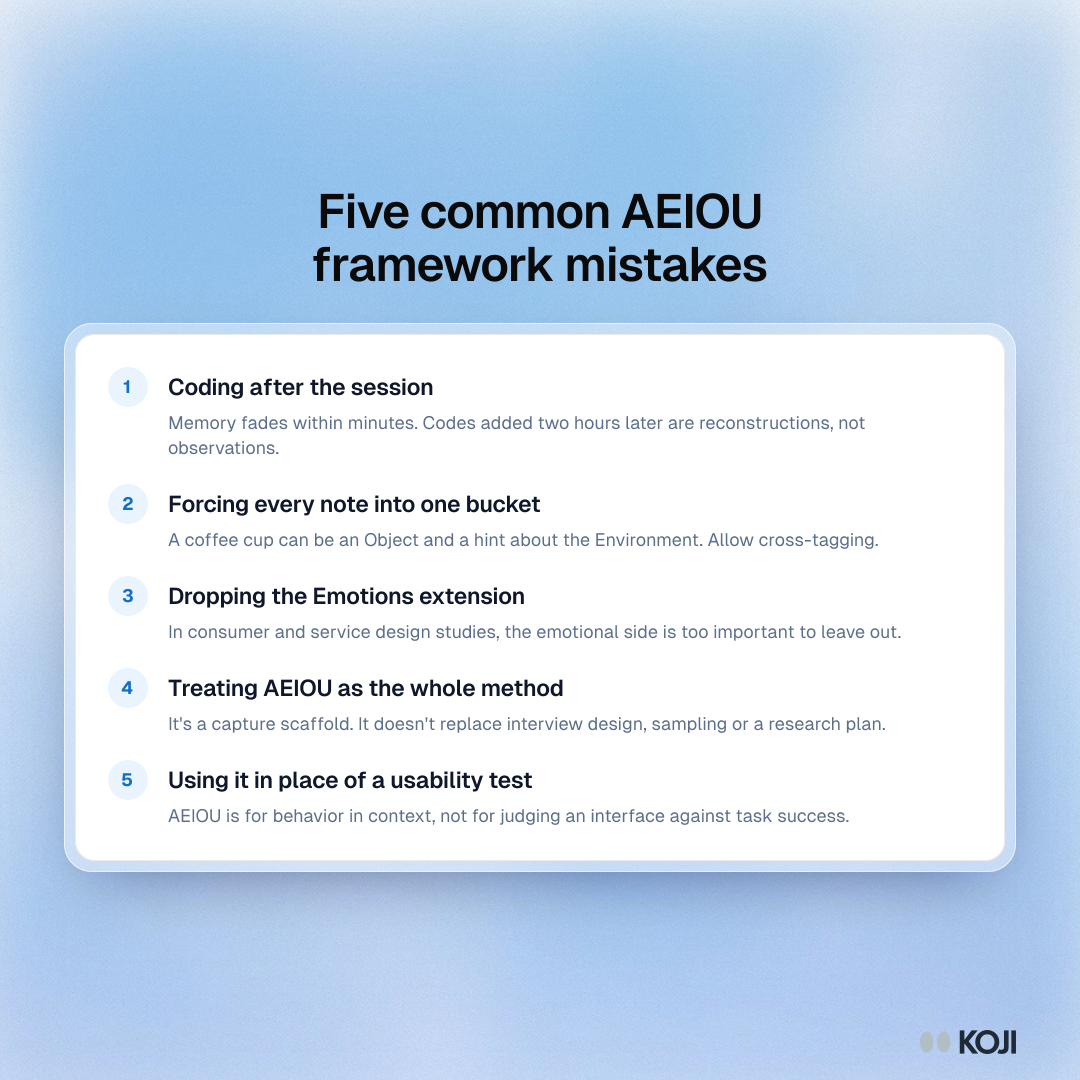
Listicle of five AEIOU mistakes: coding after the session, one bucket per note, no emotions, treating it as the method, skipping usability tests.

Guide

Five common AEIOU framework mistakes
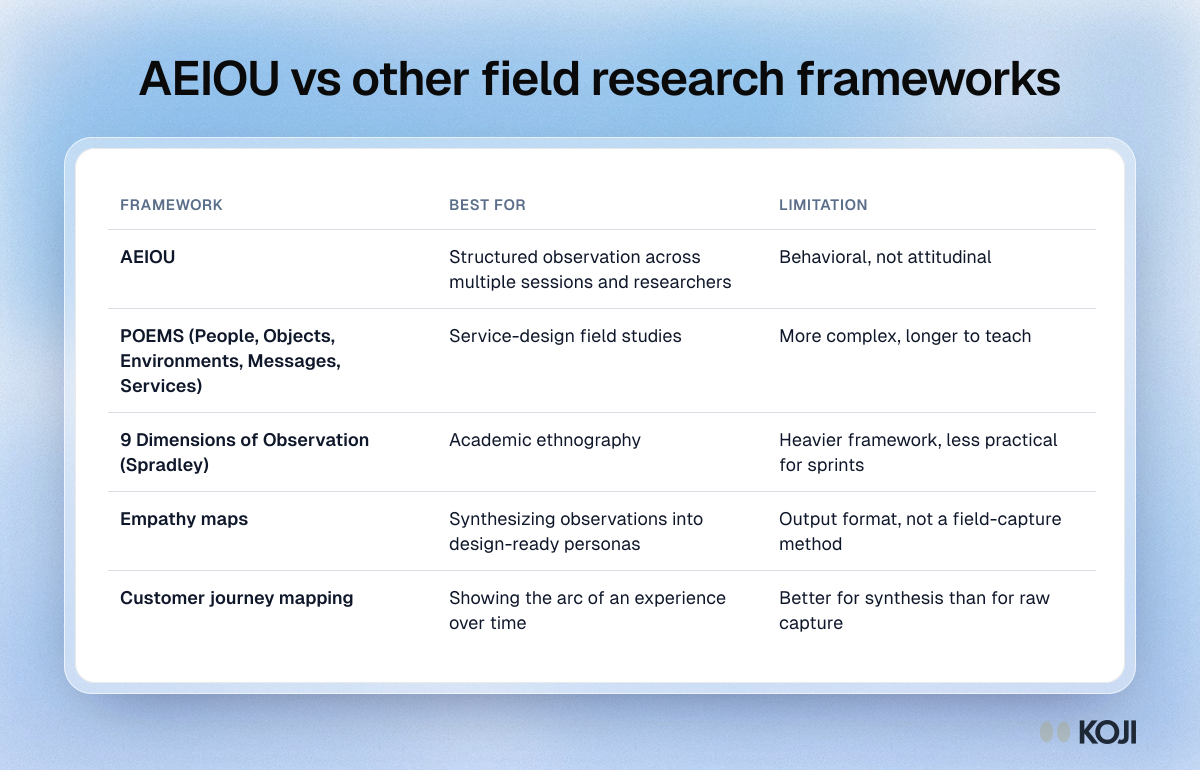
Table comparing AEIOU with POEMS, Spradley's 9 dimensions, empathy maps and journey mapping by what each is best for and its limits.

Reference table

AEIOU vs other field research frameworks
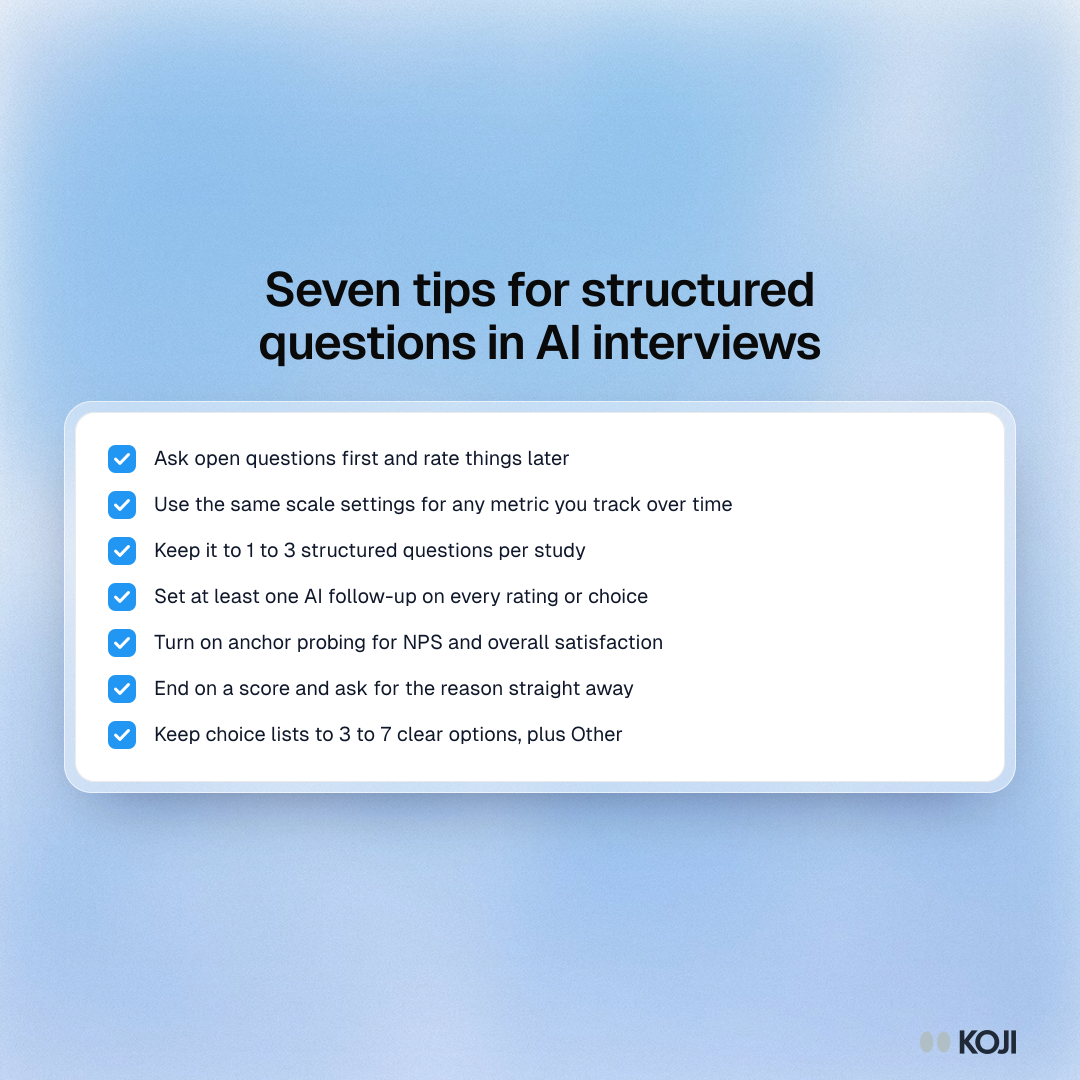
Checklist of seven tips for structured questions in AI interviews, from asking open questions first to anchor probing on key scales.

Checklist

Seven tips for structured questions in AI interviews
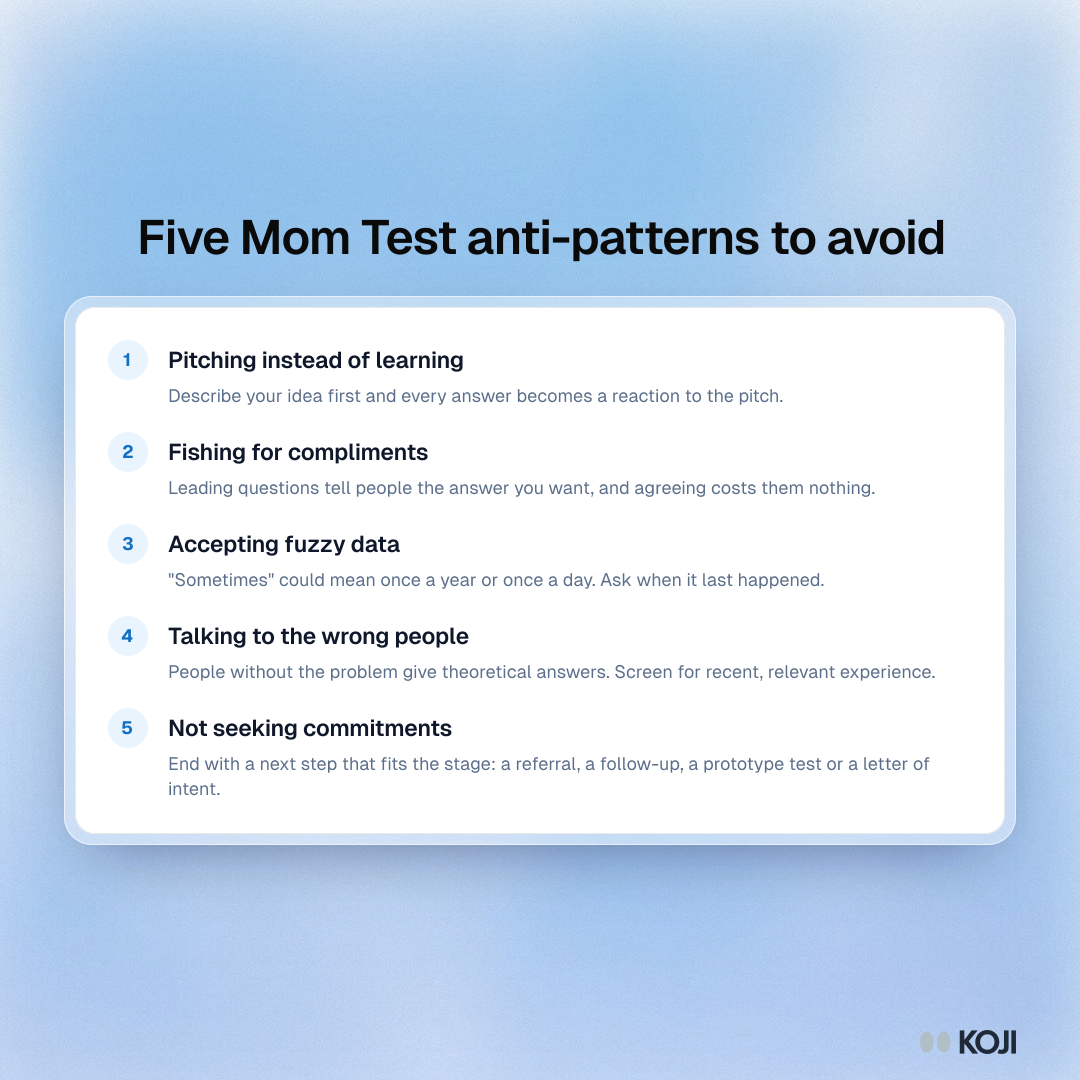
Listicle of five Mom Test anti-patterns: pitching instead of learning, fishing for compliments, fuzzy data, the wrong people and no commitments.

Guide

Five Mom Test anti-patterns to avoid
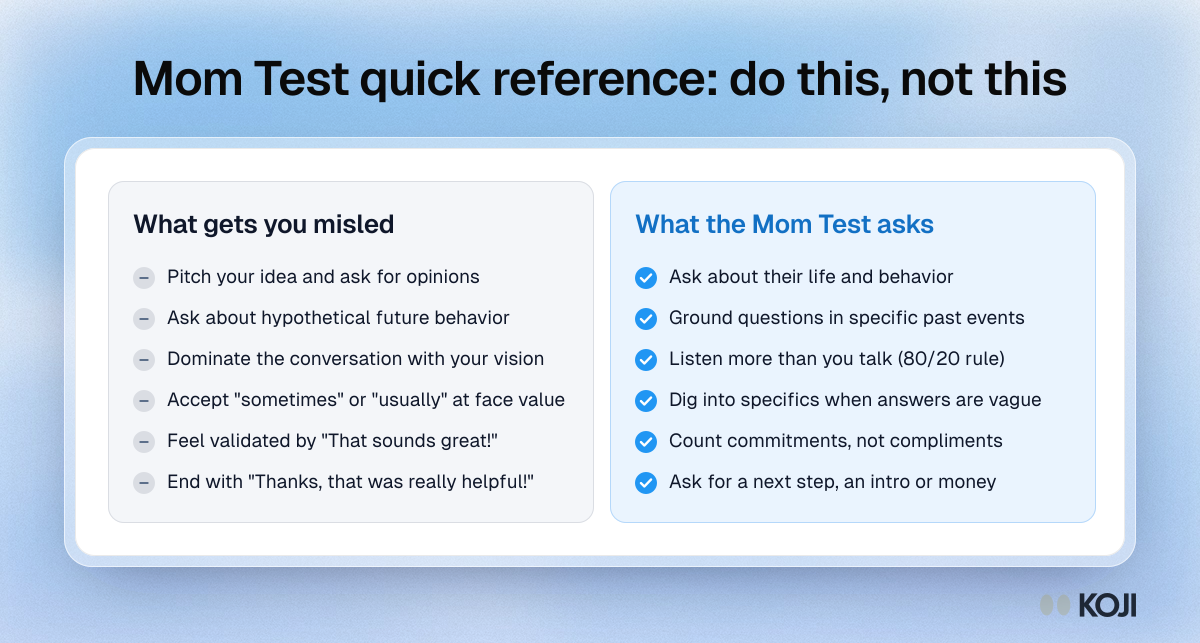
Comparison of six Mom Test habits and the mistakes they replace, from pitching your idea to feeling validated by compliments.

Comparison

Mom Test quick reference: do this, not this
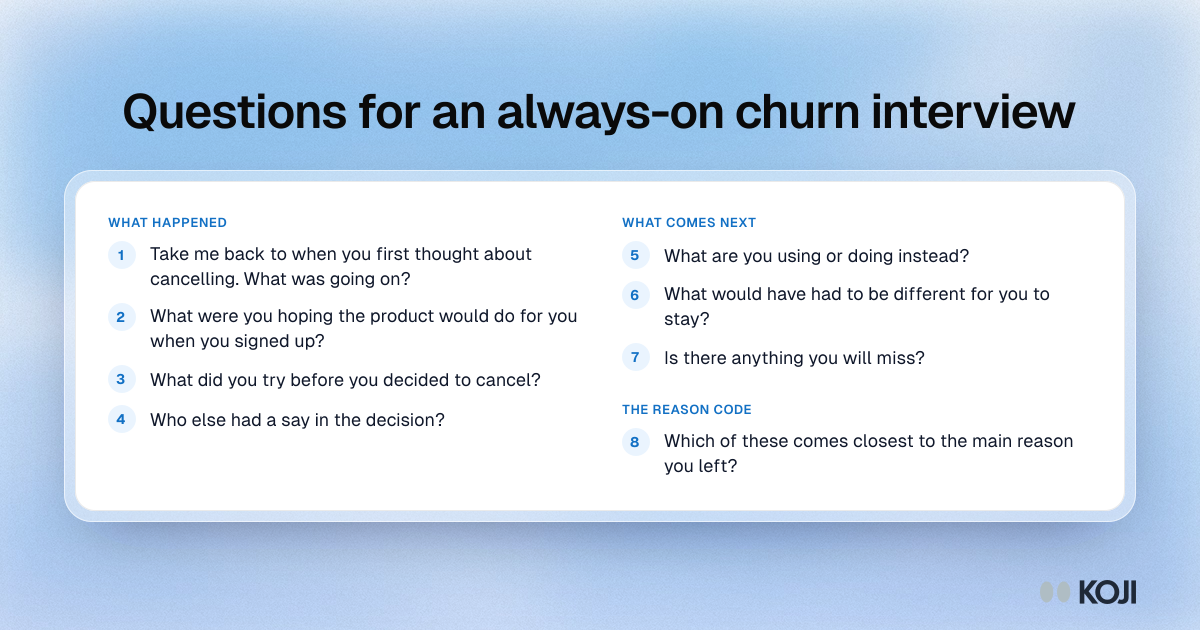
Question bank of eight churn interview questions in three groups: what happened, what comes next, and one reason-code question asked the same way every time.

Question bank

Questions for an always-on churn interview
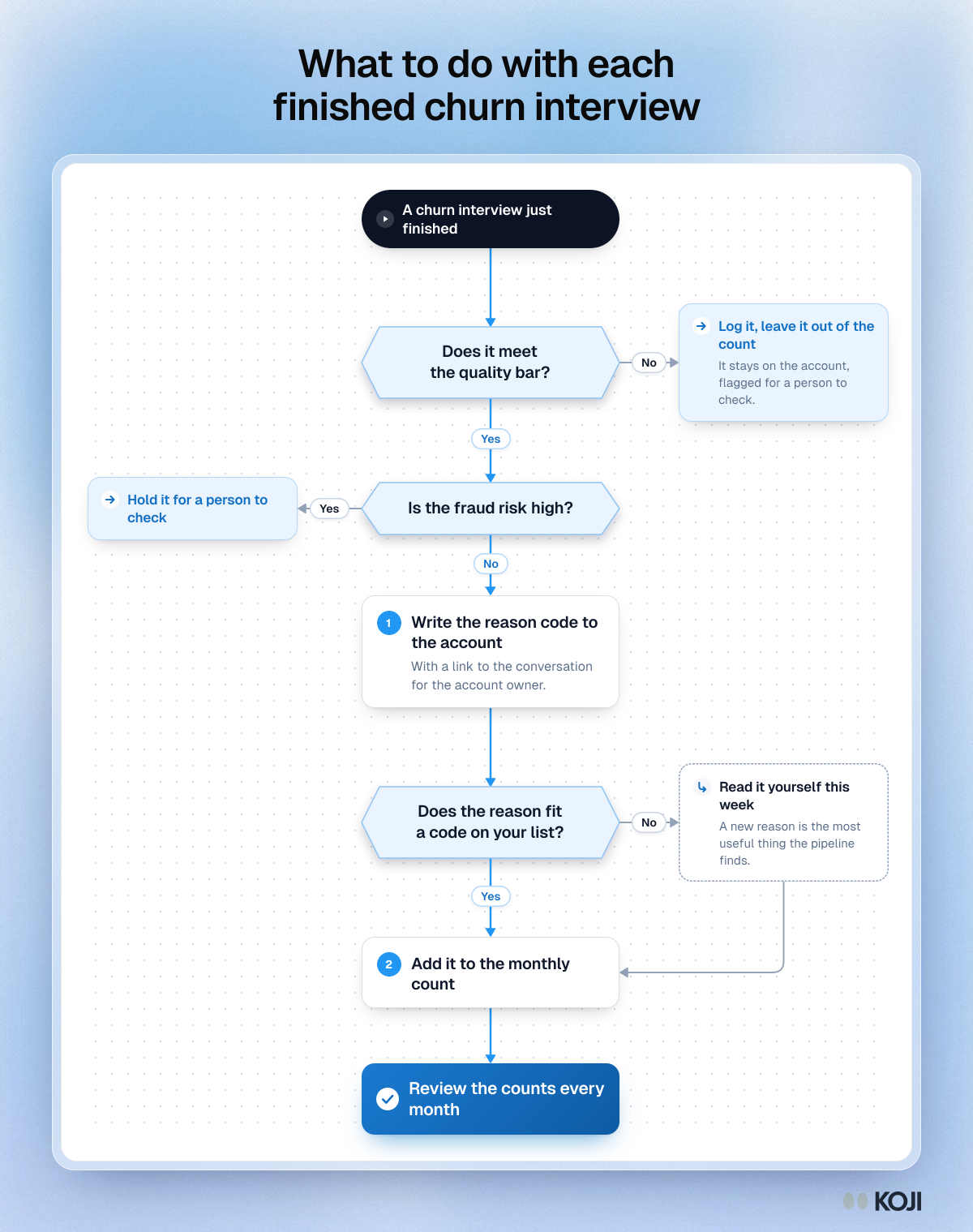
Flowchart for each finished churn interview: check quality and fraud risk, write the reason to the account, read new reasons yourself.

Flowchart

What to do with each finished churn interview
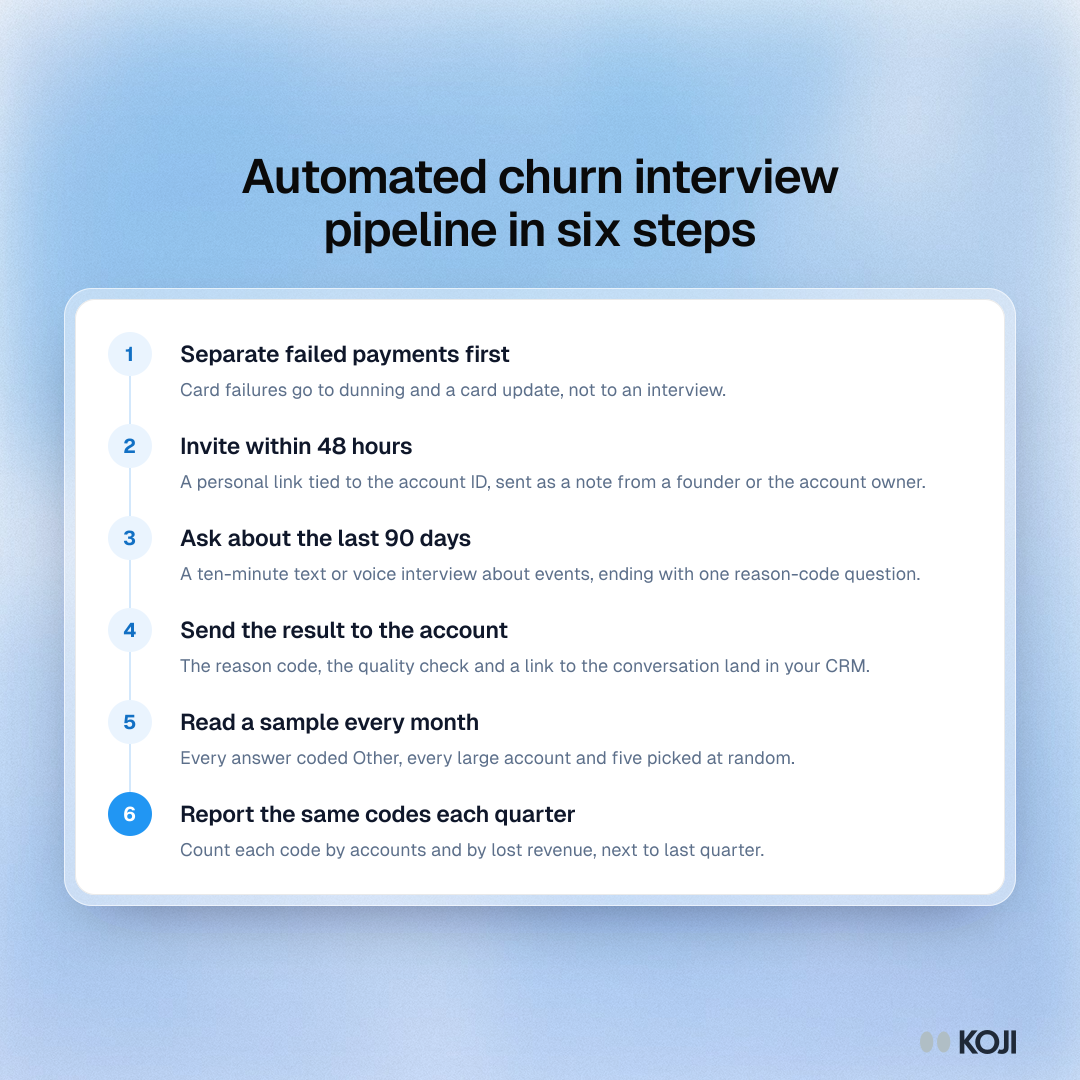
Process in six steps for automated churn interviews, from separating failed payments to reporting the same reason codes every quarter.

Process

Automated churn interview pipeline in six steps
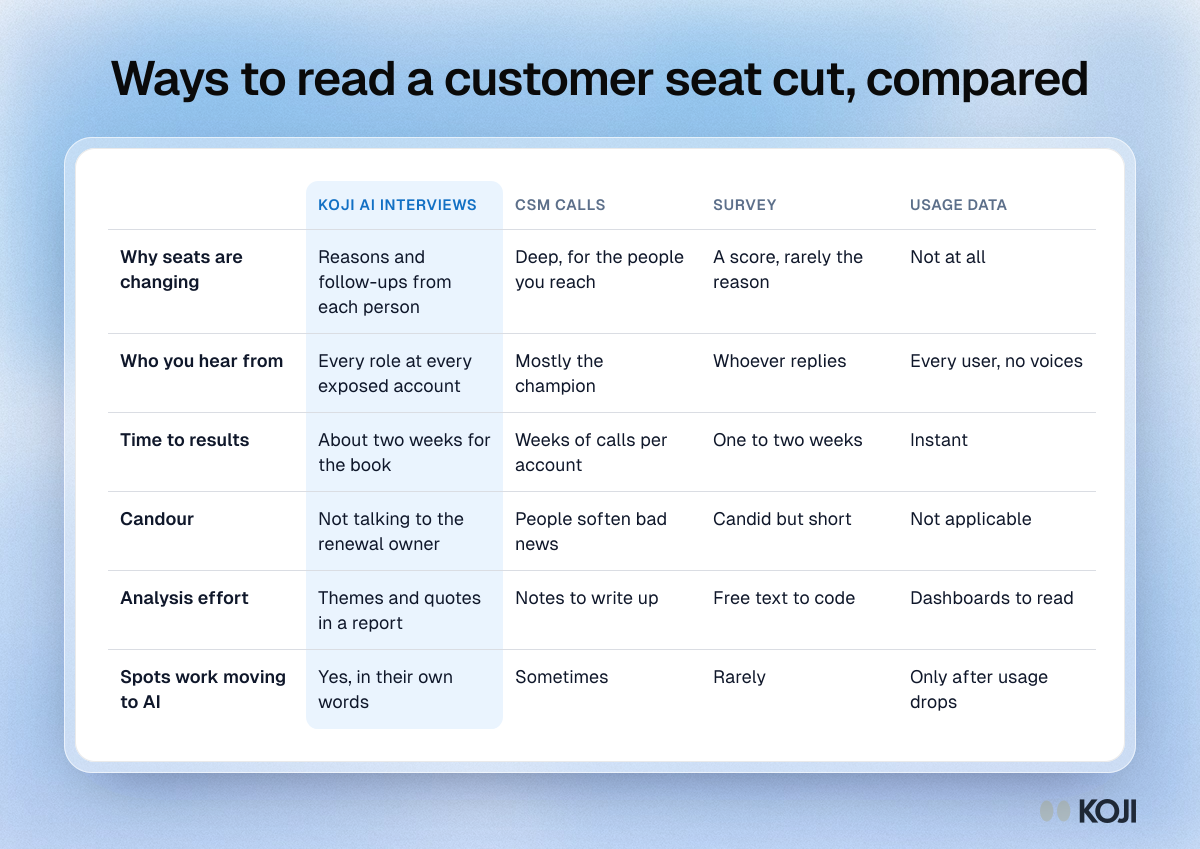
Table comparing Koji AI interviews, CSM calls, surveys and usage data on reasons, reach, speed, candour, analysis and spotting work moving to AI.

Reference table

Ways to read a customer seat cut, compared
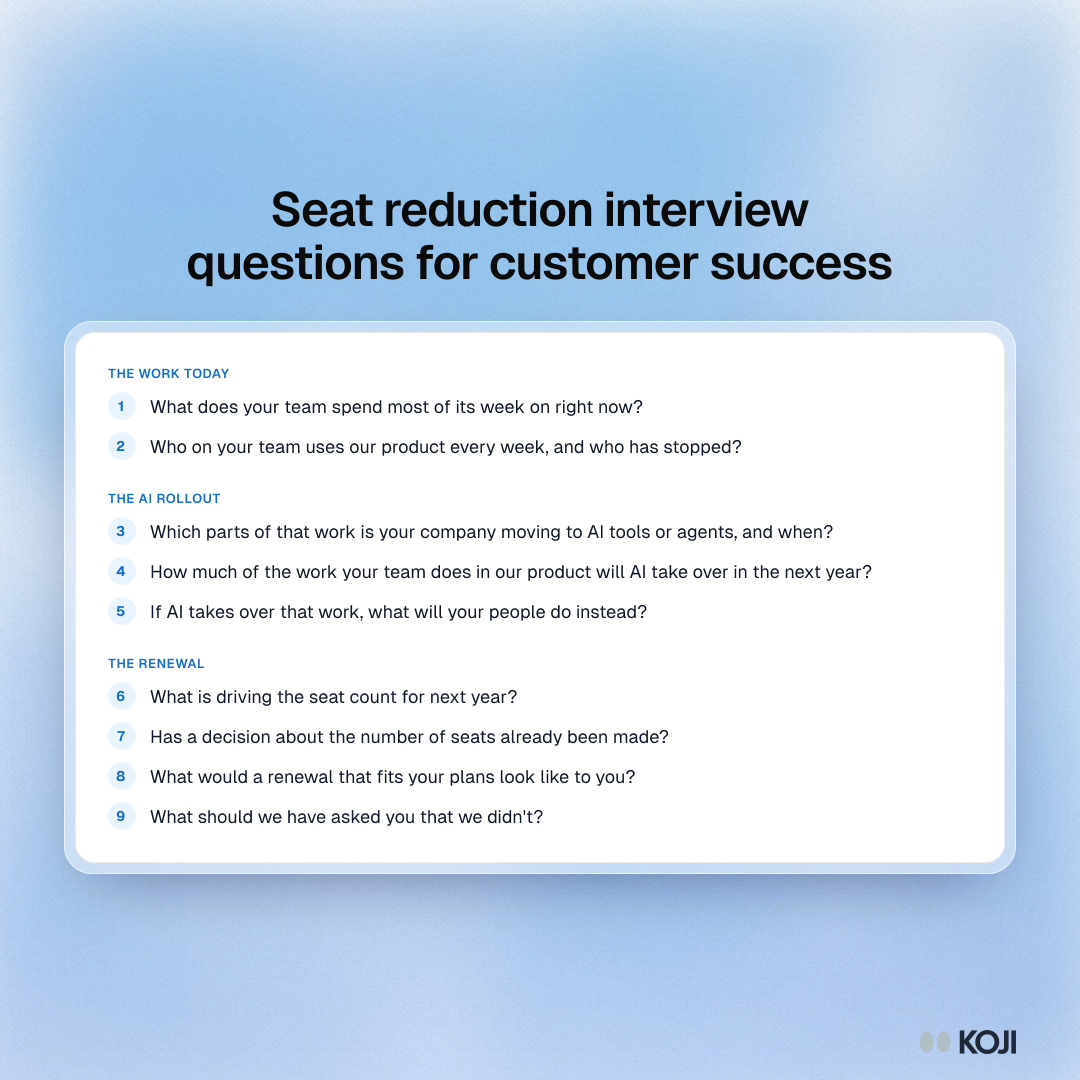
Question bank of nine seat reduction interview questions for customer success, grouped into the work today, the AI rollout and the renewal.

Question bank

Seat reduction interview questions for customer success
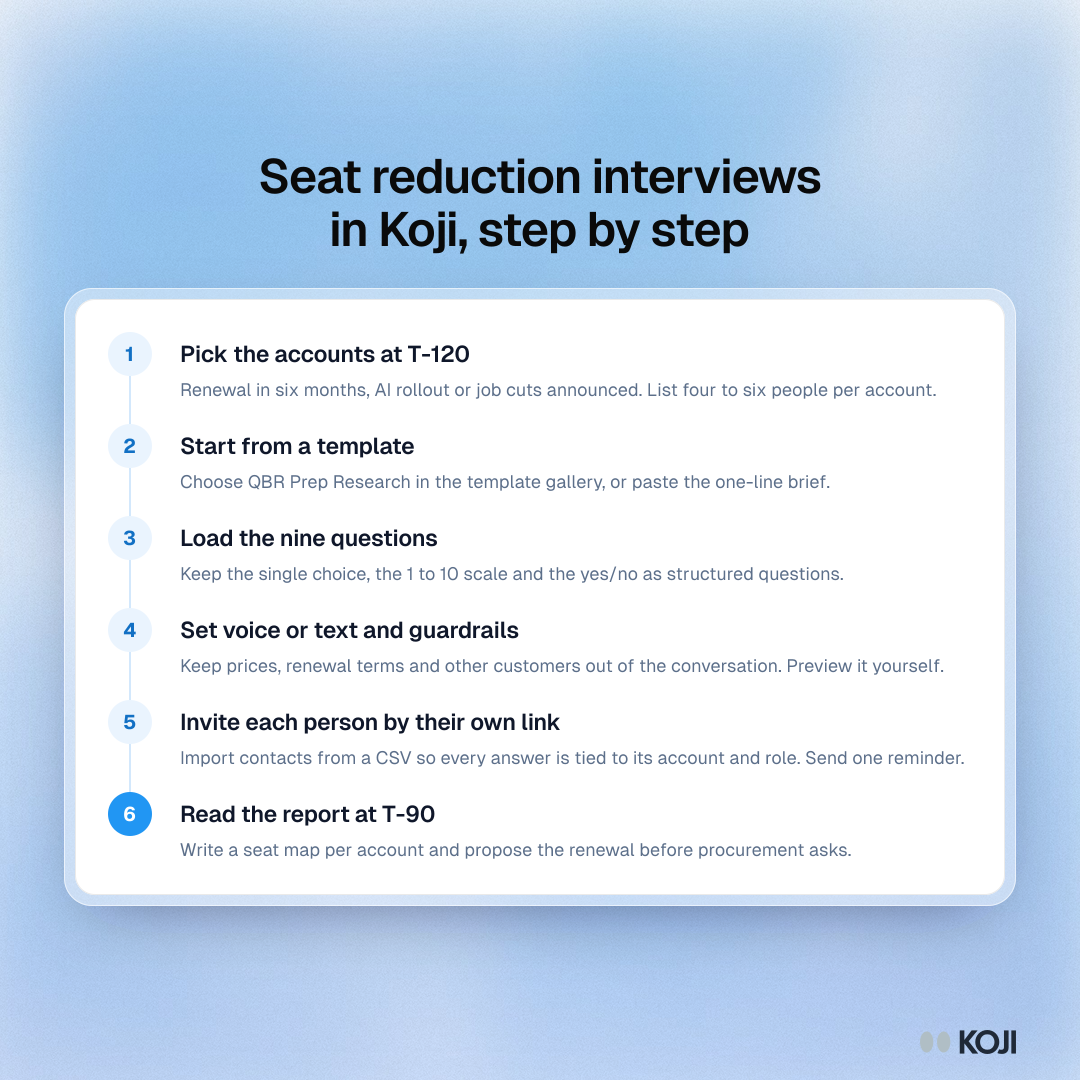
Process of six steps for seat reduction interviews in Koji, from picking accounts at T-120 to reading the report at T-90.

Process

Seat reduction interviews in Koji, step by step
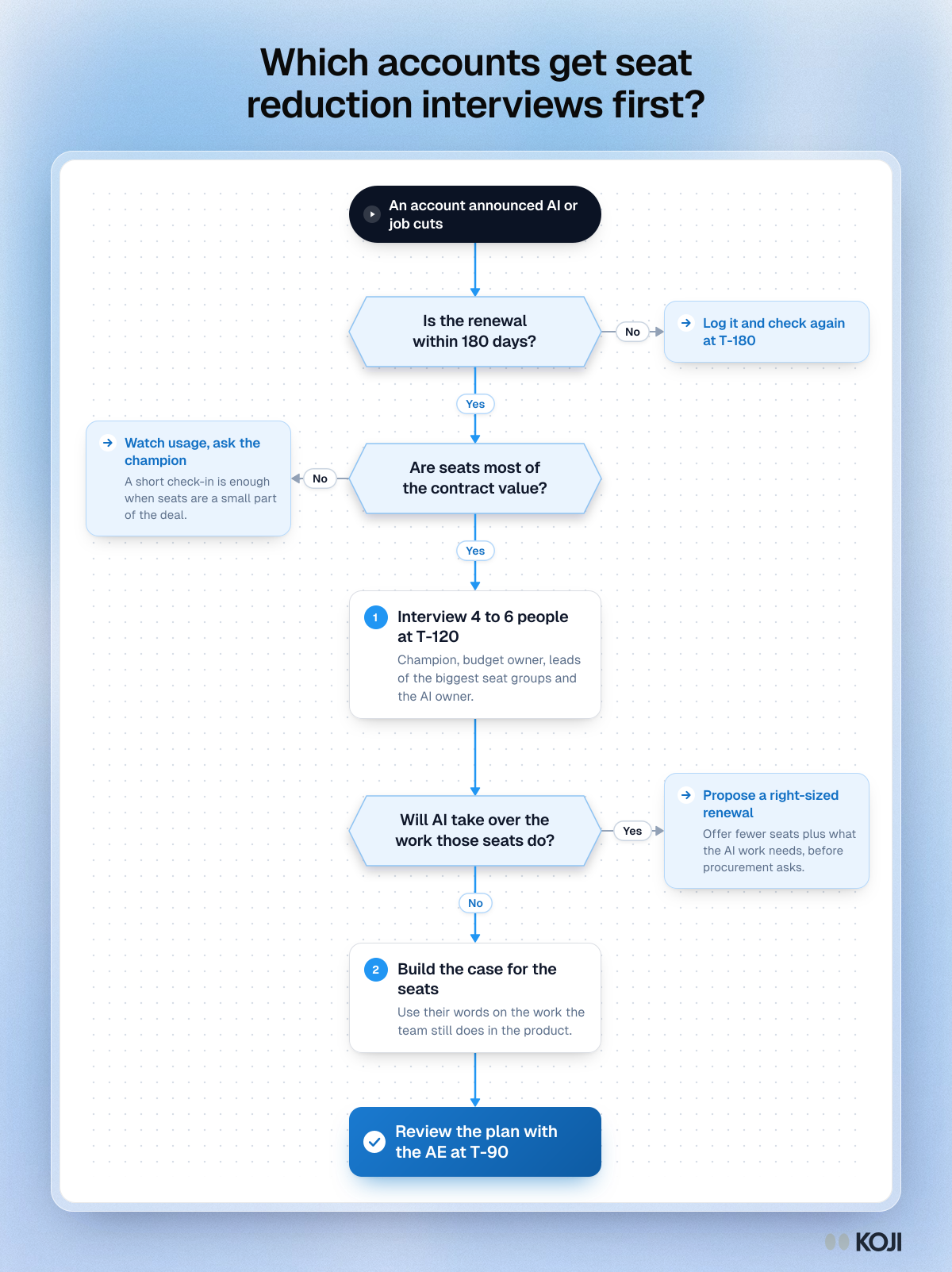
Flowchart for choosing which accounts get seat interviews: three questions on renewal timing, seat share of the contract and whether AI takes over the work.

Flowchart

Which accounts get seat reduction interviews first?
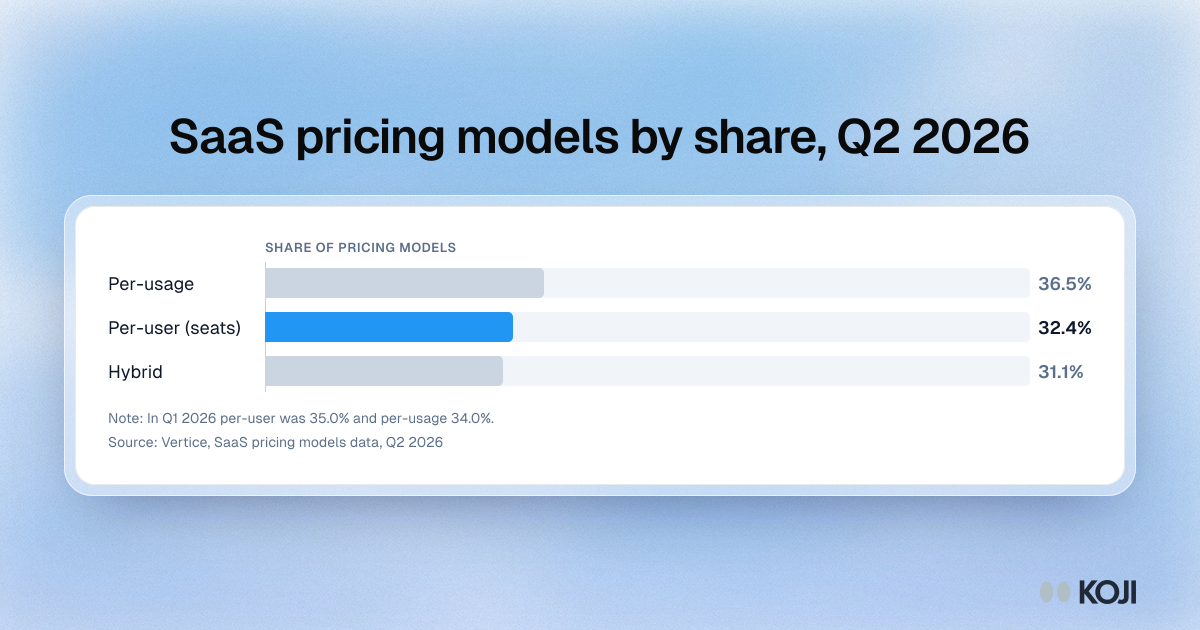
Bar chart of SaaS pricing models by share in Q2 2026: per-usage 36.5%, per-user 32.4%, hybrid 31.1%.

Bar chart

SaaS pricing models by share, Q2 2026
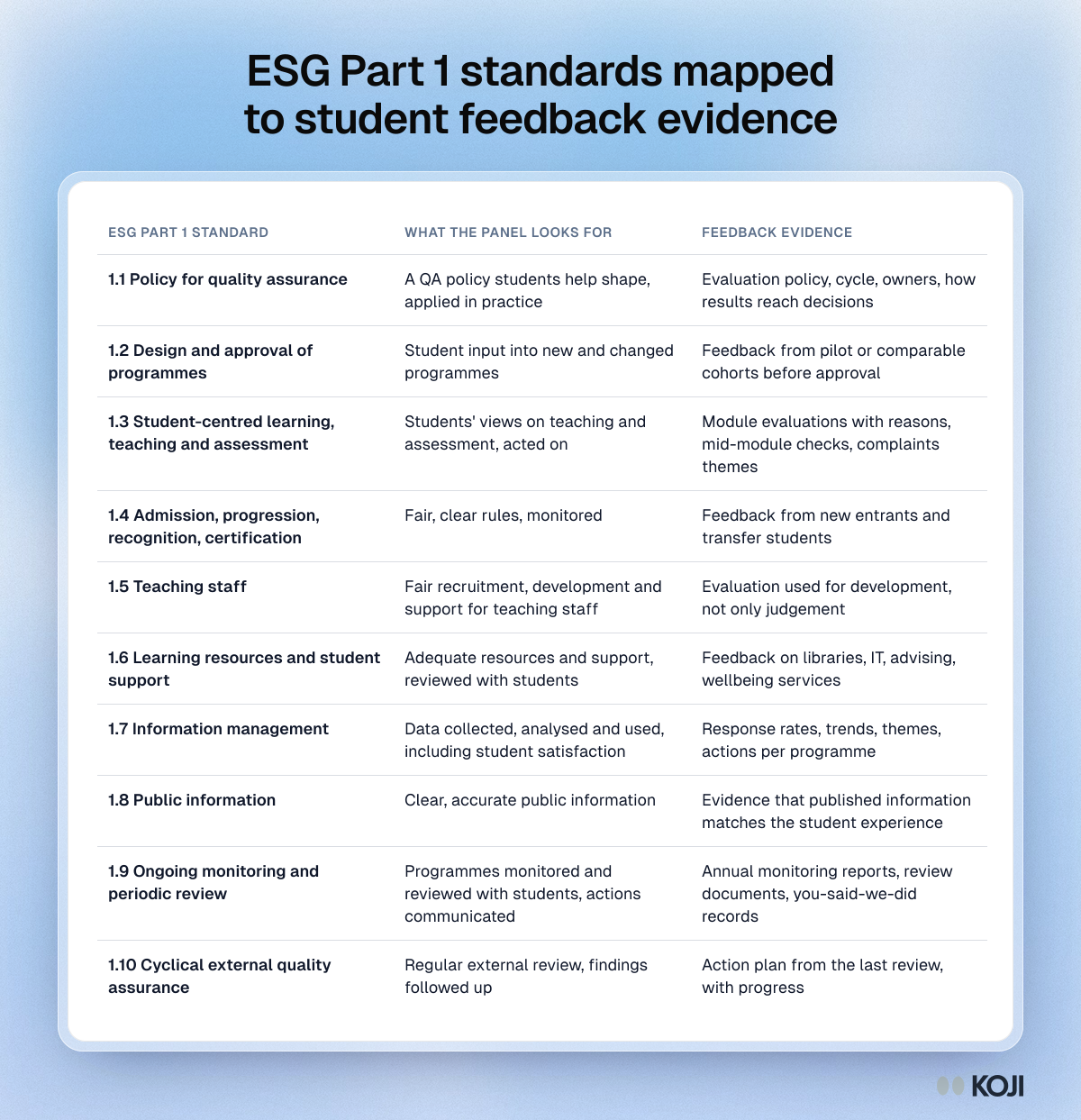
Table mapping the ten ESG Part 1 standards used in QAA International Quality Accreditation to the student feedback evidence a review panel looks for.

Reference table

ESG Part 1 standards mapped to student feedback evidence
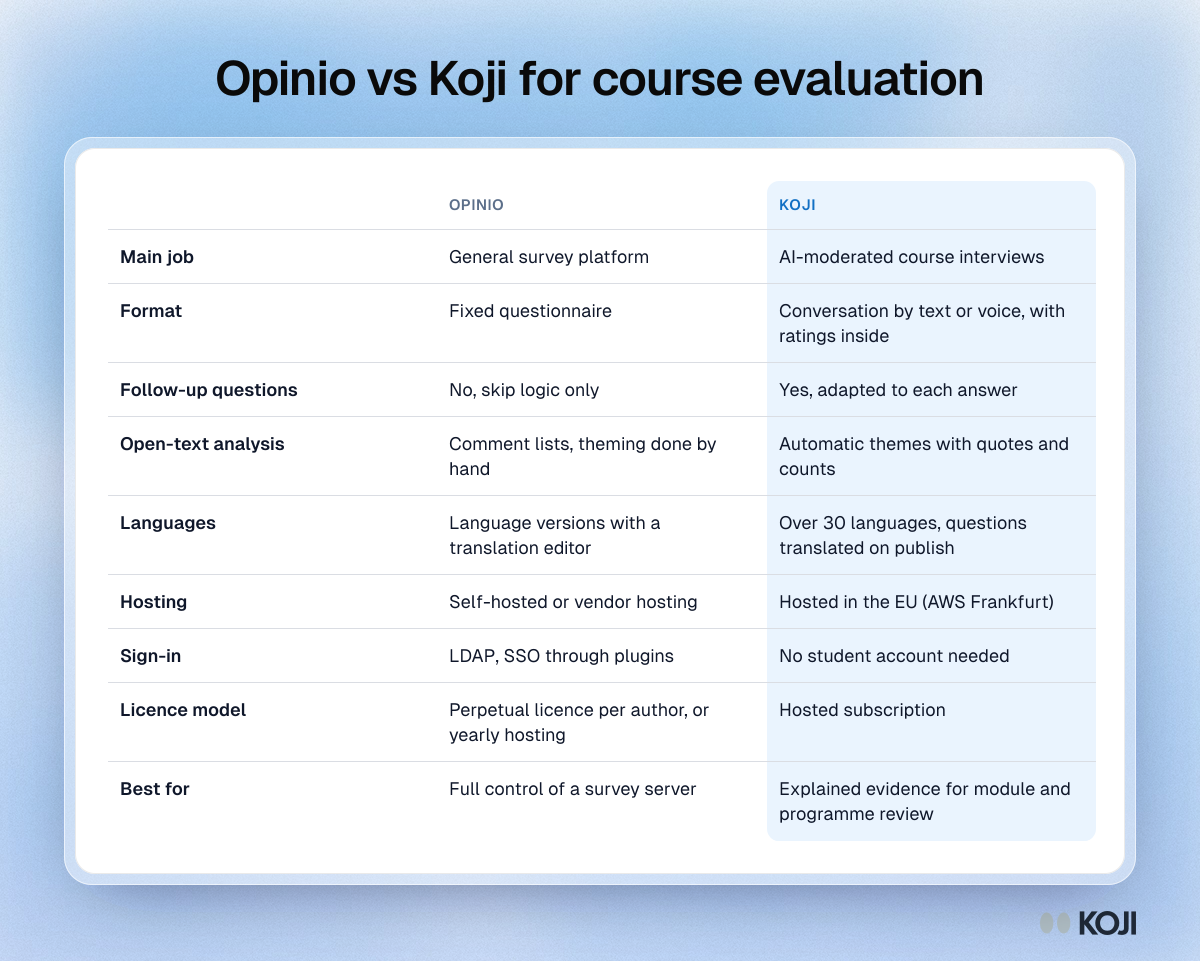
Comparison table of Opinio and Koji: job, format, follow-up questions, analysis, languages, hosting, sign-in, licence model and best fit.

Reference table

Opinio vs Koji for course evaluation
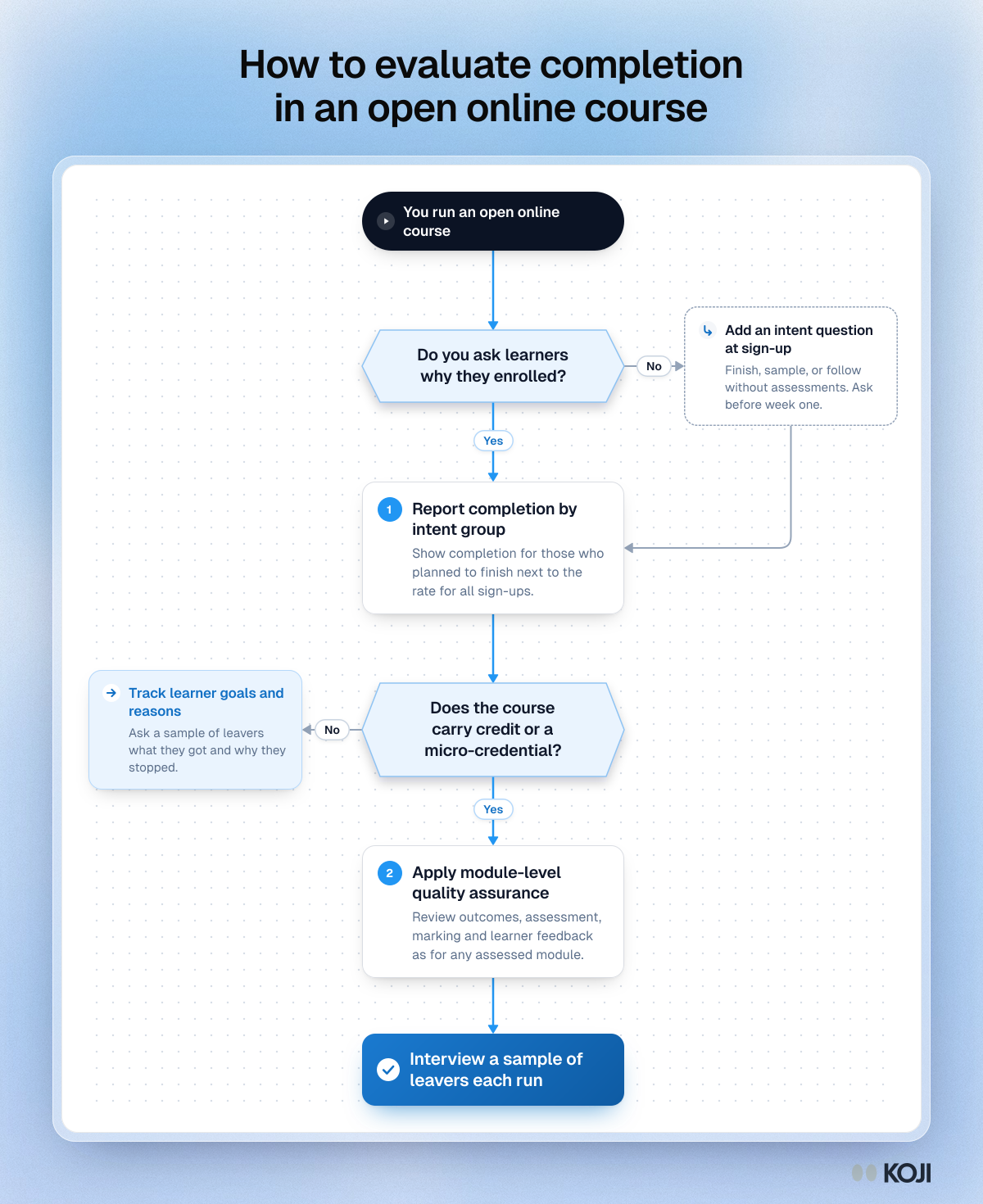
Flowchart for evaluating completion in an open online course: ask about intent, report by intent group, and apply quality assurance if it carries credit.

Flowchart

How to evaluate completion in an open online course
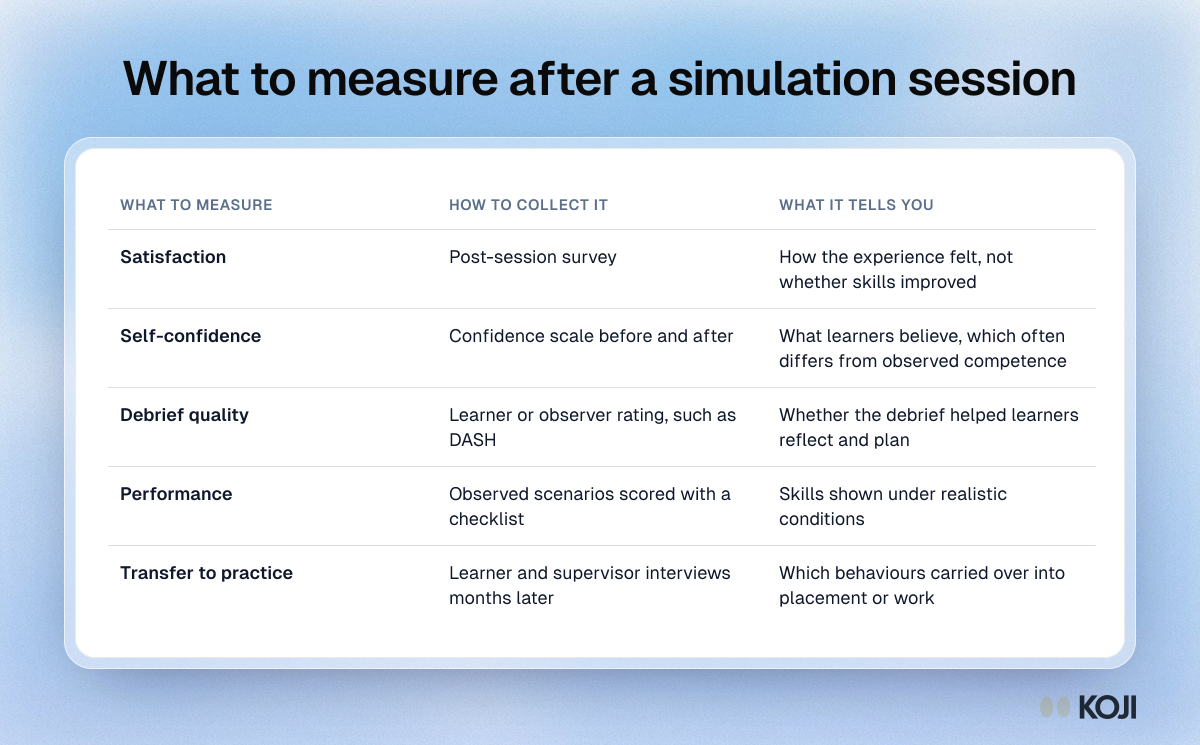
Table of what to measure after a simulation: satisfaction, confidence, debrief quality, observed performance and transfer to practice.

Reference table

What to measure after a simulation session
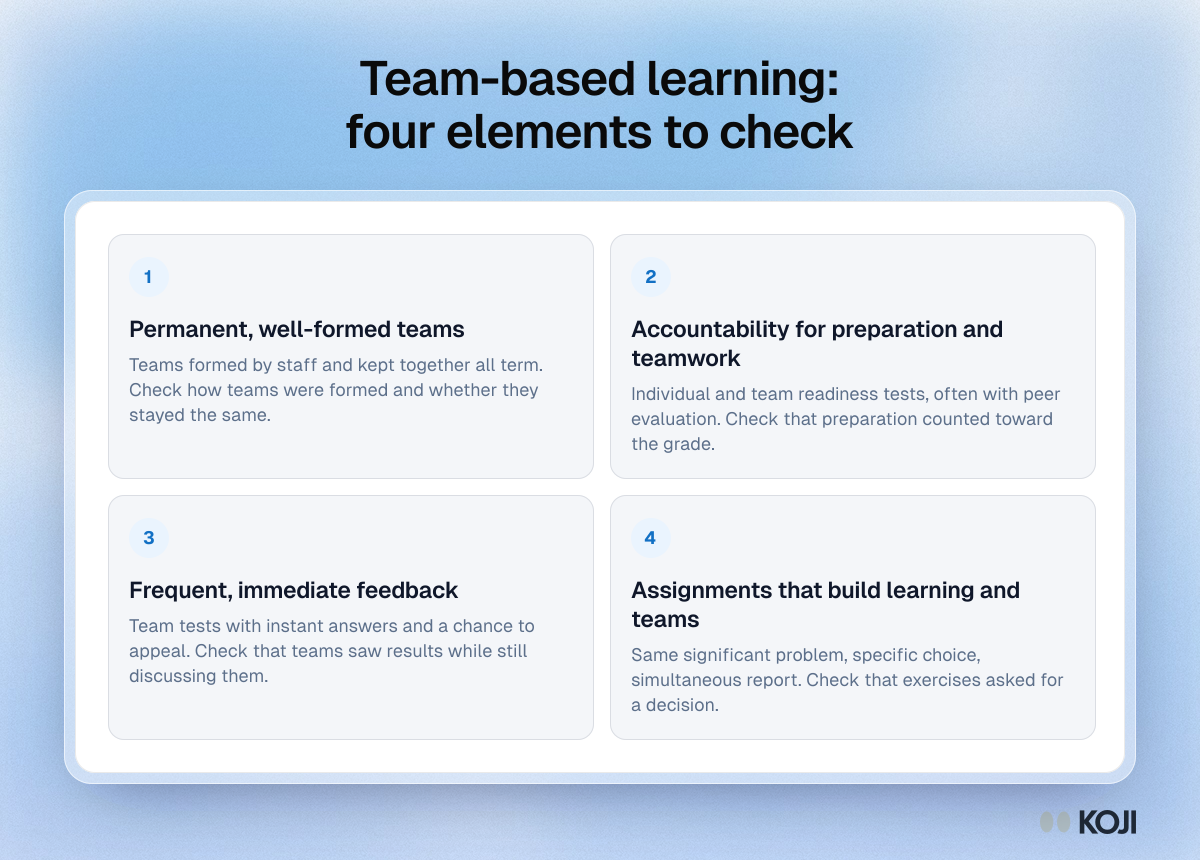
Framework showing the four elements of team-based learning: permanent teams, accountability, immediate feedback and team assignments.

Framework

Team-based learning: four elements to check
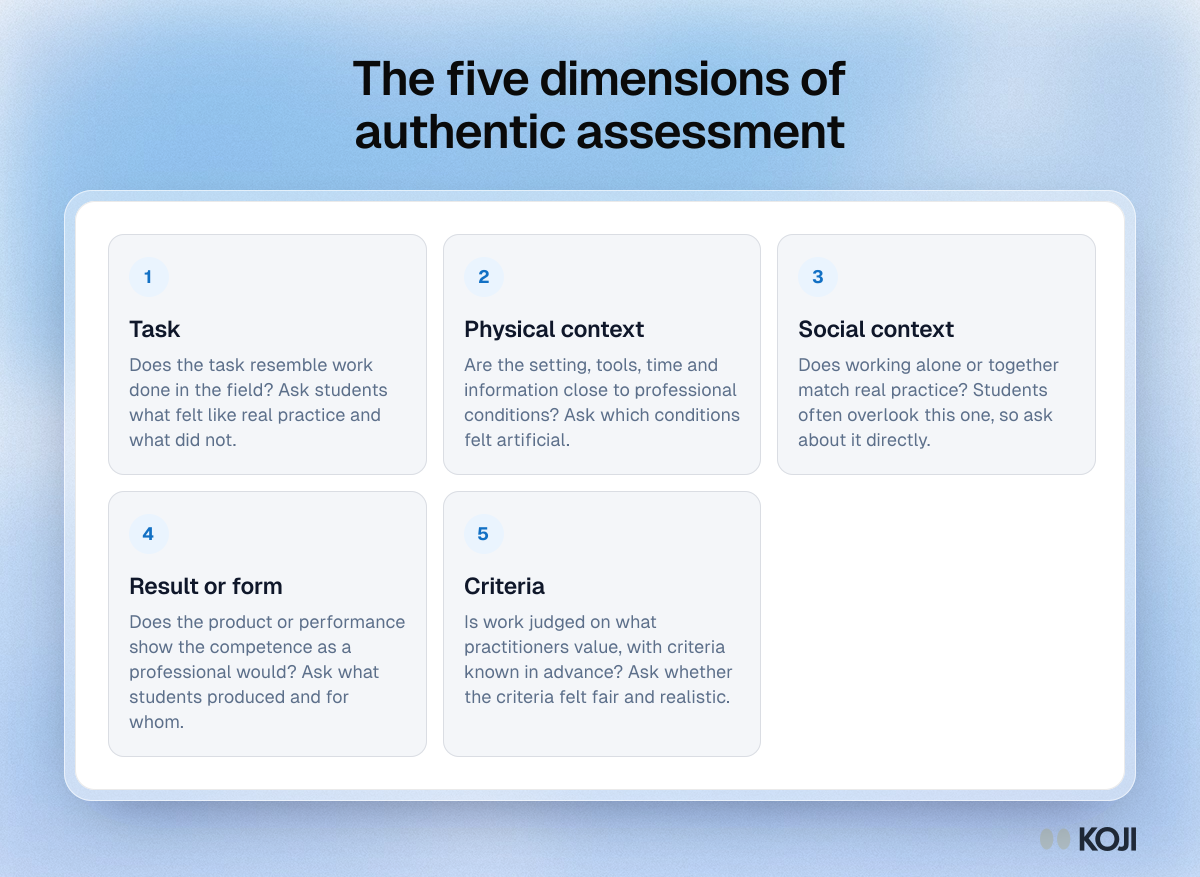
Framework showing five dimensions of authentic assessment: task, physical context, social context, result or form, and criteria.

Framework

The five dimensions of authentic assessment
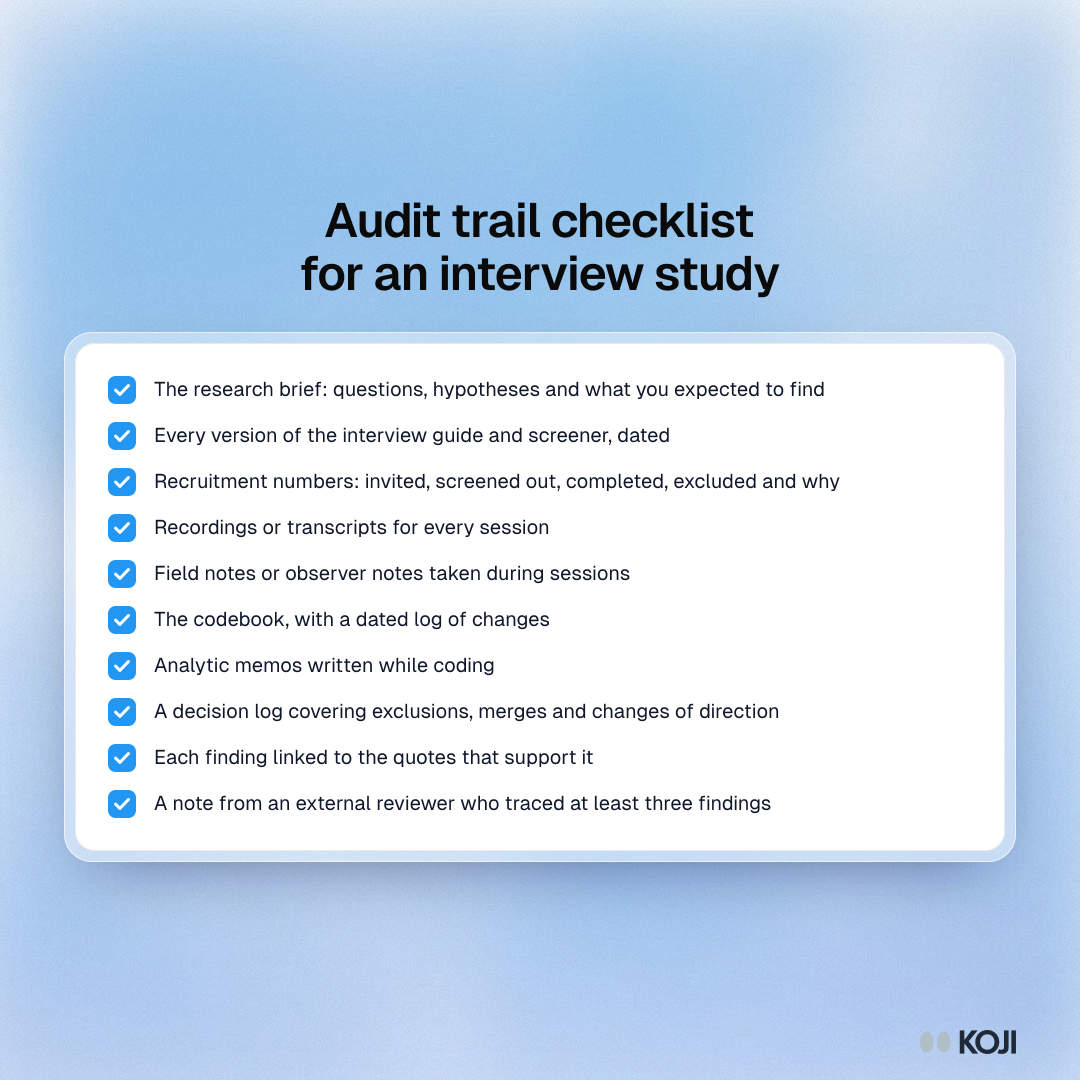
Checklist of ten records to keep for an interview study audit trail, from the research brief to the decision log and a reviewer's note.

Checklist

Audit trail checklist for an interview study
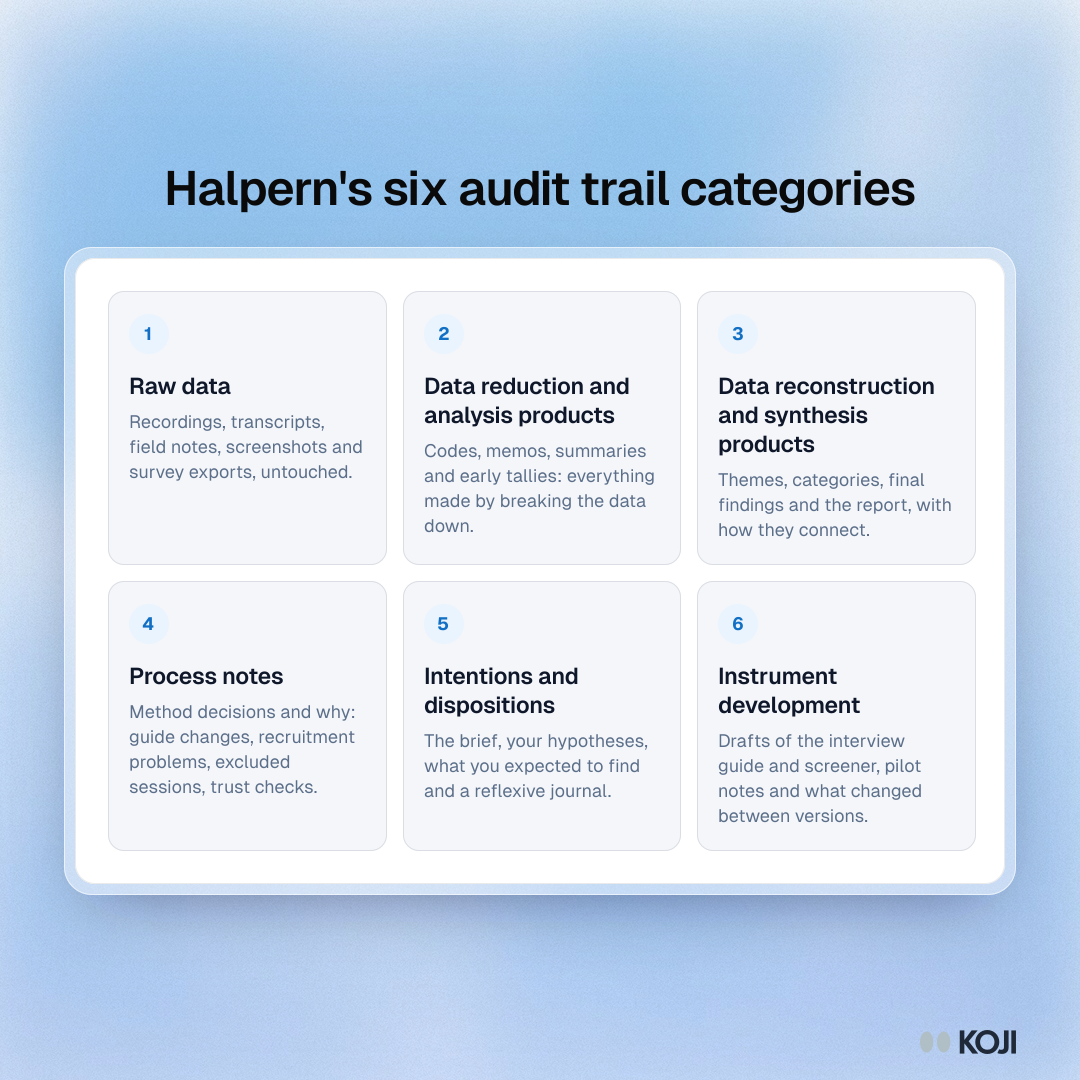
Framework of Halpern's six audit trail categories, from raw data and analysis products to process notes and instrument development.

Framework

Halpern's six audit trail categories
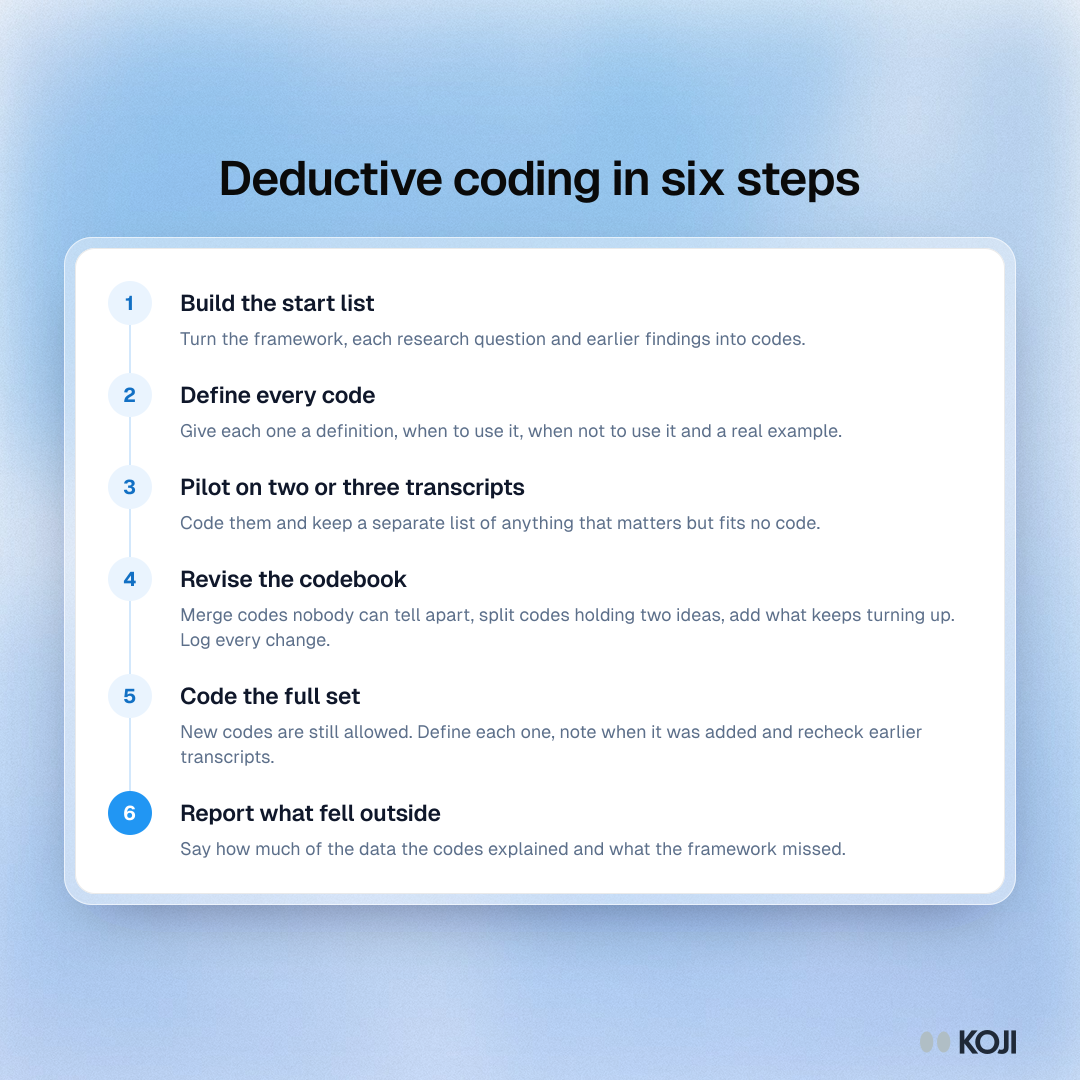
Process of deductive coding in six steps: build a start list, define codes, pilot, revise, code the full set and report what fell outside.

Process

Deductive coding in six steps
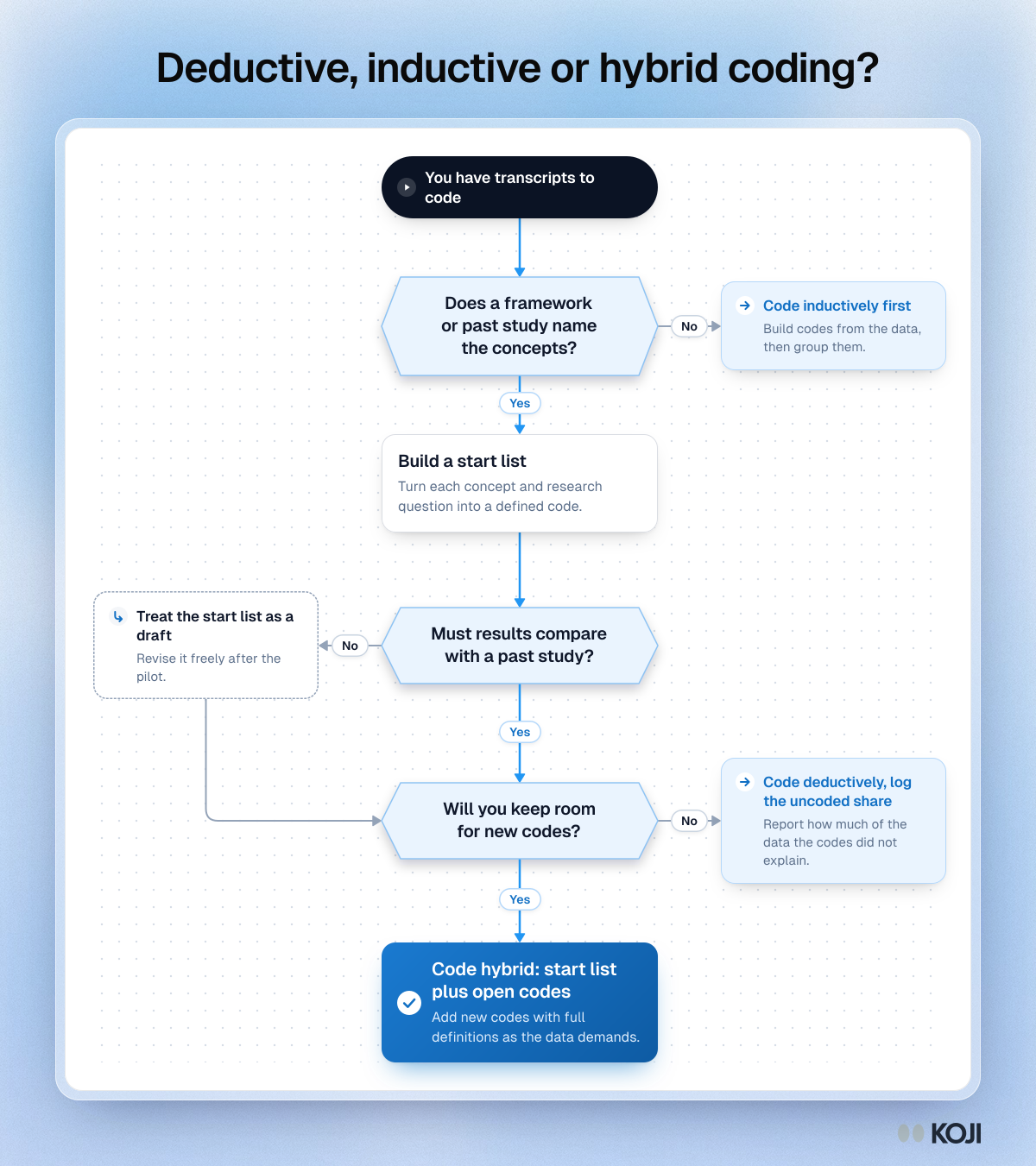
Flowchart for choosing deductive, inductive or hybrid coding: three questions about an existing framework, comparison with past studies and room for surprises.

Flowchart

Deductive, inductive or hybrid coding?
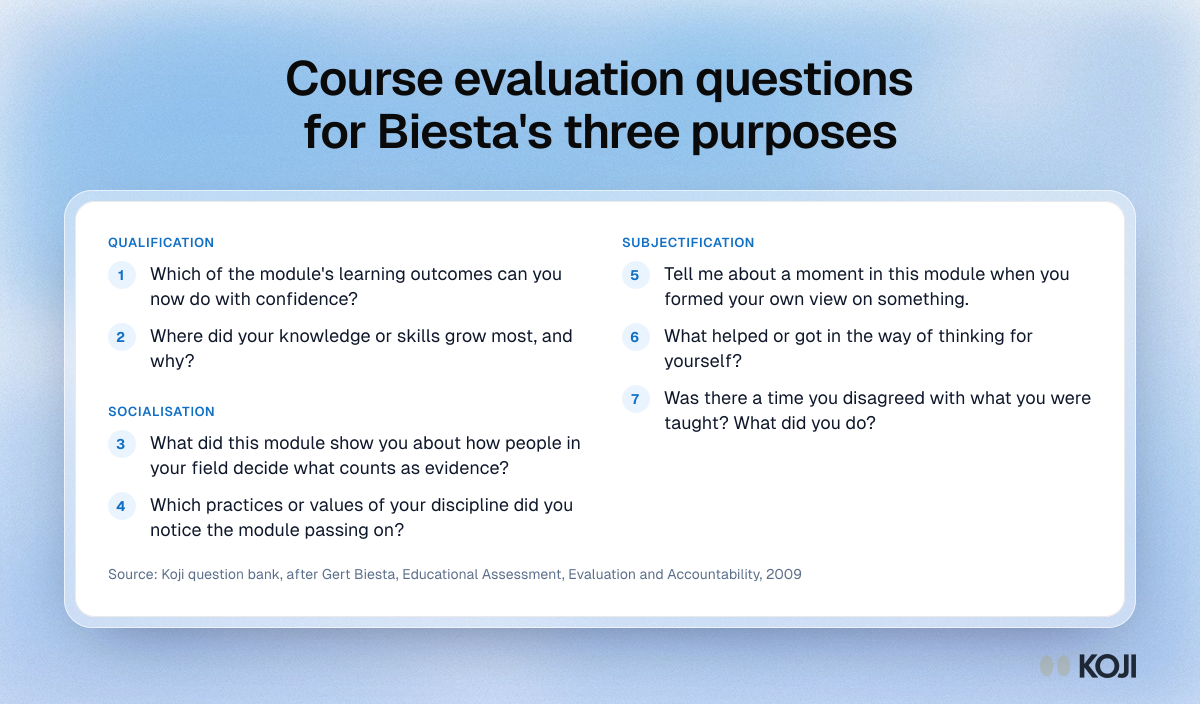
Question bank for course evaluation with questions grouped under Biesta's three purposes of education: qualification, socialisation and subjectification.

Question bank

Course evaluation questions for Biesta's three purposes
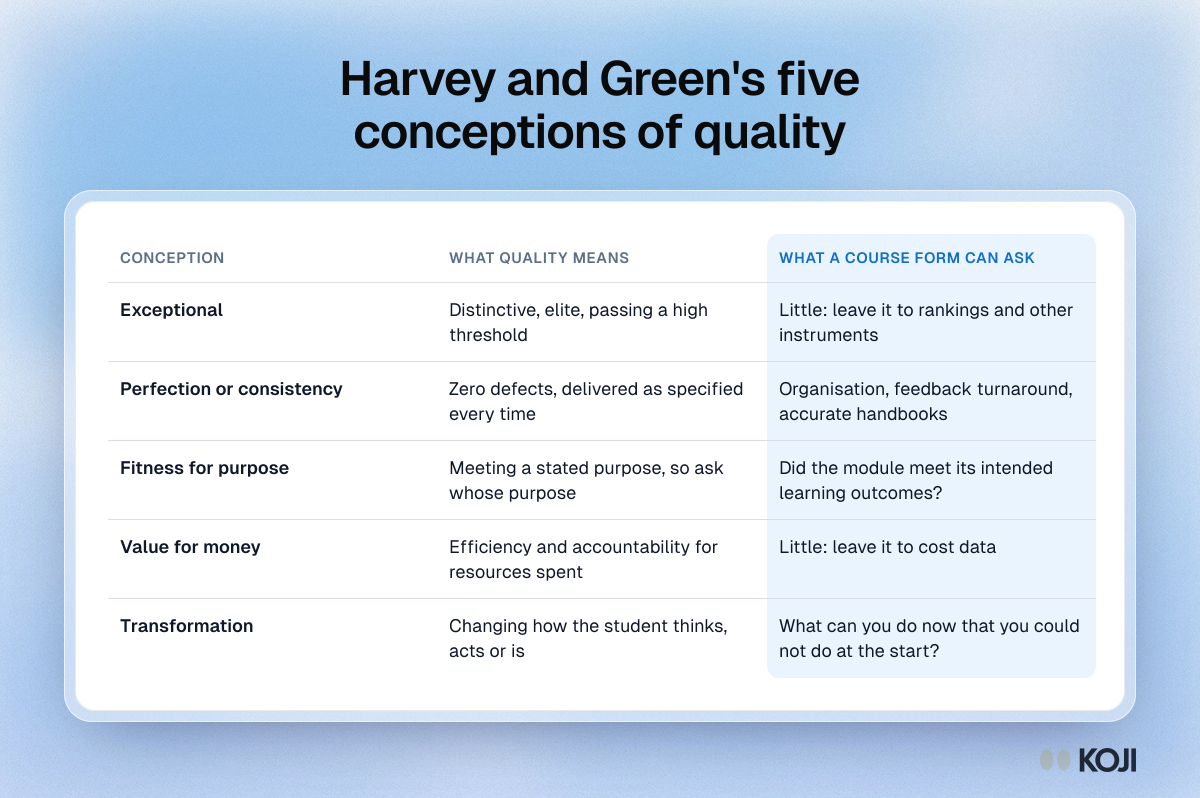
Table of Harvey and Green's five conceptions of quality in higher education, what each means and what a course evaluation can ask about it.
Reference table

Harvey and Green's five conceptions of quality

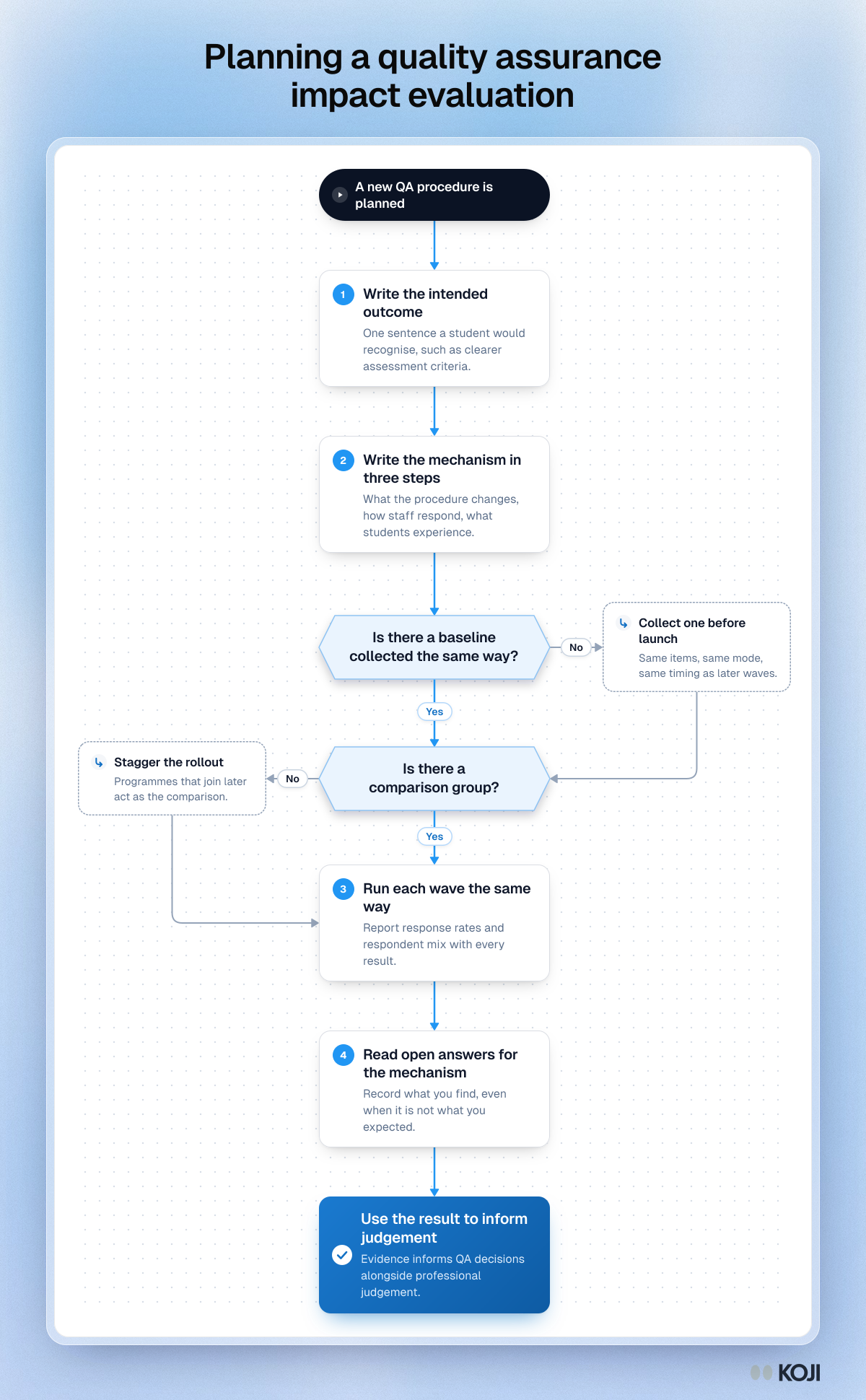
Flowchart for planning a QA impact evaluation: write the outcome and mechanism, collect a baseline, find a comparison, then read answers for the mechanism.

Flowchart

Planning a quality assurance impact evaluation
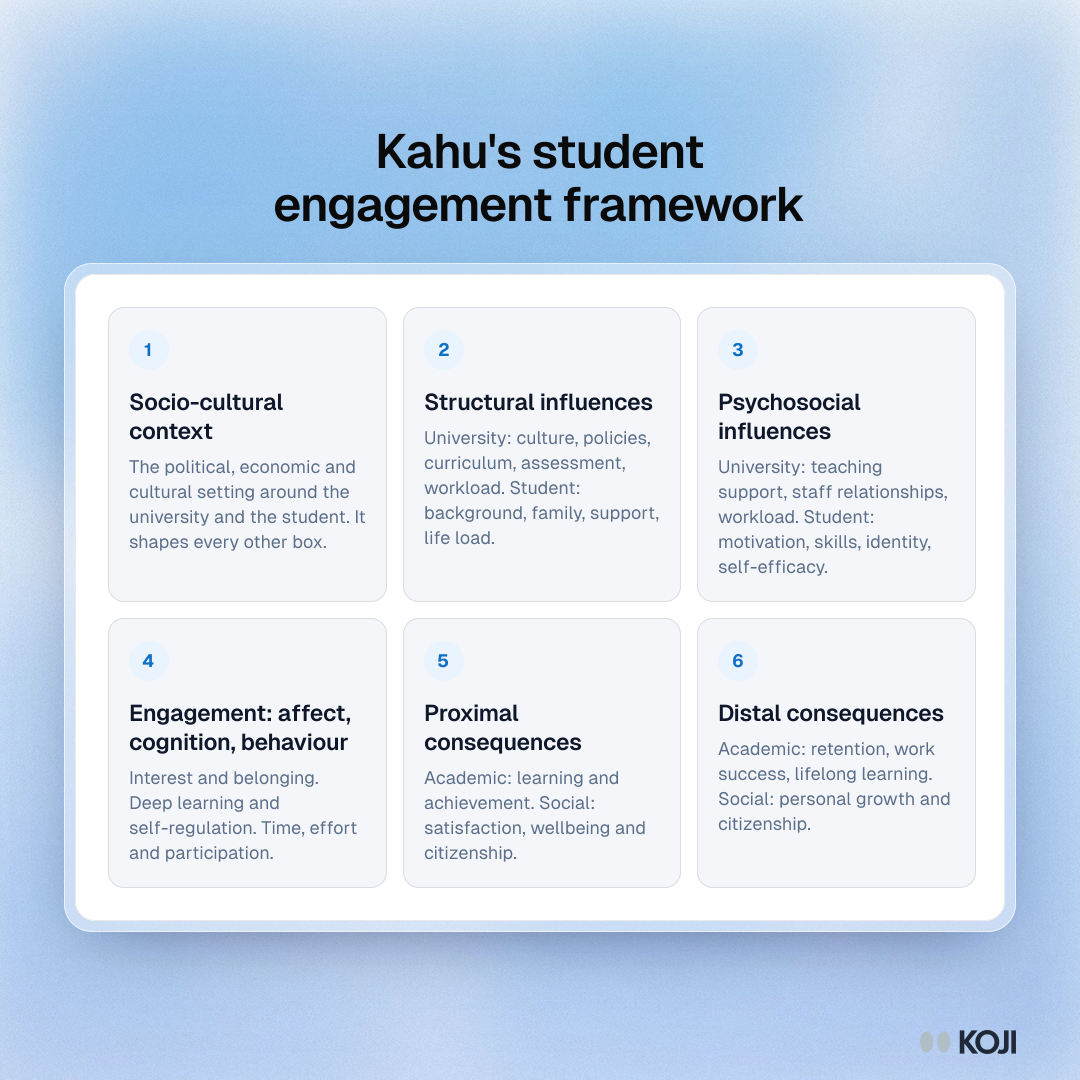
Framework of Kahu's student engagement model: context, structural and psychosocial influences, engagement, and its proximal and distal consequences.

Framework

Kahu's student engagement framework
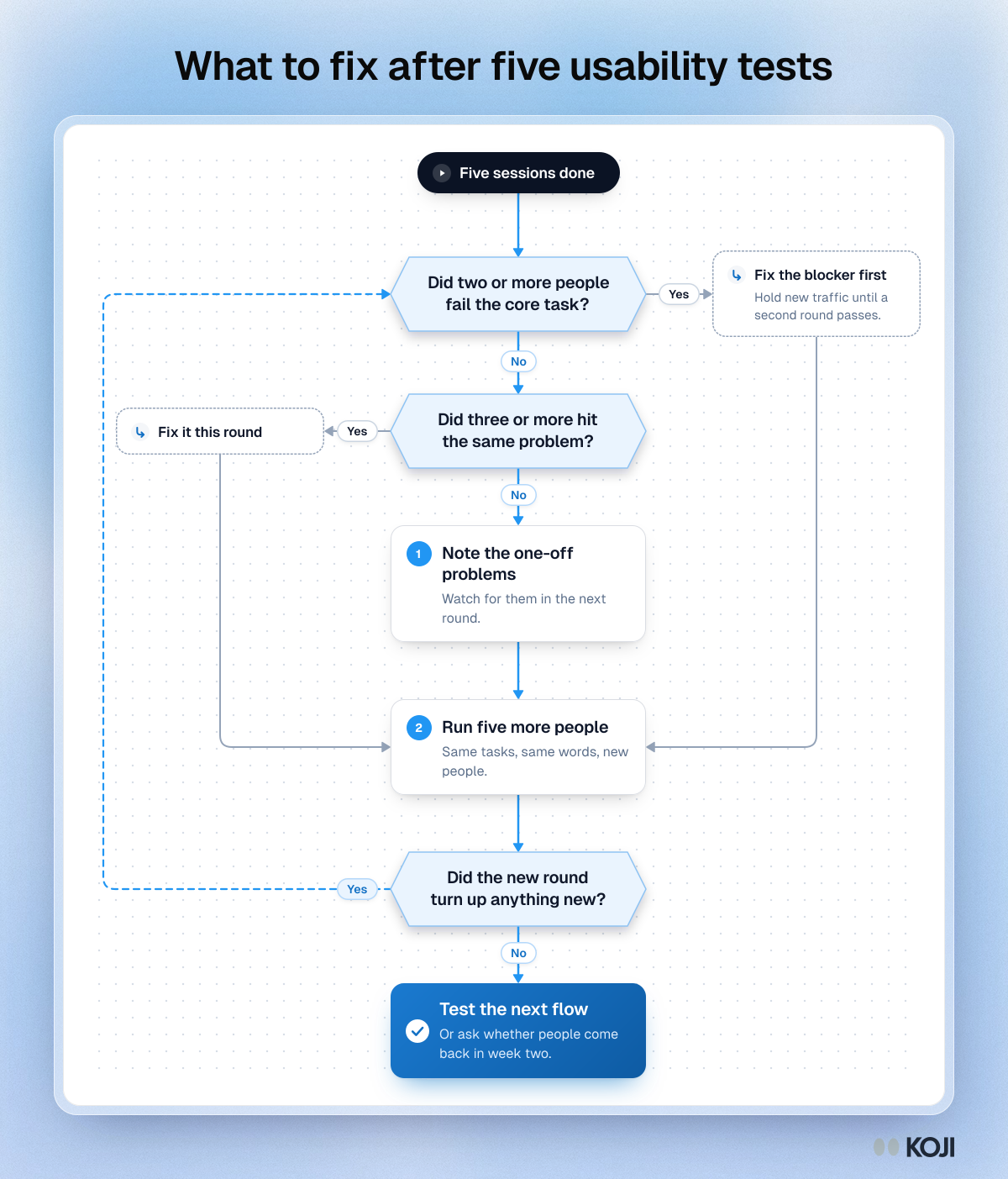
Flowchart for what to fix after five usability tests: three questions, two fixes, a retest loop, ending in testing the next flow.

Flowchart

What to fix after five usability tests
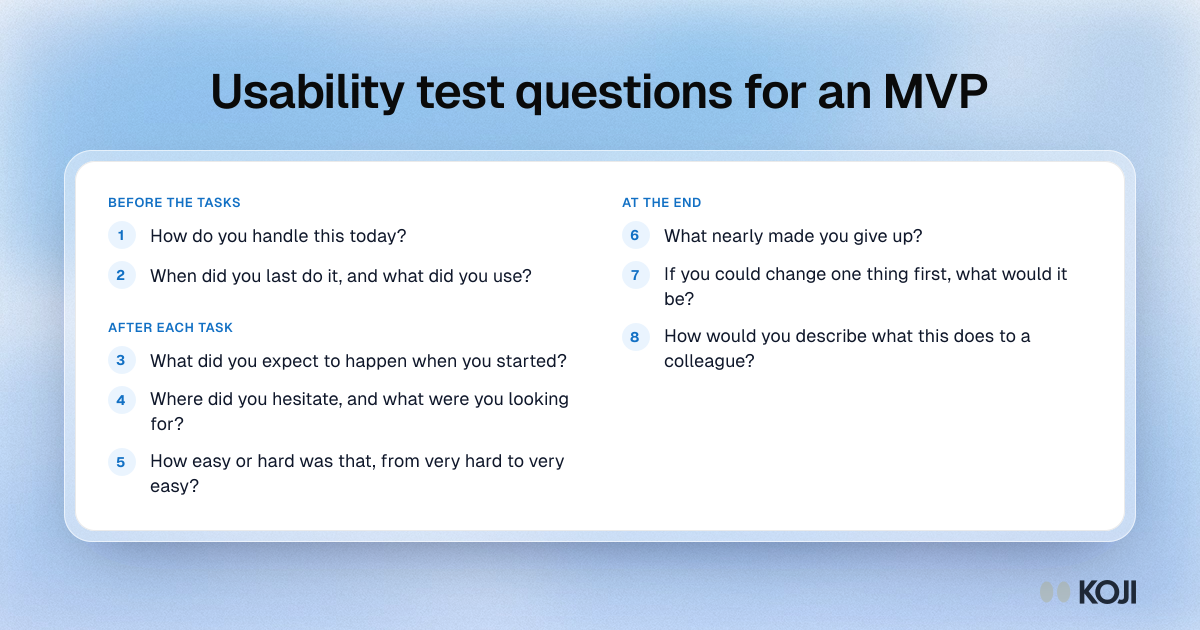
Question bank for usability testing an MVP: two questions before the tasks, three after each task, and three at the end of the session.

Question bank

Usability test questions for an MVP
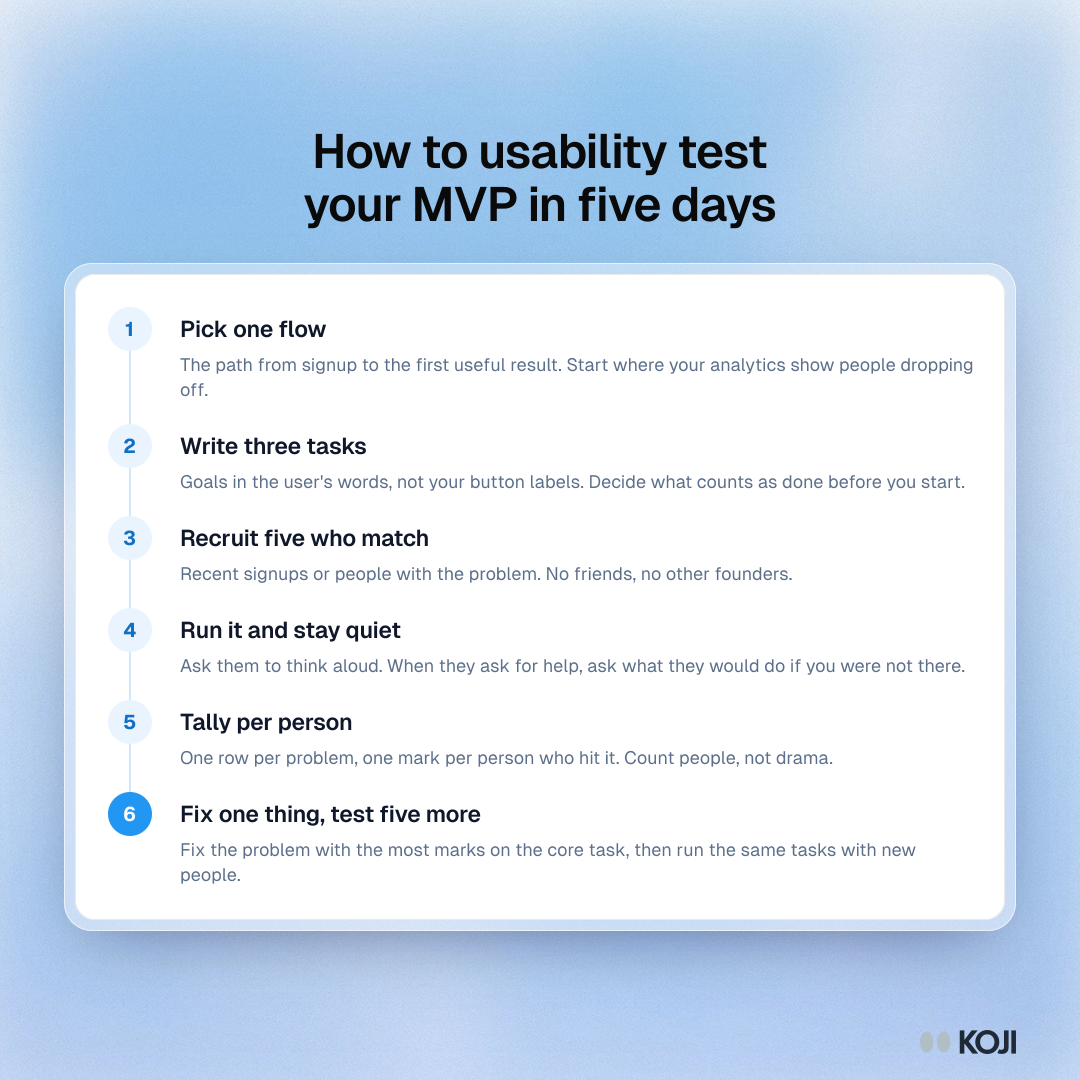
Process for usability testing an MVP: pick one flow, write three tasks, recruit five matching users, run it quietly, tally per person, fix one thing and retest.

Process

How to usability test your MVP in five days
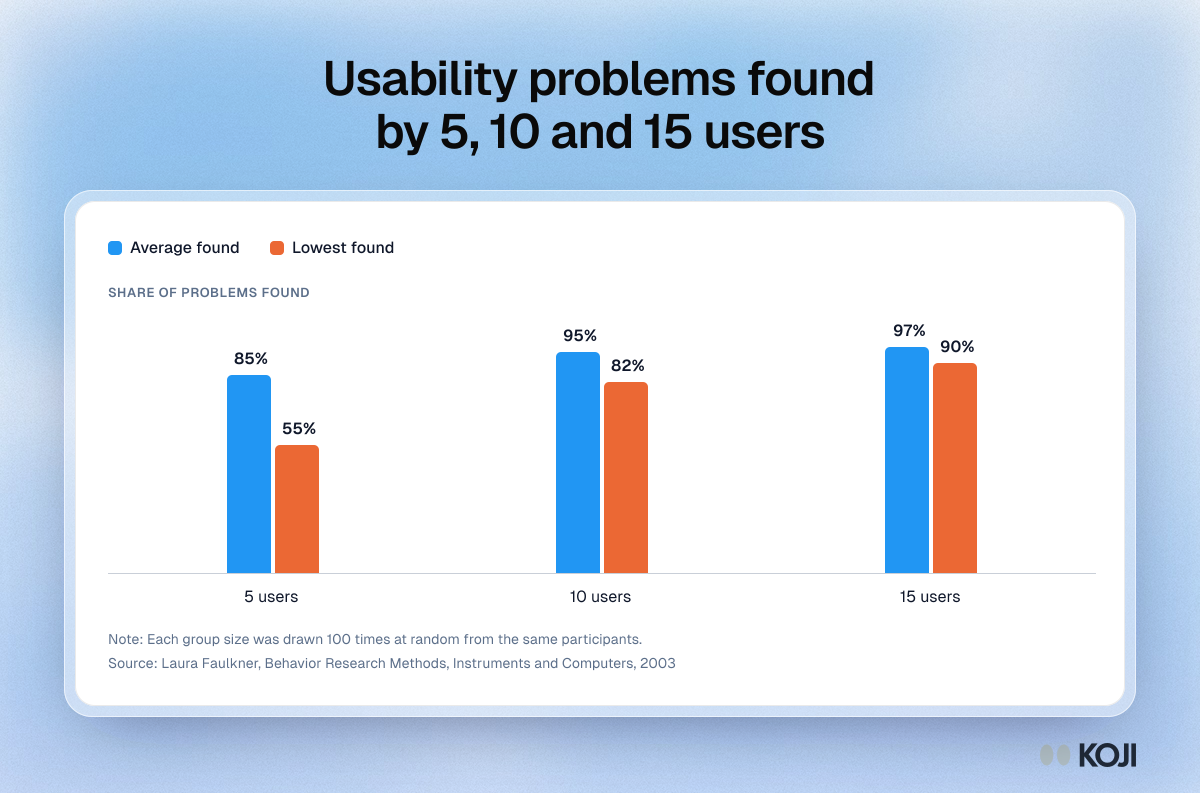
Column chart from Faulkner 2003: 5 users found 85% of usability problems on average but 55% at worst, 10 users 95% and 82%, 15 users 97% and 90%.

Column chart

Usability problems found by 5, 10 and 15 users
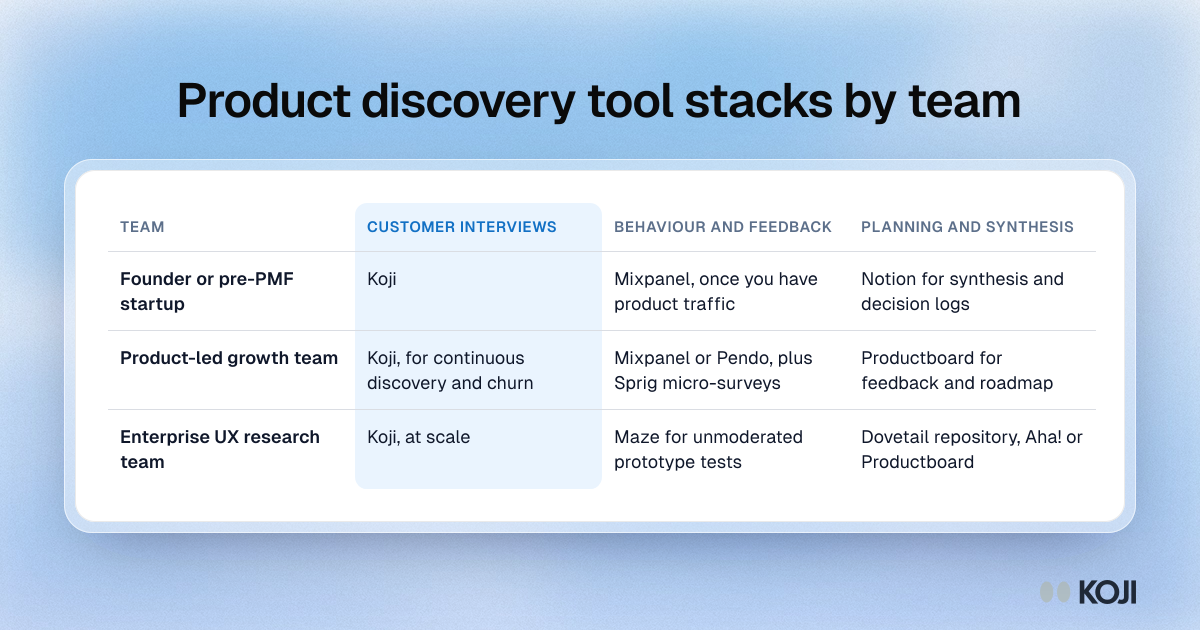
Table of three product discovery stacks, for founders, product-led growth teams and enterprise UX research teams, split by interviews, behaviour and planning.

Reference table

Product discovery tool stacks by team
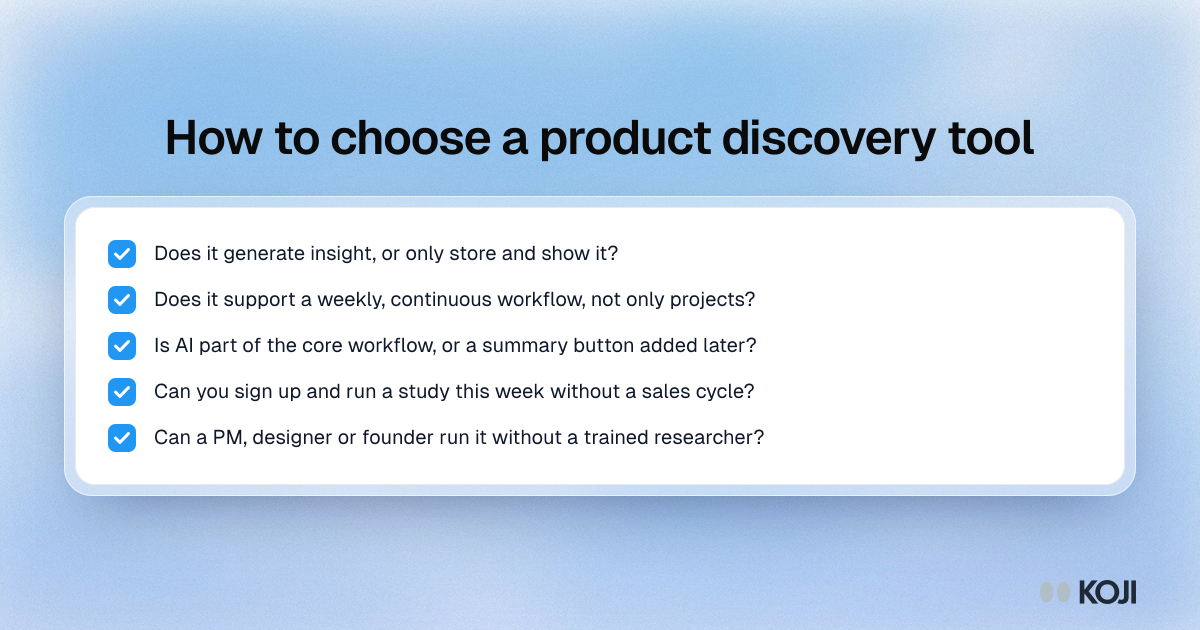
Checklist of five buying questions for product discovery tools, covering insight generation, continuous workflows, AI, self-serve setup and who can run it.

Checklist

How to choose a product discovery tool
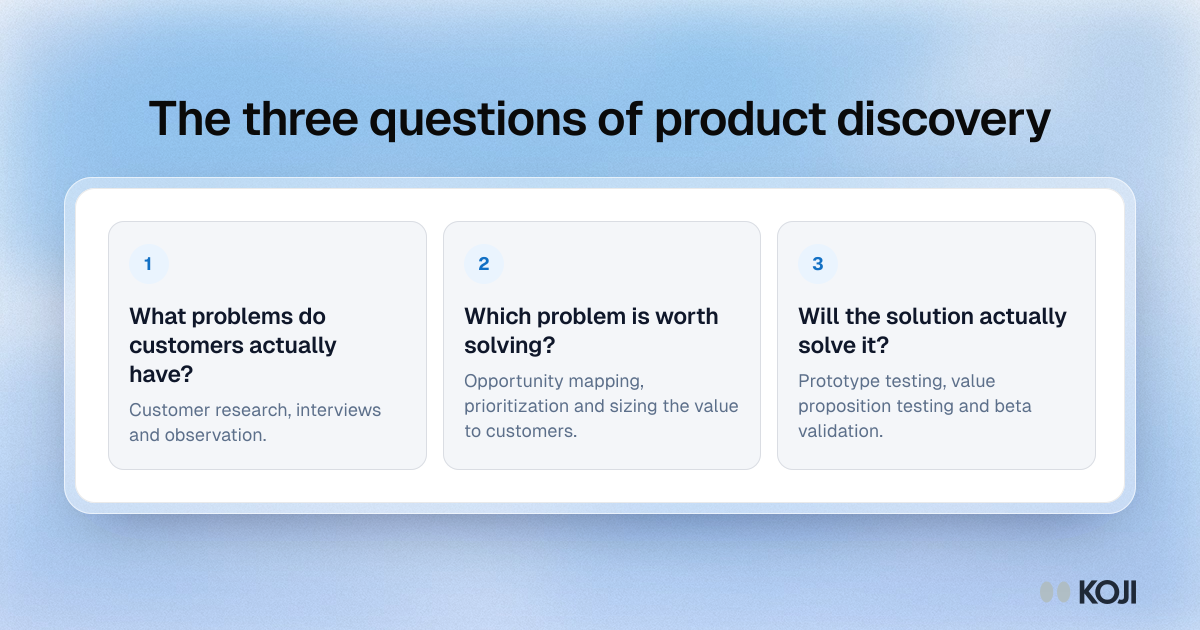
Framework of the three questions product discovery answers: what problems customers have, which one is worth solving, and whether the solution solves it.

Framework

The three questions of product discovery
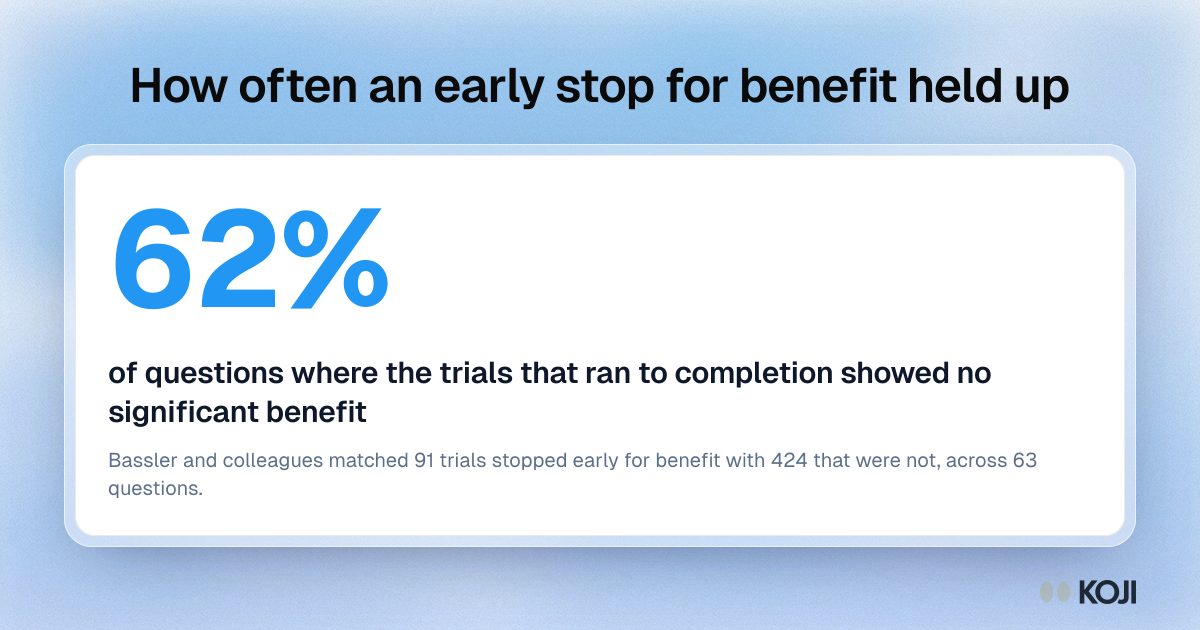
Stat card: in 62% of 63 questions, trials that were not stopped early found no significant benefit, after other trials had stopped early for benefit.

Key figure

How often an early stop for benefit held up
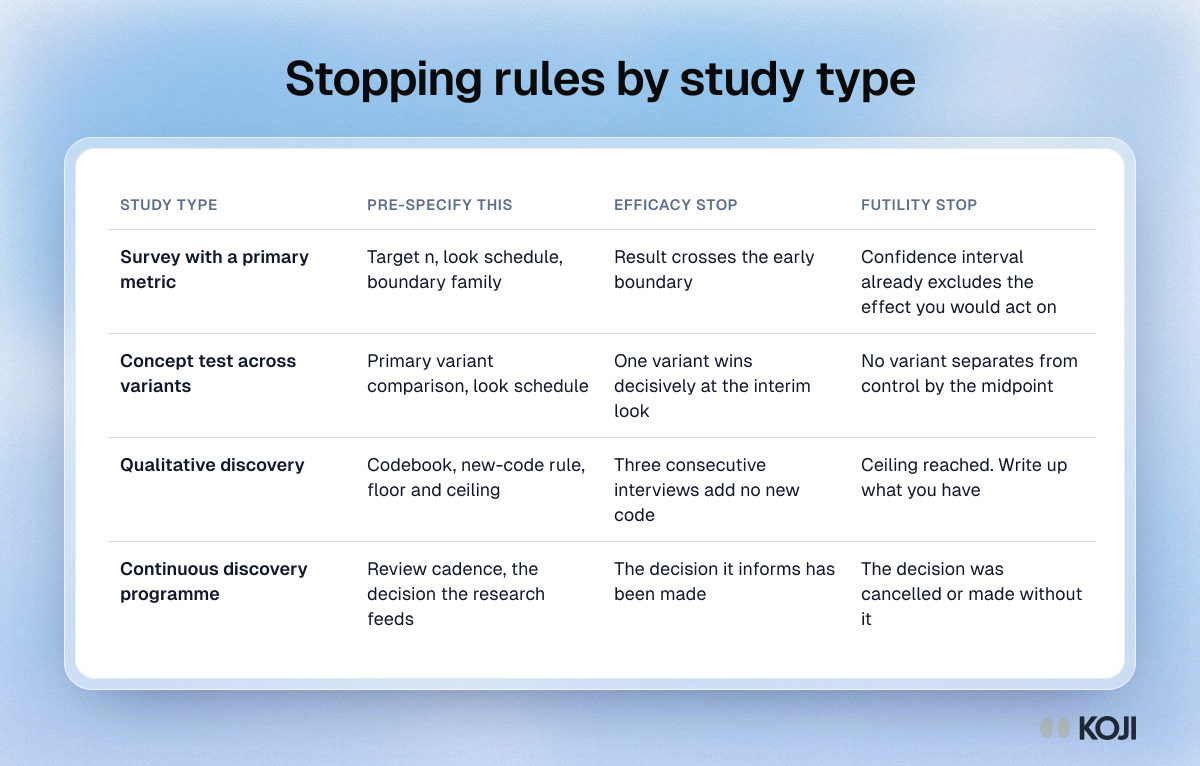
Table of what to pre-specify for four study types, from surveys to continuous discovery, and when each should stop early for success or for futility.

Reference table

Stopping rules by study type
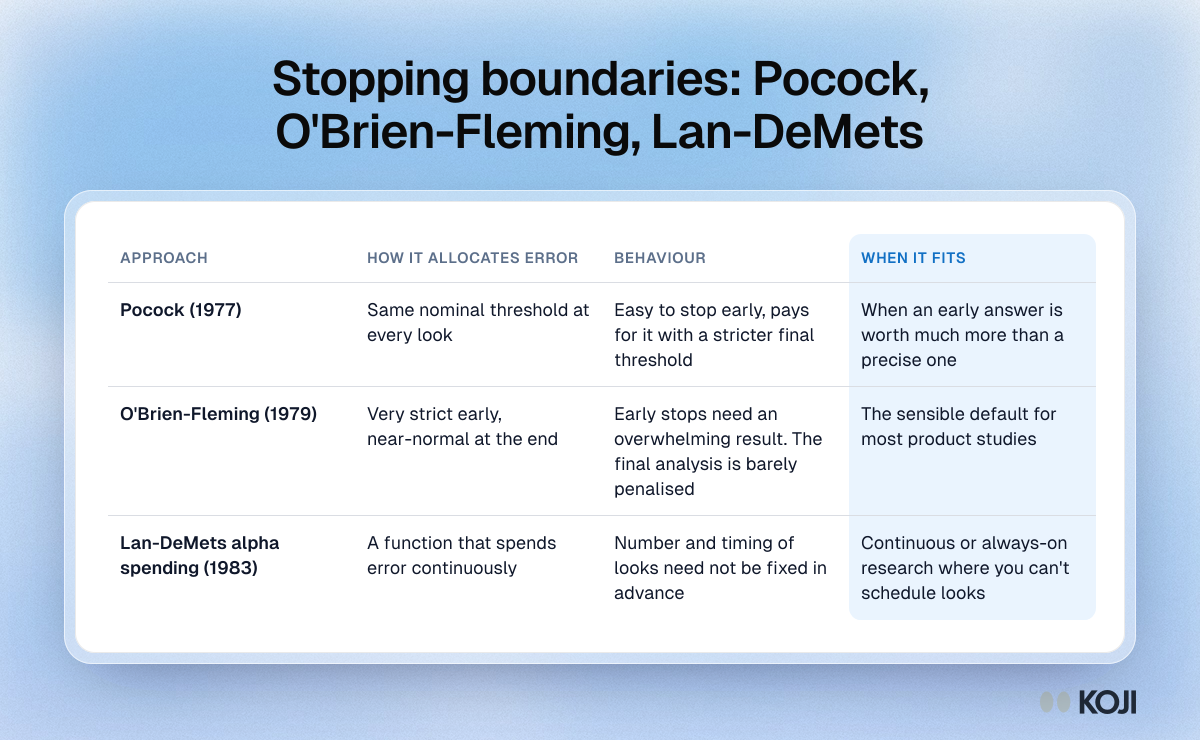
Table comparing three interim analysis boundaries, Pocock, O'Brien-Fleming and Lan-DeMets alpha spending, by how each spends error and when it fits.

Reference table

Stopping boundaries: Pocock, O'Brien-Fleming, Lan-DeMets
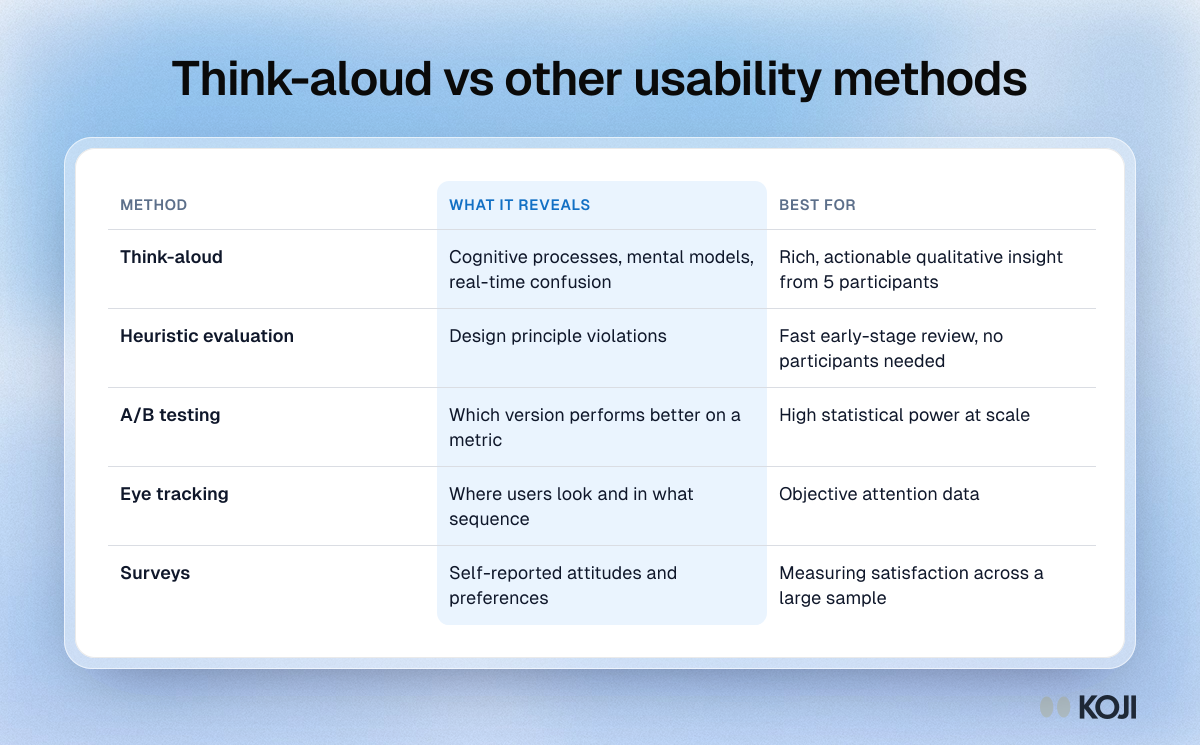
Table comparing think-aloud with heuristic evaluation, A/B testing, eye tracking and surveys by what each method reveals and what it suits best.

Reference table

Think-aloud vs other usability methods
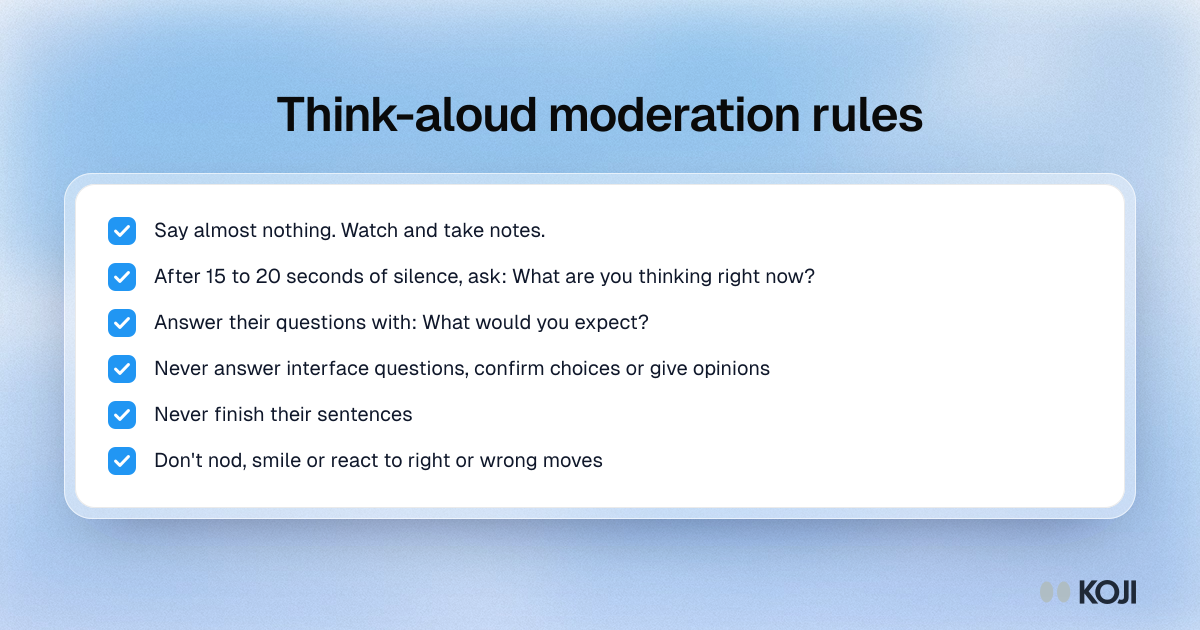
Checklist of six moderation rules for a think-aloud session, from saying almost nothing to never reacting when a participant gets a step right or wrong.

Checklist

Think-aloud moderation rules
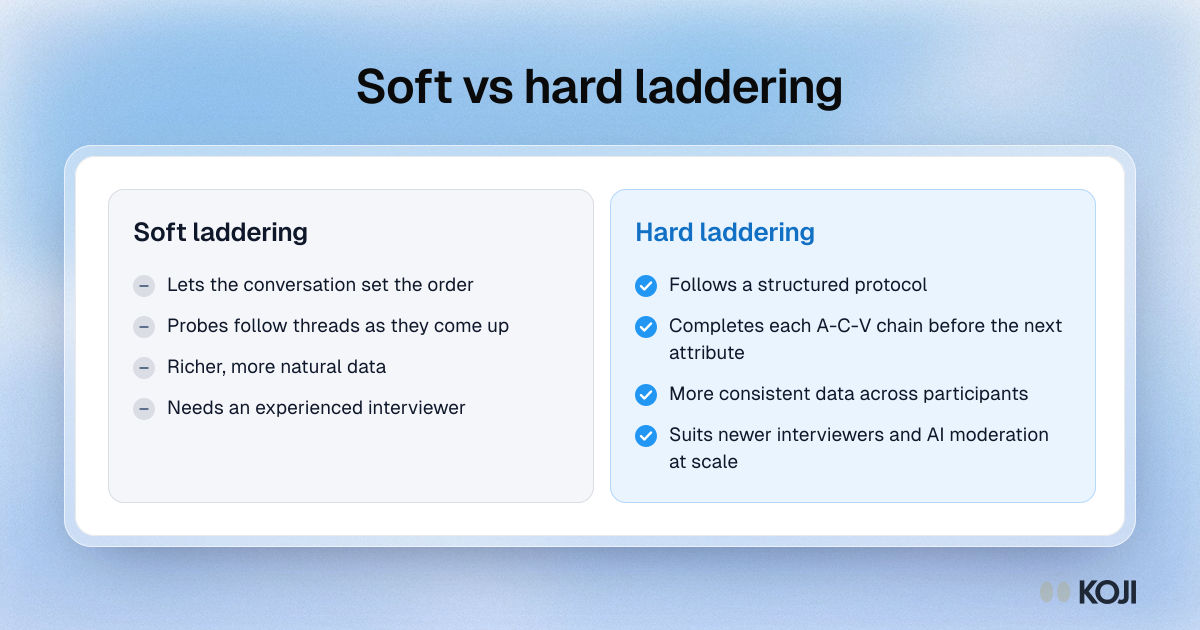
Comparison of soft laddering, which follows the conversation, with hard laddering, which completes each attribute, consequence and value chain in turn.

Comparison

Soft vs hard laddering

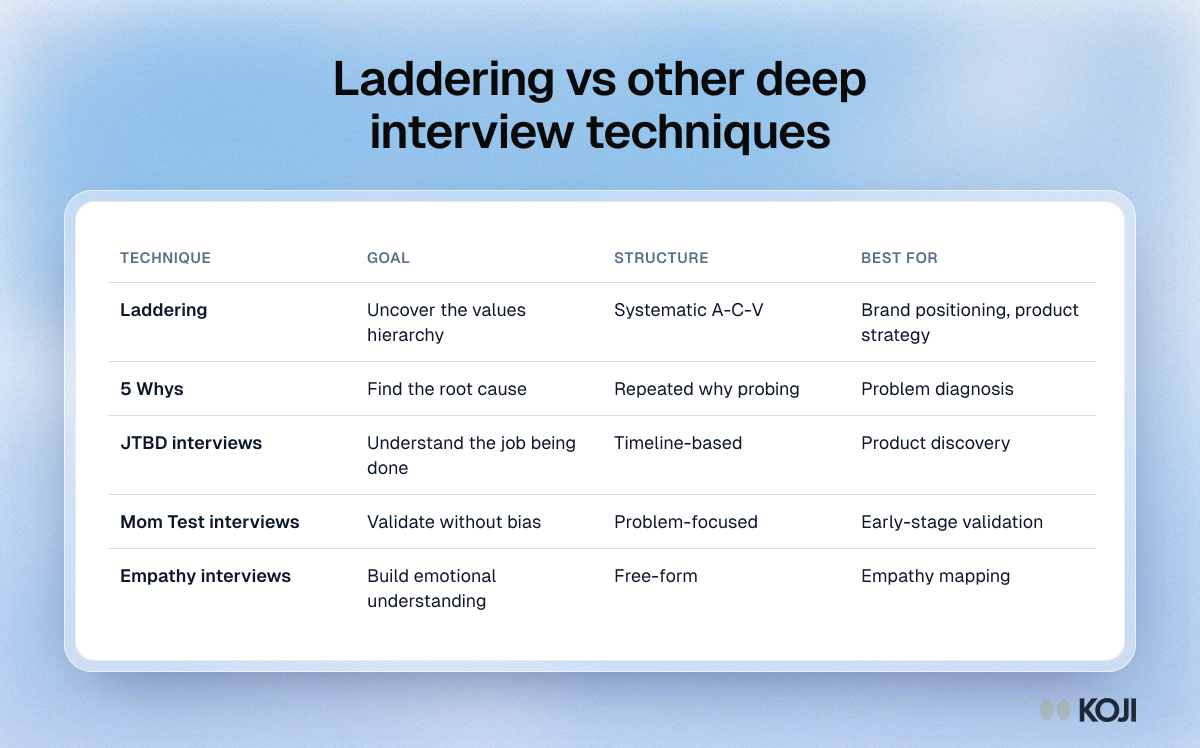
Table comparing laddering with 5 Whys, JTBD, Mom Test and empathy interviews by goal, structure and what each technique is best for.

Reference table

Laddering vs other deep interview techniques
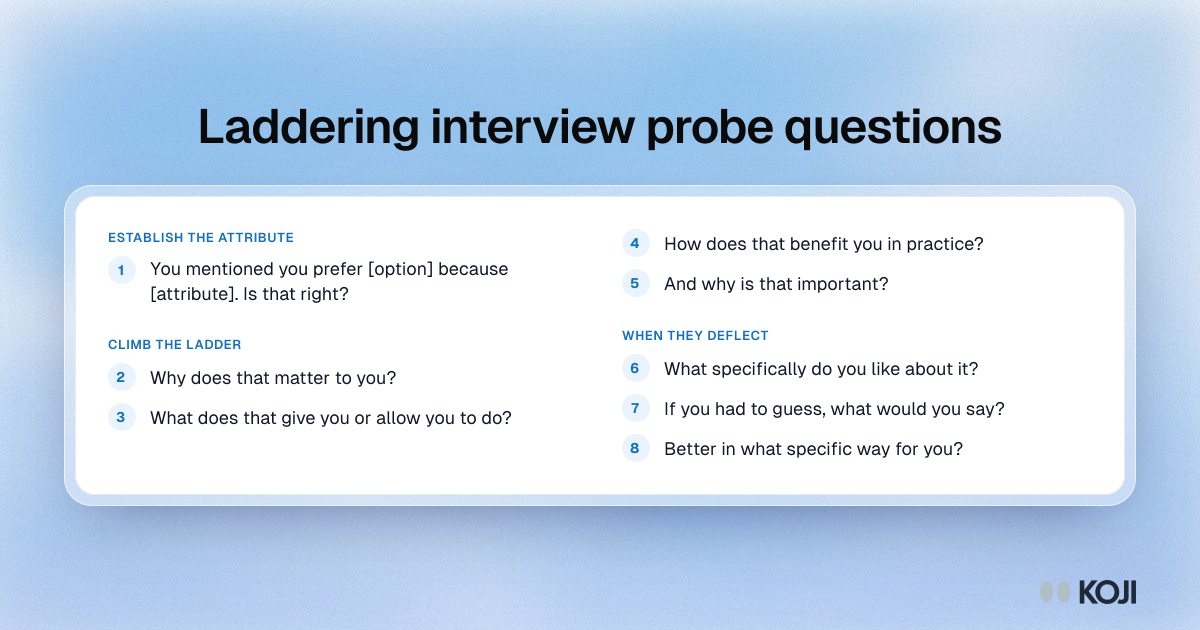
Question bank of laddering probes: one to confirm the attribute, four why questions to climb the ladder and three replies for when people deflect.

Question bank

Laddering interview probe questions
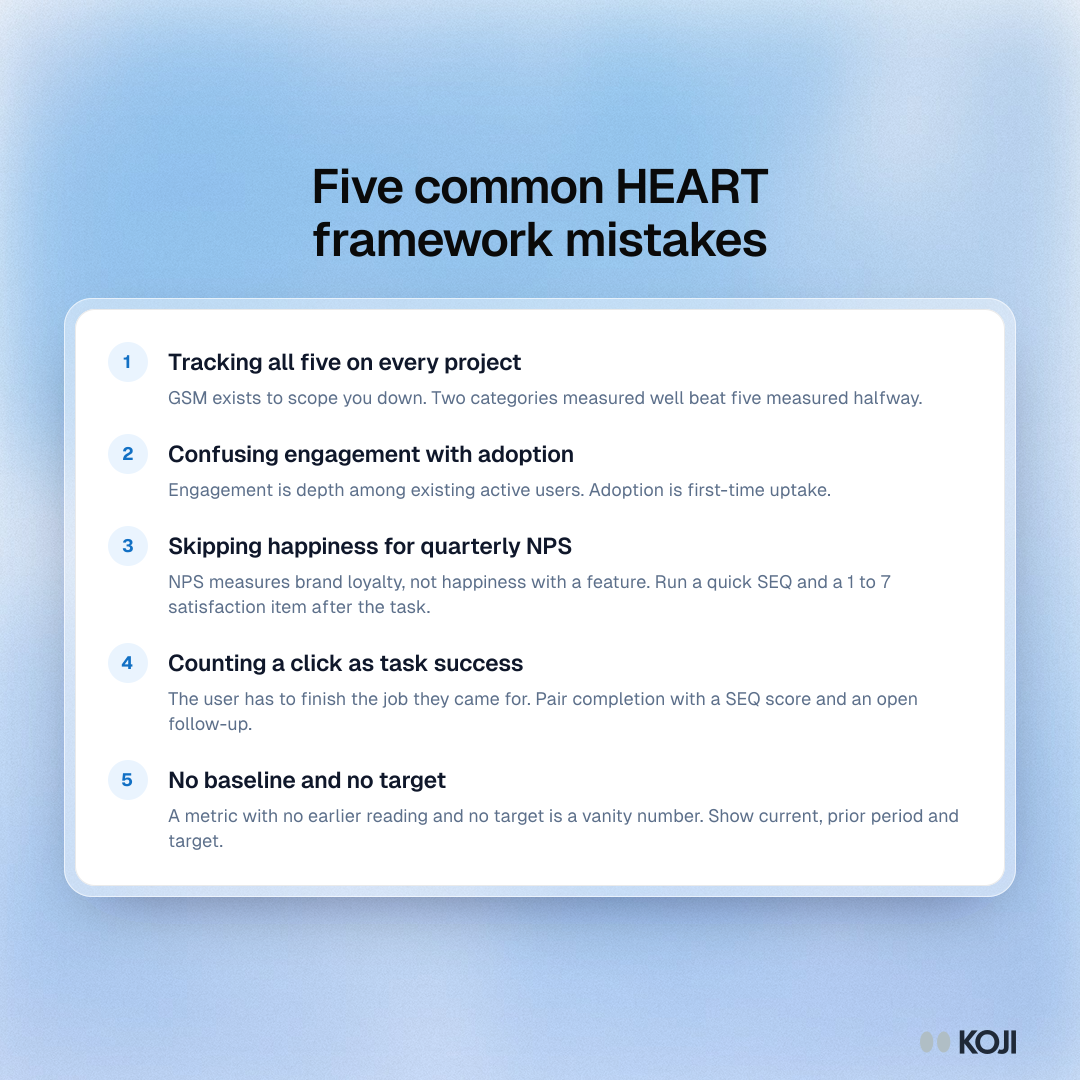
Listicle of five common HEART framework mistakes, from tracking all five categories at once to metrics with no baseline or target.

Guide

Five common HEART framework mistakes
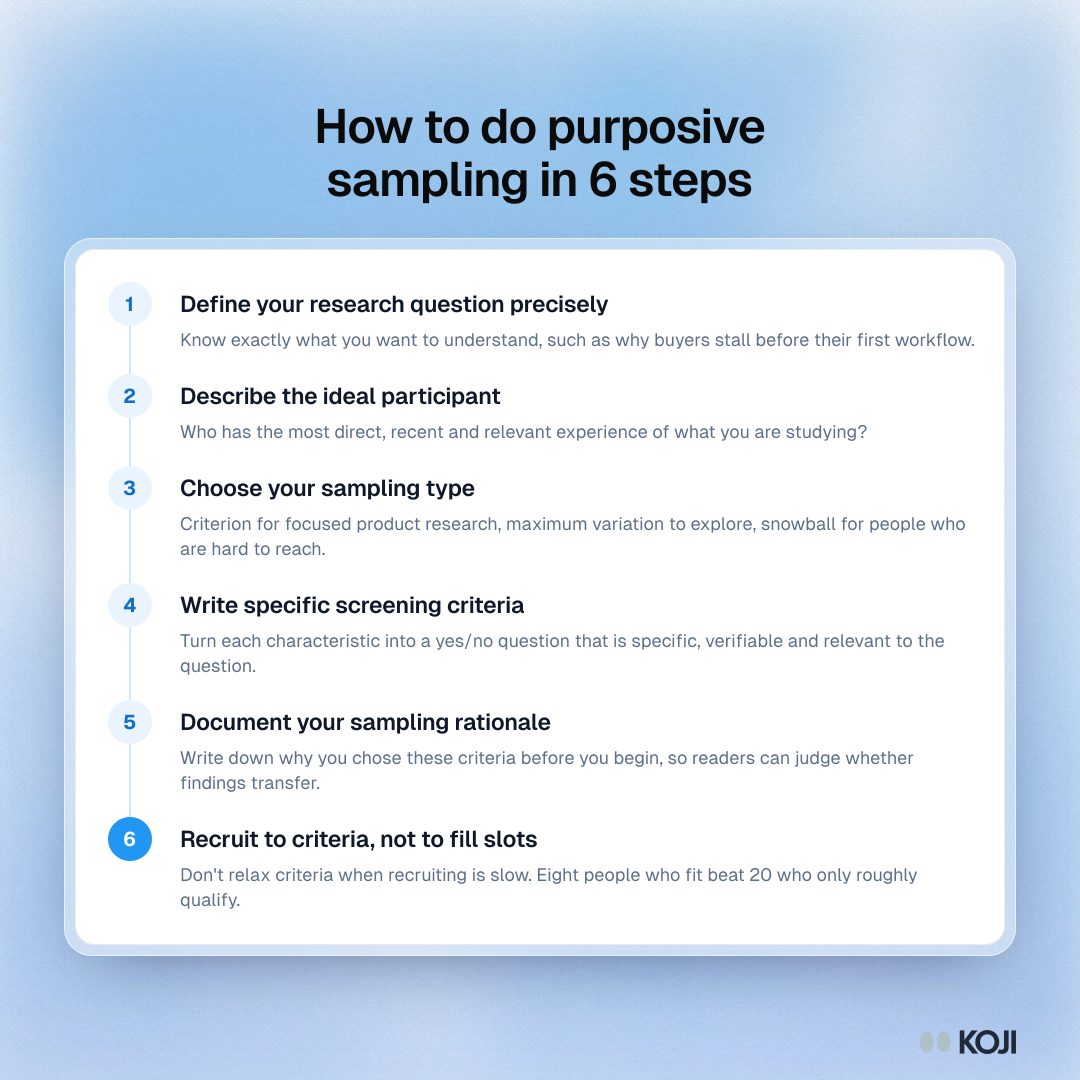
Process in six steps for purposive sampling: define the question, describe the ideal participant, pick a type, write screening criteria, document, recruit.

Process

How to do purposive sampling in 6 steps