Free to save and share

Frameworks and cheat sheets for customer research

Every framework, checklist and comparison from our guides, as an image you can download, drop into a deck or share with your team.
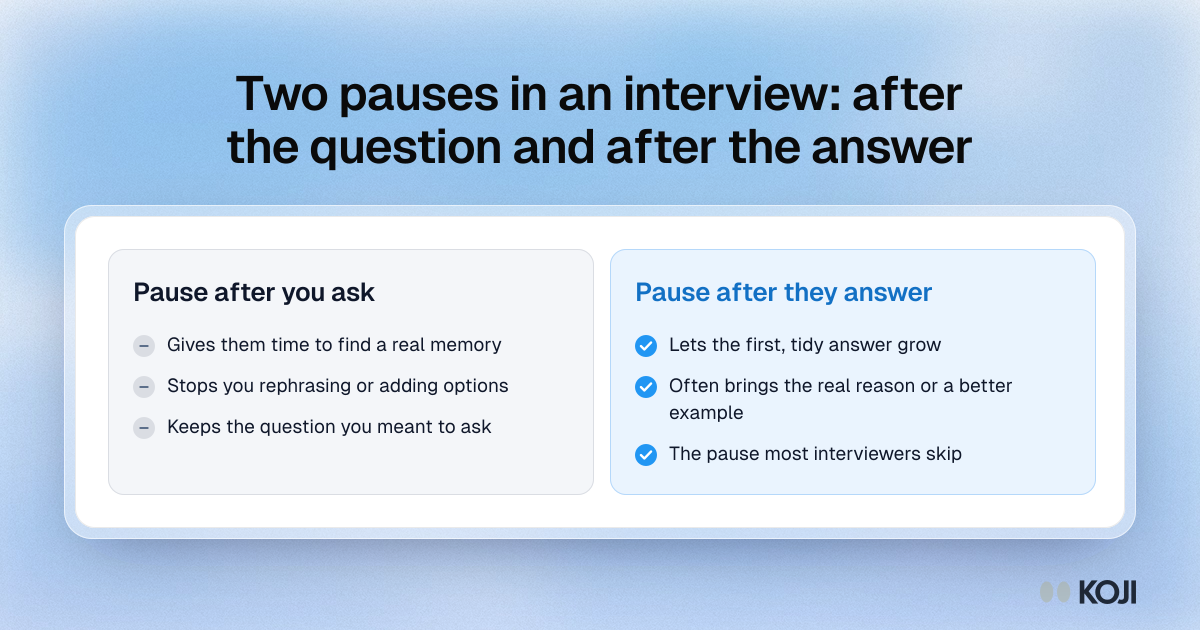
Comparison of the pause after asking a question with the pause after the participant answers, and what each one gets you in a research interview.

Comparison

Two pauses in an interview: after the question and after the answer
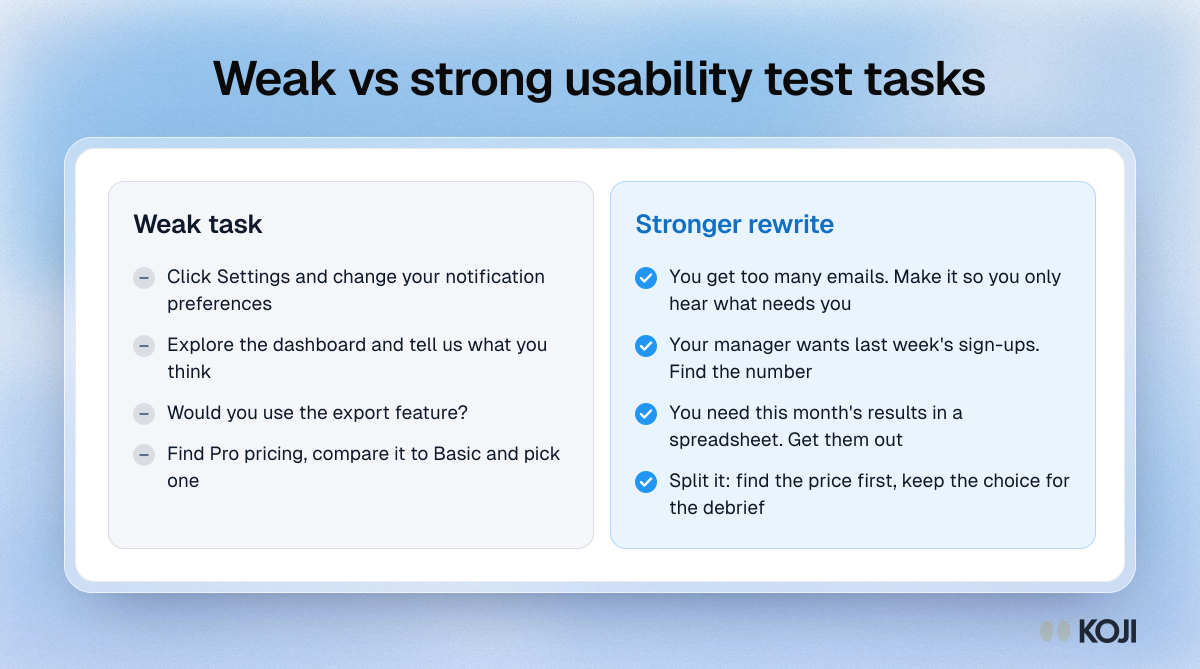
Comparison of weak usability tasks that leak the answer or ask for opinions with stronger rewrites that state a realistic goal.

Comparison

Weak vs strong usability test tasks
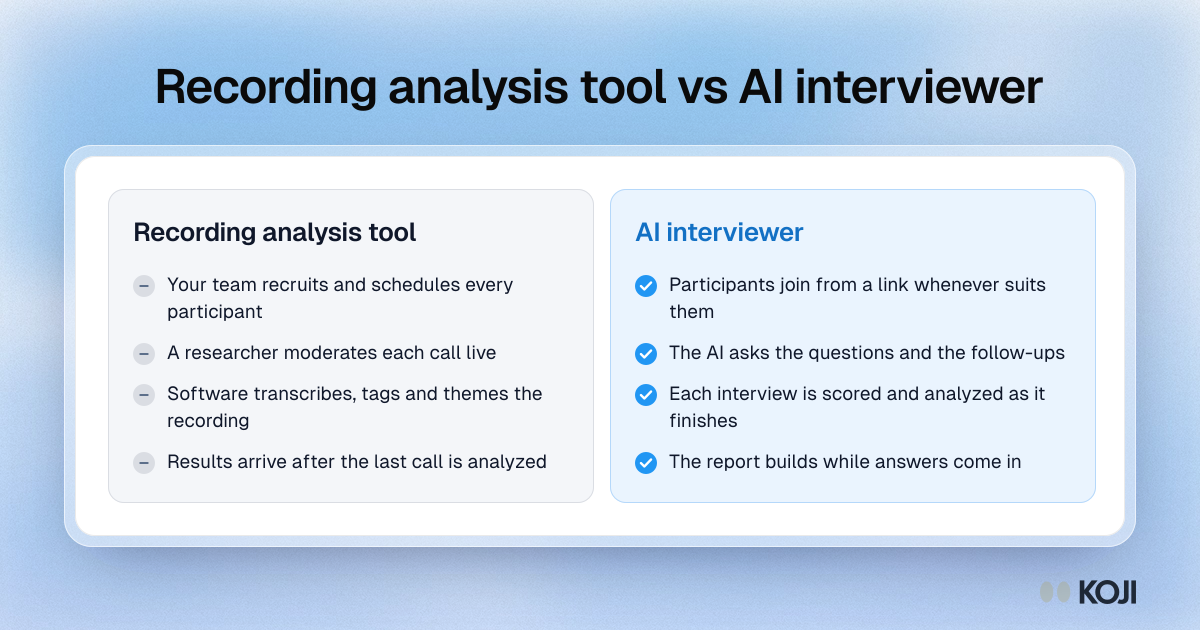
Comparison of a recording analysis tool and an AI interviewer: who runs the call, who recruits, and when you get results

Comparison

Recording analysis tool vs AI interviewer
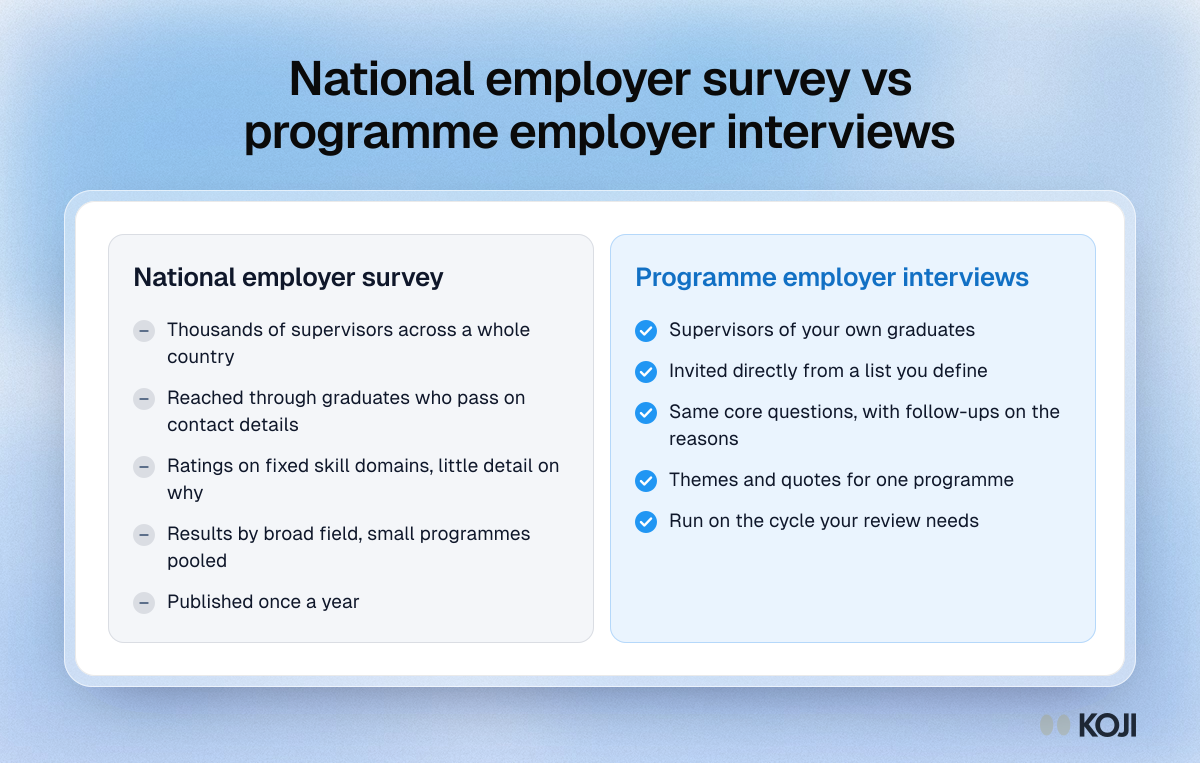
Comparison of a national employer survey and programme employer interviews by sample, depth, timing and what each tells a programme team.

Comparison

National employer survey vs programme employer interviews
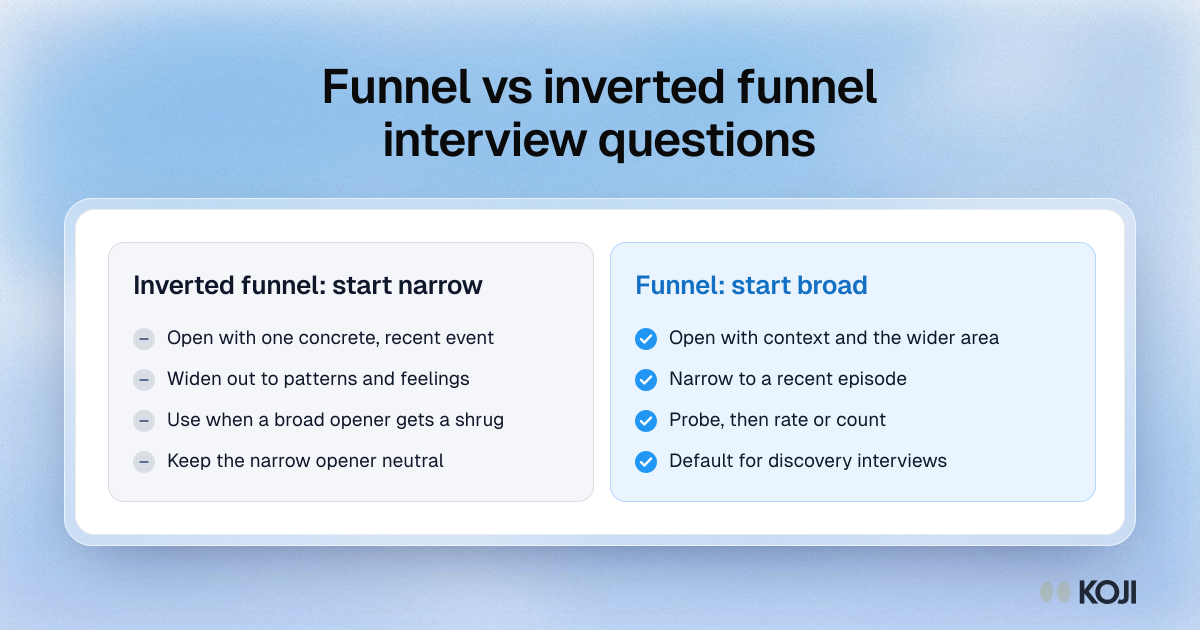
Comparison of the funnel and inverted funnel: start broad for discovery, or start with one concrete event when a broad opener gets nothing.

Comparison

Funnel vs inverted funnel interview questions
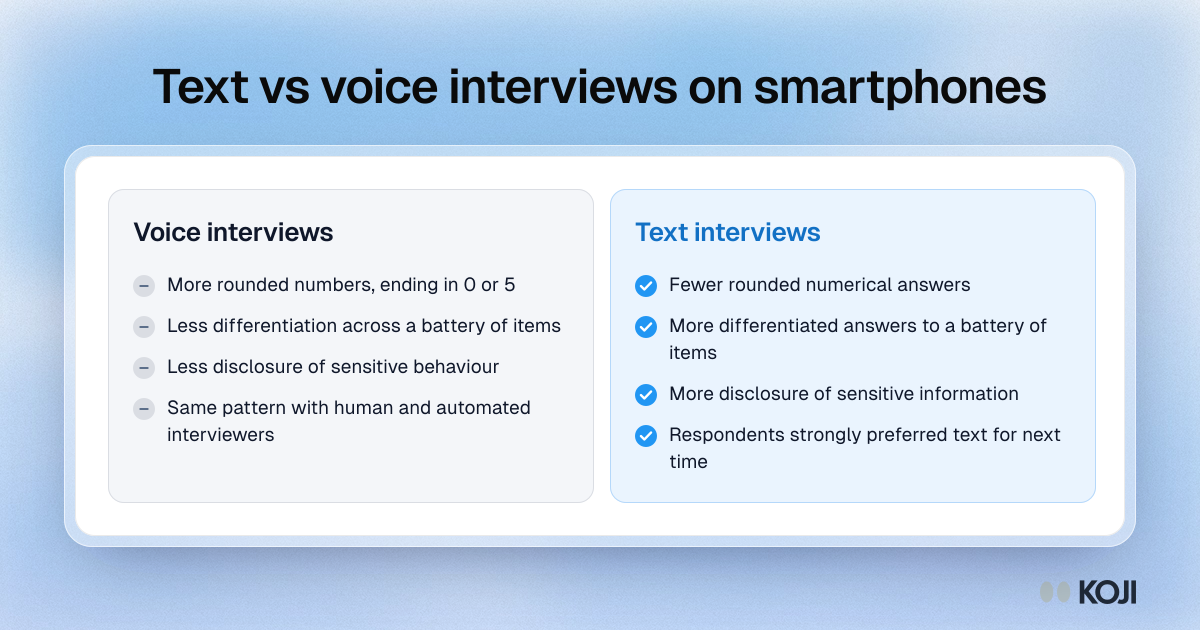
Comparison of voice and text interviews on smartphones: text produced fewer rounded numbers, more differentiated answers and more disclosure.

Comparison

Text vs voice interviews on smartphones
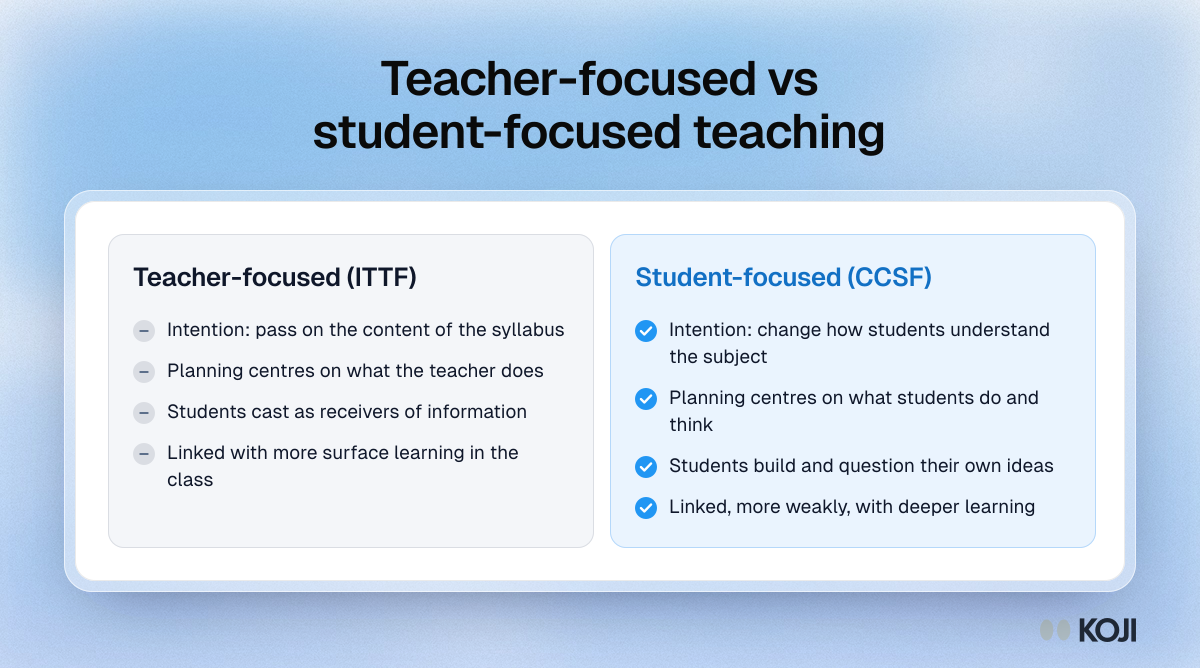
Comparison of teacher-focused and student-focused approaches to teaching from the Approaches to Teaching Inventory, and the student learning linked with each.

Comparison

Teacher-focused vs student-focused teaching
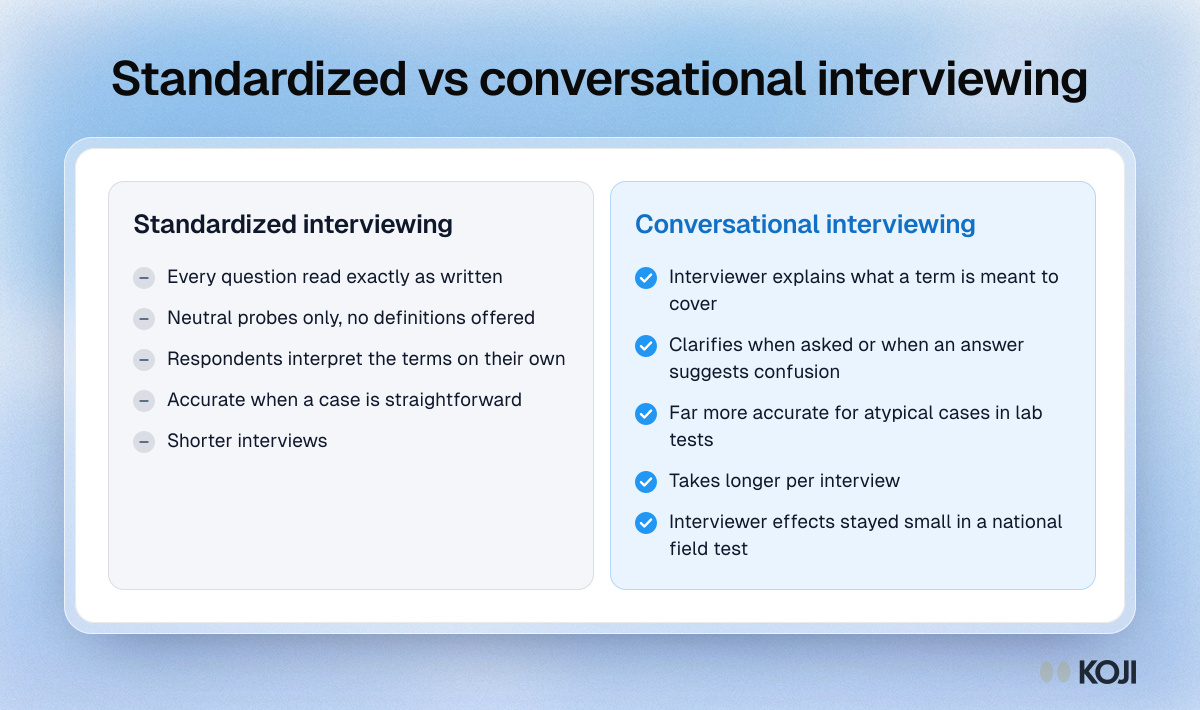
Comparison of standardized and conversational interviewing: fixed wording and neutral probes against clarified definitions and longer interviews.

Comparison

Standardized vs conversational interviewing
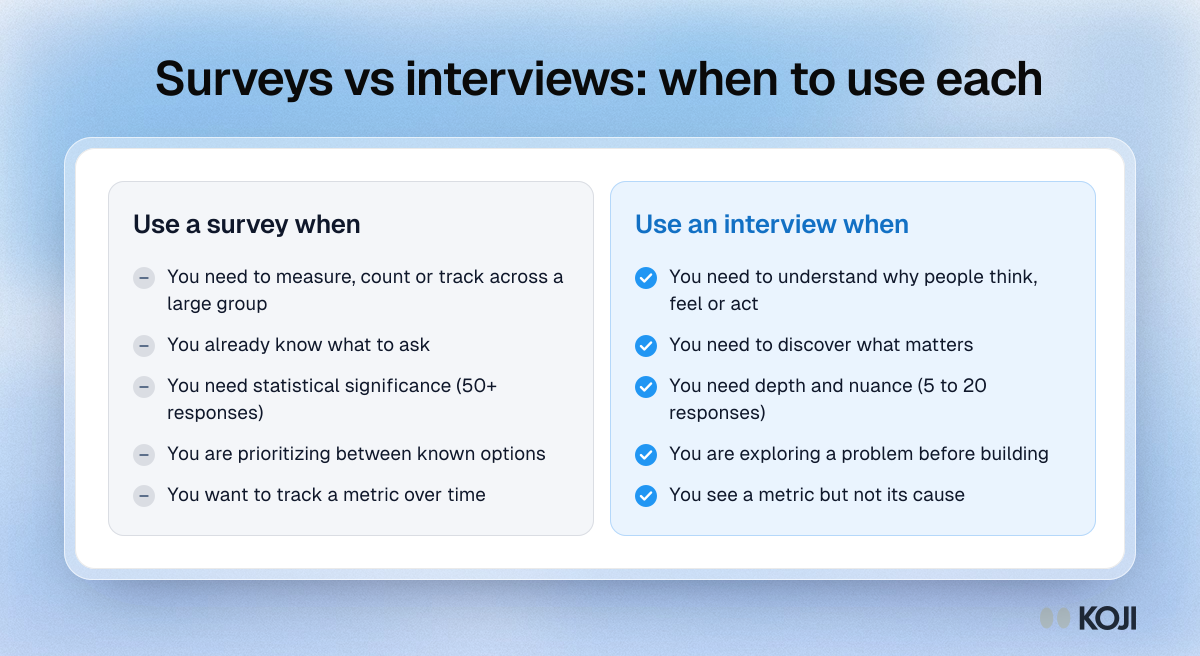
Comparison of when to use a survey and when to use an interview, based on what you already know, how many responses you need and the decision at stake.

Comparison

Surveys vs interviews: when to use each
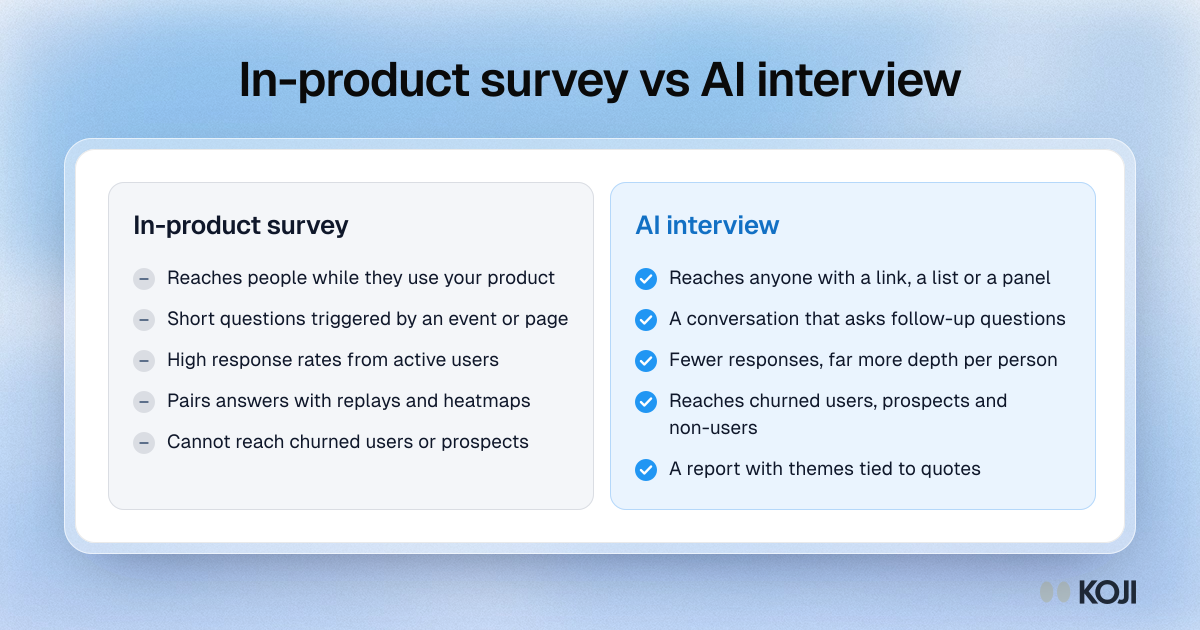
Comparison of in-product surveys and AI interviews: surveys reach active users in the moment, AI interviews reach anyone and ask follow-up questions.

Comparison

In-product survey vs AI interview
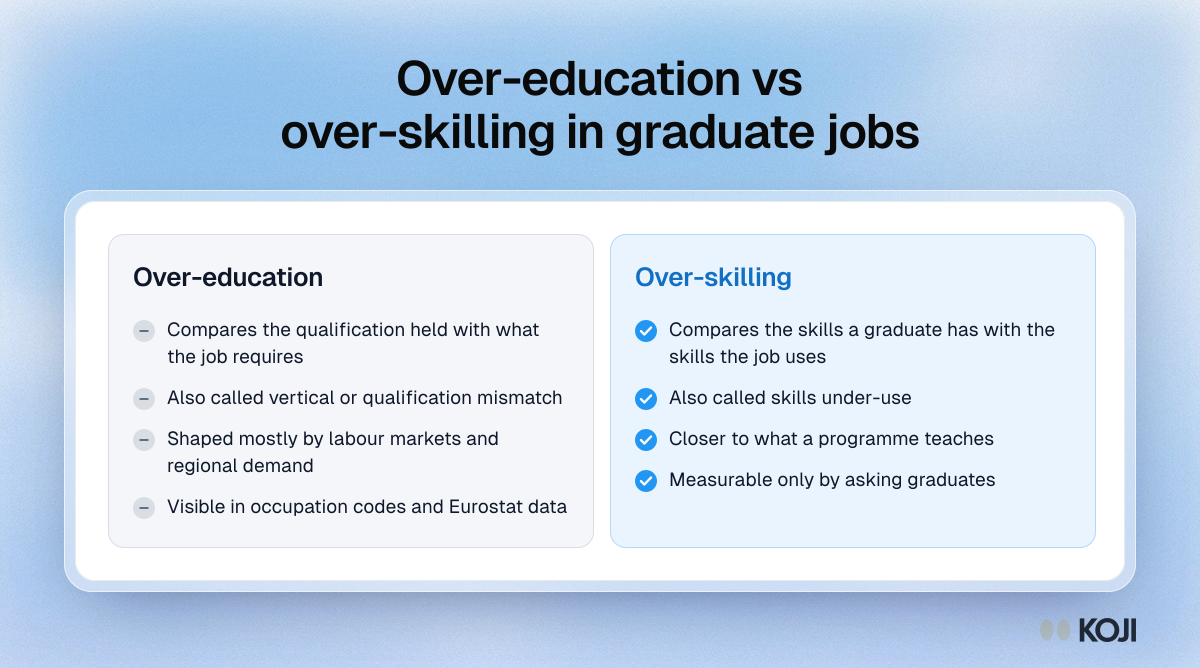
Comparison of over-education, a qualification above what the job needs, and over-skilling, skills the job does not use.

Comparison

Over-education vs over-skilling in graduate jobs
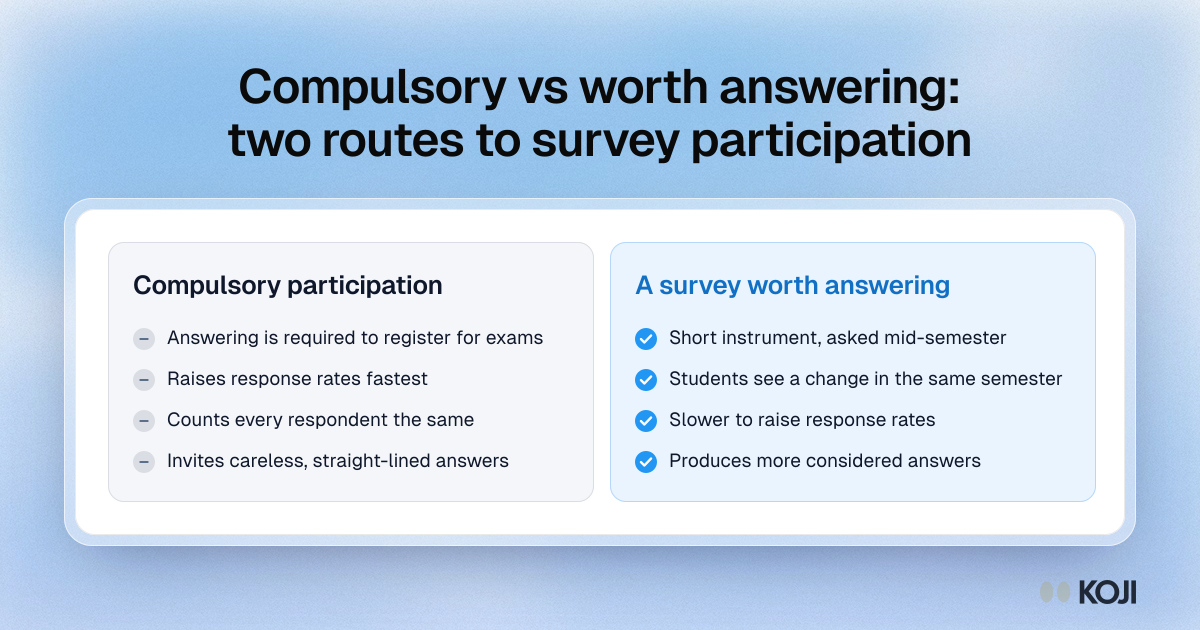
Comparison of two ways to raise student survey participation: making responses compulsory versus making the survey short, timely and visibly acted on.

Comparison

Compulsory vs worth answering: two routes to survey participation
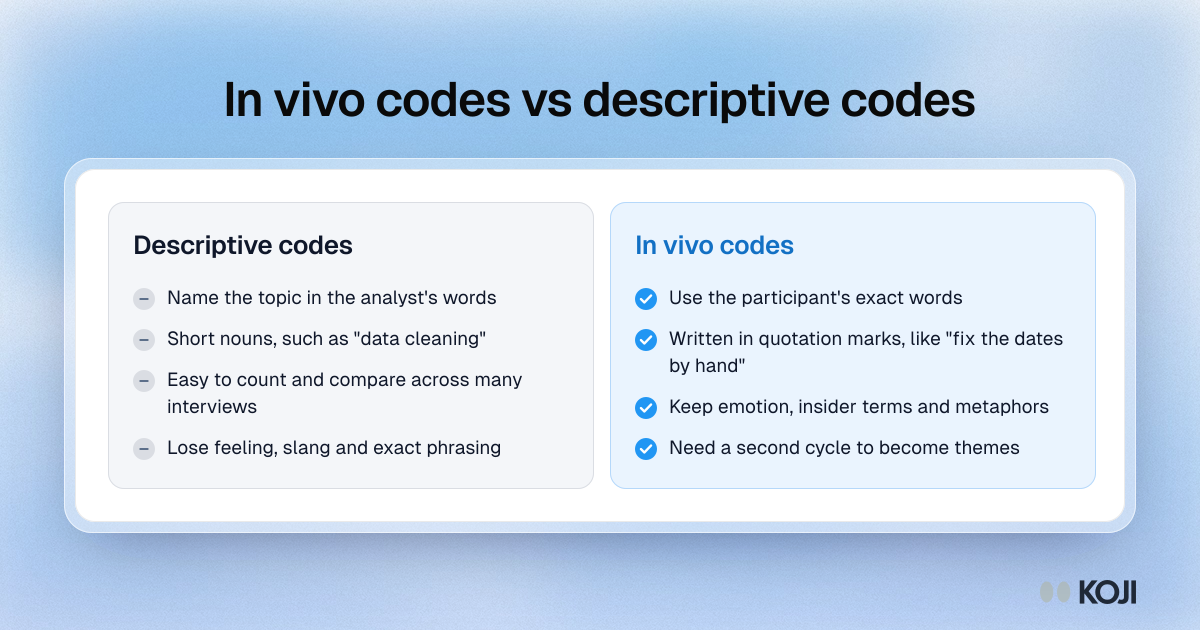
Comparison of in vivo codes and descriptive codes: in vivo codes keep the participant's exact phrase, descriptive codes name the topic in the analyst's words.

Comparison

In vivo codes vs descriptive codes
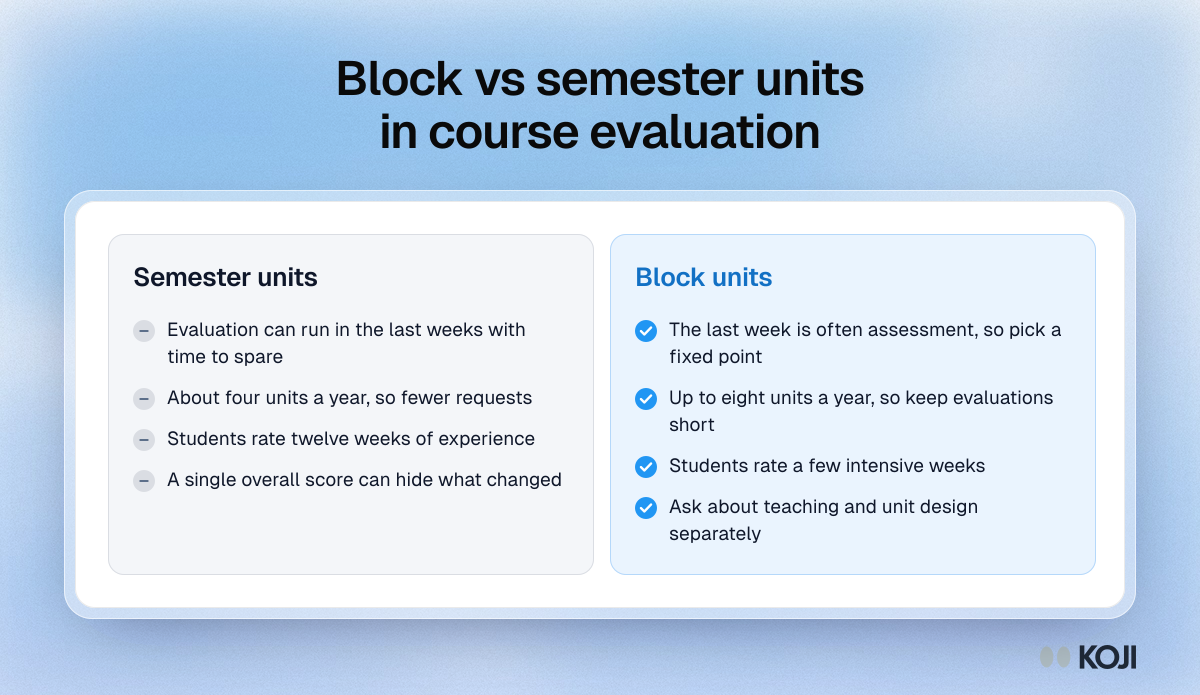
Comparison of block and semester delivery in course evaluation: what changes for timing, number of requests and what students rate.

Comparison

Block vs semester units in course evaluation
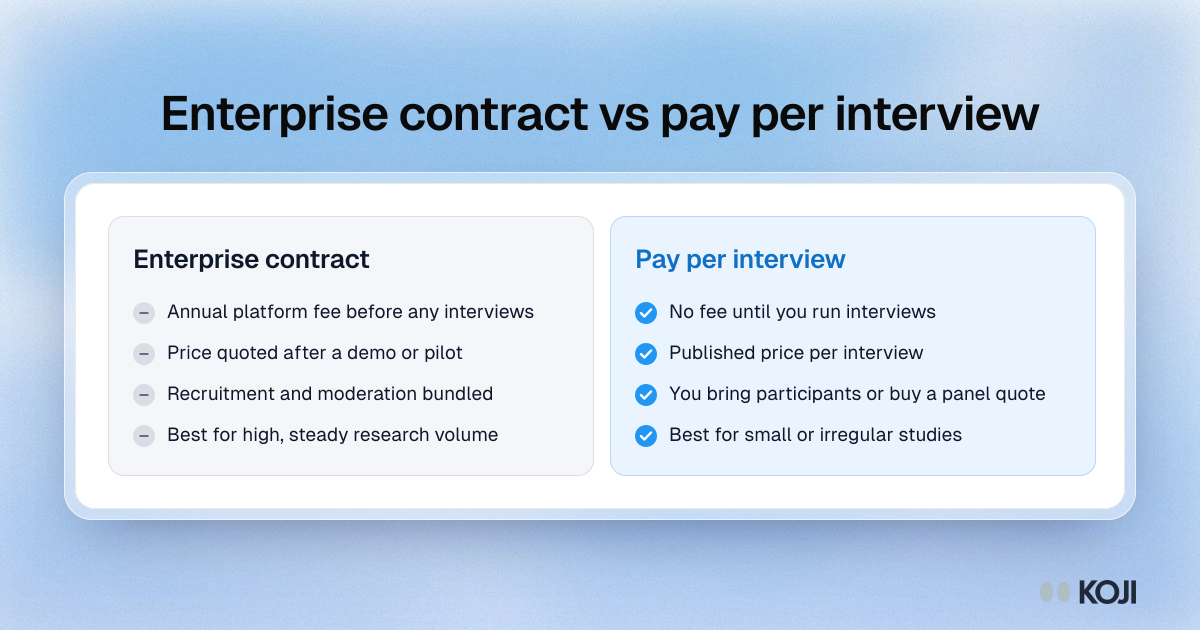
Comparison of an enterprise AI interview contract and pay per interview pricing, showing differences in commitment, trial access and who recruits.

Comparison

Enterprise contract vs pay per interview
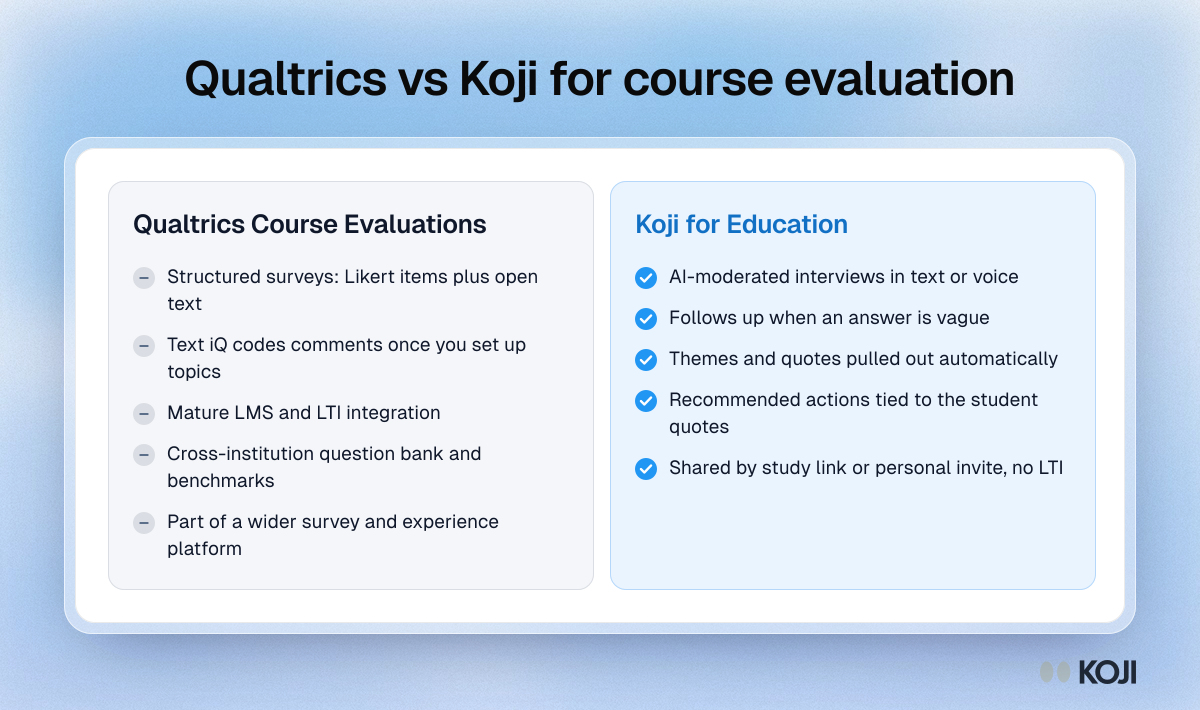
Comparison of Qualtrics Course Evaluations and Koji: structured surveys with Text iQ coding versus AI-moderated interviews with automatic themes.

Comparison

Qualtrics vs Koji for course evaluation
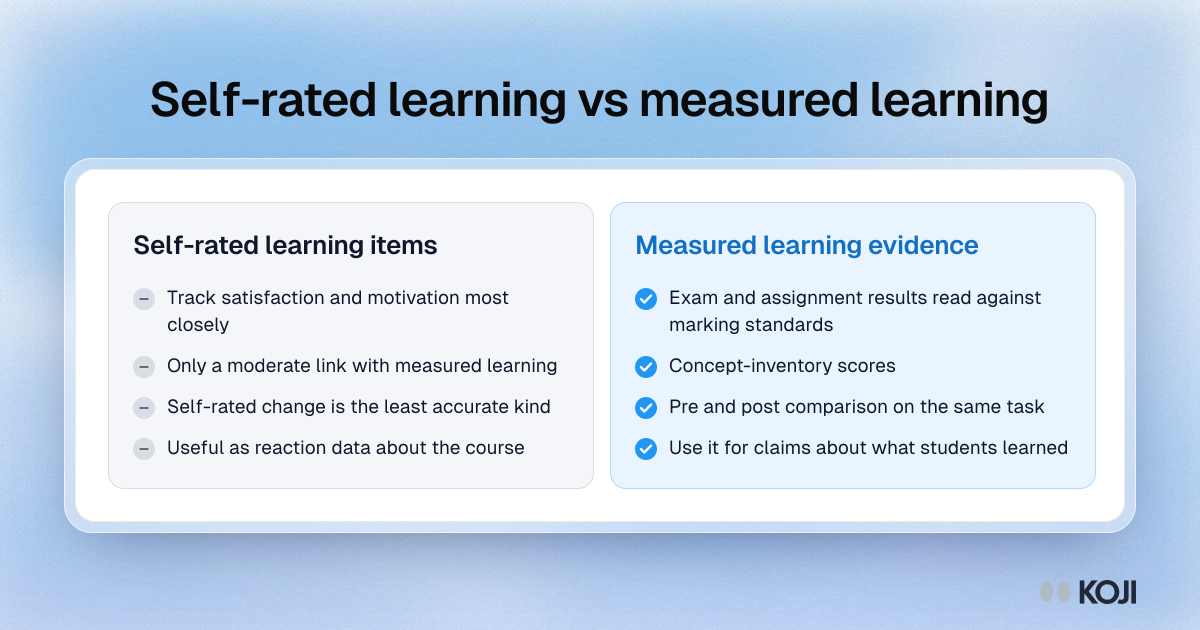
Comparison of self-rated learning items with measured learning evidence, showing what each can and cannot tell a programme team.

Comparison

Self-rated learning vs measured learning
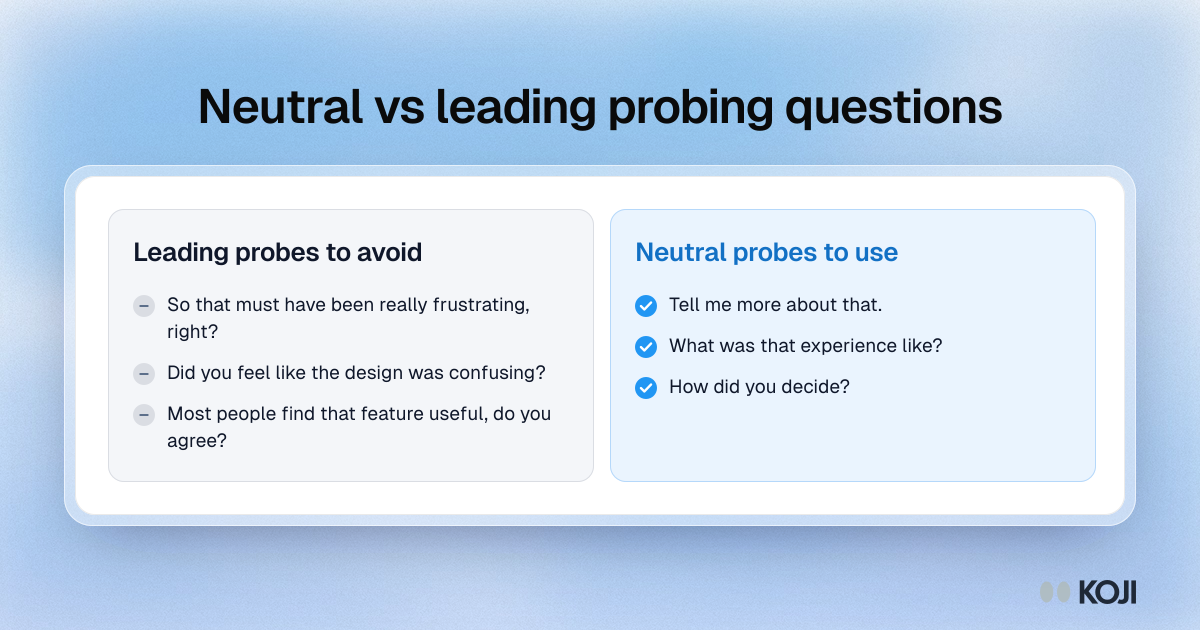
Comparison of leading probes to avoid and neutral probes to use in research interviews, with three example questions for each.

Comparison

Neutral vs leading probing questions
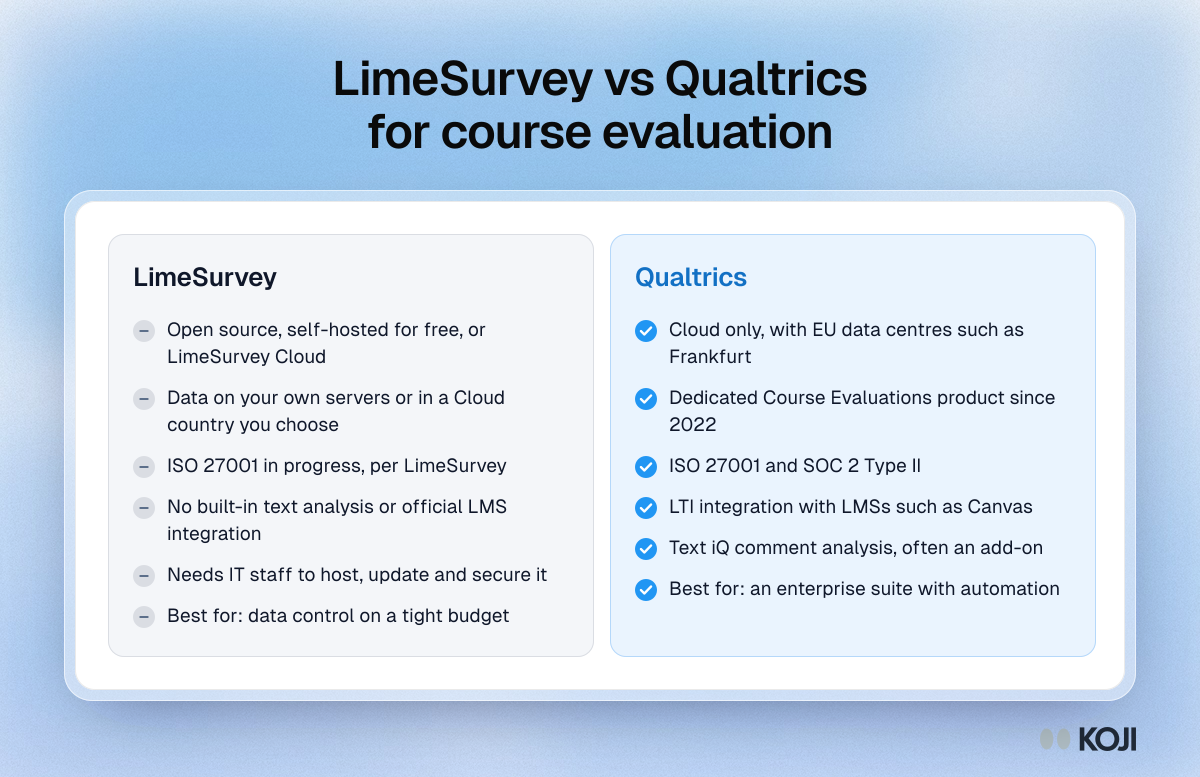
Comparison of LimeSurvey and Qualtrics for course evaluation: hosting, data location, certifications, LMS integration, text analysis and best fit.

Comparison

LimeSurvey vs Qualtrics for course evaluation
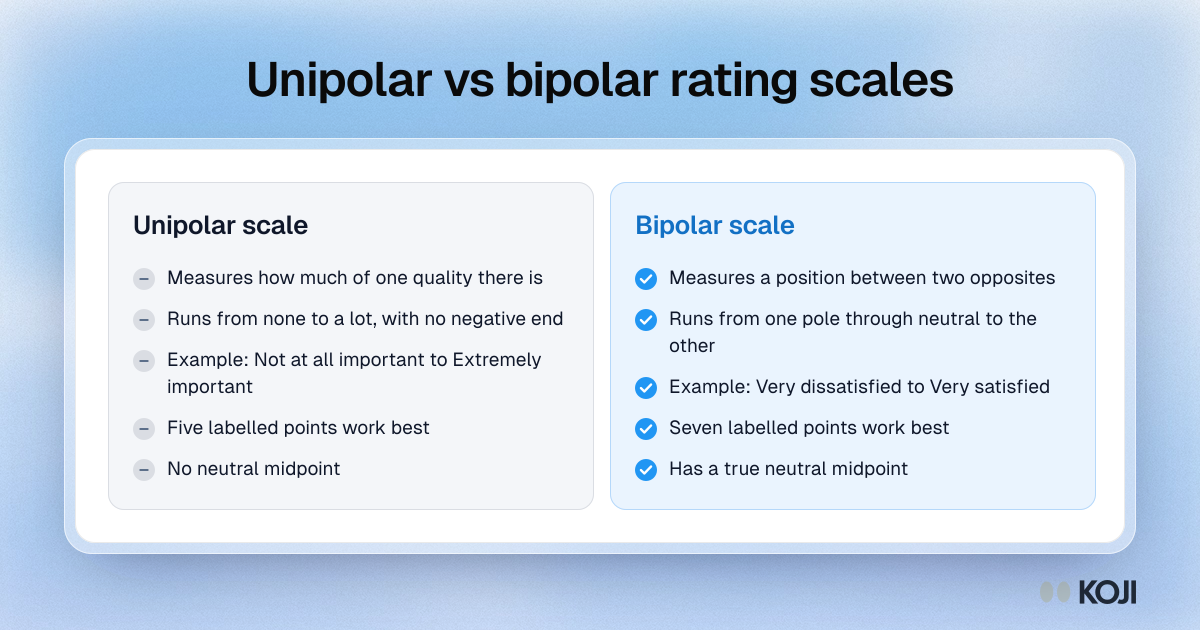
Comparison of unipolar and bipolar rating scales: one runs from none to a lot, the other runs between two opposites with a neutral middle

Comparison

Unipolar vs bipolar rating scales
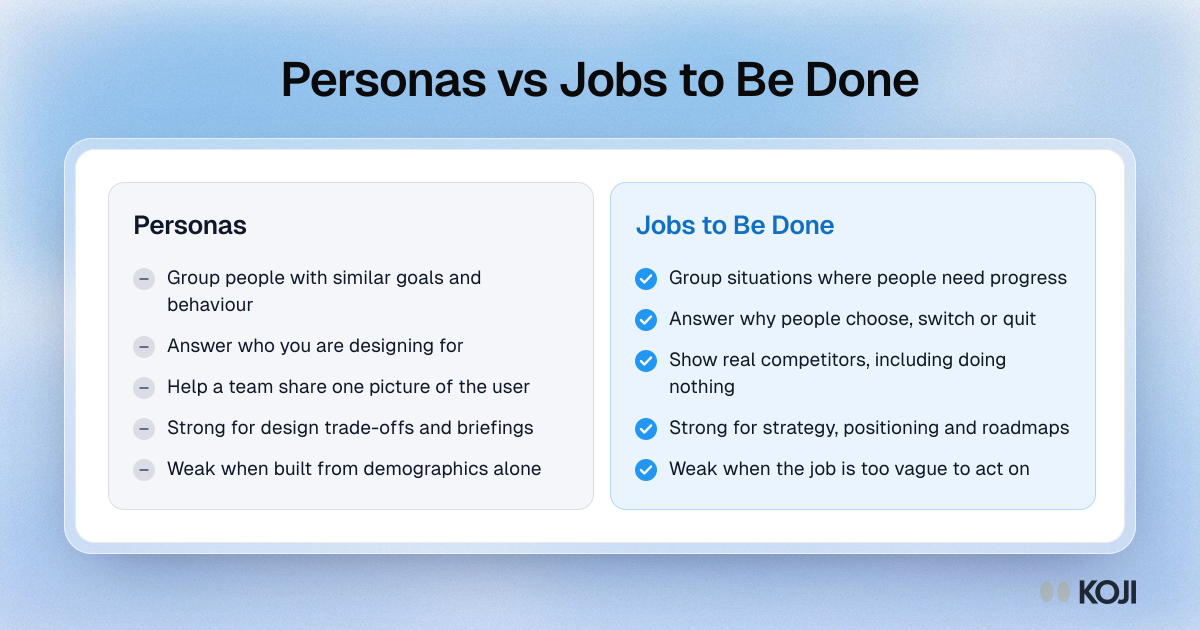
Comparison of personas and Jobs to Be Done: personas describe who the user is, jobs describe the situation and the progress they want

Comparison

Personas vs Jobs to Be Done
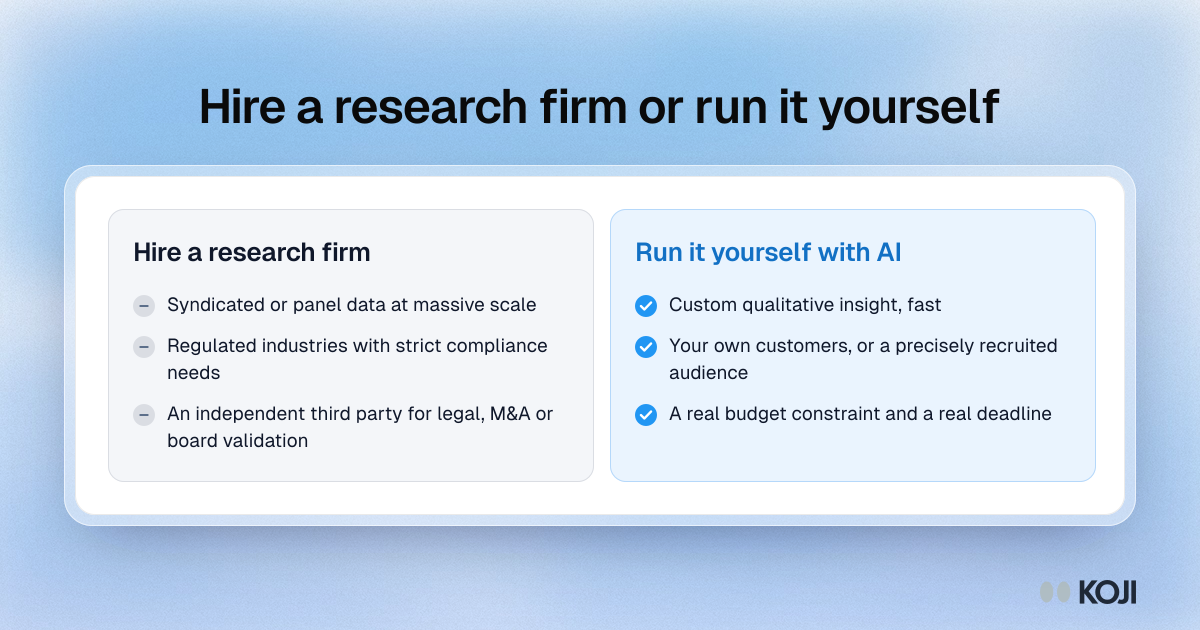
Comparison of when to hire a traditional market research firm and when to run the study yourself with an AI-native platform.

Comparison

Hire a research firm or run it yourself
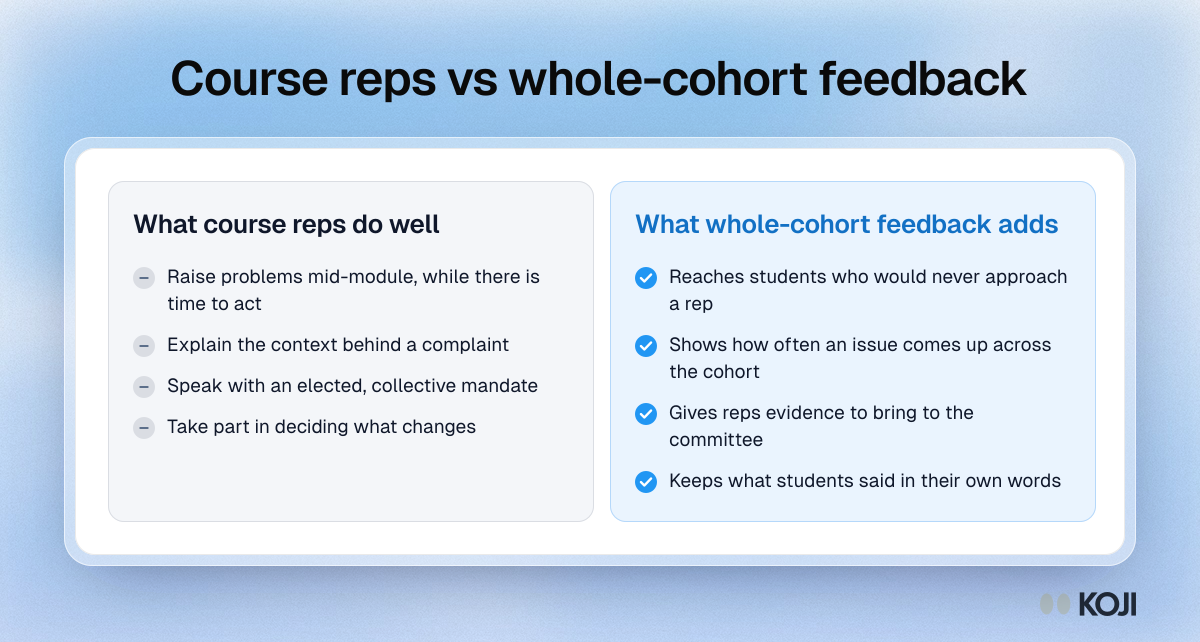
Comparison of what course representatives do well against what direct whole-cohort feedback adds to programme quality assurance.

Comparison

Course reps vs whole-cohort feedback
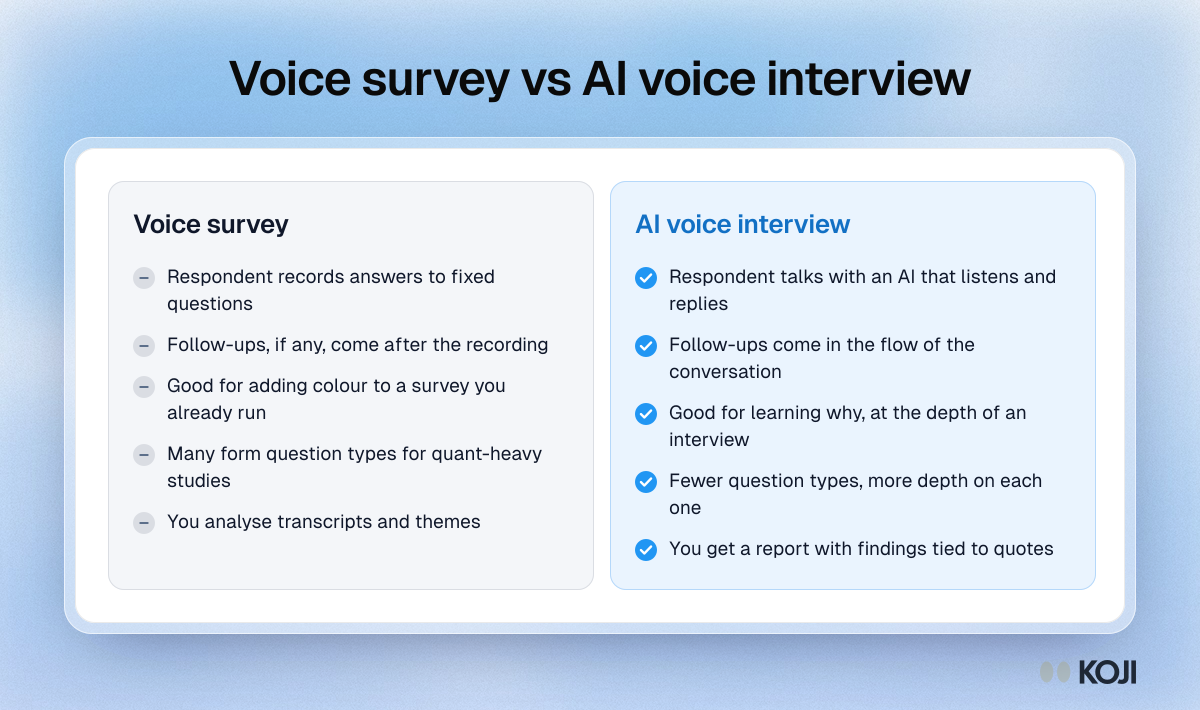
Comparison of a voice survey and an AI voice interview, from how people answer to what you get at the end

Comparison

Voice survey vs AI voice interview
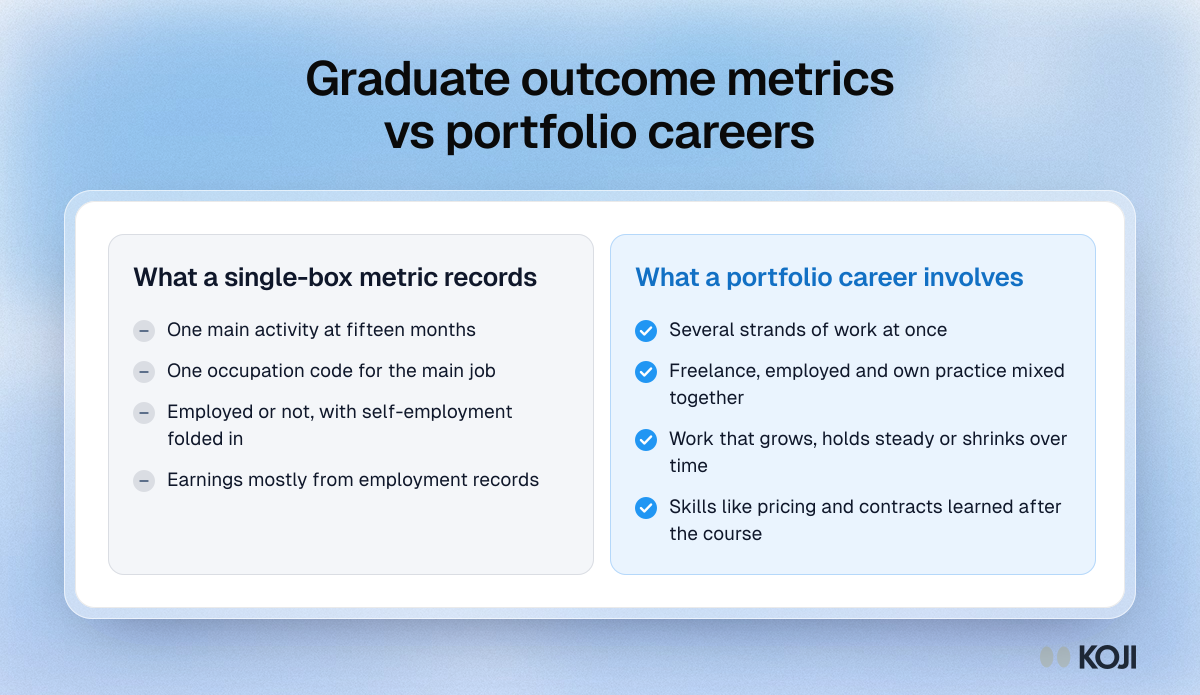
Comparison of what a single-box graduate outcome metric records against what a portfolio career actually involves for self-employed graduates.

Comparison

Graduate outcome metrics vs portfolio careers
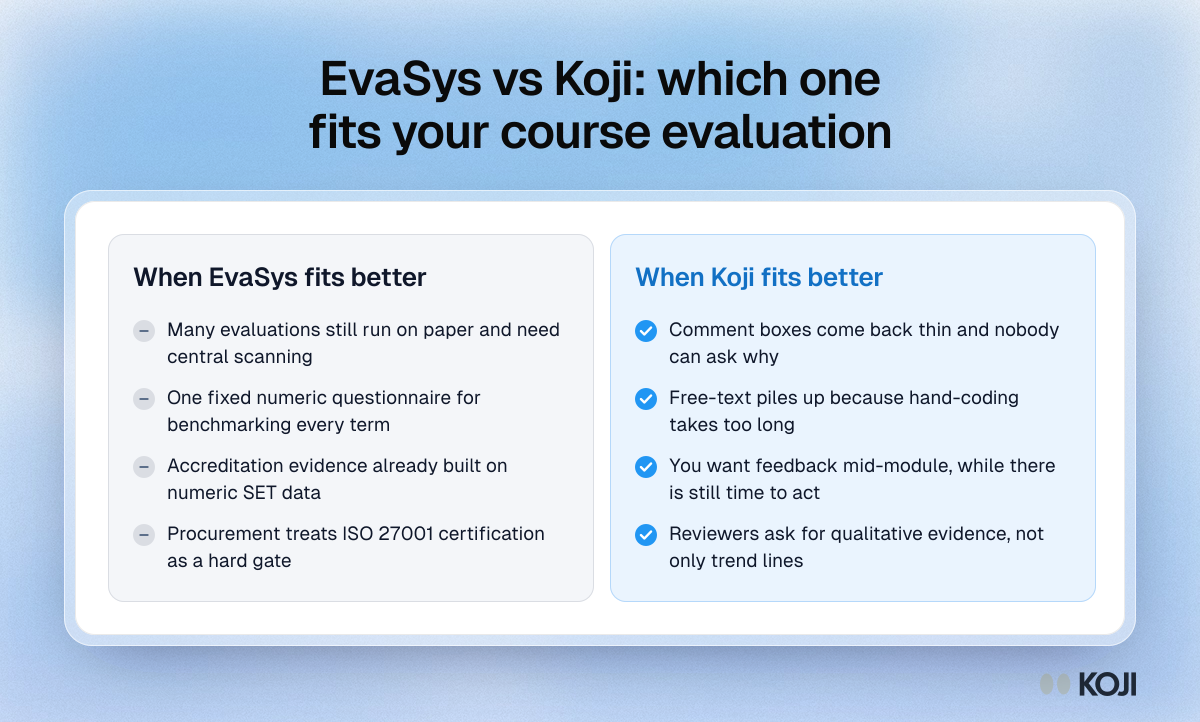
Comparison of when EvaSys suits course evaluation better, such as paper forms, and when Koji's AI interviews suit it better.

Comparison

EvaSys vs Koji: which one fits your course evaluation
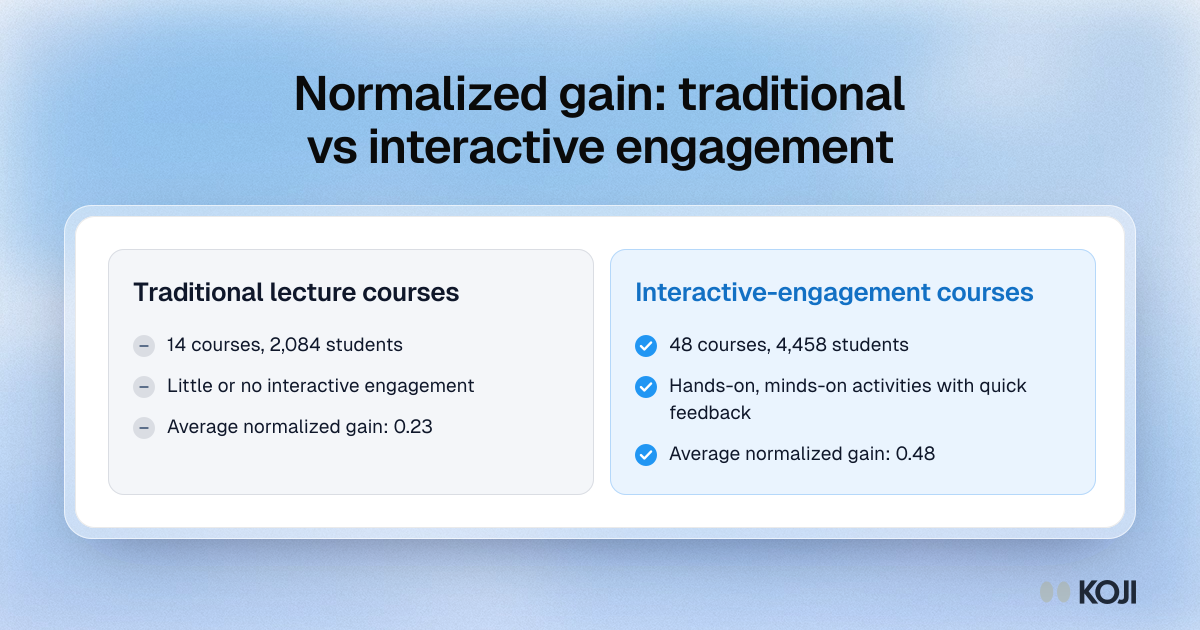
Comparison of average normalized gain in Hake's 1998 survey: 14 traditional courses at 0.23 against 48 interactive-engagement courses at 0.48.

Comparison

Normalized gain: traditional vs interactive engagement
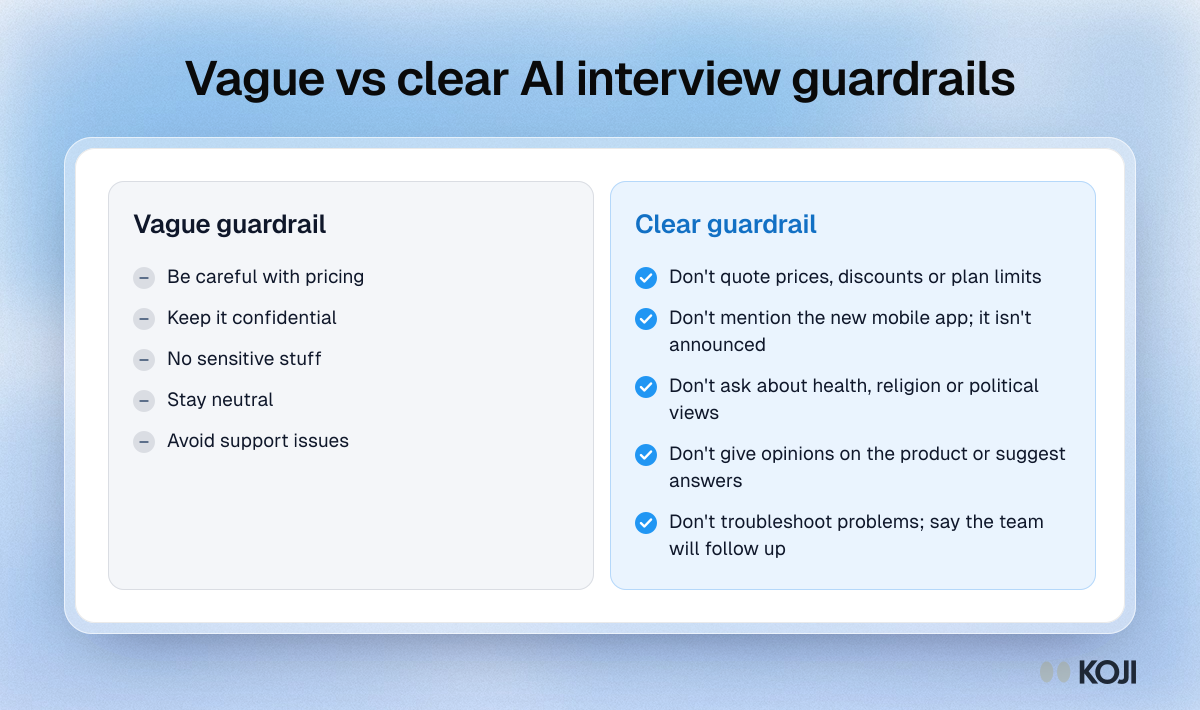
Comparison of vague and clear AI interviewer guardrails, from pricing and confidentiality to sensitive topics and neutrality.

Comparison

Vague vs clear AI interview guardrails
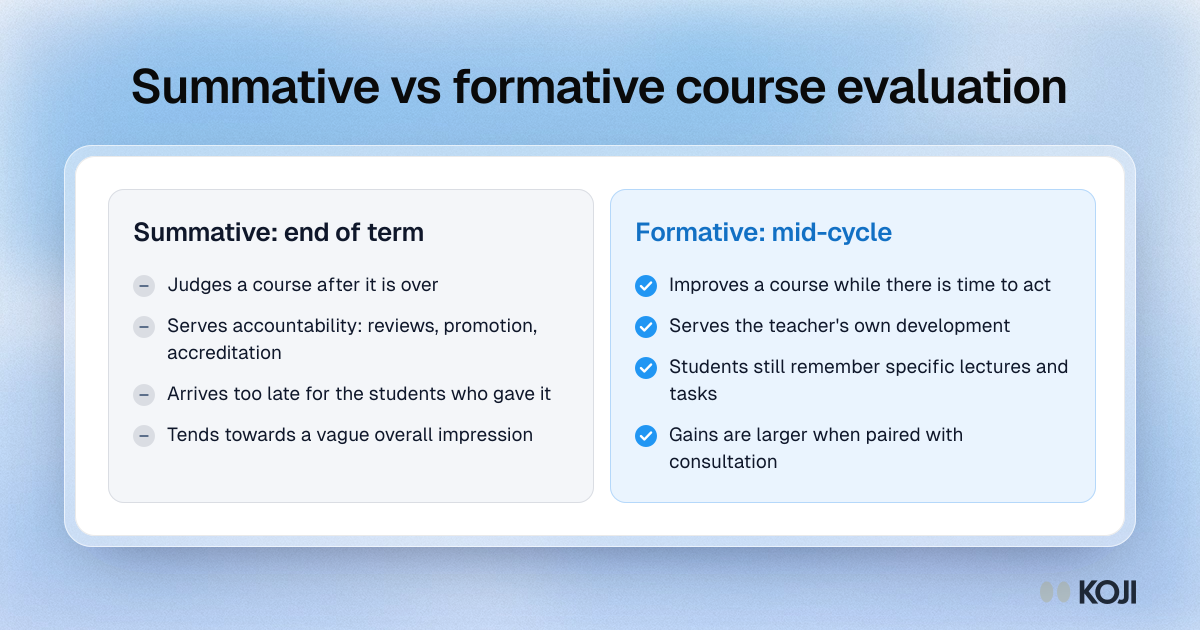
Comparison of summative end-of-term course evaluation and formative mid-cycle feedback: purpose, timing, who benefits and the quality of what students recall.

Comparison

Summative vs formative course evaluation
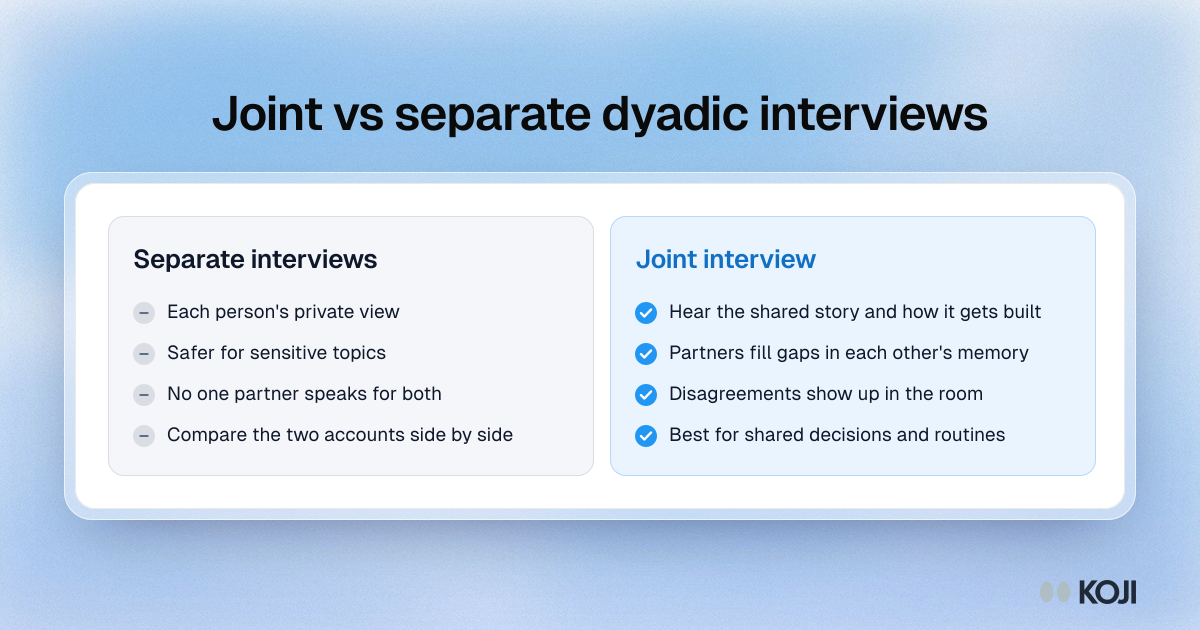
Comparison of joint and separate dyadic interviews, showing what each format is good for and when each one is the better choice.

Comparison

Joint vs separate dyadic interviews
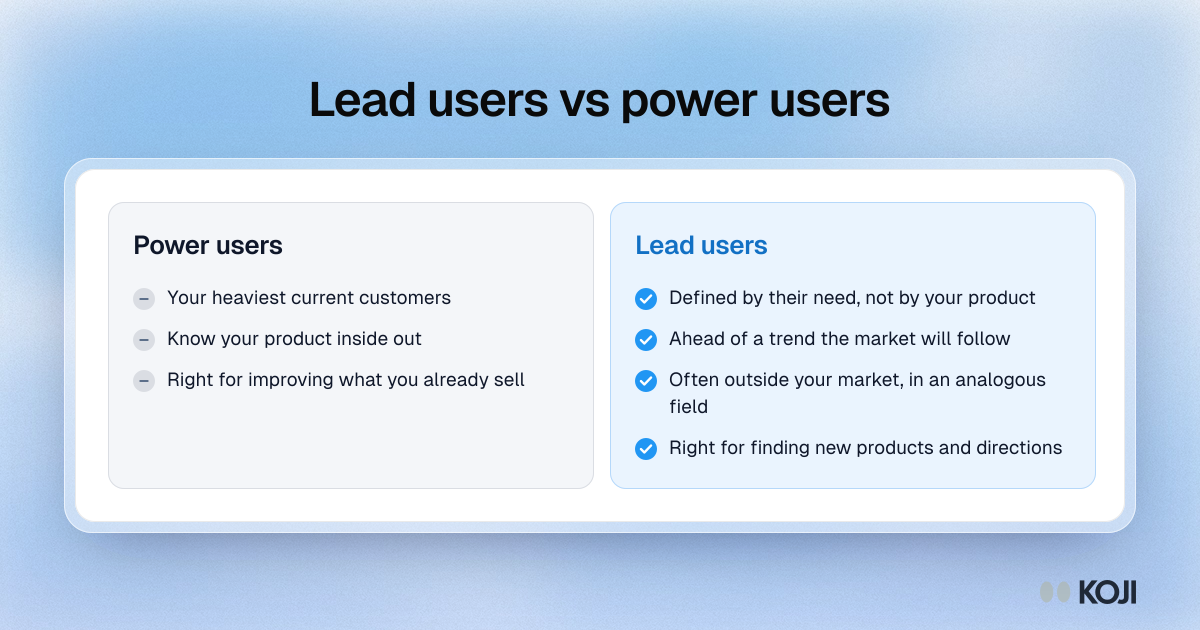
Comparison of lead users and power users, showing how they differ in where they come from, what they know and what research with them is good for.

Comparison

Lead users vs power users

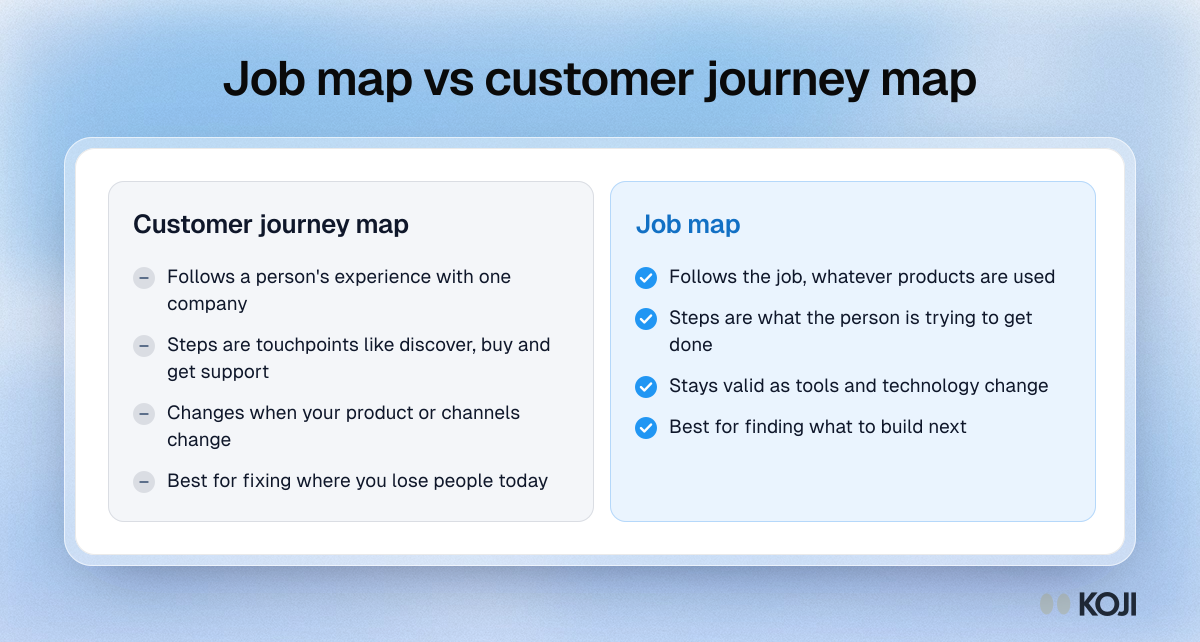
Comparison of a job map and a customer journey map, showing how their focus, steps, stability and main use differ.

Comparison

Job map vs customer journey map
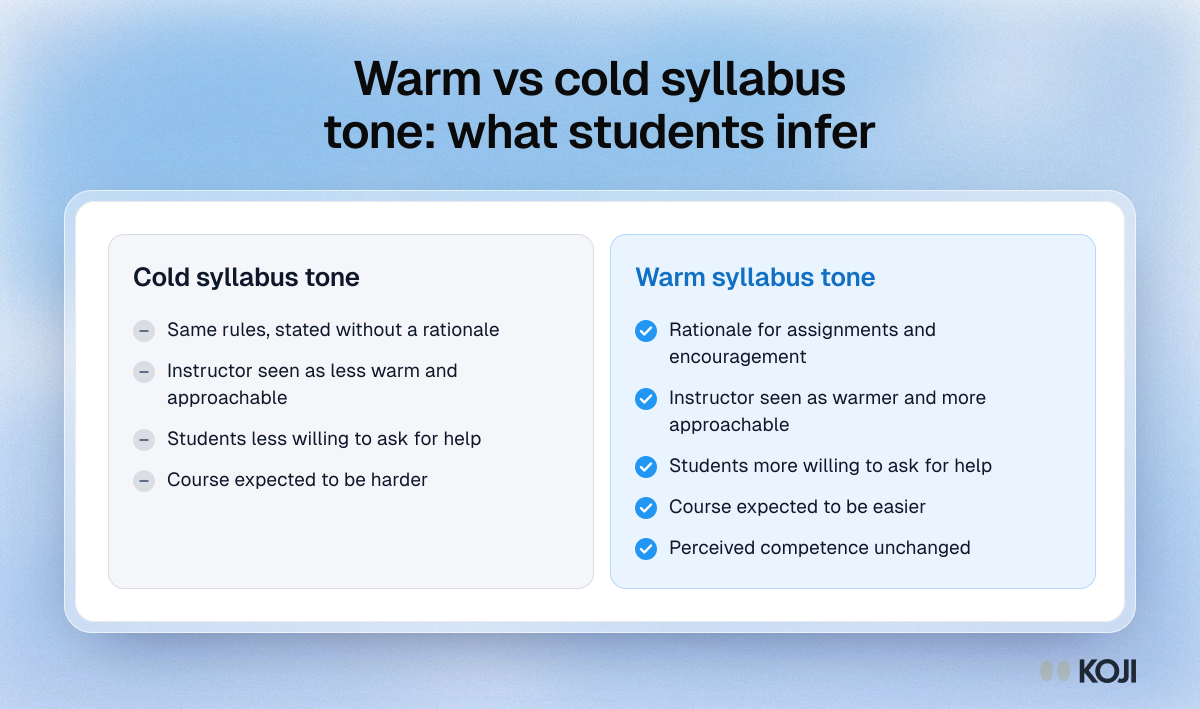
Comparison of a cold and a warm syllabus tone and how each shifts student views of the instructor, help seeking and expected course difficulty.

Comparison

Warm vs cold syllabus tone: what students infer
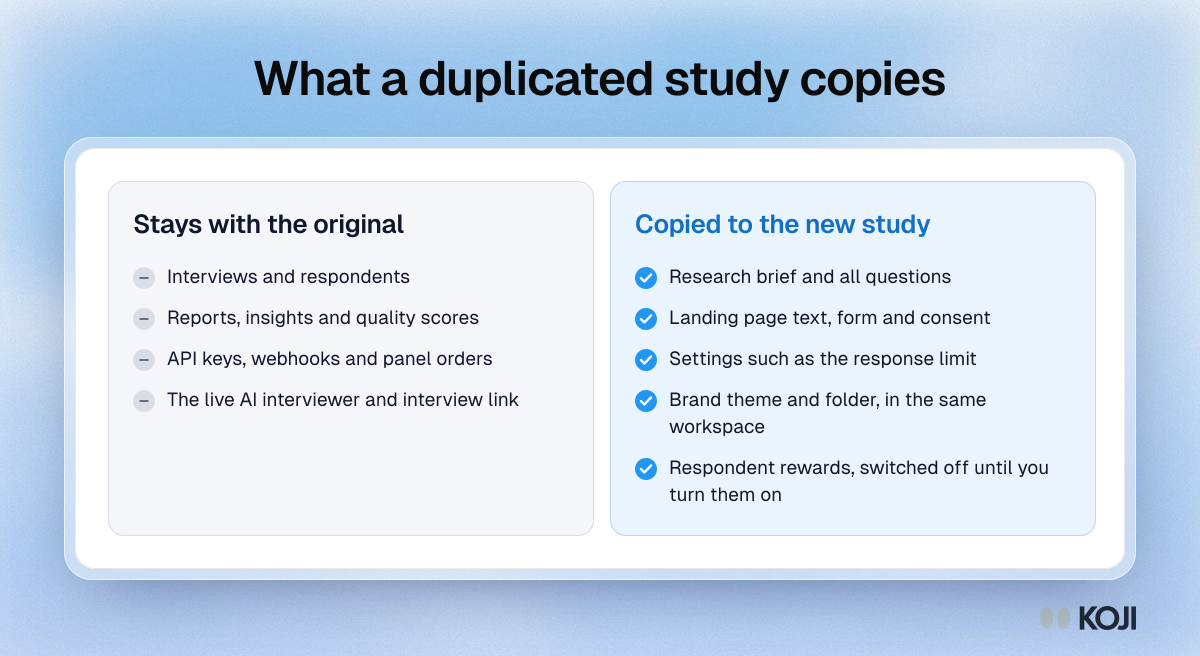
Comparison of what a duplicated Koji study copies, like the brief, questions and landing page, and what stays behind, like interviews and reports.

Comparison

What a duplicated study copies