Free to save and share

Frameworks and cheat sheets for customer research

Every framework, checklist and comparison from our guides, as an image you can download, drop into a deck or share with your team.
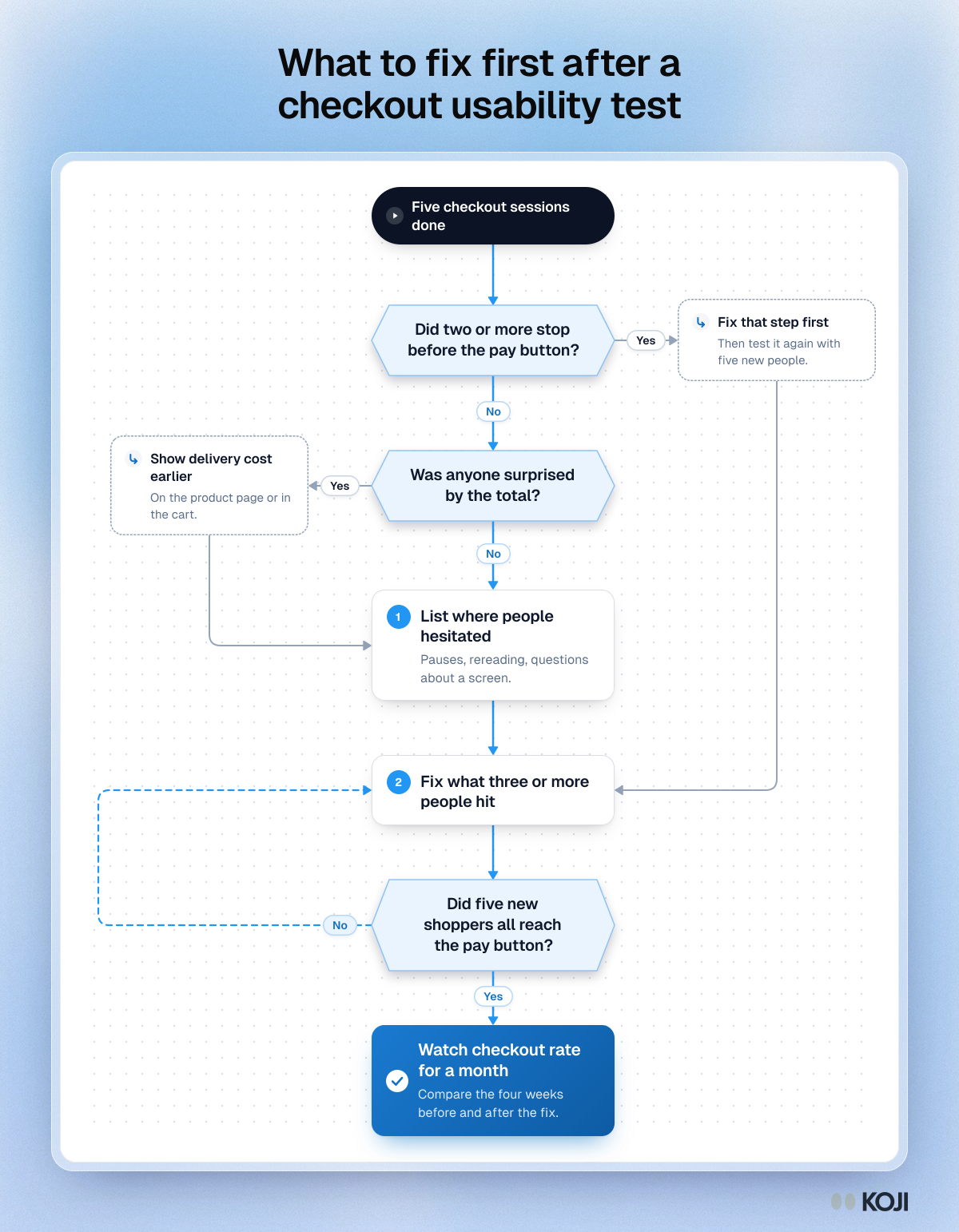
Flowchart for what to fix first after a checkout usability test: three questions, two side steps and a retest loop.

Flowchart

What to fix first after a checkout usability test
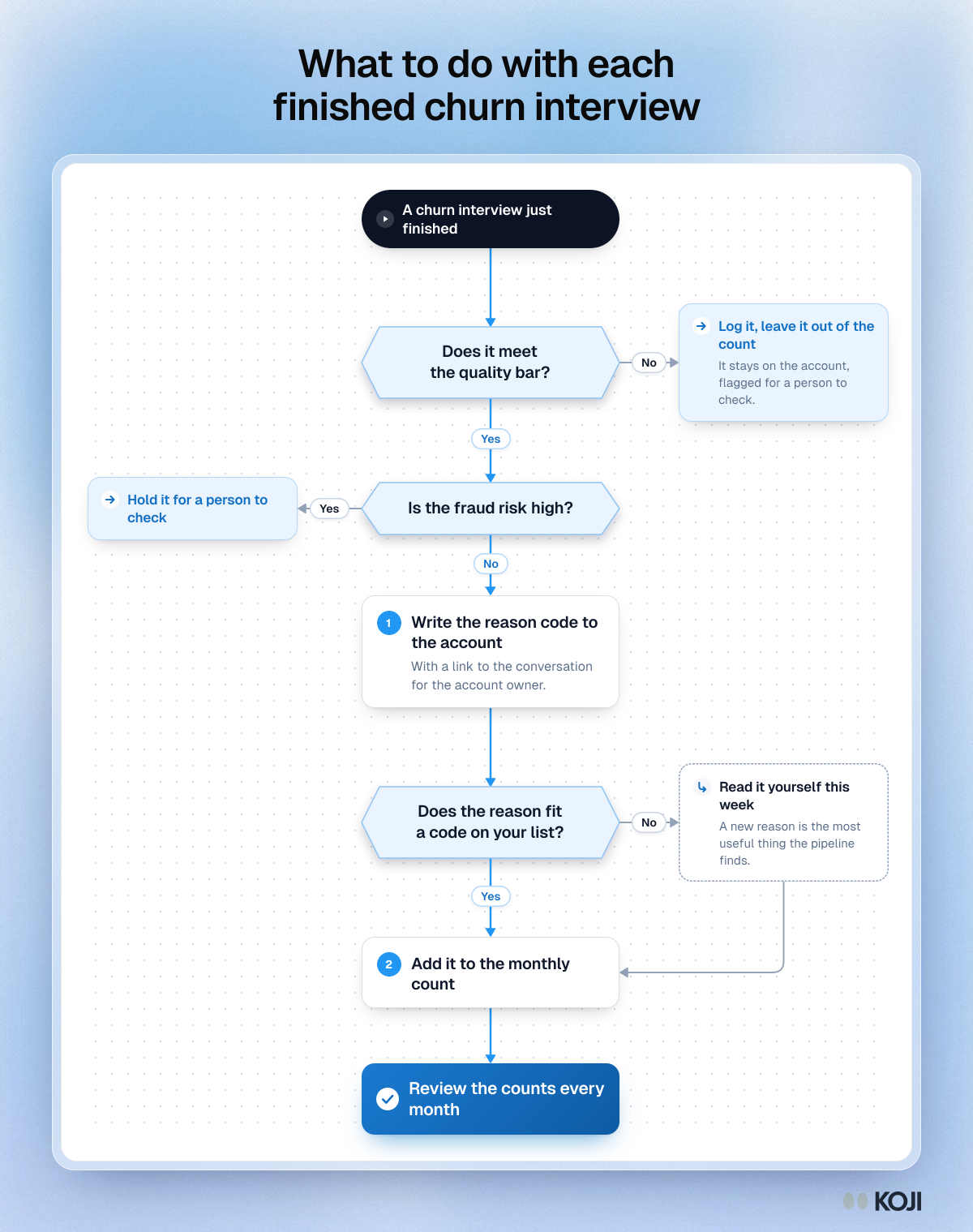
Flowchart for each finished churn interview: check quality and fraud risk, write the reason to the account, read new reasons yourself.

Flowchart

What to do with each finished churn interview
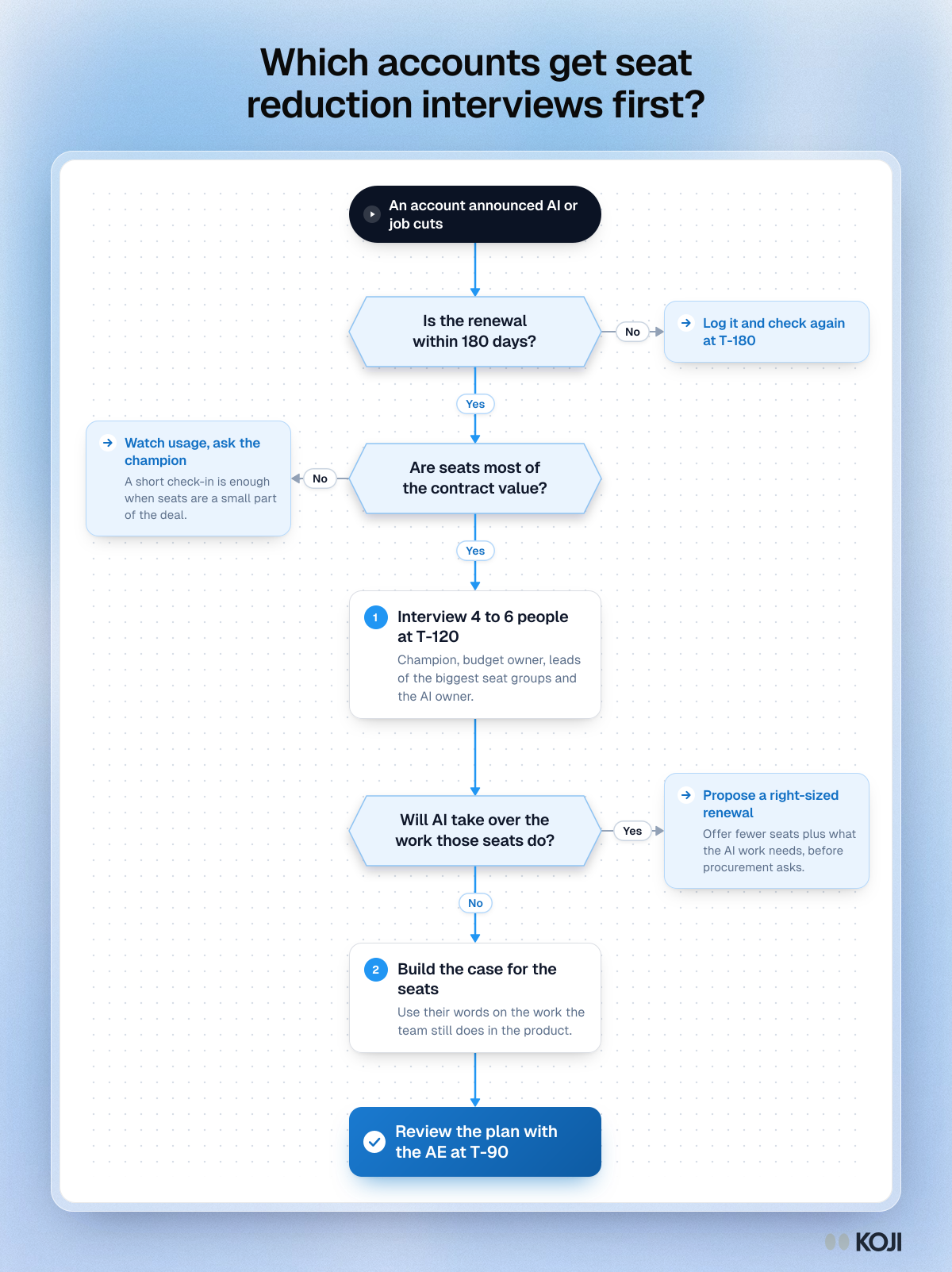
Flowchart for choosing which accounts get seat interviews: three questions on renewal timing, seat share of the contract and whether AI takes over the work.

Flowchart

Which accounts get seat reduction interviews first?
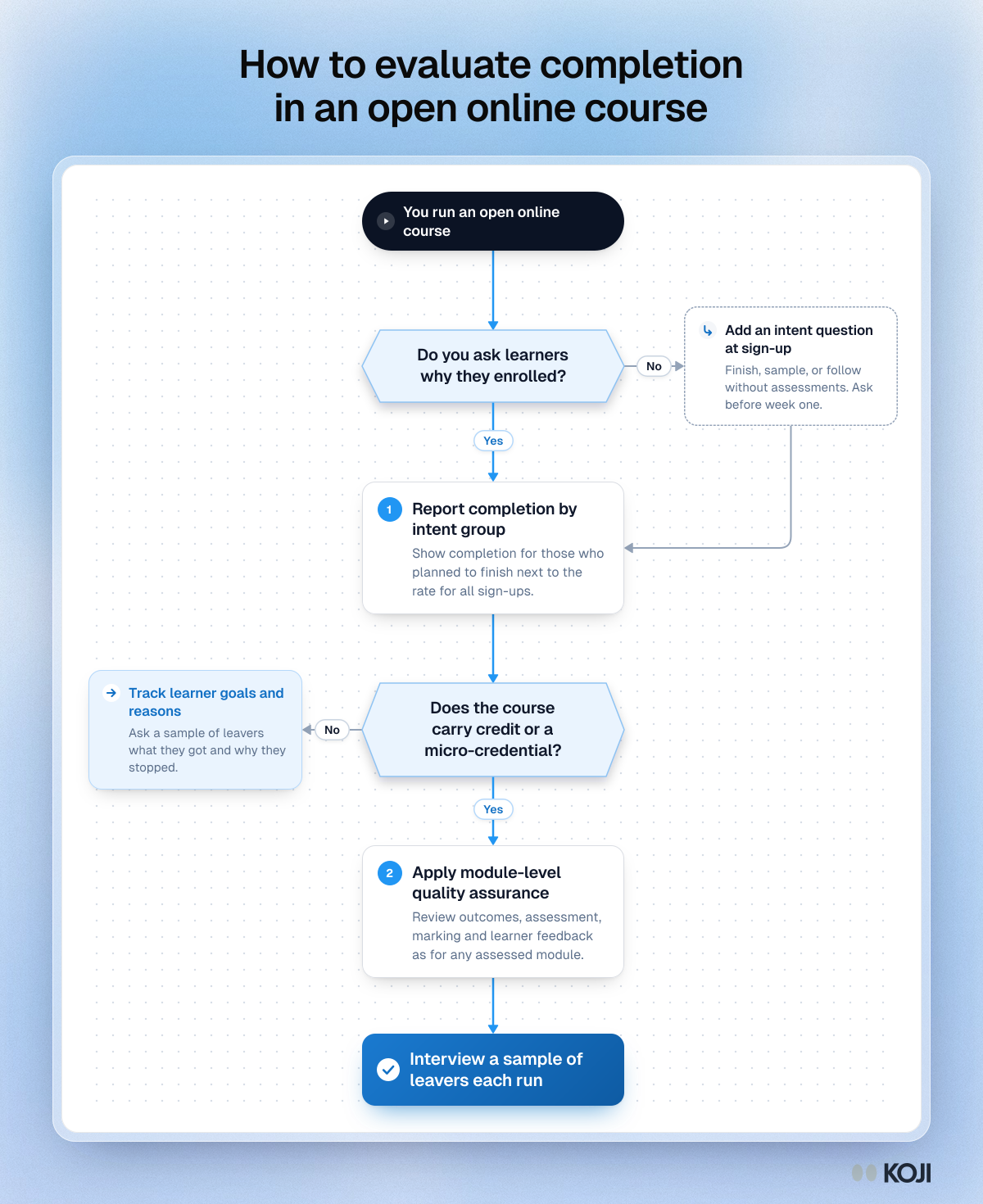
Flowchart for evaluating completion in an open online course: ask about intent, report by intent group, and apply quality assurance if it carries credit.

Flowchart

How to evaluate completion in an open online course
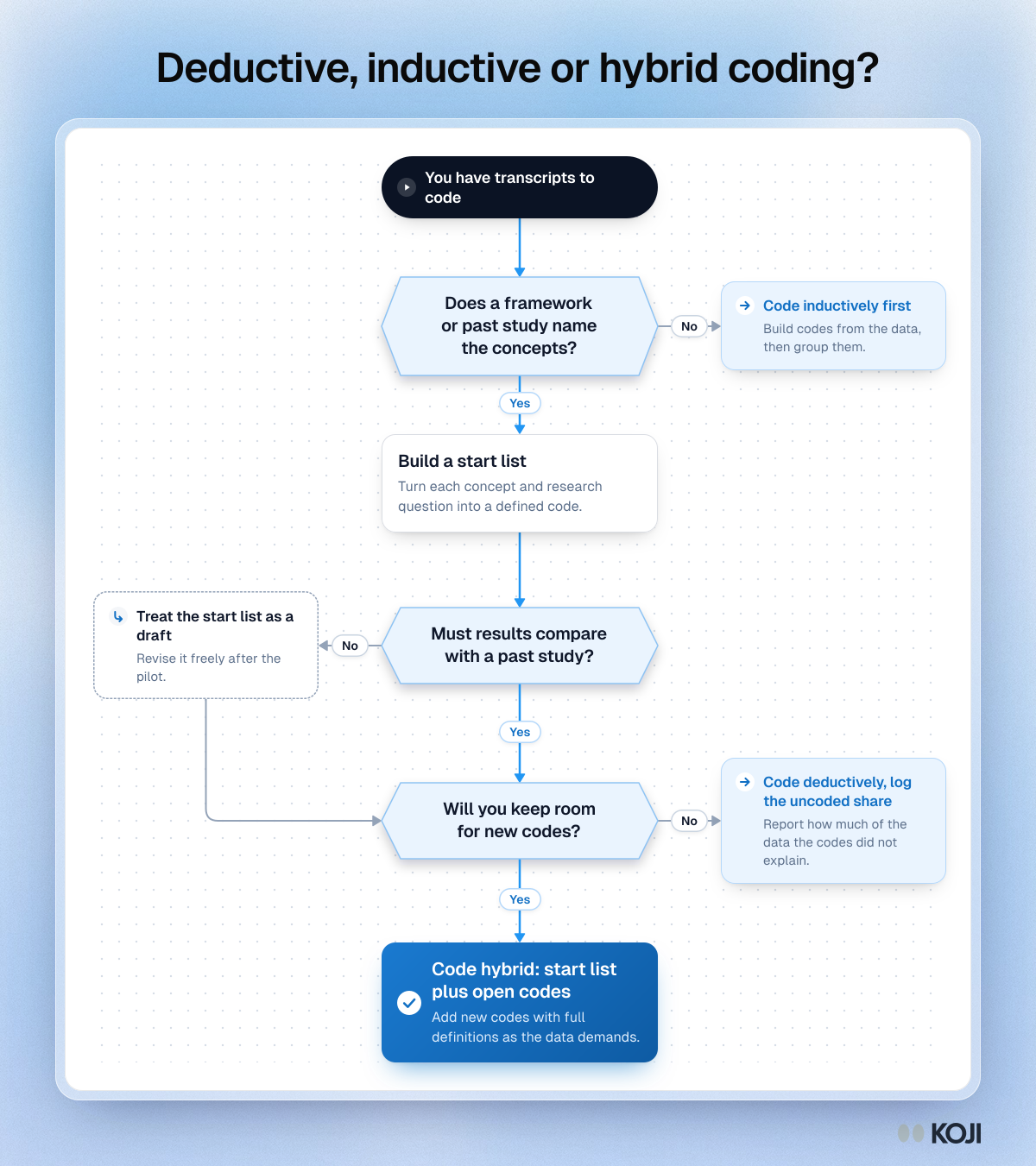
Flowchart for choosing deductive, inductive or hybrid coding: three questions about an existing framework, comparison with past studies and room for surprises.

Flowchart

Deductive, inductive or hybrid coding?
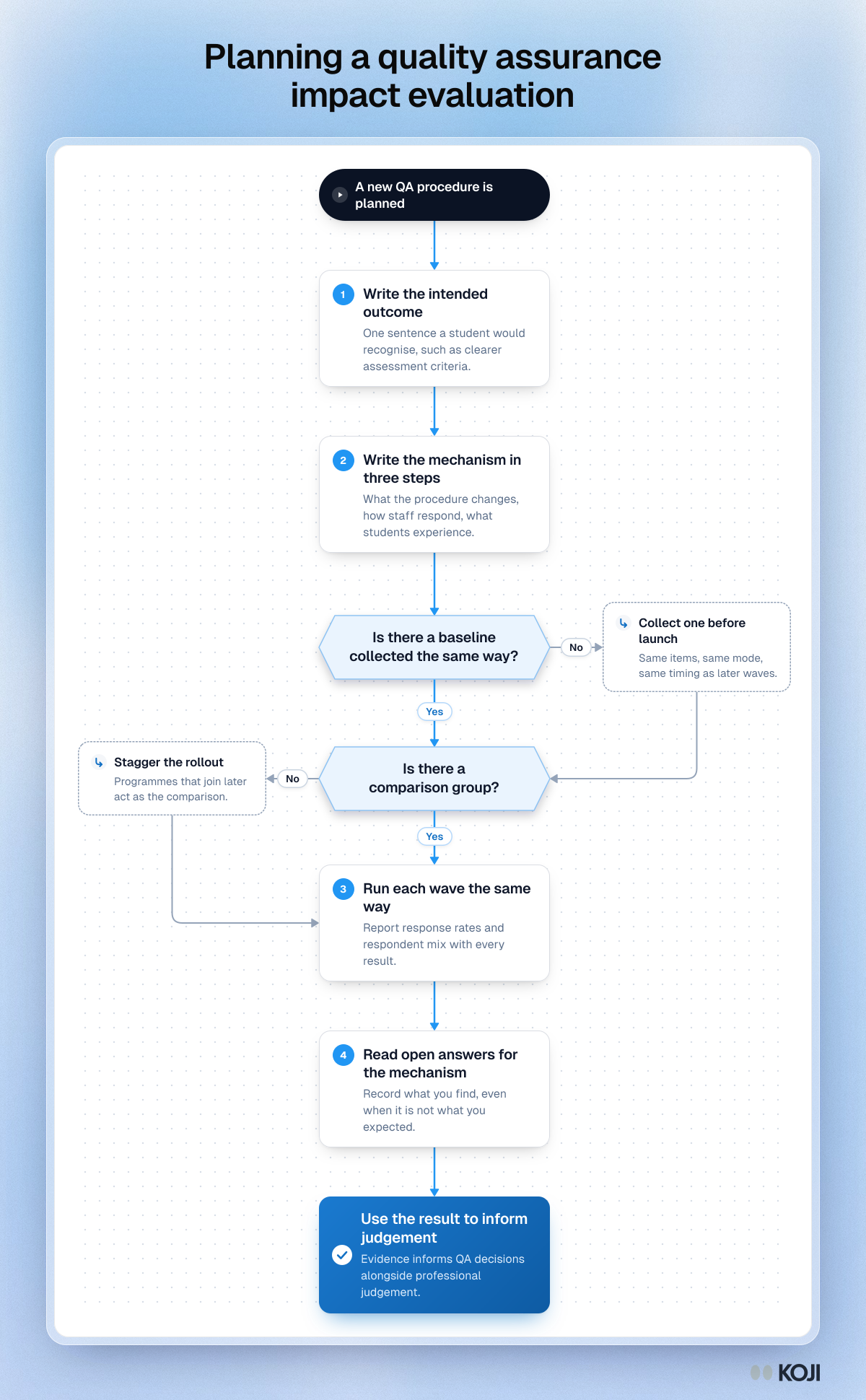
Flowchart for planning a QA impact evaluation: write the outcome and mechanism, collect a baseline, find a comparison, then read answers for the mechanism.

Flowchart

Planning a quality assurance impact evaluation
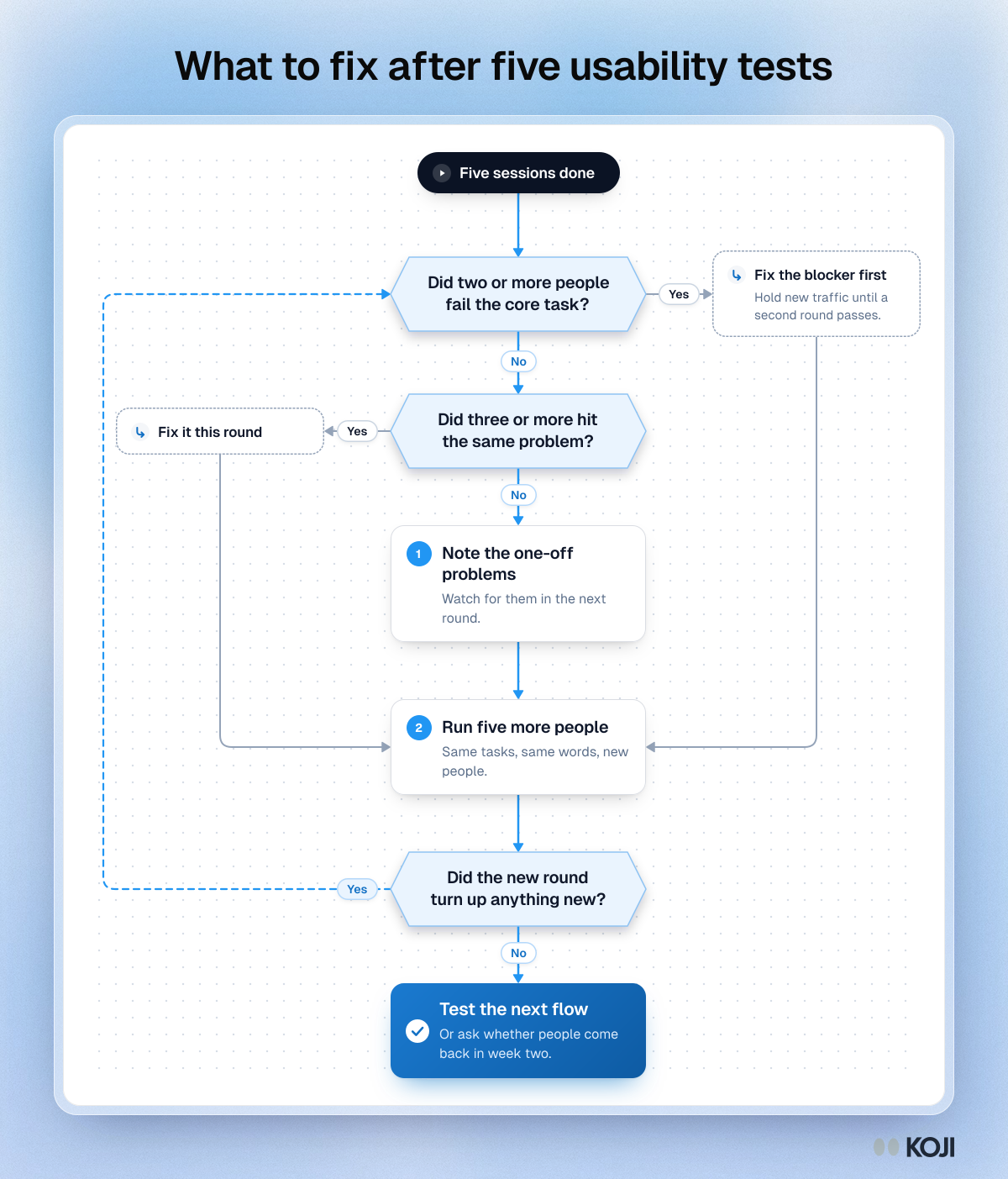
Flowchart for what to fix after five usability tests: three questions, two fixes, a retest loop, ending in testing the next flow.

Flowchart

What to fix after five usability tests
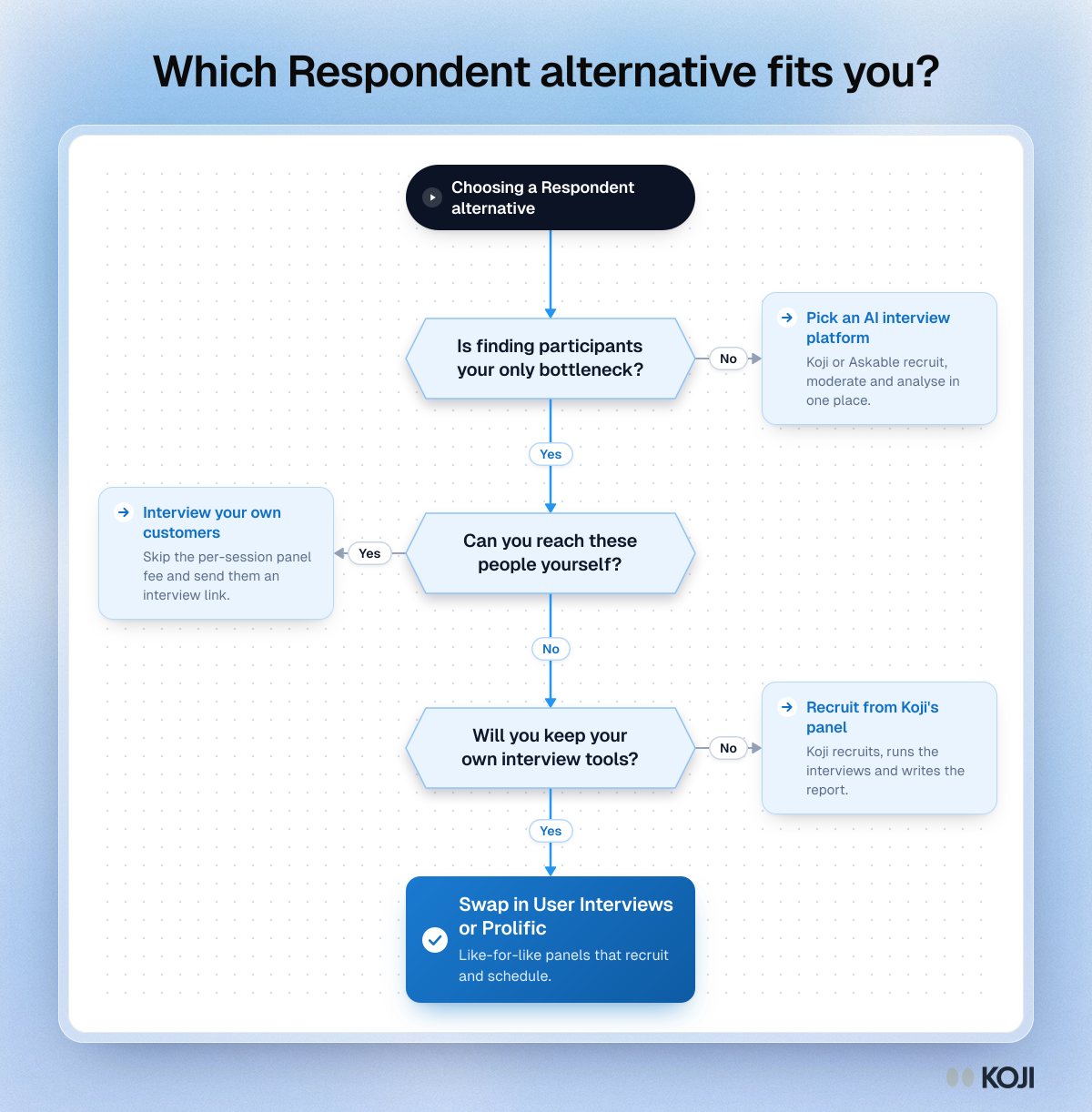
Flowchart for choosing a Respondent alternative: yes/no questions about recruiting, your own audience and keeping your interview tools.

Flowchart

Which Respondent alternative fits you?
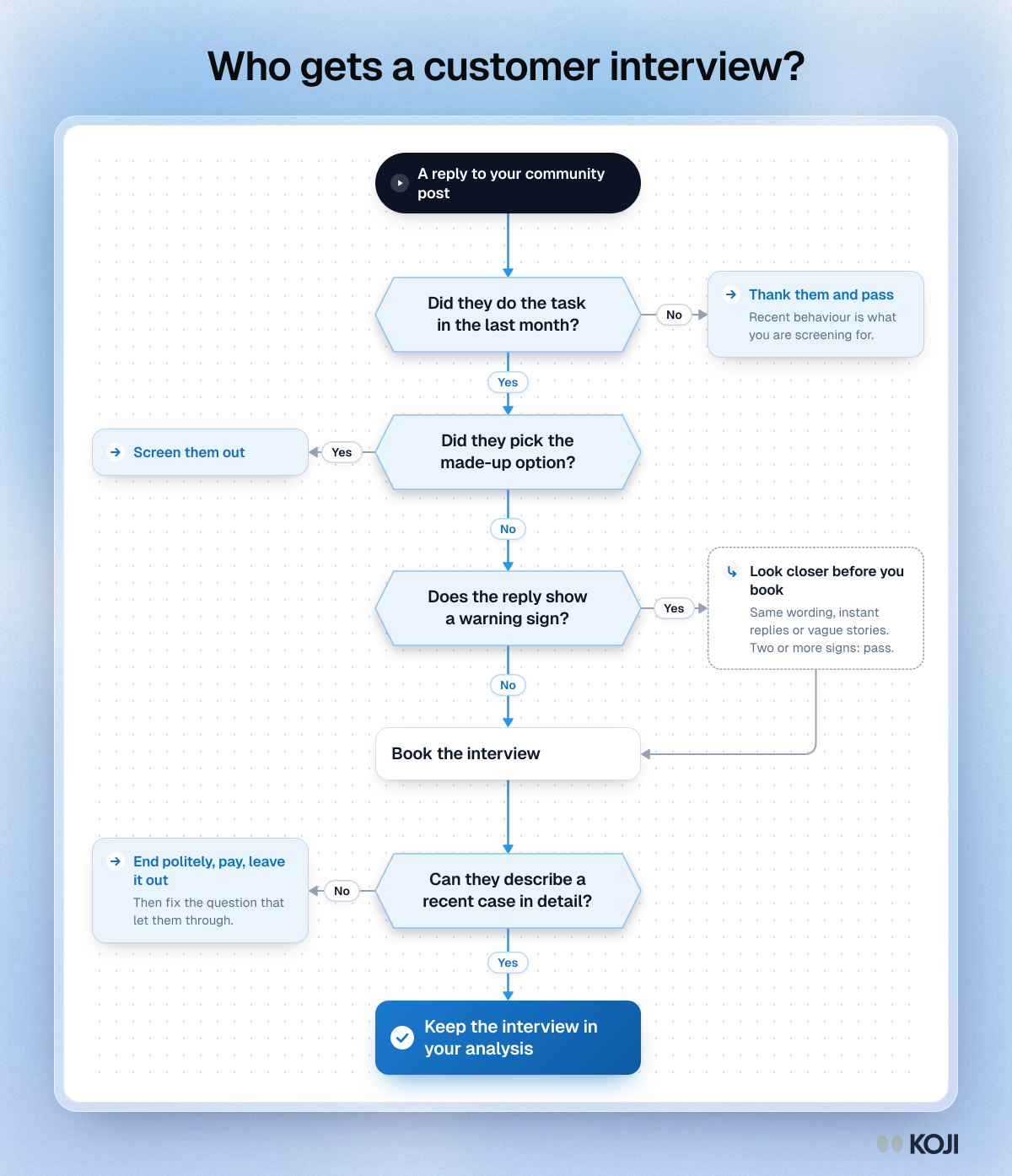
Flowchart for deciding who gets a customer interview: four checks on recency, the foil, warning signs and a recent story.

Flowchart

Who gets a customer interview?
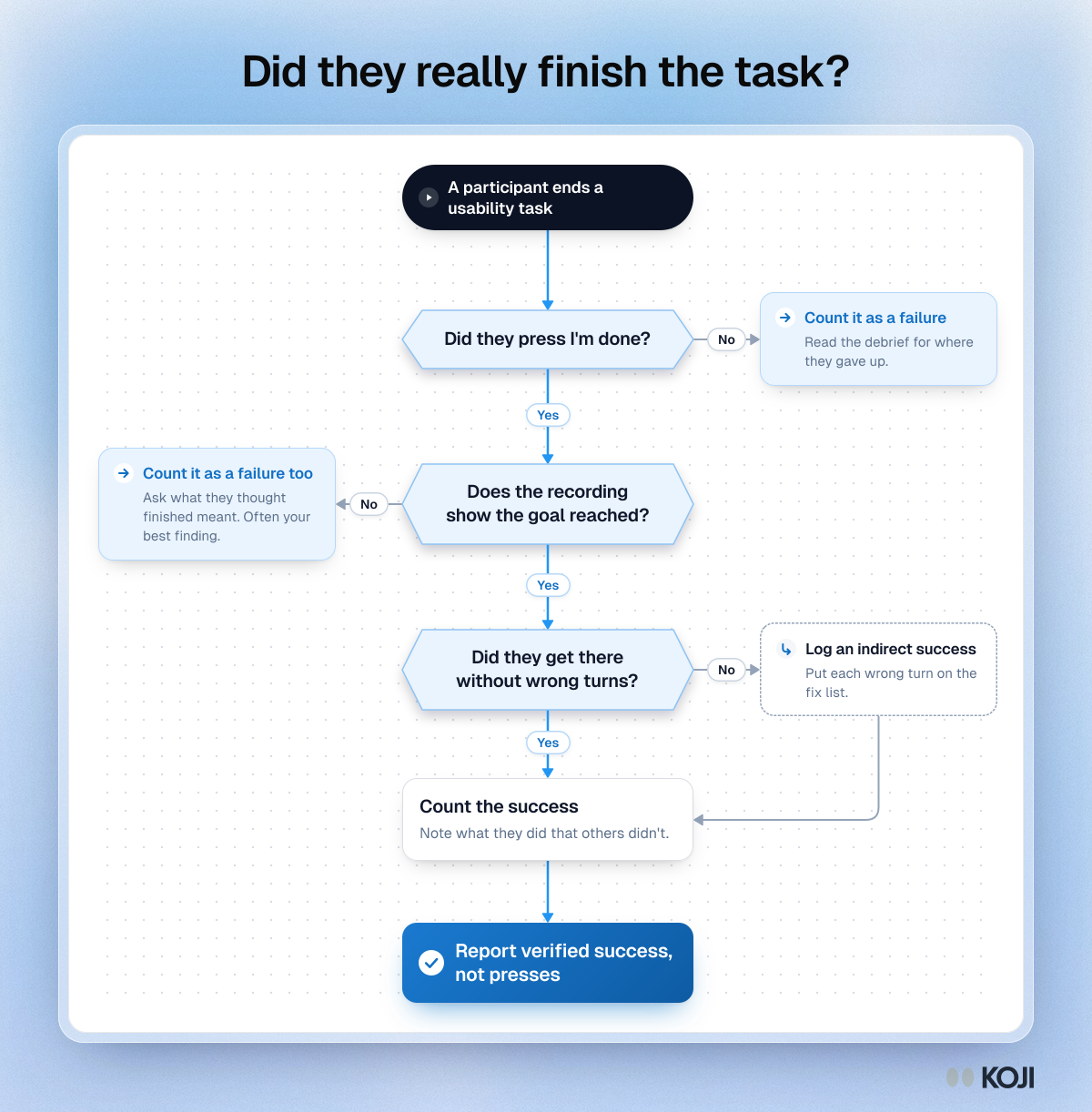
Flowchart for counting usability task success: did they press done, does the recording show the goal reached, and were there wrong turns.

Flowchart

Did they really finish the task?
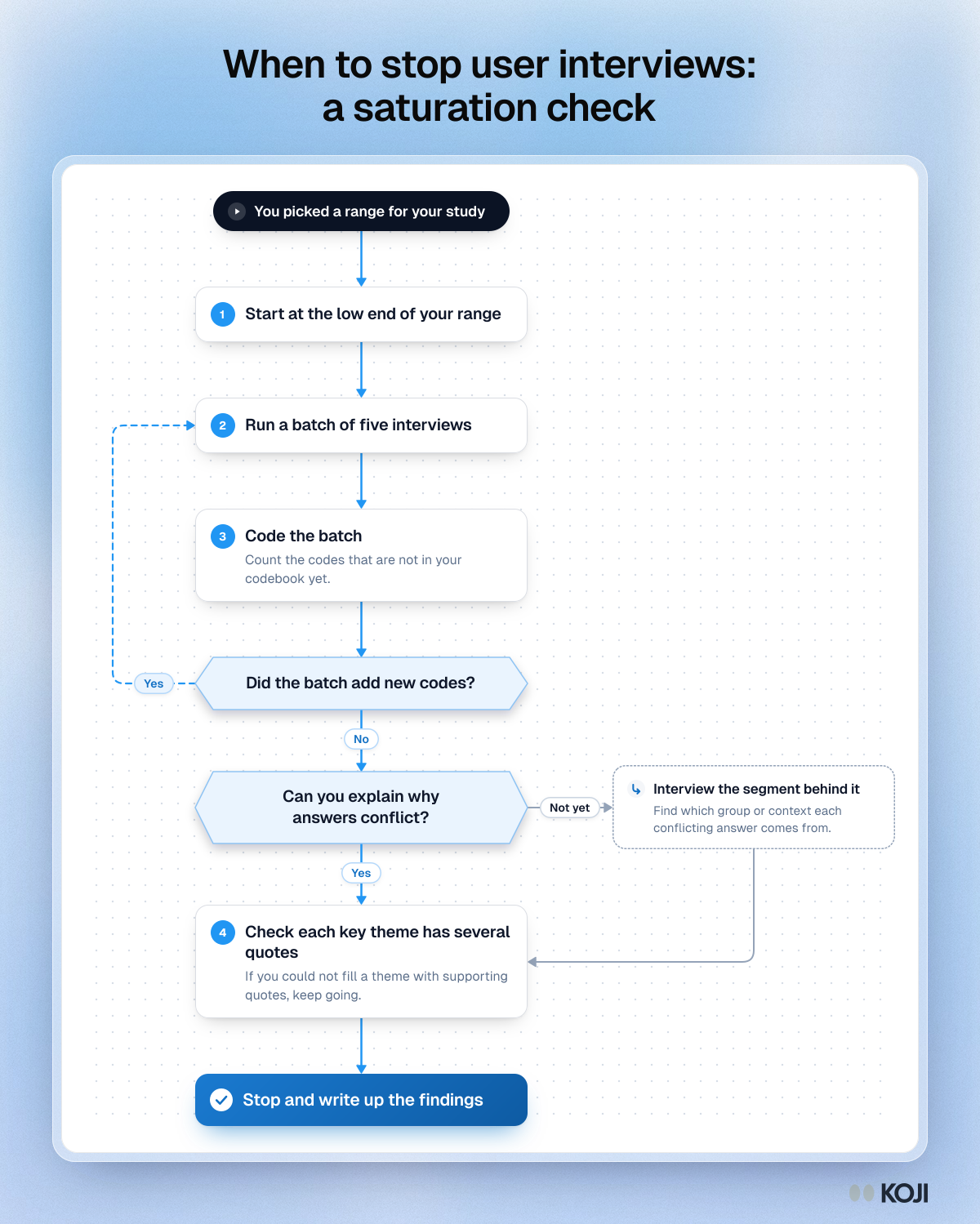
Flowchart for deciding when to stop user interviews: run batches of five, loop while new codes appear, explain conflicts, then write up.

Flowchart

When to stop user interviews: a saturation check
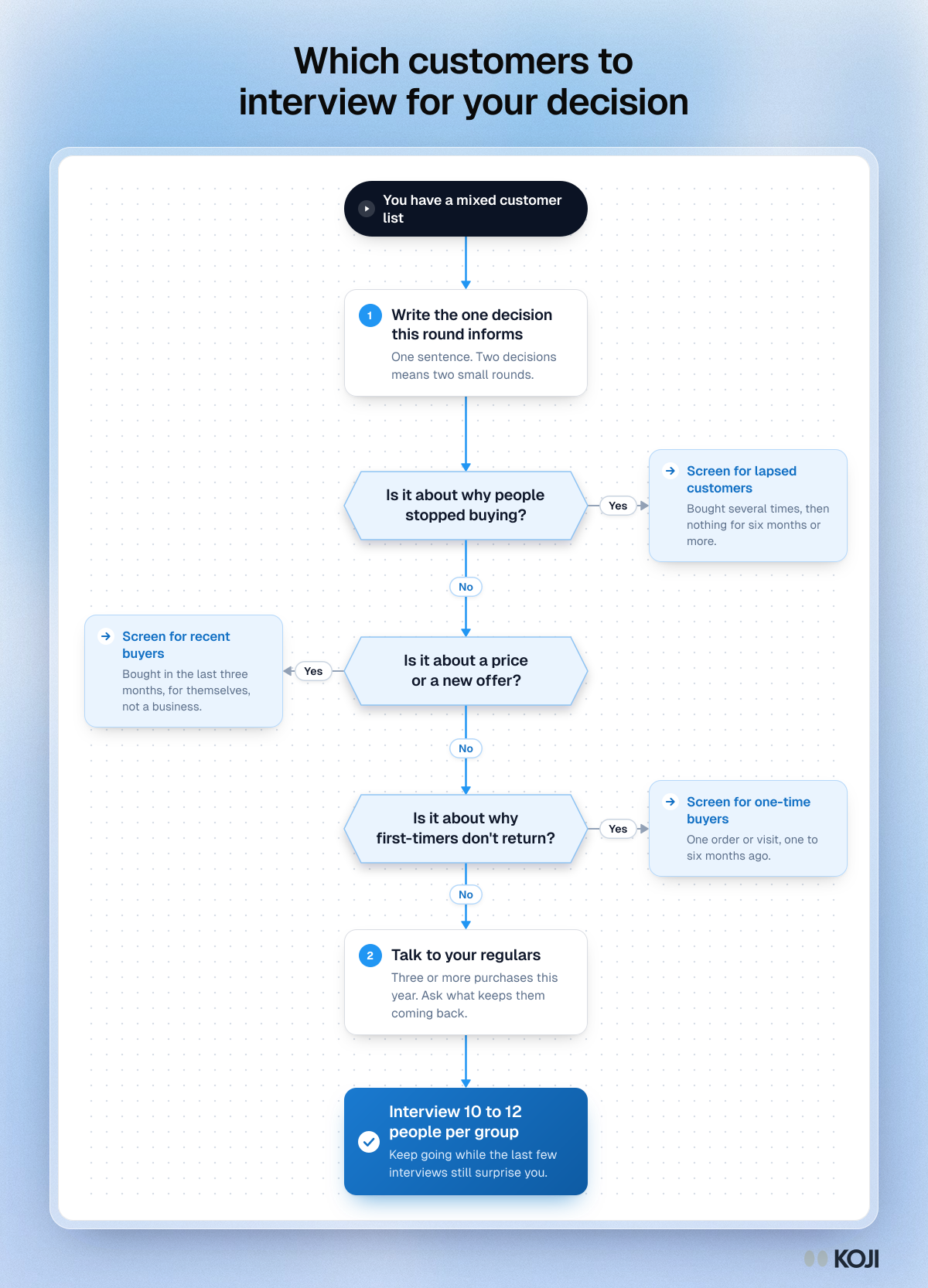
Flowchart for choosing which small business customers to interview: three yes or no questions lead to lapsed, recent or one-time buyers, otherwise regulars.

Flowchart

Which customers to interview for your decision
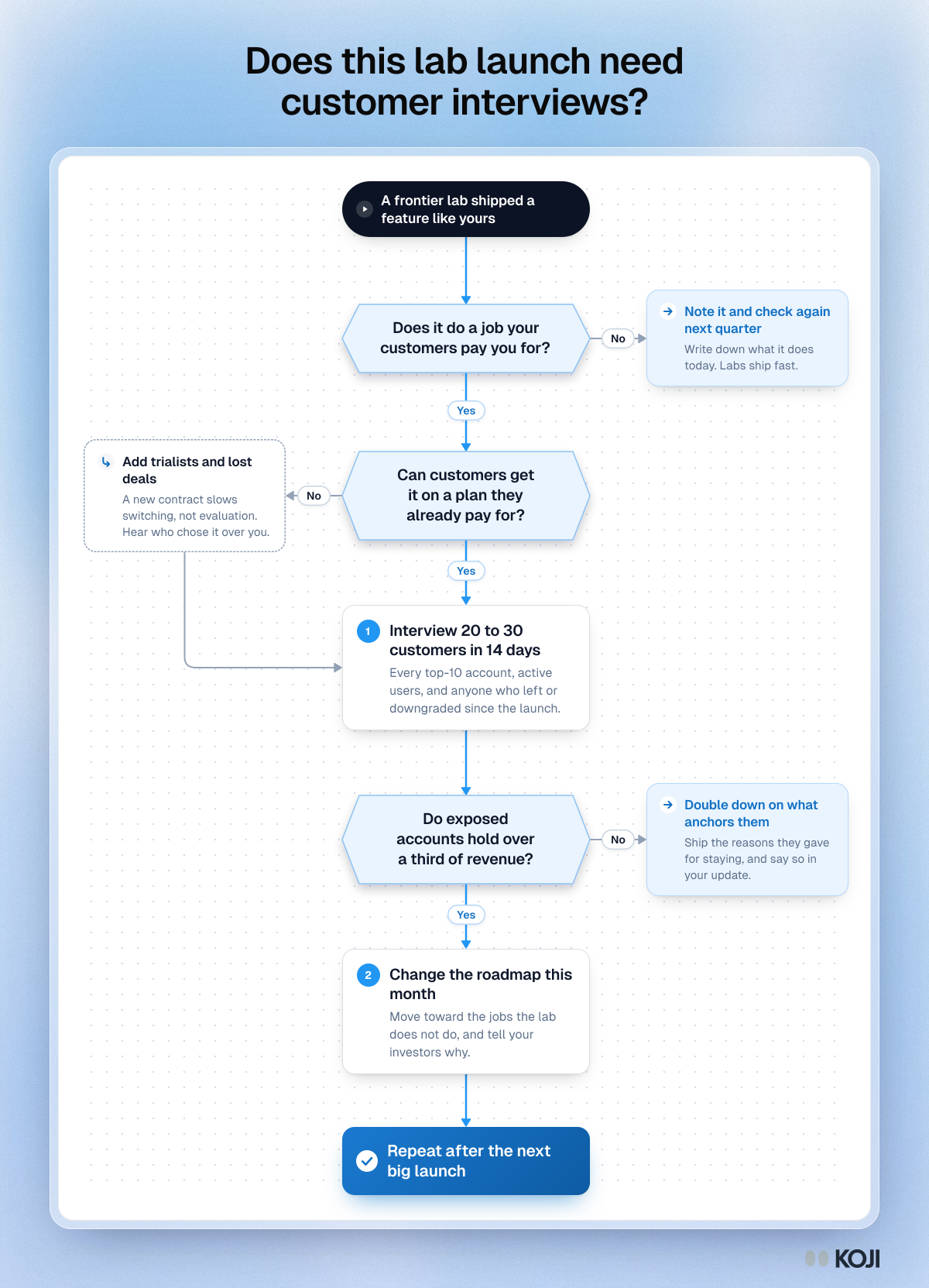
Flowchart for deciding if a lab launch needs customer interviews: two overlap questions, 20 to 30 interviews, then a revenue check

Flowchart

Does this lab launch need customer interviews?
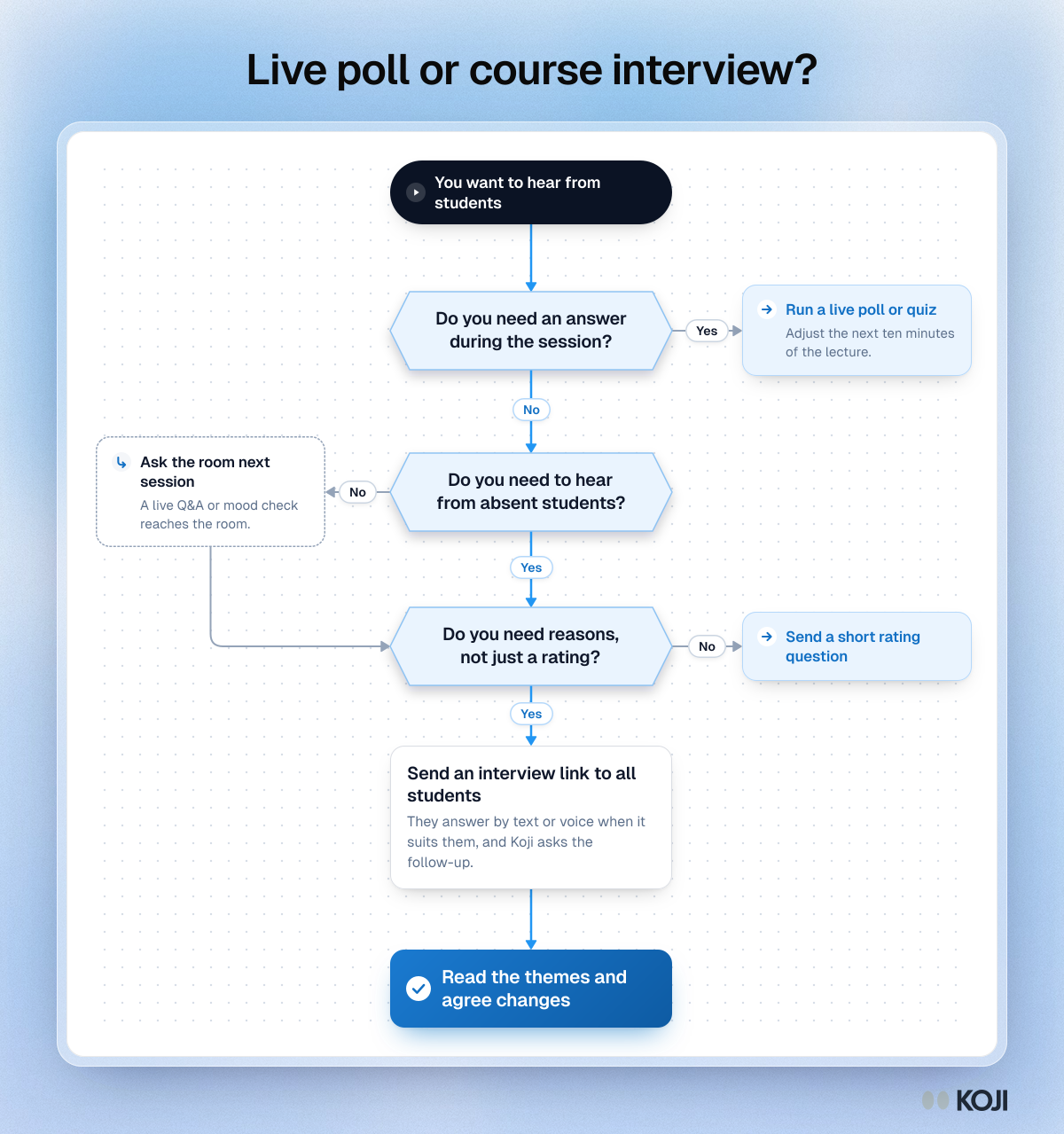
Flowchart for choosing between a live poll and a course interview: three questions, one side step, ending in reading the themes and agreeing changes.

Flowchart

Live poll or course interview?
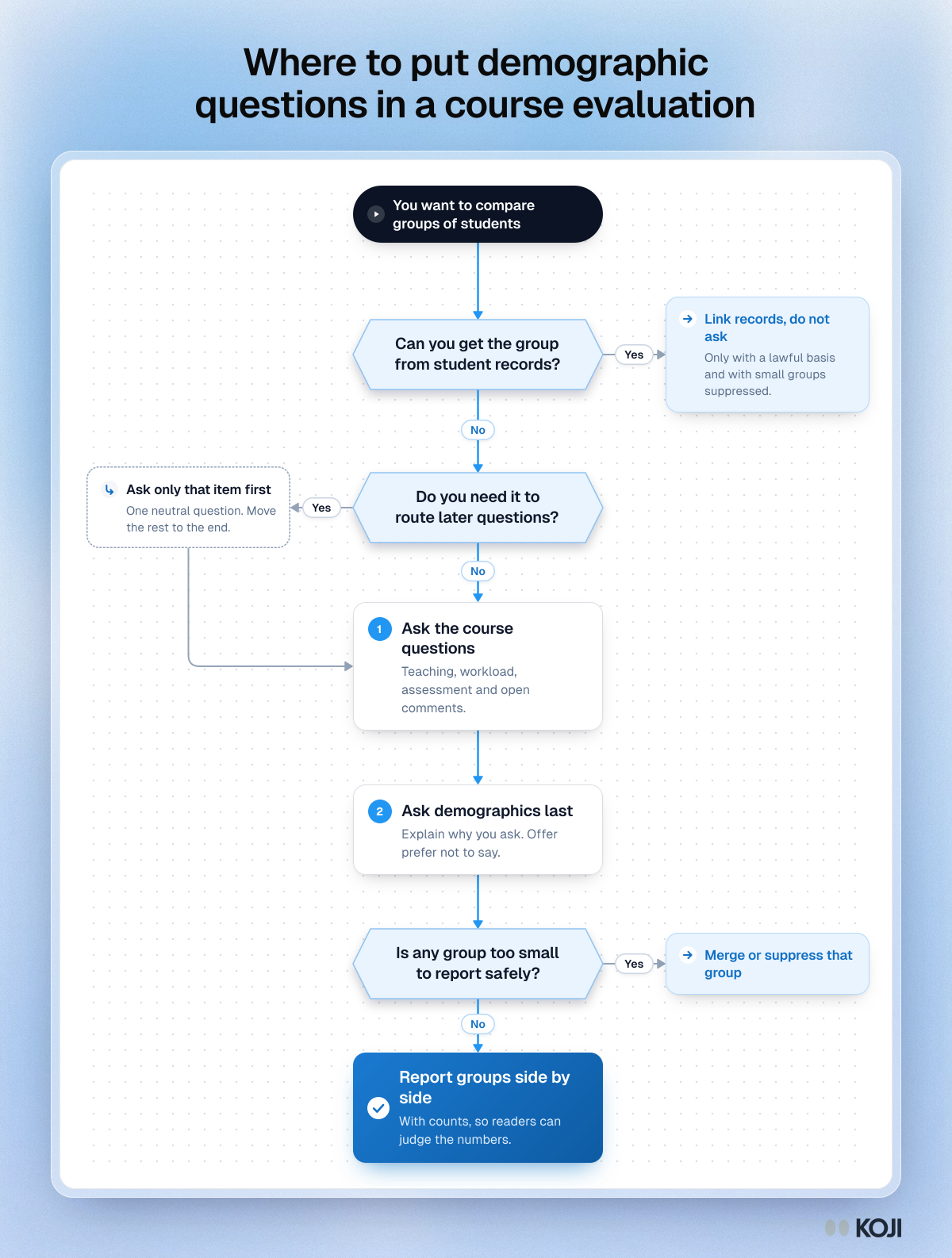
Flowchart for placing demographic questions: use records where you can, ask only what routing needs at the start, and put the rest at the end.

Flowchart

Where to put demographic questions in a course evaluation
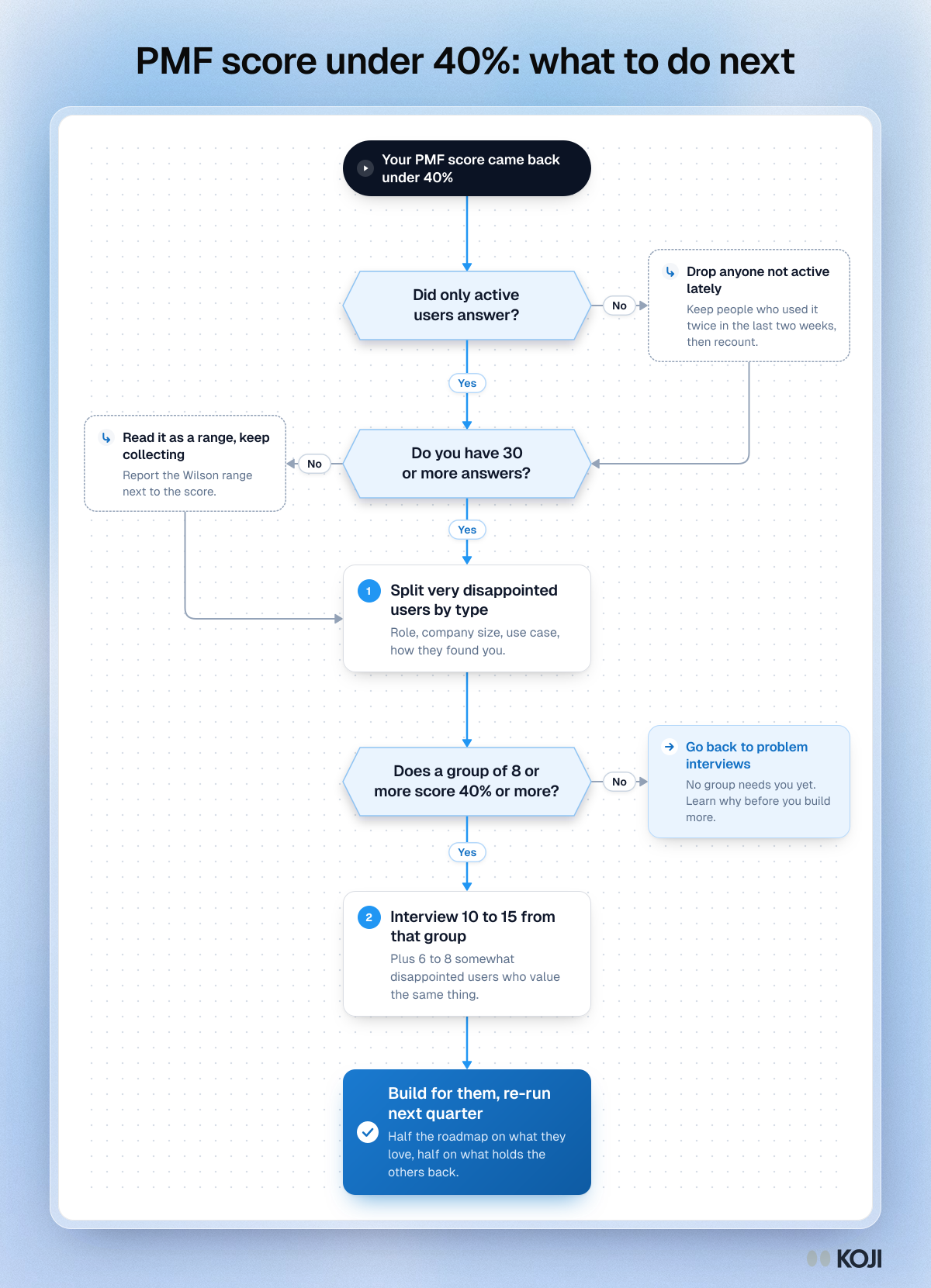
Flowchart for a PMF score under 40%: check active users and answer count, split by type, then build for a 40% group or go back to problem interviews.

Flowchart

PMF score under 40%: what to do next
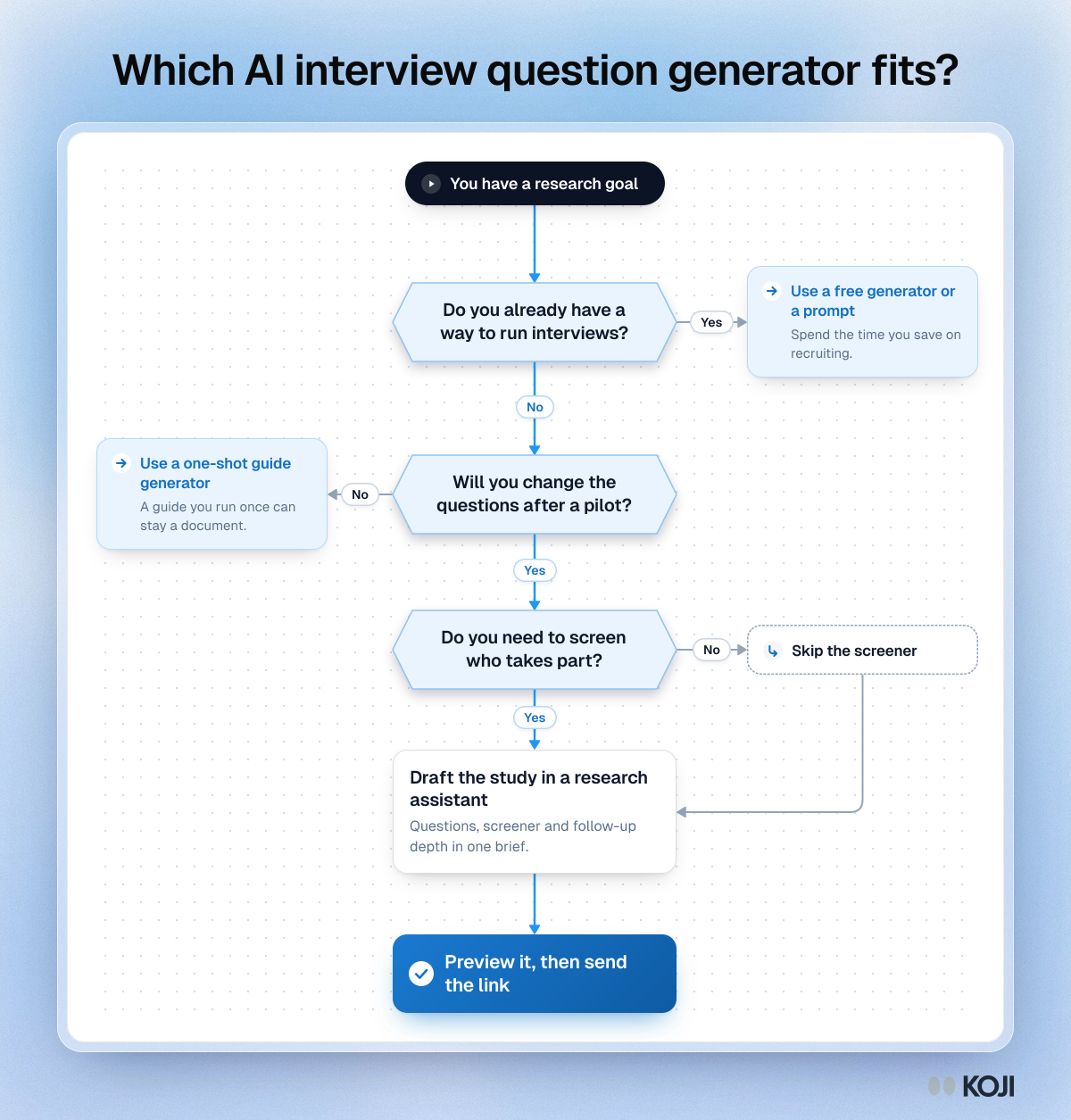
Flowchart for choosing an AI interview question generator: three questions, two exits and one side step, ending in a preview before you send the link.

Flowchart

Which AI interview question generator fits?
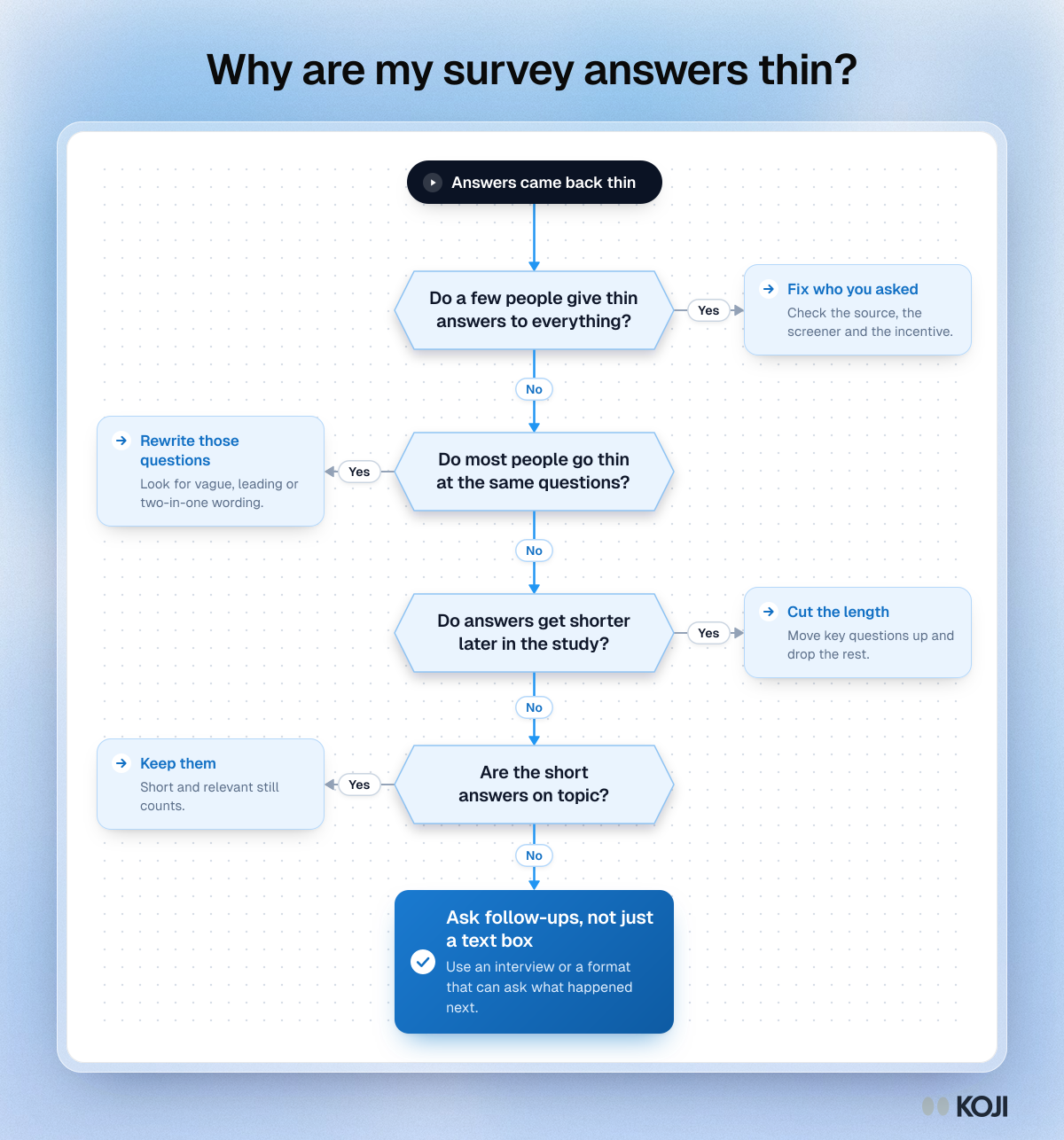
Flowchart for diagnosing thin survey answers: four yes or no questions on who, which questions, how late and relevance, ending in follow-ups.

Flowchart

Why are my survey answers thin?
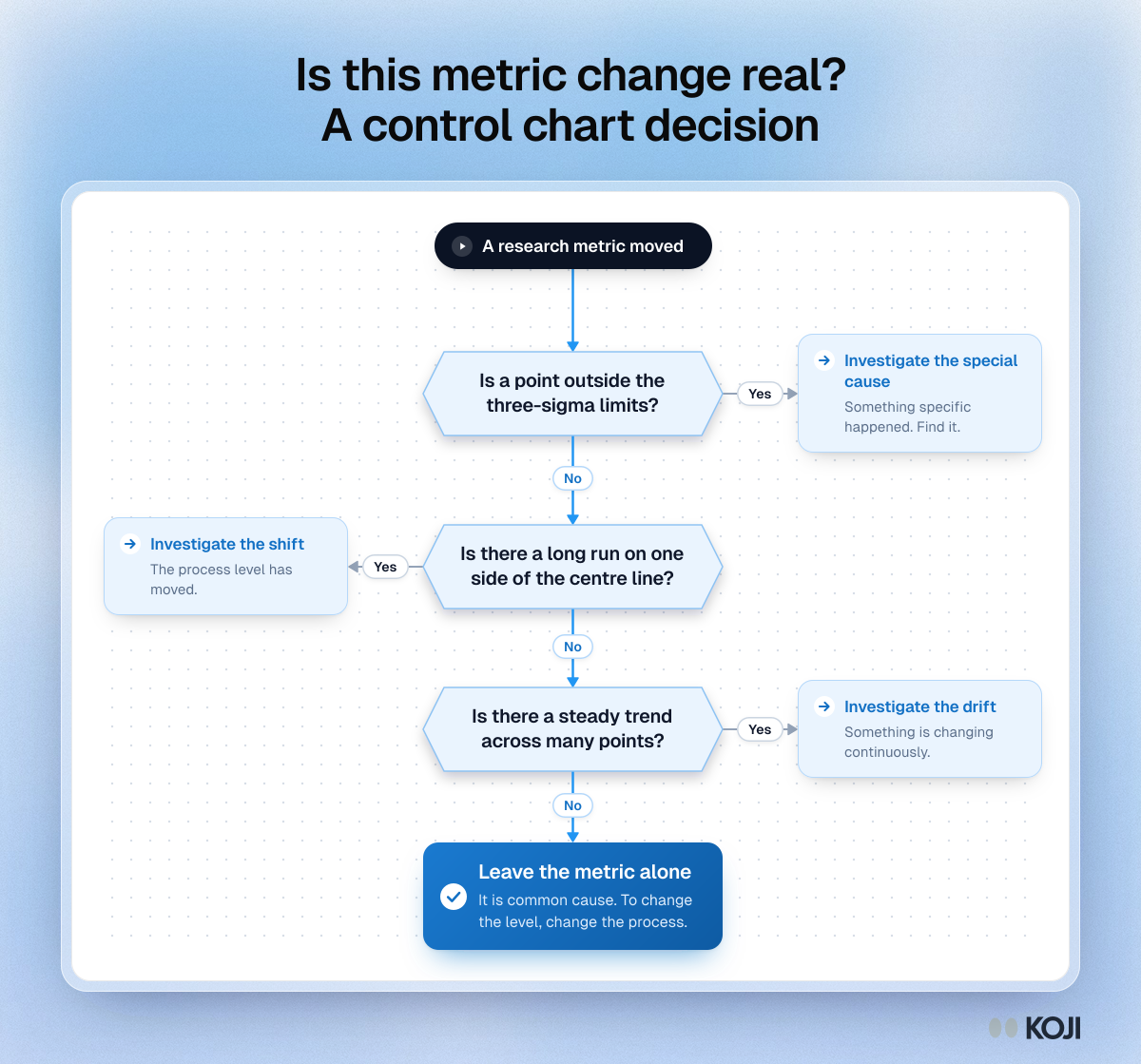
Flowchart for a metric that moved: three questions about limits, runs and trends, each leading to an investigation, ending in leaving the metric alone.

Flowchart

Is this metric change real? A control chart decision
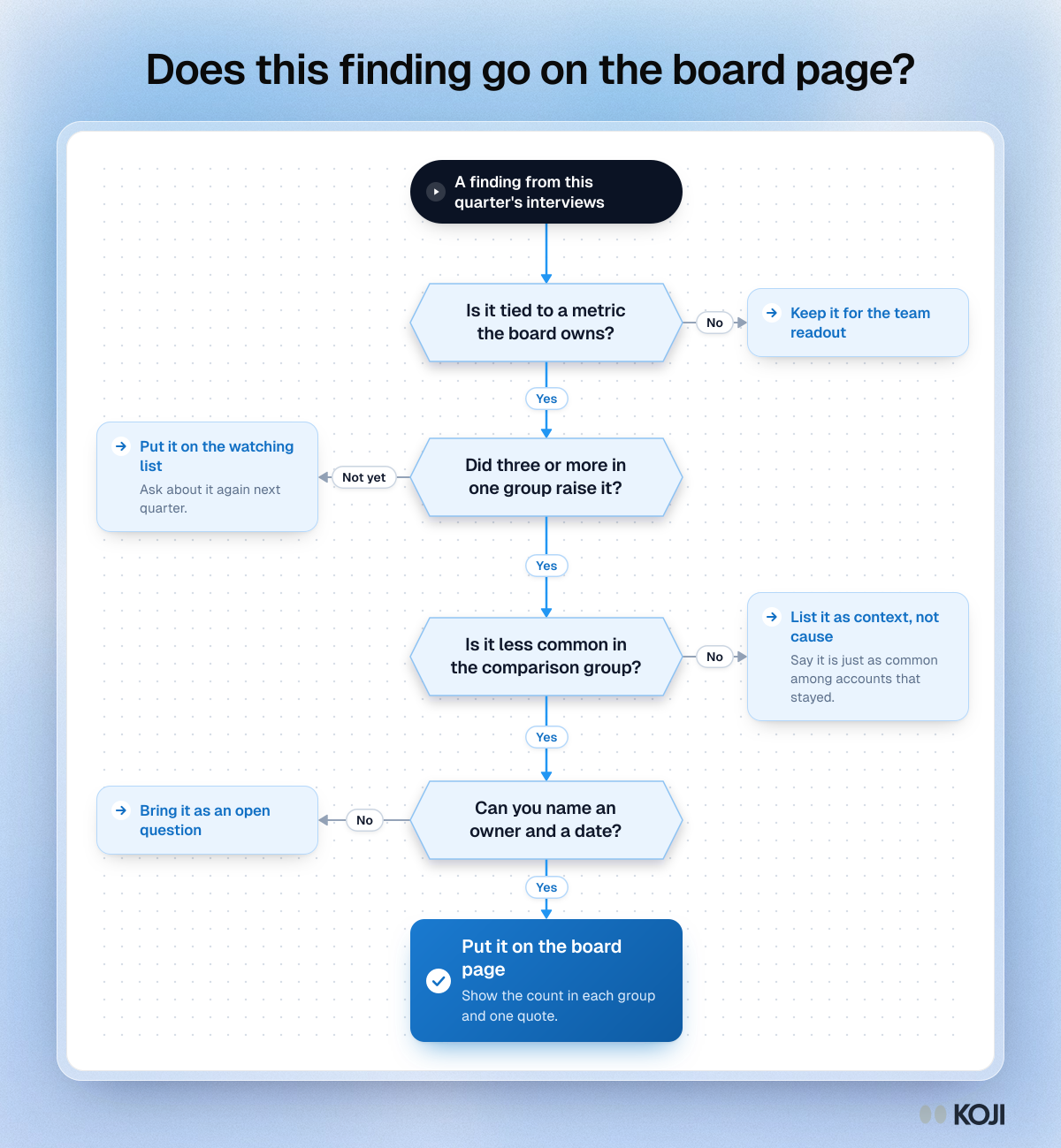
Flowchart for deciding whether a customer finding goes on the board page: four yes or no questions, each with its own exit, ending on the page.

Flowchart

Does this finding go on the board page?
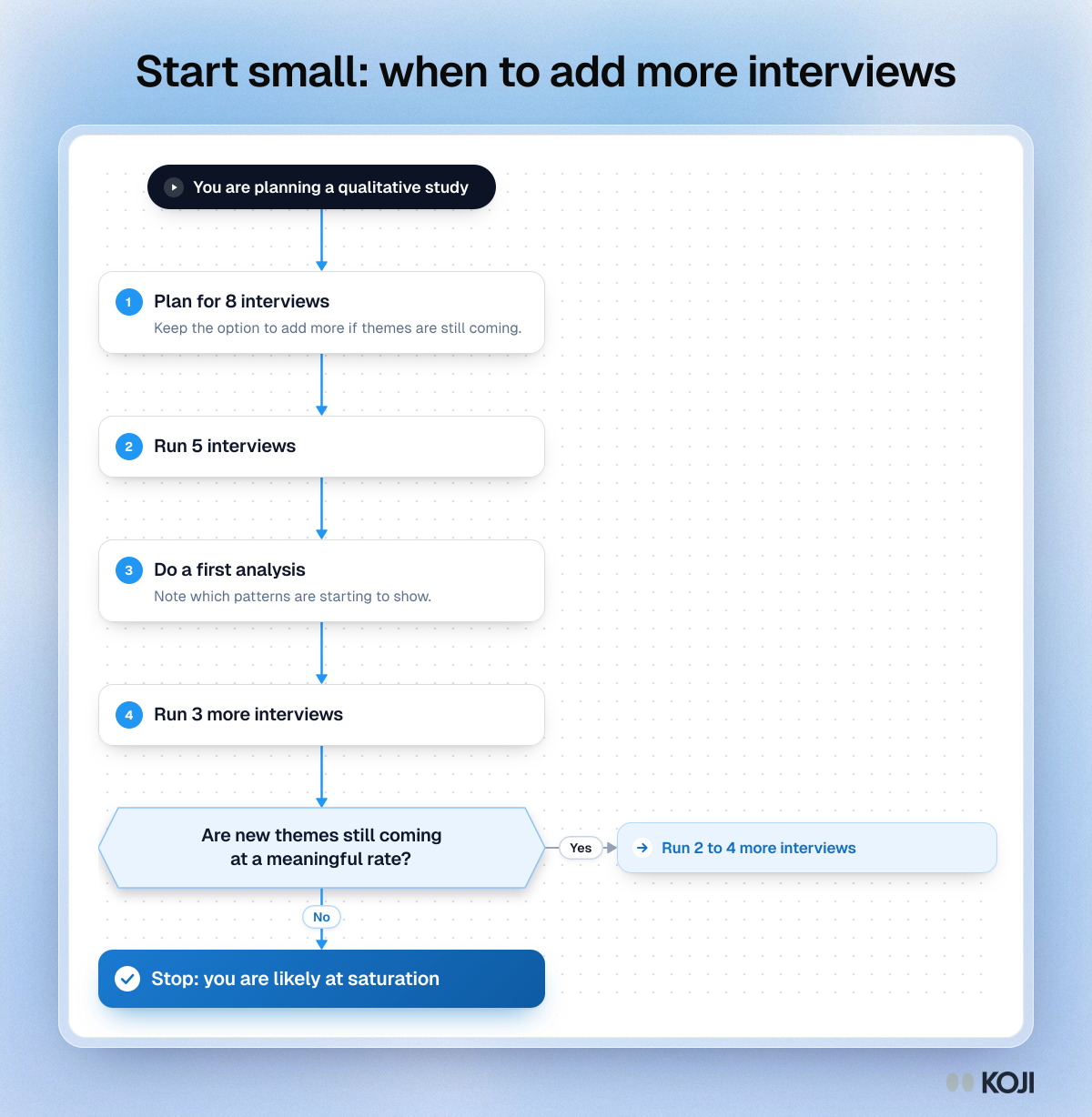
Flowchart for sizing an interview study: plan for 8, run 5, analyse, run 3 more, then add 2 to 4 if new themes are still coming.

Flowchart

Start small: when to add more interviews
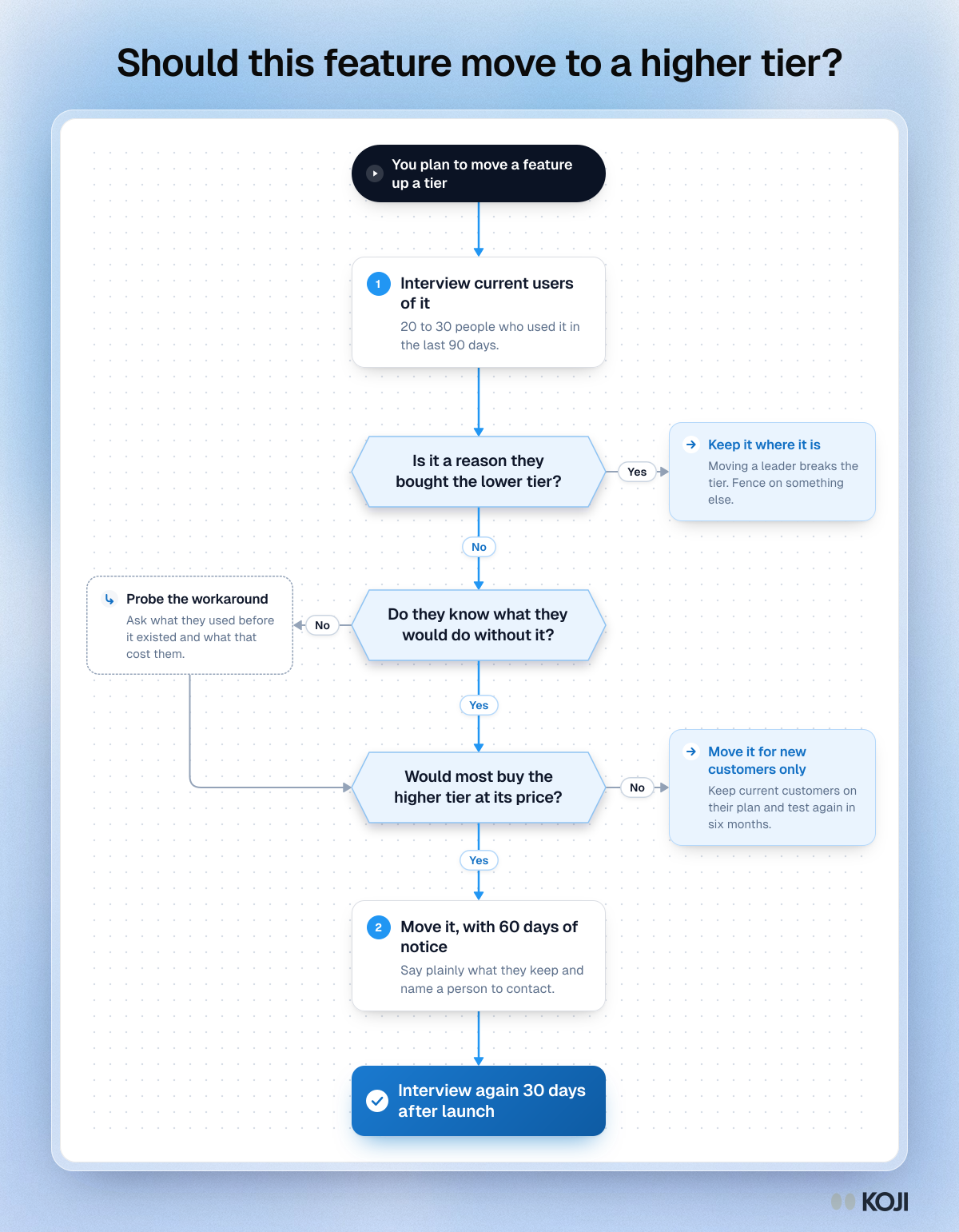
Flowchart for deciding whether a feature should move to a higher tier: three yes or no questions, one side step, ending in a follow-up 30 days after launch.

Flowchart

Should this feature move to a higher tier?
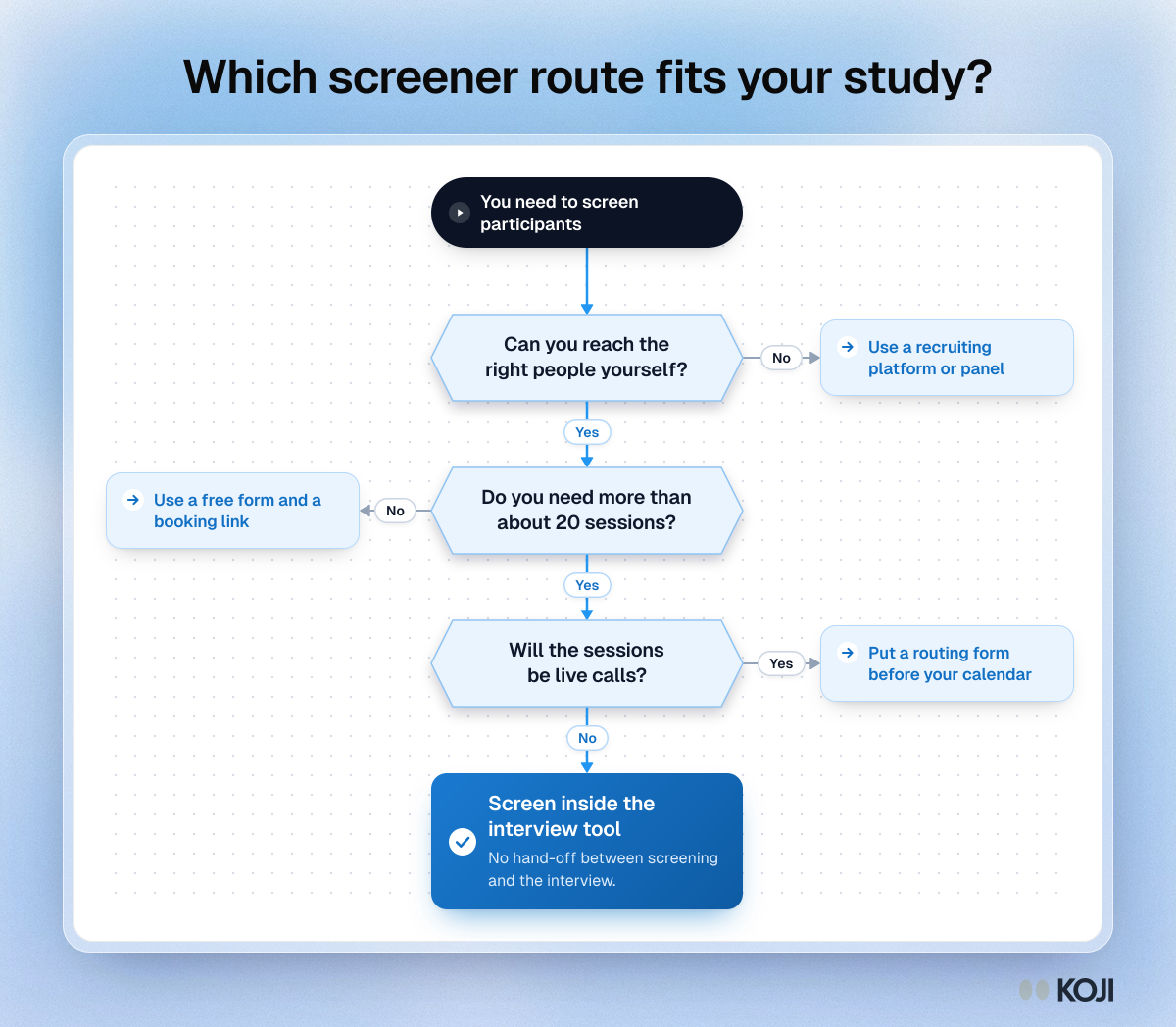
Flowchart for choosing a screener route: three questions on where participants come from, how many sessions and live or async interviews.

Flowchart

Which screener route fits your study?
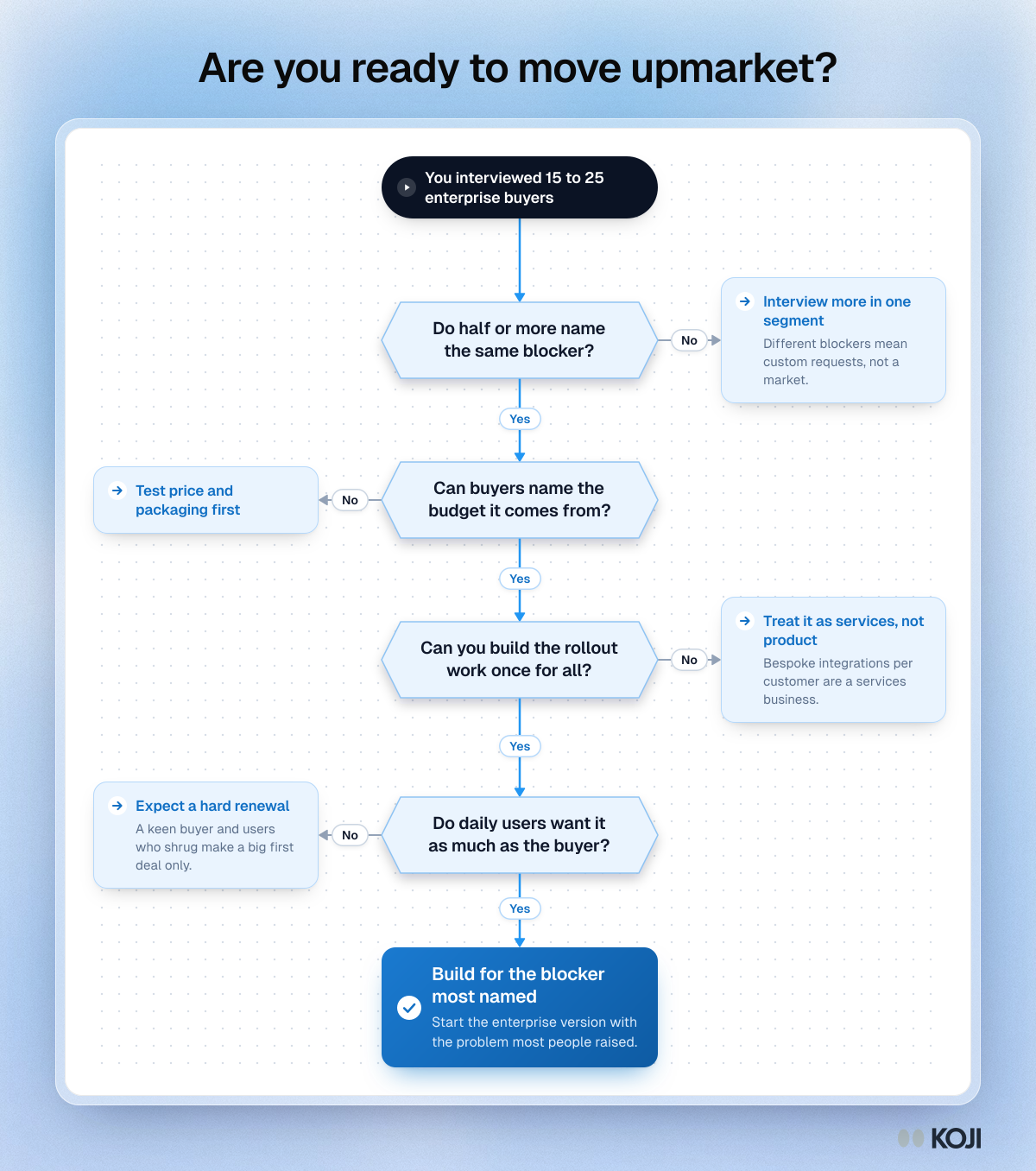
Flowchart for deciding whether to move upmarket after buyer interviews: four questions on blockers, budget, rollout work and users.

Flowchart

Are you ready to move upmarket?
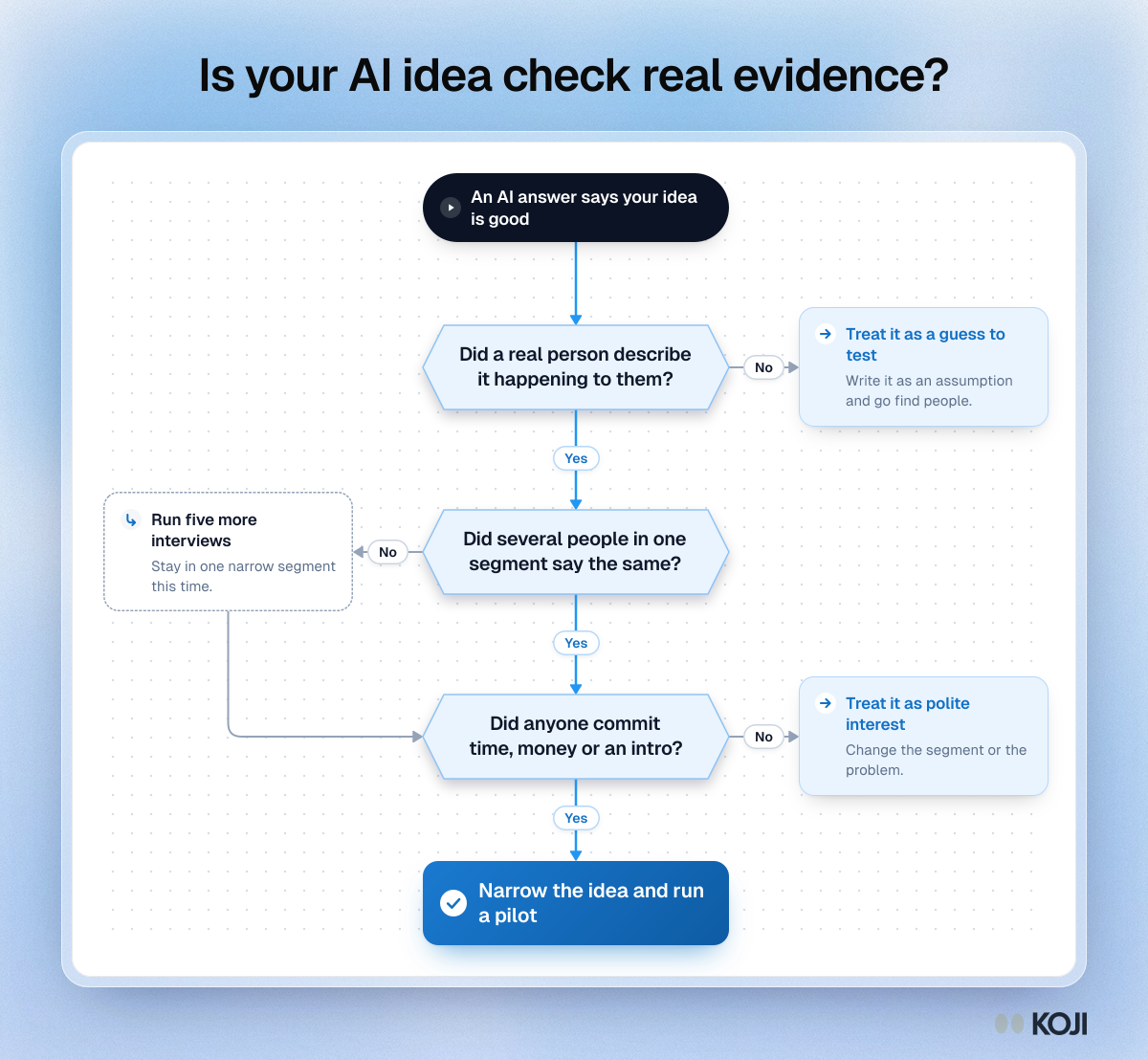
Flowchart for checking if an AI answer about your idea is real evidence: real behaviour, repeat across people, then commitment.

Flowchart

Is your AI idea check real evidence?
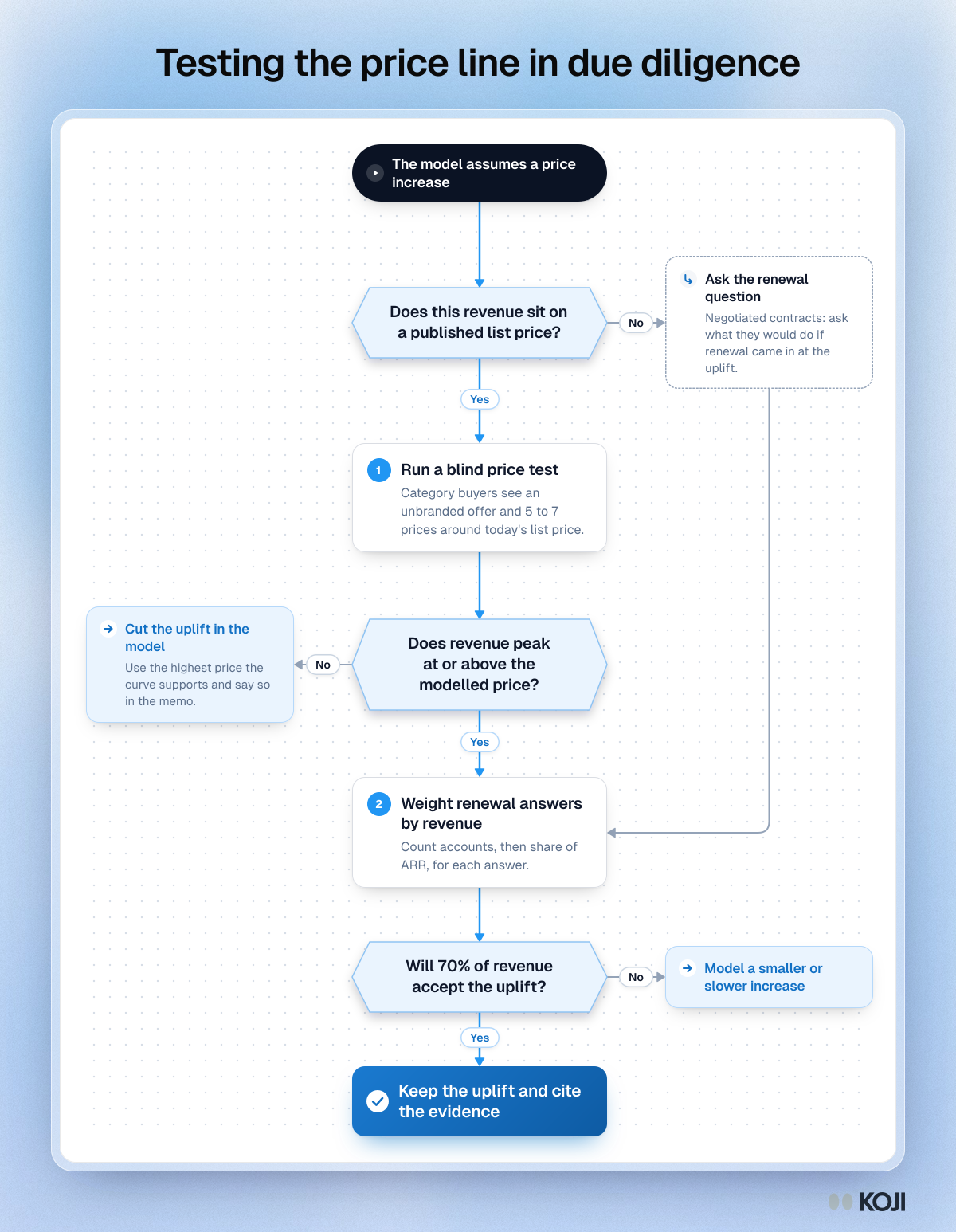
Flowchart for testing a price assumption in due diligence: list price or not, blind price test, demand check, revenue-weighted renewal answers, keep or cut

Flowchart

Testing the price line in due diligence
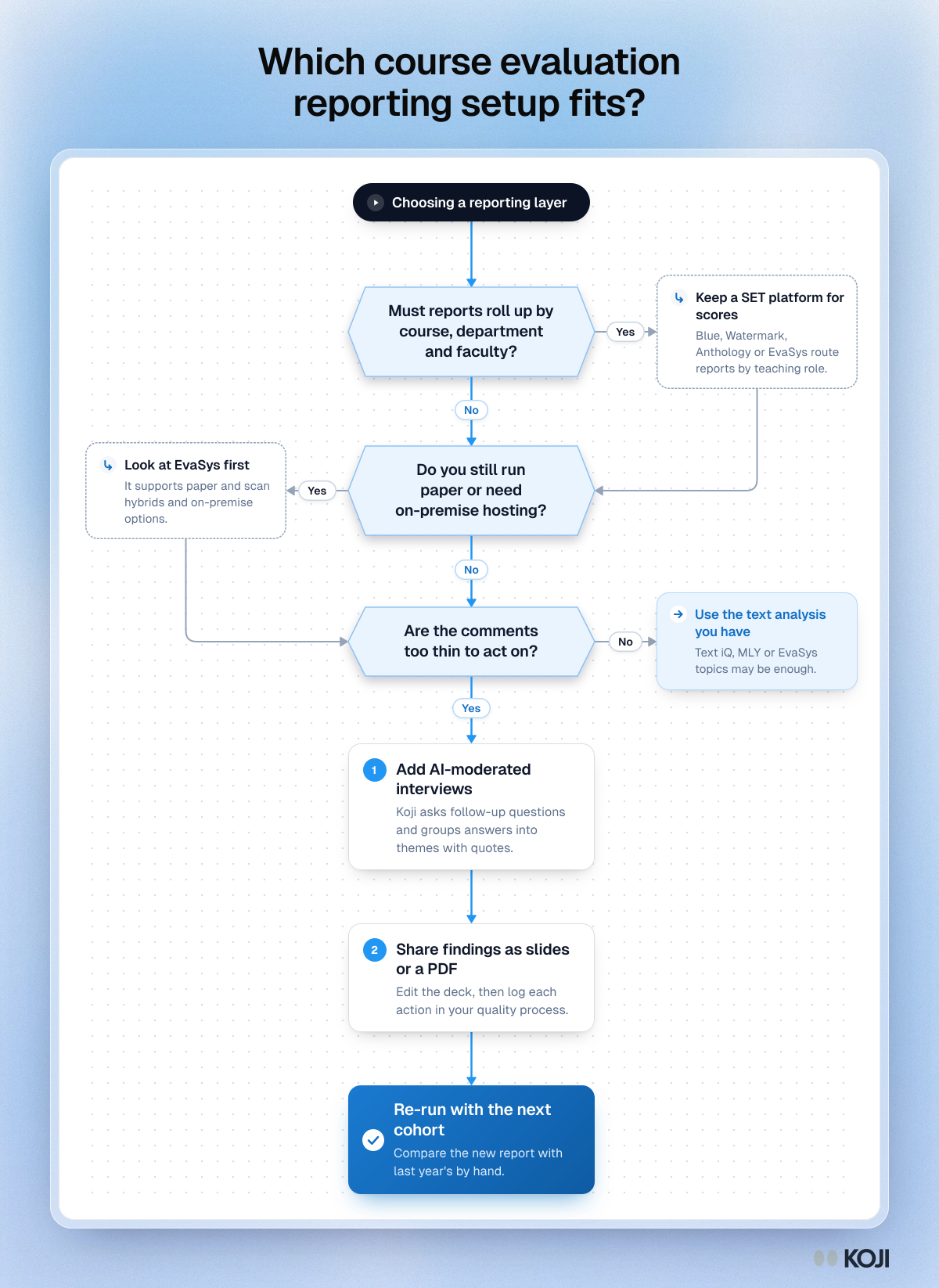
Flowchart for choosing a course evaluation reporting setup: three questions, two side steps, ending in a re-run with the next cohort.

Flowchart

Which course evaluation reporting setup fits?
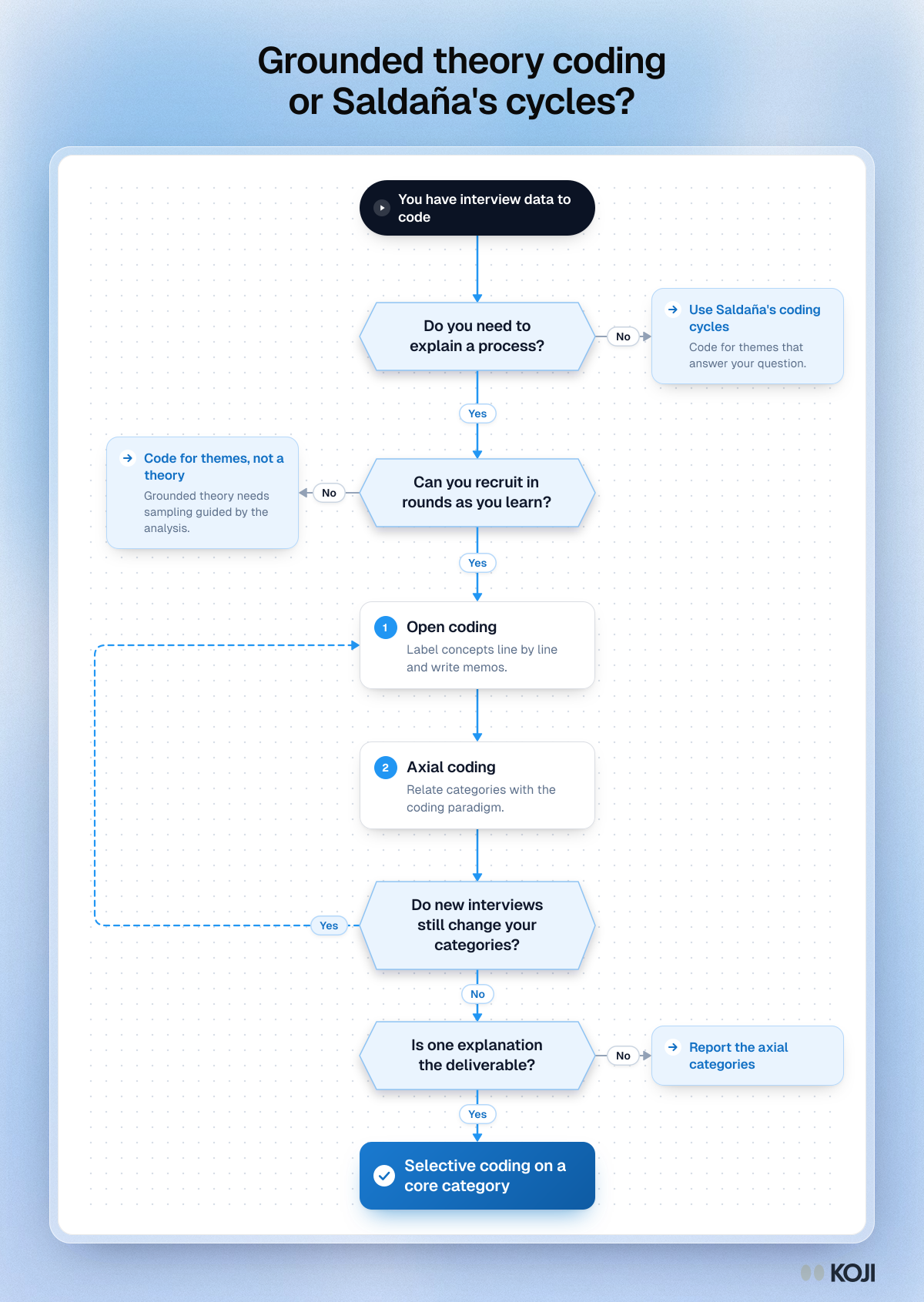
Flowchart for choosing grounded theory coding or Saldaña's cycles: four questions, a loop back to open coding, ending in selective coding.

Flowchart

Grounded theory coding or Saldaña's cycles?
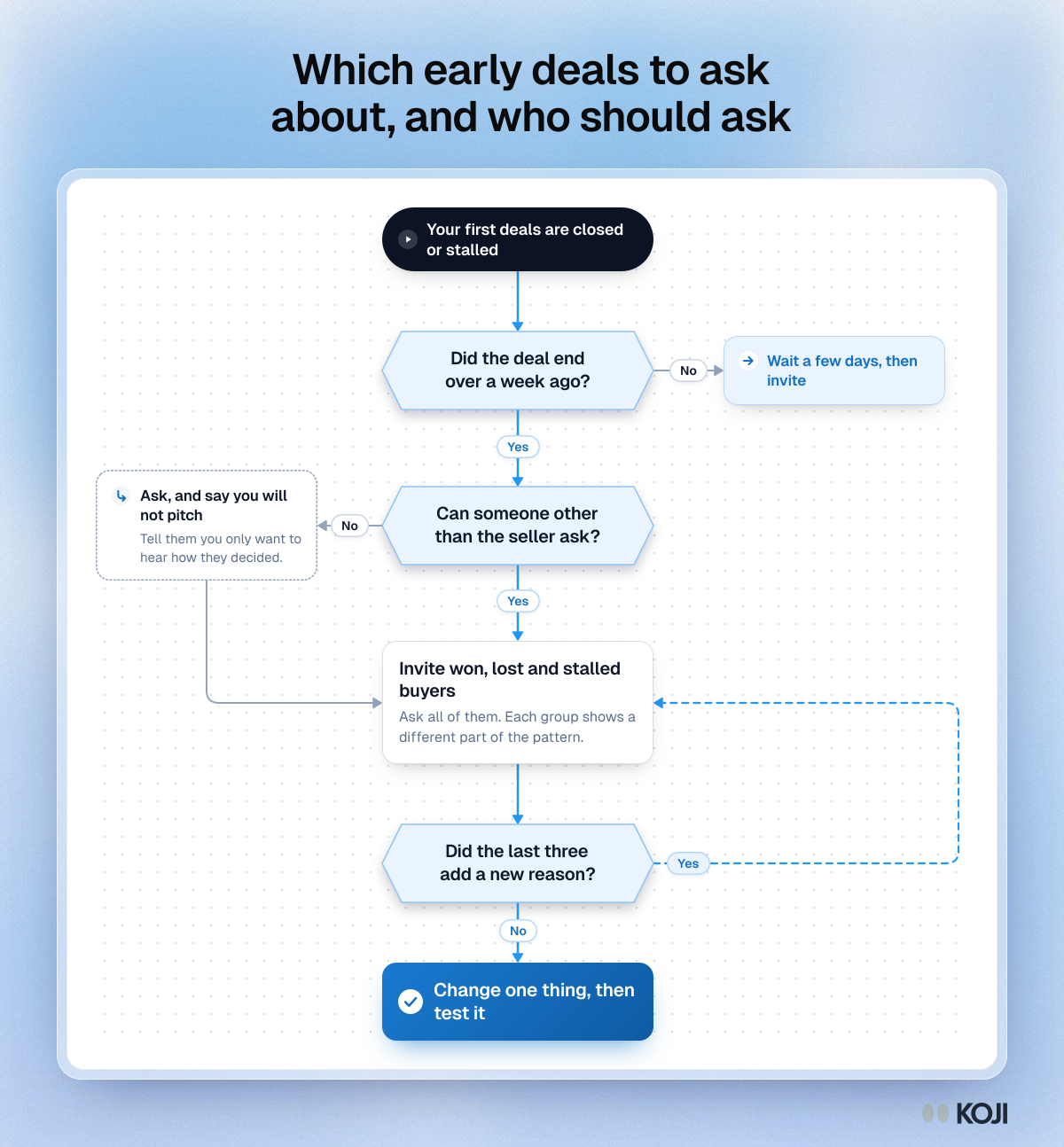
Flowchart for choosing early deals to interview: wait a week, have someone else ask, invite won, lost and stalled buyers, stop when nothing new appears.

Flowchart

Which early deals to ask about, and who should ask
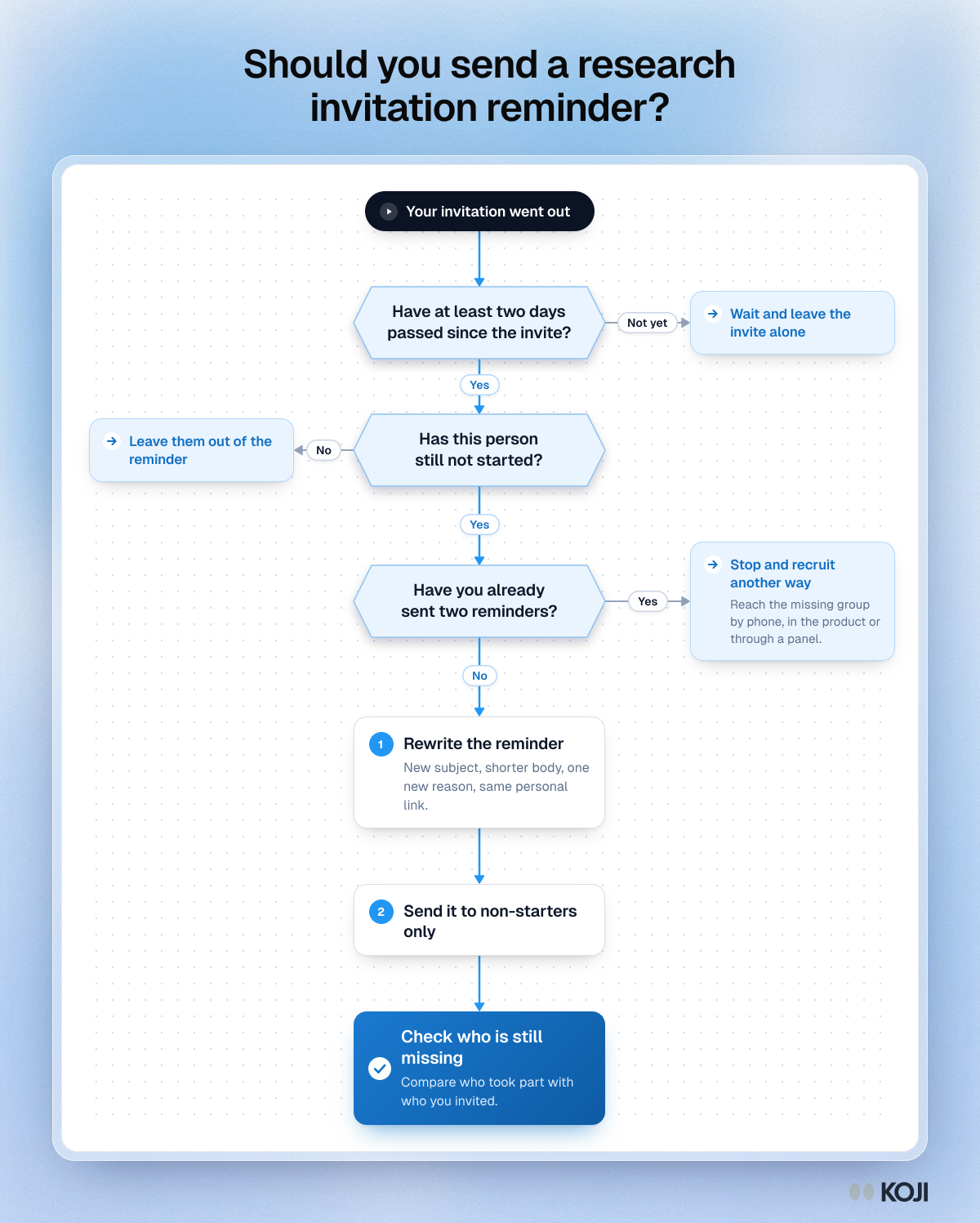
Flowchart for deciding whether to send a research reminder: wait two days, remind only non-starters, rewrite the email, stop after two.

Flowchart

Should you send a research invitation reminder?
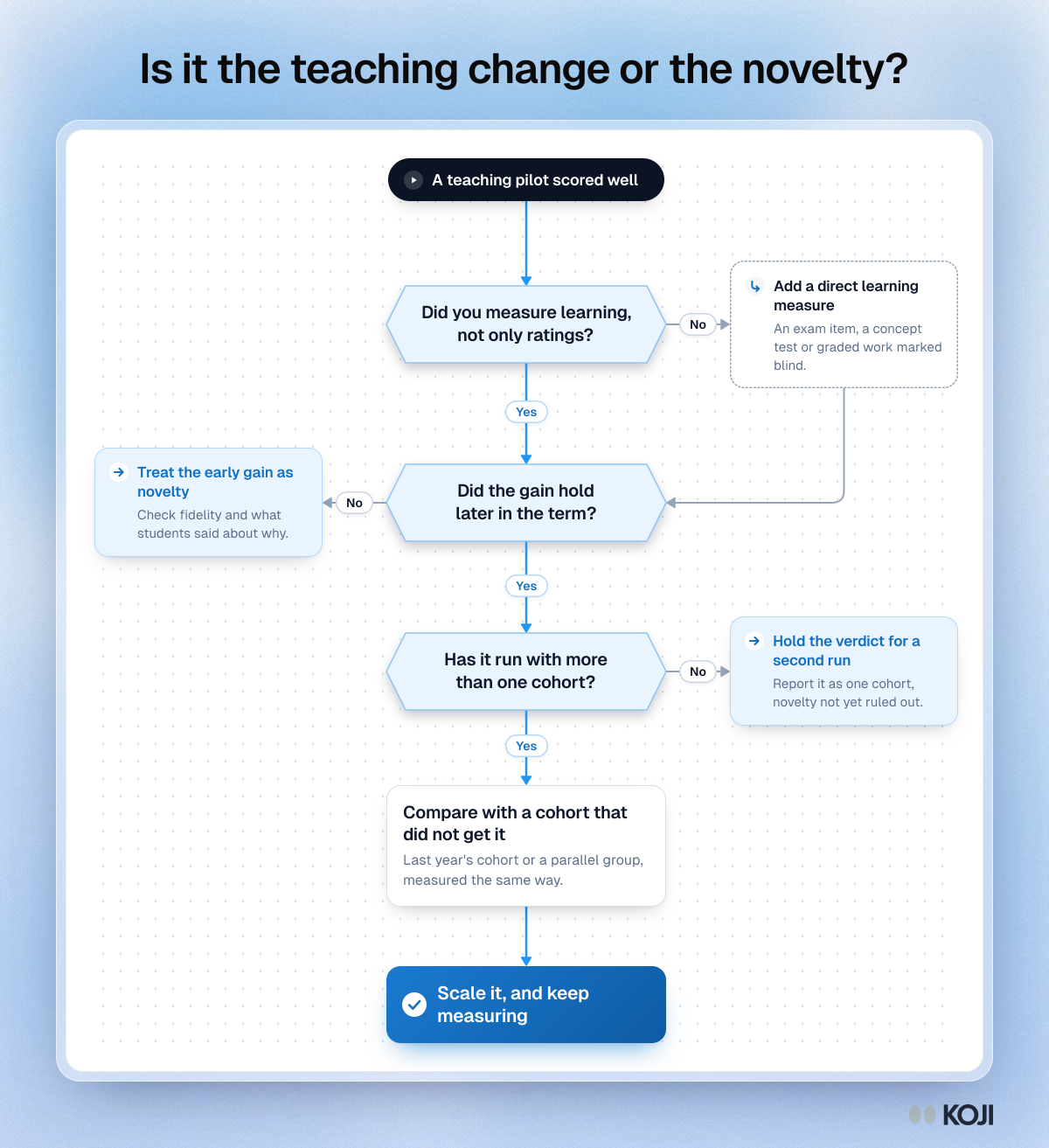
Flowchart for judging a teaching pilot: three questions on learning measures, cohorts and late-term gains, ending in a scale-up with continued measurement.

Flowchart

Is it the teaching change or the novelty?
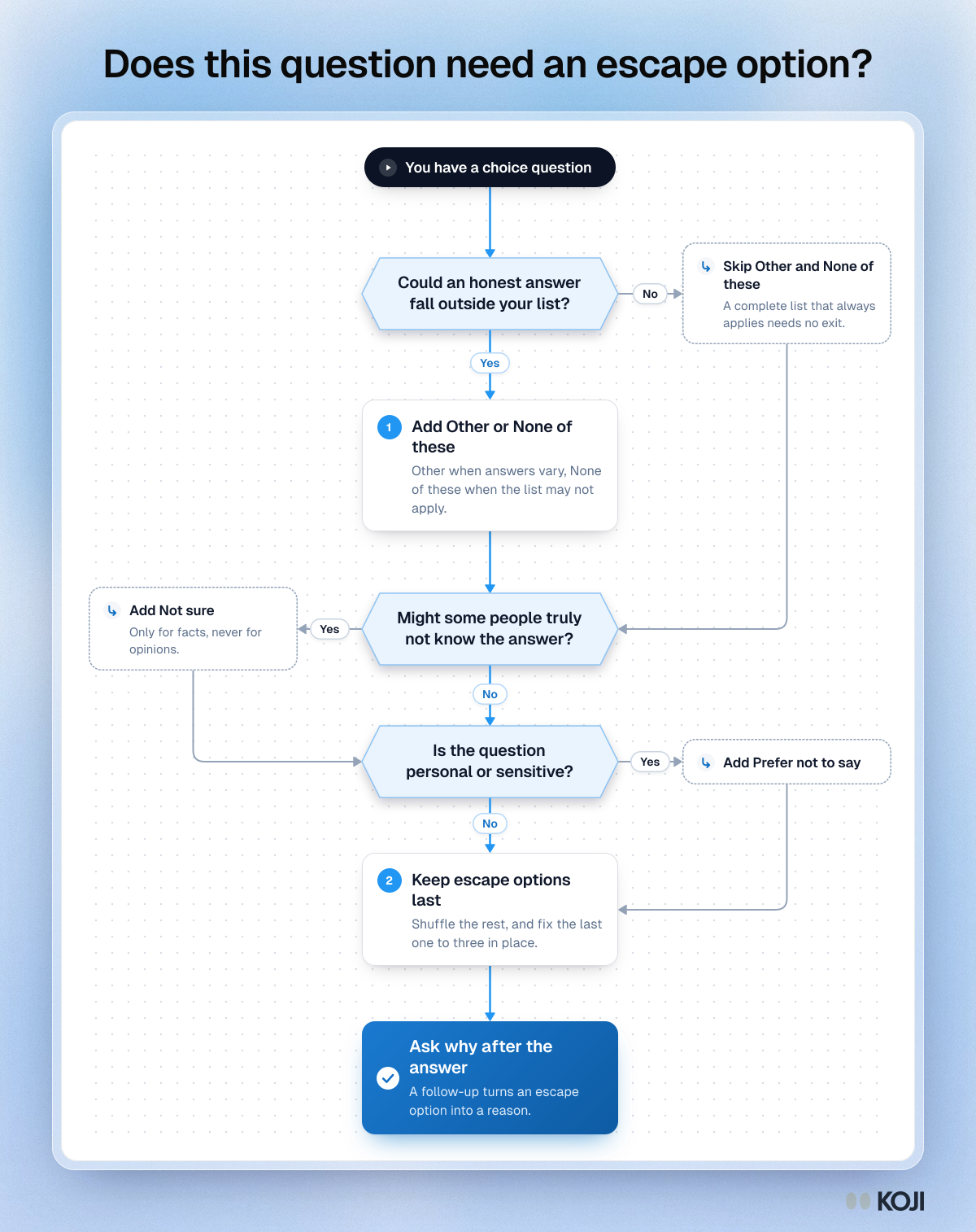
Flowchart for adding escape options: Other or None of these, Not sure for facts, Prefer not to say for sensitive questions, all kept last.

Flowchart

Does this question need an escape option?
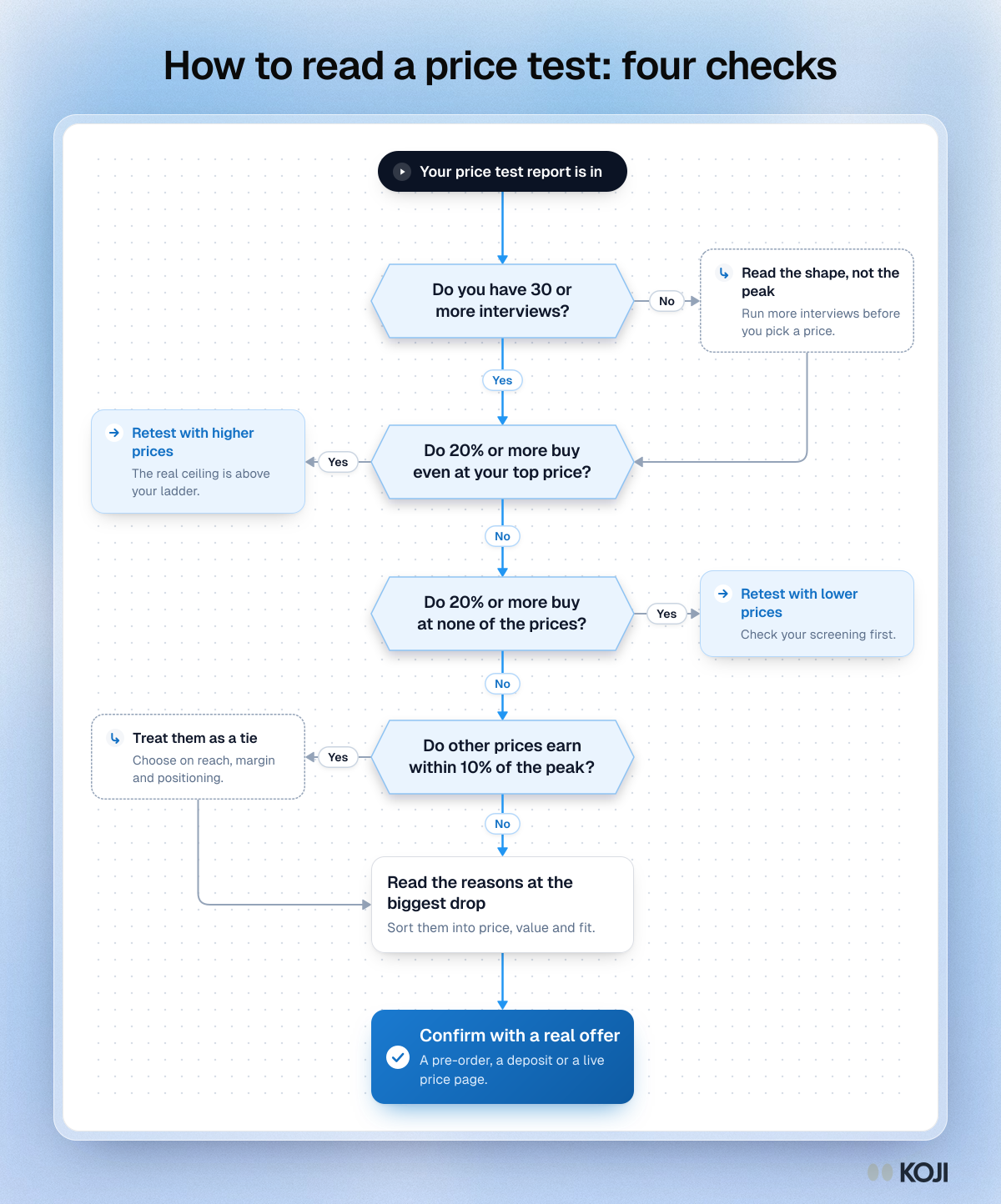
Flowchart for reading a price test: check the sample and both ends of the ladder, treat near ties as ties, read the reasons, then confirm with a real offer.

Flowchart

How to read a price test: four checks
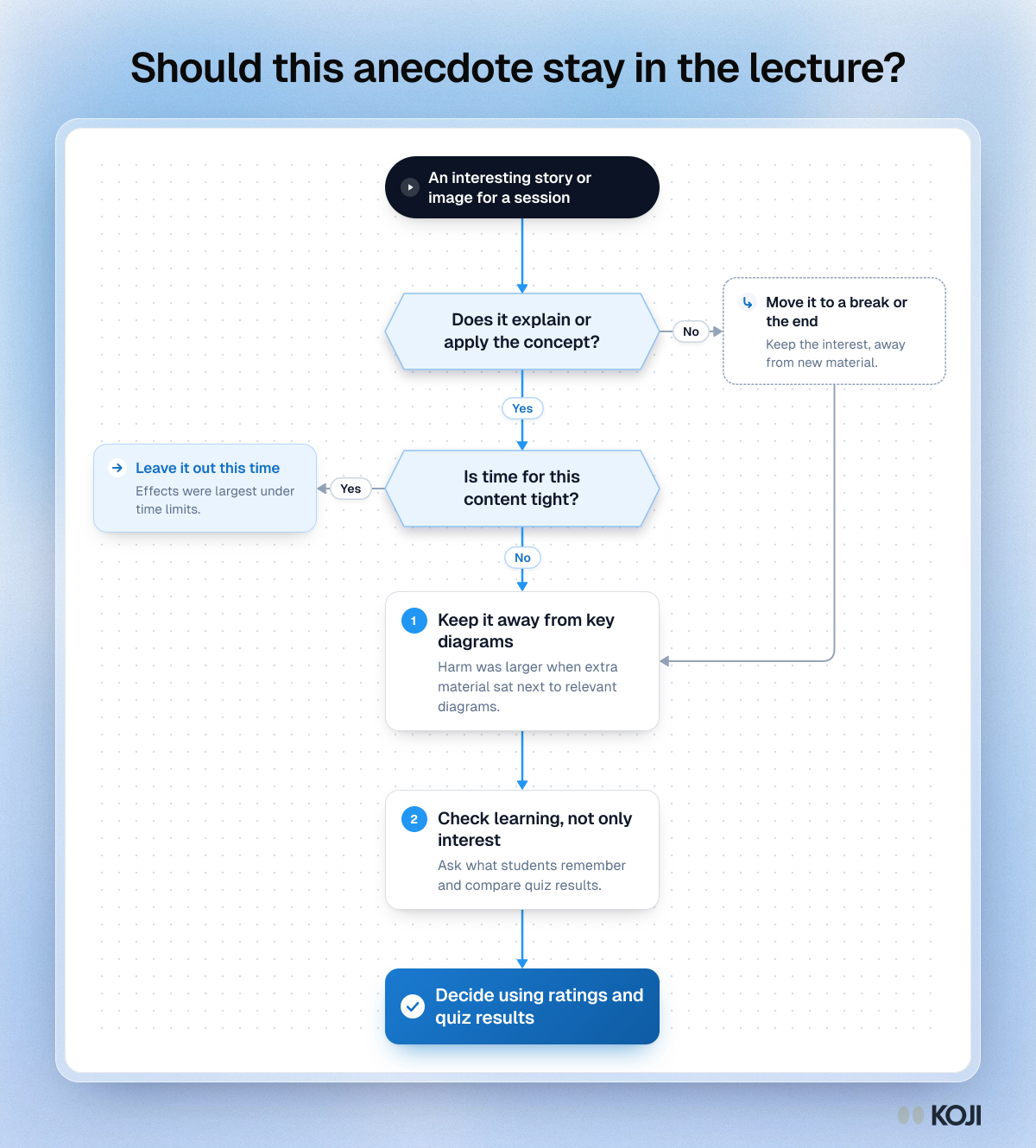
Flowchart for deciding whether to keep an interesting story in a lecture: two questions, a side step, one exit and two checks.

Flowchart

Should this anecdote stay in the lecture?
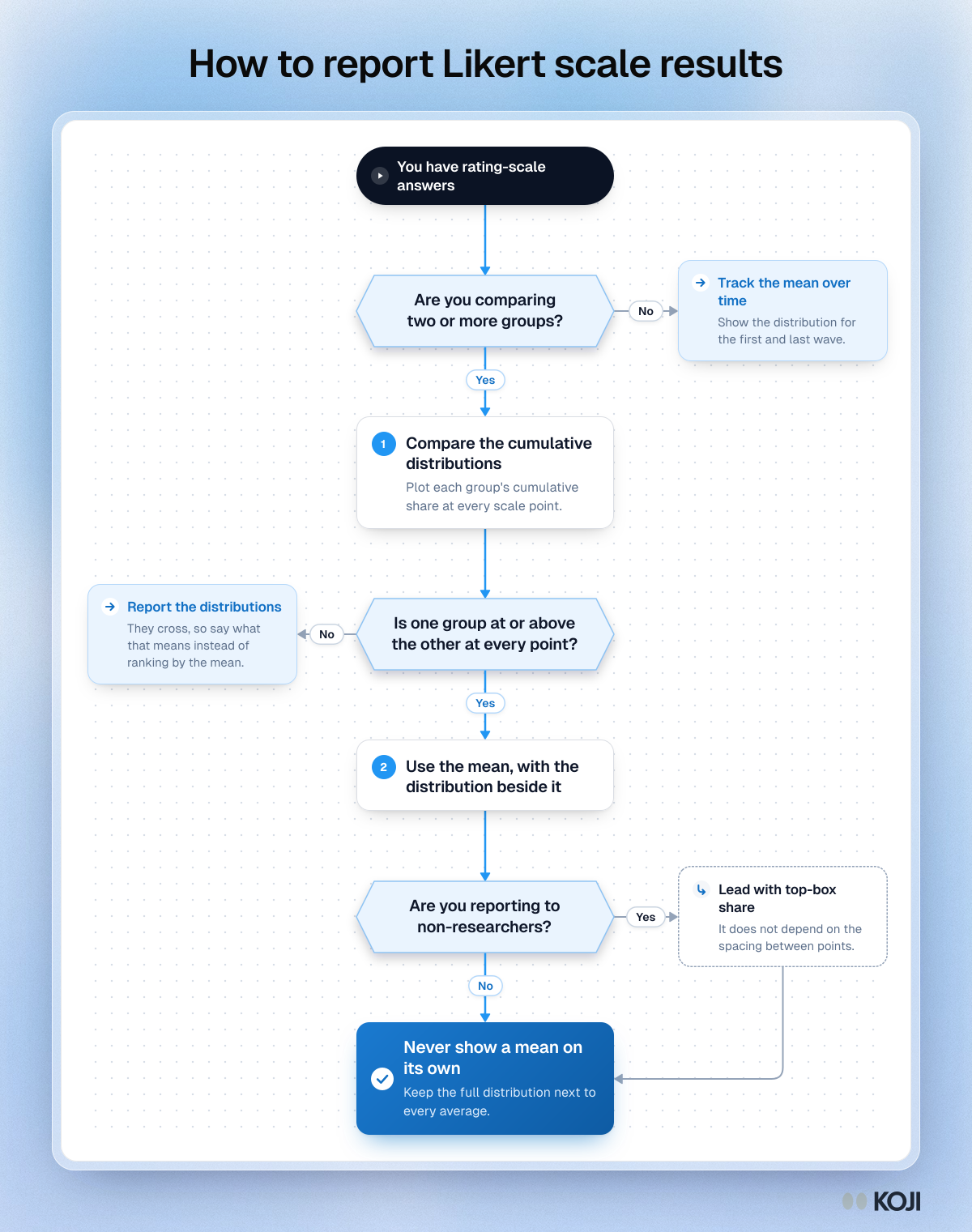
Flowchart for reporting Likert results: three questions on groups, crossing distributions and audience, ending with the mean shown beside its distribution.

Flowchart

How to report Likert scale results
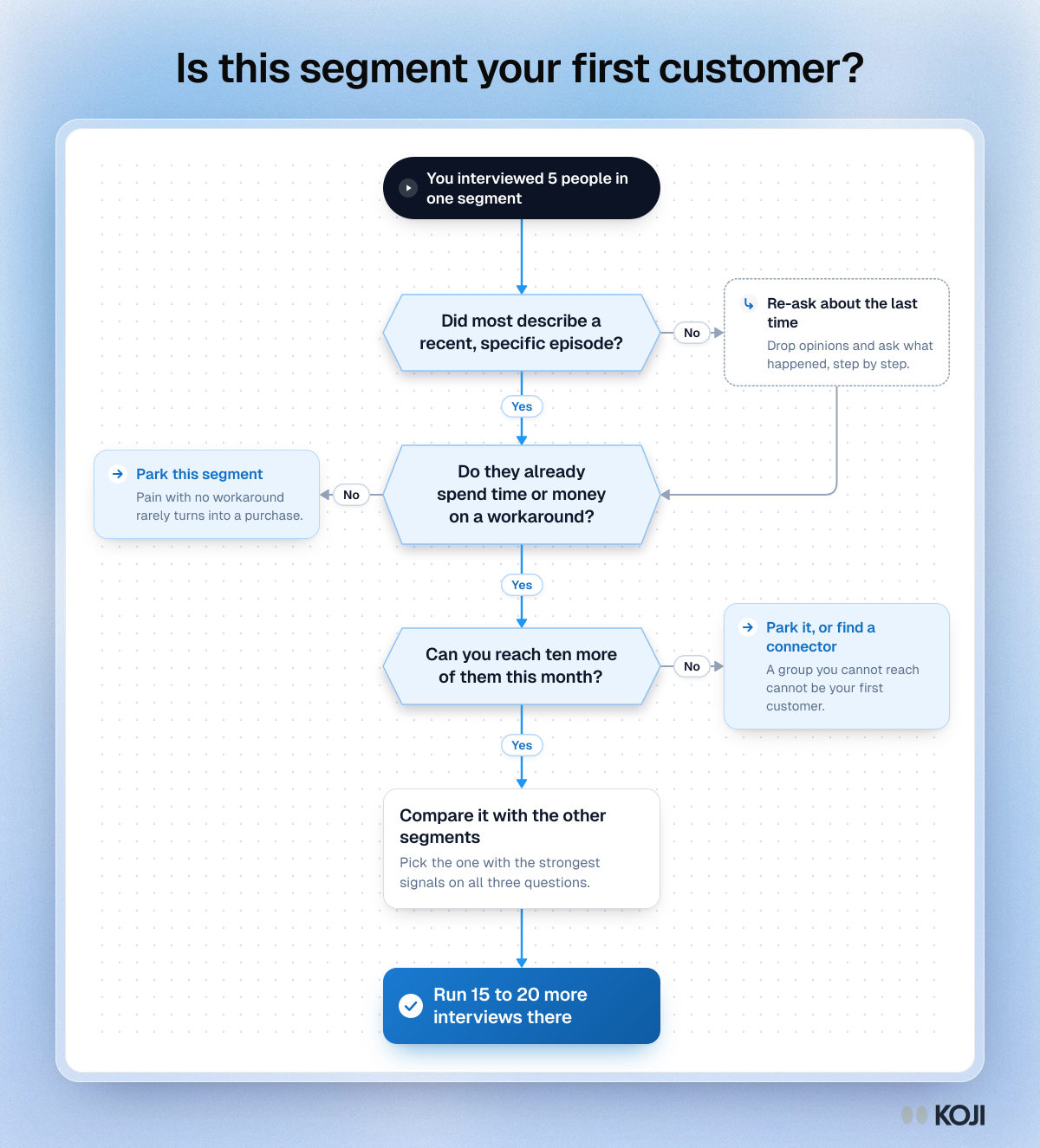
Flowchart for deciding whether a customer segment is your first customer: three questions on recent episodes, paid workarounds and reach, one side step.

Flowchart

Is this segment your first customer?
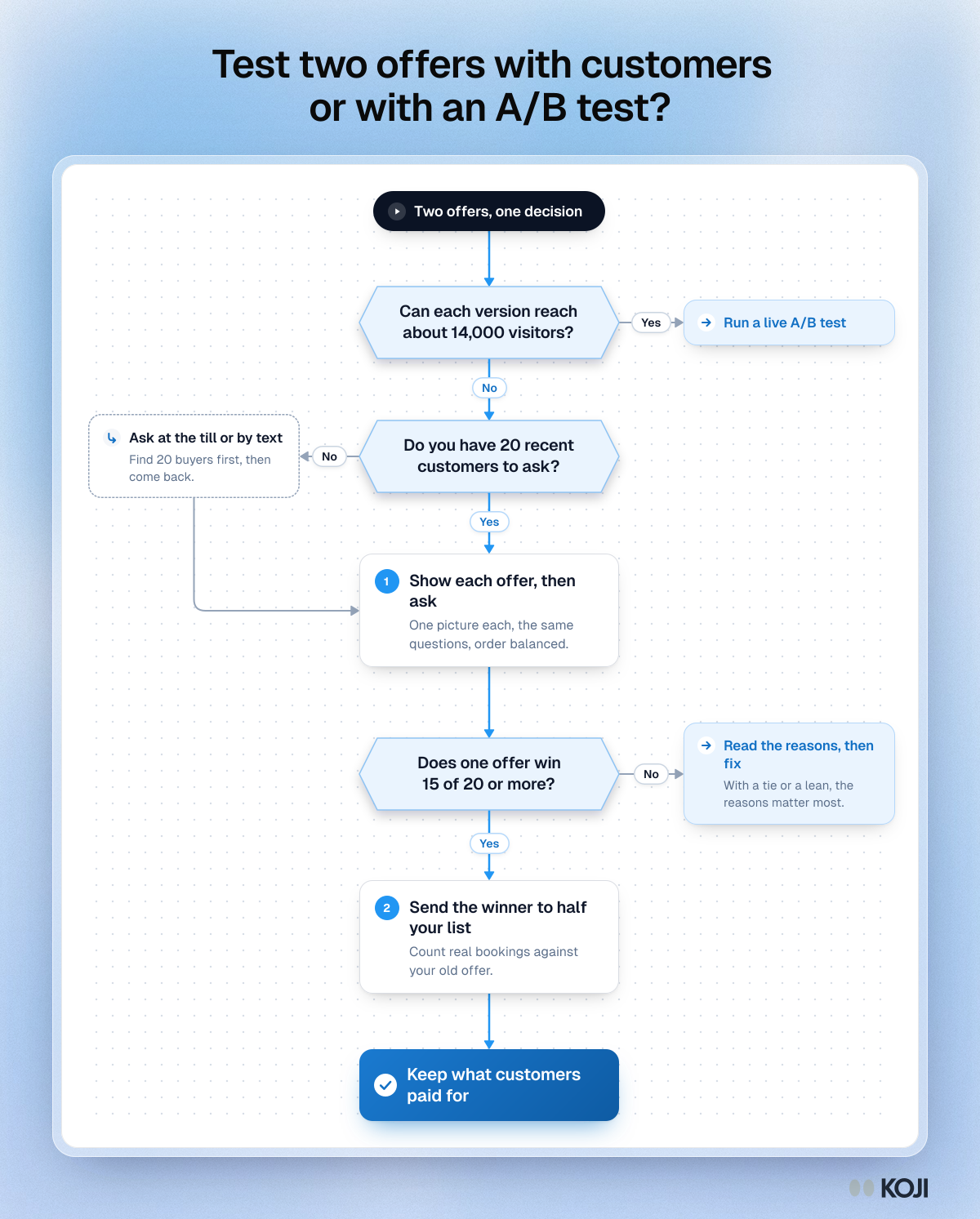
Flowchart for choosing between a live A/B test and asking 20 customers about two offers: three questions, one side step, ending in a split send.

Flowchart

Test two offers with customers or with an A/B test?
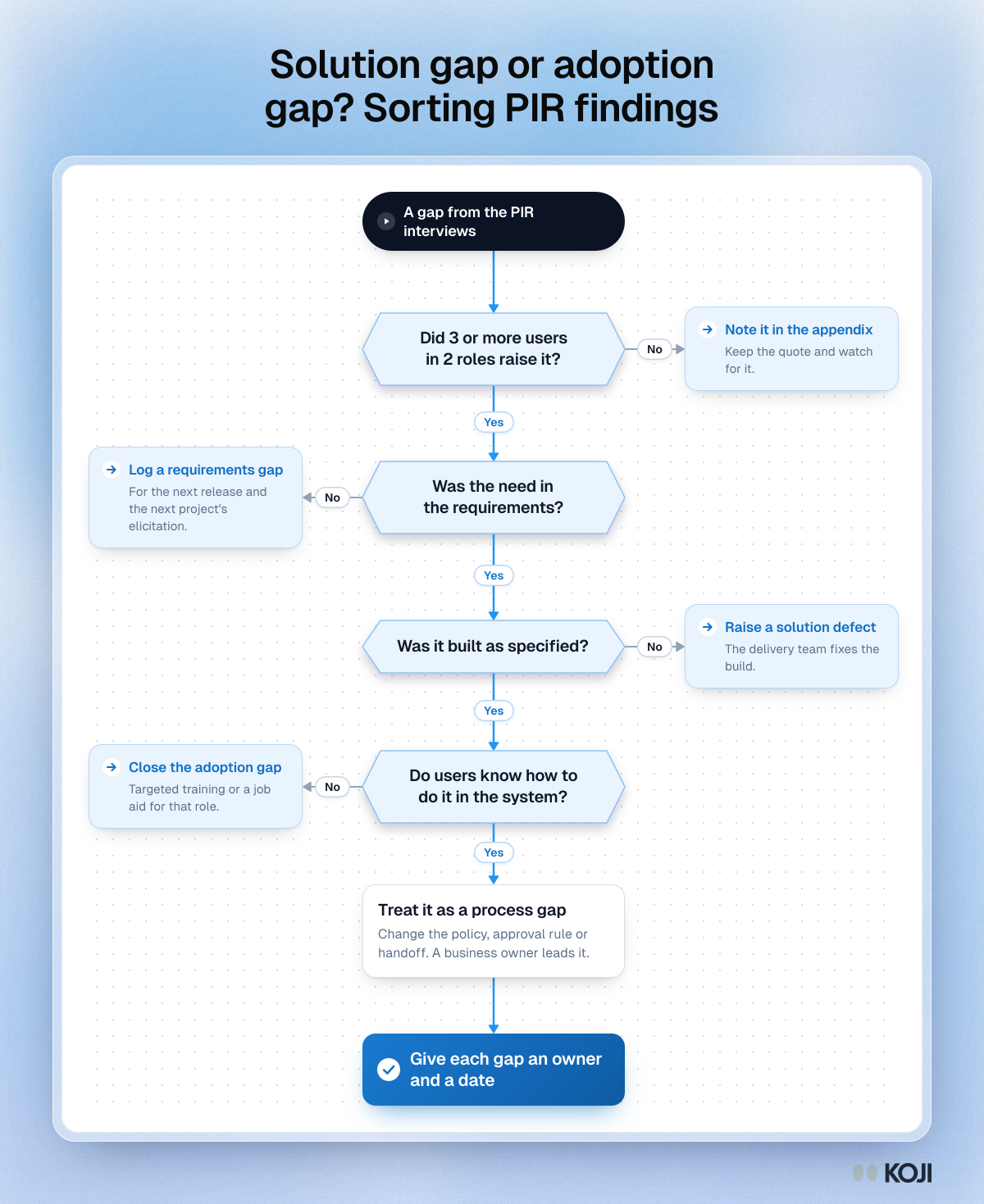
Flowchart for sorting a post-implementation review gap with four yes or no questions, from how many users raised it to requirements, build and training.

Flowchart

Solution gap or adoption gap? Sorting PIR findings
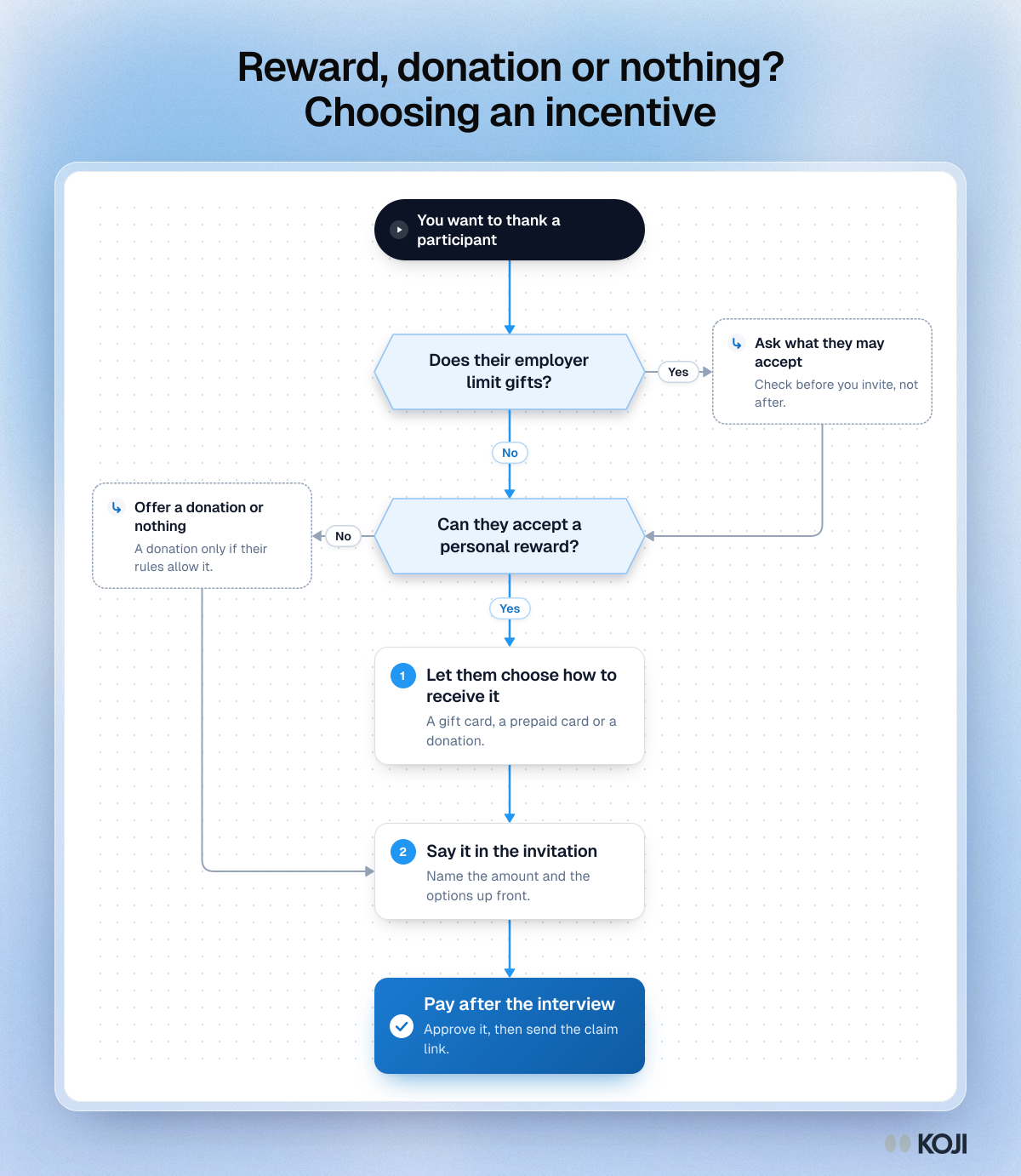
Flowchart for deciding whether to offer a research participant a reward, a donation or nothing, depending on their employer's rules

Flowchart

Reward, donation or nothing? Choosing an incentive
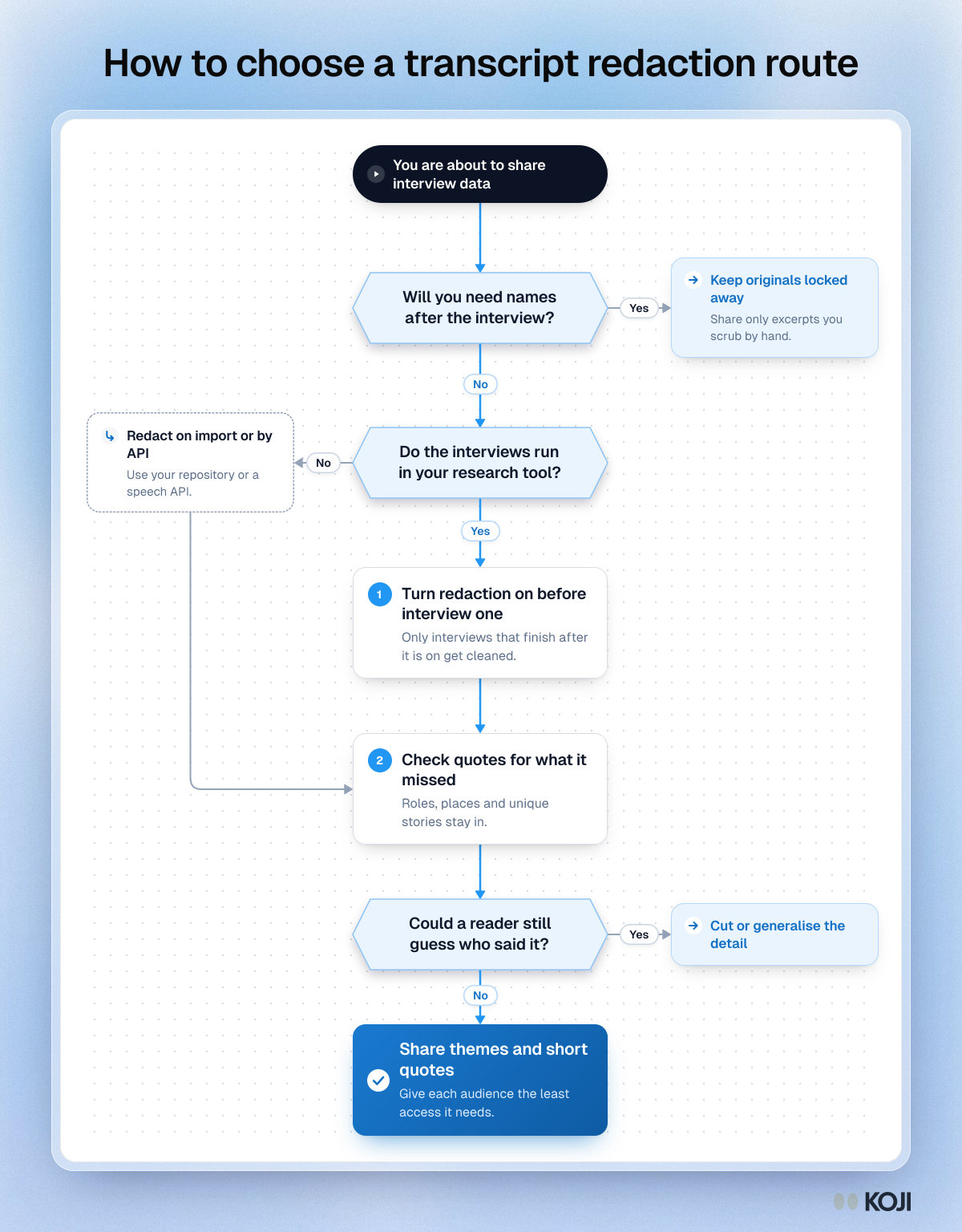
Flowchart for choosing a transcript redaction route, from whether you need names to checking quotes before you share themes

Flowchart

How to choose a transcript redaction route
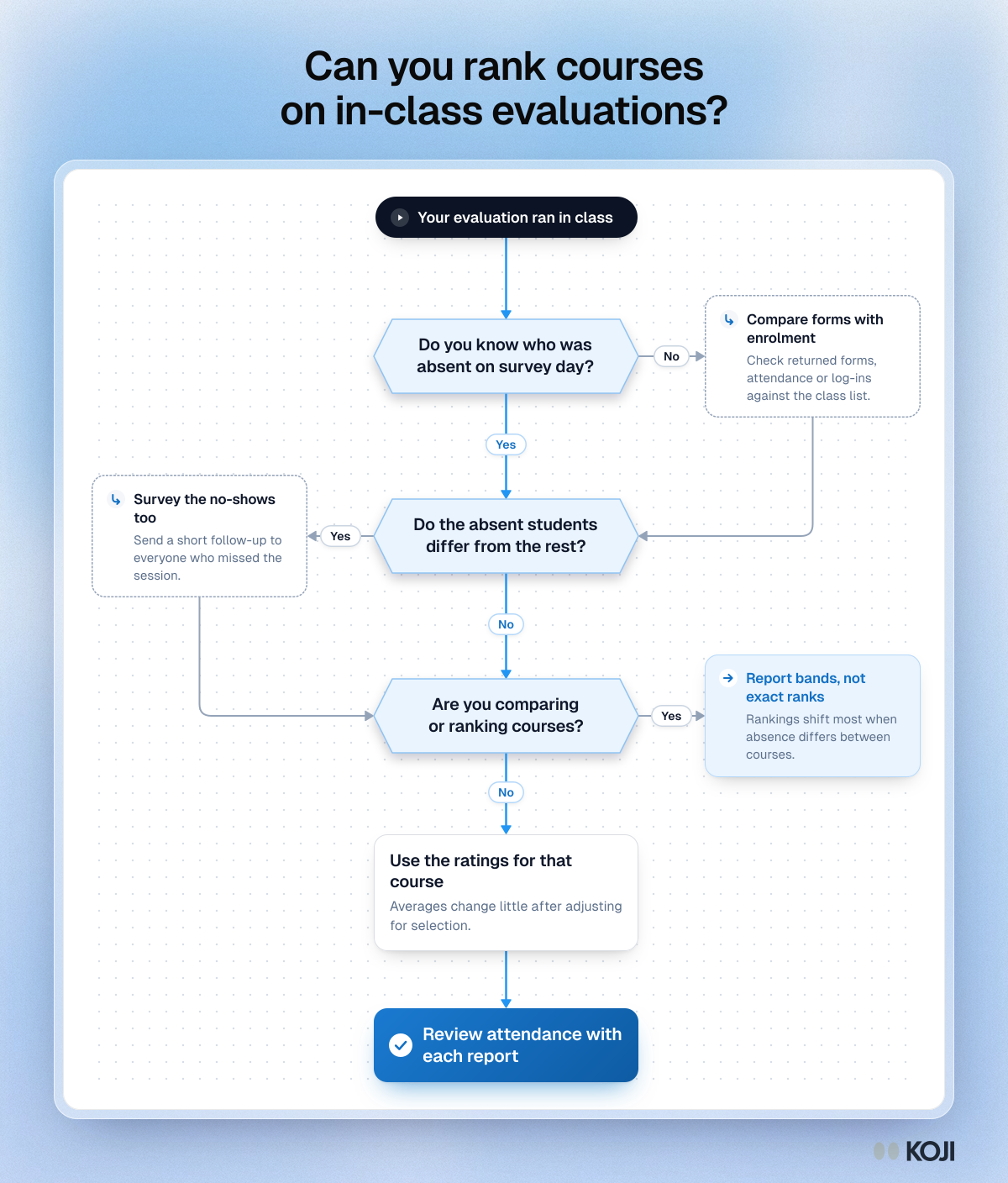
Flowchart for deciding whether in-class course evaluation data can rank courses: three questions, two side steps, one exit, ending in an attendance review.

Flowchart

Can you rank courses on in-class evaluations?
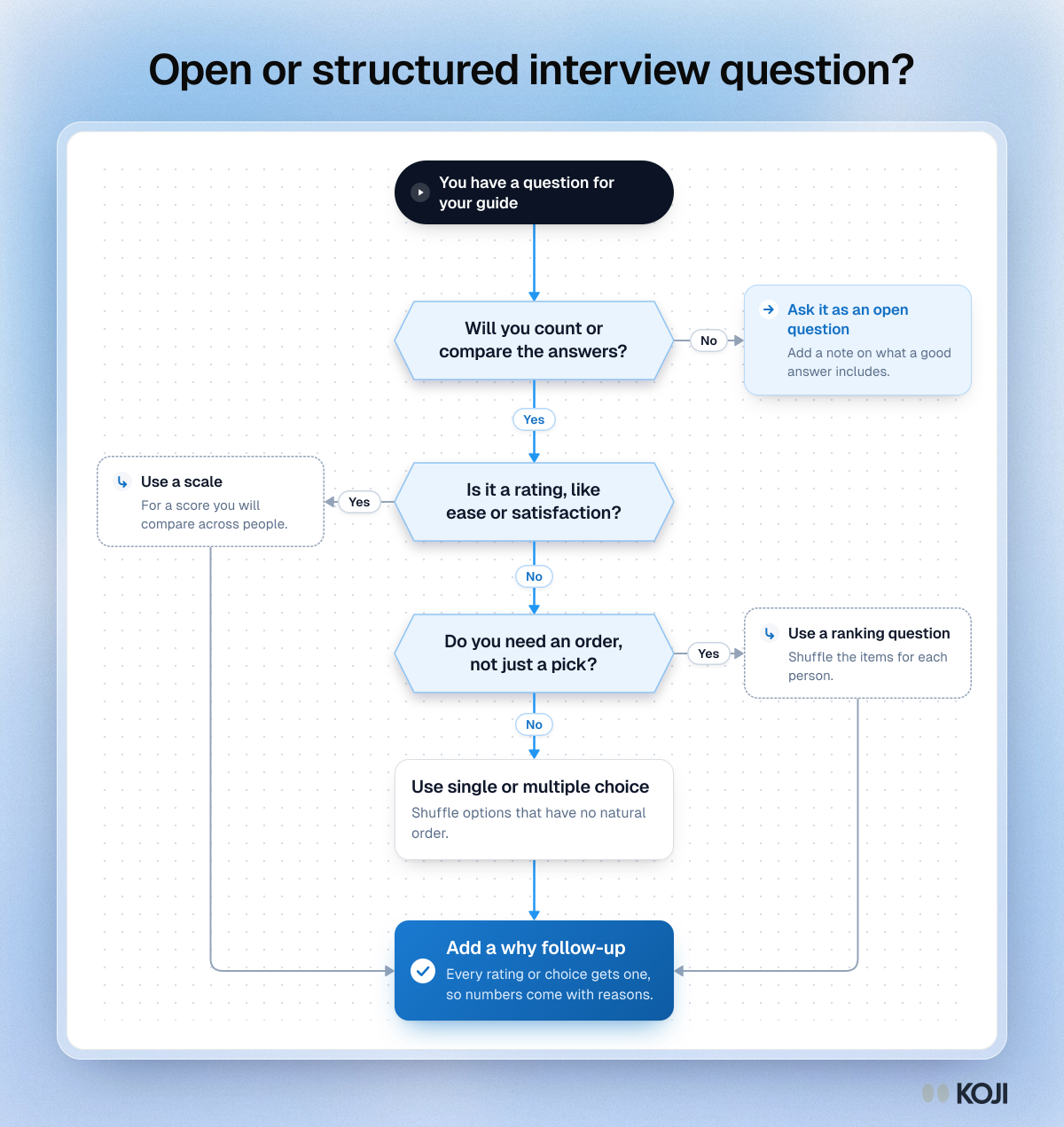
Flowchart for choosing between an open question and a structured question in an AI-moderated interview, with a why follow-up after every structured answer.

Flowchart

Open or structured interview question?
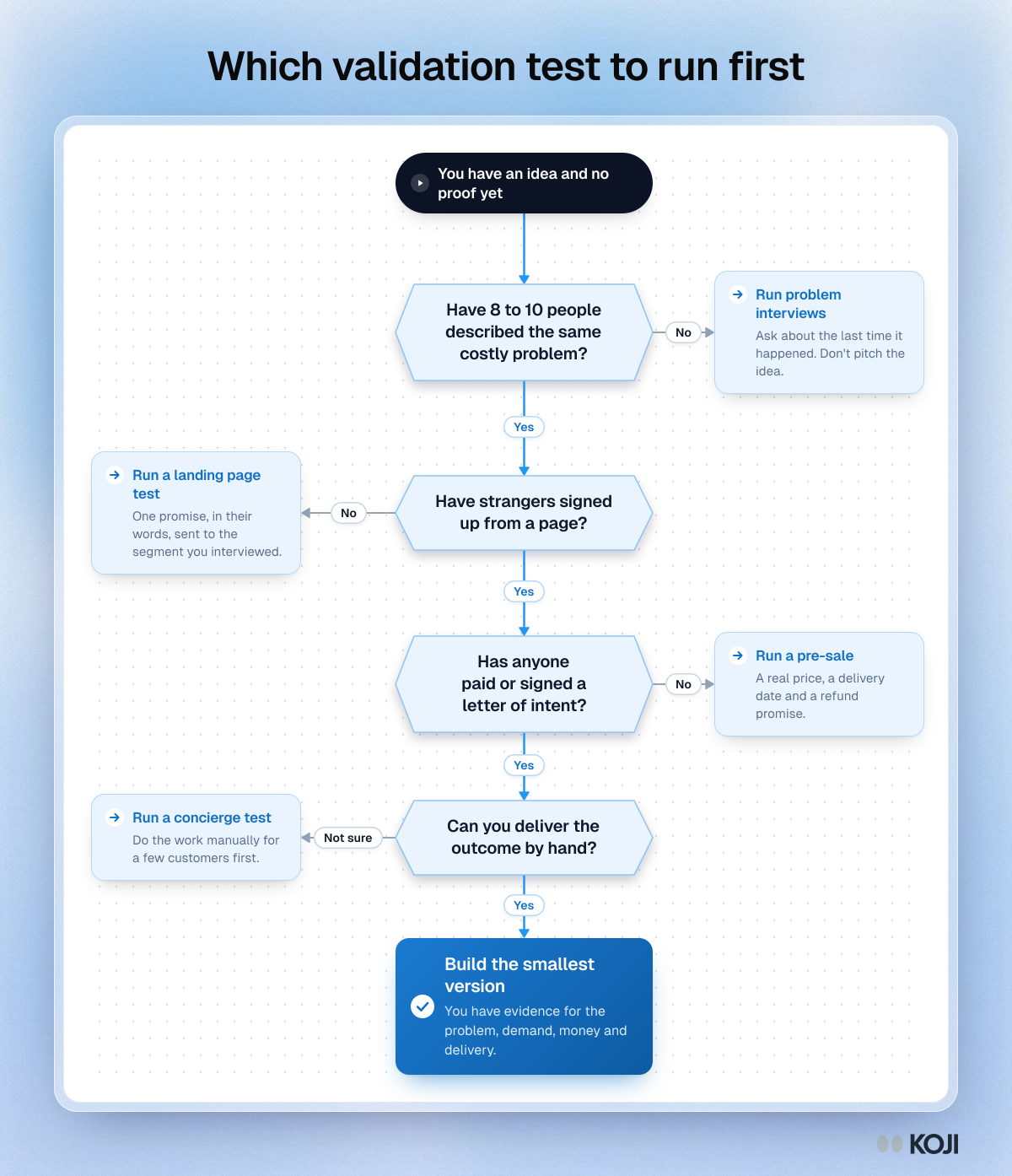
Flowchart for choosing the first validation test: interviews if the problem is unproven, then a landing page, then pre-sales, then a concierge test.

Flowchart

Which validation test to run first
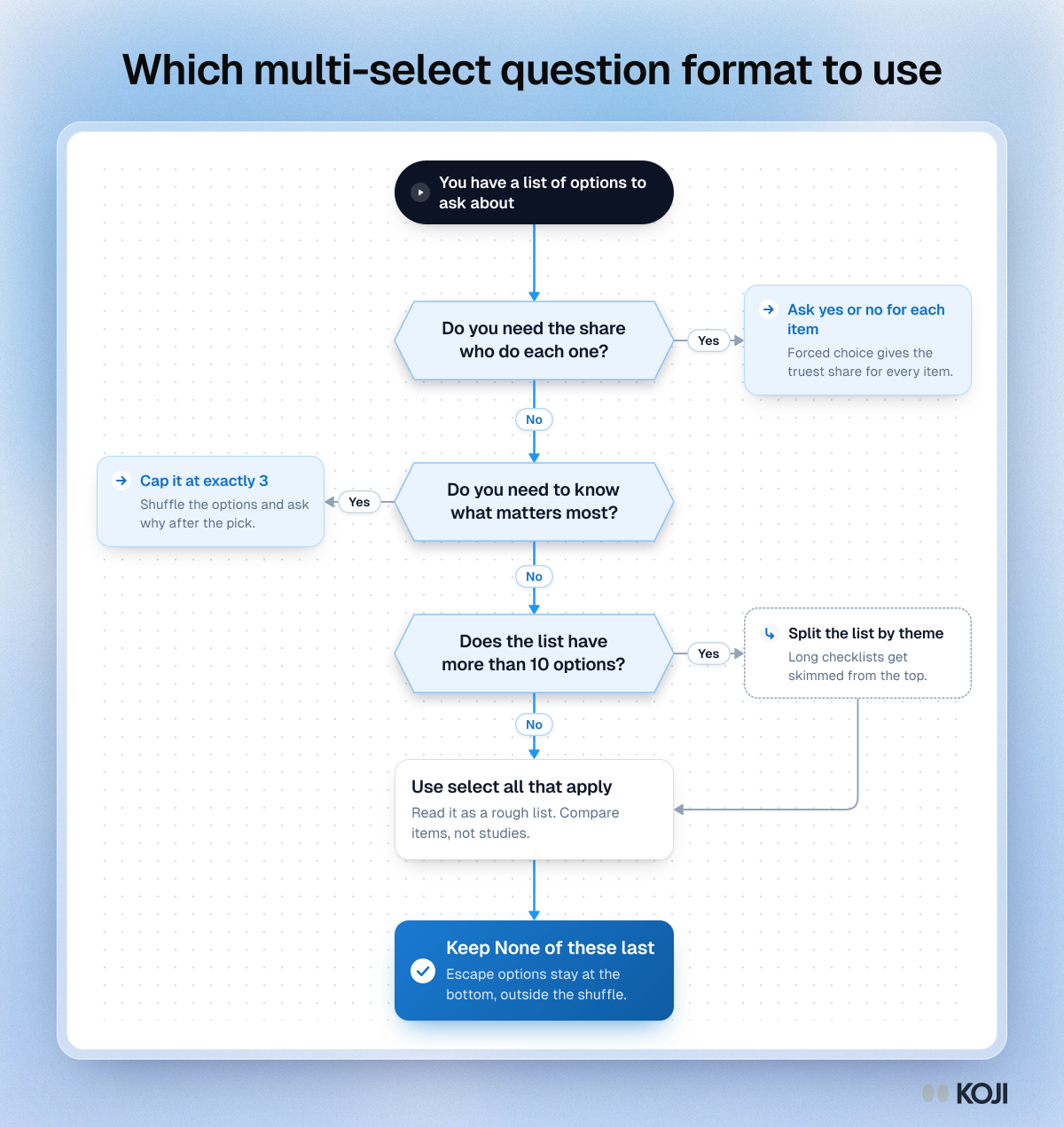
Flowchart for choosing a multi-select question format: forced yes/no for prevalence, a capped top 3 for priority, select-all for a rough list.

Flowchart

Which multi-select question format to use
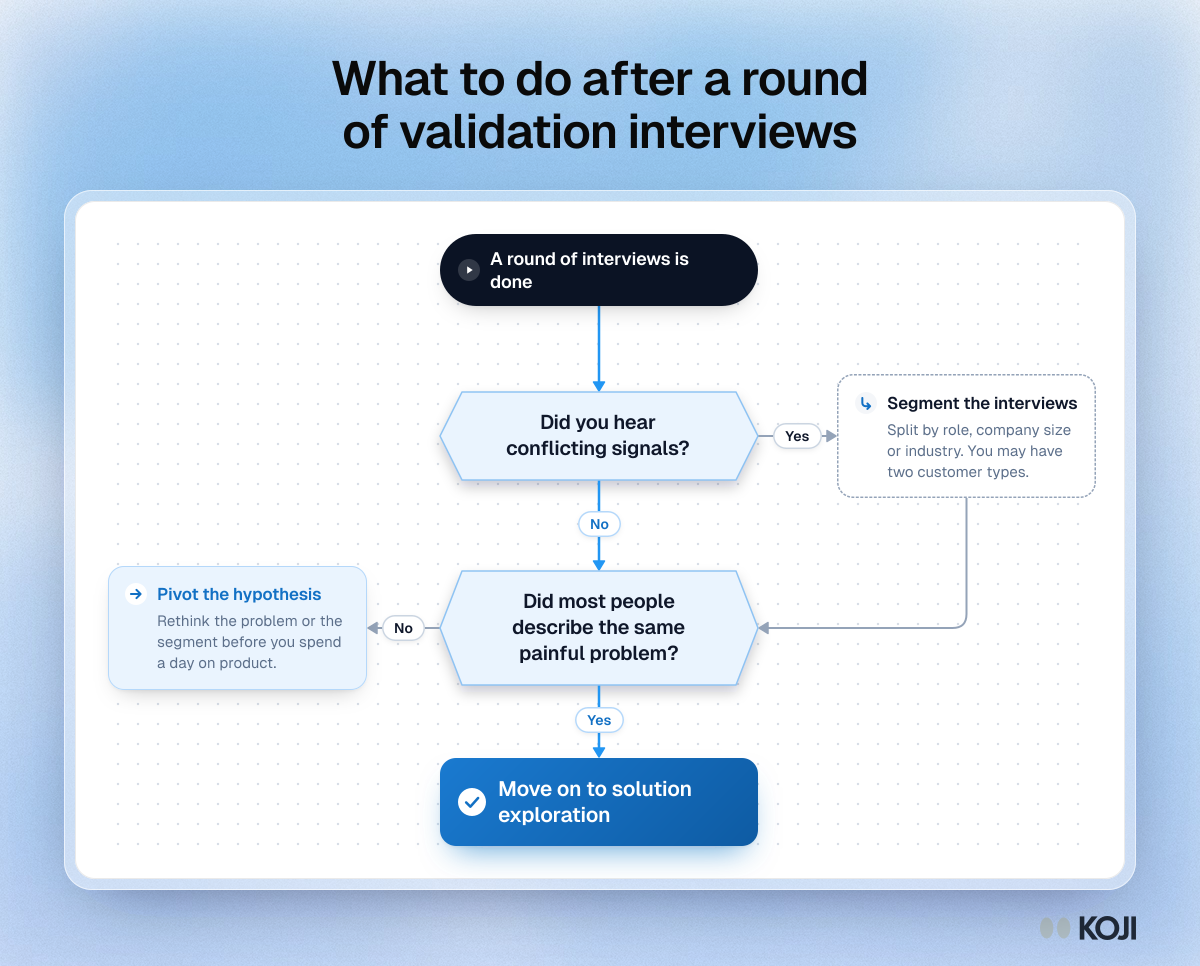
Flowchart for after validation interviews: segment if signals conflict, pivot if most did not share a painful problem, otherwise explore solutions.

Flowchart

What to do after a round of validation interviews
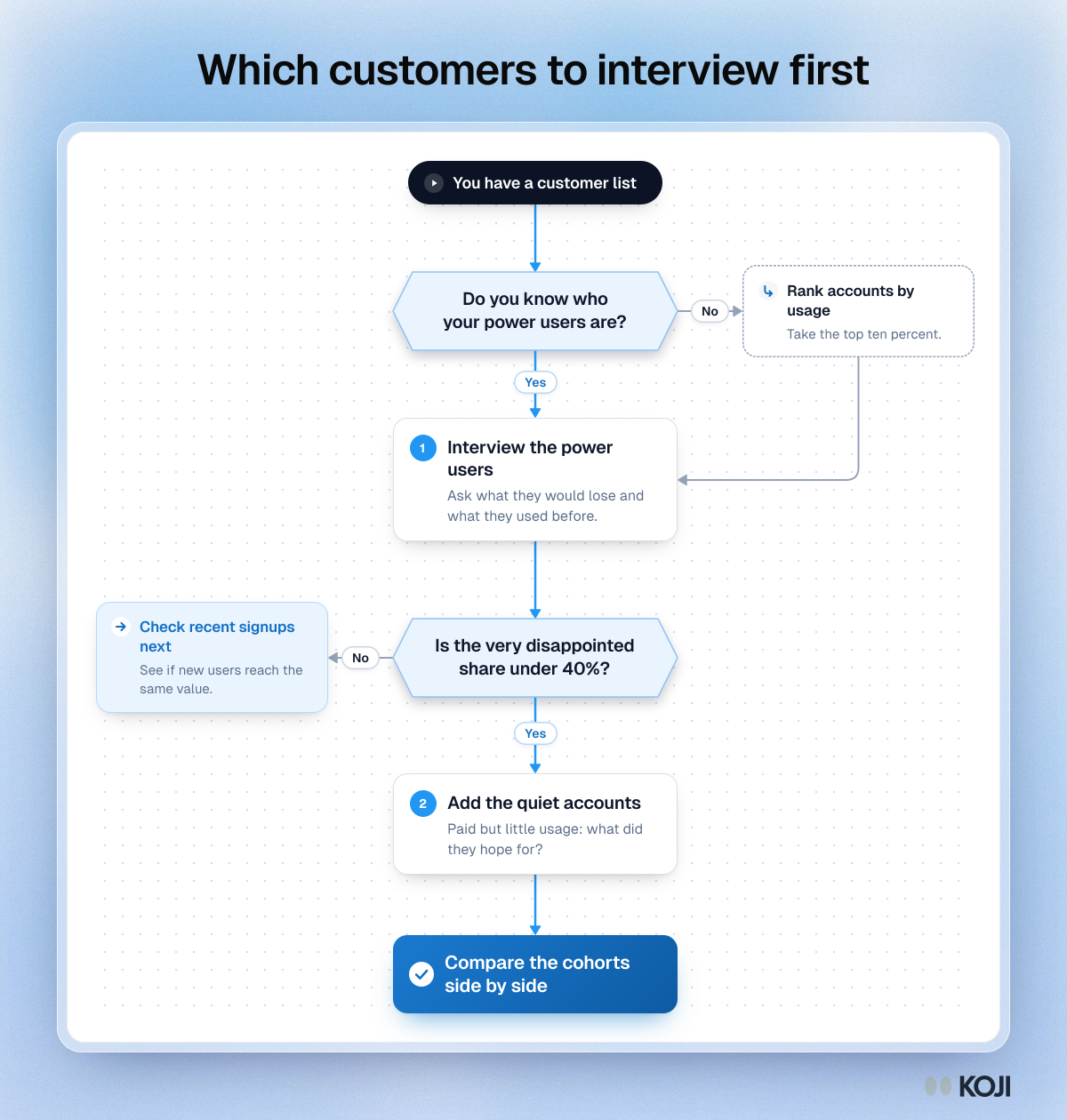
Flowchart for choosing which customers to interview first: two questions, one side step, ending with a side-by-side comparison of the cohorts.

Flowchart

Which customers to interview first
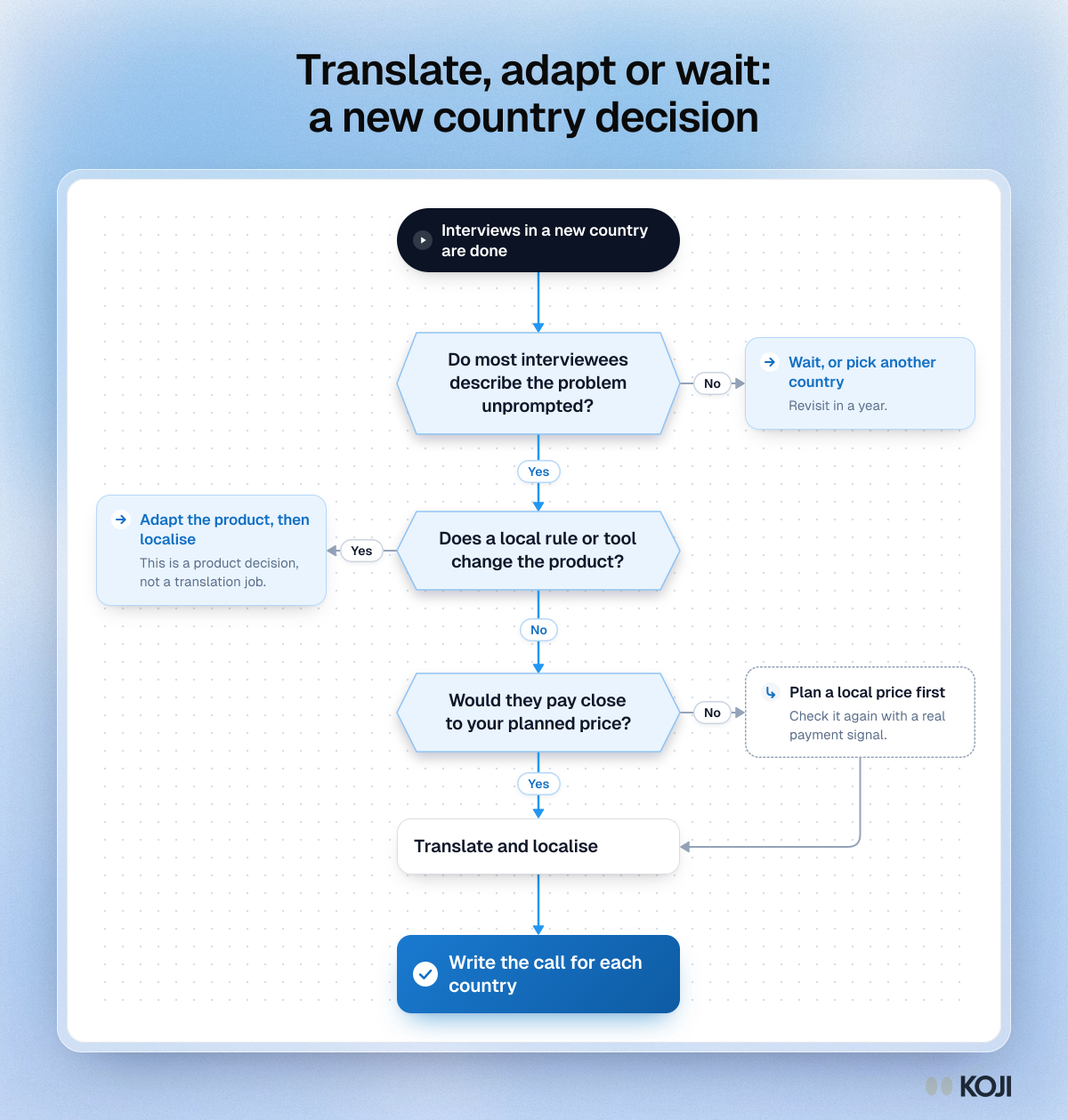
Flowchart for the decision after interviews in a new country: wait, adapt the product, plan a local price or translate.

Flowchart

Translate, adapt or wait: a new country decision
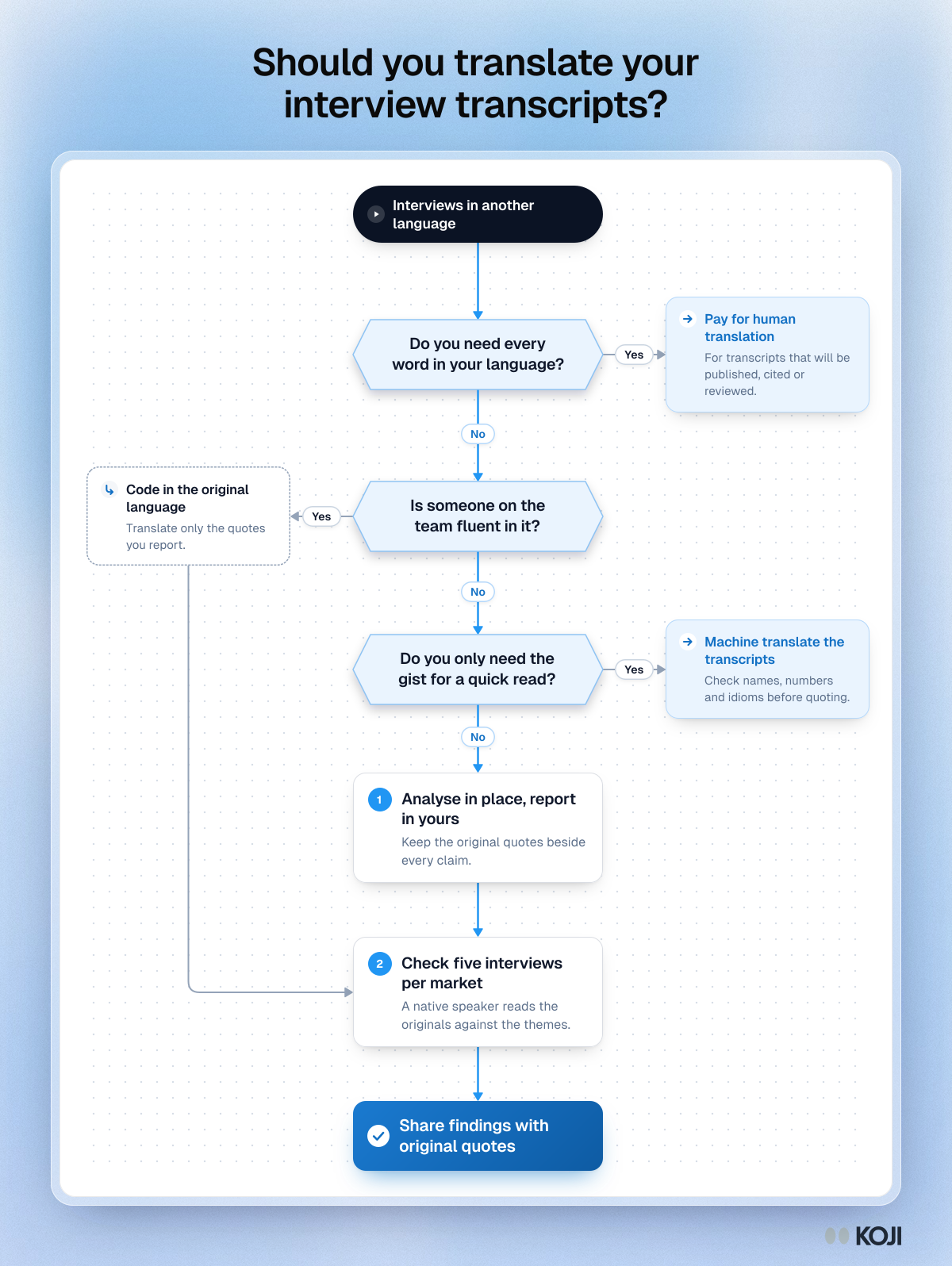
Flowchart for handling interview transcripts in another language: three questions leading to human translation, machine translation or analysis in place.

Flowchart

Should you translate your interview transcripts?
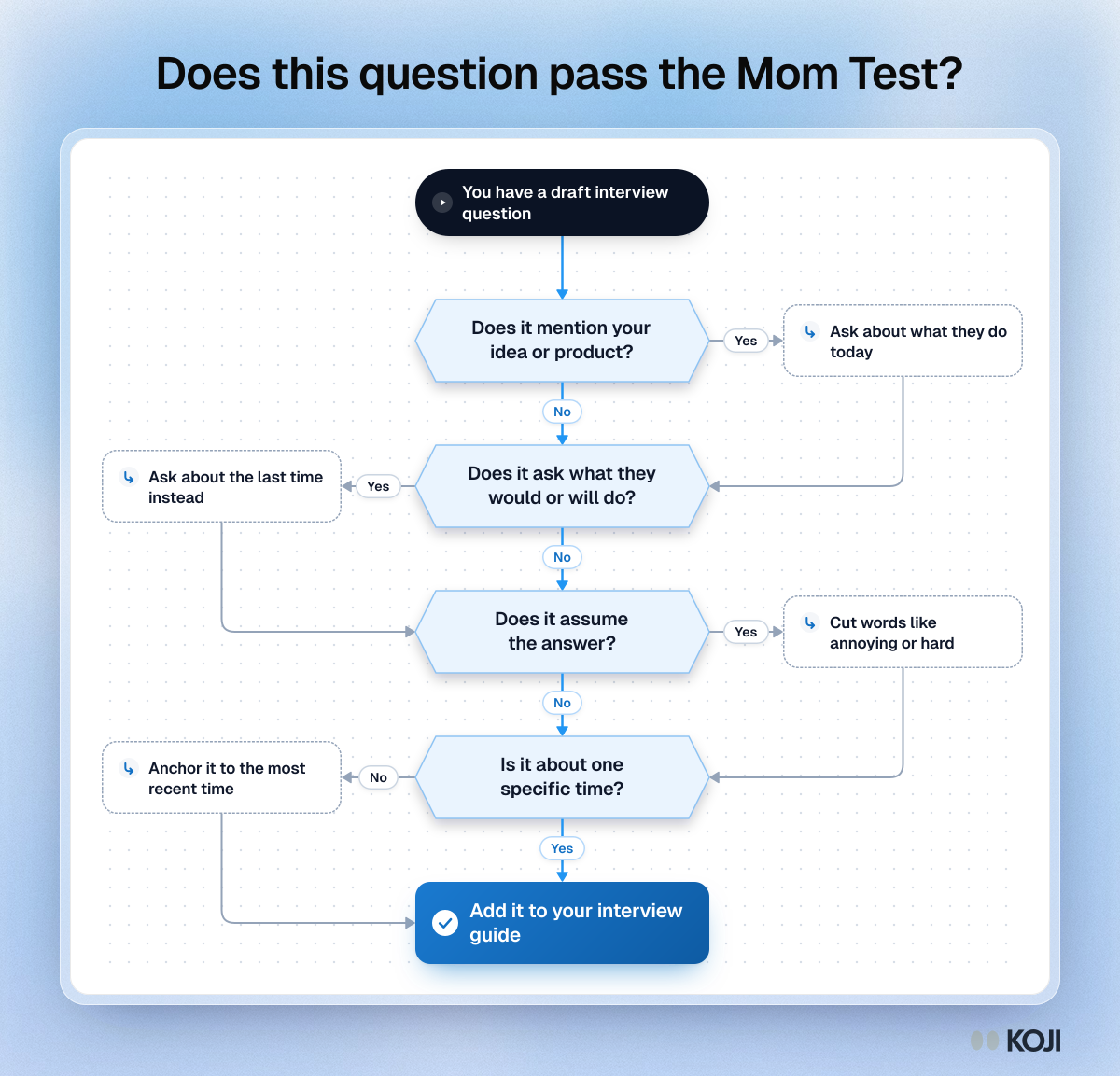
Flowchart for checking a draft interview question against the Mom Test: four yes or no questions, each with a rewrite, ending in a question ready for the guide.

Flowchart

Does this question pass the Mom Test?
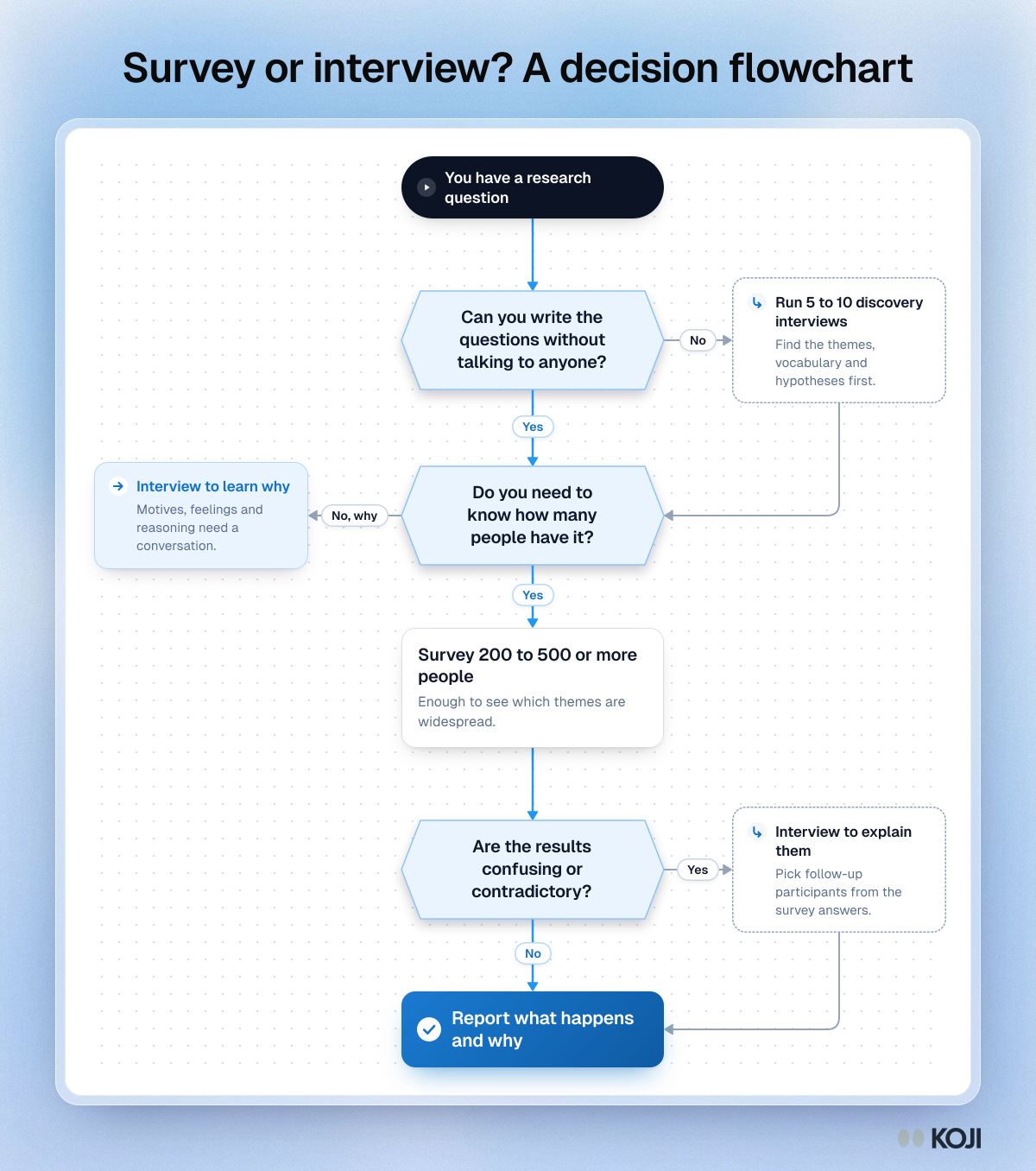
Flowchart for choosing a survey or an interview: three yes or no questions, two interview detours and one exit, ending in a report of what and why.

Flowchart

Survey or interview? A decision flowchart
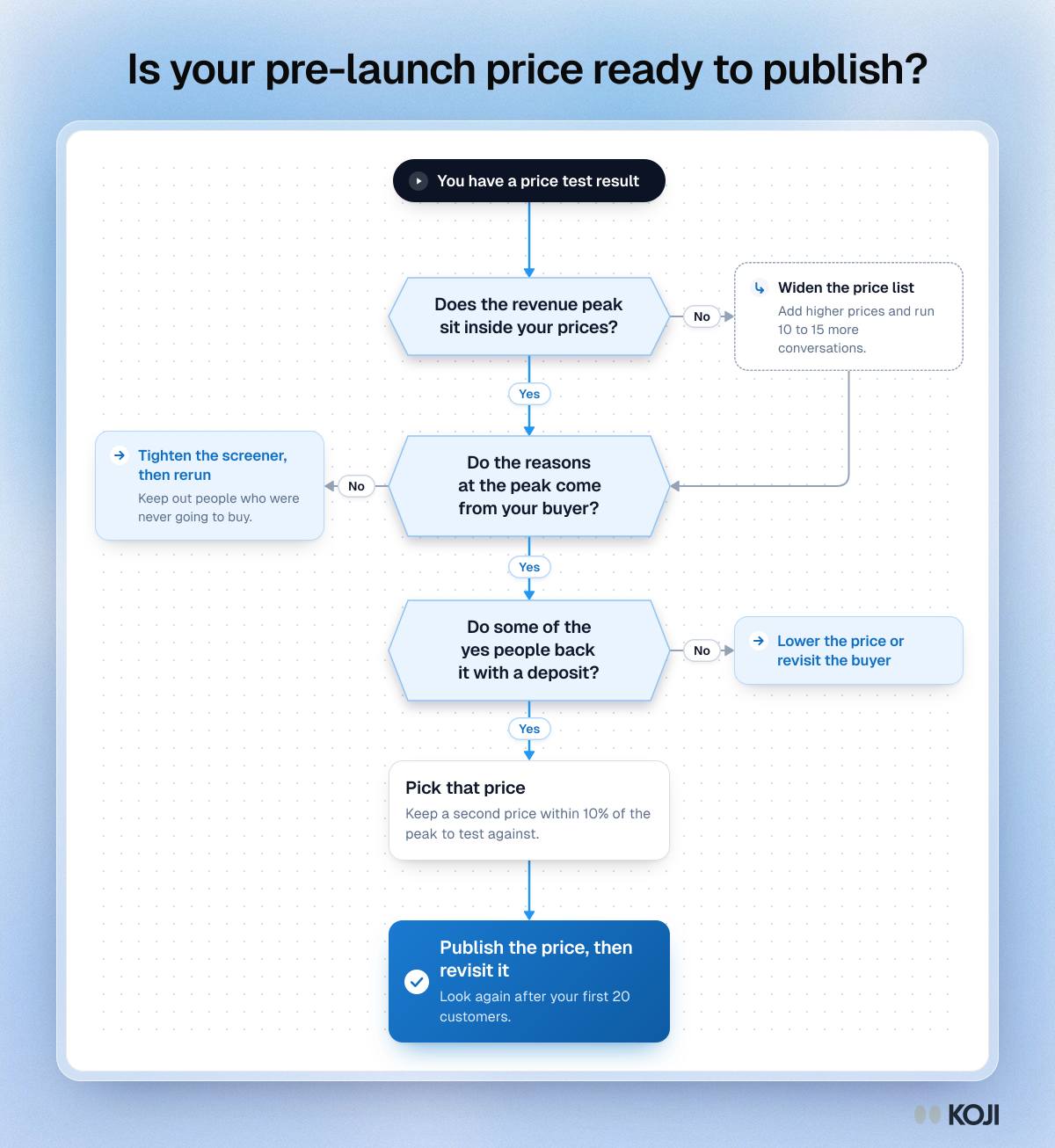
Flowchart for deciding whether a pre-launch price is ready to publish: three questions about the peak, the buyer and a deposit, with one side step.

Flowchart

Is your pre-launch price ready to publish?
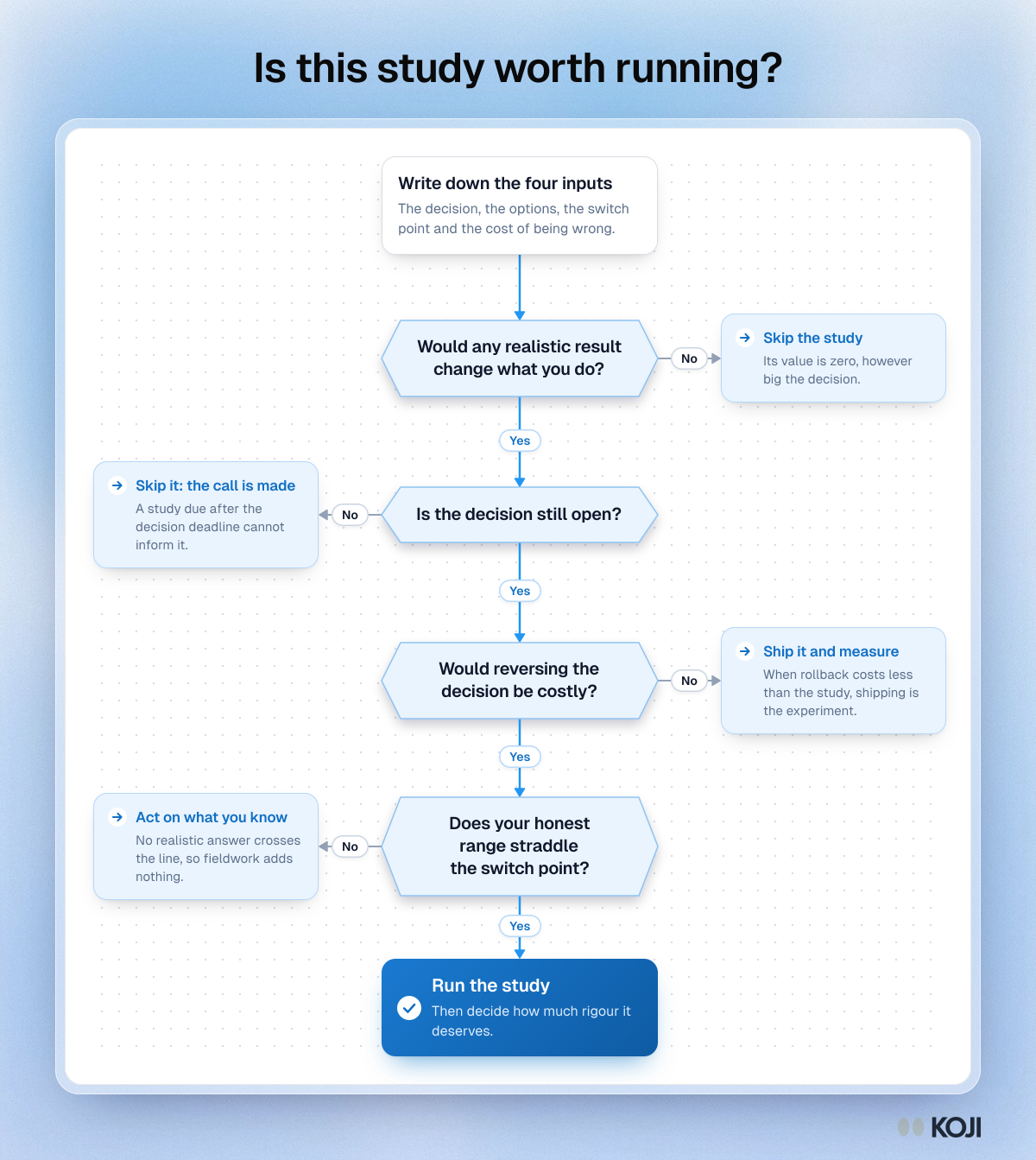
Flowchart for deciding whether a study is worth running: four yes or no questions on switch point, open decision, reversibility and range, then run it.

Flowchart

Is this study worth running?
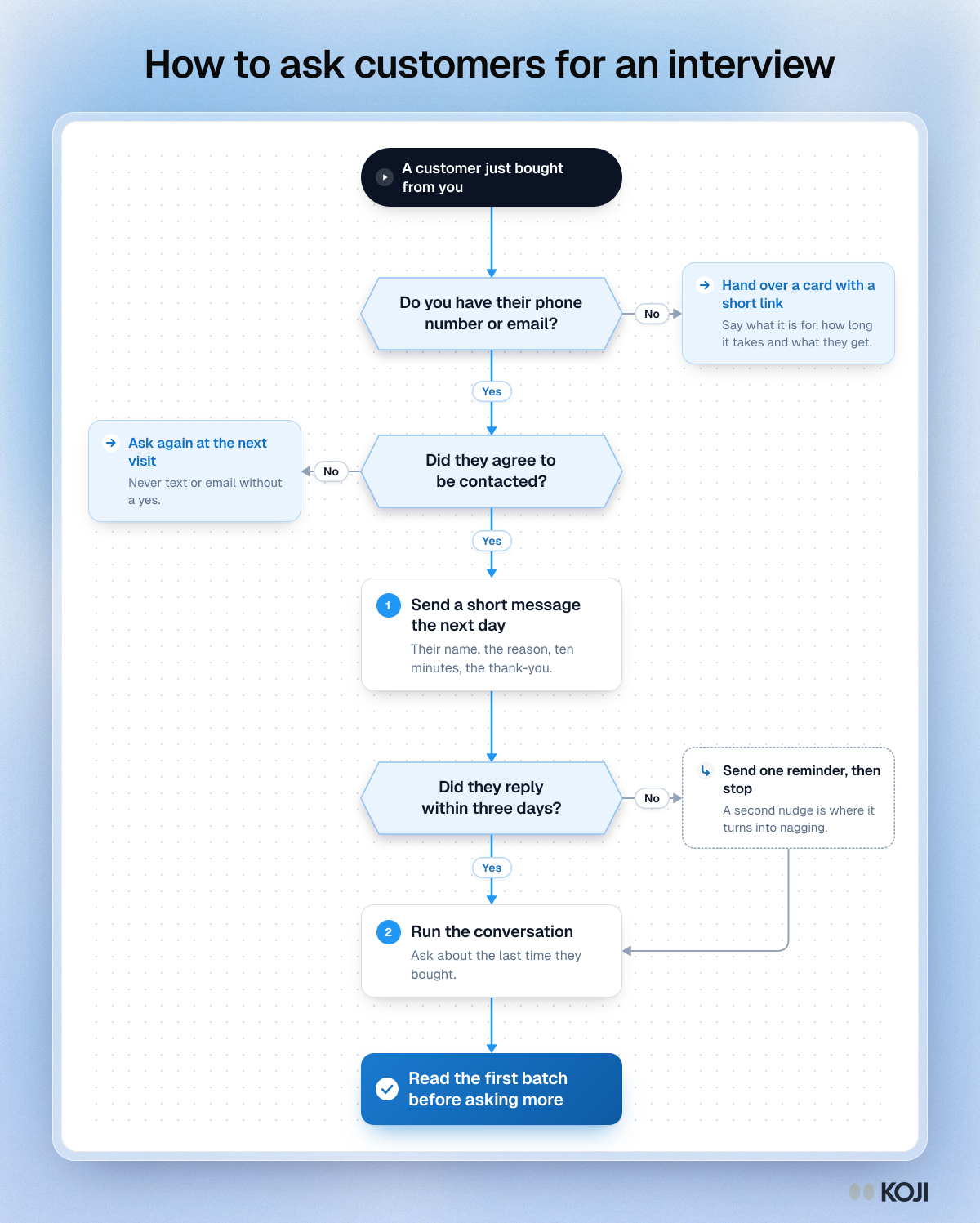
Flowchart for asking a customer for an interview: three questions and one reminder step, ending with reading the first batch of answers.

Flowchart

How to ask customers for an interview
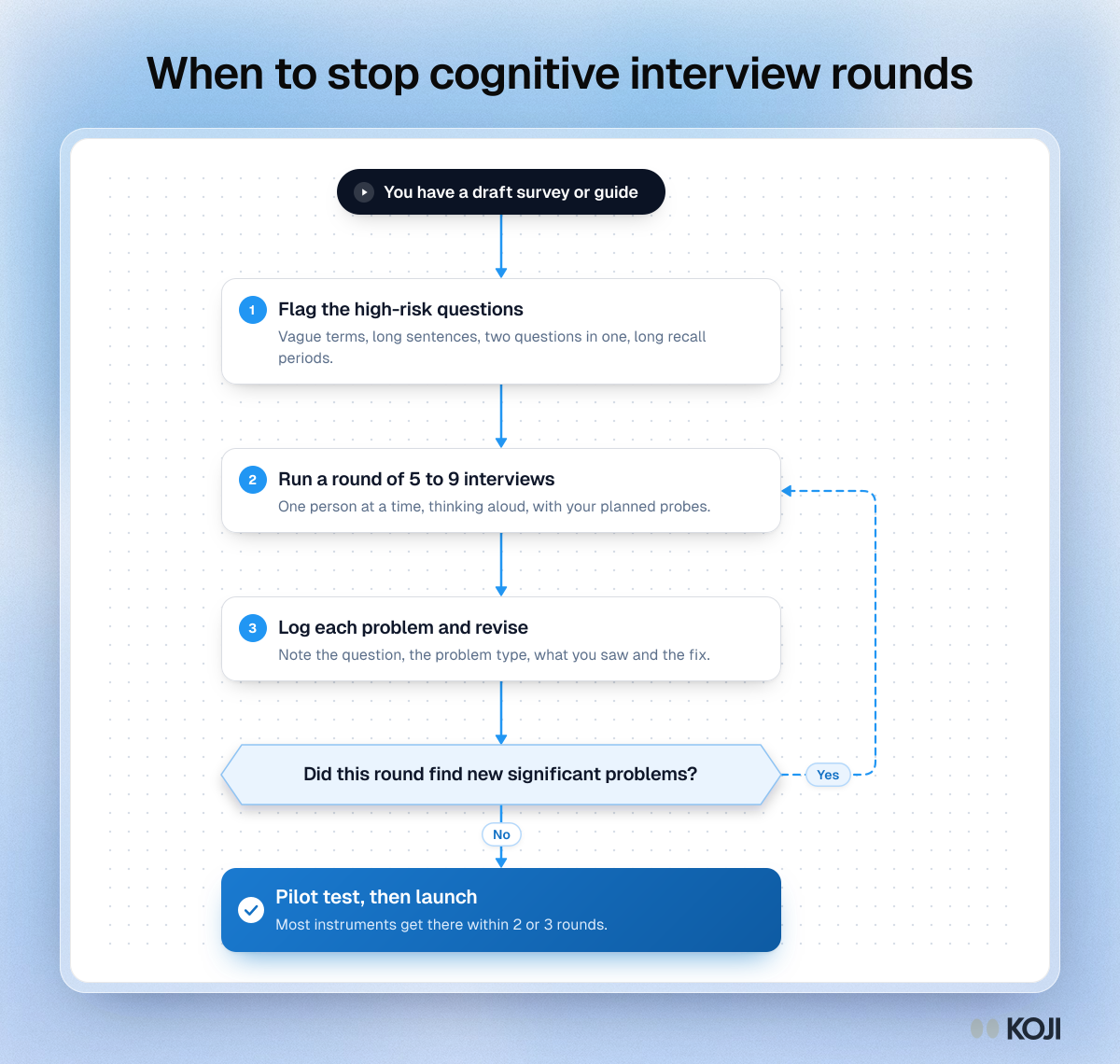
Flowchart for cognitive interview rounds: flag risky questions, run 5 to 9 interviews, revise, and repeat until a round finds nothing new.

Flowchart

When to stop cognitive interview rounds
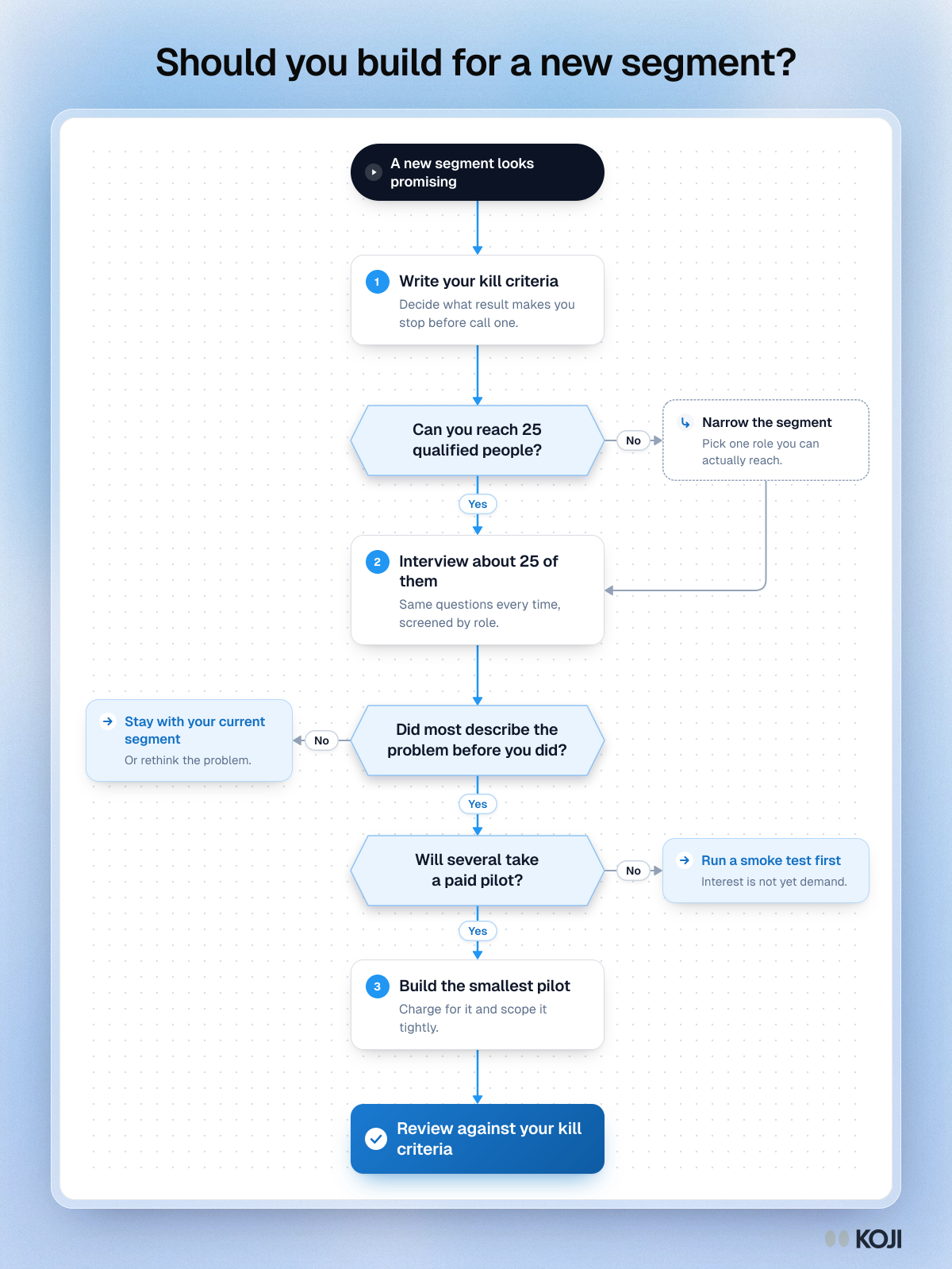
Flowchart for deciding whether to build for a new segment: three questions on reach, the problem and a paid pilot, ending in a review of your kill criteria.

Flowchart

Should you build for a new segment?
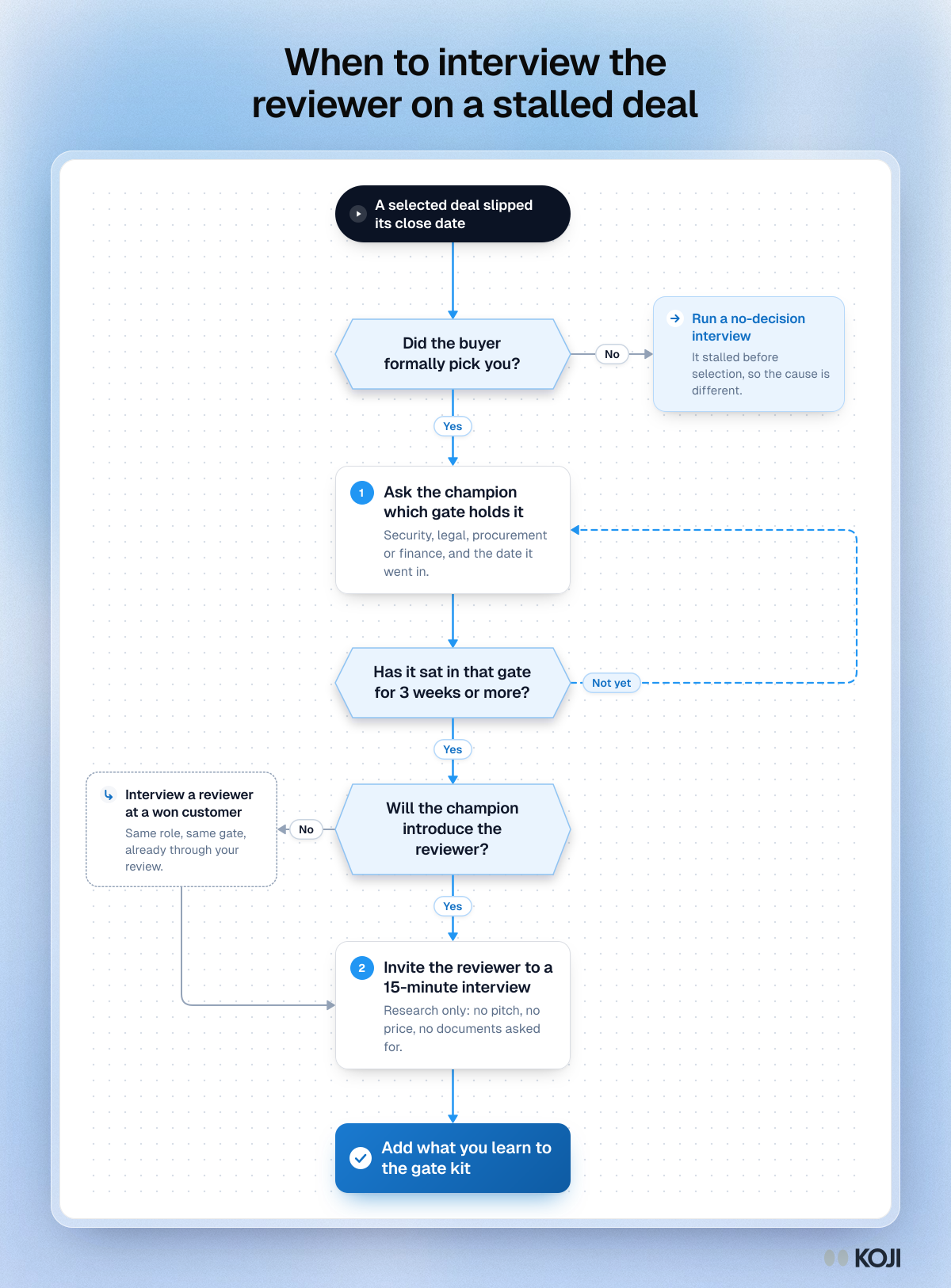
Flowchart for a slipped deal: confirm the buyer picked you, find the gate, wait three weeks, then interview the reviewer or one at a won customer.

Flowchart

When to interview the reviewer on a stalled deal
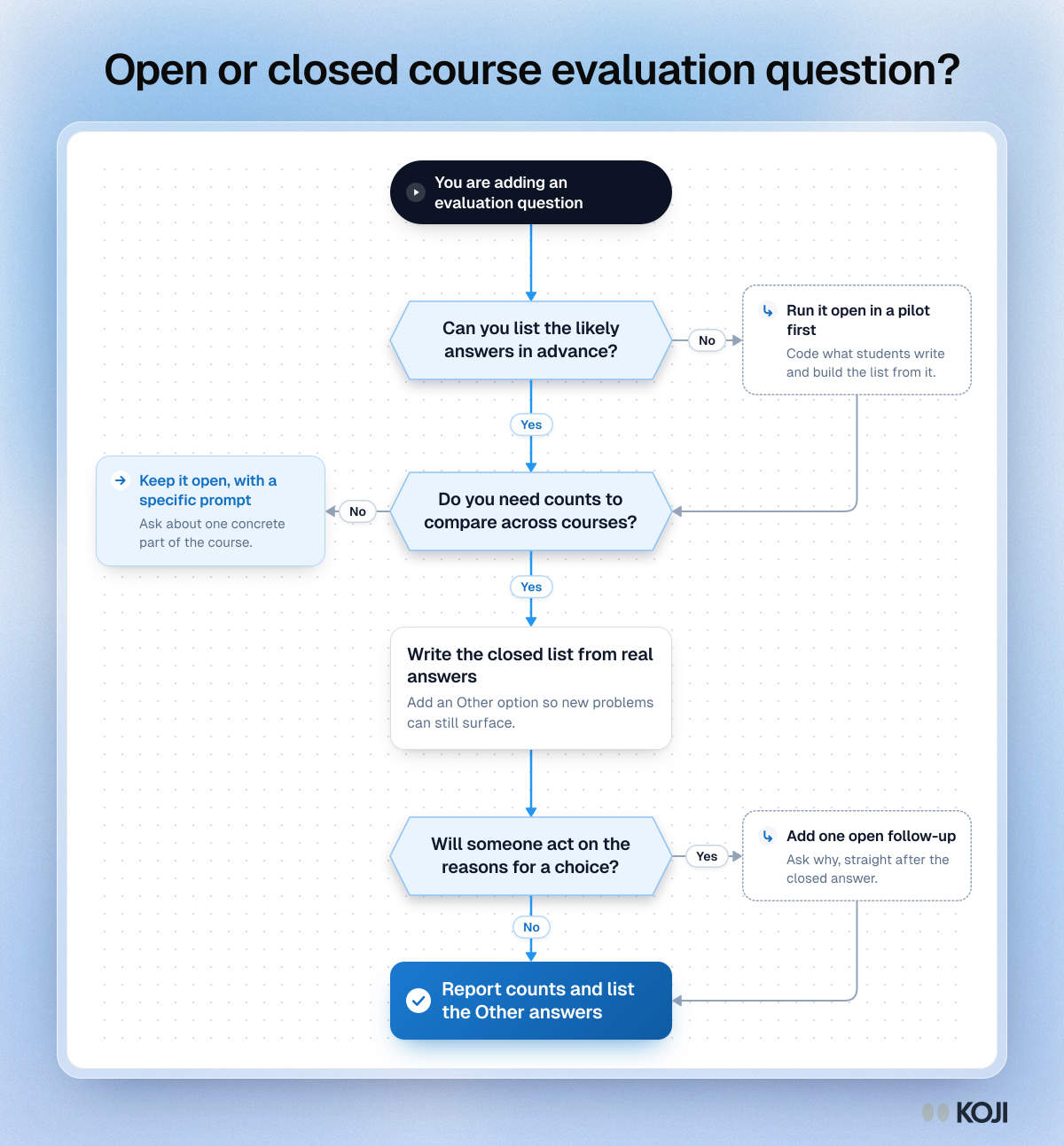
Flowchart for choosing between an open and a closed course evaluation question: three questions, two side steps and one exit, ending in reported counts.

Flowchart

Open or closed course evaluation question?
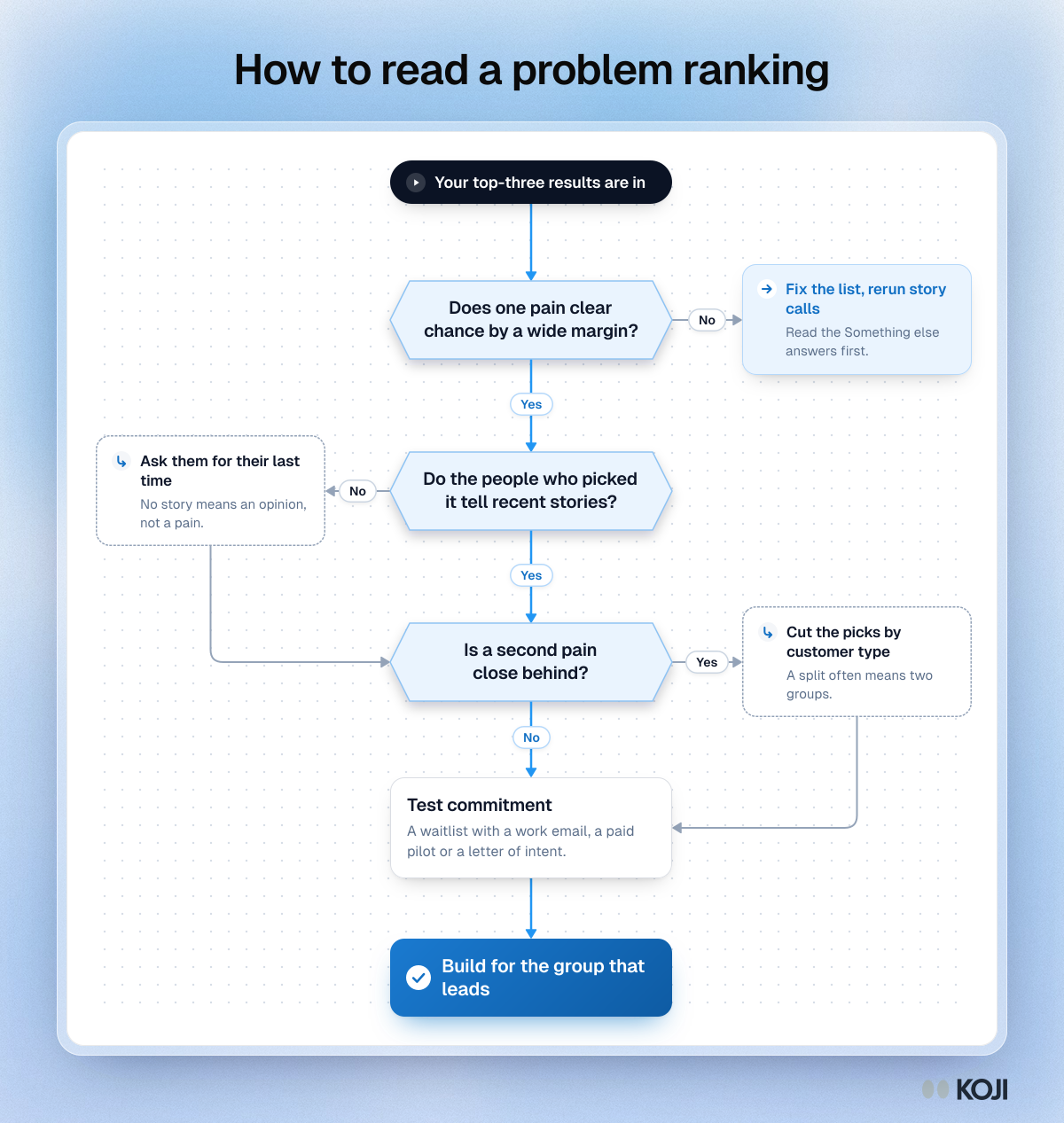
Flowchart for reading a top-three problem ranking: compare with chance, check the stories, split close results by customer type, then test commitment.

Flowchart

How to read a problem ranking
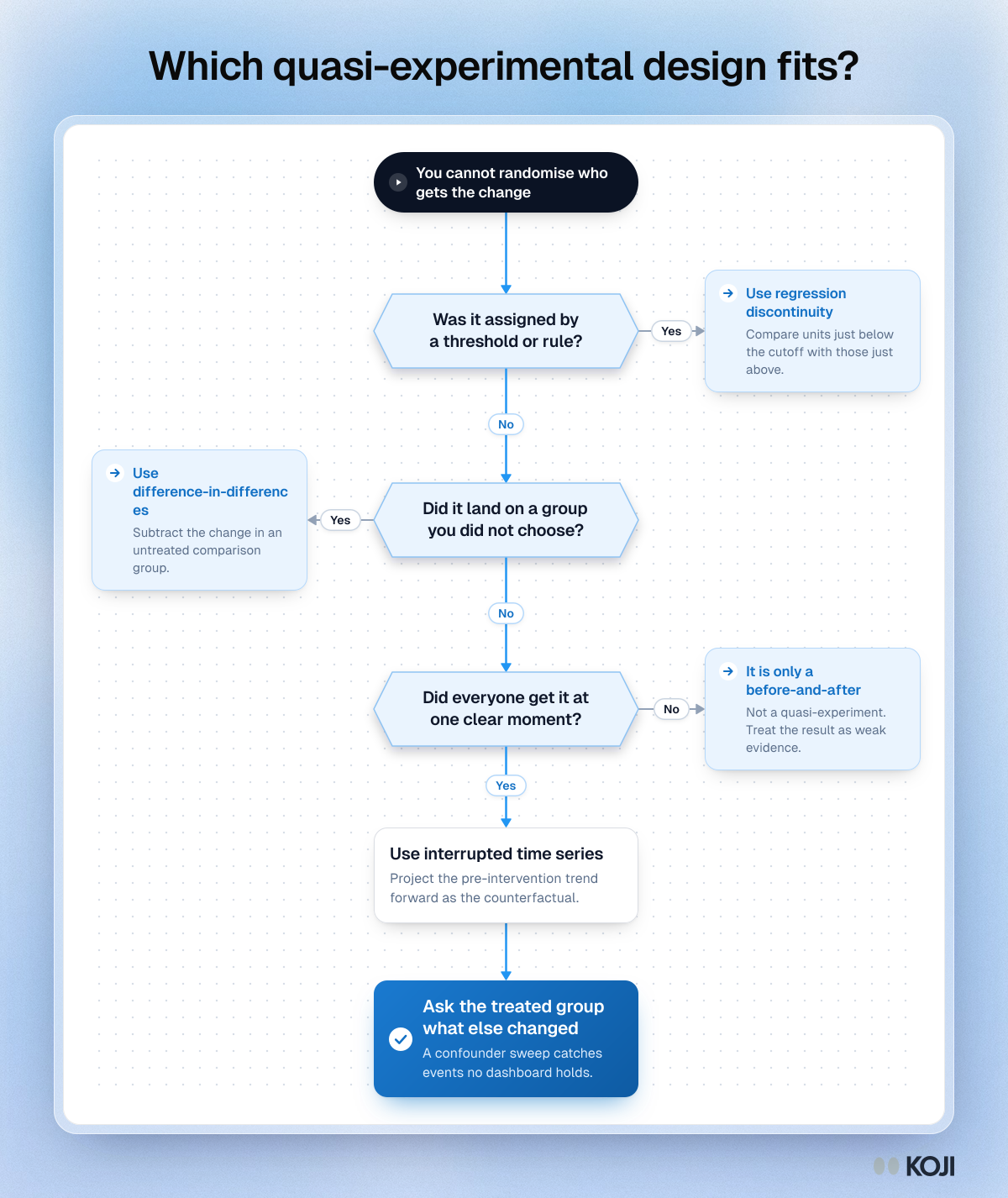
Flowchart for choosing a quasi-experimental design: three questions on how treatment was assigned, leading to one of three designs.

Flowchart

Which quasi-experimental design fits?
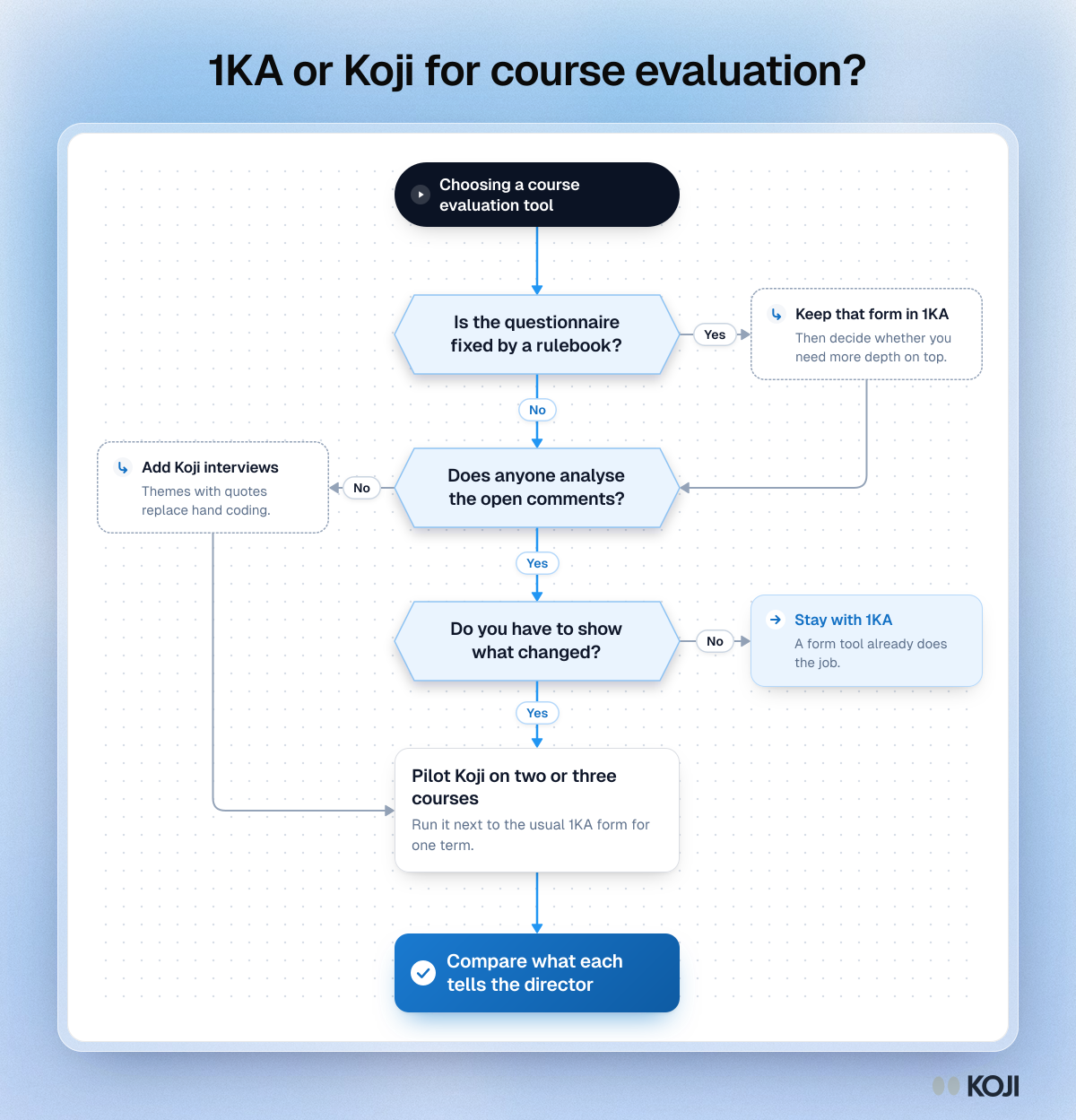
Flowchart for choosing between 1KA and Koji: three questions about a fixed questionnaire, comment analysis and evidence of change, ending in a pilot

Flowchart

1KA or Koji for course evaluation?