Free to save and share

Frameworks and cheat sheets for customer research

Every framework, checklist and comparison from our guides, as an image you can download, drop into a deck or share with your team.
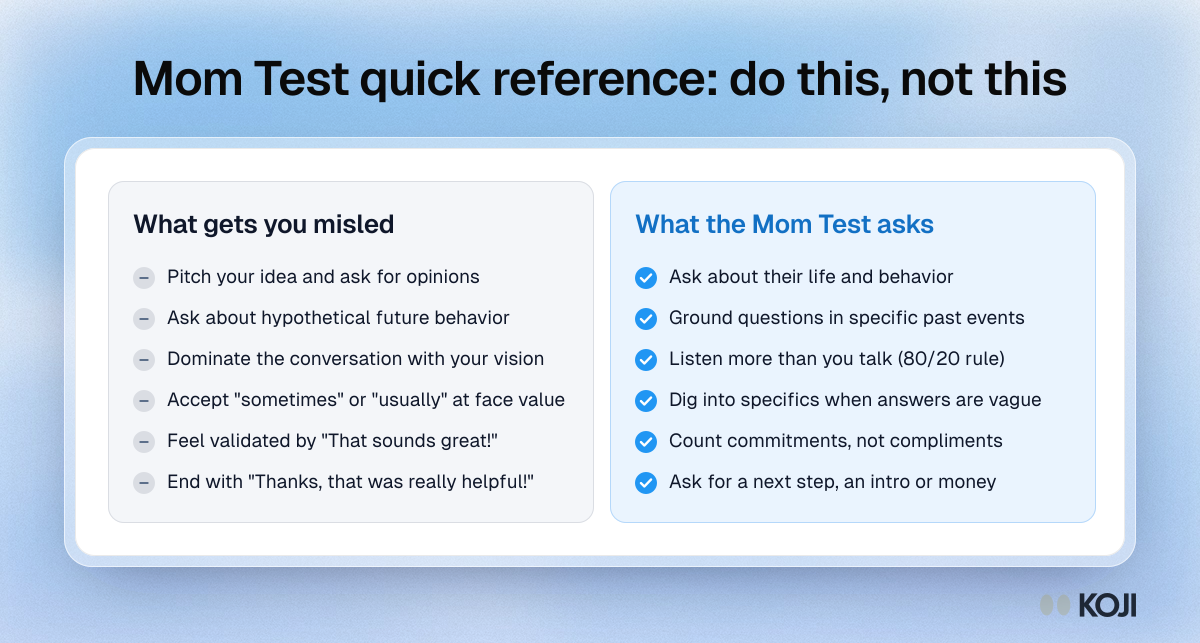
Comparison of six Mom Test habits and the mistakes they replace, from pitching your idea to feeling validated by compliments.

Comparison

Mom Test quick reference: do this, not this
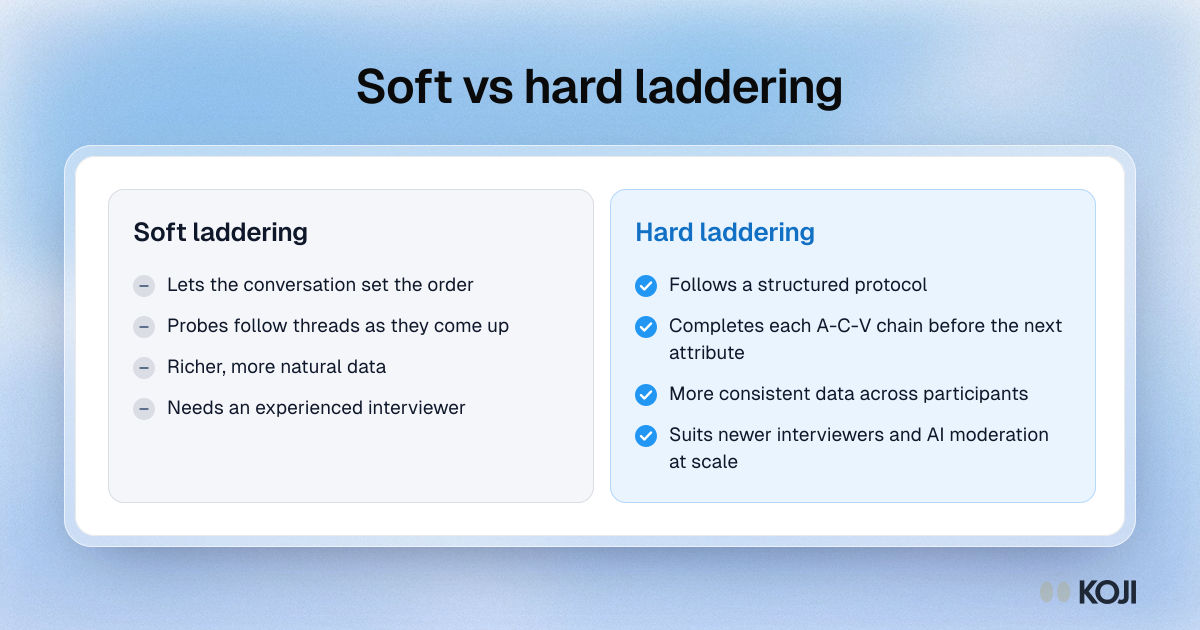
Comparison of soft laddering, which follows the conversation, with hard laddering, which completes each attribute, consequence and value chain in turn.

Comparison

Soft vs hard laddering

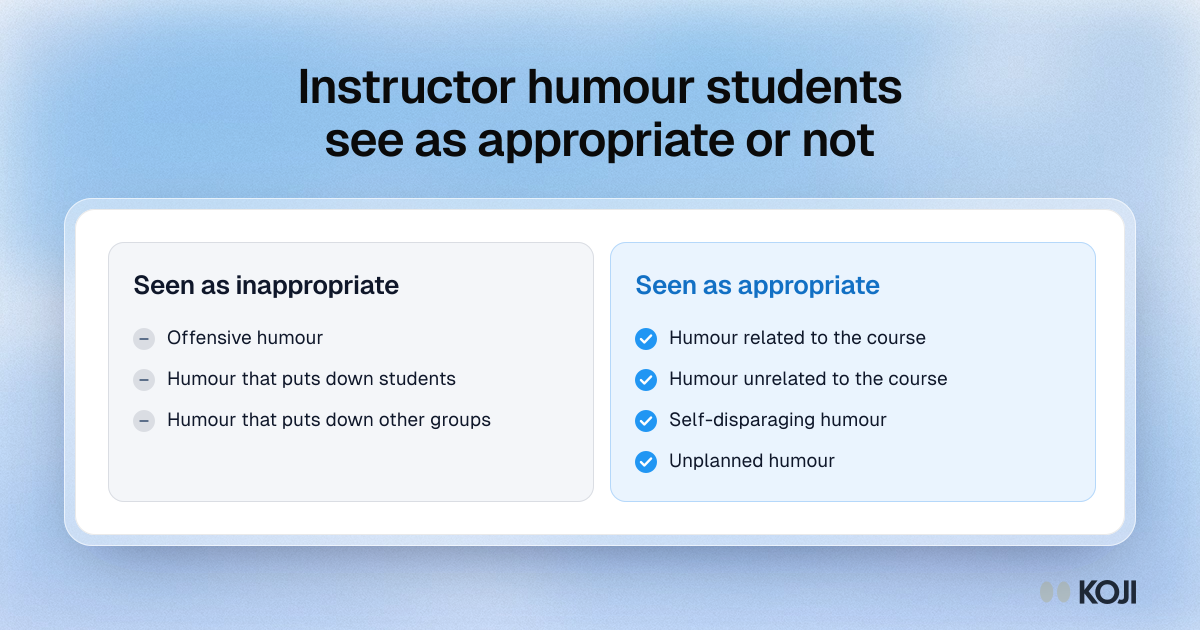
Comparison of teacher humour students see as inappropriate, such as offensive or disparaging jokes, and appropriate, such as course-related or unplanned humour.

Comparison

Instructor humour students see as appropriate or not
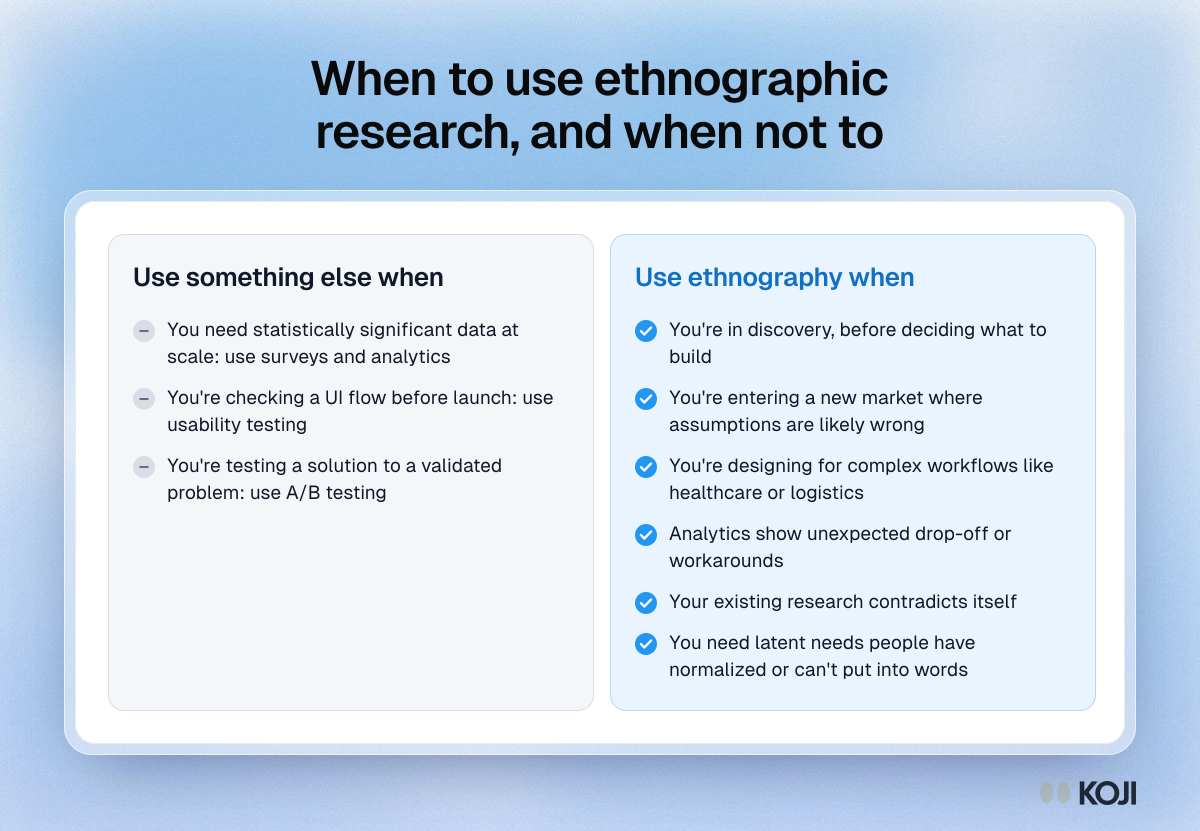
Comparison of when ethnographic research fits, such as discovery and complex workflows, and when surveys, usability tests or A/B tests fit better.

Comparison

When to use ethnographic research, and when not to
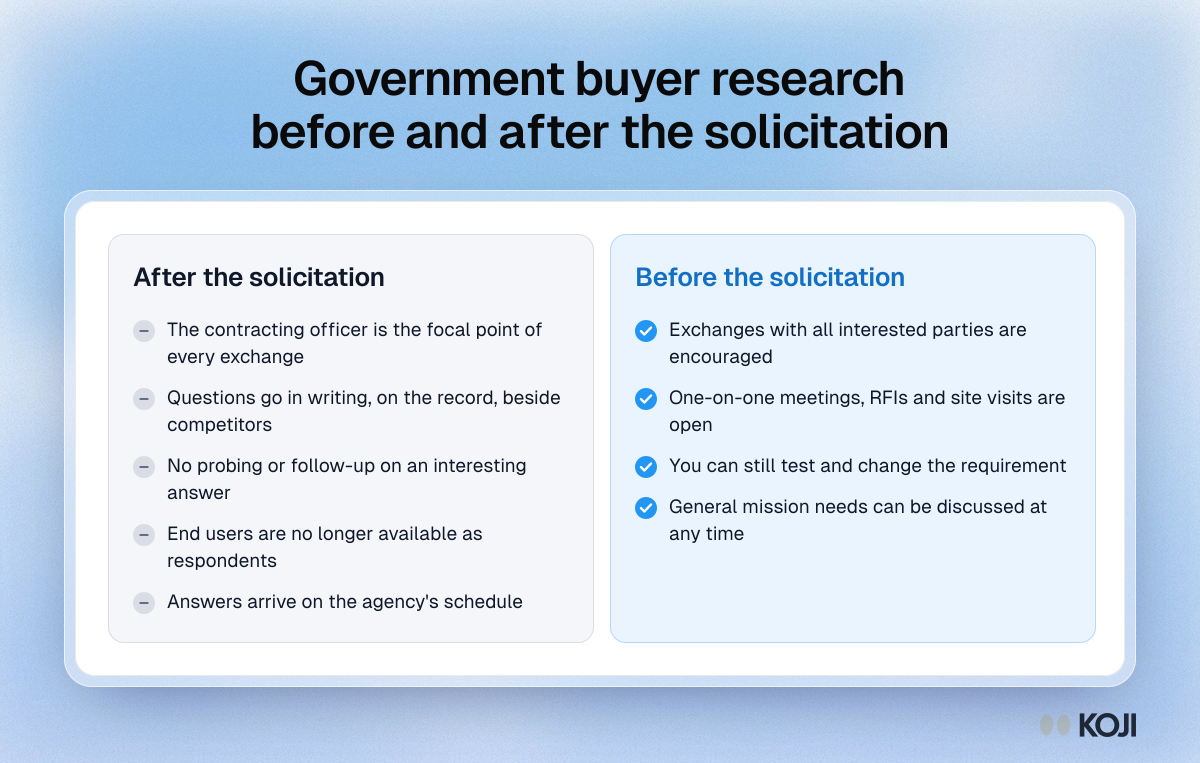
Comparison of government buyer research before a solicitation, when exchanges are encouraged, and after, when all contact goes through the contracting officer.

Comparison

Government buyer research before and after the solicitation
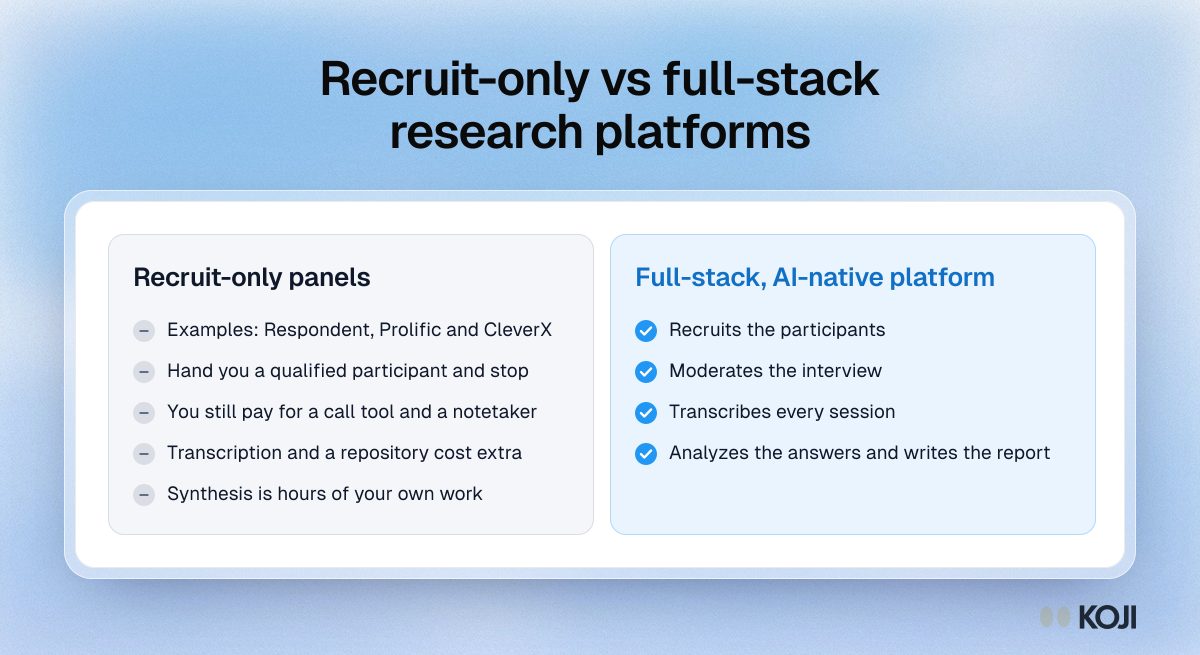
Comparison of recruit-only panels, which hand over a participant and stop, with full-stack platforms that recruit, moderate, transcribe and report.

Comparison

Recruit-only vs full-stack research platforms
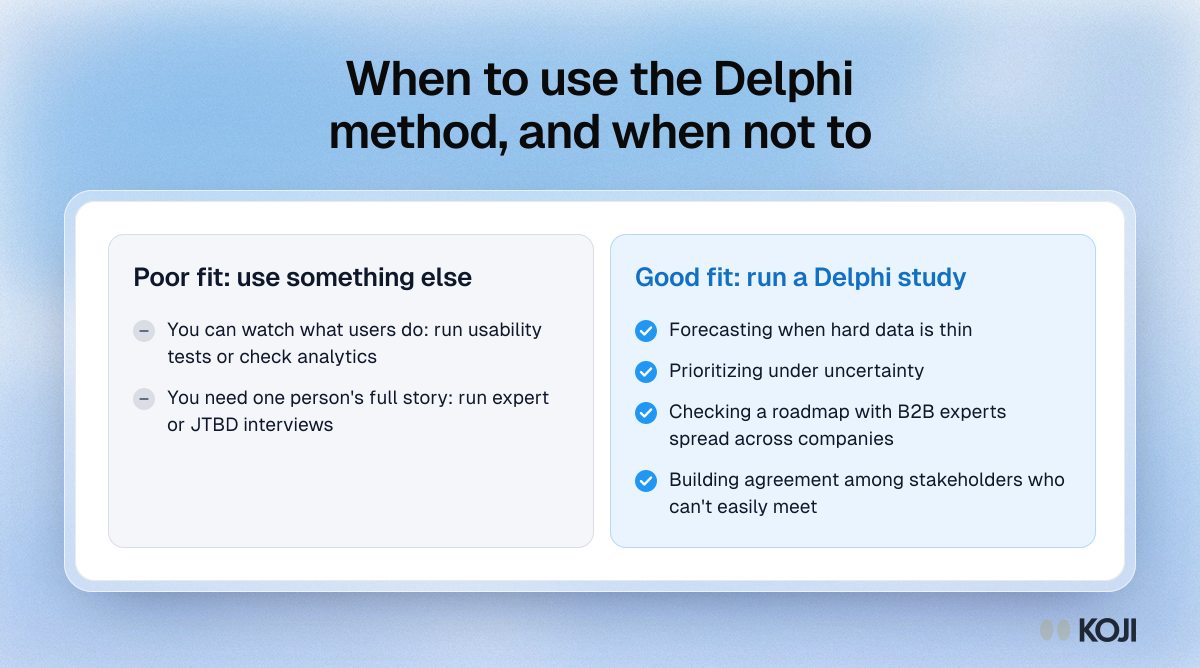
Comparison of when the Delphi method fits: forecasts and priorities that rest on expert judgment, against cases where you can observe behavior instead.

Comparison

When to use the Delphi method, and when not to
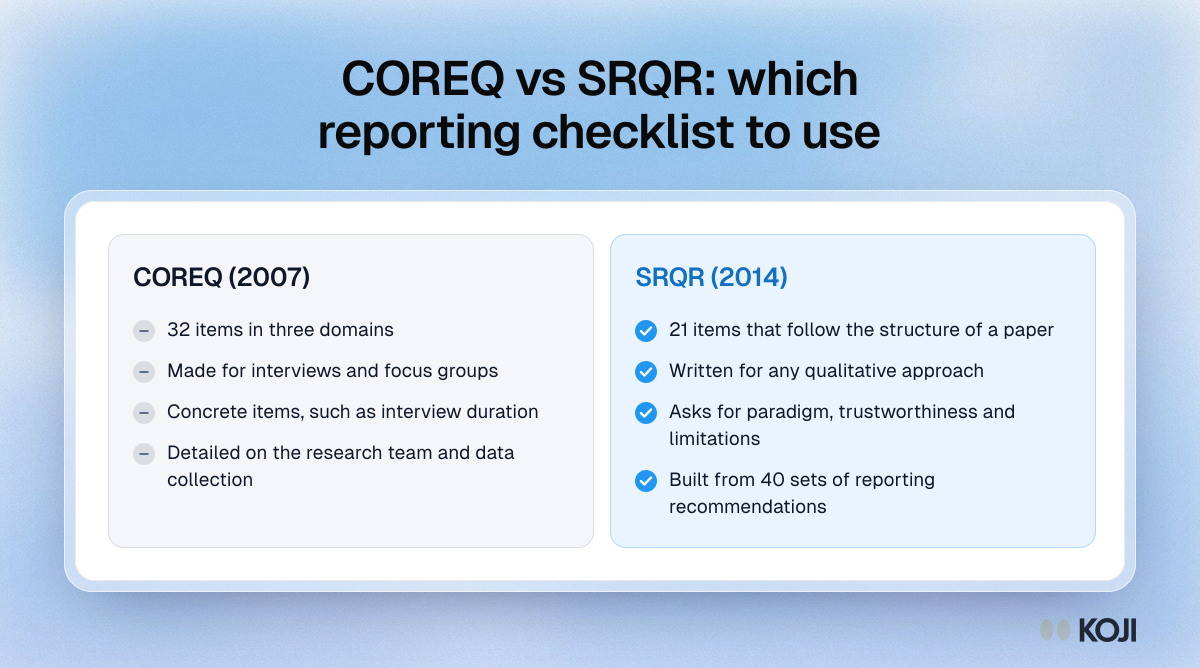
Comparison of COREQ and SRQR: 32 items for interviews and focus groups versus 21 items for any qualitative approach.

Comparison

COREQ vs SRQR: which reporting checklist to use
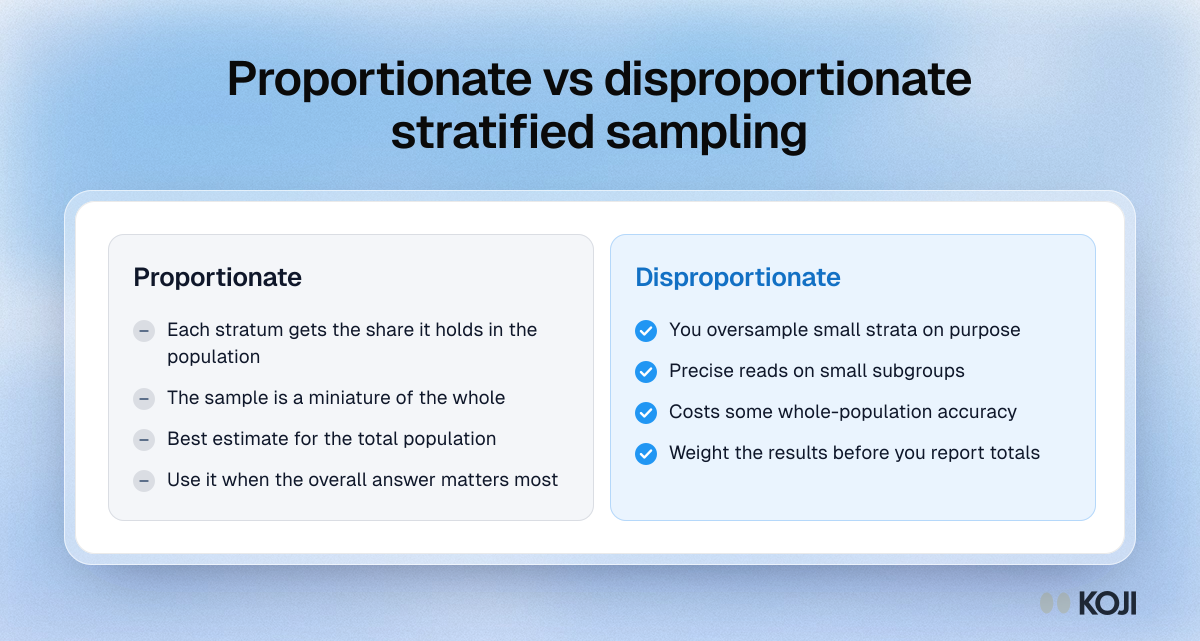
Comparison of proportionate and disproportionate stratified sampling: mirror population shares for totals, or oversample small groups for subgroup reads.

Comparison

Proportionate vs disproportionate stratified sampling
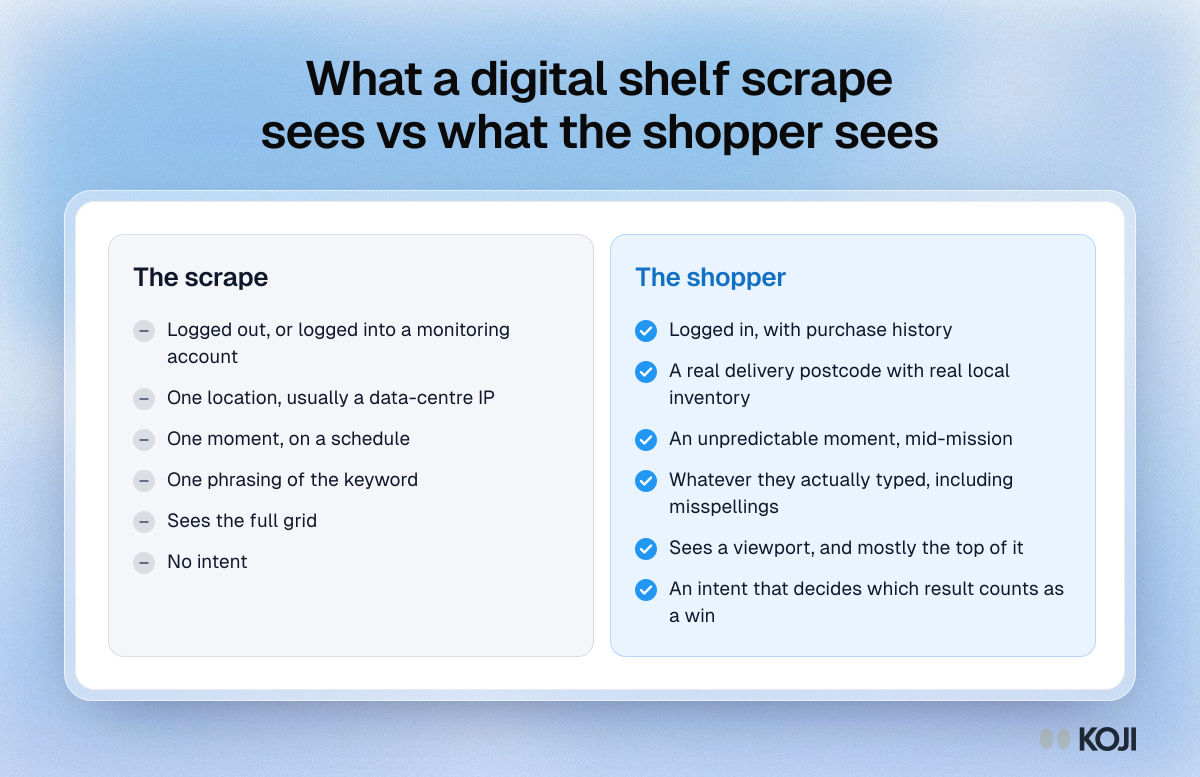
Comparison of a digital shelf scrape and a real shopper across login, location, timing, search phrasing, how much of the grid they see and intent.

Comparison

What a digital shelf scrape sees vs what the shopper sees
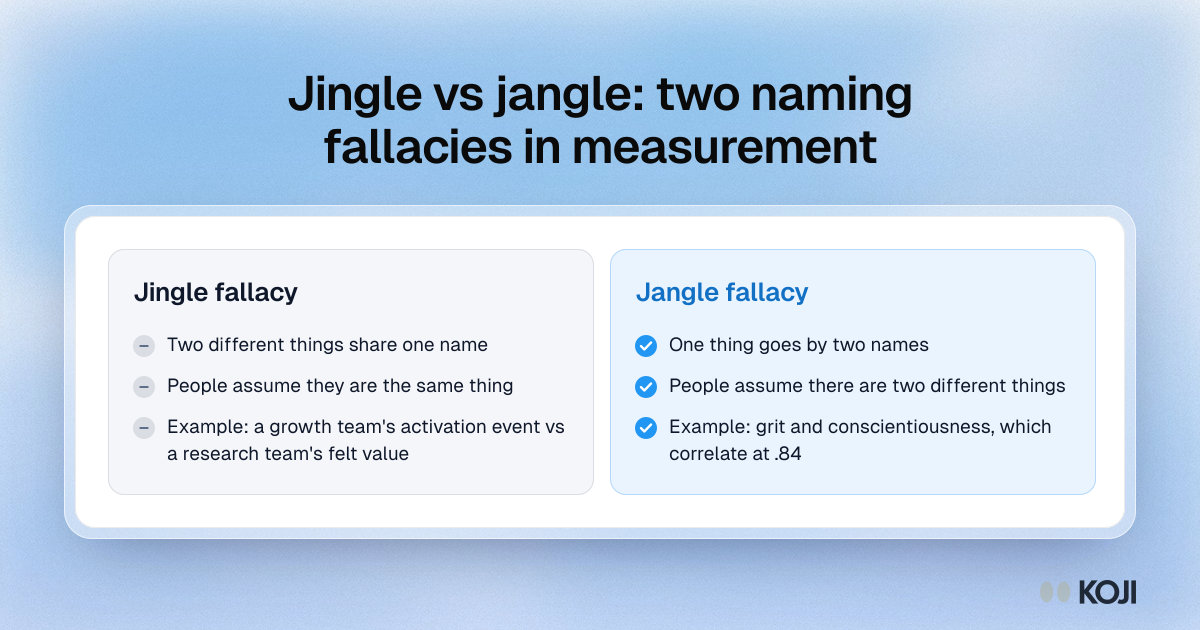
Comparison of the jingle fallacy, two different things sharing a name, and the jangle fallacy, one thing with two names, with a product example of each.

Comparison

Jingle vs jangle: two naming fallacies in measurement
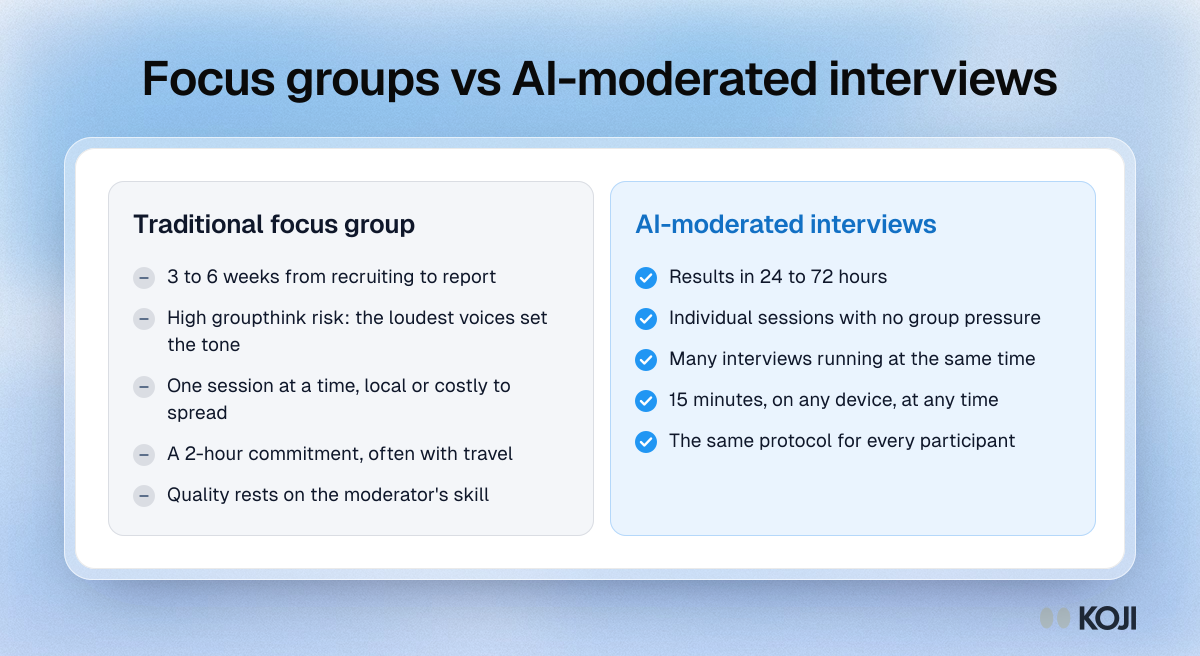
Comparison of focus groups and AI-moderated interviews on time to results, groupthink risk, scale, participant effort and reliance on the moderator.

Comparison

Focus groups vs AI-moderated interviews
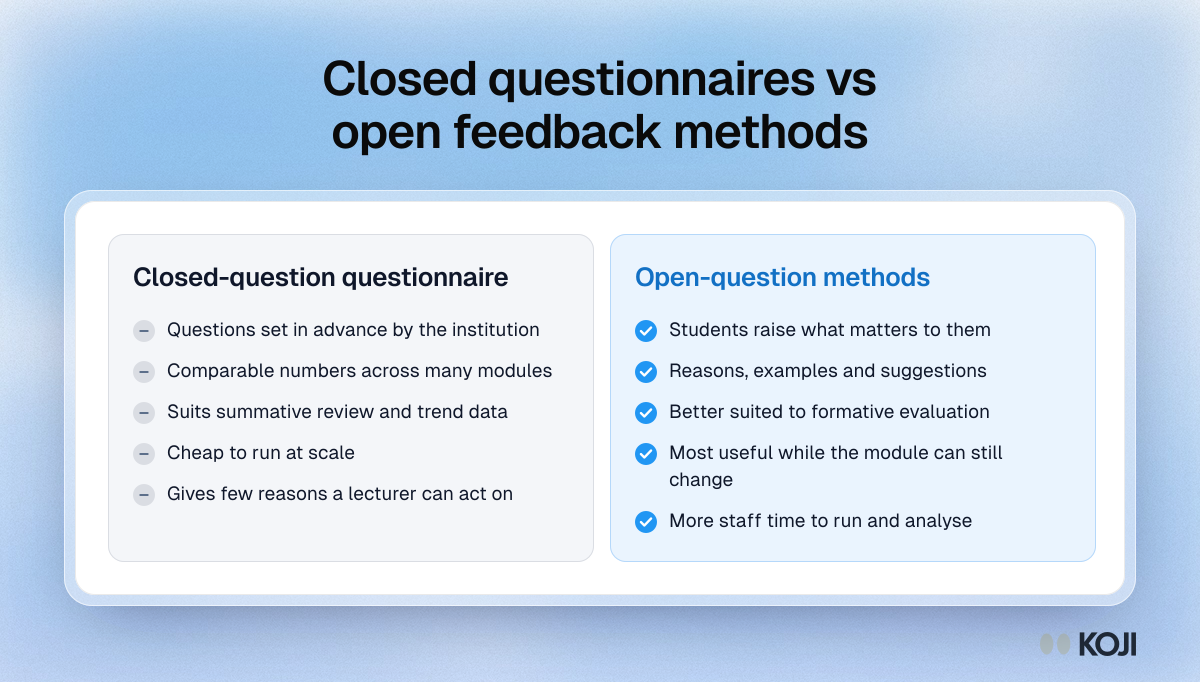
Comparison of a closed-question end-of-module questionnaire with open-question methods such as focus groups, rapid feedback and the H form.

Comparison

Closed questionnaires vs open feedback methods
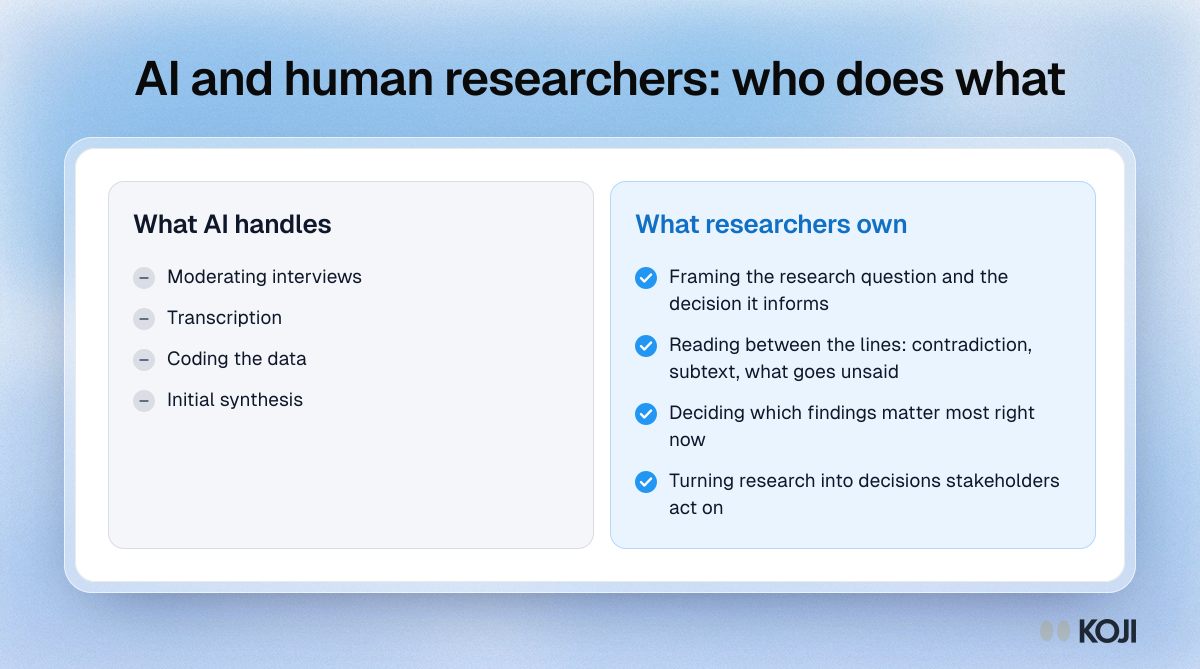
Comparison of the research work AI handles, moderation, transcription, coding and first synthesis, against the judgment work researchers keep.

Comparison

AI and human researchers: who does what
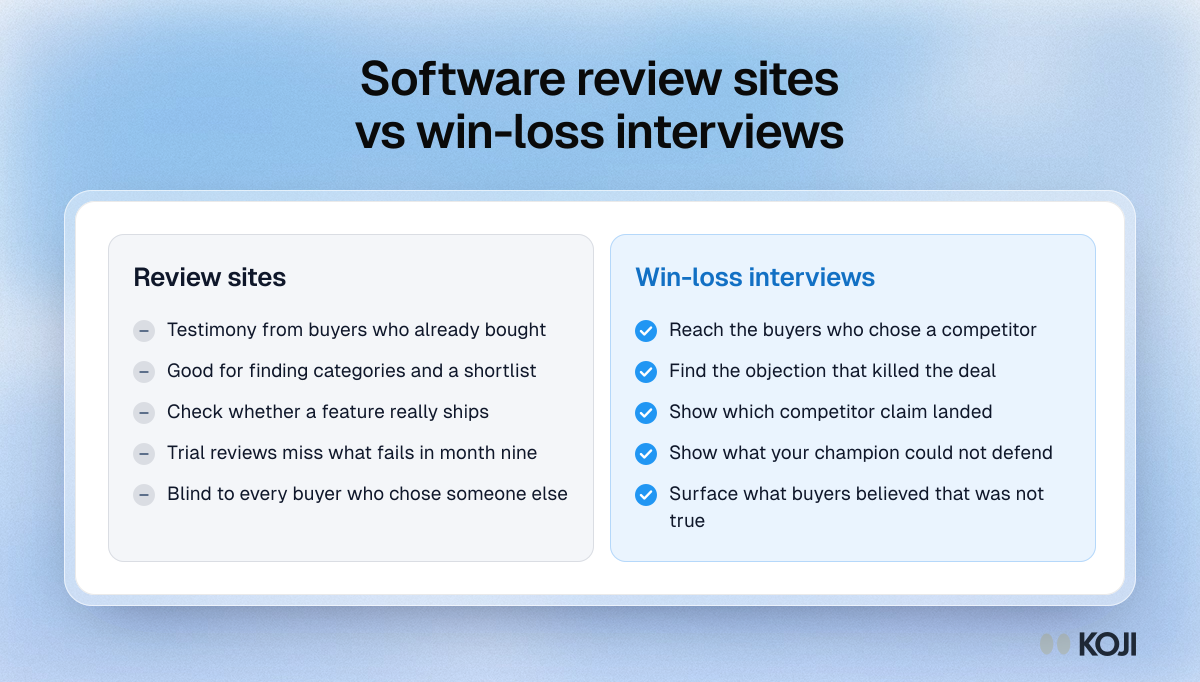
Comparison of software review sites and win-loss interviews: testimony from past buyers against conversations that reach lost deals.

Comparison

Software review sites vs win-loss interviews
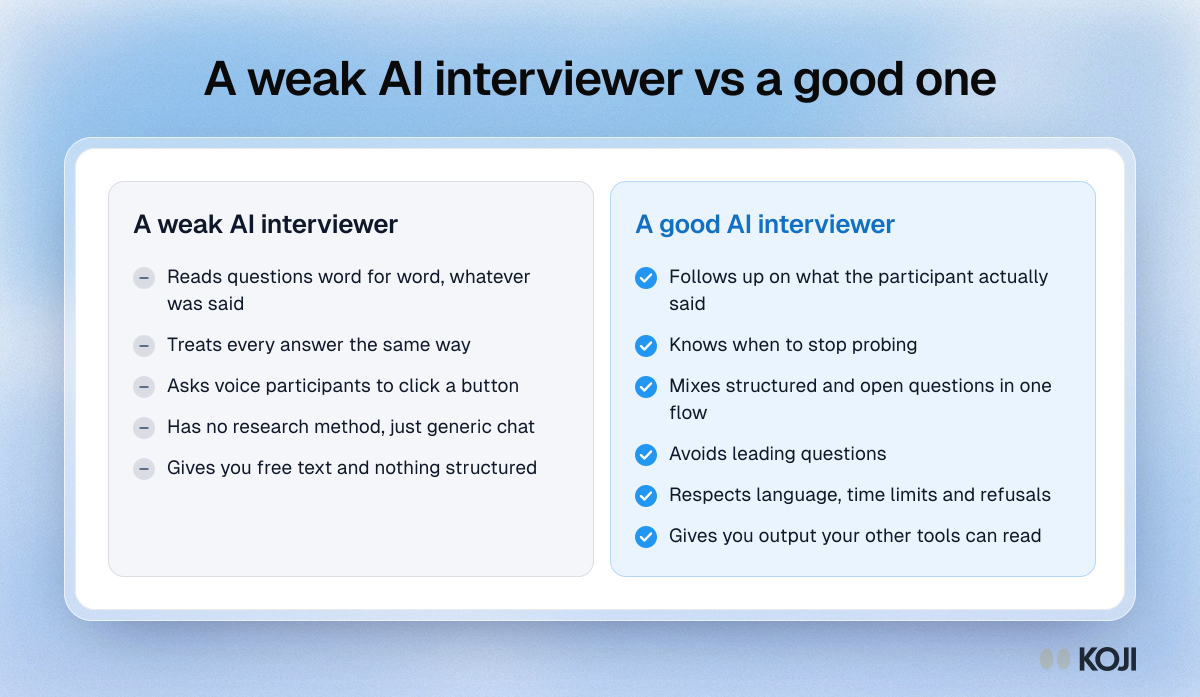
Comparison of a weak and a good AI interviewer: scripted questions and free text only, against real follow-ups and structured output.

Comparison

A weak AI interviewer vs a good one
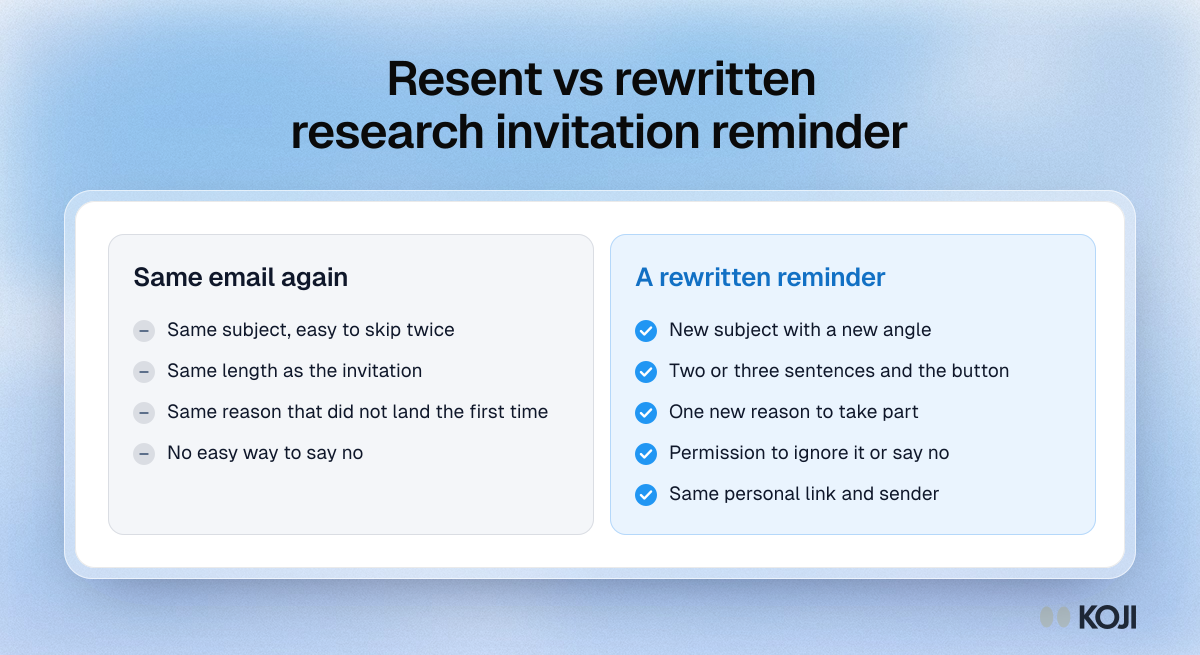
A comparison of a resent reminder and a rewritten one: the rewritten reminder has a new subject, a shorter body, a new reason and an easy way to say no.

Comparison

Resent vs rewritten research invitation reminder
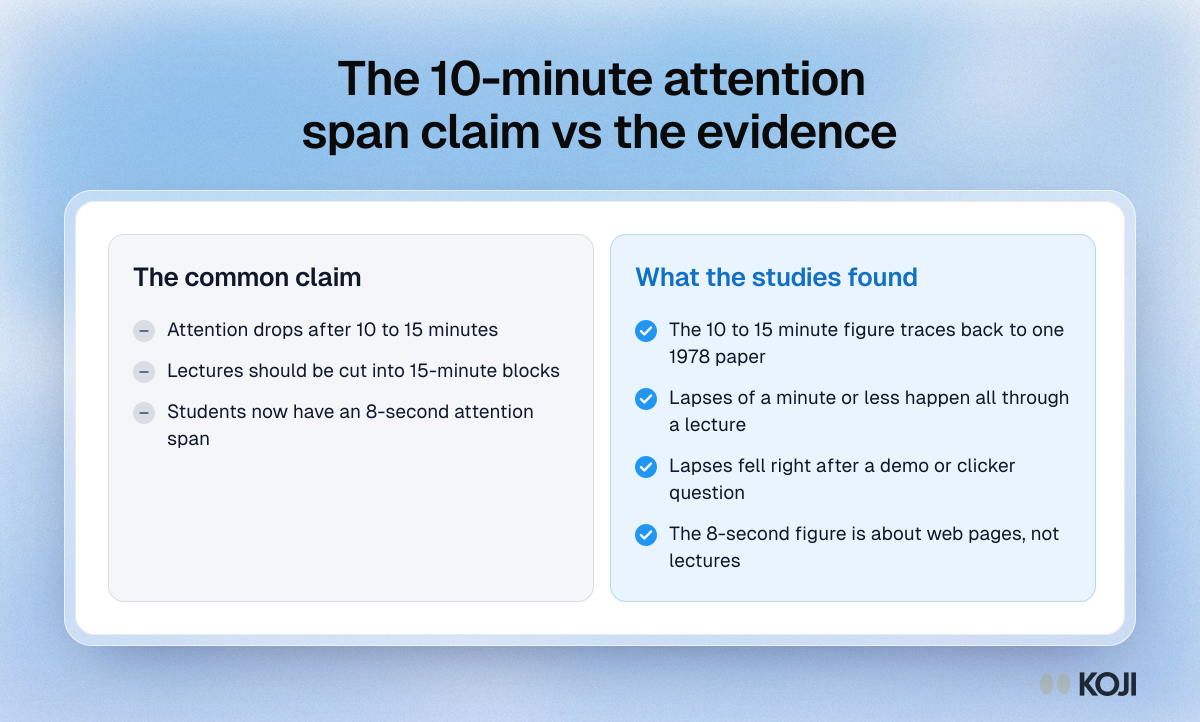
Comparison of the common 10-minute attention span claim with what lecture attention studies found.

Comparison

The 10-minute attention span claim vs the evidence
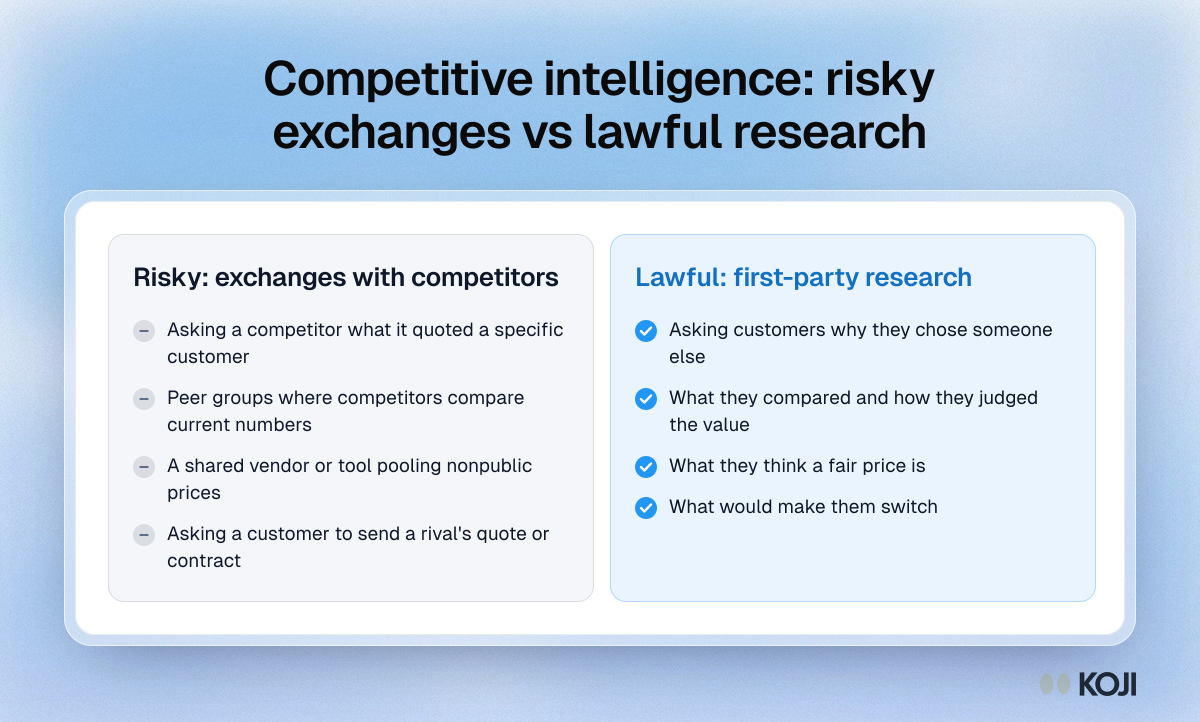
Comparison of risky competitive intelligence, like asking a rival what it quoted, against lawful first-party research, like asking customers why they chose.

Comparison

Competitive intelligence: risky exchanges vs lawful research
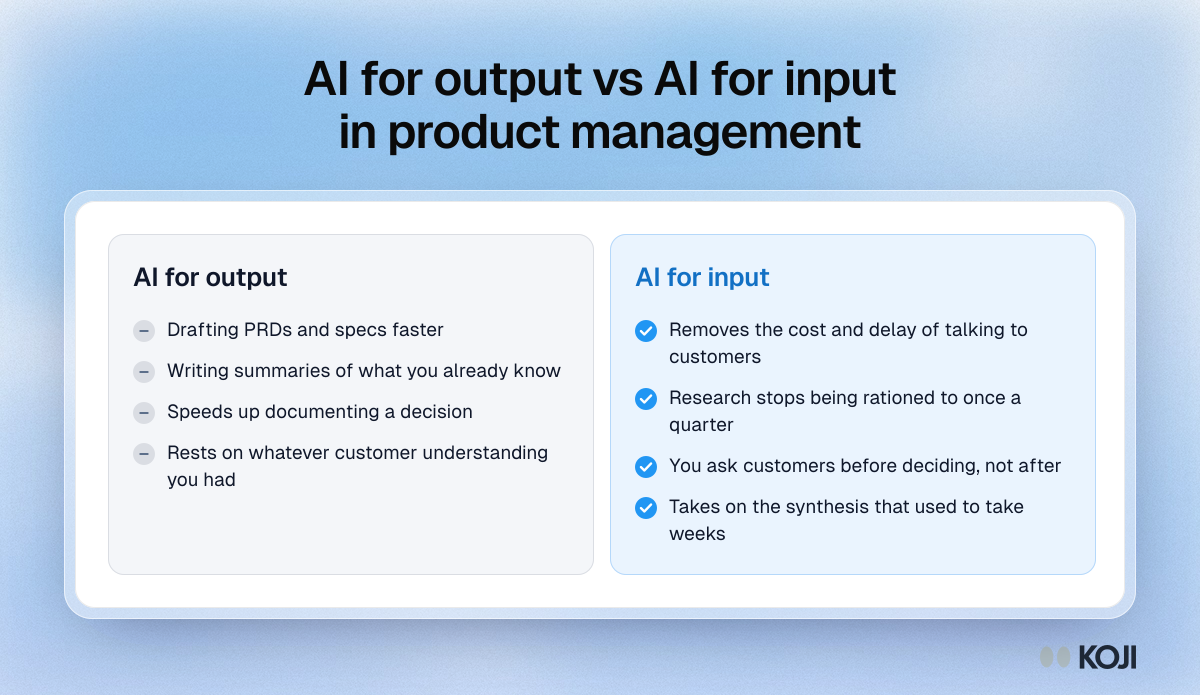
Comparison of AI for output, like drafting PRDs and summaries, against AI for input, like cutting the cost of talking to customers before deciding.

Comparison

AI for output vs AI for input in product management
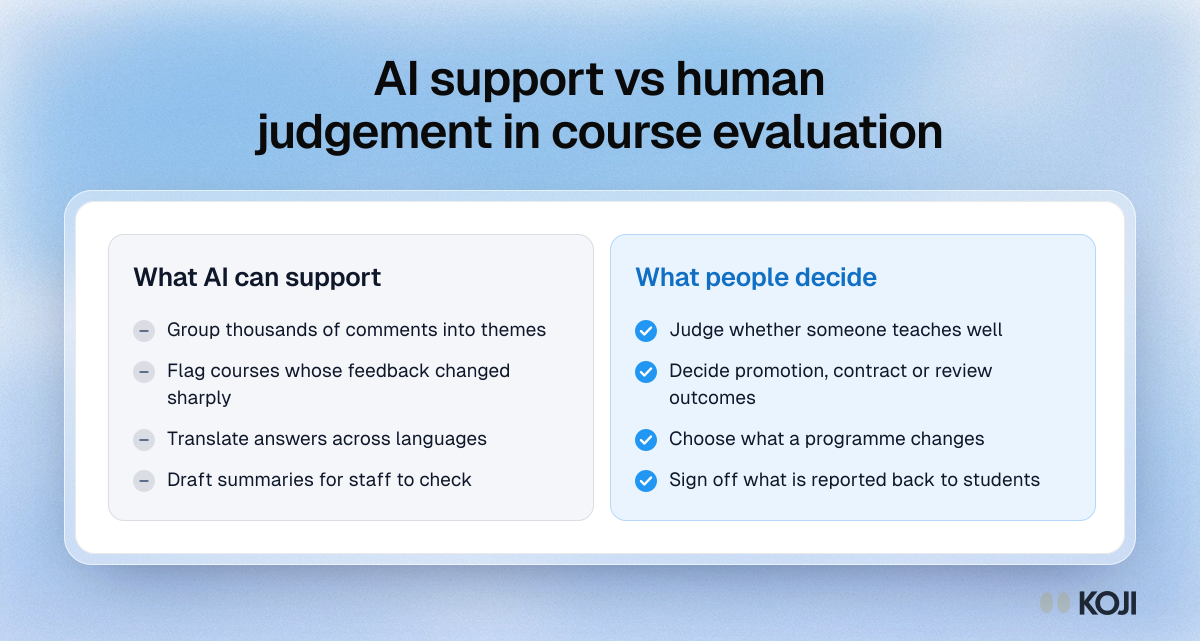
Comparison of what AI can support in course evaluation, such as grouping comments into themes, and what people should decide, such as judging teaching.

Comparison

AI support vs human judgement in course evaluation
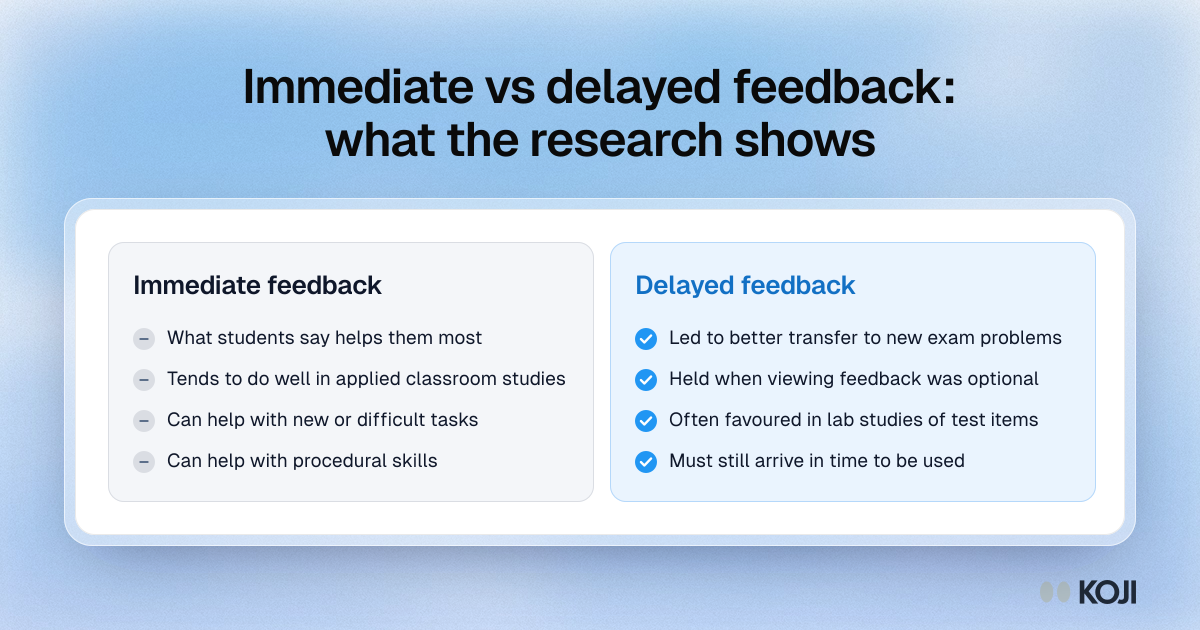
Comparison of immediate and delayed feedback: what students prefer and what research on transfer and classroom learning suggests about each.

Comparison

Immediate vs delayed feedback: what the research shows
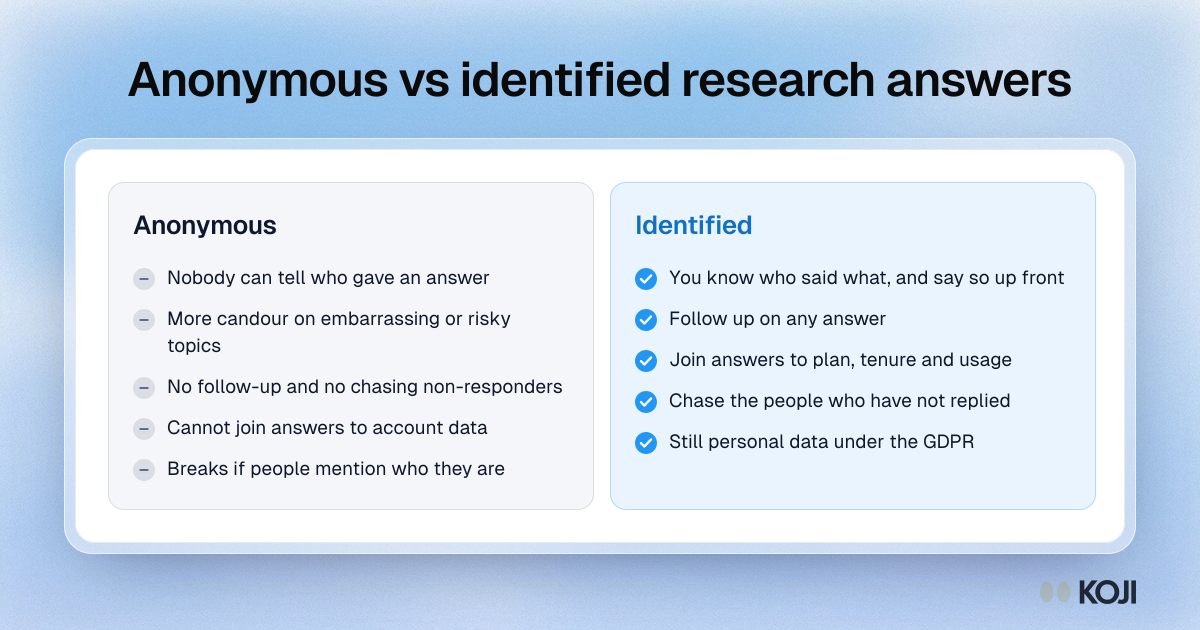
Comparison of anonymous and identified research answers: what each lets you do, what each costs and when to use it.

Comparison

Anonymous vs identified research answers
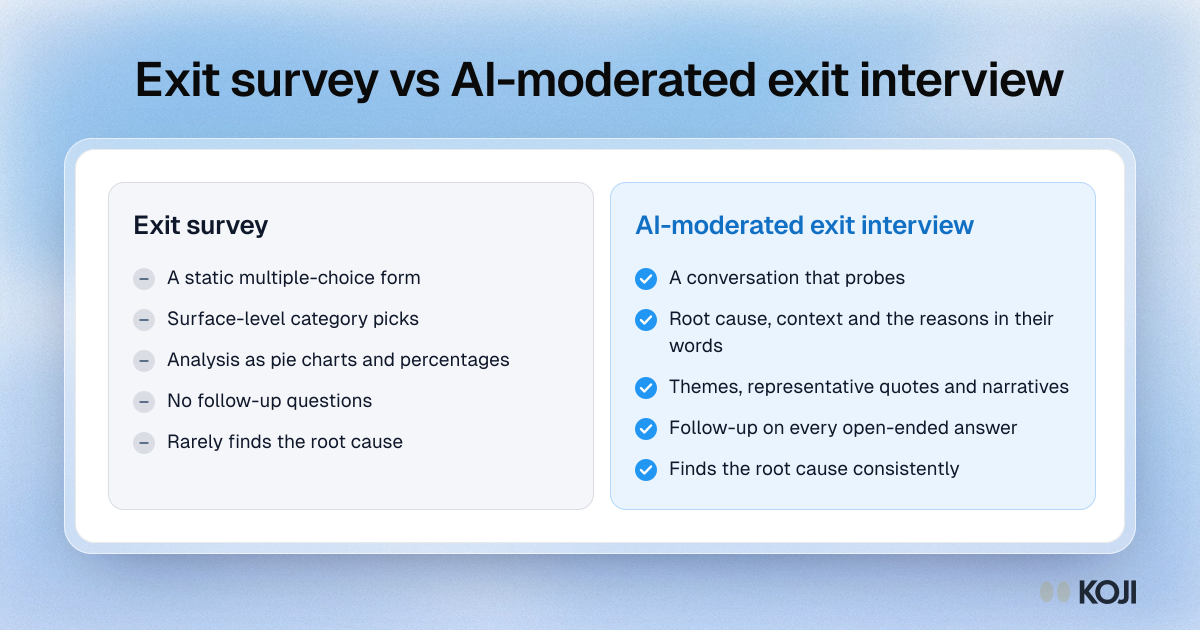
Comparison of an exit survey and an AI-moderated exit interview on format, depth, analysis, follow-up questions and how often each finds the root cause.

Comparison

Exit survey vs AI-moderated exit interview
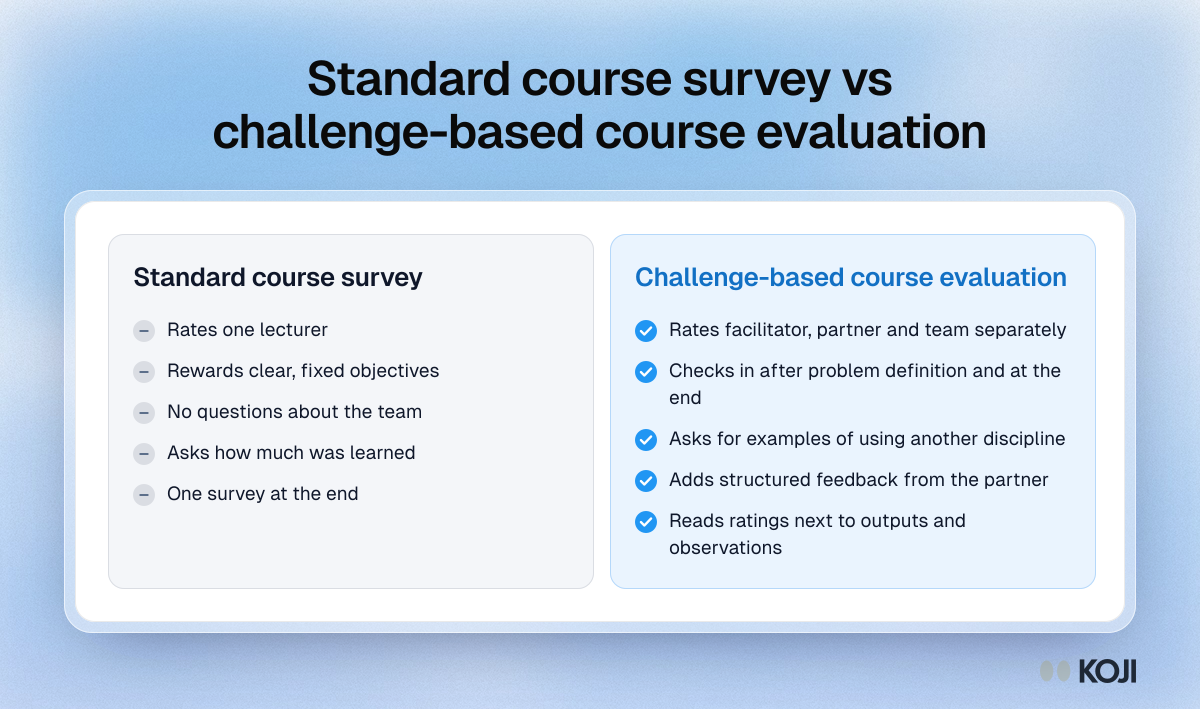
Comparison of a standard course survey with an evaluation built for challenge-based courses, set out across who is rated, what is asked and when.

Comparison

Standard course survey vs challenge-based course evaluation
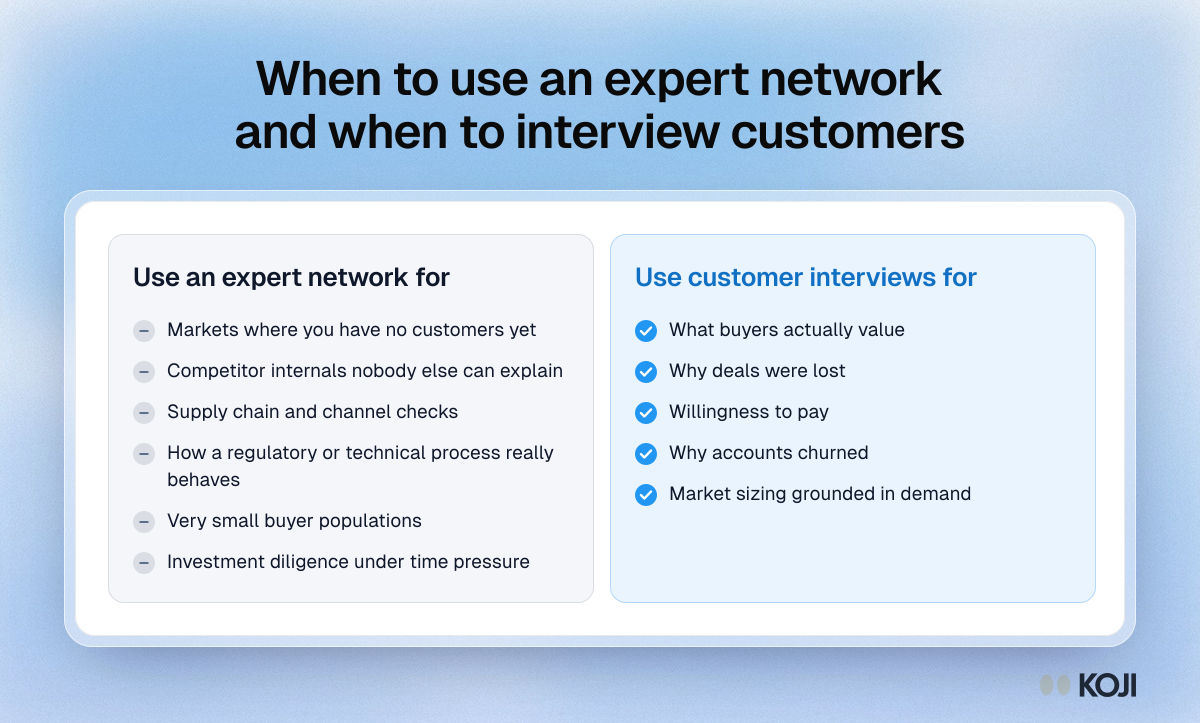
Comparison of when to use expert networks, such as competitor internals and new markets, and when to use customer interviews, such as churn and pricing.

Comparison

When to use an expert network and when to interview customers
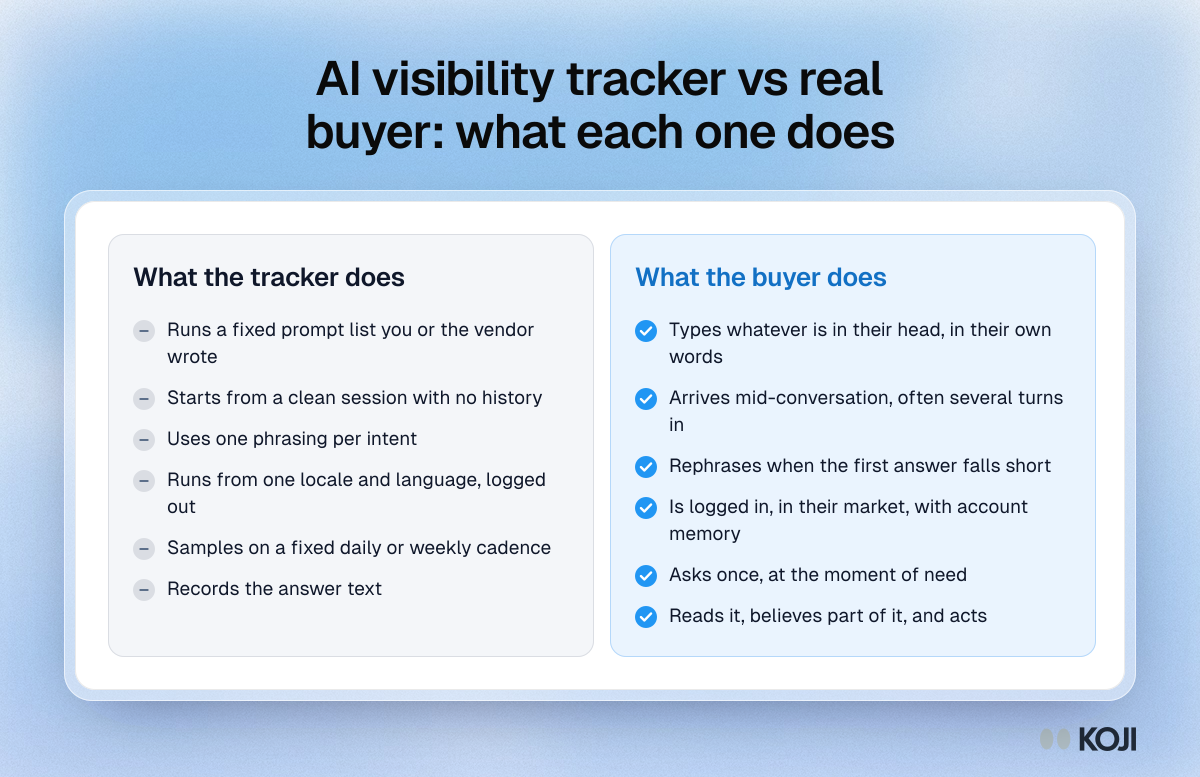
Comparison of an AI visibility tracker and a real buyer: fixed prompts, clean sessions and one phrasing against free text, history and rephrasing.

Comparison

AI visibility tracker vs real buyer: what each one does
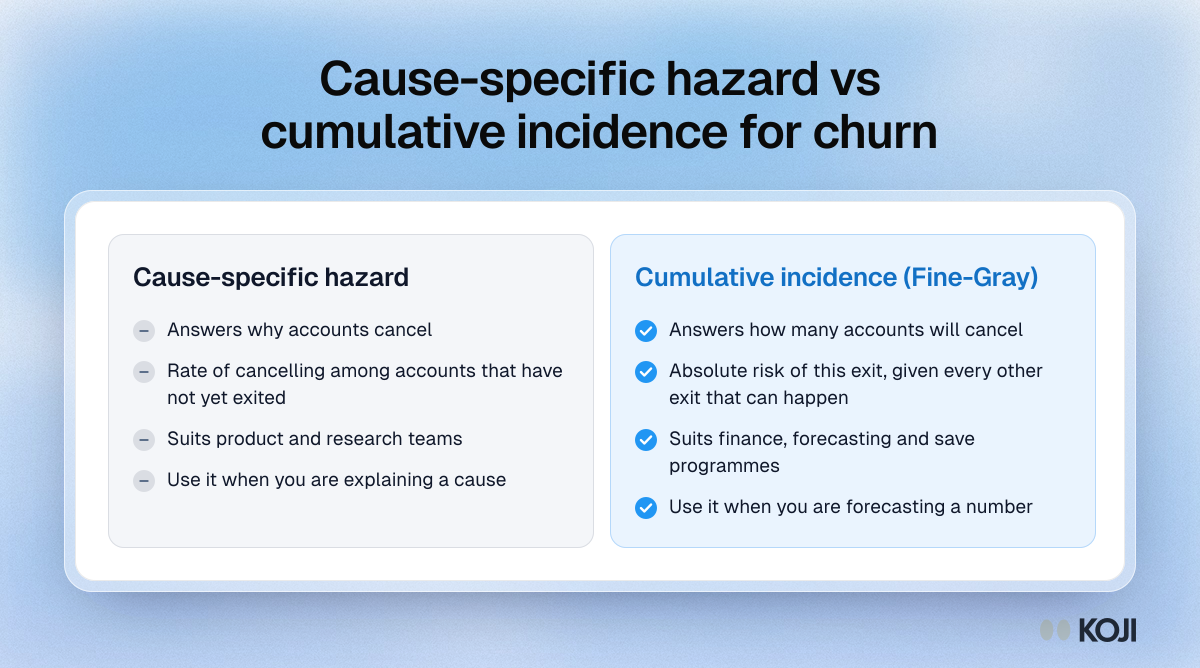
Comparison of two churn measures: cause-specific hazard explains why accounts cancel, cumulative incidence (Fine-Gray) forecasts how many will.

Comparison

Cause-specific hazard vs cumulative incidence for churn
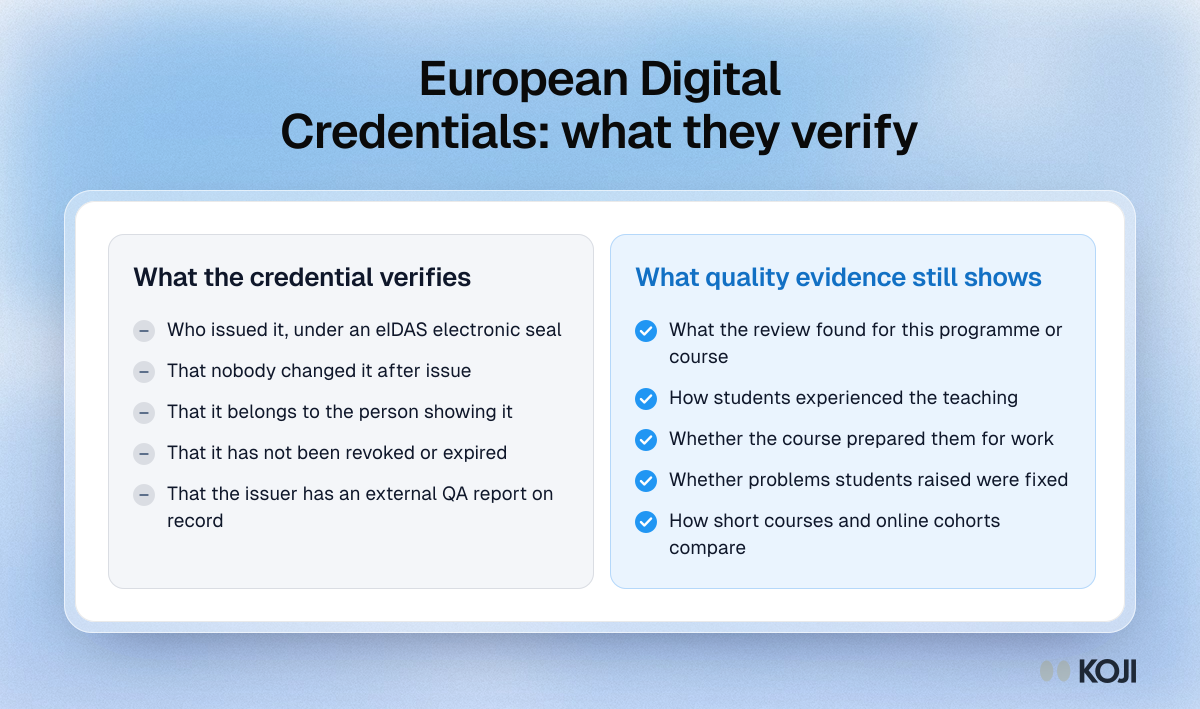
Comparison of what a European Digital Credential verifies, from issuer and integrity to accreditation record, against what quality evidence still has to show.

Comparison

European Digital Credentials: what they verify
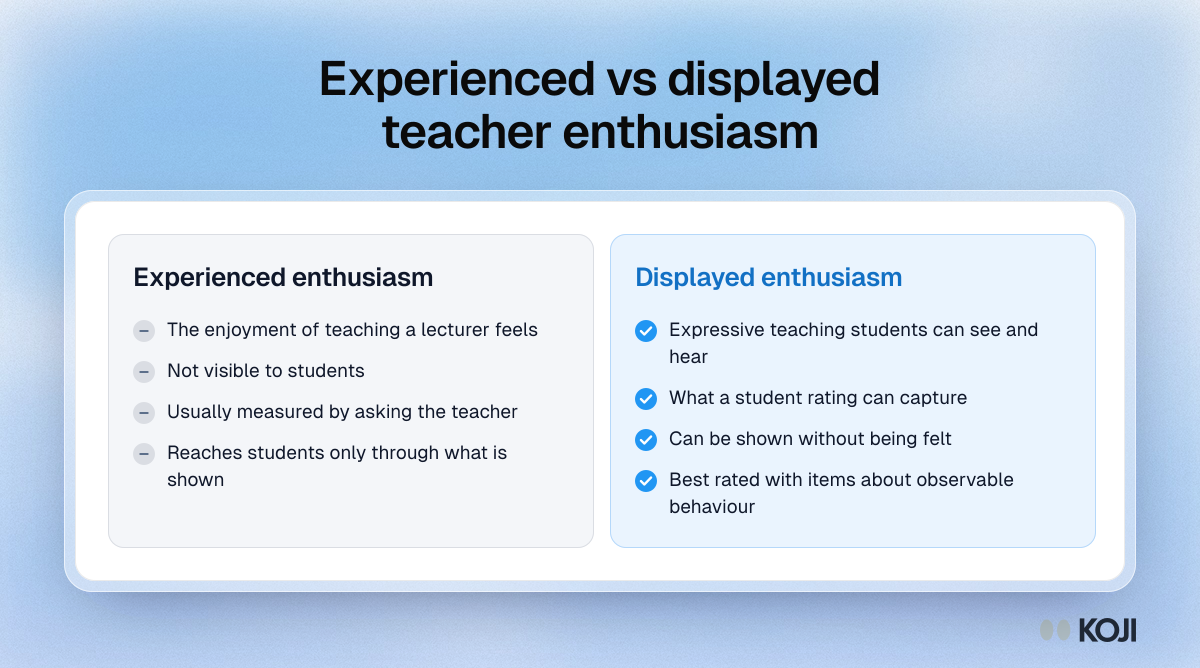
Comparison of experienced and displayed teacher enthusiasm: what each one is, who can observe it, and what a student rating can say about it.

Comparison

Experienced vs displayed teacher enthusiasm
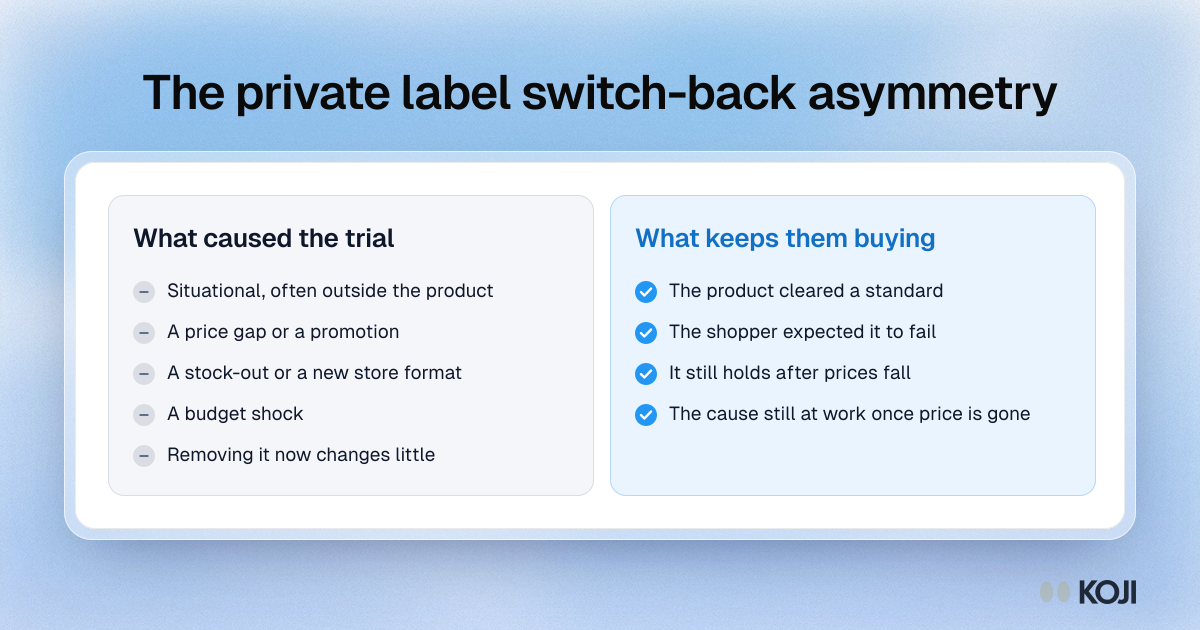
Comparison of what causes a shopper to try a store brand, such as price or a stock-out, against what keeps them buying it: the product met their standard.

Comparison

The private label switch-back asymmetry
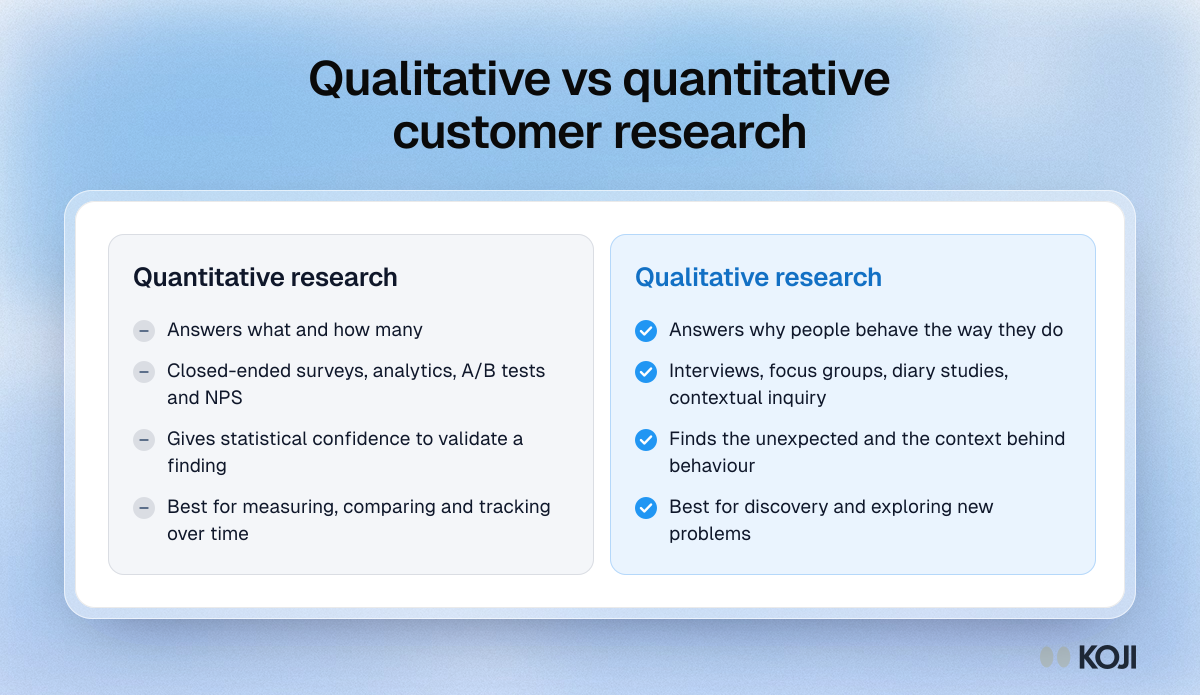
Comparison of quantitative research, which answers what and how many, and qualitative research, which answers why, with methods for each

Comparison

Qualitative vs quantitative customer research
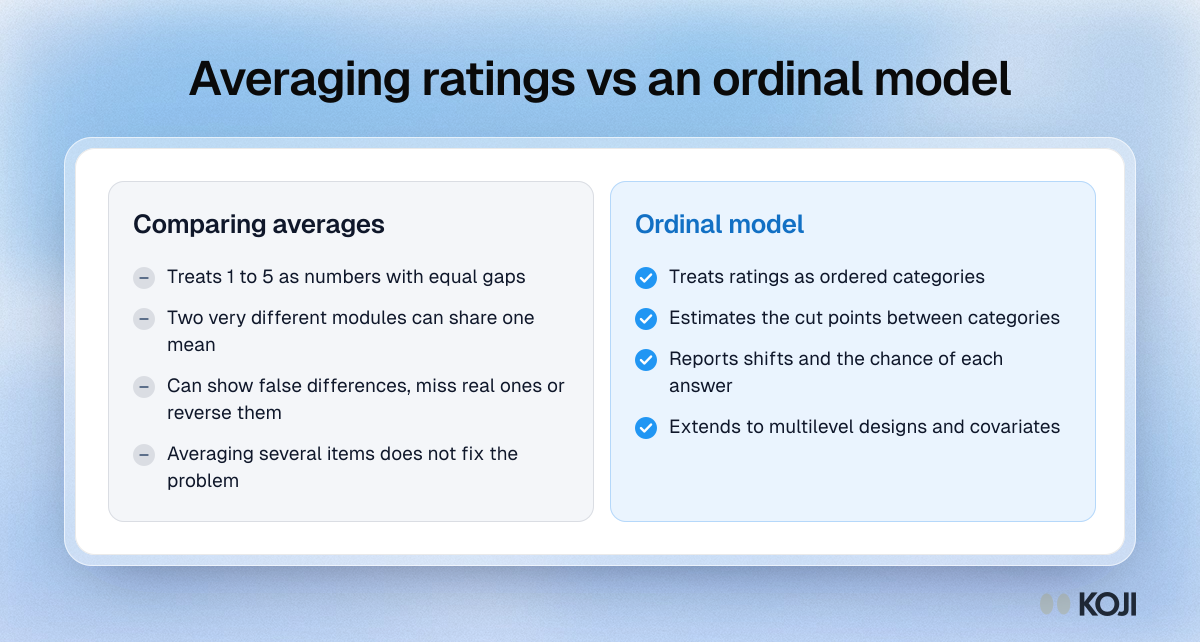
Comparison of averaging course evaluation ratings with fitting an ordinal model, showing what each assumes about the scale and what each reports.

Comparison

Averaging ratings vs an ordinal model
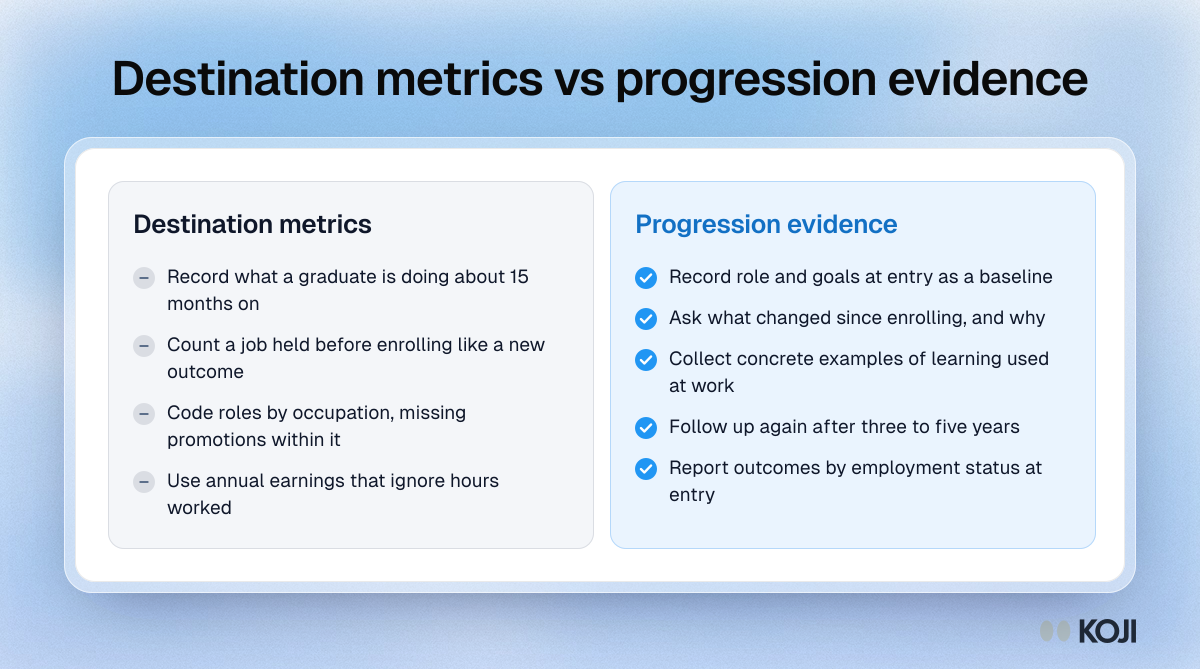
Comparison of destination metrics with progression evidence for mature and part-time graduates, showing what each records and what it misses.

Comparison

Destination metrics vs progression evidence
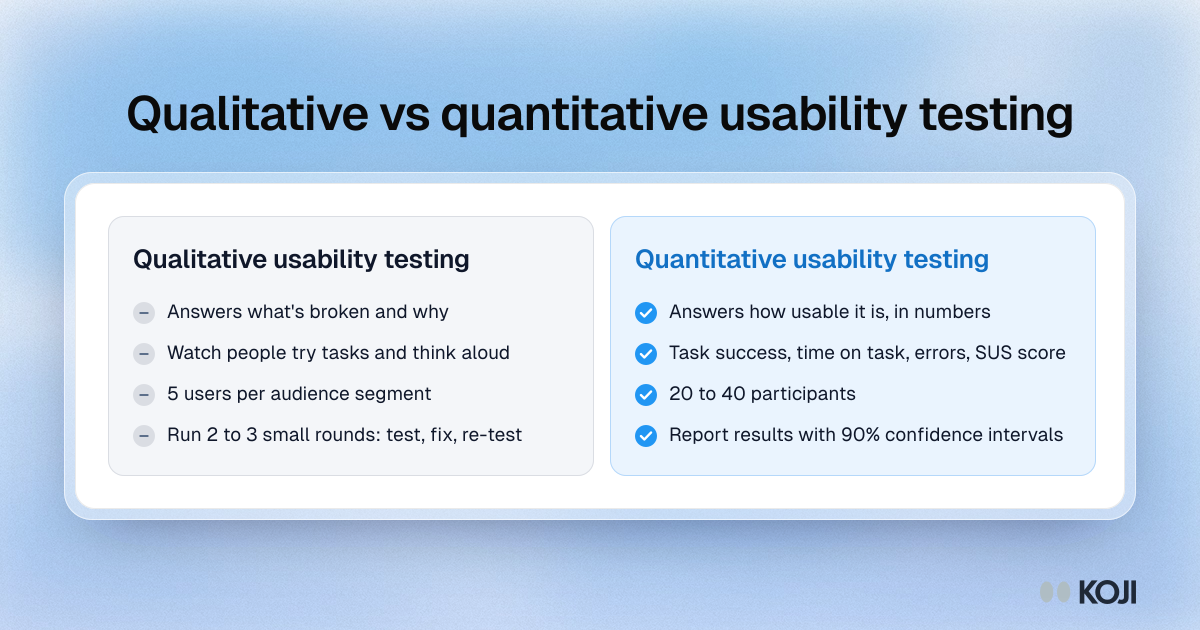
Comparison of qualitative and quantitative usability testing: 5 users per segment to find problems, 20 to 40 to measure them.

Comparison

Qualitative vs quantitative usability testing
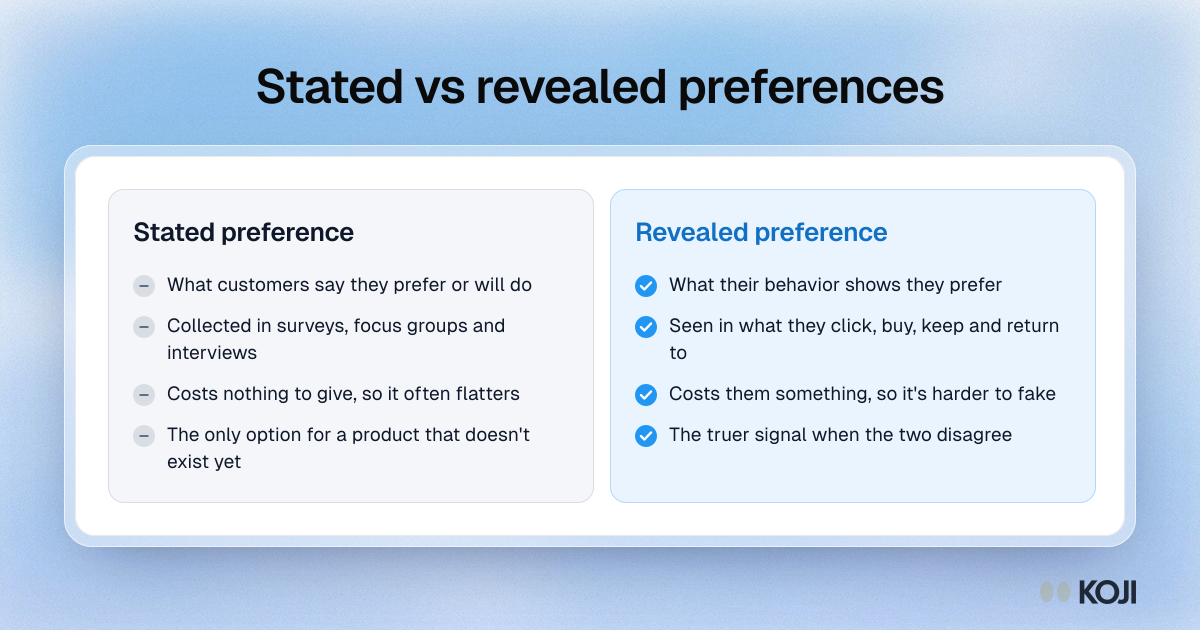
Comparison of stated and revealed preferences: what customers say in surveys and interviews against what their behavior shows.

Comparison

Stated vs revealed preferences
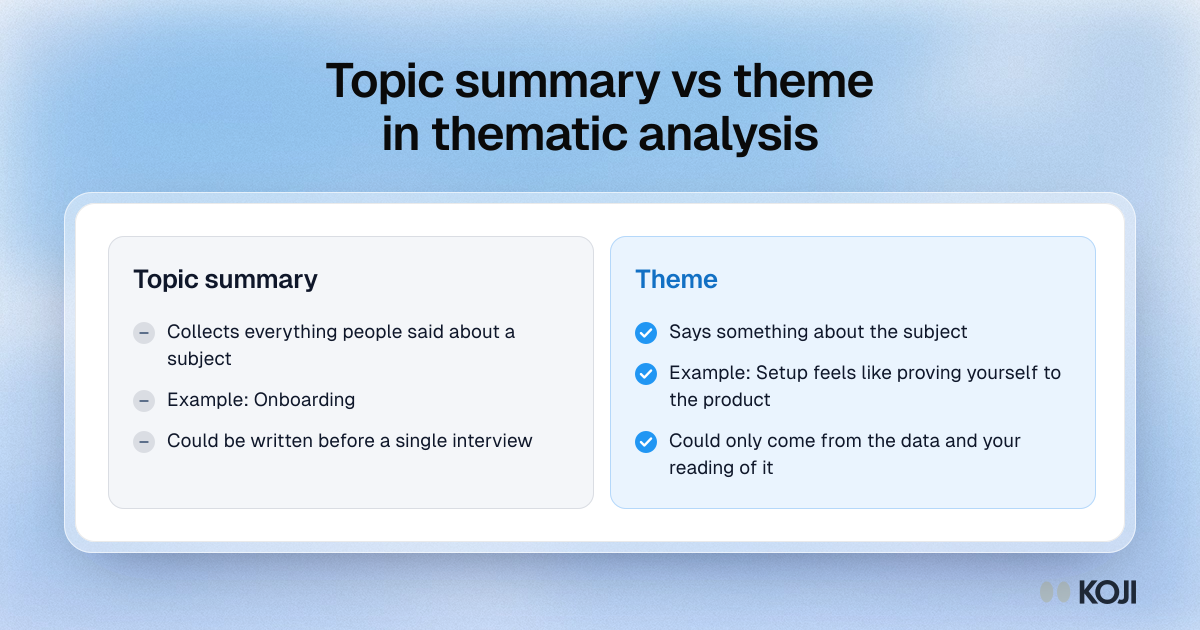
Comparison of a topic summary and a theme: a topic collects what people said about a subject, a theme makes a point about it.

Comparison

Topic summary vs theme in thematic analysis
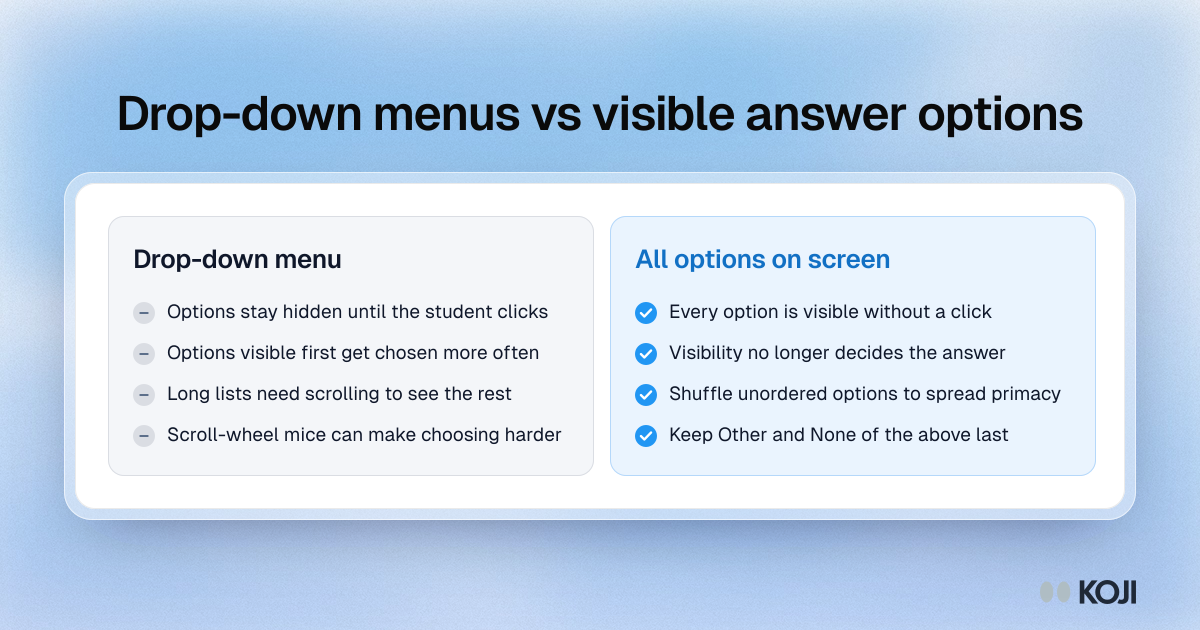
Comparison of drop-down menus and visible answer options in a course evaluation, setting the risks of hidden options against showing every option on screen.

Comparison

Drop-down menus vs visible answer options
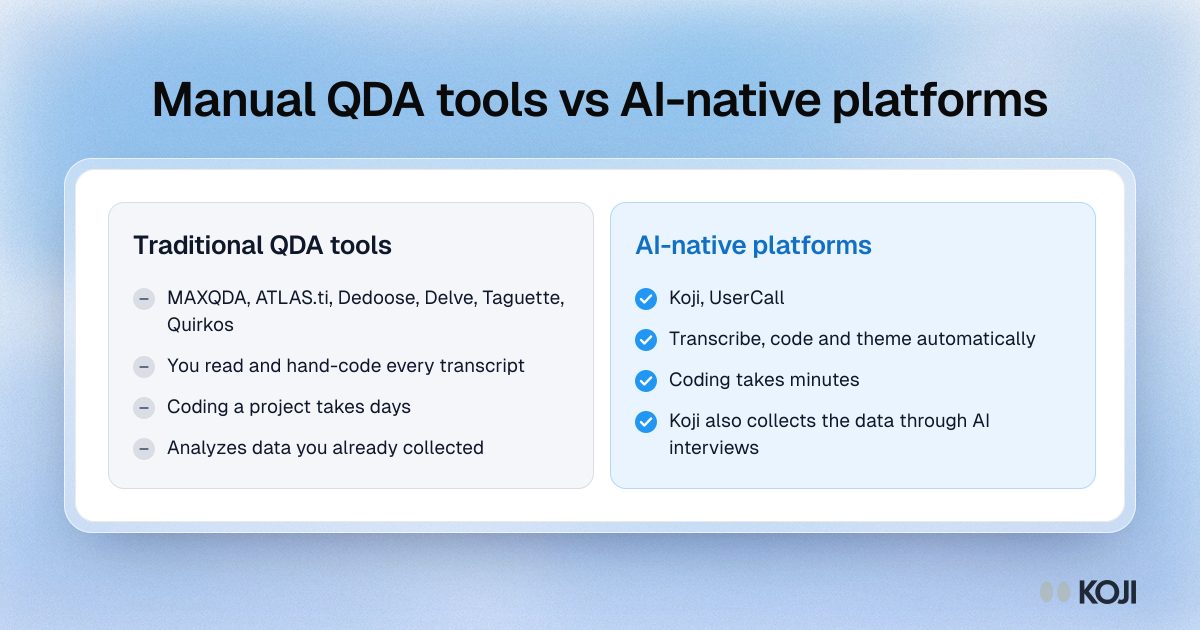
Comparison of traditional QDA tools, where you hand-code every transcript, and AI-native platforms like Koji and UserCall that code and theme automatically.

Comparison

Manual QDA tools vs AI-native platforms
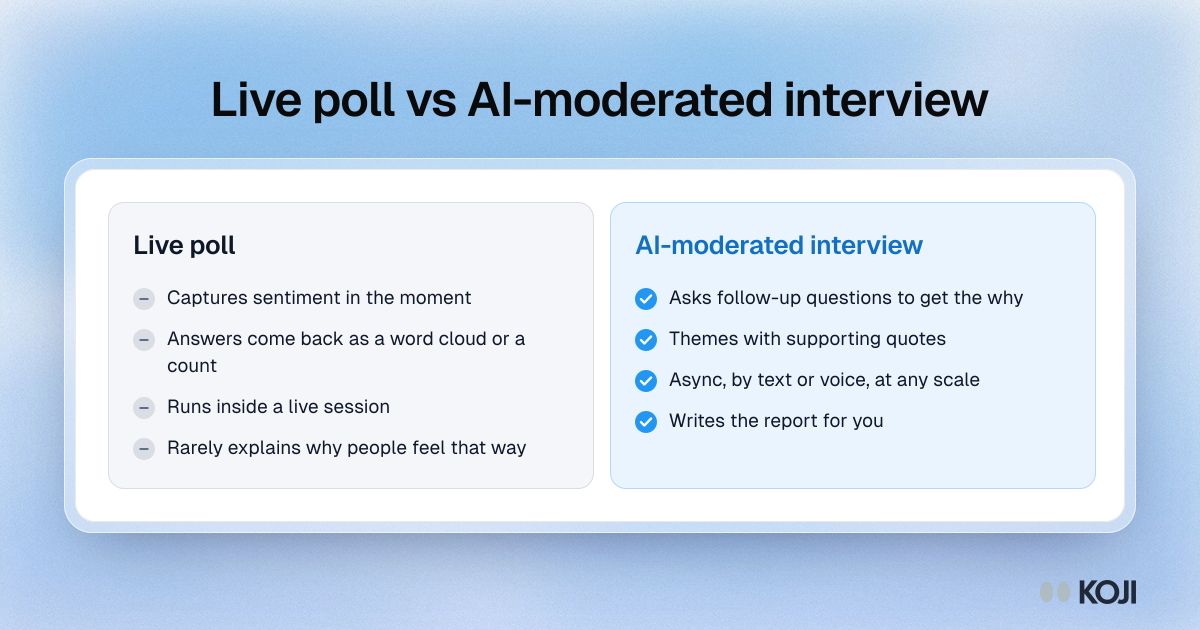
Comparison of a live poll, which captures sentiment in the moment, and an AI-moderated interview, which asks follow-ups and returns themes with quotes.

Comparison

Live poll vs AI-moderated interview
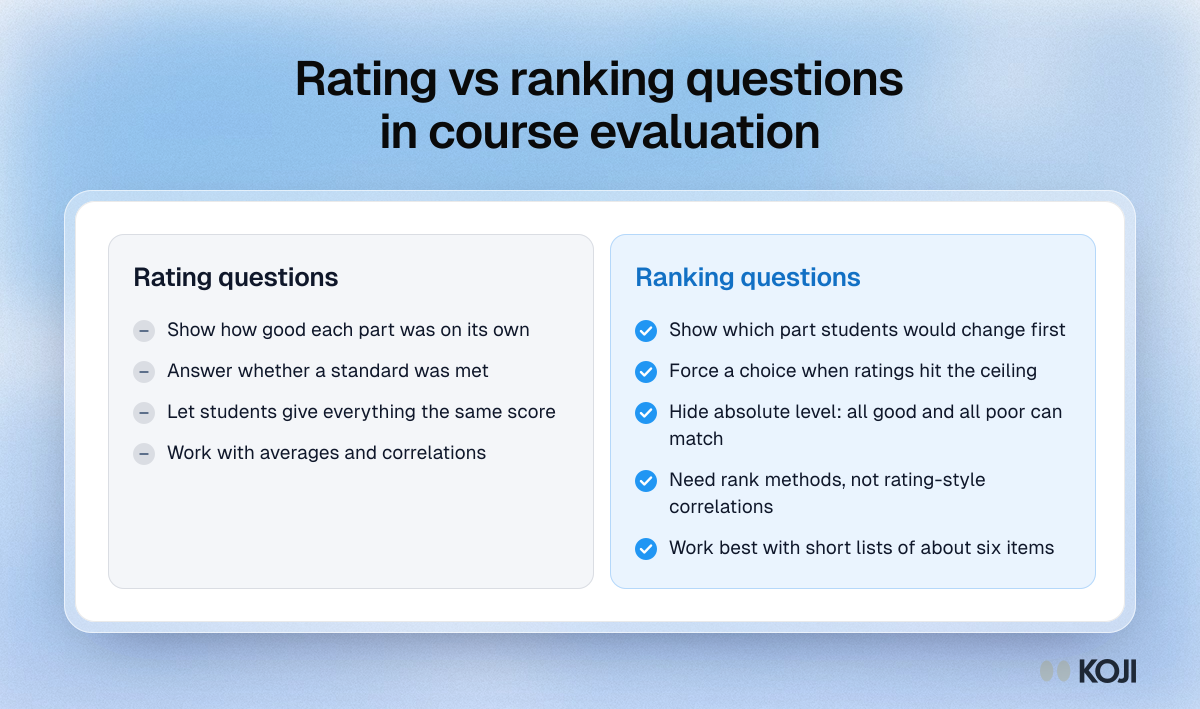
Comparison of rating and ranking questions in course evaluation, listing what each format shows about a course and what each one hides.

Comparison

Rating vs ranking questions in course evaluation
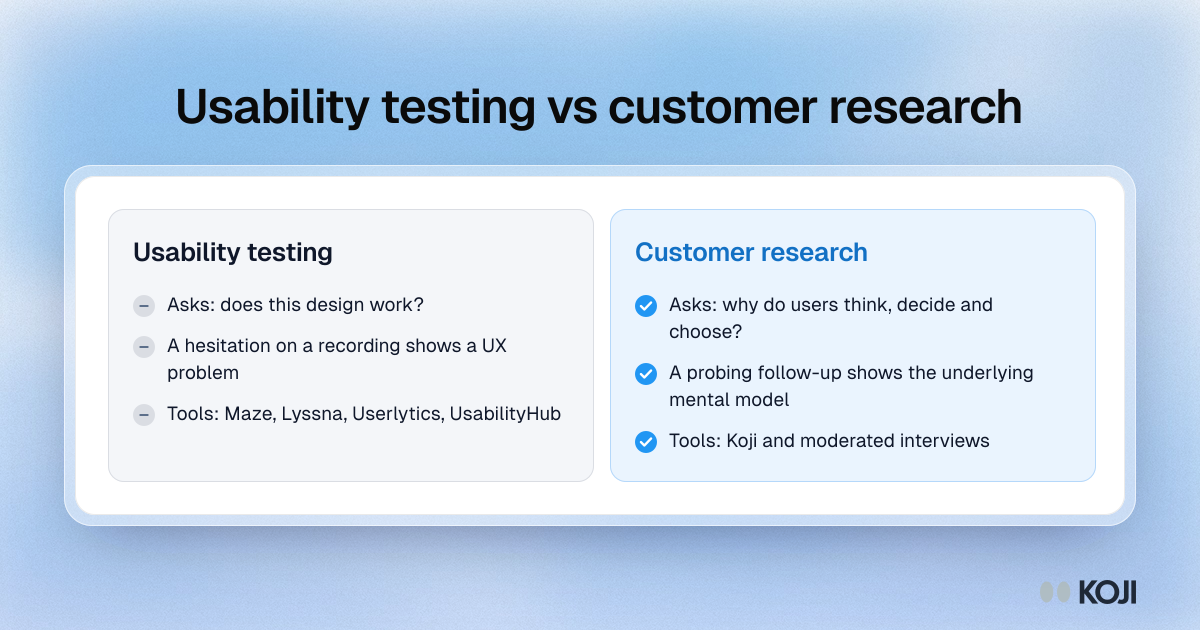
Comparison of usability testing, which asks if a design works, and customer research, which asks why people decide, with the tools for each.

Comparison

Usability testing vs customer research
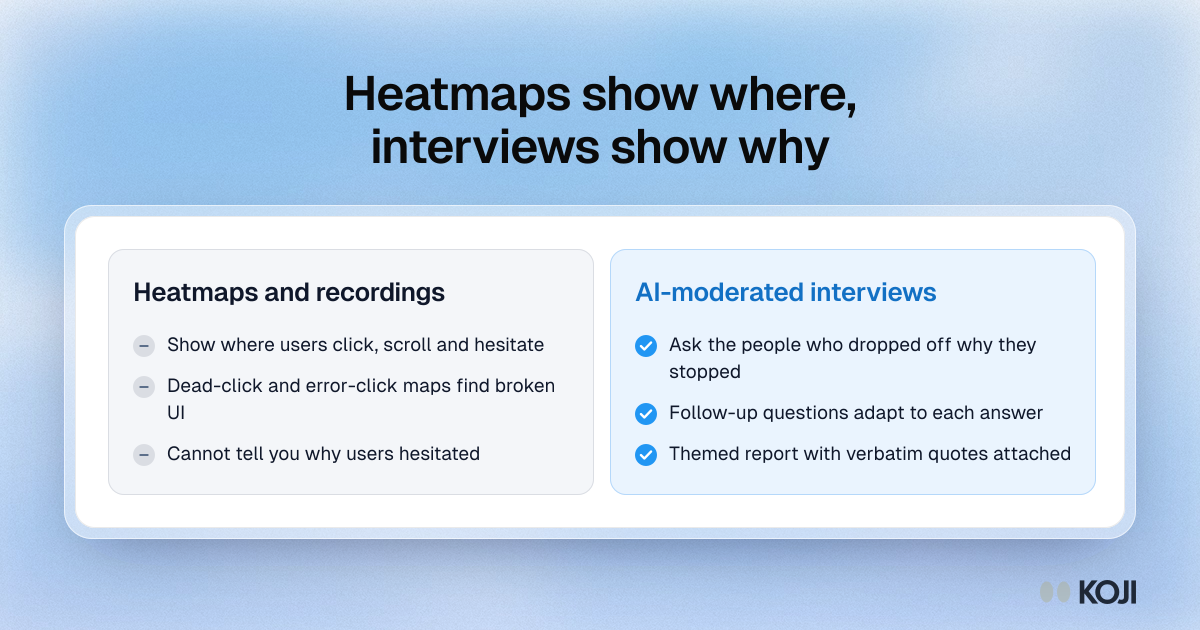
Comparison of heatmaps and session recordings, which show where users hesitate, with AI-moderated interviews, which explain why they stopped.

Comparison

Heatmaps show where, interviews show why
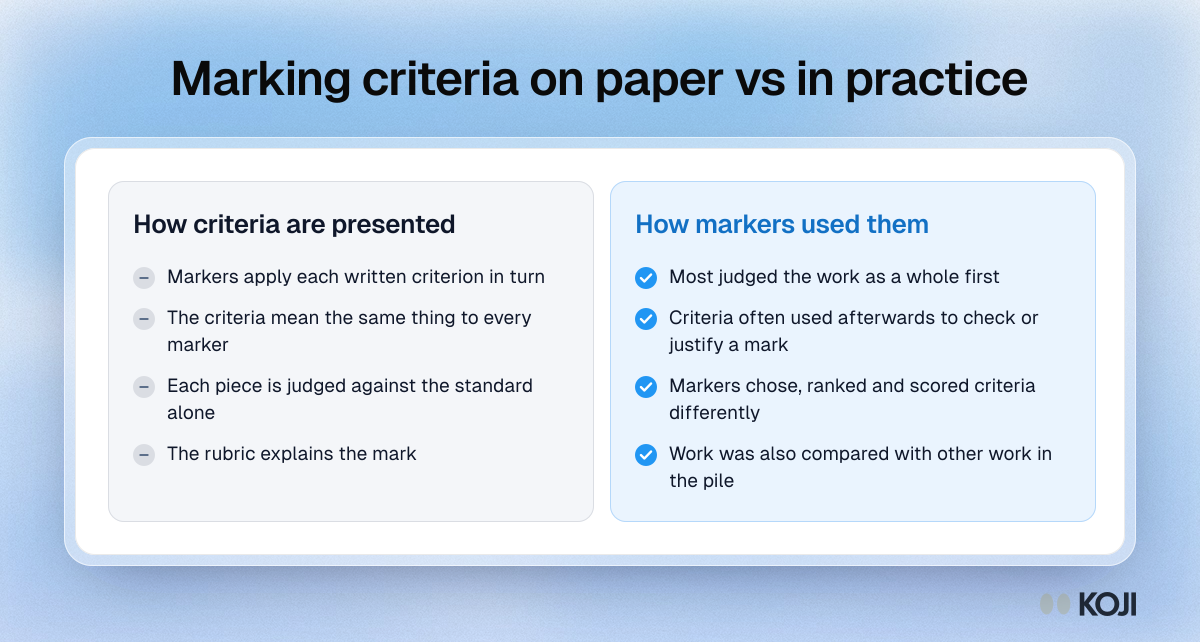
Comparison of how marking criteria are presented to students with how UK assessors used them in practice, in studies by Bloxham and colleagues.

Comparison

Marking criteria on paper vs in practice
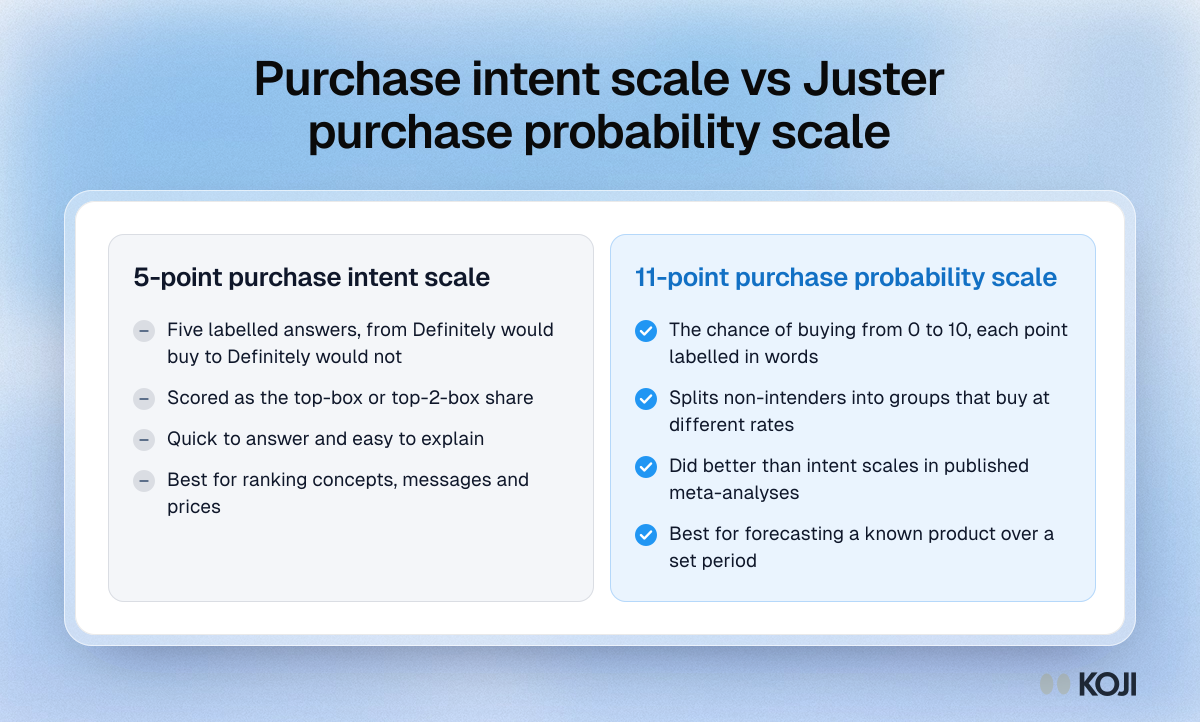
Comparison of the 5-point purchase intent scale and the 11-point Juster purchase probability scale, with what each is best for

Comparison

Purchase intent scale vs Juster purchase probability scale
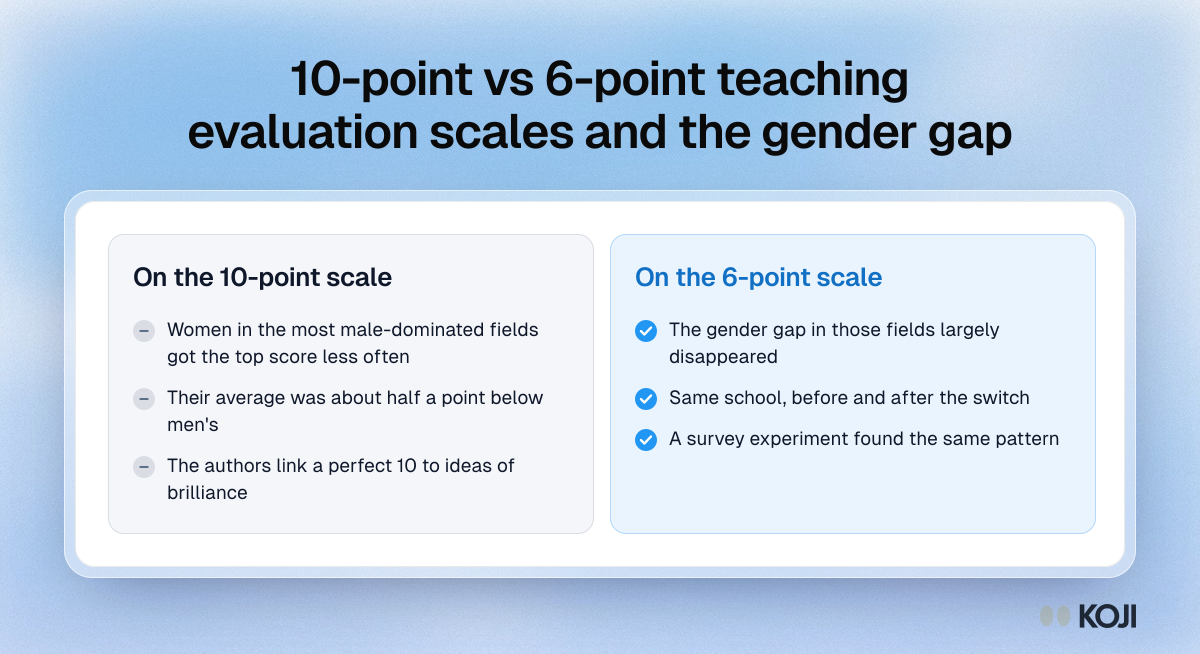
Comparison of 10-point and 6-point teaching scales: women in male-dominated fields scored lower on 10 points, a gap that largely disappeared on 6

Comparison

10-point vs 6-point teaching evaluation scales and the gender gap
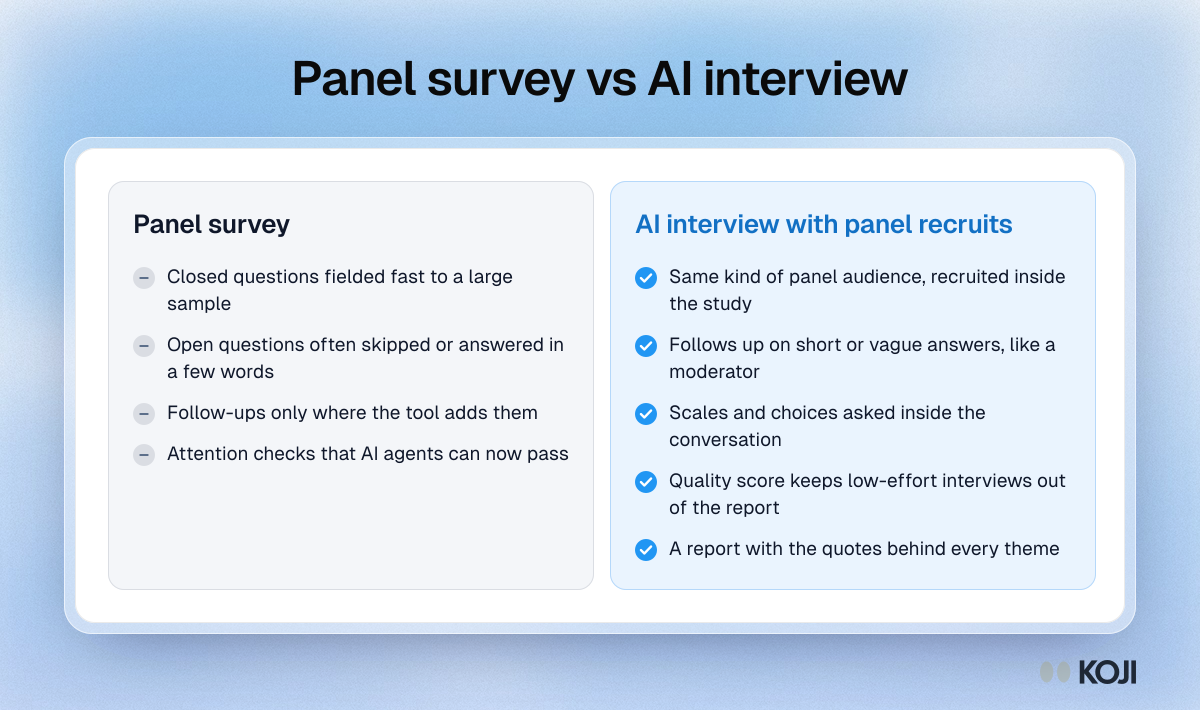
Comparison of a panel survey and an AI interview with panel recruits, showing how each handles open answers, follow-ups and analysis

Comparison

Panel survey vs AI interview
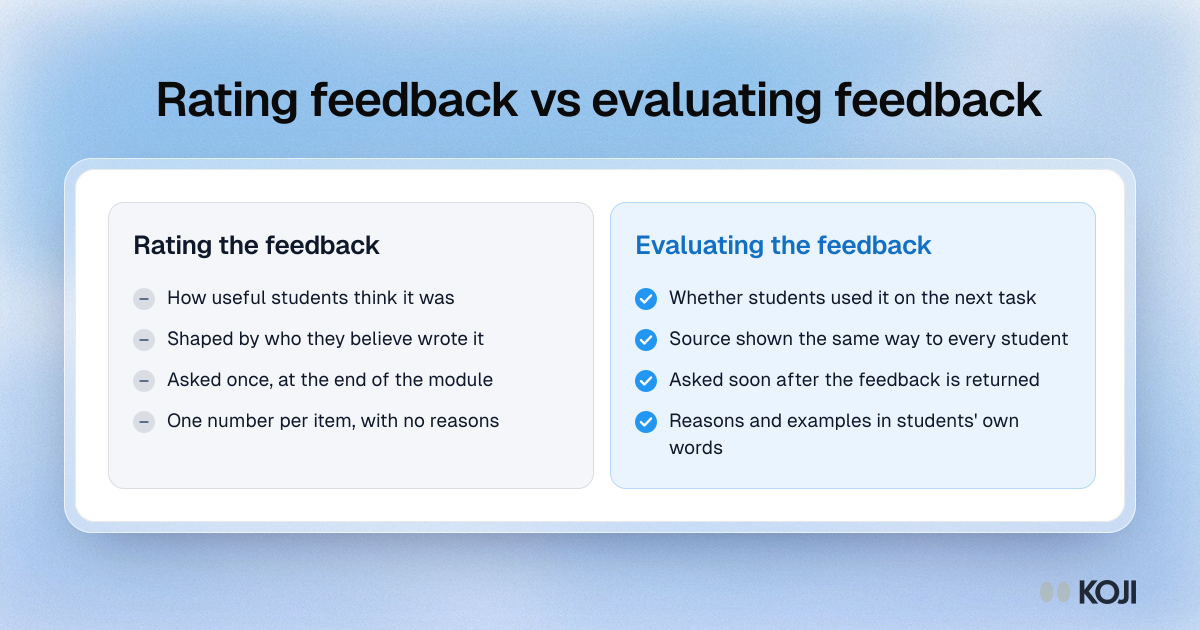
Comparison of rating assessment feedback with a satisfaction item versus evaluating it by use, timing, consistent source labels and students' reasons.

Comparison

Rating feedback vs evaluating feedback
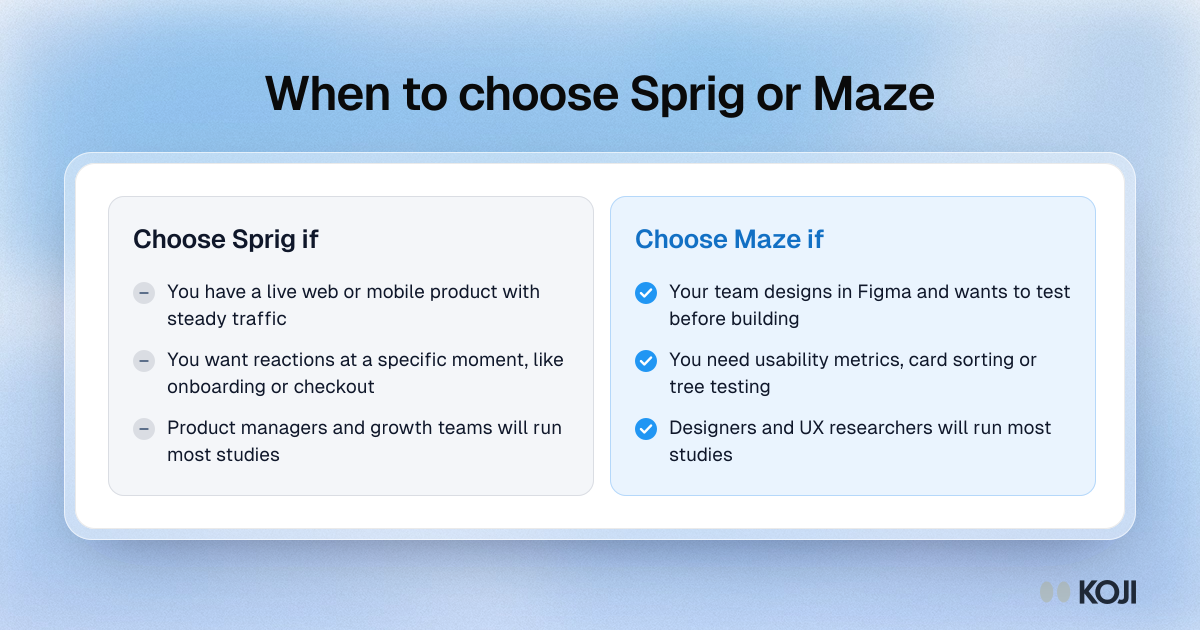
Comparison of when to choose Sprig and when to choose Maze, by product stage, research question and the team that runs the studies.

Comparison

When to choose Sprig or Maze
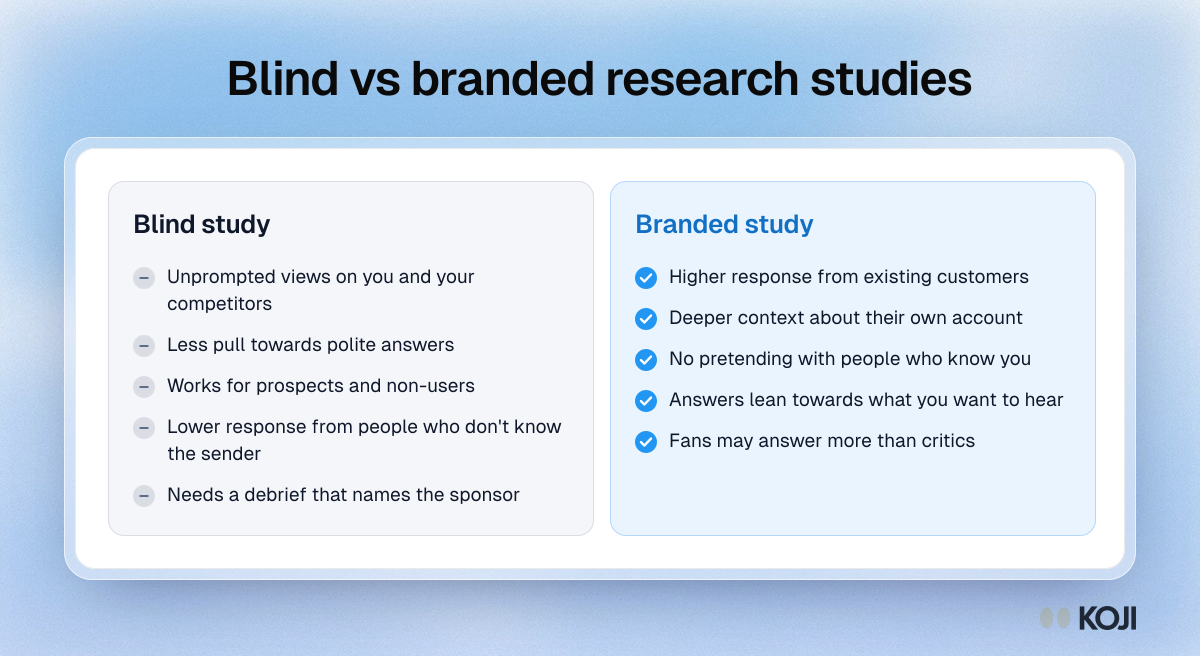
Comparison of blind and branded research studies, listing what each does well and where each skews answers

Comparison

Blind vs branded research studies
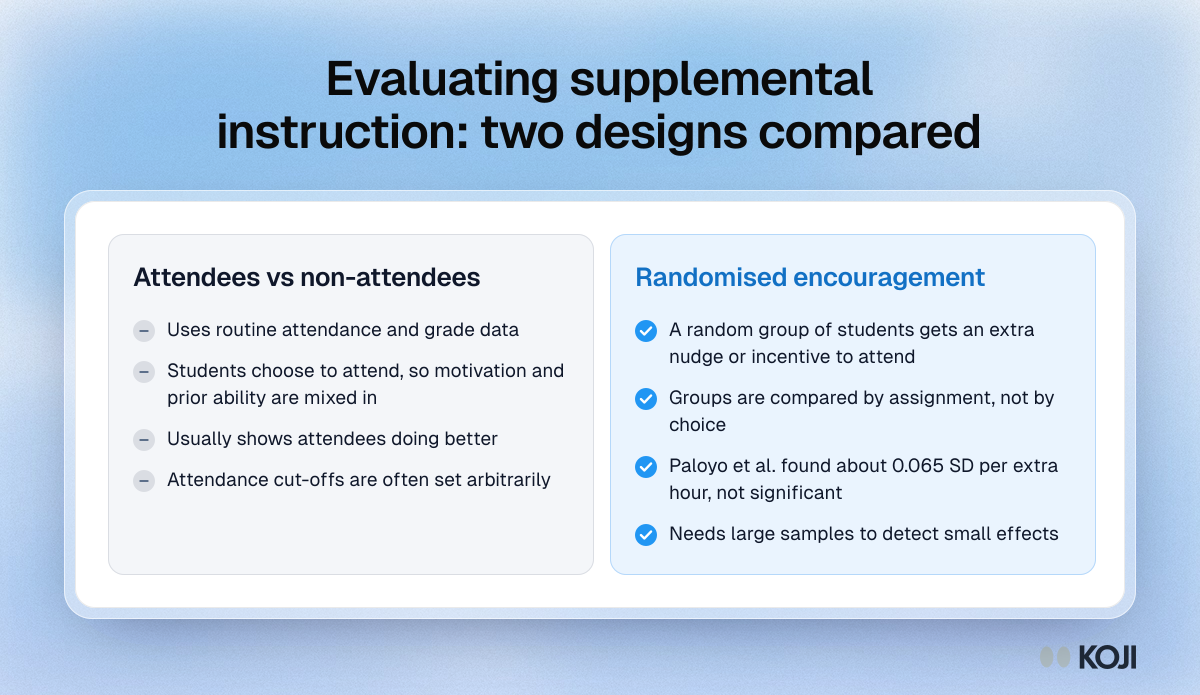
Comparison of two ways to evaluate supplemental instruction: comparing attendees with non-attendees, and a randomised encouragement design.

Comparison

Evaluating supplemental instruction: two designs compared
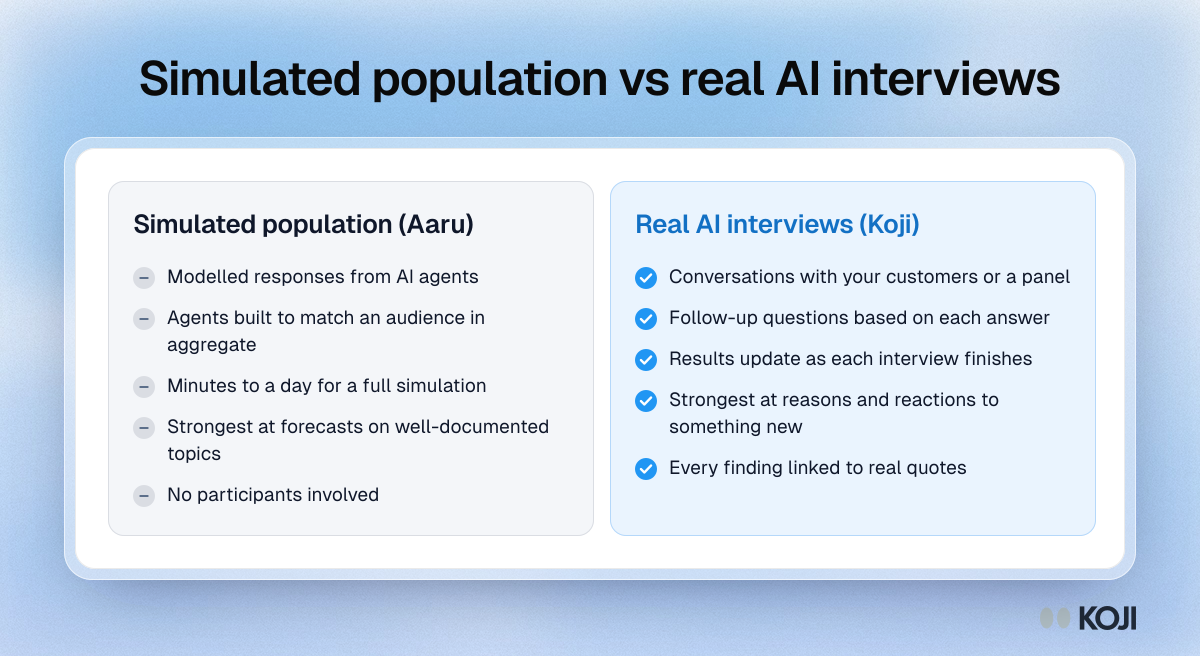
Comparison of a simulated population and real AI interviews on what each produces, who answers and where each is strongest

Comparison

Simulated population vs real AI interviews
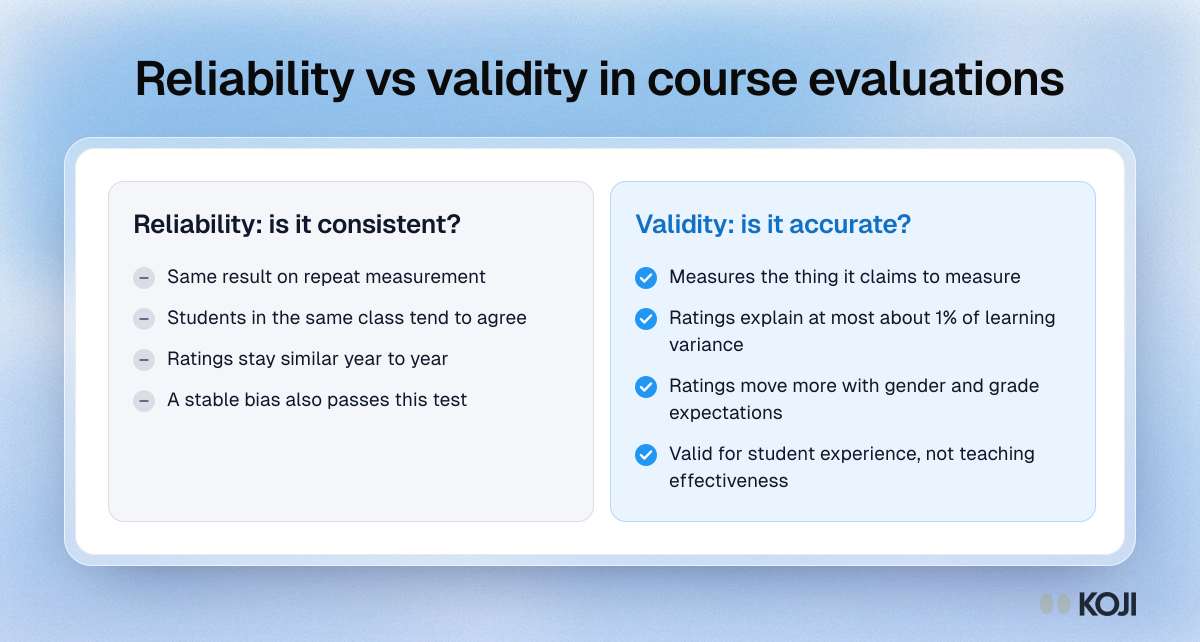
Comparison of reliability and validity in student evaluations of teaching: ratings are consistent, but barely track learning and respond to bias.

Comparison

Reliability vs validity in course evaluations
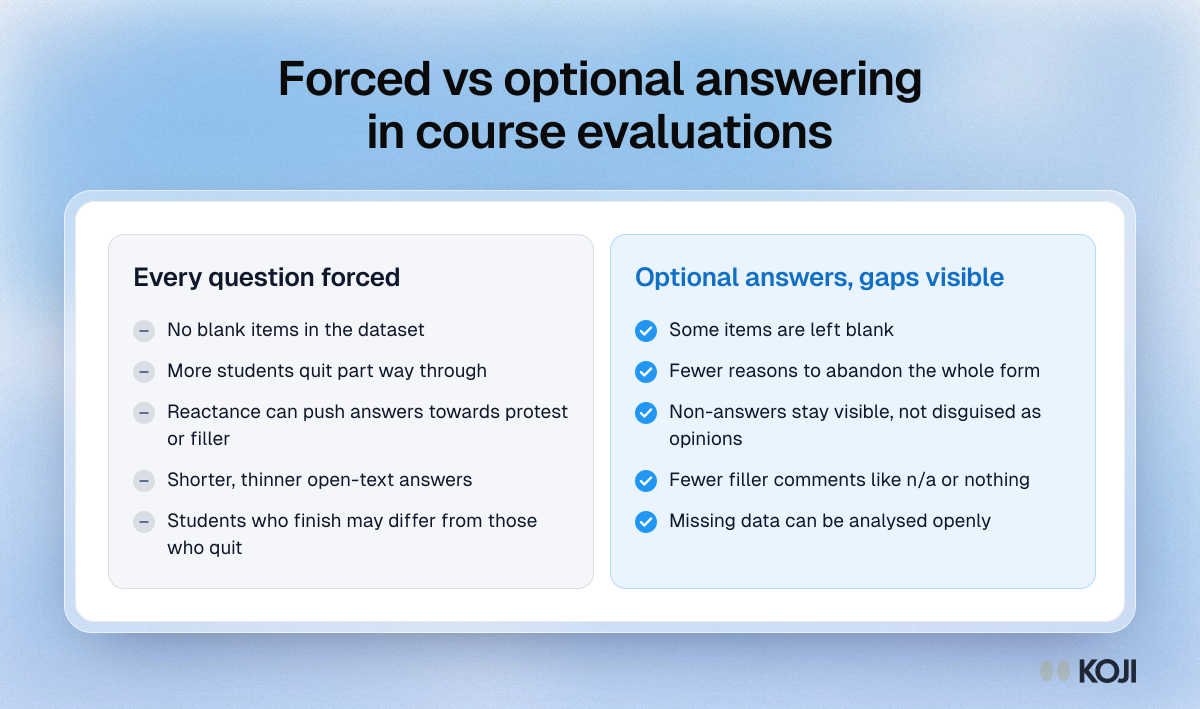
Comparison of forced and optional answering in course evaluations: forcing answers fills every item but raises dropout, reactance and filler answers.

Comparison

Forced vs optional answering in course evaluations
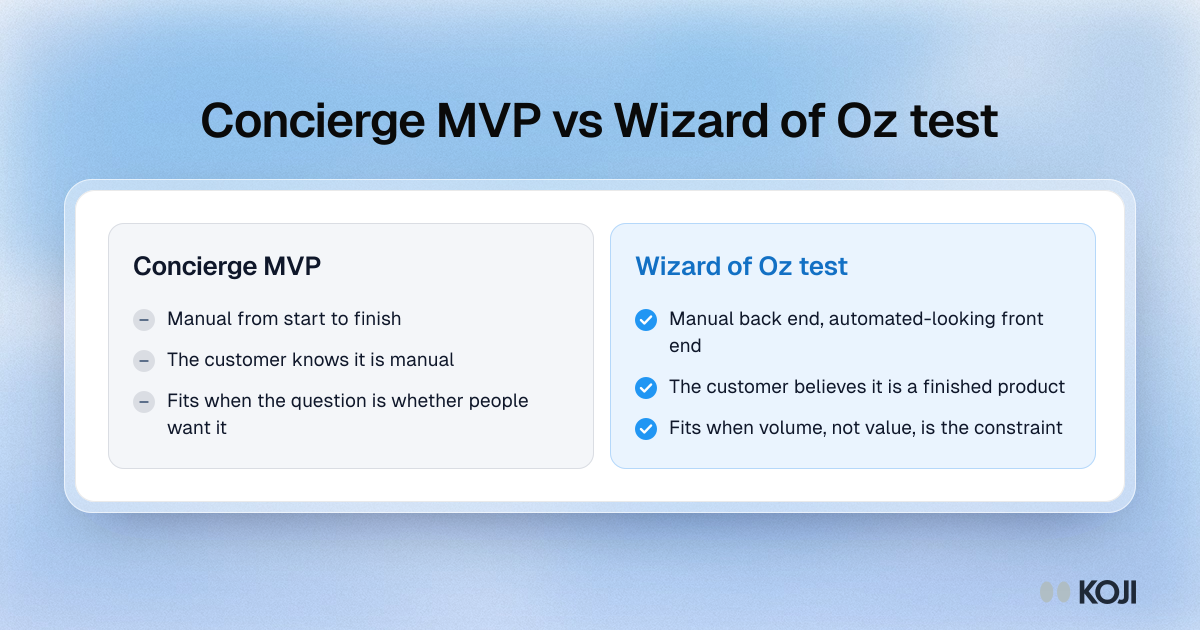
Comparison of a concierge MVP and a Wizard of Oz test: whether the customer knows the work is manual, how the product looks, and when each one fits.

Comparison

Concierge MVP vs Wizard of Oz test
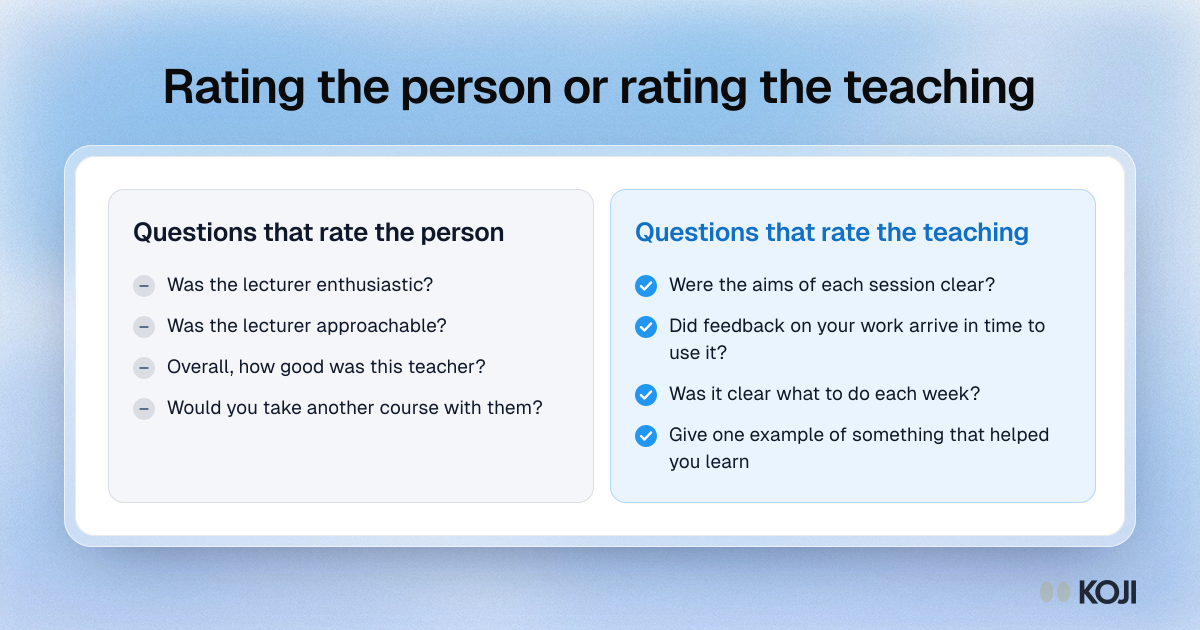
Comparison of course evaluation questions that rate the lecturer as a person with questions that rate observable teaching behaviour.

Comparison

Rating the person or rating the teaching
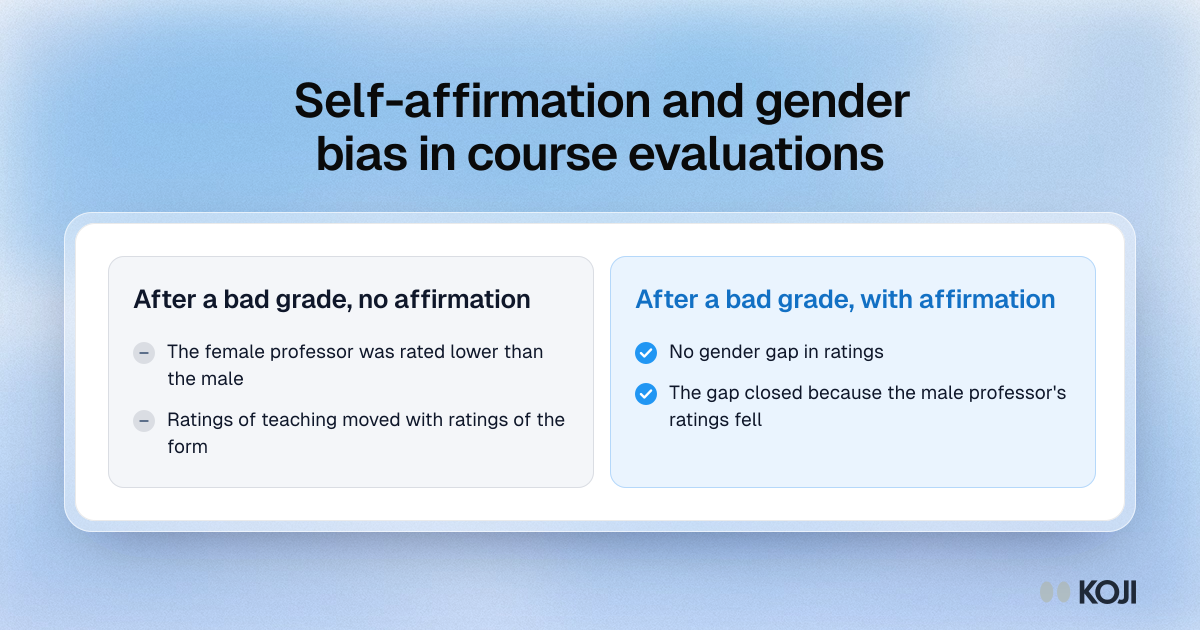
Comparison of ratings after a bad grade: without self-affirmation the female professor was rated lower; with it the gap closed as the male rating fell.

Comparison

Self-affirmation and gender bias in course evaluations
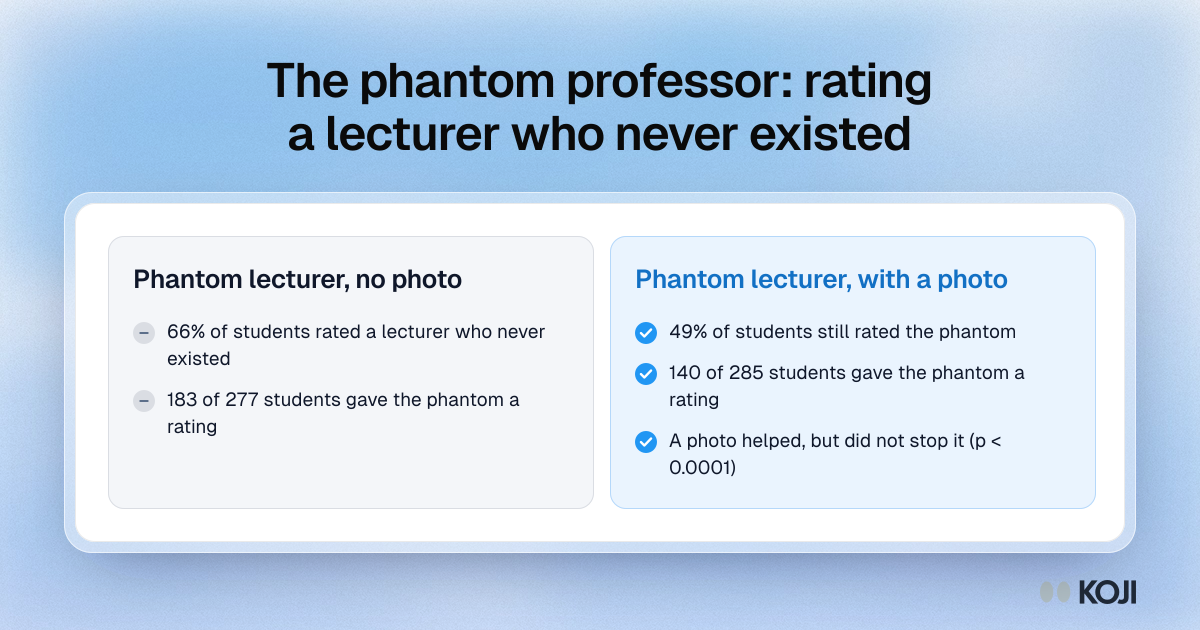
Comparison showing 66% of medical students rated a fictitious lecturer when no photo was shown, and 49% still did when a photo was added.

Comparison

The phantom professor: rating a lecturer who never existed
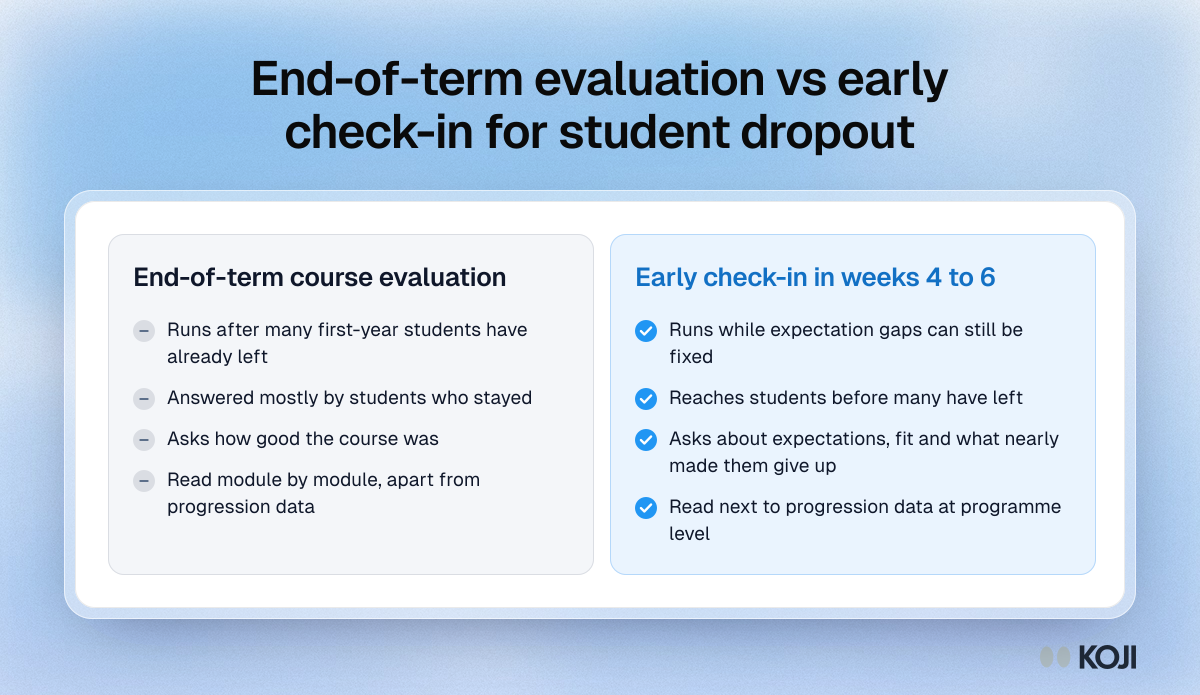
Comparison of what end-of-term course evaluation hears about leaving versus what an early check-in can hear, from timing to the questions asked.

Comparison

End-of-term evaluation vs early check-in for student dropout
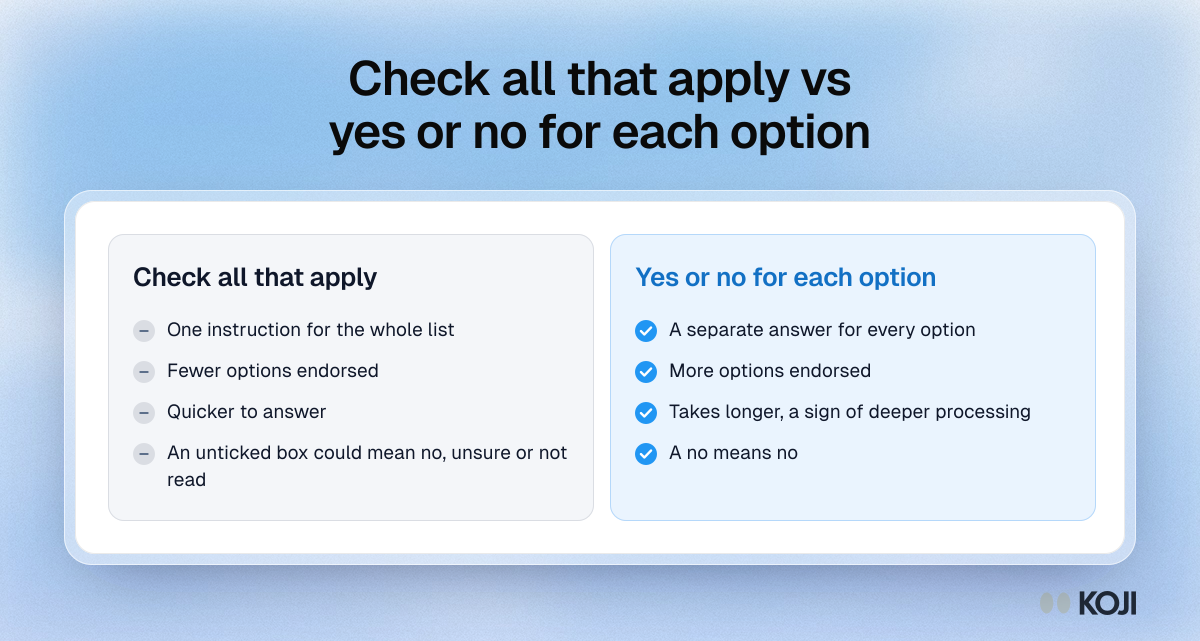
Comparison of check-all-that-apply and yes/no question formats: asking yes or no for each option gets more options endorsed and more considered answers.

Comparison

Check all that apply vs yes or no for each option