Free to save and share

Frameworks and cheat sheets for customer research

Every framework, checklist and comparison from our guides, as an image you can download, drop into a deck or share with your team.
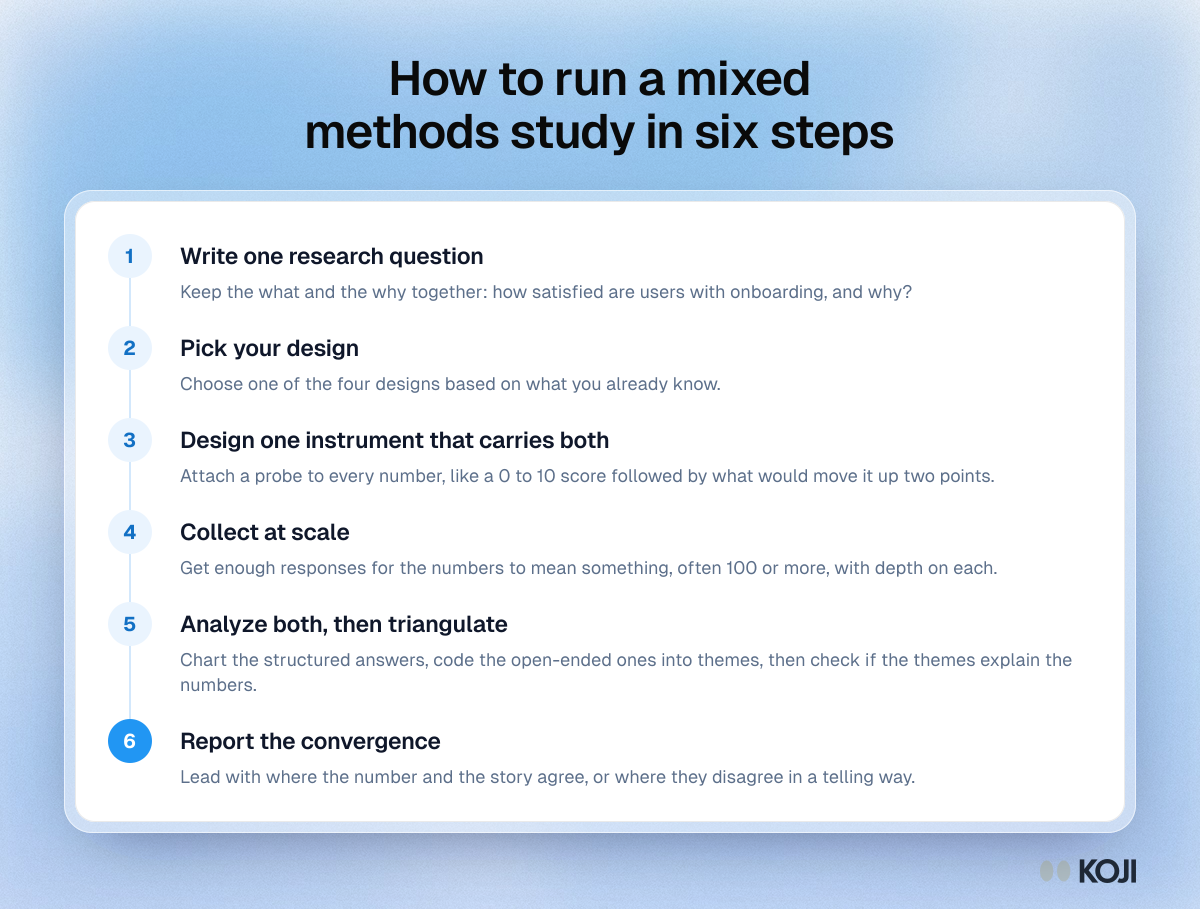
Process showing six steps to run a mixed methods study, from writing one research question to reporting where the numbers and the stories agree.

Process

How to run a mixed methods study in six steps
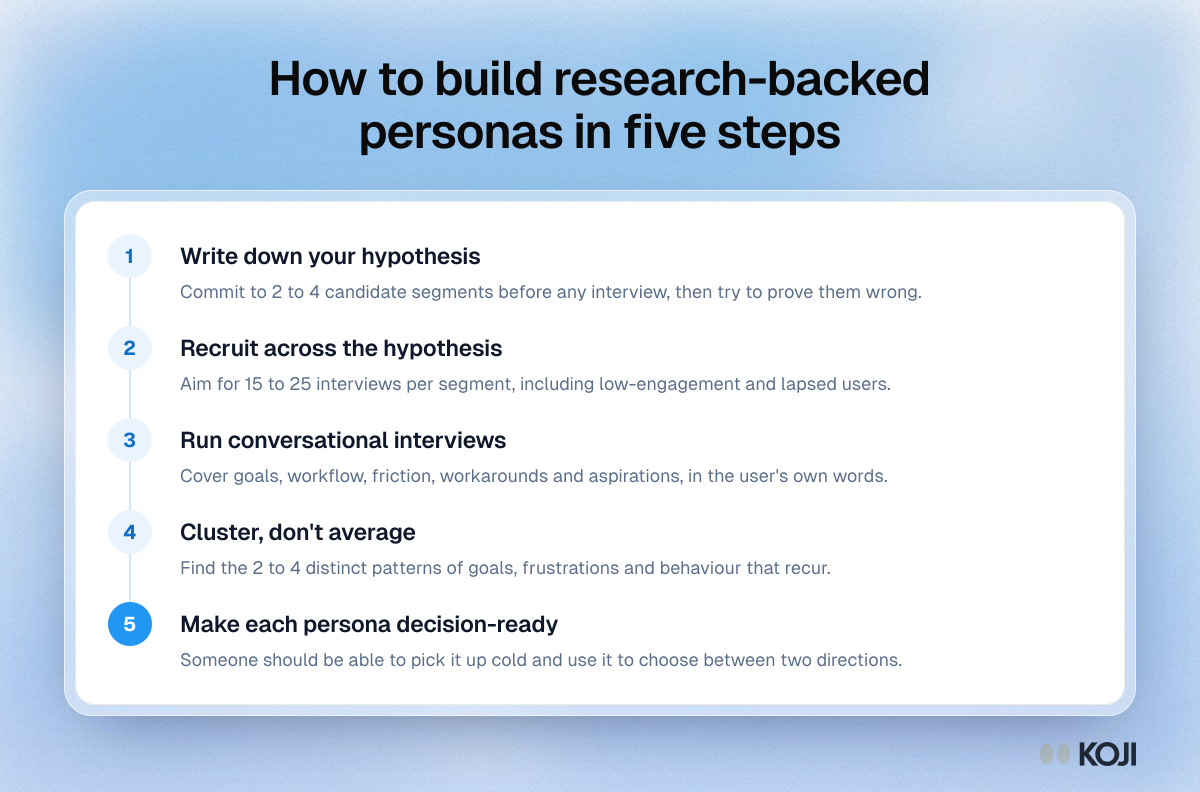
Process showing five steps to build research-backed personas, from writing a hypothesis and recruiting to interviewing, clustering and finishing them.

Process

How to build research-backed personas in five steps
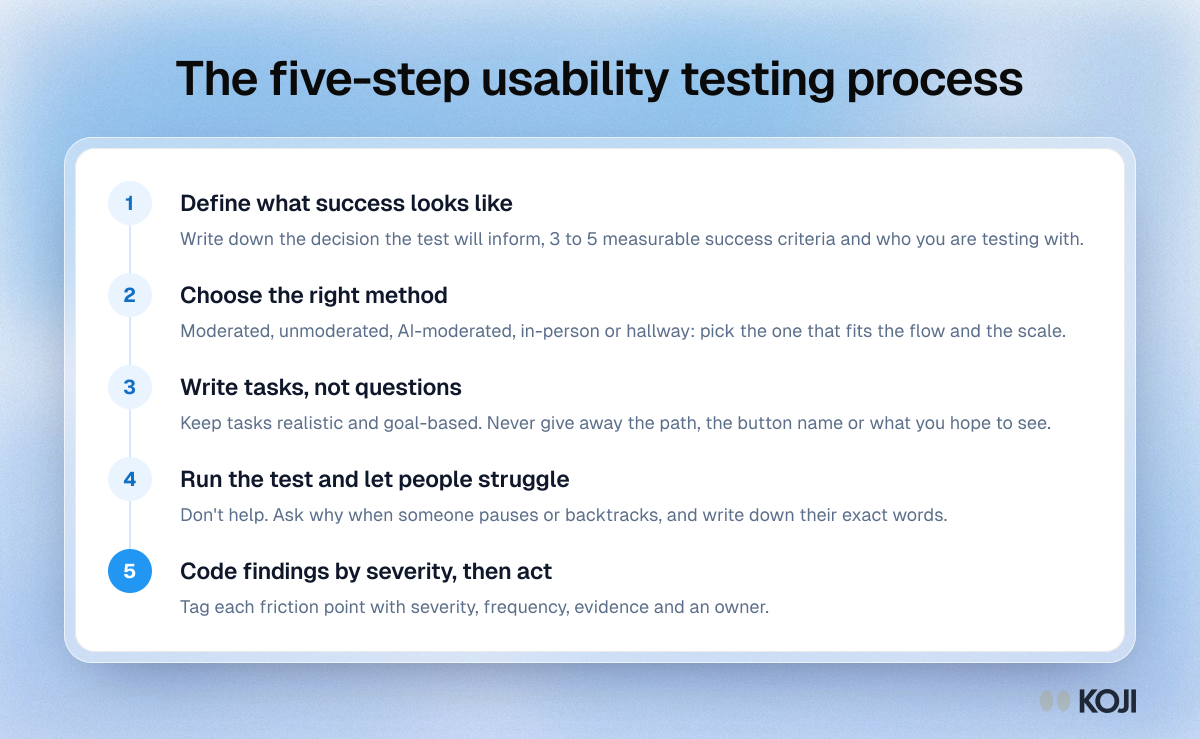
Process showing the five steps of a usability test: define success, choose a method, write tasks, run the test and code findings by severity.

Process

The five-step usability testing process
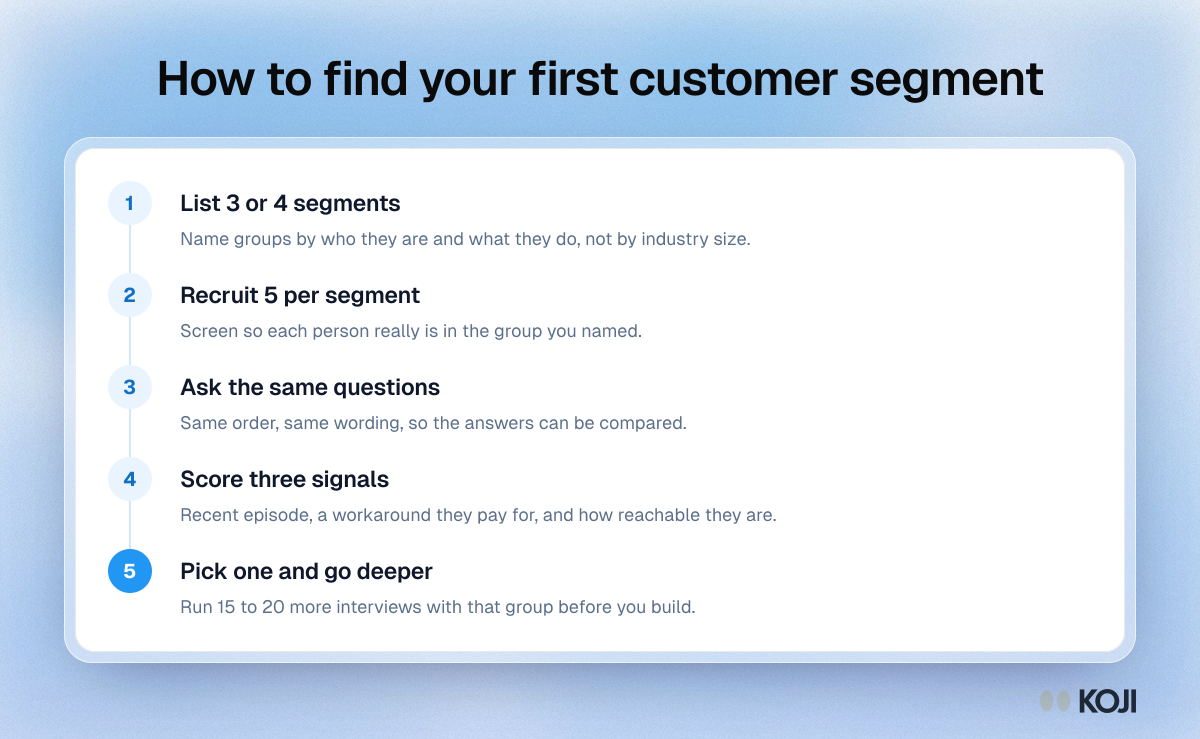
Process showing five steps to find a first customer segment: list segments, recruit five each, ask the same questions, score three signals, pick one.

Process

How to find your first customer segment
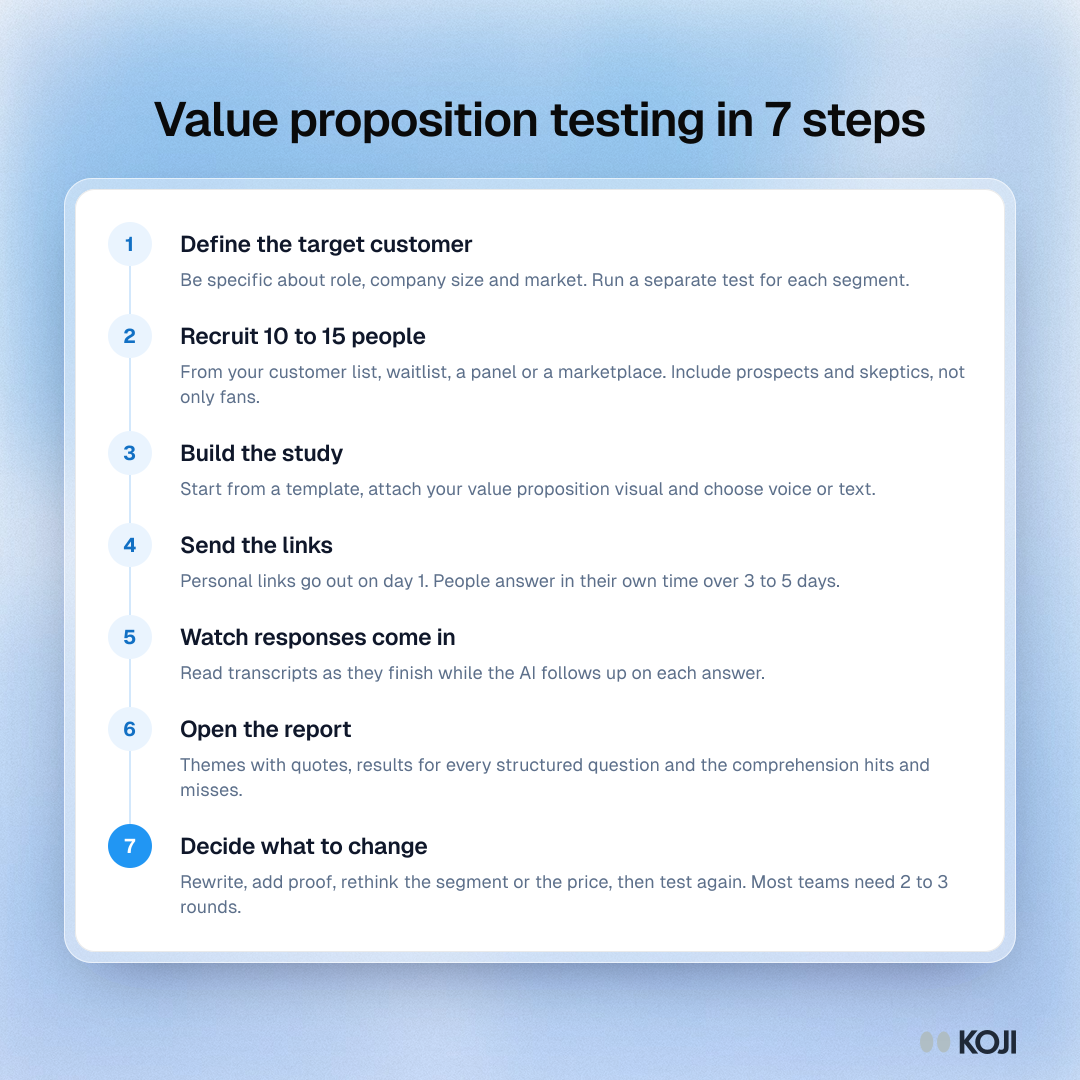
Process of seven steps for testing a value proposition with customer interviews, from defining the target customer to deciding what to change and testing again.

Process

Value proposition testing in 7 steps
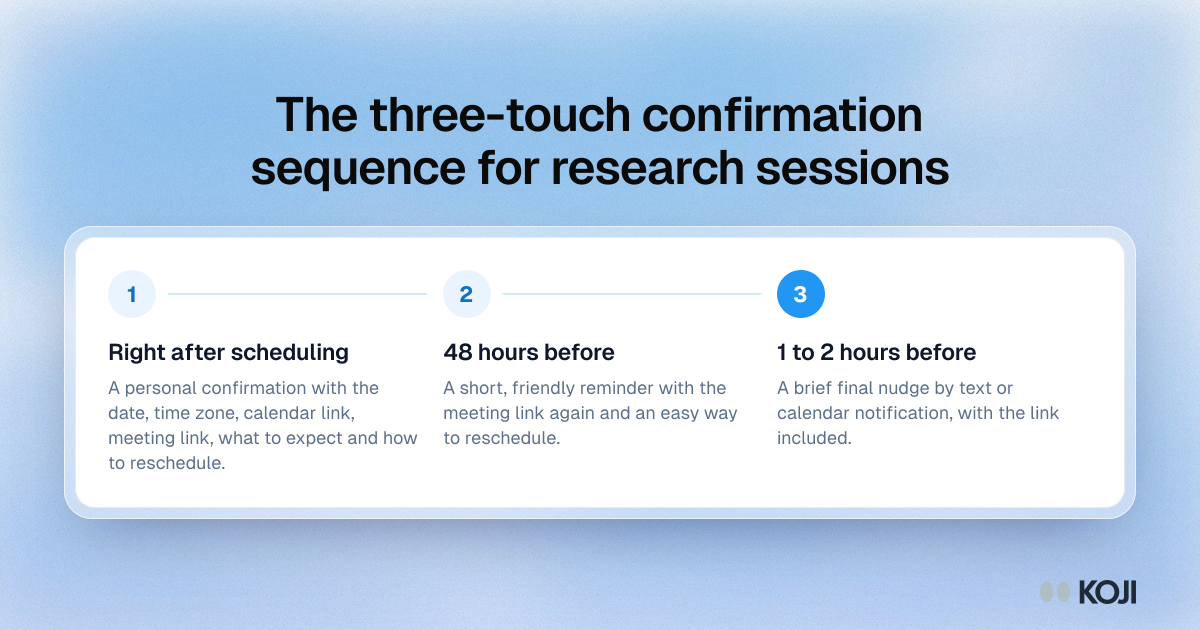
Process of three reminders before a research interview: a full confirmation right after booking, a reminder 48 hours before and a text 1 to 2 hours before.

Process

The three-touch confirmation sequence for research sessions
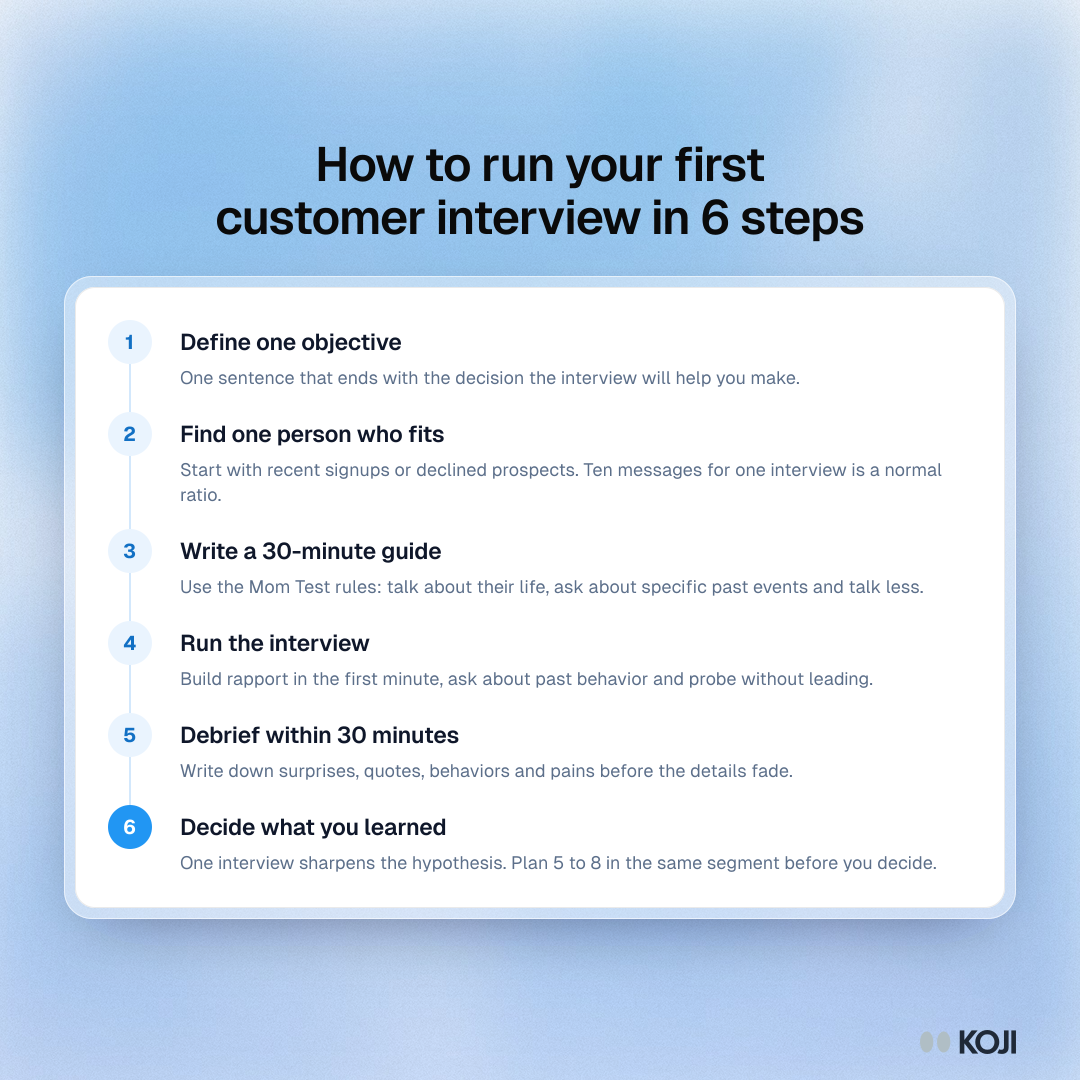
Process showing six steps for a first customer interview: set one objective, find one person, write the guide, run it, debrief and decide.

Process

How to run your first customer interview in 6 steps
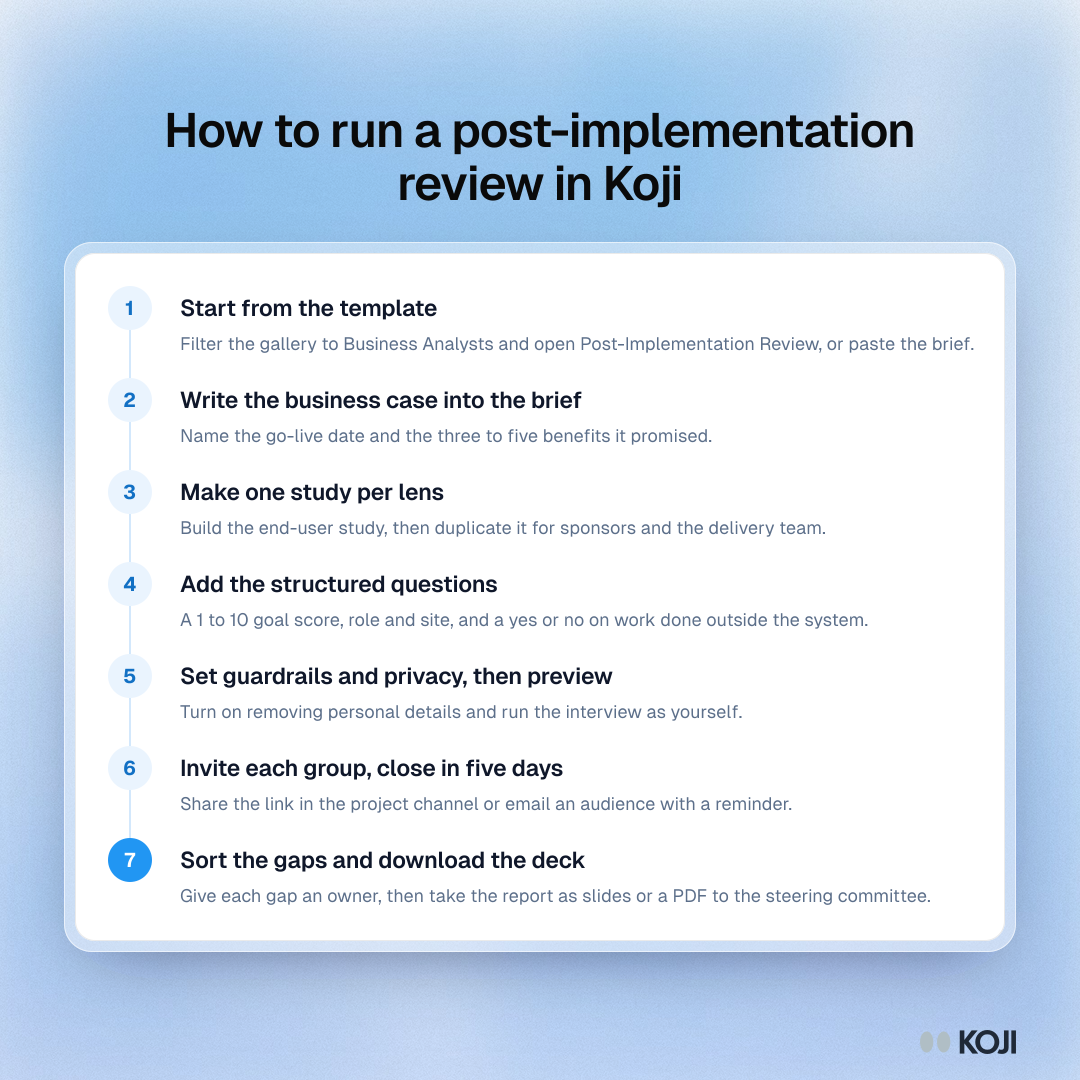
Process showing seven steps to run a post-implementation review in Koji, from the template to a deck for the steering committee.

Process

How to run a post-implementation review in Koji
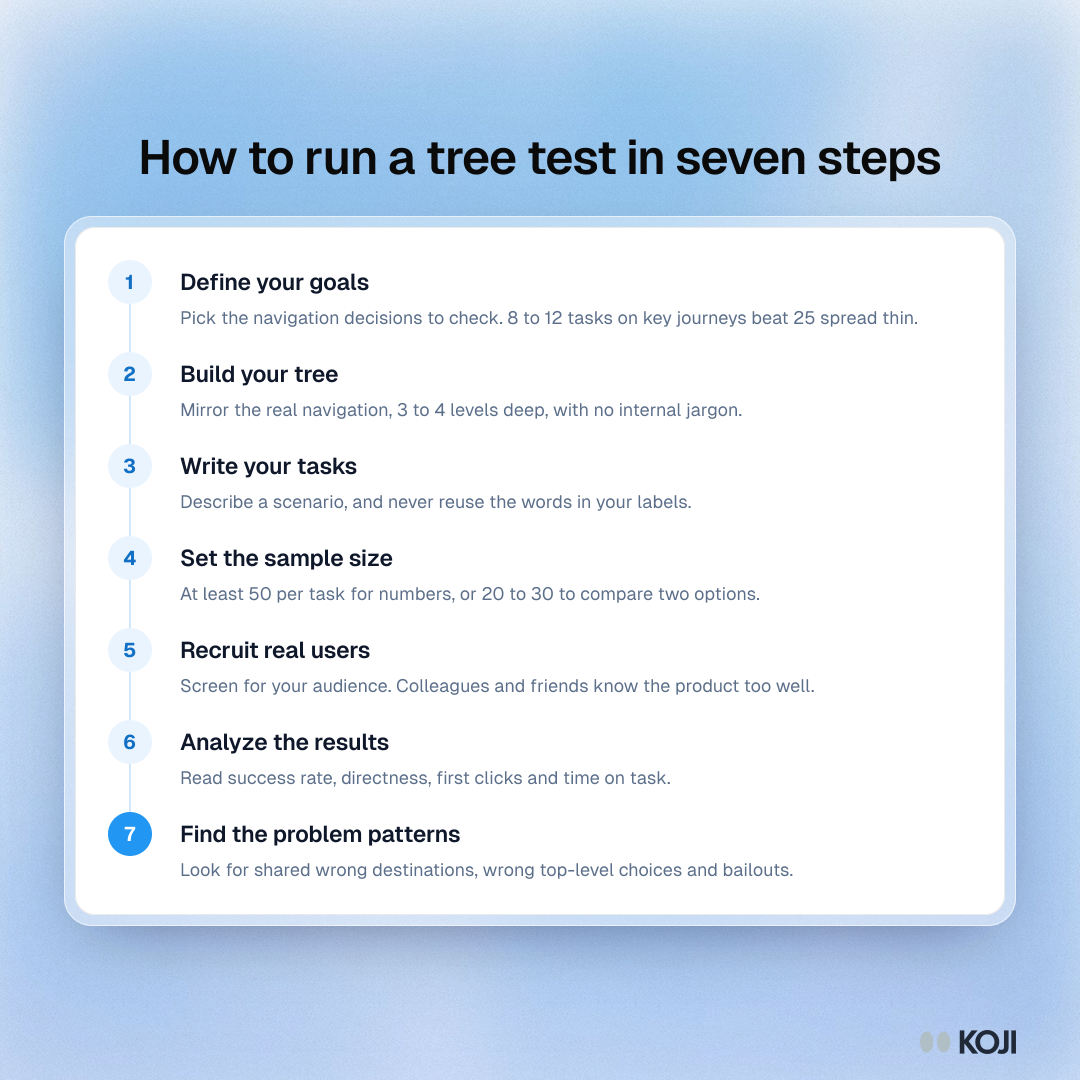
Process showing seven steps to run a tree test: define goals, build the tree, write tasks, set sample size, recruit, analyze results and find problem patterns.

Process

How to run a tree test in seven steps
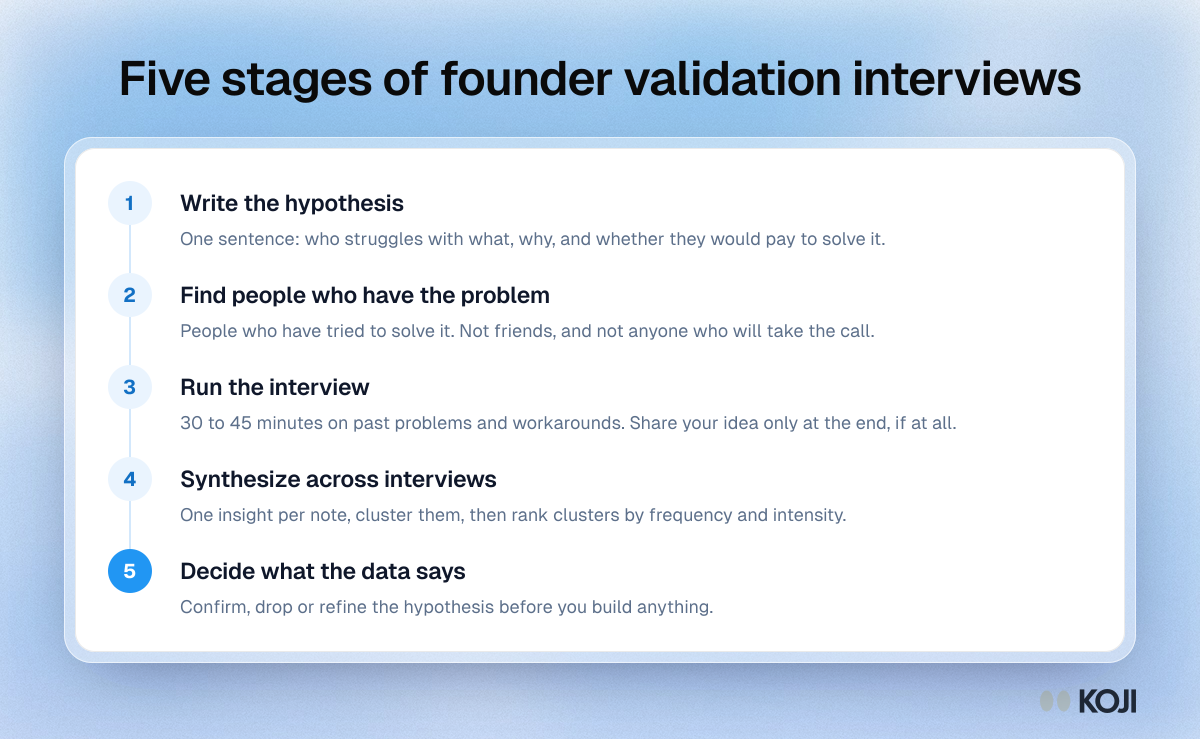
Process showing five stages of founder validation interviews: write the hypothesis, find people with the problem, run the interview, synthesize, and decide.

Process

Five stages of founder validation interviews
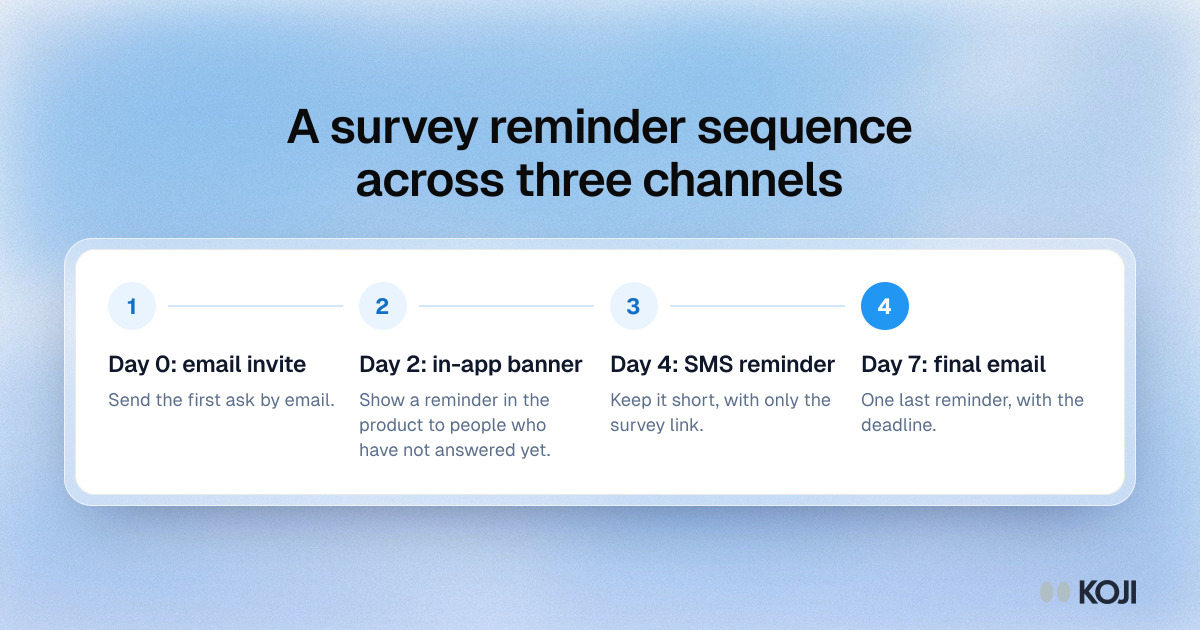
Process showing a survey reminder sequence: an email invite on day 0, an in-app banner on day 2, an SMS on day 4 and a final email with a deadline on day 7.

Process

A survey reminder sequence across three channels
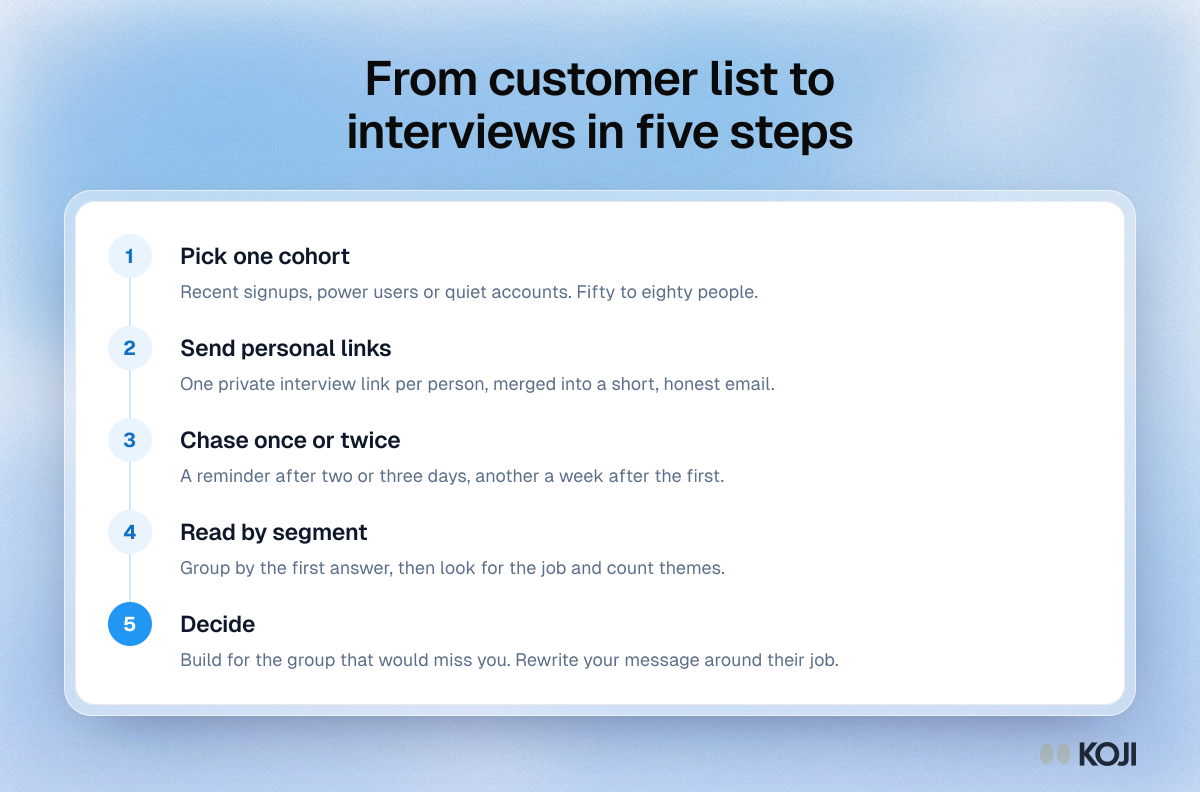
Process showing five steps from a customer list to a decision: pick one cohort, send personal links, chase once or twice, read by segment, then decide.

Process

From customer list to interviews in five steps
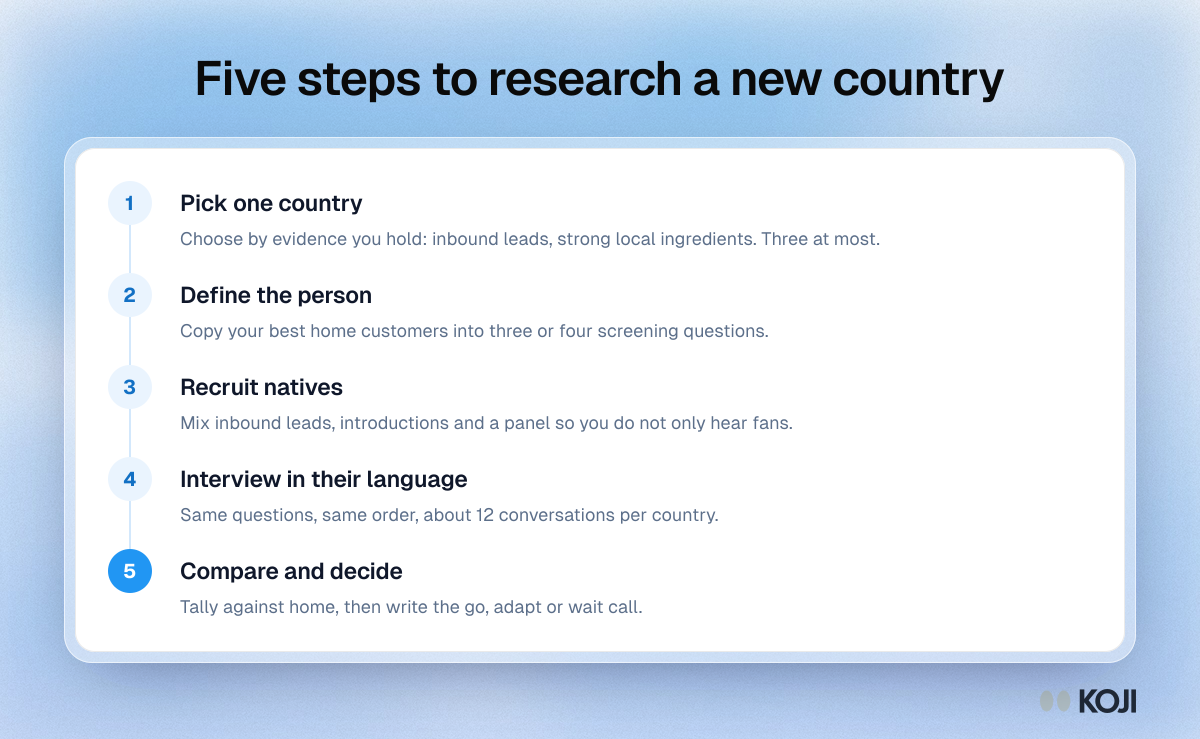
Process of five steps to research a new country before translating: pick, define, recruit, interview, then compare and decide.

Process

Five steps to research a new country
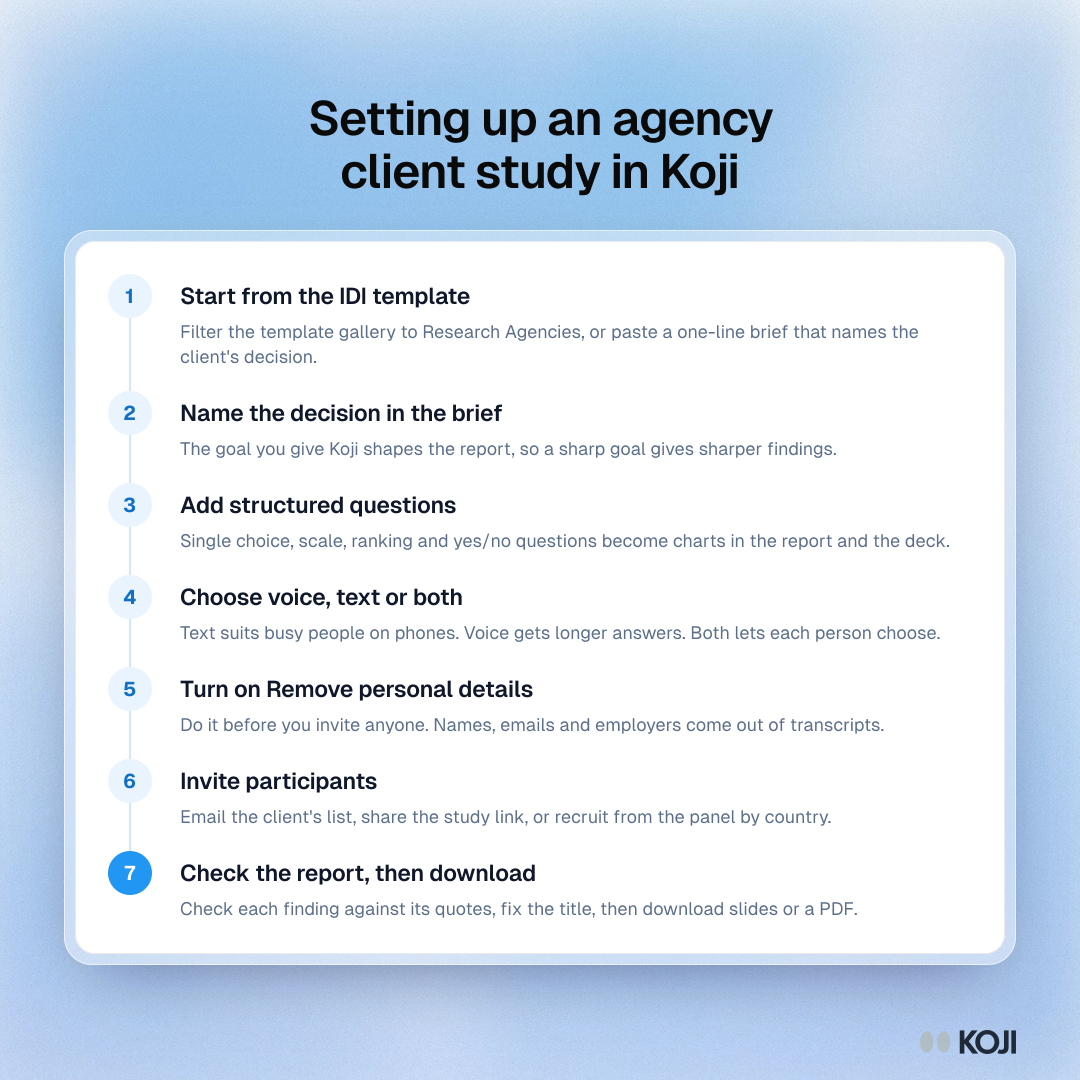
Process for setting up an agency client study in Koji in seven steps, from the IDI template to checking the report and downloading the deck.
Process

Setting up an agency client study in Koji

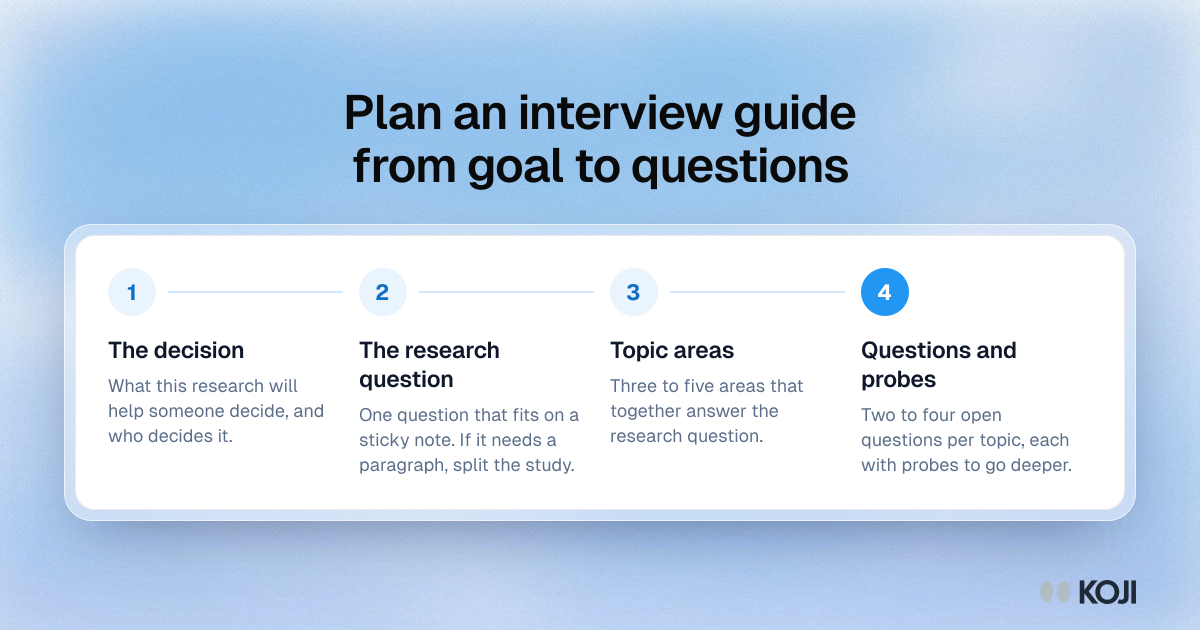
Process for planning a user interview guide in four layers: decision, research question, three to five topic areas, then questions and probes.

Process

Plan an interview guide from goal to questions
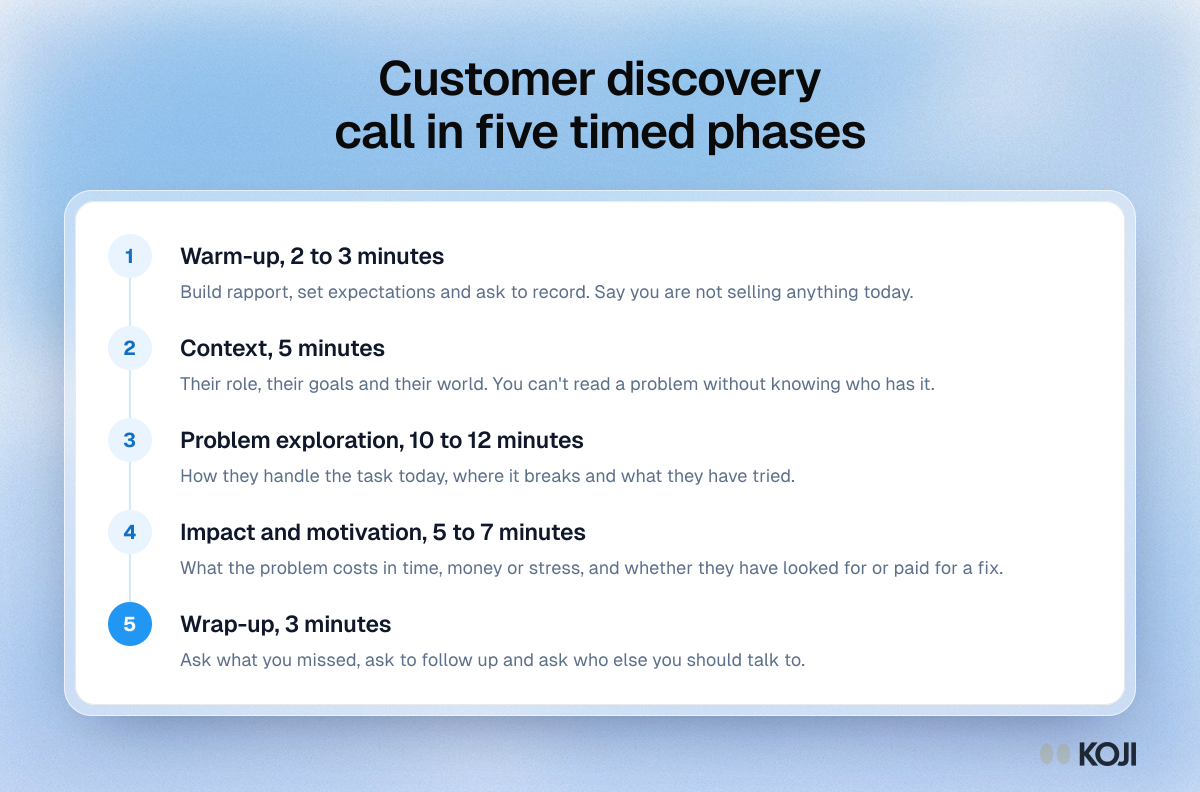
Process of a 30 minute customer discovery call in five timed phases: warm-up, context, problem exploration, impact and motivation, and wrap-up.

Process

Customer discovery call in five timed phases
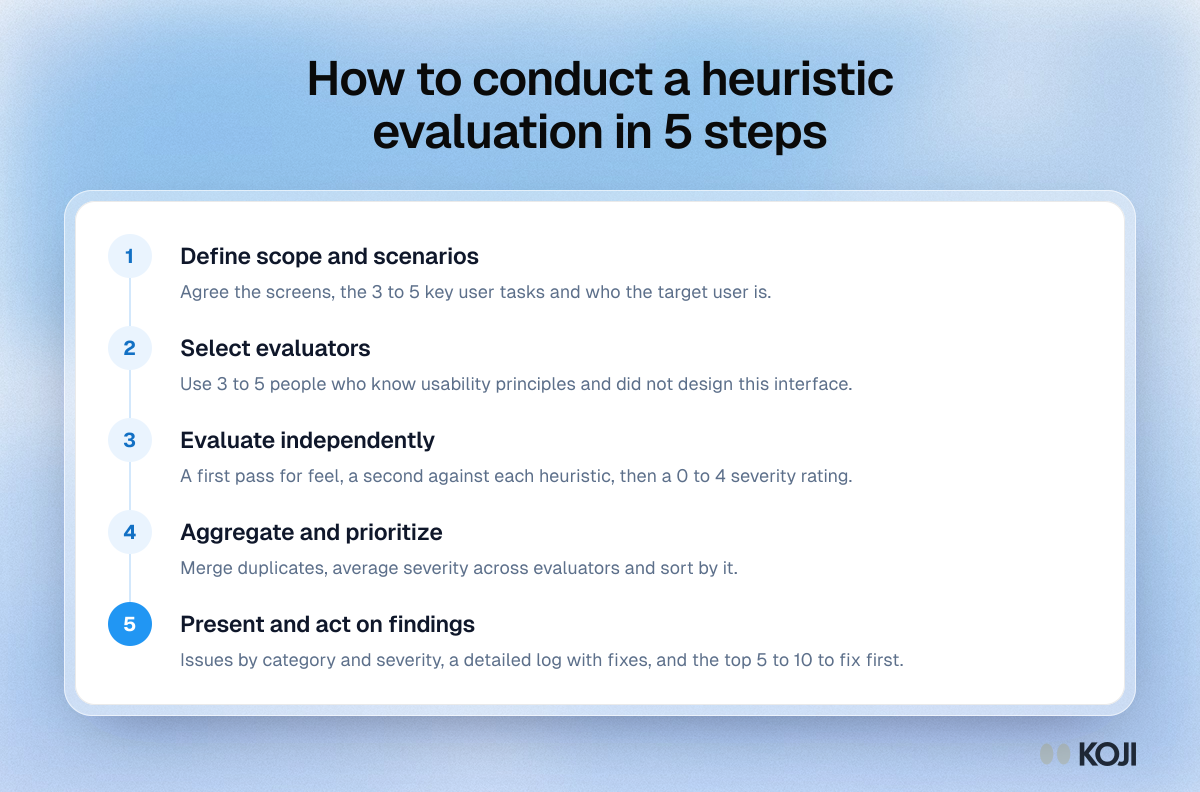
Process showing five steps of a heuristic evaluation: define scope, select 3 to 5 evaluators, evaluate independently, aggregate findings and present fixes.

Process

How to conduct a heuristic evaluation in 5 steps
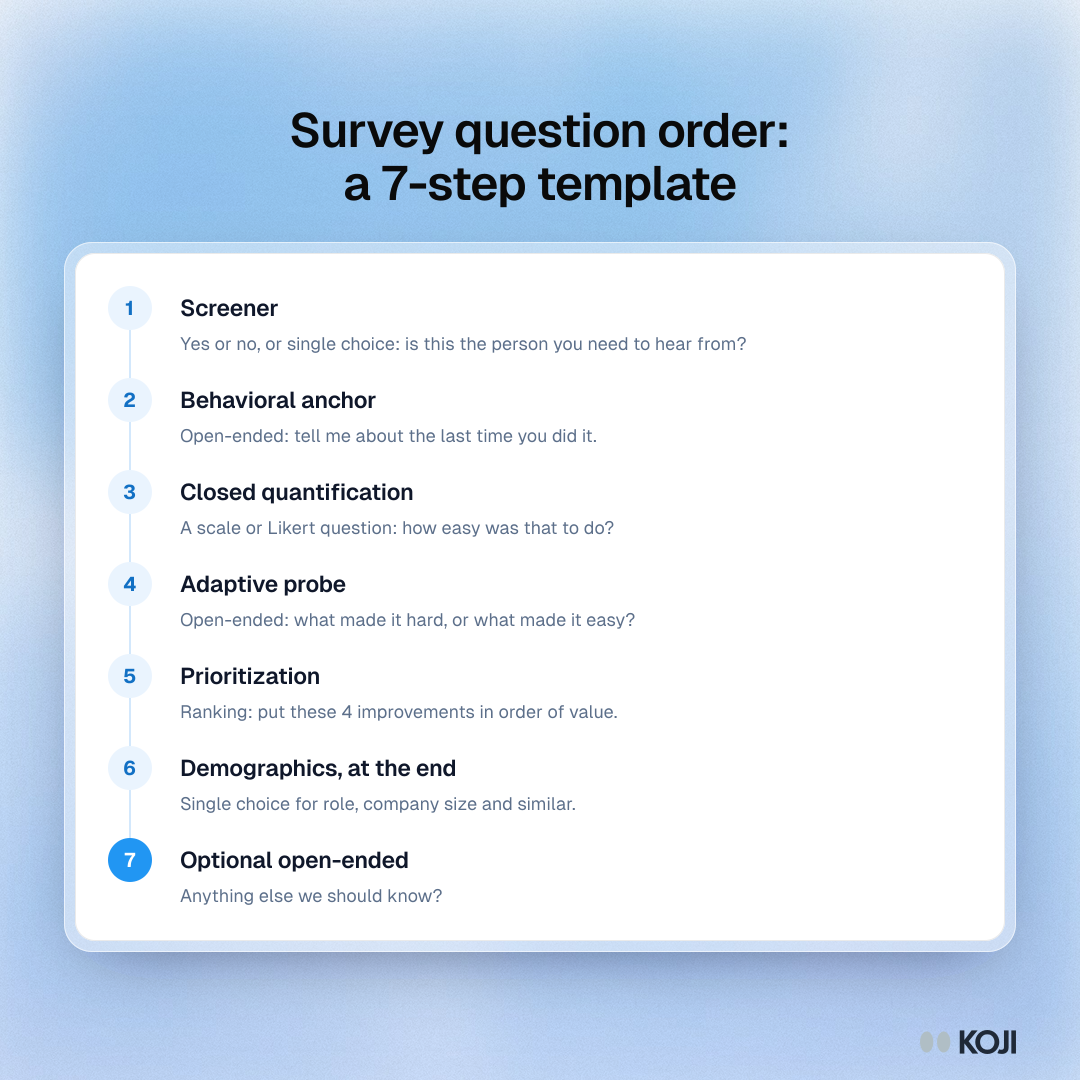
Process showing a seven-step survey question order: screener, behavioral anchor, scale, adaptive probe, ranking, demographics and an optional open question.

Process

Survey question order: a 7-step template
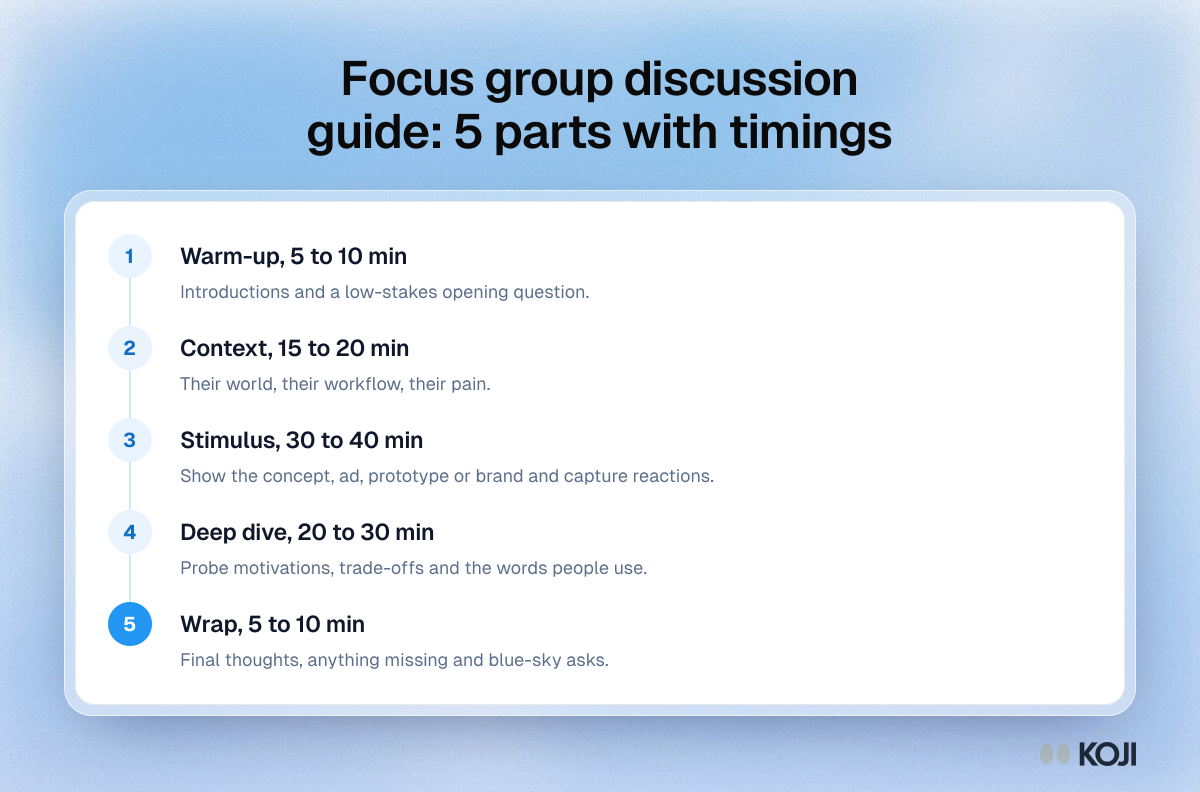
Process showing the five parts of a focus group discussion guide with timings: warm-up, context, stimulus, deep dive and wrap, across about two hours.

Process

Focus group discussion guide: 5 parts with timings
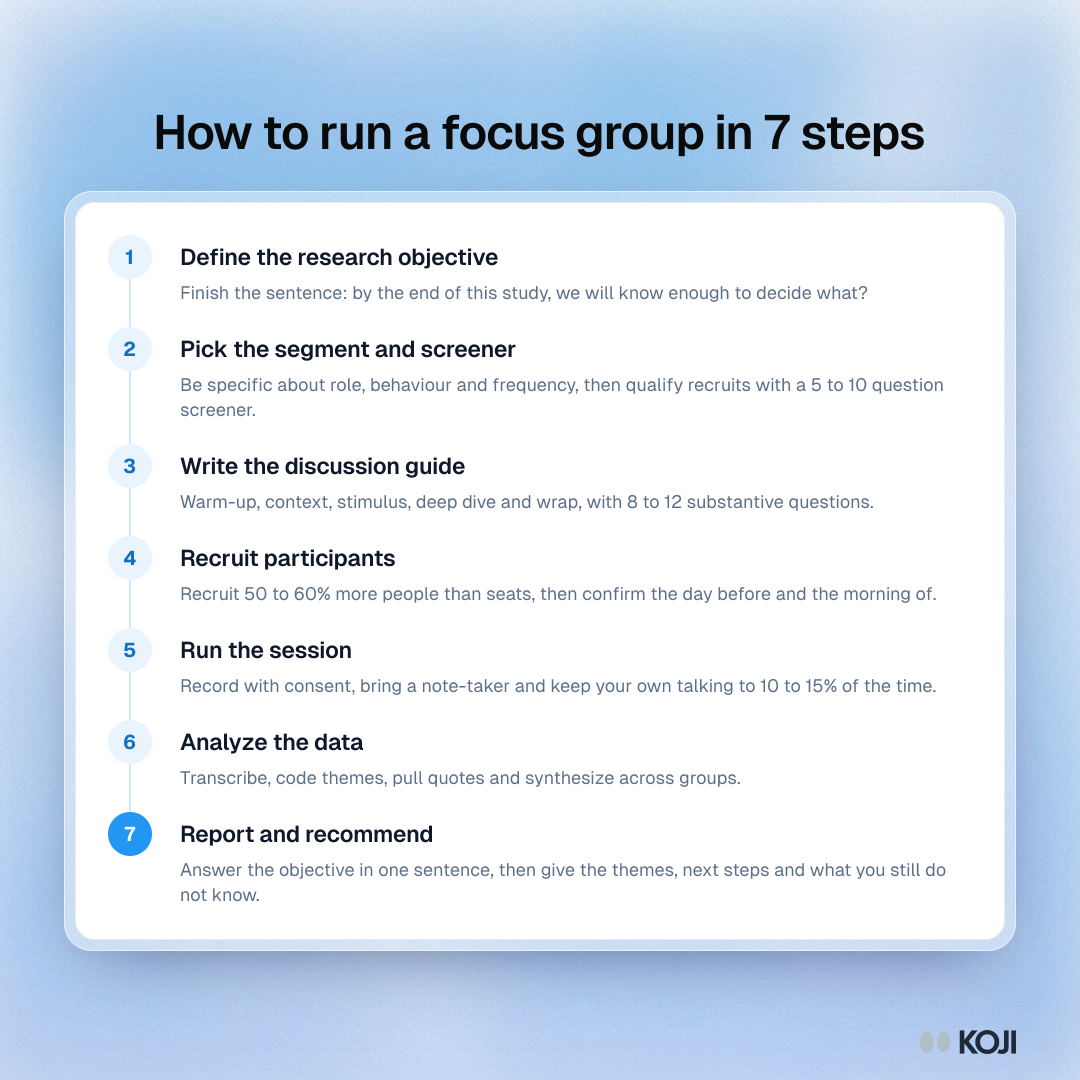
Process showing seven steps to run a focus group: set the objective, screen the segment, write the guide, recruit, run, analyze and report a decision.

Process

How to run a focus group in 7 steps
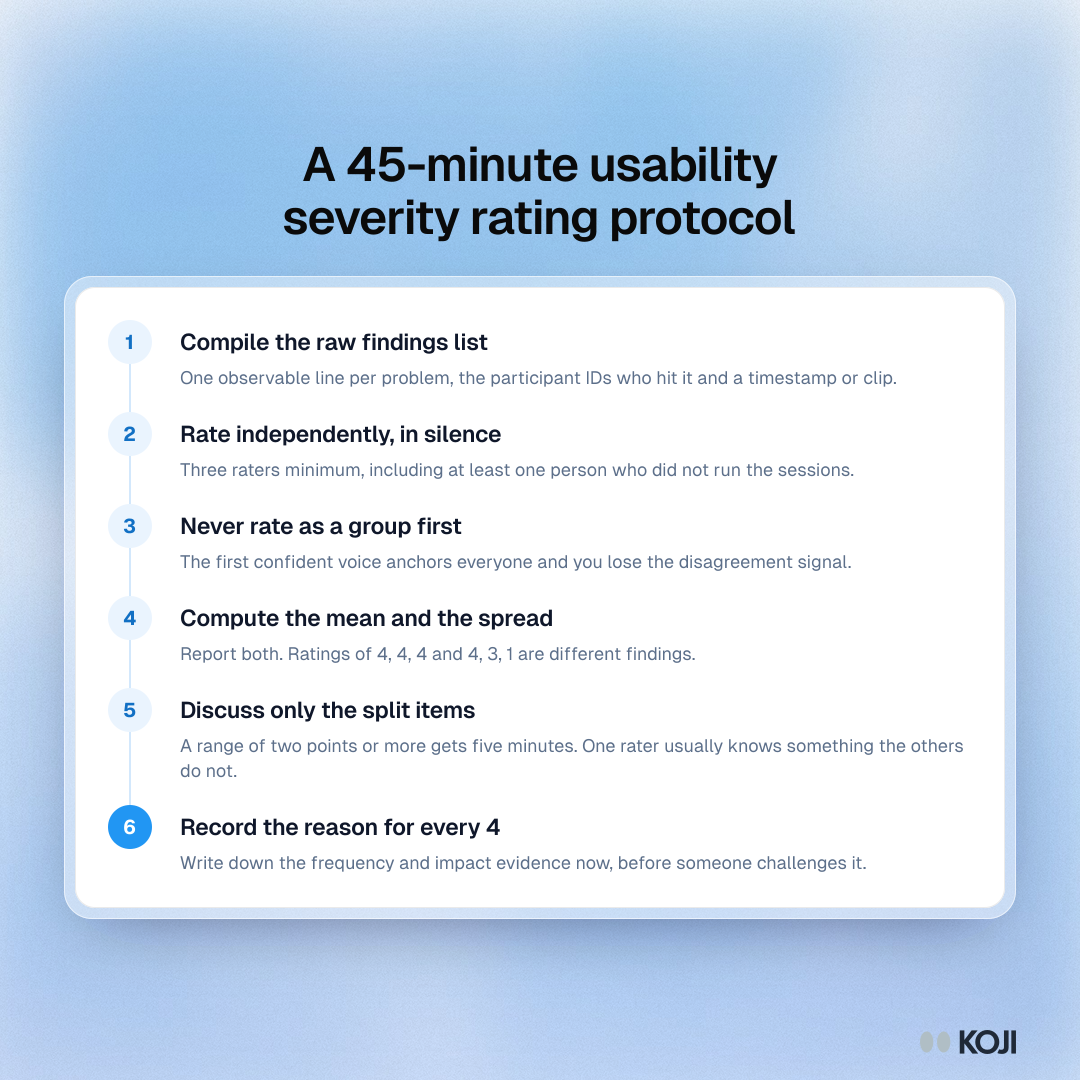
Process showing six steps to rate usability problem severity: list findings, rate alone, avoid group rating, report mean and spread, discuss splits, justify 4s.

Process

A 45-minute usability severity rating protocol
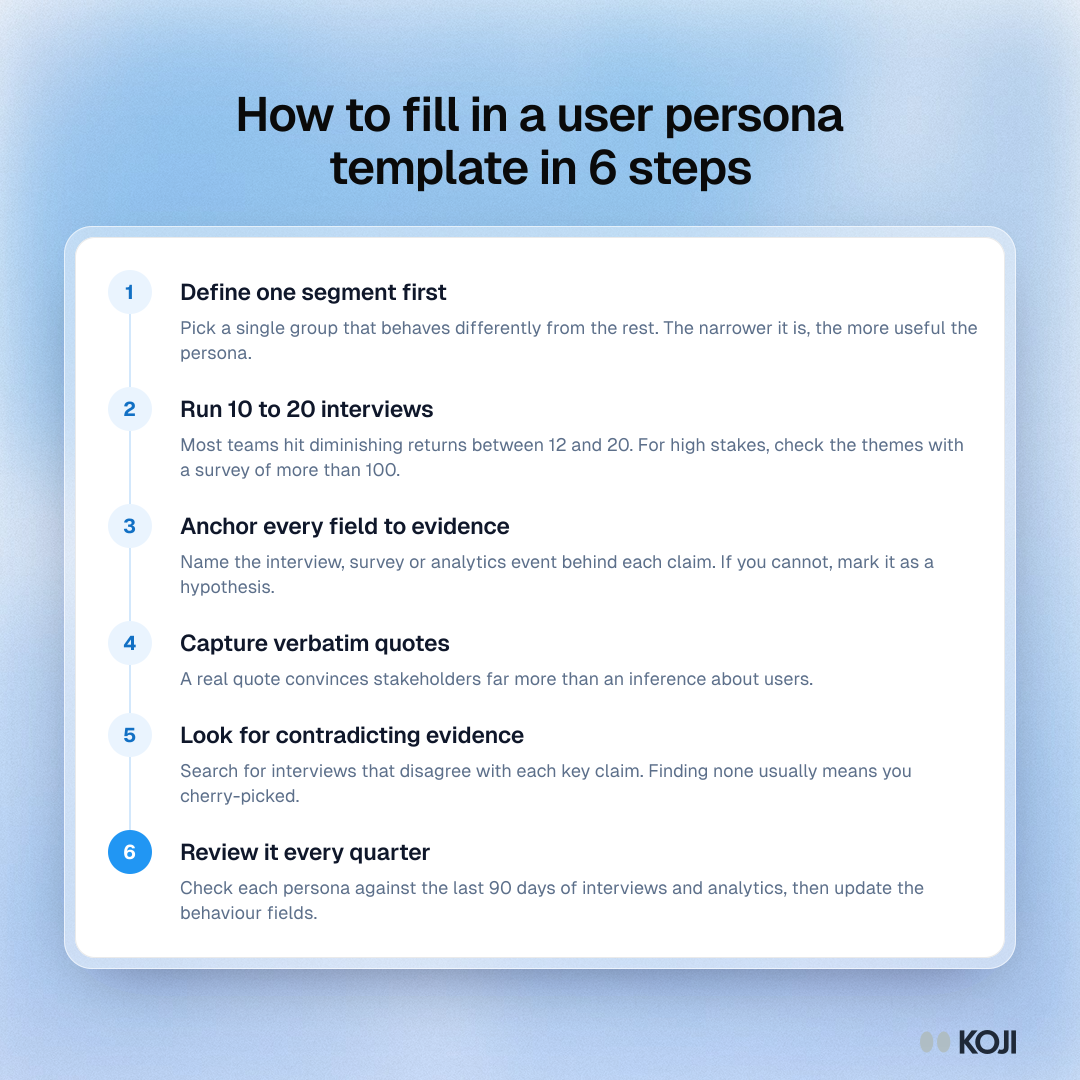
Process showing six steps to fill in a persona template: define a segment, run 10 to 20 interviews, cite evidence, quote, test and review quarterly.

Process

How to fill in a user persona template in 6 steps
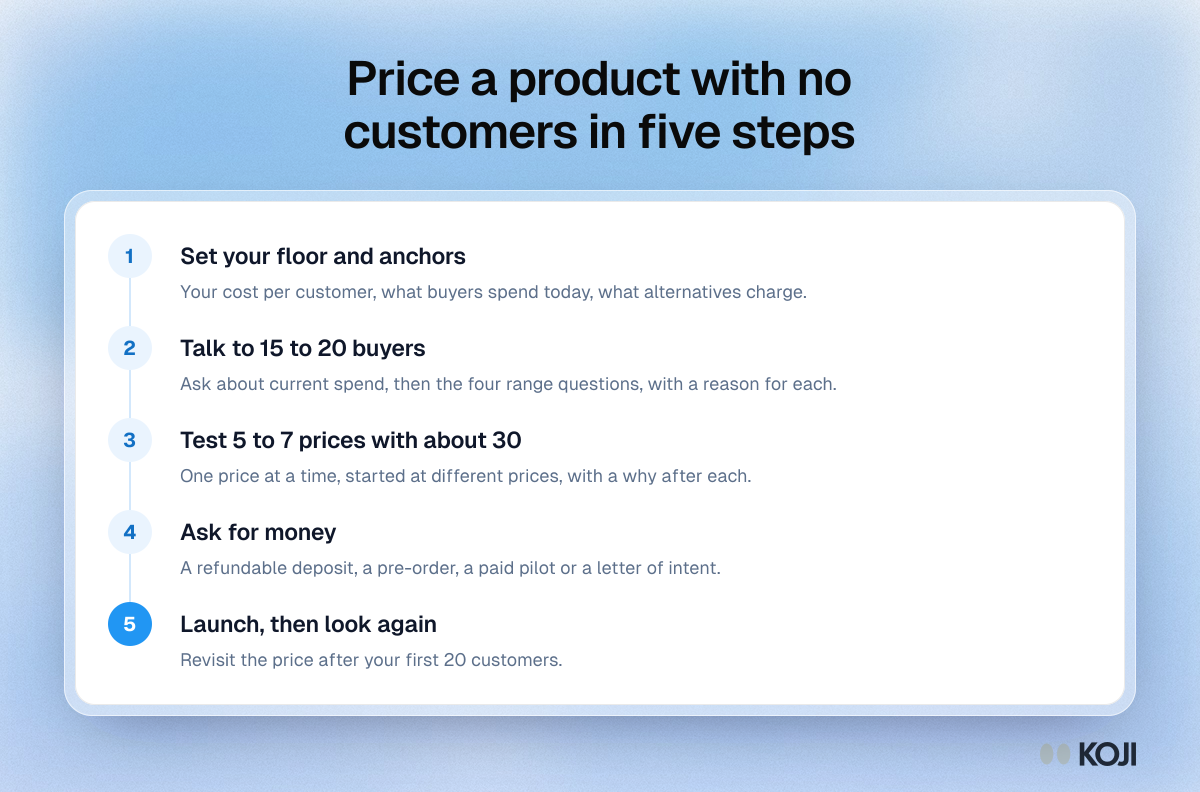
Process showing five steps to price a product with no customers: set anchors, talk to buyers, test prices, ask for money, launch and revisit.

Process

Price a product with no customers in five steps
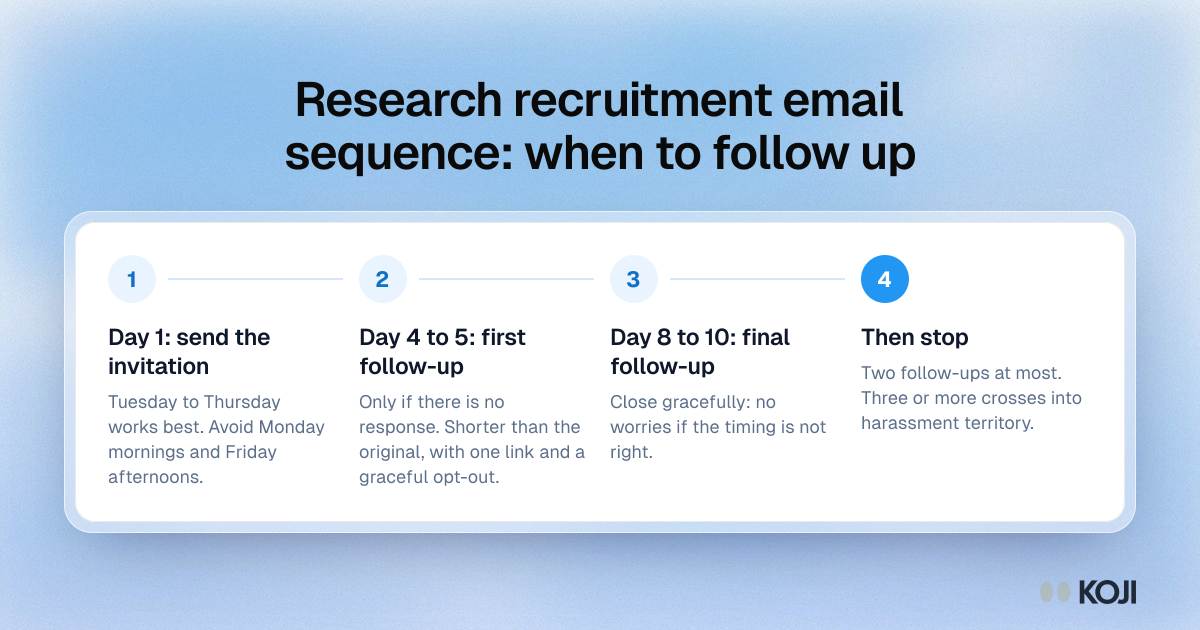
Process for a research recruitment email sequence: invitation on day 1, first follow-up on day 4 to 5, final follow-up on day 8 to 10, then stop.

Process

Research recruitment email sequence: when to follow up
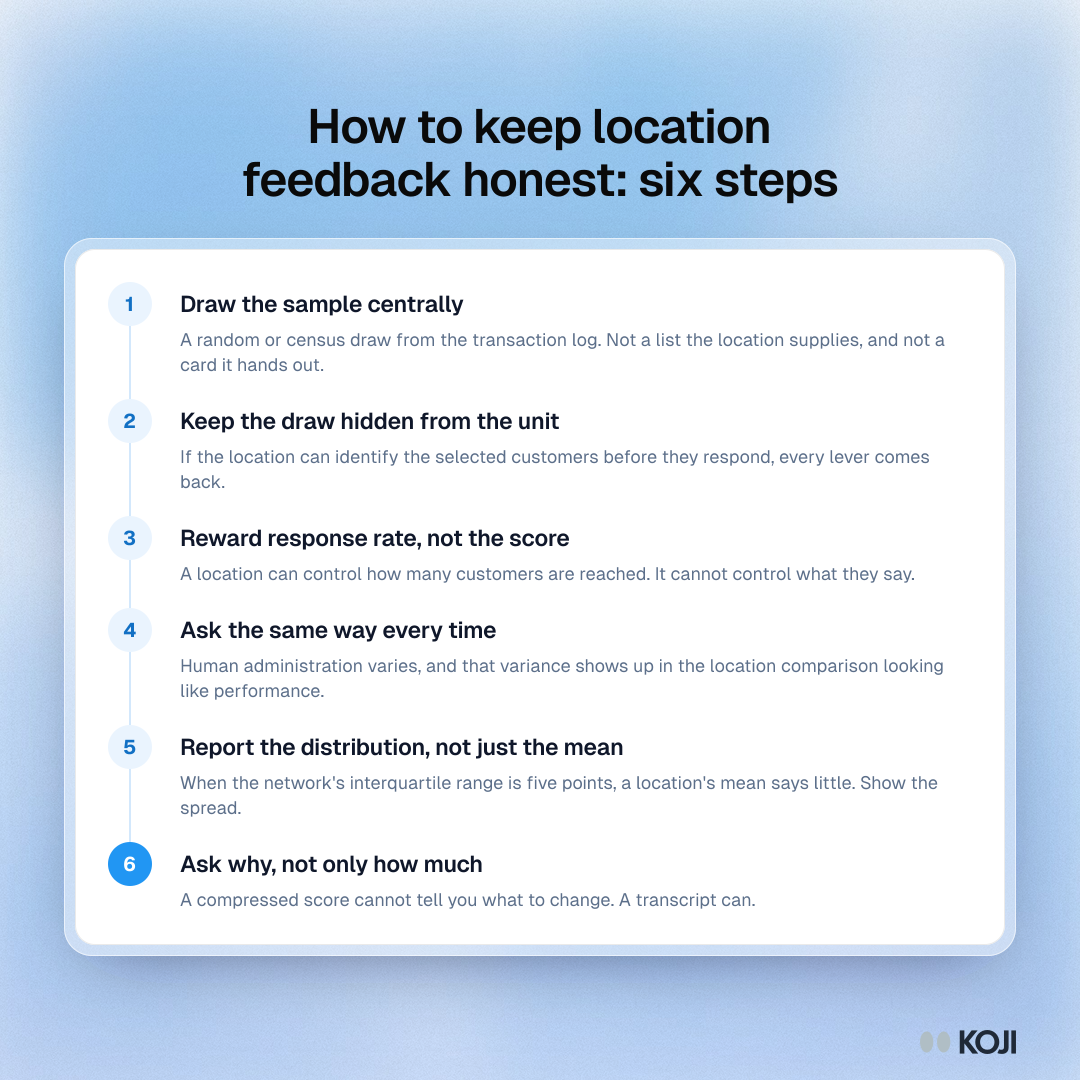
Process in six steps for multi-location feedback: draw the sample centrally, hide the draw, reward response rate, ask the same way, report the spread, ask why.

Process

How to keep location feedback honest: six steps
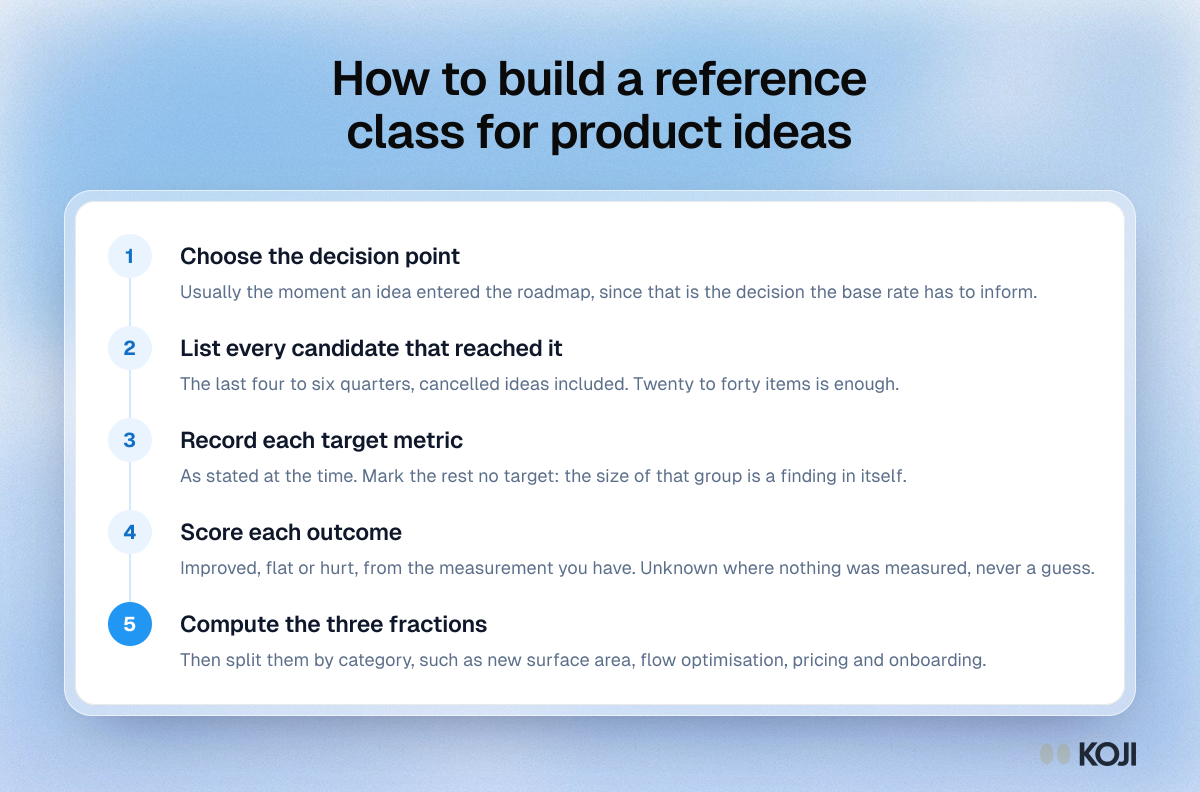
Process in five steps for building a reference class of product ideas: pick the decision point, list candidates, record targets, score outcomes, compute rates.

Process

How to build a reference class for product ideas
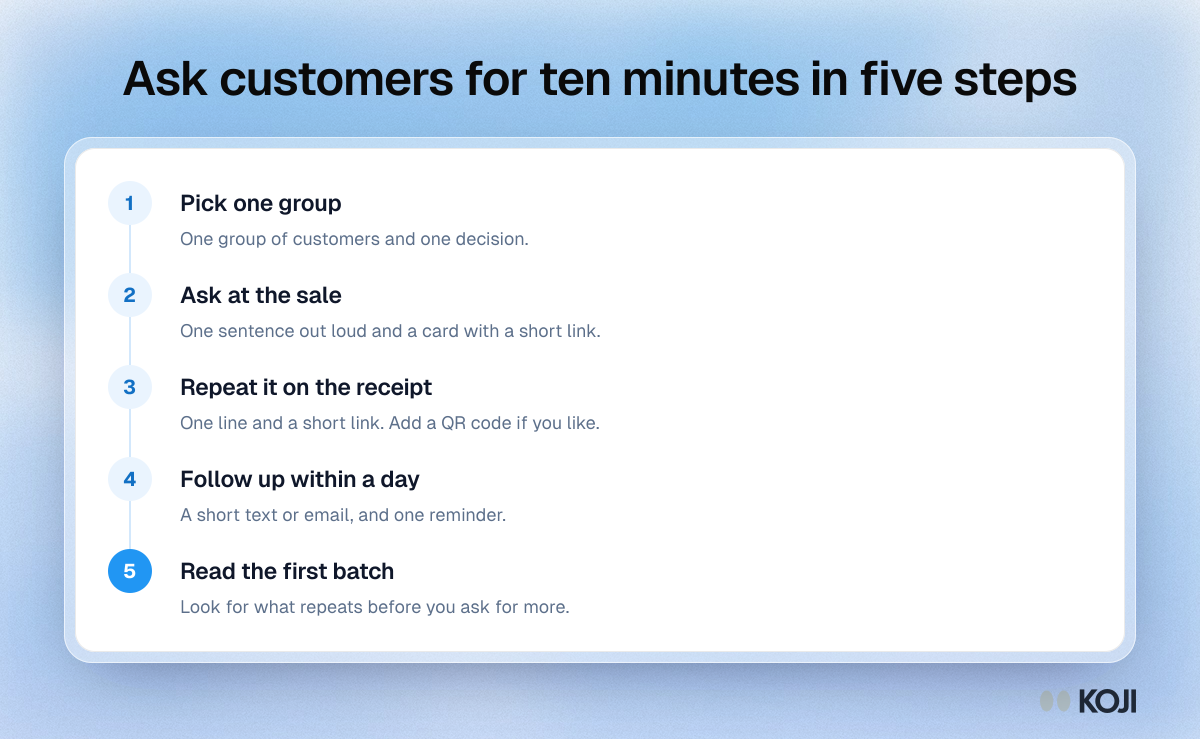
Process of five steps for getting customers to talk to a small business, from picking one group to reading the first batch of answers.

Process

Ask customers for ten minutes in five steps
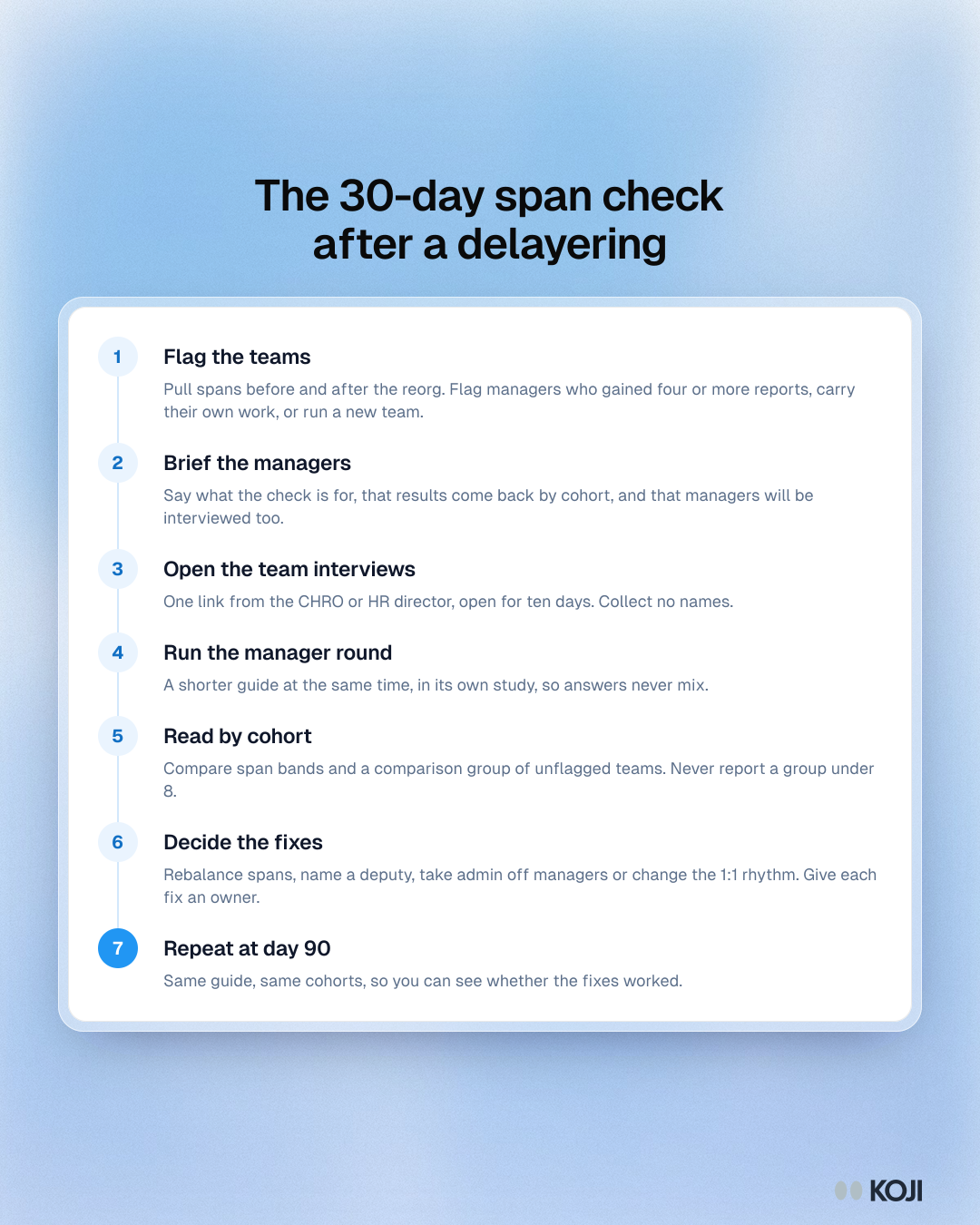
Process of the 30-day span check: flag teams, brief managers, interview teams and managers, read by cohort, decide fixes, repeat at day 90

Process

The 30-day span check after a delayering
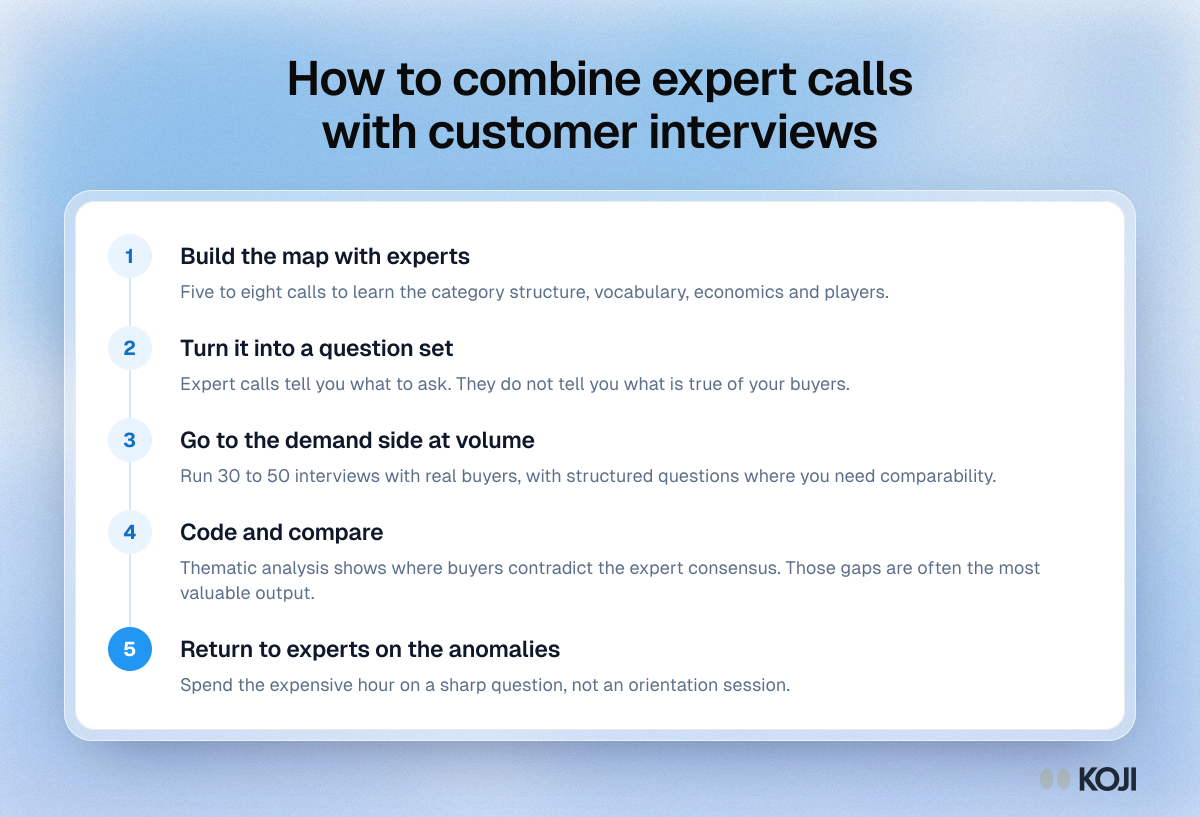
Process of five steps to combine expert network calls and customer interviews: map with experts, write questions, interview buyers, compare, follow up.

Process

How to combine expert calls with customer interviews
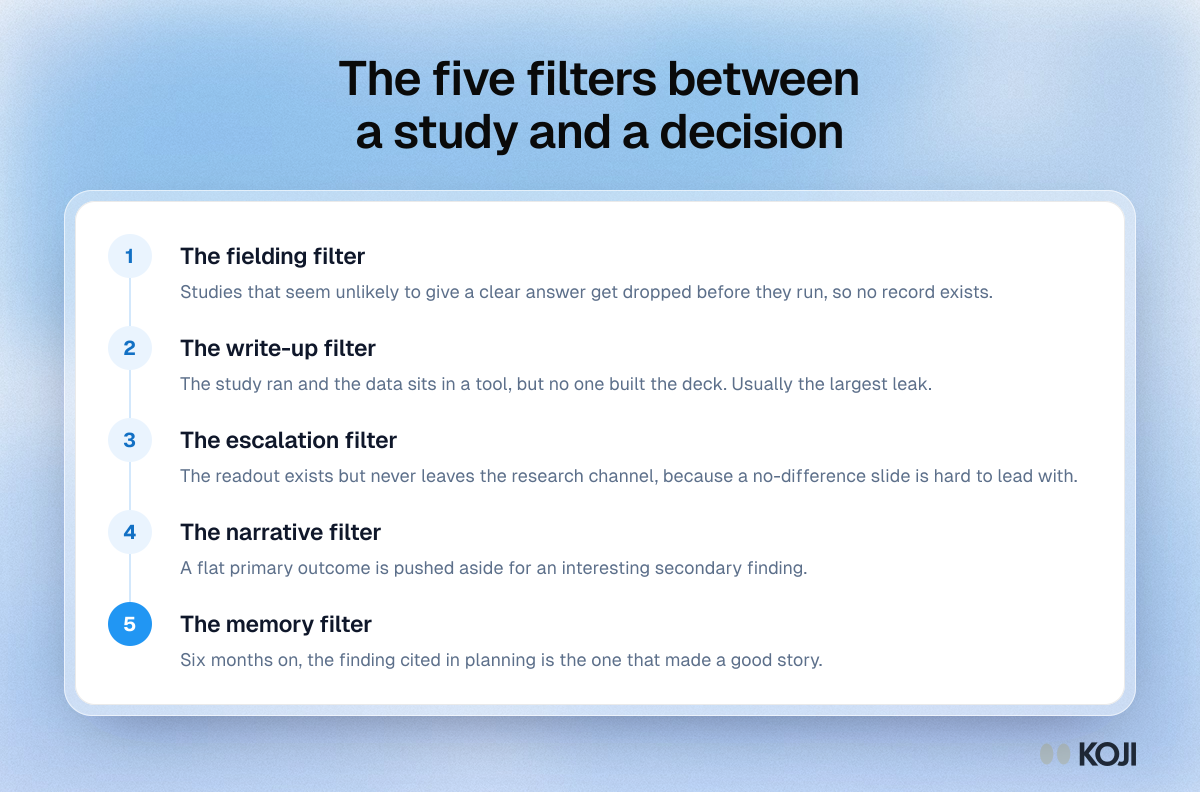
Process diagram of five filters where null results get lost: fielding, write-up, escalation, narrative and memory, from study plan to planning doc.

Process

The five filters between a study and a decision
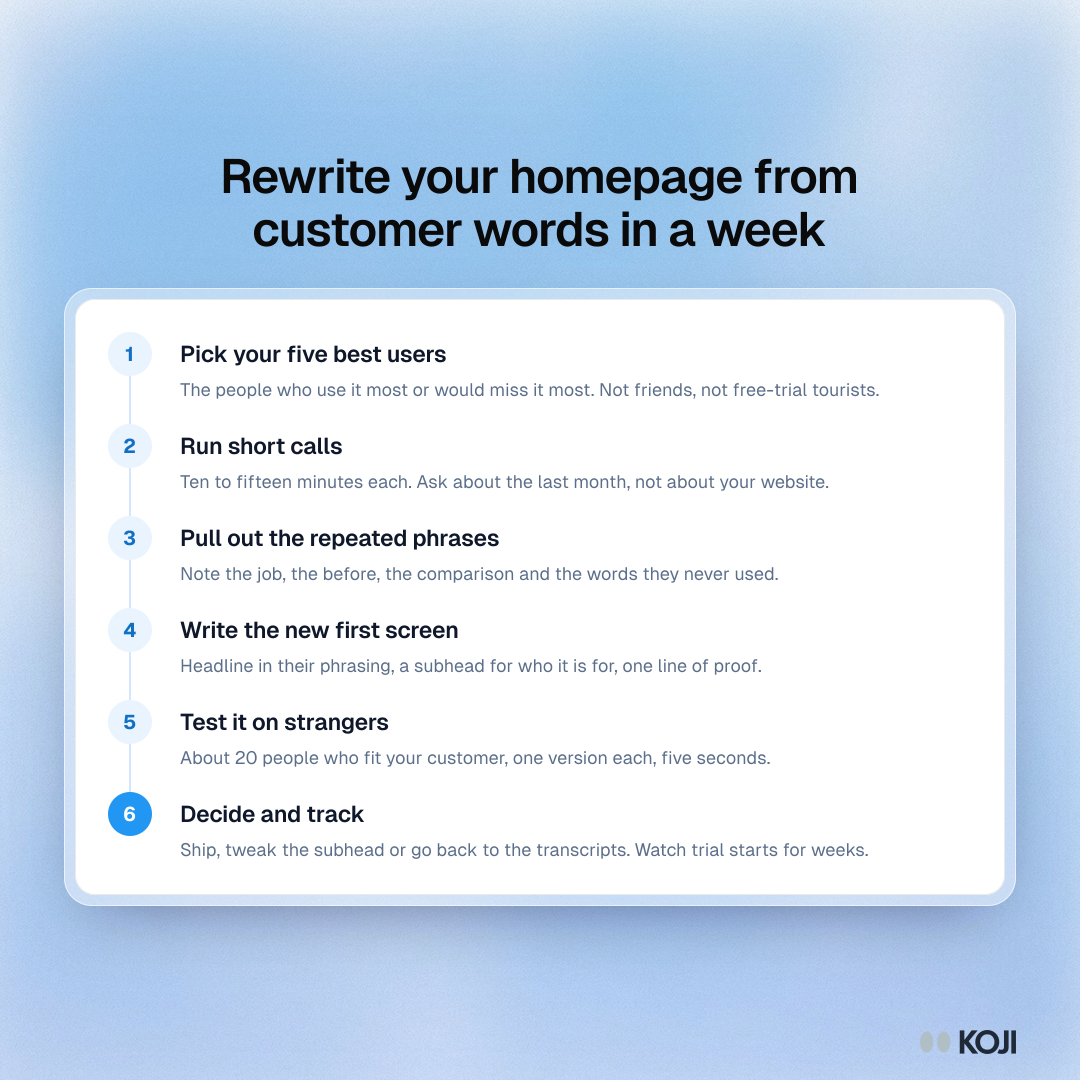
Process in six steps for rewriting a homepage from customer words: pick five best users, run calls, pull phrases, write, test, decide.

Process

Rewrite your homepage from customer words in a week
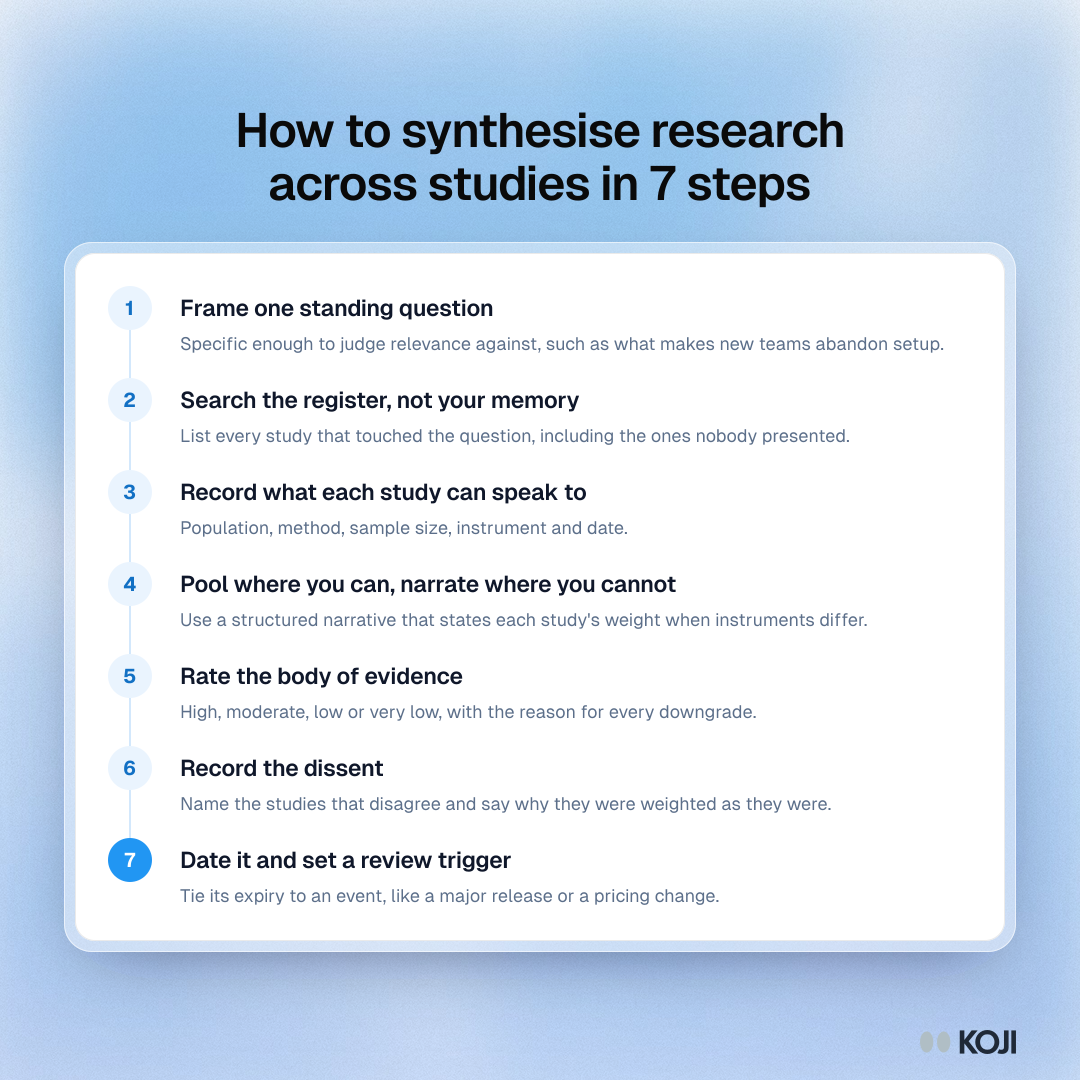
Process of seven steps for synthesising research across studies, from framing one standing question to dating it with a review trigger.

Process

How to synthesise research across studies in 7 steps
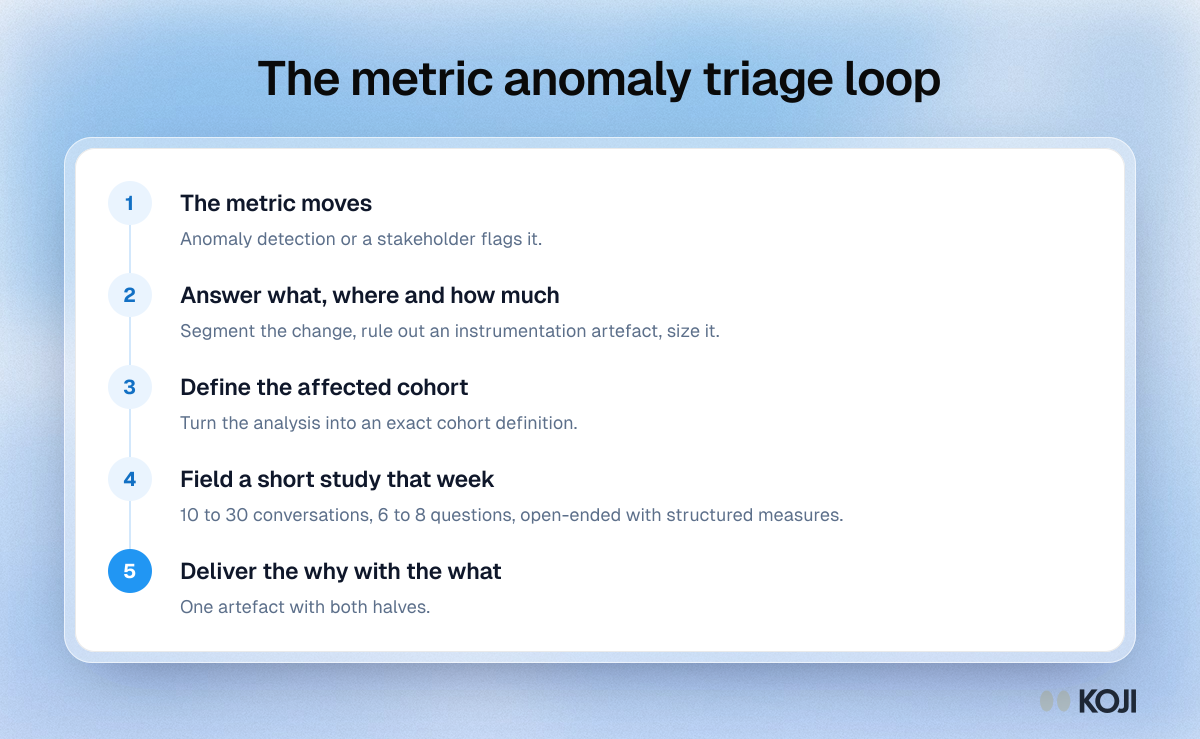
Process diagram of the metric anomaly triage loop in five steps, from a metric moving to delivering the why alongside the what.

Process

The metric anomaly triage loop
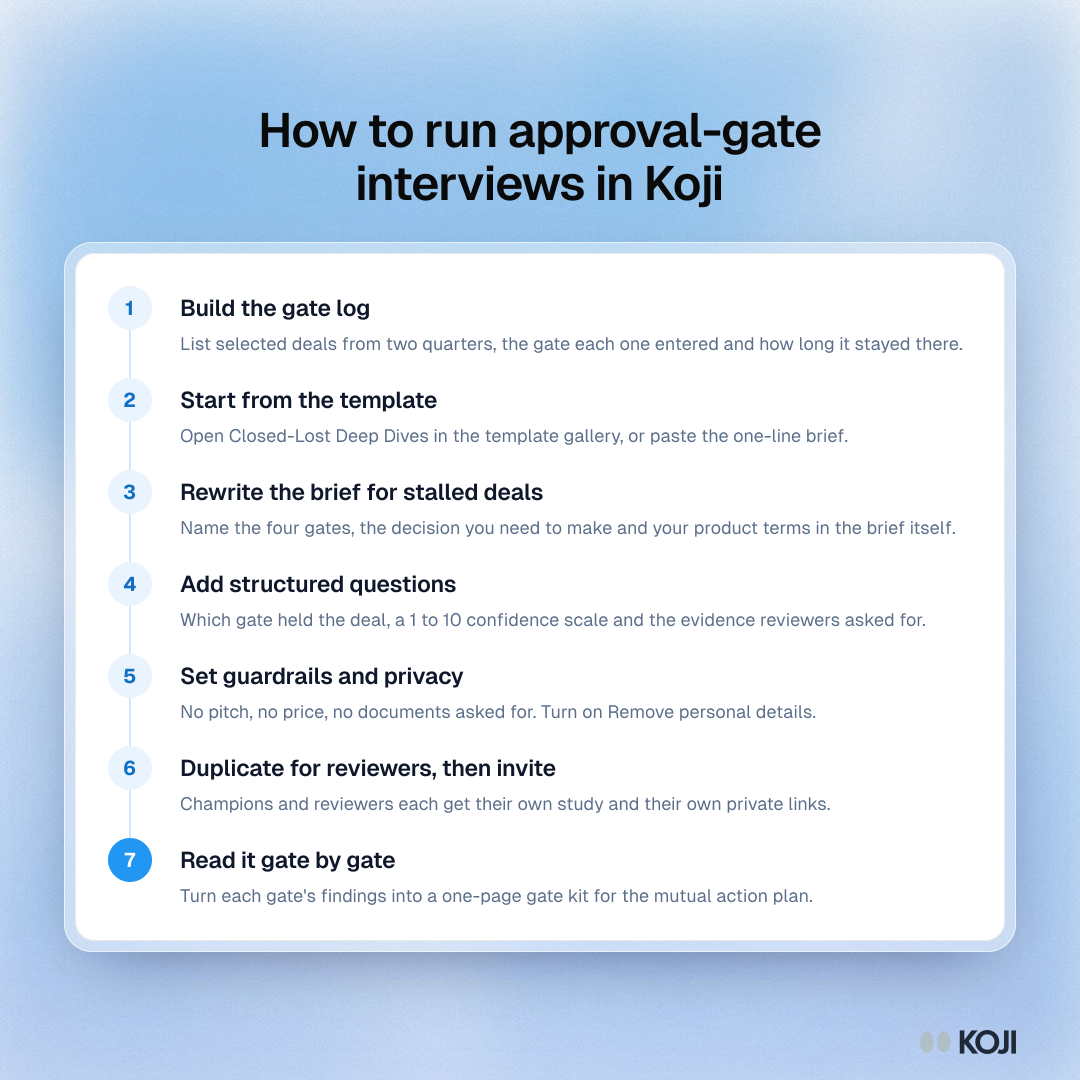
Process with seven steps to run approval-gate interviews in Koji, from the gate log to the gate kit.

Process

How to run approval-gate interviews in Koji
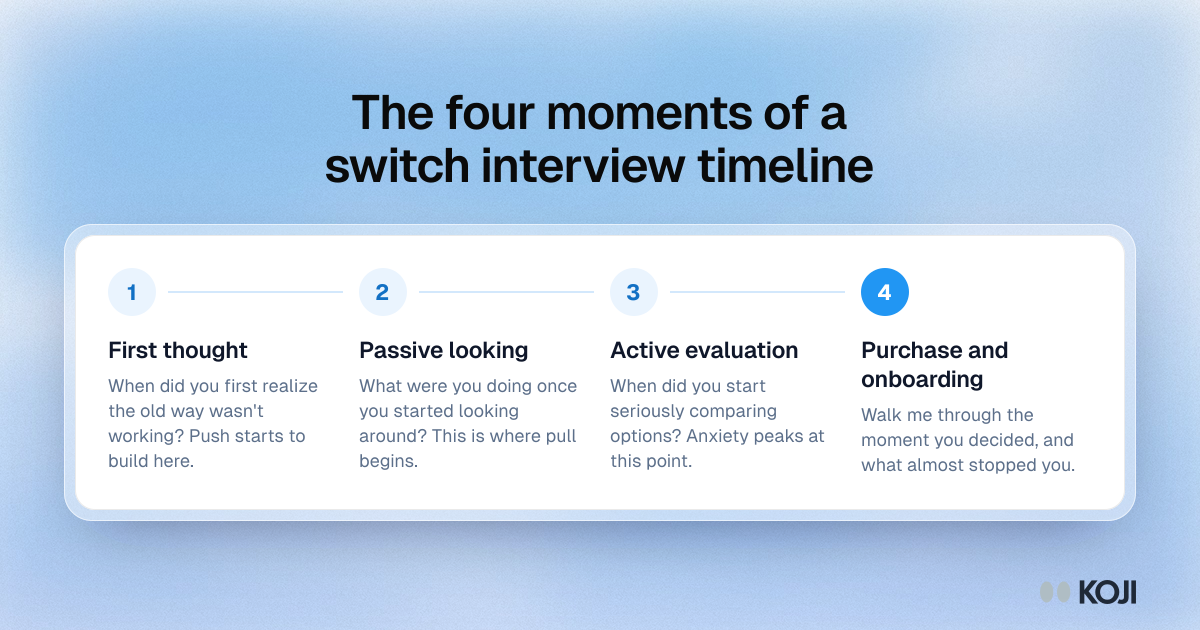
Process showing the four moments a switch interview rebuilds: first thought, passive looking, active evaluation, and purchase and onboarding.

Process

The four moments of a switch interview timeline
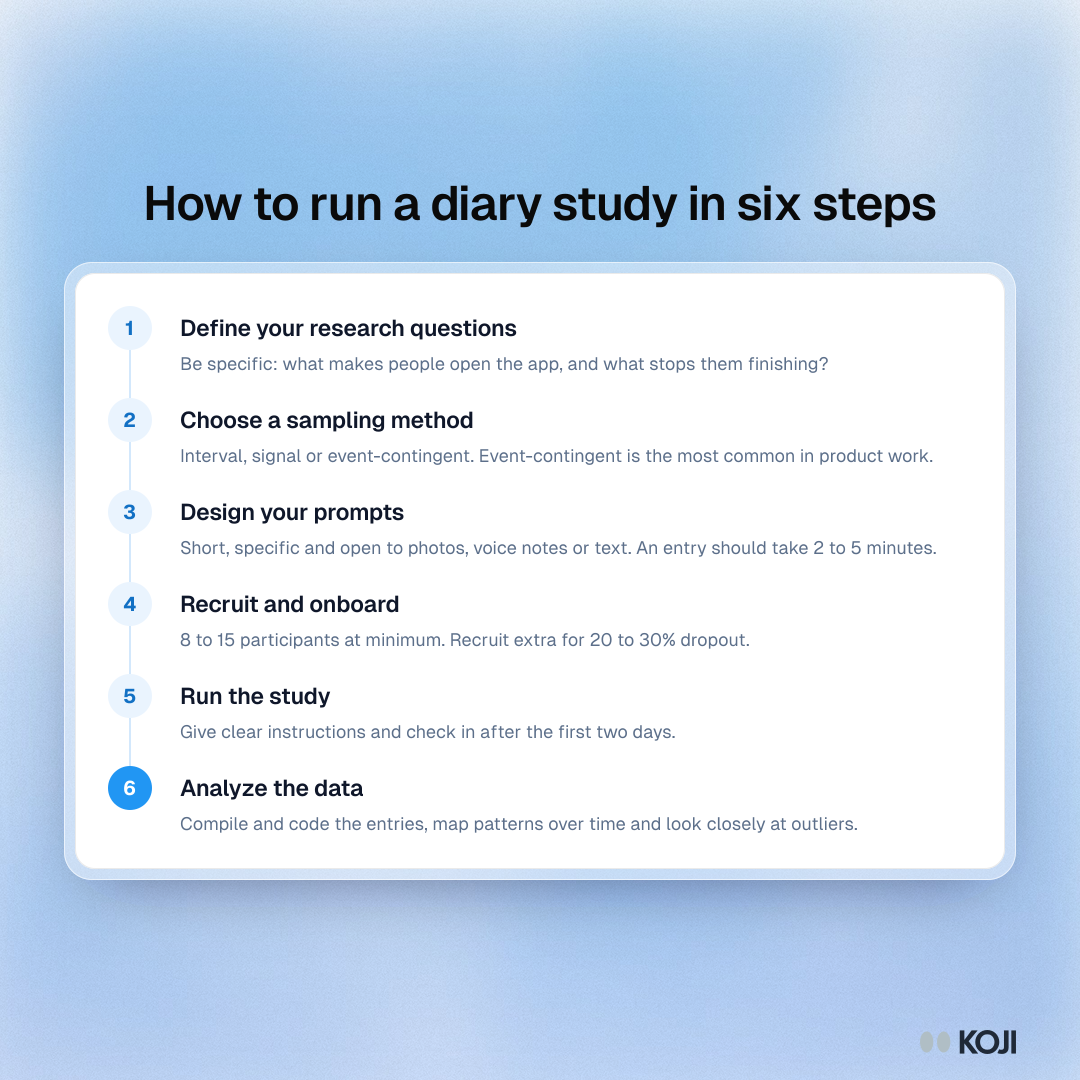
Process showing six steps of a diary study: research questions, sampling method, prompts, recruiting with dropout in mind, running it and analysis.

Process

How to run a diary study in six steps
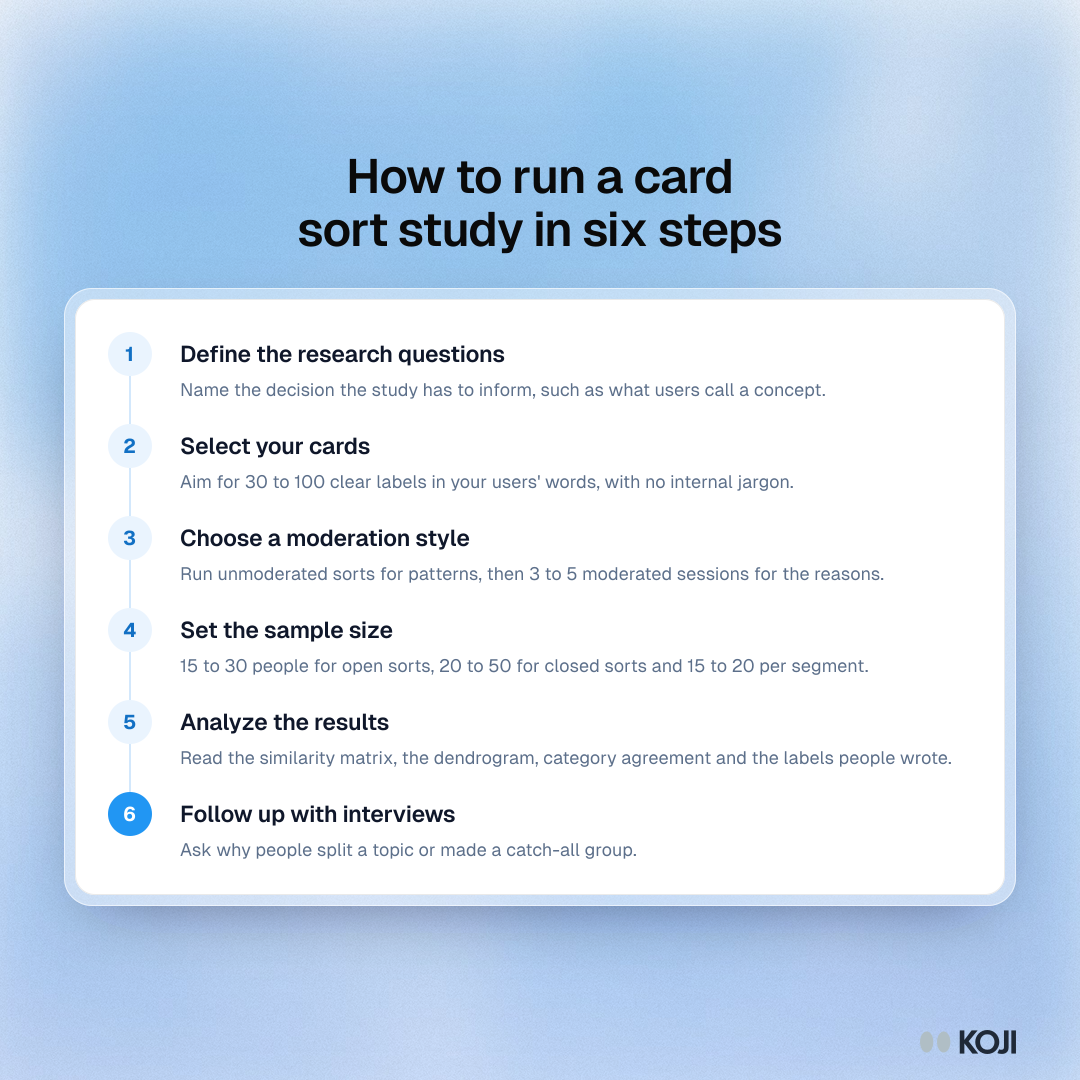
Process showing six steps of a card sort study: research questions, cards, moderation style, sample size, analysis and follow-up interviews.

Process

How to run a card sort study in six steps
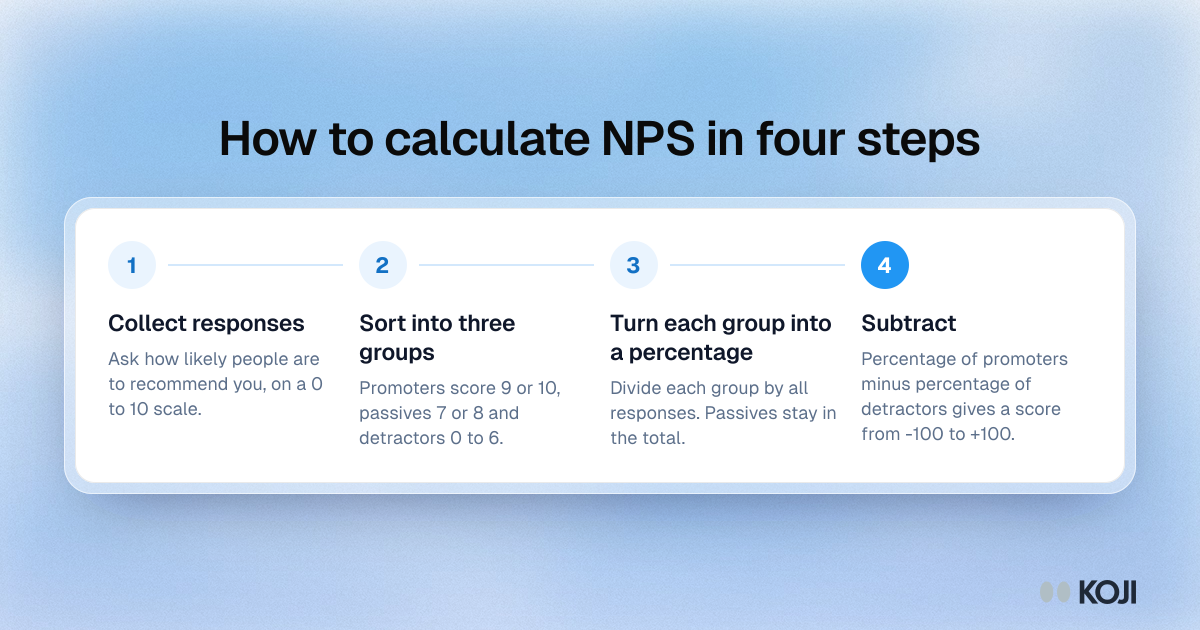
Process showing how to calculate Net Promoter Score: collect 0 to 10 ratings, sort promoters, passives and detractors, convert to percentages, subtract.

Process

How to calculate NPS in four steps
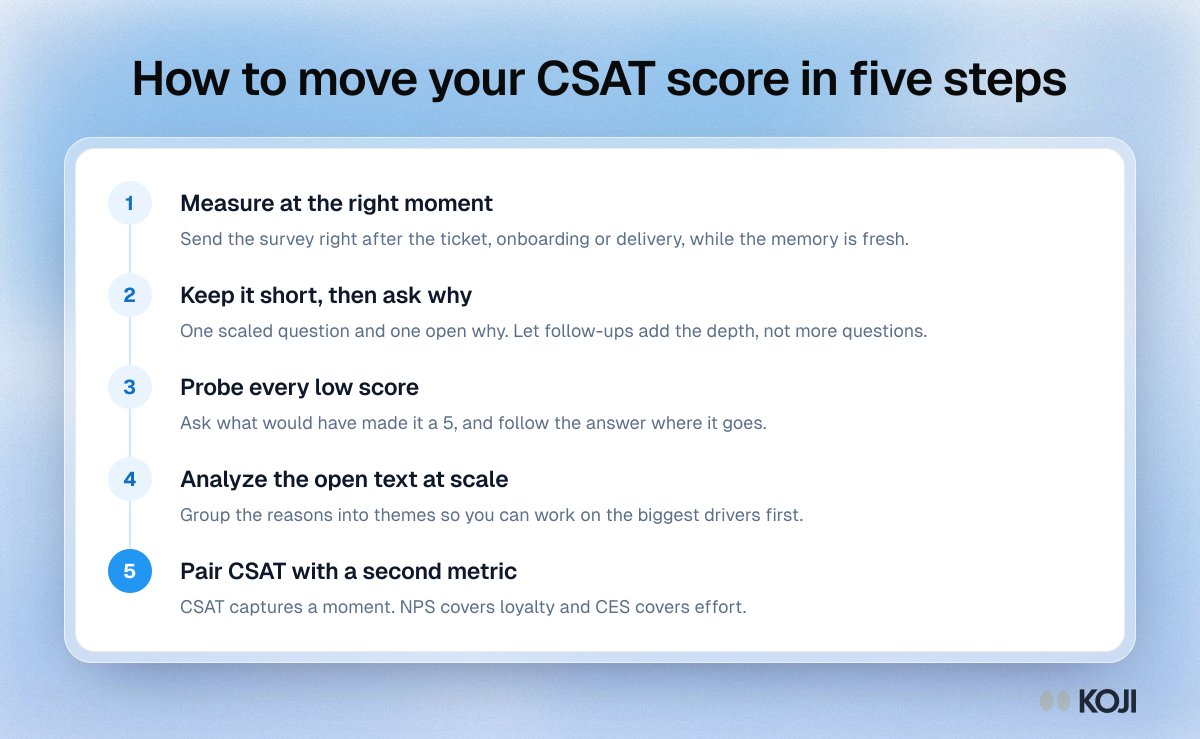
Process showing five steps to raise a CSAT score: time the survey well, keep it short, probe low scores, analyze open text, add NPS or CES.

Process

How to move your CSAT score in five steps
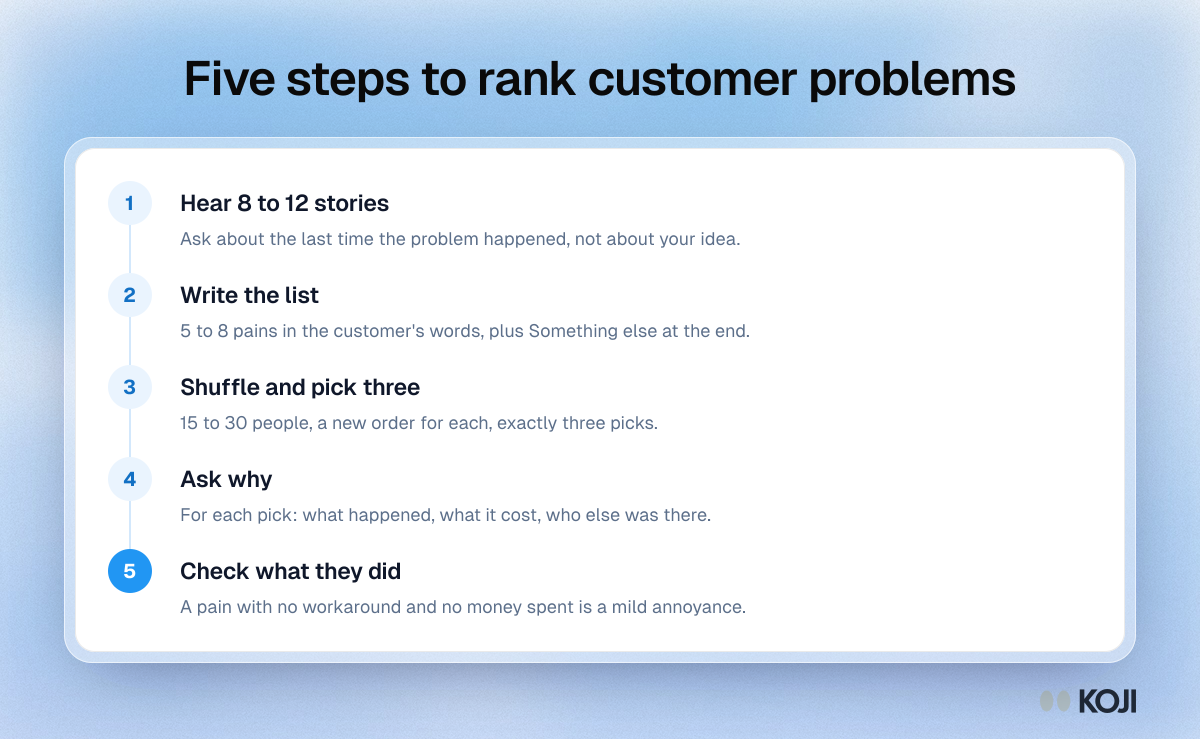
Process of five steps to rank customer problems: hear stories, write the list, shuffle and pick three, ask why, and check what people did about it.

Process

Five steps to rank customer problems
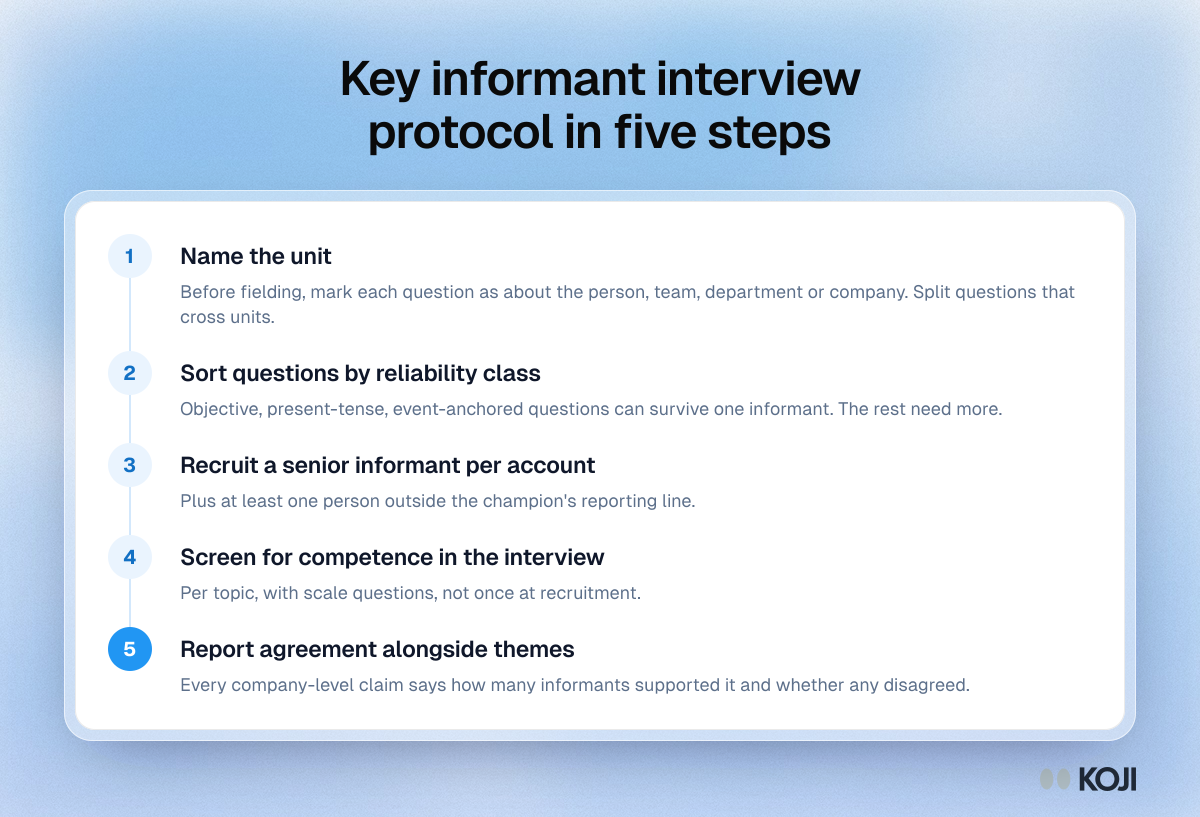
Process of five steps for key informant research, from naming the unit each question is about to reporting agreement between informants.

Process

Key informant interview protocol in five steps
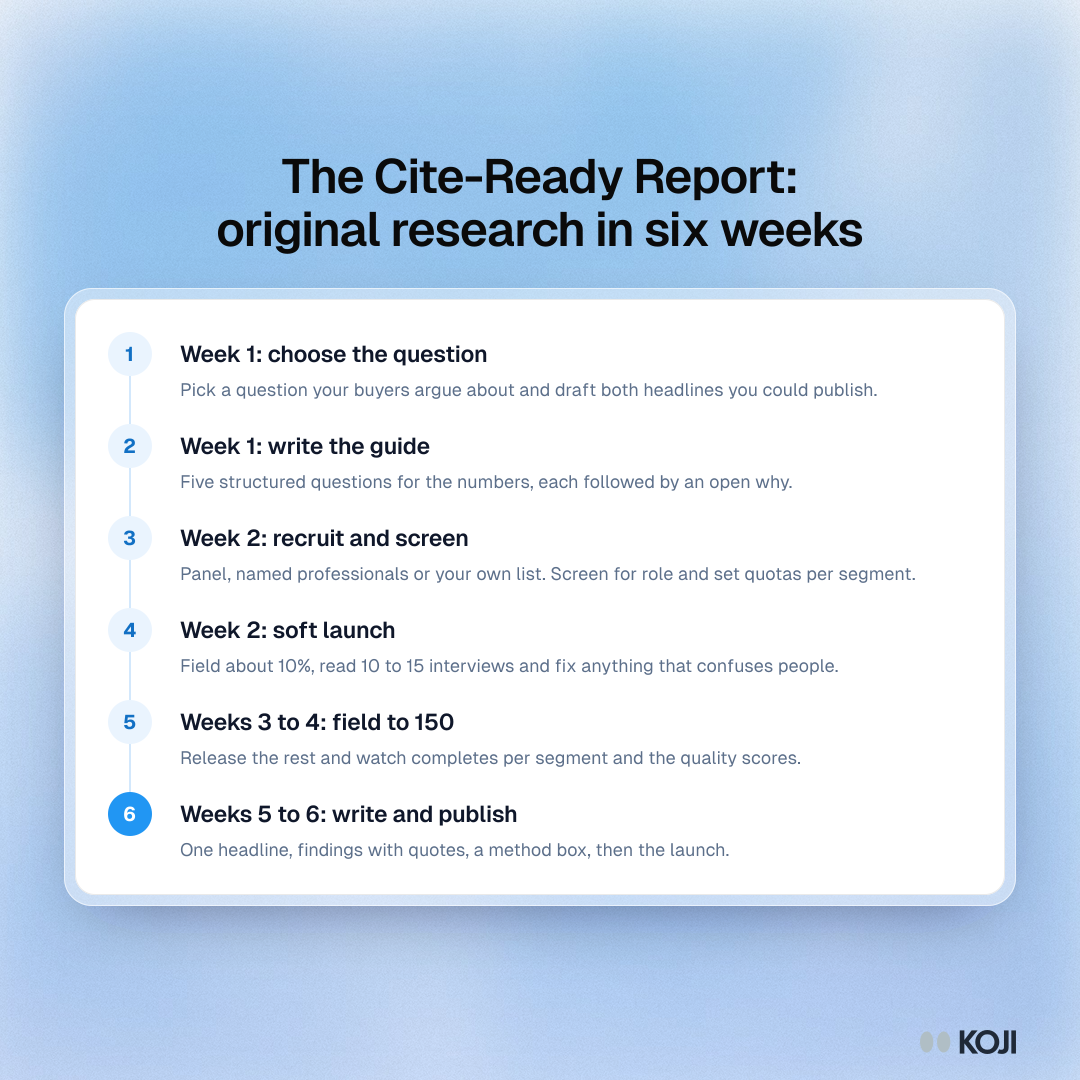
Process of the six-week Cite-Ready Report method: choose the question, write the guide, recruit and screen, soft launch, field to 150, write and publish.

Process

The Cite-Ready Report: original research in six weeks
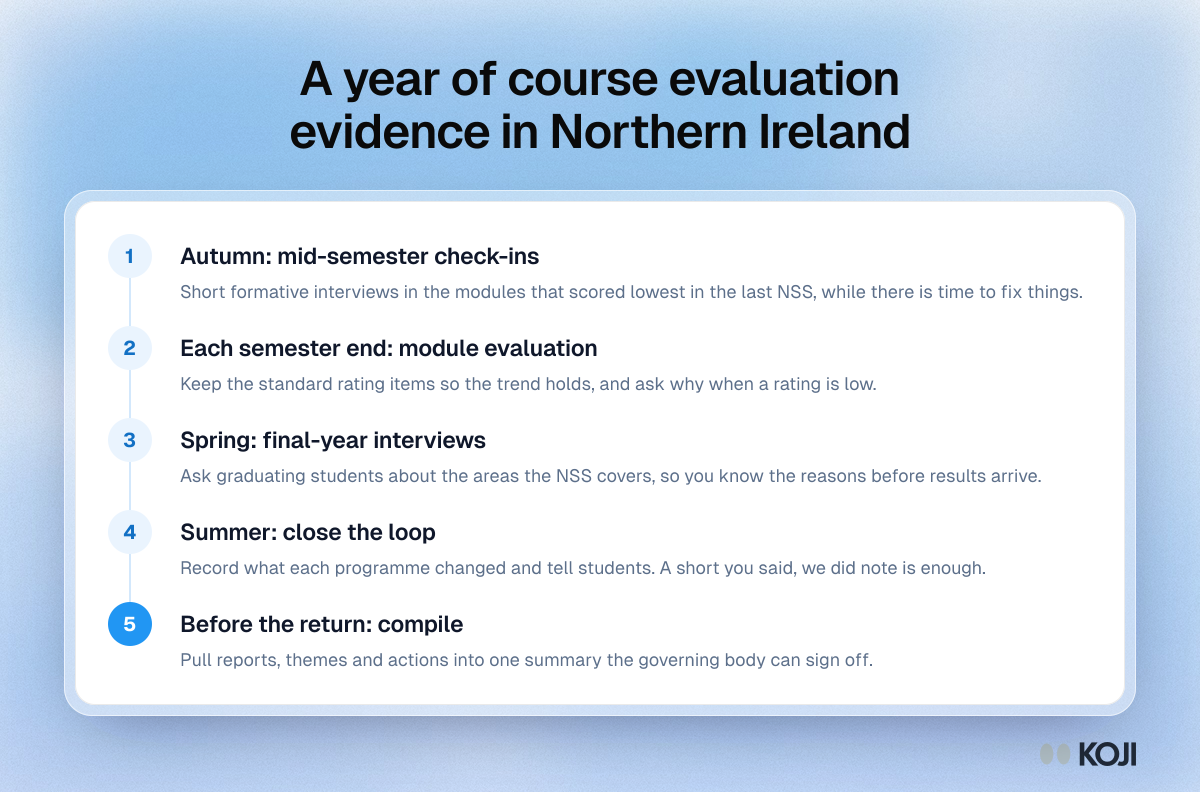
Process in five steps for a year of course evaluation evidence in Northern Ireland, from mid-semester check-ins to the governing body summary

Process

A year of course evaluation evidence in Northern Ireland
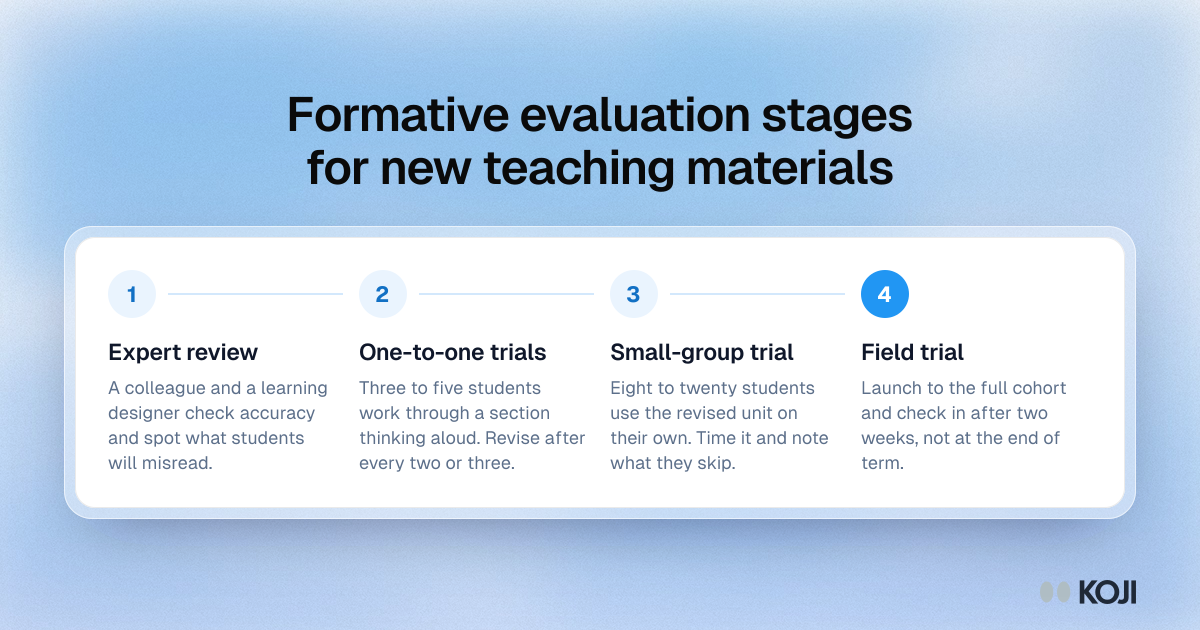
Process diagram of four formative evaluation stages for new teaching materials: expert review, one-to-one trials, a small-group trial and a field trial.

Process

Formative evaluation stages for new teaching materials
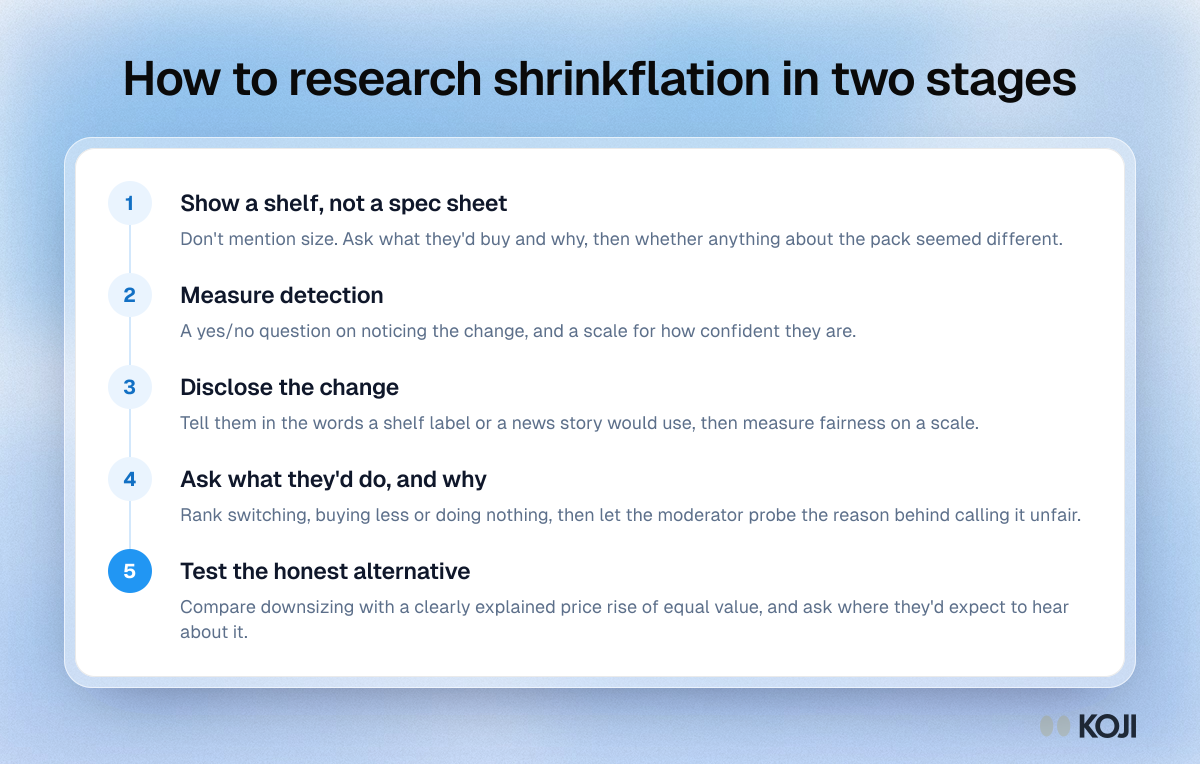
Process for shrinkflation research: show a shelf without naming size, measure detection, disclose the change, ask what shoppers would do, test a price rise.

Process

How to research shrinkflation in two stages
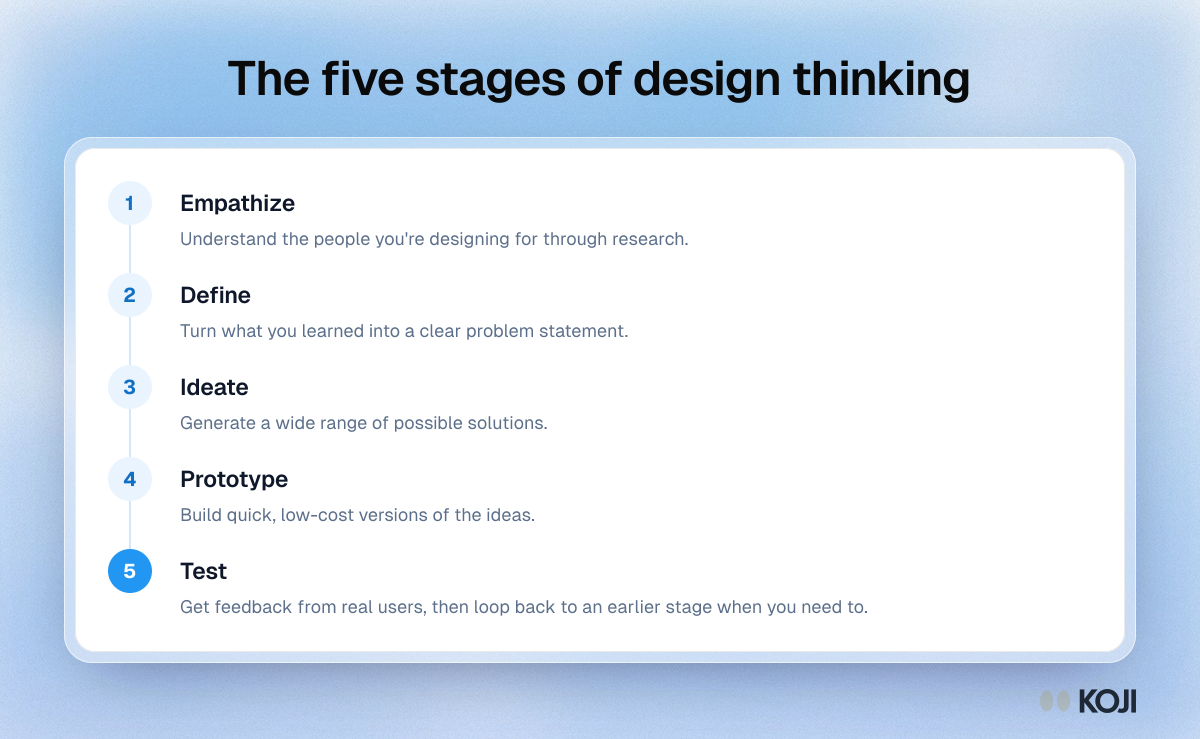
Process diagram of the five stages of design thinking: empathize, define, ideate, prototype and test, with teams looping back as they learn.

Process

The five stages of design thinking
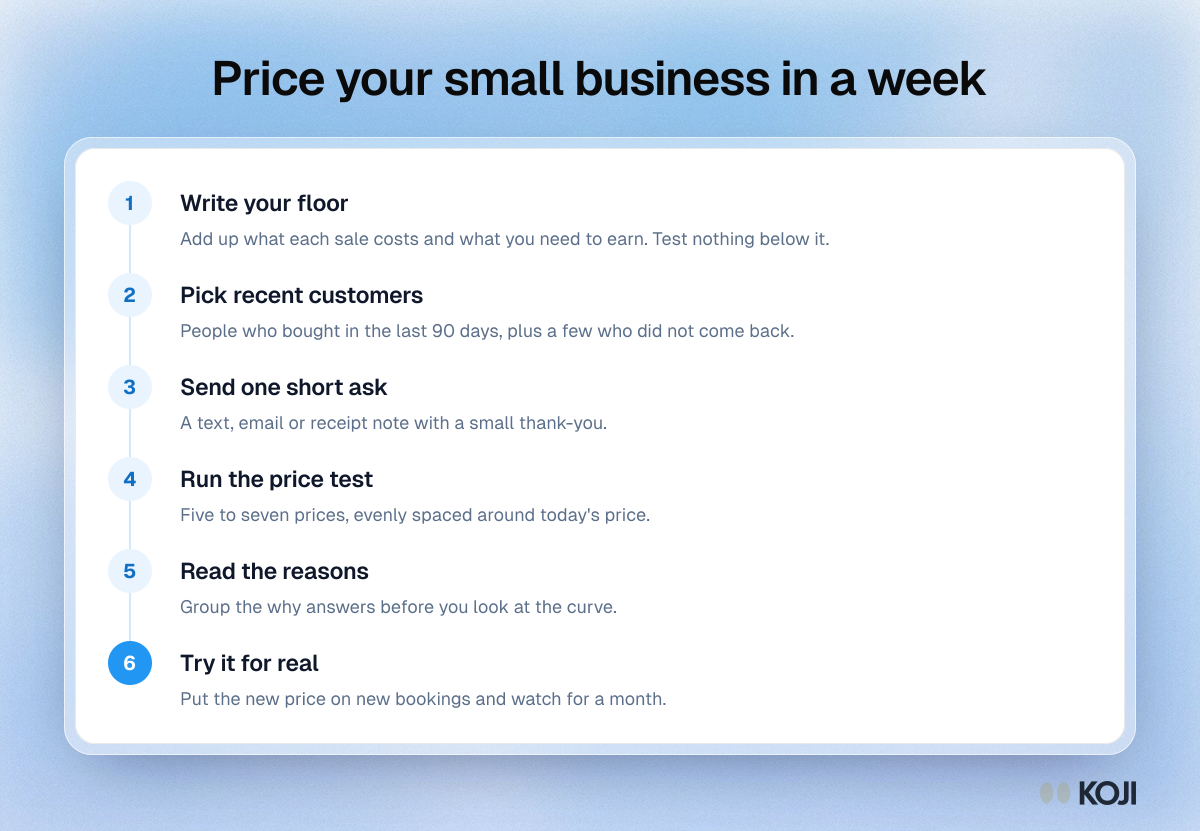
Process for pricing a small business in a week: set a floor, pick recent customers, ask, run a price test, read the reasons, try it.

Process

Price your small business in a week
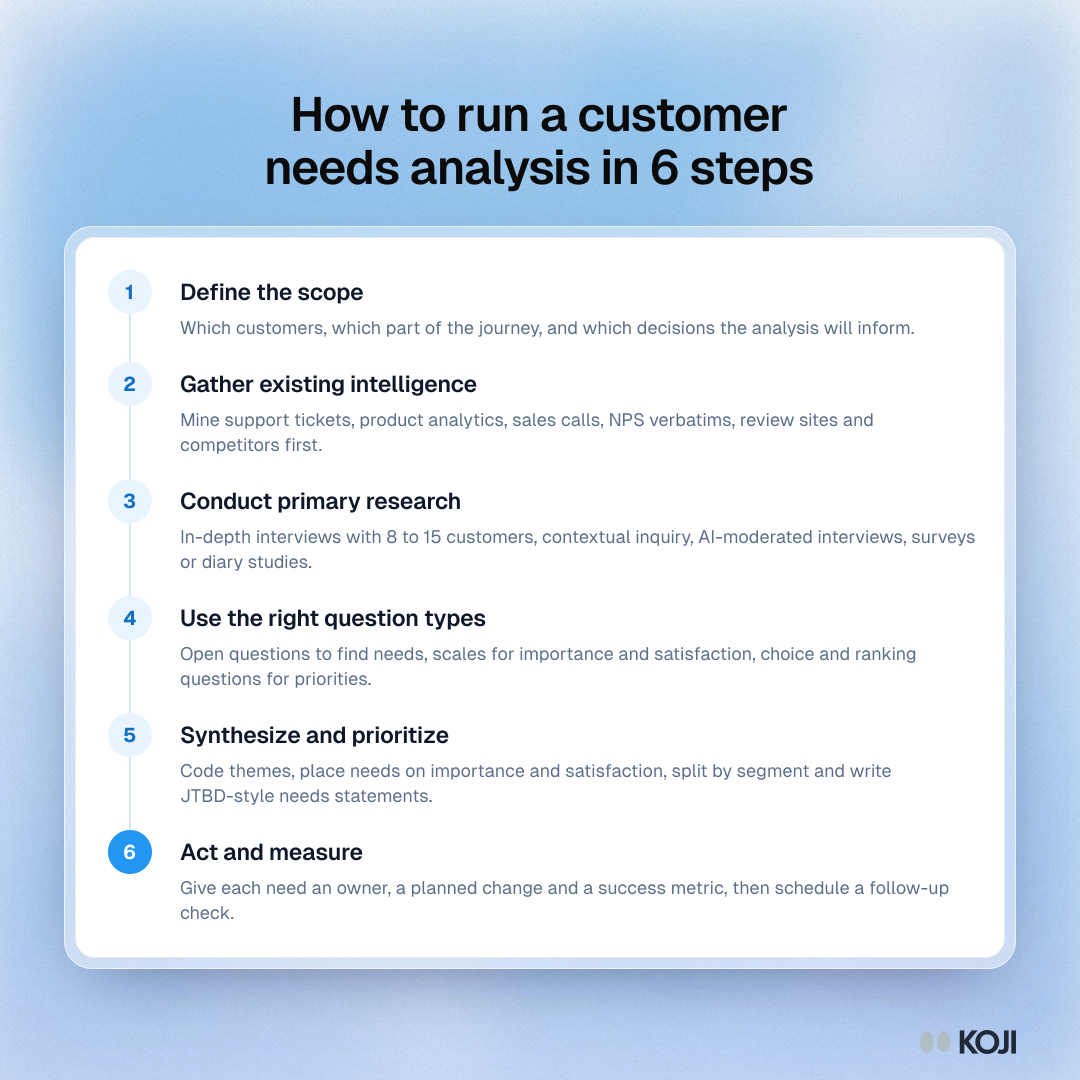
Process showing six steps of customer needs analysis: define scope, gather existing data, run research, pick question types, synthesize, act and measure

Process

How to run a customer needs analysis in 6 steps
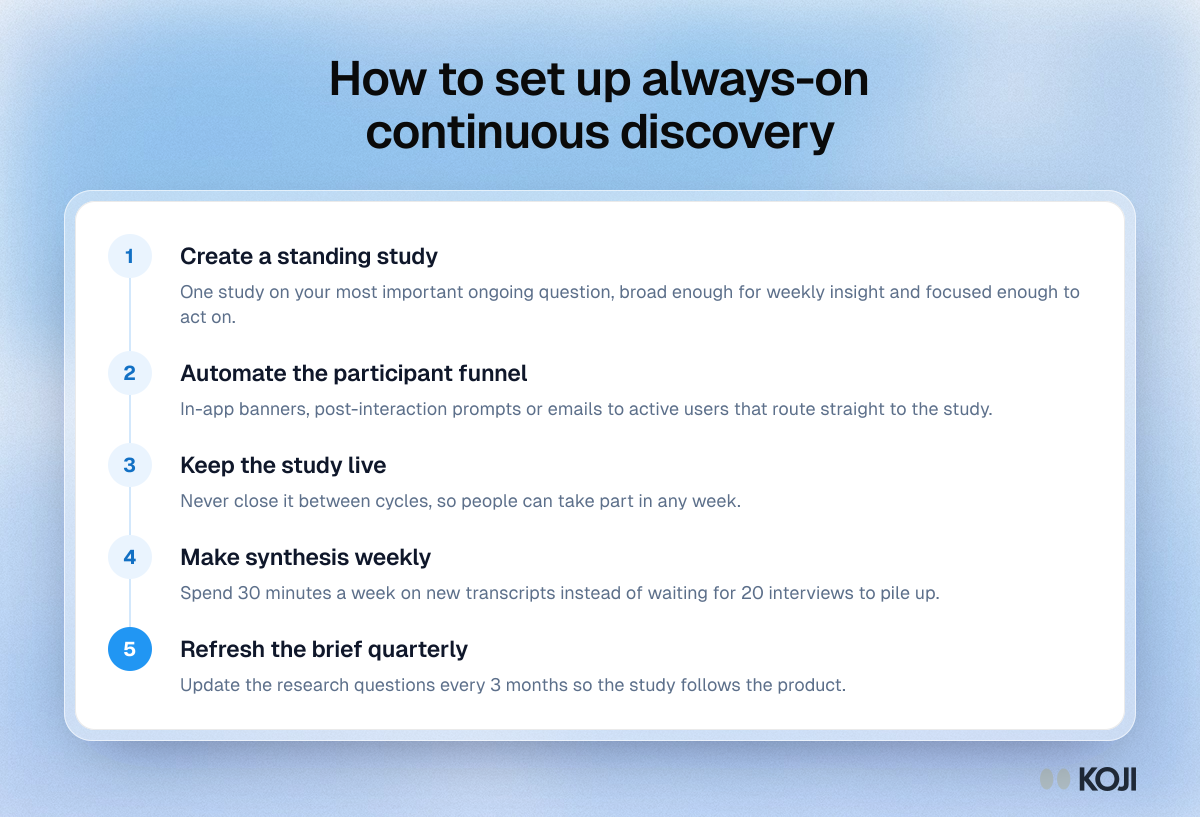
Process showing five steps for always-on continuous discovery: standing study, automated funnel, study kept live, weekly synthesis, quarterly refresh

Process

How to set up always-on continuous discovery
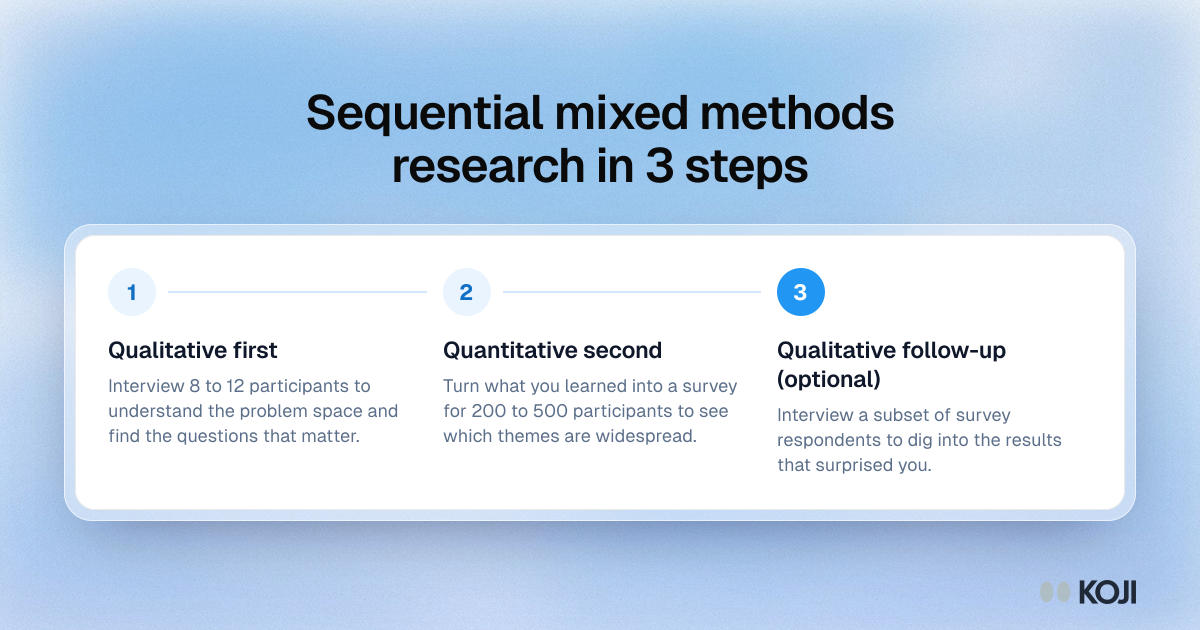
Process showing sequential mixed methods research: interview 8 to 12 people, survey 200 to 500, then optionally interview some survey respondents

Process

Sequential mixed methods research in 3 steps
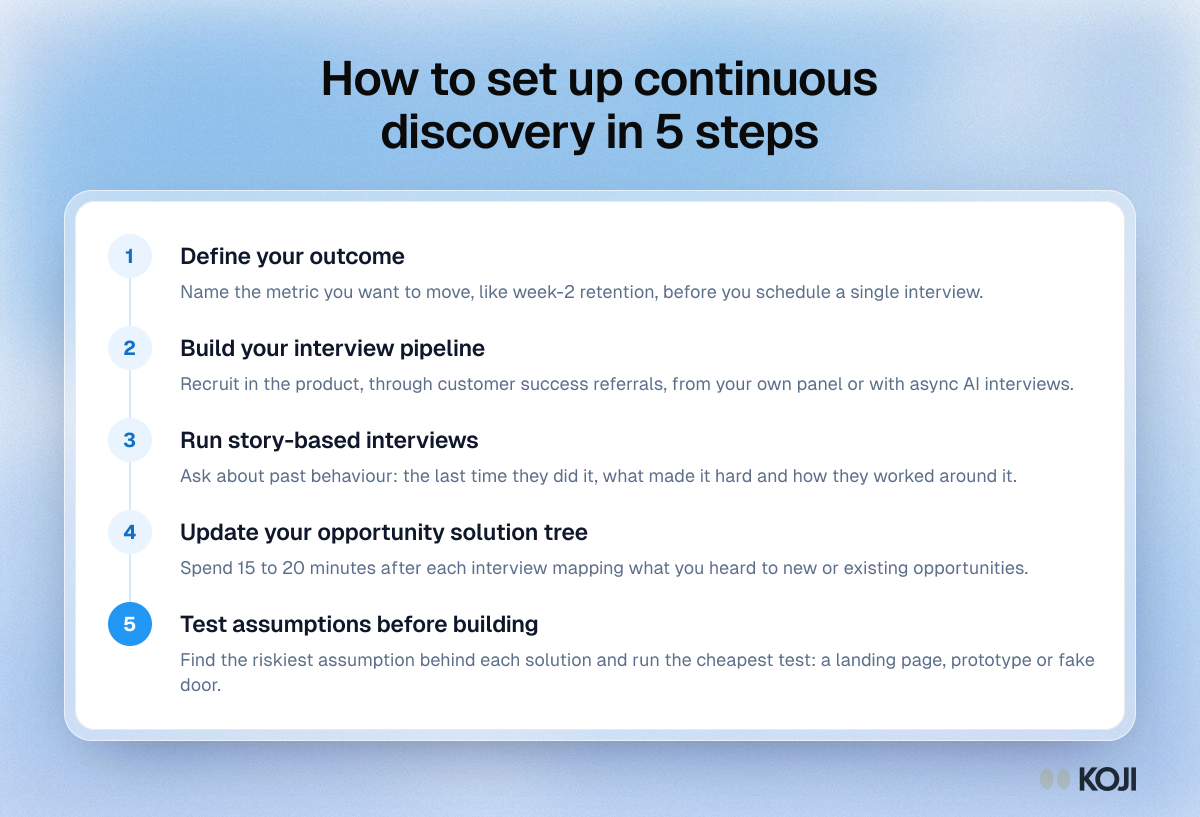
Process showing five steps to set up continuous discovery: define the outcome, build a pipeline, run story-based interviews, update the tree, test assumptions

Process

How to set up continuous discovery in 5 steps
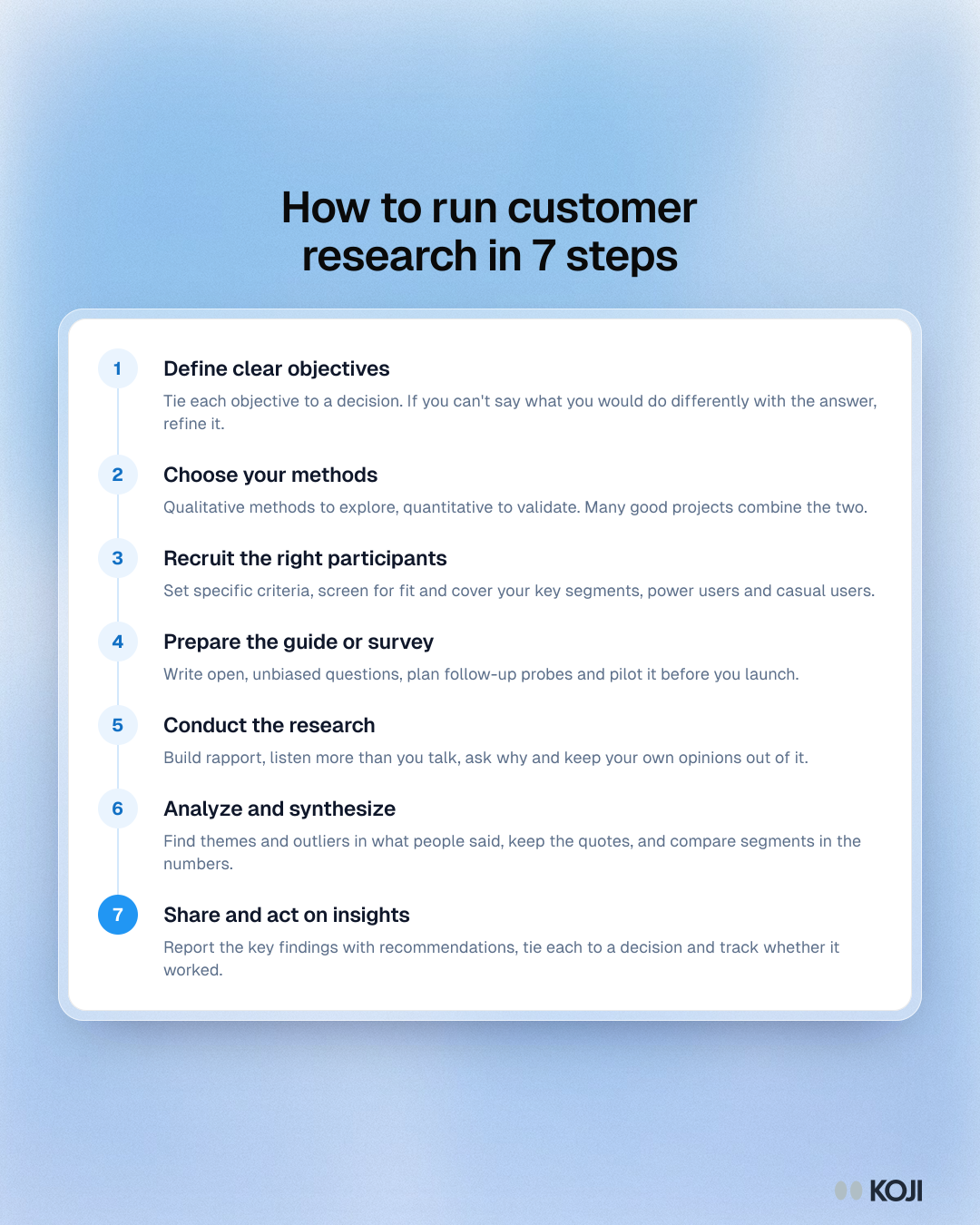
Process showing seven steps of customer research: define objectives, choose methods, recruit, prepare, conduct, analyze and act on insights

Process

How to run customer research in 7 steps
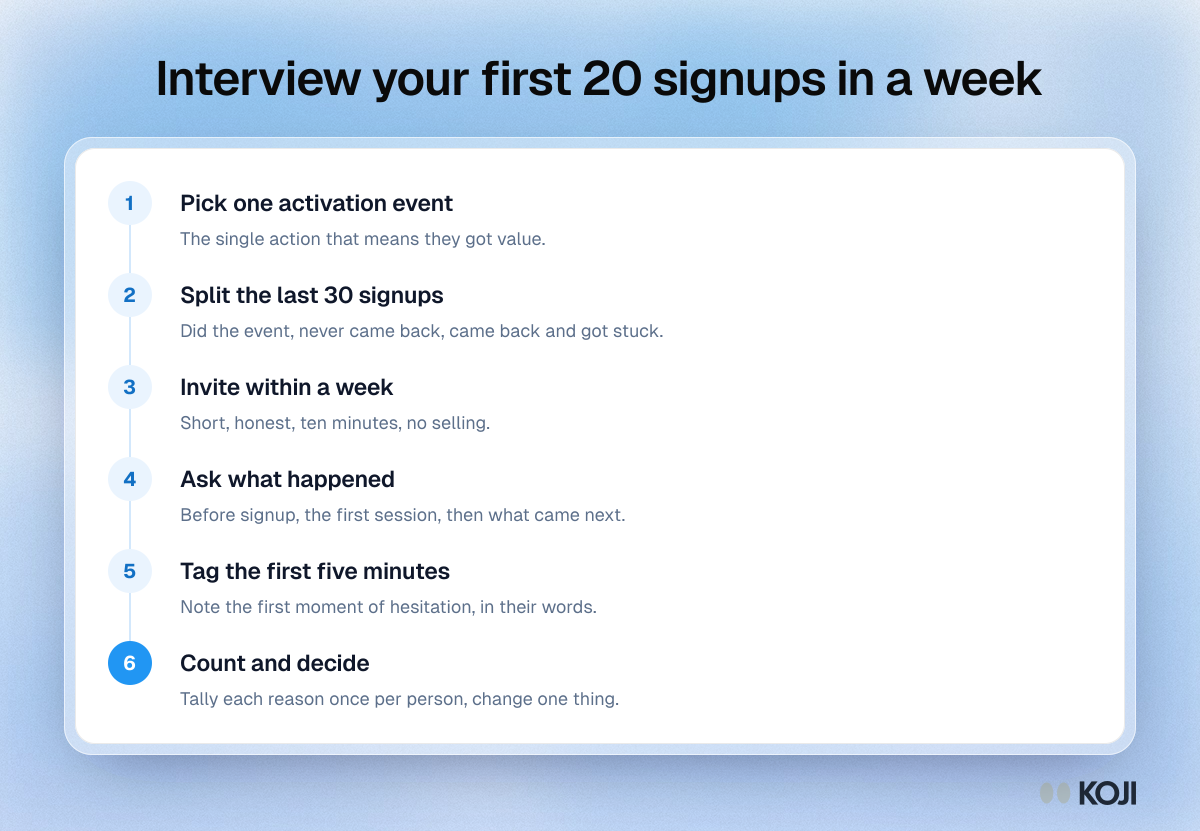
Process showing six steps for interviewing early signups in a week: pick an activation event, split signups, invite, ask, tag and decide.

Process

Interview your first 20 signups in a week
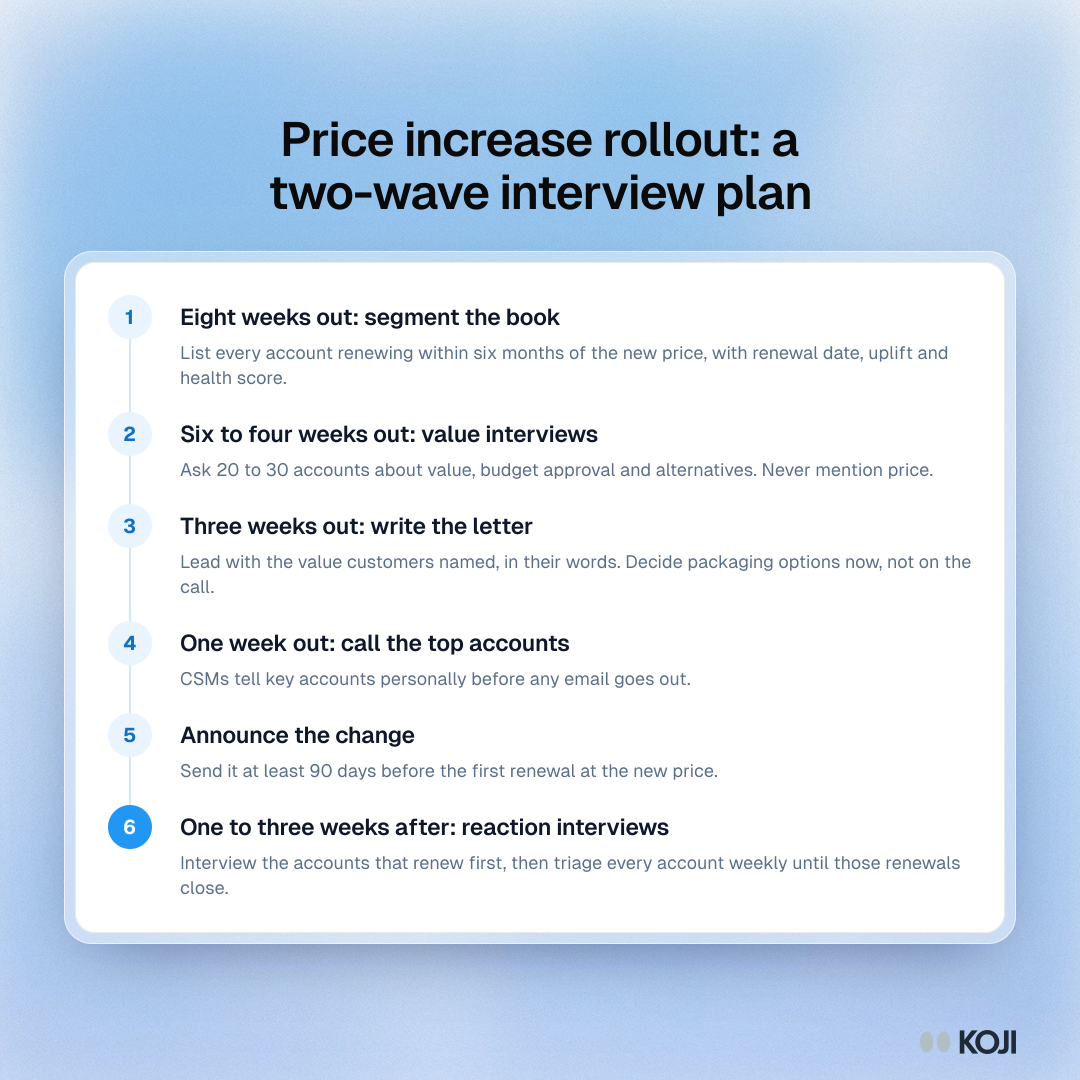
Process of six steps for a price rise rollout: segment the book, value interviews, write the letter, call top accounts, announce, reaction interviews.

Process

Price increase rollout: a two-wave interview plan
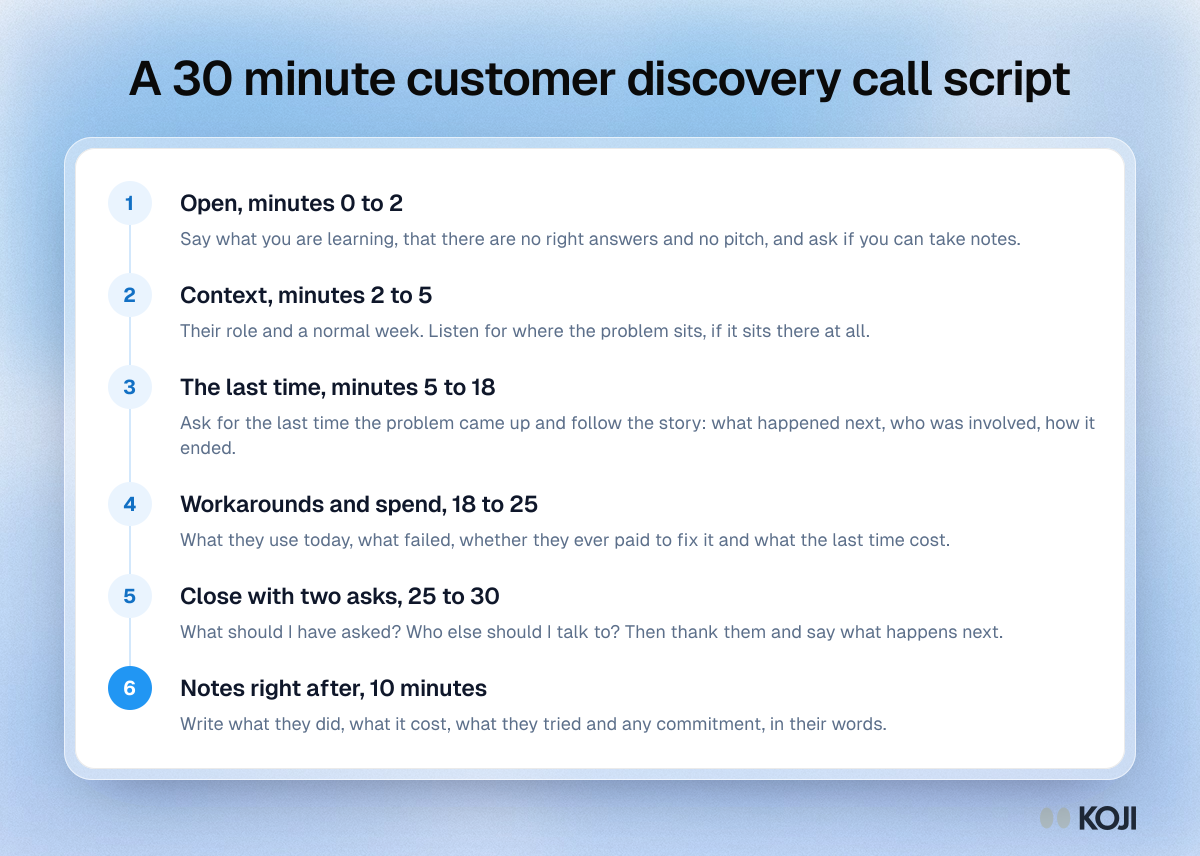
Process of a 30 minute discovery call script in six parts: open, get context, the last time story, workarounds and spend, close with asks, then write notes.

Process

A 30 minute customer discovery call script
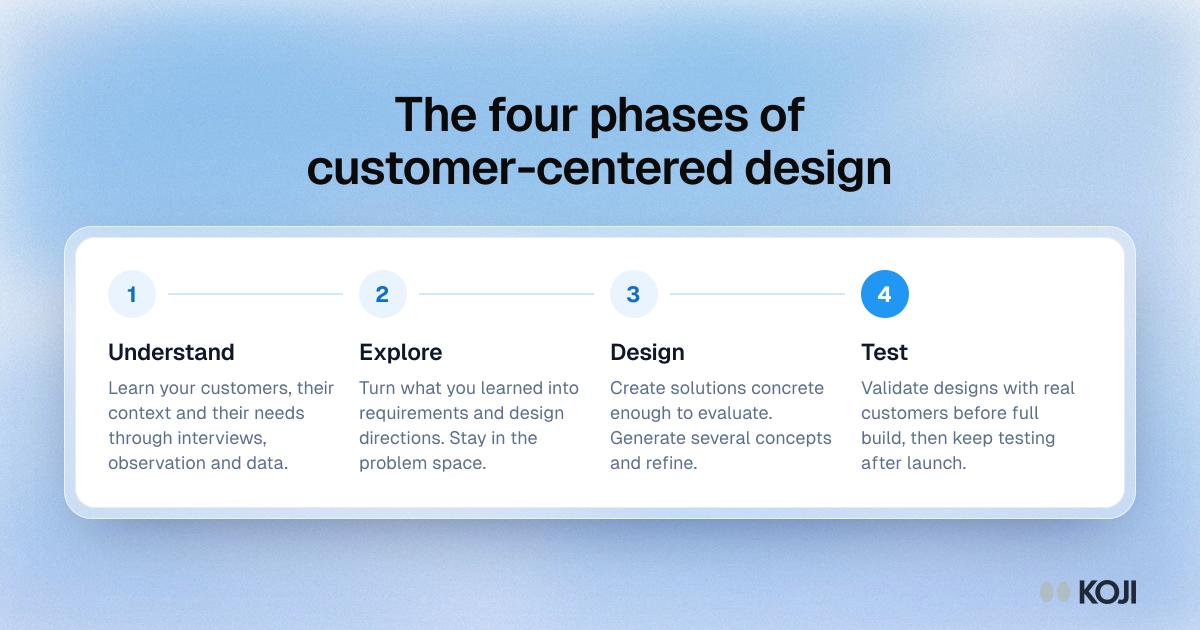
Process showing the four phases of customer-centered design: understand, explore, design and test, repeated as the product and market change.

Process

The four phases of customer-centered design
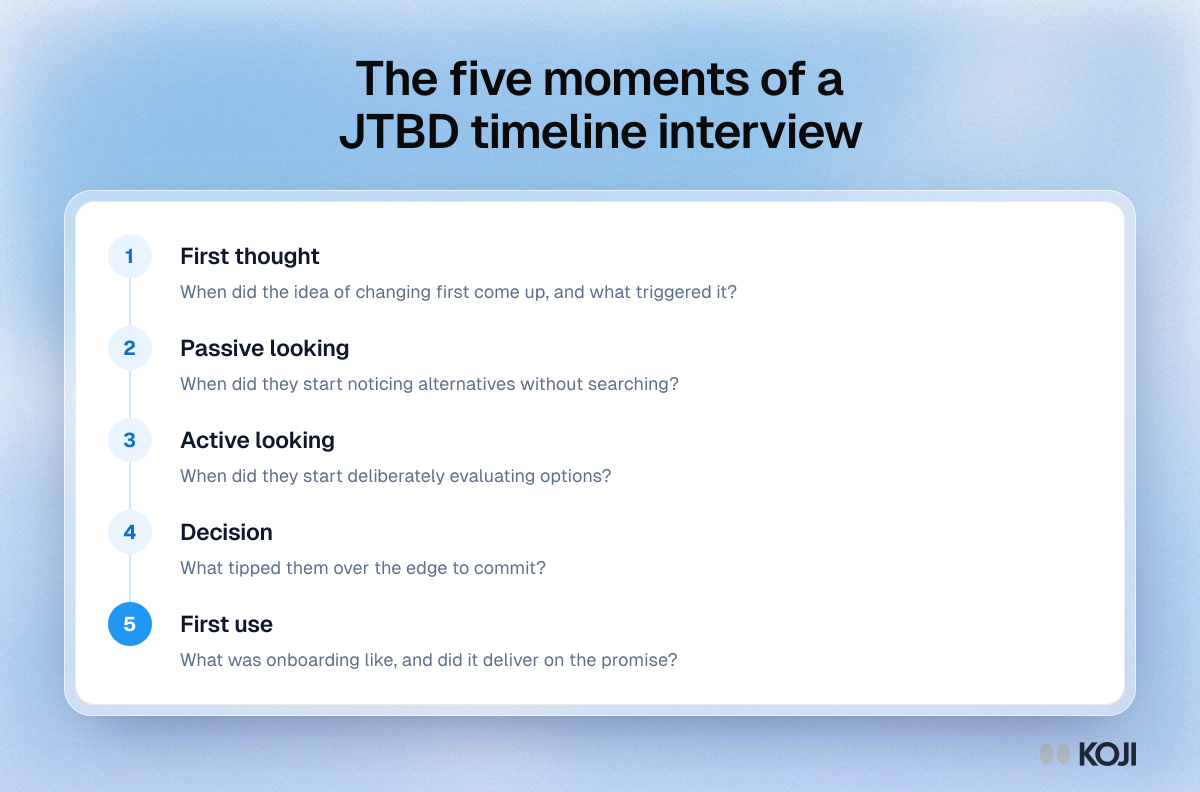
Process showing the five moments of a Jobs to Be Done timeline interview: first thought, passive looking, active looking, decision and first use.

Process

The five moments of a JTBD timeline interview
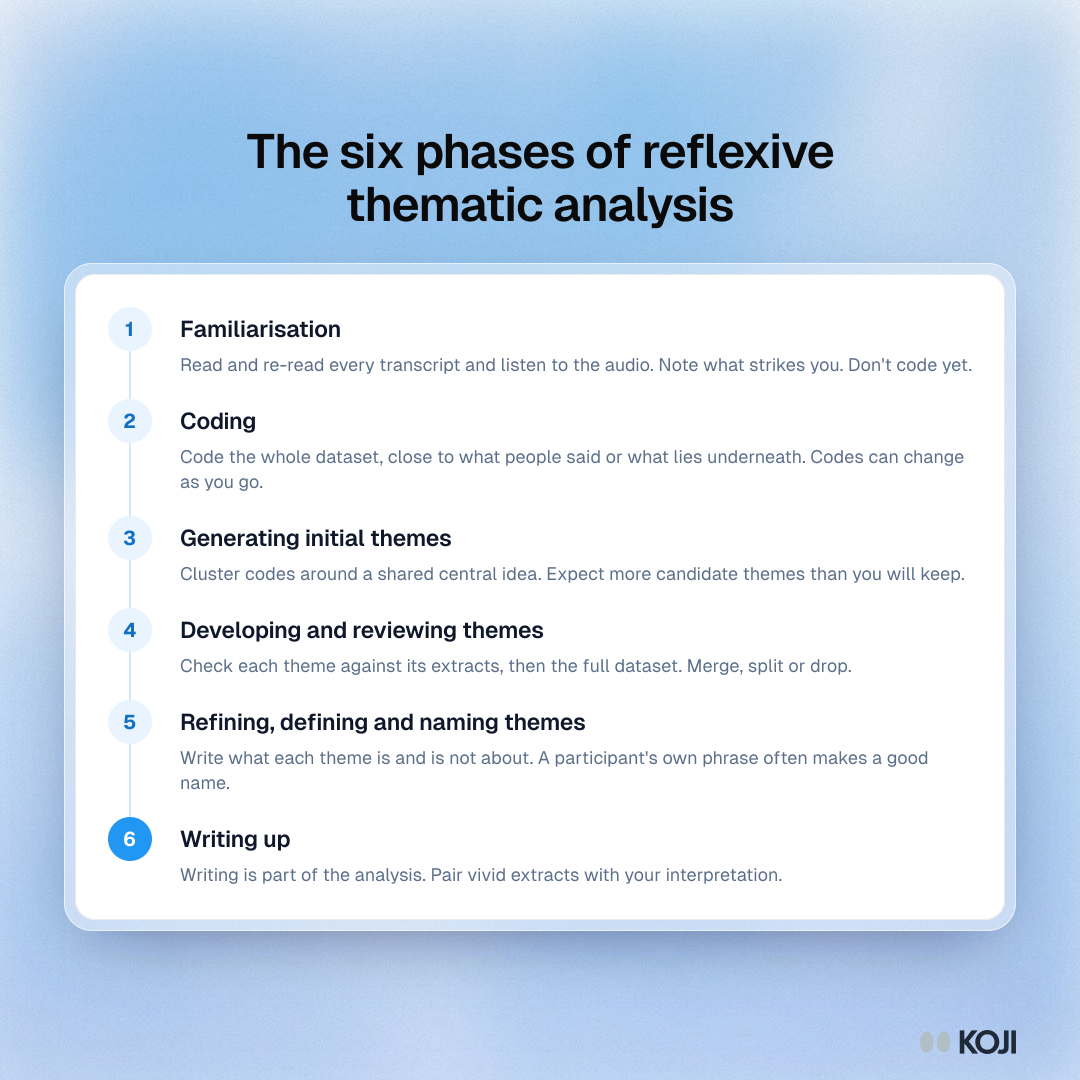
Process showing the six phases of reflexive thematic analysis: familiarisation, coding, initial themes, reviewing, naming themes and writing up.

Process

The six phases of reflexive thematic analysis
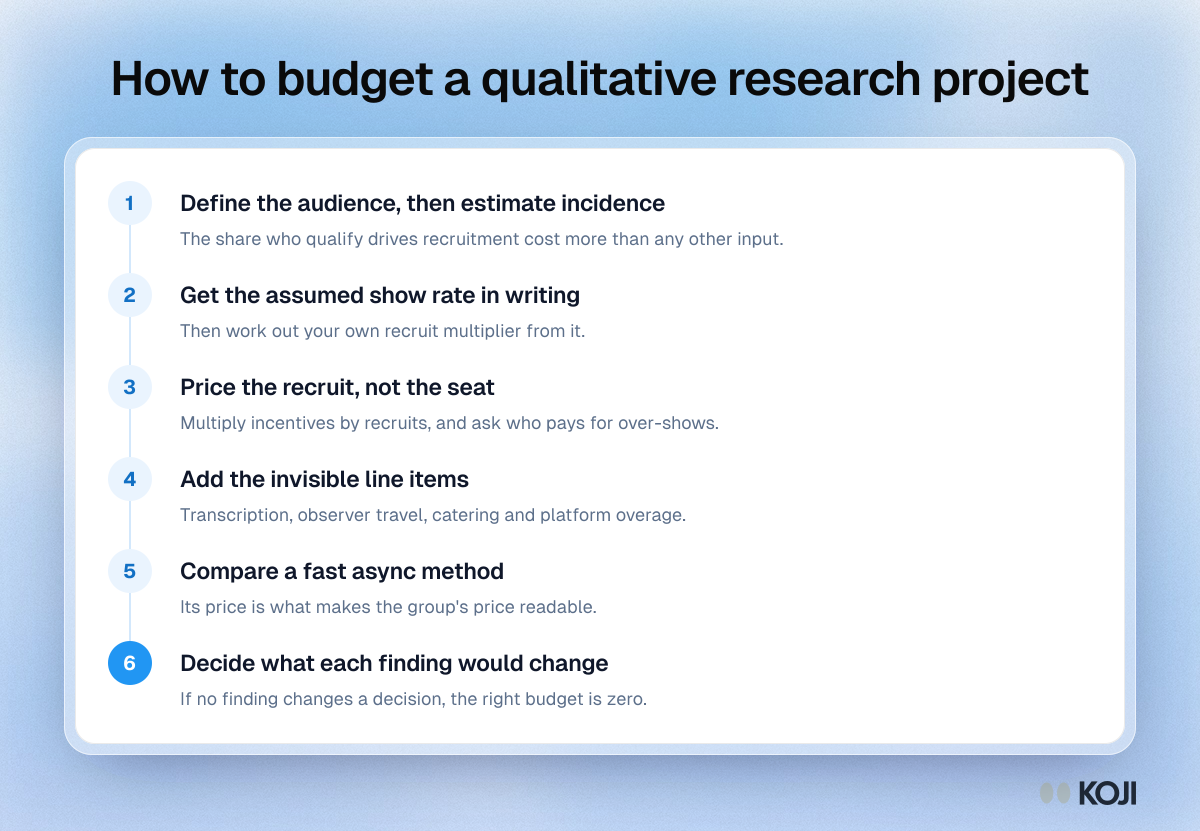
Process of six steps to budget a qualitative project: define the audience, get the show rate, price the recruit, add hidden costs, compare and decide.

Process

How to budget a qualitative research project
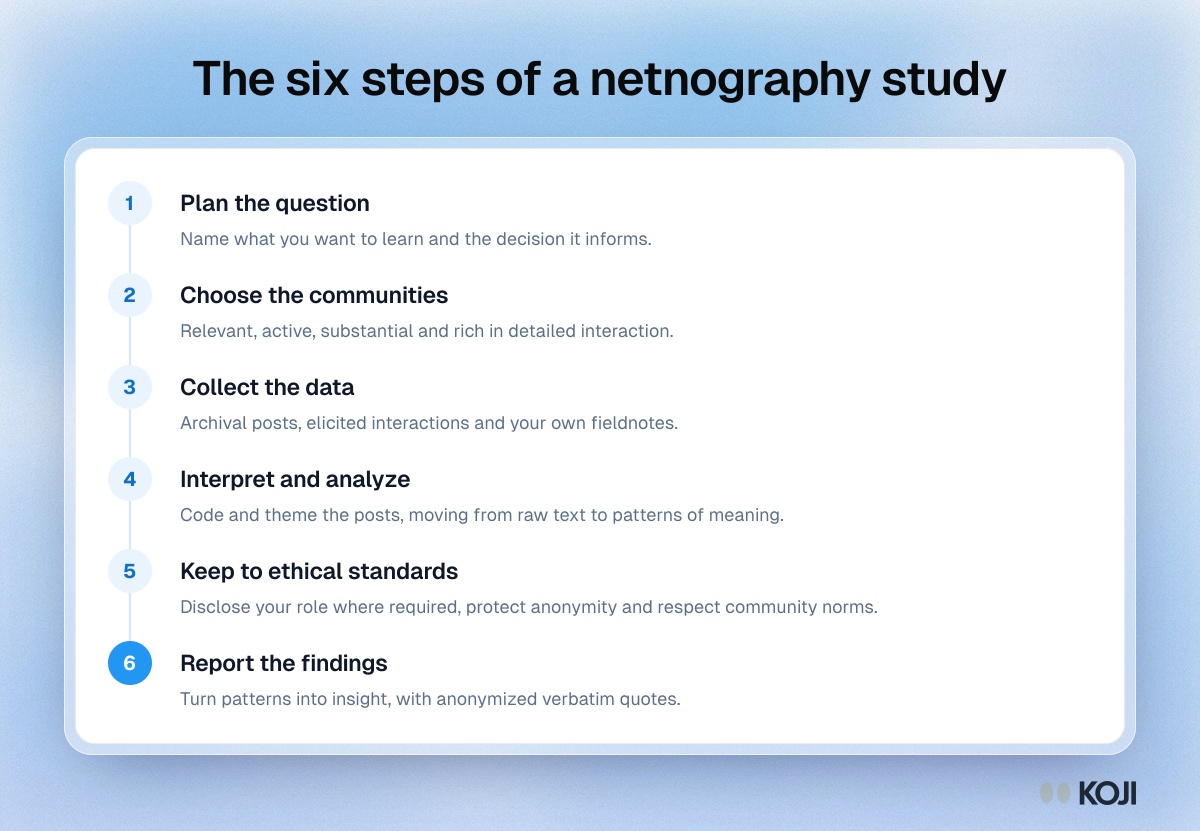
Process showing the six steps of a netnography study: plan the question, choose communities, collect data, analyze, keep to ethics and report findings.

Process

The six steps of a netnography study