Free to save and share

Frameworks and cheat sheets for customer research

Every framework, checklist and comparison from our guides, as an image you can download, drop into a deck or share with your team.
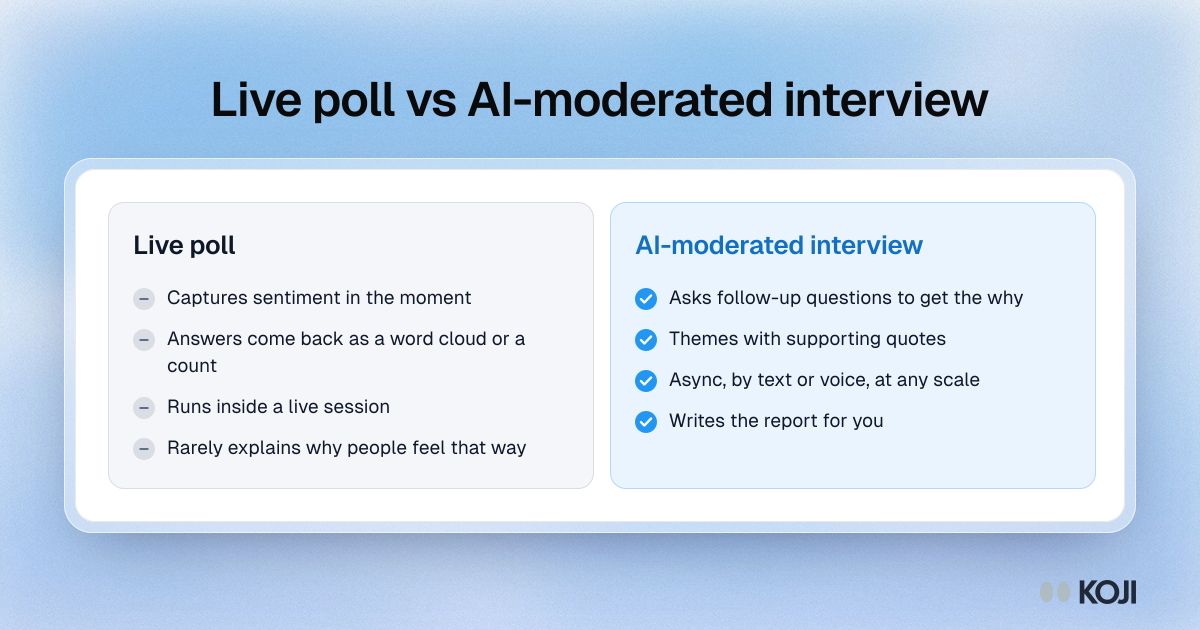
Comparison of a live poll, which captures sentiment in the moment, and an AI-moderated interview, which asks follow-ups and returns themes with quotes.

Comparison

Live poll vs AI-moderated interview
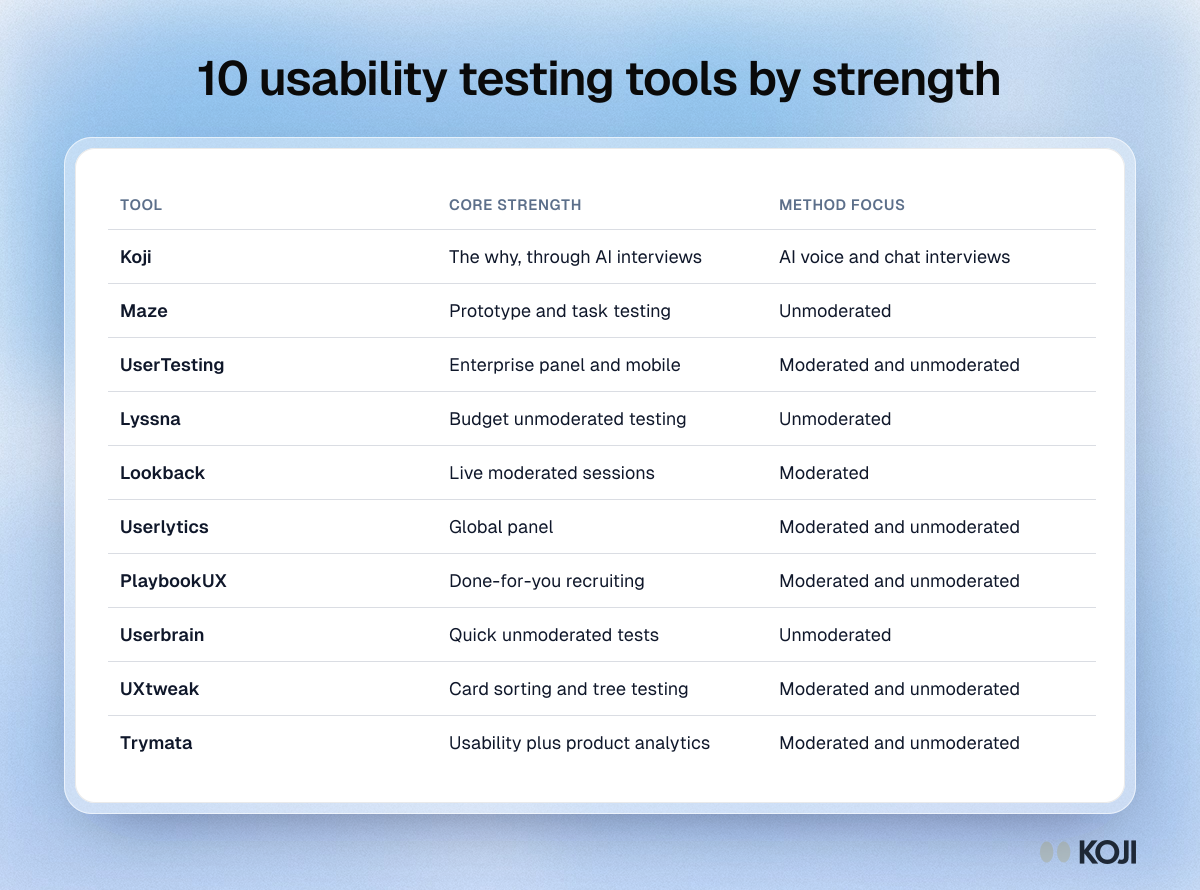
Table of 10 usability testing tools with each one's core strength and method focus, from Maze for prototype testing to Koji for AI interviews.

Reference table

10 usability testing tools by strength
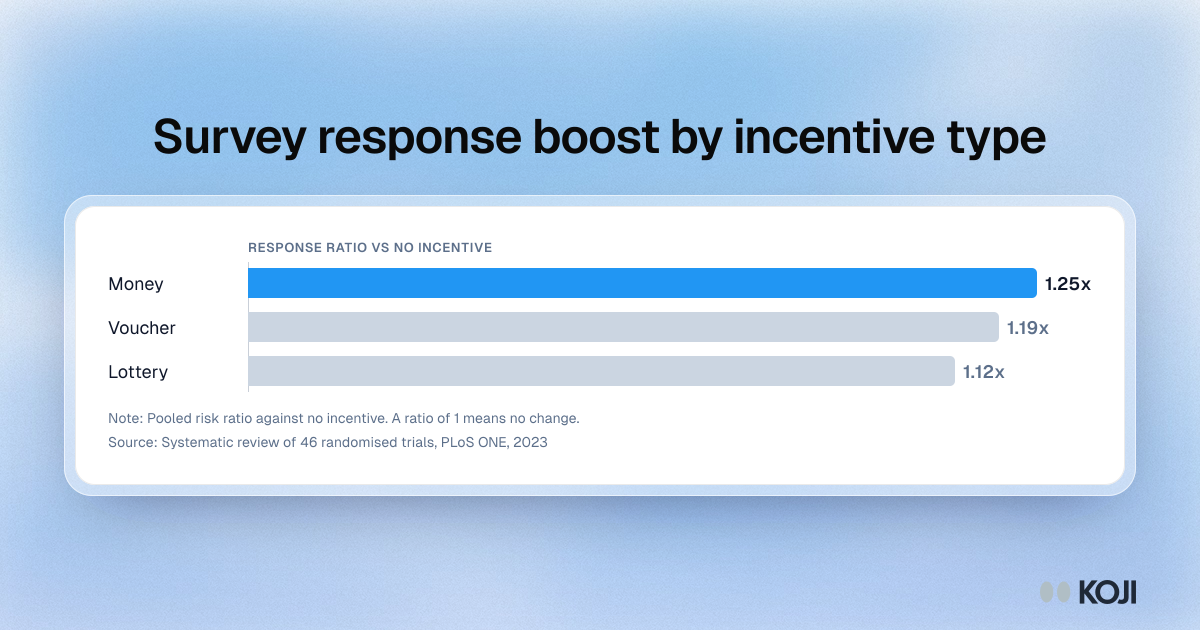
Bar chart of how much three incentive types raise survey response compared with no incentive: money 1.25, voucher 1.19, lottery 1.12.

Bar chart

Survey response boost by incentive type
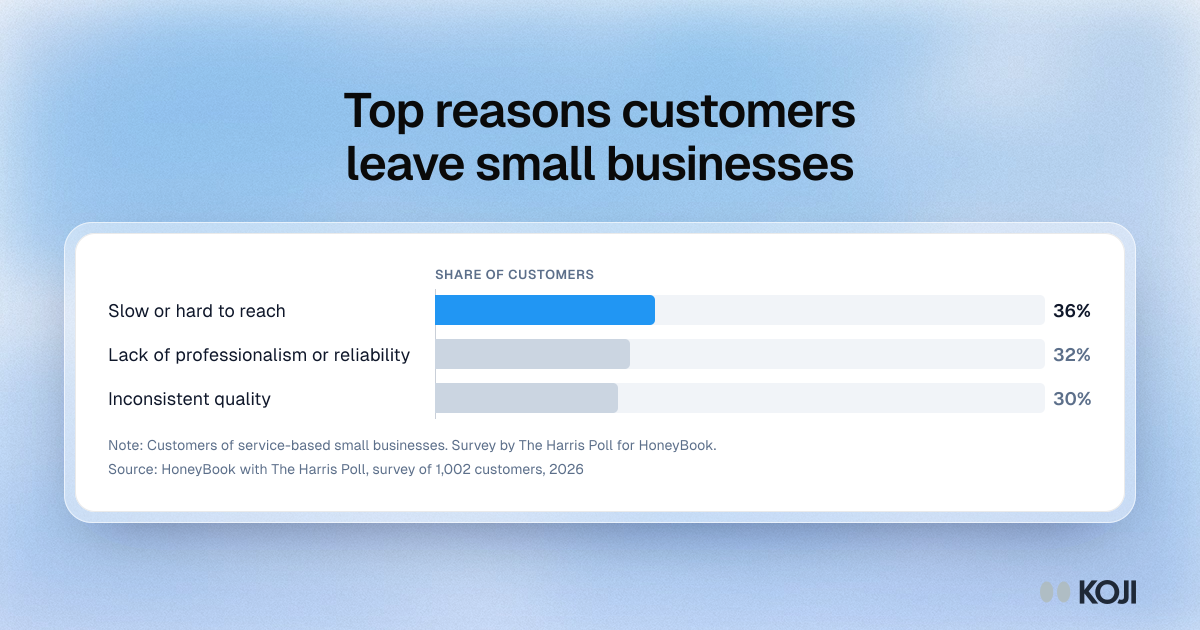
Bar chart of the top reasons customers leave service-based small businesses: slow or hard to reach 36%, lack of professionalism 32%, inconsistent quality 30%.

Bar chart

Top reasons customers leave small businesses
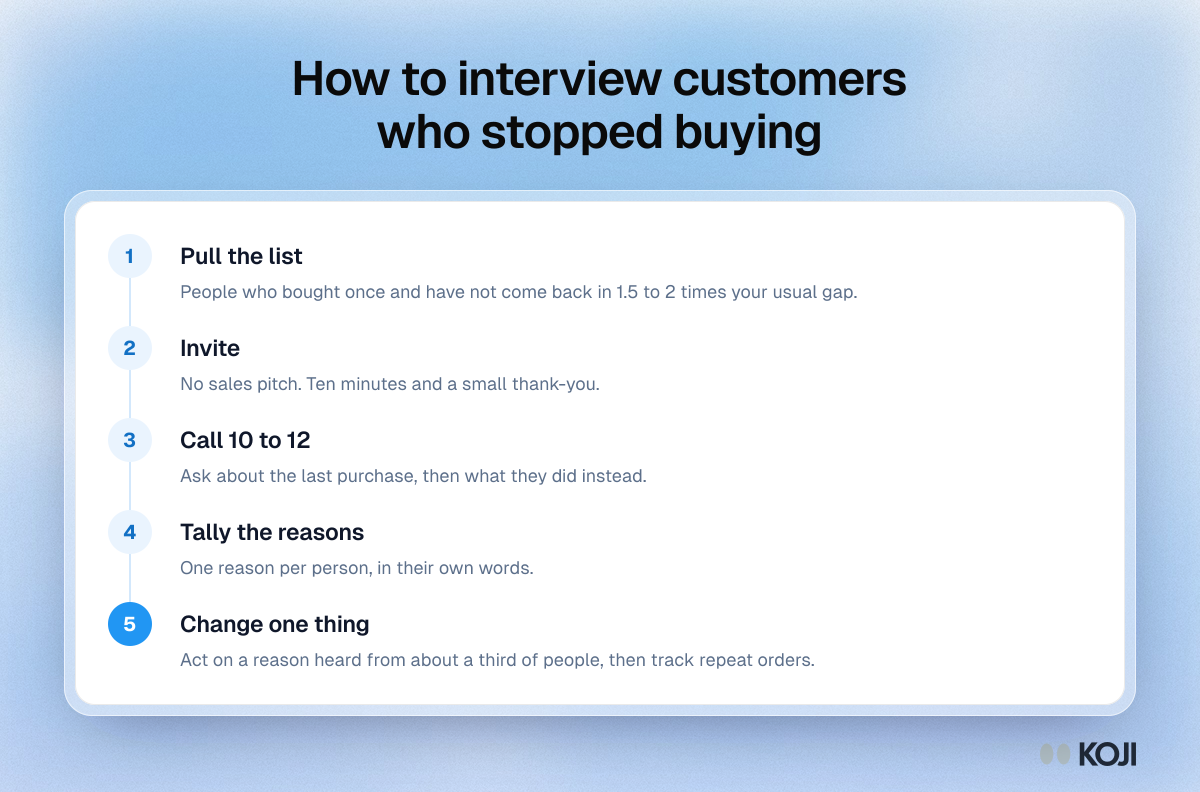
Process with five steps for interviewing lapsed customers: pull the list, invite, call 10 to 12, tally the reasons and change one thing.

Process

How to interview customers who stopped buying
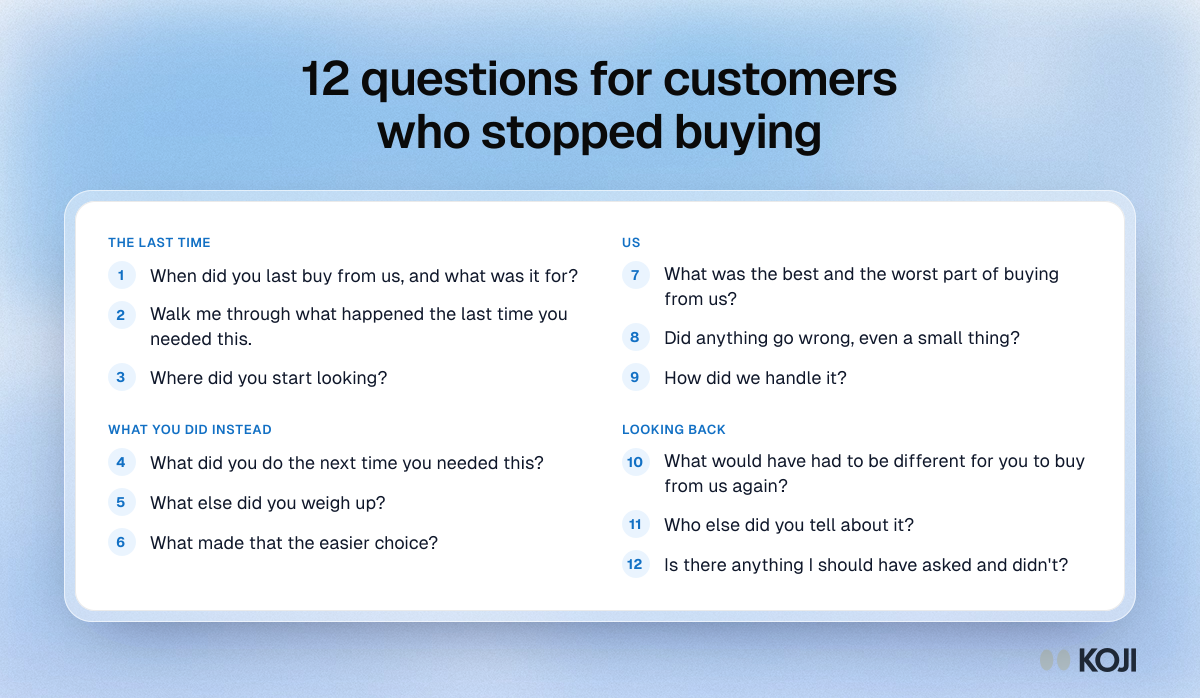
Question bank of 12 questions to ask a lapsed customer, grouped into the last purchase, what they did instead, your business and looking back.

Question bank

12 questions for customers who stopped buying
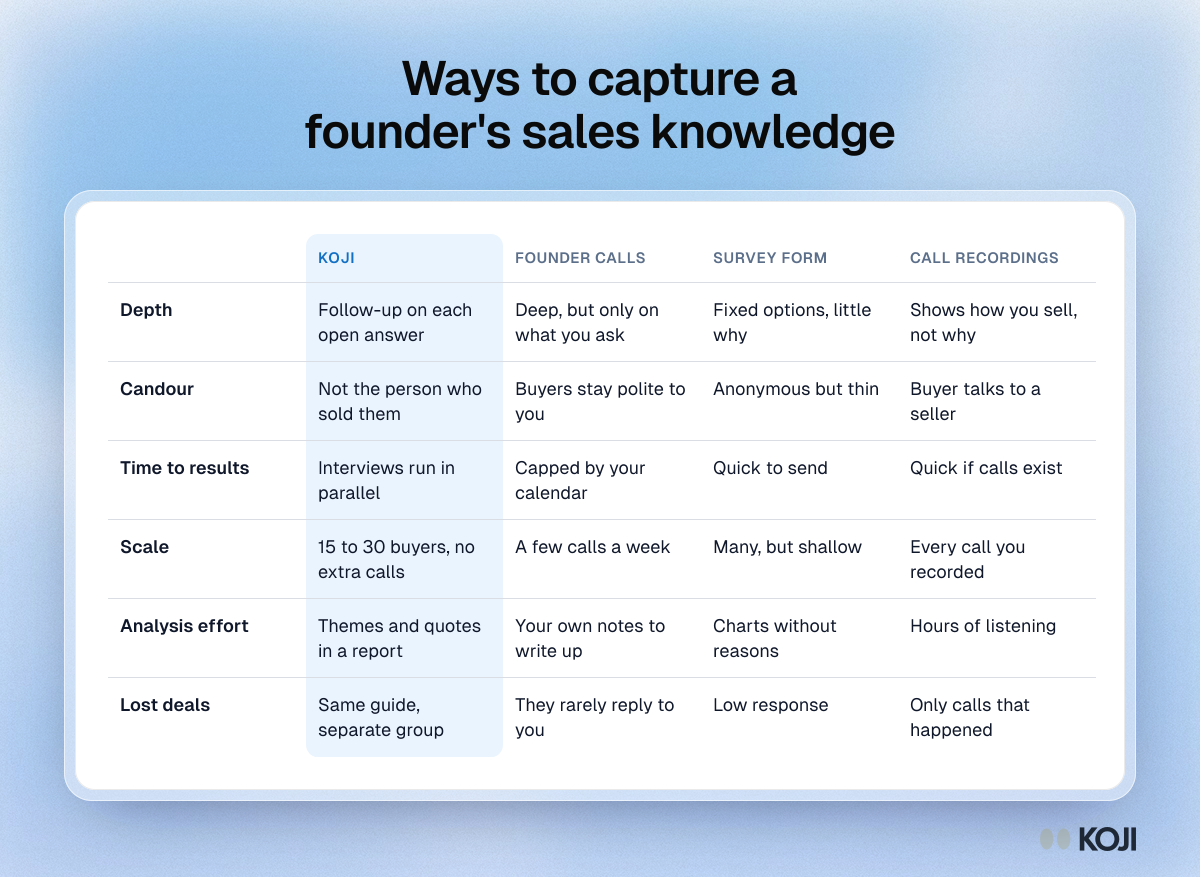
Table comparing Koji, founder calls, survey forms and call recordings on depth, candour, speed, scale, analysis effort and lost deals.

Reference table

Ways to capture a founder's sales knowledge
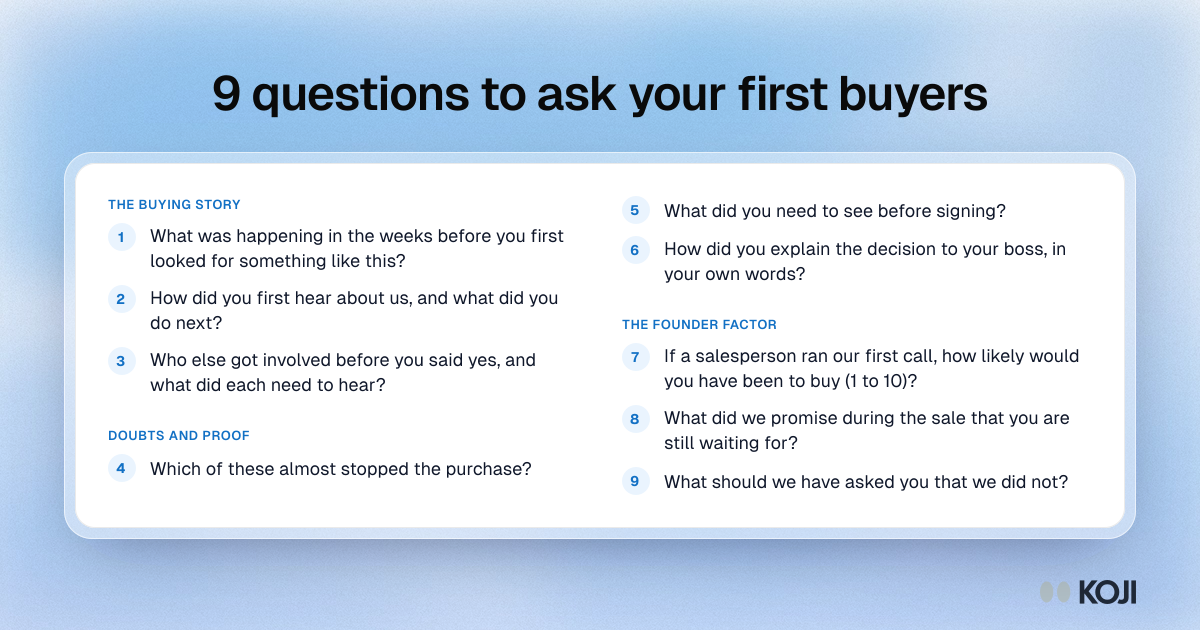
Question bank of nine interview questions for early customers before a first sales hire: the buying story, doubts and proof, the founder factor.

Question bank

9 questions to ask your first buyers
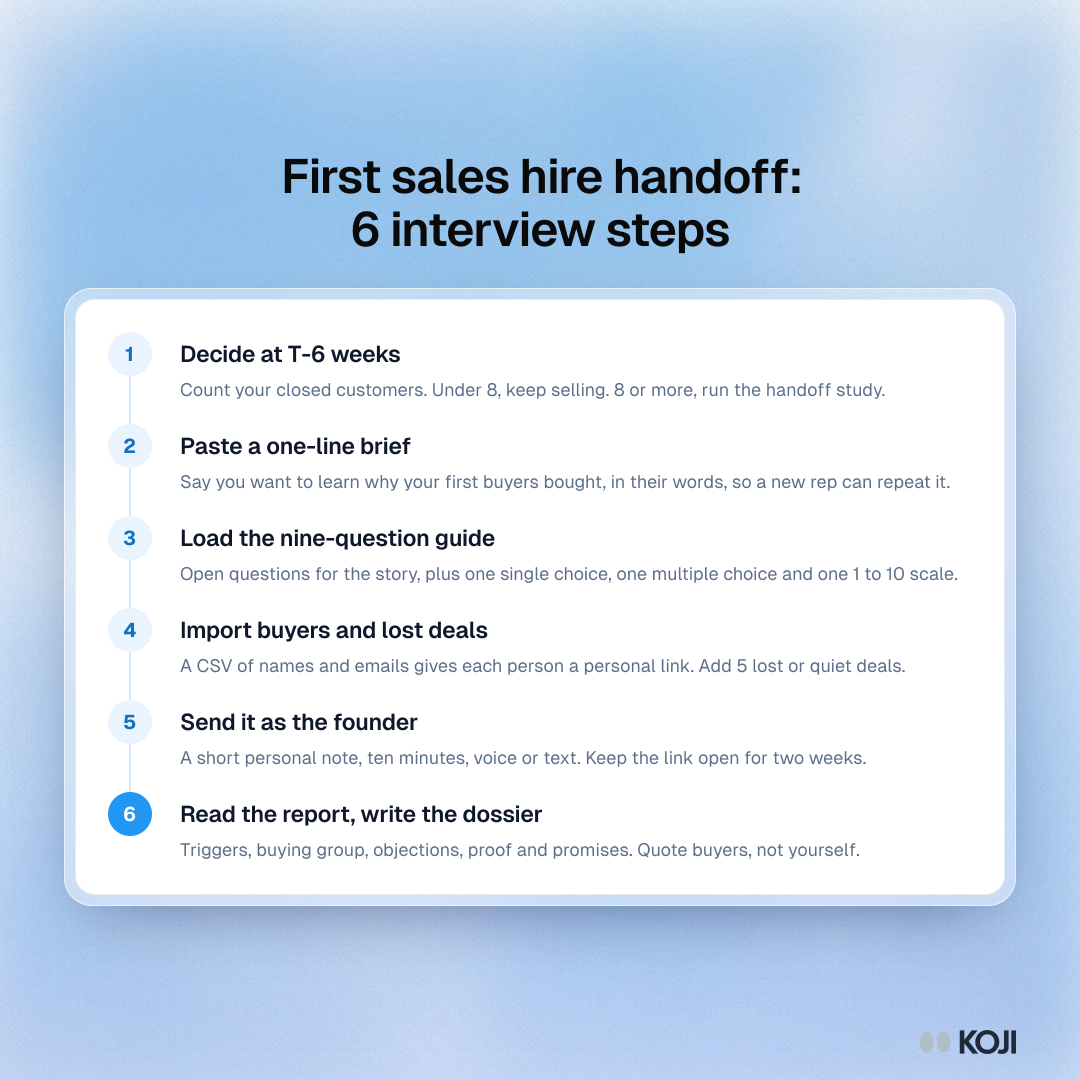
Process of six steps before a first sales hire: decide, paste a brief, load the guide, import buyers, send the invitation, write the dossier.

Process

First sales hire handoff: 6 interview steps
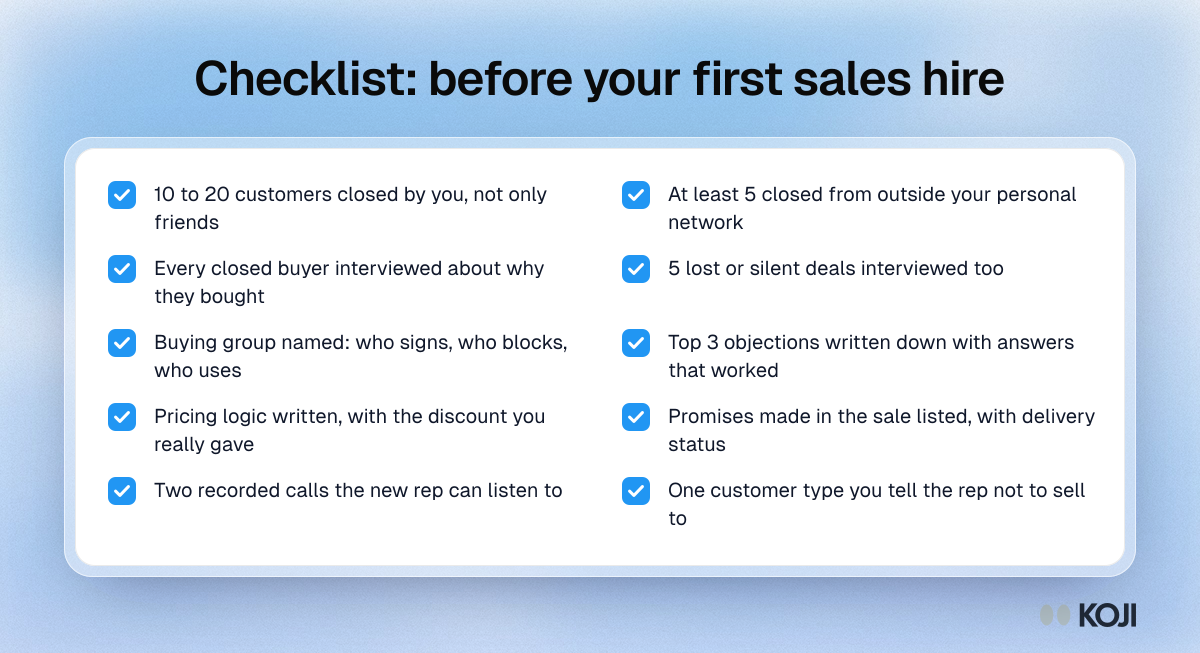
Checklist of ten things to finish before a founder hires a first salesperson, from buyer interviews to written objections and promises.

Checklist

Checklist: before your first sales hire
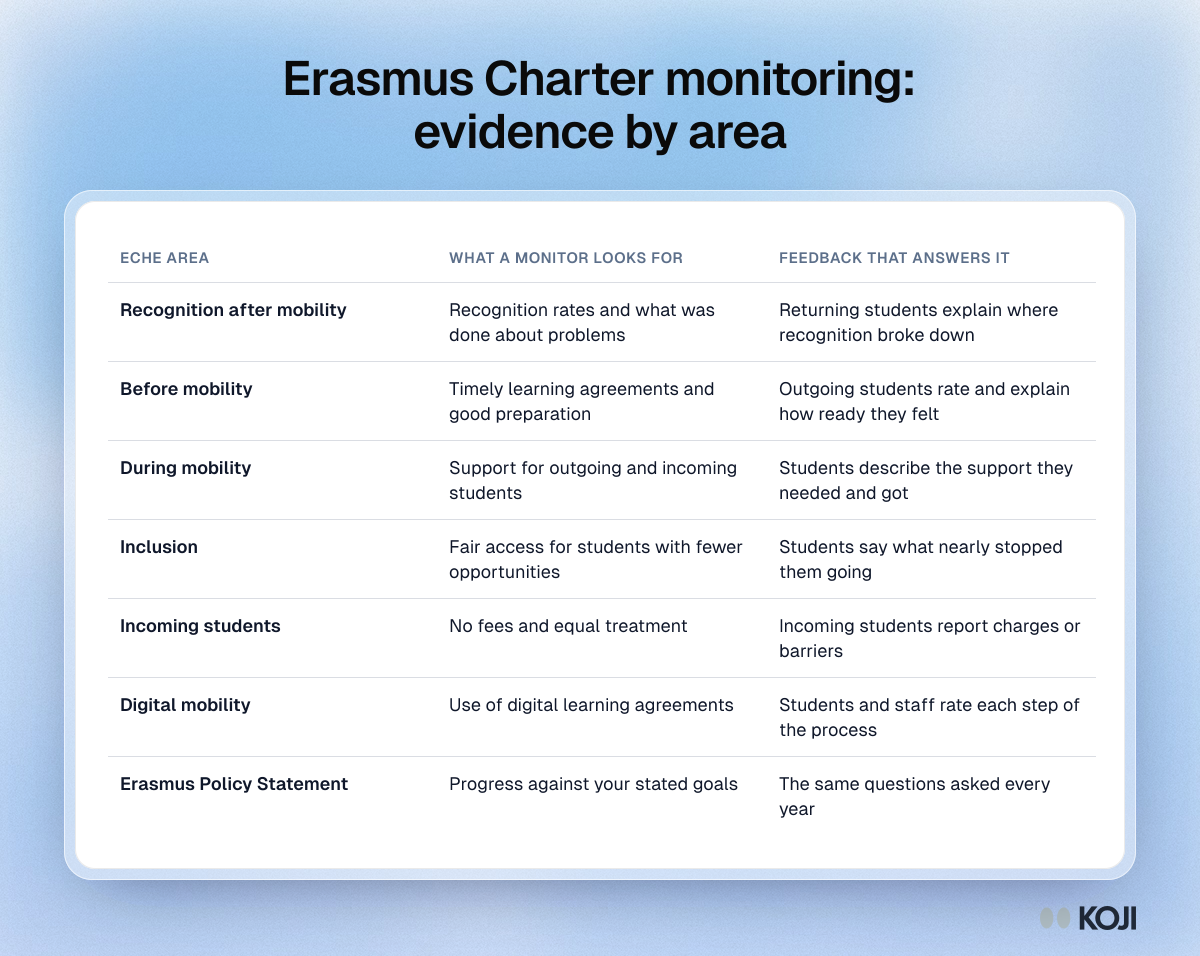
Table mapping seven Erasmus Charter areas to the evidence a National Agency monitor will look for and the student feedback that produces it.

Reference table

Erasmus Charter monitoring: evidence by area
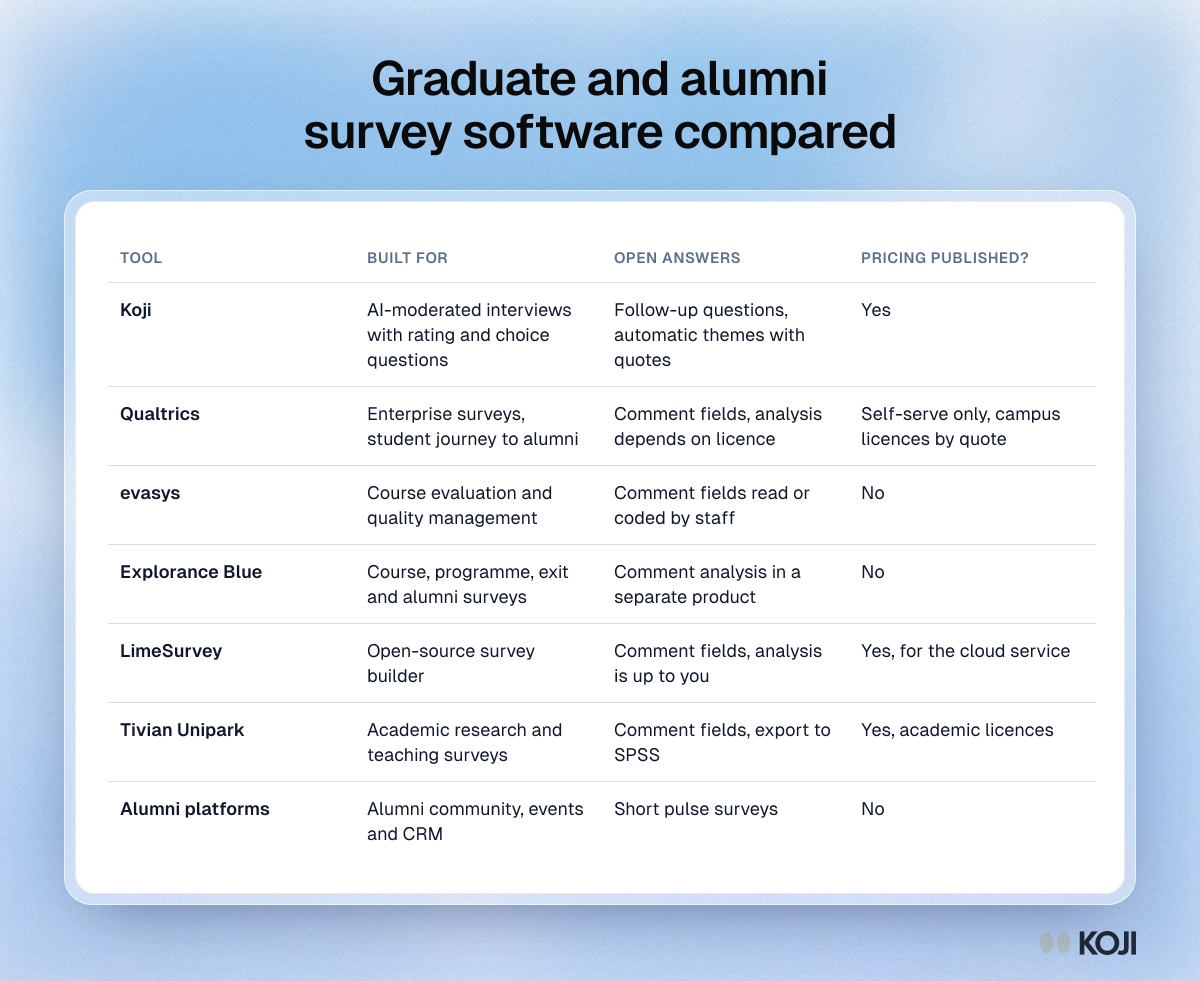
Table comparing seven graduate and alumni survey tools by what they are built for, how they handle open answers and whether pricing is published.

Reference table

Graduate and alumni survey software compared
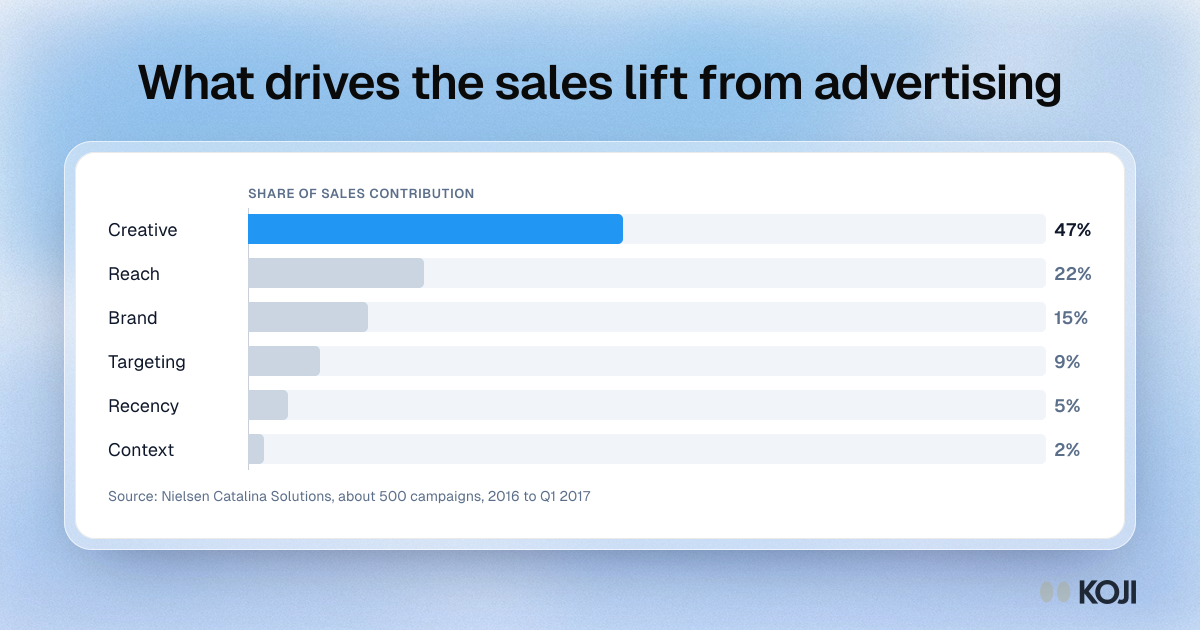
Bar chart of ad sales contribution by factor across about 500 campaigns: creative 47%, reach 22%, brand 15%, targeting 9%, recency 5%, context 2%.

Bar chart

What drives the sales lift from advertising
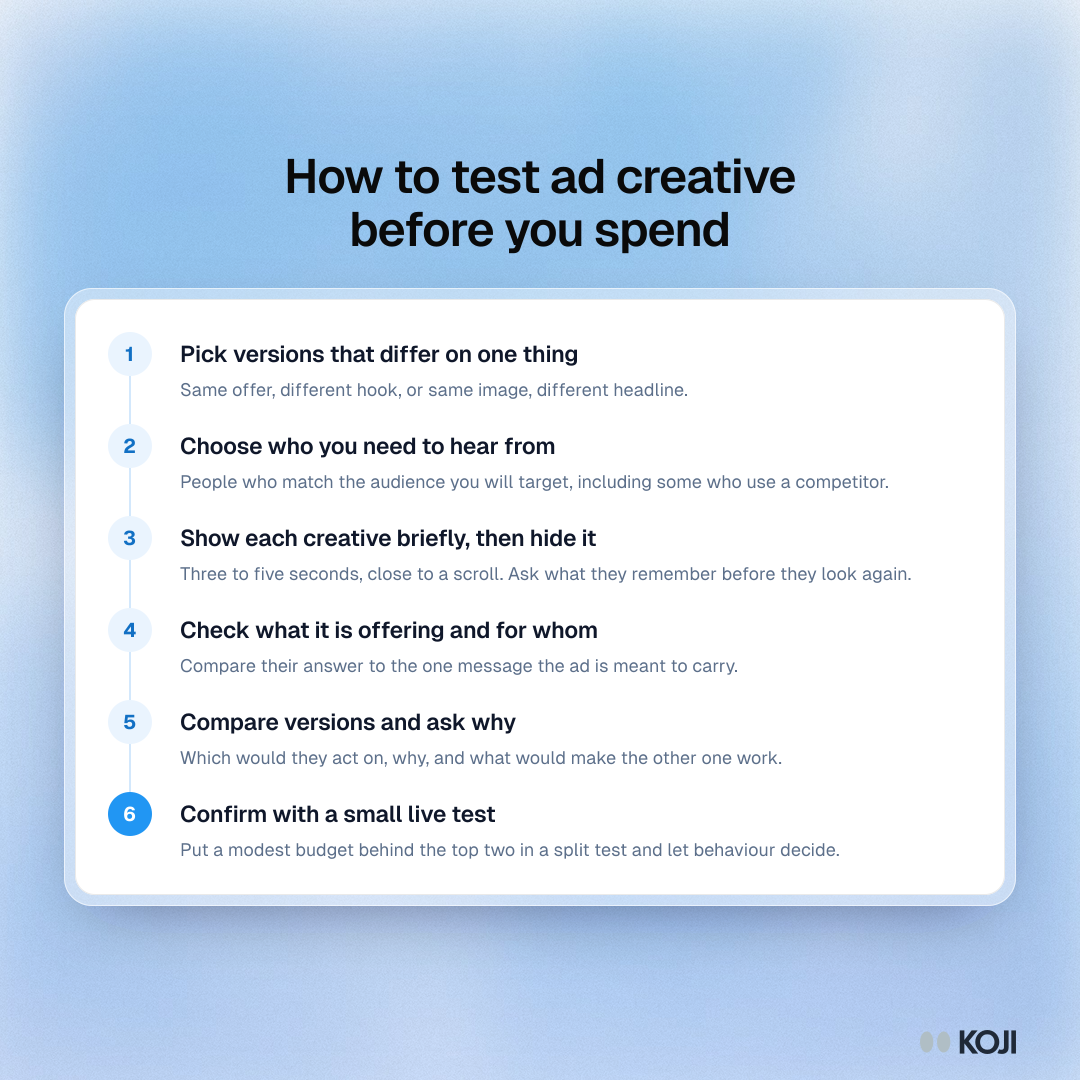
Process of six steps to test ad creative before you spend: pick versions, choose people, show briefly, check the message, compare, confirm live.

Process

How to test ad creative before you spend
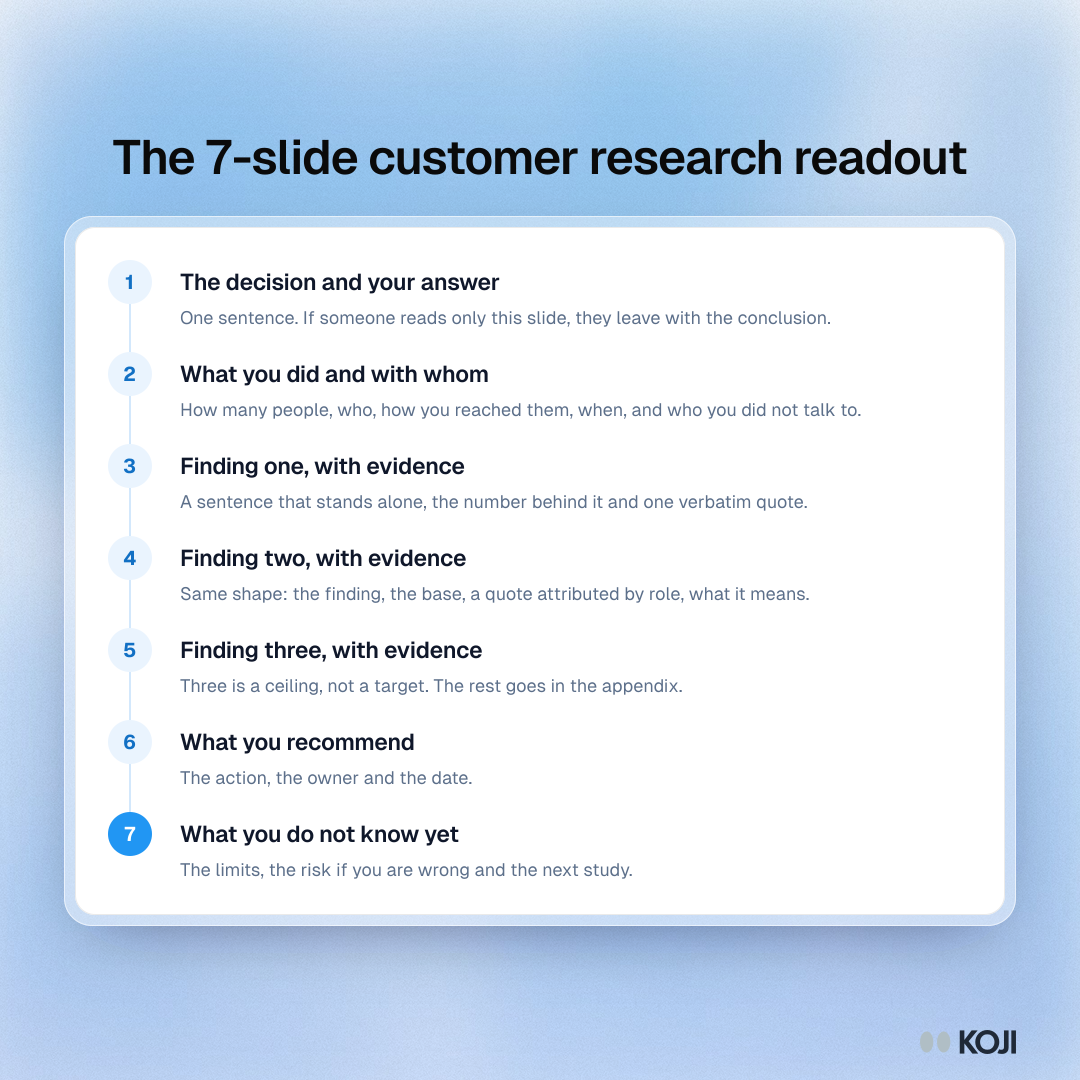
Process showing the seven slides of a customer research readout, from the decision and answer through findings and recommendation to what you do not know yet.

Process

The 7-slide customer research readout
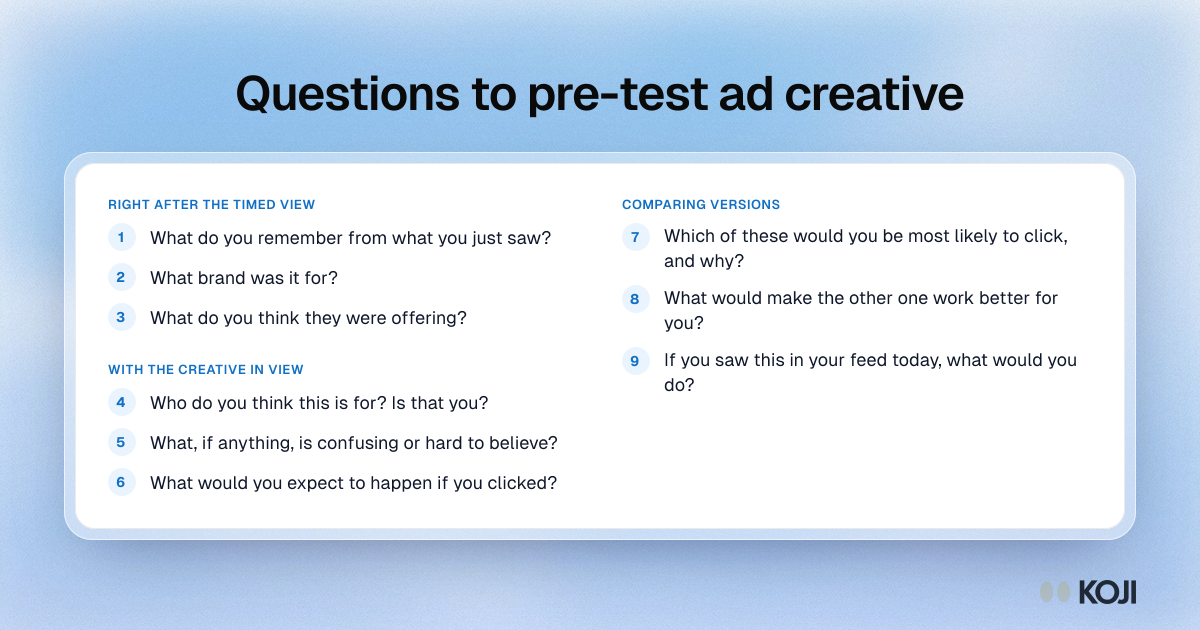
Question bank for pre-testing ad creative, with questions to ask after a timed view, with the creative in view, and when comparing versions.

Question bank

Questions to pre-test ad creative
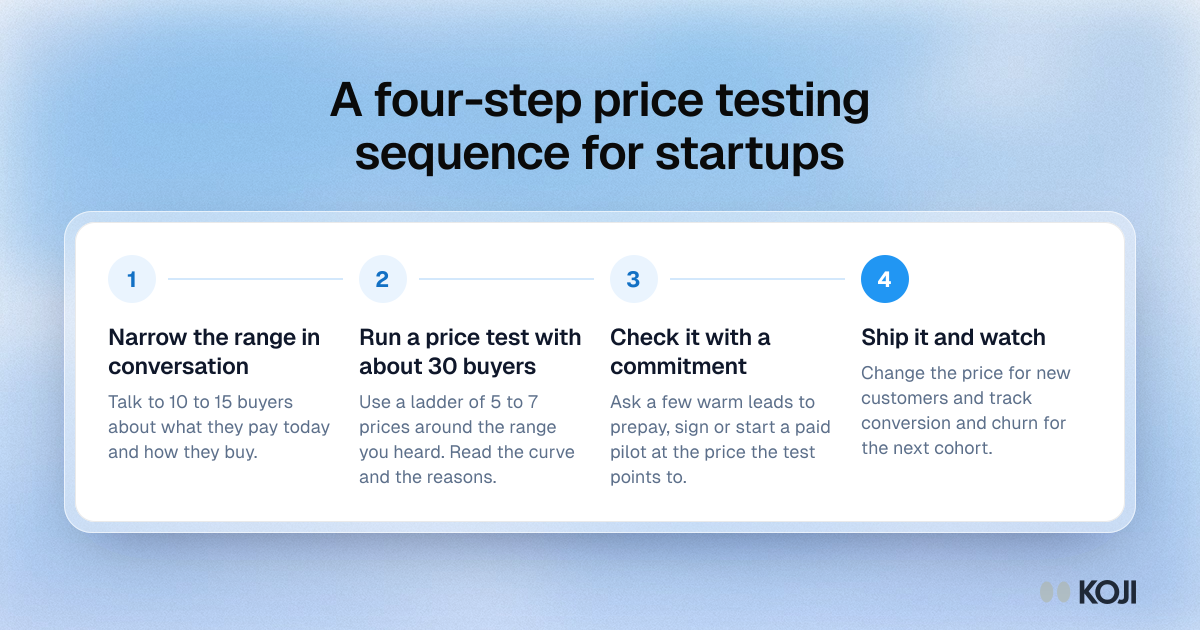
Process showing four steps for startup price testing: narrow the range in conversation, run a price test, check with a commitment, then ship and watch.

Process

A four-step price testing sequence for startups
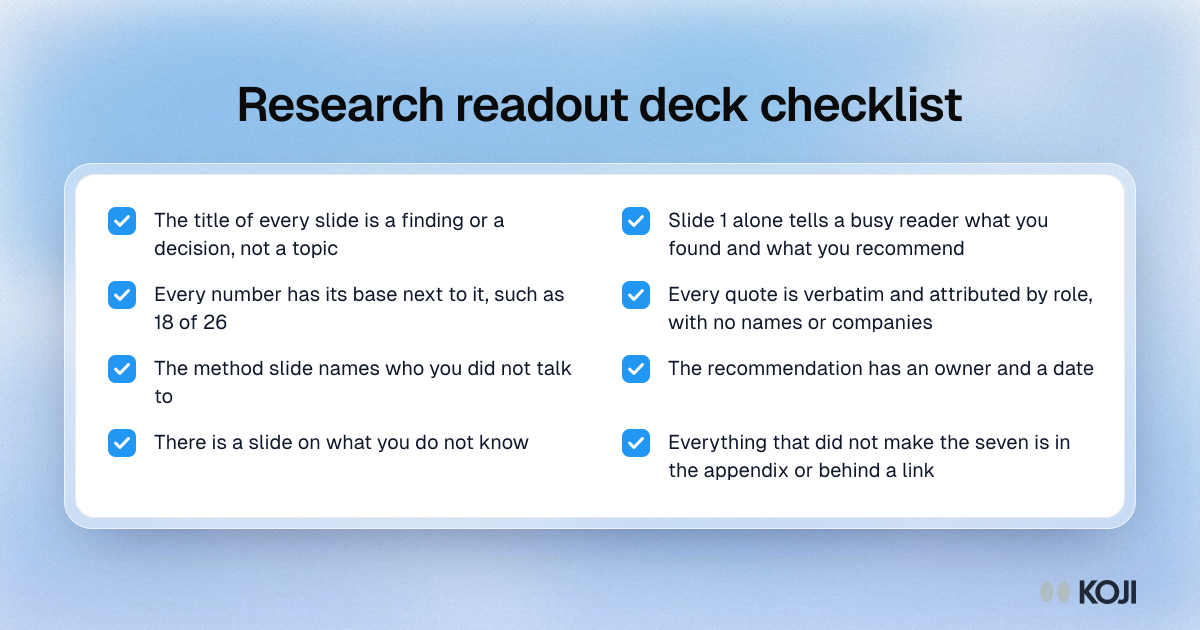
Checklist of eight checks before sending a customer research readout deck, from finding-led slide titles to an owner and date on the recommendation.

Checklist

Research readout deck checklist
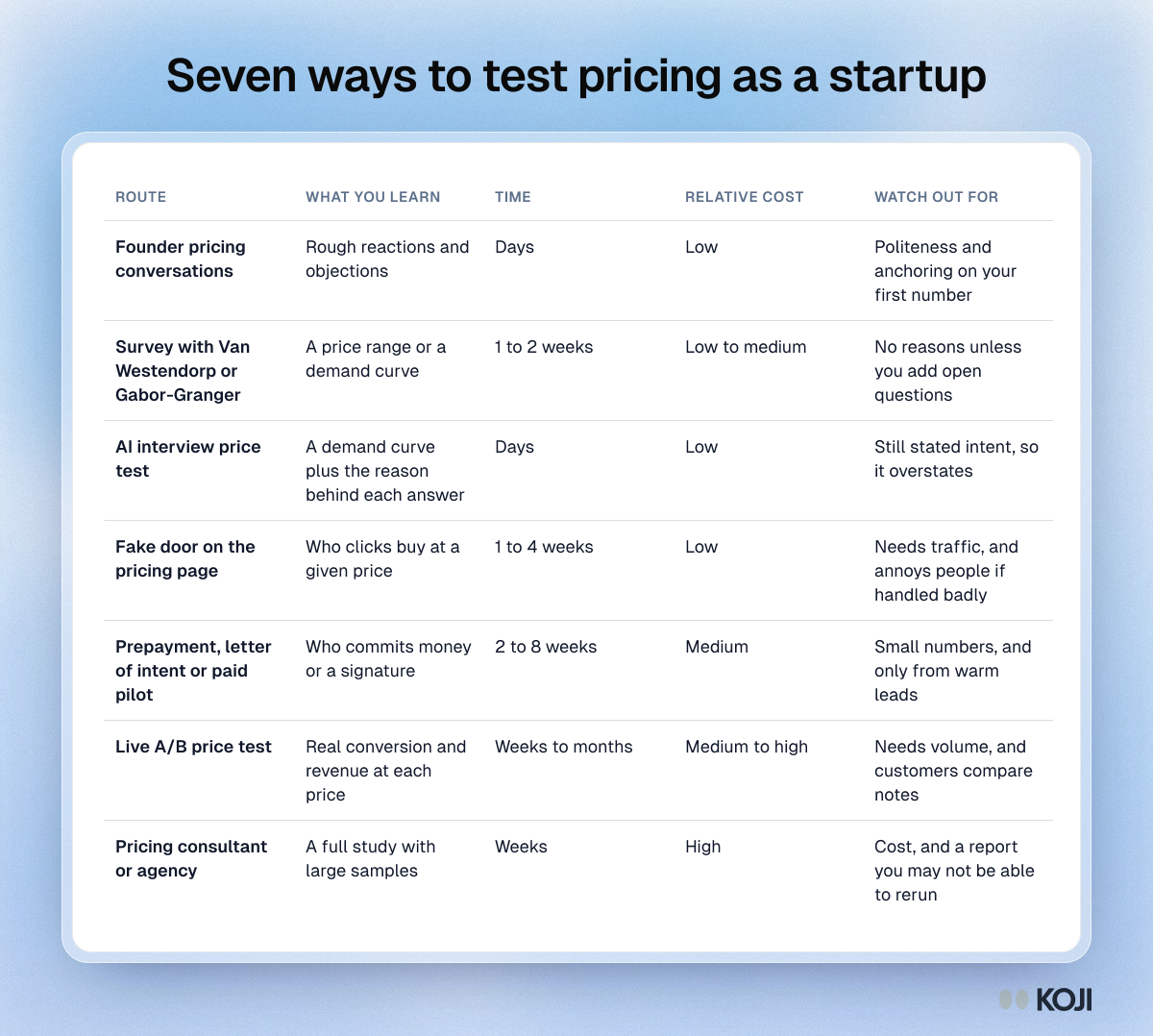
Table comparing seven ways a startup can test pricing, from founder conversations to live A/B price tests, by what you learn, time, cost and risk.

Reference table

Seven ways to test pricing as a startup
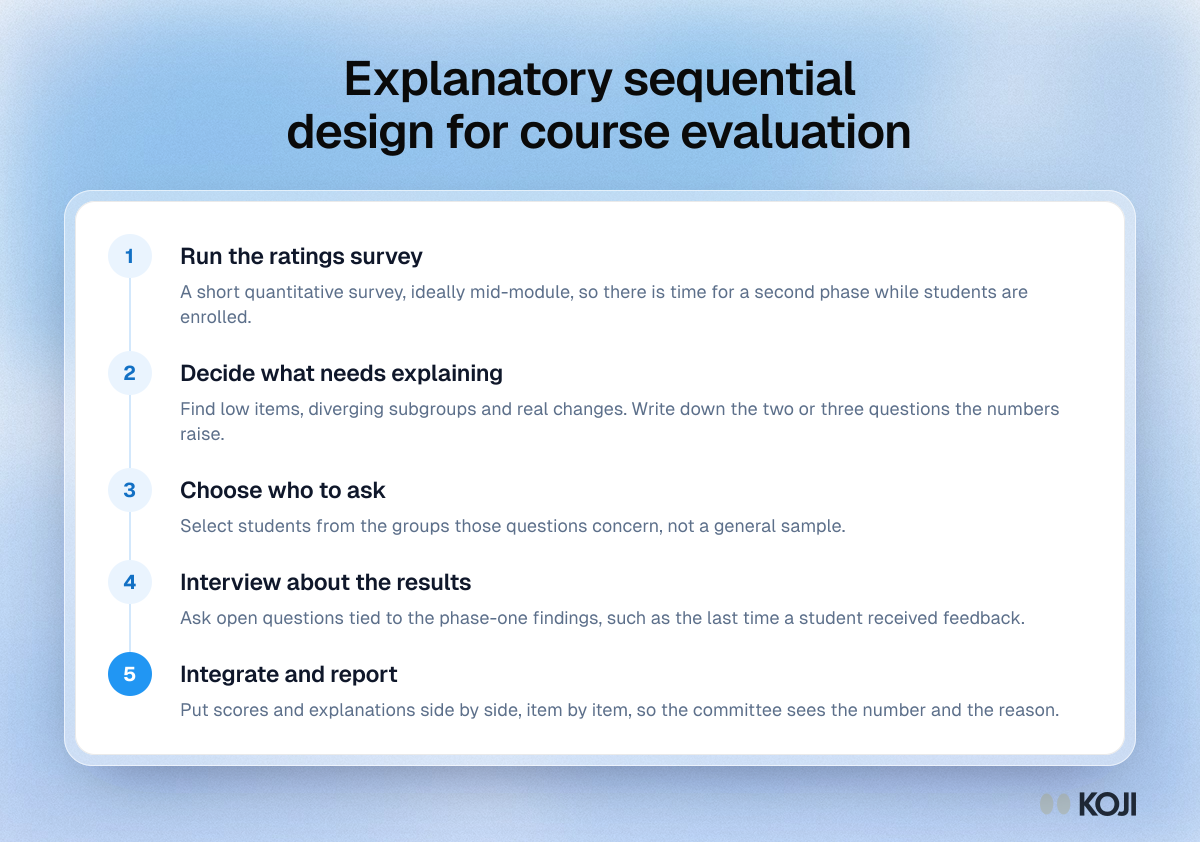
Process diagram with five steps for an explanatory sequential course evaluation, from the ratings survey to an integrated committee report.

Process

Explanatory sequential design for course evaluation
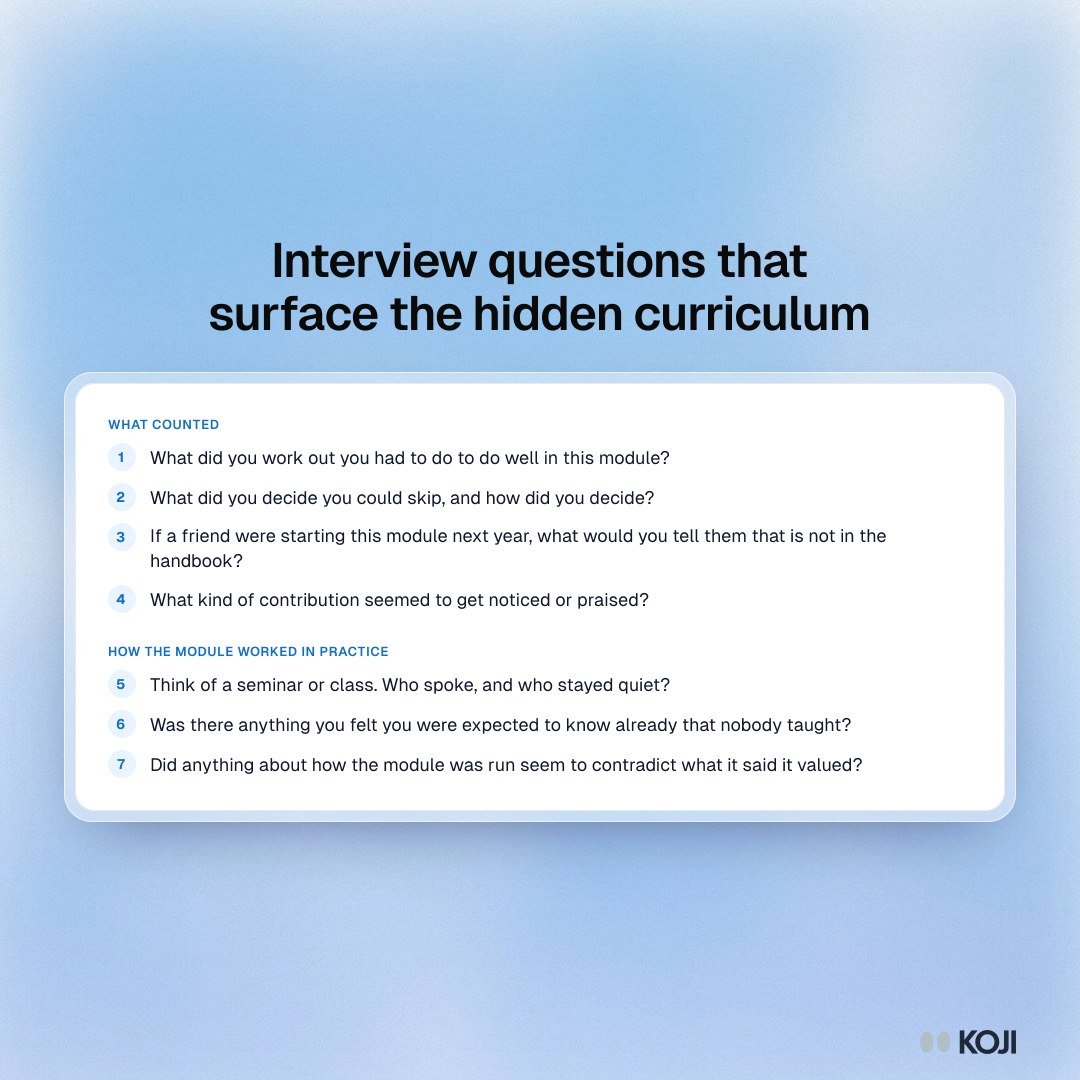
Question bank of seven open interview questions that surface a module's hidden curriculum: what counted and how the module worked in practice.

Question bank

Interview questions that surface the hidden curriculum
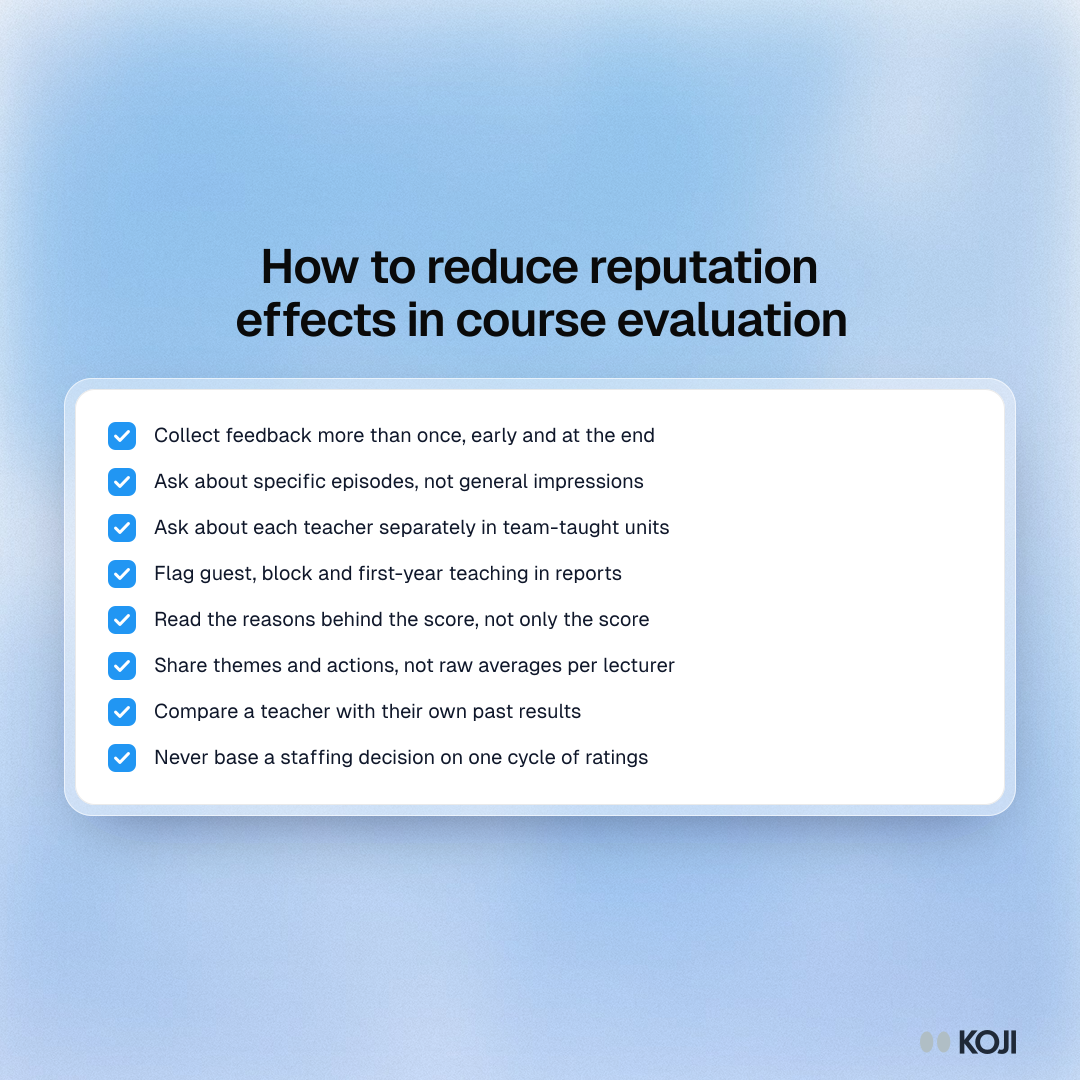
Checklist of eight steps to reduce how much a lecturer's prior reputation shapes course evaluation results, from mid-term checks to careful publishing.

Checklist

How to reduce reputation effects in course evaluation
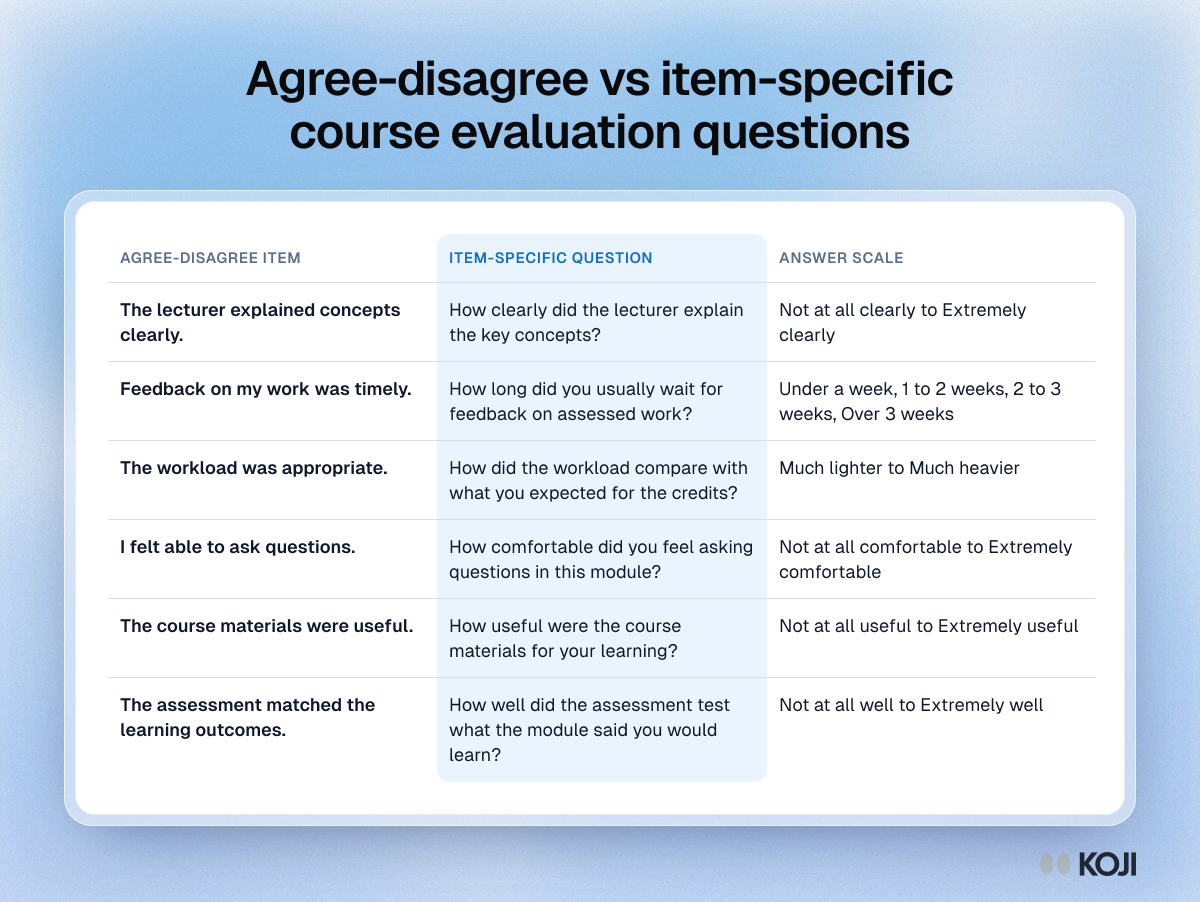
Table pairing six common agree-disagree course evaluation statements with item-specific rewrites and answer scales, from lecture clarity to assessment fit.

Reference table

Agree-disagree vs item-specific course evaluation questions
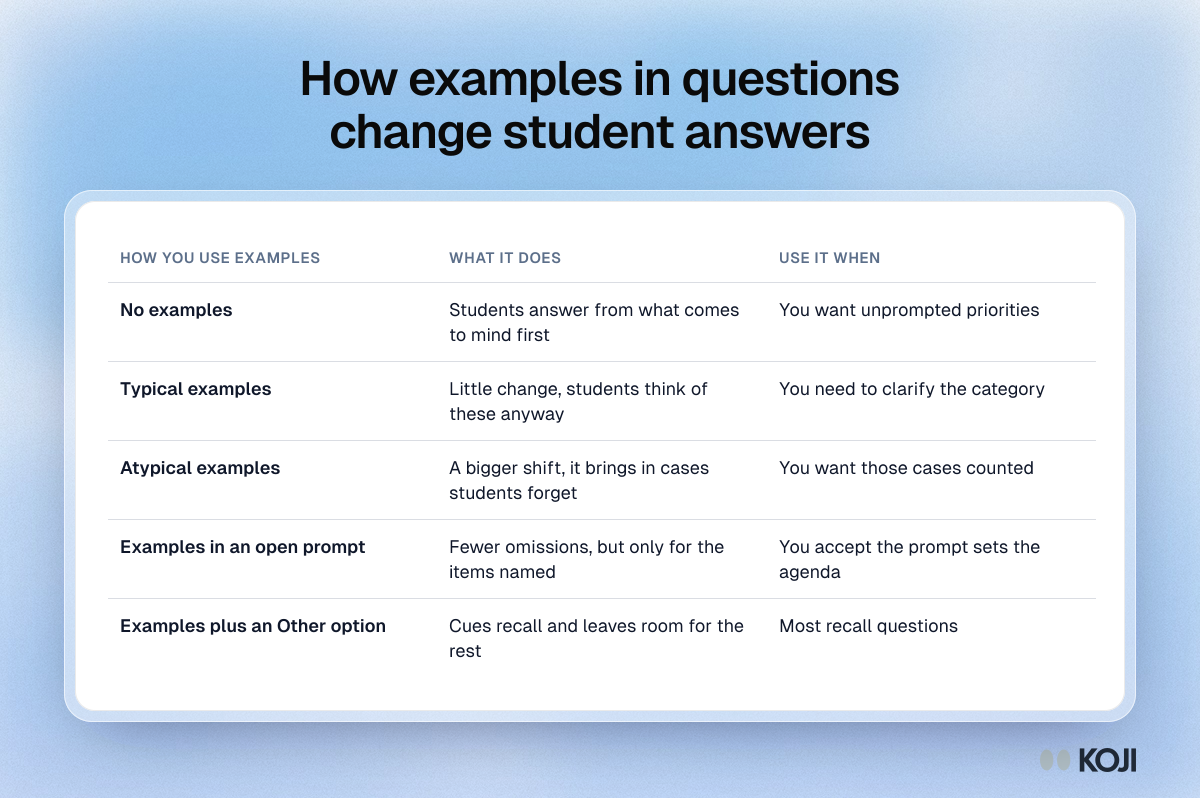
Table showing what each way of using examples in a course evaluation question does to student answers, from no examples to atypical examples.

Reference table

How examples in questions change student answers
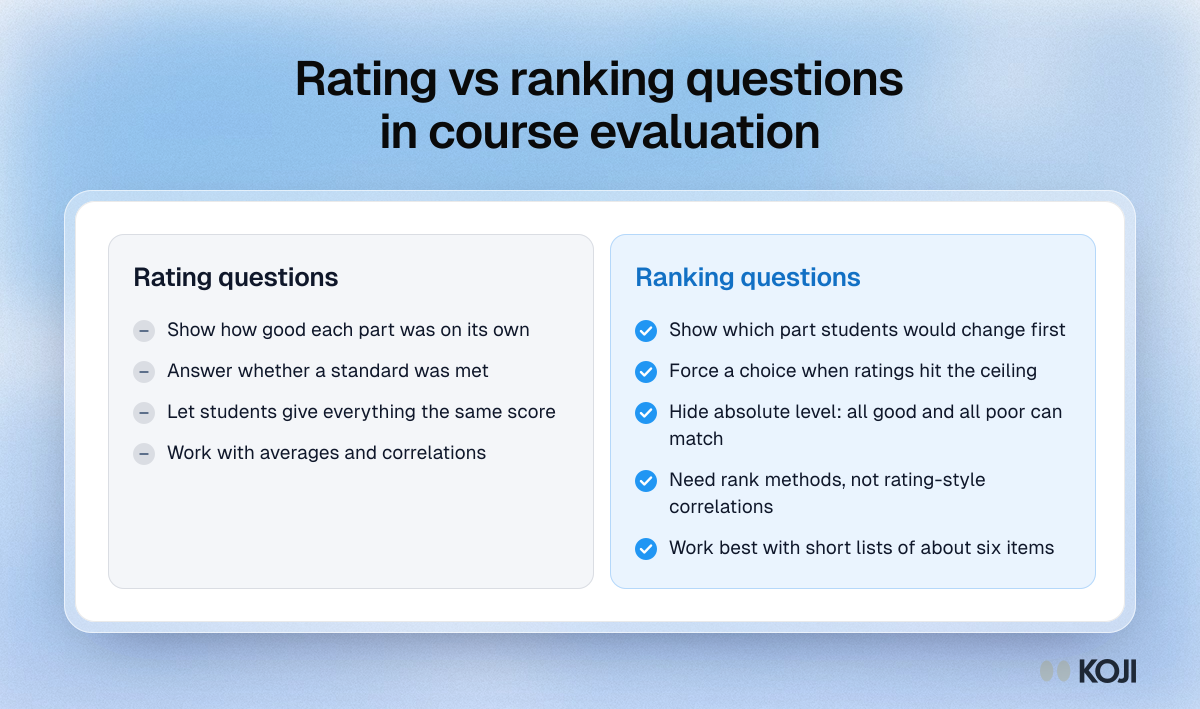
Comparison of rating and ranking questions in course evaluation, listing what each format shows about a course and what each one hides.

Comparison

Rating vs ranking questions in course evaluation
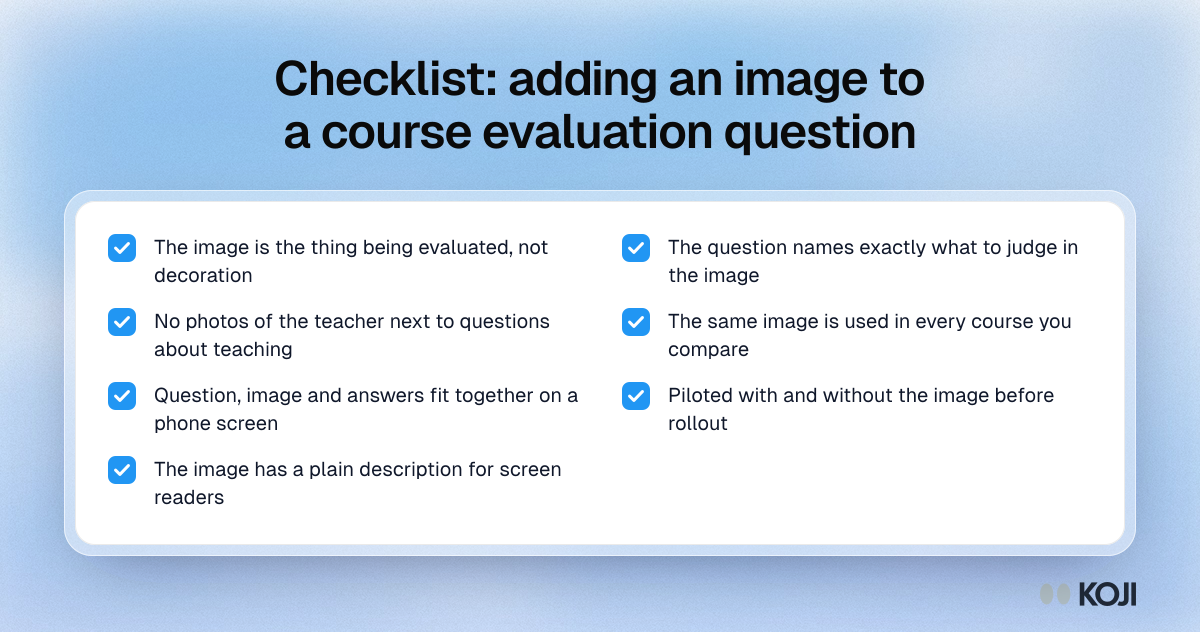
Checklist of seven checks before adding an image to a course evaluation question, from purpose and wording to placement, consistency and piloting.

Checklist

Checklist: adding an image to a course evaluation question
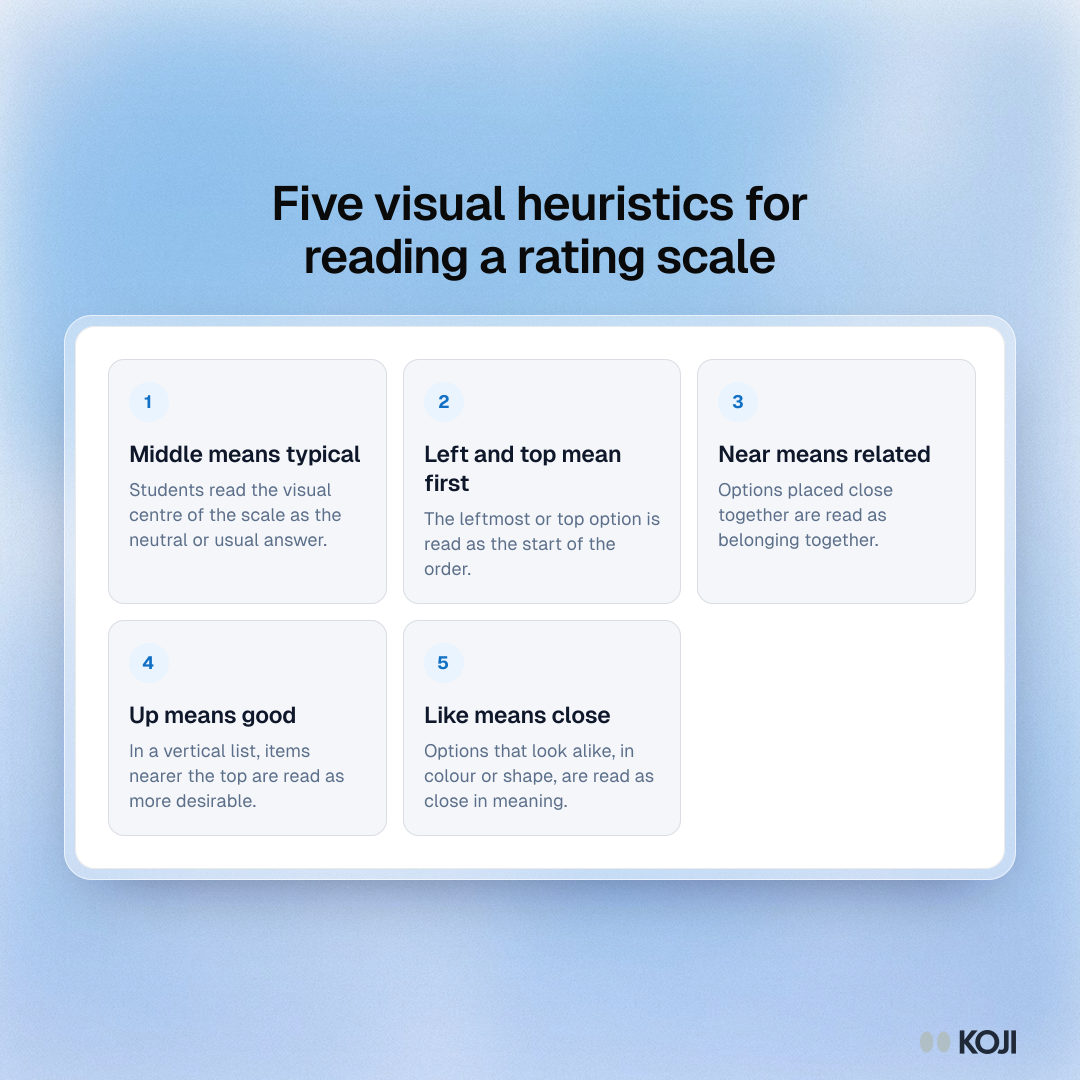
Framework of five visual heuristics for reading a rating scale: middle means typical, left and top first, near is related, up is good, like is close.

Framework

Five visual heuristics for reading a rating scale
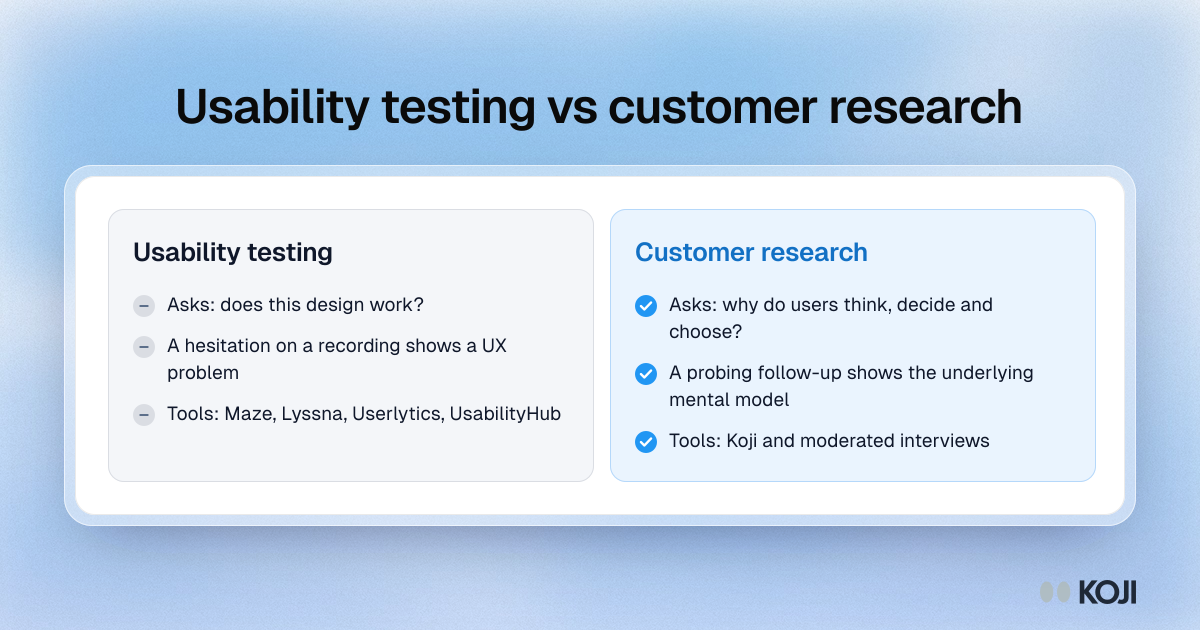
Comparison of usability testing, which asks if a design works, and customer research, which asks why people decide, with the tools for each.

Comparison

Usability testing vs customer research
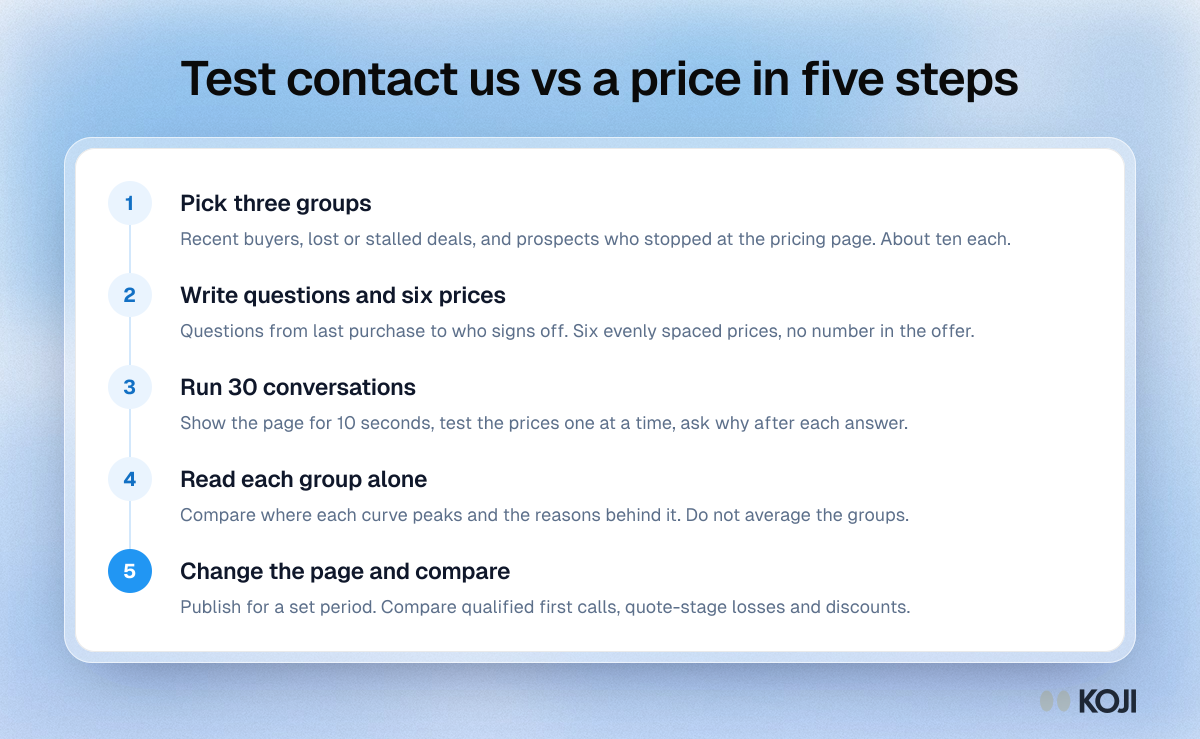
Process in five steps for testing contact us against a published price, from picking three buyer groups to changing the page and comparing.

Process

Test contact us vs a price in five steps
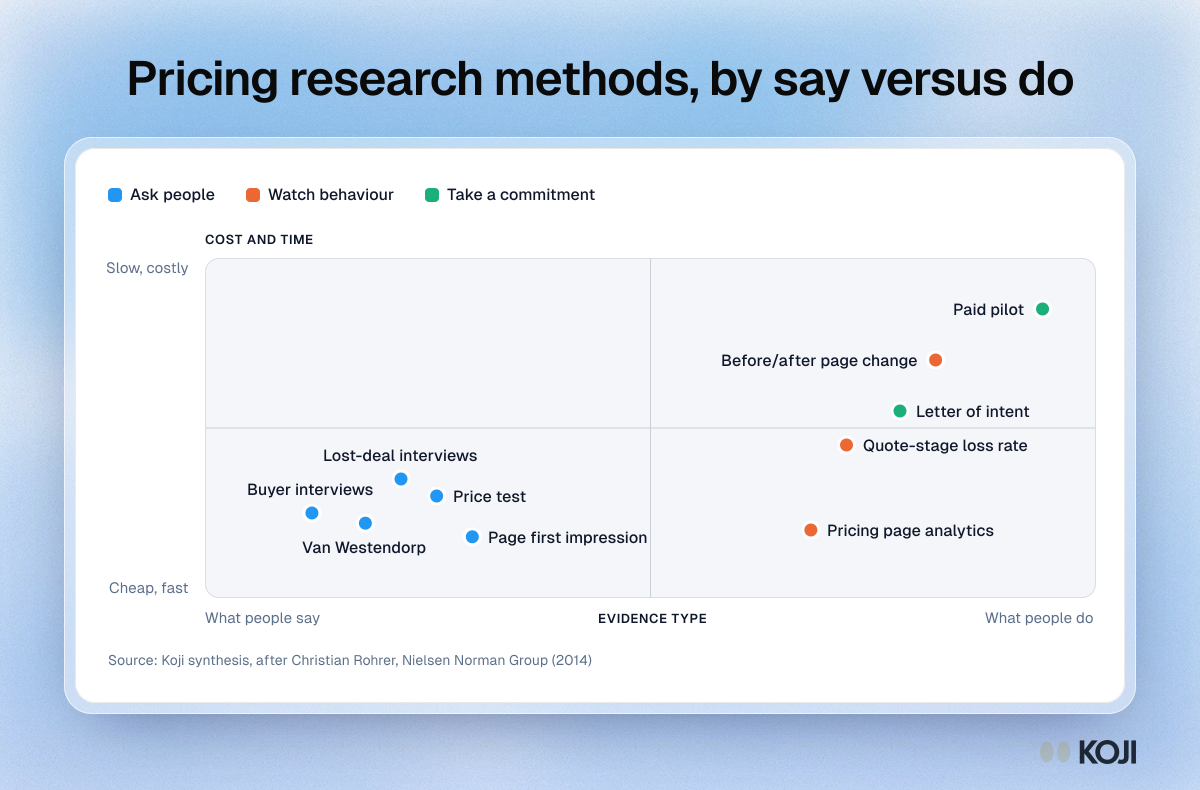
Method map placing ten pricing research methods by what people say versus what they do, and by cost and time, grouped as ask, watch or commit.

Scatter plot

Pricing research methods, by say versus do
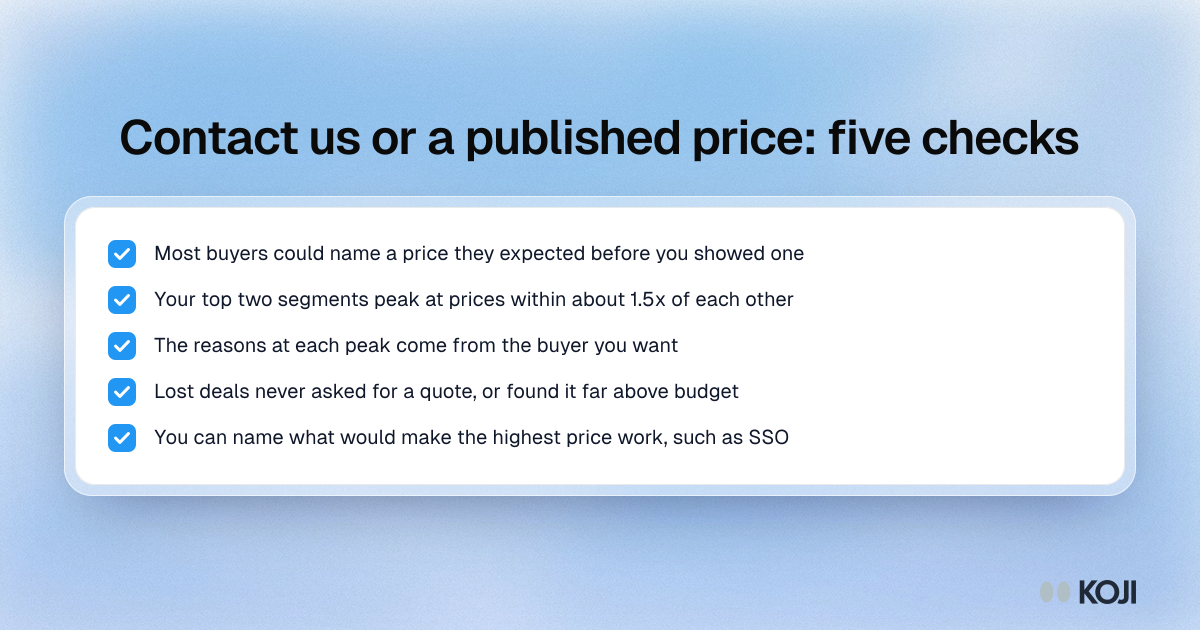
Checklist of five rules for deciding between contact us and a published price after a price test, from buyer expectations to what justifies the top price.

Checklist

Contact us or a published price: five checks
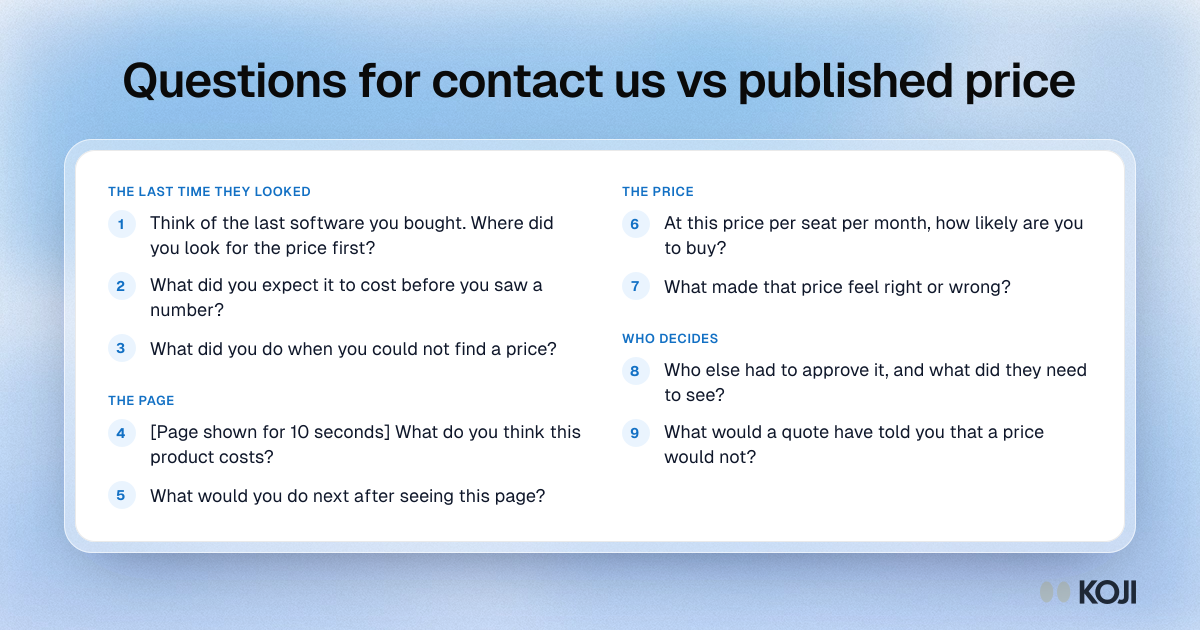
Question bank of nine interview questions for deciding between contact us and a published price, in four parts: last look, the page, the price and who decides.

Question bank

Questions for contact us vs published price
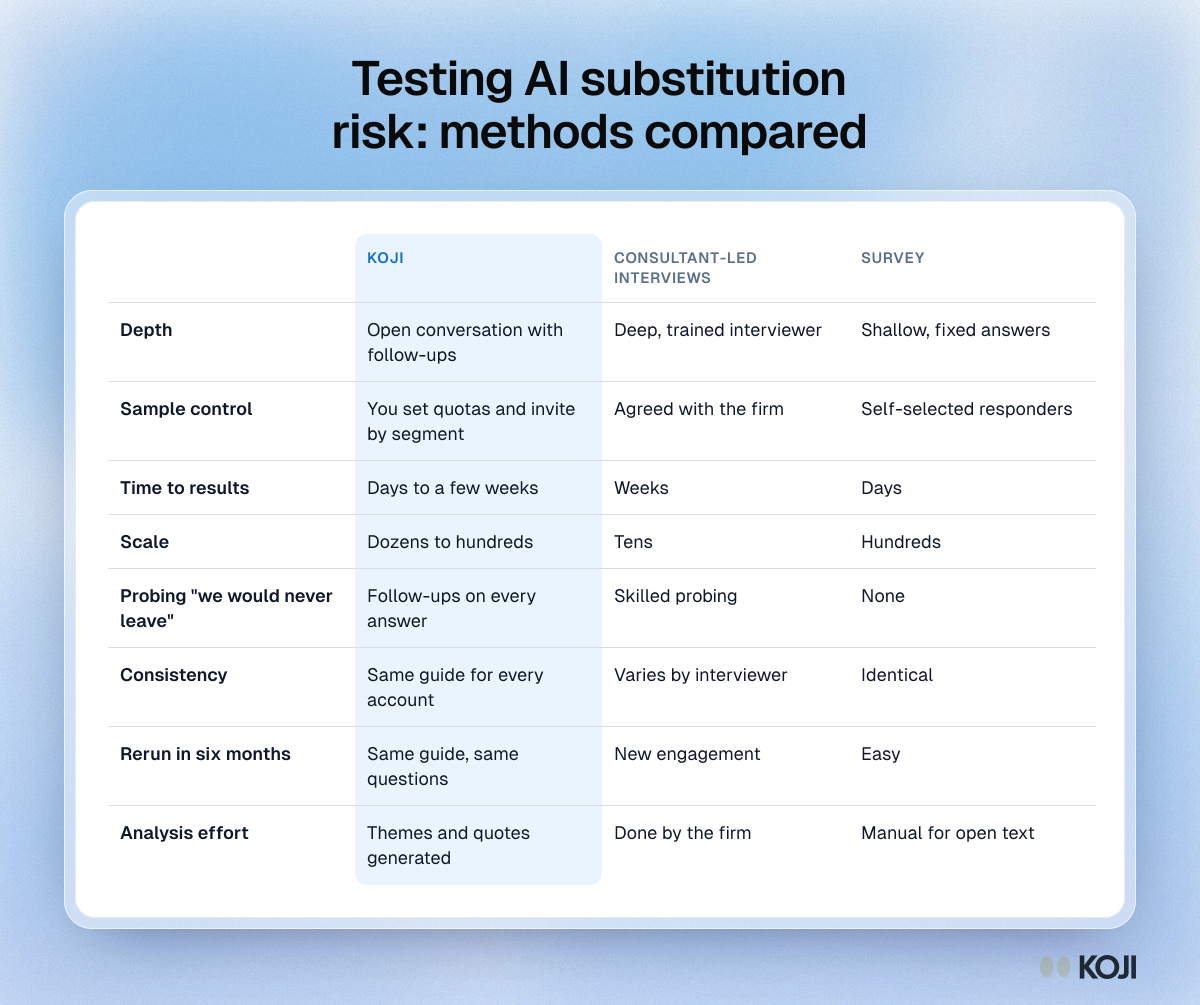
Table comparing Koji, consultant-led interviews and surveys for testing AI substitution risk, on depth, sample control, speed, scale and rerun.

Reference table

Testing AI substitution risk: methods compared
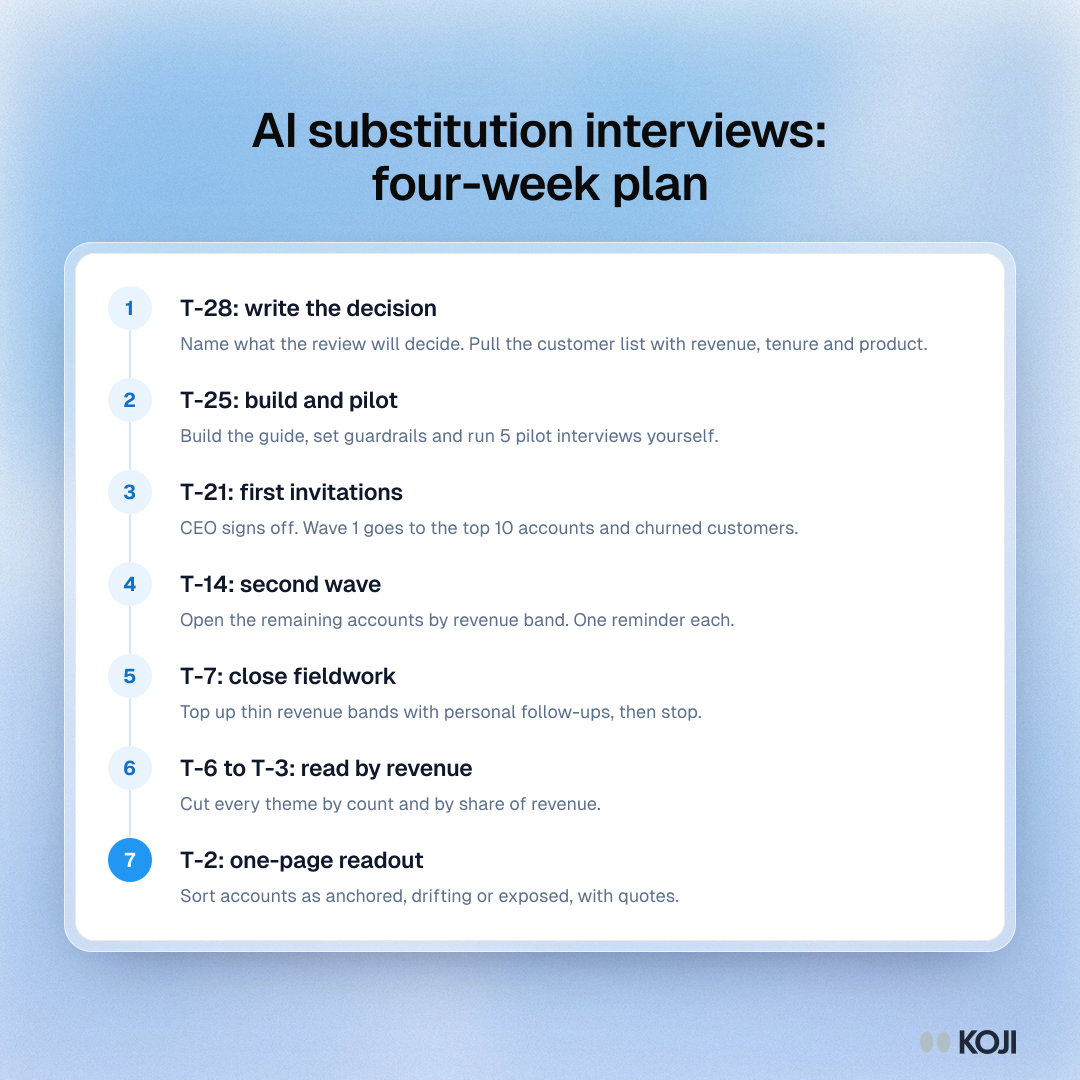
Process showing the four-week plan for AI substitution customer interviews, from the decision at T-28 days to the one-page readout at T-2.

Process

AI substitution interviews: four-week plan
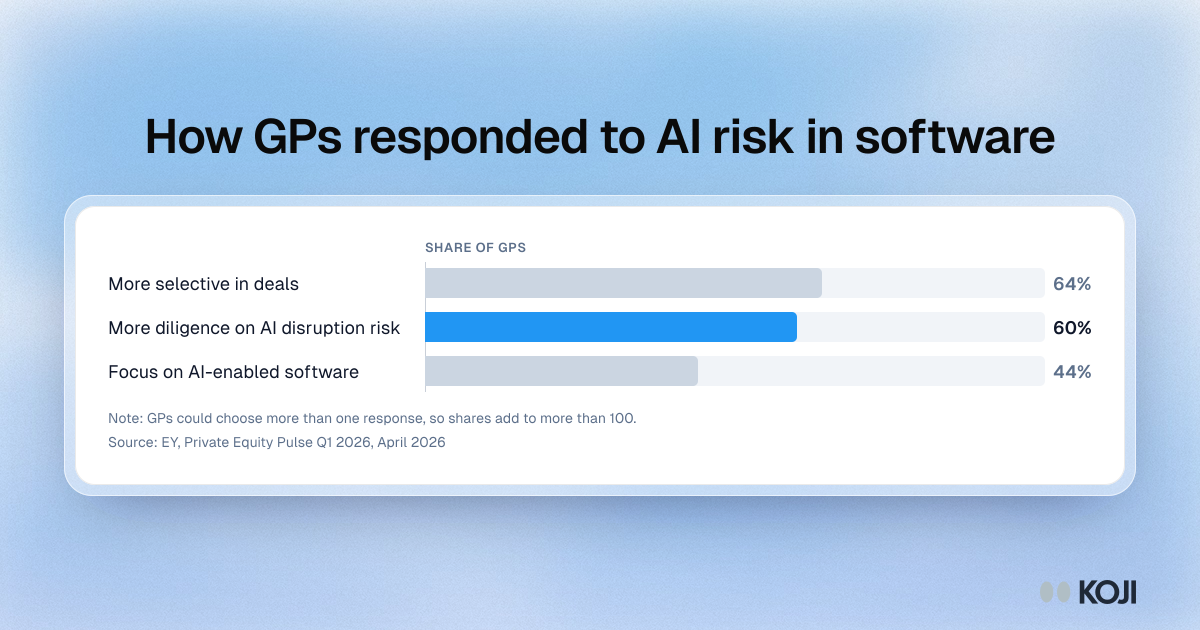
Bar chart of GP responses to AI risk in software: 64% more selective, 60% more diligence on AI disruption risk, 44% focused on AI-enabled software.

Bar chart

How GPs responded to AI risk in software
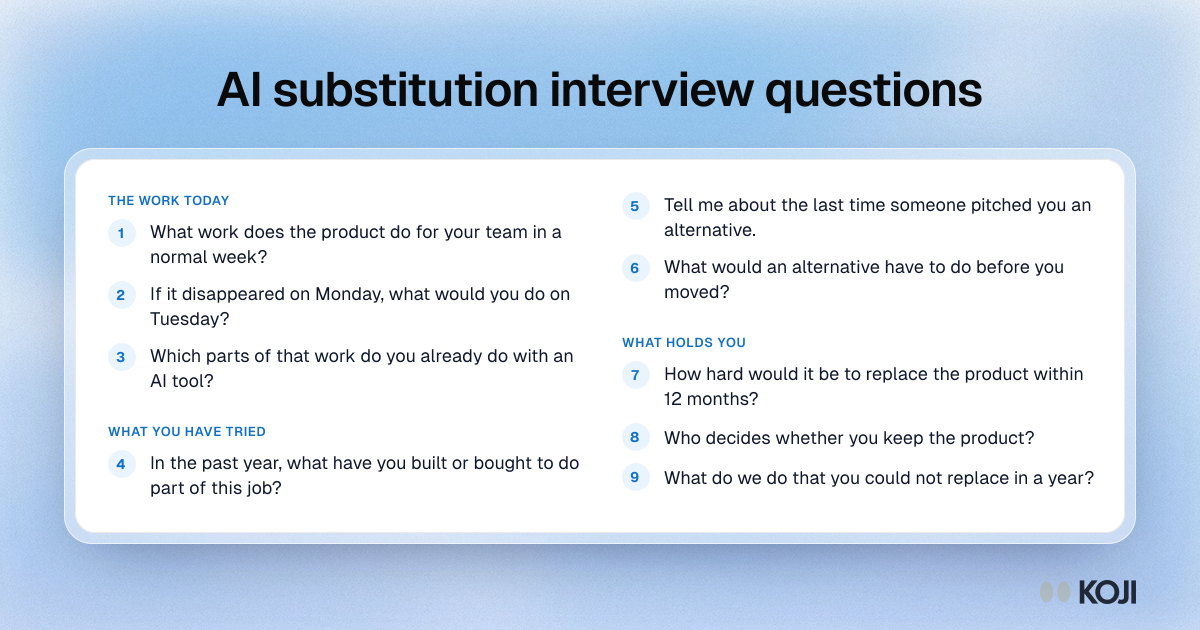
Question bank of nine AI substitution interview questions for portfolio company customers, grouped into the work today, what you have tried and what holds you.

Question bank

AI substitution interview questions
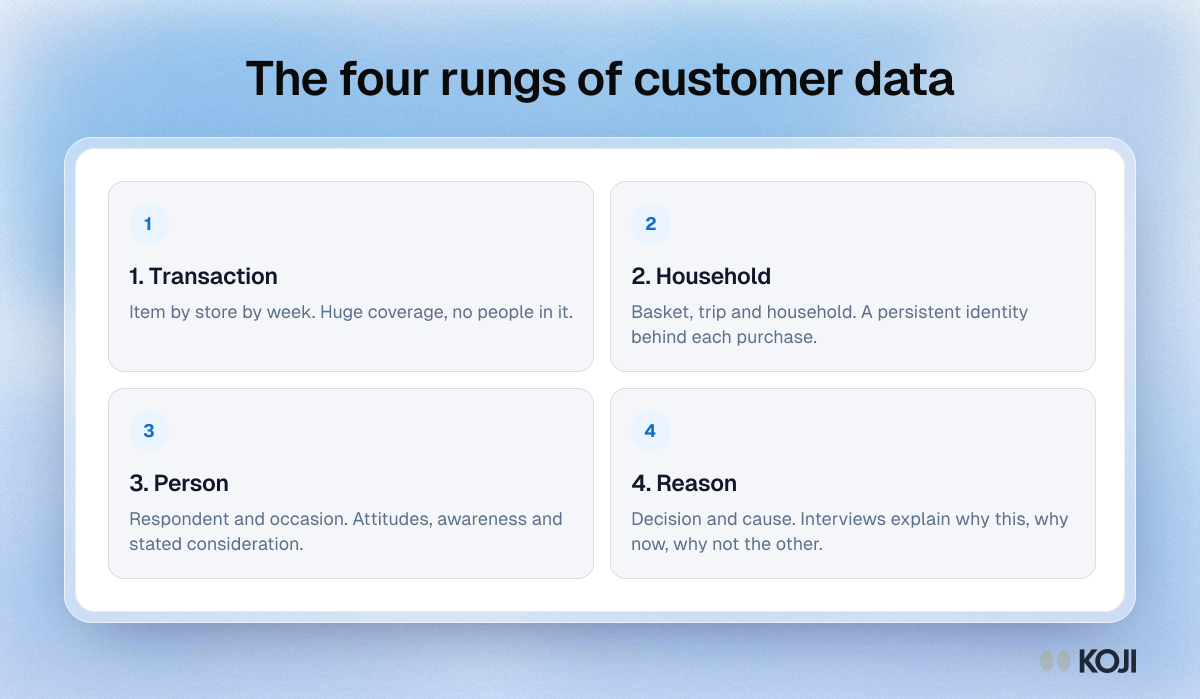
Framework showing the four rungs of customer data: transaction, household, person and reason, from broad retail measurement down to interviews.

Framework

The four rungs of customer data
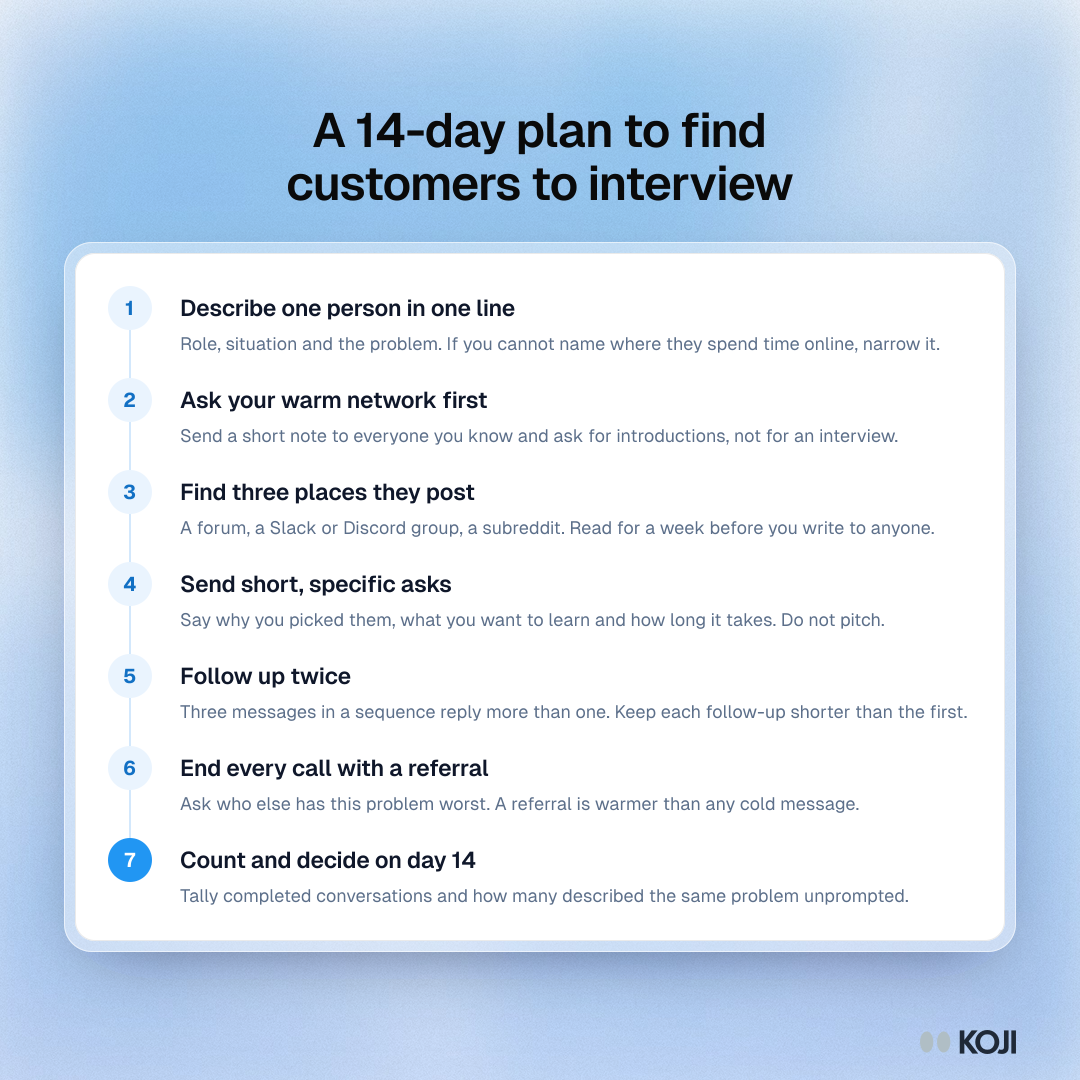
Process of seven steps to find customers to interview in 14 days: describe one person, ask your network, follow up, ask for referrals, then count.

Process

A 14-day plan to find customers to interview
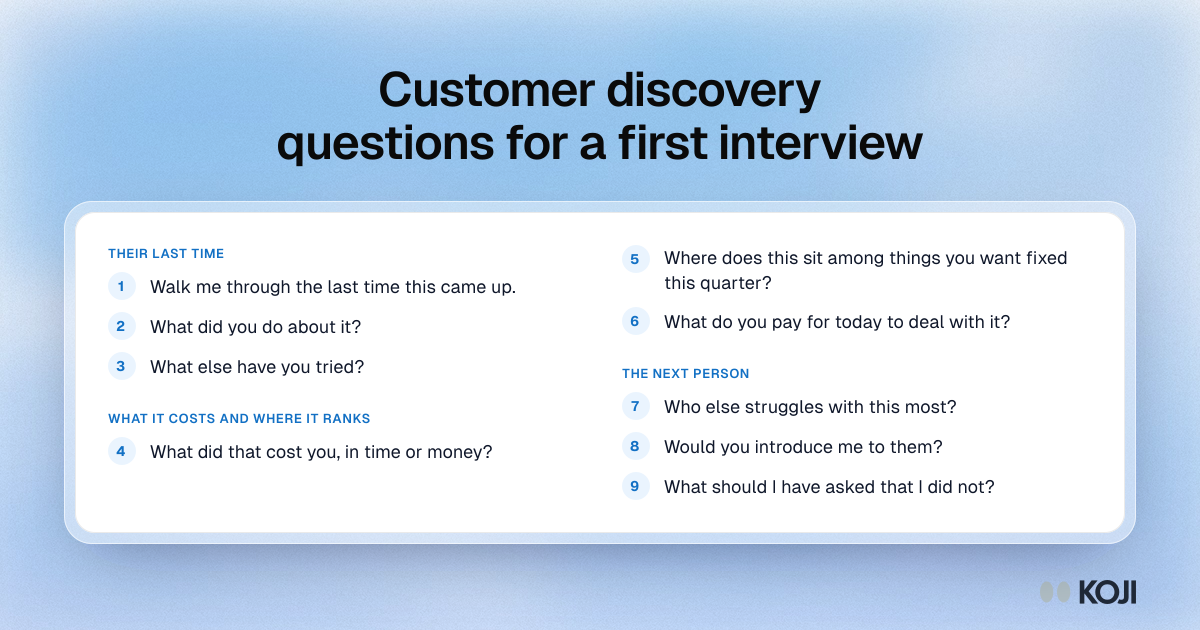
Question bank of nine customer discovery questions in three groups: their last time, what it costs and where it ranks, and who to talk to next.

Question bank

Customer discovery questions for a first interview
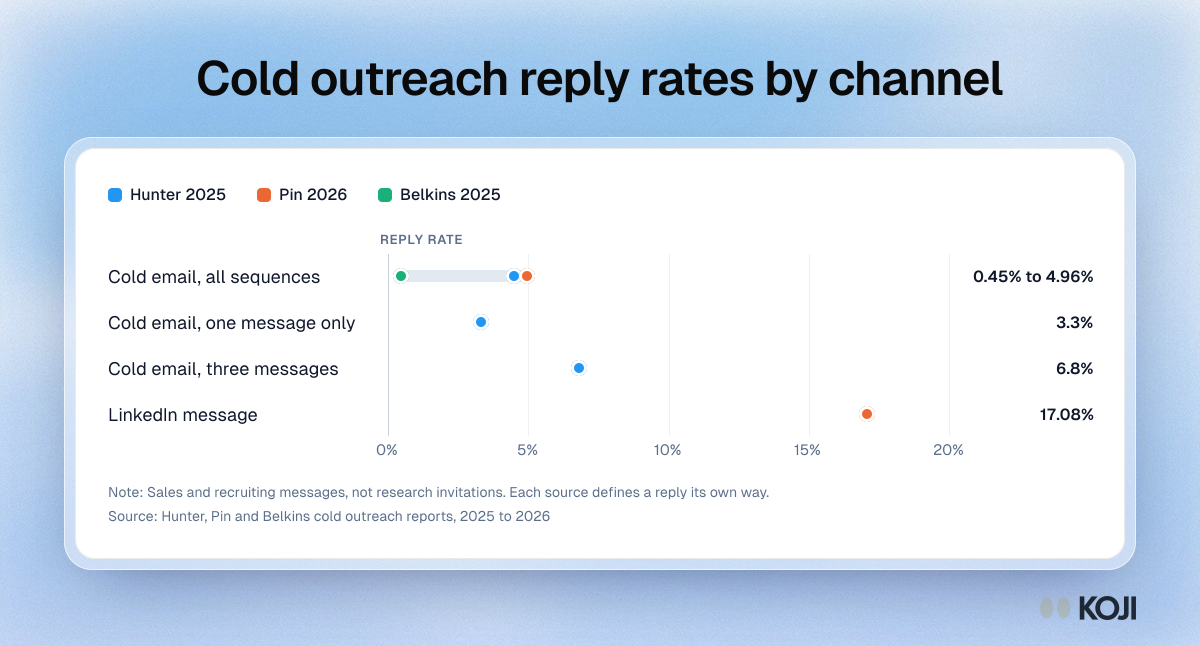
Range chart of cold outreach reply rates: cold email 0.45% to 4.96% across three sources, three-message email 6.8%, LinkedIn messages 17.08%.

Benchmark range

Cold outreach reply rates by channel
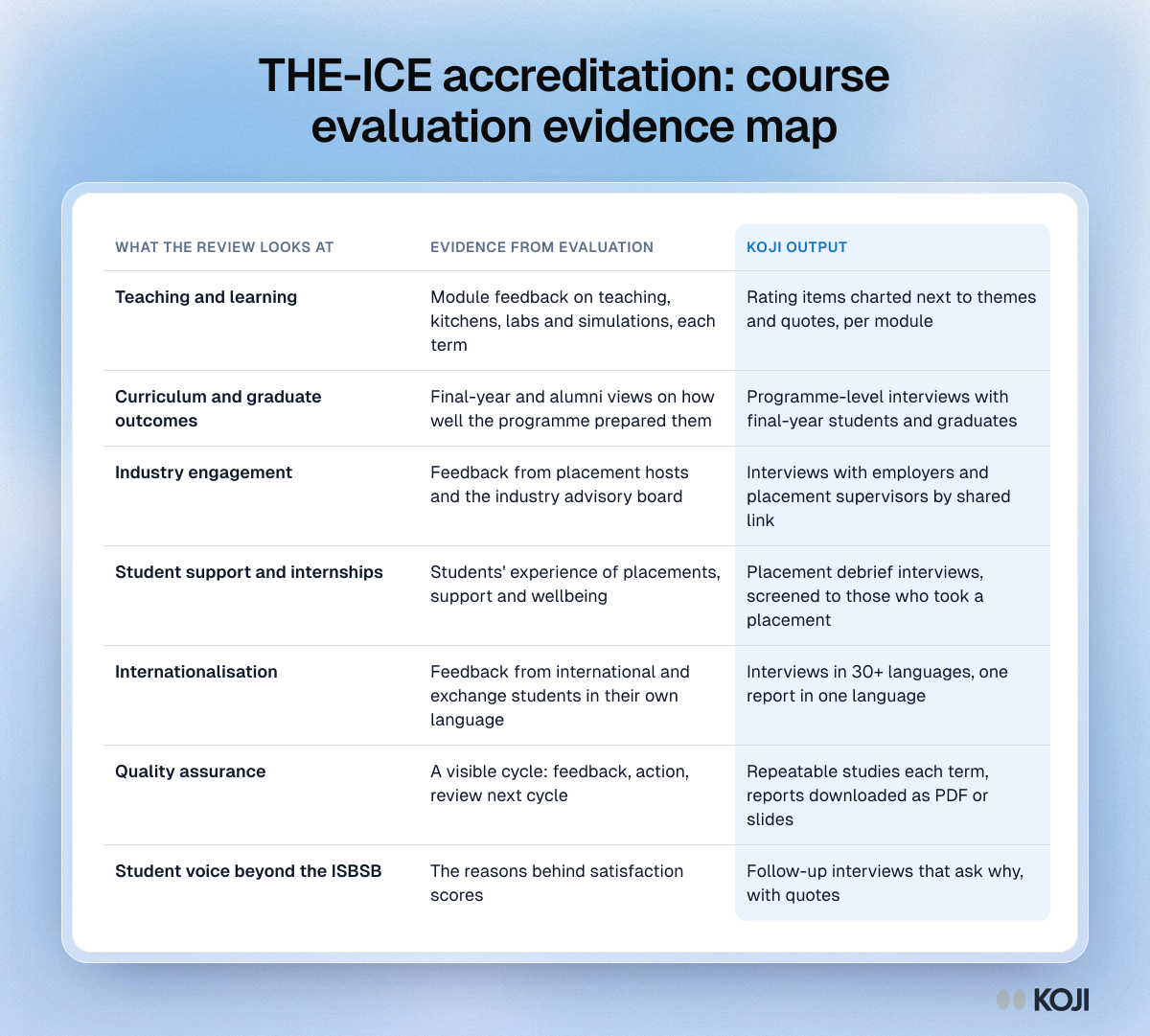
Table mapping each area a THE-ICE accreditation review looks at to course evaluation evidence and the matching Koji output

Reference table

THE-ICE accreditation: course evaluation evidence map
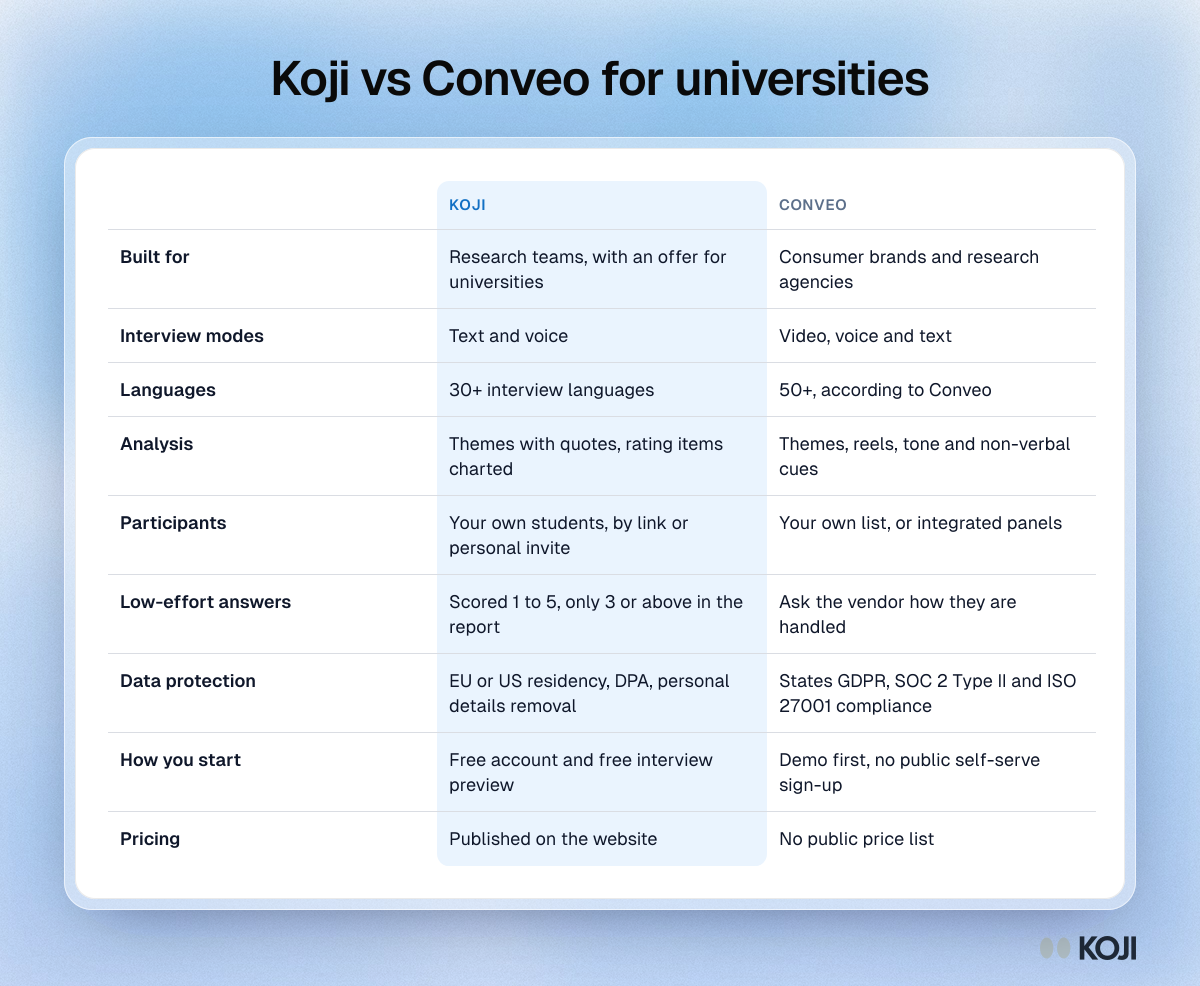
Table comparing Koji and Conveo for university feedback: interview modes, languages, analysis, participants, quality checks, data protection and pricing

Reference table

Koji vs Conveo for universities
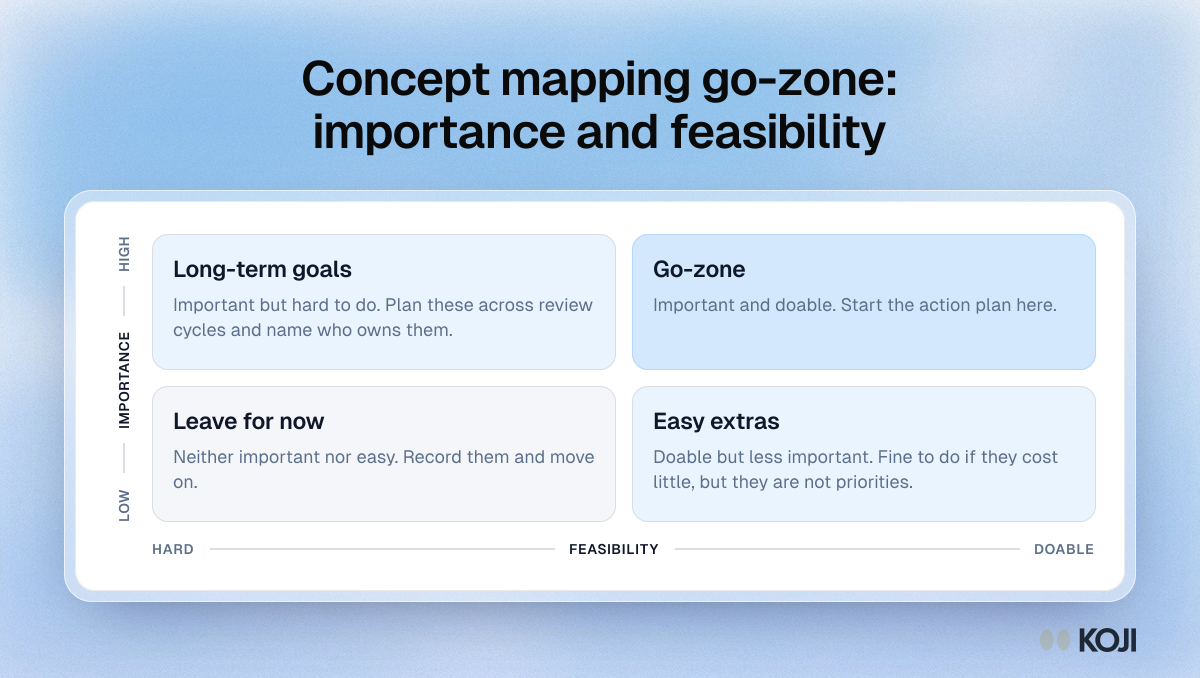
Matrix of importance against feasibility for group concept mapping ratings, with the go-zone of important and feasible actions highlighted.

Matrix

Concept mapping go-zone: importance and feasibility
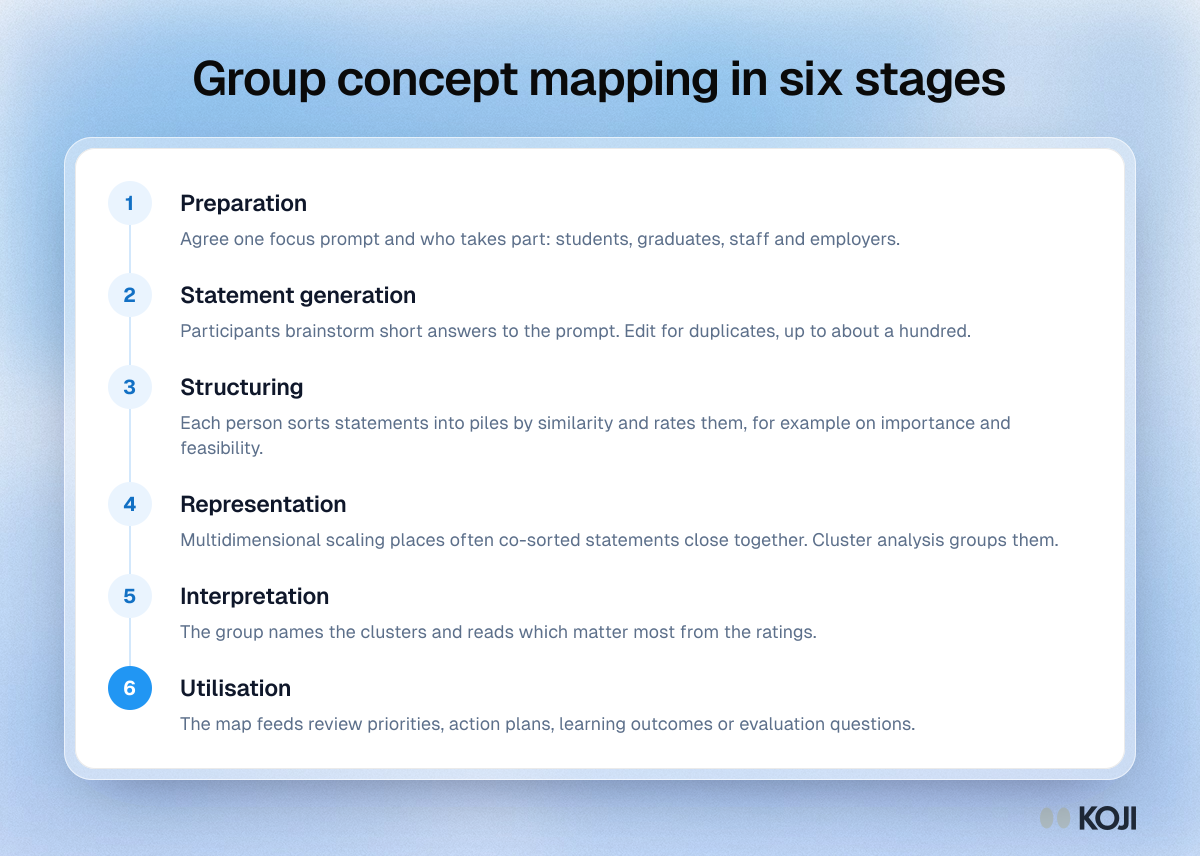
Process diagram of the six stages of group concept mapping for programme review, from preparing a focus prompt to using the map in decisions.

Process

Group concept mapping in six stages
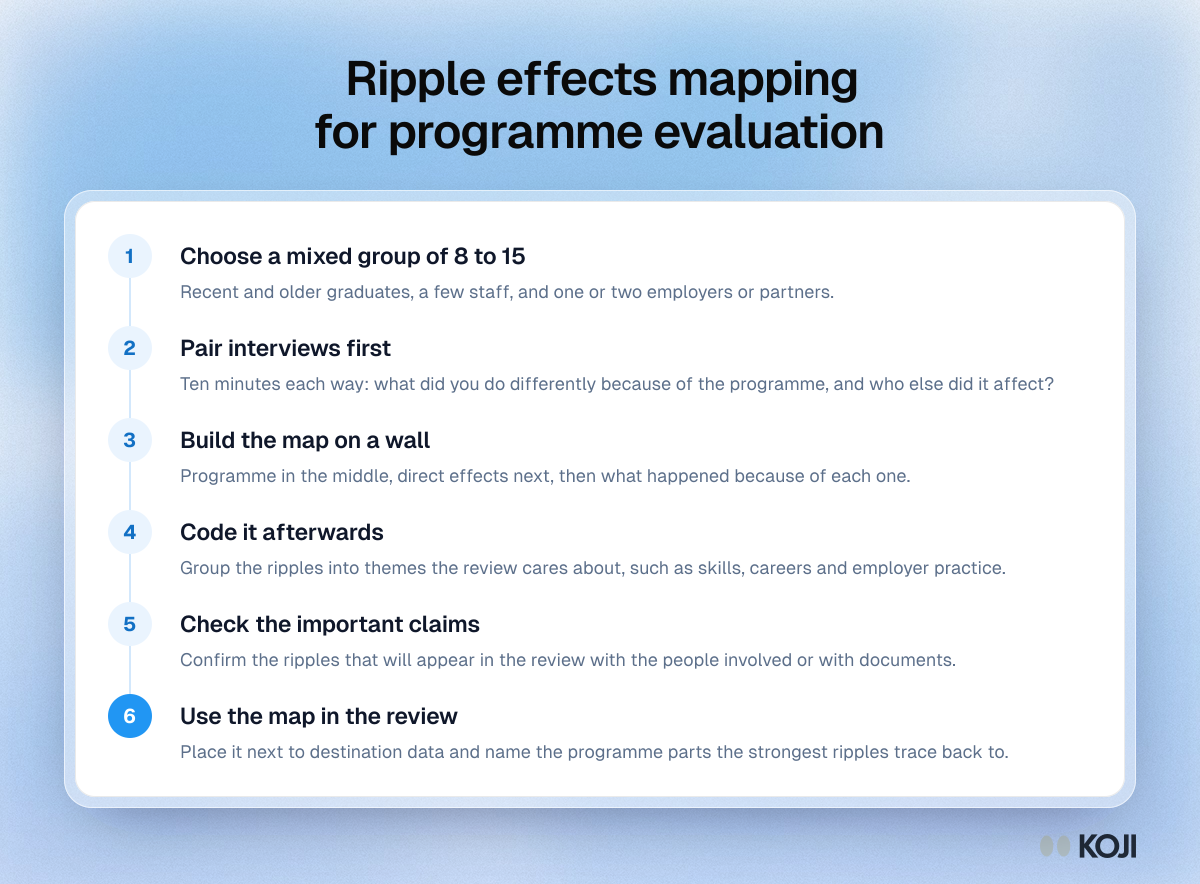
Process diagram of six ripple effects mapping steps for programme evaluation, from a mixed group and paired interviews to coding and using the map.

Process

Ripple effects mapping for programme evaluation
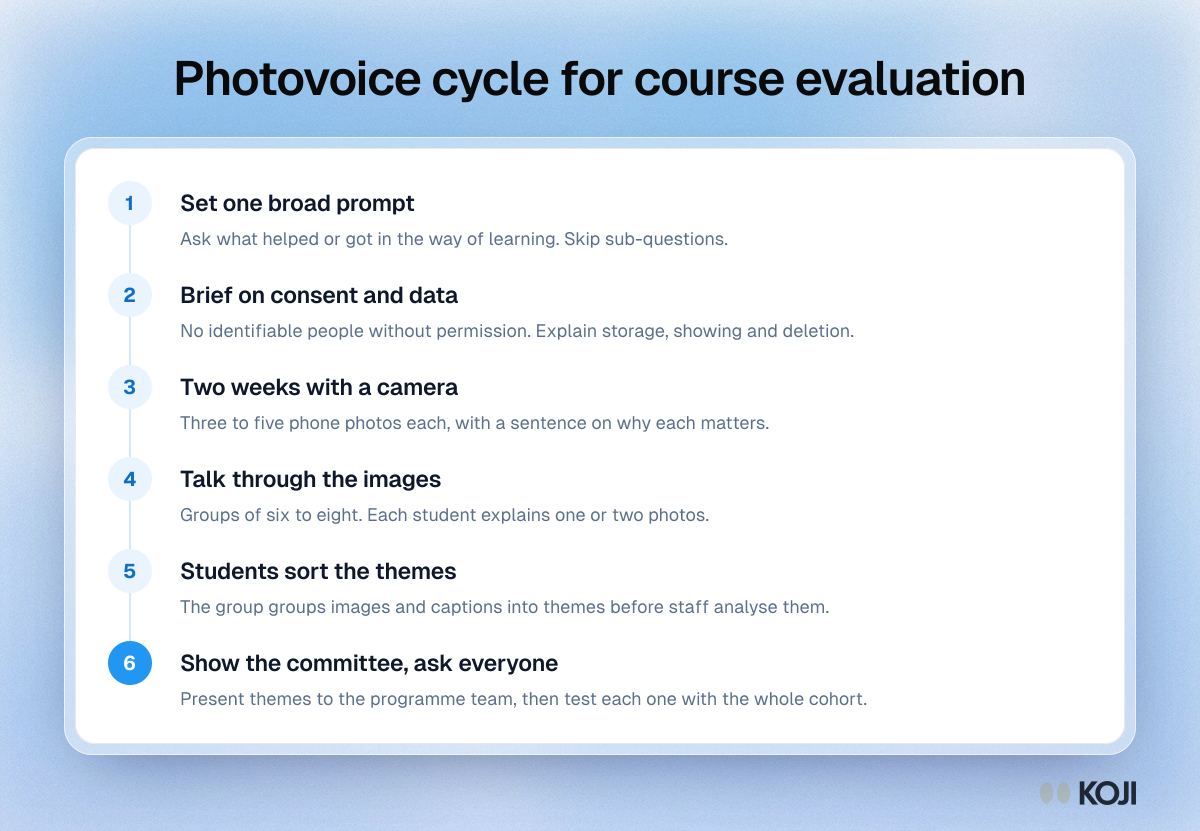
Process diagram of a six-step photovoice cycle for course evaluation, from a broad prompt and consent briefing to cohort-wide follow-up.

Process

Photovoice cycle for course evaluation
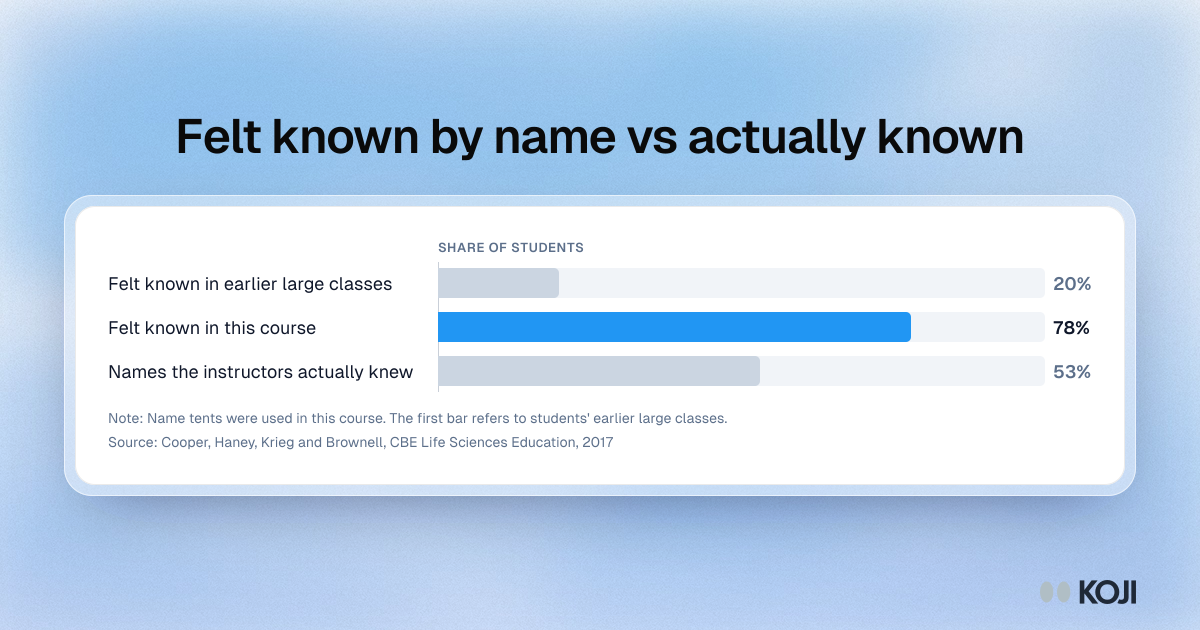
Bar chart: 20% of students felt known by name in earlier large classes, 78% in a course using name tents, though instructors knew 53% of names.

Bar chart

Felt known by name vs actually known
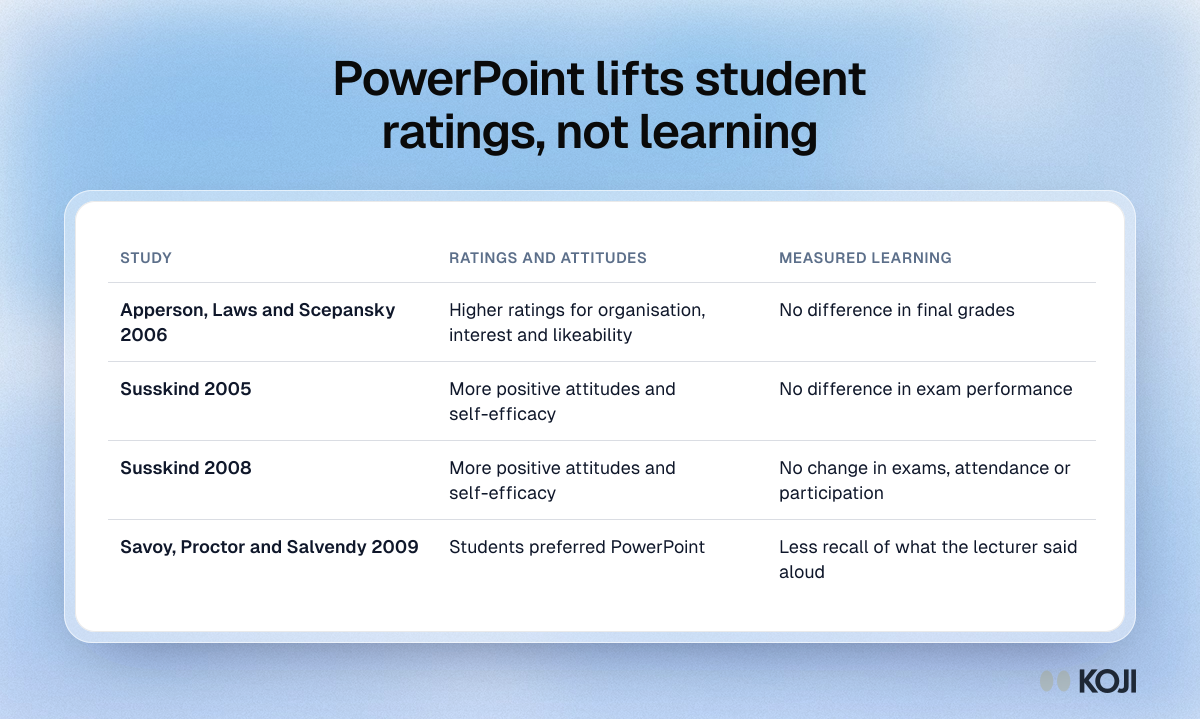
Table of four PowerPoint studies in university teaching: student ratings and attitudes rose with slides, while measured learning did not.

Reference table

PowerPoint lifts student ratings, not learning
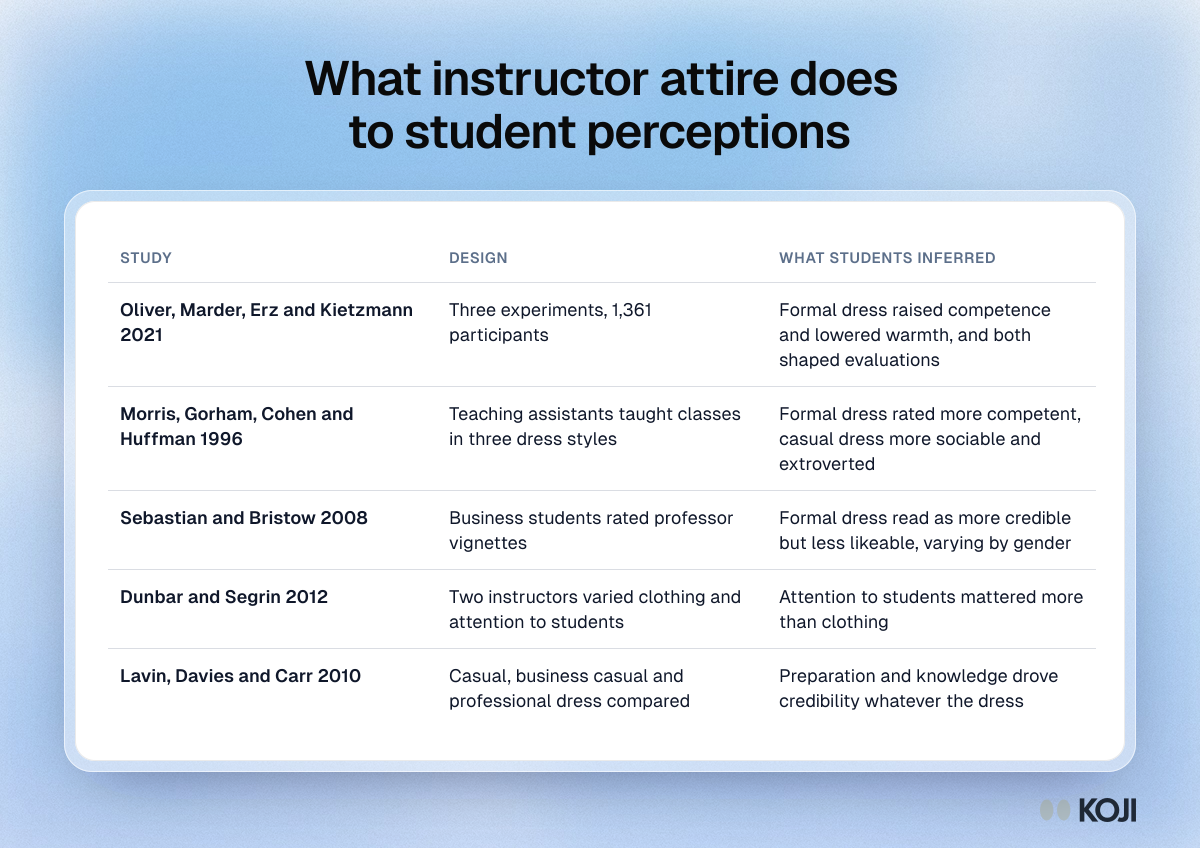
Table comparing five studies on instructor attire and student perceptions, showing each study's design and what students inferred from formal and casual dress.

Reference table

What instructor attire does to student perceptions
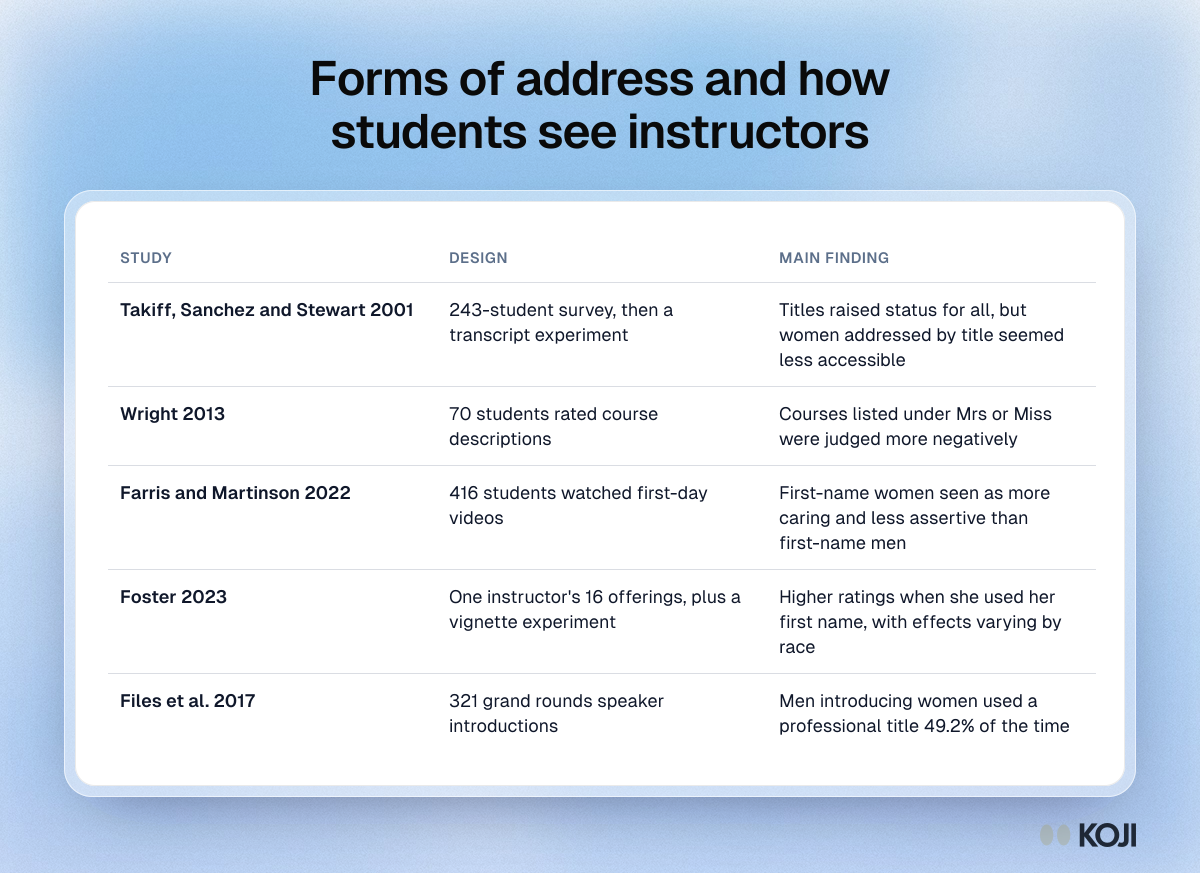
Table comparing five studies on forms of address and how students and colleagues perceive instructors, with each study's design and main finding.

Reference table

Forms of address and how students see instructors
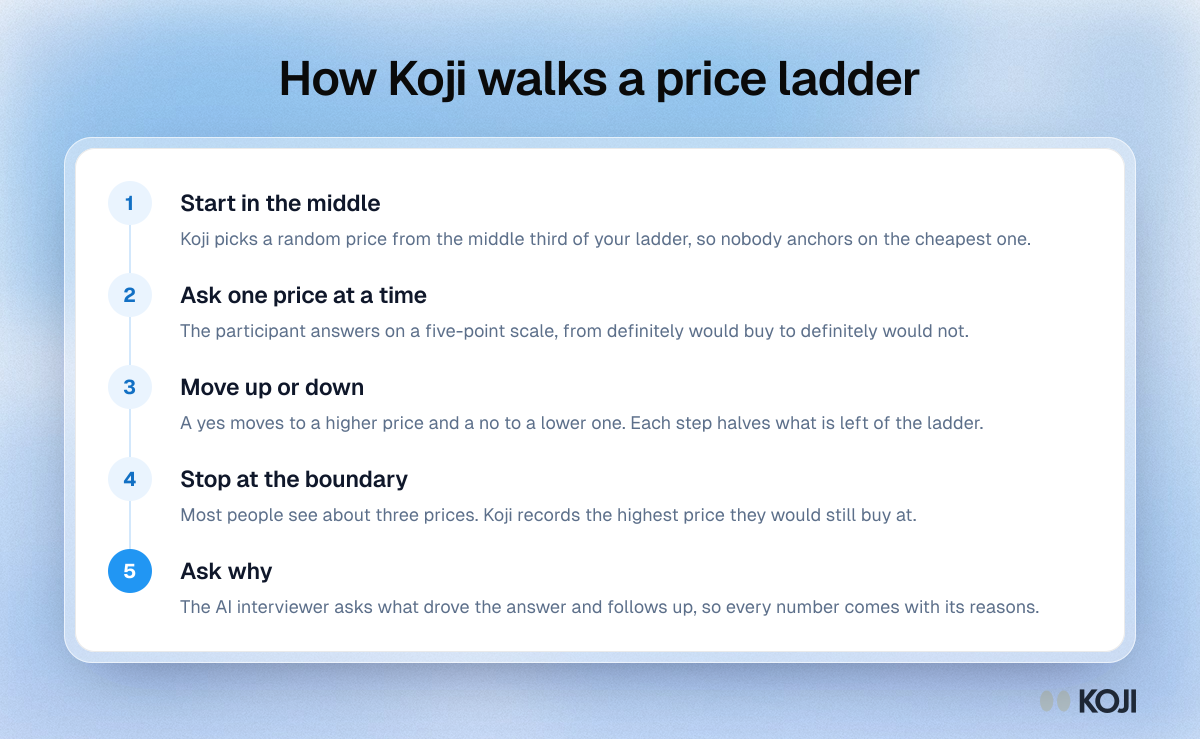
Process showing how Koji runs a price test: start mid-ladder, ask one price at a time, move up or down, stop at the highest accepted price, then ask why.

Process

How Koji walks a price ladder
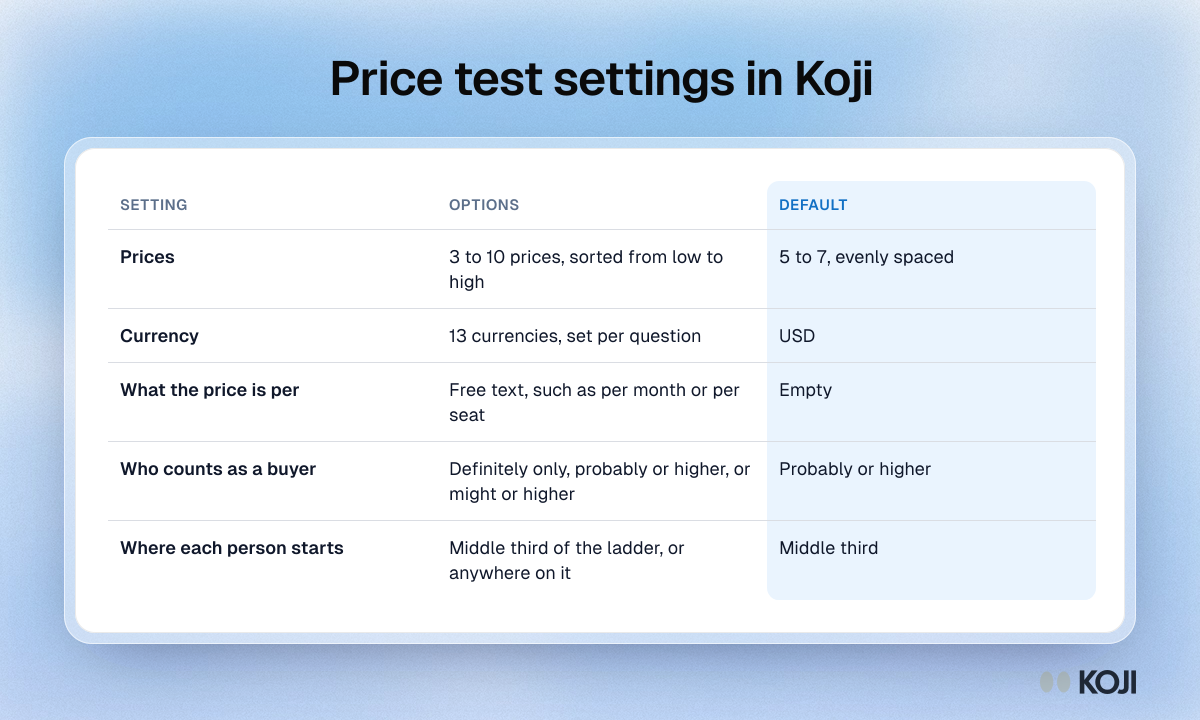
Table of the five Koji price test settings: prices, currency, unit, who counts as a buyer and starting point, with the options and default for each.

Reference table

Price test settings in Koji
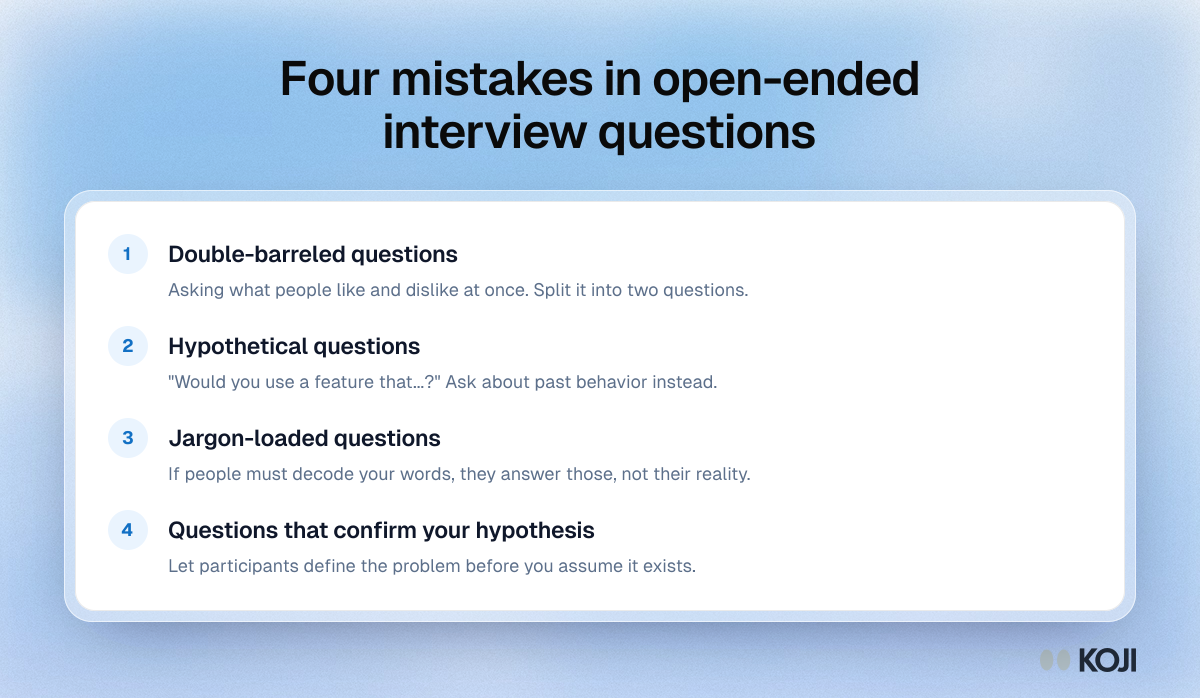
Listicle of four mistakes that weaken open-ended interview questions: double-barreled, hypothetical, jargon-loaded and hypothesis-confirming questions.

Guide

Four mistakes in open-ended interview questions
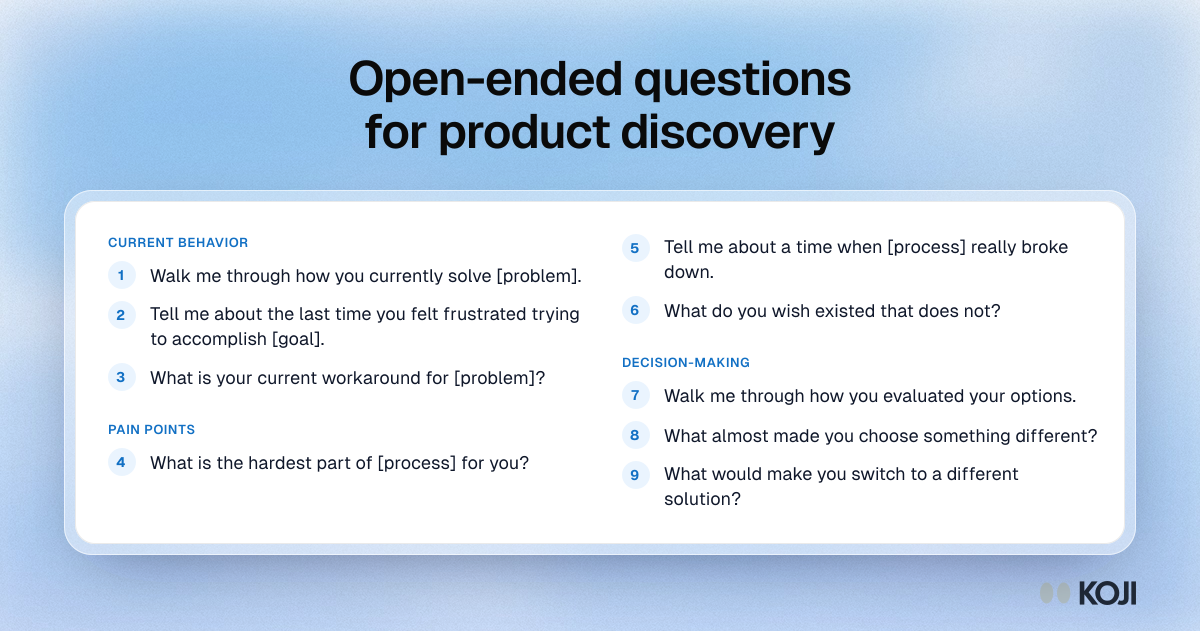
Question bank of nine open-ended product discovery interview questions in three groups: current behavior, pain points and decision-making.

Question bank

Open-ended questions for product discovery
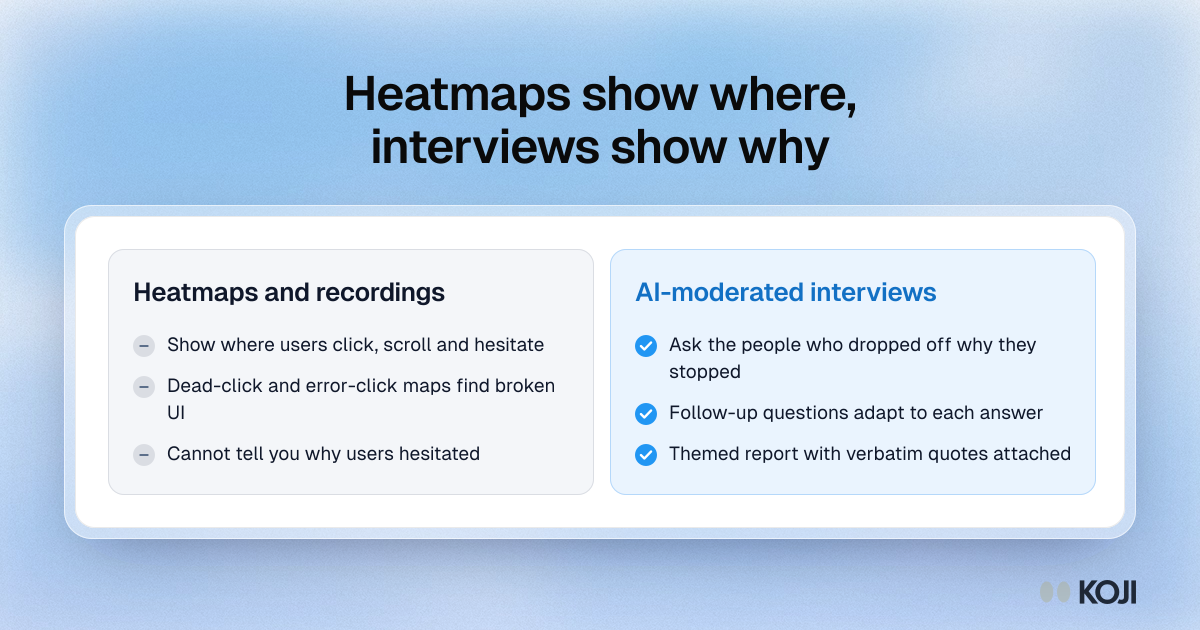
Comparison of heatmaps and session recordings, which show where users hesitate, with AI-moderated interviews, which explain why they stopped.

Comparison

Heatmaps show where, interviews show why

Comparison table of Tally and Koji for course evaluation: how students answer, follow-up questions, open comments, reports and data handling.

Reference table

Tally vs Koji for course evaluation

Comparison table of Mentimeter and Koji for course evaluation: follow-up questions, open-answer analysis, actions, anonymity and data location.

Reference table

Mentimeter vs Koji for course evaluation

Table of customer interview sample sizes by research type, from 5 to 8 for usability testing to 30 to 50 or more for market research.

Reference table

Customer interview sample size by research type
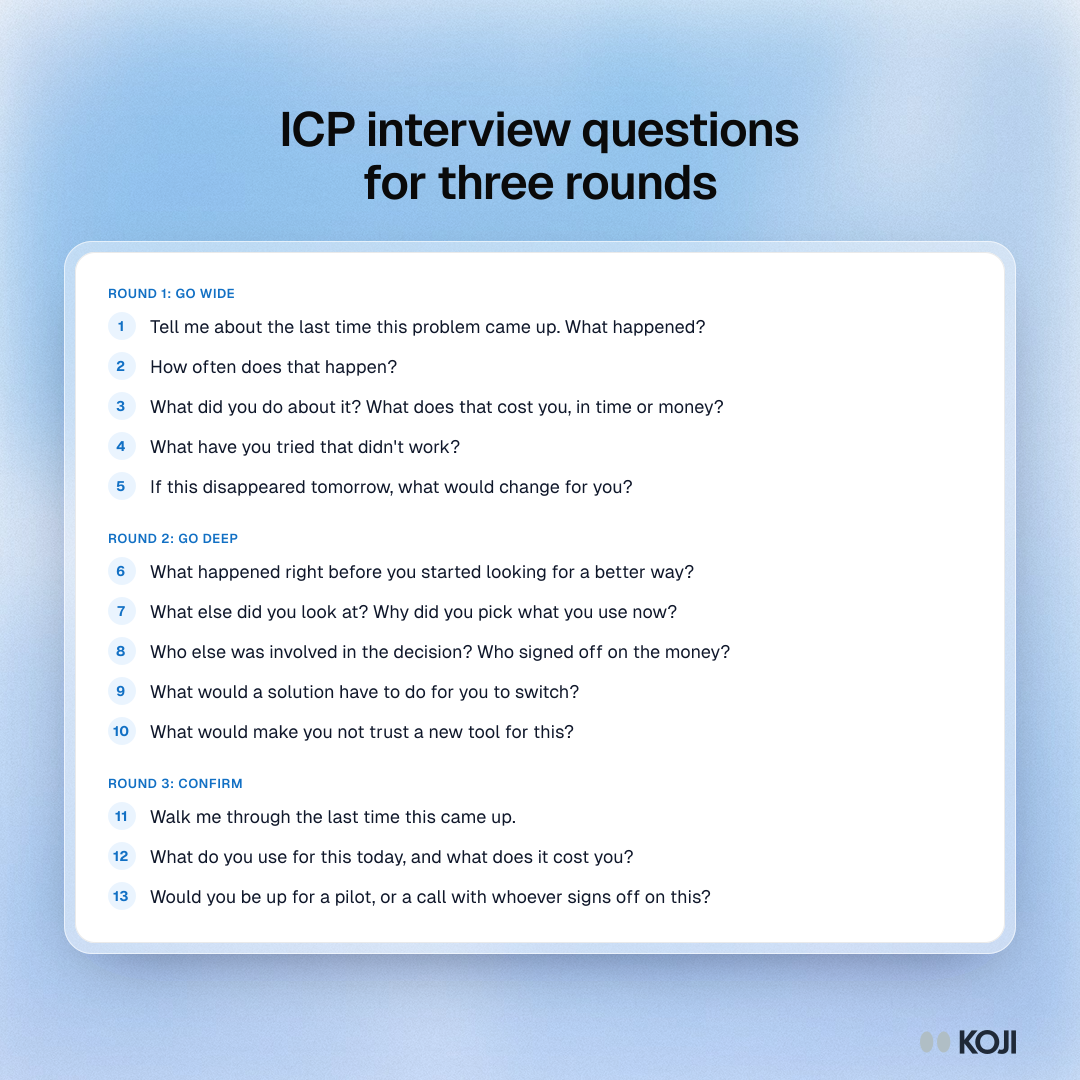
Question bank for ICP interviews in three sections: going wide across segments, going deep in one segment and confirming with new people.

Question bank

ICP interview questions for three rounds
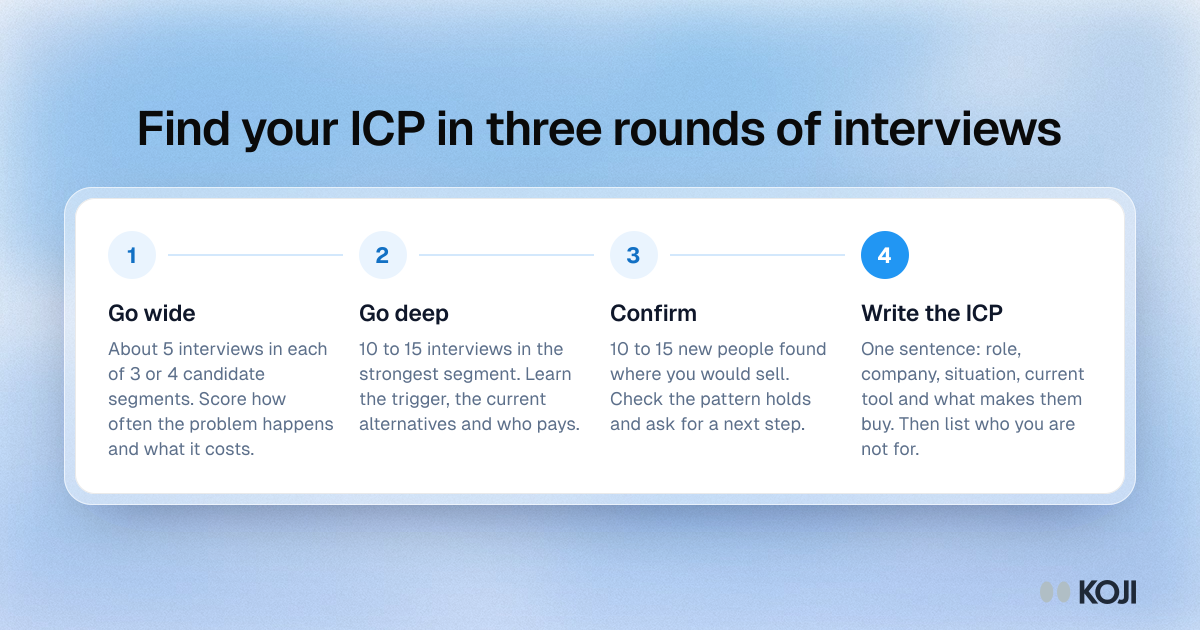
Process of three rounds of ICP interviews: go wide across segments, go deep in the strongest one, confirm with new people, then write the ICP.

Process

Find your ICP in three rounds of interviews