Free to save and share

Frameworks and cheat sheets for customer research

Every framework, checklist and comparison from our guides, as an image you can download, drop into a deck or share with your team.
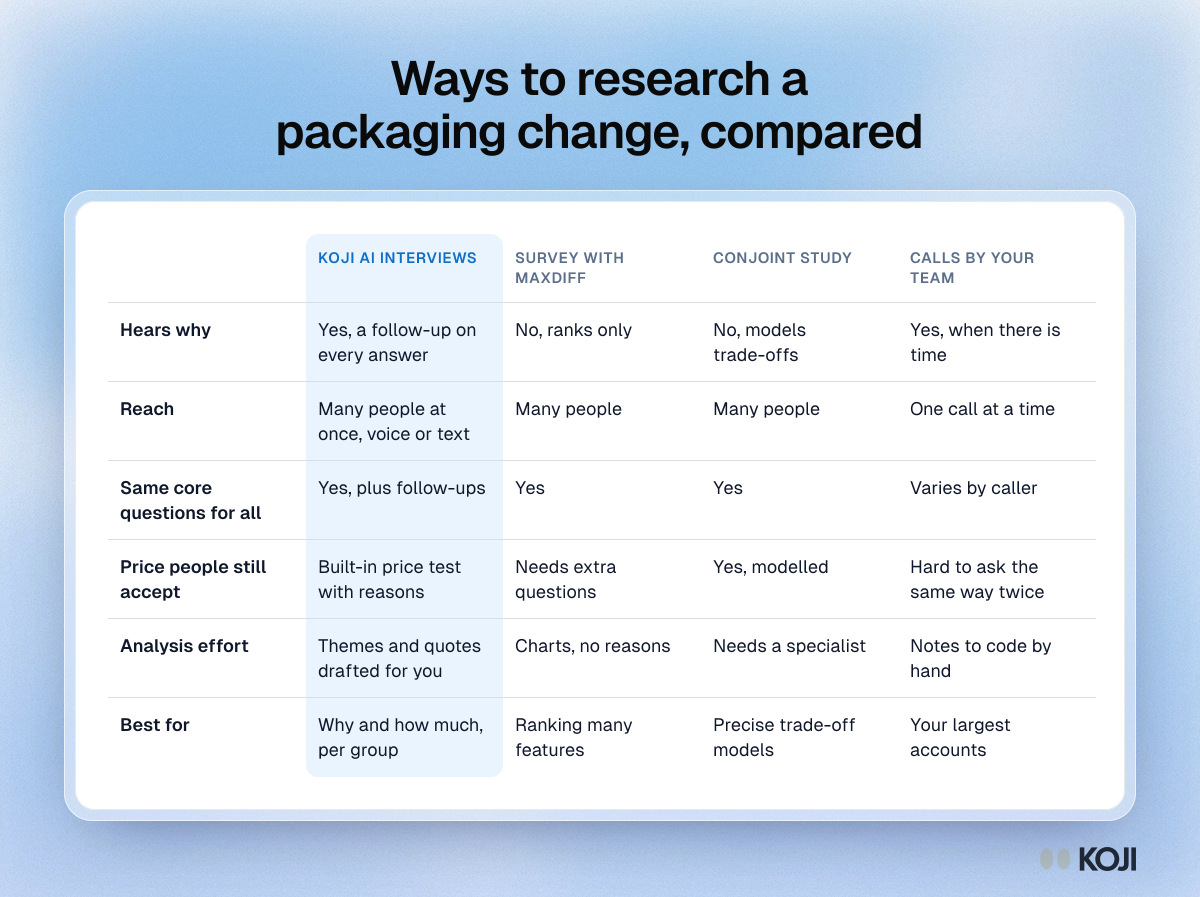
Comparison table of four ways to research a packaging change: AI interviews, a MaxDiff survey, a conjoint study and calls by your own team.

Reference table

Ways to research a packaging change, compared
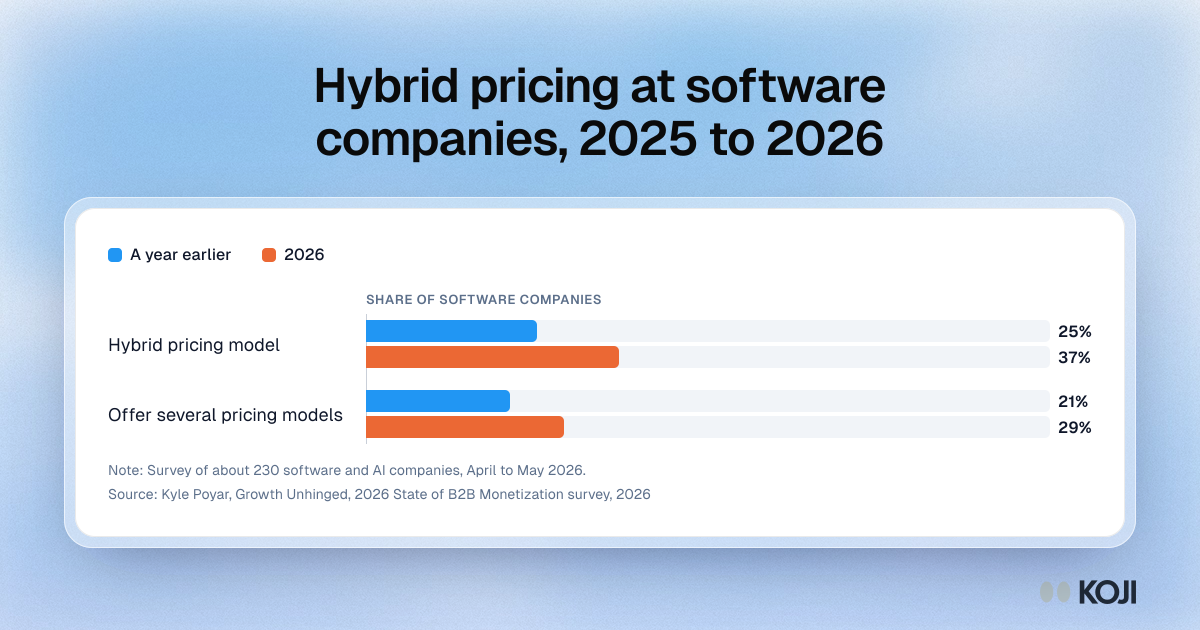
Bar chart comparing software companies a year earlier and in 2026: hybrid pricing rose from 25% to 37%, and offering several pricing models from 21% to 29%.

Bar chart

Hybrid pricing at software companies, 2025 to 2026
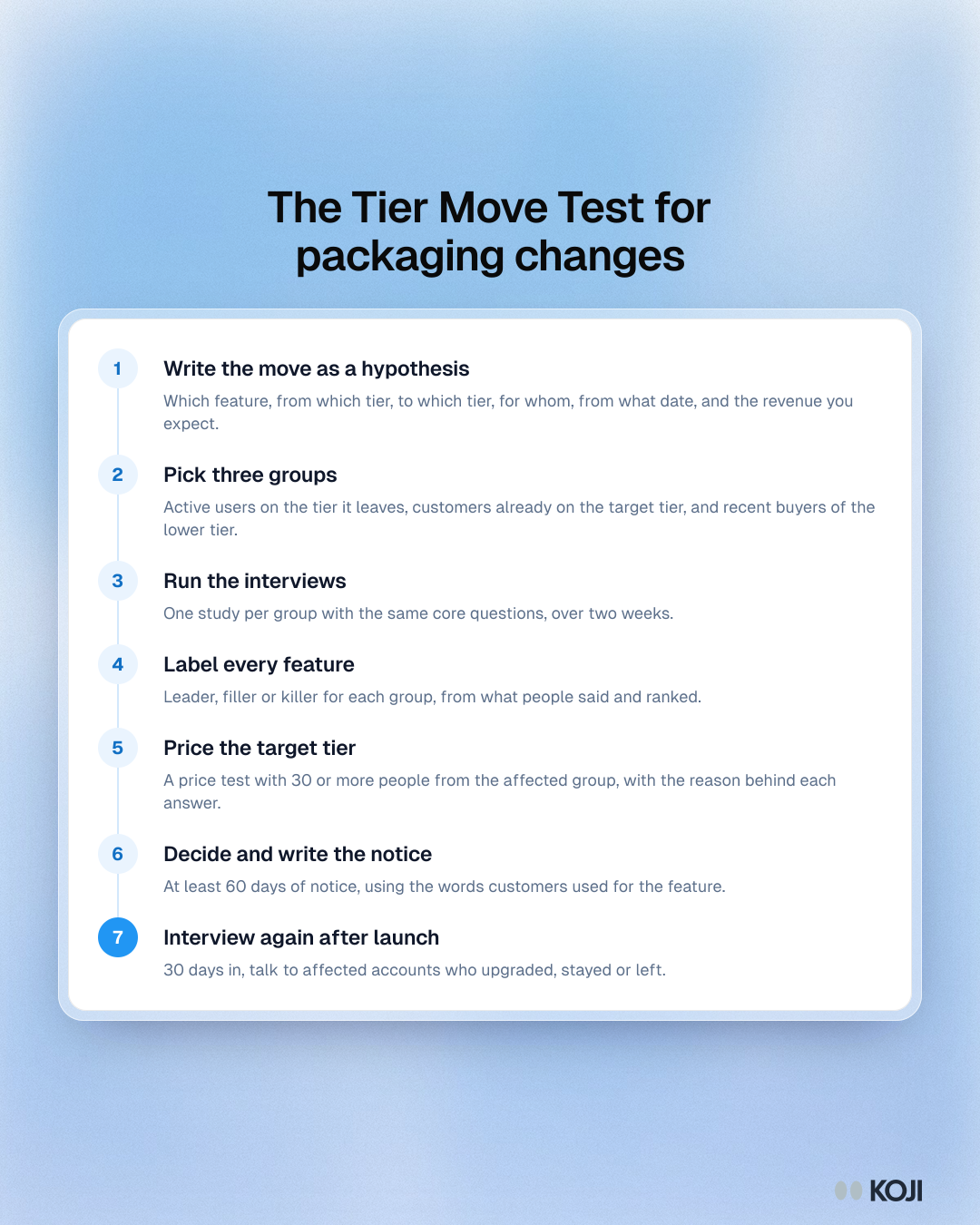
Process showing the Tier Move Test in seven steps, from writing the move as a hypothesis to interviewing affected accounts 30 days after launch.

Process

The Tier Move Test for packaging changes
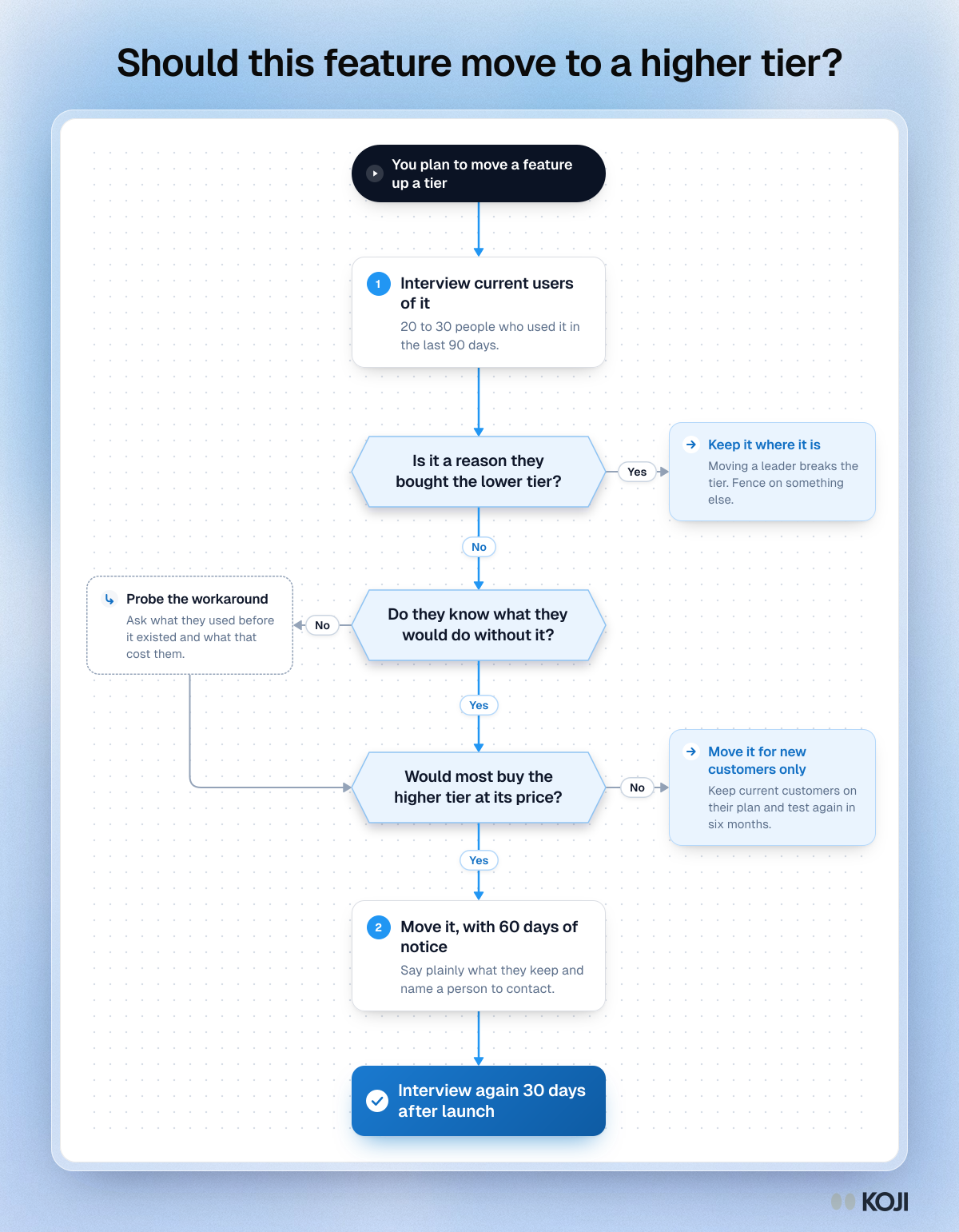
Flowchart for deciding whether a feature should move to a higher tier: three yes or no questions, one side step, ending in a follow-up 30 days after launch.

Flowchart

Should this feature move to a higher tier?
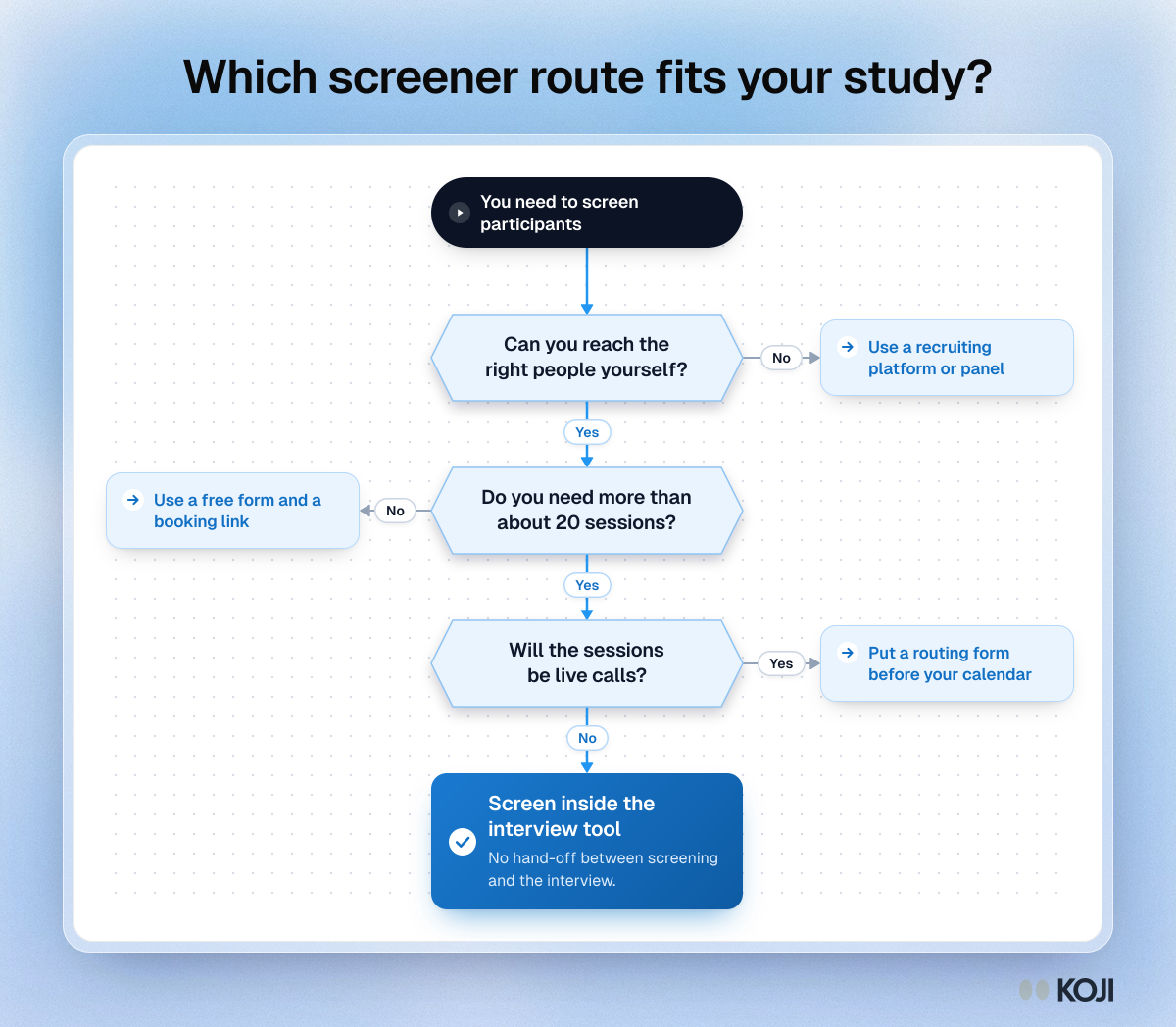
Flowchart for choosing a screener route: three questions on where participants come from, how many sessions and live or async interviews.

Flowchart

Which screener route fits your study?
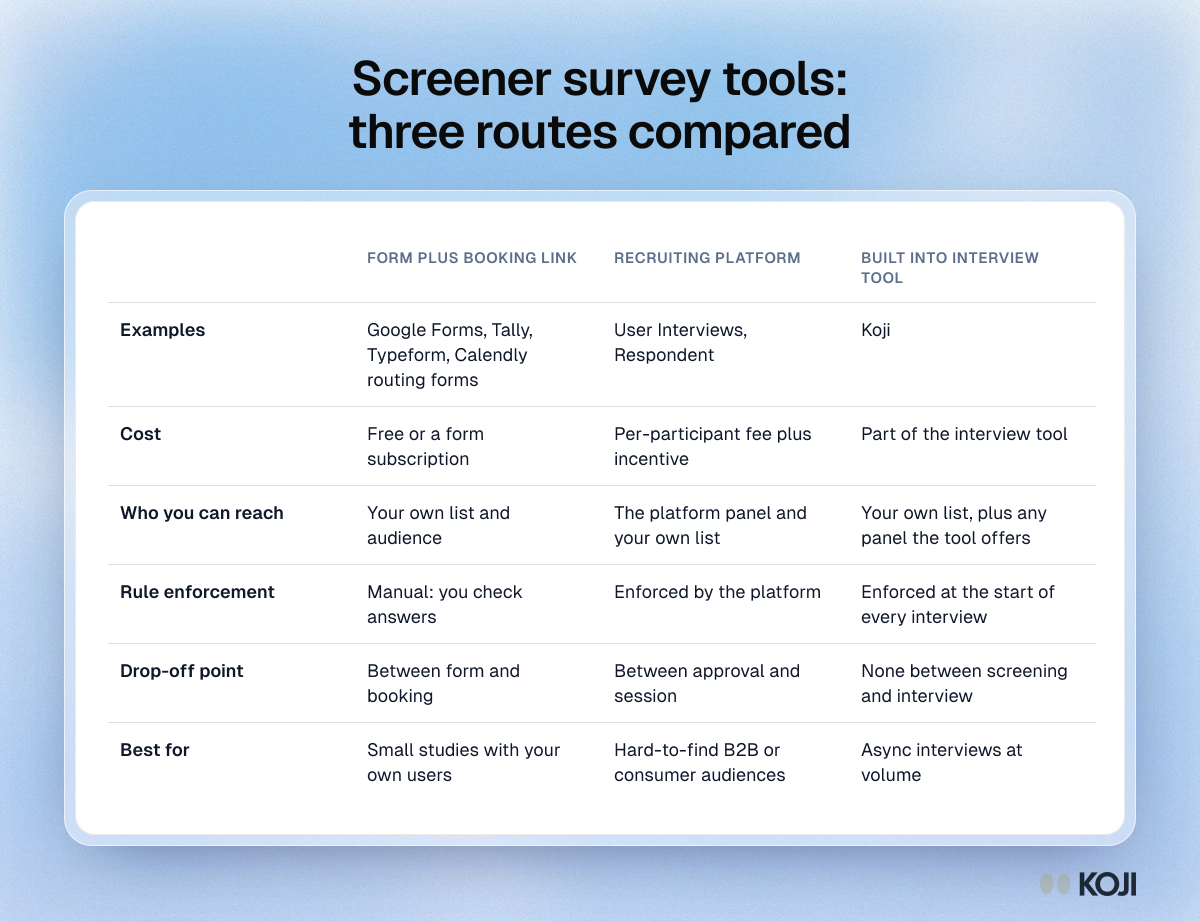
Table comparing three ways to screen research participants: a form and booking link, a recruiting platform, and a screener in the interview tool.

Reference table

Screener survey tools: three routes compared
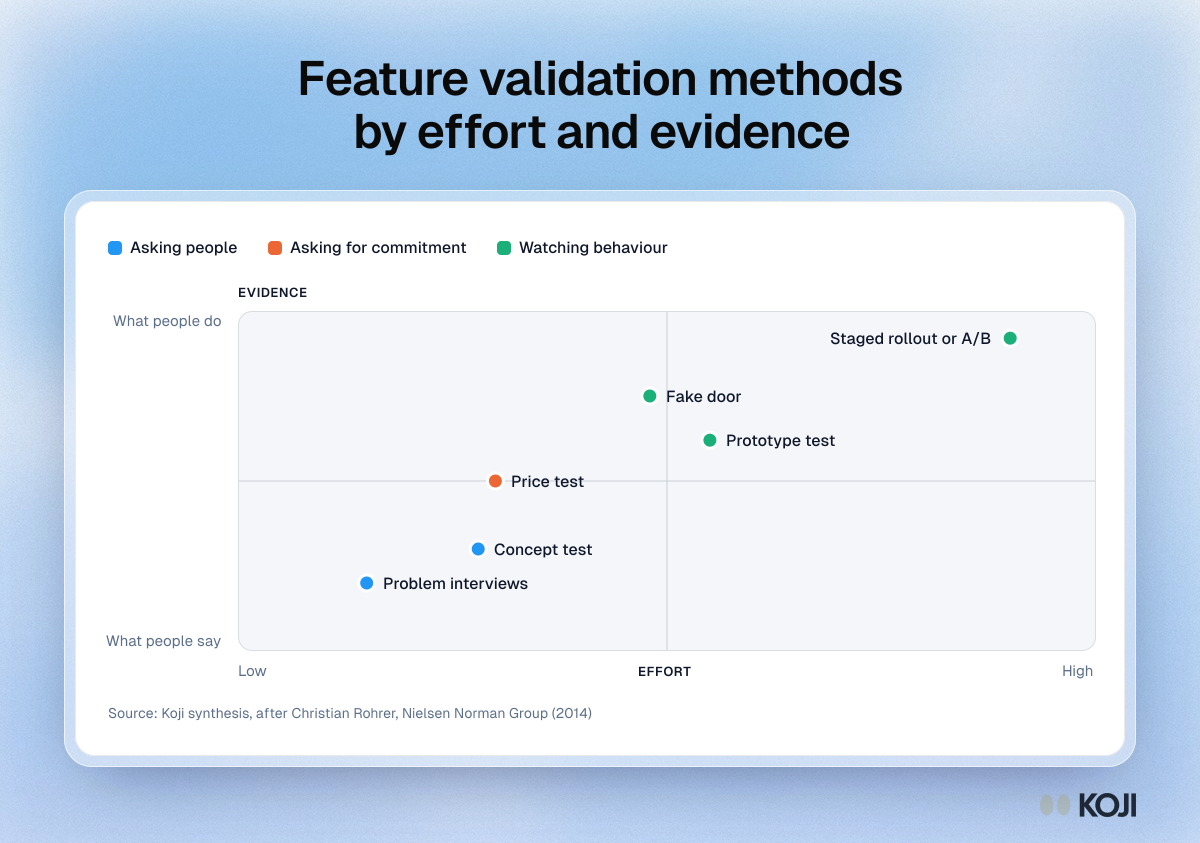
Method map placing six feature validation methods by effort and by whether the evidence is what people say or what they do.

Scatter plot

Feature validation methods by effort and evidence
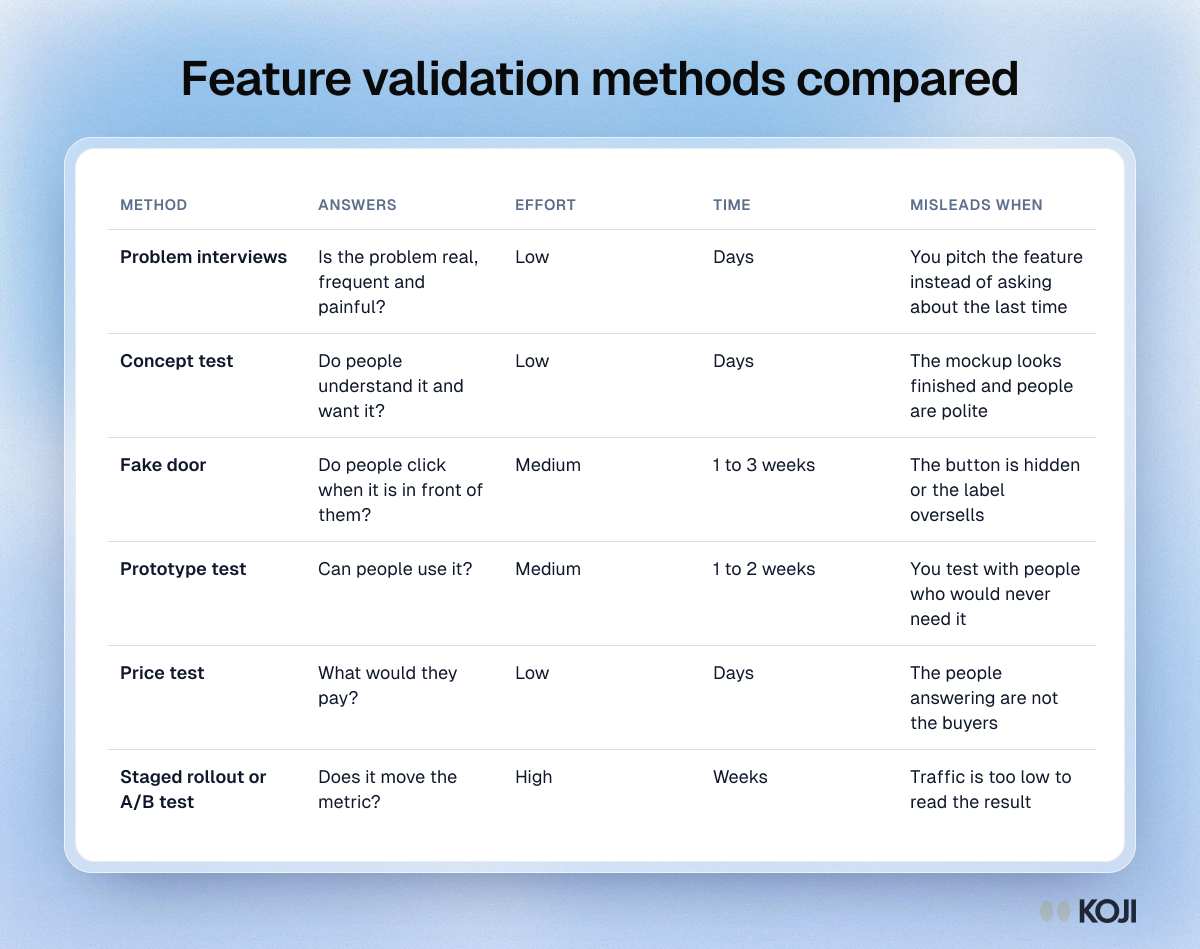
Table comparing six feature validation methods by the question each answers, effort, time and when it misleads.

Reference table

Feature validation methods compared
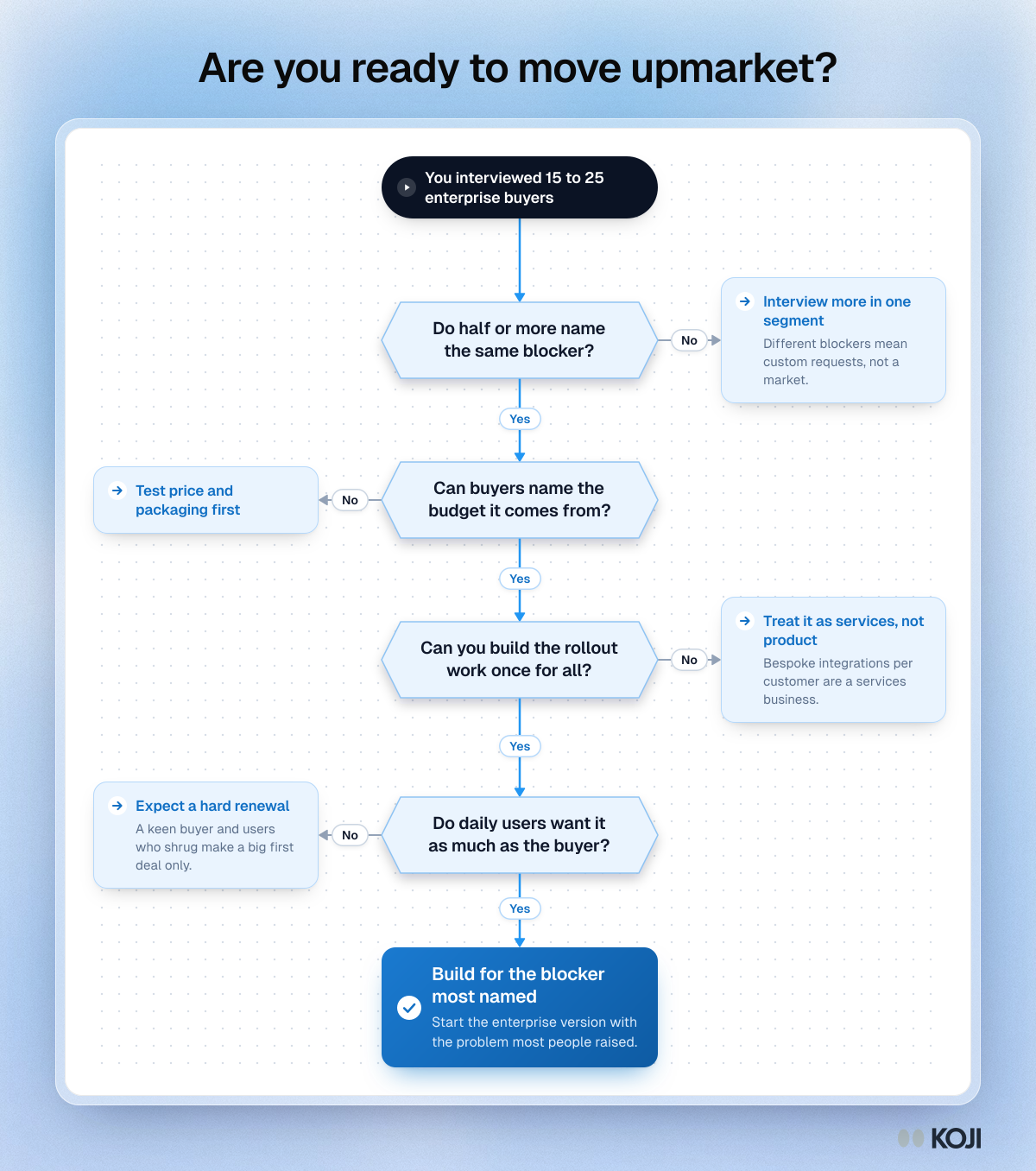
Flowchart for deciding whether to move upmarket after buyer interviews: four questions on blockers, budget, rollout work and users.

Flowchart

Are you ready to move upmarket?
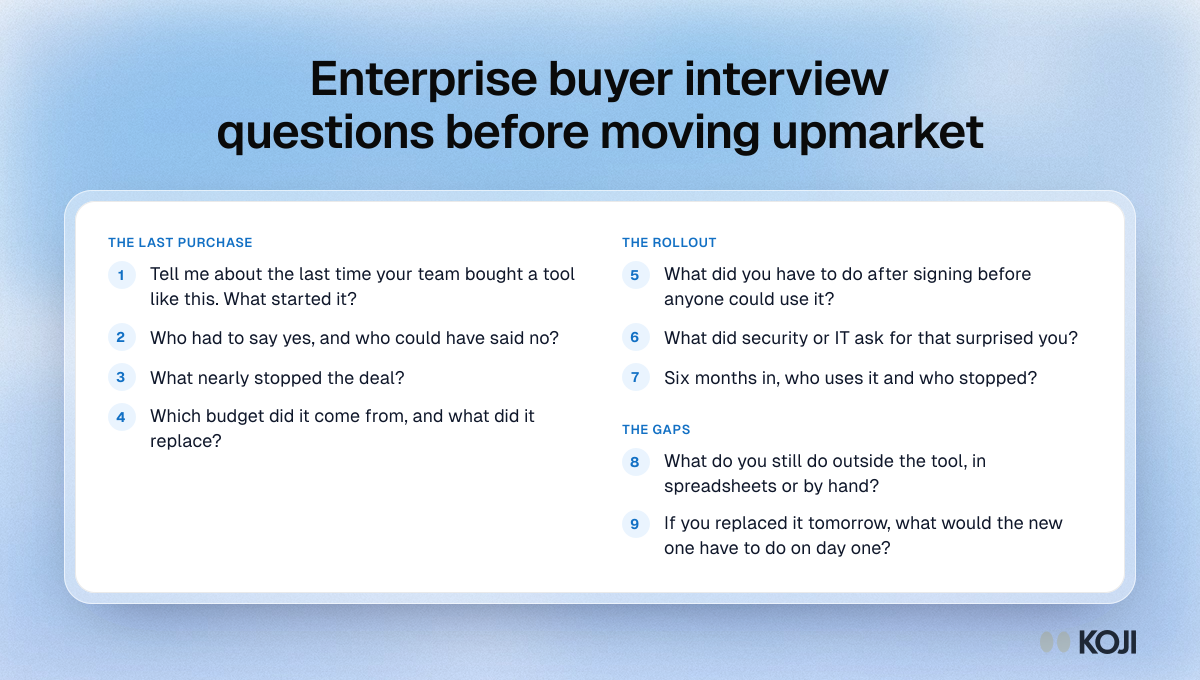
Question bank for interviewing enterprise buyers before moving upmarket, in three sections: the last purchase, the rollout and the gaps.

Question bank

Enterprise buyer interview questions before moving upmarket
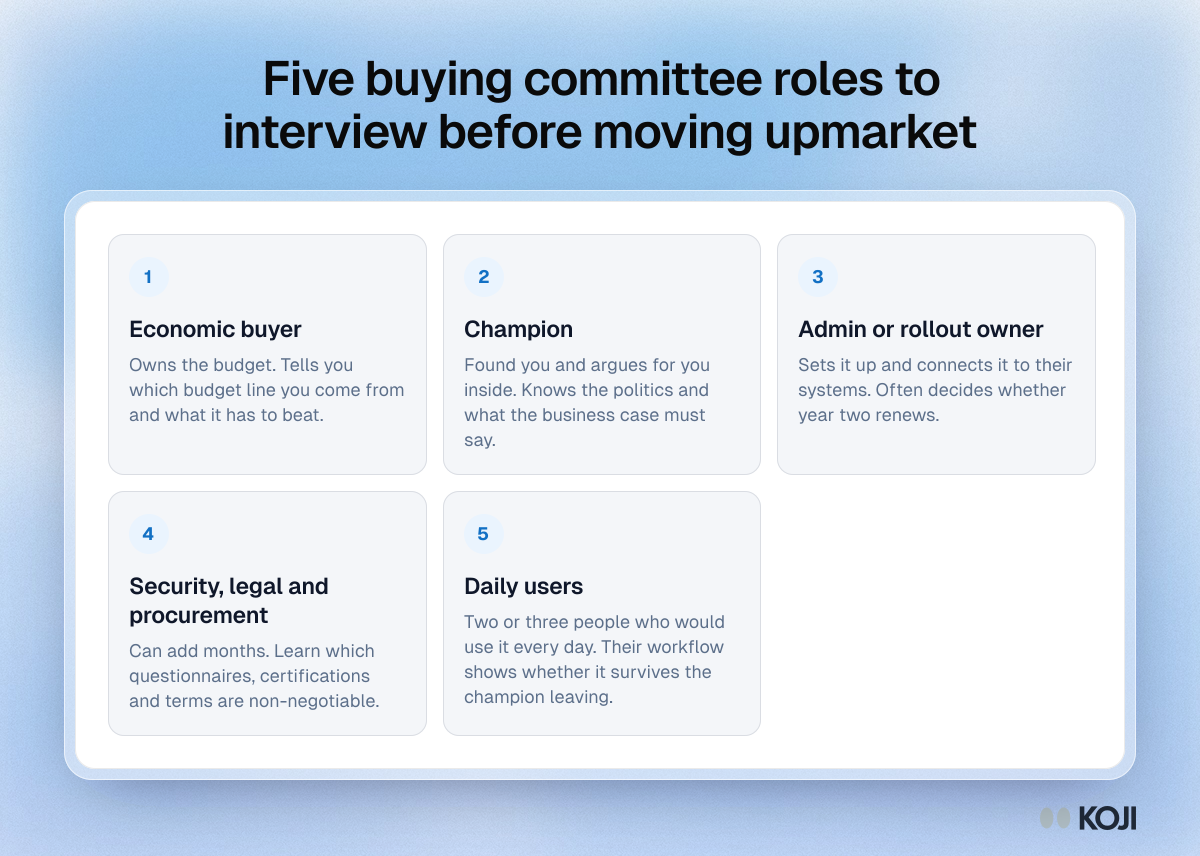
Framework showing the five roles to interview before moving upmarket: economic buyer, champion, admin, security and procurement, and daily users.

Framework

Five buying committee roles to interview before moving upmarket
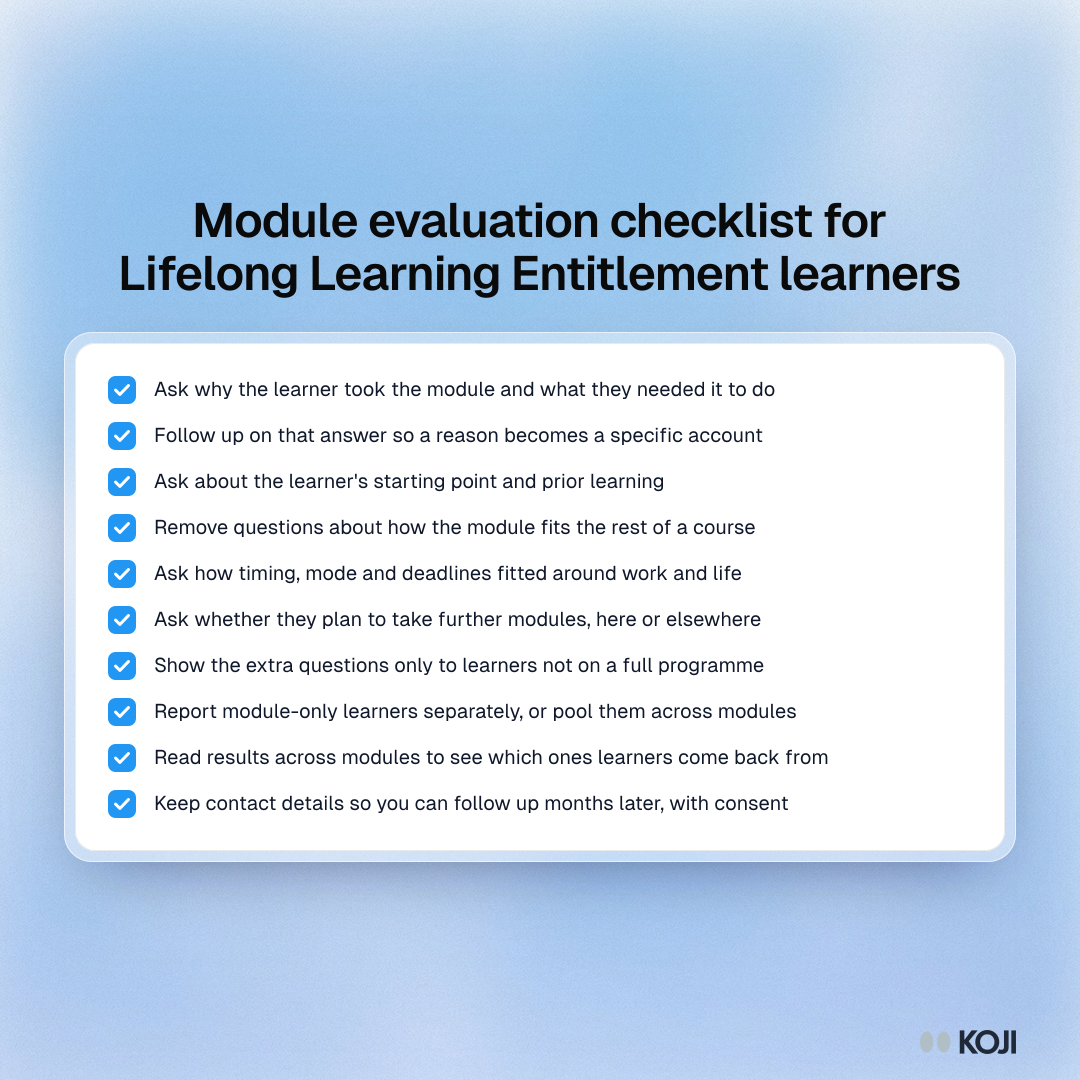
Checklist for module evaluation for Lifelong Learning Entitlement learners: purpose, starting point, fit with work, plans to continue and reporting.

Checklist

Module evaluation checklist for Lifelong Learning Entitlement learners
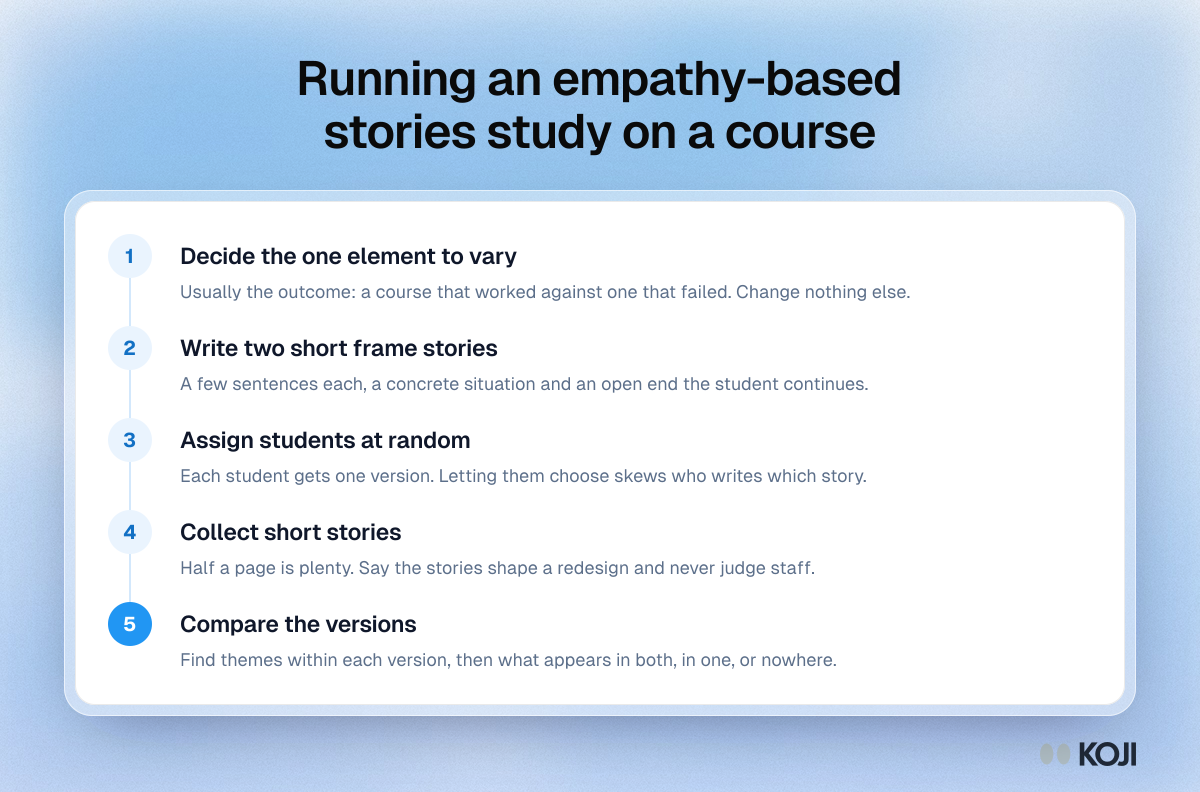
Process for an empathy-based stories study on a course: vary one element, write two frame stories, assign at random, collect stories, compare versions.

Process

Running an empathy-based stories study on a course
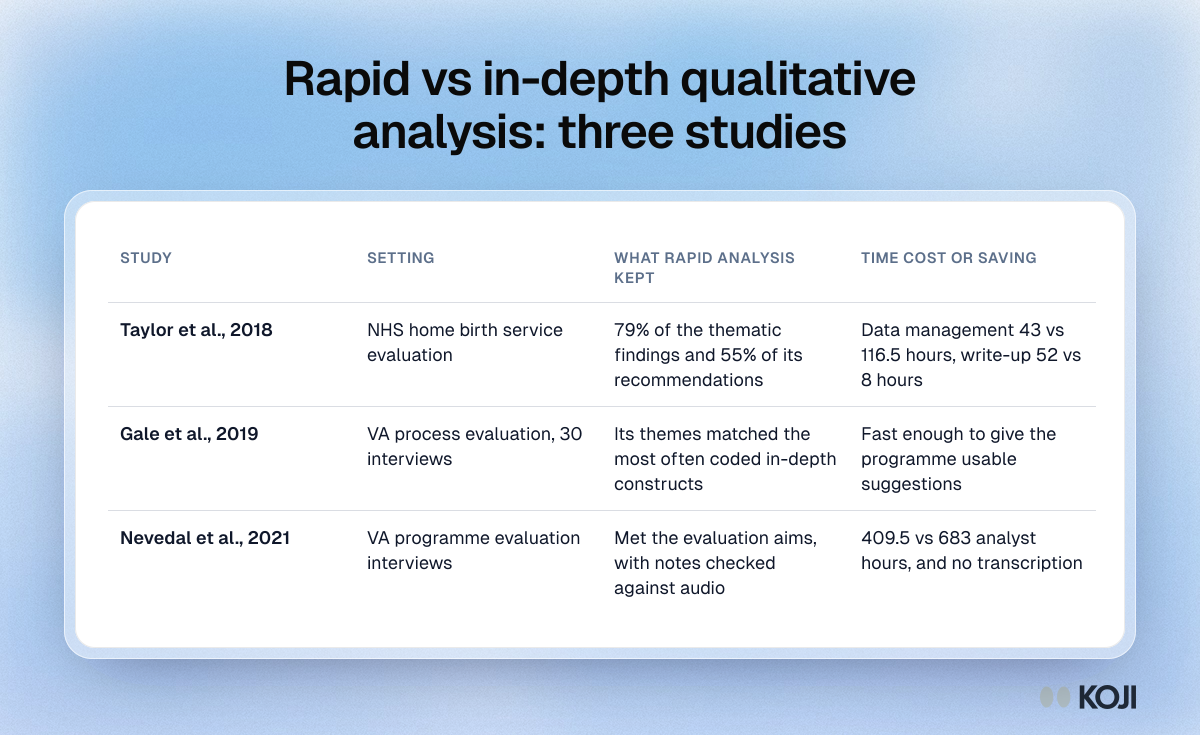
Table comparing three studies of rapid vs in-depth qualitative analysis: what the rapid approach kept and what it cost or saved in each.

Reference table

Rapid vs in-depth qualitative analysis: three studies
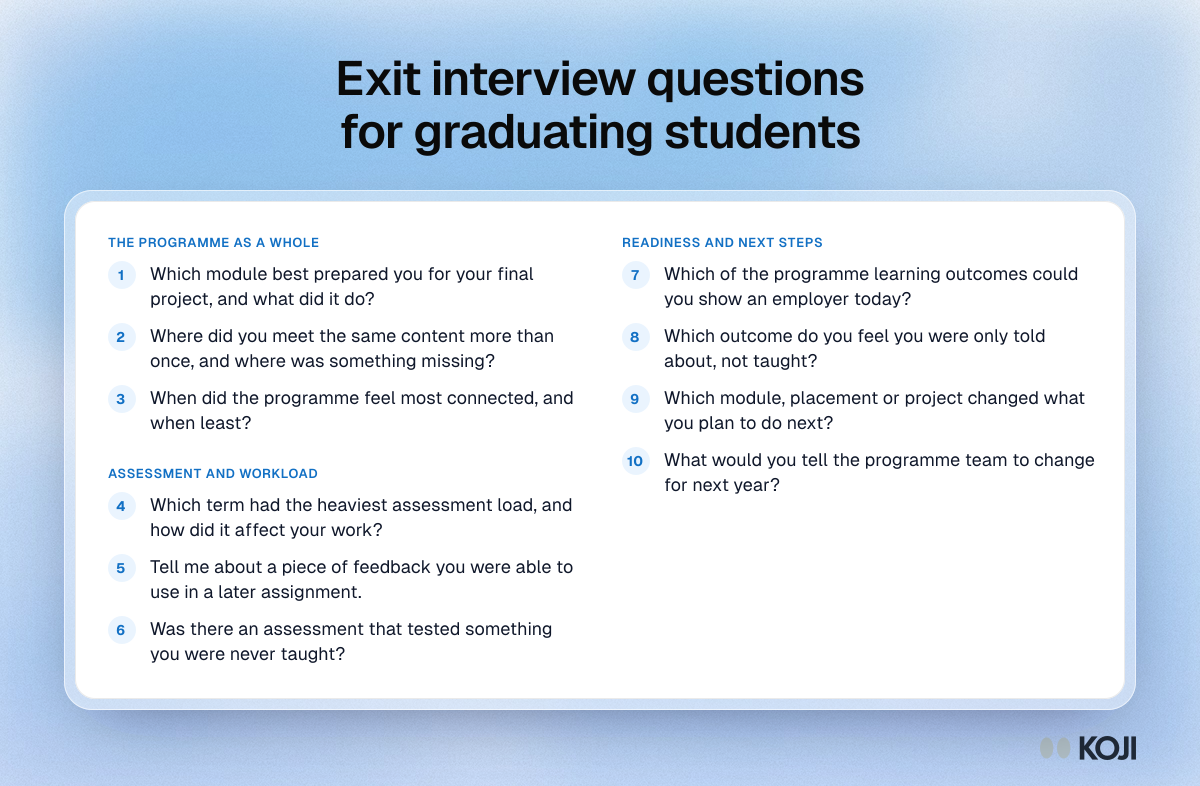
Question bank for exit interviews with graduating students: three sections on the programme as a whole, assessment and workload, and readiness and next steps.

Question bank

Exit interview questions for graduating students
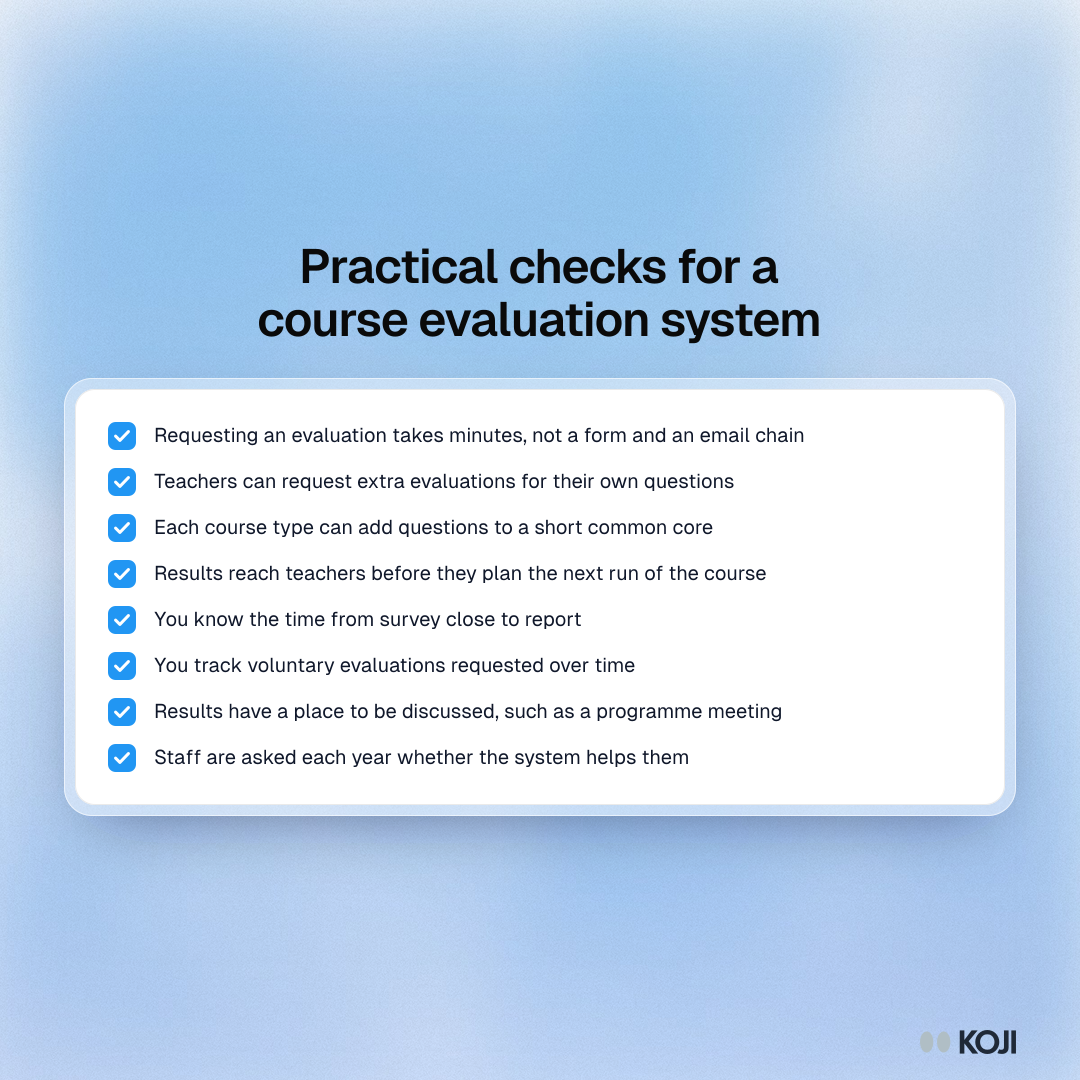
Checklist of practical checks for a course evaluation system, from how long it takes to request an evaluation to whether teachers can add their own questions.

Checklist

Practical checks for a course evaluation system
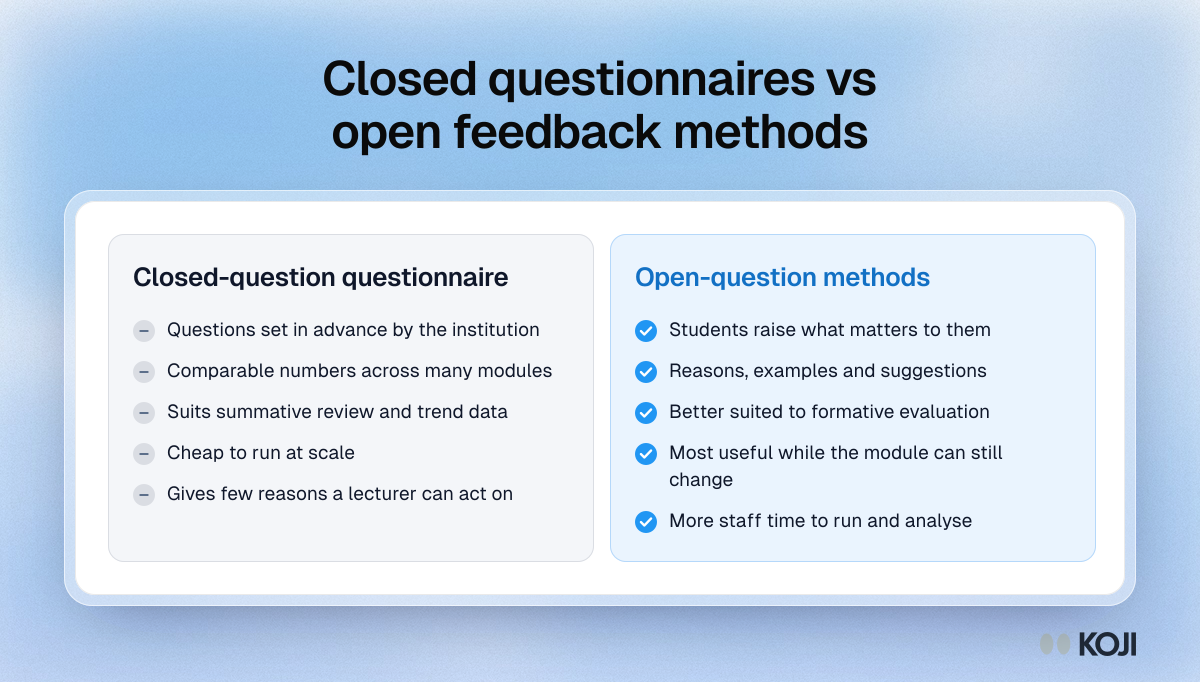
Comparison of a closed-question end-of-module questionnaire with open-question methods such as focus groups, rapid feedback and the H form.

Comparison

Closed questionnaires vs open feedback methods
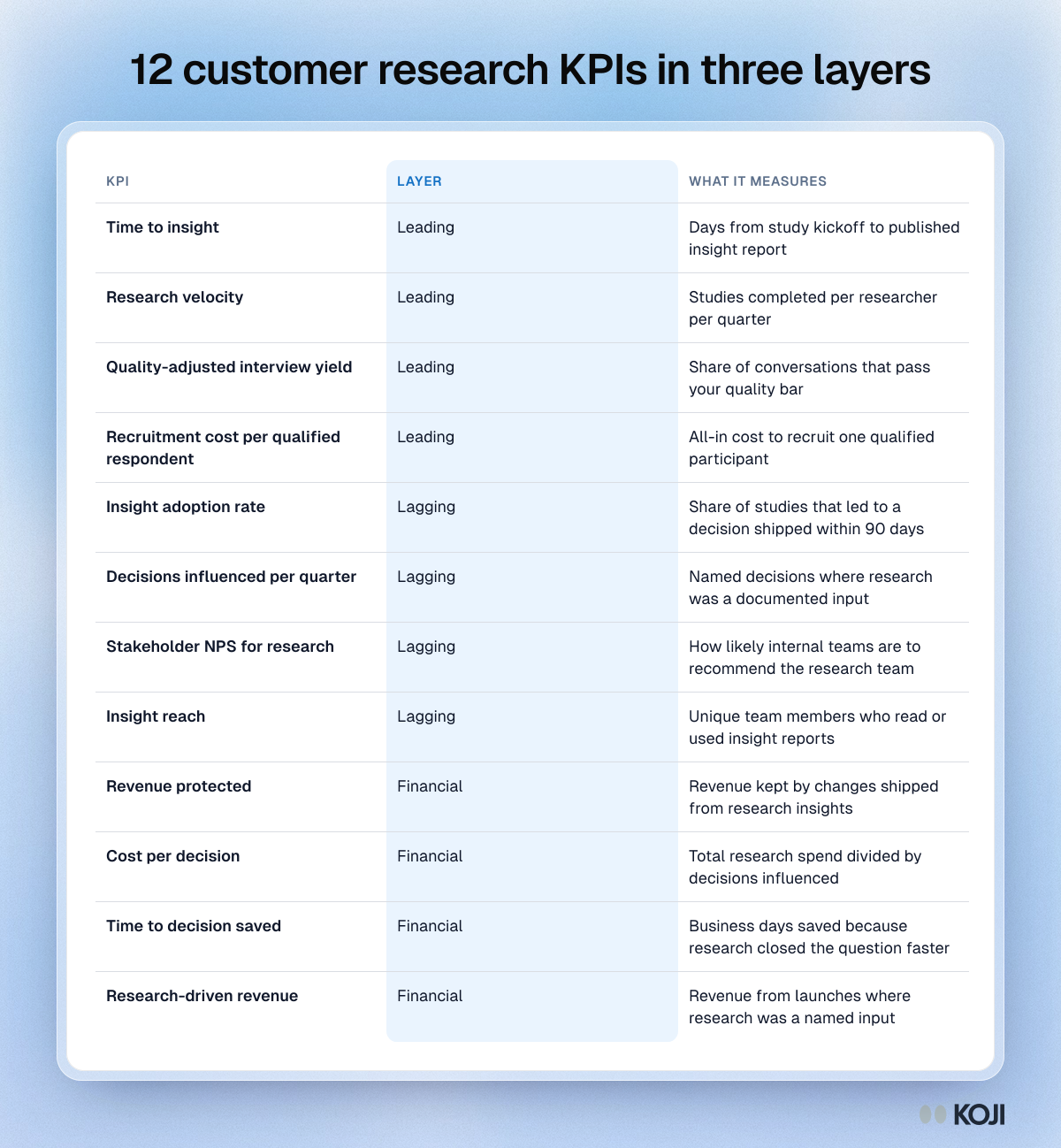
Table of 12 customer research KPIs grouped as leading, lagging and financial, from time to insight to cost per decision and research-driven revenue.

Reference table

12 customer research KPIs in three layers
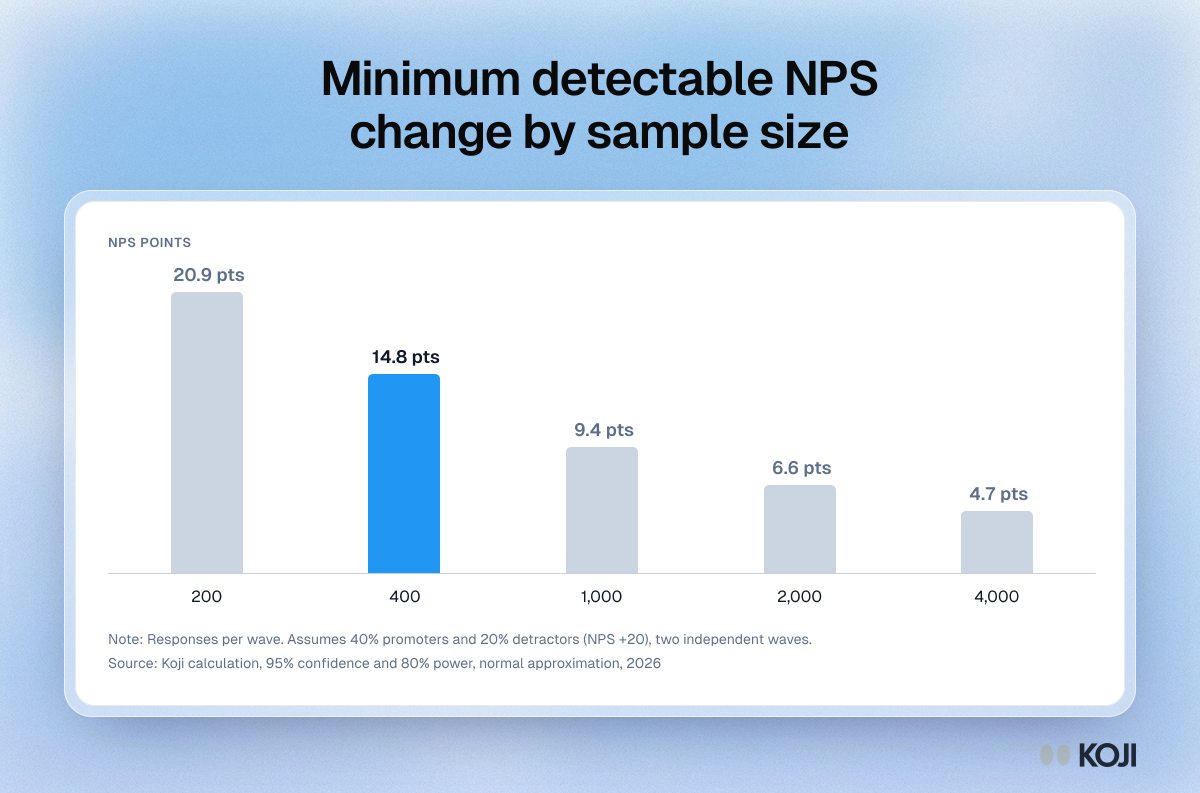
Column chart of the smallest NPS change two survey waves can detect: 20.9 points at 200 responses, 14.8 at 400, down to 4.7 at 4,000.

Column chart

Minimum detectable NPS change by sample size
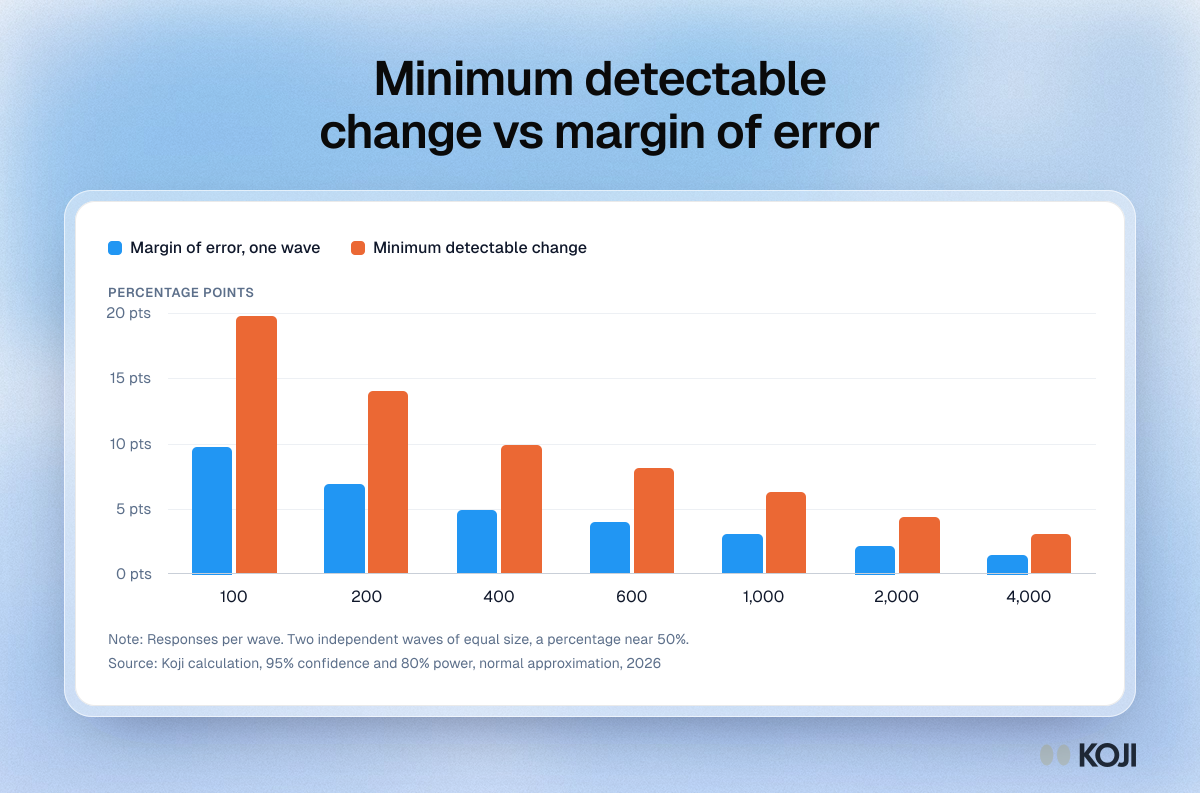
Column chart comparing margin of error with minimum detectable change by responses per wave: at 400 responses, 4.9 points against 9.9 points.

Column chart

Minimum detectable change vs margin of error
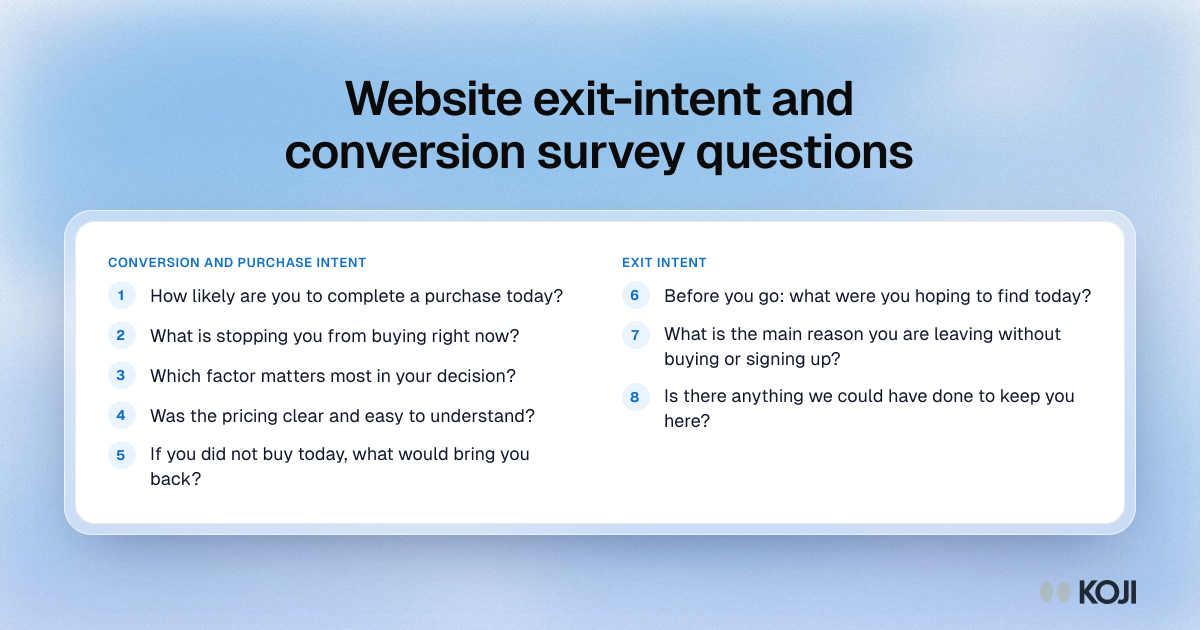
Question bank of eight website survey questions in two sections, conversion and purchase intent, and exit intent, such as what is stopping you from buying.

Question bank

Website exit-intent and conversion survey questions
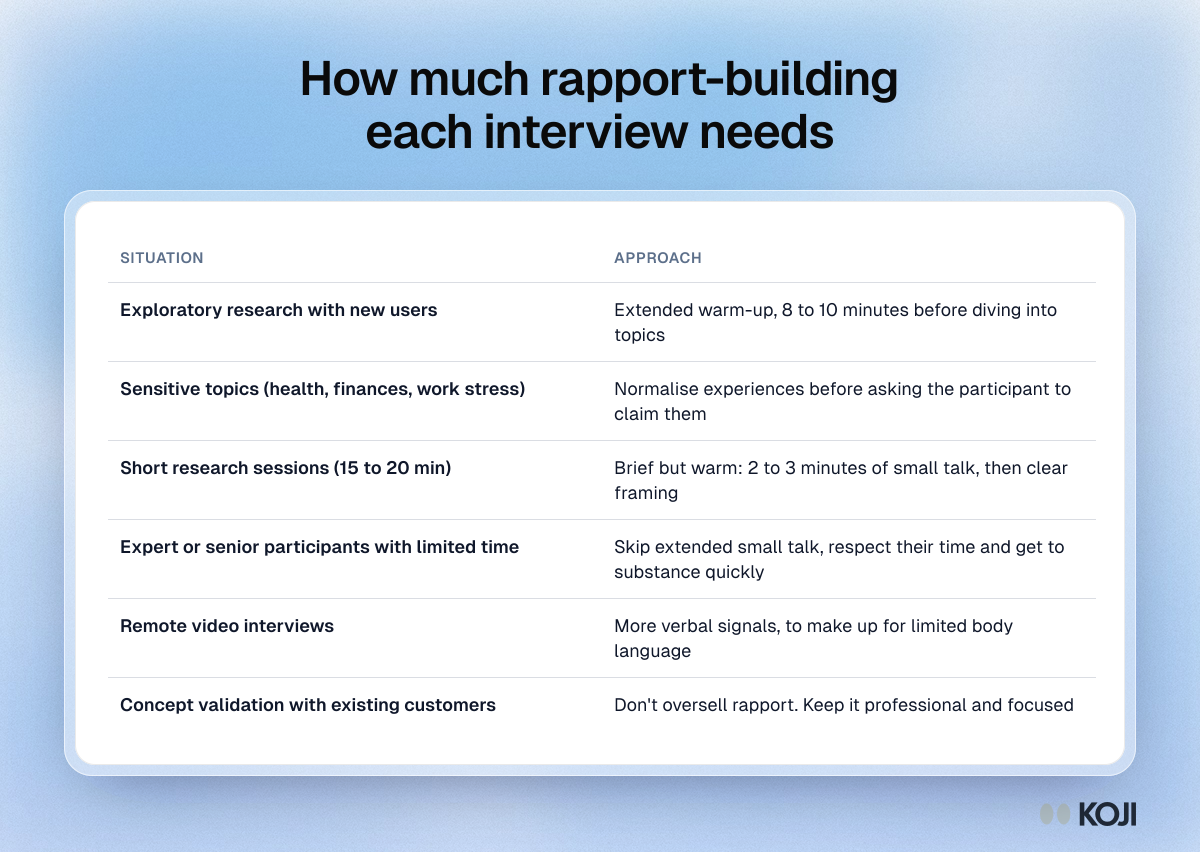
Table matching six interview situations, from exploratory research to expert participants and remote calls, with how much rapport-building each needs.

Reference table

How much rapport-building each interview needs
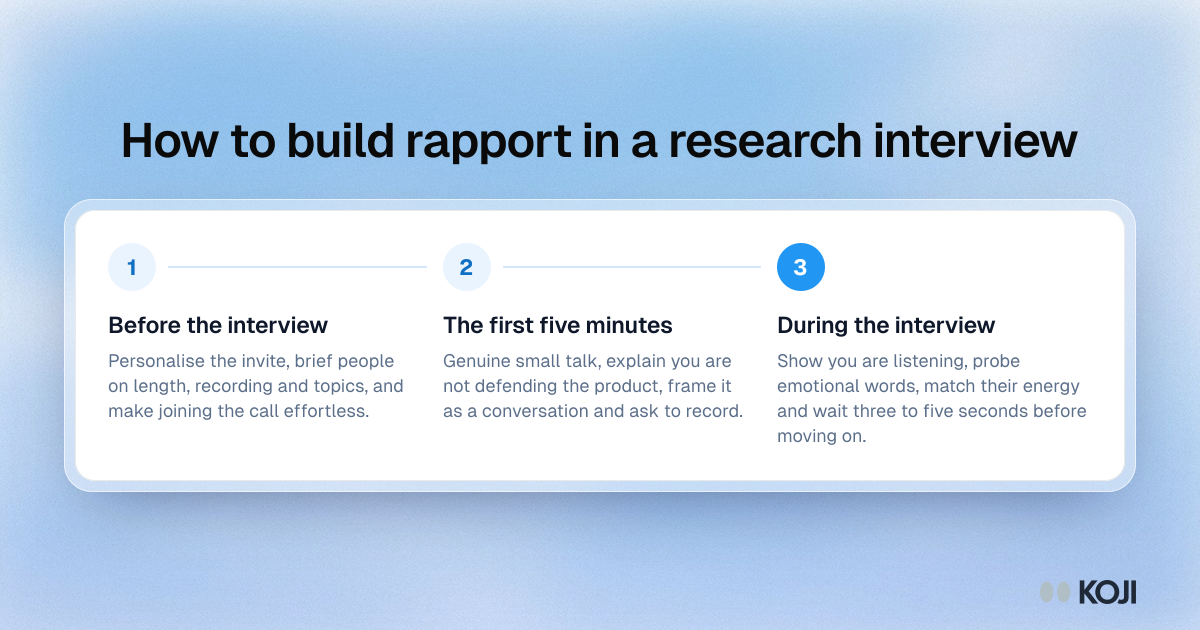
Process showing three stages of building rapport in a research interview: before the session, the first five minutes and during the interview.

Process

How to build rapport in a research interview
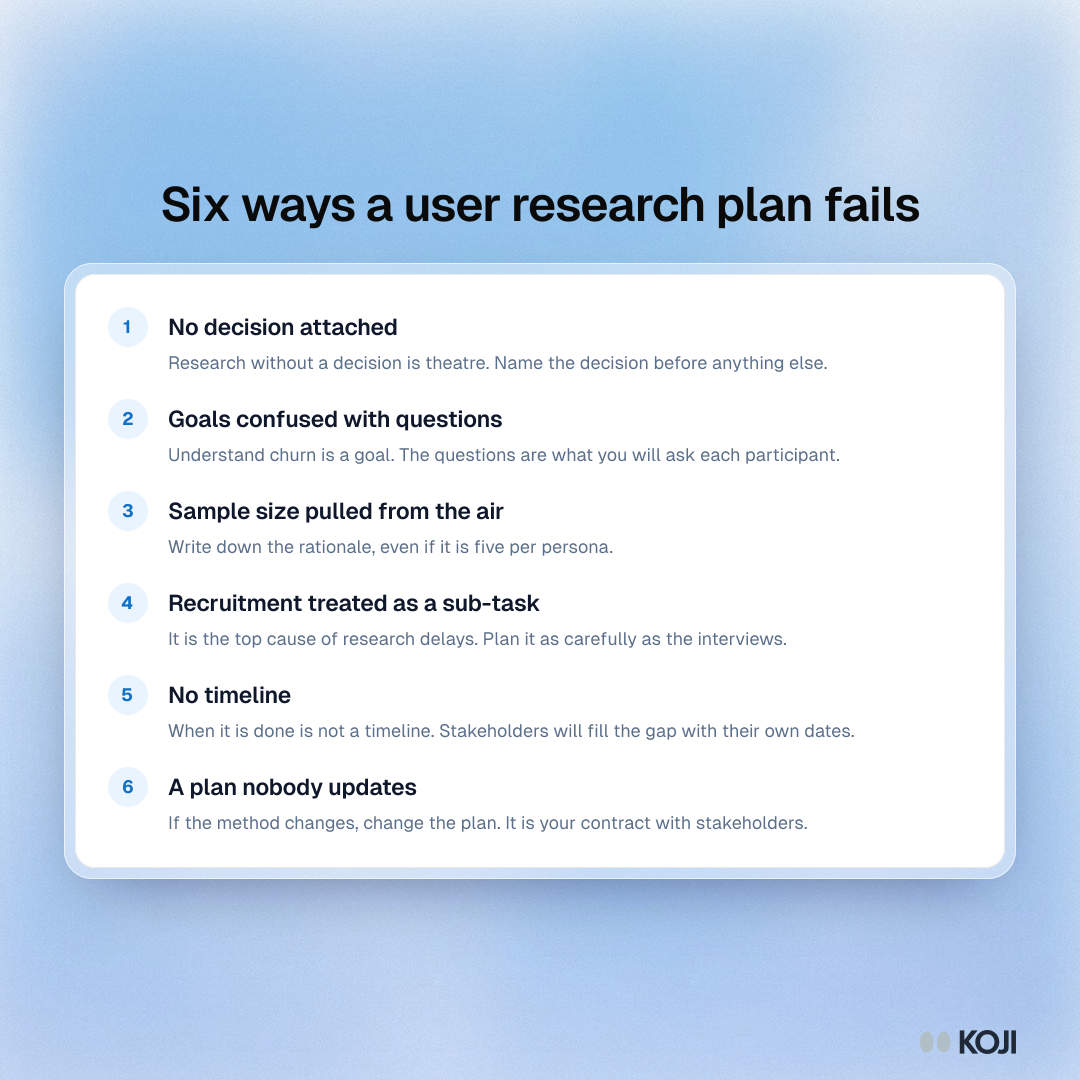
Listicle of six ways a research plan fails: no decision, goals confused with questions, a guessed sample size, rushed recruitment, no timeline, no updates.

Guide

Six ways a user research plan fails
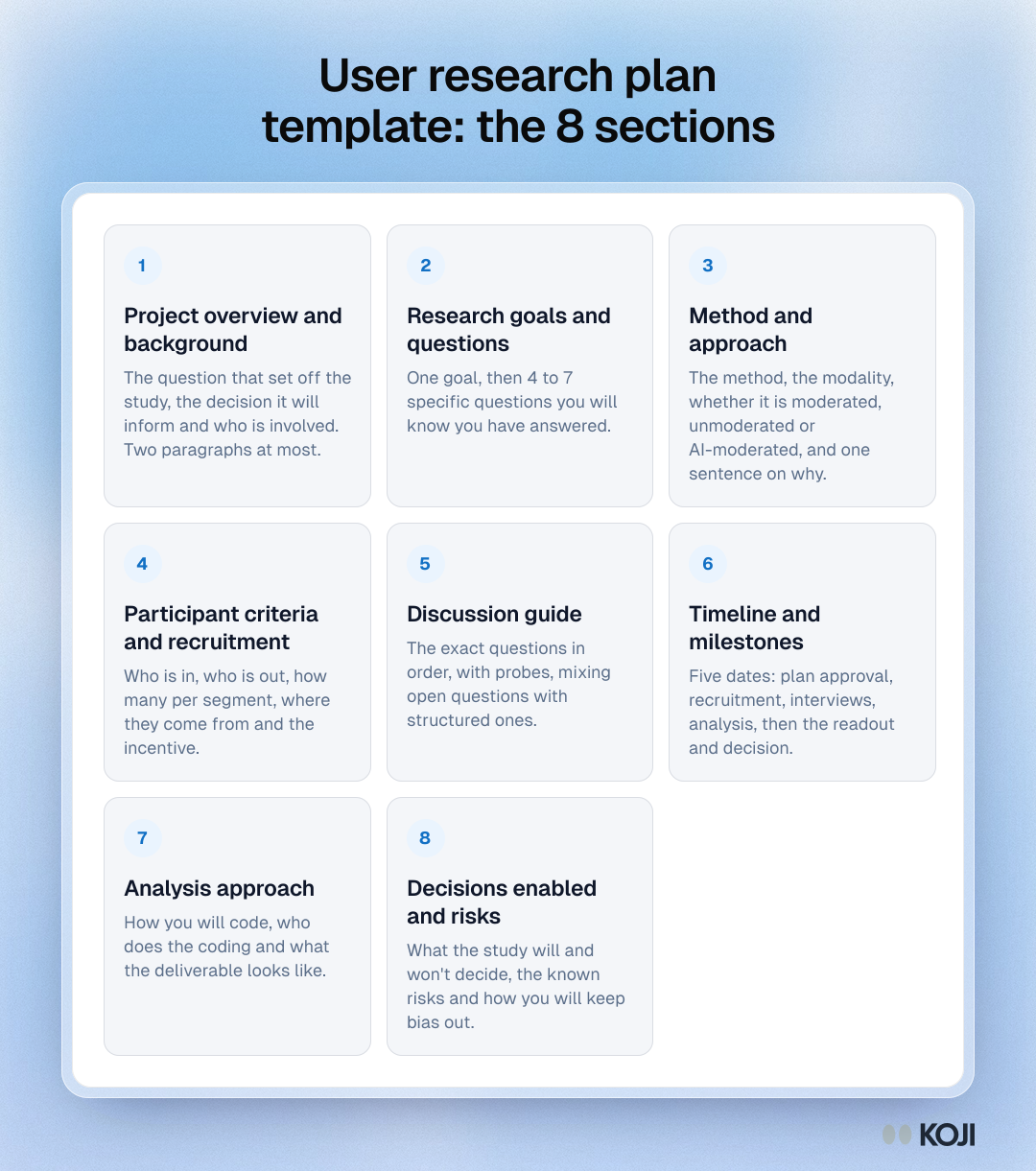
Framework of the eight sections of a user research plan, from project overview and research questions to analysis approach, decisions and risks.

Framework

User research plan template: the 8 sections
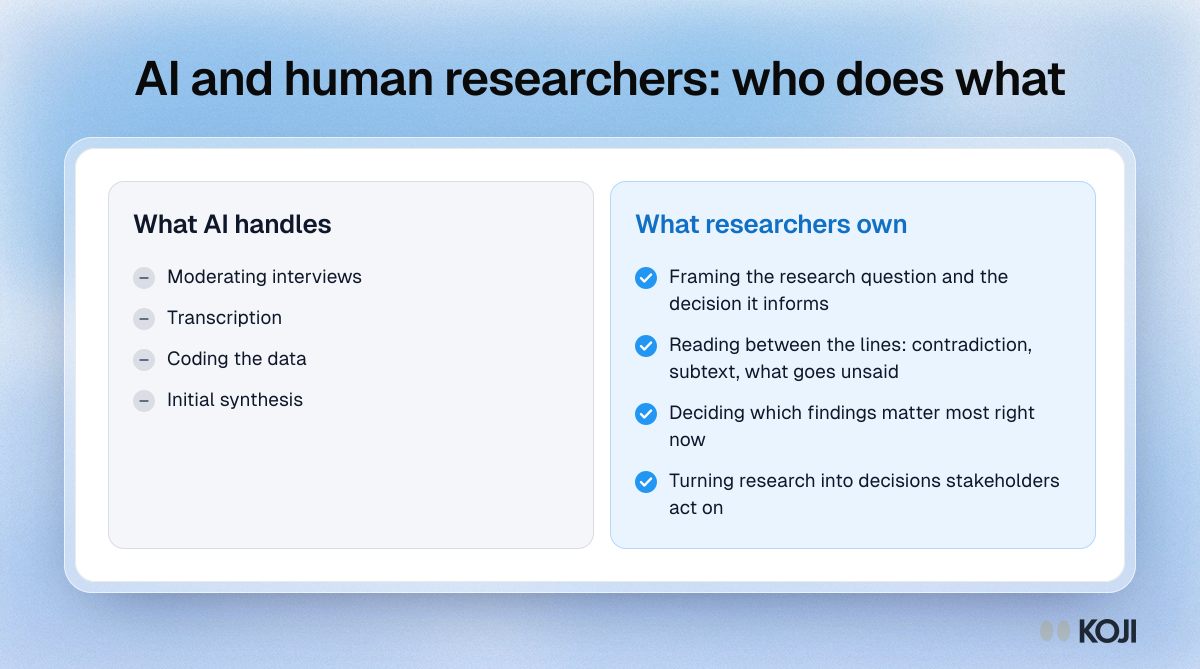
Comparison of the research work AI handles, moderation, transcription, coding and first synthesis, against the judgment work researchers keep.

Comparison

AI and human researchers: who does what
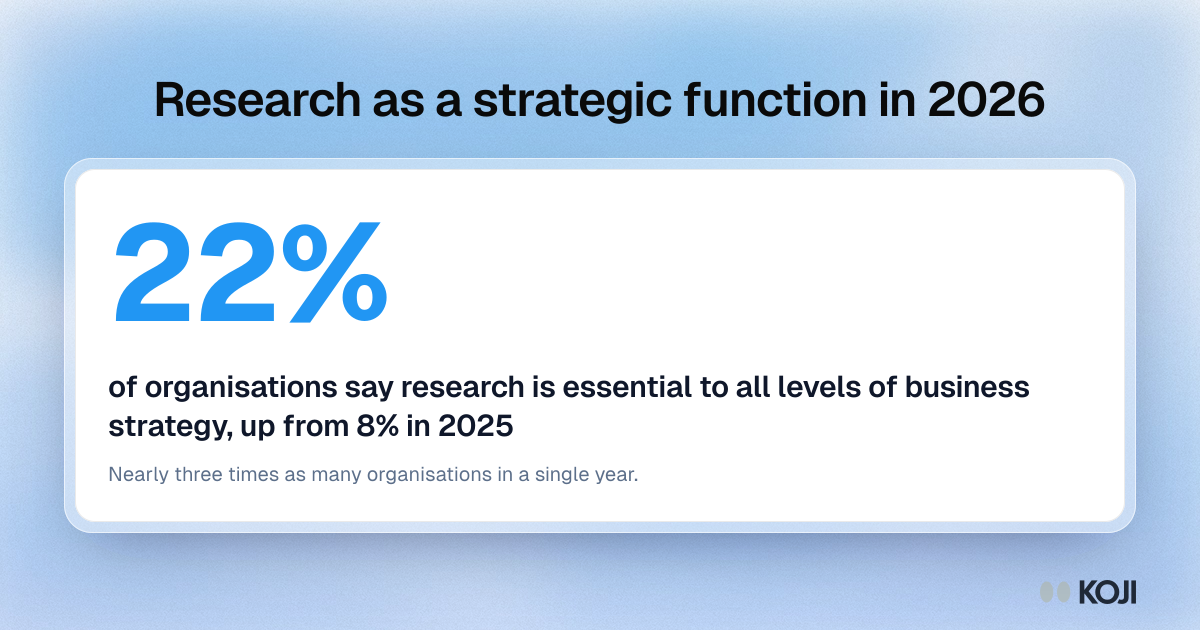
Stat card: 22% of organisations say research is essential to all levels of business strategy in 2026, up from 8% in 2025.

Key figure

Research as a strategic function in 2026
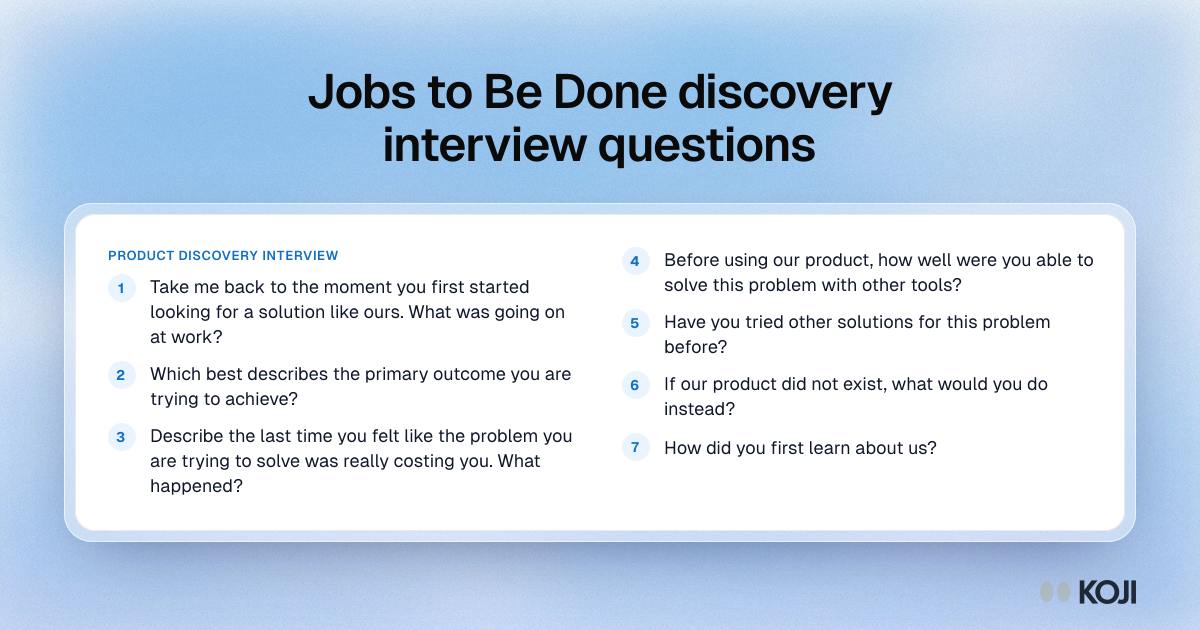
Question bank of seven Jobs to Be Done discovery interview questions, from the moment someone started looking for a solution to what they would do instead.

Question bank

Jobs to Be Done discovery interview questions
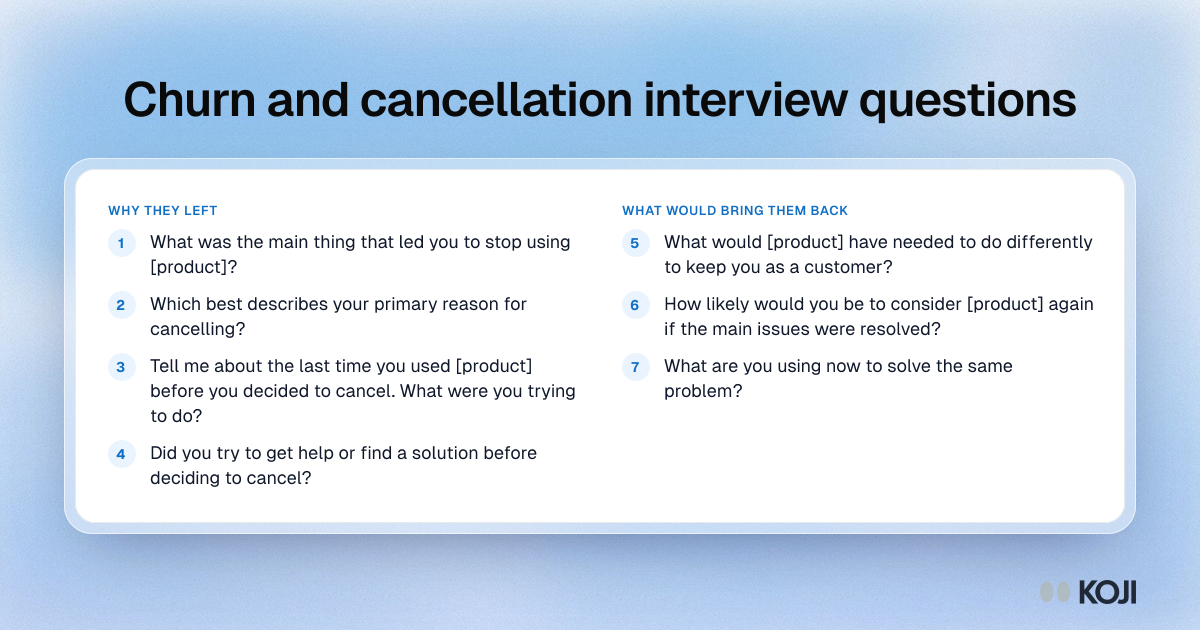
Question bank of seven churn interview questions in two sections: why the customer left, and what would have kept them or could win them back.

Question bank

Churn and cancellation interview questions
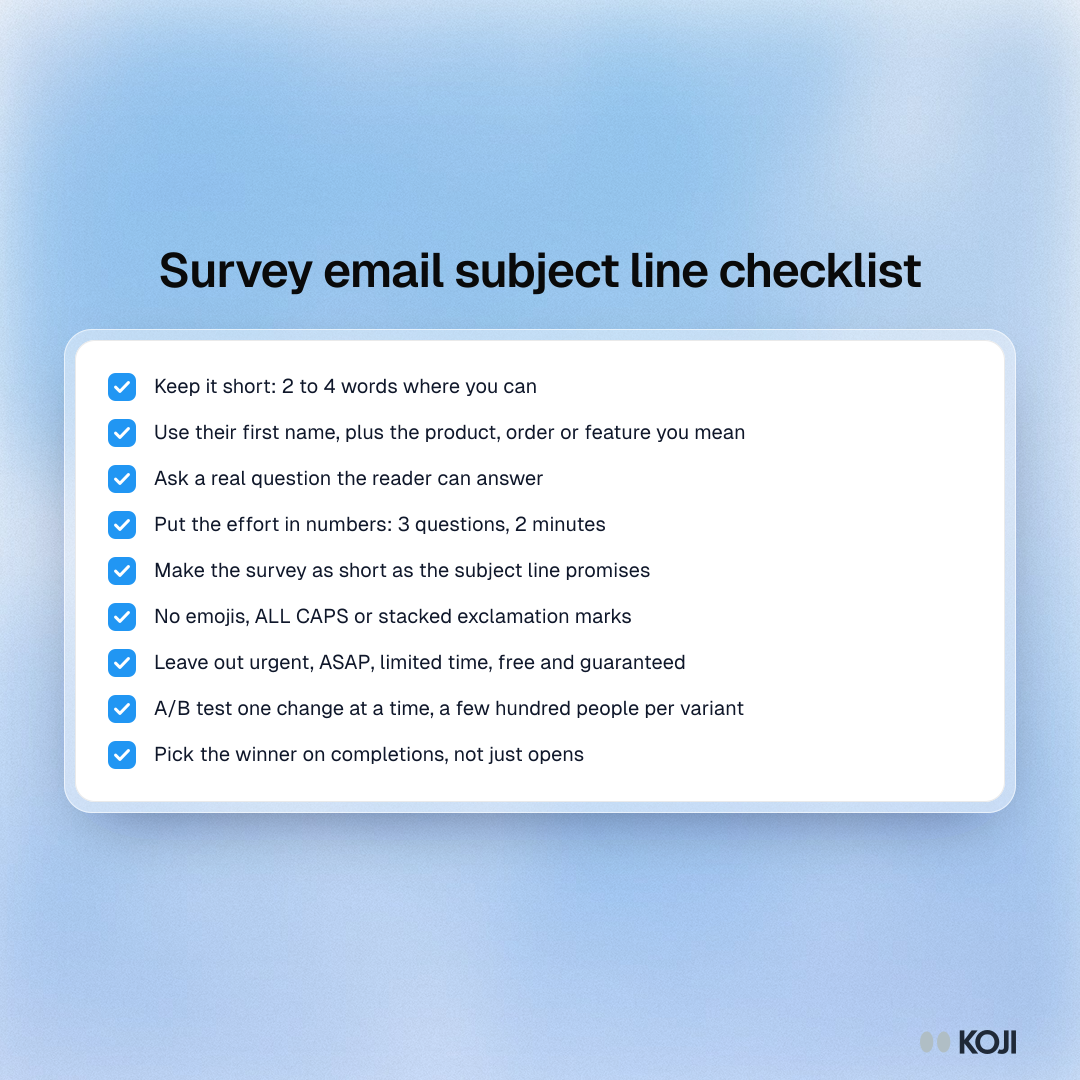
Checklist of nine rules for survey email subject lines, from keeping them to 2 to 4 words to judging A/B tests on completions, not opens.

Checklist

Survey email subject line checklist
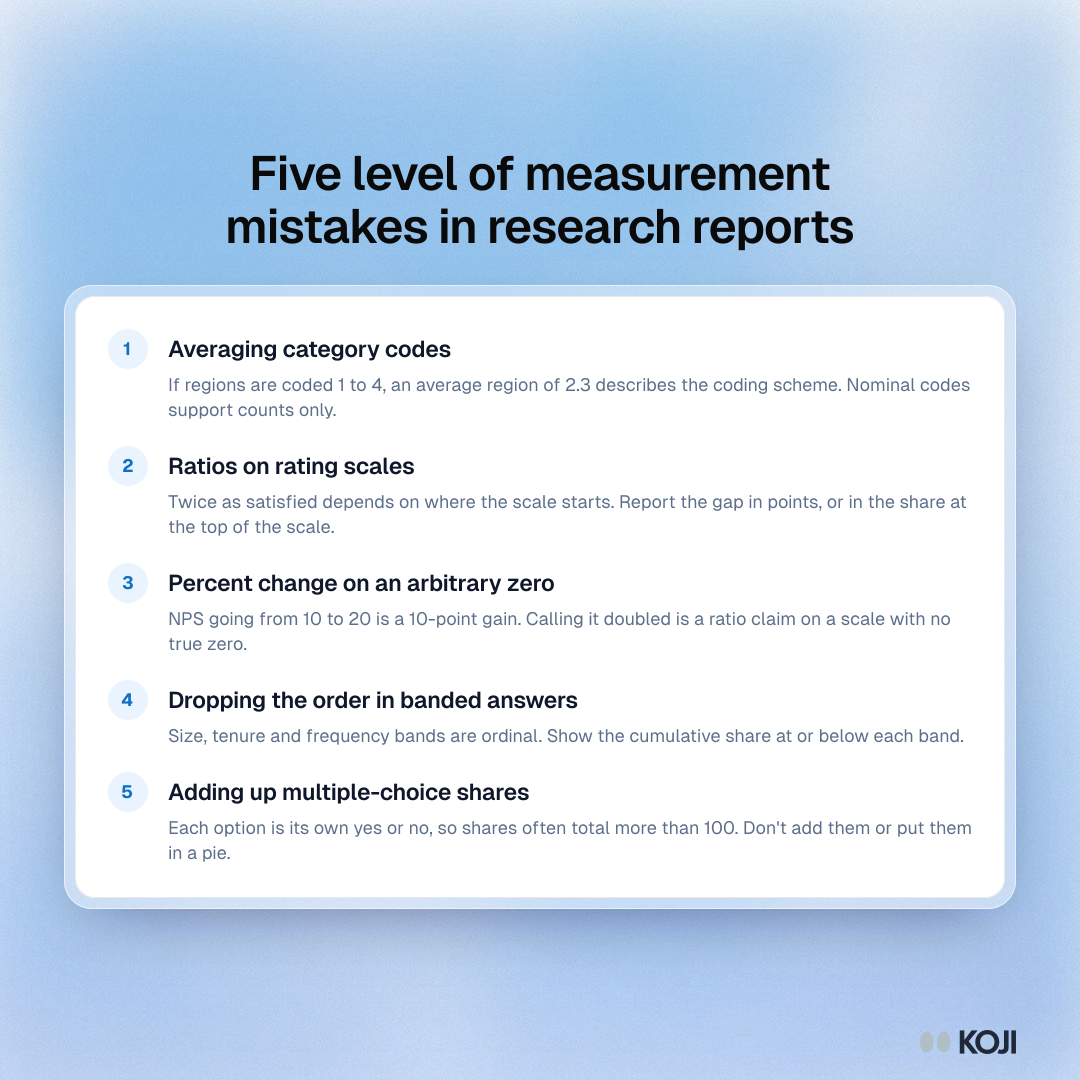
Listicle of five level of measurement mistakes: averaging category codes, ratios on rating scales, percent change on NPS, banded order and summed shares.

Guide

Five level of measurement mistakes in research reports
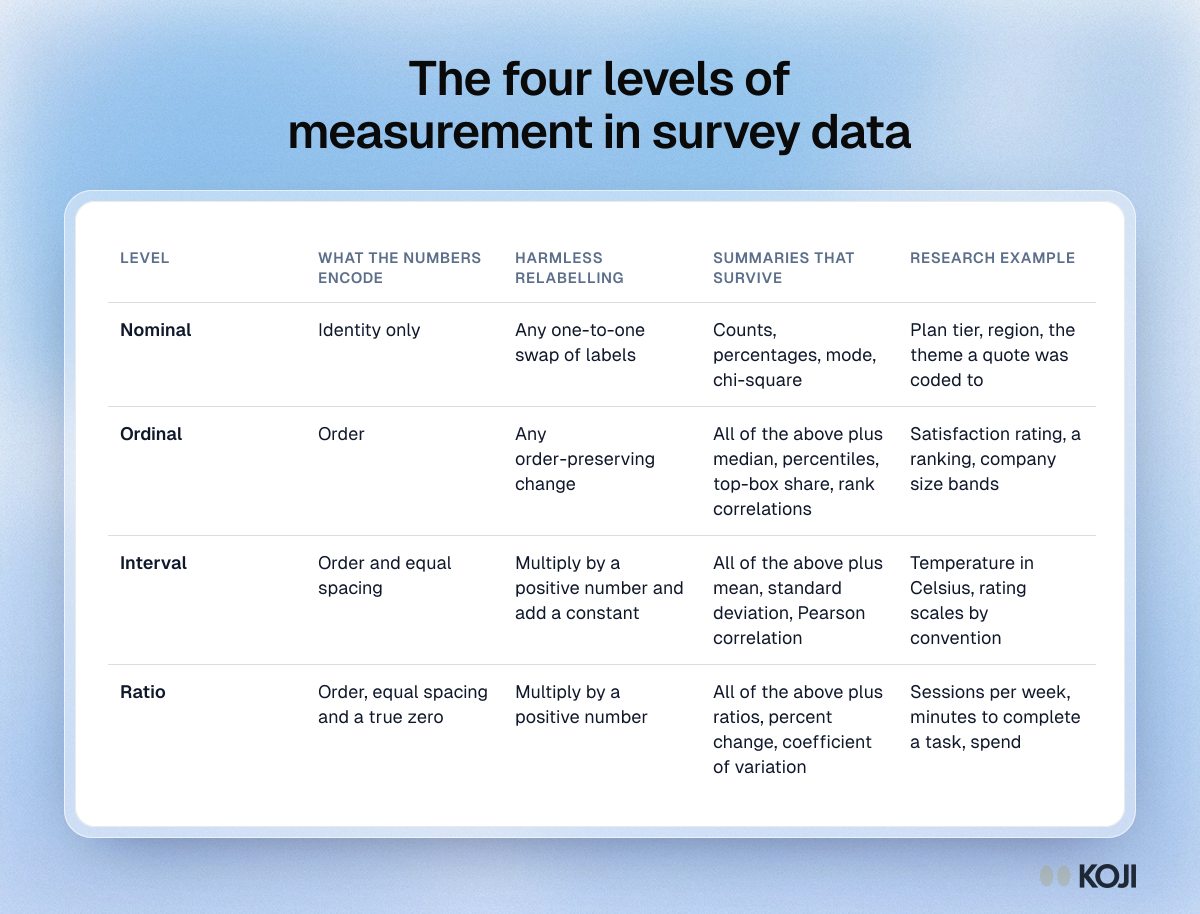
Table of the four levels of measurement, nominal, ordinal, interval and ratio, with the summaries each allows and a research example of each.

Reference table

The four levels of measurement in survey data
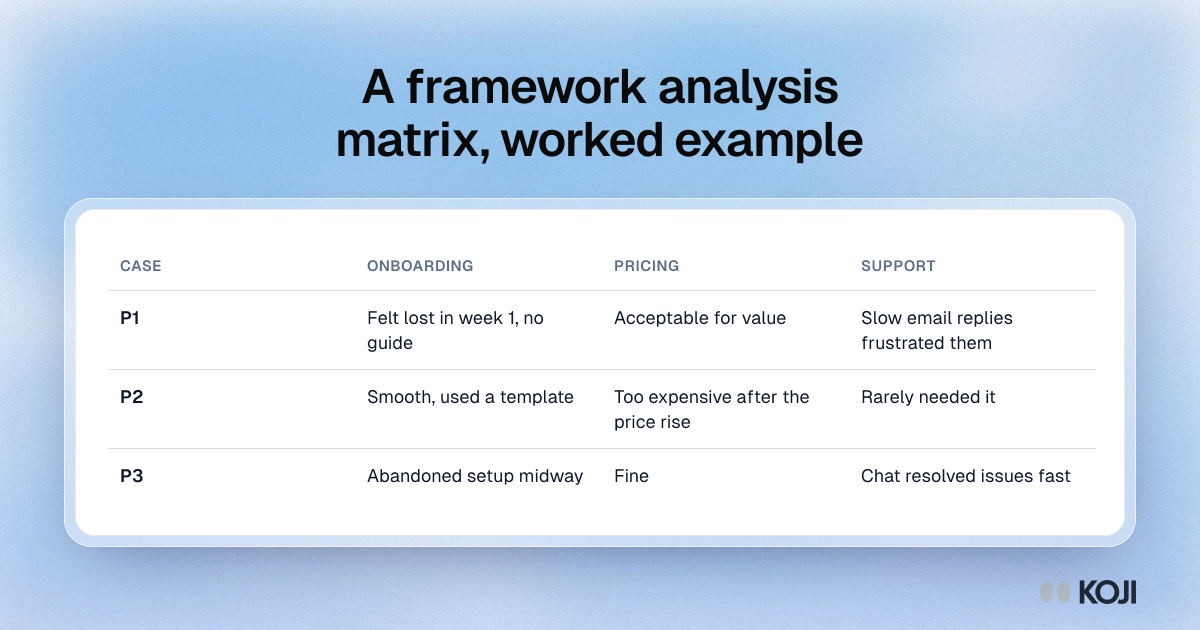
Table showing a framework analysis matrix for a churn study: three participants as rows and onboarding, pricing and support as theme columns.

Reference table

A framework analysis matrix, worked example
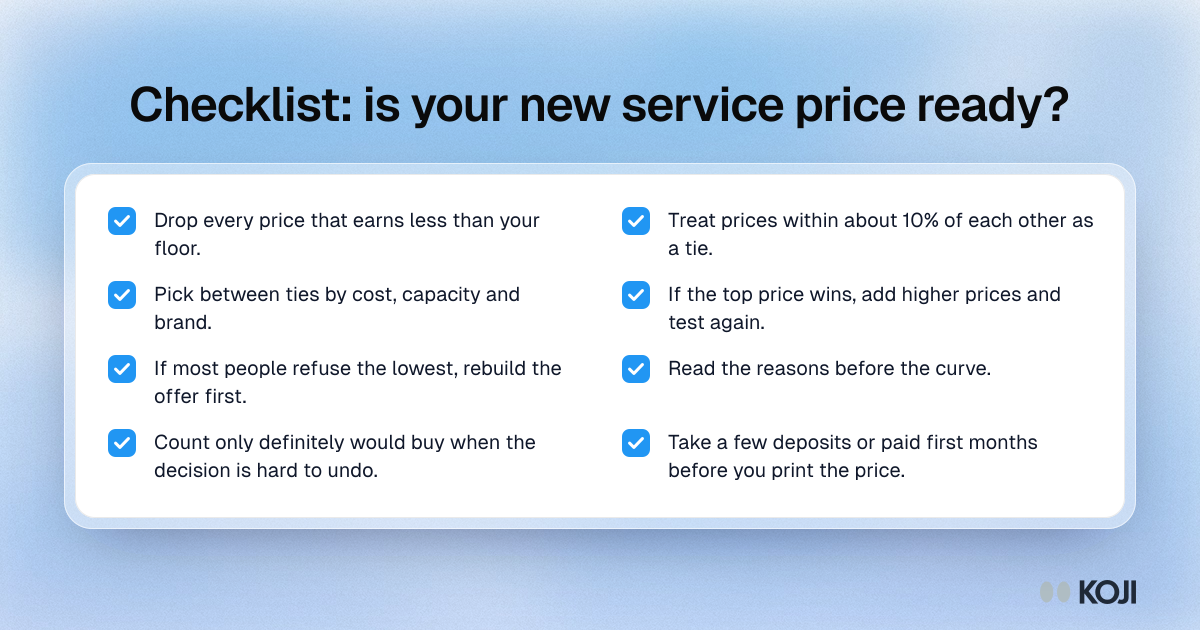
Checklist for deciding a new service price after about 30 customer conversations: floor, near-ties, reasons, ceiling and a real booking test.

Checklist

Checklist: is your new service price ready?
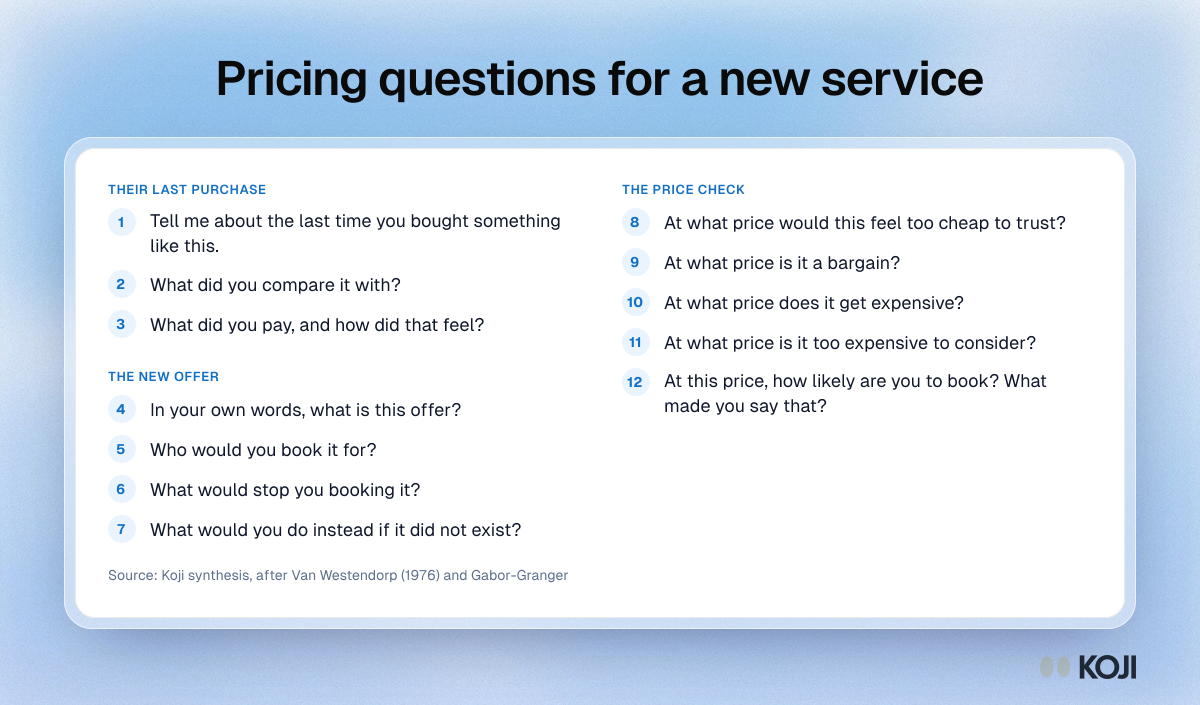
Question bank of twelve questions for pricing a new service with customers, in three groups: their last purchase, the new offer and the price check.

Question bank

Pricing questions for a new service
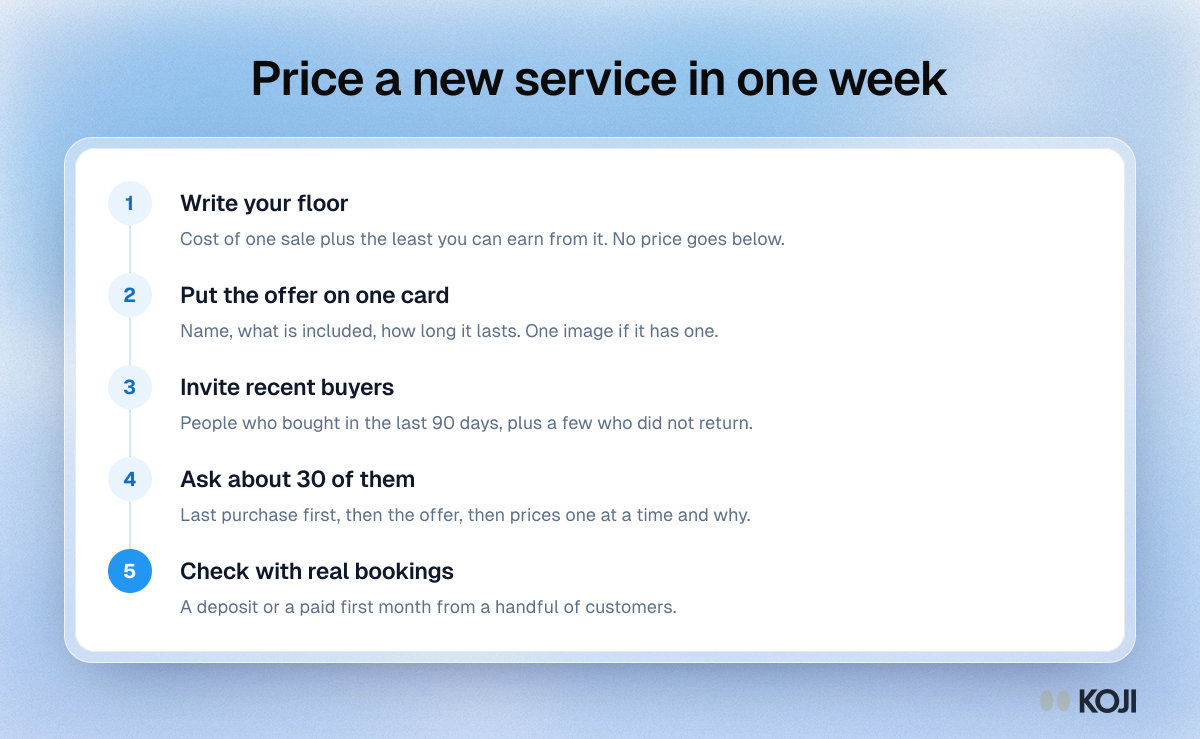
Process for pricing a new service in a week: write your floor, put the offer on a card, invite recent buyers, ask about 30 and check with real bookings.

Process

Price a new service in one week
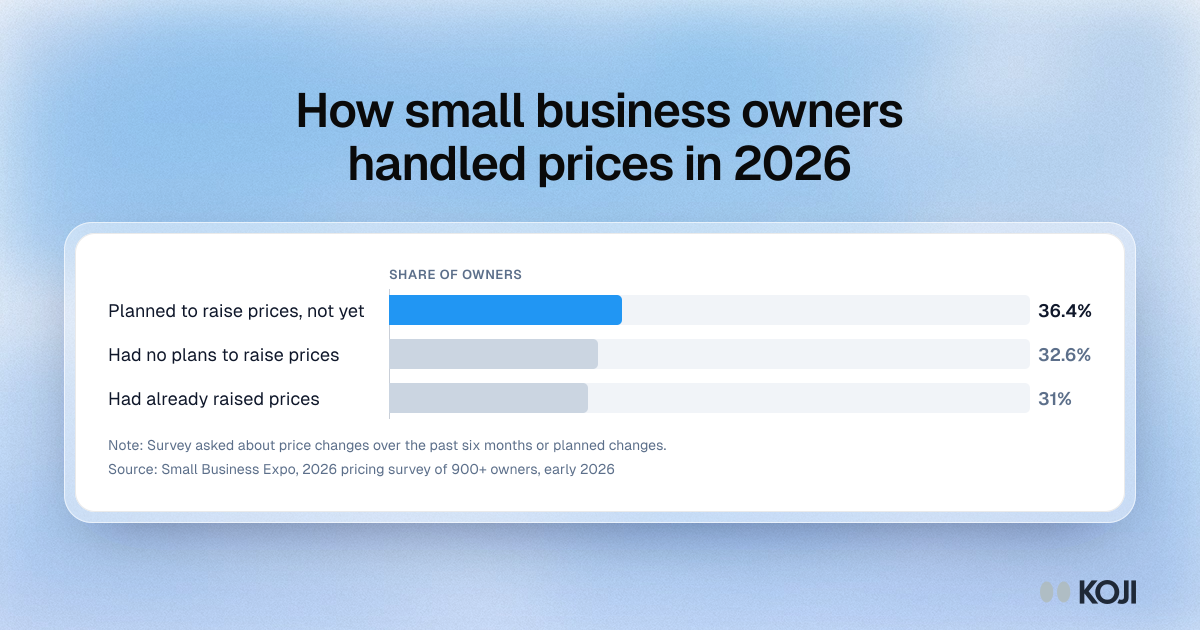
Bar chart of how more than 900 small business owners handled price rises in early 2026: 36.4% planned to raise, 32.6% had no plans and 31.0% had already raised.

Bar chart

How small business owners handled prices in 2026
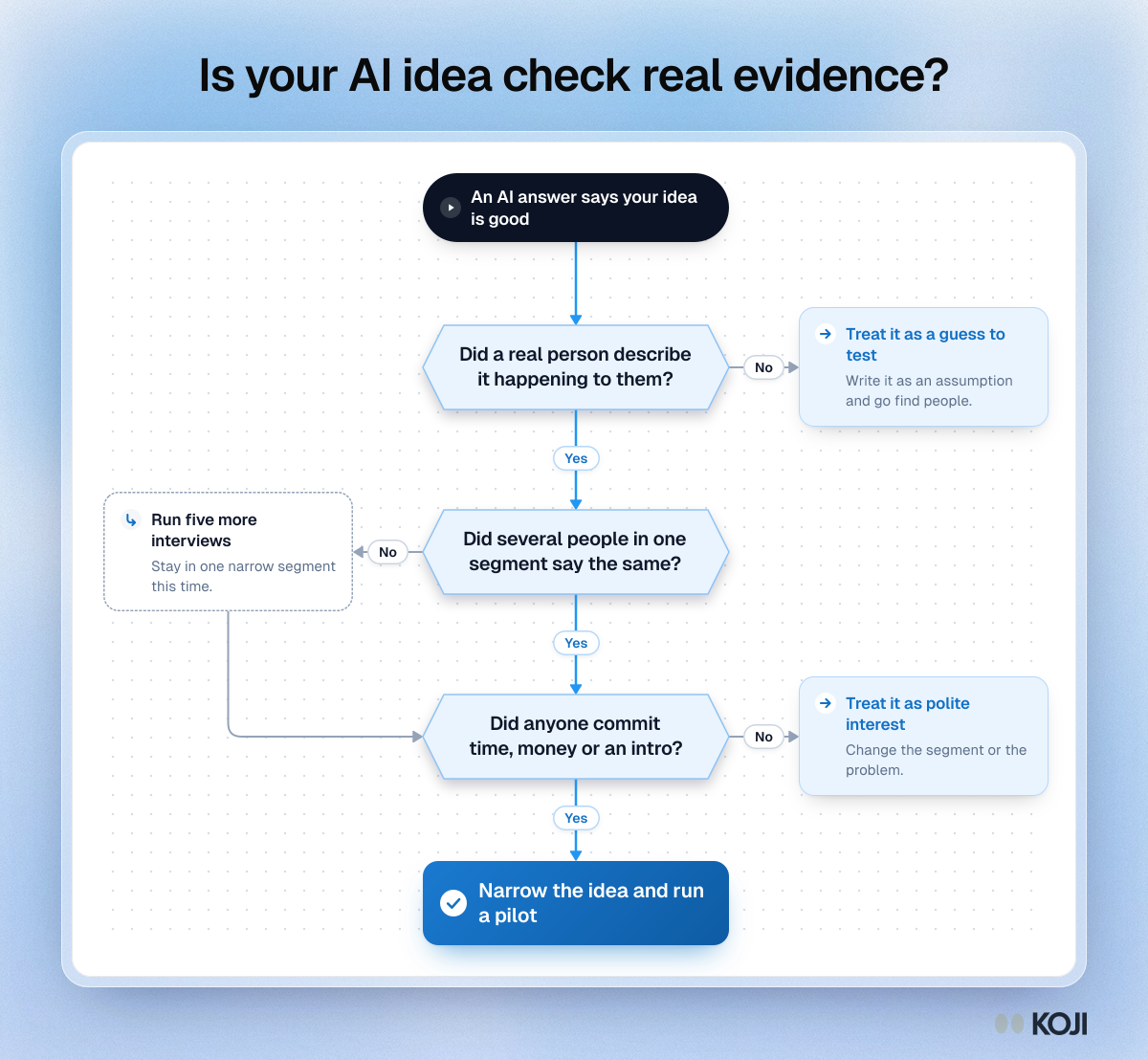
Flowchart for checking if an AI answer about your idea is real evidence: real behaviour, repeat across people, then commitment.

Flowchart

Is your AI idea check real evidence?
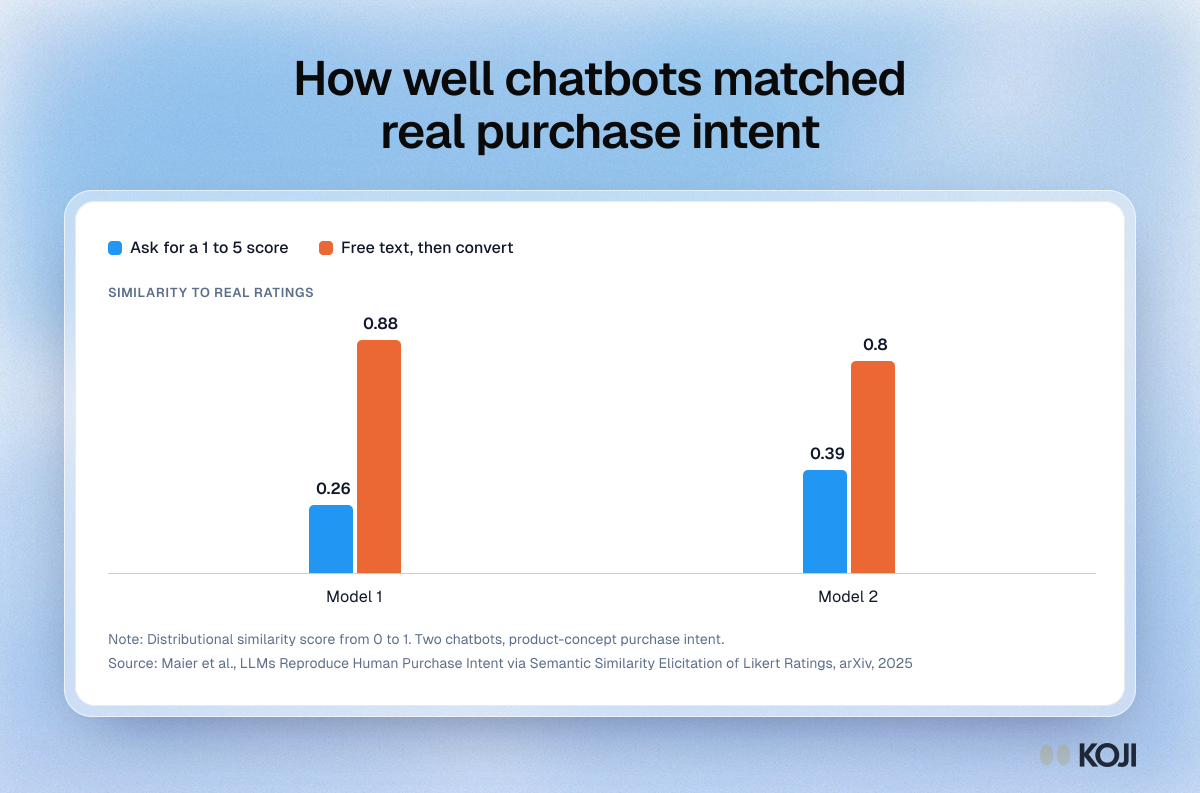
Column chart: two chatbots matched real purchase-intent ratings at 0.26 and 0.39 when asked for a score, and 0.88 and 0.80 when asked for words first.

Column chart

How well chatbots matched real purchase intent
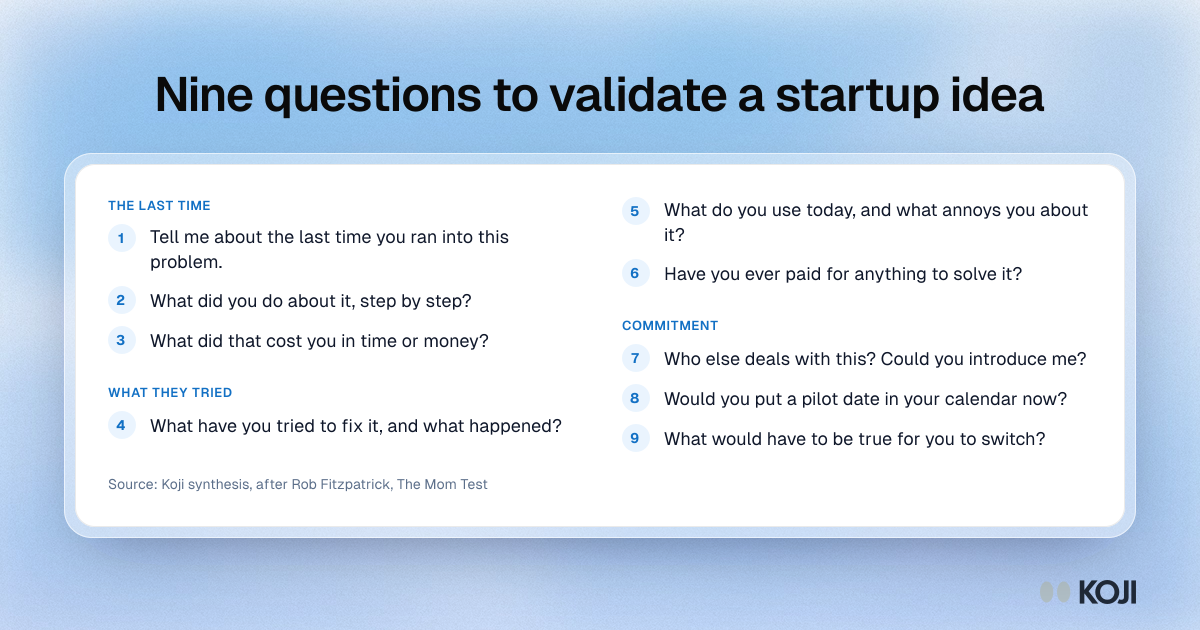
Question bank of nine interview questions for validating a startup idea, in three groups: the last time the problem happened, what people tried, and commitment.

Question bank

Nine questions to validate a startup idea
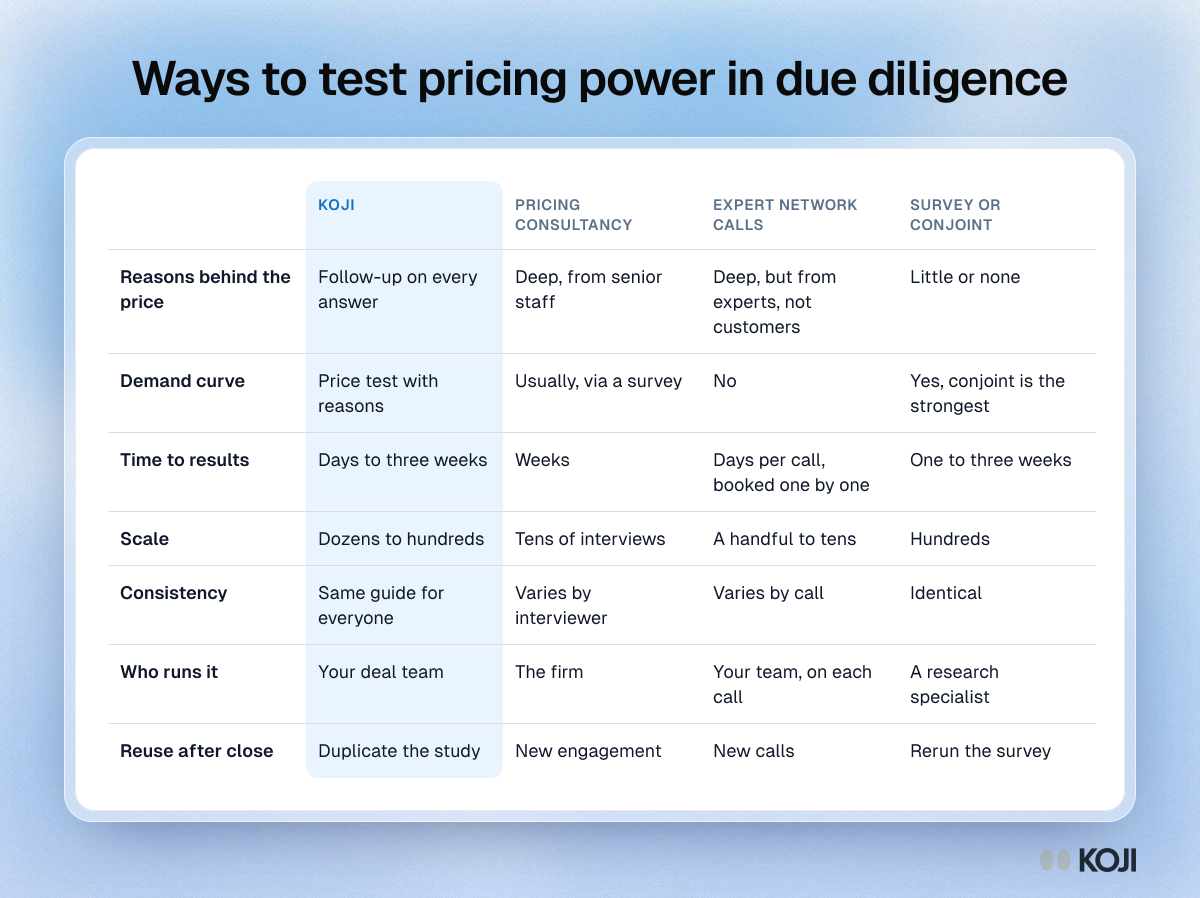
Table comparing Koji, a pricing consultancy, expert network calls and survey or conjoint studies for testing pricing power in due diligence

Reference table

Ways to test pricing power in due diligence
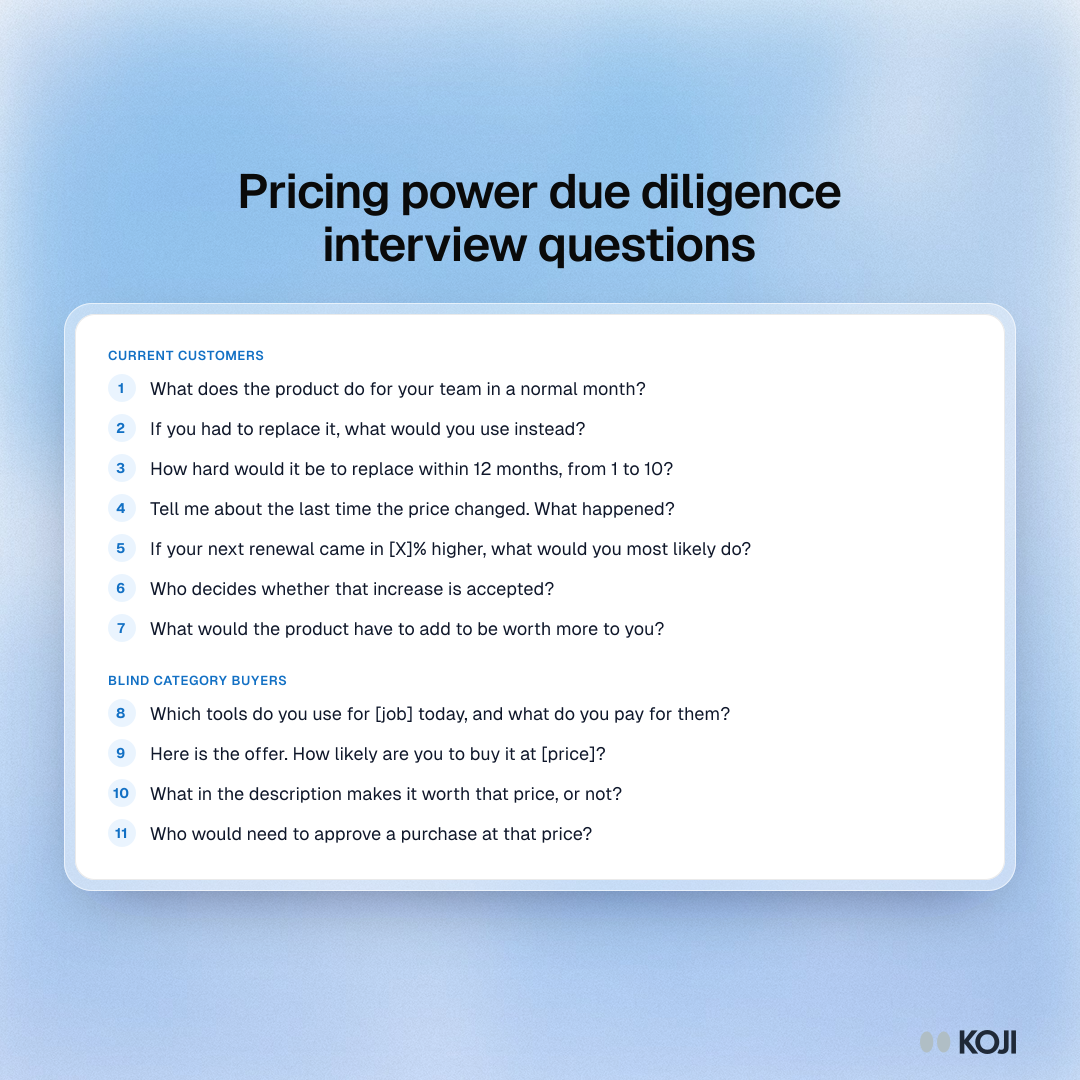
Question bank for pricing power due diligence: seven questions for current customers and four for blind category buyers, including a price test

Question bank

Pricing power due diligence interview questions
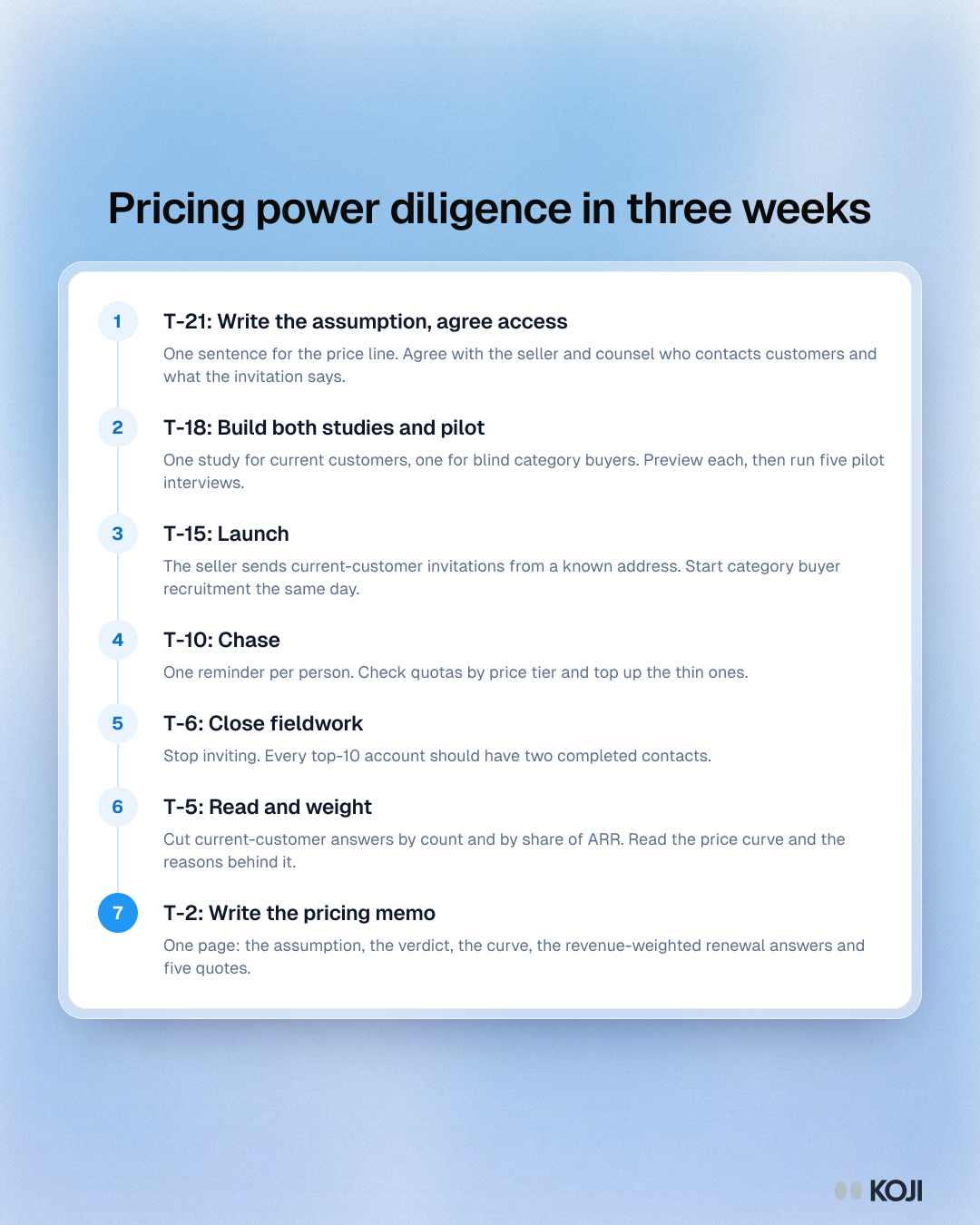
Process showing a three-week pricing power diligence timeline, from writing the price assumption at T-21 to the one-page pricing memo at T-2

Process

Pricing power diligence in three weeks
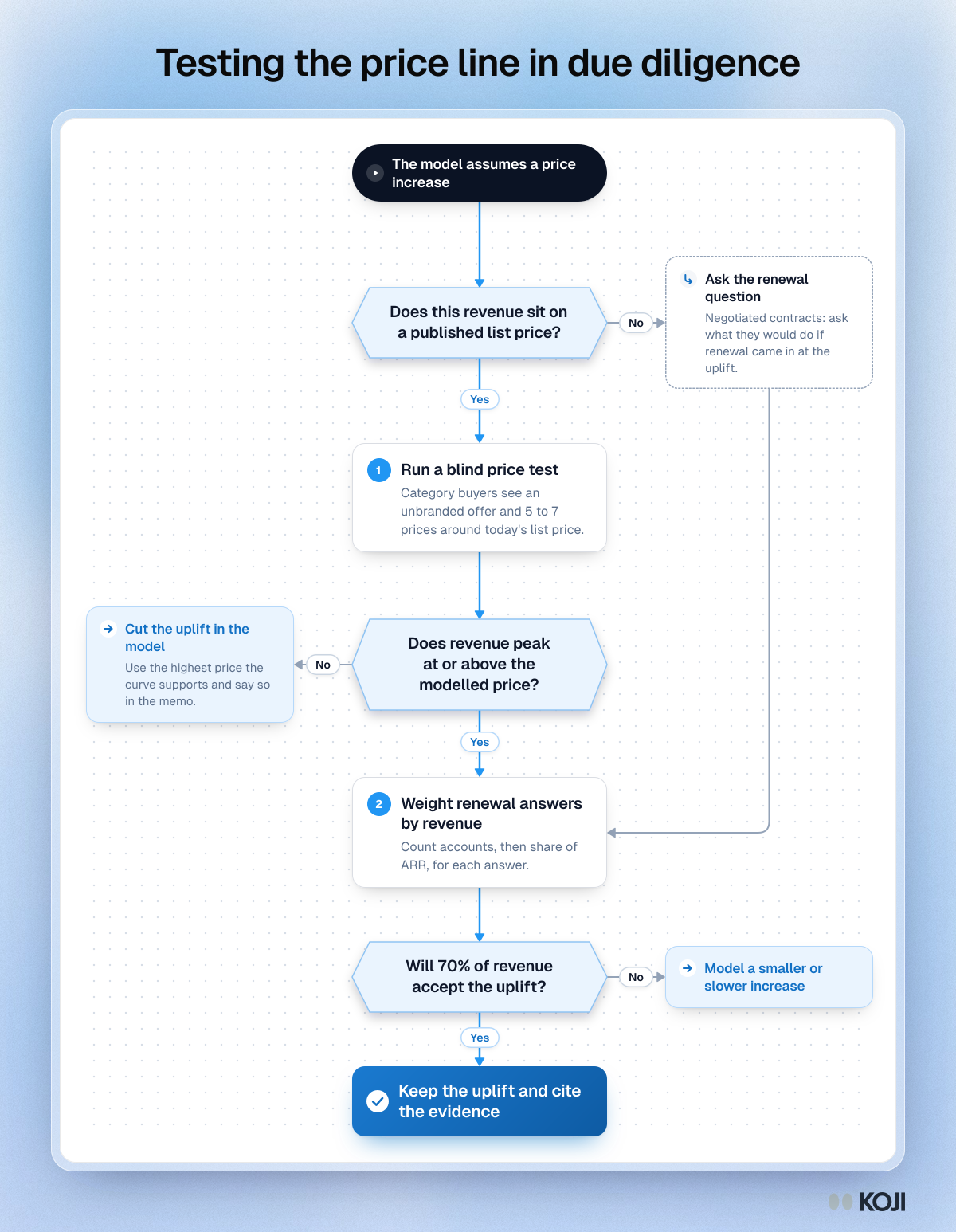
Flowchart for testing a price assumption in due diligence: list price or not, blind price test, demand check, revenue-weighted renewal answers, keep or cut

Flowchart

Testing the price line in due diligence
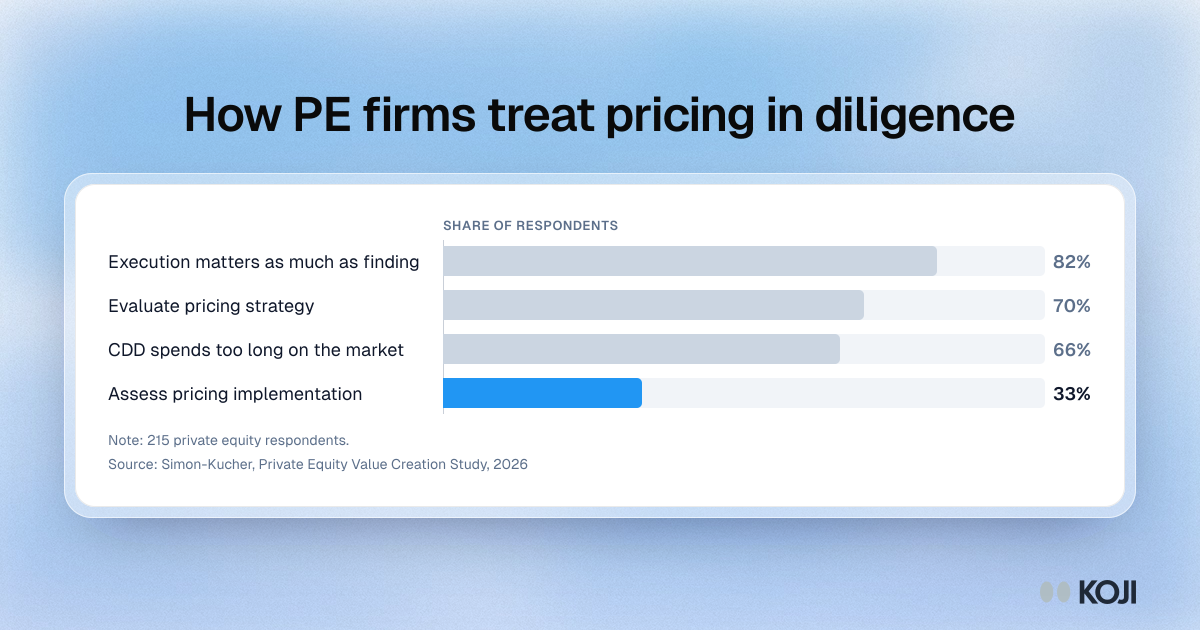
Bar chart of a 2026 PE survey: 82% value execution, 70% evaluate pricing strategy, 66% say CDD overweights the market, 33% assess pricing implementation

Bar chart

How PE firms treat pricing in diligence
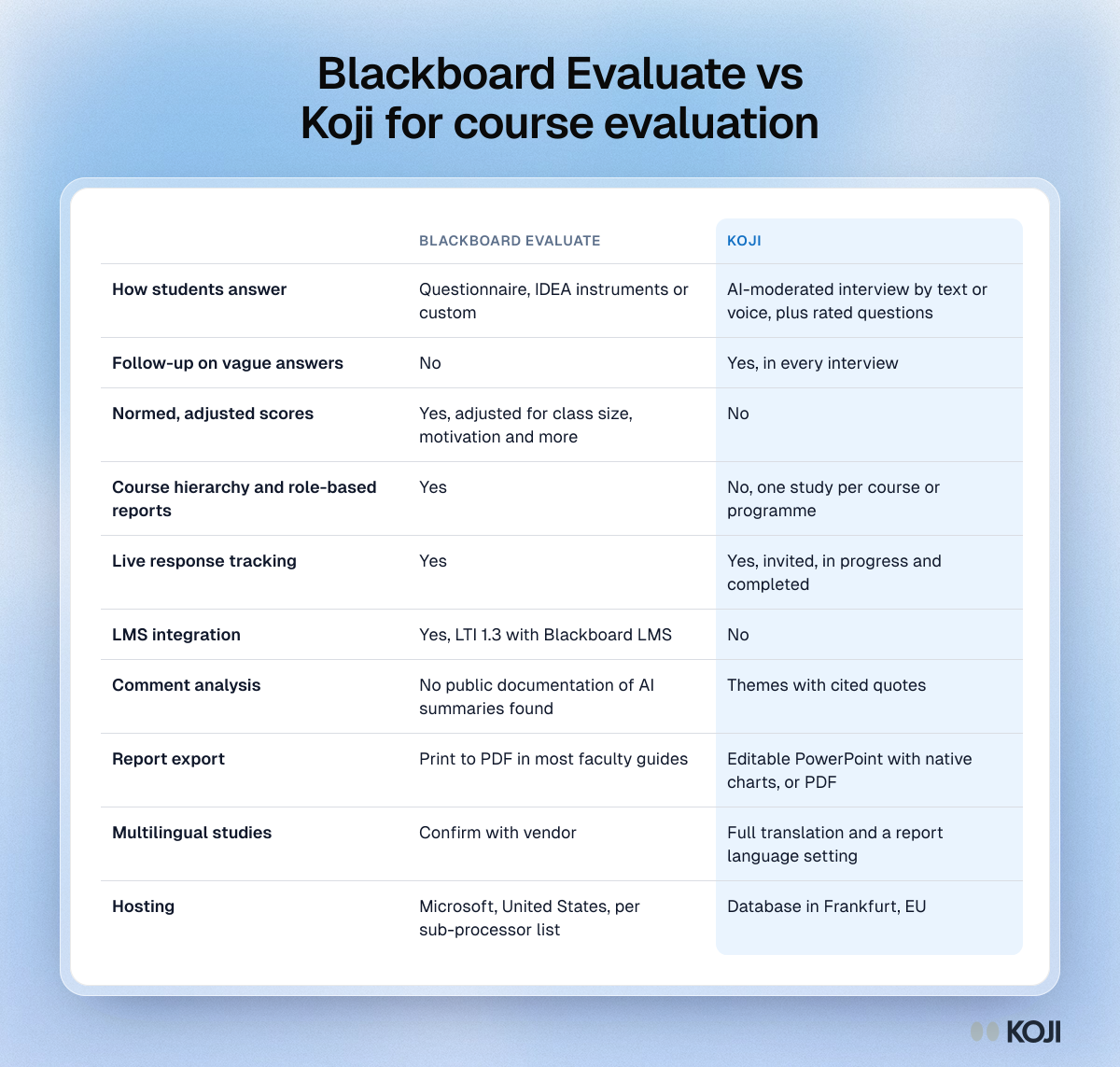
Comparison table of Blackboard Evaluate and Koji for course evaluation, covering collection method, normed scores, comment analysis, export and hosting.

Reference table

Blackboard Evaluate vs Koji for course evaluation
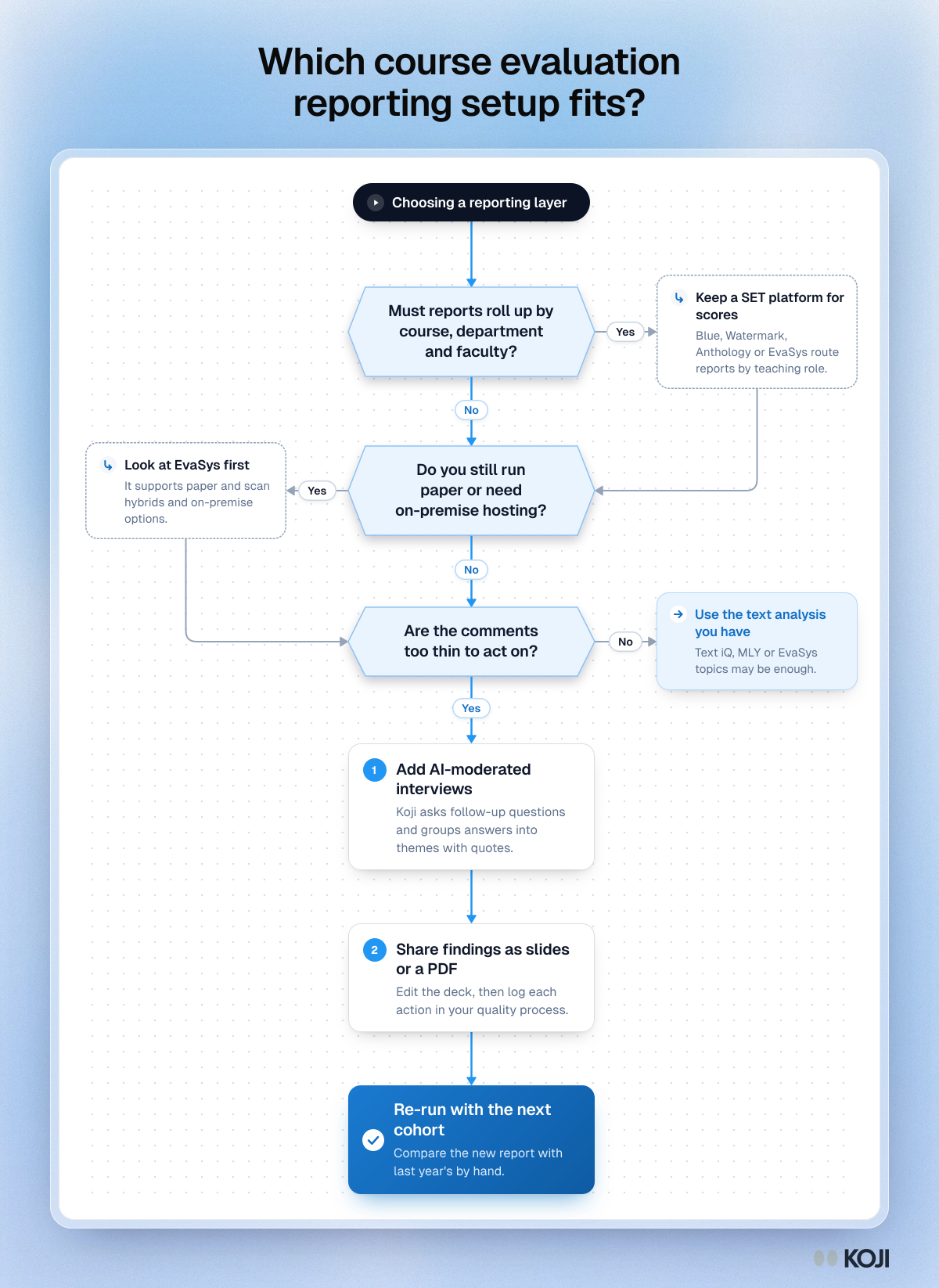
Flowchart for choosing a course evaluation reporting setup: three questions, two side steps, ending in a re-run with the next cohort.

Flowchart

Which course evaluation reporting setup fits?
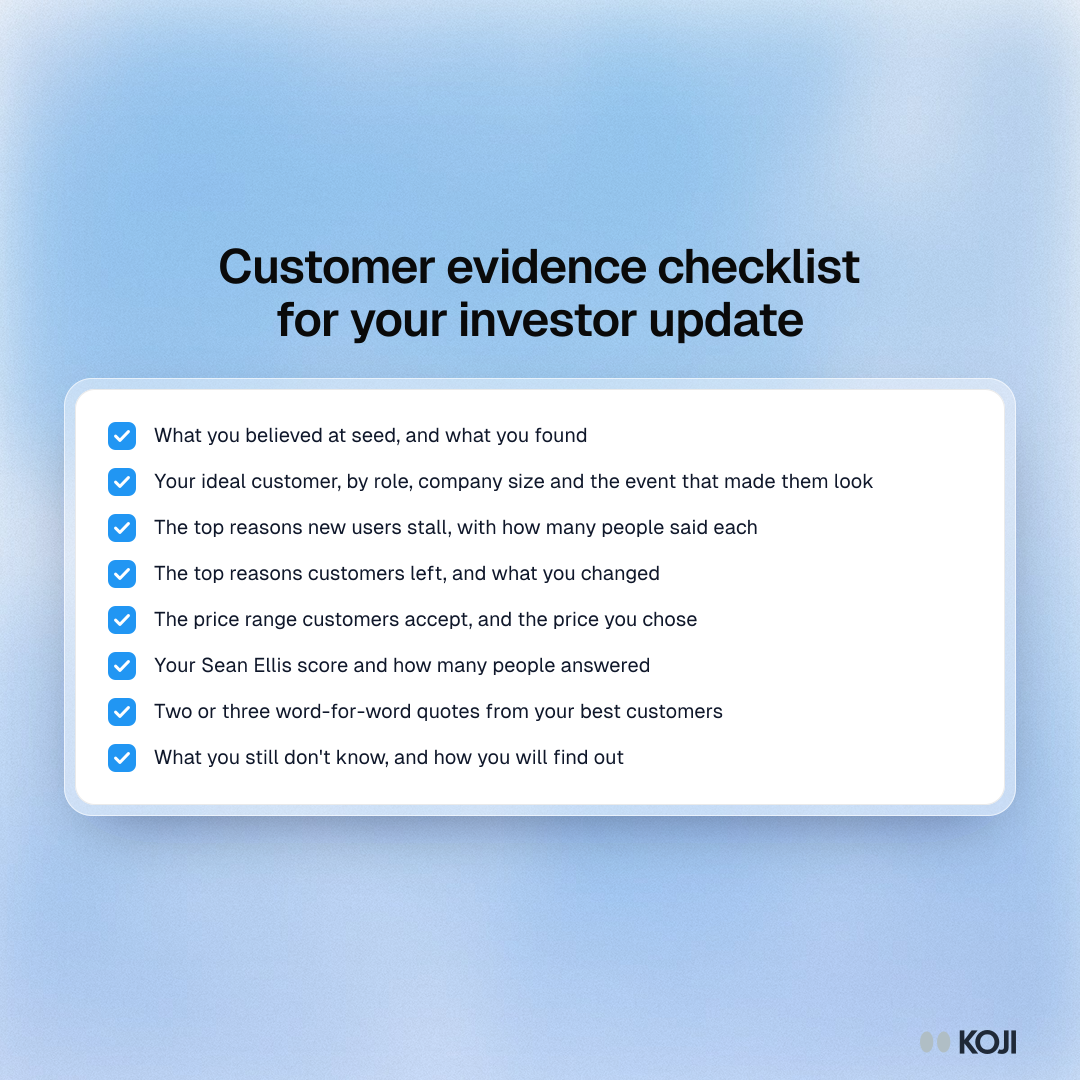
Checklist of customer evidence to include in an investor update after 90 days of research, from ideal customer to price and fit score.

Checklist

Customer evidence checklist for your investor update
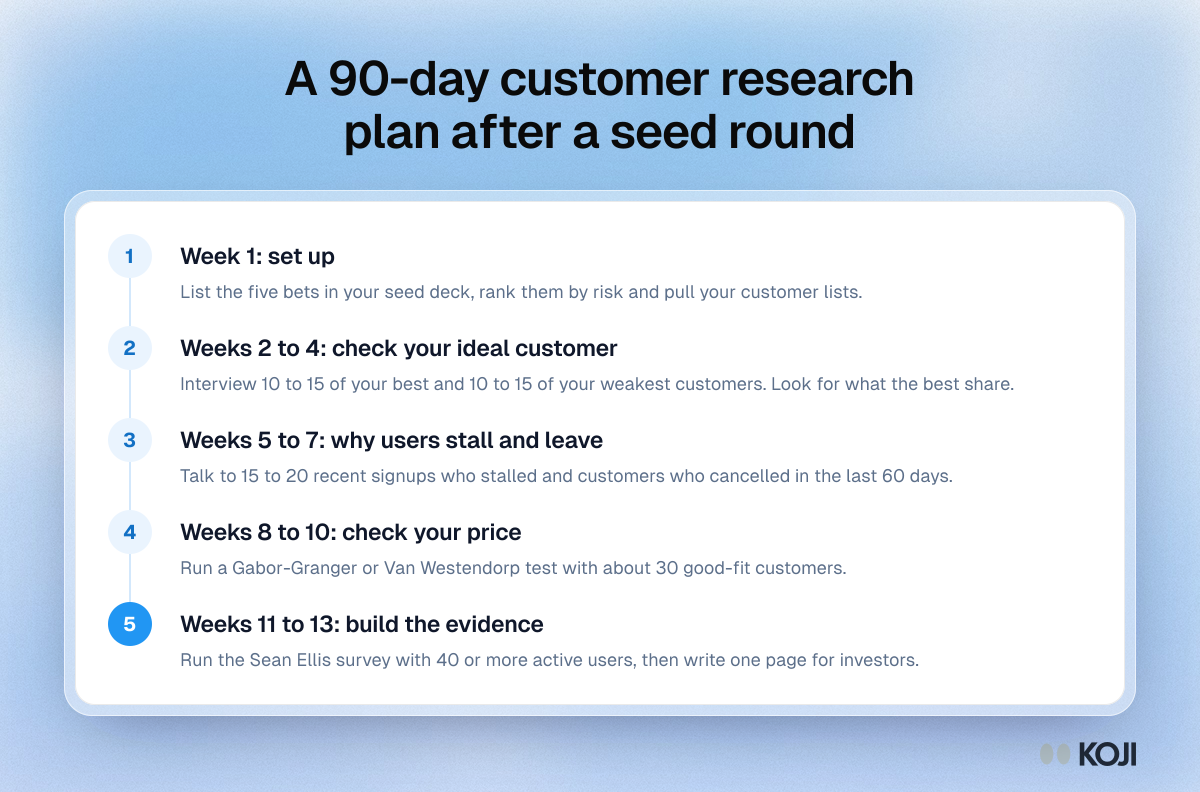
Process diagram of a 90-day customer research plan after a seed round: set up, ICP check, activation and churn, pricing check, investor evidence.

Process

A 90-day customer research plan after a seed round
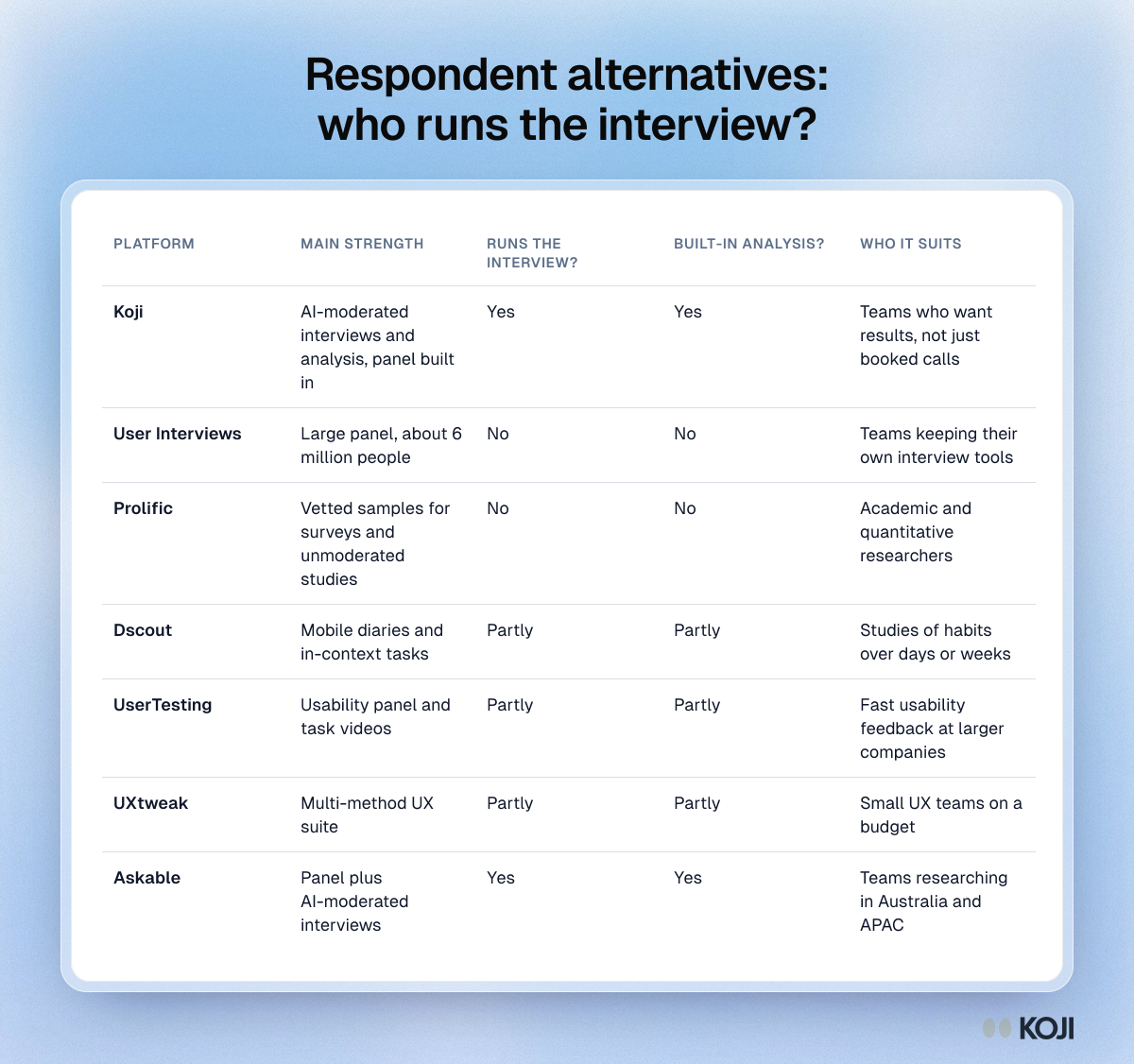
Table comparing seven Respondent alternatives by main strength, whether each runs the interview, whether it includes analysis, and who it suits.

Reference table

Respondent alternatives: who runs the interview?
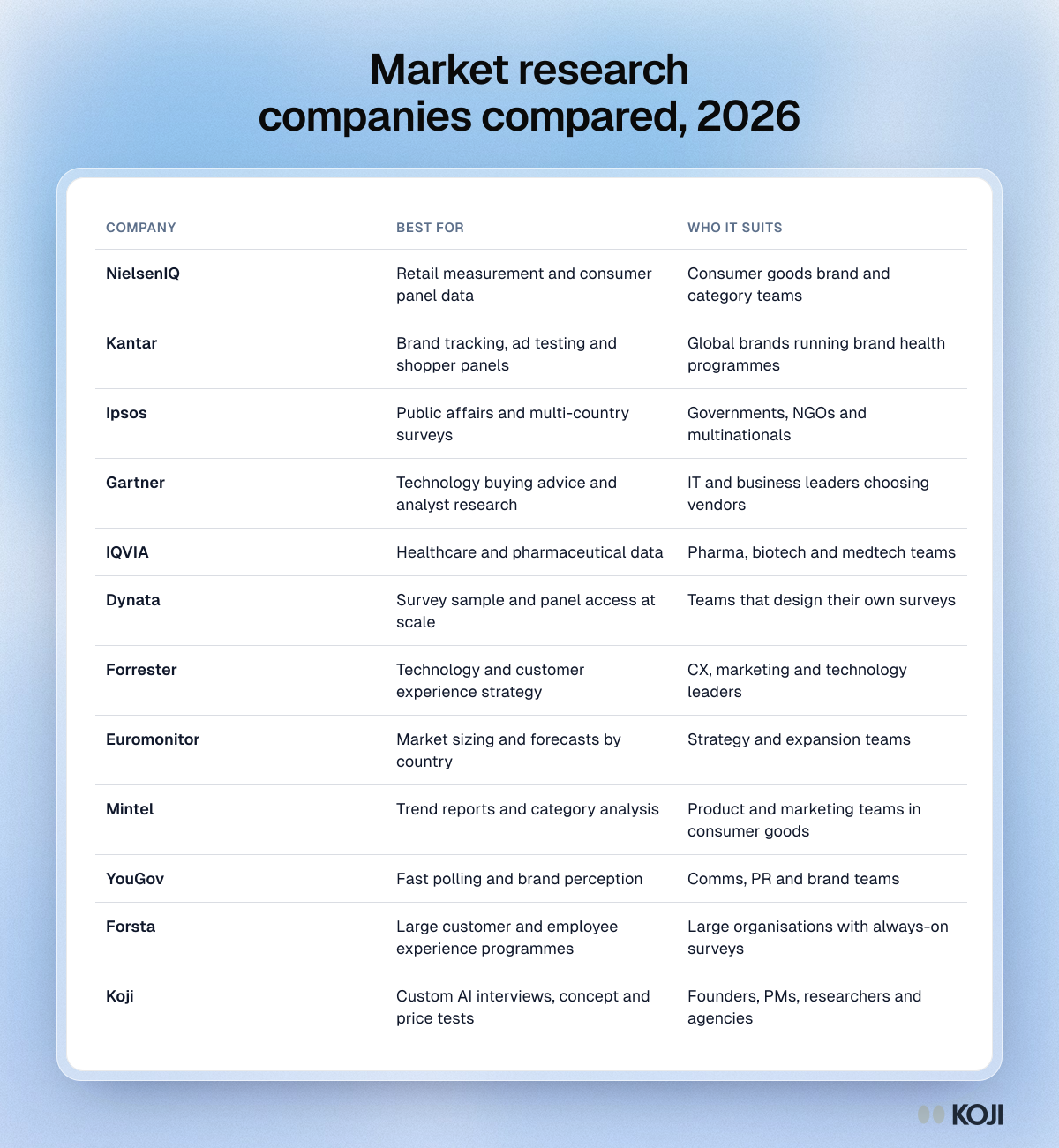
Table comparing 12 market research companies by what each is best for and who it suits, from NielsenIQ and Kantar to Koji.

Reference table

Market research companies compared, 2026
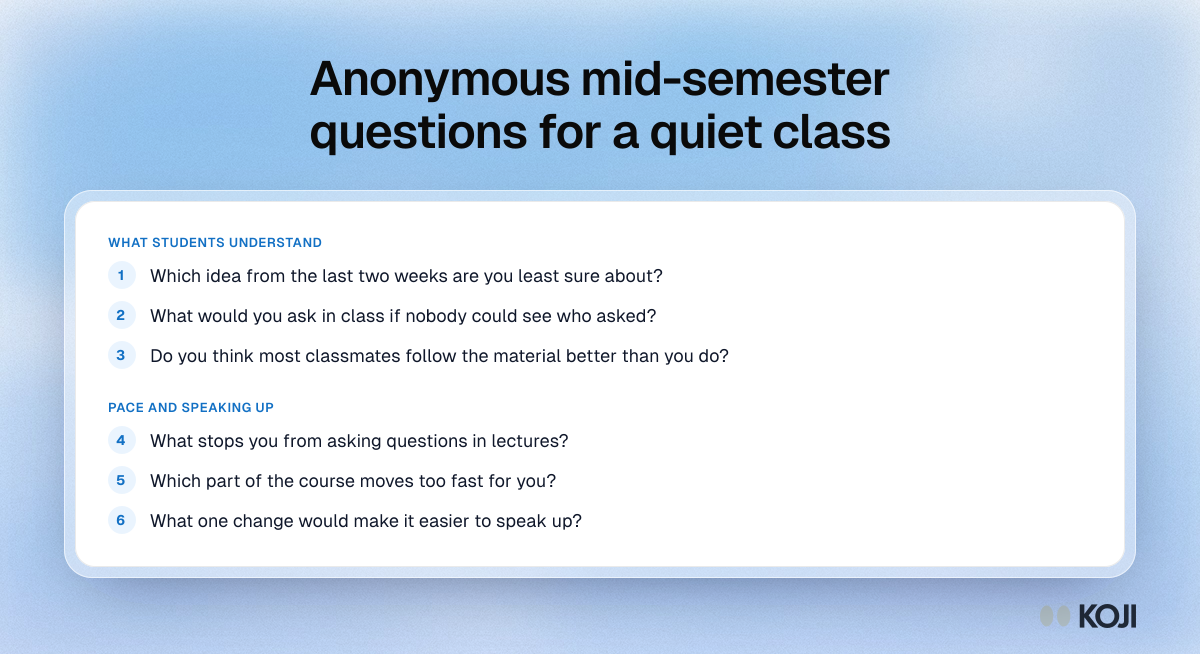
Question bank with six open questions in two sections, what students understand and pace and speaking up, for an anonymous mid-semester check.

Question bank

Anonymous mid-semester questions for a quiet class
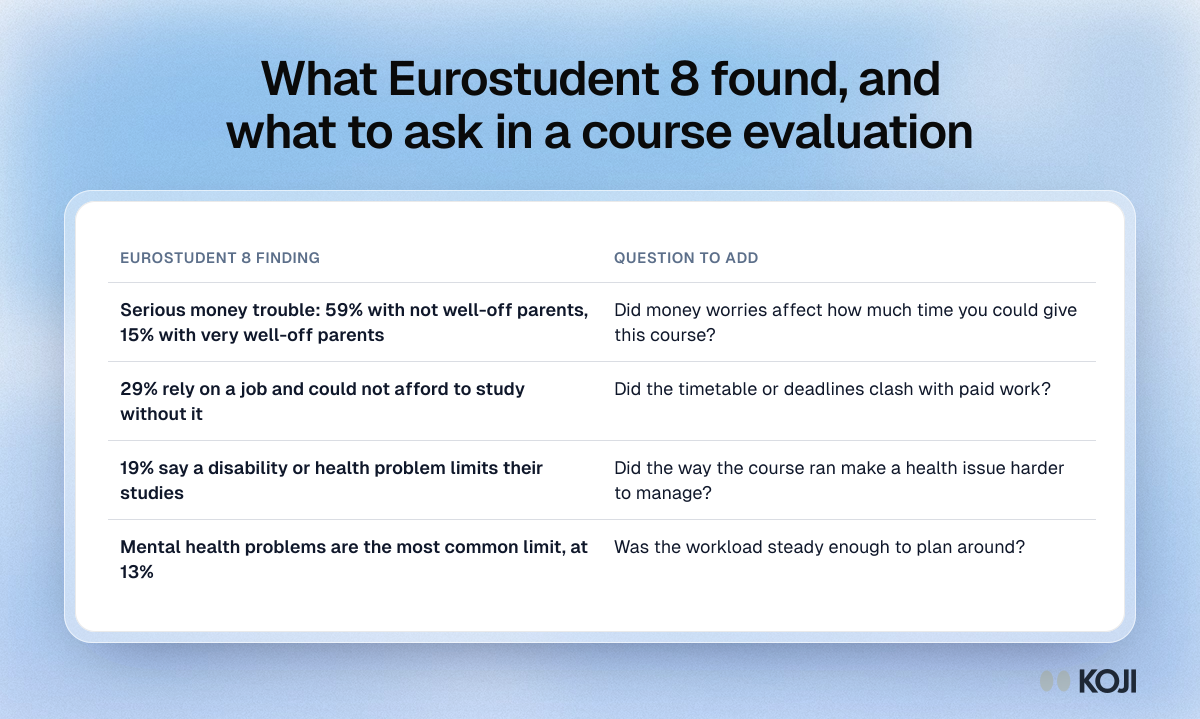
Table pairing four EUROSTUDENT 8 findings on money, paid work, health and mental health with a question to add to a course evaluation for each.

Reference table

What Eurostudent 8 found, and what to ask in a course evaluation
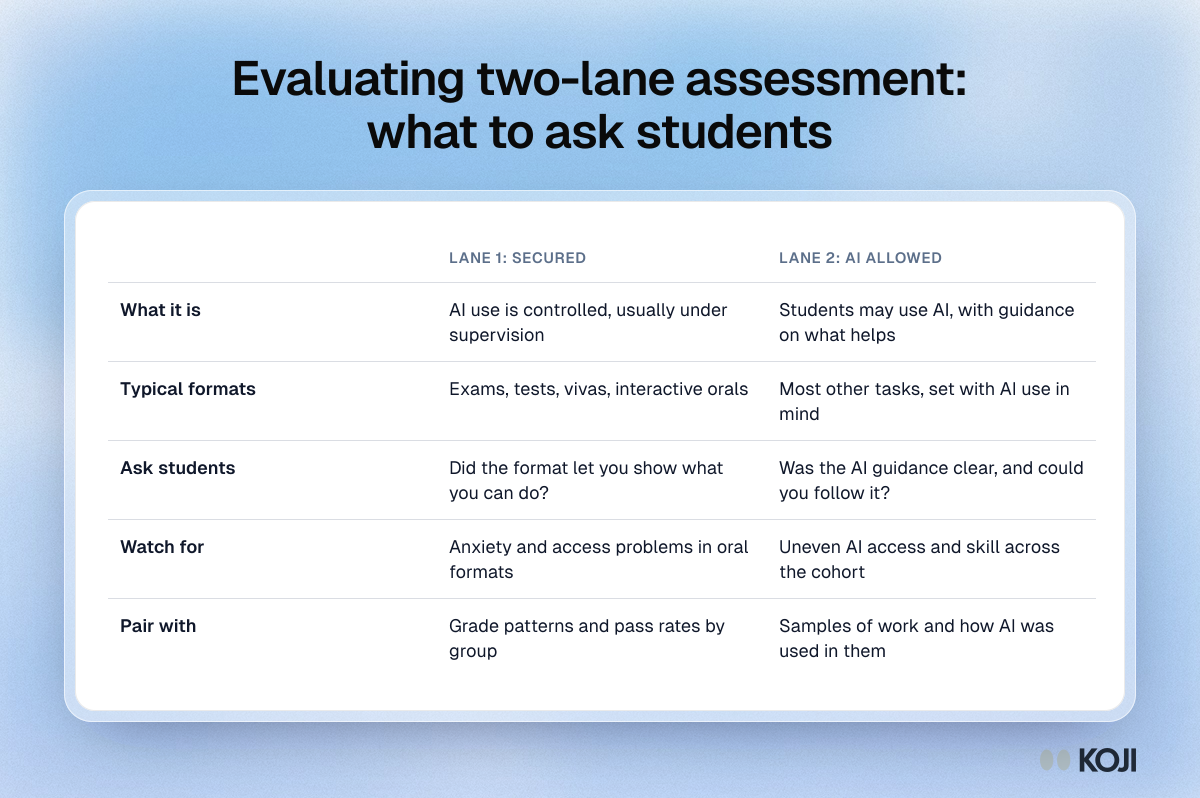
Table comparing secured Lane 1 and AI-allowed Lane 2 assessment, with what each is, typical formats, questions for students, risks and evidence to pair.

Reference table

Evaluating two-lane assessment: what to ask students
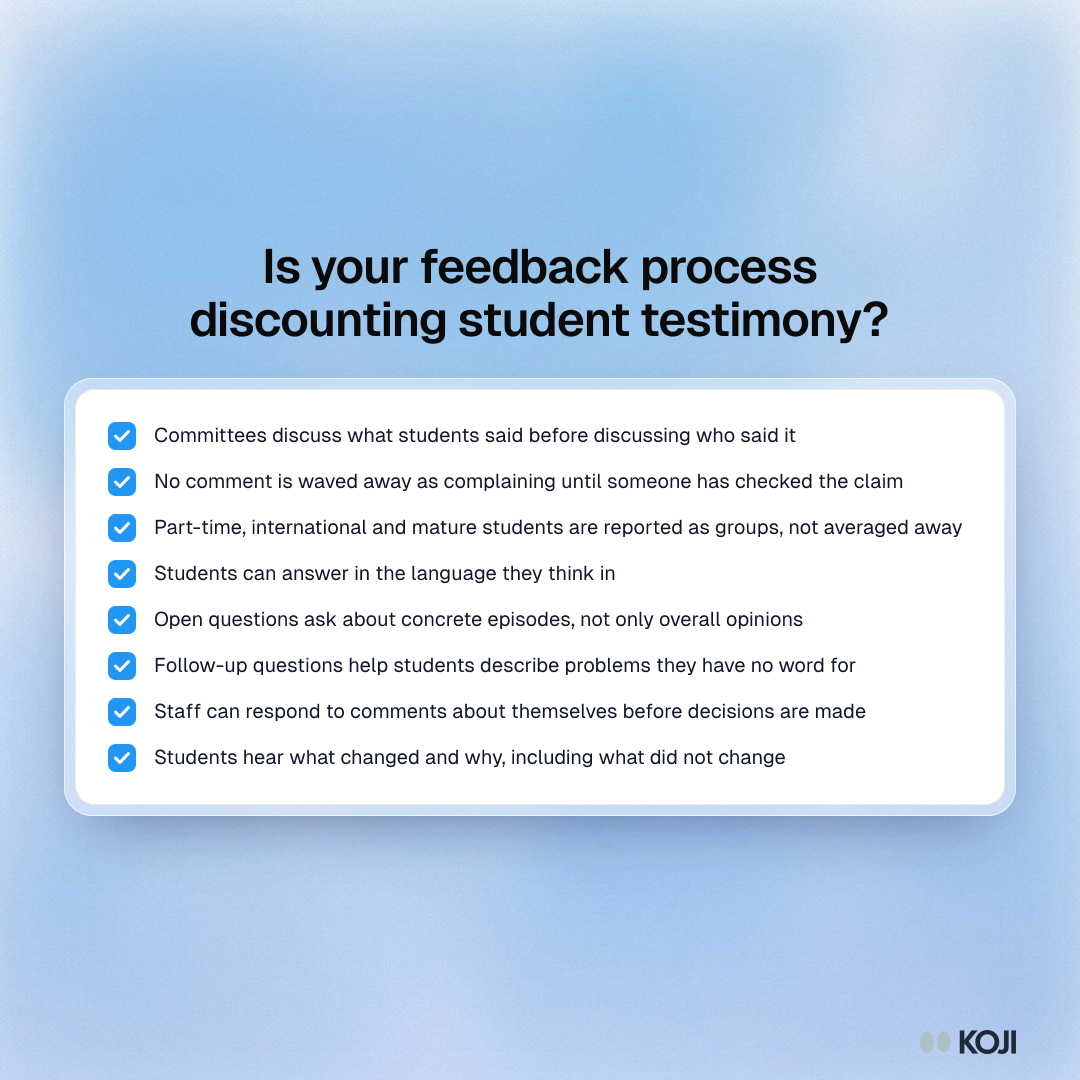
Checklist of eight signs a course evaluation process takes student testimony seriously, from how committees read comments to how students hear back.

Checklist

Is your feedback process discounting student testimony?
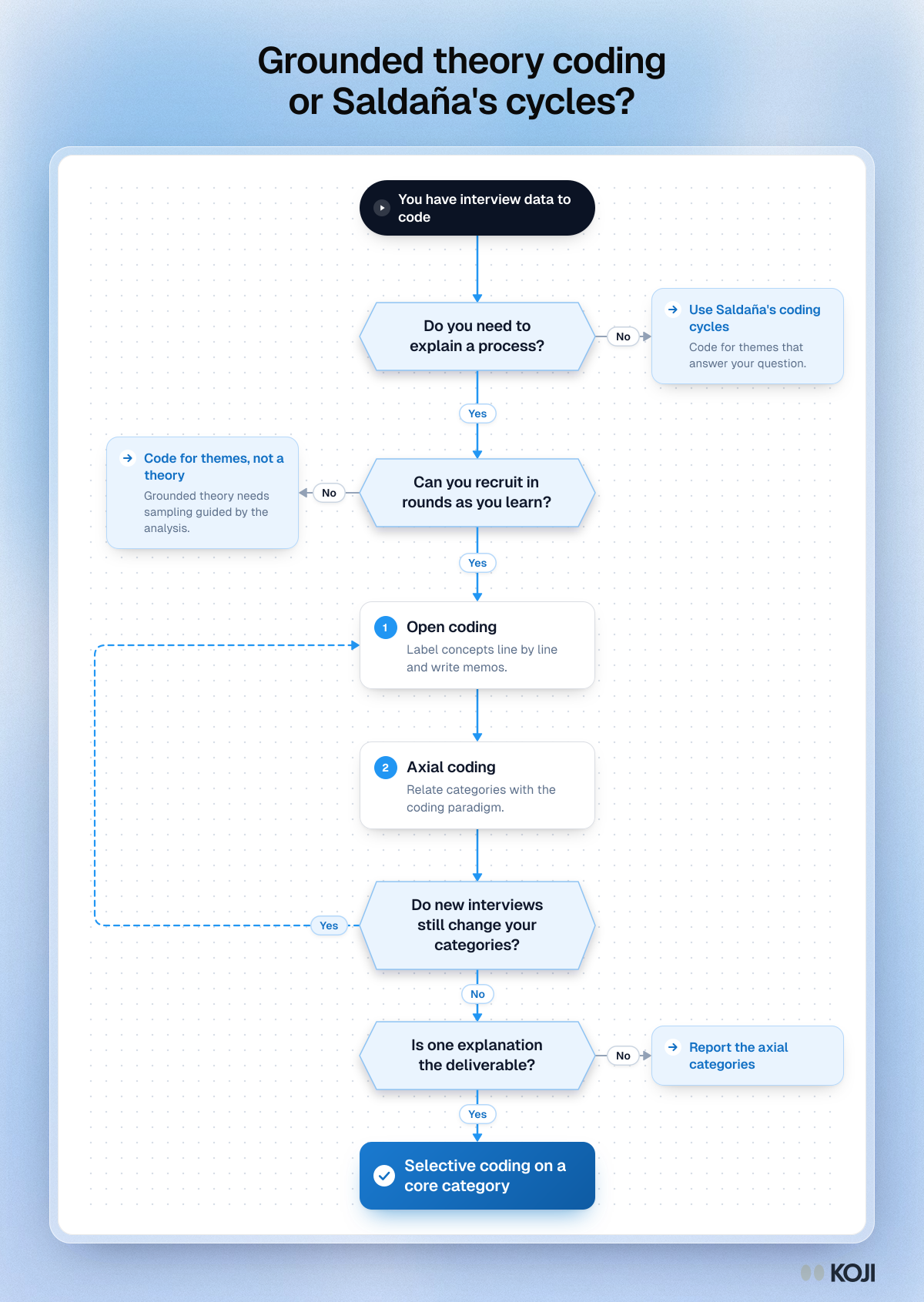
Flowchart for choosing grounded theory coding or Saldaña's cycles: four questions, a loop back to open coding, ending in selective coding.

Flowchart

Grounded theory coding or Saldaña's cycles?
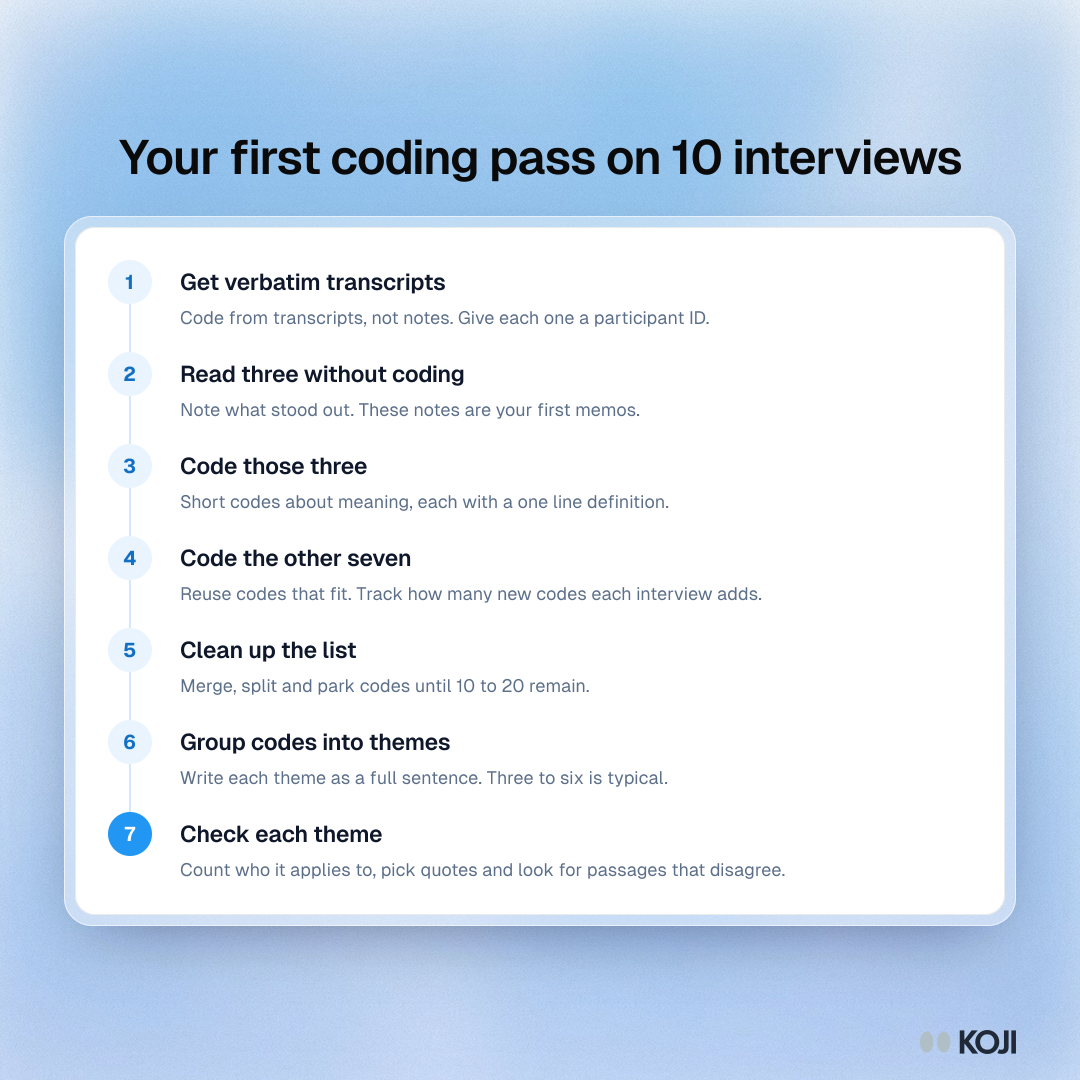
Process showing seven steps of a first coding pass on 10 interviews, from reading three transcripts to grouping codes into themes and checking them.

Process

Your first coding pass on 10 interviews
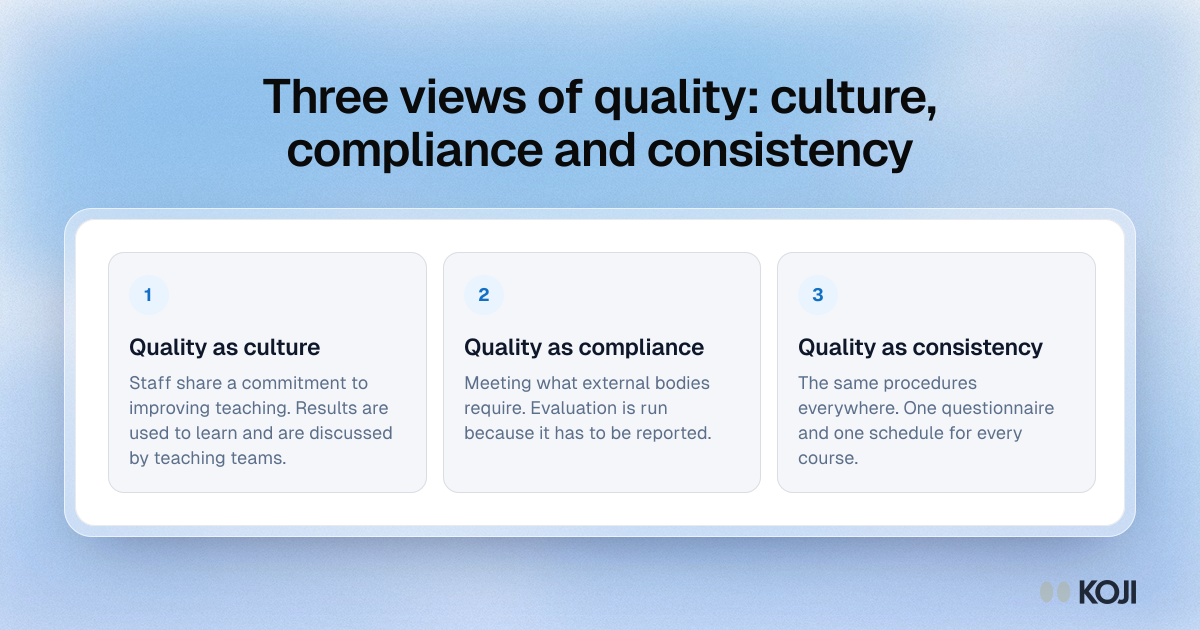
Framework of three views of quality in higher education, culture, compliance and consistency, and how each shows up in a course evaluation system.

Framework

Three views of quality: culture, compliance and consistency
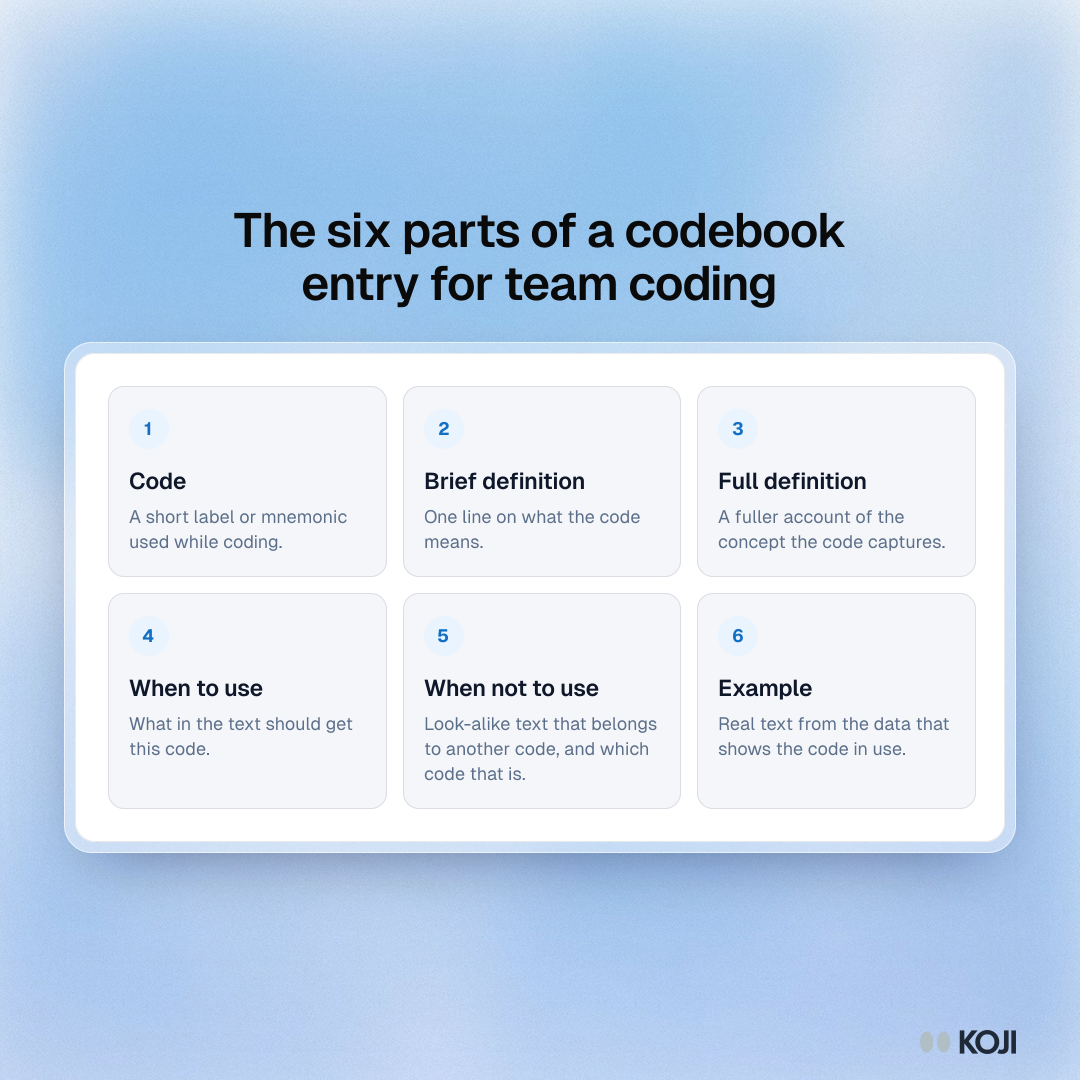
Framework of the six parts of a codebook entry from MacQueen and colleagues: code, brief definition, full definition, when to use, when not to use and example.

Framework

The six parts of a codebook entry for team coding
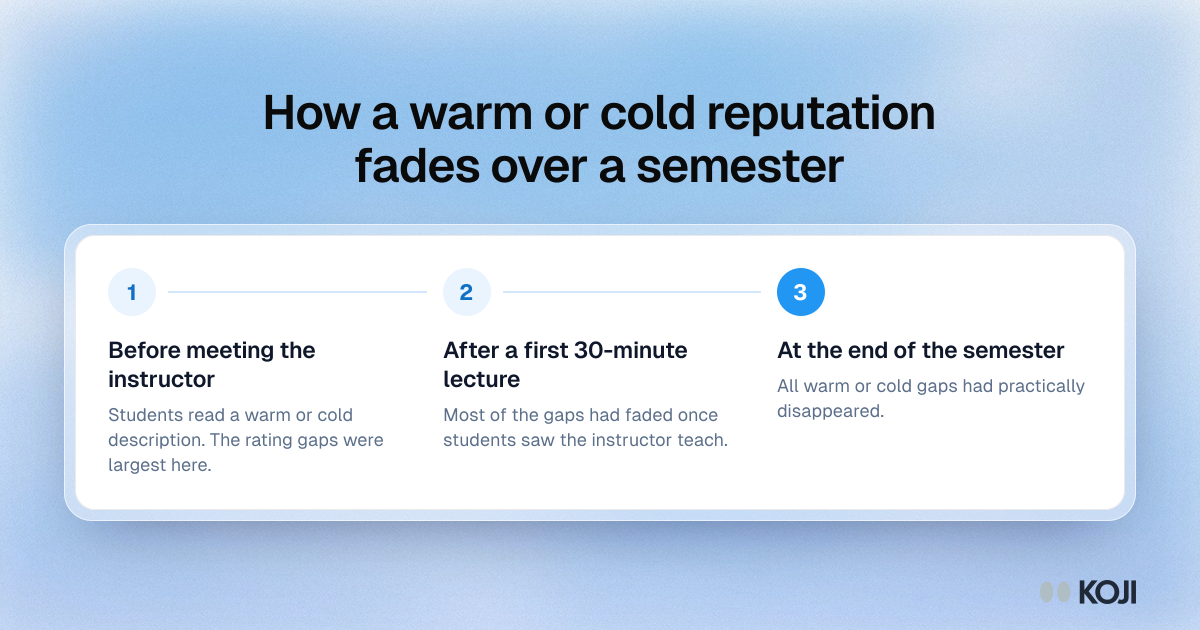
Process of three rating points in a warm or cold instructor study: before meeting the instructor, after a first lecture and at the end of the semester.

Process

How a warm or cold reputation fades over a semester