Free to save and share

Frameworks and cheat sheets for customer research

Every framework, checklist and comparison from our guides, as an image you can download, drop into a deck or share with your team.
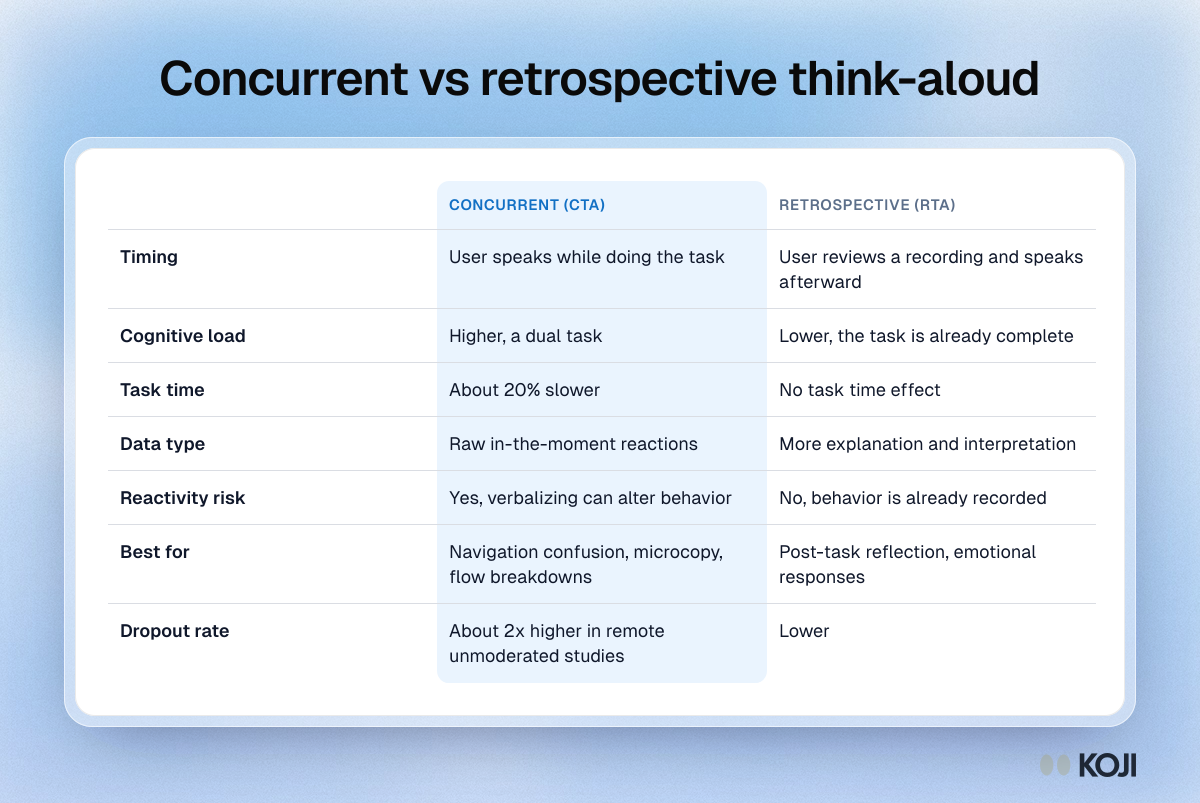
Table comparing concurrent and retrospective think-aloud across timing, cognitive load, task time, data type, reactivity risk, best use and dropout rate.

Reference table

Concurrent vs retrospective think-aloud
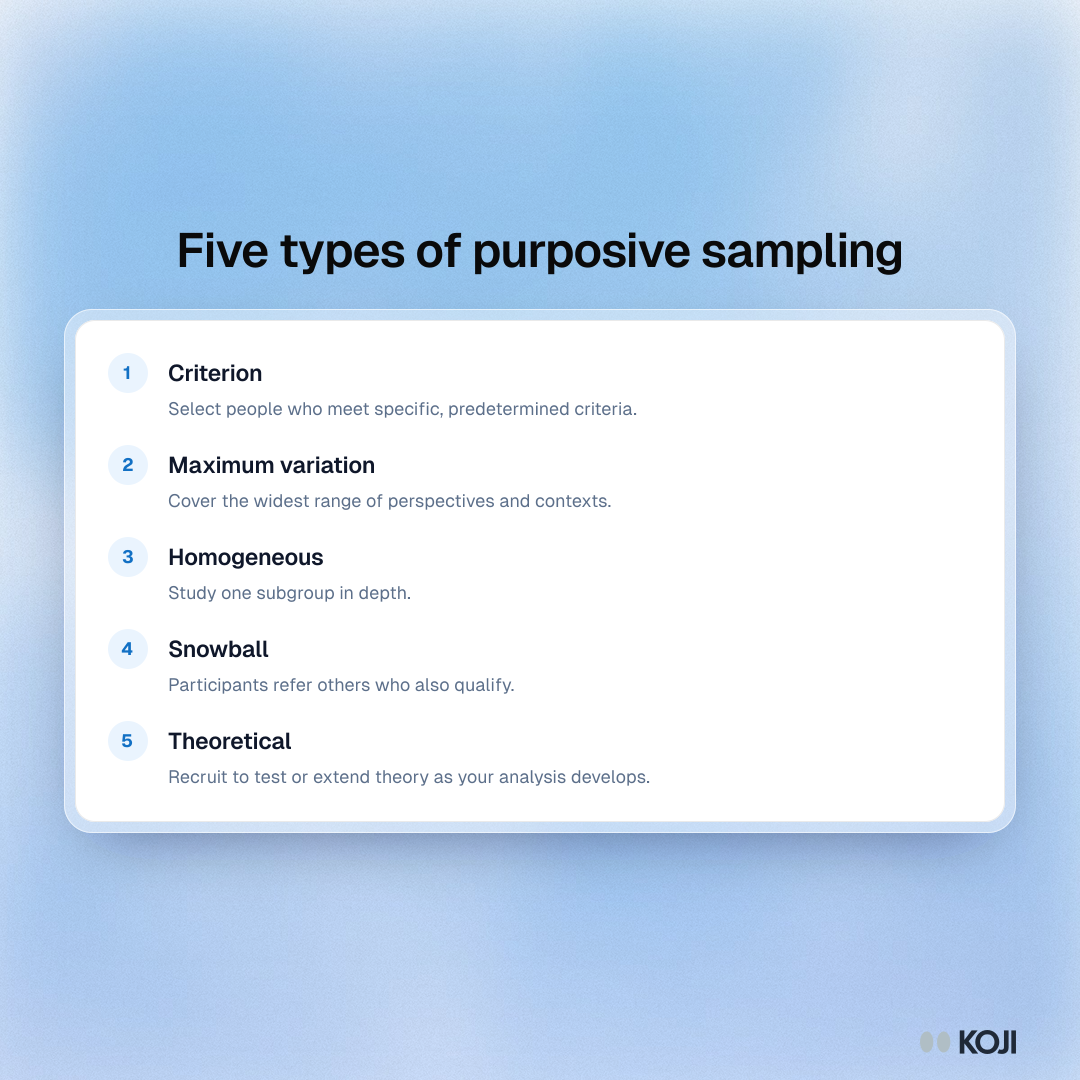
Listicle of the five most useful types of purposive sampling for product and UX research: criterion, maximum variation, homogeneous, snowball and theoretical.

Guide

Five types of purposive sampling
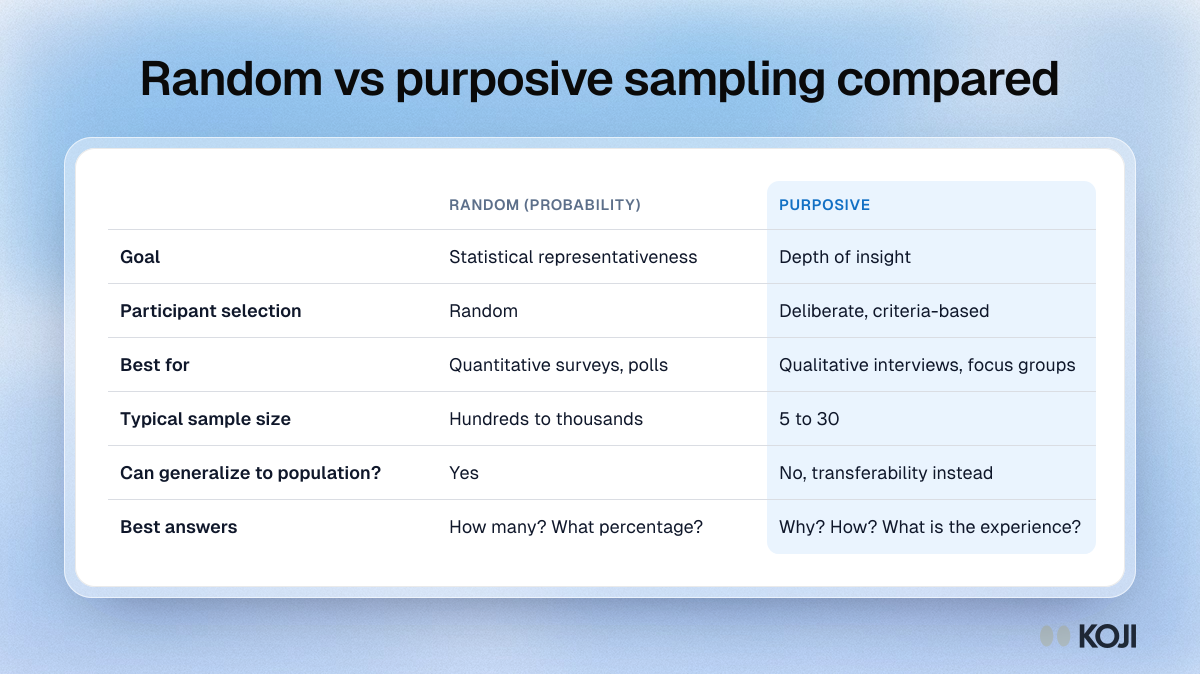
Table comparing random probability sampling with purposive sampling across goal, selection, best use, sample size, generalizing and the questions each answers.

Reference table

Random vs purposive sampling compared
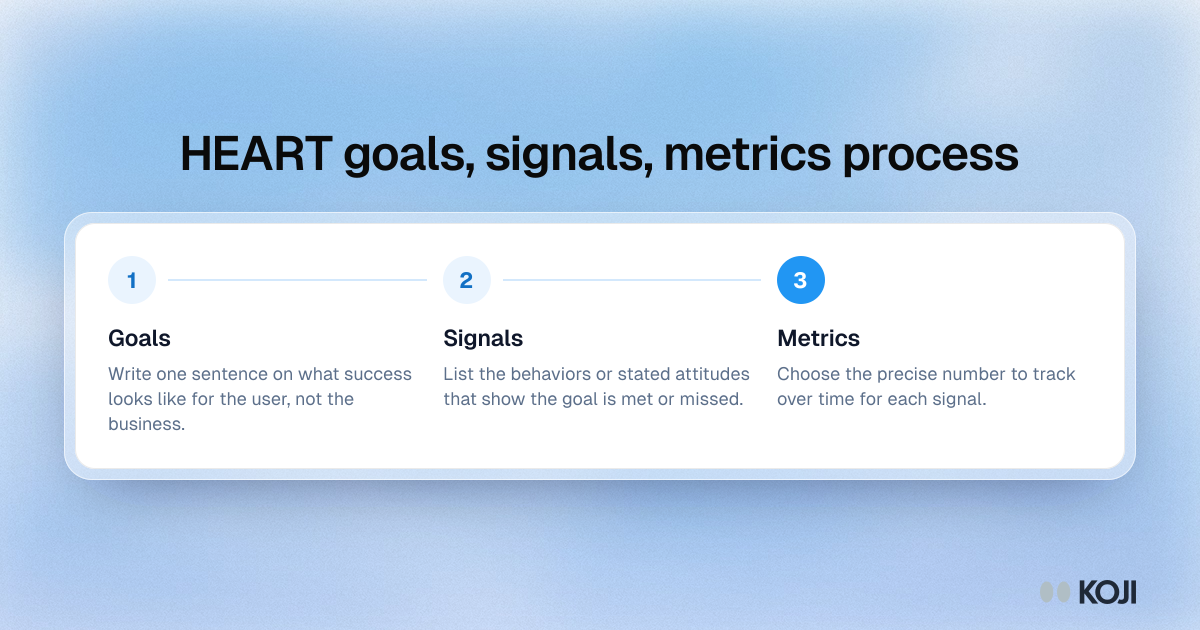
Process showing the three GSM steps that turn HEART categories into trackable numbers: goals, then signals, then metrics.

Process

HEART goals, signals, metrics process
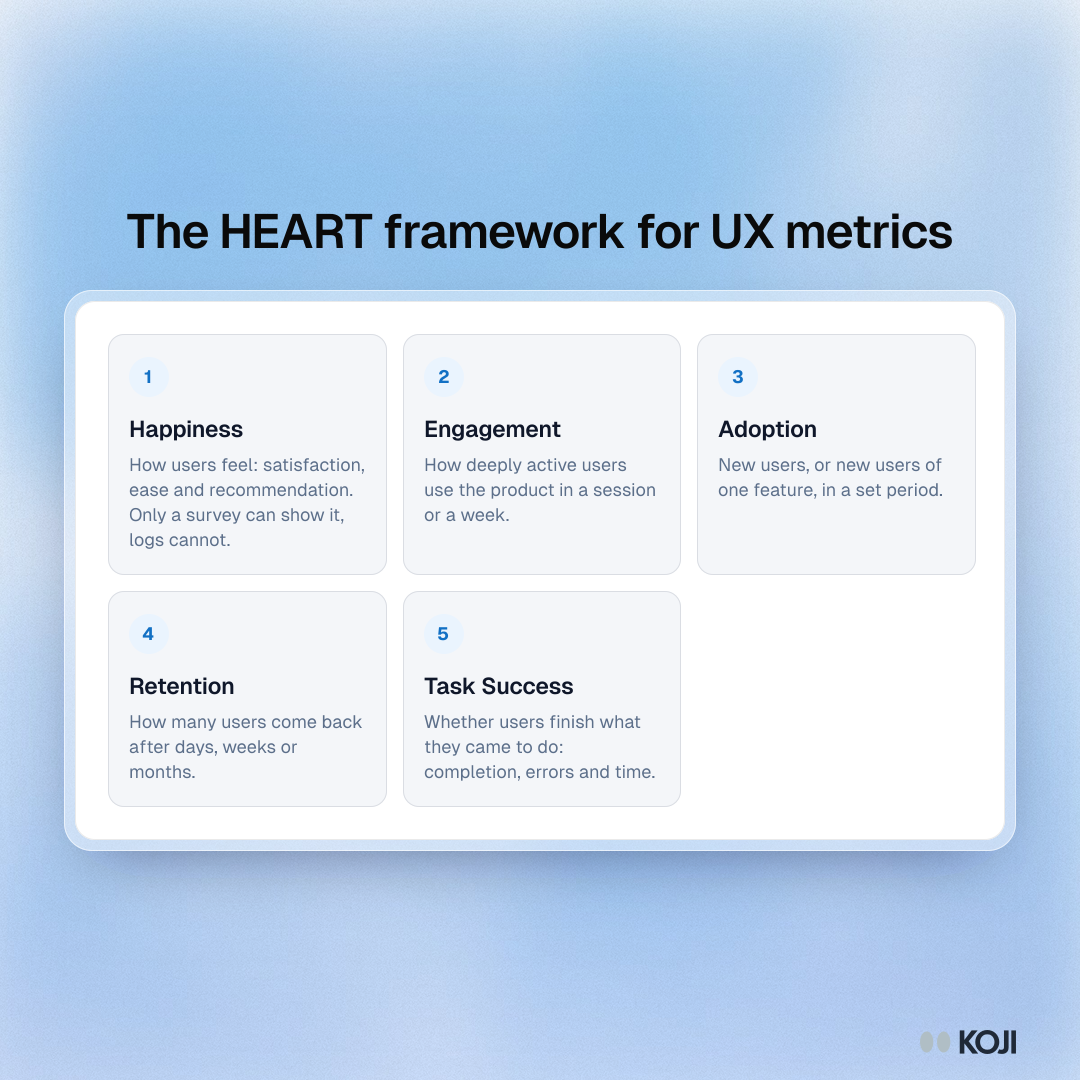
Framework showing the five HEART metrics for measuring user experience: Happiness, Engagement, Adoption, Retention and Task Success.

Framework

The HEART framework for UX metrics
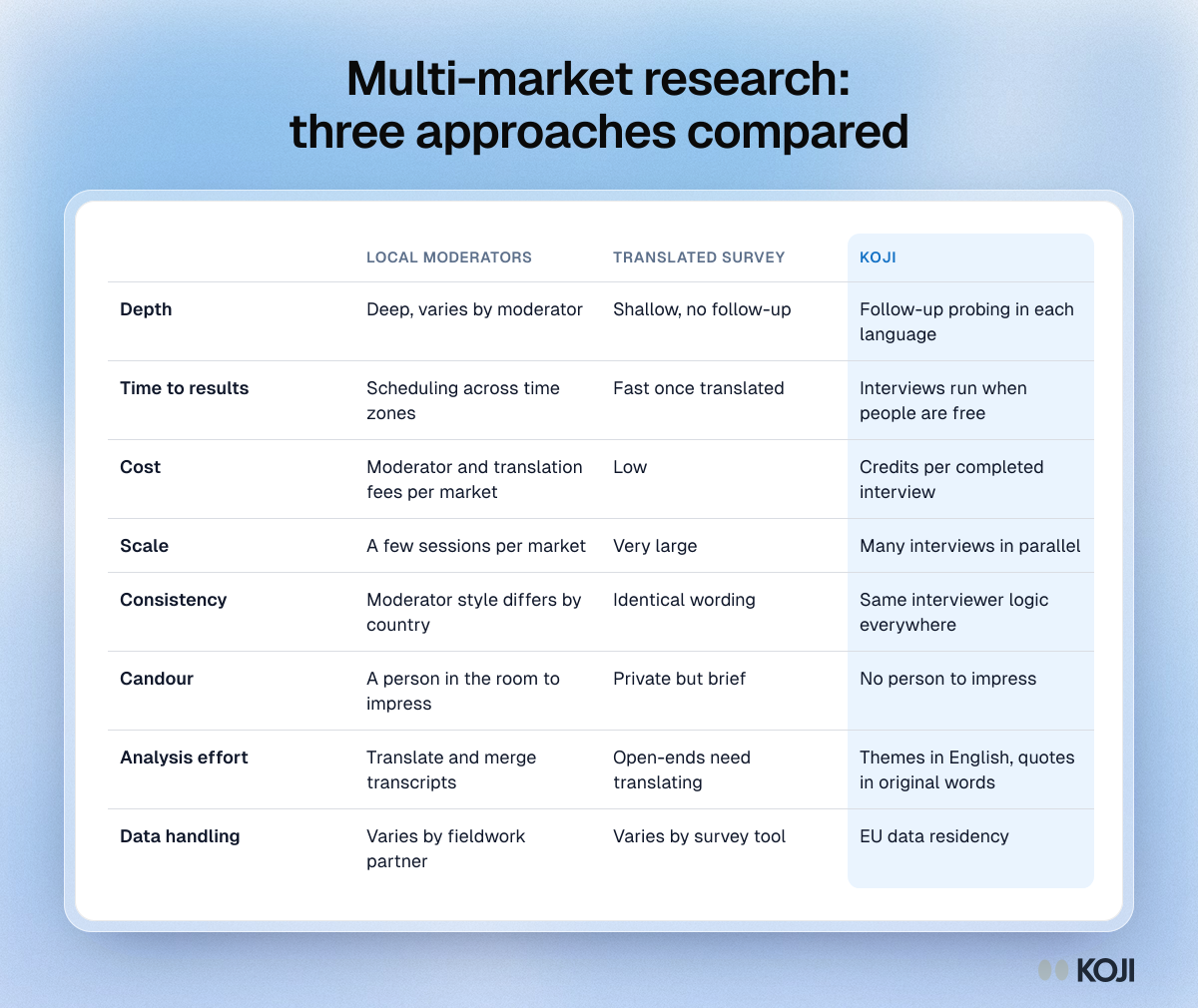
Table comparing local moderators, translated surveys and Koji for multi-market research on depth, cost, scale, consistency, candour and data handling.

Reference table

Multi-market research: three approaches compared
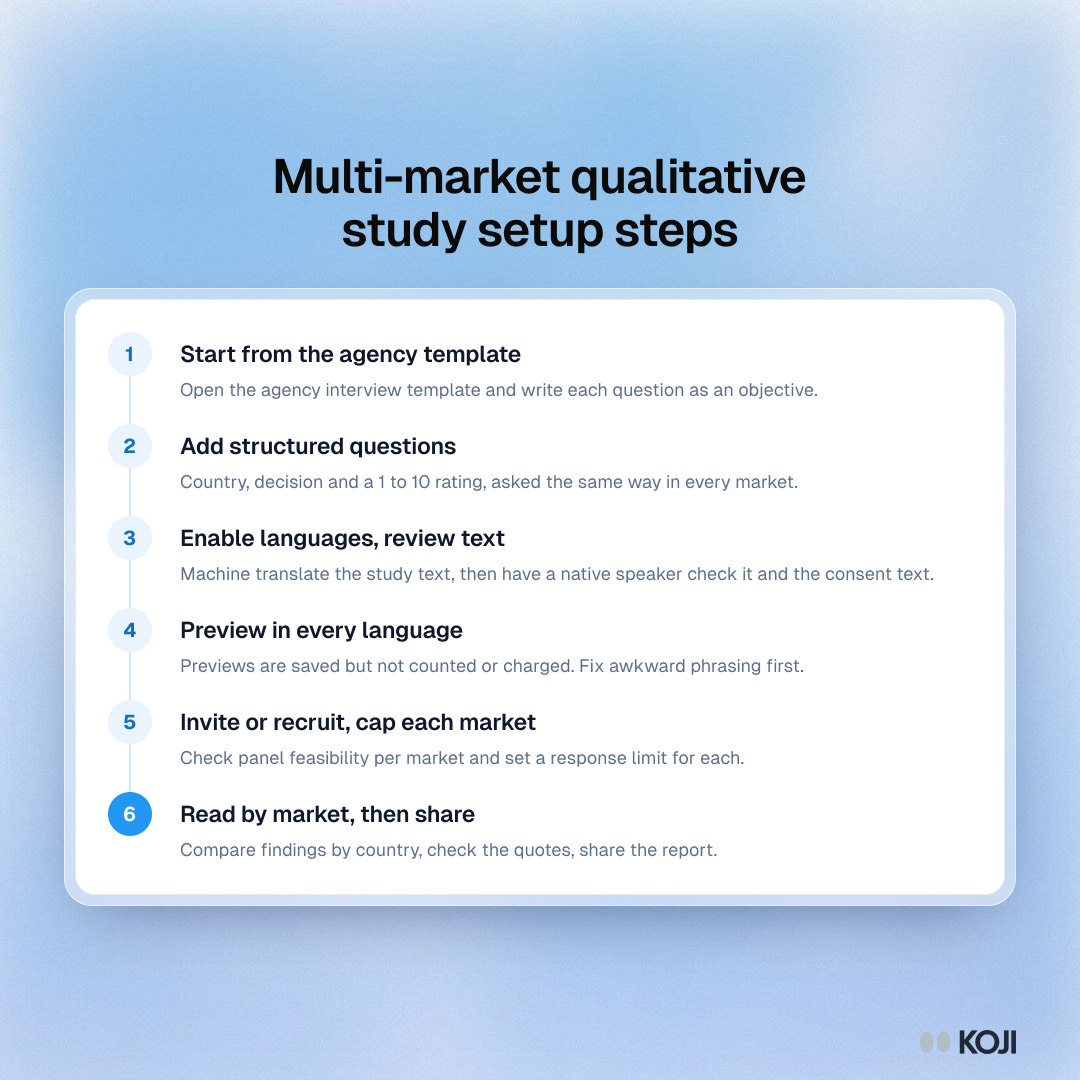
Process with six steps for setting up a multi-market qualitative study in Koji, from the agency template to language review and a shared report.

Process

Multi-market qualitative study setup steps
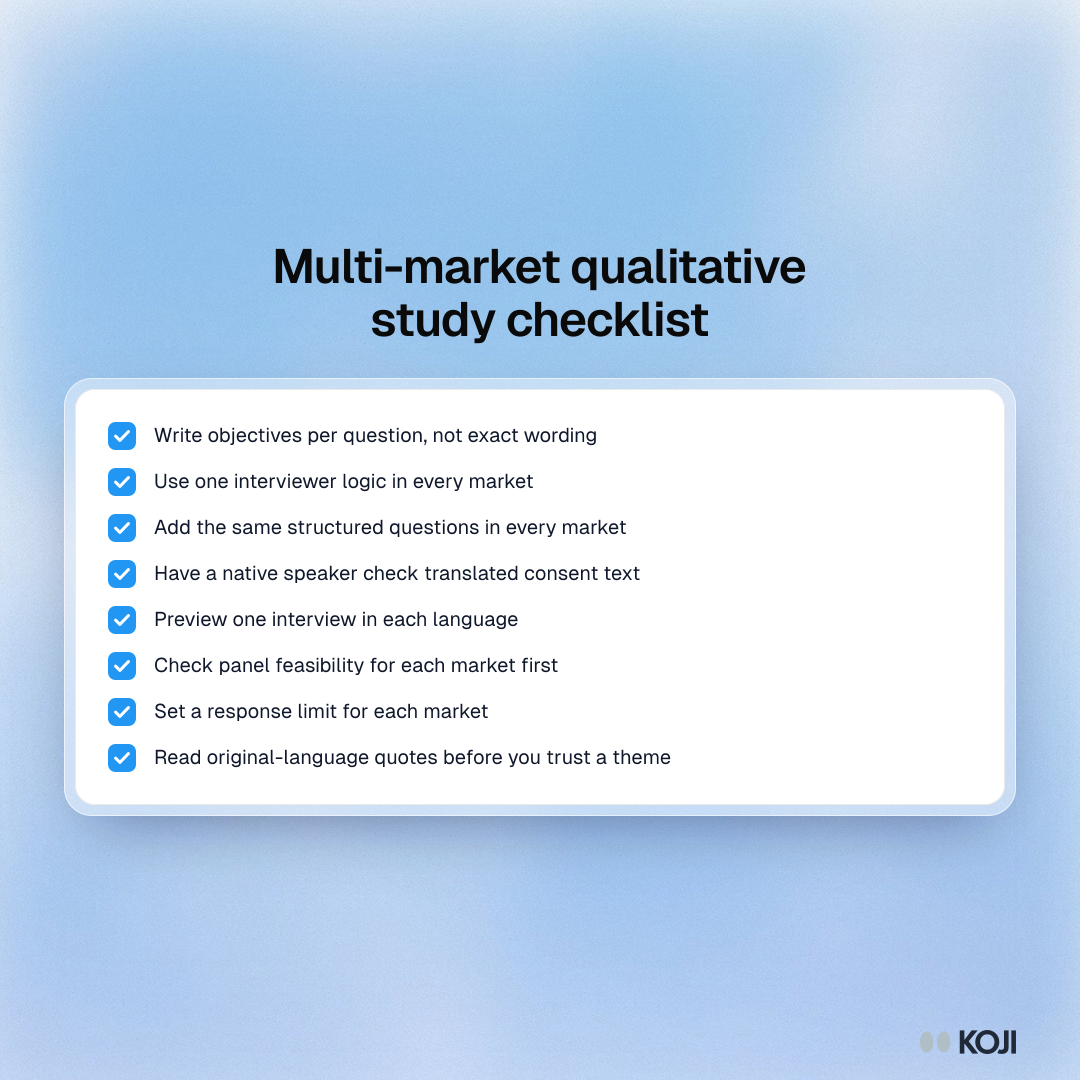
Checklist for a multi-market qualitative study: objectives, shared questions, translation review, previews, market caps and reading original quotes.

Checklist

Multi-market qualitative study checklist
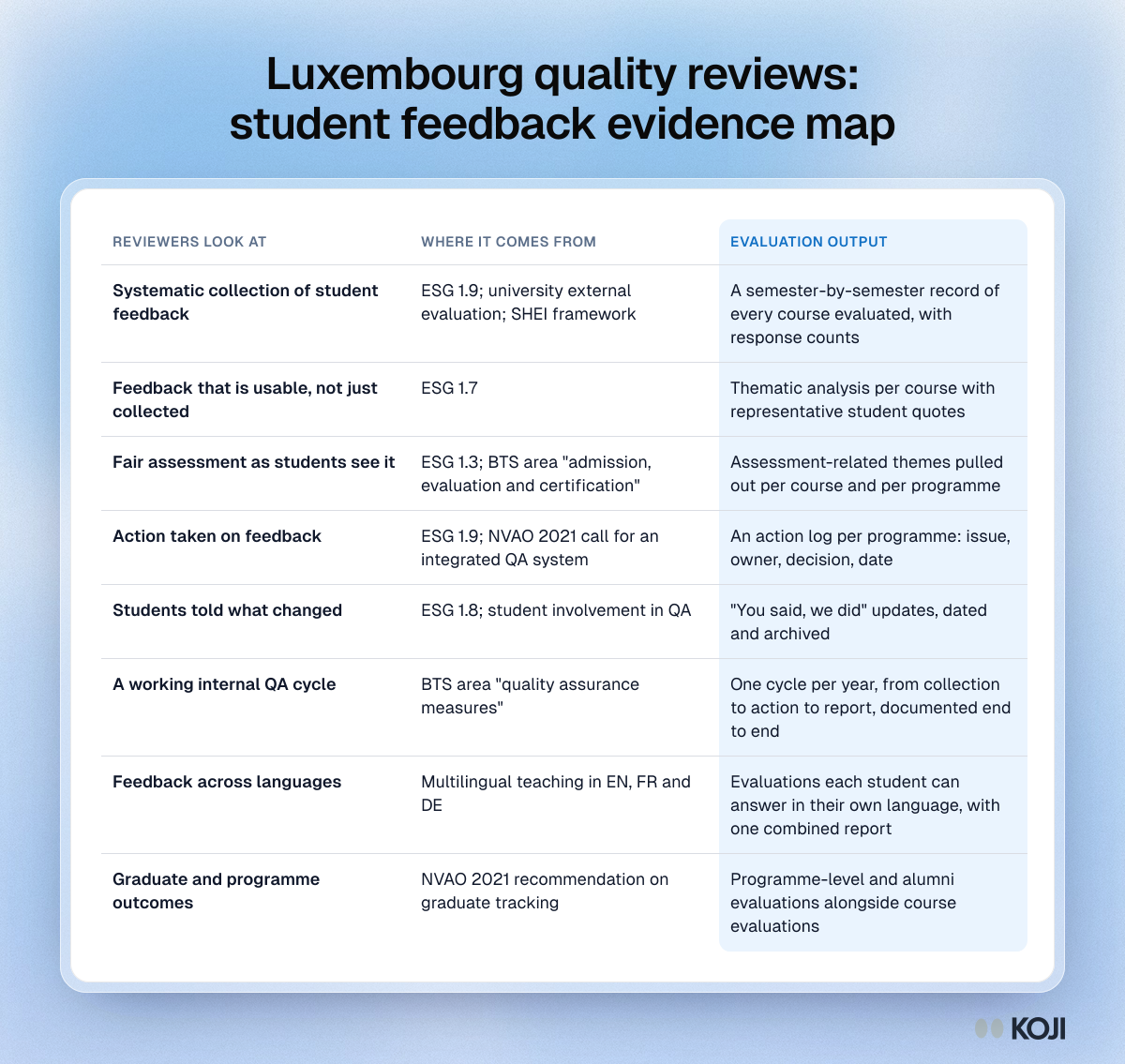
Table mapping what Luxembourg quality reviewers look at to the course evaluation output that answers each expectation.

Reference table

Luxembourg quality reviews: student feedback evidence map
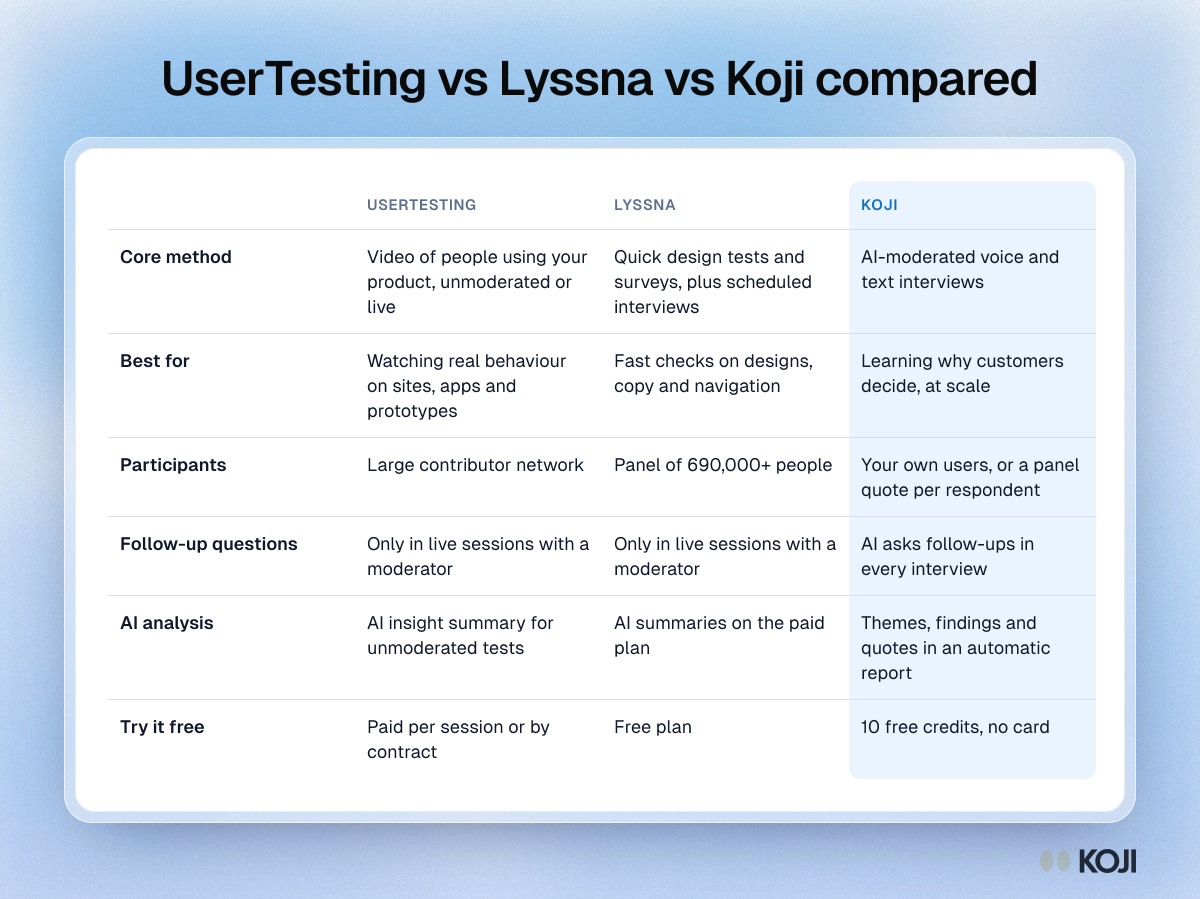
Table comparing UserTesting, Lyssna and Koji on core method, best use, participants, follow-up questions, AI analysis and free access.

Reference table

UserTesting vs Lyssna vs Koji compared
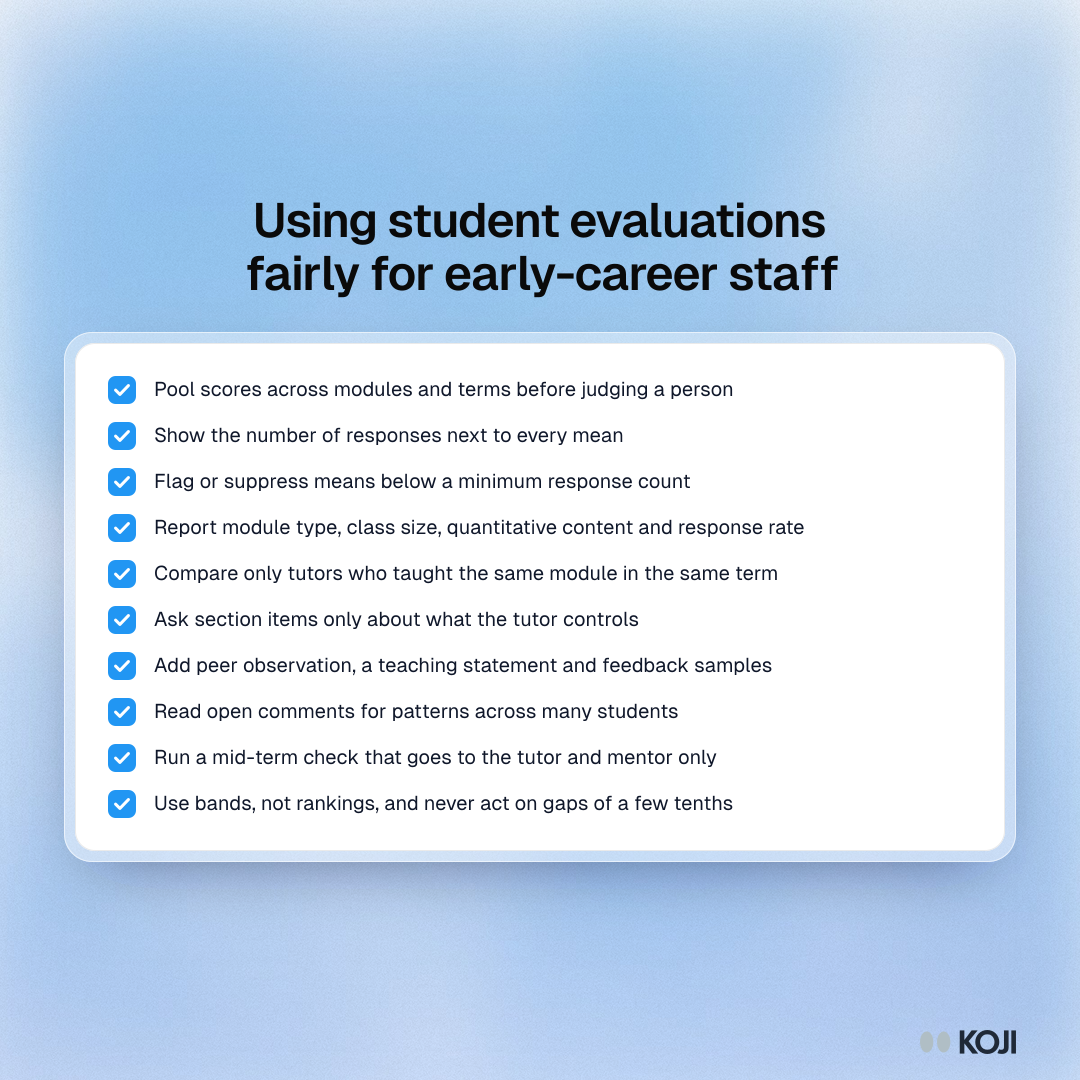
Checklist showing ten steps for using student evaluations fairly when judging PhD tutors, teaching assistants and fixed-term lecturers

Checklist

Using student evaluations fairly for early-career staff
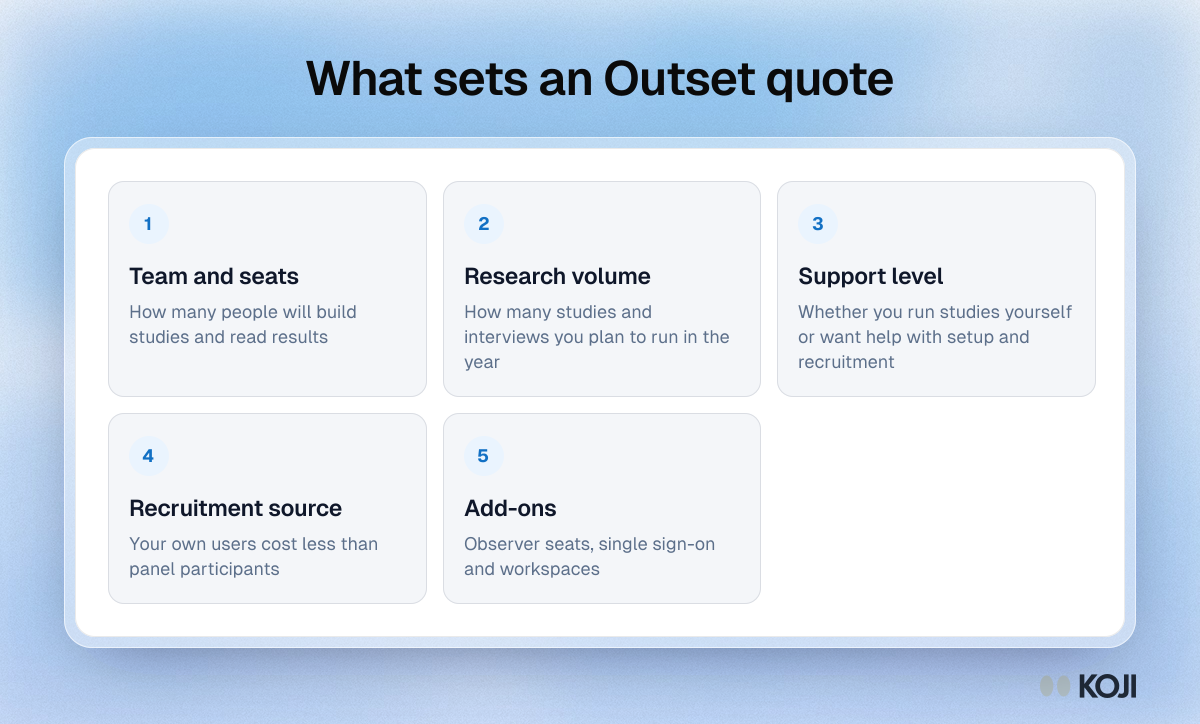
Framework of five factors that set an Outset quote: team and seats, research volume, support level, recruitment source and add-ons.

Framework

What sets an Outset quote

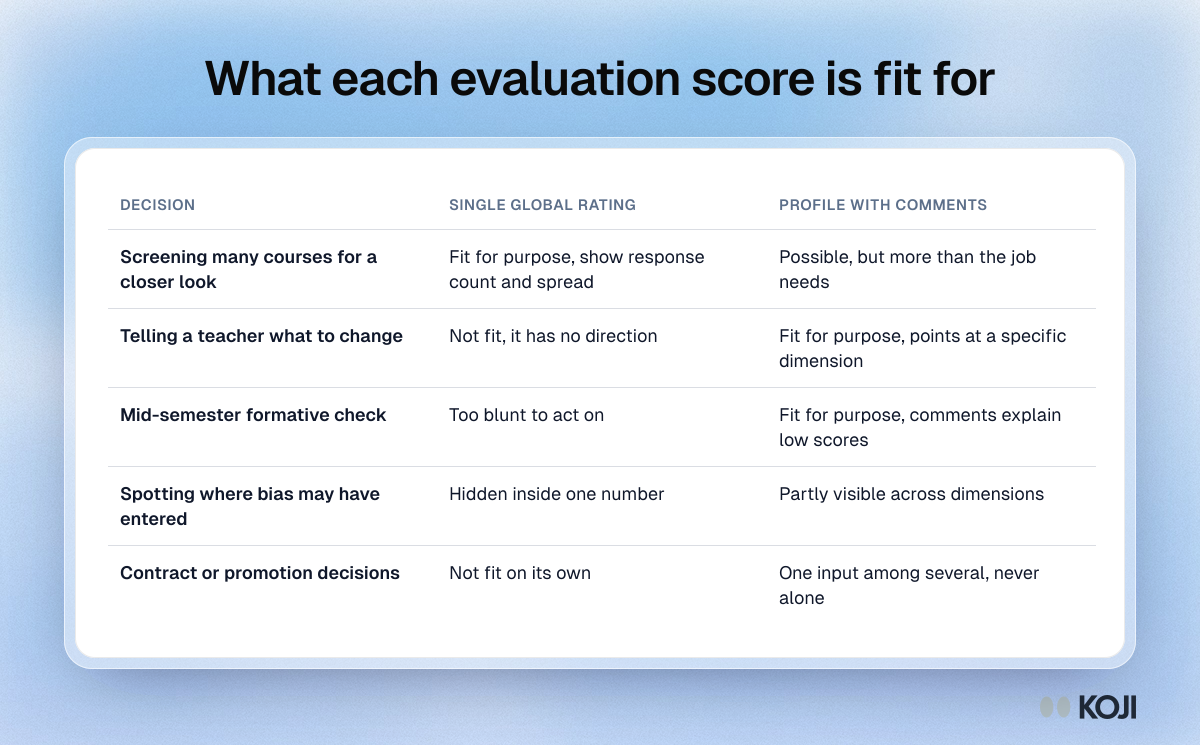
Table comparing a single global rating with a dimension profile across five evaluation decisions, from screening courses to promotion reviews

Reference table

What each evaluation score is fit for
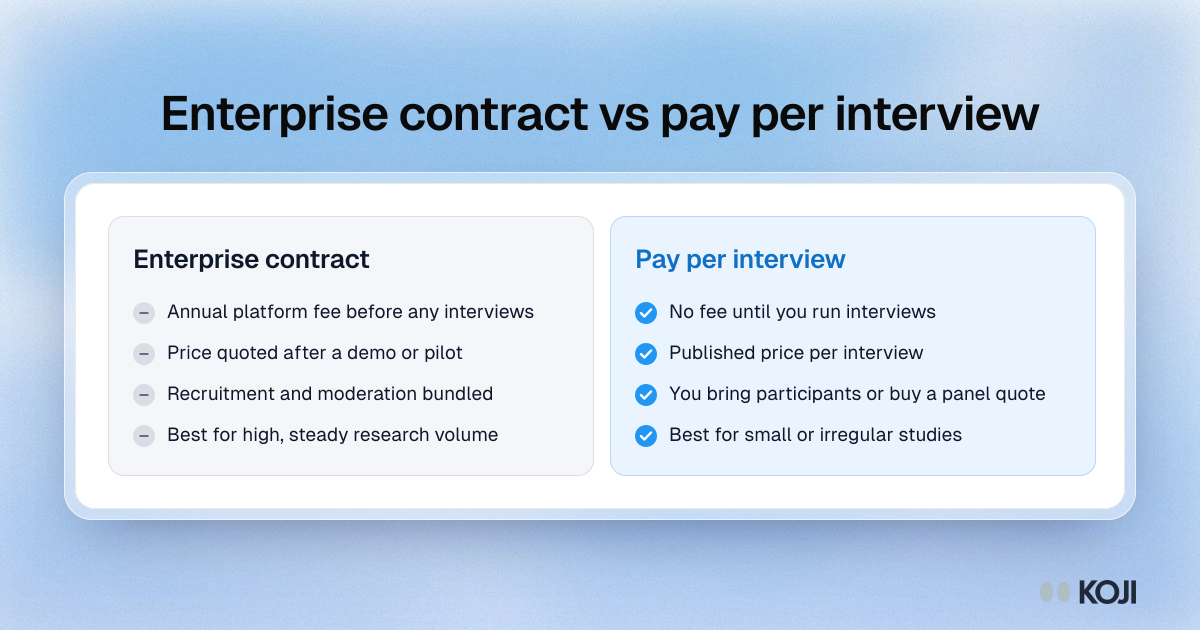
Comparison of an enterprise AI interview contract and pay per interview pricing, showing differences in commitment, trial access and who recruits.

Comparison

Enterprise contract vs pay per interview
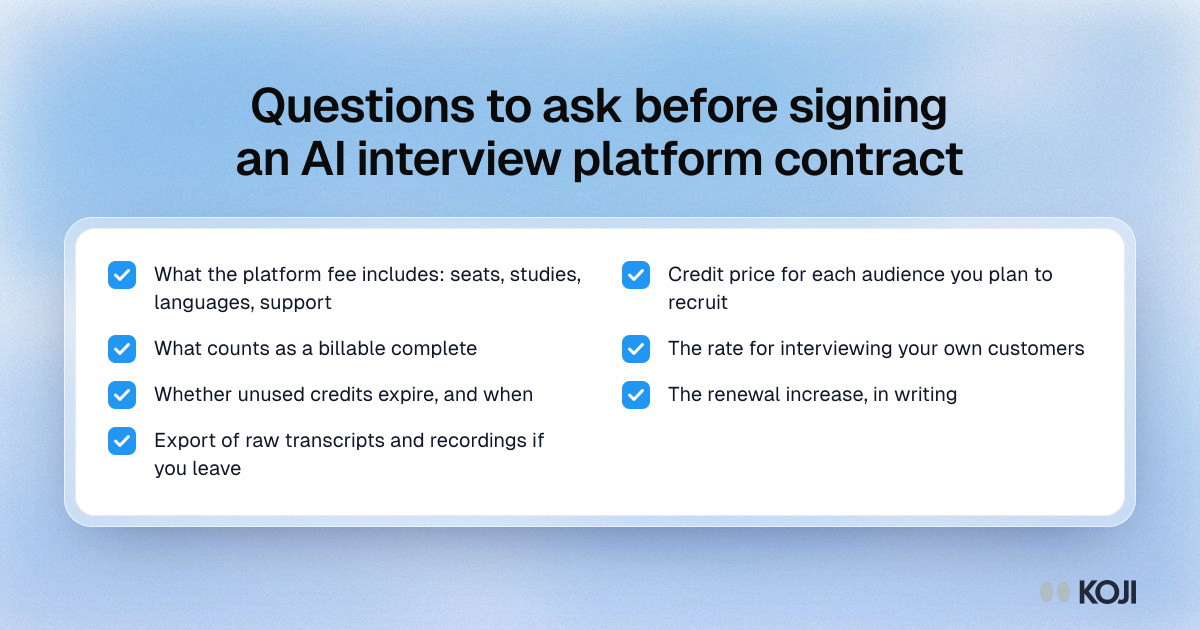
Checklist of questions to ask before signing an AI interview platform contract, covering billing, quality, recruitment, data and exit terms.

Checklist

Questions to ask before signing an AI interview platform contract
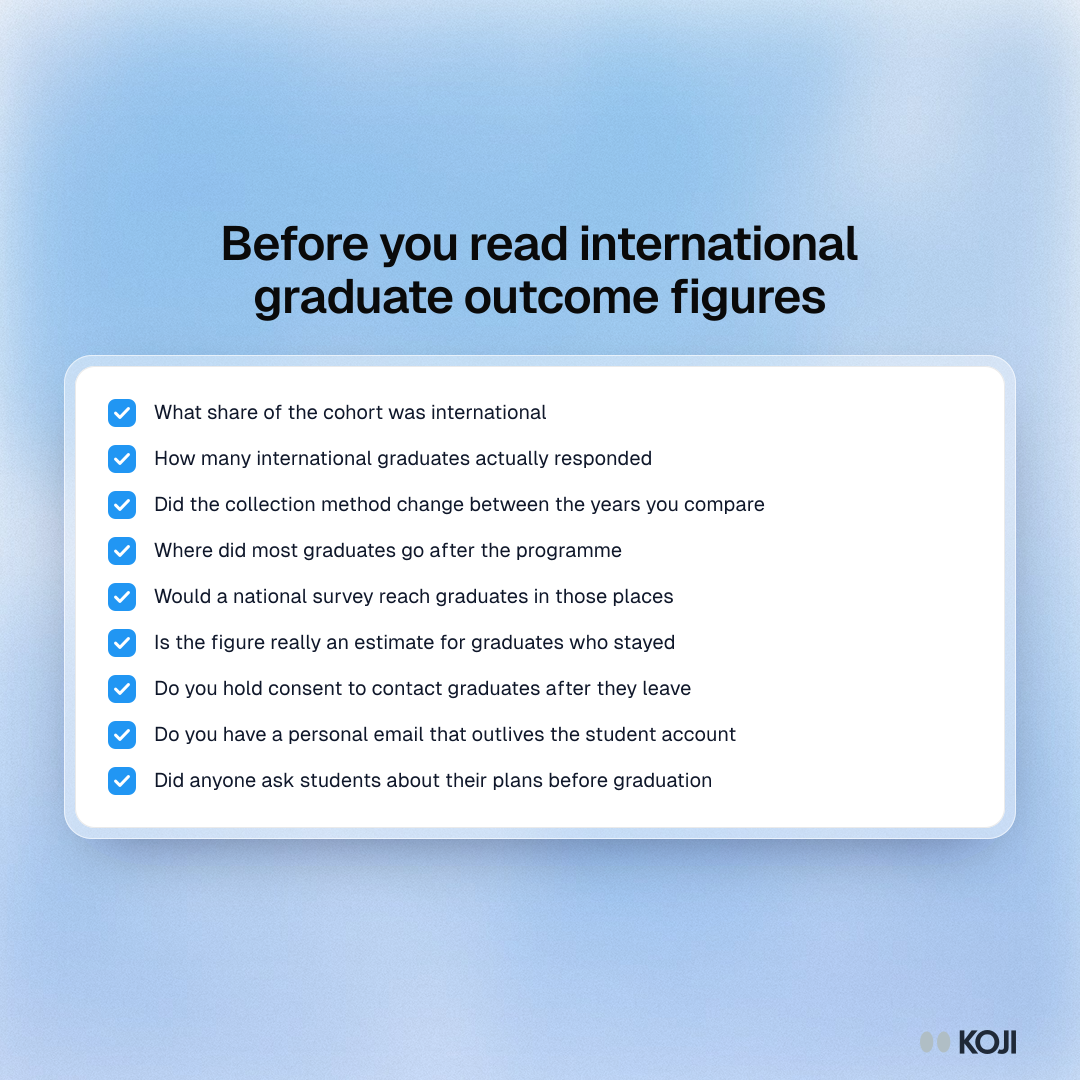
Checklist showing nine questions to ask about coverage, destinations and your own evidence before reading graduate outcome figures for international cohorts.

Checklist

Before you read international graduate outcome figures
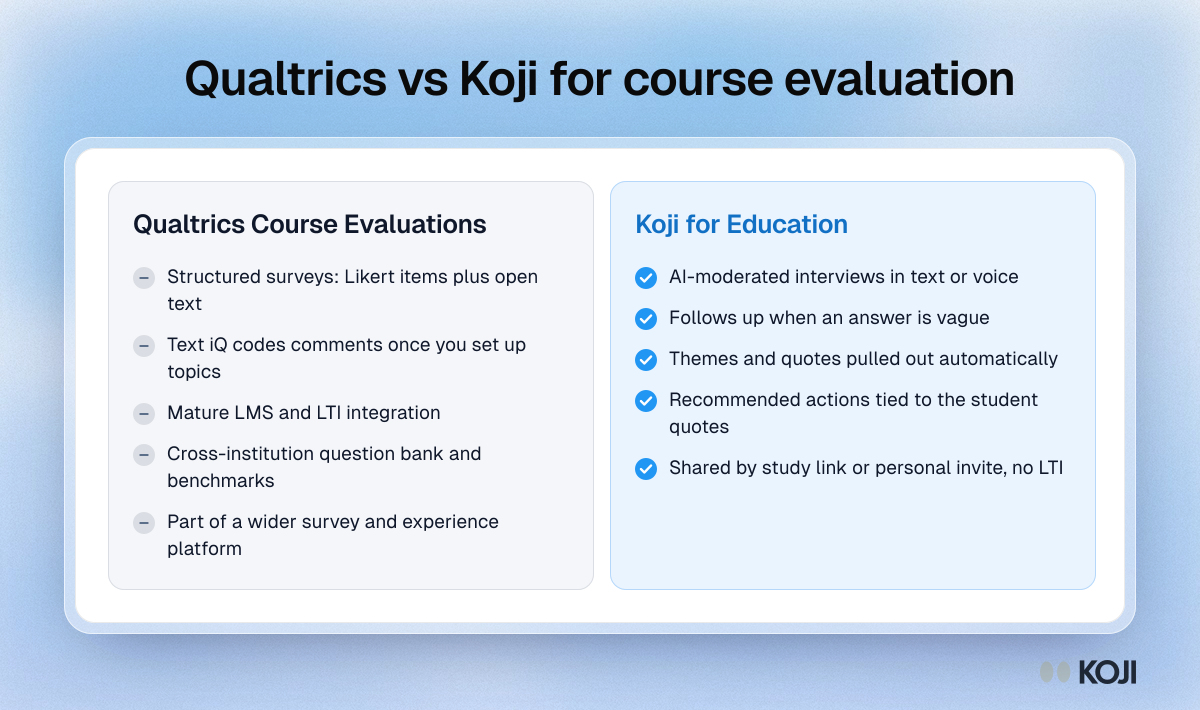
Comparison of Qualtrics Course Evaluations and Koji: structured surveys with Text iQ coding versus AI-moderated interviews with automatic themes.

Comparison

Qualtrics vs Koji for course evaluation
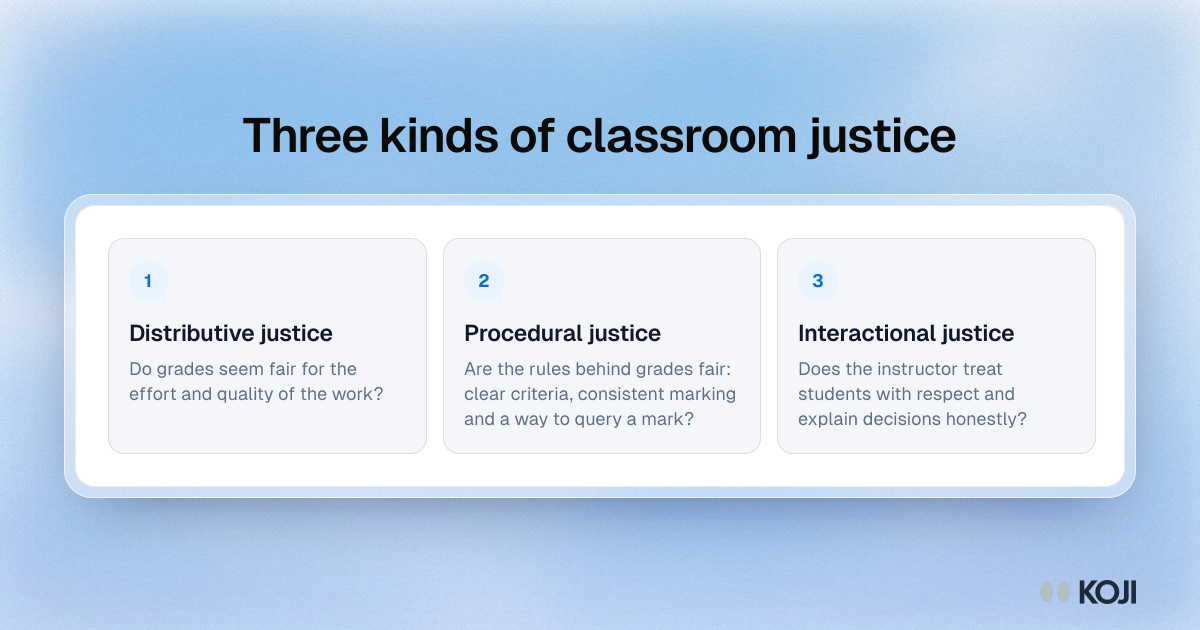
Framework of the three kinds of classroom justice students judge: fair grades, fair grading procedures and fair treatment by the instructor.

Framework

Three kinds of classroom justice
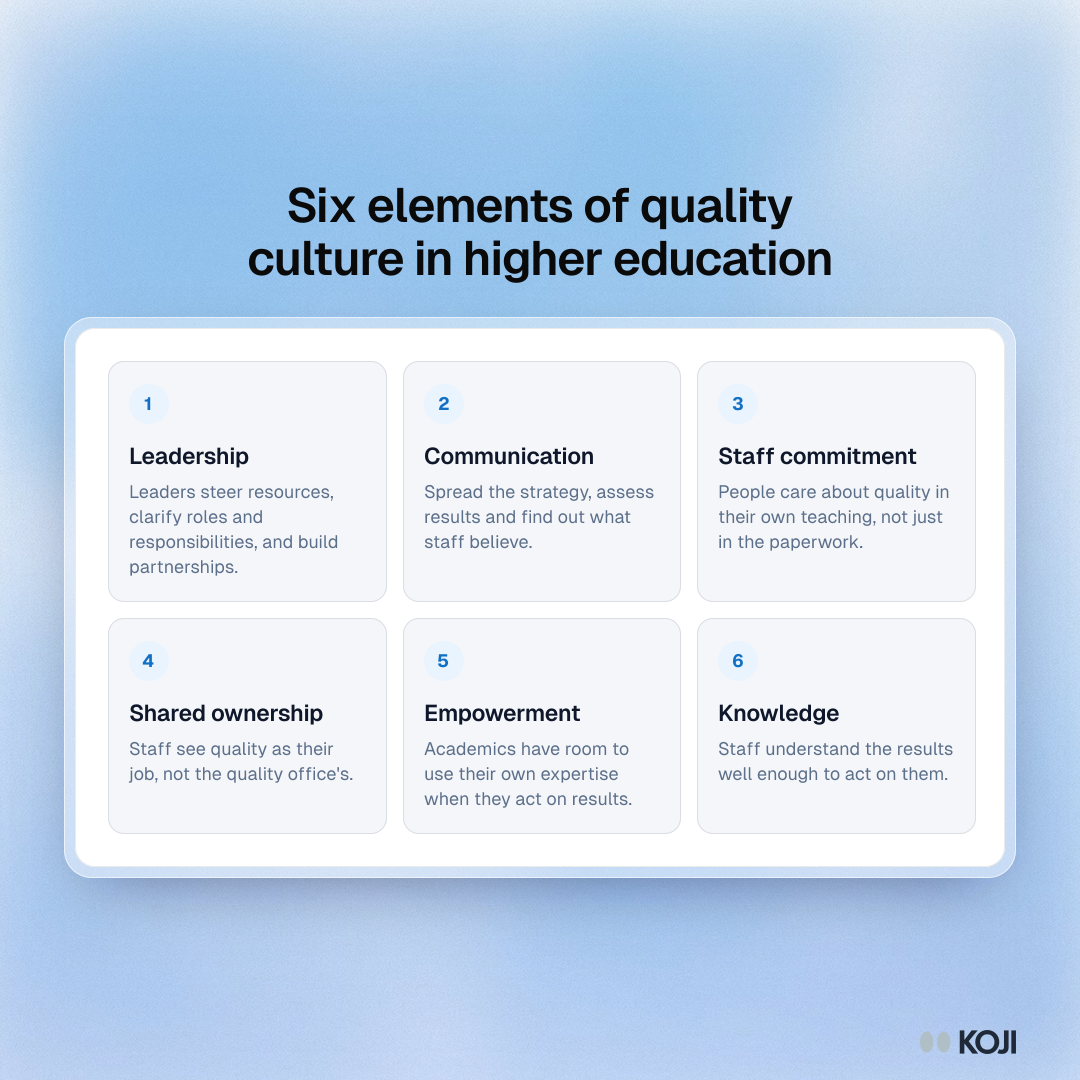
Framework of six elements of quality culture in higher education: leadership, communication, commitment, ownership, empowerment and knowledge.

Framework

Six elements of quality culture in higher education
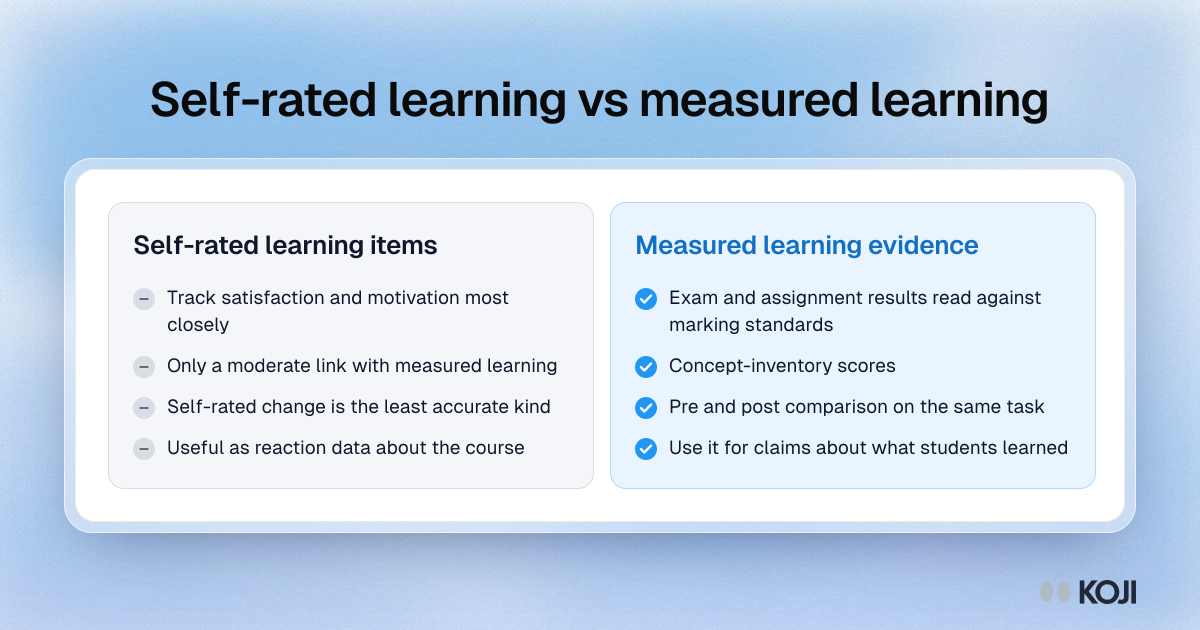
Comparison of self-rated learning items with measured learning evidence, showing what each can and cannot tell a programme team.

Comparison

Self-rated learning vs measured learning
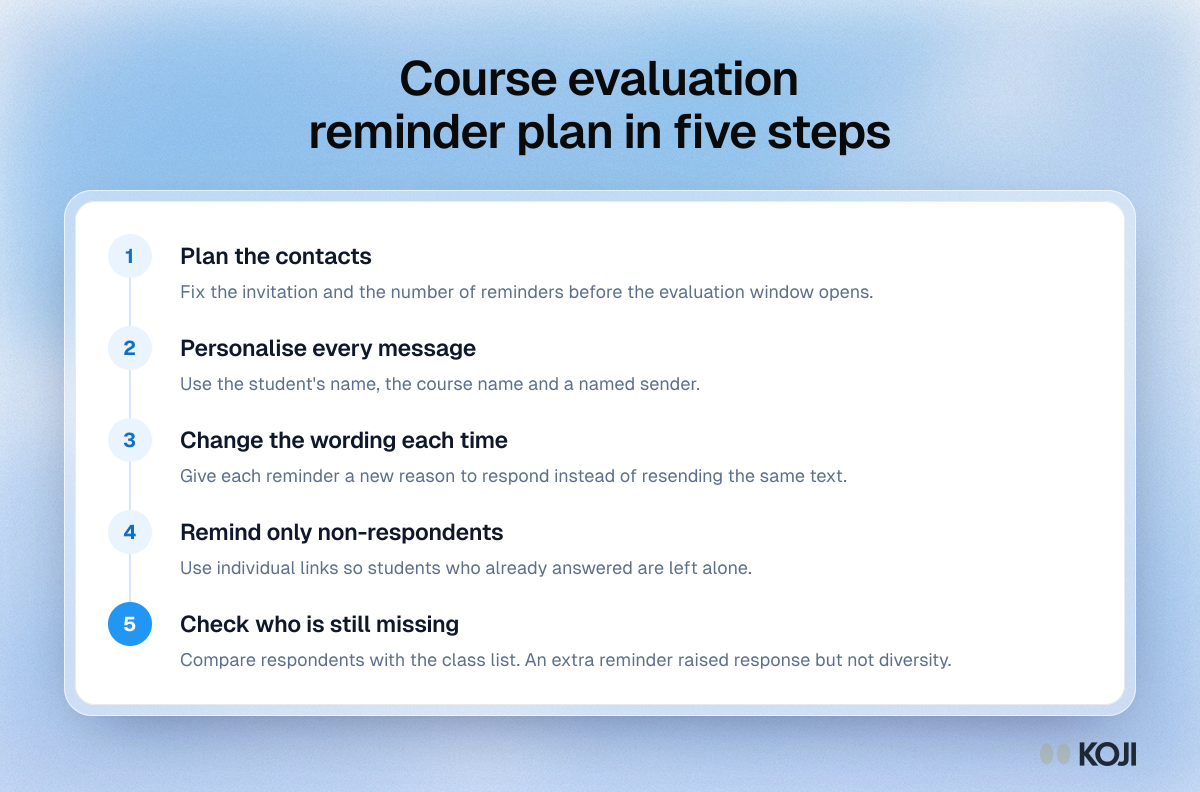
Process showing a five-step reminder plan for course evaluations, from planning contacts and personalising to checking who is still missing.

Process

Course evaluation reminder plan in five steps
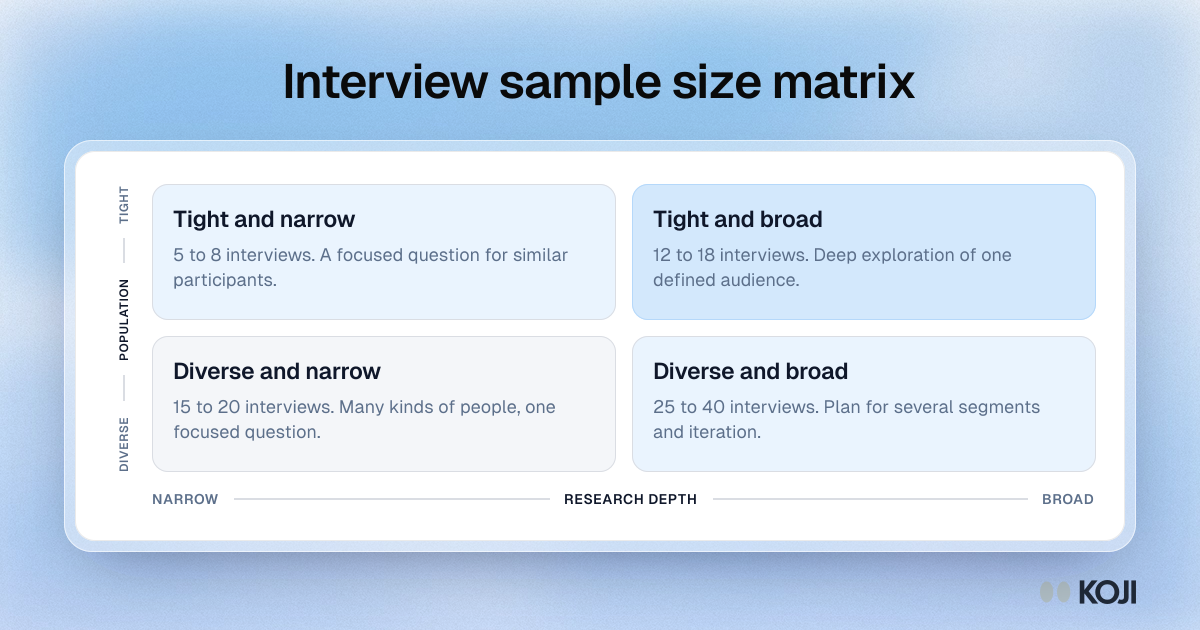
Two-by-two matrix of interview sample size: tight or diverse population against narrow or broad research depth, from 5 to 8 up to 25 to 40 interviews.

Matrix

Interview sample size matrix

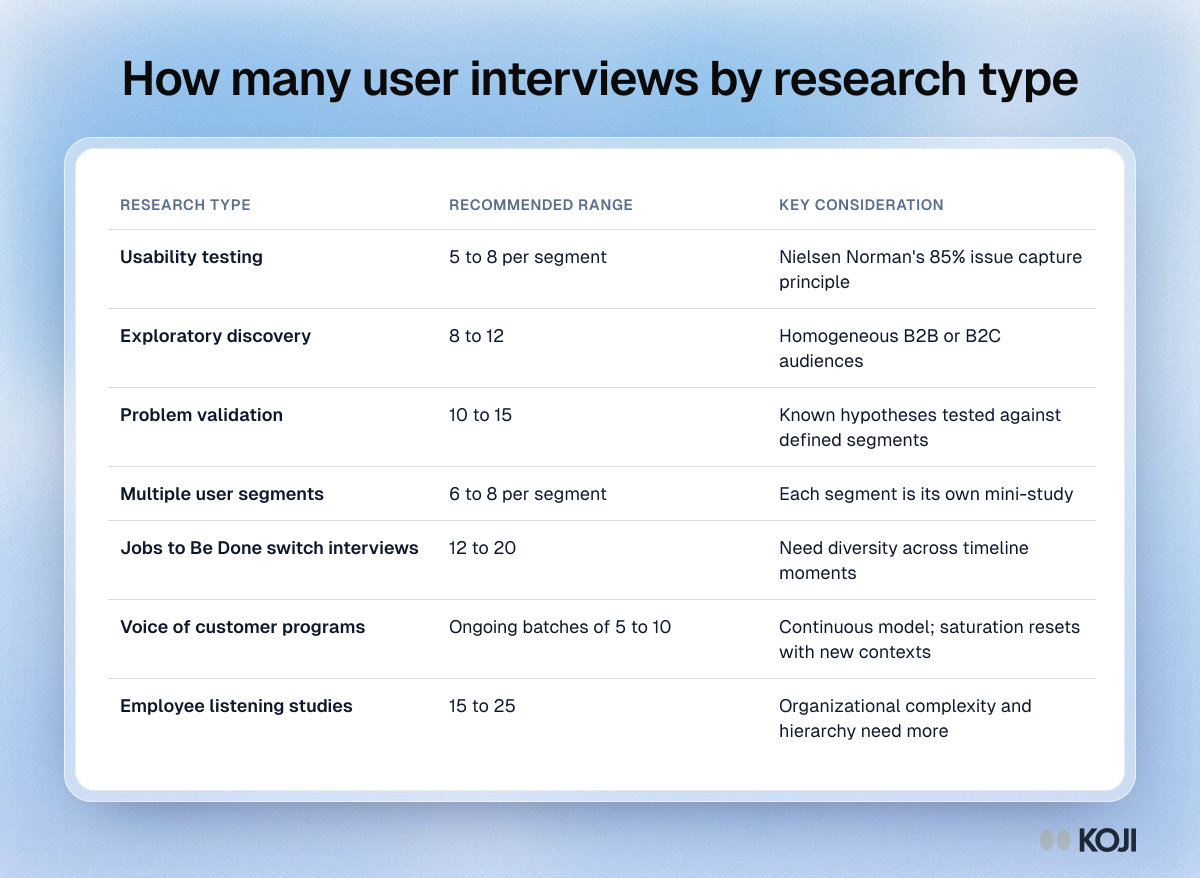
Table of recommended user interview counts for seven research types, from usability testing at 5 to 8 per segment to employee listening studies at 15 to 25.

Reference table

How many user interviews by research type
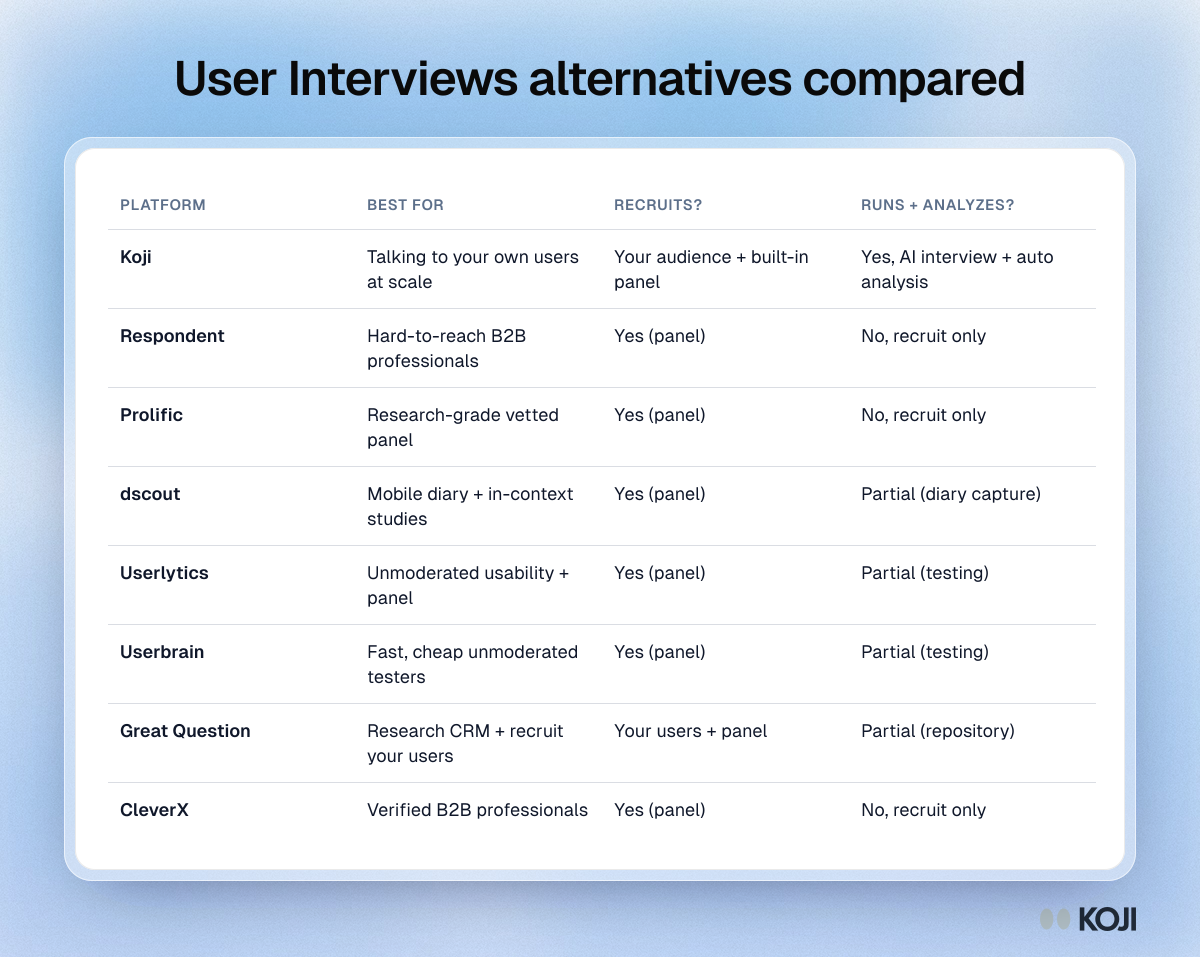
Table comparing eight User Interviews alternatives in 2026 by best use, whether they recruit participants, and whether they run and analyze the sessions.

Reference table

User Interviews alternatives compared
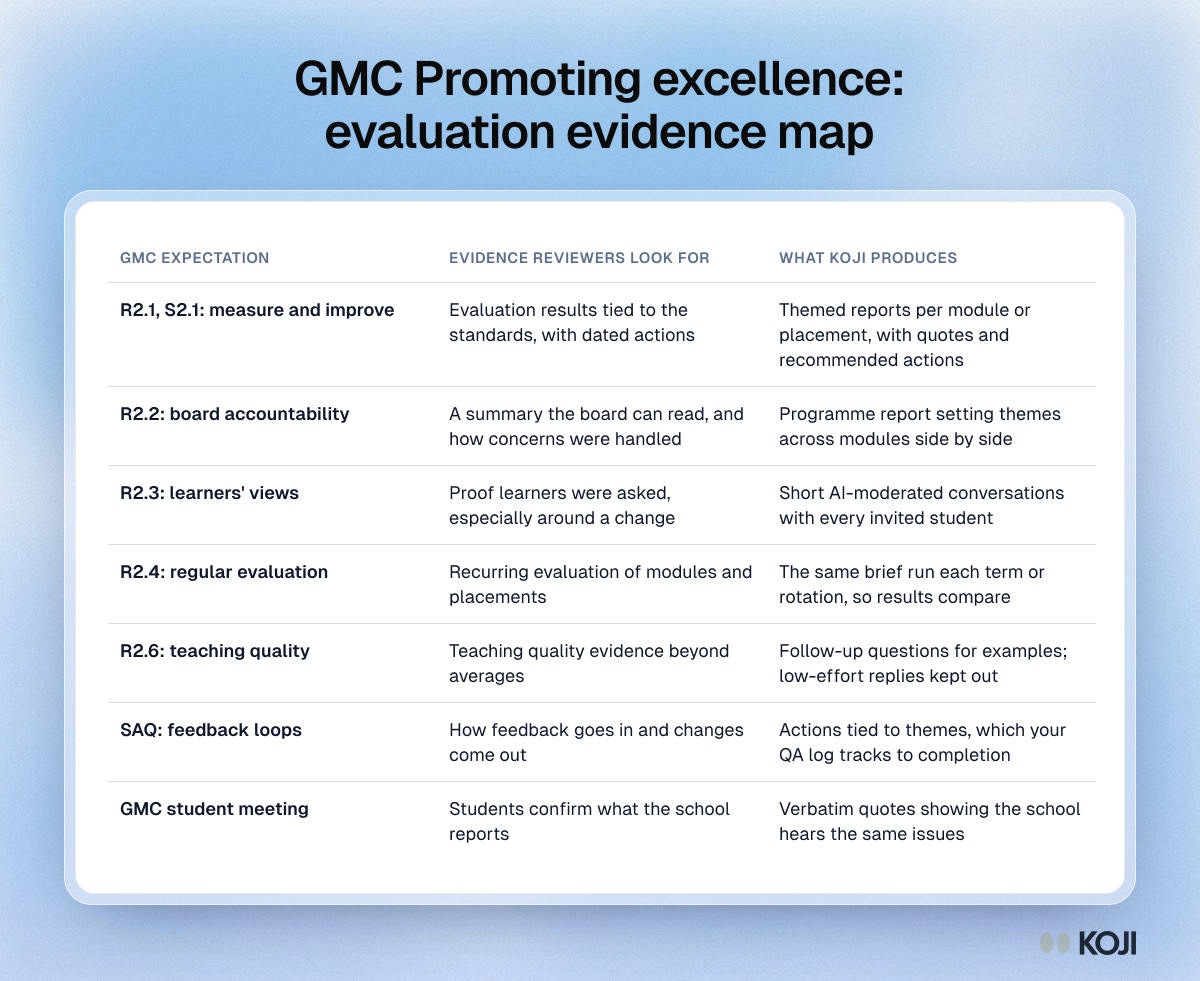
Table mapping GMC Promoting excellence requirements to the evaluation evidence reviewers look for and the Koji output that supports each one.

Reference table

GMC Promoting excellence: evaluation evidence map
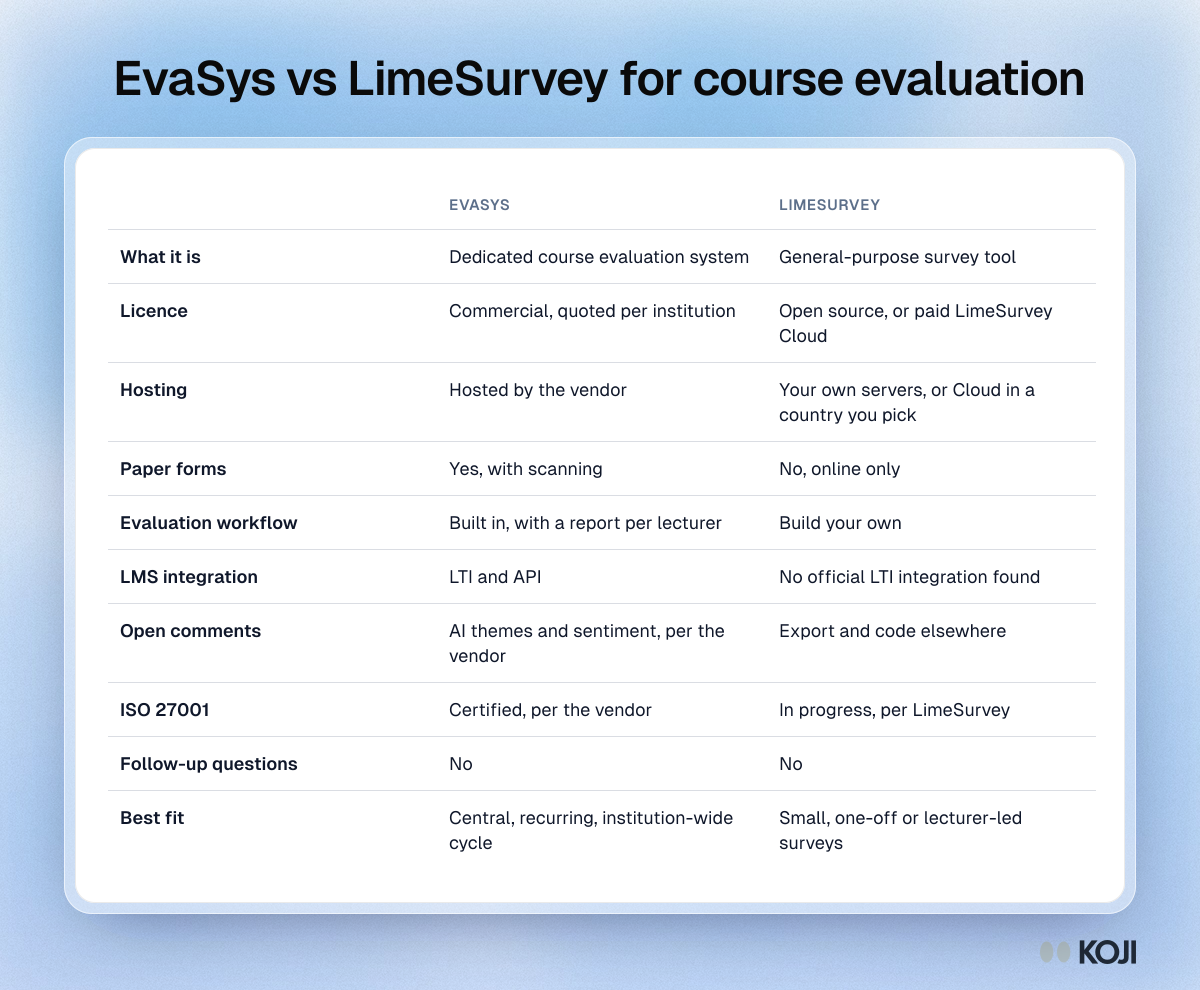
Table comparing EvaSys and LimeSurvey for course evaluation across licence, hosting, paper surveys, workflow, LMS, text analysis and best fit.

Reference table

EvaSys vs LimeSurvey for course evaluation
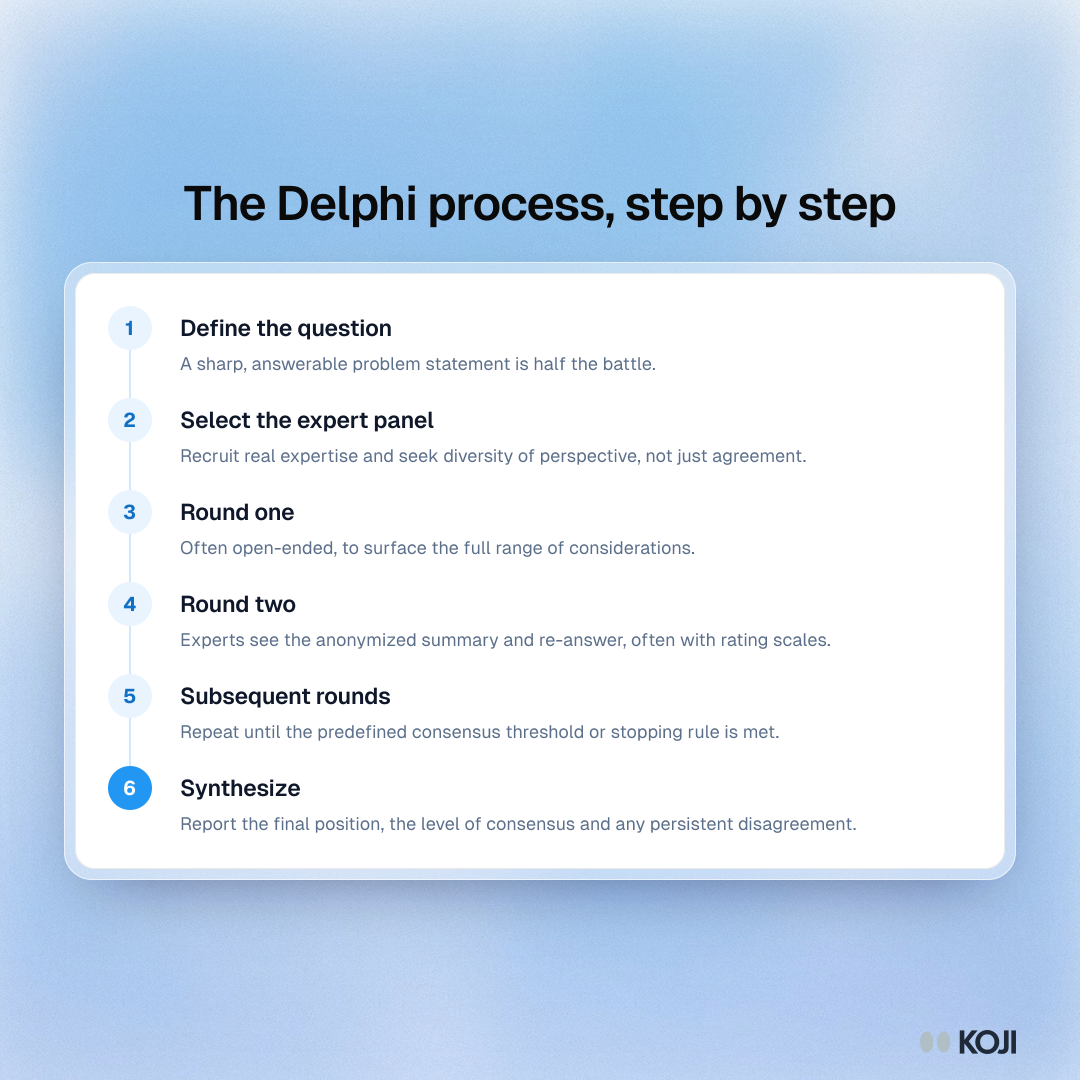
Process showing the six steps of a Delphi study, from defining the question and choosing experts to running rounds and synthesizing results.

Process

The Delphi process, step by step
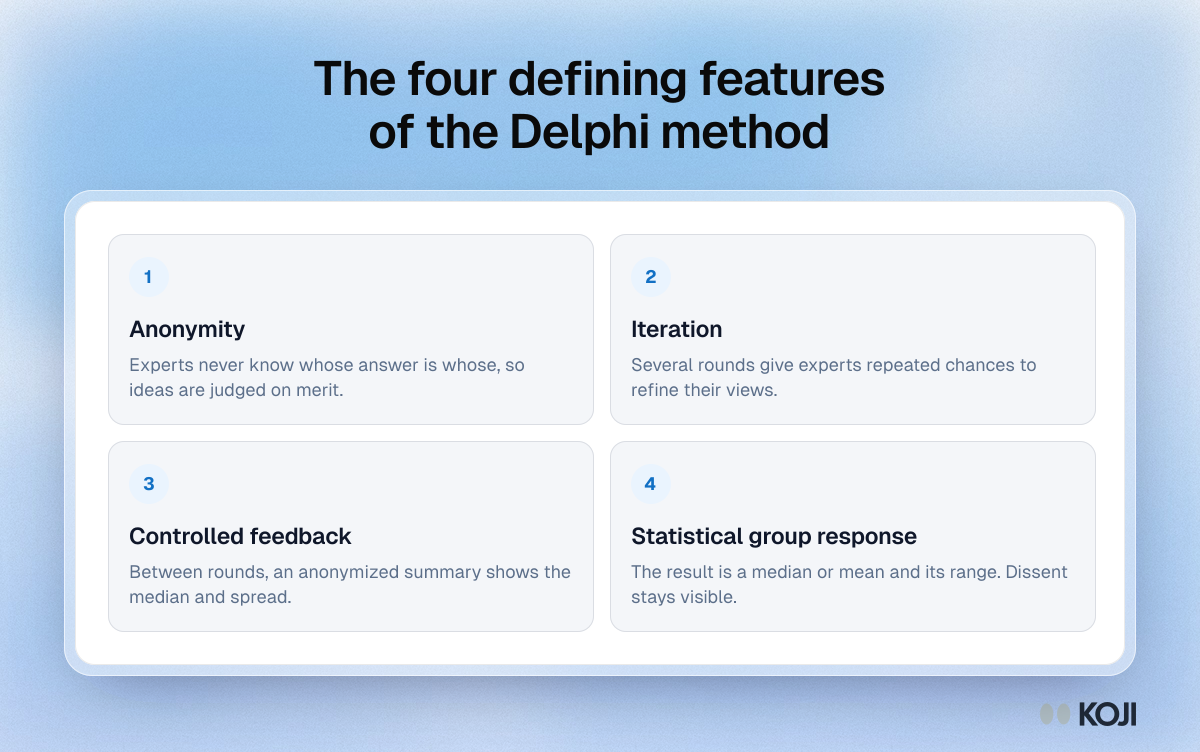
Framework showing the four defining features of the Delphi method: anonymity, iteration, controlled feedback and statistical group response.

Framework

The four defining features of the Delphi method
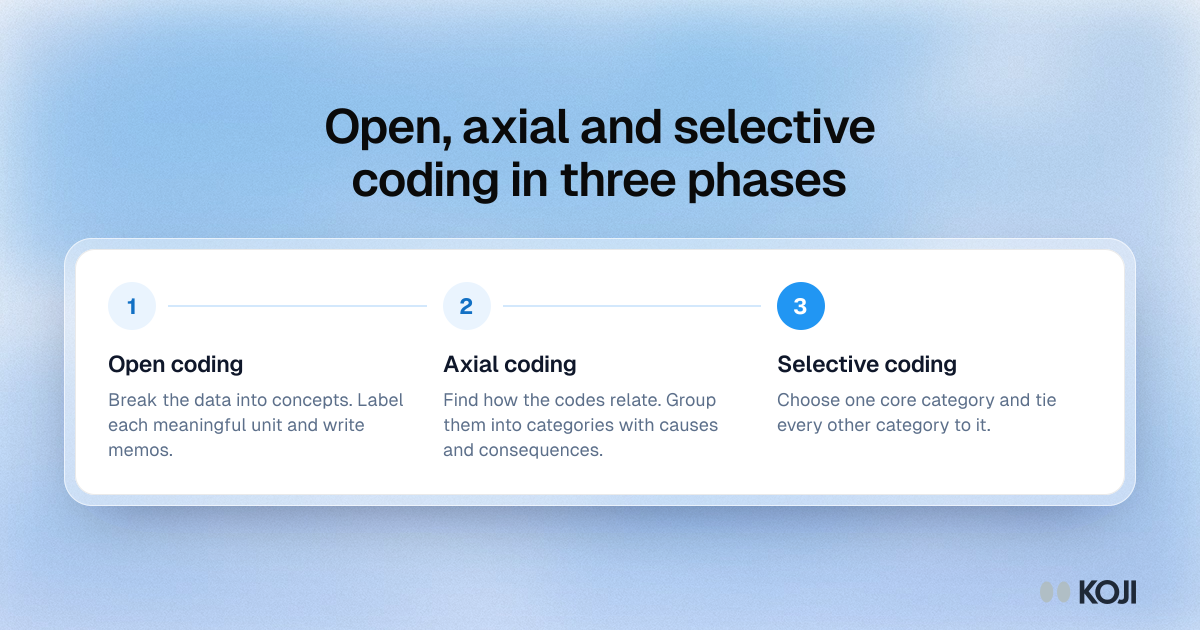
Process showing the three phases of grounded theory coding, open, axial and selective, with what each phase does to the data.

Process

Open, axial and selective coding in three phases
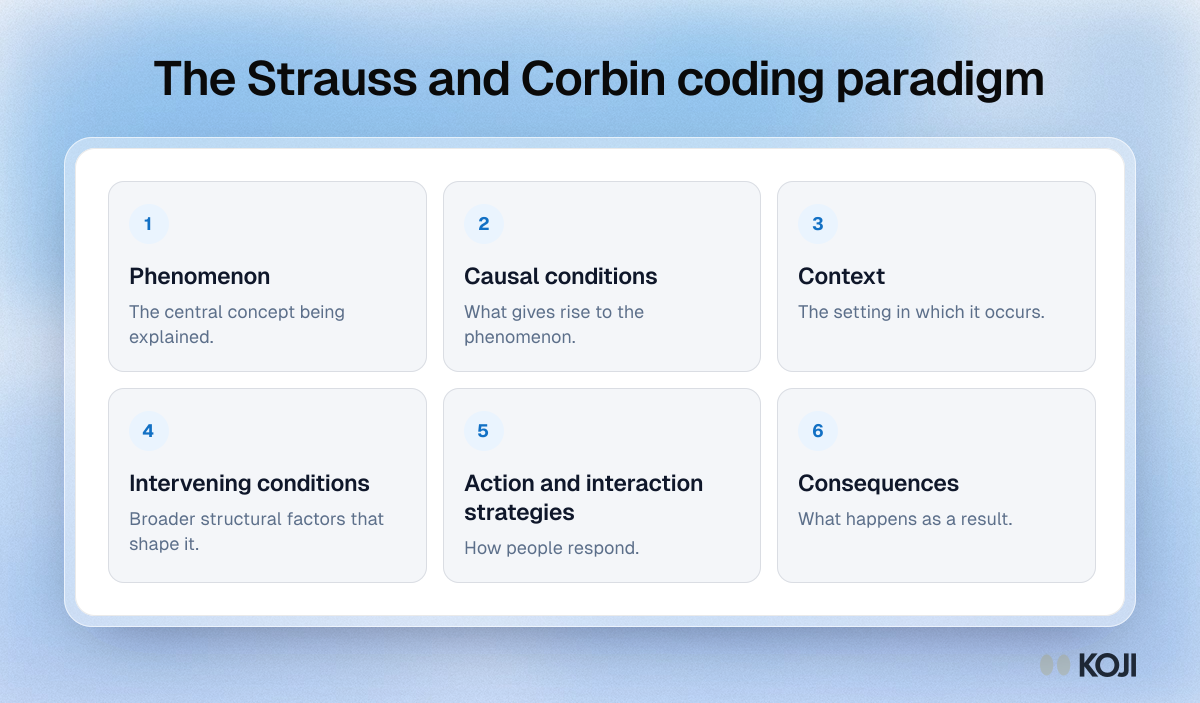
Framework of the six elements in the Strauss and Corbin coding paradigm for axial coding, from phenomenon to consequences.

Framework

The Strauss and Corbin coding paradigm
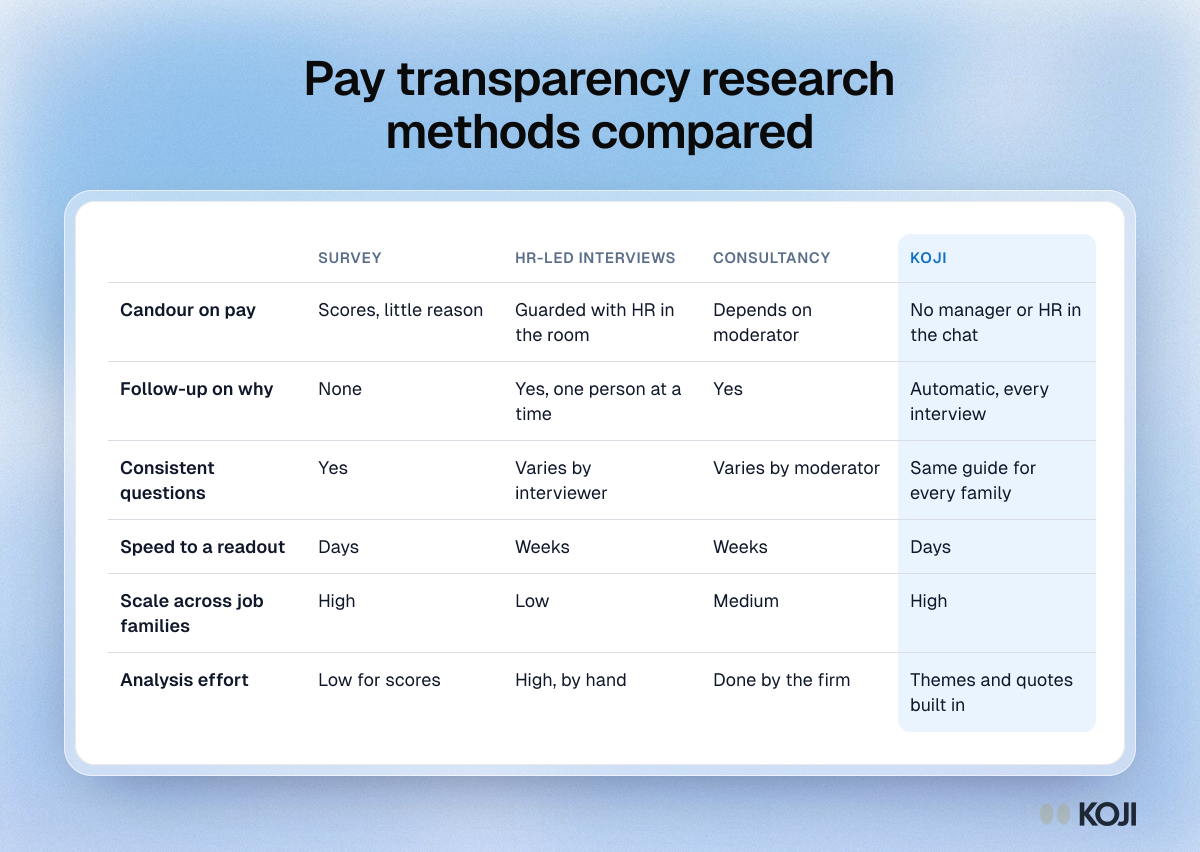
Table comparing survey, HR-led interviews, consultancy and Koji for pay transparency research on candour, follow-up, speed and scale.

Reference table

Pay transparency research methods compared
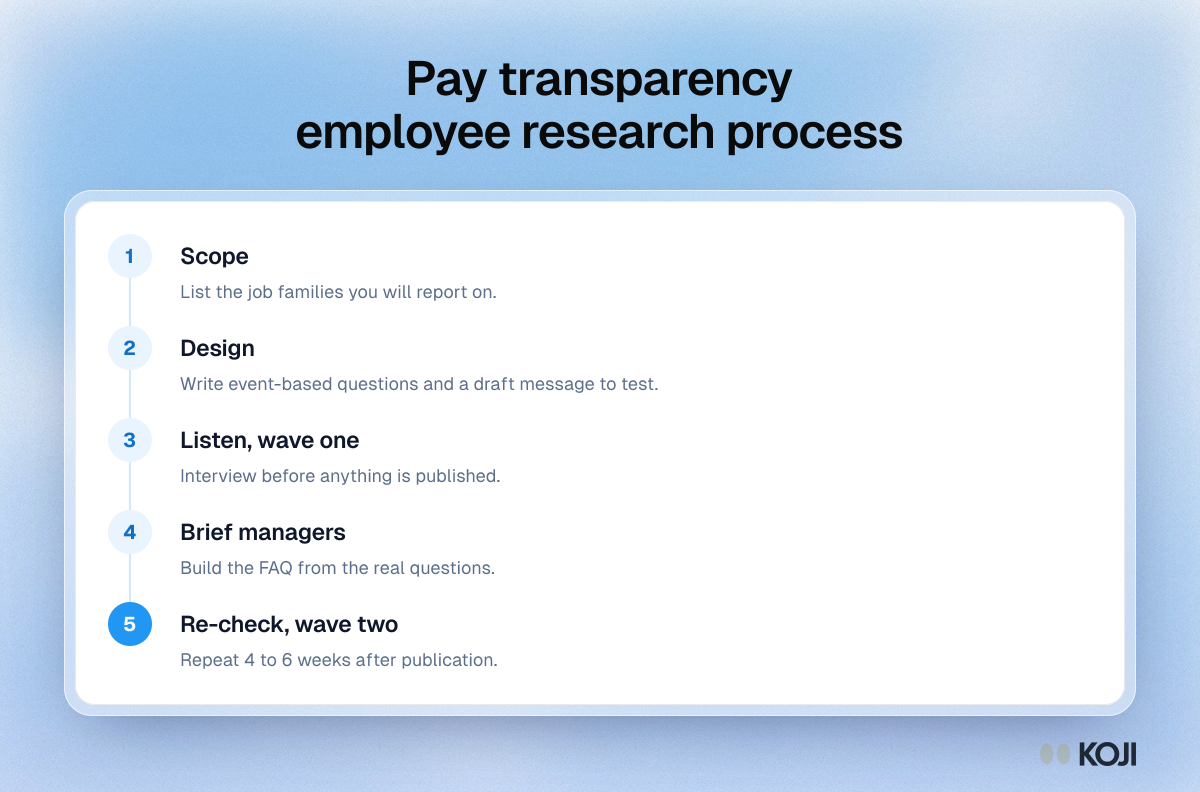
Process showing five steps of pay transparency research: scope job families, design questions, listen, brief managers, re-check.

Process

Pay transparency employee research process
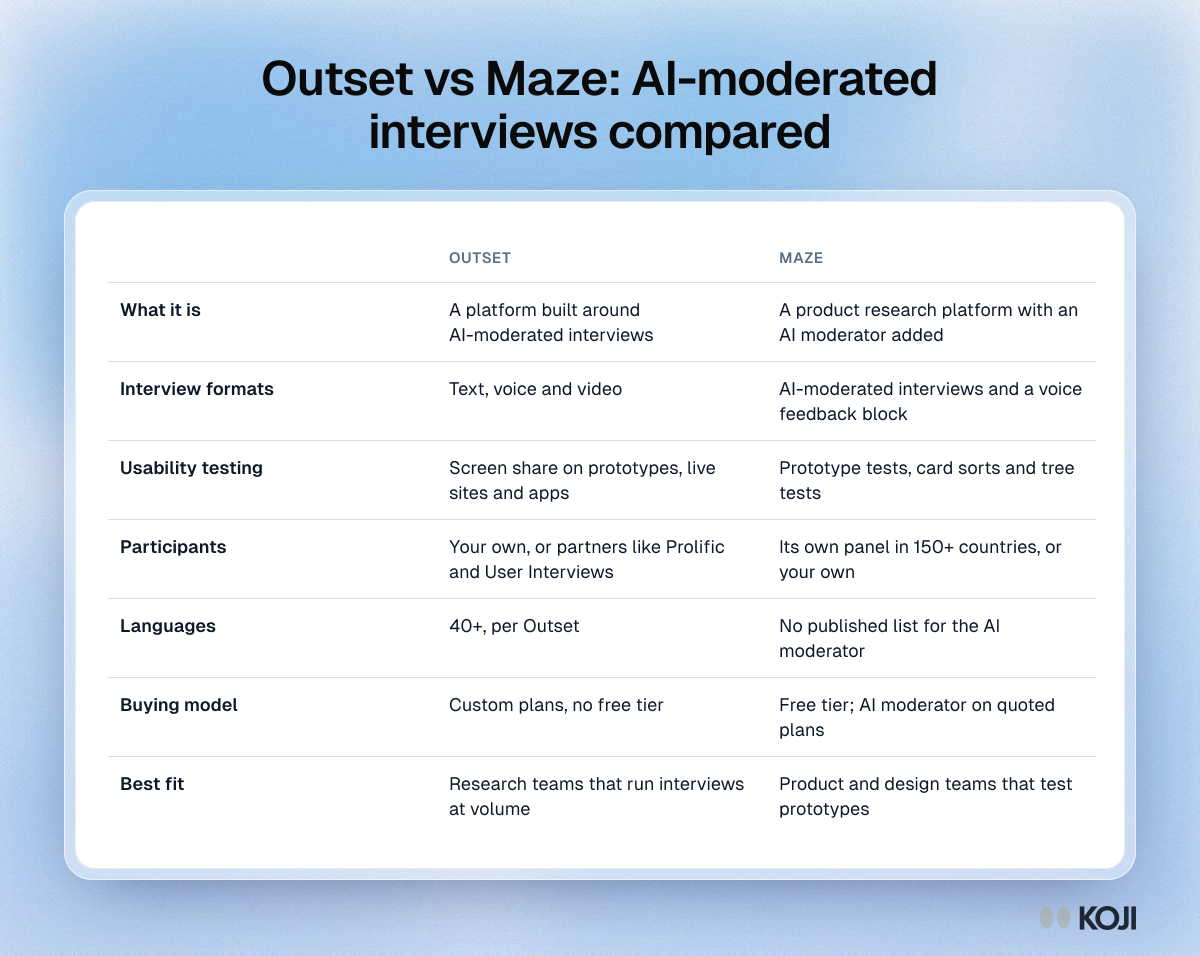
Table comparing Outset and Maze on what each is, interview formats, usability testing, participants, languages, buying model and best fit

Reference table

Outset vs Maze: AI-moderated interviews compared
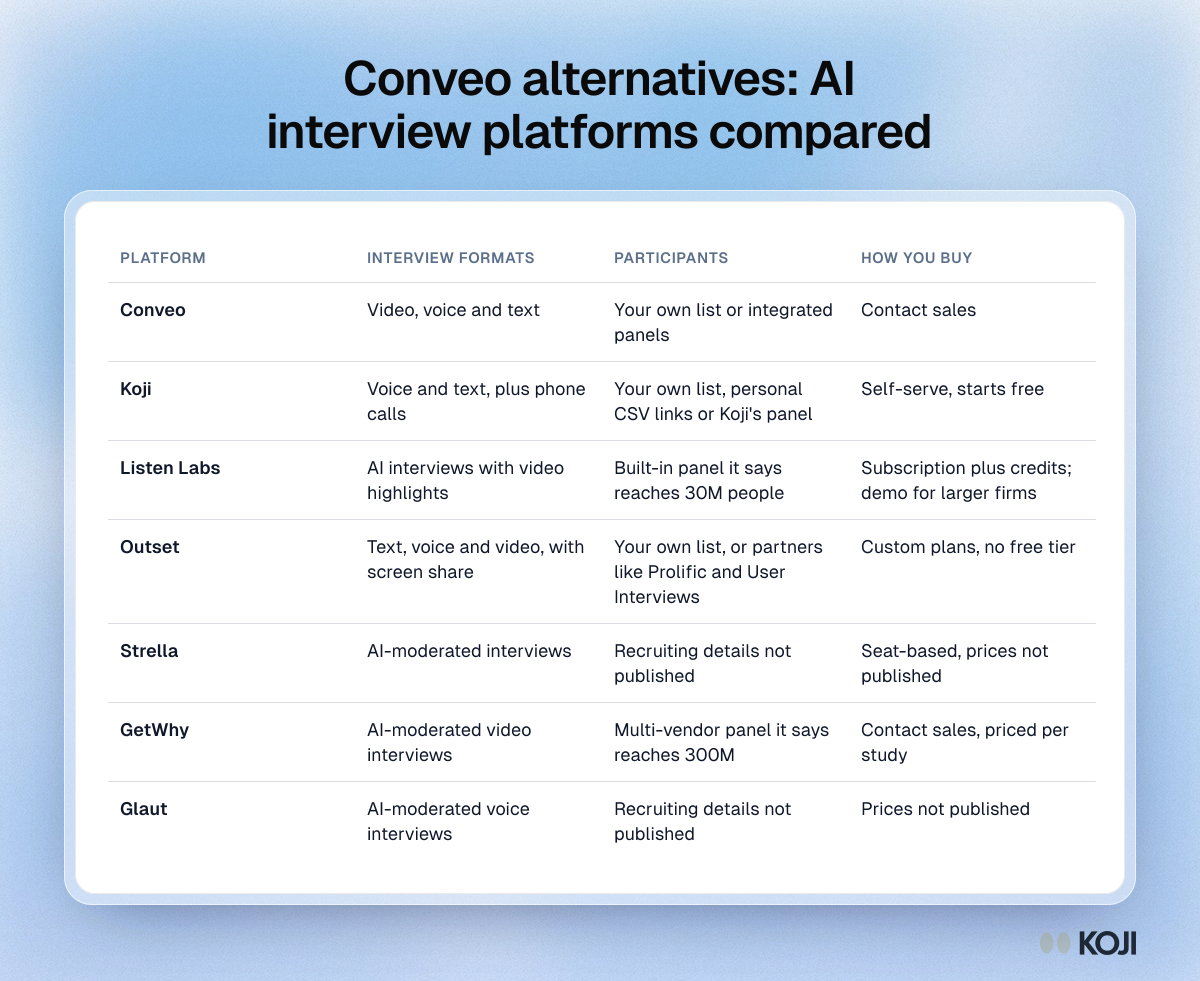
Table comparing Conveo with six alternatives on interview formats, where participants come from and how you buy

Reference table

Conveo alternatives: AI interview platforms compared
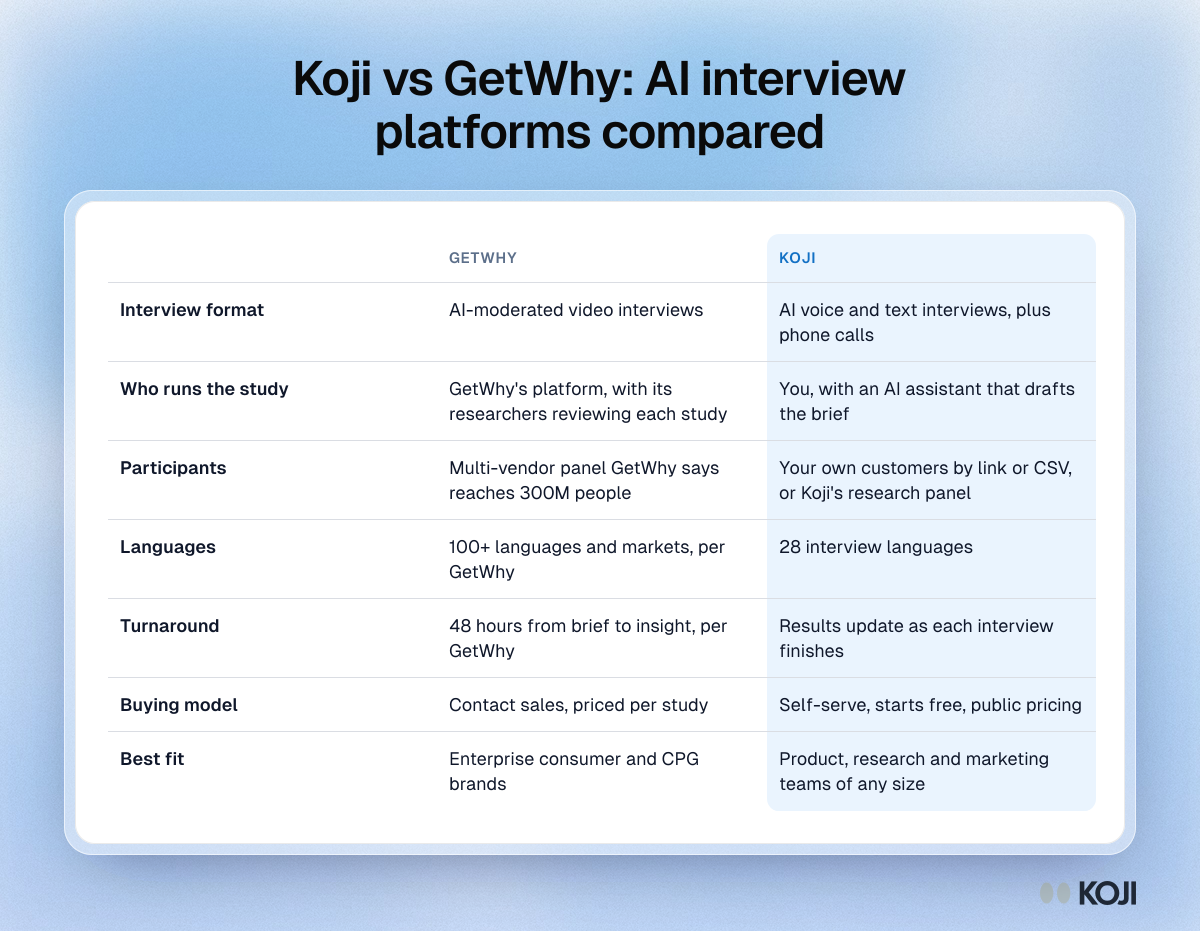
Table comparing GetWhy and Koji on interview format, who runs the study, participants, languages, turnaround, buying model and best fit

Reference table

Koji vs GetWhy: AI interview platforms compared
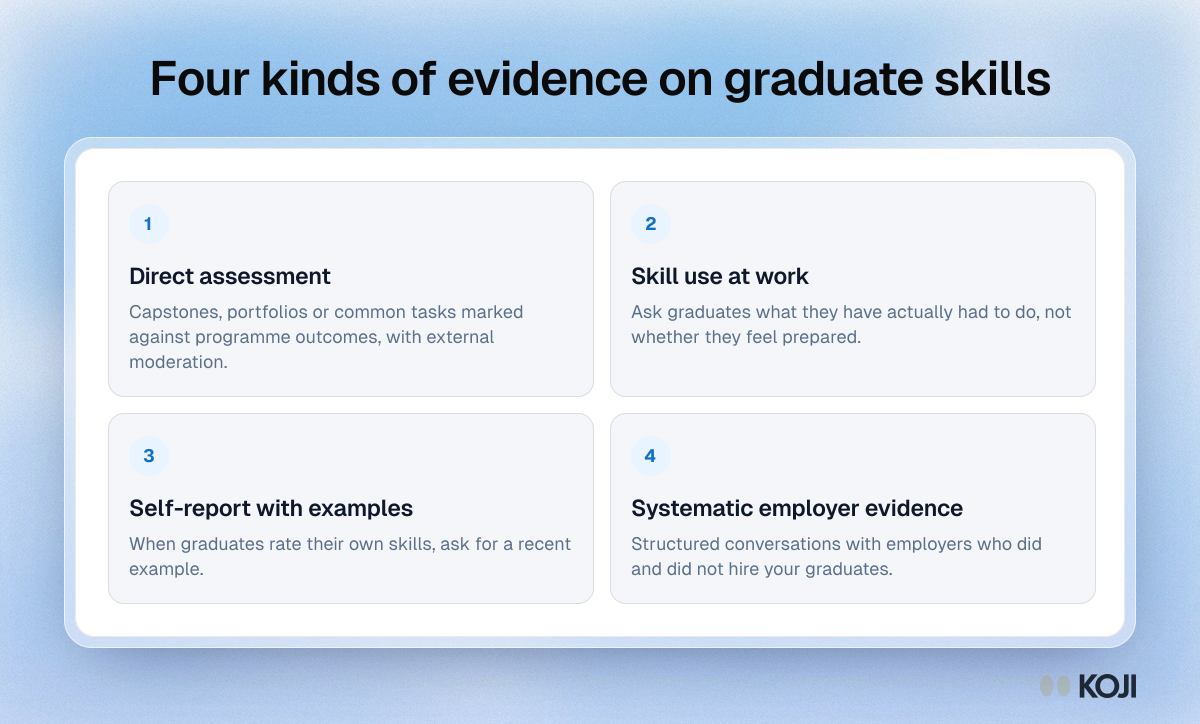
Framework of four kinds of graduate skills evidence for programme review: direct assessment, skill use at work, self-report with examples and employer evidence.

Framework

Four kinds of evidence on graduate skills
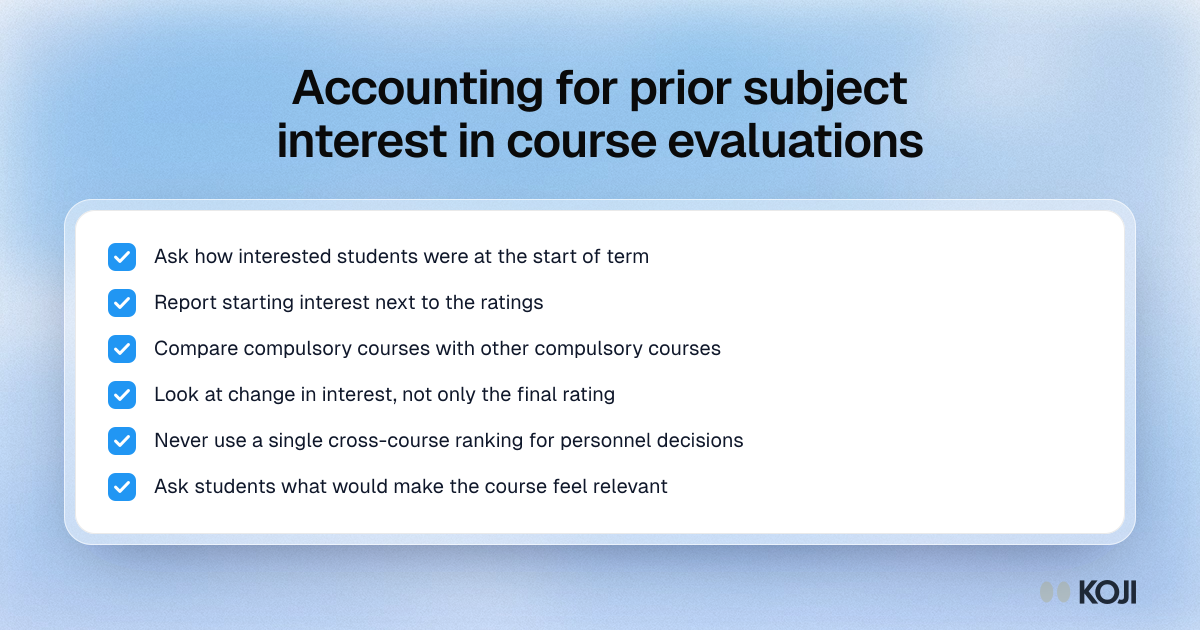
Checklist of six steps for accounting for prior subject interest in course evaluations, from asking about interest early to comparing like with like.

Checklist

Accounting for prior subject interest in course evaluations
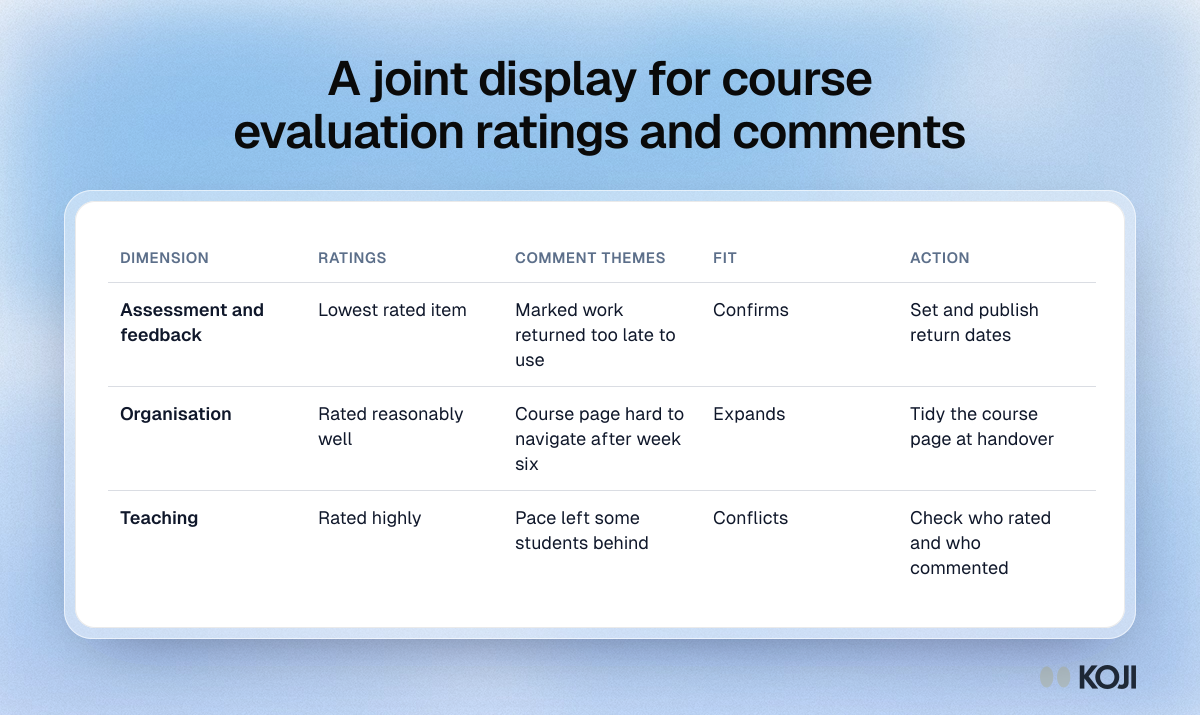
Table showing a joint display for course evaluation: each dimension lists its rating, comment themes, whether they confirm, expand or conflict, and the action.

Reference table

A joint display for course evaluation ratings and comments
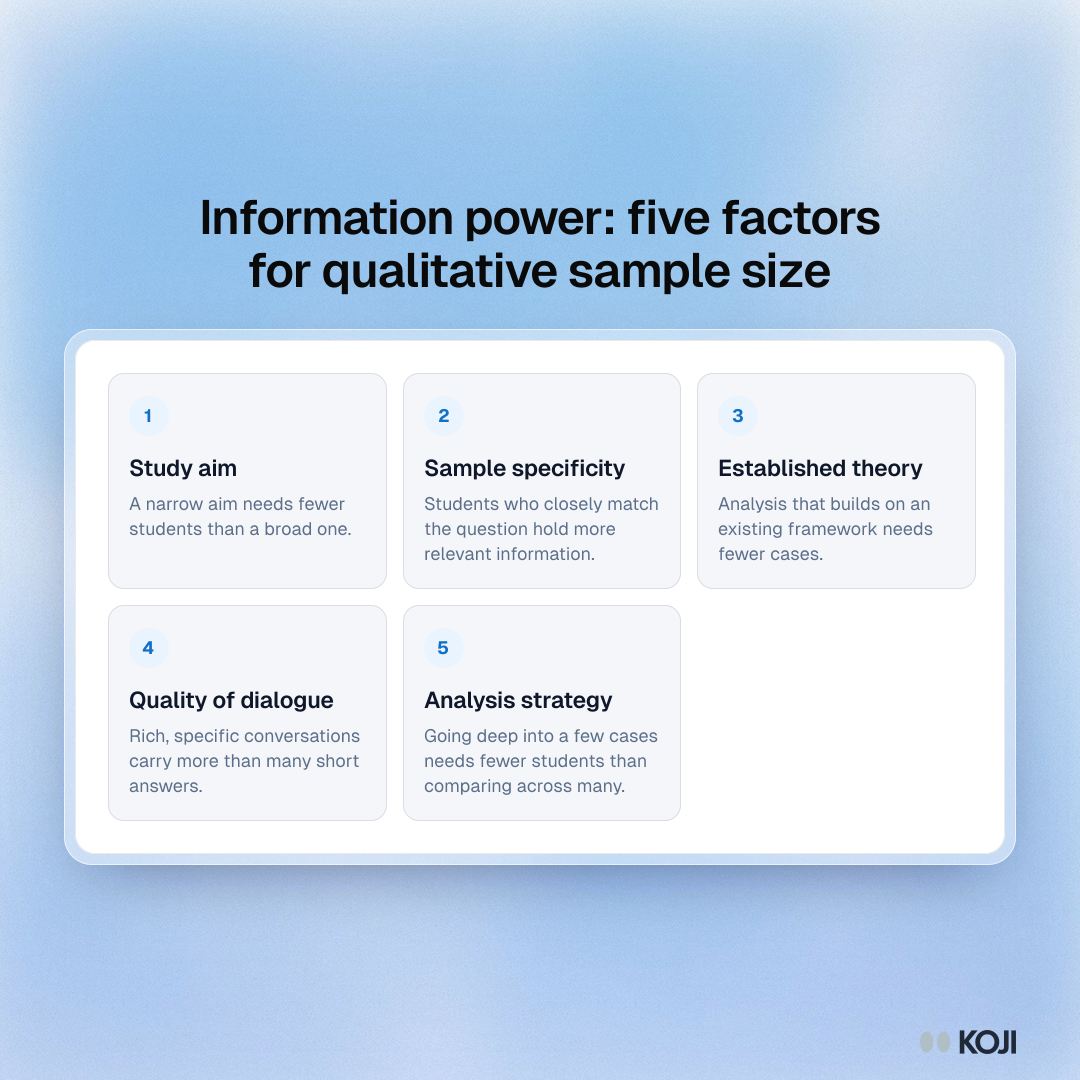
Framework of the five factors that set information power in interview studies: study aim, sample specificity, theory, dialogue quality and analysis.

Framework

Information power: five factors for qualitative sample size
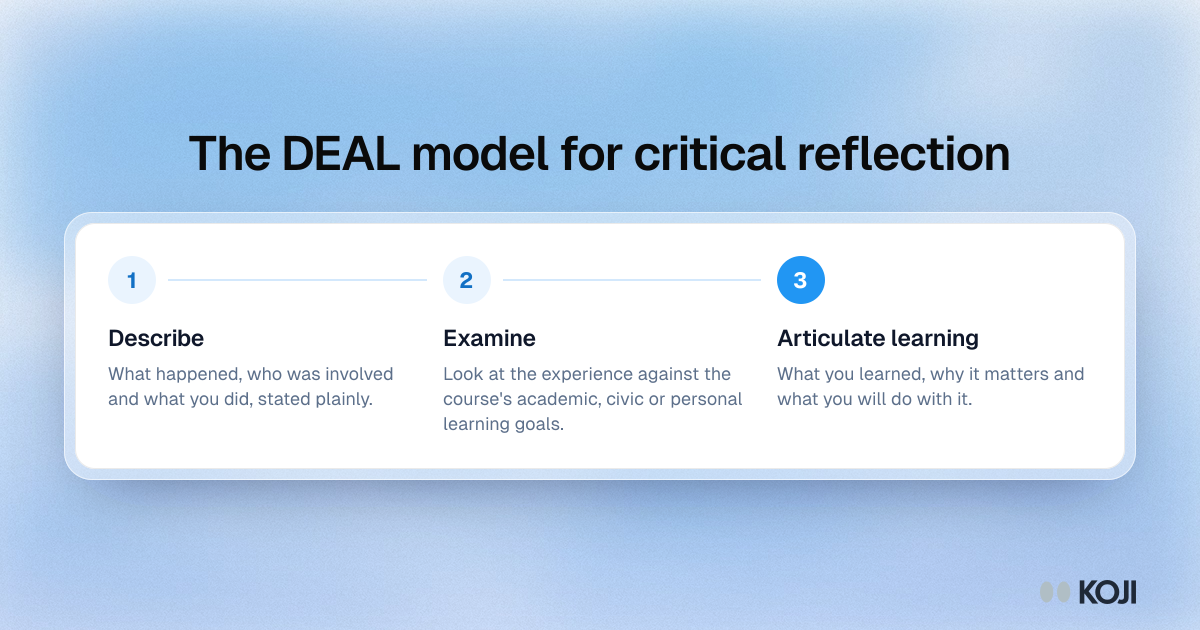
Process showing the DEAL model for critical reflection in service-learning: describe the experience, examine it against learning goals, articulate the learning.

Process

The DEAL model for critical reflection
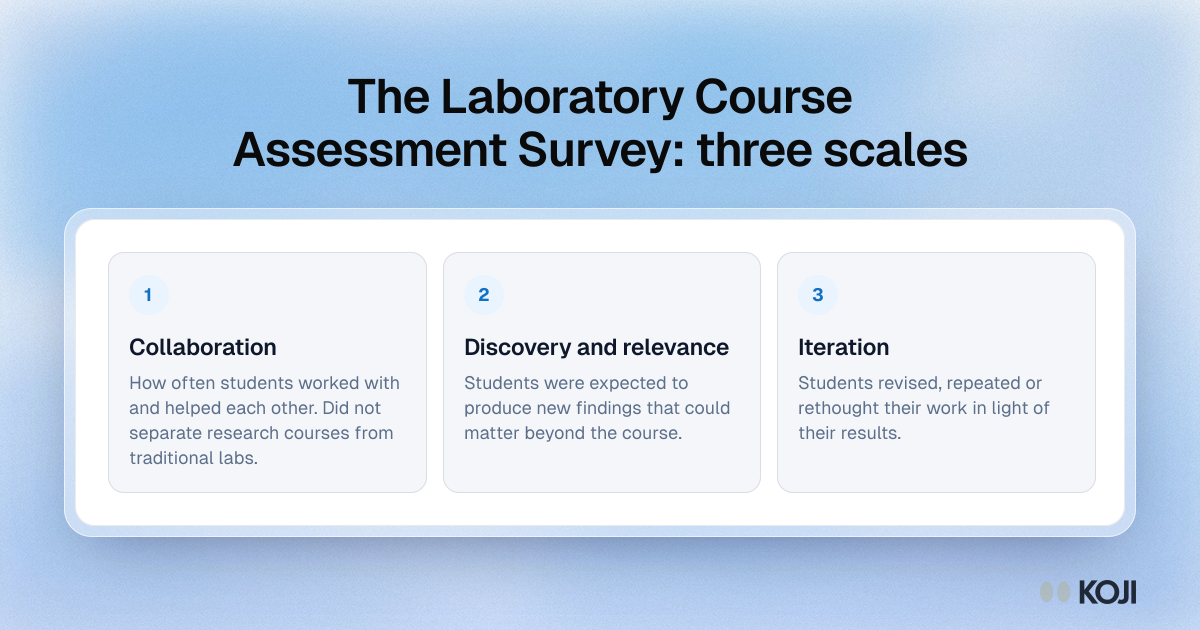
Framework showing the three scales of the Laboratory Course Assessment Survey: collaboration, discovery and relevance, and iteration.

Framework

The Laboratory Course Assessment Survey: three scales
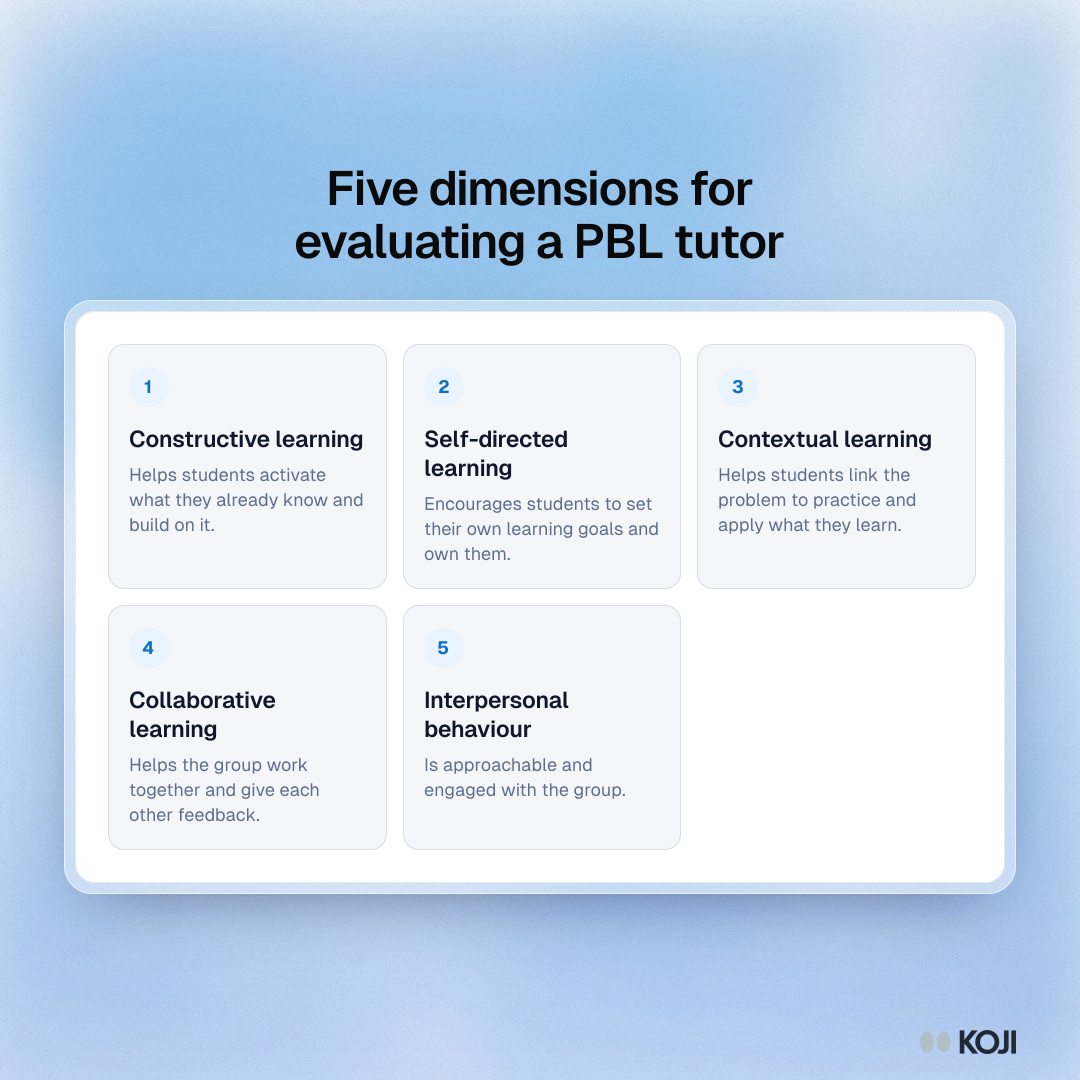
Framework of five dimensions for evaluating a PBL tutor: constructive, self-directed, contextual and collaborative learning, plus interpersonal behaviour.

Framework

Five dimensions for evaluating a PBL tutor
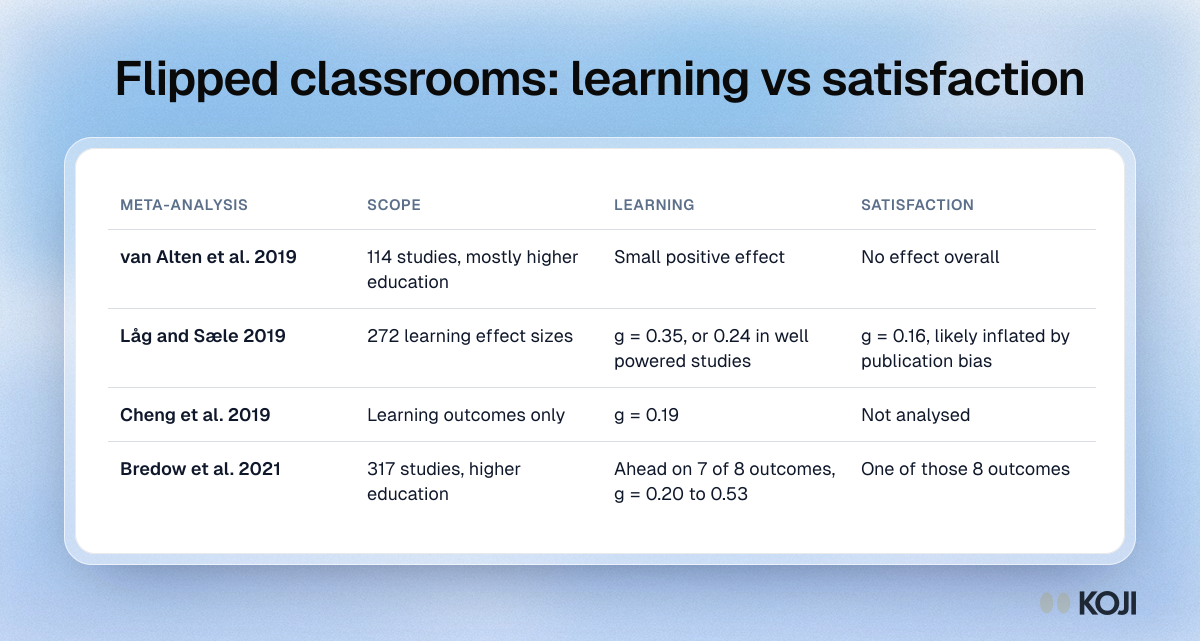
Table comparing four meta-analyses of flipped classrooms: effects on learning outcomes are small to moderate, effects on satisfaction are smaller or absent.

Reference table

Flipped classrooms: learning vs satisfaction
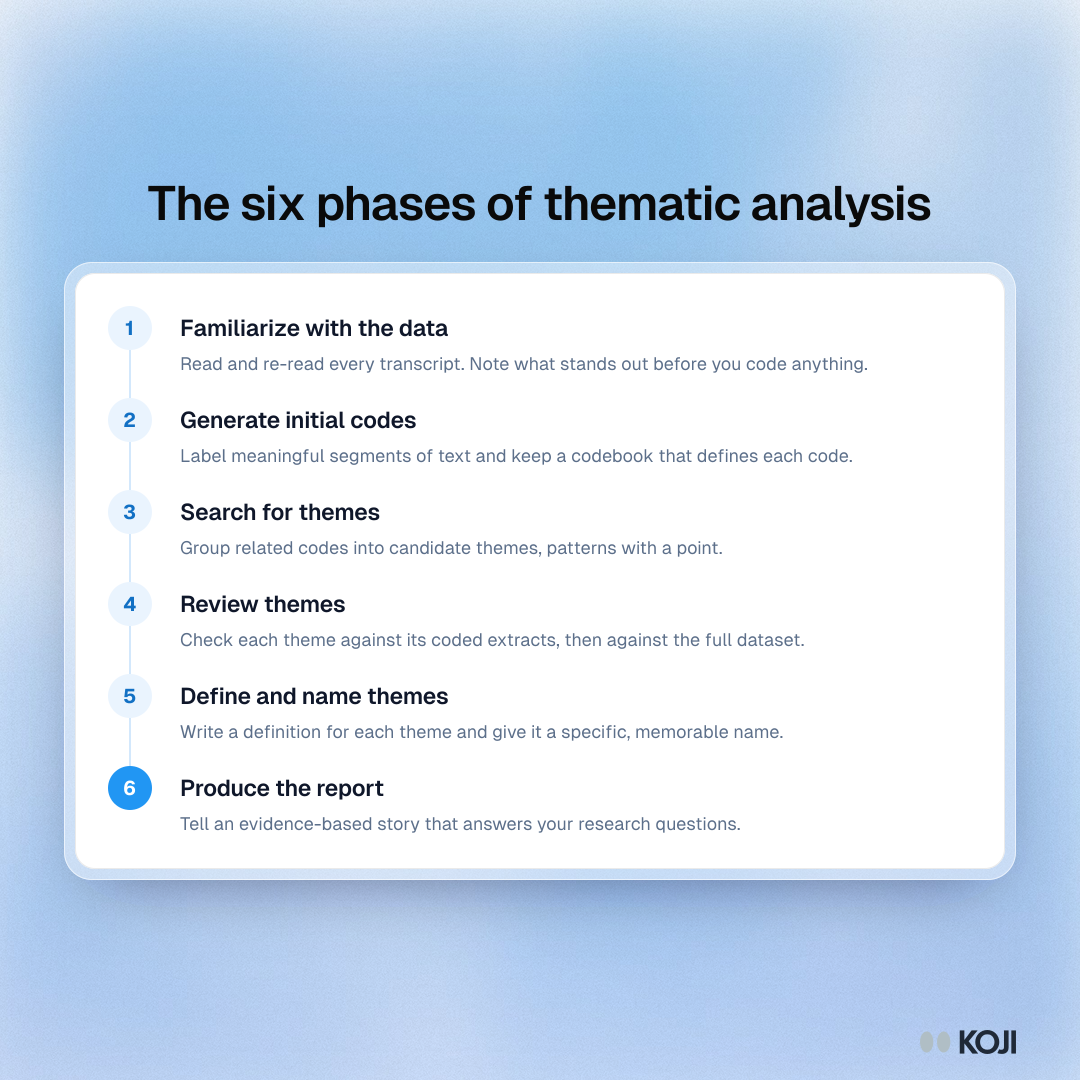
Process showing the six phases of thematic analysis, from familiarizing with the data and coding to naming themes and writing the report.

Process

The six phases of thematic analysis
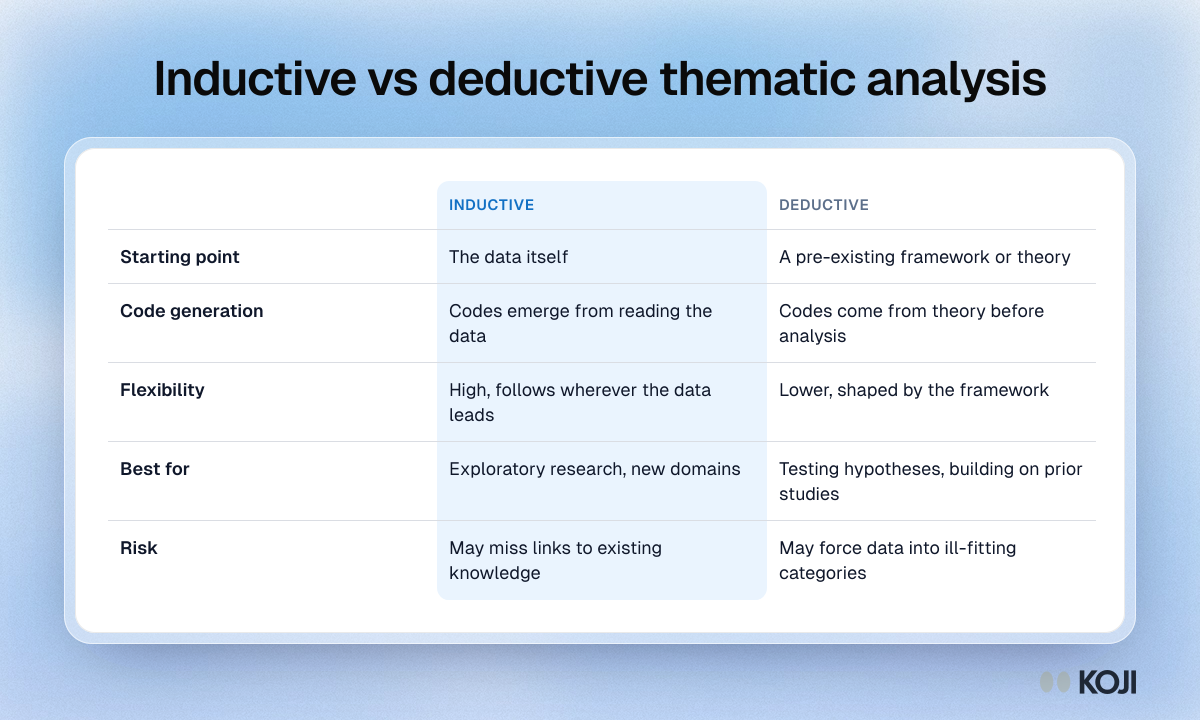
Table comparing inductive and deductive thematic analysis on starting point, code generation, flexibility, best use and risk.

Reference table

Inductive vs deductive thematic analysis
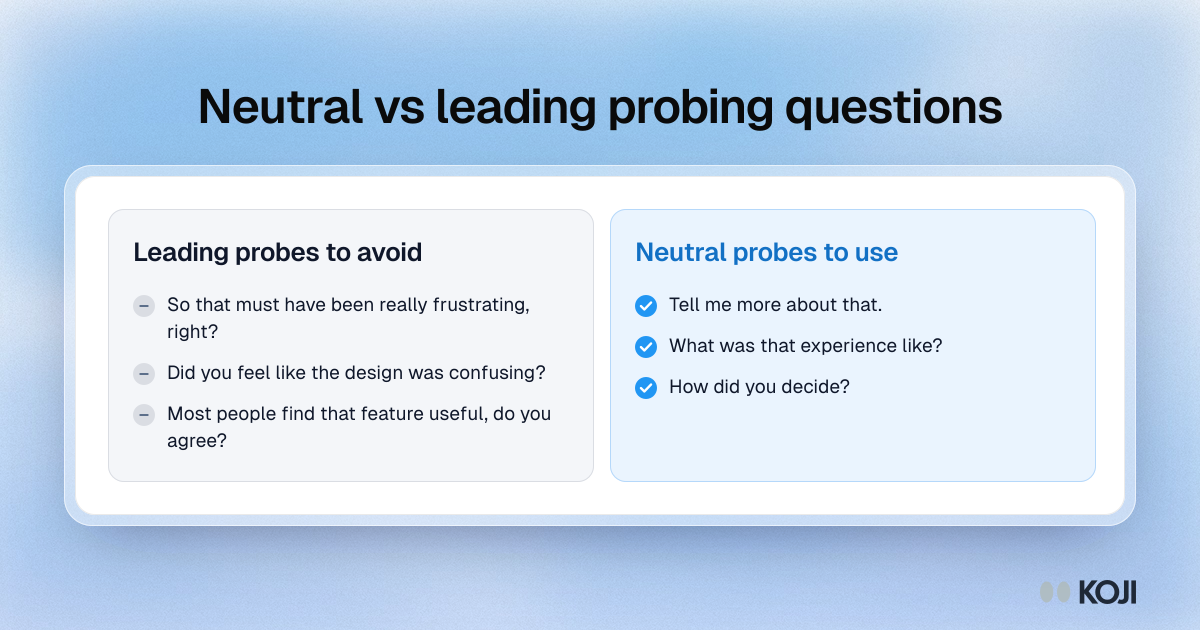
Comparison of leading probes to avoid and neutral probes to use in research interviews, with three example questions for each.

Comparison

Neutral vs leading probing questions
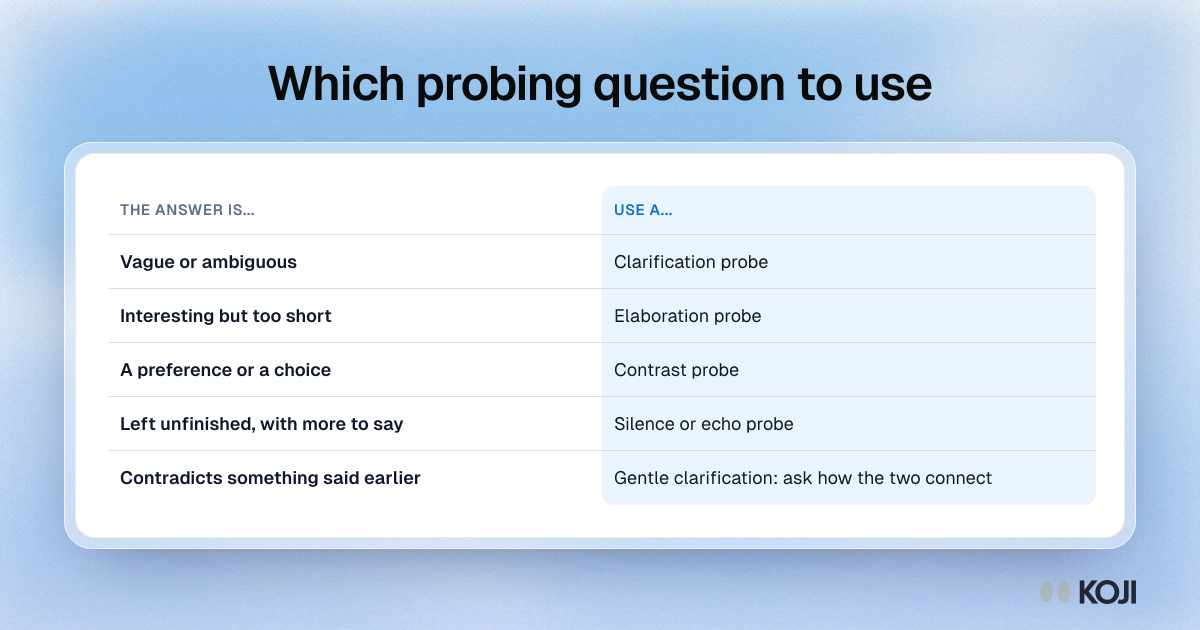
Table matching the kind of interview answer to the probe to use: clarification, elaboration, contrast, silence, echo or a gentle check on contradictions.

Reference table

Which probing question to use
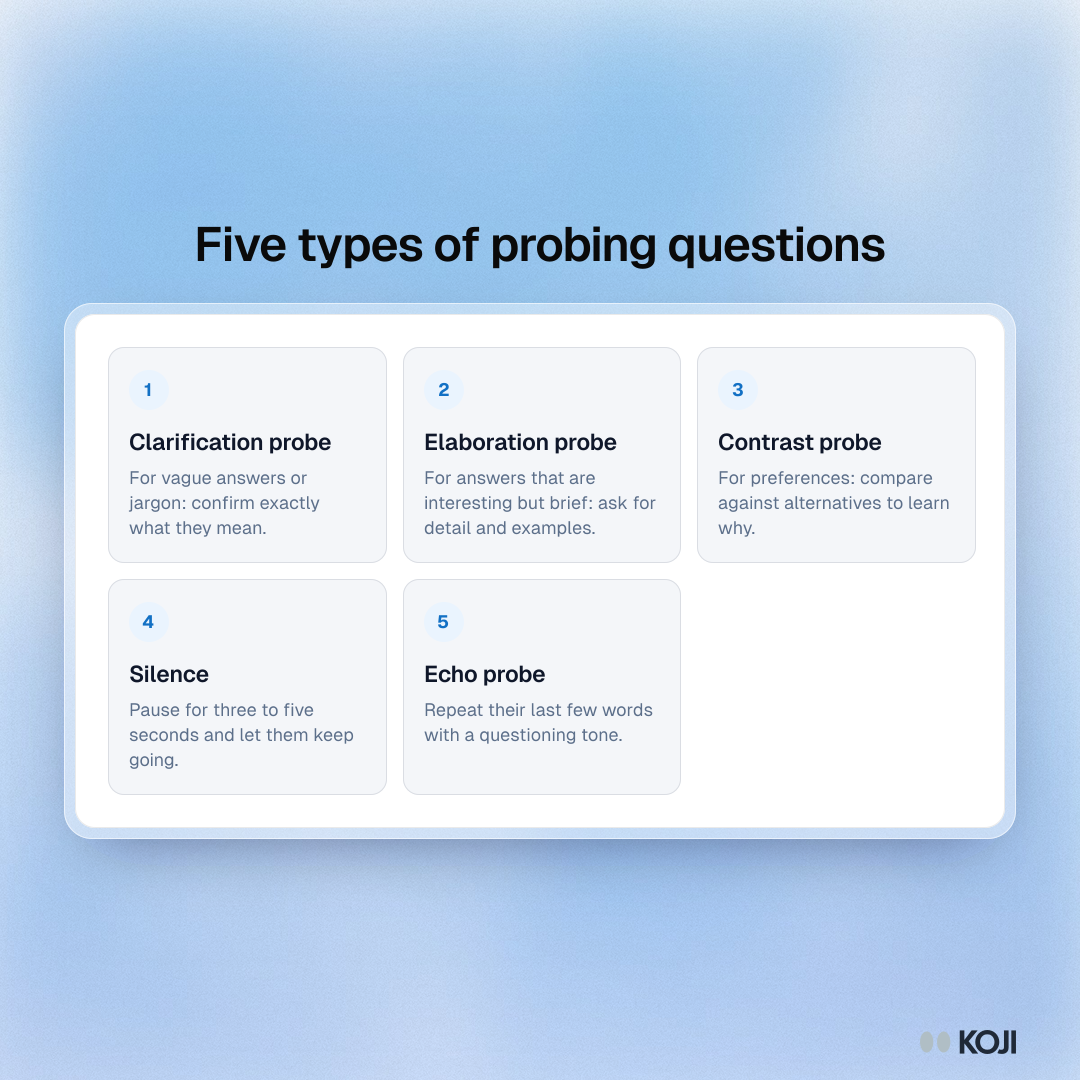
Framework of five probing question types for interviews: clarification, elaboration, contrast, silence and echo probes, each with when to use it.

Framework

Five types of probing questions
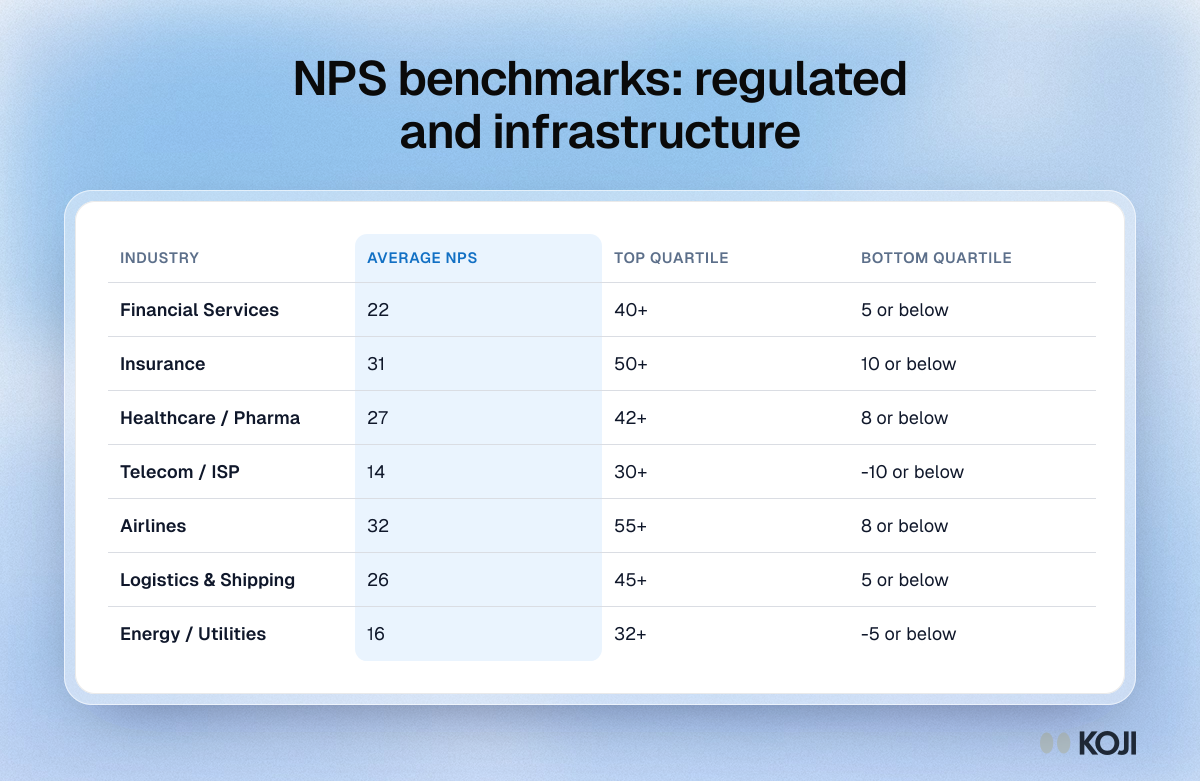
Table of 2026 NPS benchmarks for seven regulated industries, including finance, insurance, healthcare and telecom, with quartile cut-offs.

Reference table

NPS benchmarks: regulated and infrastructure
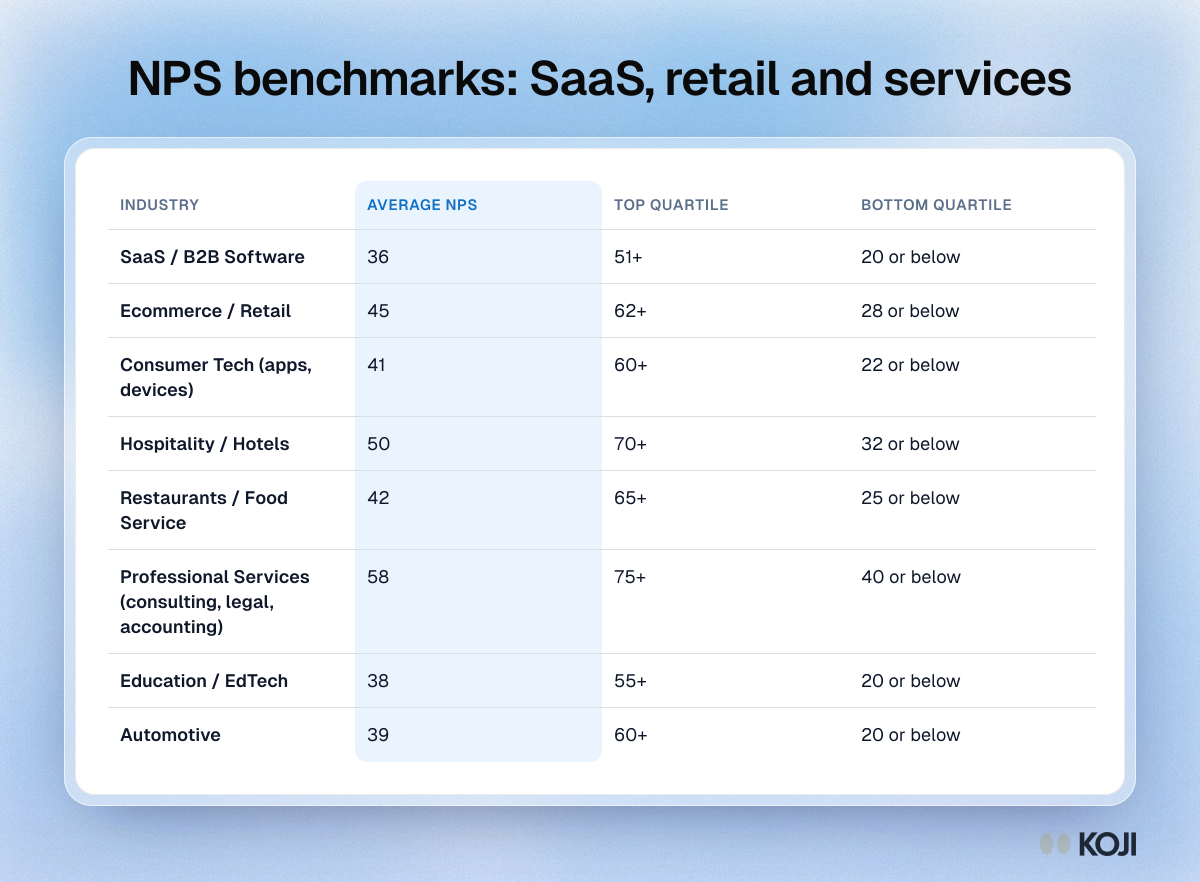
Table of 2026 NPS benchmarks for eight industries, including SaaS, ecommerce and hospitality, with average, top quartile and bottom quartile scores.

Reference table

NPS benchmarks: SaaS, retail and services
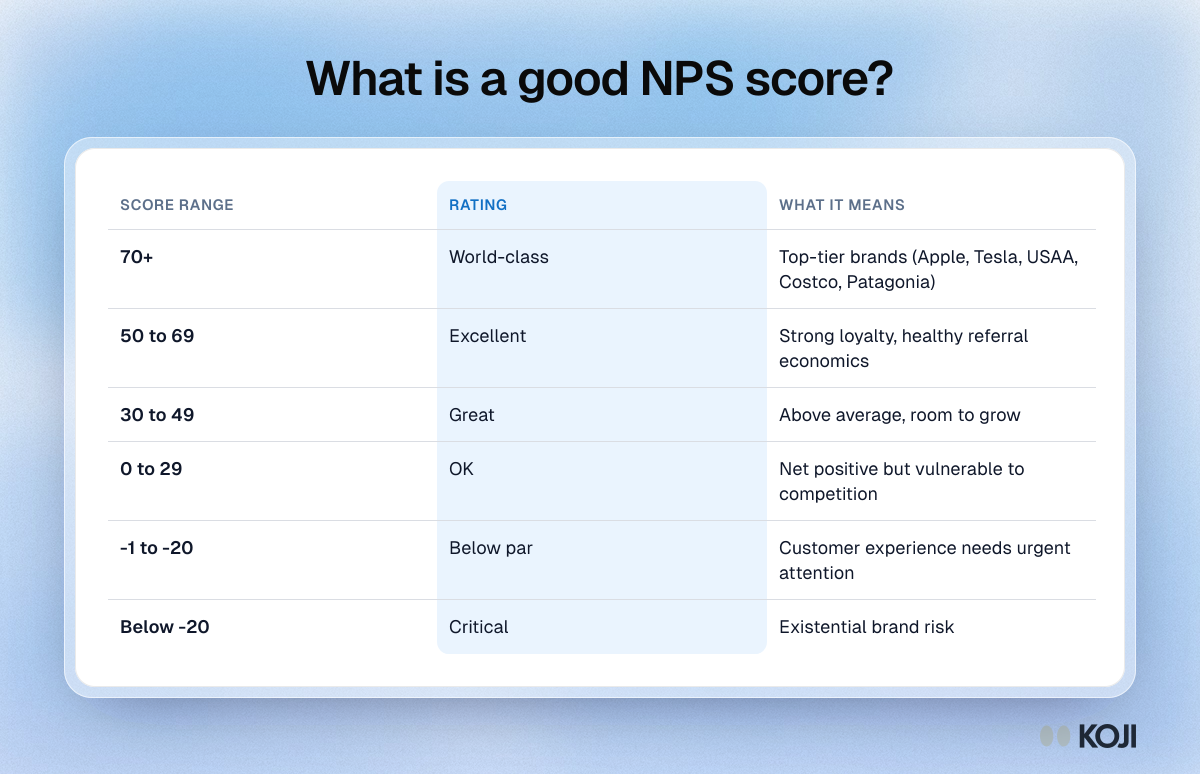
Table showing how to read a Net Promoter Score, from 70 and above rated world-class down to below minus 20 rated critical, with what each range means.

Reference table

What is a good NPS score?
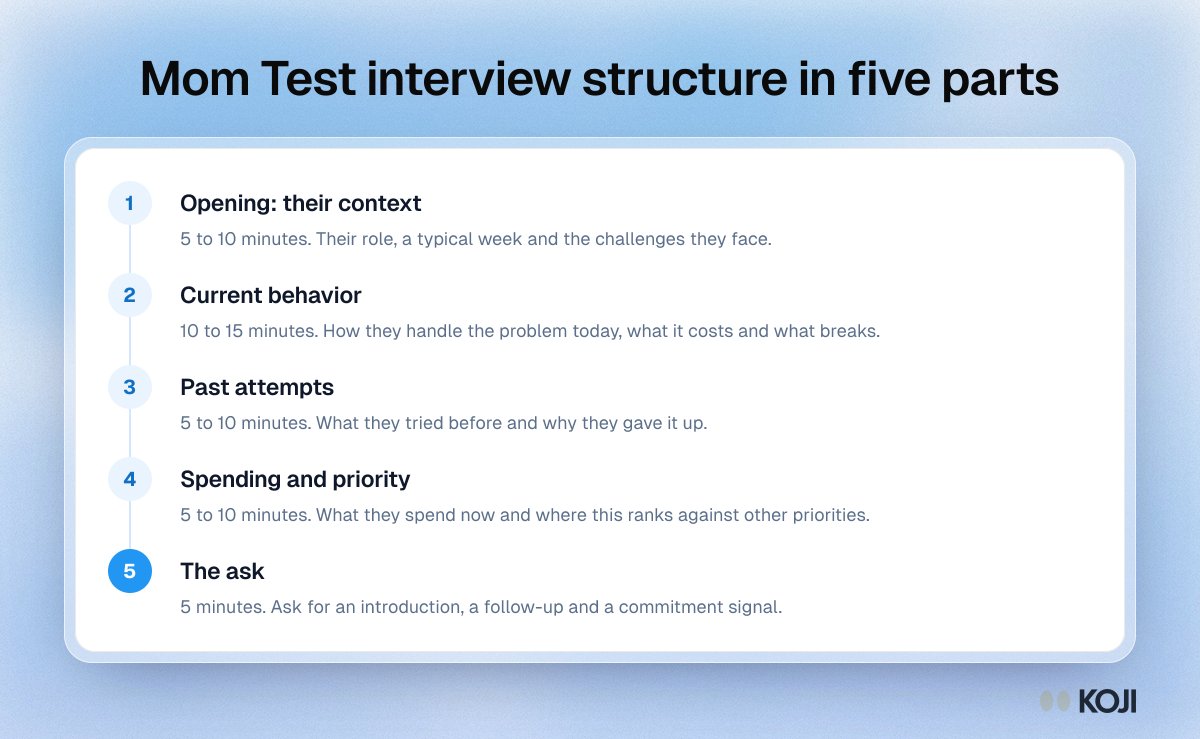
Process showing a Mom Test customer interview in five parts with timings: opening context, current behavior, past attempts, spending and priority, and the ask.

Process

Mom Test interview structure in five parts
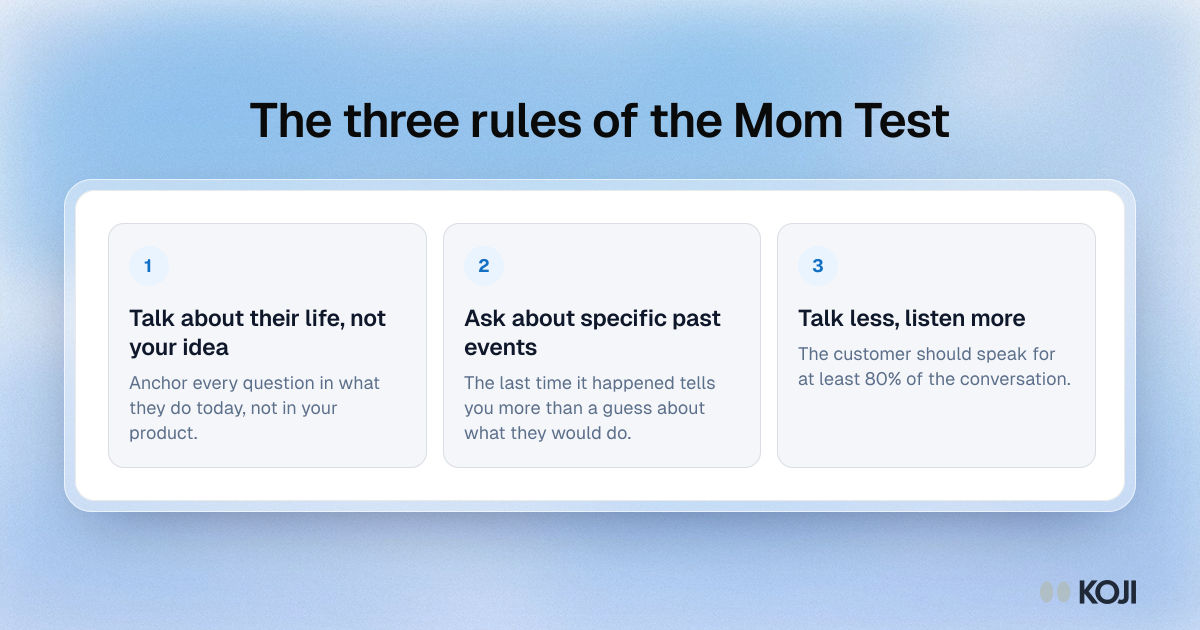
Framework showing the three rules of the Mom Test: talk about their life not your idea, ask about specific past events, and talk less and listen more.

Framework

The three rules of the Mom Test
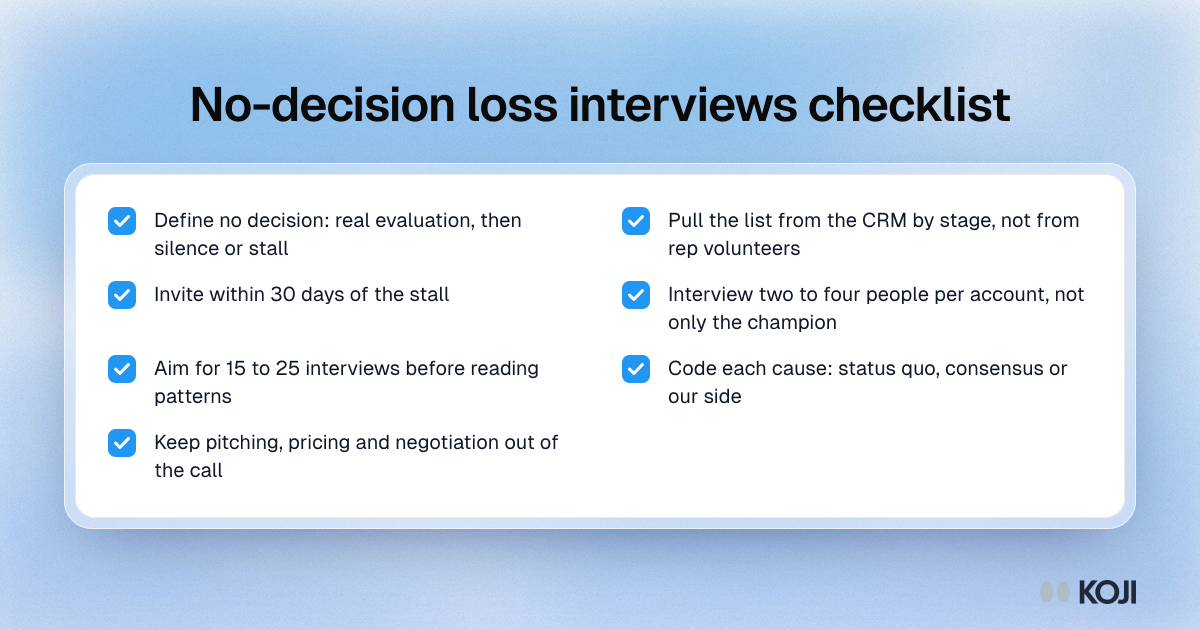
Checklist of seven checks for no-decision loss interviews, from defining the deals to interviewing the whole buying group and coding the cause.

Checklist

No-decision loss interviews checklist
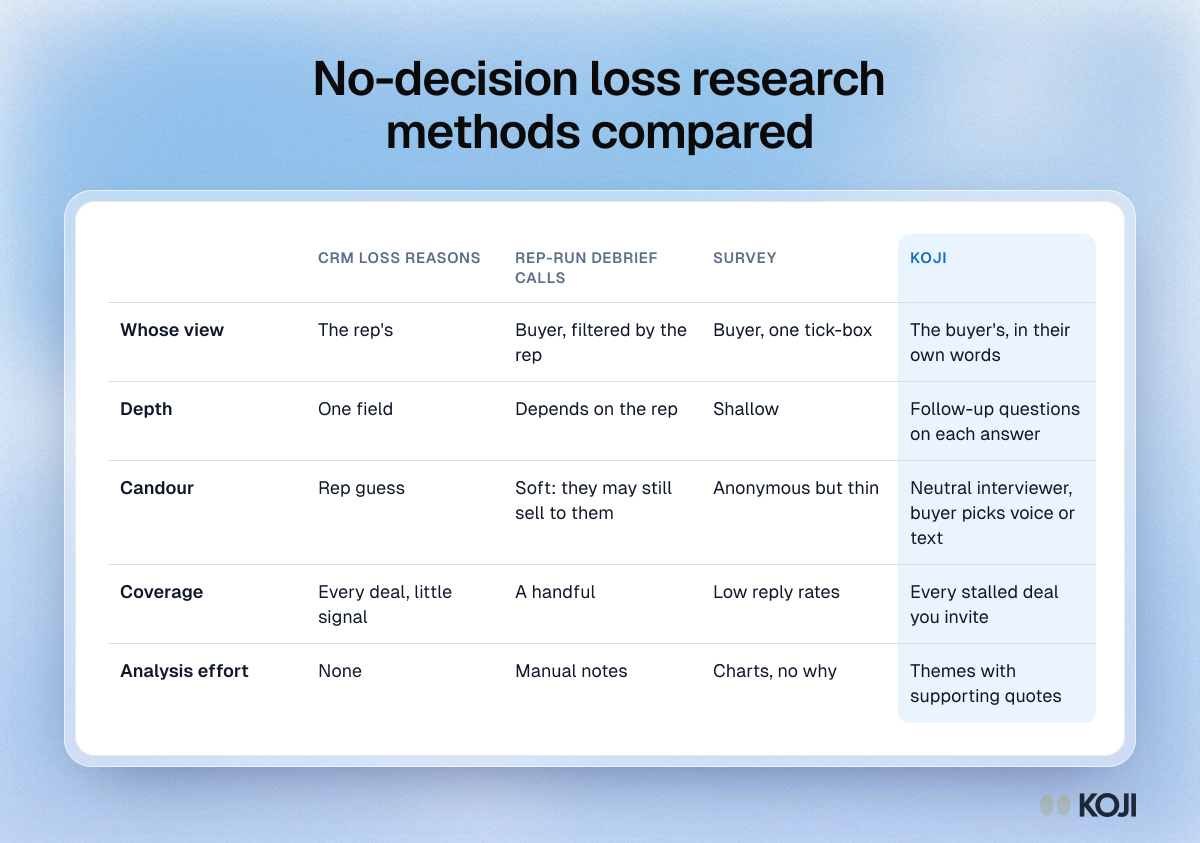
Table comparing CRM loss reasons, rep-run debrief calls, surveys and Koji for no-decision loss research on view, depth, candour, coverage and analysis effort.

Reference table

No-decision loss research methods compared
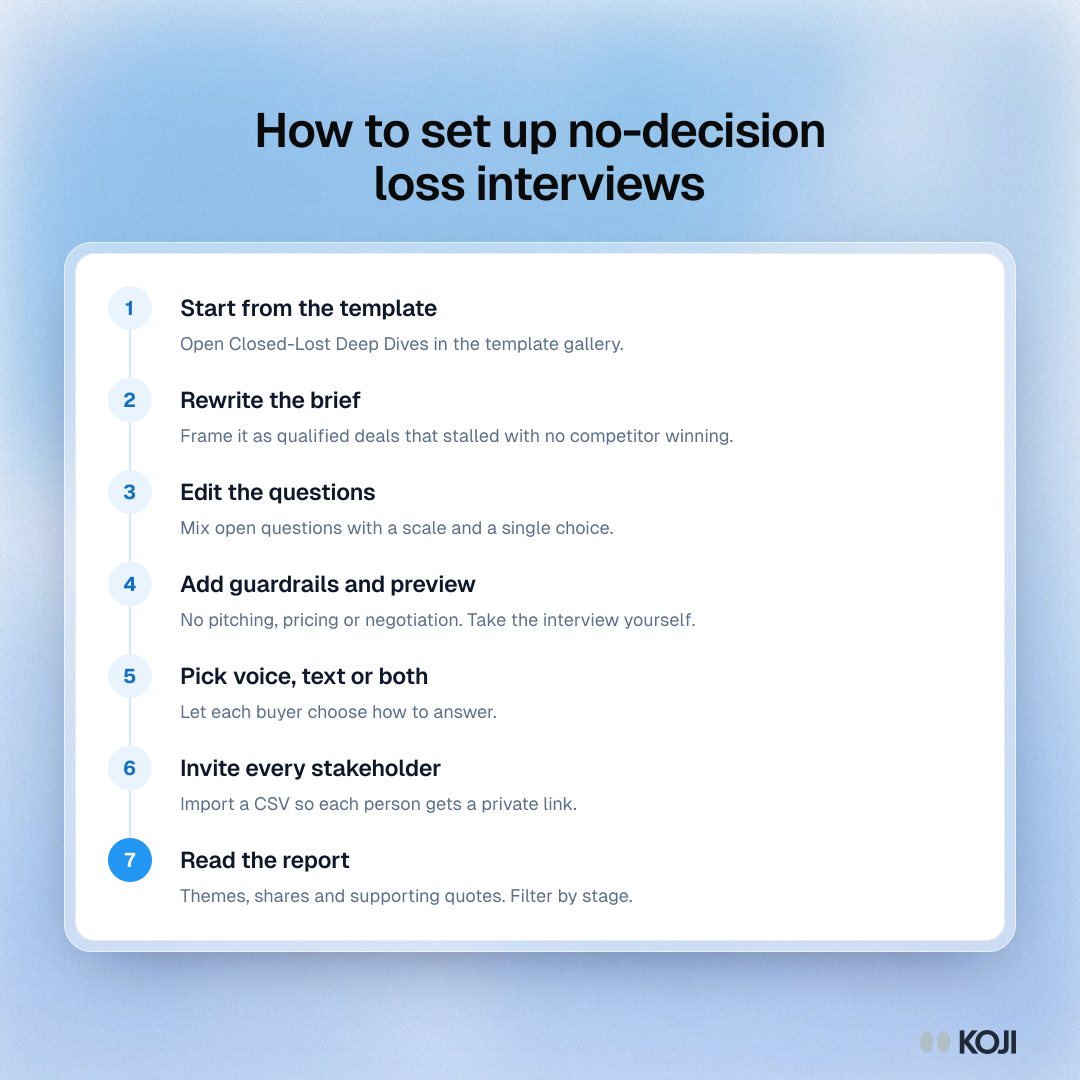
Process showing seven steps to set up no-decision loss interviews in Koji, from the template to the report.

Process

How to set up no-decision loss interviews
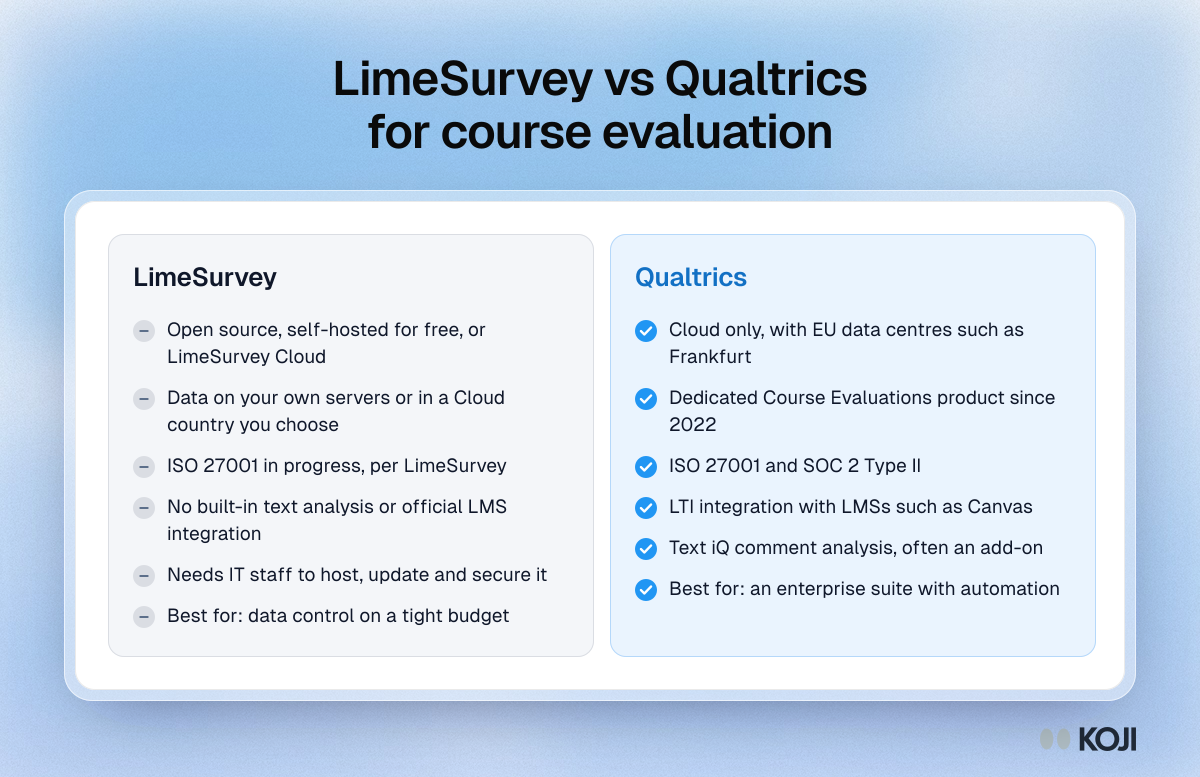
Comparison of LimeSurvey and Qualtrics for course evaluation: hosting, data location, certifications, LMS integration, text analysis and best fit.

Comparison

LimeSurvey vs Qualtrics for course evaluation
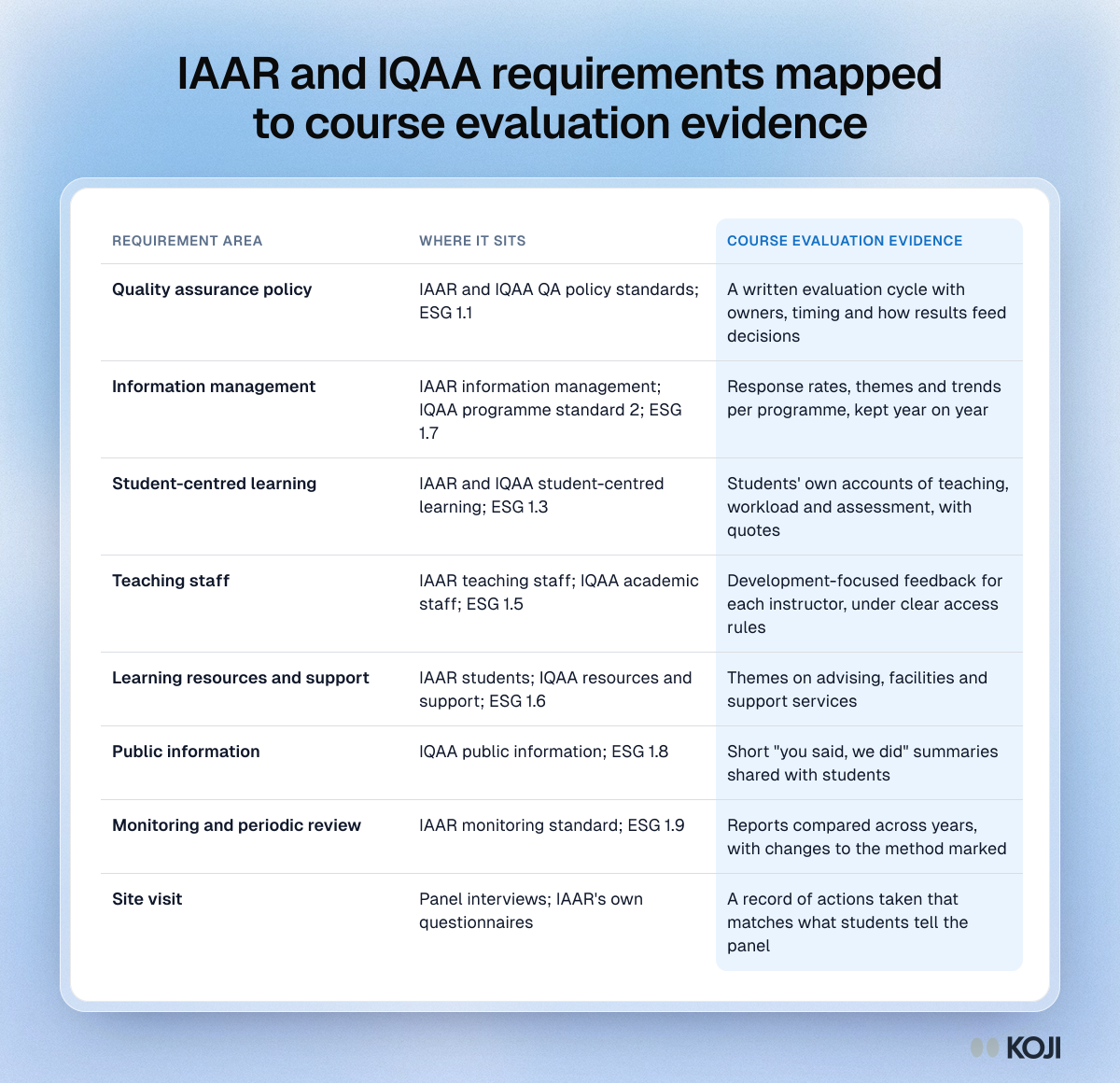
Table mapping IAAR and IQAA accreditation requirements in Kazakhstan to course evaluation evidence, from QA policy to periodic review.

Reference table

IAAR and IQAA requirements mapped to course evaluation evidence
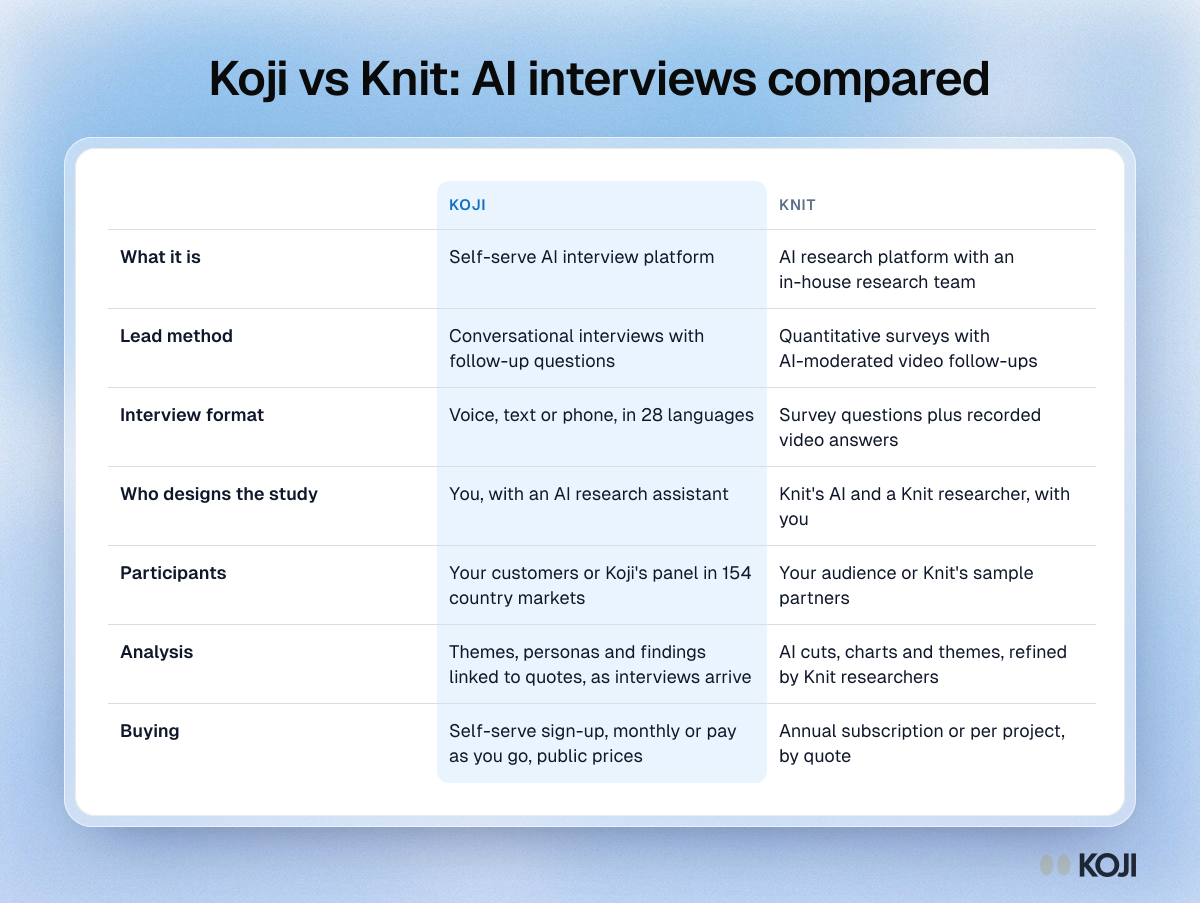
Table comparing Koji and Knit on method, interview format, study design, participants, analysis and how you buy

Reference table

Koji vs Knit: AI interviews compared
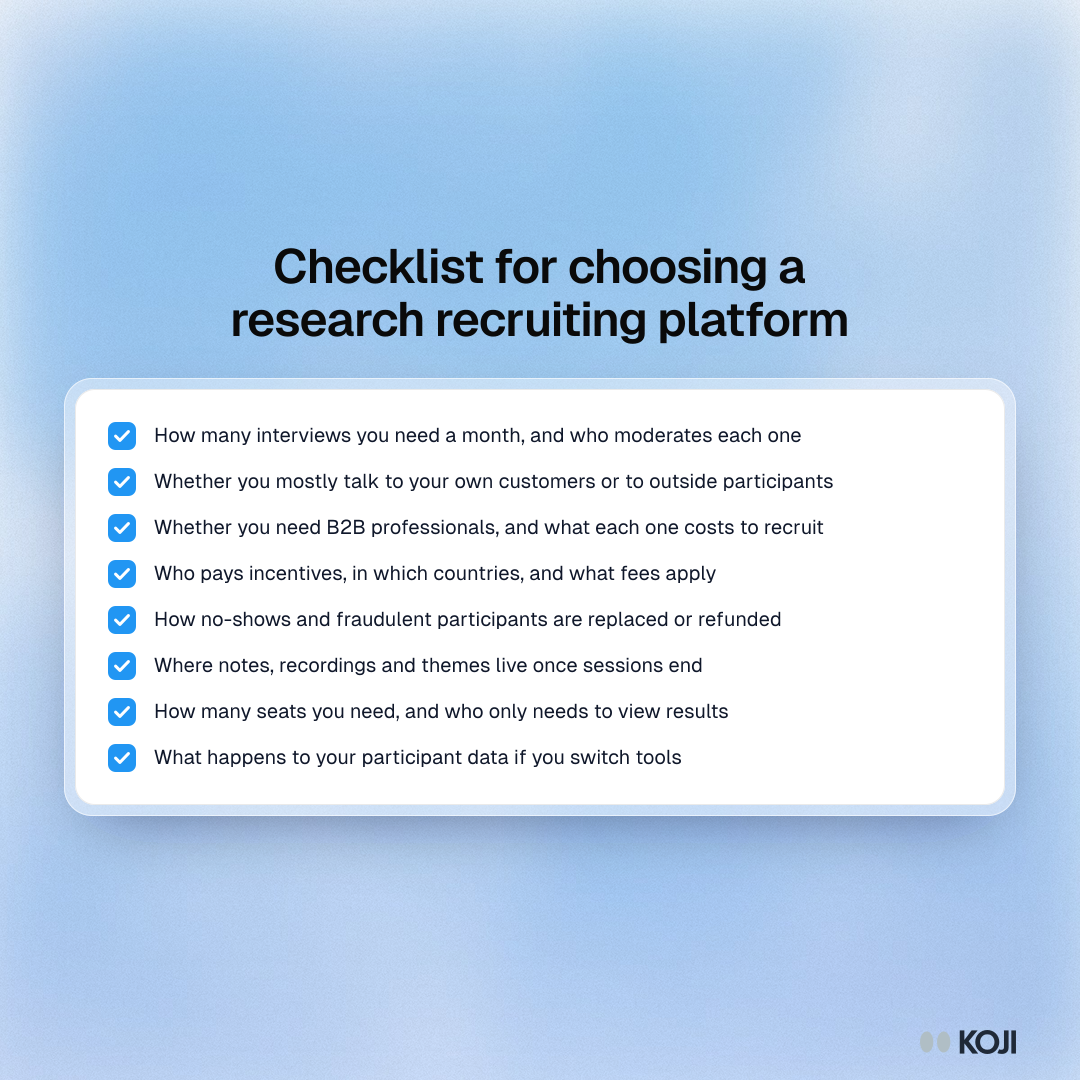
Checklist of eight questions to ask before choosing a research recruiting setup, from monthly volume to data portability

Checklist

Checklist for choosing a research recruiting platform