Free to save and share

Frameworks and cheat sheets for customer research

Every framework, checklist and comparison from our guides, as an image you can download, drop into a deck or share with your team.
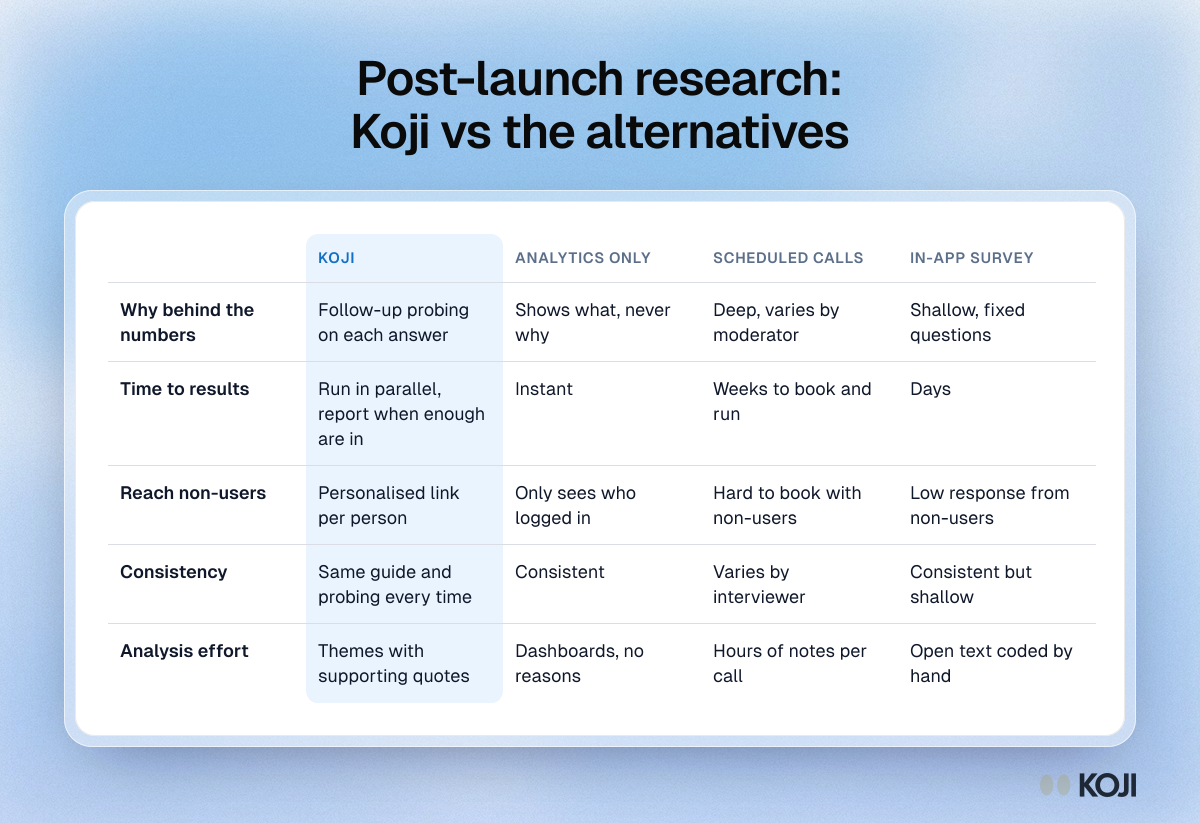
Table comparing Koji, analytics only, scheduled calls and in-app surveys for post-launch research on depth, speed, reach, consistency and analysis effort.

Reference table

Post-launch research: Koji vs the alternatives
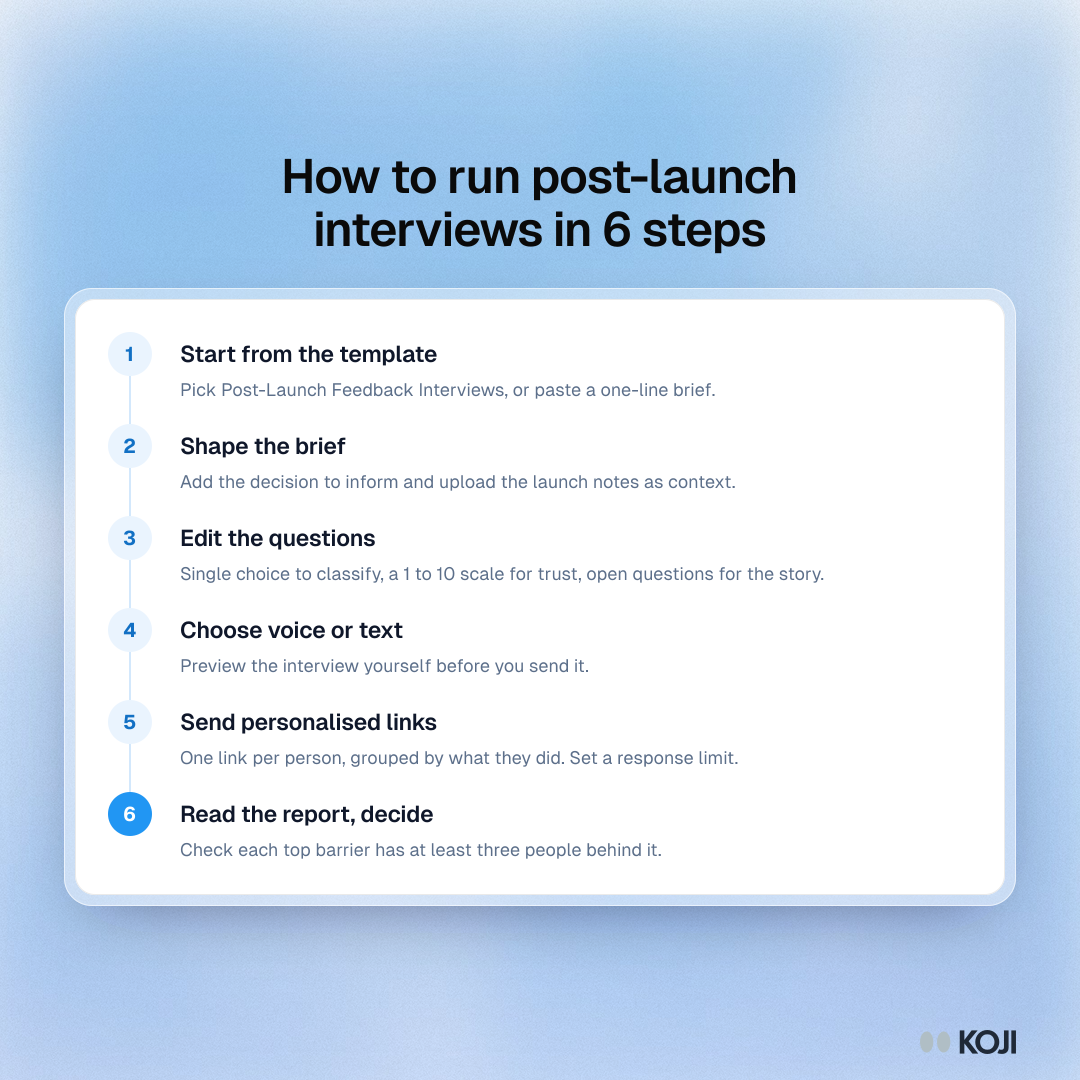
Process showing six steps to run post-launch interviews in Koji: template, brief, questions, voice or text, personalised links, report and decision.

Process

How to run post-launch interviews in 6 steps
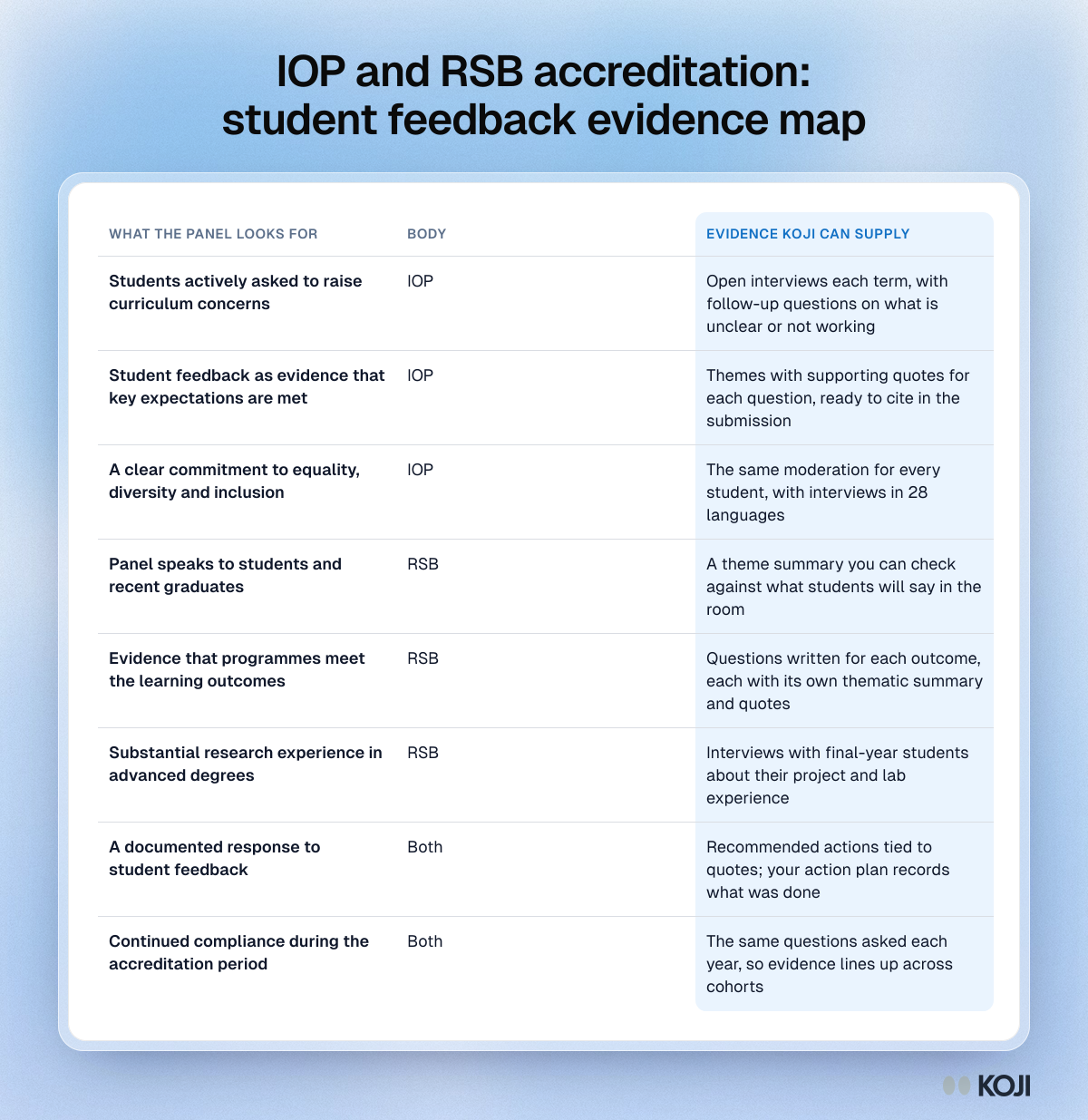
Table mapping IOP and Royal Society of Biology accreditation expectations to course evaluation evidence, from curriculum concerns to research experience.

Reference table

IOP and RSB accreditation: student feedback evidence map
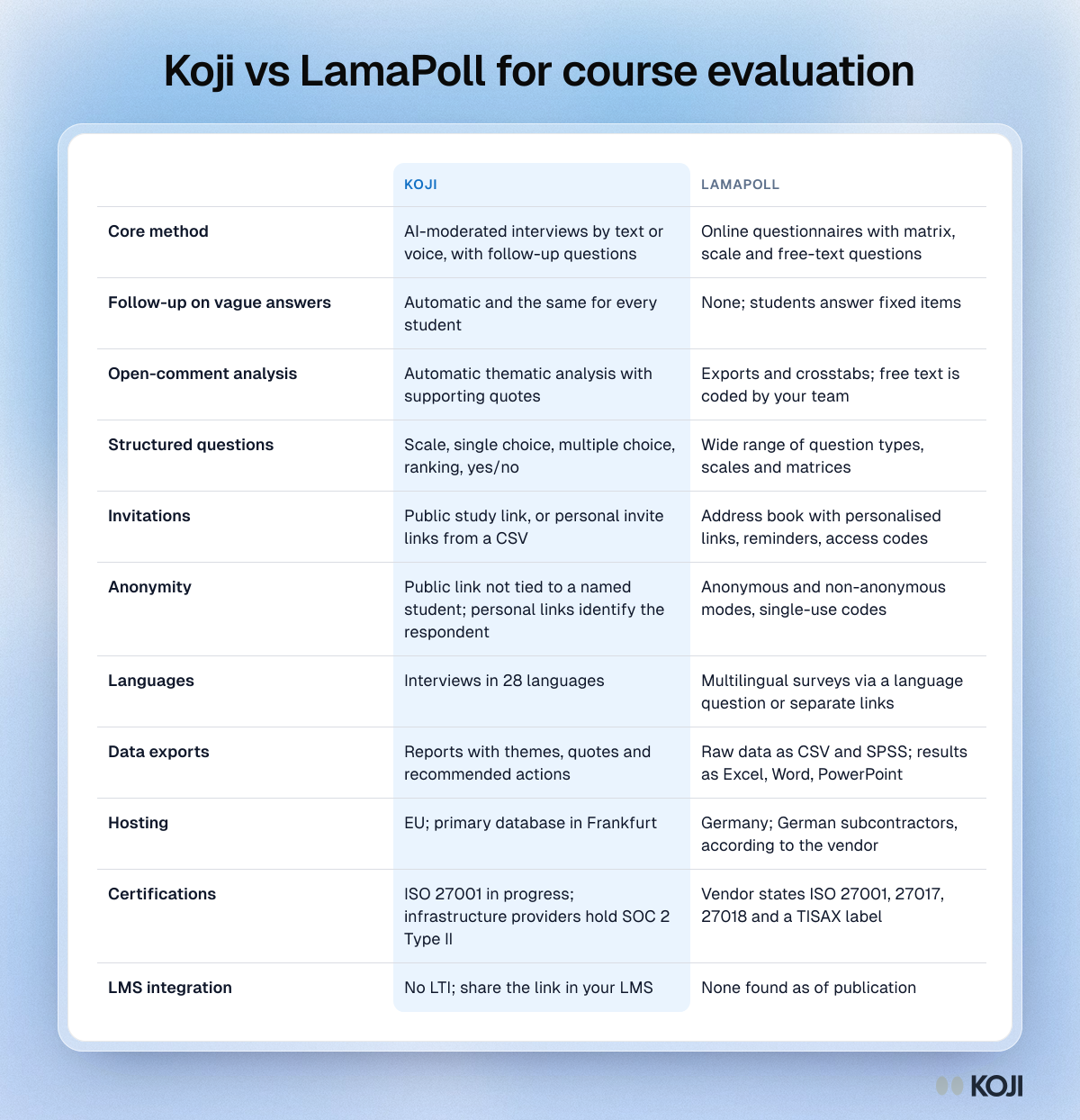
Table comparing Koji and LamaPoll for course evaluation on method, follow-up questions, comment analysis, invitations, anonymity, hosting and certifications.

Reference table

Koji vs LamaPoll for course evaluation
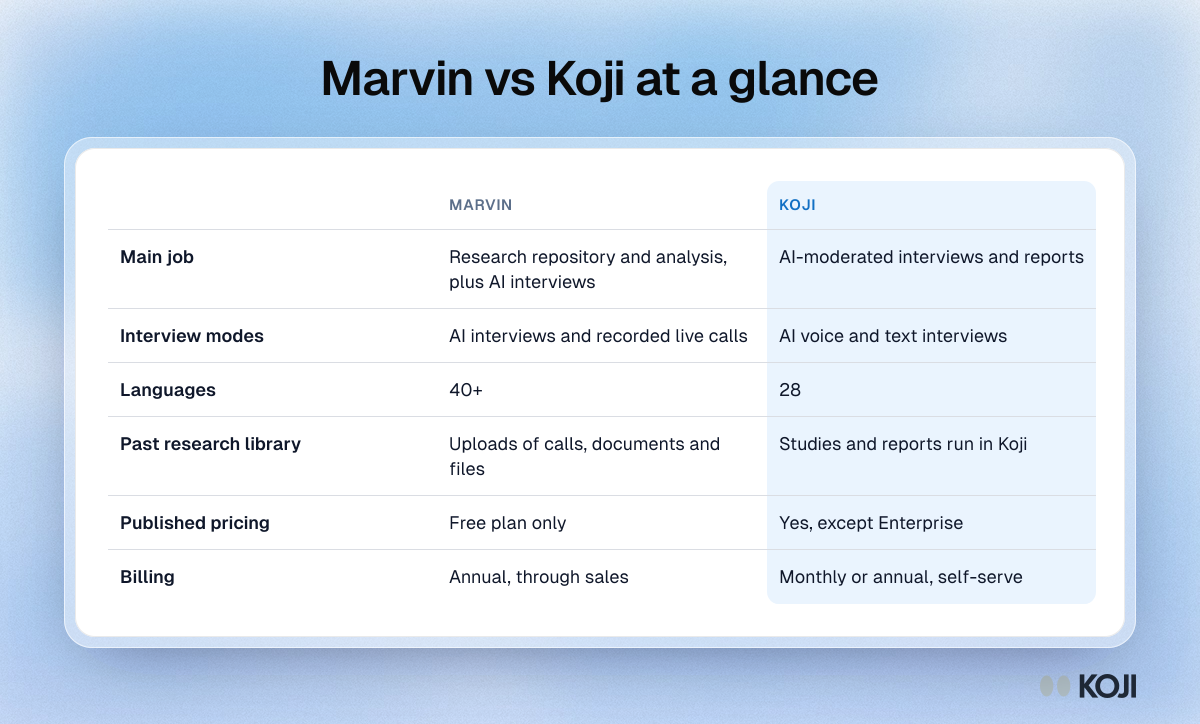
Table comparing Marvin and Koji on main job, interview modes, languages, research library, published pricing and billing

Reference table

Marvin vs Koji at a glance
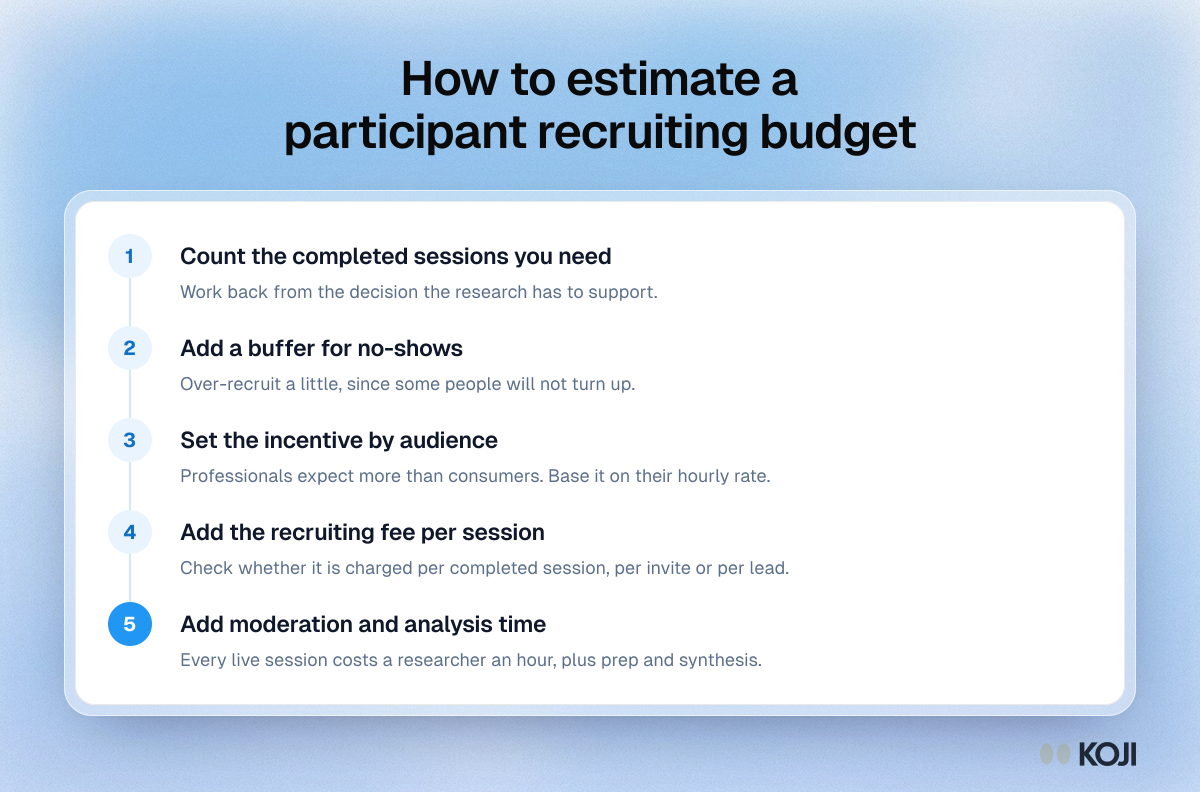
Process for estimating a participant recruiting budget, from counting sessions to adding moderator time

Process

How to estimate a participant recruiting budget
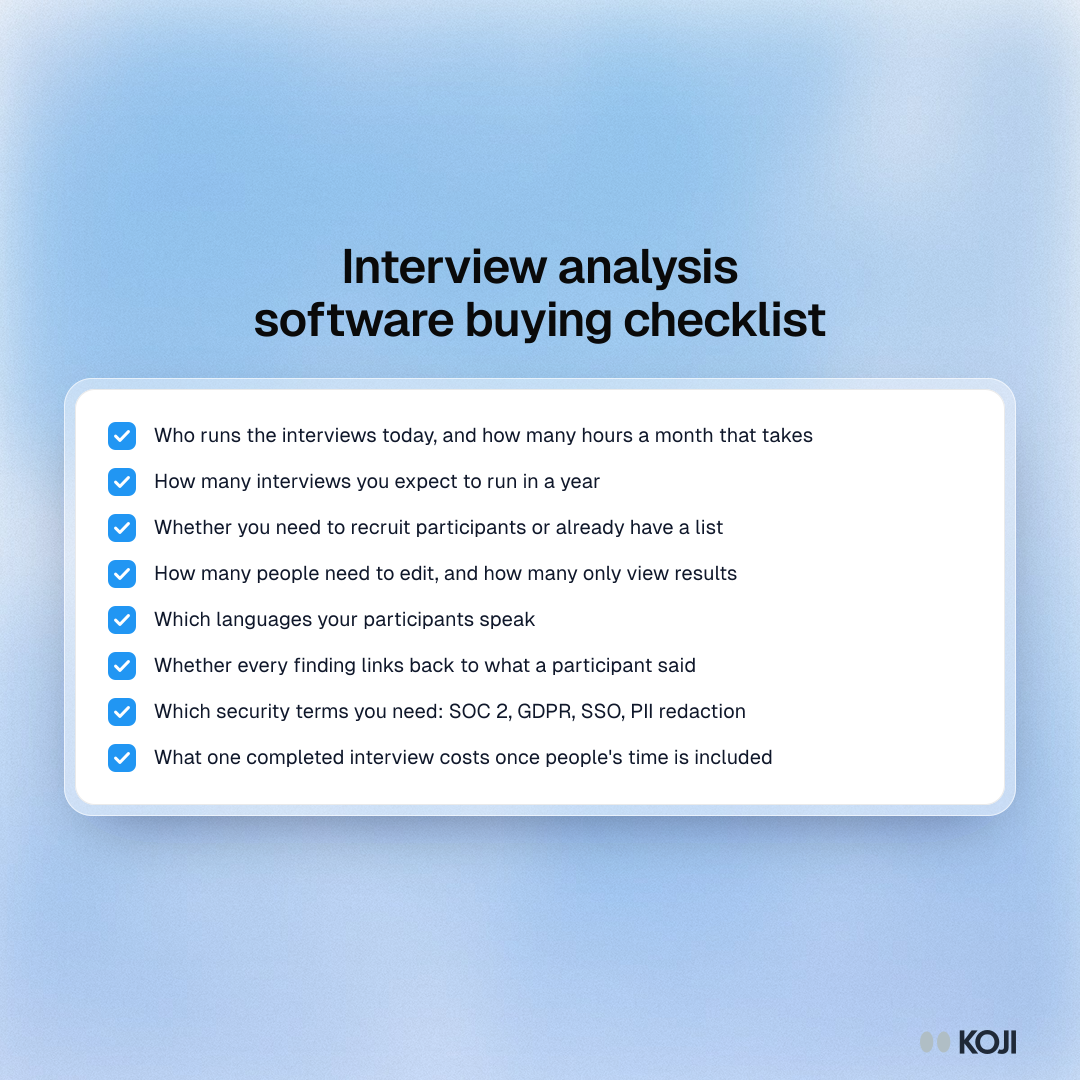
Checklist of questions to ask before buying interview analysis software, from who runs the calls to cost per completed interview

Checklist

Interview analysis software buying checklist
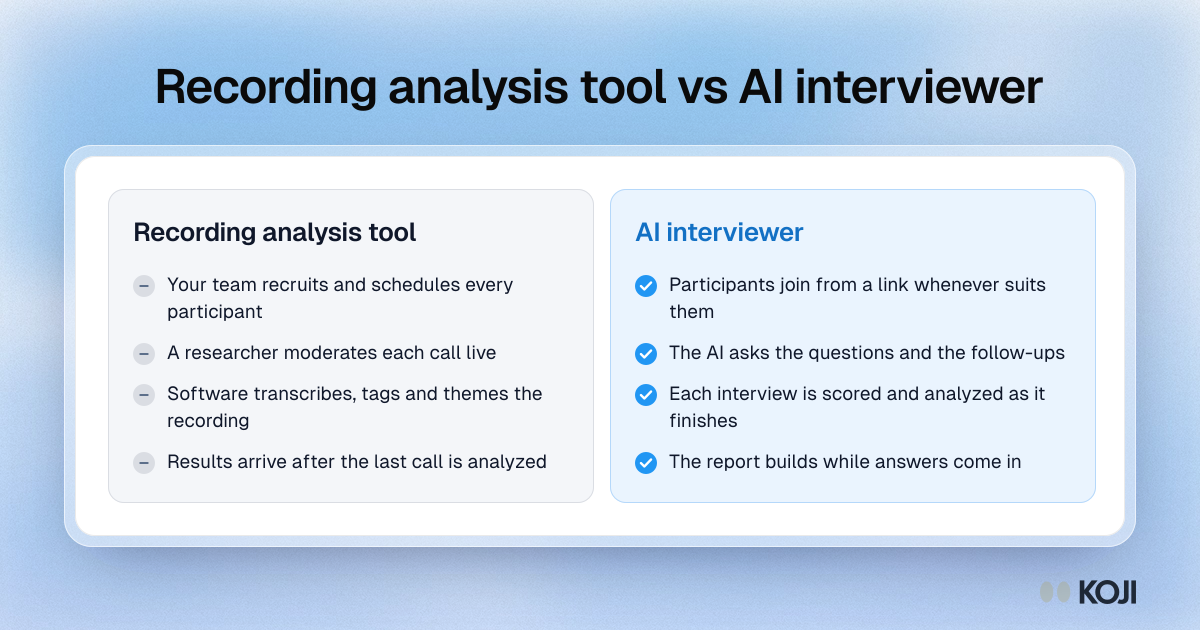
Comparison of a recording analysis tool and an AI interviewer: who runs the call, who recruits, and when you get results

Comparison

Recording analysis tool vs AI interviewer
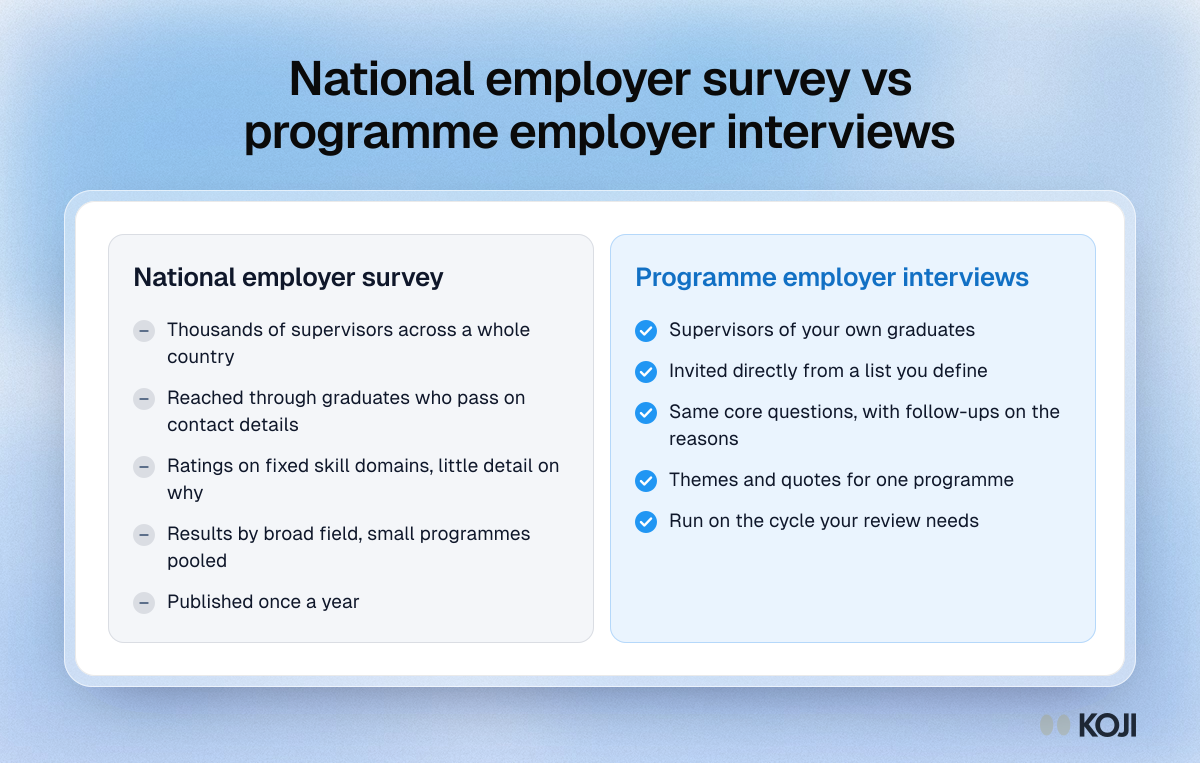
Comparison of a national employer survey and programme employer interviews by sample, depth, timing and what each tells a programme team.

Comparison

National employer survey vs programme employer interviews
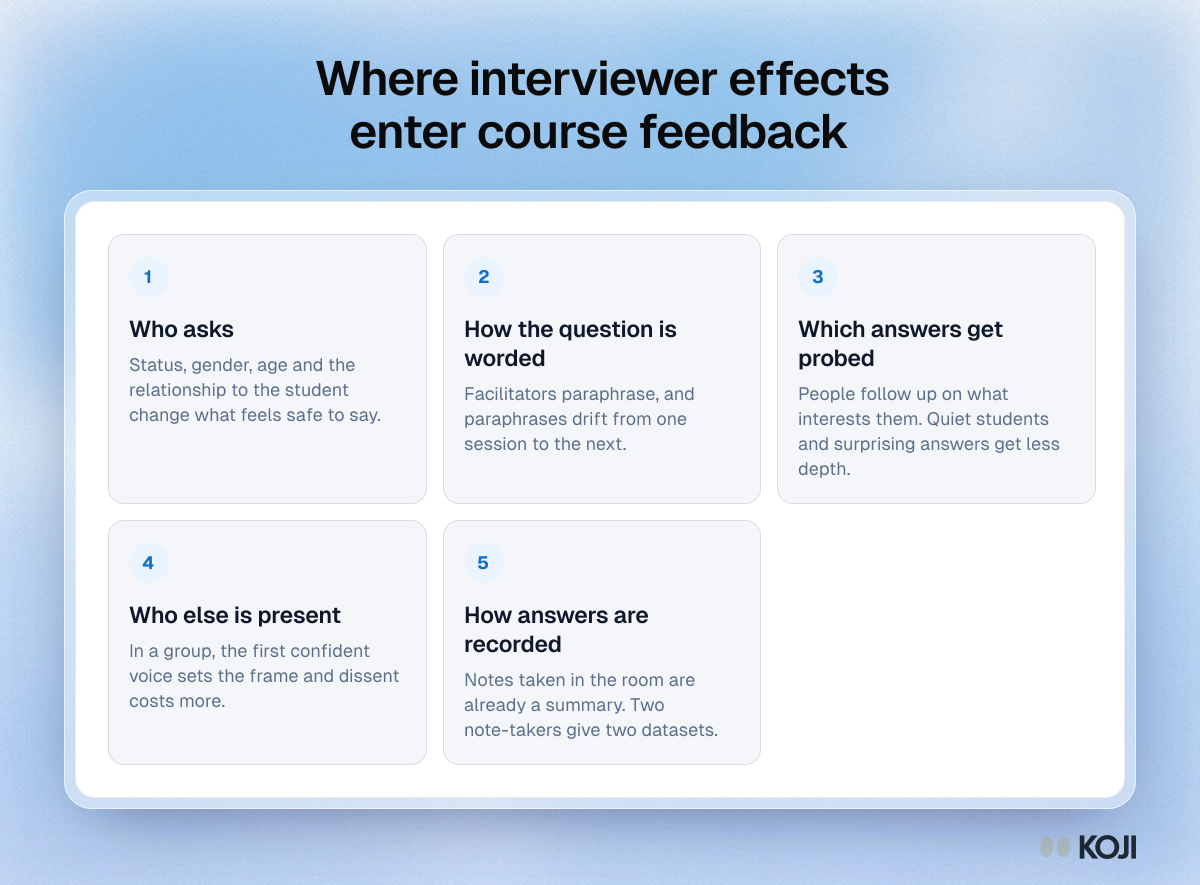
Framework of five points where interviewer effects enter course feedback: who asks, wording, probing, who is present and how answers are recorded.

Framework

Where interviewer effects enter course feedback
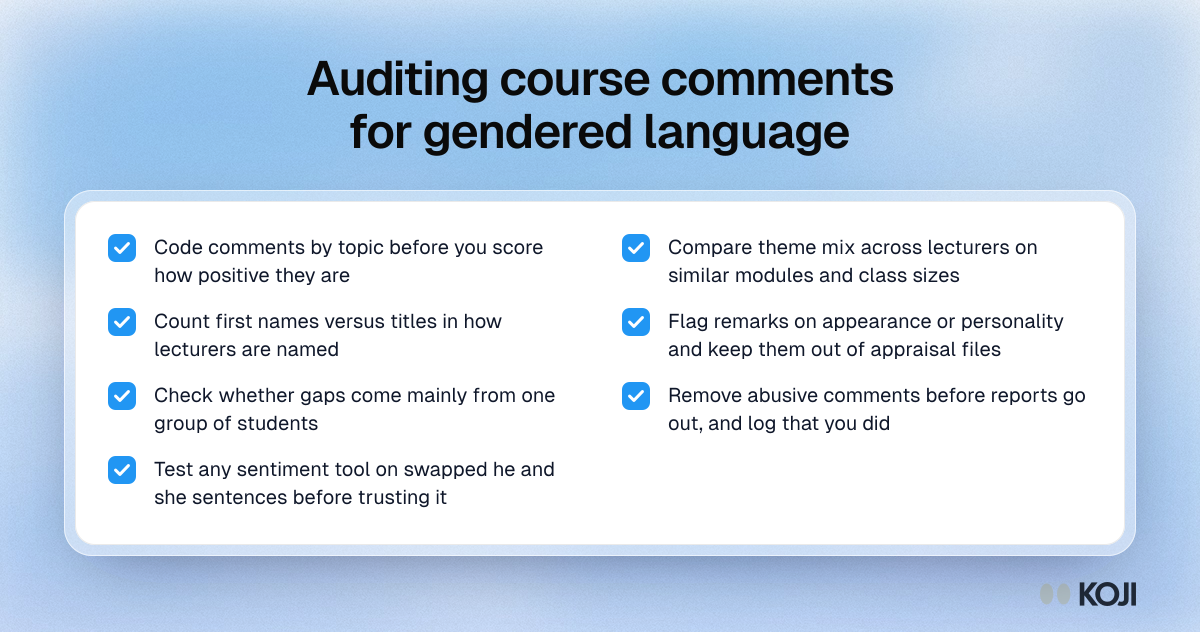
Checklist for auditing course evaluation comments for gendered language, from comparing themes by lecturer to removing abusive comments before reports go out.

Checklist

Auditing course comments for gendered language
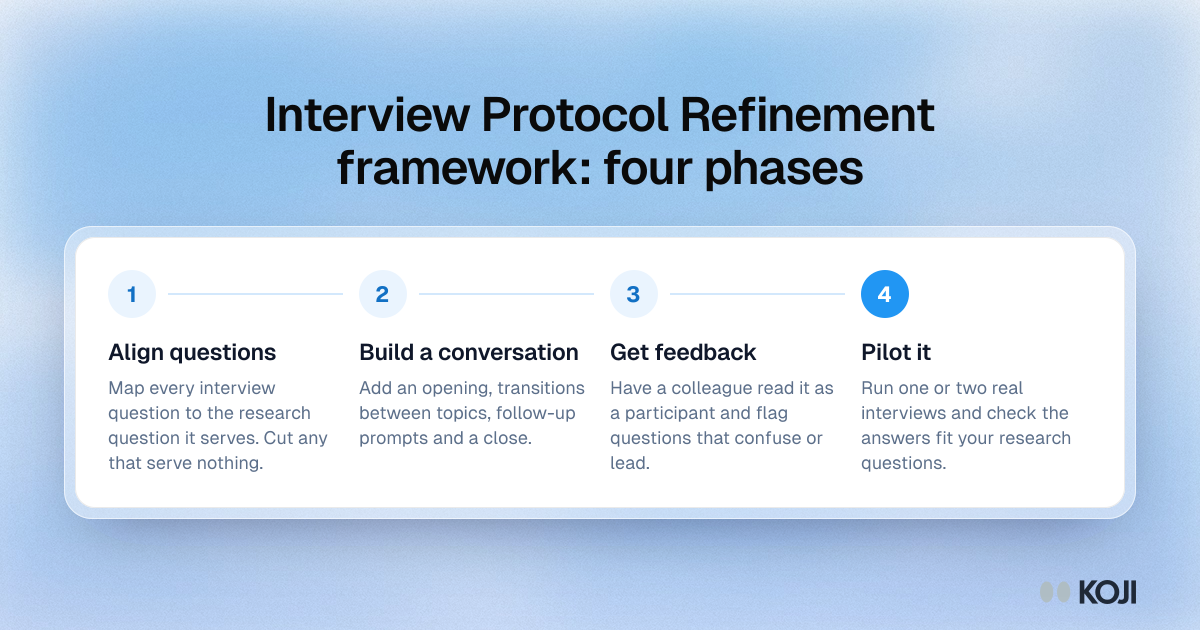
Process showing the four phases of the Interview Protocol Refinement framework: align questions, build a conversation, get feedback and pilot.

Process

Interview Protocol Refinement framework: four phases
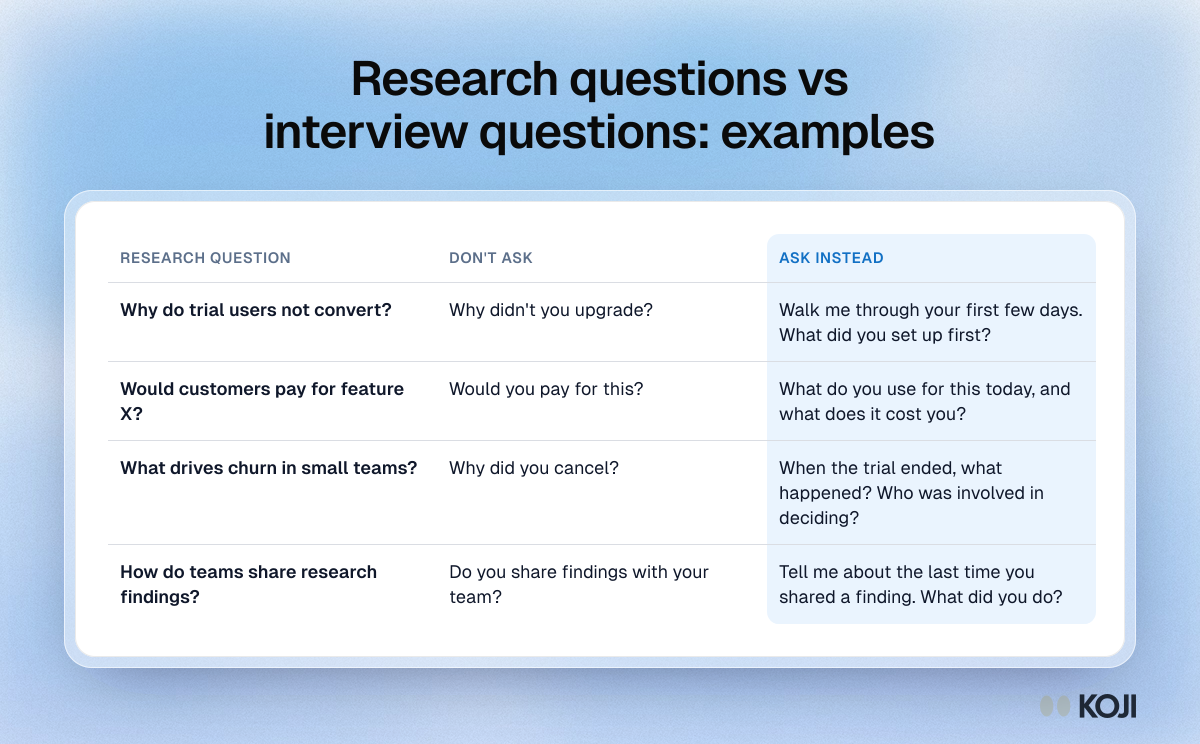
Table of example research questions next to the direct question to avoid and the interview questions to ask instead.

Reference table

Research questions vs interview questions: examples
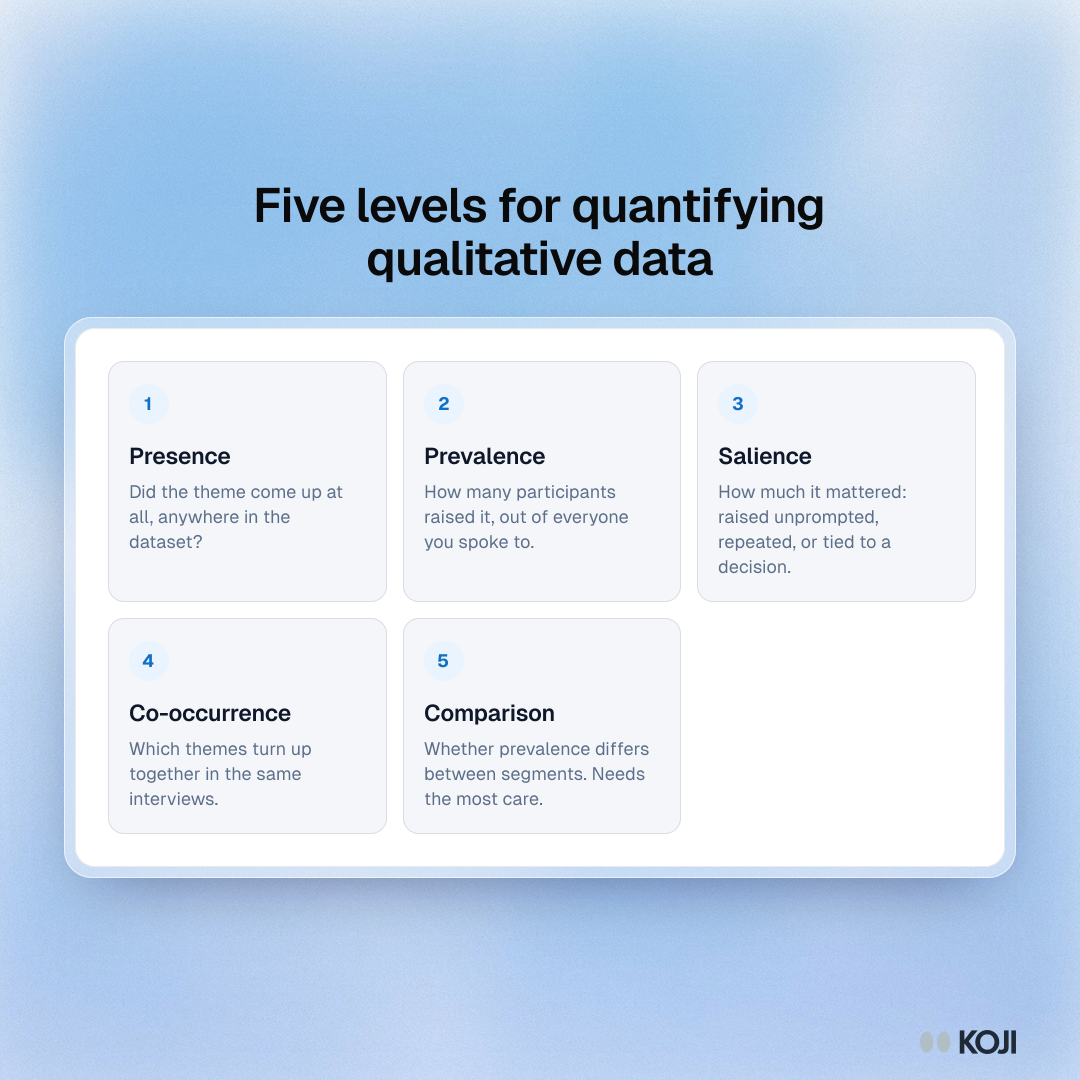
Framework showing five levels for quantifying qualitative data: presence, prevalence, salience, co-occurrence and comparison across segments.

Framework

Five levels for quantifying qualitative data
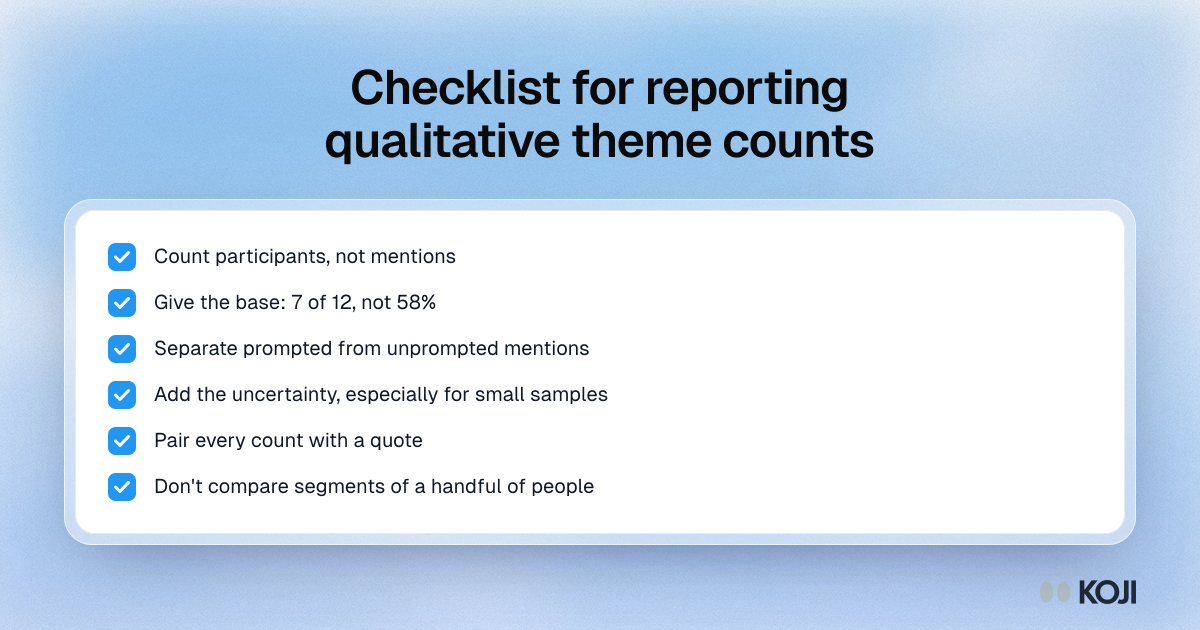
Checklist of six checks before putting a number on a qualitative theme, from counting people not mentions to stating the base.

Checklist

Checklist for reporting qualitative theme counts
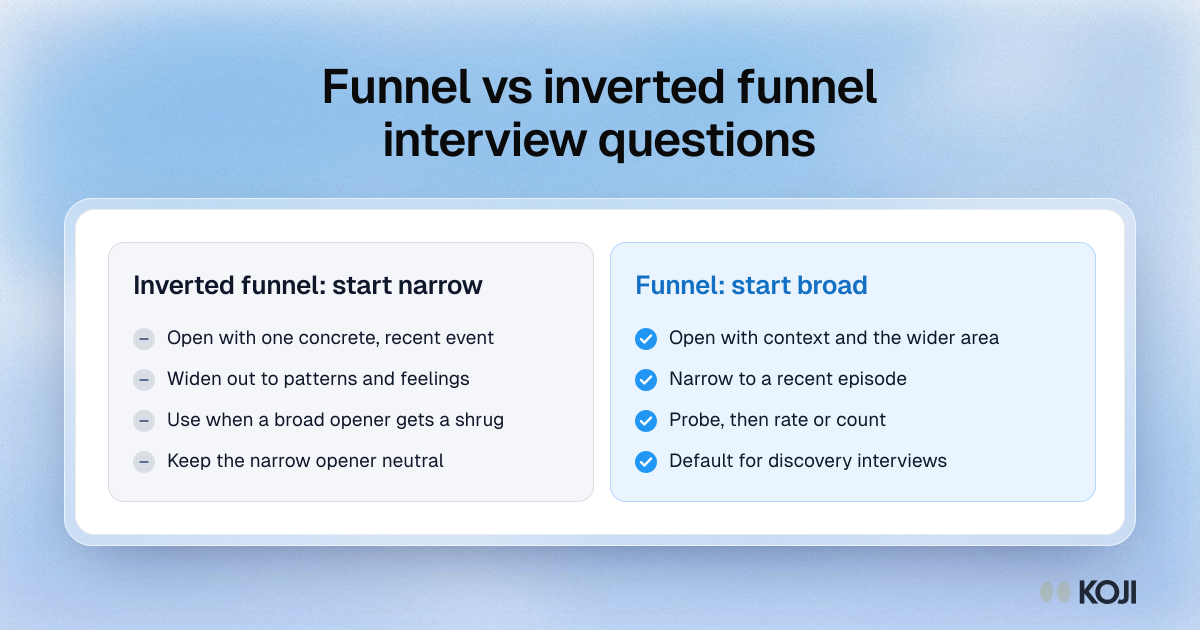
Comparison of the funnel and inverted funnel: start broad for discovery, or start with one concrete event when a broad opener gets nothing.

Comparison

Funnel vs inverted funnel interview questions
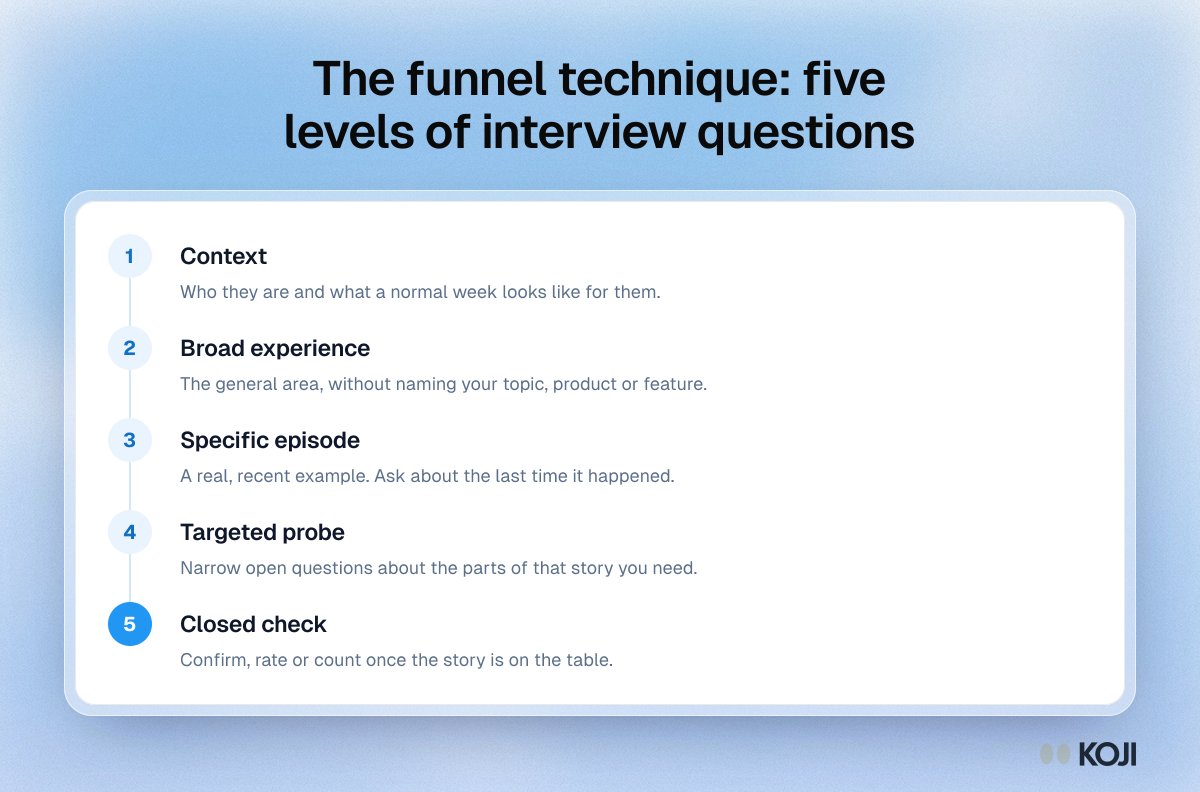
Process showing the five levels of the funnel technique: context, broad experience, specific episode, targeted probe and closed check.

Process

The funnel technique: five levels of interview questions
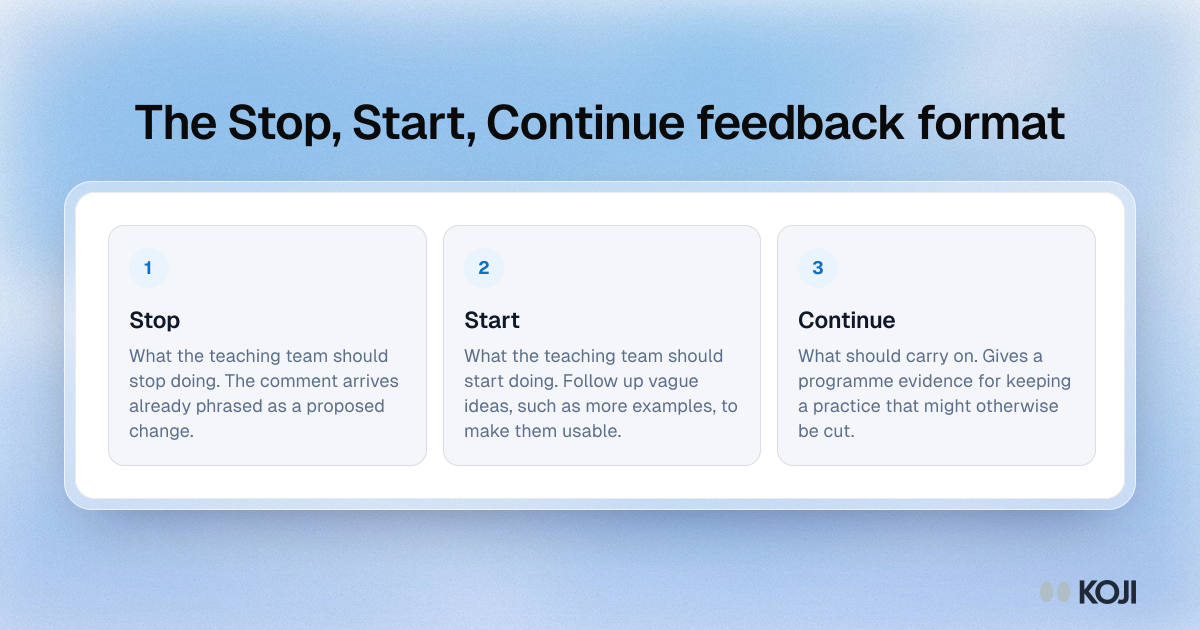
Framework showing the three Stop, Start, Continue prompts for course feedback and what each one gives a teaching team.

Framework

The Stop, Start, Continue feedback format
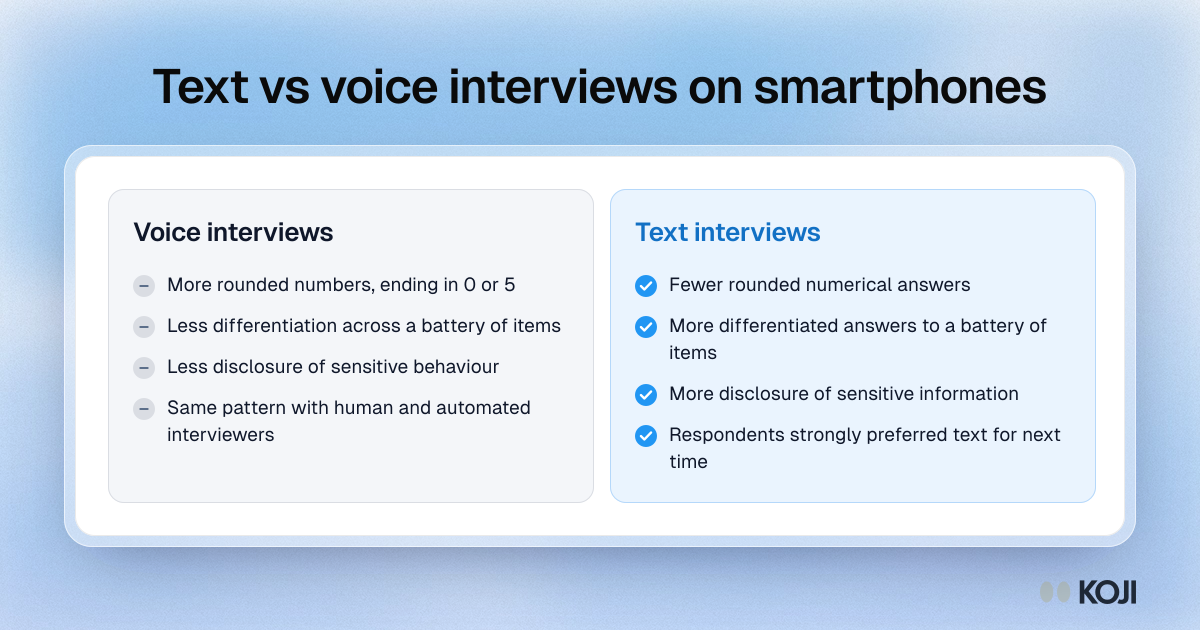
Comparison of voice and text interviews on smartphones: text produced fewer rounded numbers, more differentiated answers and more disclosure.

Comparison

Text vs voice interviews on smartphones
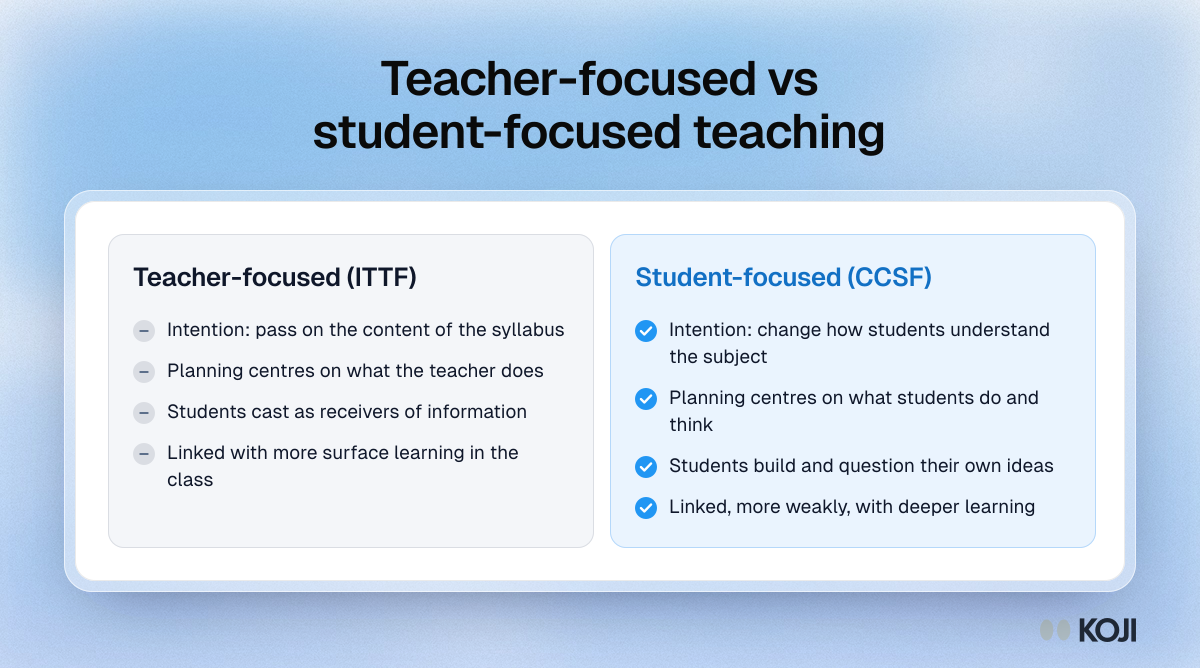
Comparison of teacher-focused and student-focused approaches to teaching from the Approaches to Teaching Inventory, and the student learning linked with each.

Comparison

Teacher-focused vs student-focused teaching
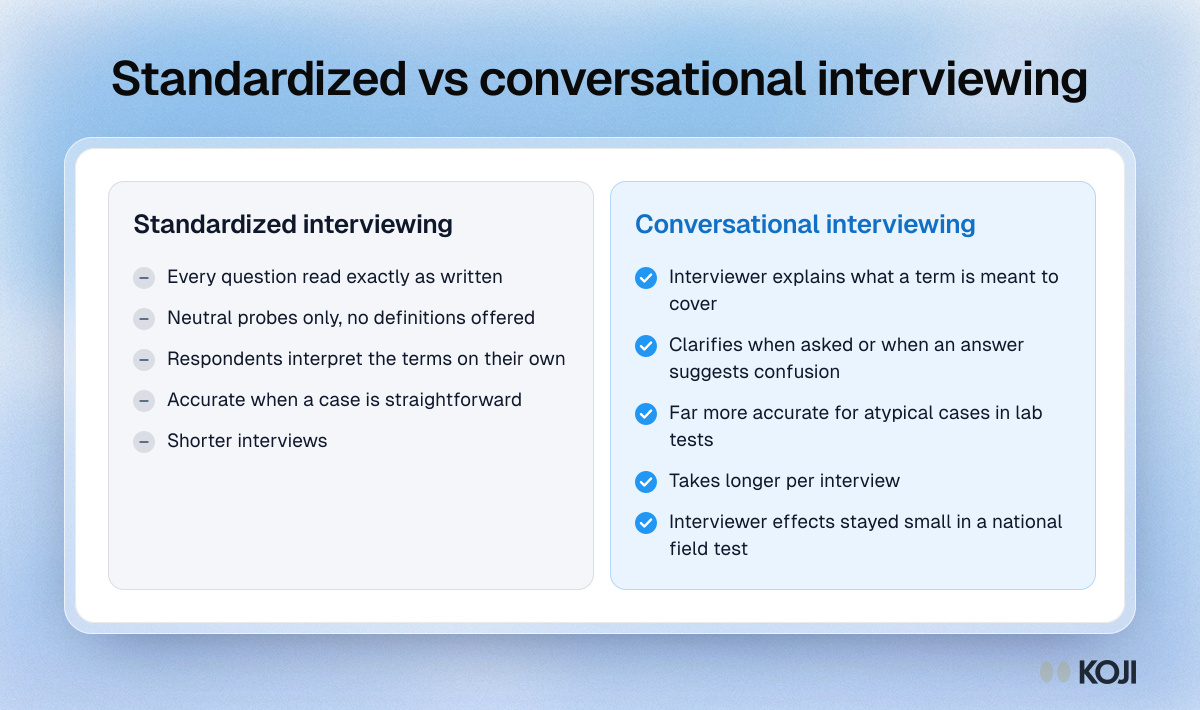
Comparison of standardized and conversational interviewing: fixed wording and neutral probes against clarified definitions and longer interviews.

Comparison

Standardized vs conversational interviewing
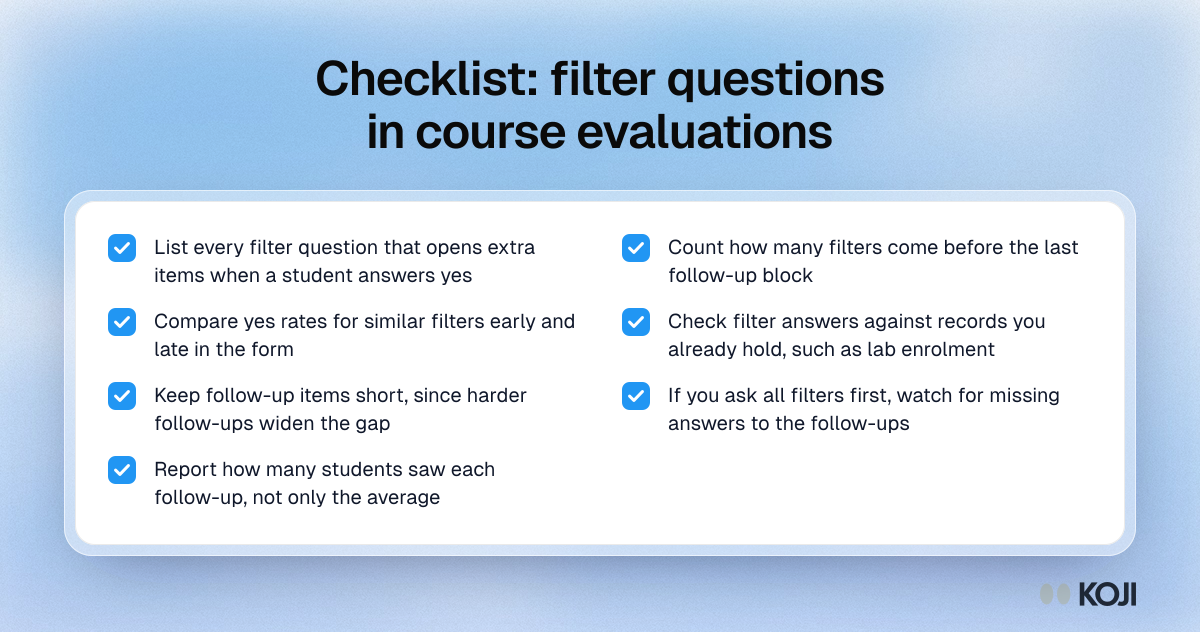
Checklist of seven checks for filter questions in course evaluations, from listing filters and comparing yes rates to reporting follow-up counts.

Checklist

Checklist: filter questions in course evaluations
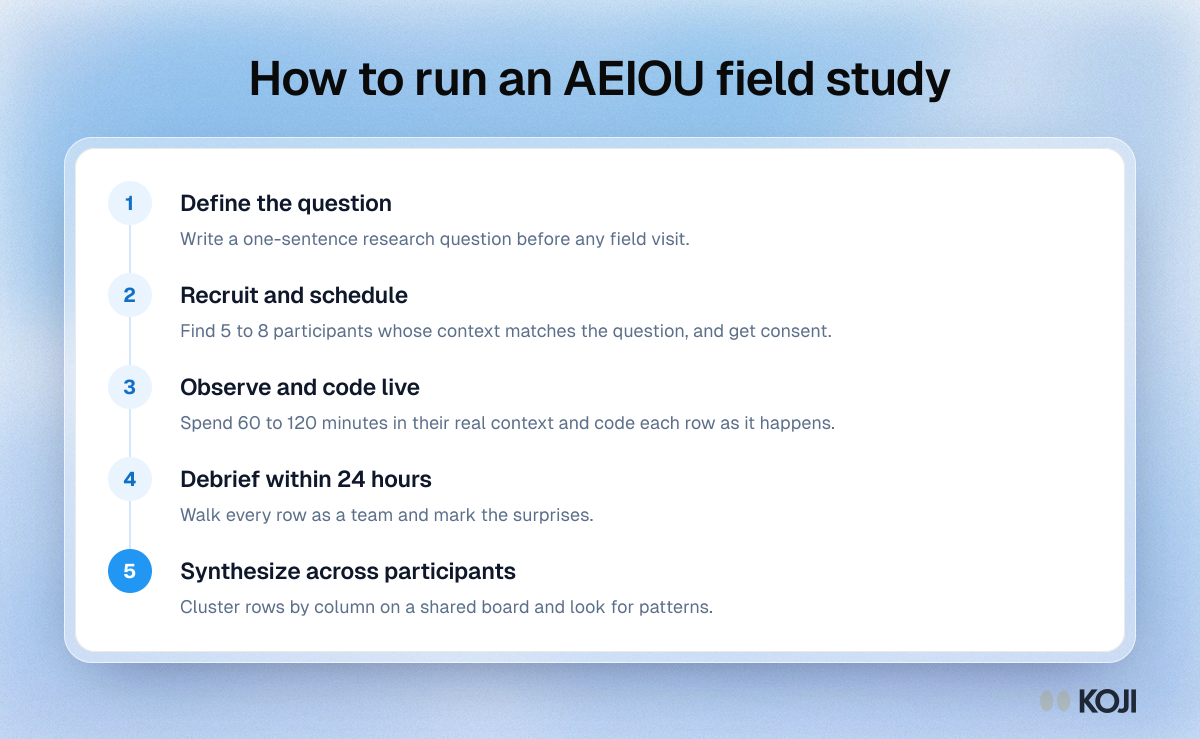
Process showing five steps of an AEIOU field study: define the question, recruit, observe and code live, debrief within 24 hours, synthesize.

Process

How to run an AEIOU field study
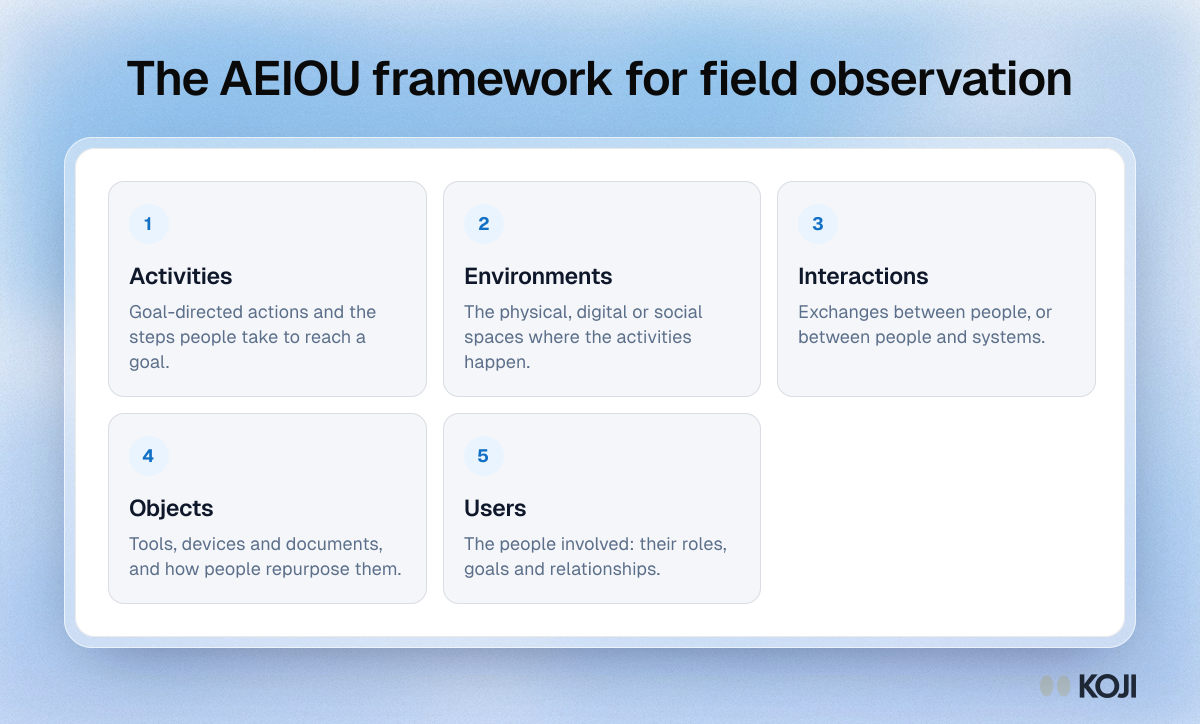
Framework showing the five AEIOU categories for field observation: activities, environments, interactions, objects and users.

Framework

The AEIOU framework for field observation
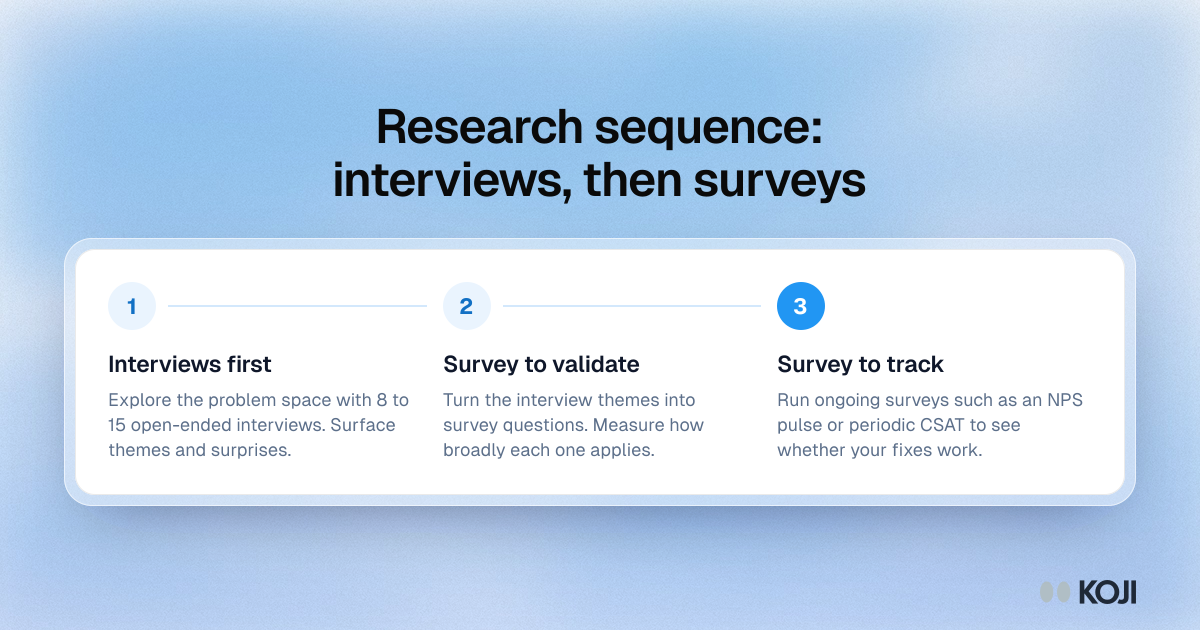
Process showing the research sequence of discovery, validation and tracking: interviews first, a survey to validate the themes, then surveys to track results.

Process

Research sequence: interviews, then surveys
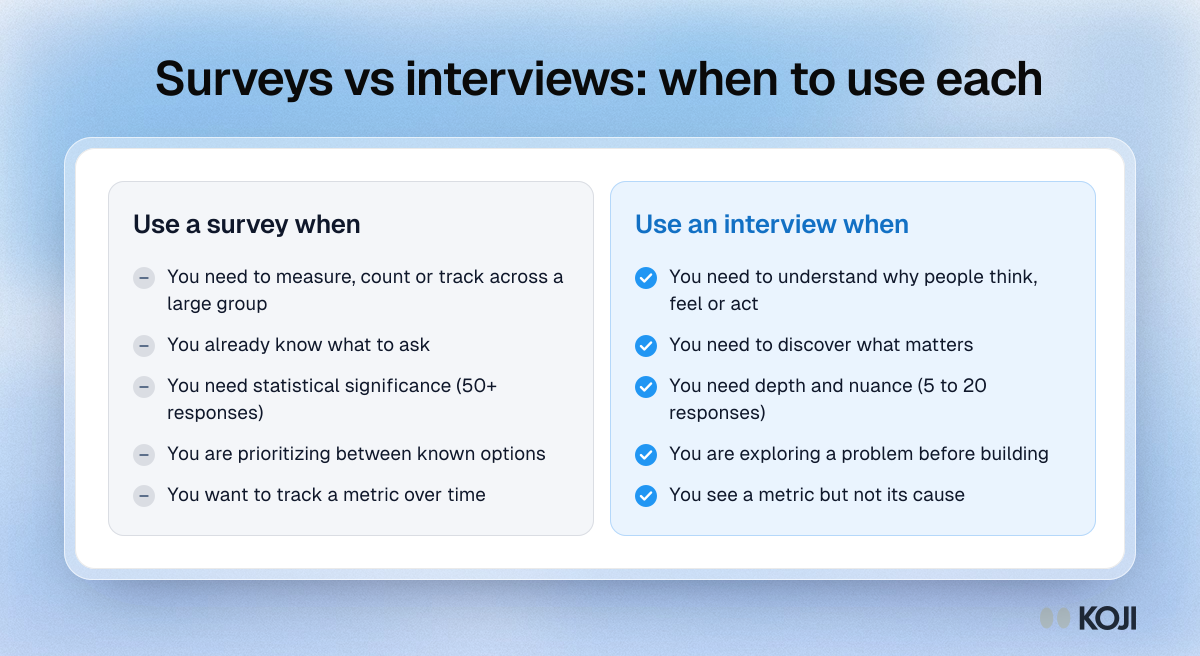
Comparison of when to use a survey and when to use an interview, based on what you already know, how many responses you need and the decision at stake.

Comparison

Surveys vs interviews: when to use each
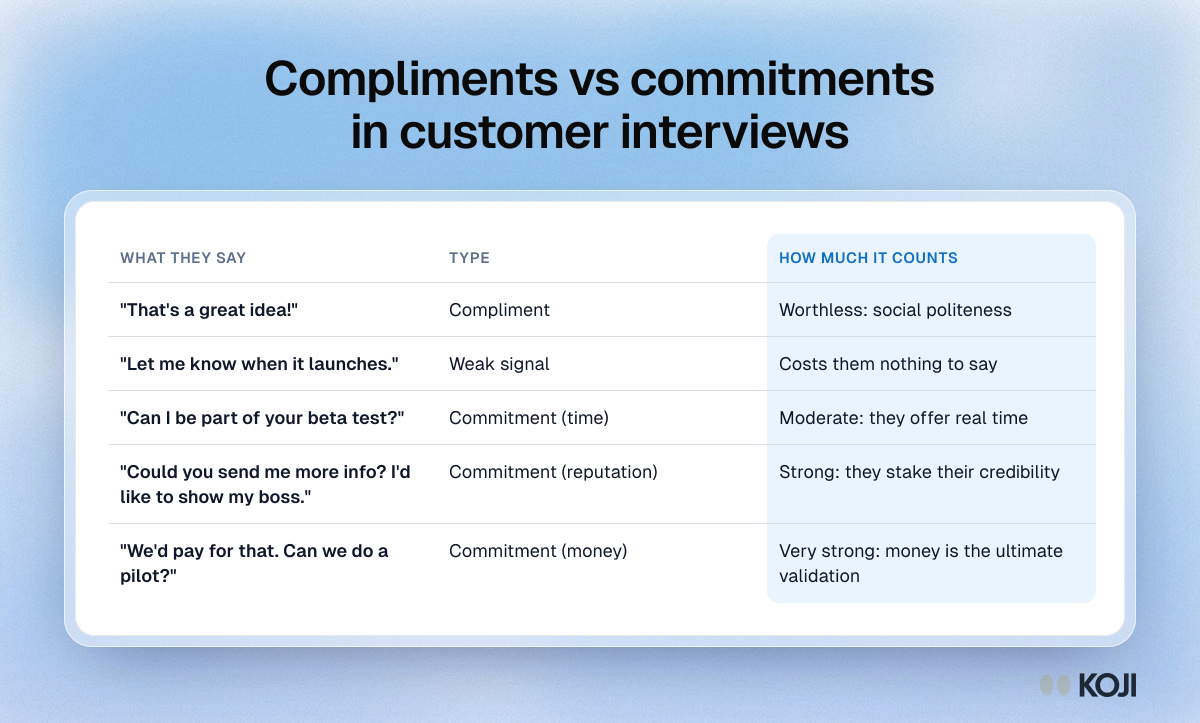
Table ranking customer responses from compliment to commitment of time, reputation and money, with how much each signal counts as validation of an idea.

Reference table

Compliments vs commitments in customer interviews
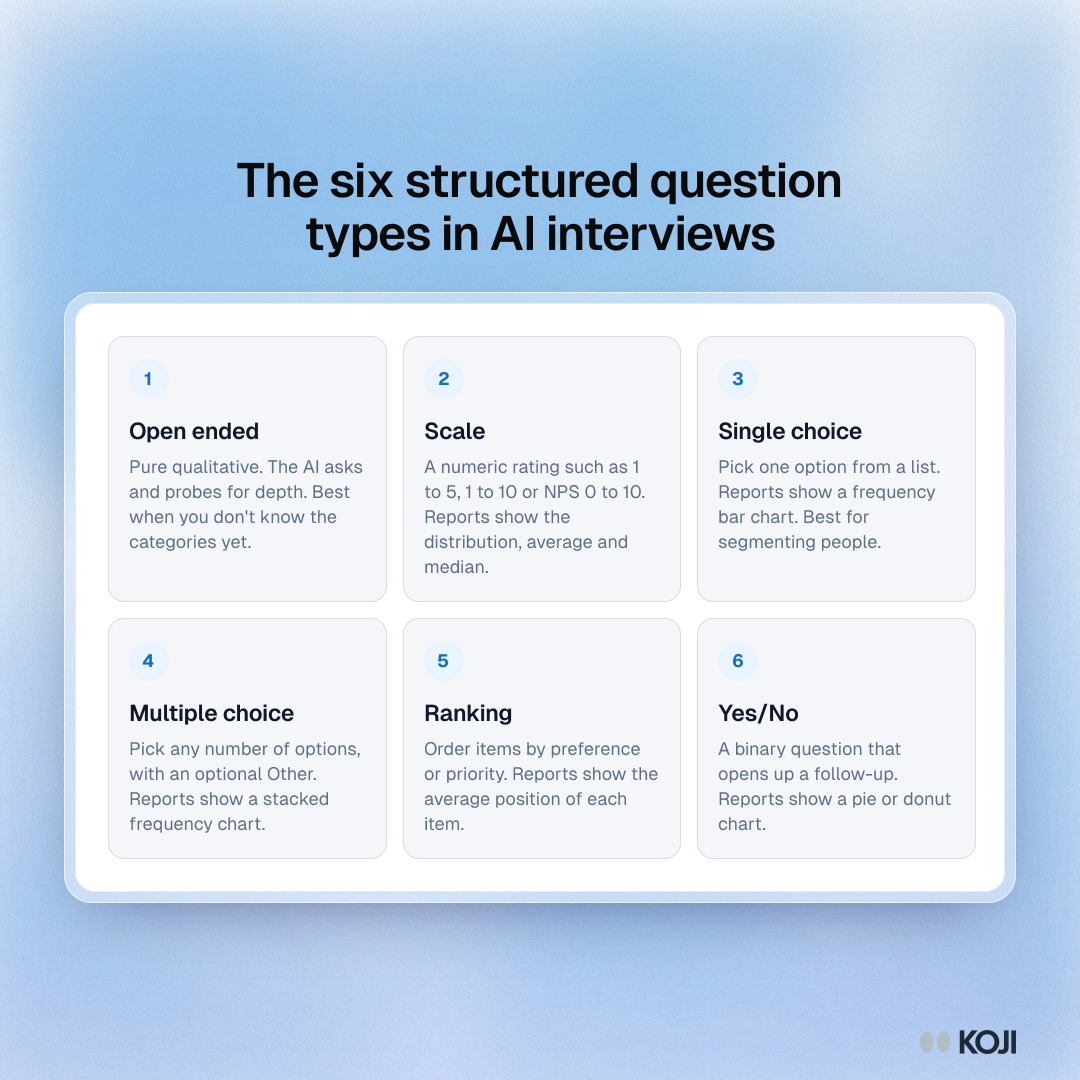
Framework of six structured question types in AI interviews: open ended, scale, single choice, multiple choice, ranking and yes/no, with each report chart.

Framework

The six structured question types in AI interviews
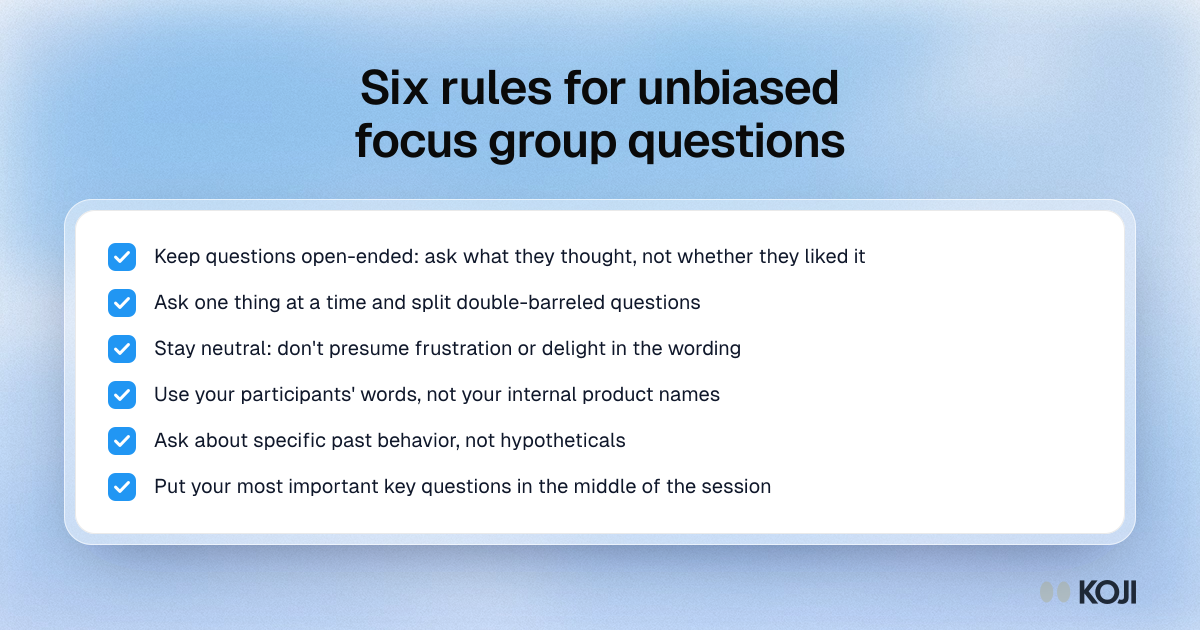
Checklist of six rules for unbiased focus group questions: open-ended, one idea each, neutral, plain words, past behavior, key questions mid-session.

Checklist

Six rules for unbiased focus group questions
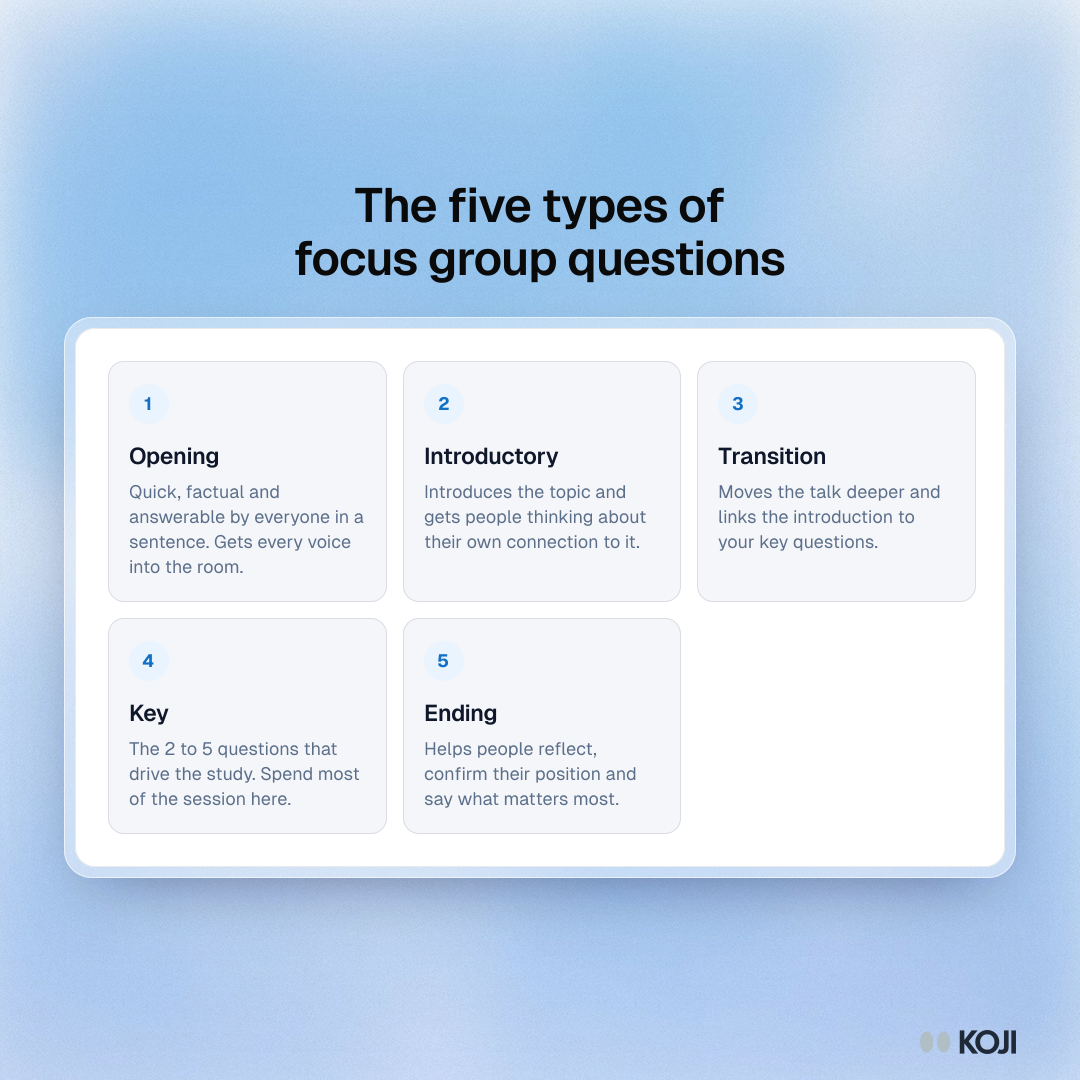
Framework showing the five types of focus group questions in order: opening, introductory, transition, key and ending, with what each one is for.

Framework

The five types of focus group questions
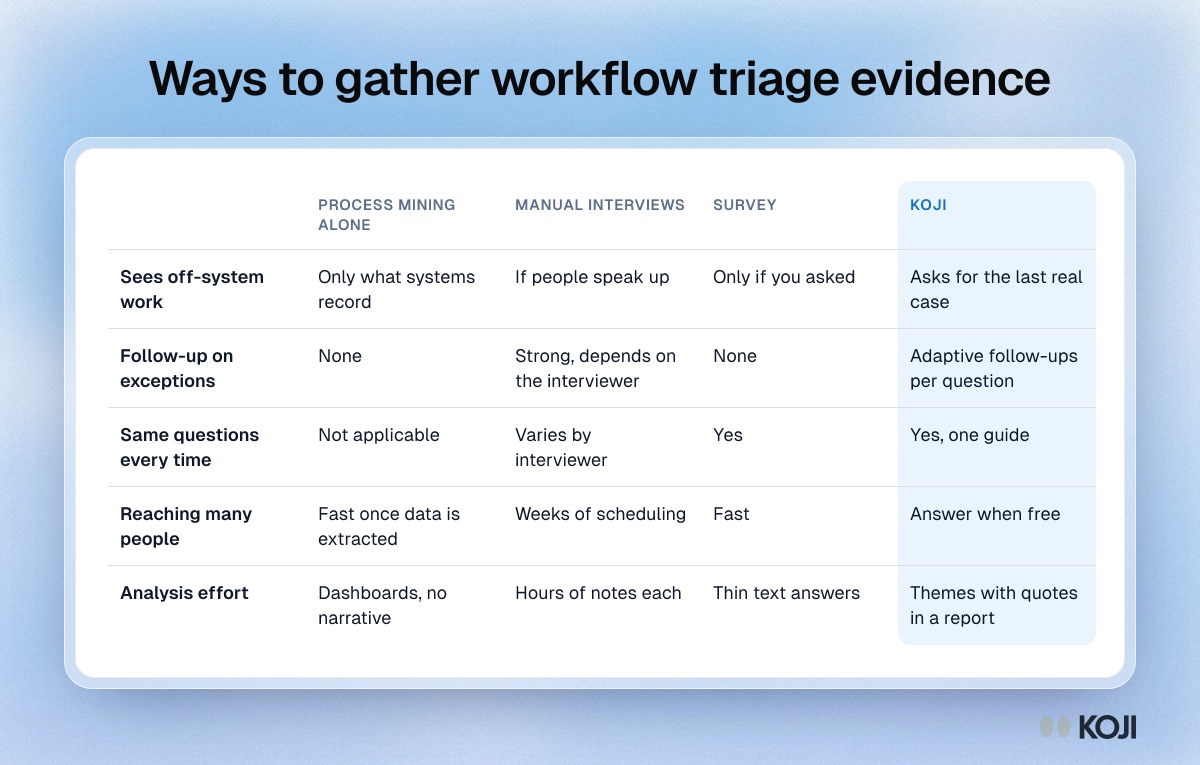
Table comparing process mining, workshops and manual interviews, surveys and Koji on off-system work, follow-up, consistency, reach and analysis effort.

Reference table

Ways to gather workflow triage evidence
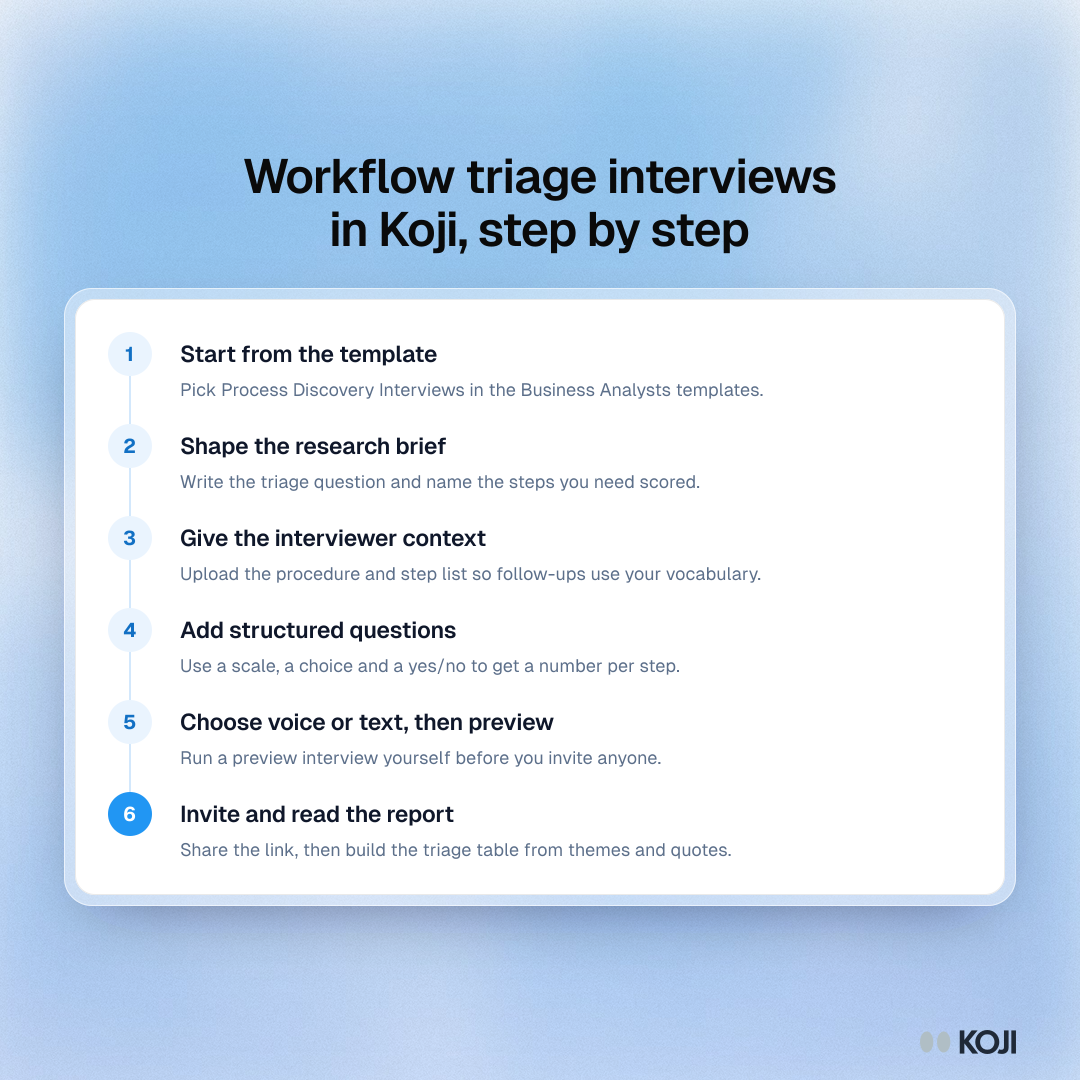
Process showing six steps to run workflow triage interviews in Koji, from the template and brief to previewing, inviting people and reading the report.

Process

Workflow triage interviews in Koji, step by step
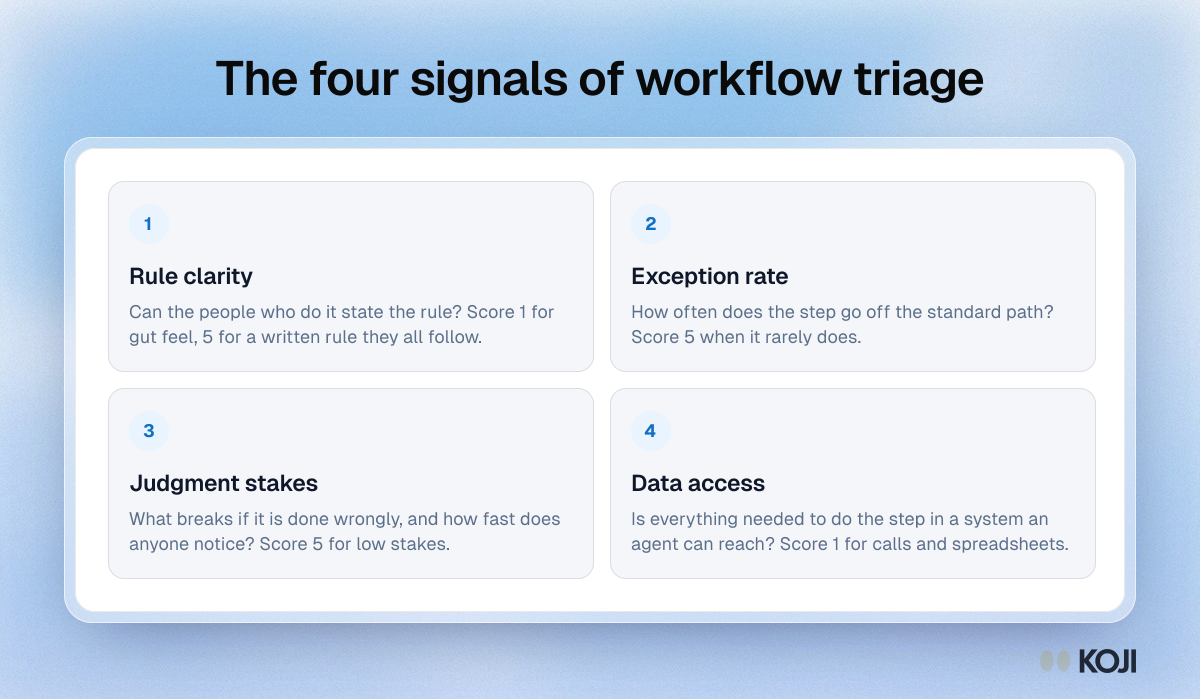
Framework showing four signals for triaging a workflow step before giving it to an AI agent: rule clarity, exception rate, judgment stakes and data access.

Framework

The four signals of workflow triage
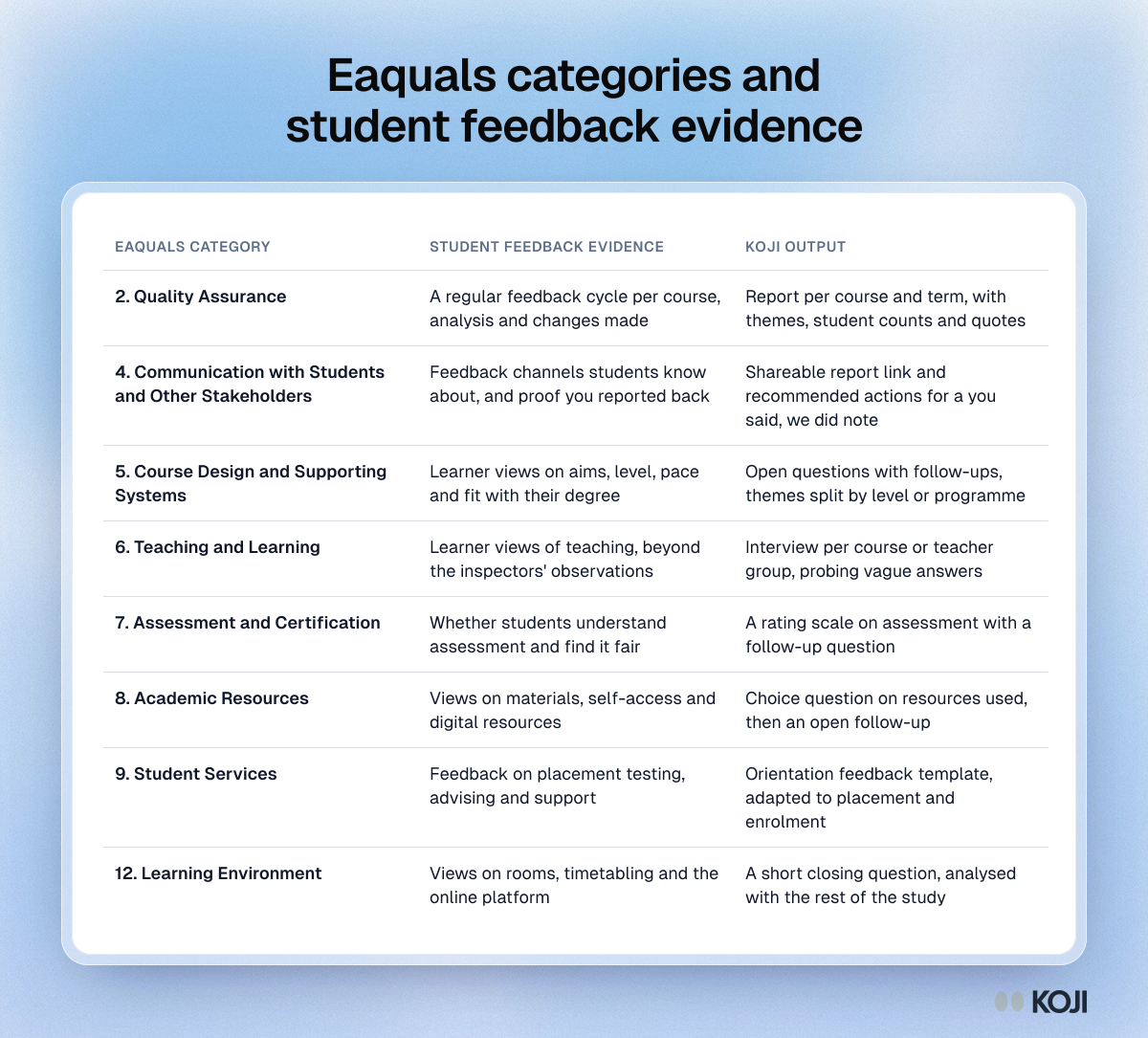
Table mapping eight Eaquals inspection categories to the student feedback evidence a university language centre can prepare and the matching Koji output.

Reference table

Eaquals categories and student feedback evidence
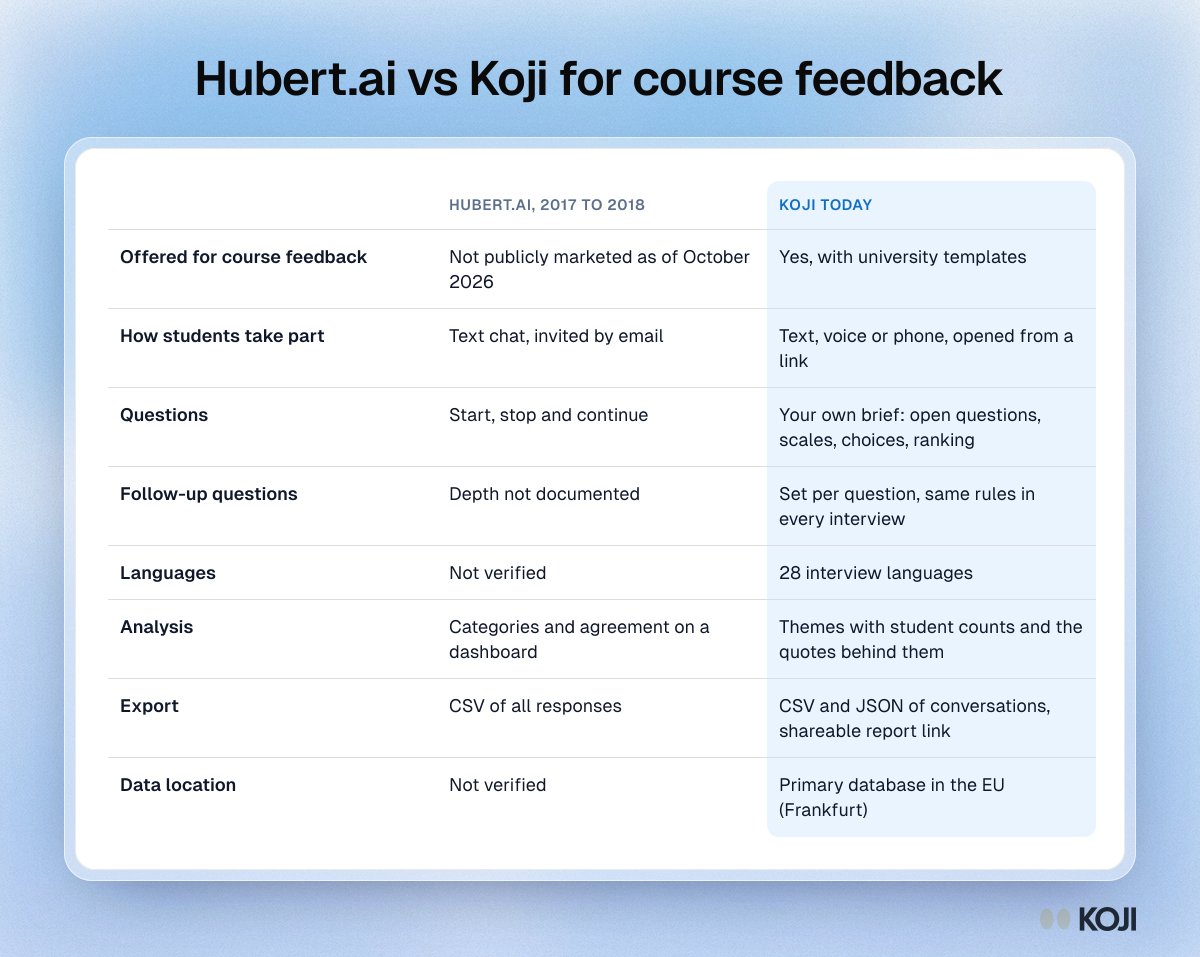
Comparison table of the Hubert.ai course feedback chatbot as documented in 2017 and 2018 and Koji today, covering access, follow-ups, analysis and data.

Reference table

Hubert.ai vs Koji for course feedback
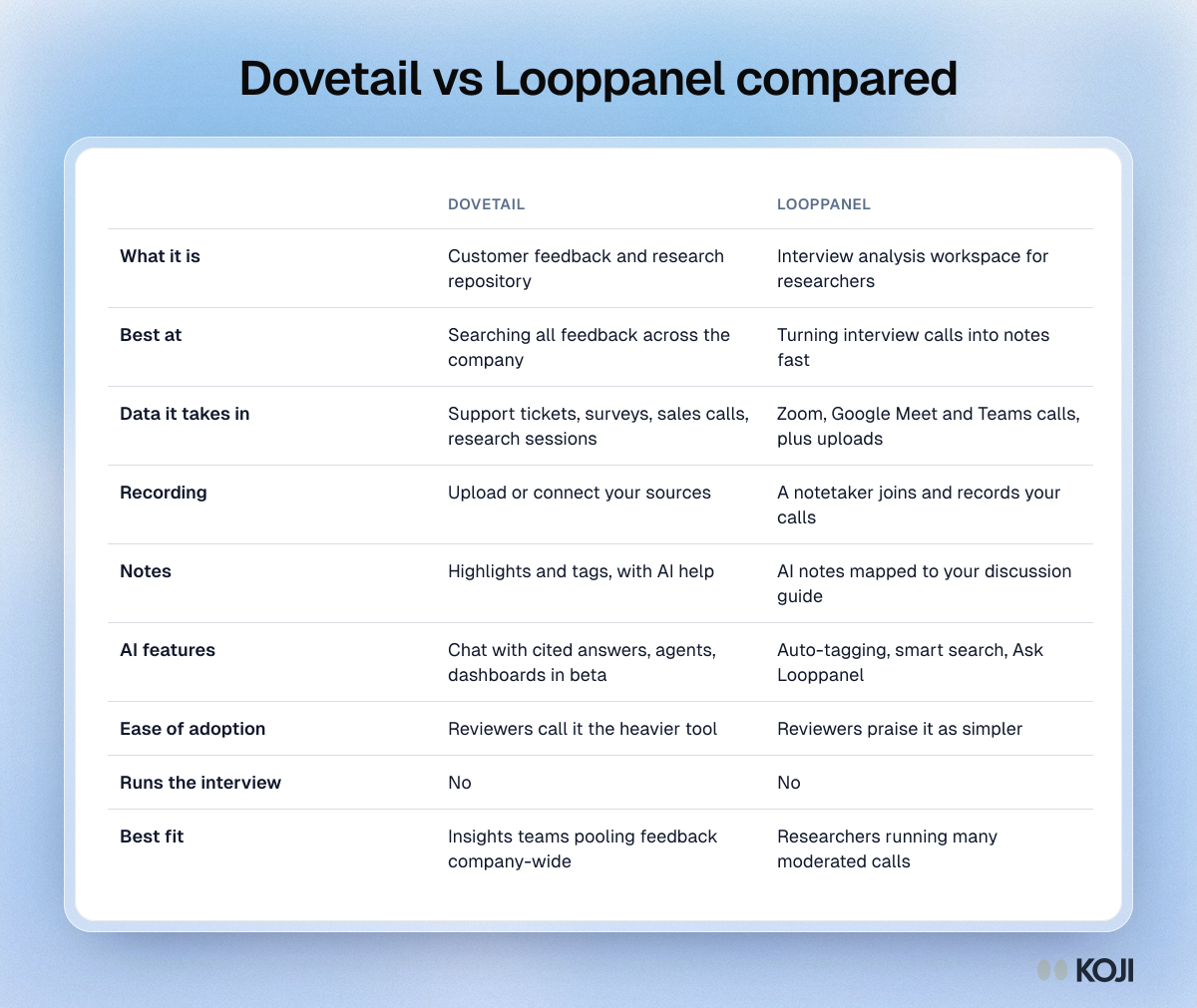
Table comparing Dovetail and Looppanel on what each tool is, the data it takes in, recording, notes, AI features, ease of adoption and best fit.

Reference table

Dovetail vs Looppanel compared
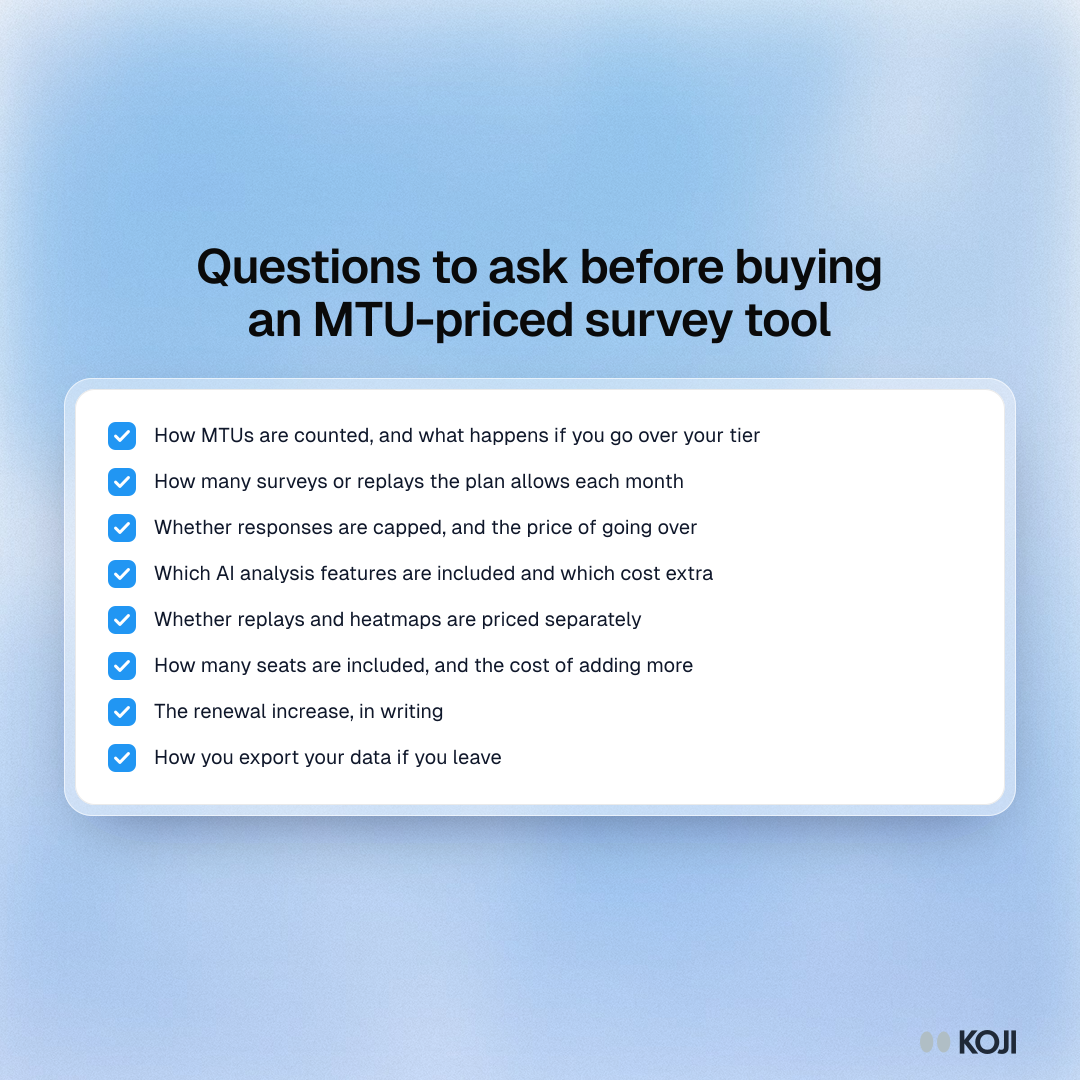
Checklist of questions to ask before buying an MTU-priced survey tool, from how users are counted to limits, AI features, seats and export.

Checklist

Questions to ask before buying an MTU-priced survey tool
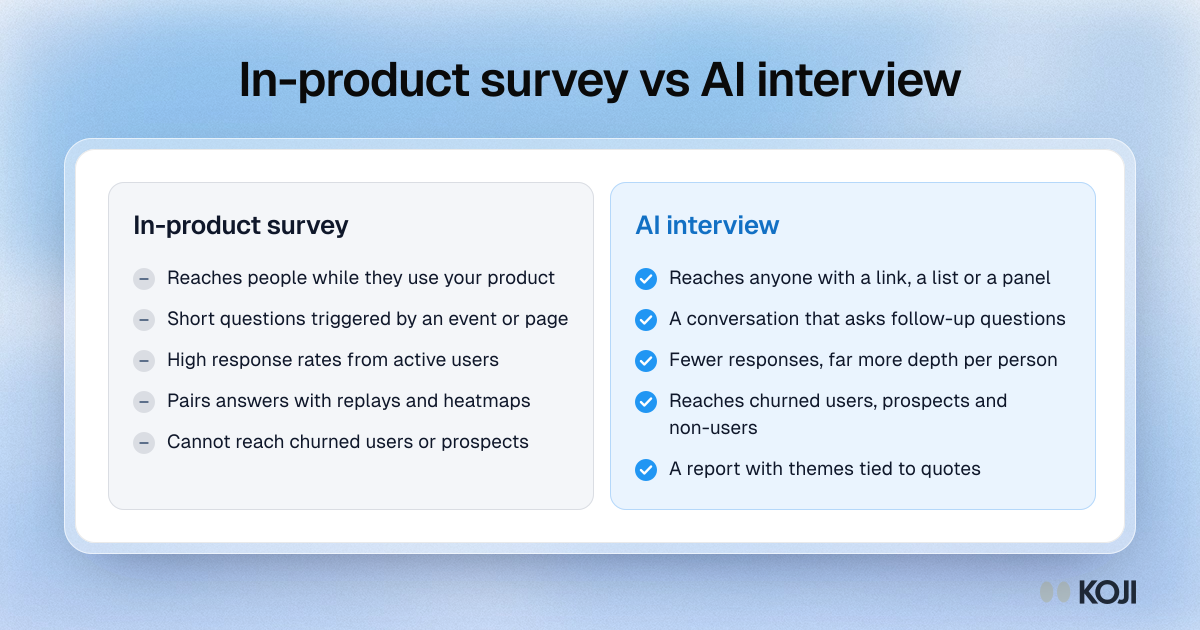
Comparison of in-product surveys and AI interviews: surveys reach active users in the moment, AI interviews reach anyone and ask follow-up questions.

Comparison

In-product survey vs AI interview
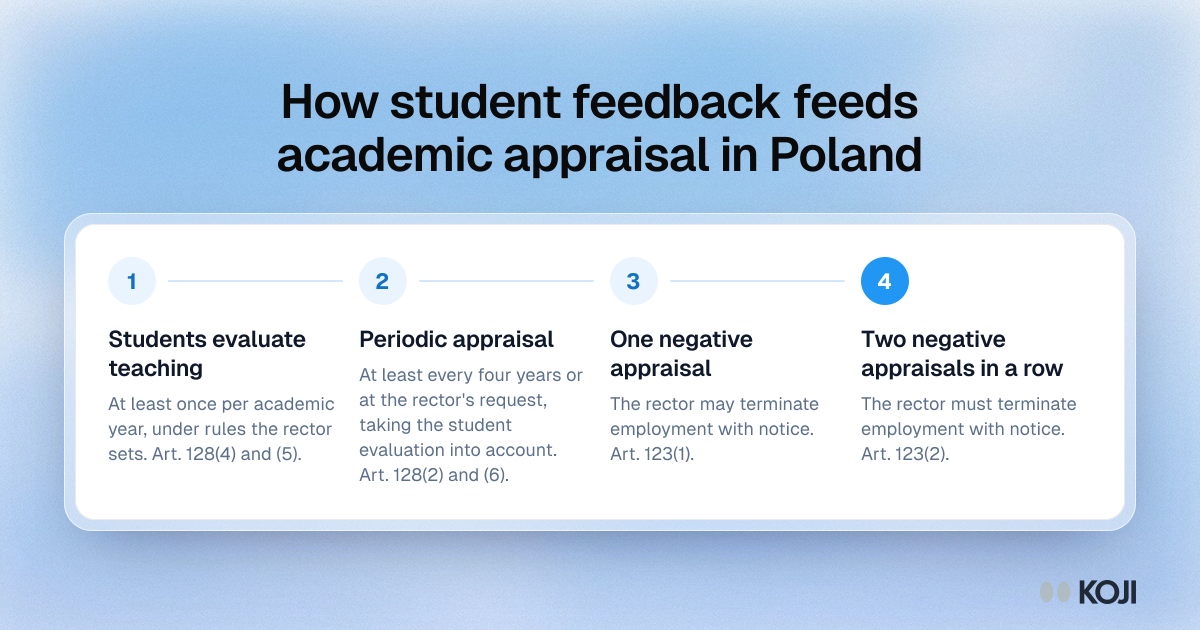
Process showing how annual student evaluation feeds periodic appraisal of Polish academic teachers and can lead to termination.

Process

How student feedback feeds academic appraisal in Poland
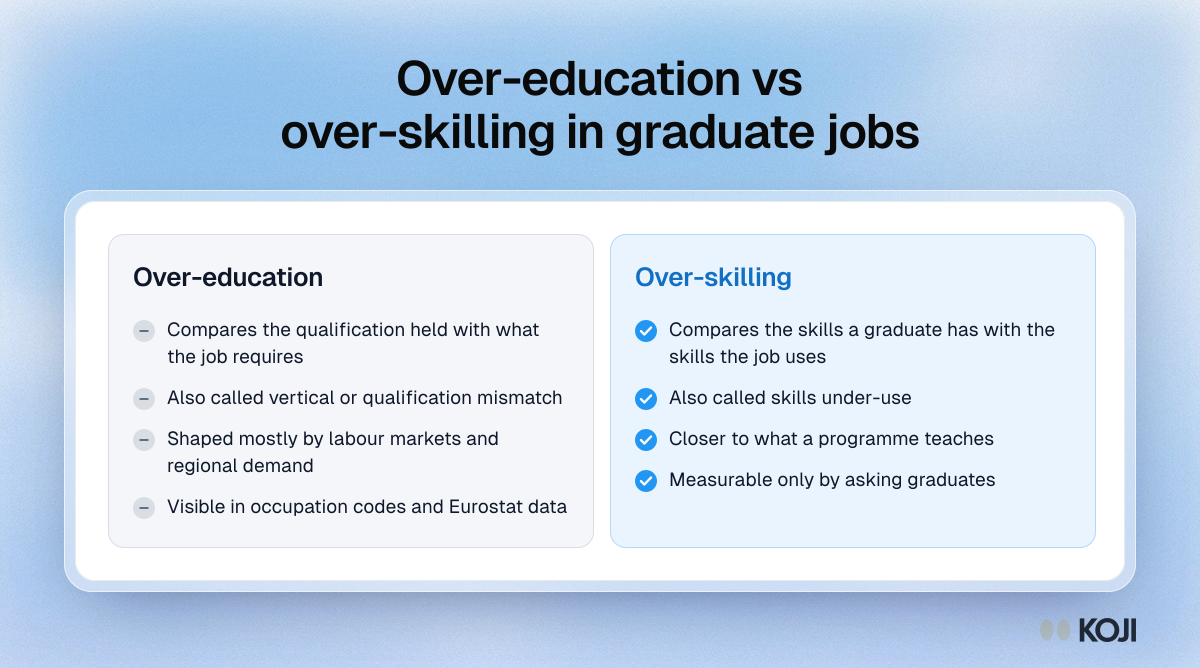
Comparison of over-education, a qualification above what the job needs, and over-skilling, skills the job does not use.

Comparison

Over-education vs over-skilling in graduate jobs
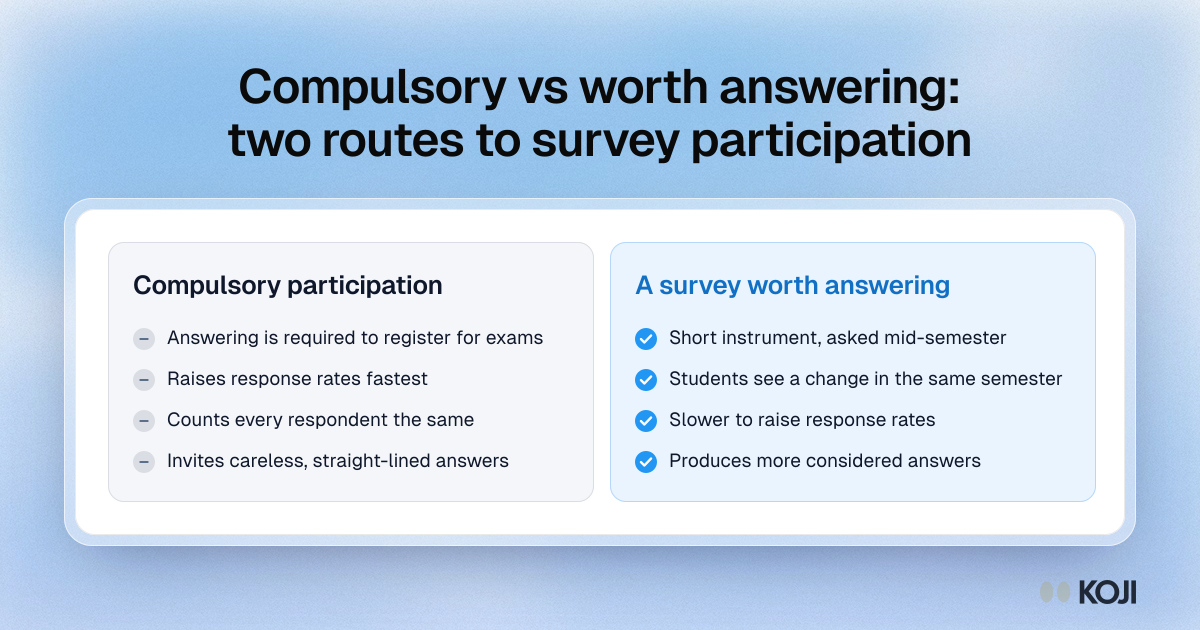
Comparison of two ways to raise student survey participation: making responses compulsory versus making the survey short, timely and visibly acted on.

Comparison

Compulsory vs worth answering: two routes to survey participation
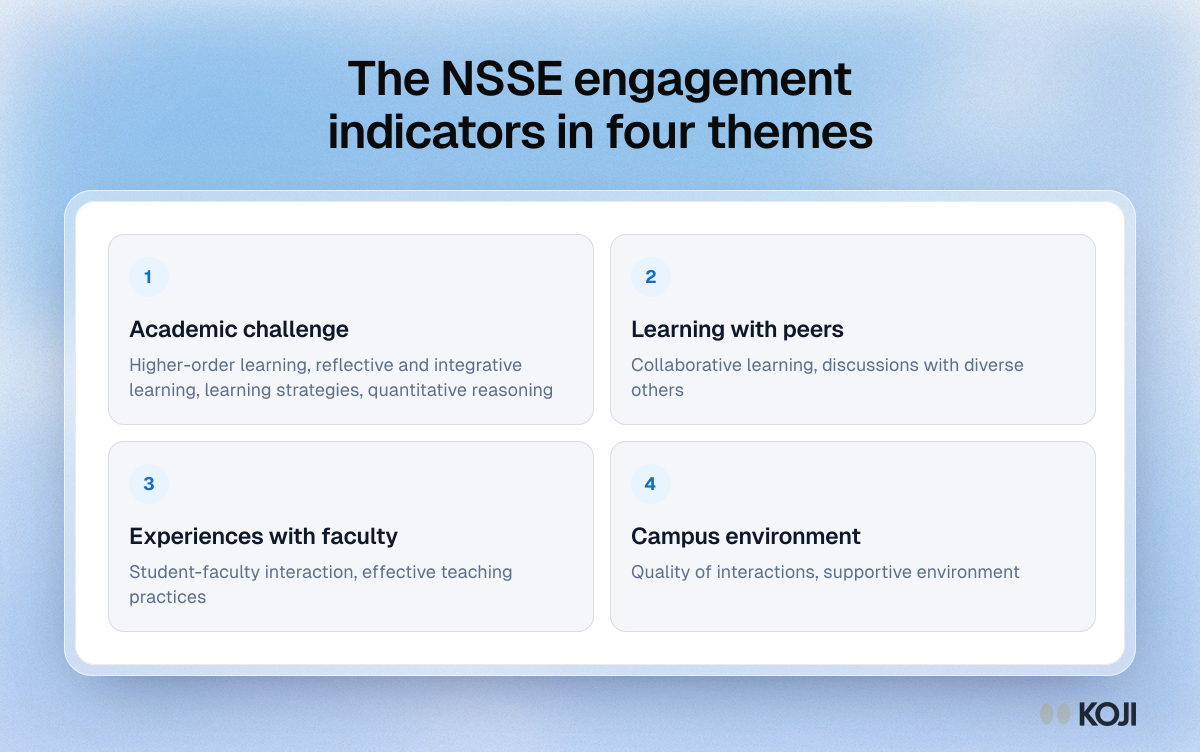
Framework showing the four themes of the NSSE engagement indicators: academic challenge, learning with peers, experiences with faculty and campus environment.

Framework

The NSSE engagement indicators in four themes
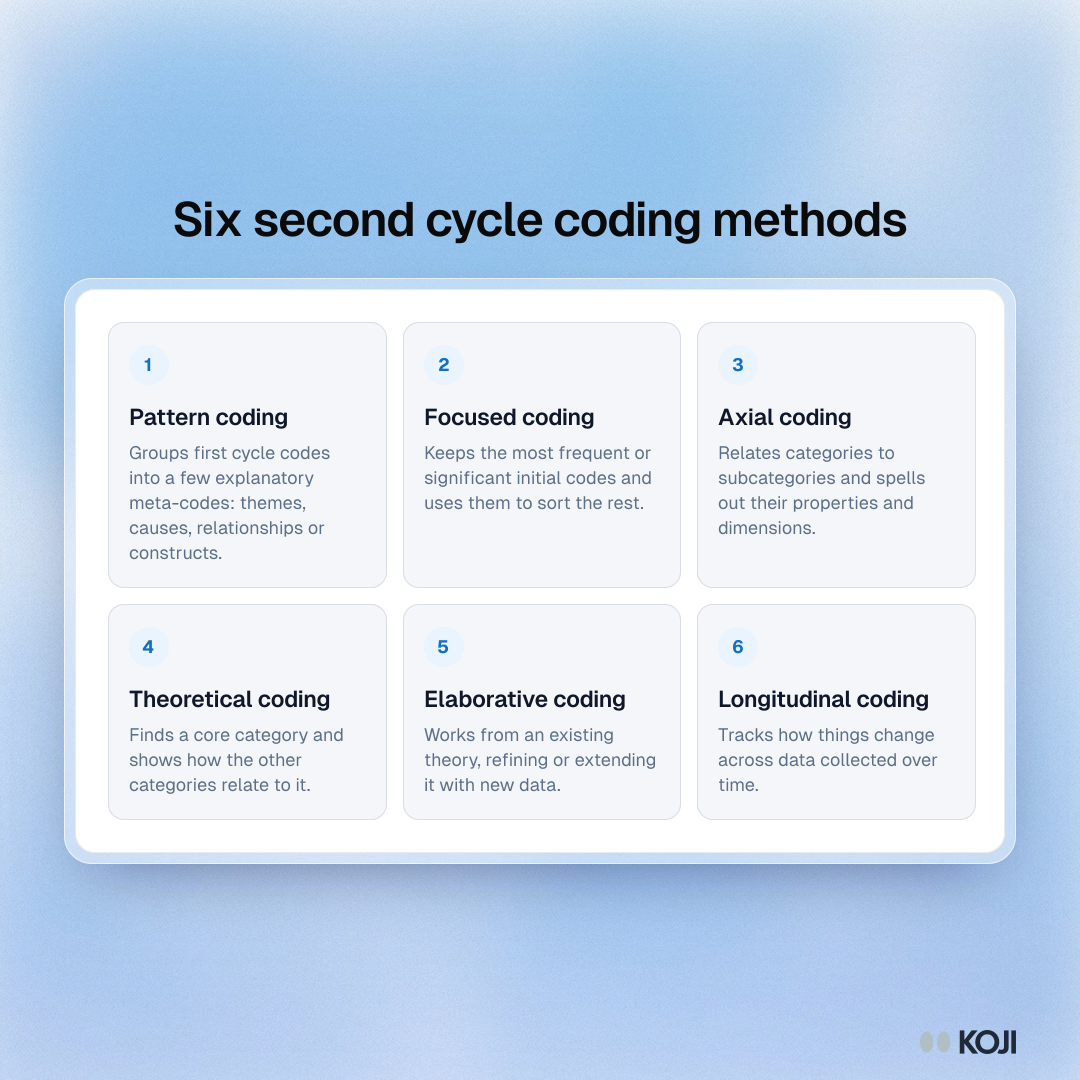
Framework of six second cycle coding methods: pattern, focused, axial, theoretical, elaborative and longitudinal coding.

Framework

Six second cycle coding methods
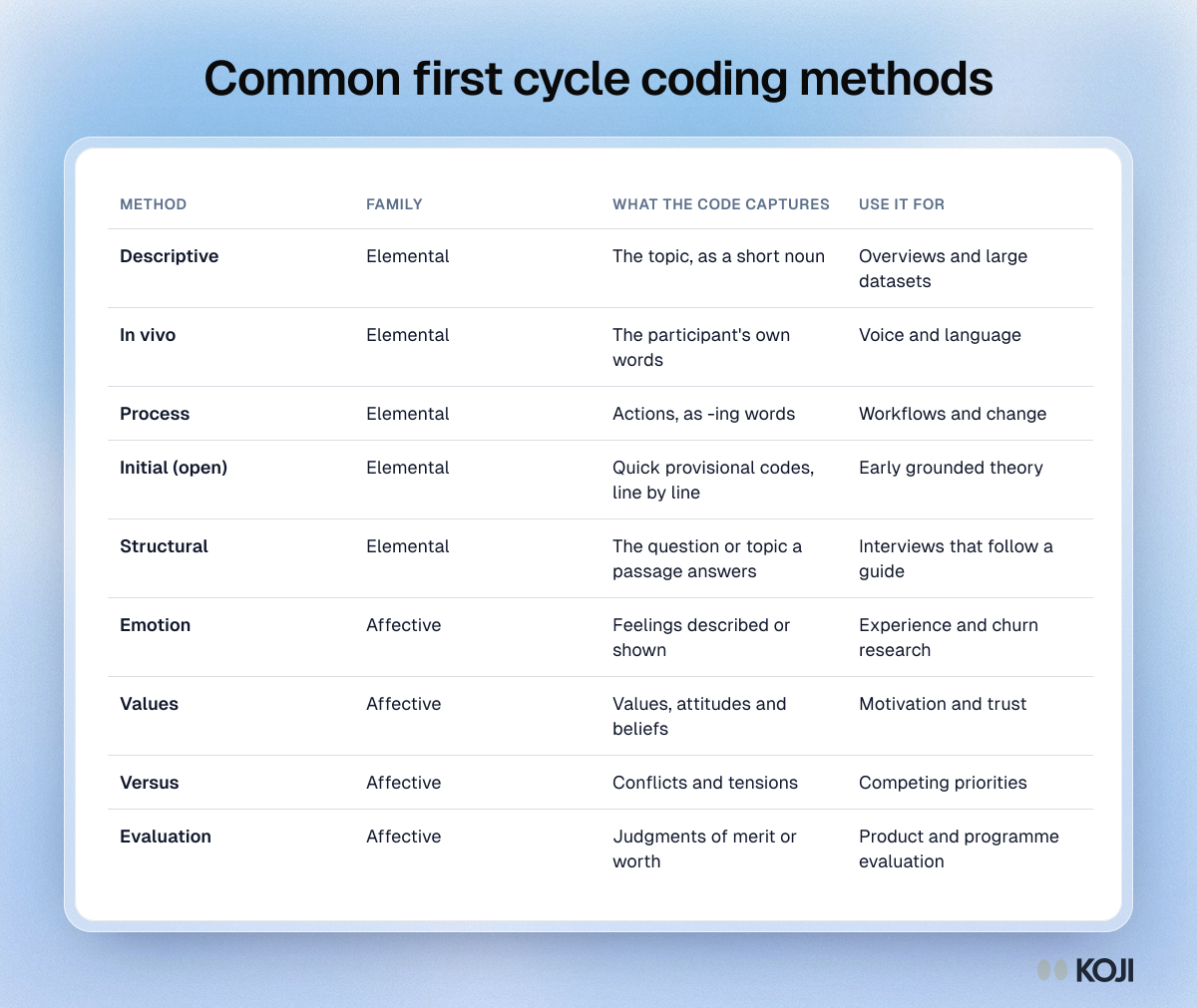
Table of common first cycle coding methods grouped by family, with what each code captures and when to use it.

Reference table

Common first cycle coding methods
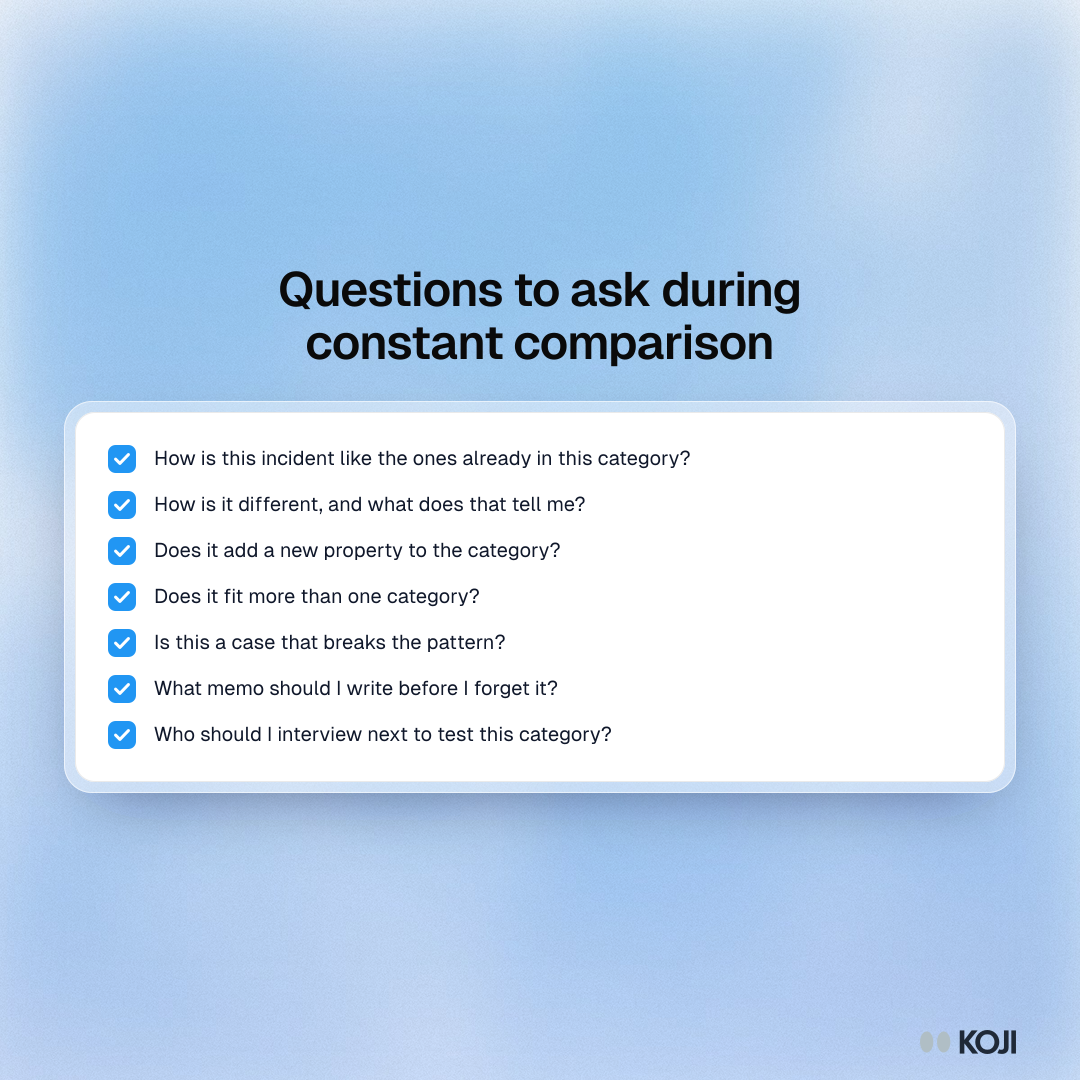
Checklist of questions to ask during constant comparison, from comparing a new quote with past ones to deciding who to interview next.

Checklist

Questions to ask during constant comparison
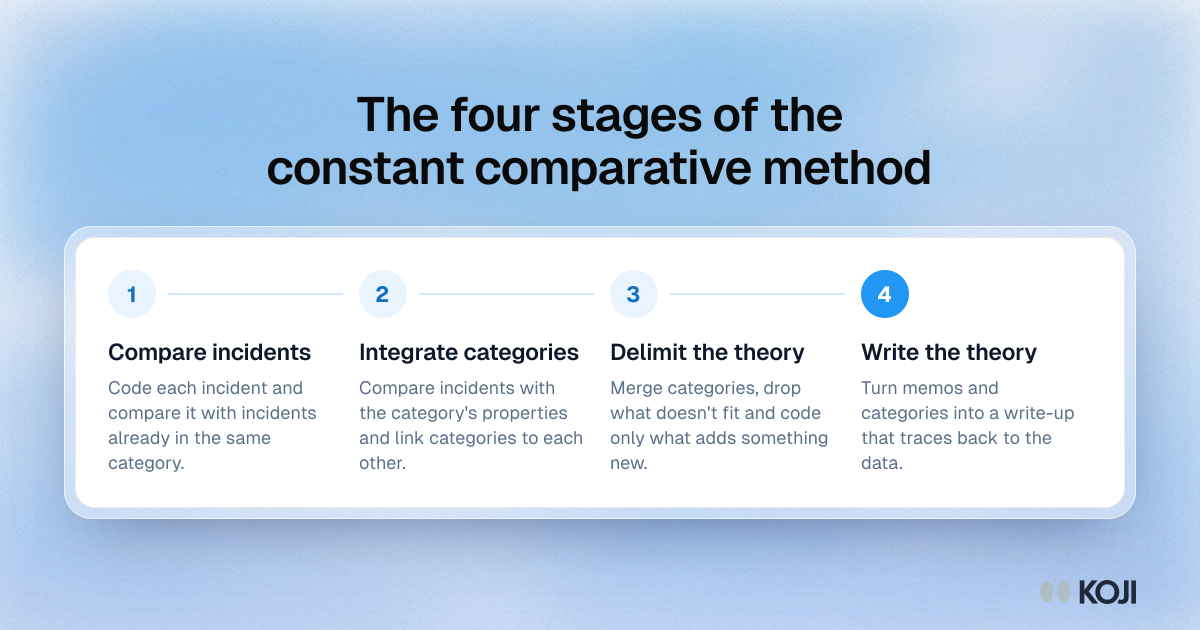
Process showing the four stages of the constant comparative method: compare incidents, integrate categories, delimit the theory and write the theory.

Process

The four stages of the constant comparative method
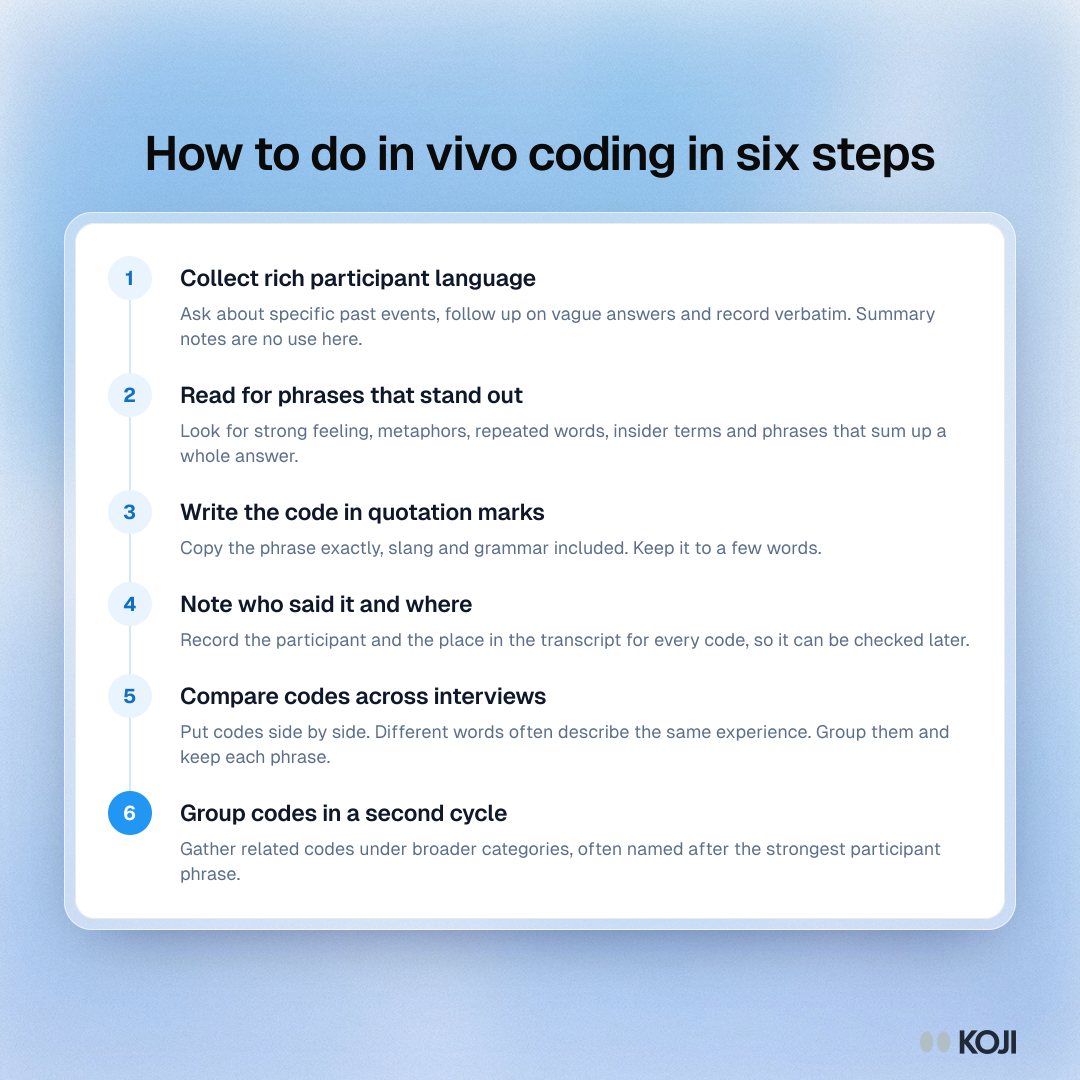
Process showing six steps of in vivo coding, from collecting rich participant language to grouping codes into categories in a second cycle.

Process

How to do in vivo coding in six steps
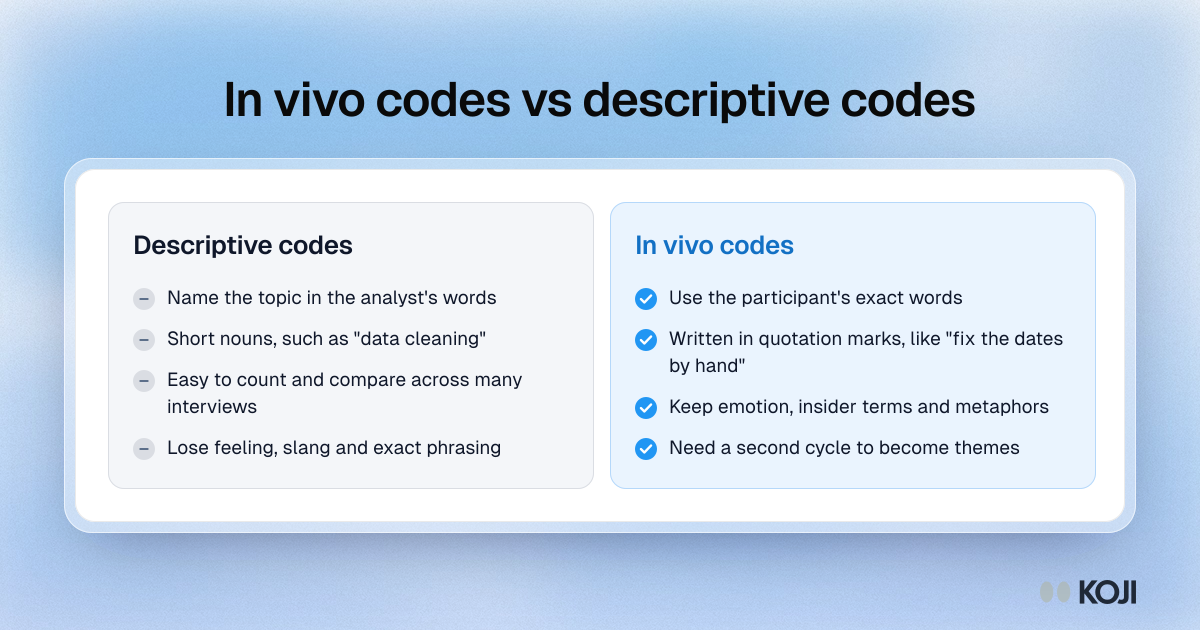
Comparison of in vivo codes and descriptive codes: in vivo codes keep the participant's exact phrase, descriptive codes name the topic in the analyst's words.

Comparison

In vivo codes vs descriptive codes
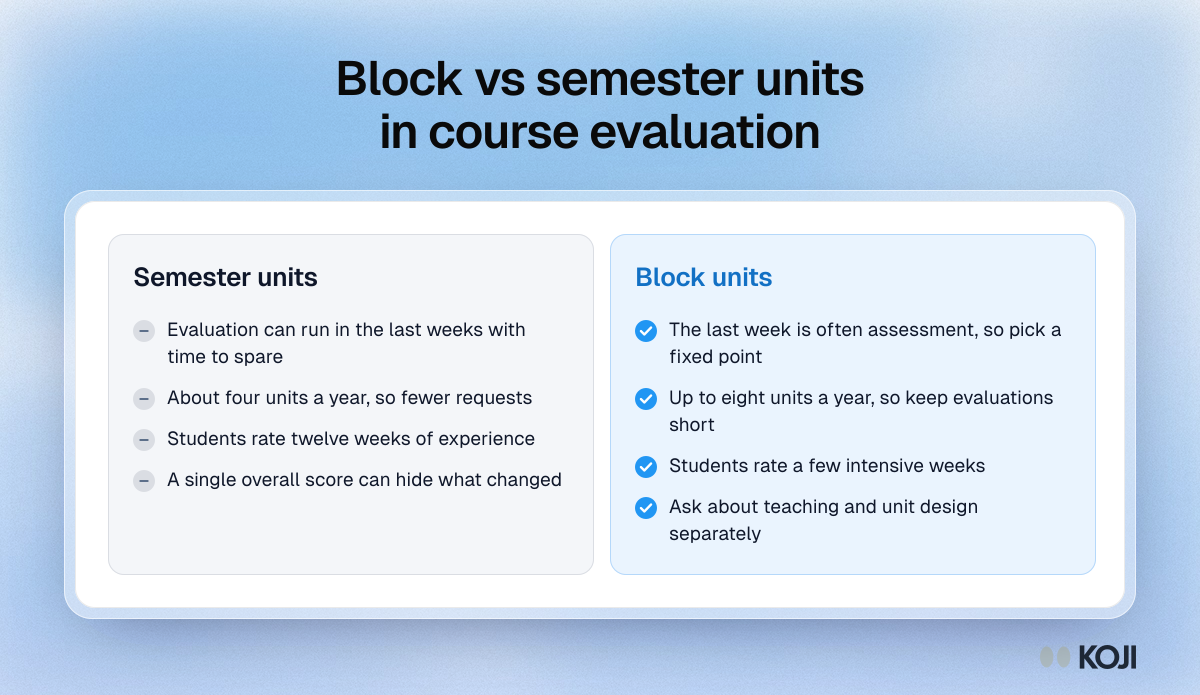
Comparison of block and semester delivery in course evaluation: what changes for timing, number of requests and what students rate.

Comparison

Block vs semester units in course evaluation
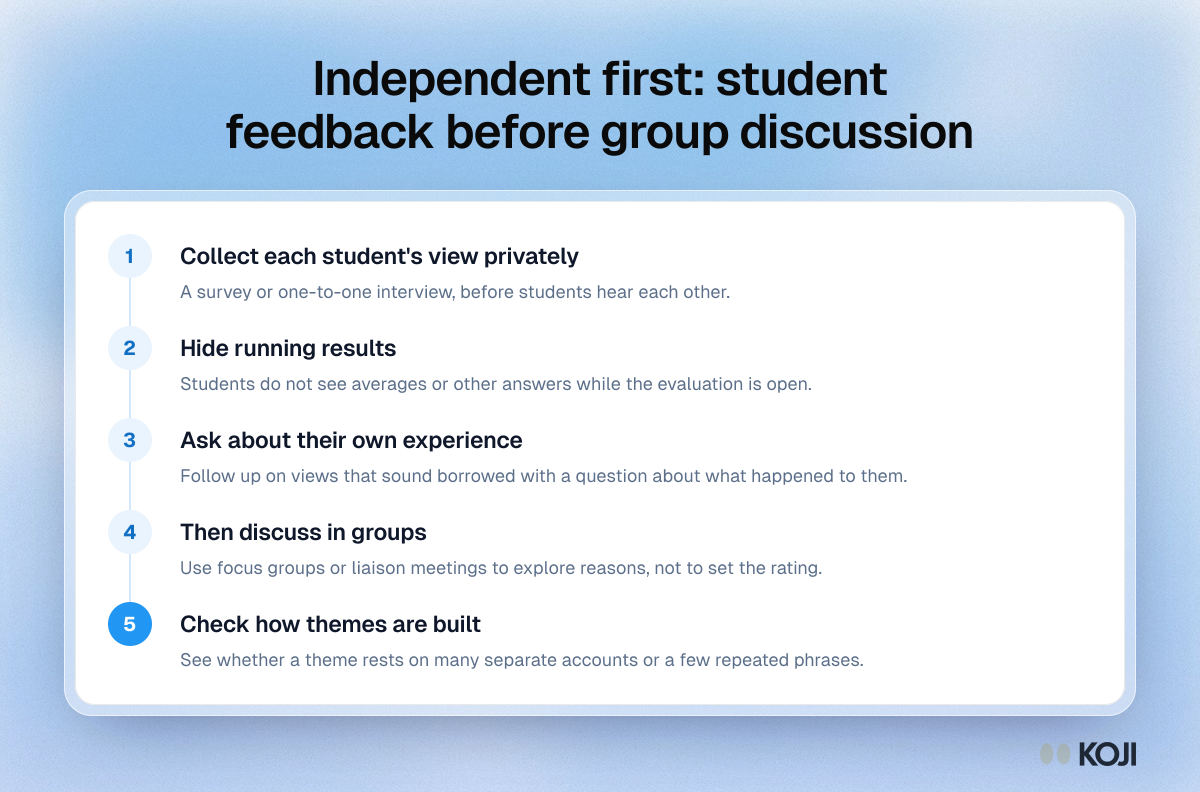
Process for collecting independent student feedback before group discussion, from private first answers to shared discussion and reporting.

Process

Independent first: student feedback before group discussion
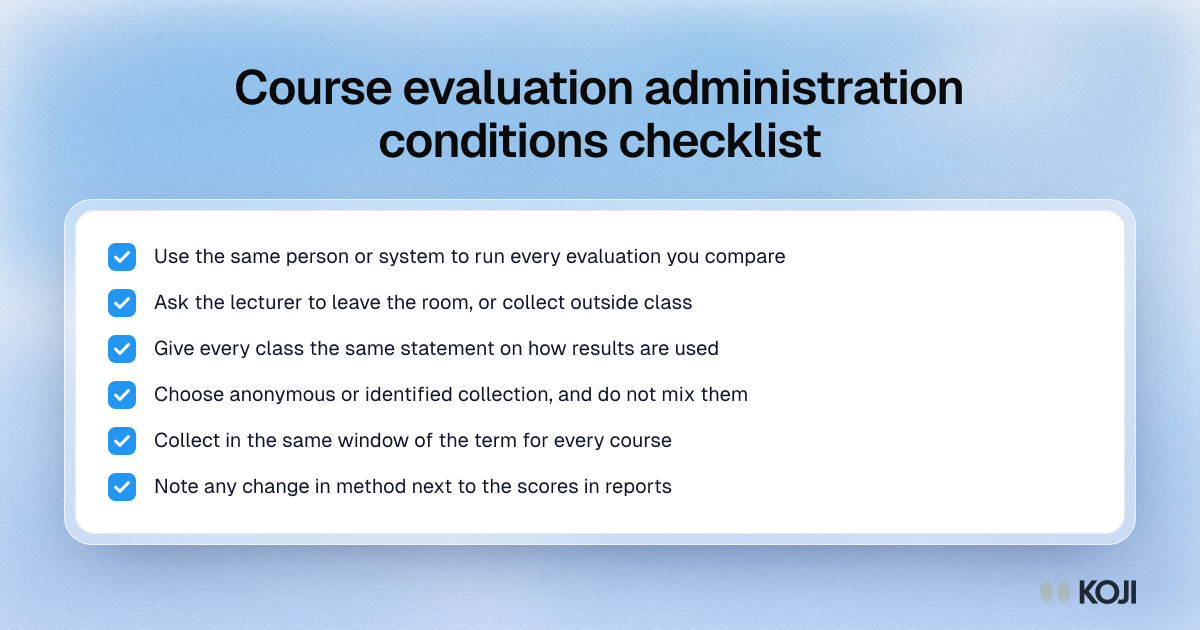
Checklist of administration conditions to standardise before comparing course evaluation scores: who runs it, what students are told, anonymity and timing.

Checklist

Course evaluation administration conditions checklist
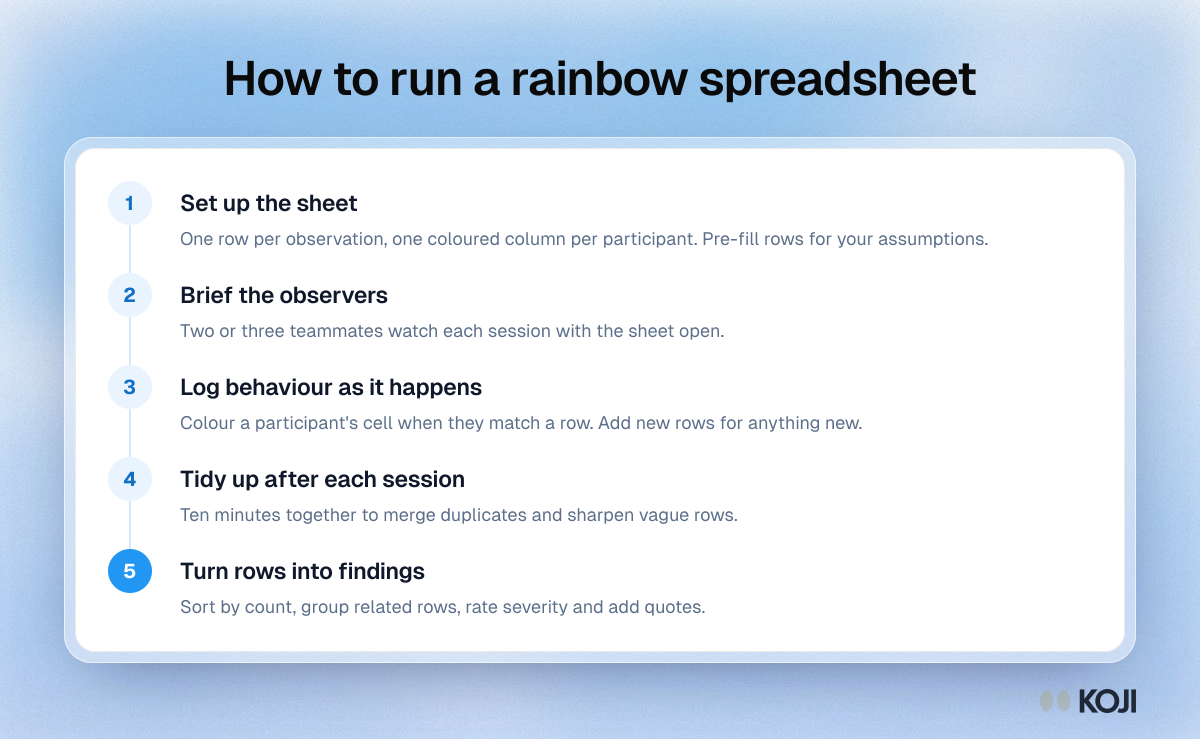
Process showing five steps to run a rainbow spreadsheet: set up the sheet, brief observers, log during sessions, debrief and turn rows into findings

Process

How to run a rainbow spreadsheet
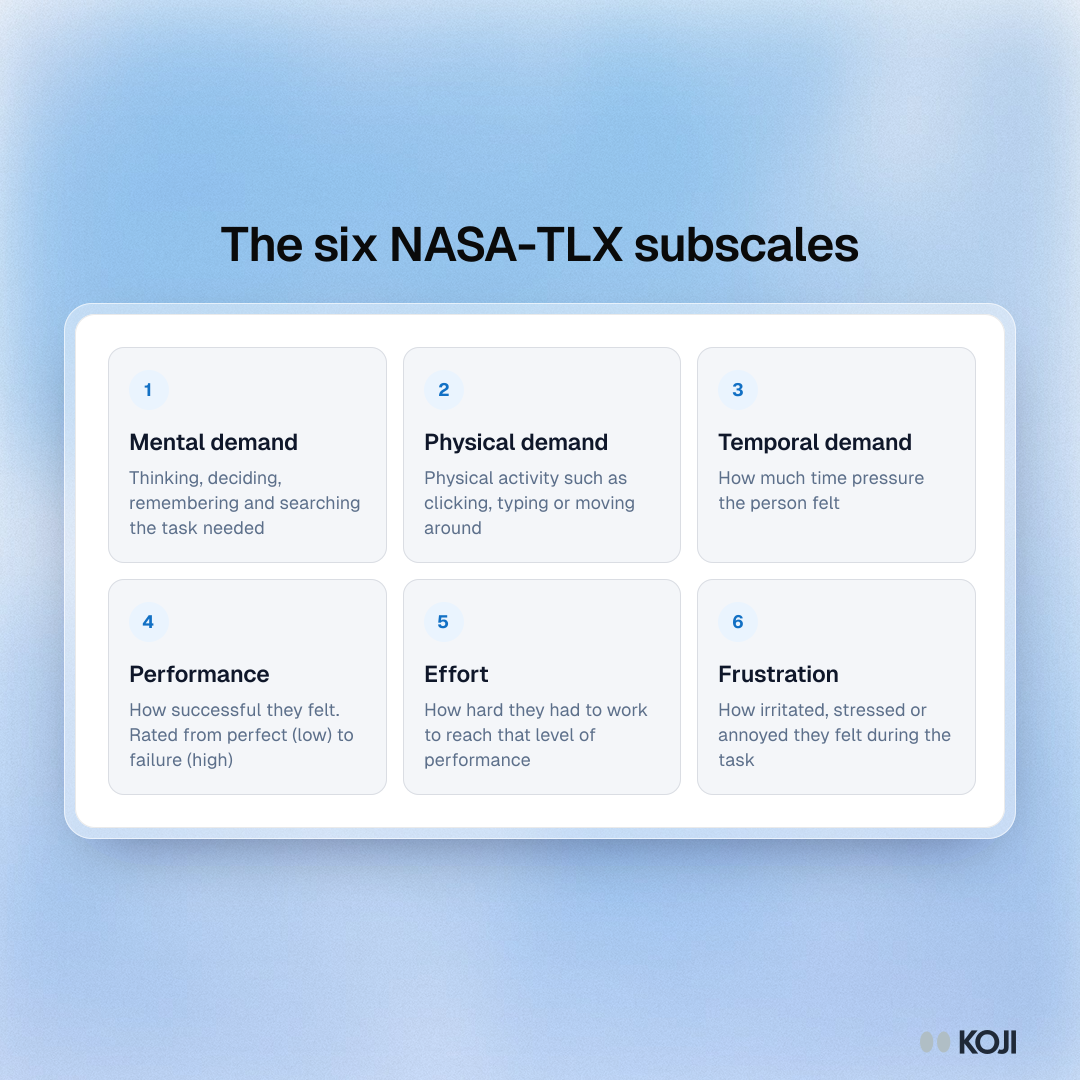
Framework showing the six NASA-TLX subscales: mental, physical and temporal demand, performance, effort and frustration

Framework

The six NASA-TLX subscales

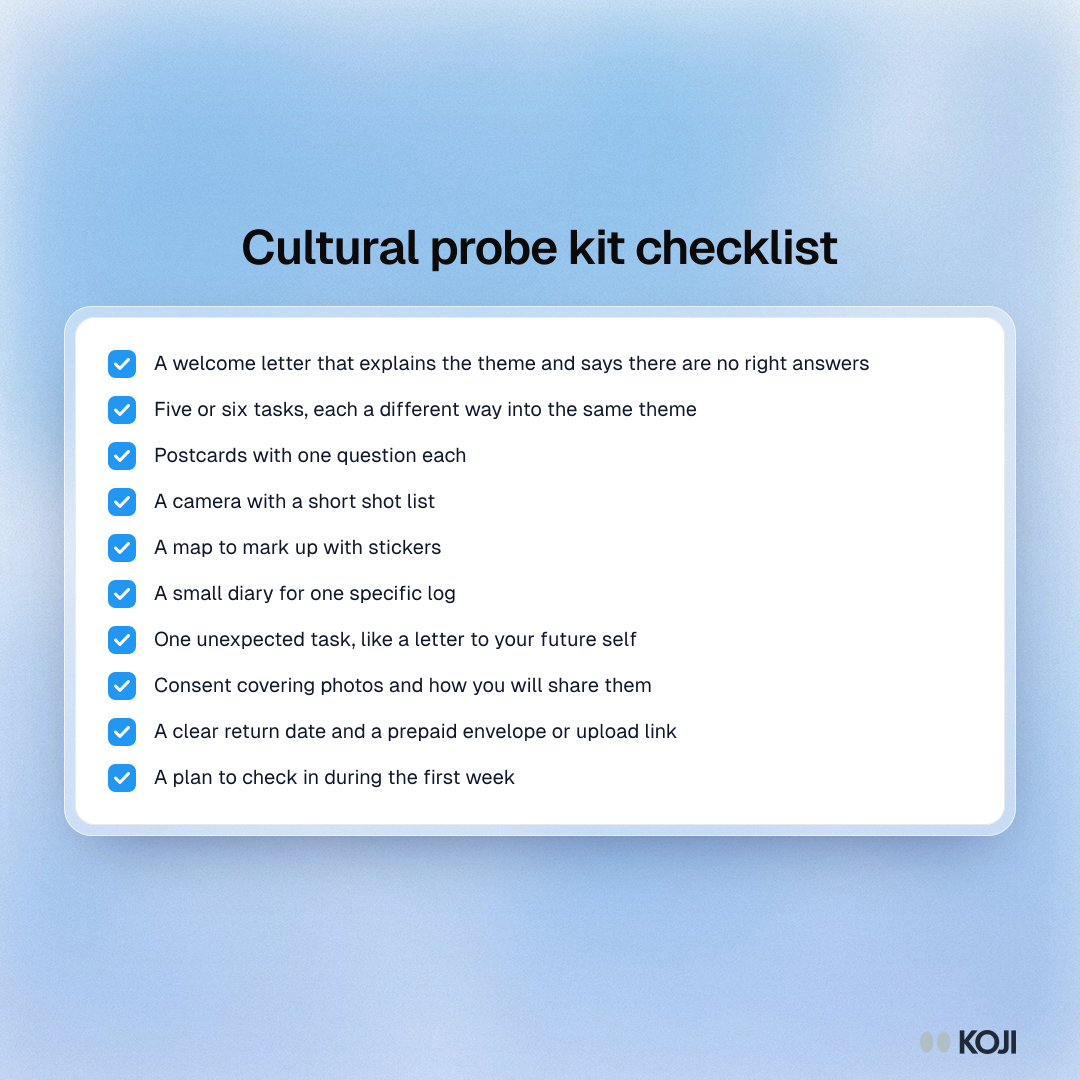
Checklist of what to put in a cultural probe kit, from a welcome letter and postcards to a camera shot list and a return plan

Checklist

Cultural probe kit checklist
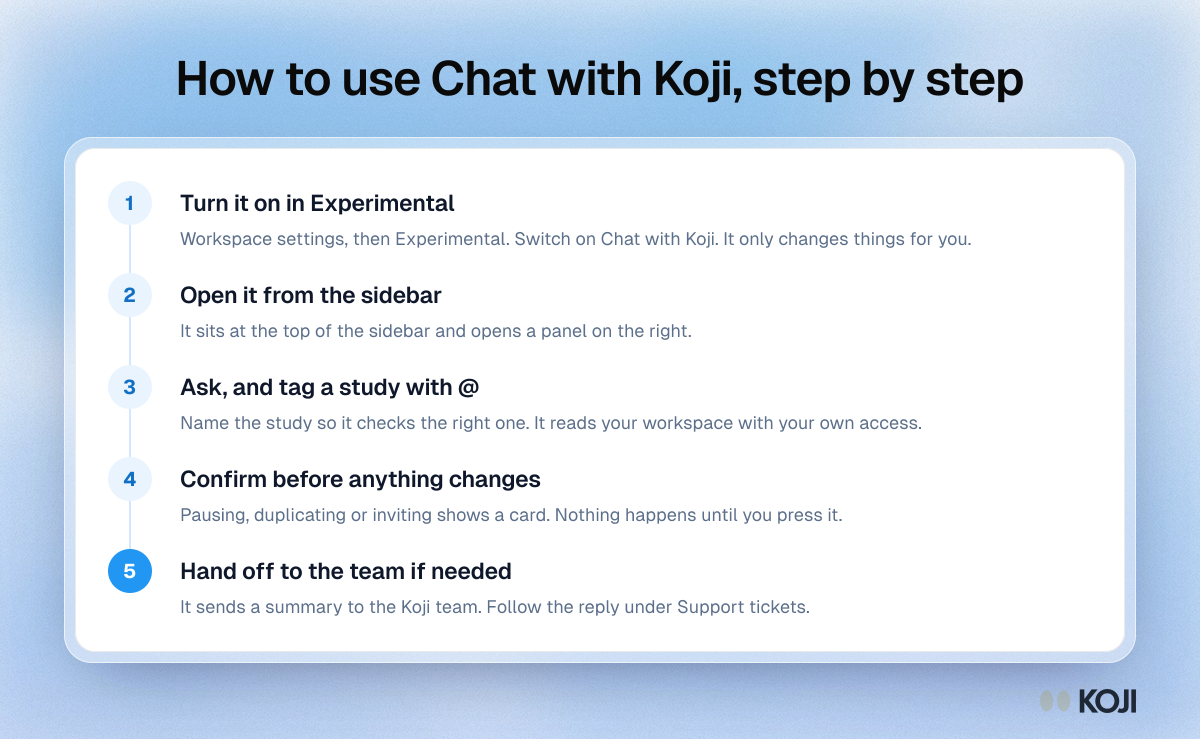
Process showing five steps to use Chat with Koji: turn it on, open it, ask with @, confirm changes and hand off to the team

Process

How to use Chat with Koji, step by step
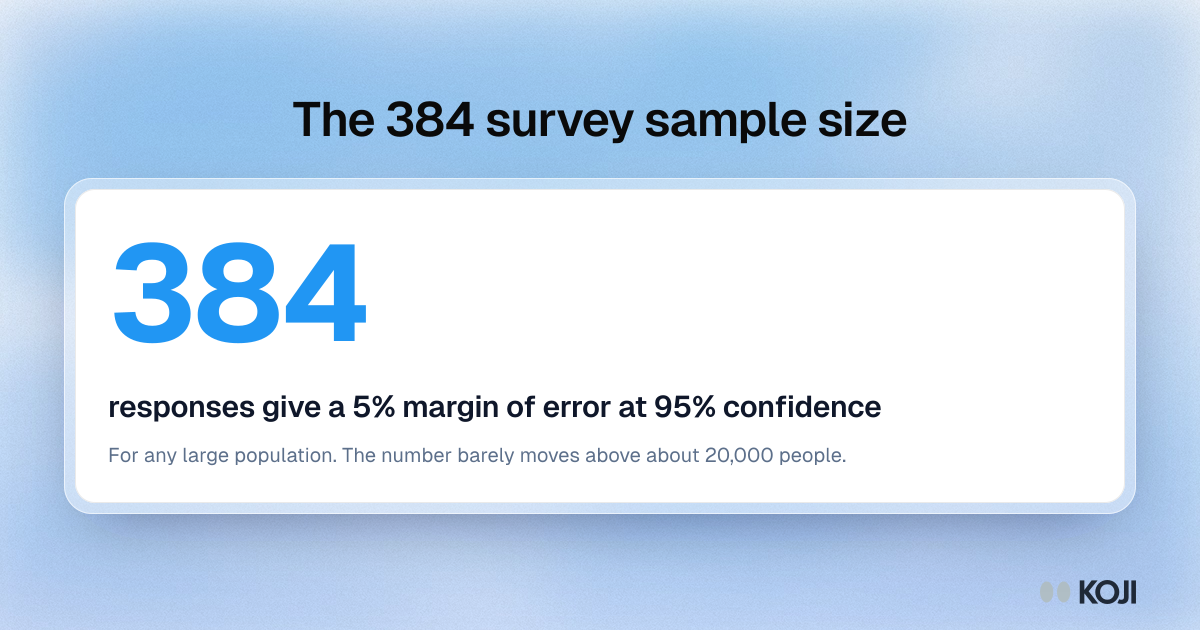
Stat card: 384 survey responses give a 5% margin of error at 95% confidence for any large population, with the number barely moving above about 20,000 people.

Key figure

The 384 survey sample size
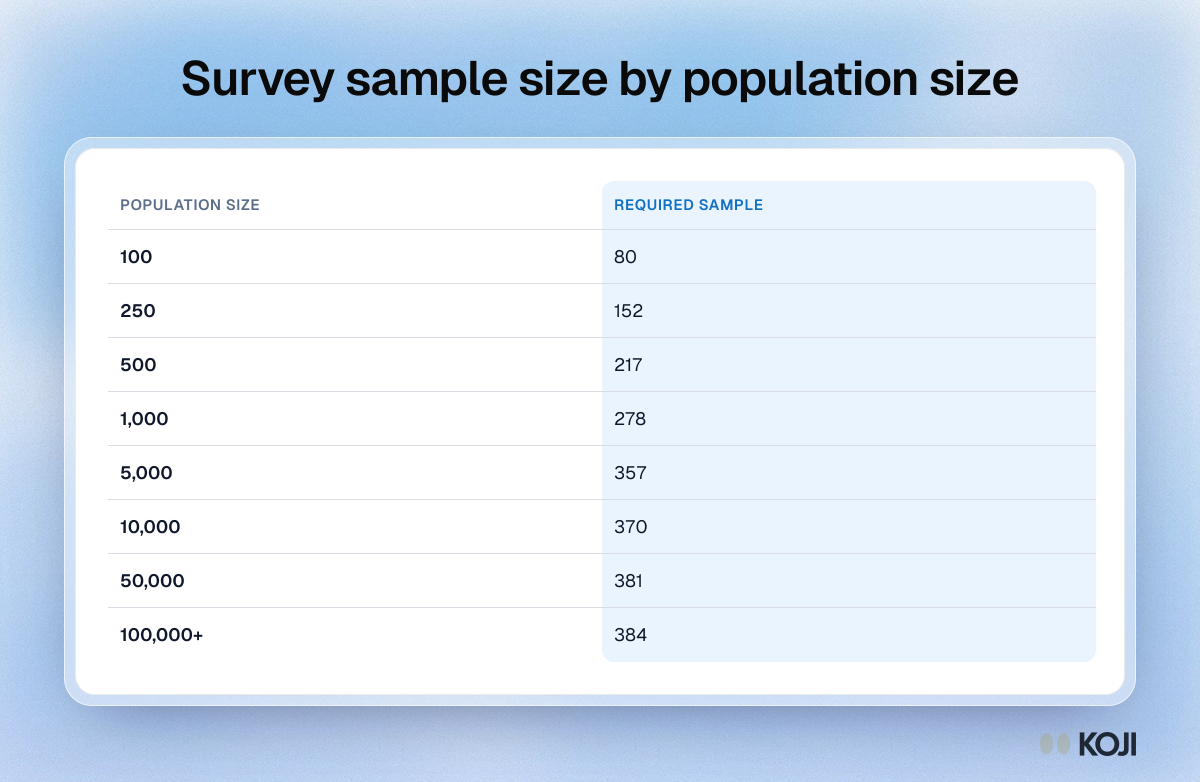
Table of the survey sample size needed at 95% confidence and a 5% margin of error for populations from 100 to 100,000 or more, topping out at 384.

Reference table

Survey sample size by population size
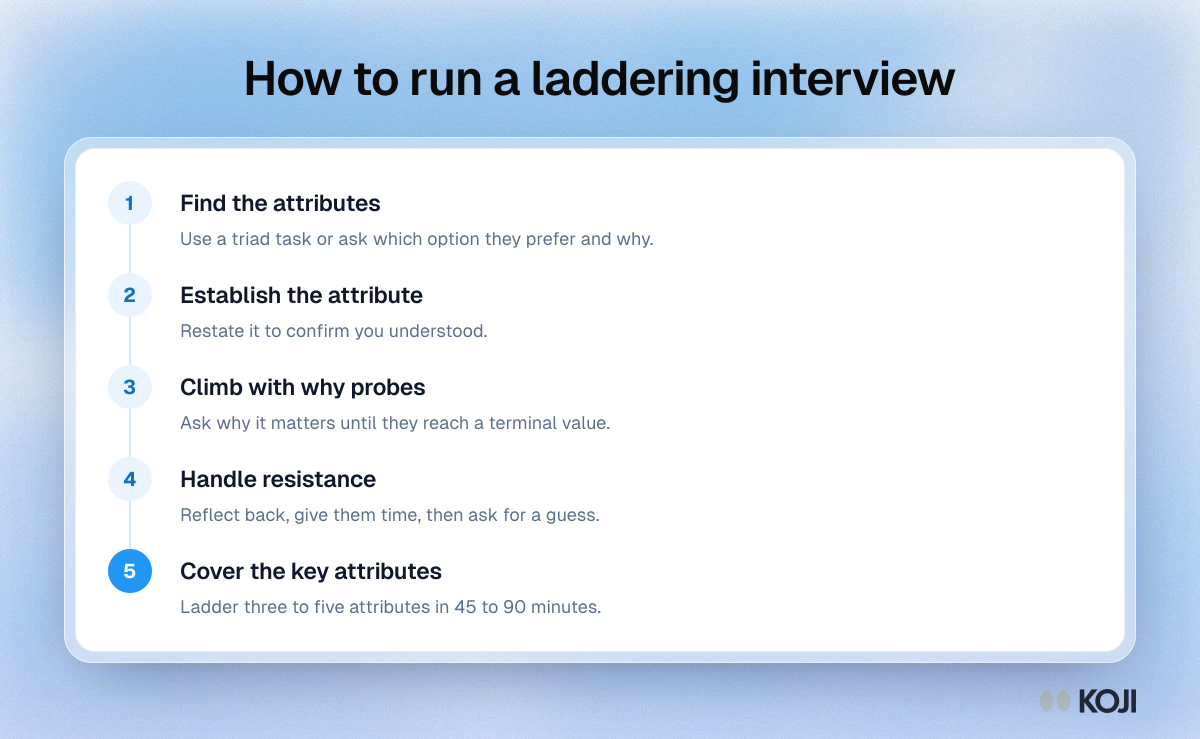
Process showing five steps to run a laddering interview: find attributes, establish one, climb with why probes, handle resistance and cover the key attributes.

Process

How to run a laddering interview
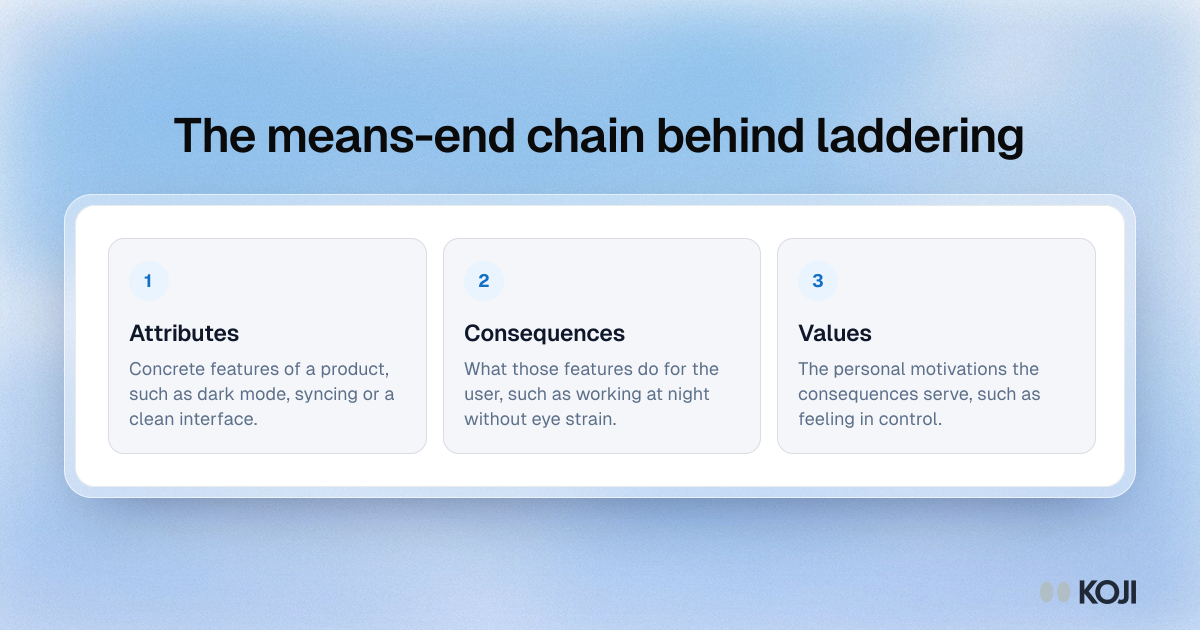
Framework showing the three levels of the means-end chain used in laddering interviews: attributes, consequences and values.

Framework

The means-end chain behind laddering
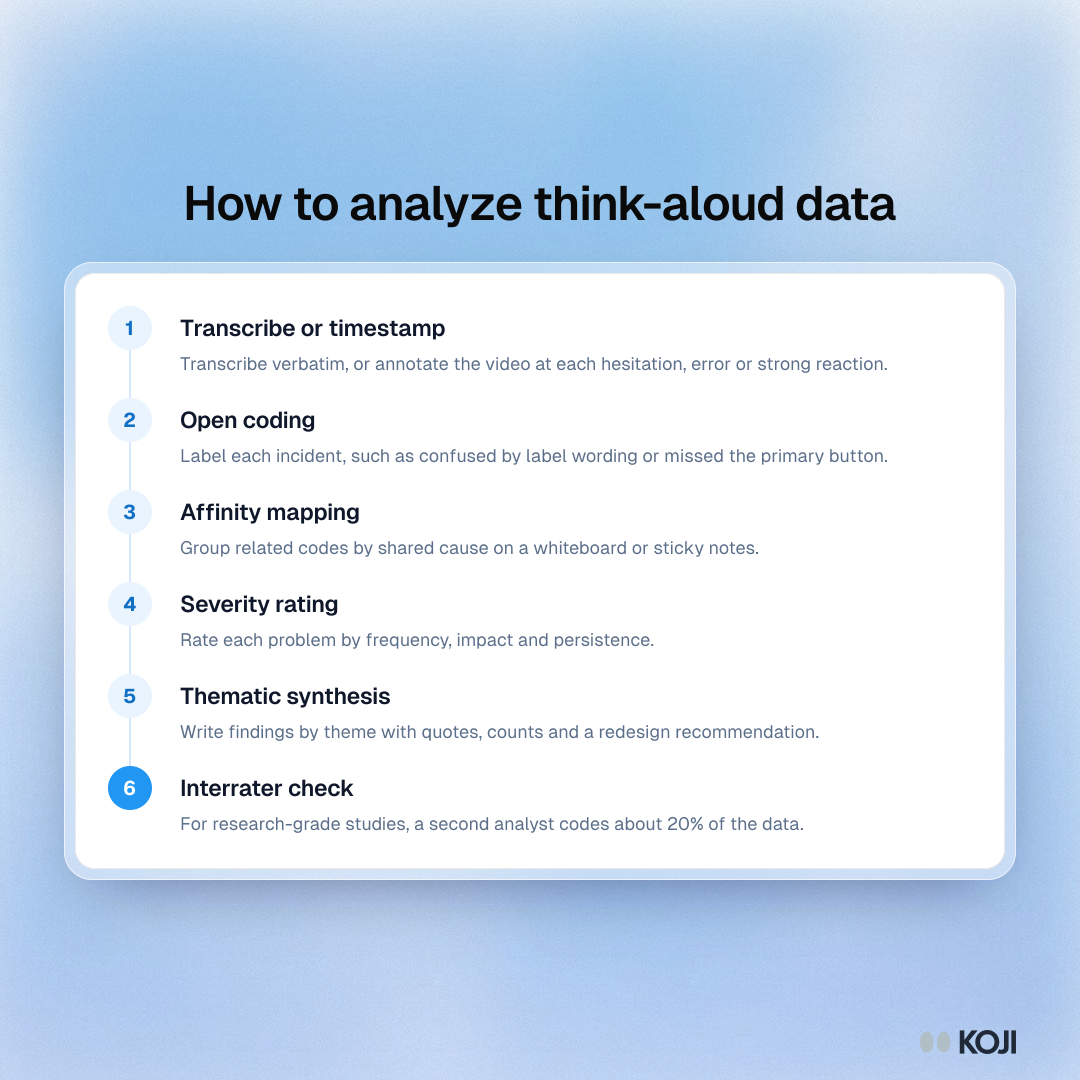
Process showing six steps to analyze think-aloud sessions: transcribe, code, map, rate severity, synthesize themes and check interrater agreement.

Process

How to analyze think-aloud data