Free to save and share

Frameworks and cheat sheets for customer research

Every framework, checklist and comparison from our guides, as an image you can download, drop into a deck or share with your team.
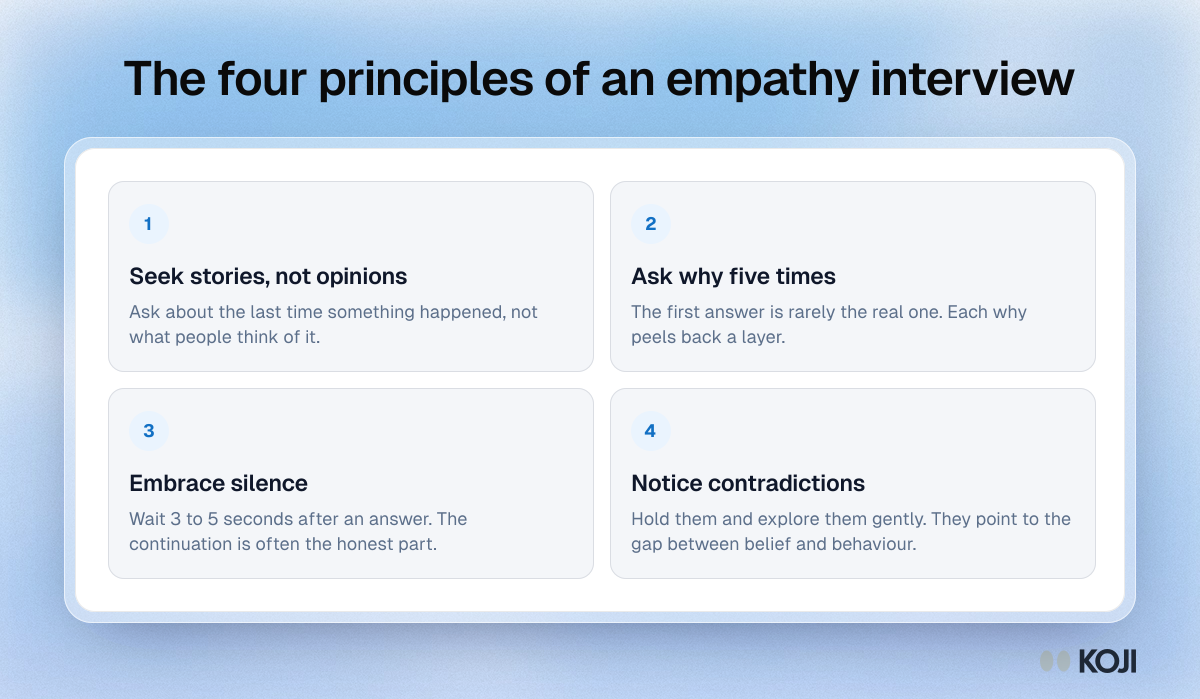
Framework showing the four principles of an empathy interview: seek stories not opinions, ask why five times, embrace silence and notice contradictions.

Framework

The four principles of an empathy interview
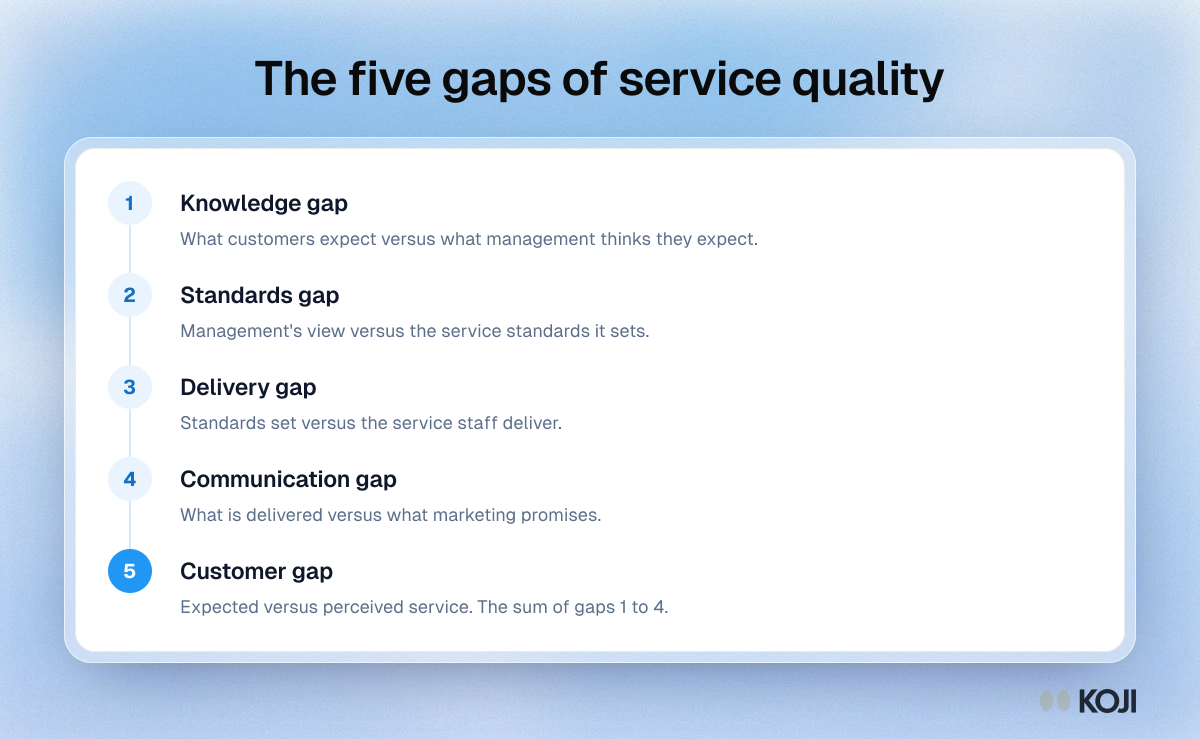
Process showing the five gaps in the service quality gap model: knowledge, standards, delivery, communication and the customer gap.

Process

The five gaps of service quality
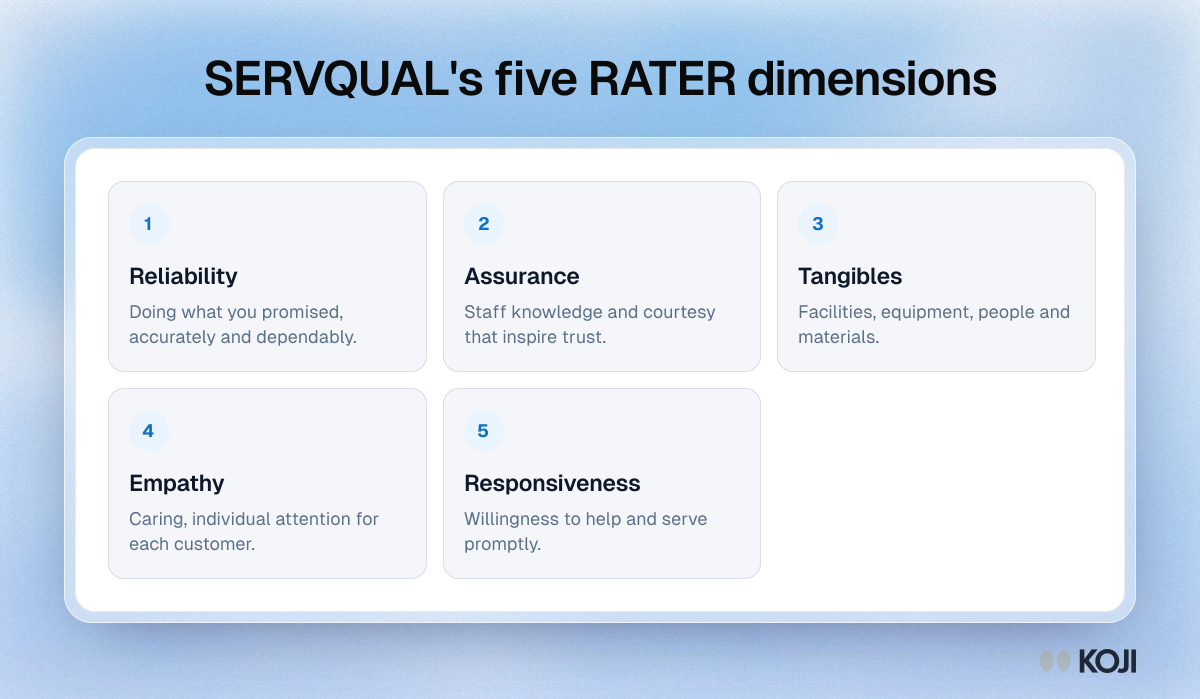
Framework listing the five SERVQUAL RATER dimensions of service quality: reliability, assurance, tangibles, empathy and responsiveness.

Framework

SERVQUAL's five RATER dimensions
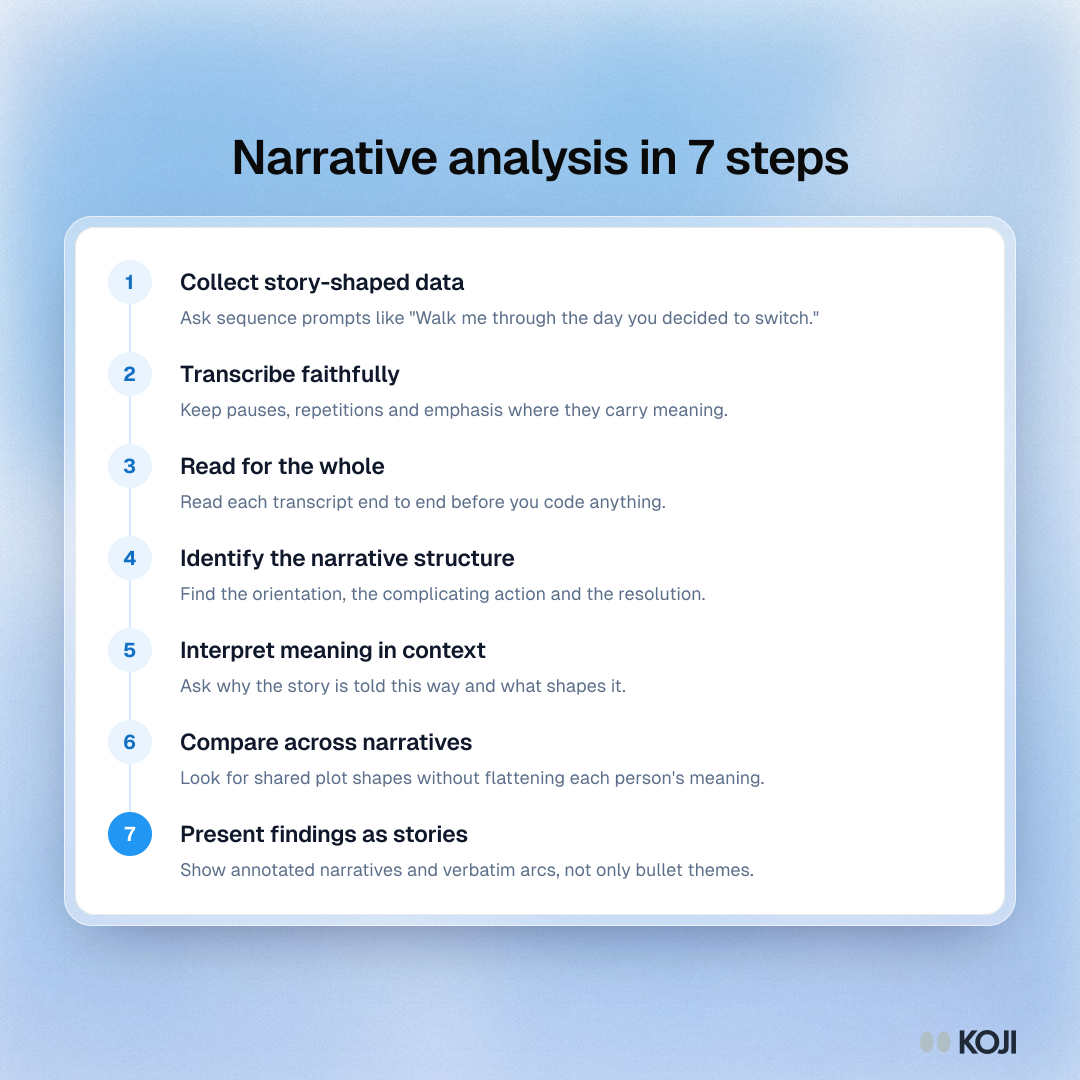
Process showing seven steps of narrative analysis, from collecting story-shaped data to presenting findings as annotated stories.

Process

Narrative analysis in 7 steps
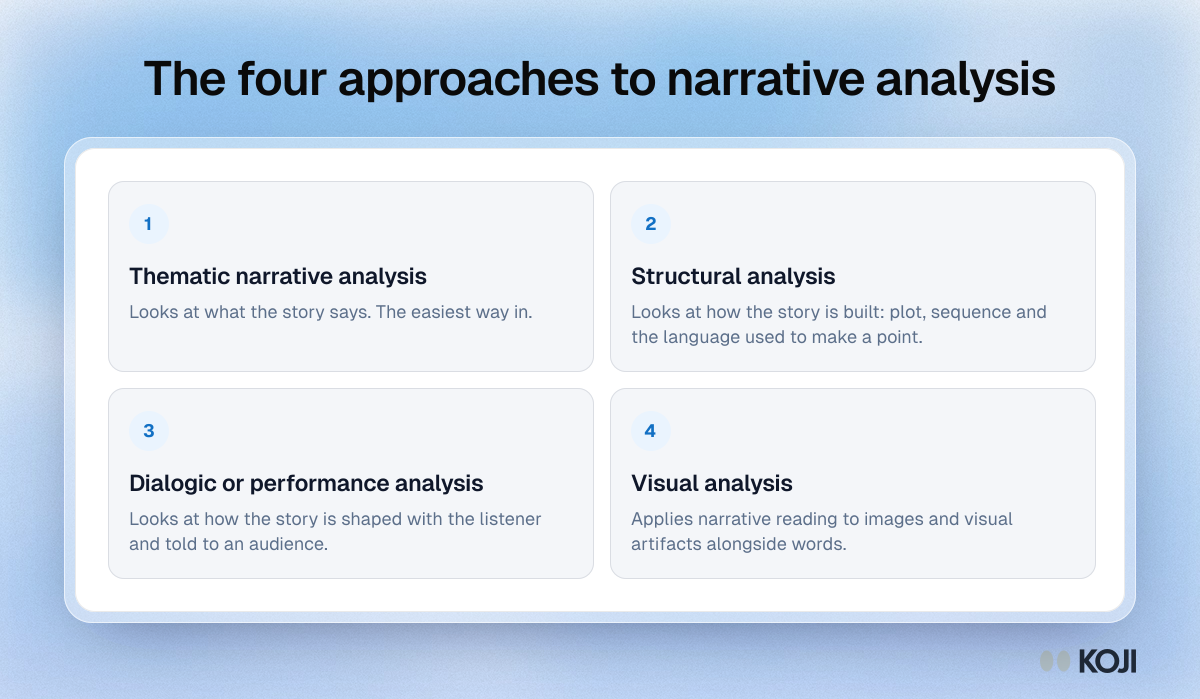
Framework showing Riessman's four approaches to narrative analysis: thematic, structural, dialogic or performance, and visual.

Framework

The four approaches to narrative analysis
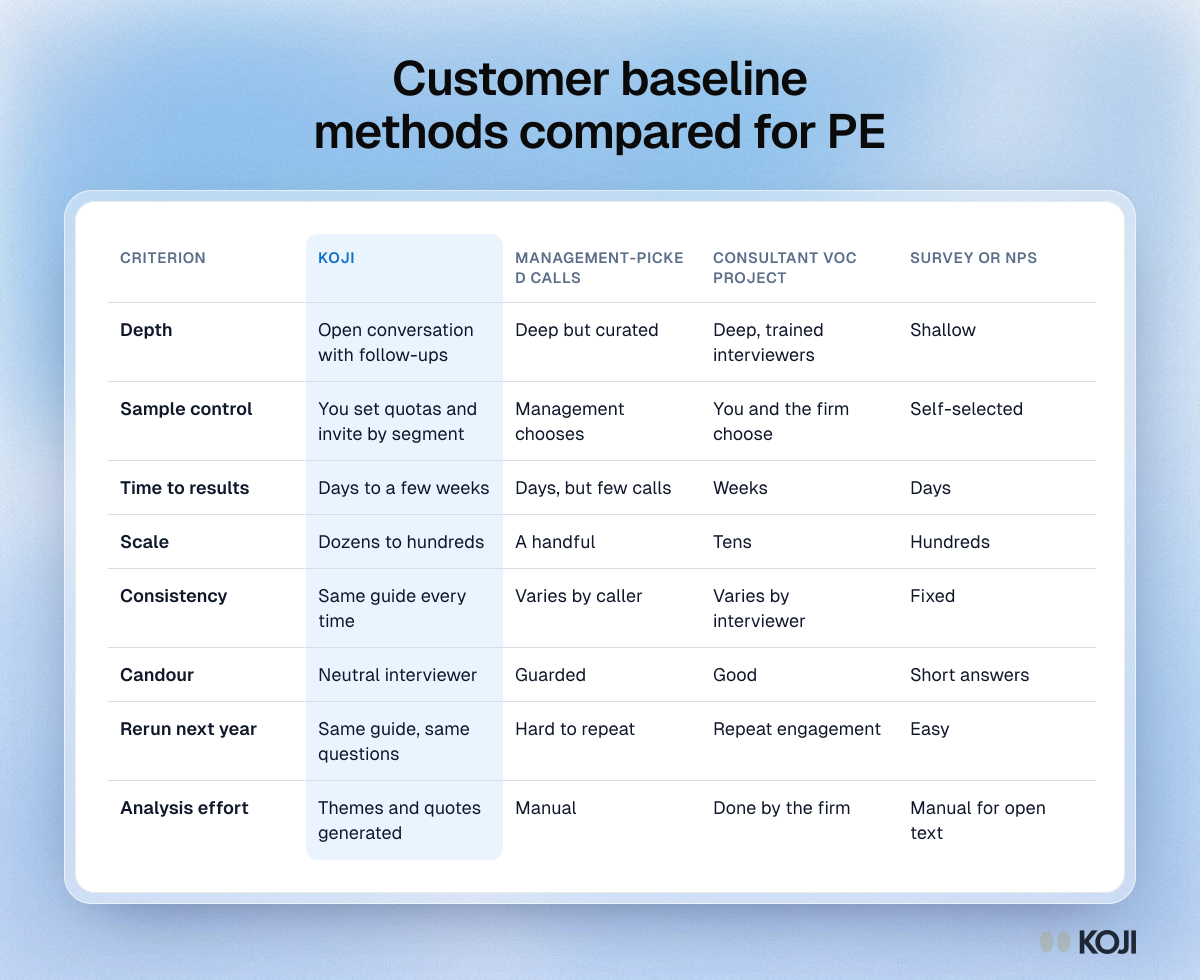
Table comparing Koji with management-picked calls, consultant voice of customer projects and surveys for a PE 100-day customer baseline.

Reference table

Customer baseline methods compared for PE
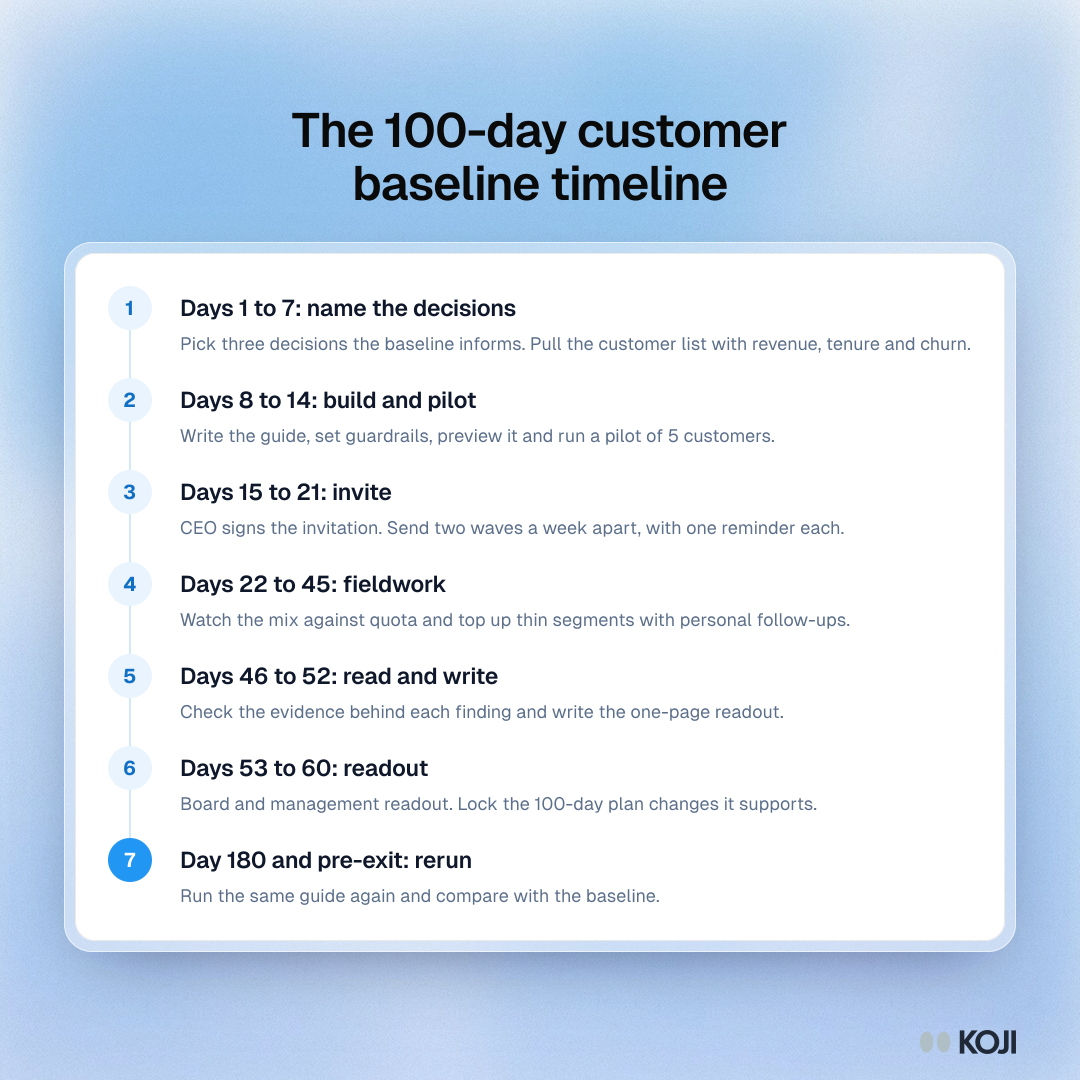
Process showing the 100-day customer baseline timeline for a PE portfolio company, from day 1 to the day-180 rerun.

Process

The 100-day customer baseline timeline
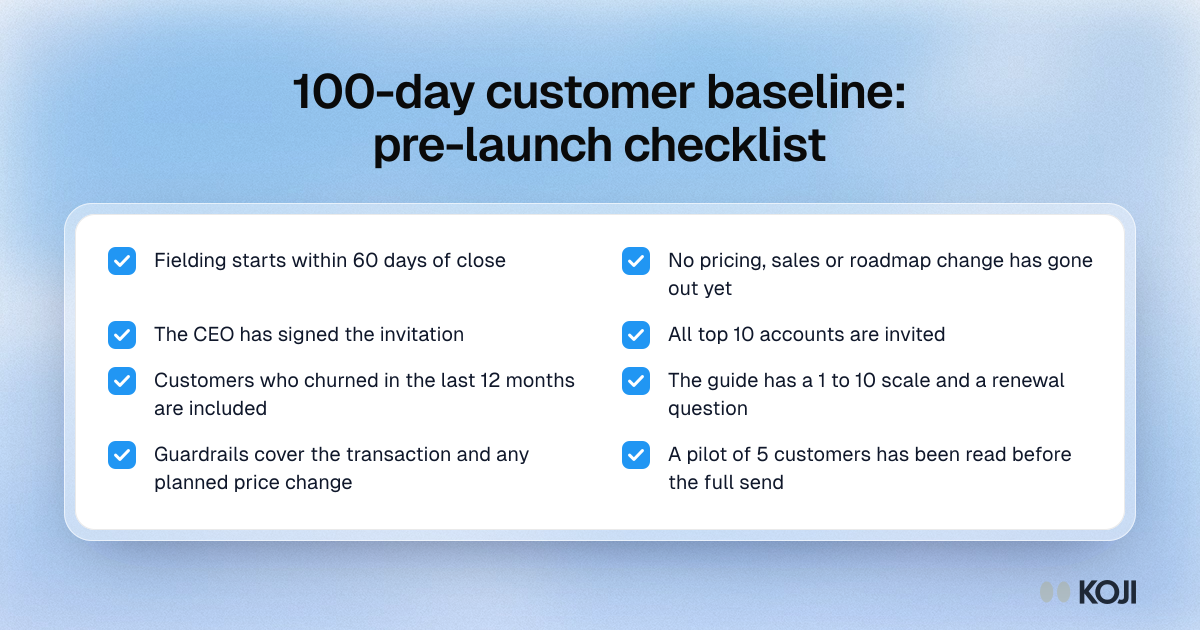
Checklist of eight things to confirm before sending customer interview invitations in the first 100 days after a PE acquisition.

Checklist

100-day customer baseline: pre-launch checklist
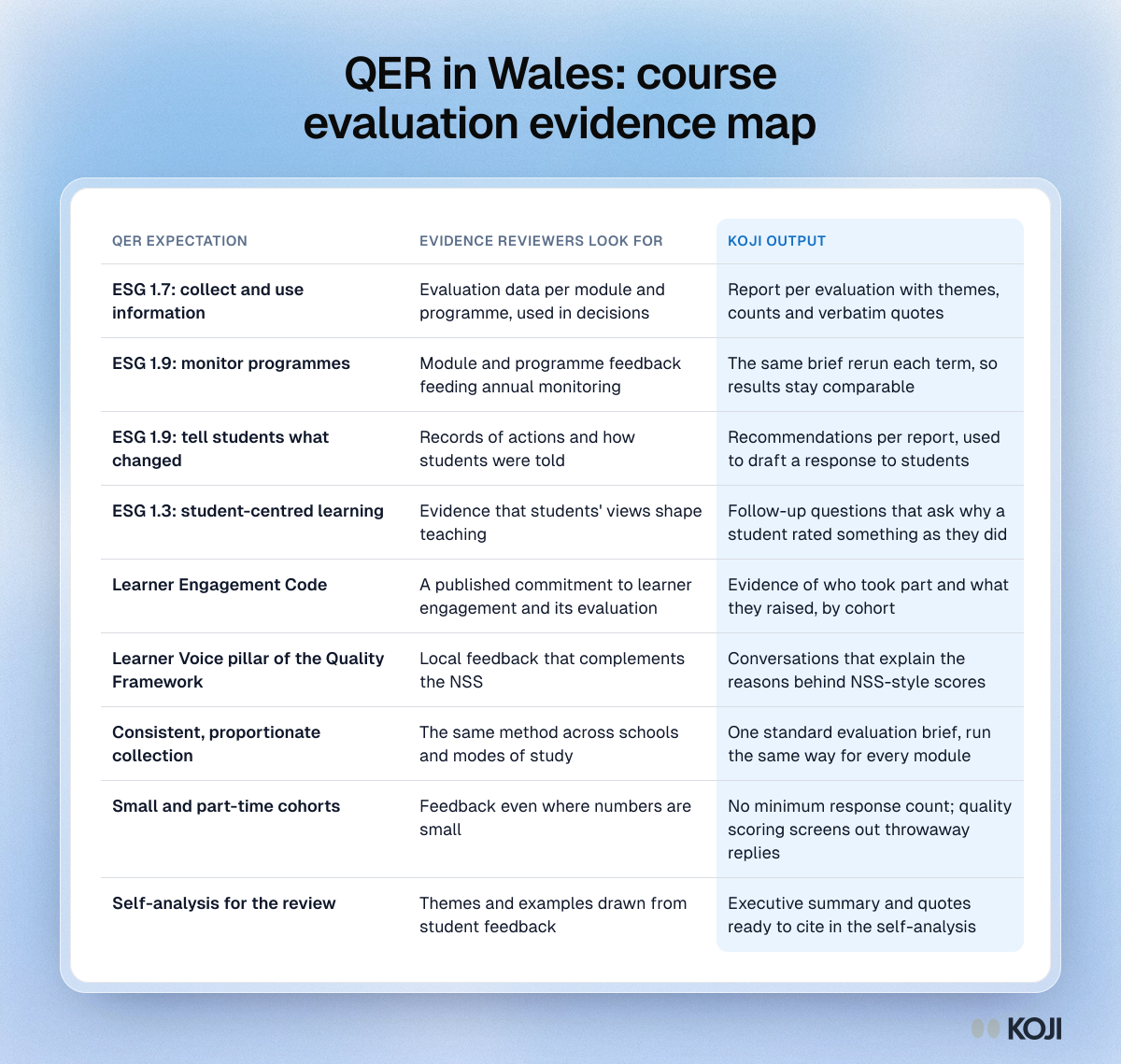
Table mapping Quality Enhancement Review expectations in Wales to evidence reviewers look for and the course evaluation output that supplies it.

Reference table

QER in Wales: course evaluation evidence map
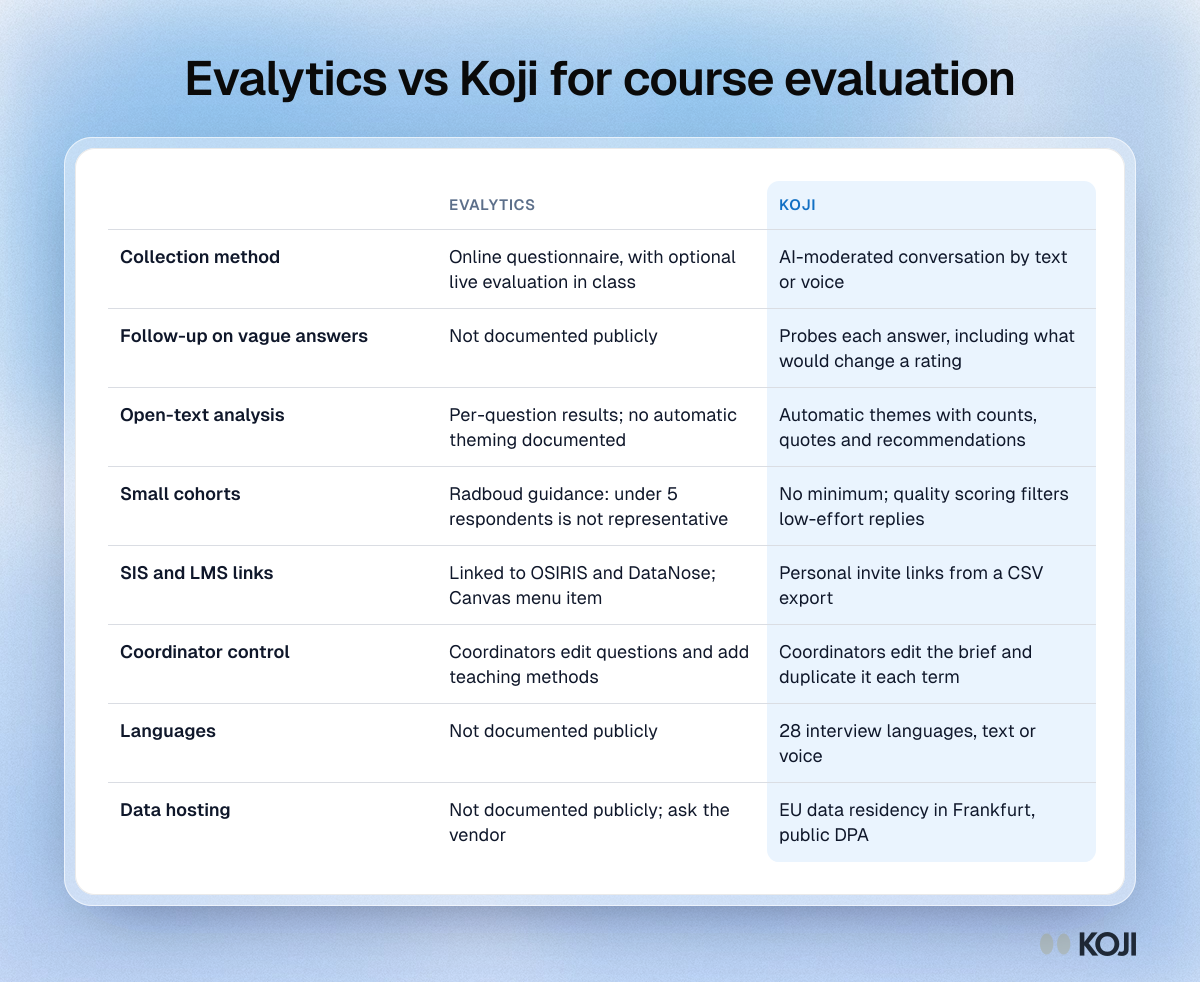
Table comparing Evalytics and Koji for course evaluation on collection method, follow-up, open-text analysis, small cohorts, system links and data hosting.

Reference table

Evalytics vs Koji for course evaluation
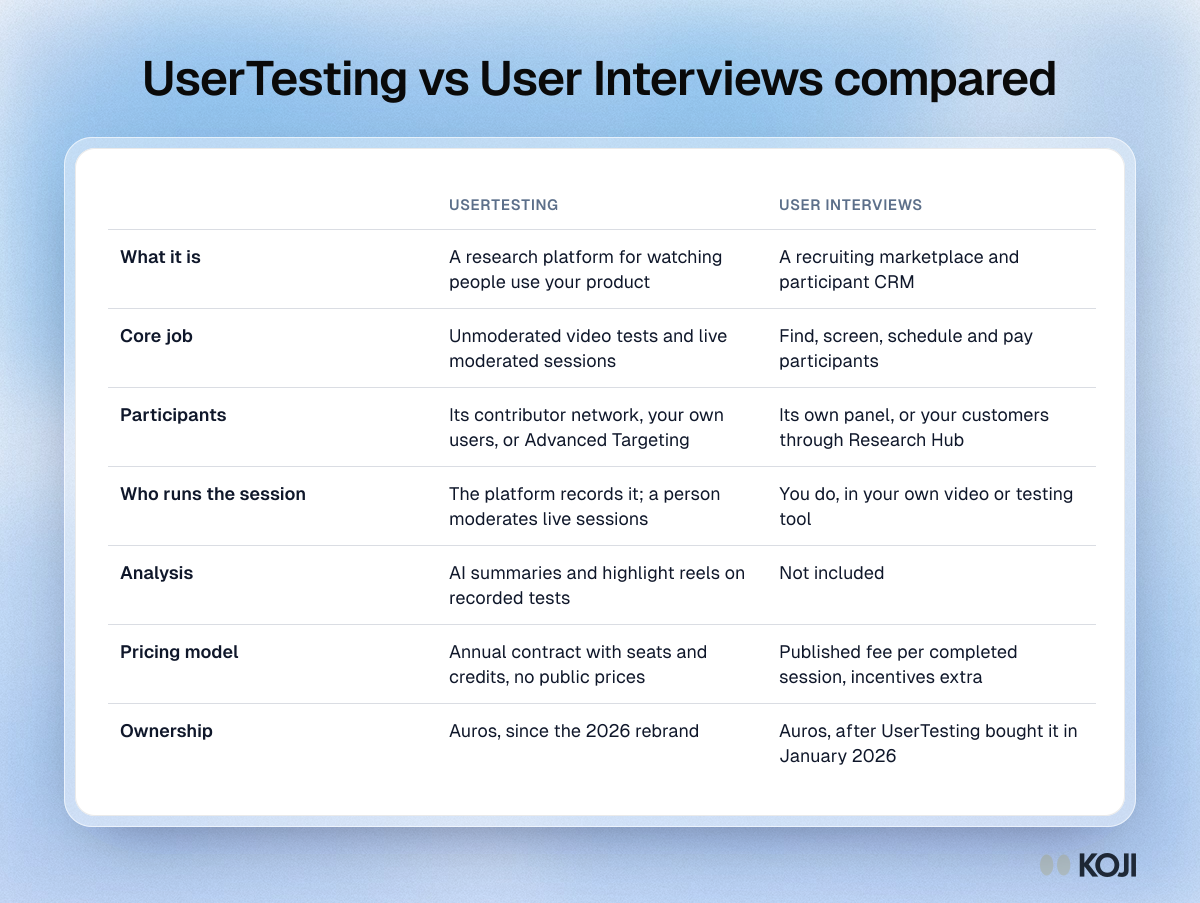
Table comparing UserTesting and User Interviews on what each is, participants, who runs sessions, analysis, pricing model and ownership.

Reference table

UserTesting vs User Interviews compared
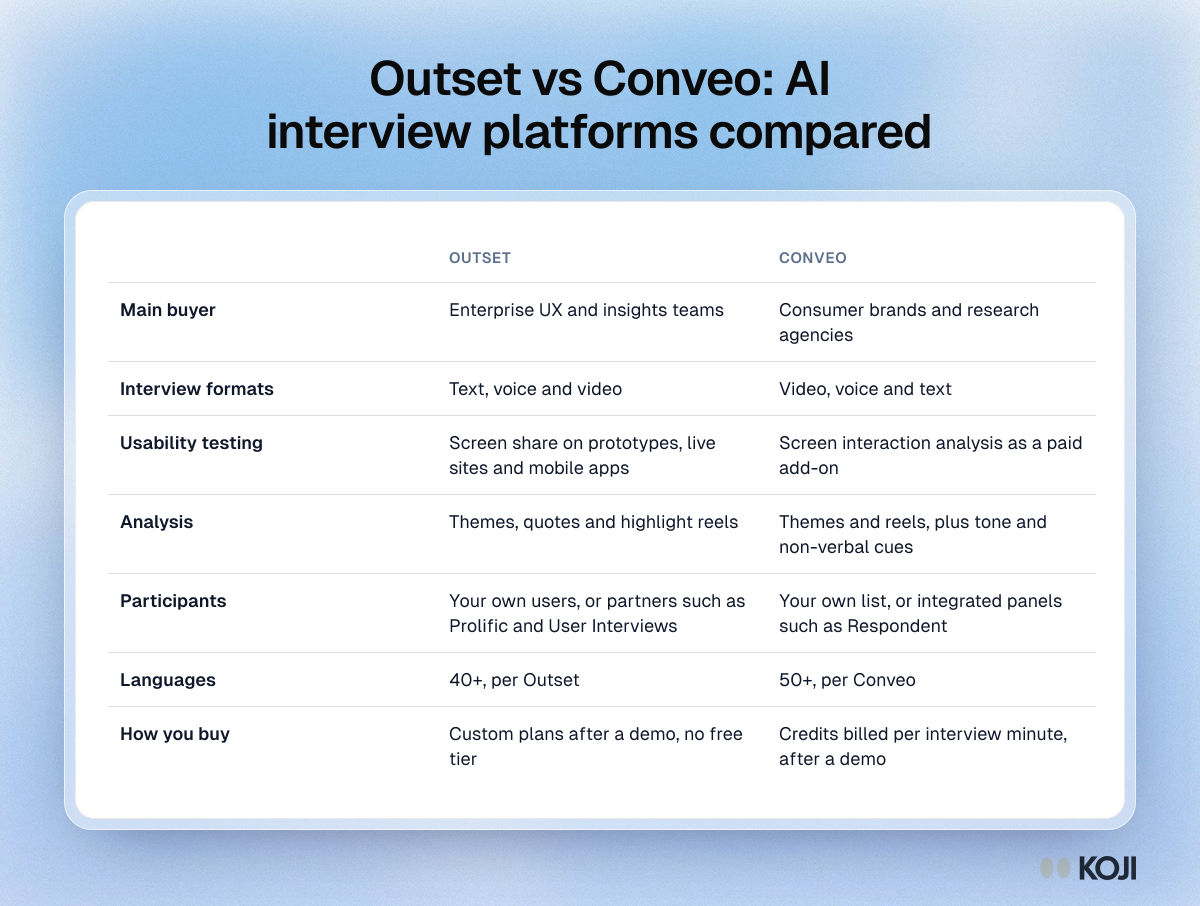
Table comparing Outset and Conveo on main buyer, interview formats, usability testing, analysis, participants, languages and how you buy.

Reference table

Outset vs Conveo: AI interview platforms compared
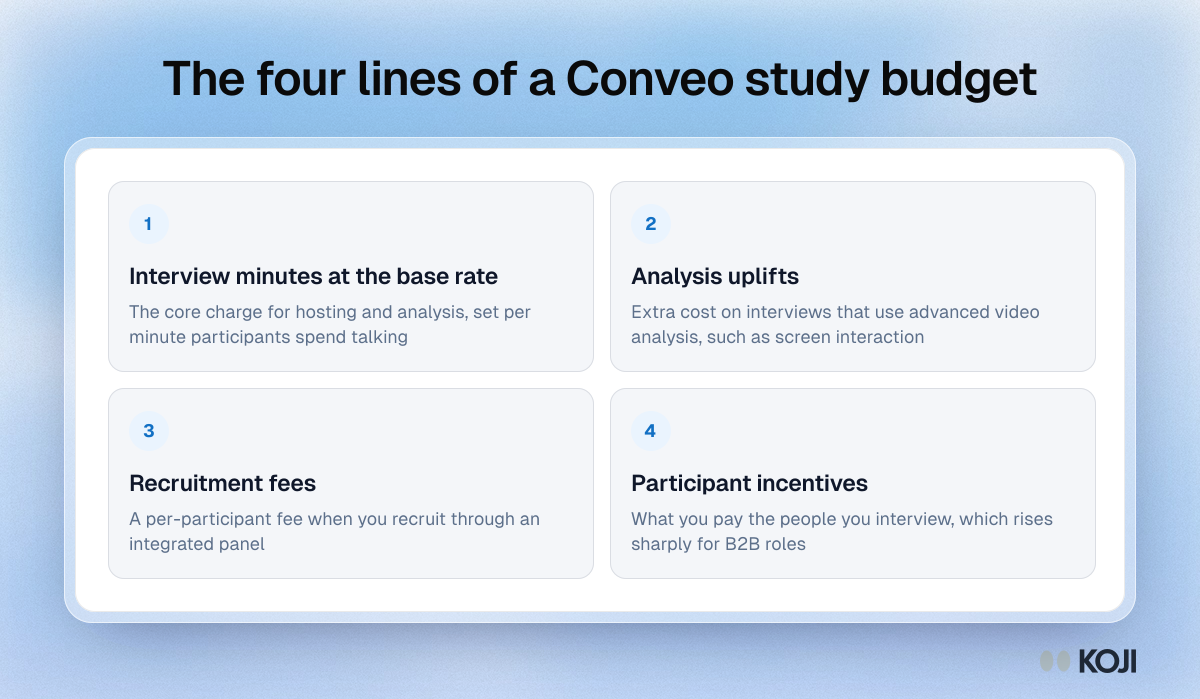
Framework showing the four lines in a Conveo study budget: interview minutes at the base rate, analysis uplifts, recruitment fees and participant incentives.

Framework

The four lines of a Conveo study budget
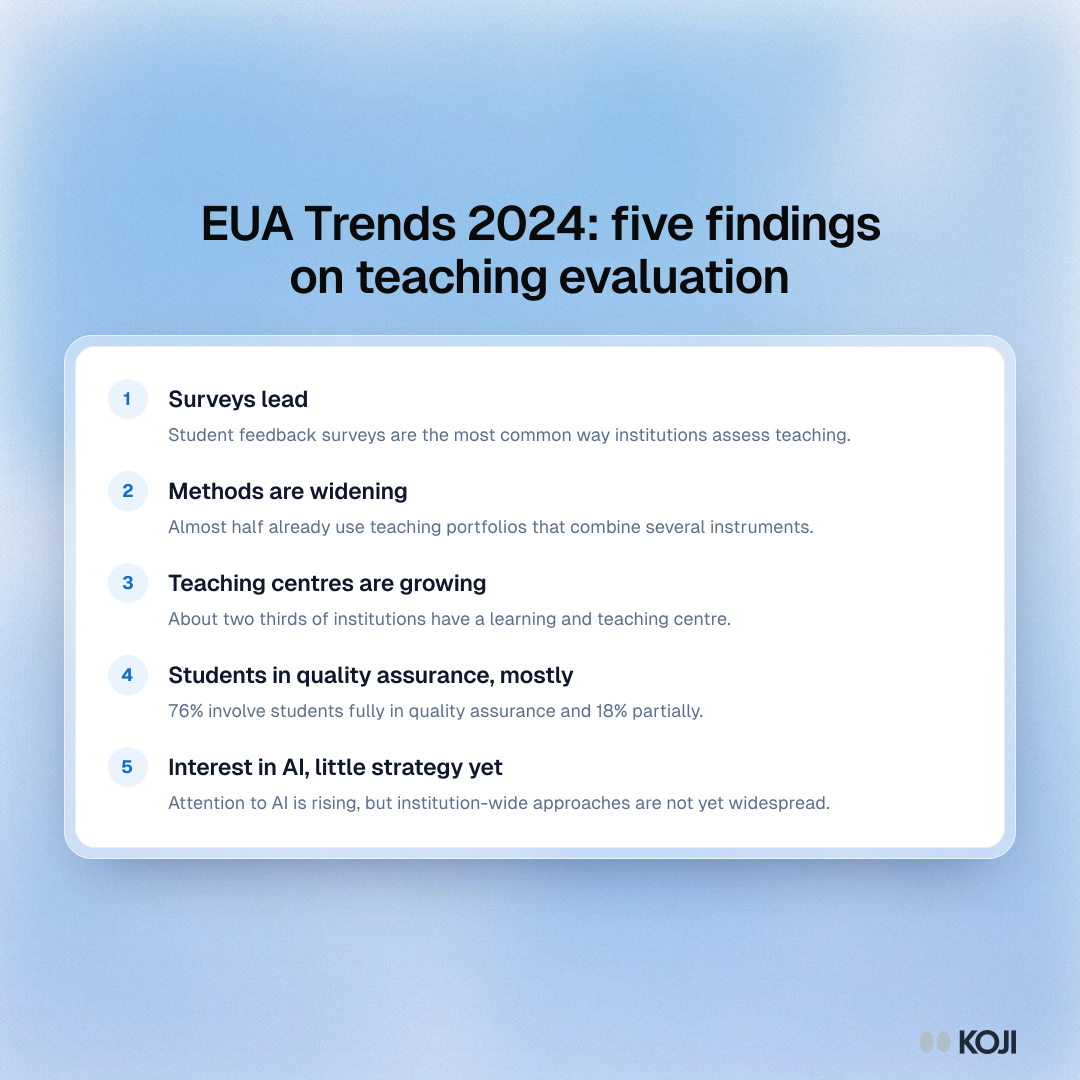
Listicle of five EUA Trends 2024 findings on teaching evaluation, from student surveys and teaching portfolios to students in quality assurance and AI.

Guide

EUA Trends 2024: five findings on teaching evaluation
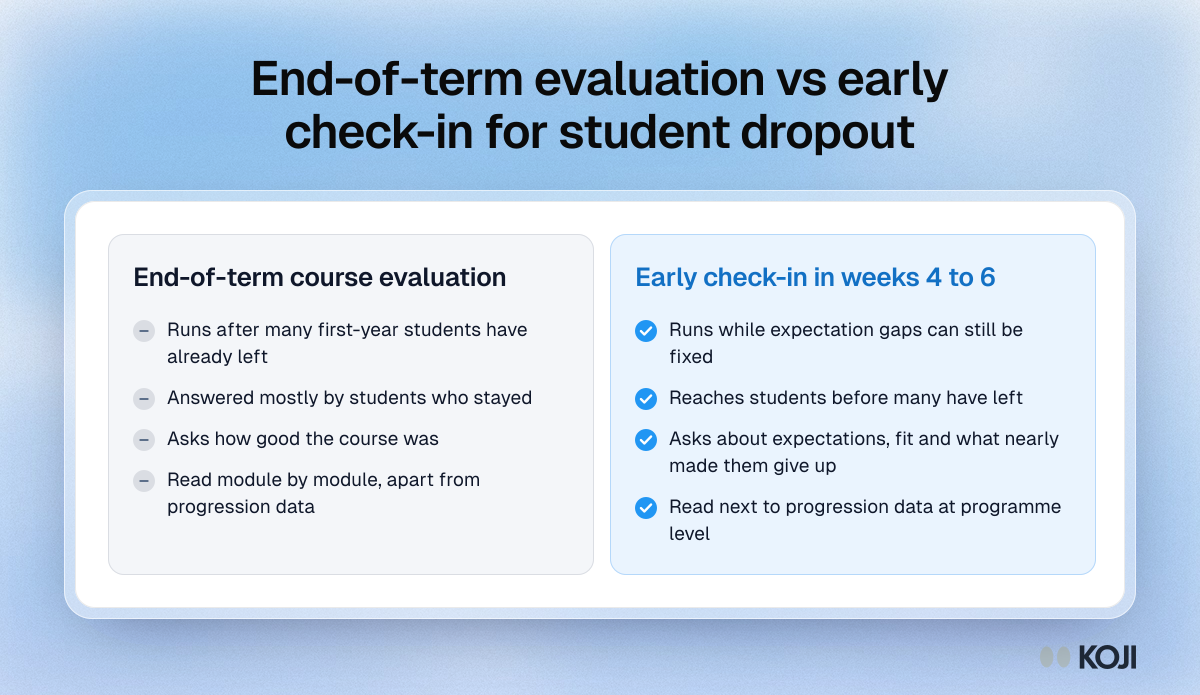
Comparison of what end-of-term course evaluation hears about leaving versus what an early check-in can hear, from timing to the questions asked.

Comparison

End-of-term evaluation vs early check-in for student dropout
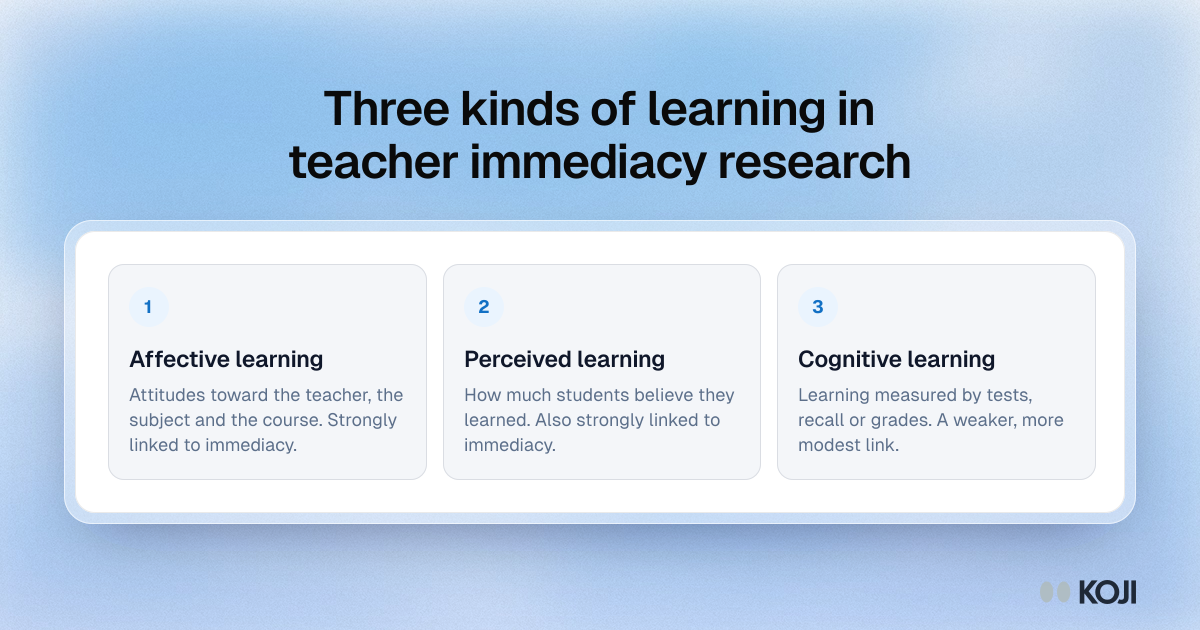
Framework showing three kinds of learning in immediacy research: affective, perceived and cognitive learning, and how strongly immediacy relates to each.

Framework

Three kinds of learning in teacher immediacy research
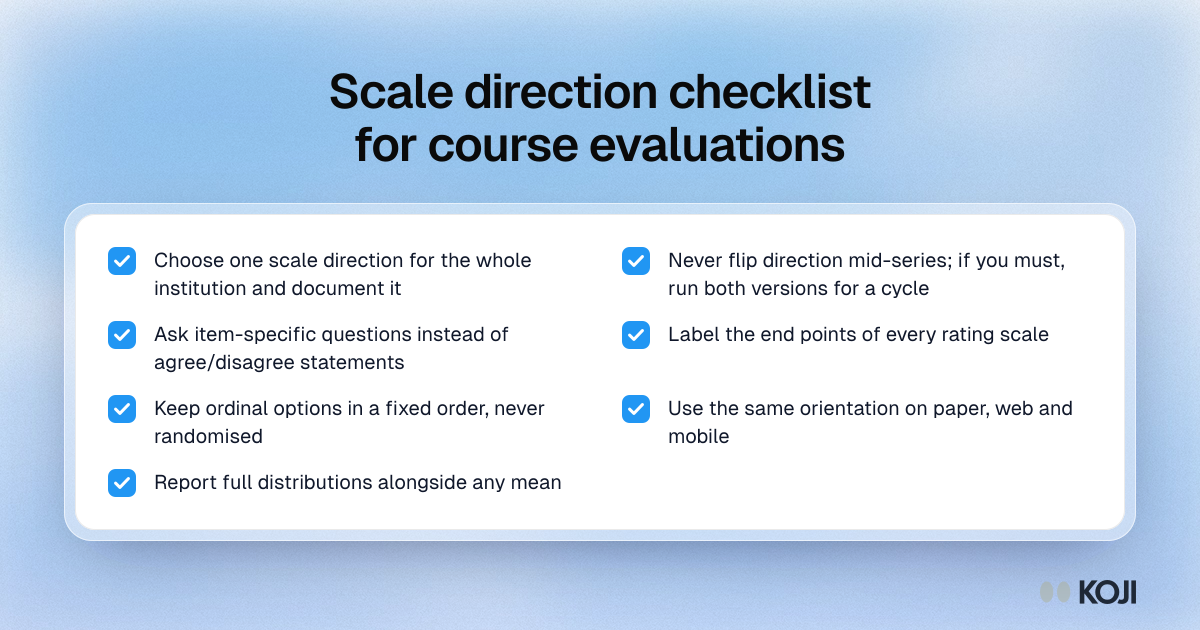
Checklist of seven rules for rating scale direction in course evaluation questionnaires, from one fixed direction to reporting distributions.

Checklist

Scale direction checklist for course evaluations
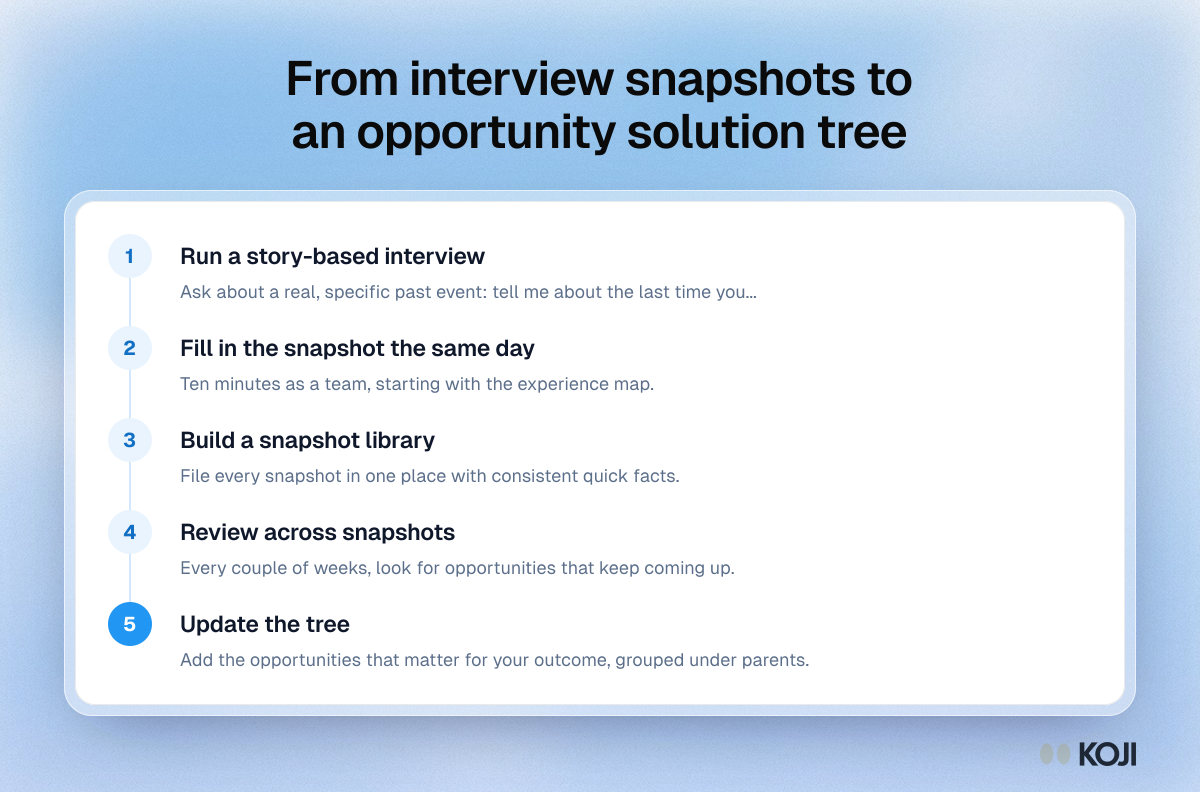
Process showing how interview snapshots feed an opportunity solution tree, from a story-based interview to choosing which opportunity to pursue

Process

From interview snapshots to an opportunity solution tree
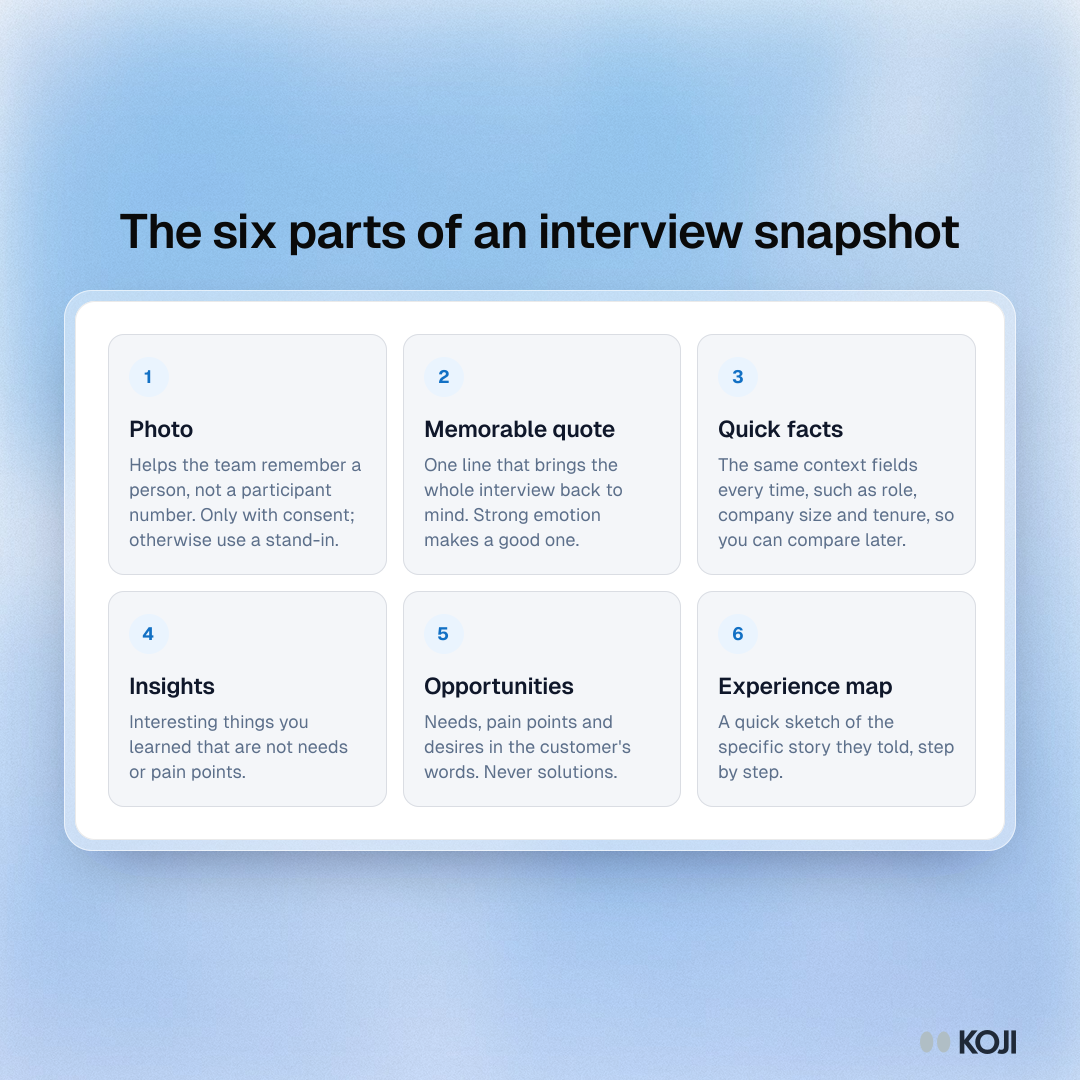
Framework showing the six parts of an interview snapshot: photo, memorable quote, quick facts, insights, opportunities and experience map

Framework

The six parts of an interview snapshot
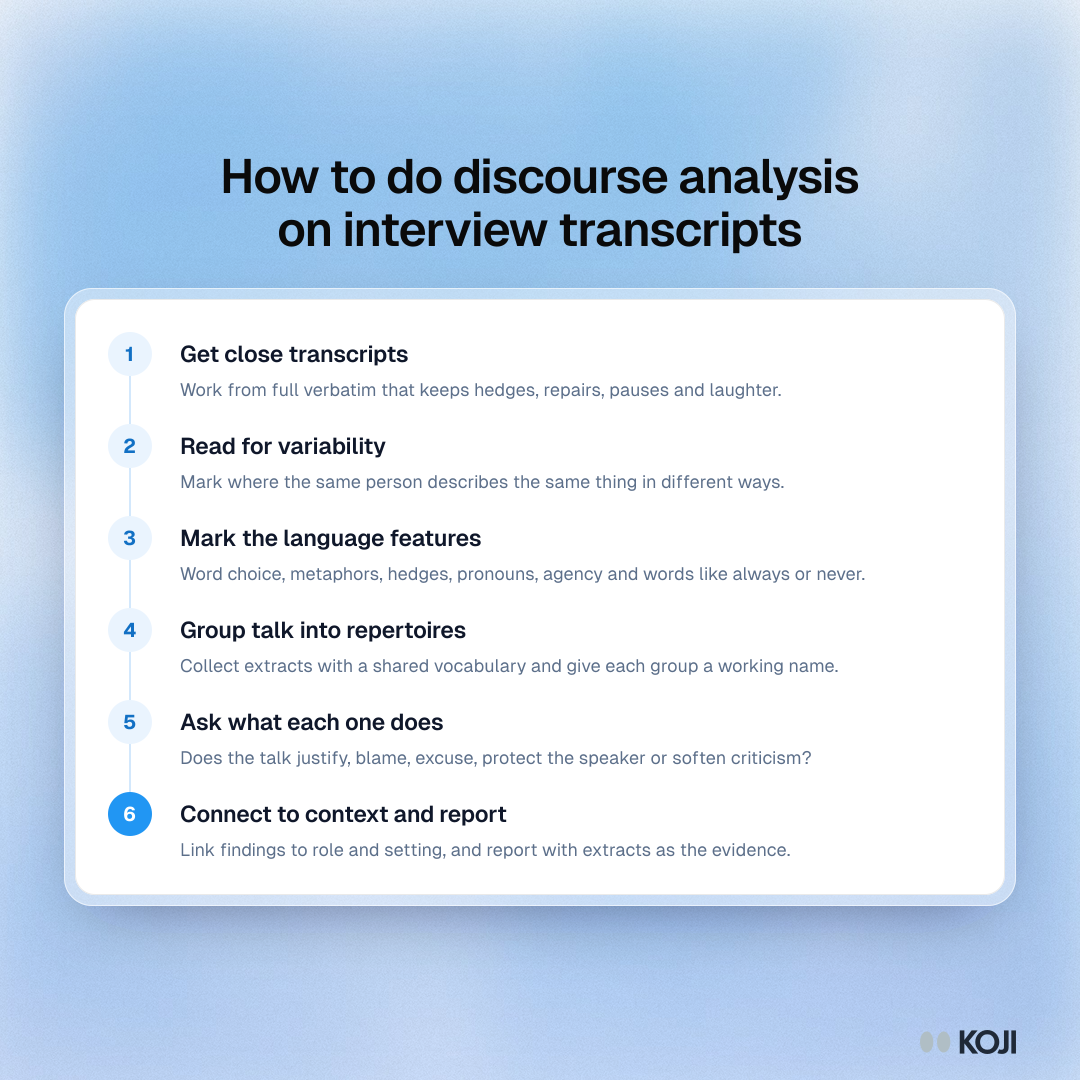
Process for doing discourse analysis on interview transcripts in six steps, from close transcription to reporting with extracts
Process

How to do discourse analysis on interview transcripts

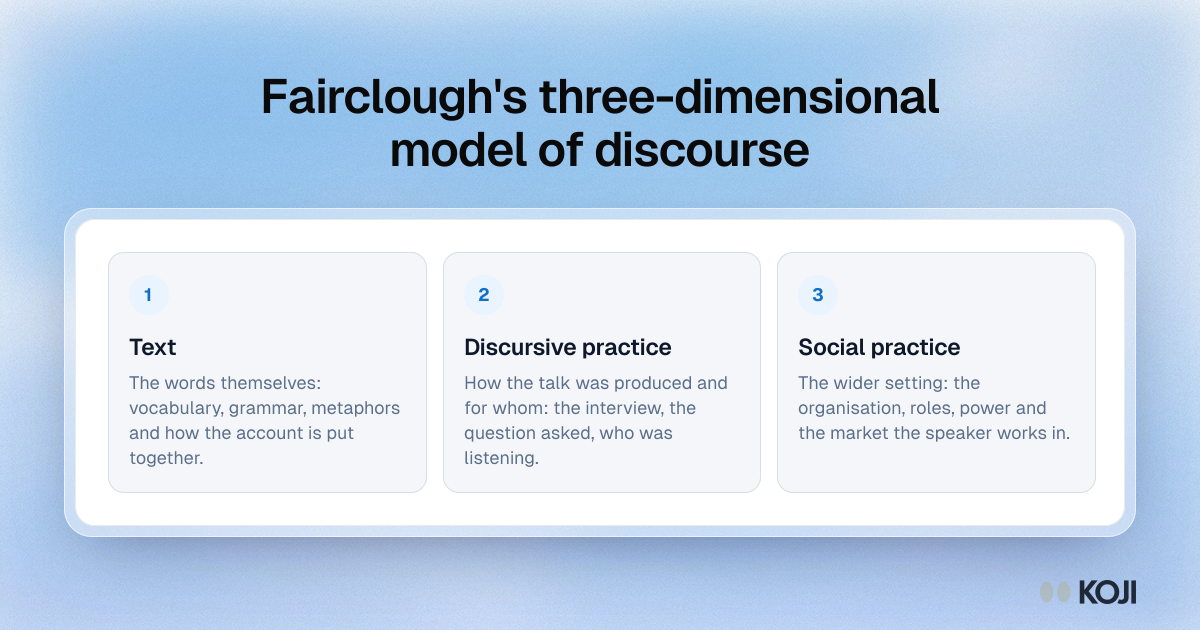
Framework showing Fairclough's three dimensions of discourse: text, discursive practice and social practice, with what to look for at each level

Framework

Fairclough's three-dimensional model of discourse
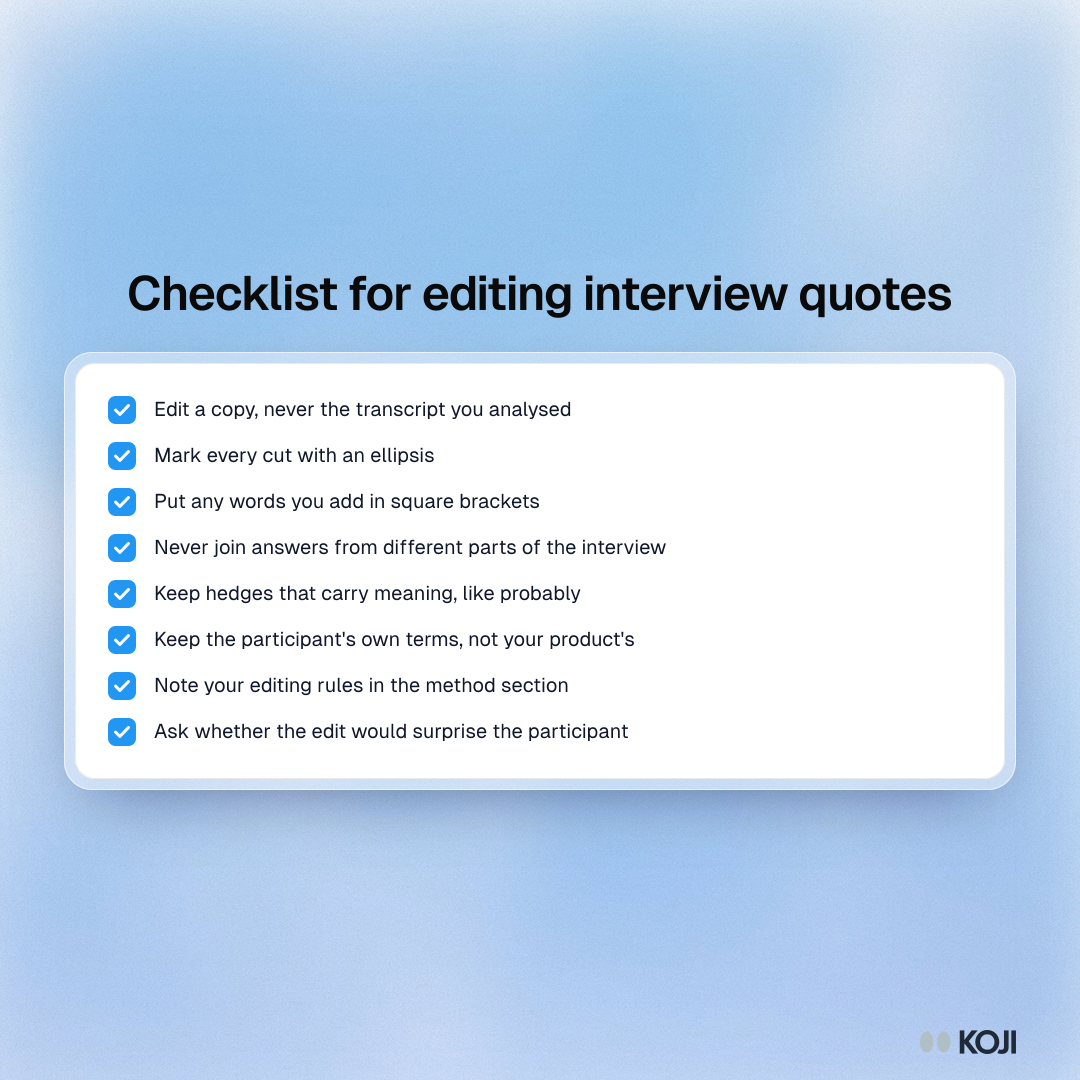
Checklist for editing interview quotes for a research report without changing the participant's meaning
Checklist

Checklist for editing interview quotes

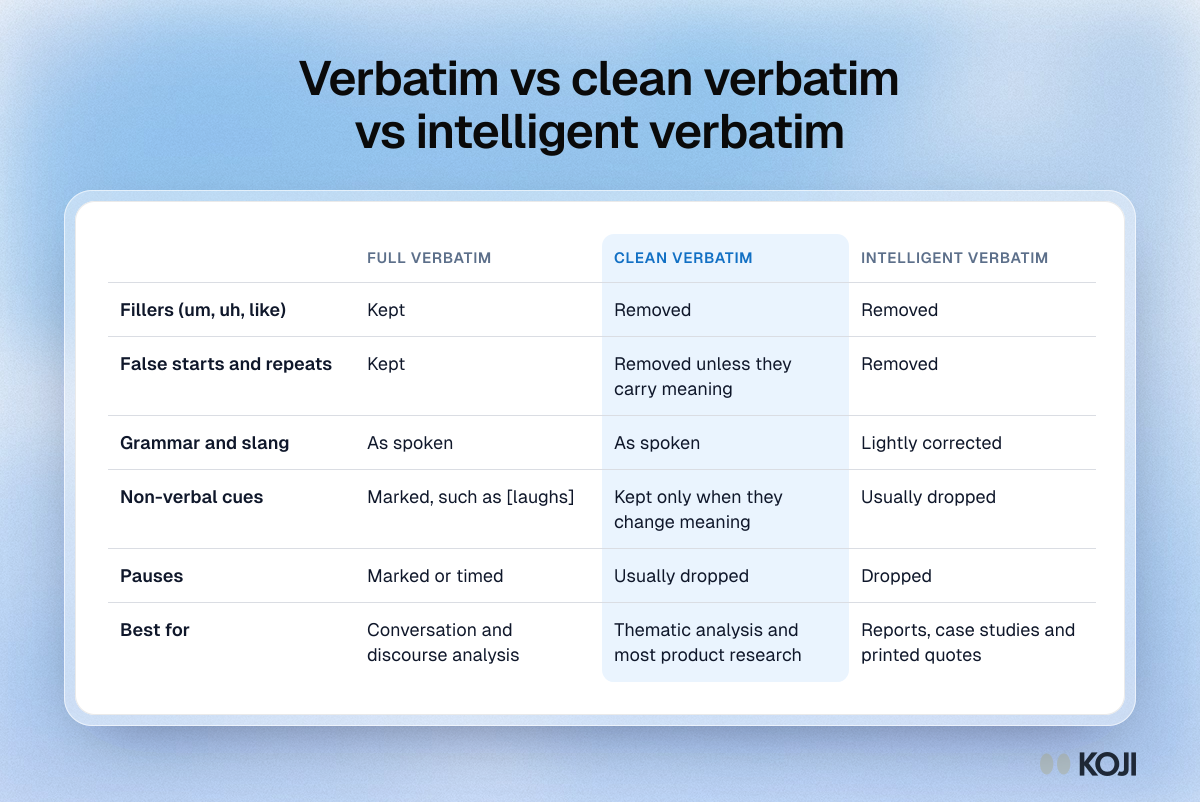
Table comparing full verbatim, clean verbatim and intelligent verbatim transcription: what each keeps, removes and is best used for

Reference table

Verbatim vs clean verbatim vs intelligent verbatim
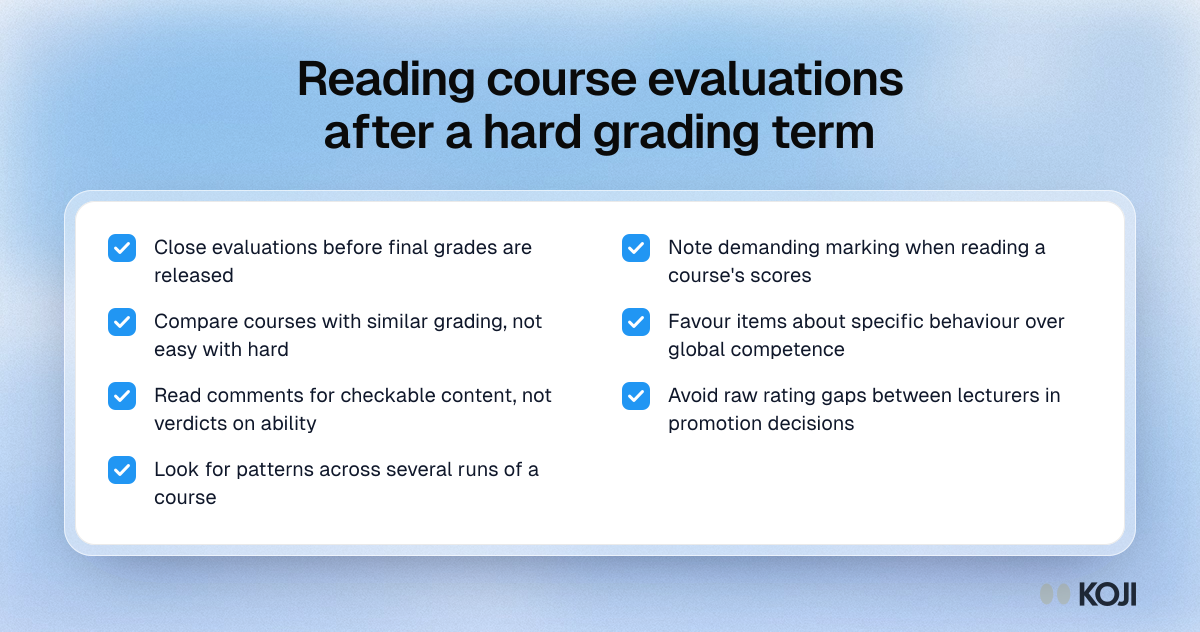
Checklist for reading course evaluations fairly after a demanding grading term, covering timing, item wording, comparisons and comments.

Checklist

Reading course evaluations after a hard grading term
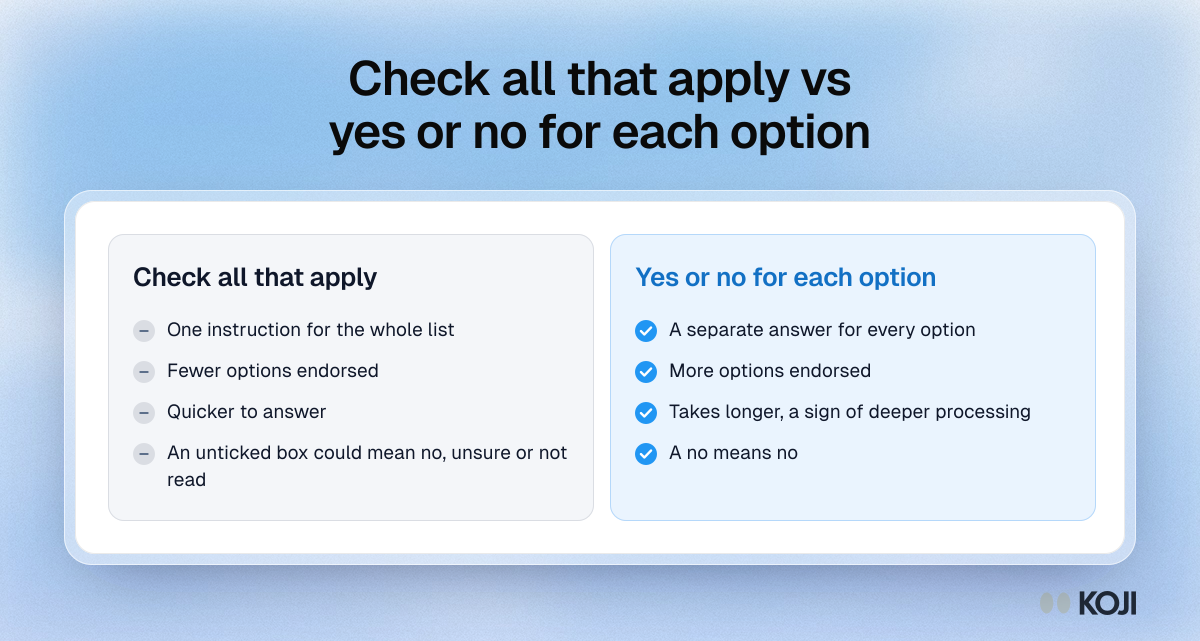
Comparison of check-all-that-apply and yes/no question formats: asking yes or no for each option gets more options endorsed and more considered answers.

Comparison

Check all that apply vs yes or no for each option
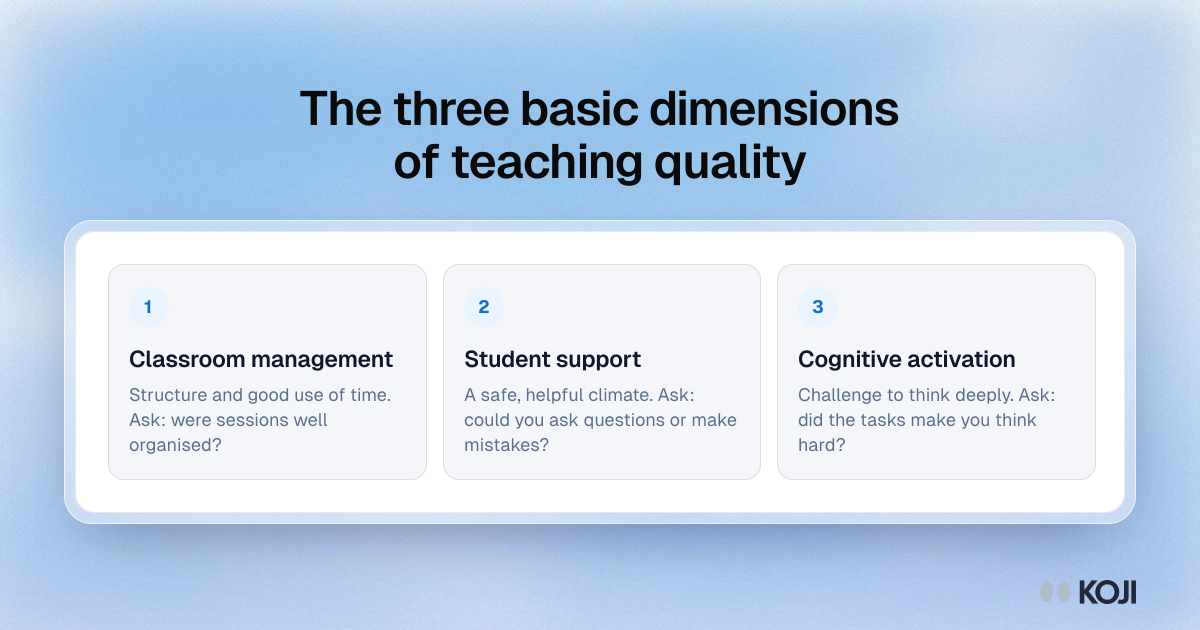
Framework of the three basic dimensions of teaching quality: classroom management, student support and cognitive activation, each with a sample question.

Framework

The three basic dimensions of teaching quality
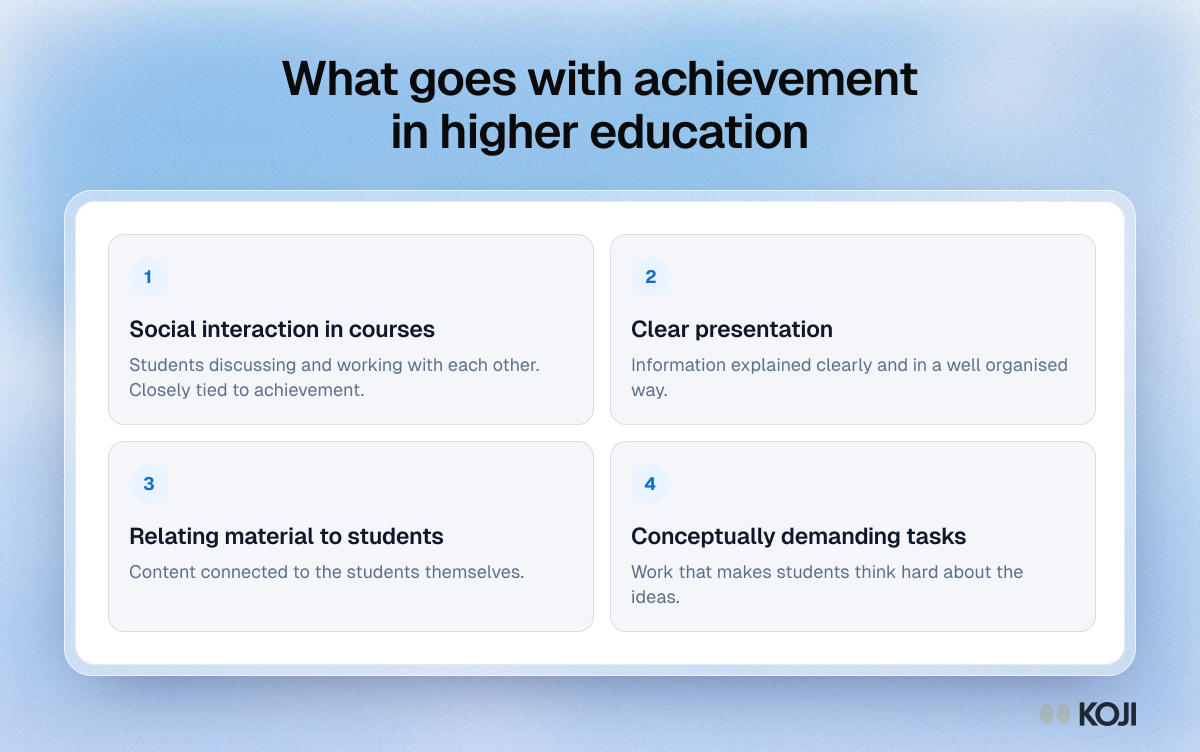
Framework of four teaching features tied to achievement in higher education: student interaction, clear presentation, relevance to students and demanding tasks.

Framework

What goes with achievement in higher education
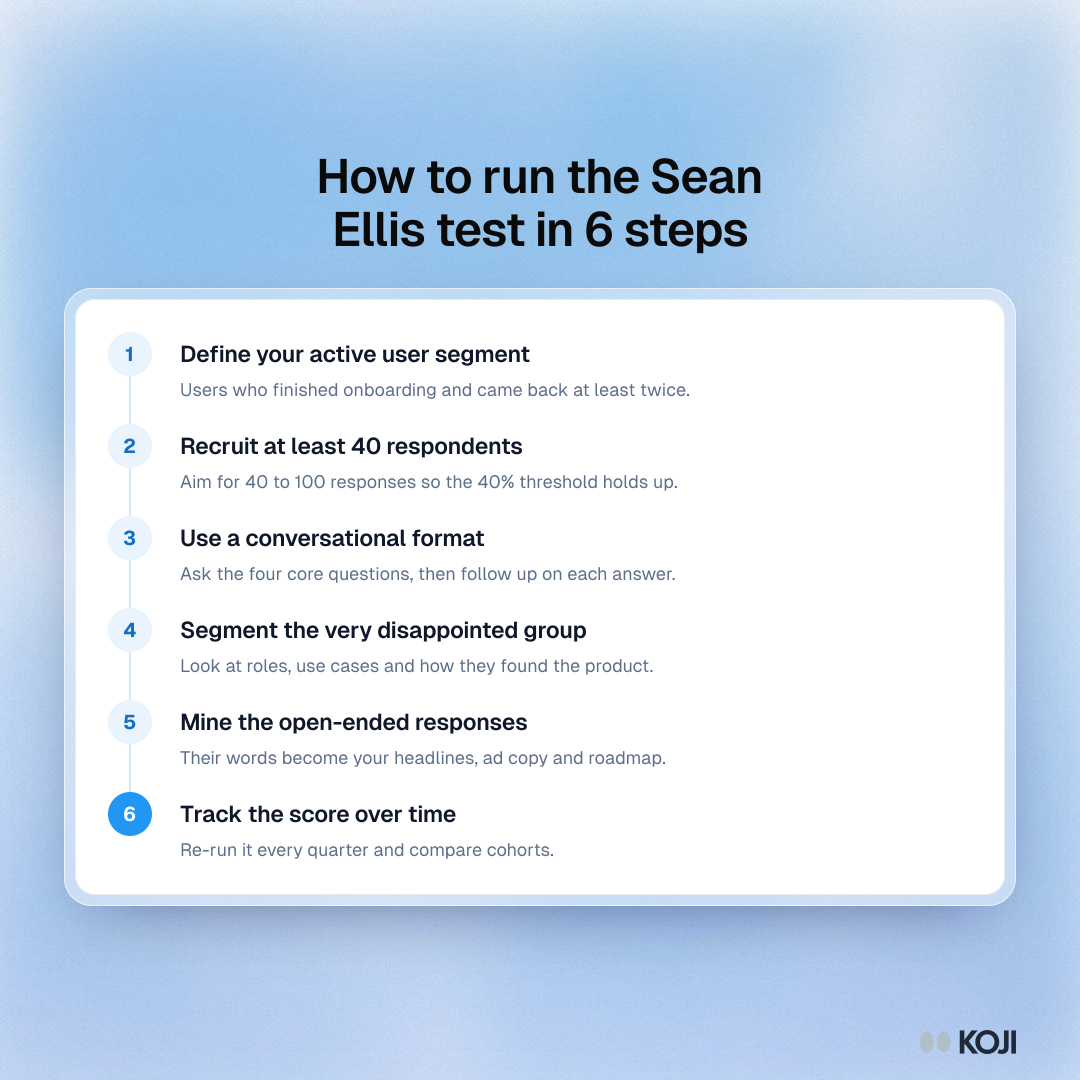
Process showing six steps to run the Sean Ellis test, from defining active users and recruiting 40 respondents to tracking the score over time.

Process

How to run the Sean Ellis test in 6 steps
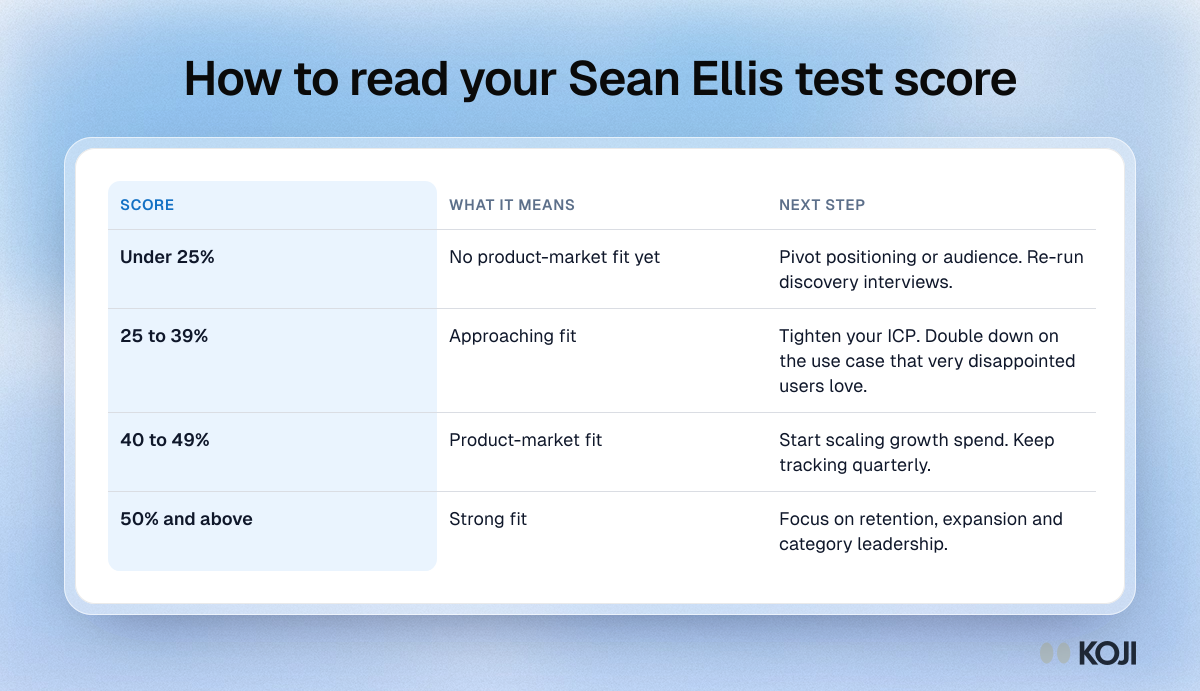
Table of Sean Ellis test score bands from under 25% to 50% and above, with what each means for product-market fit and the next step.

Reference table

How to read your Sean Ellis test score
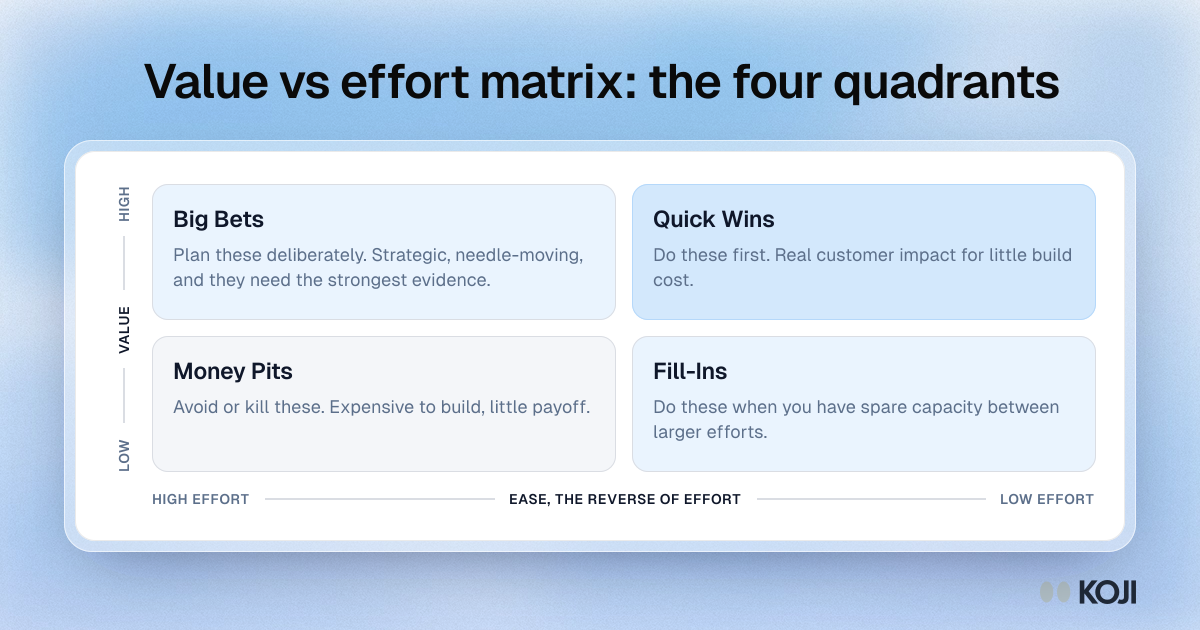
Matrix plotting initiatives by value and effort into four quadrants: Quick Wins, Big Bets, Fill-Ins and Money Pits.

Matrix

Value vs effort matrix: the four quadrants
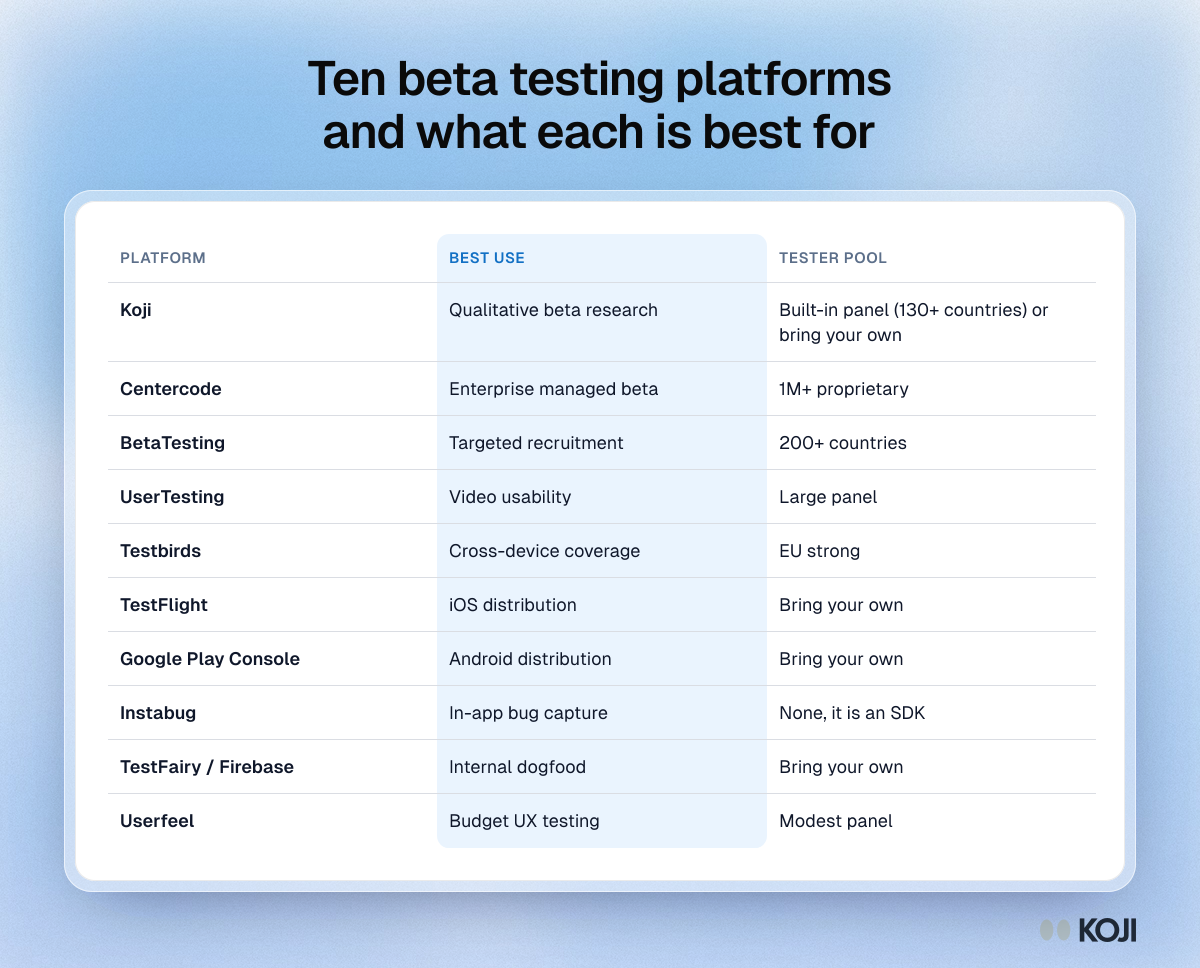
Table of ten beta testing platforms, from Centercode and BetaTesting to TestFlight and Instabug, with the best use and tester pool for each.

Reference table

Ten beta testing platforms and what each is best for
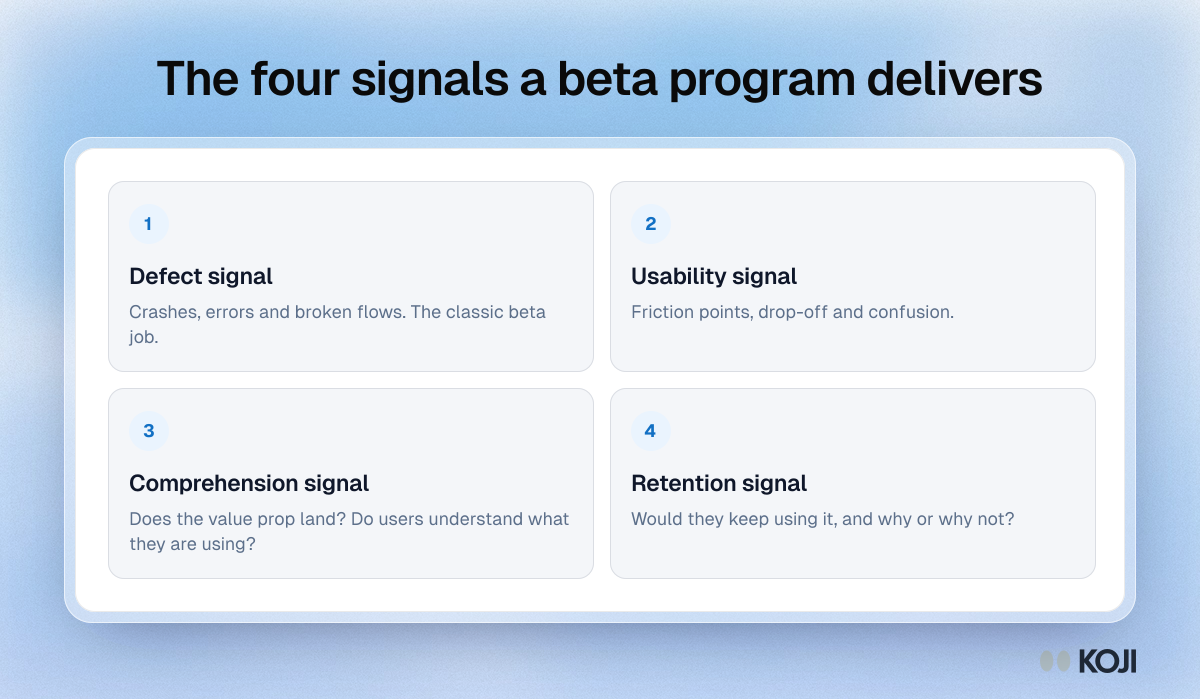
Framework showing the four signals a beta program should deliver: defect, usability, comprehension and retention.

Framework

The four signals a beta program delivers
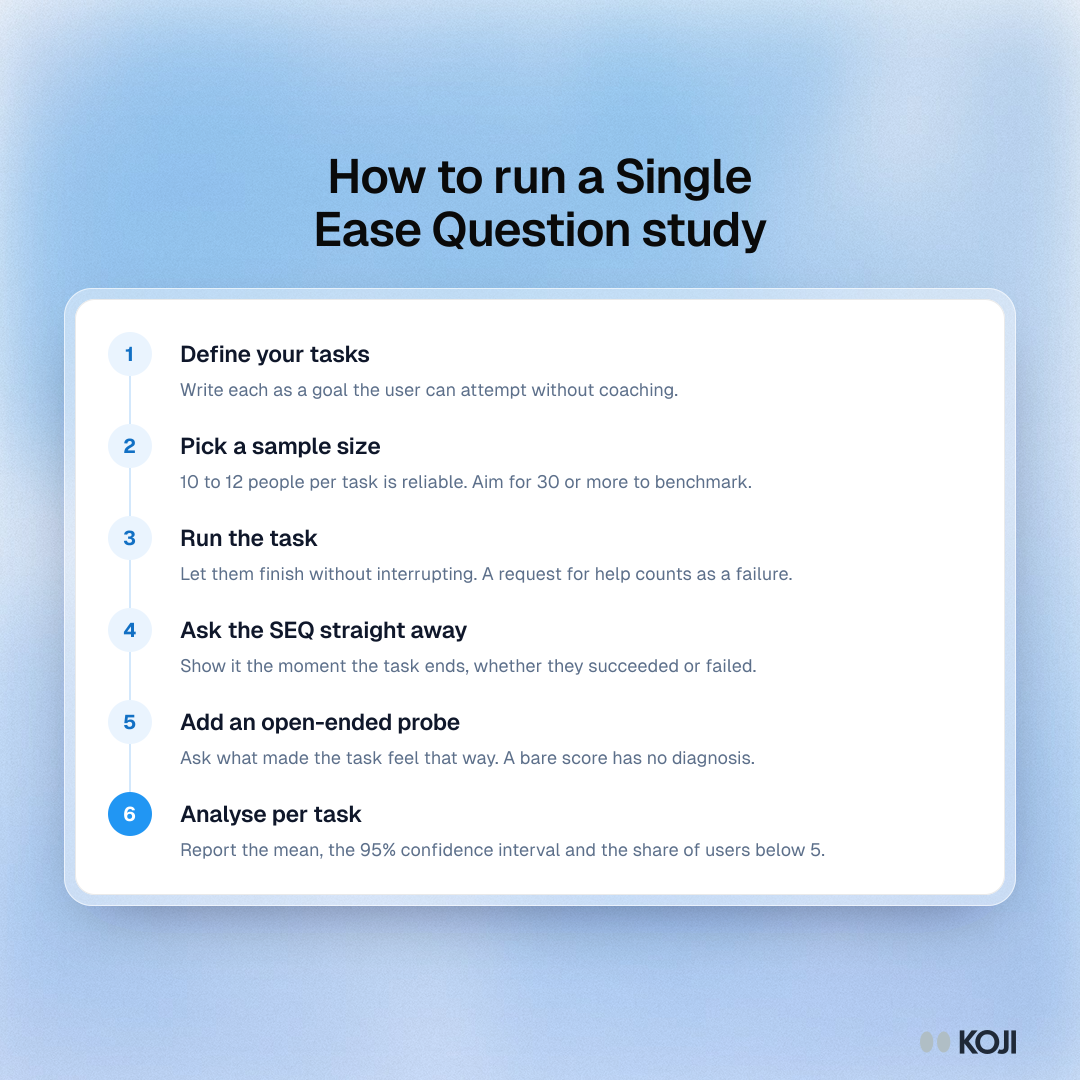
Six steps to run a Single Ease Question study, from defining tasks and sample size to asking the SEQ, adding an open-ended probe and analysing per task.

Process

How to run a Single Ease Question study
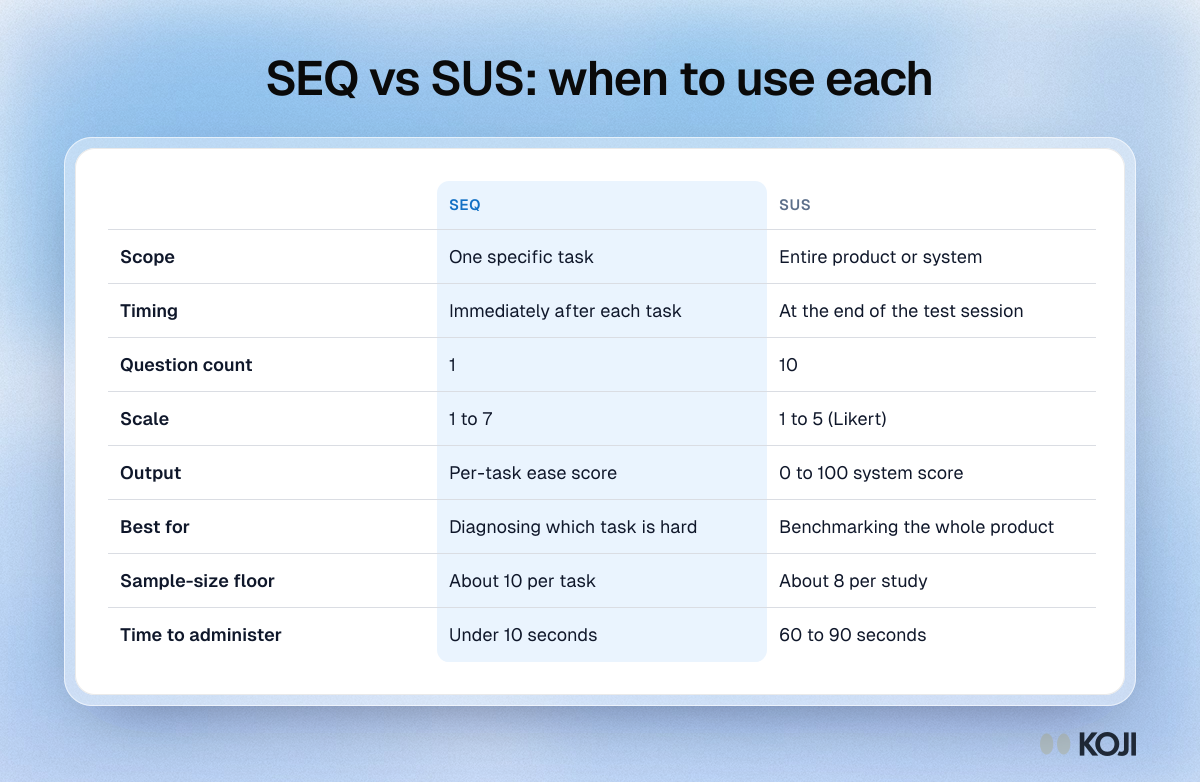
Table comparing the Single Ease Question and the System Usability Scale on scope, timing, question count, scale, output, sample size and time to administer.

Reference table

SEQ vs SUS: when to use each
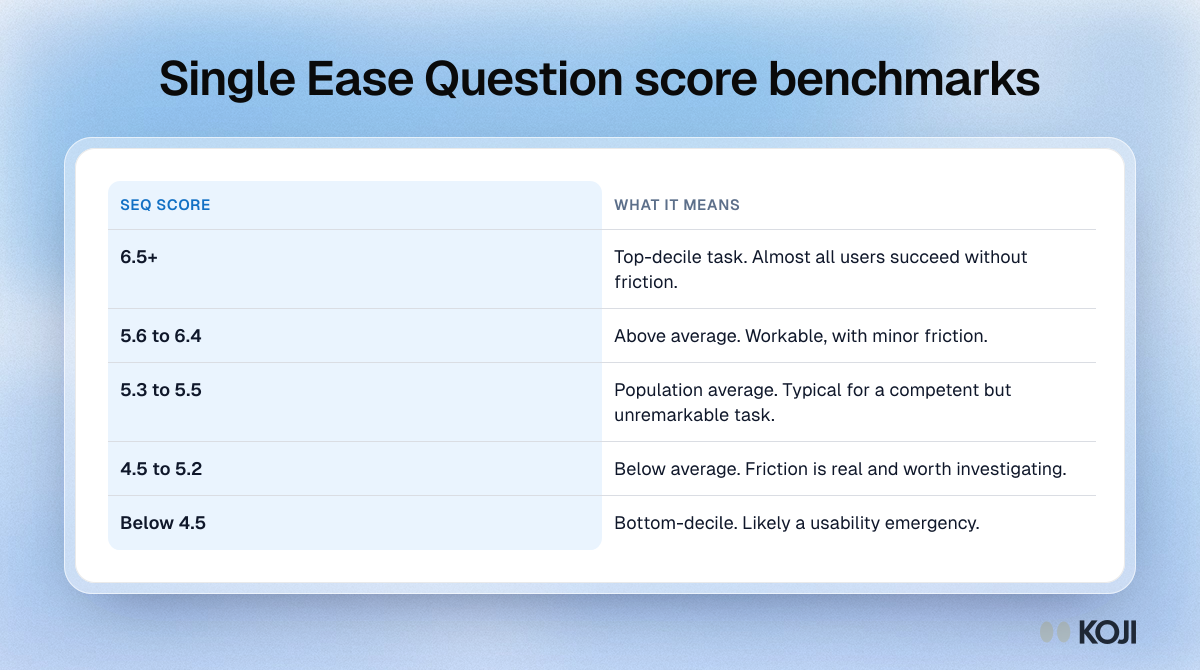
Table of Single Ease Question score ranges from 6.5 and above to below 4.5, with what each range means for a task, based on MeasuringU benchmarks.

Reference table

Single Ease Question score benchmarks
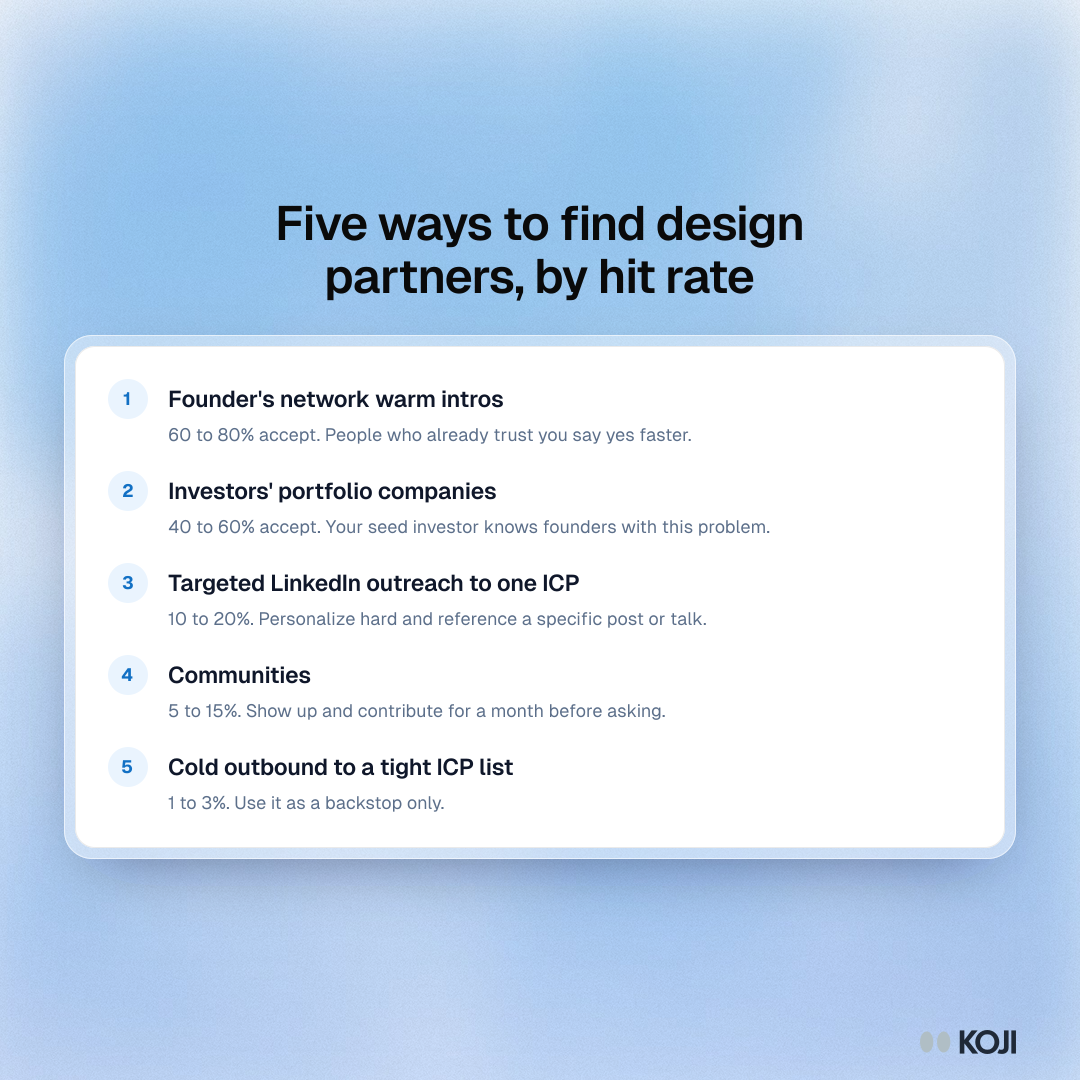
Ranked list of five ways to find design partners with acceptance rates, from warm intros at 60 to 80 percent to cold outbound at 1 to 3 percent.

Guide

Five ways to find design partners, by hit rate
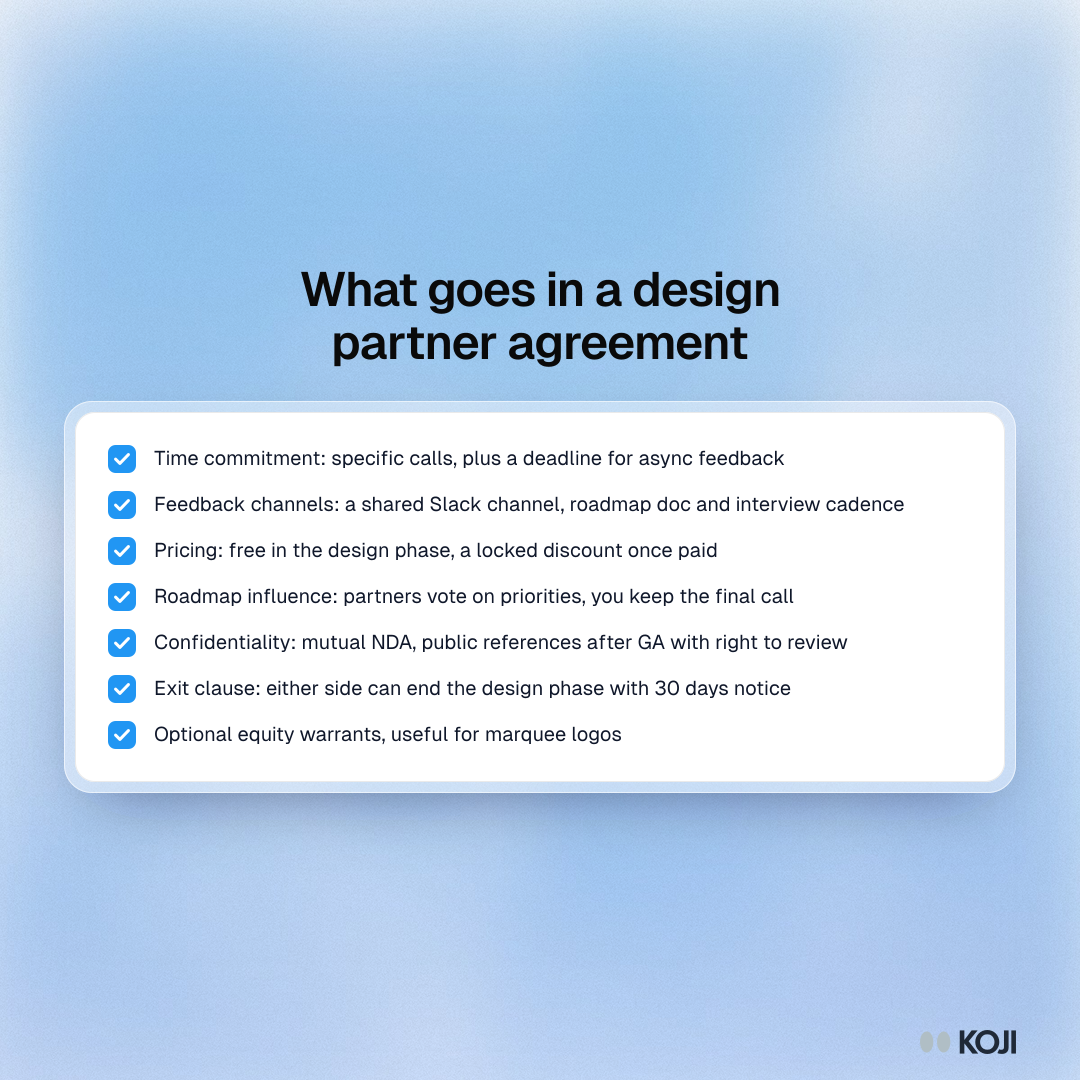
Checklist of the seven points in a one-page design partner agreement, from time commitment and pricing to the exit clause and optional equity warrants.

Checklist

What goes in a design partner agreement
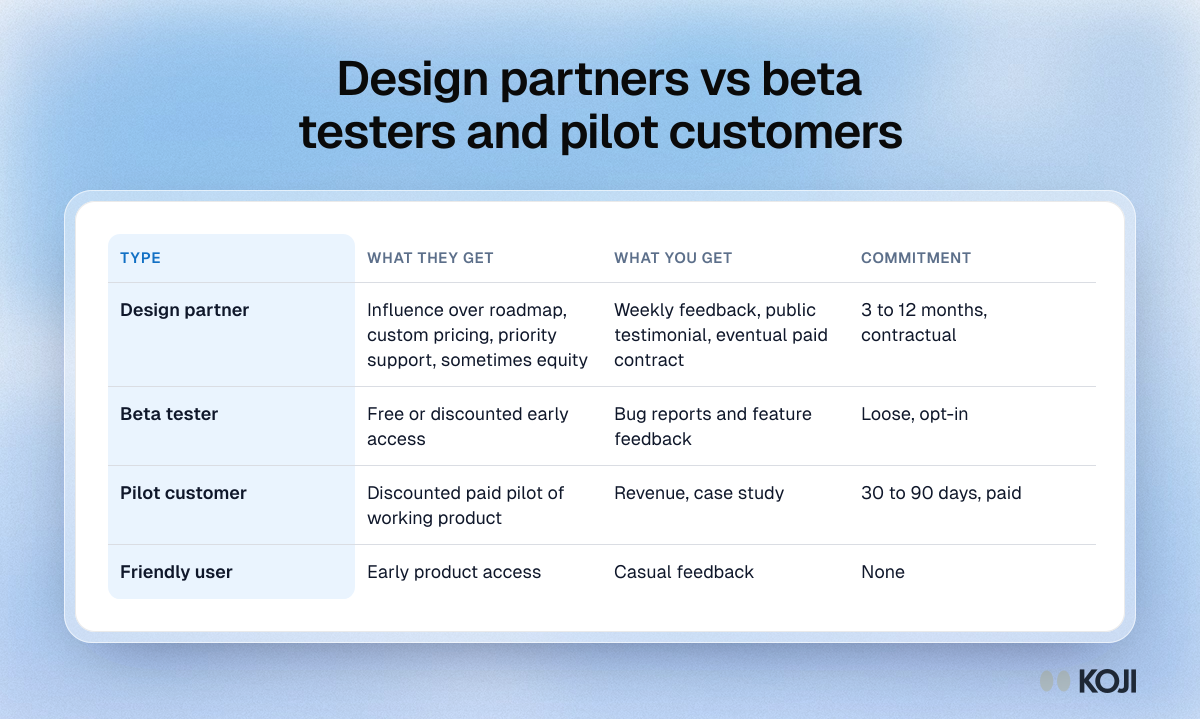
Table comparing design partners, beta testers, pilot customers and friendly users by what they get, what you get and how long they commit.

Reference table

Design partners vs beta testers and pilot customers
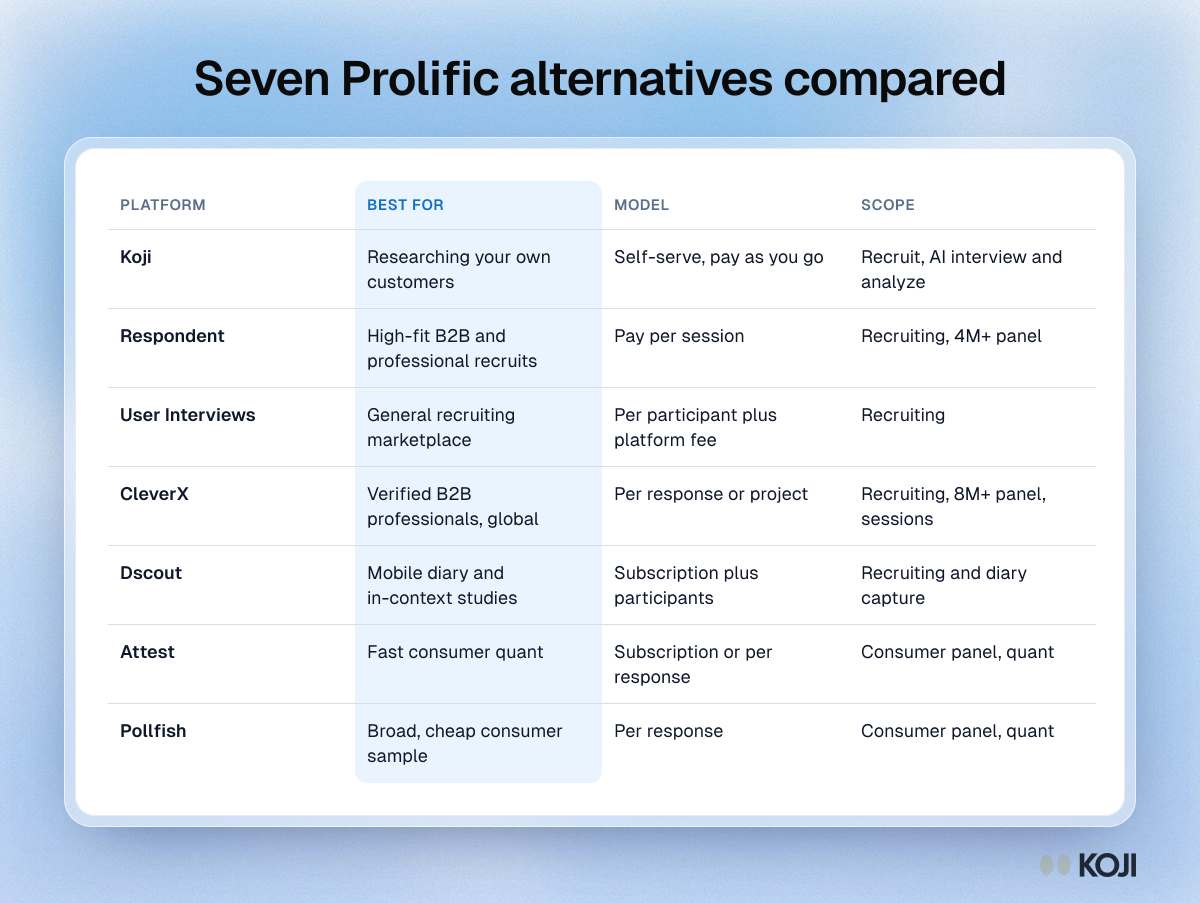
Table comparing seven Prolific alternatives by best use, pricing model and scope, including Respondent, User Interviews, CleverX, Dscout, Attest and Pollfish.

Reference table

Seven Prolific alternatives compared
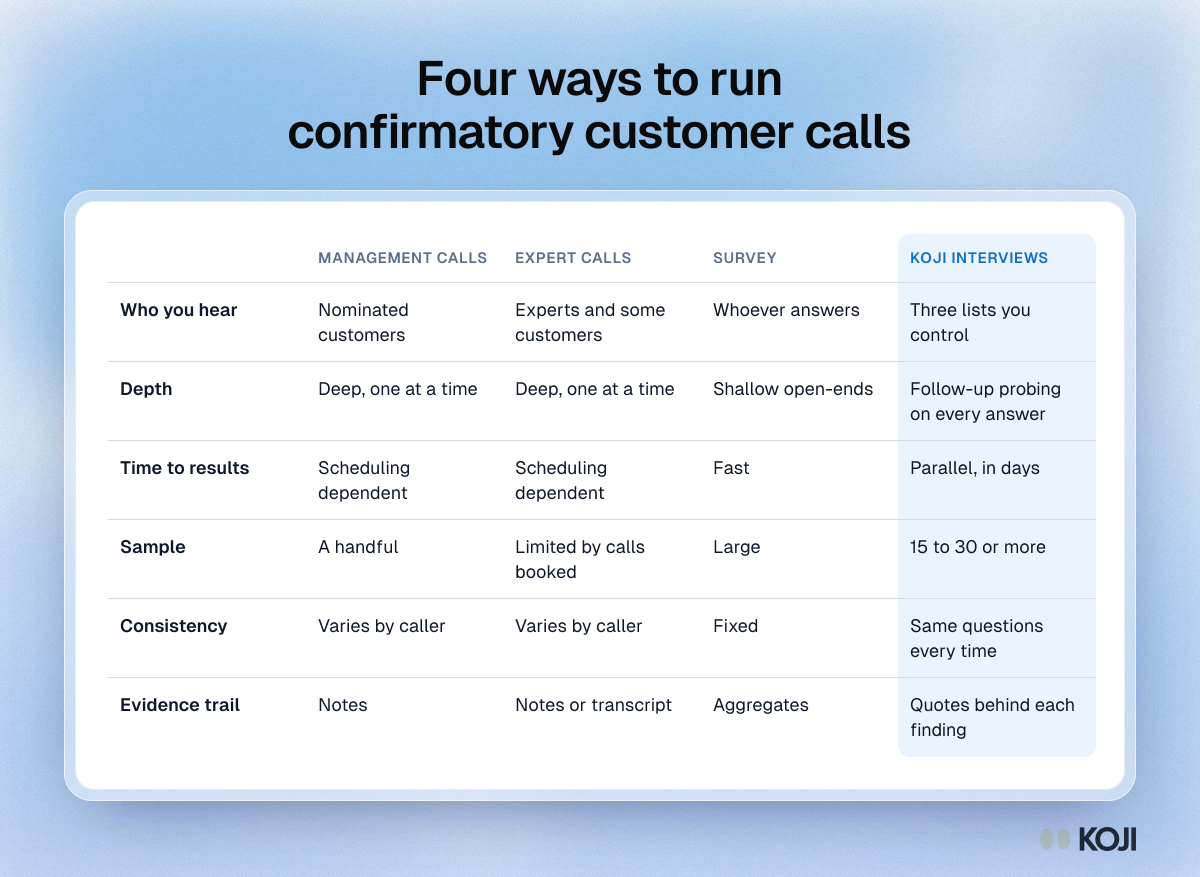
Table comparing management reference calls, expert calls, surveys and Koji AI interviews on who you hear, depth, speed, sample and evidence.

Reference table

Four ways to run confirmatory customer calls
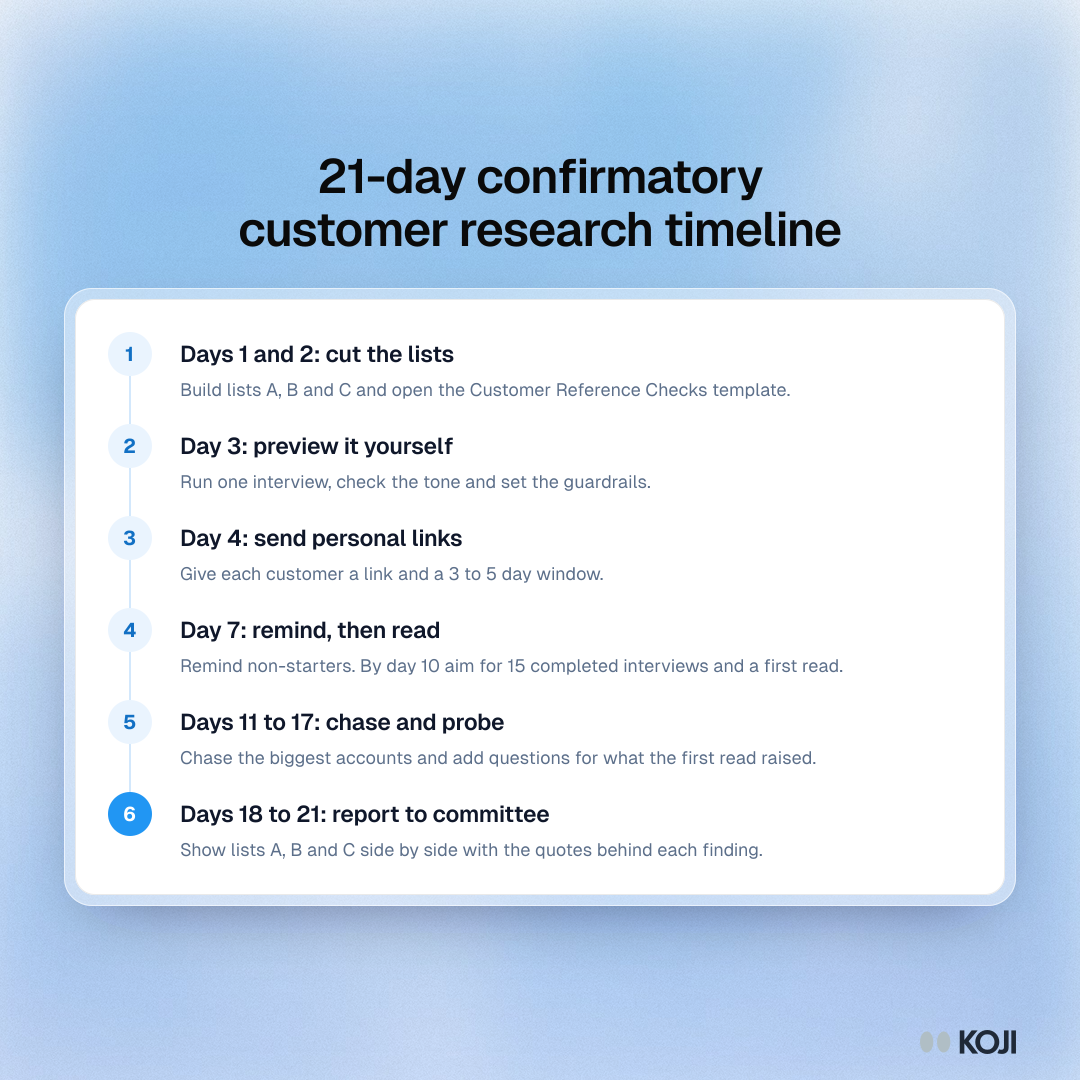
Process showing a 21-day timeline for confirmatory customer research in due diligence, from building lists to the committee report.

Process

21-day confirmatory customer research timeline
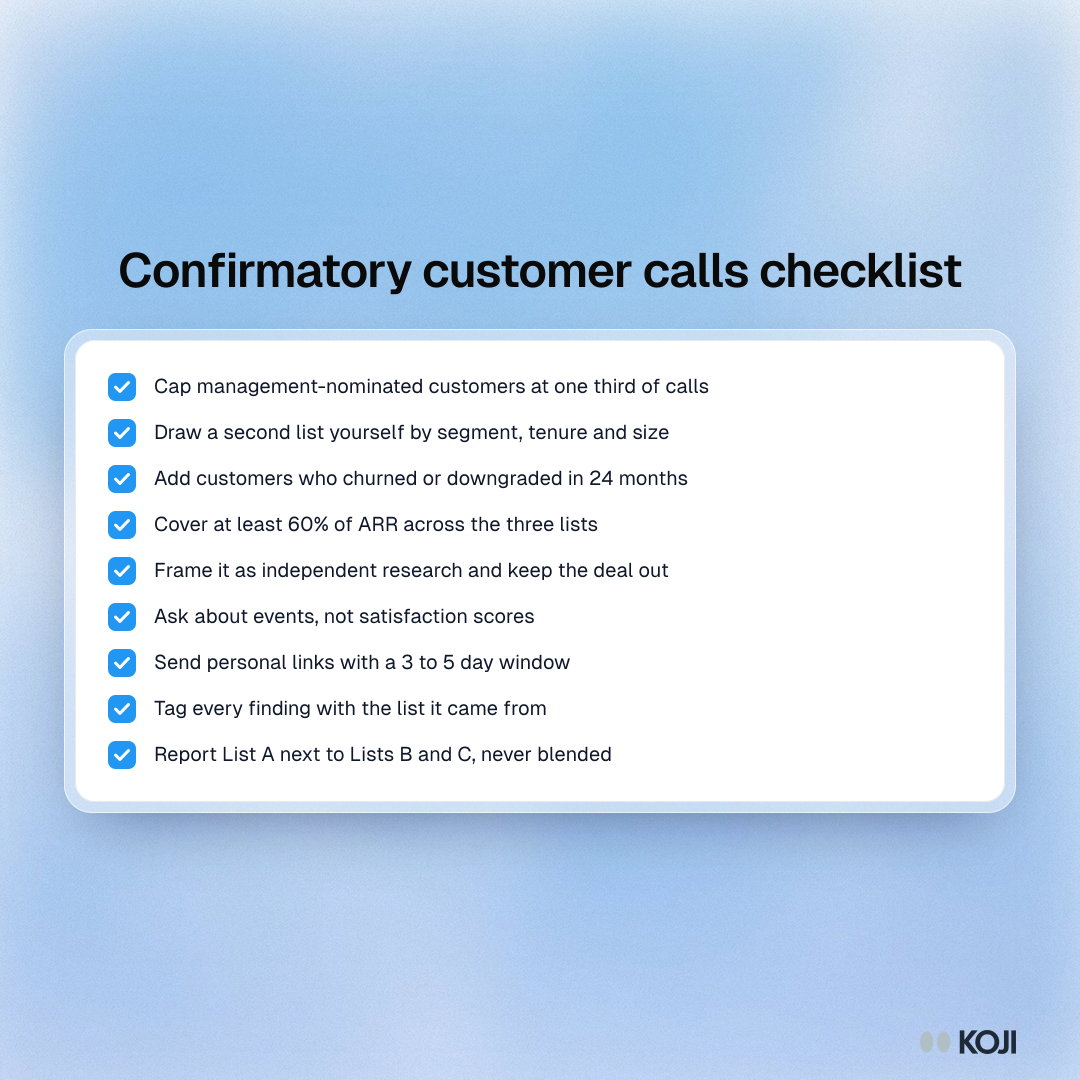
Checklist for confirmatory customer calls in due diligence covering three lists, sample size, framing and how to report results.

Checklist

Confirmatory customer calls checklist
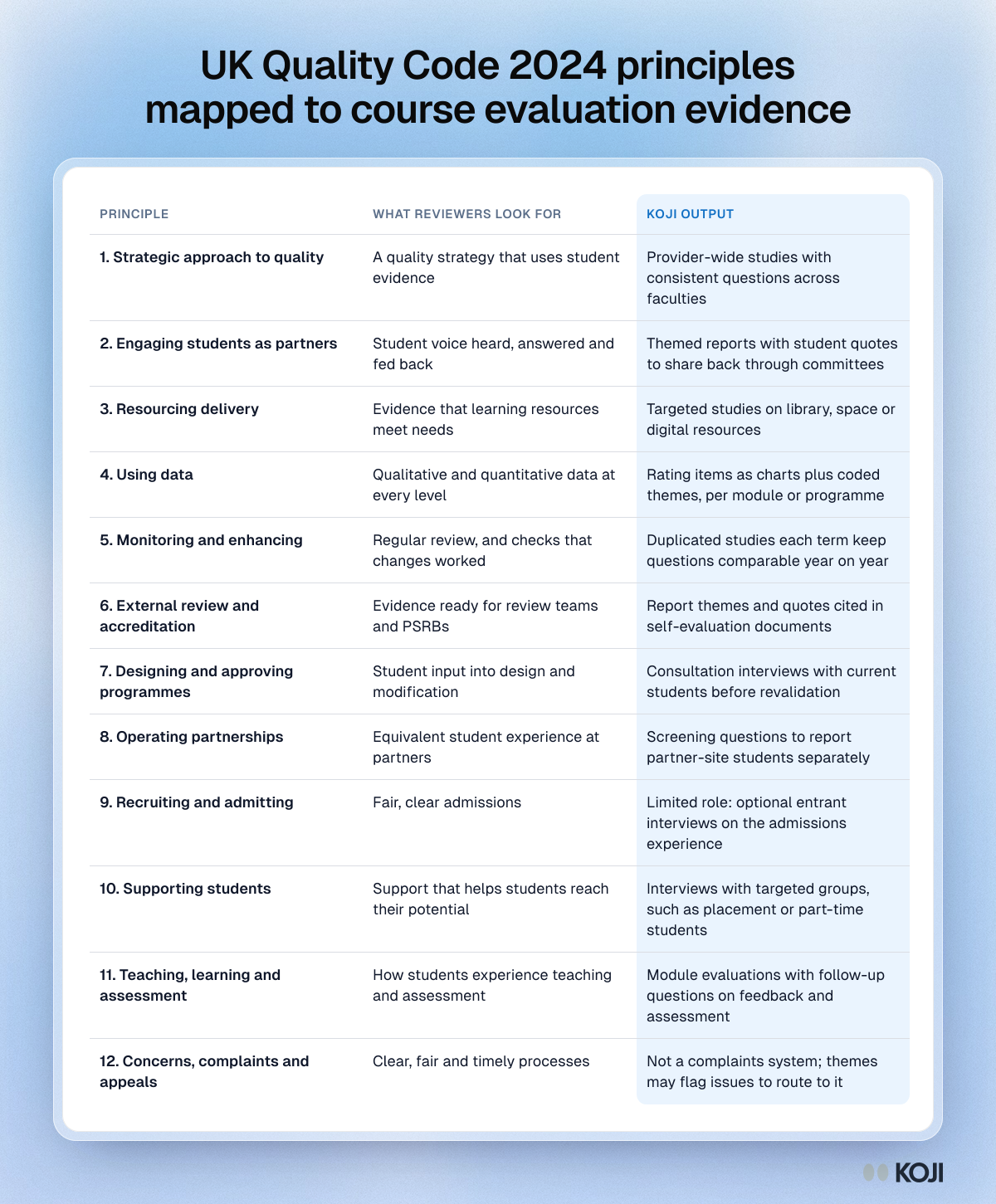
Table mapping all twelve UK Quality Code 2024 Sector-Agreed Principles to the evaluation evidence reviewers look for and the matching Koji output

Reference table

UK Quality Code 2024 principles mapped to course evaluation evidence
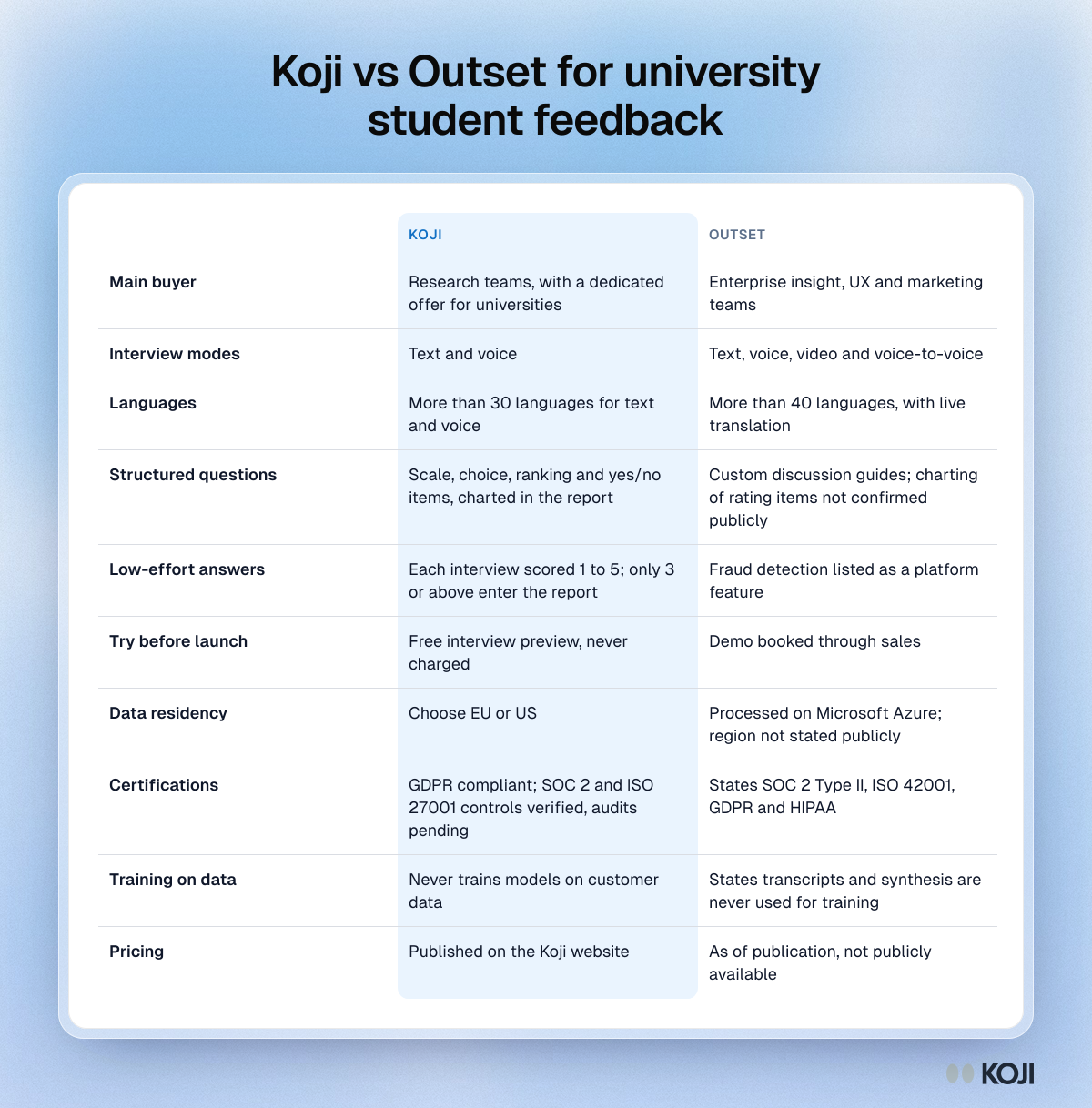
Table comparing Koji and Outset on buyer, interview modes, languages, quality filtering, data residency and pricing for university student feedback

Reference table

Koji vs Outset for university student feedback
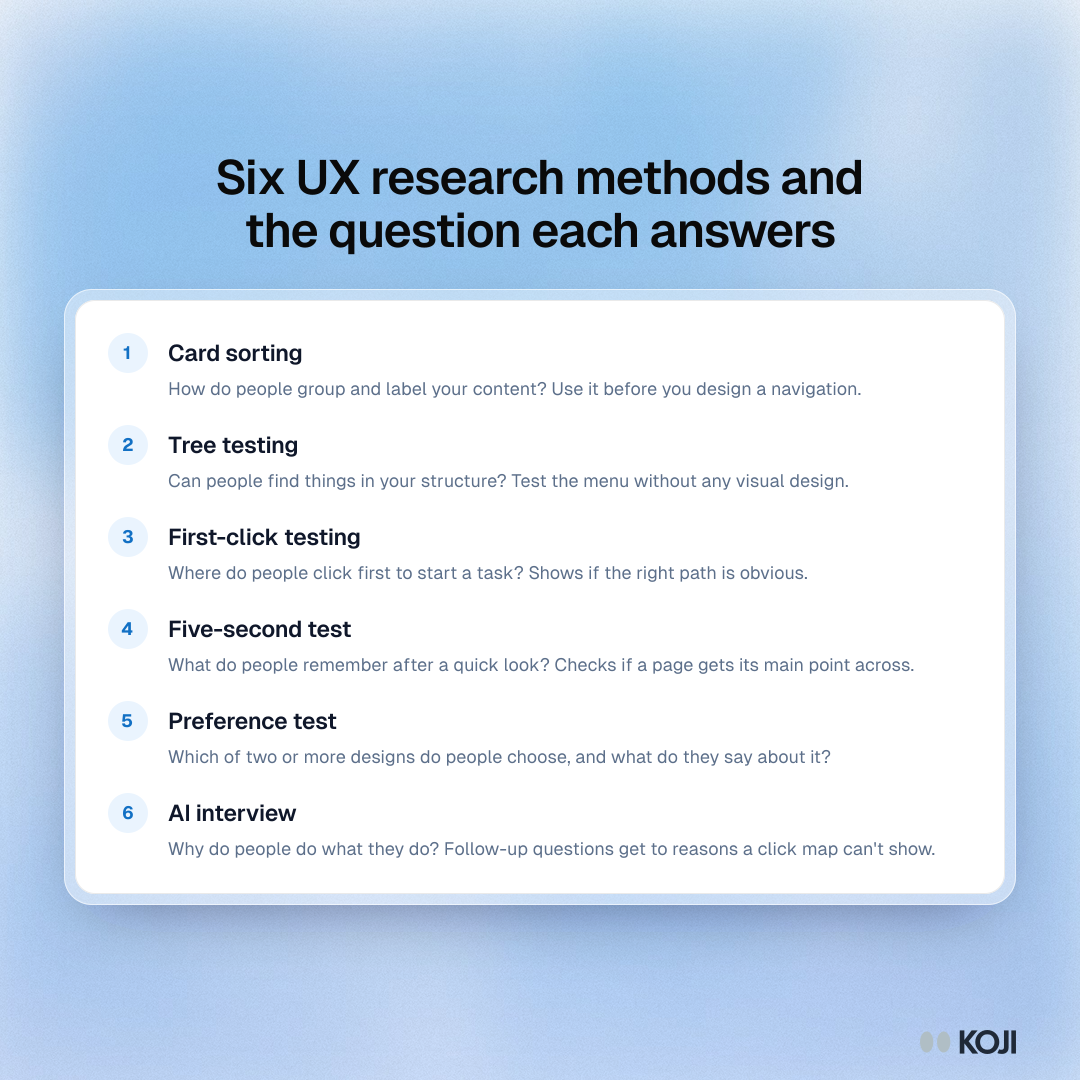
Listicle matching six UX research methods to the question each answers, from card sorting and tree testing to AI interviews

Guide

Six UX research methods and the question each answers
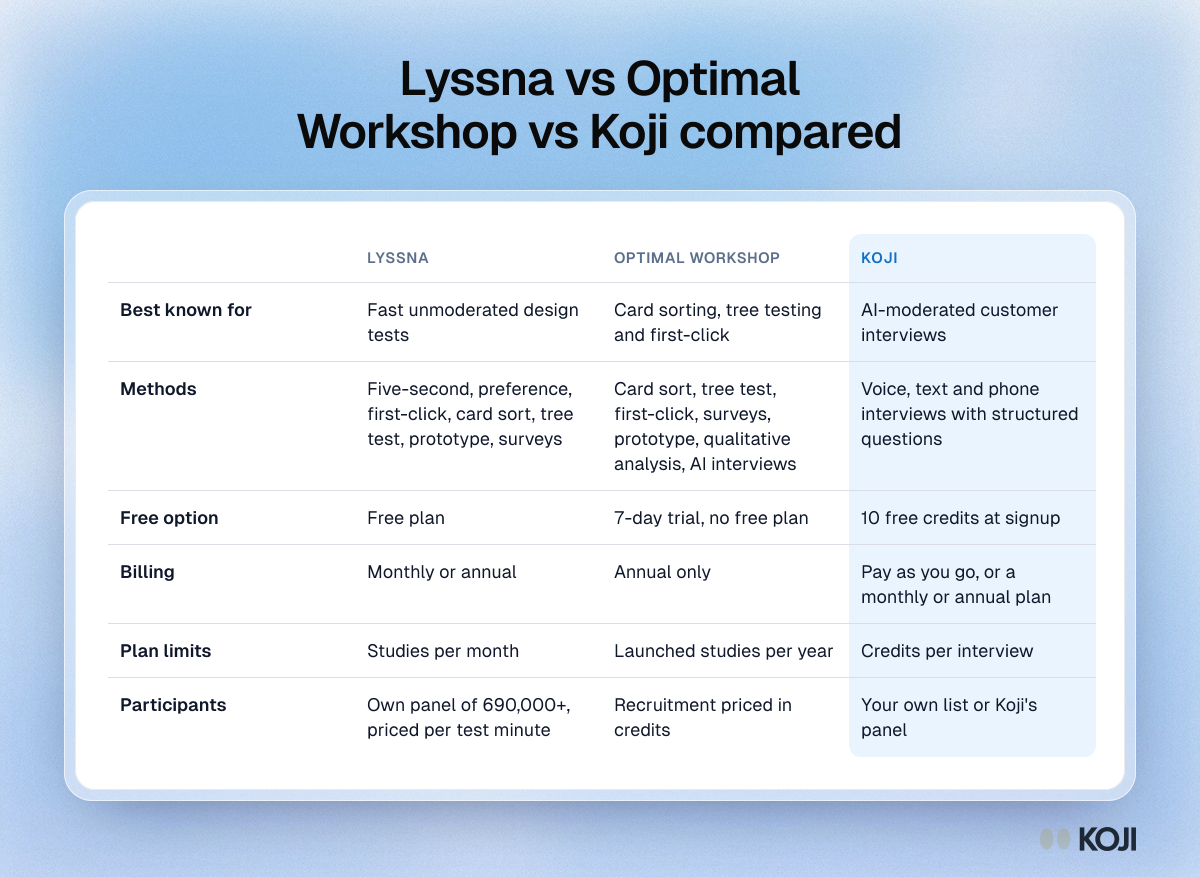
Table comparing Lyssna, Optimal Workshop and Koji on what each is best at, methods, free option, billing, limits and participants

Reference table

Lyssna vs Optimal Workshop vs Koji compared
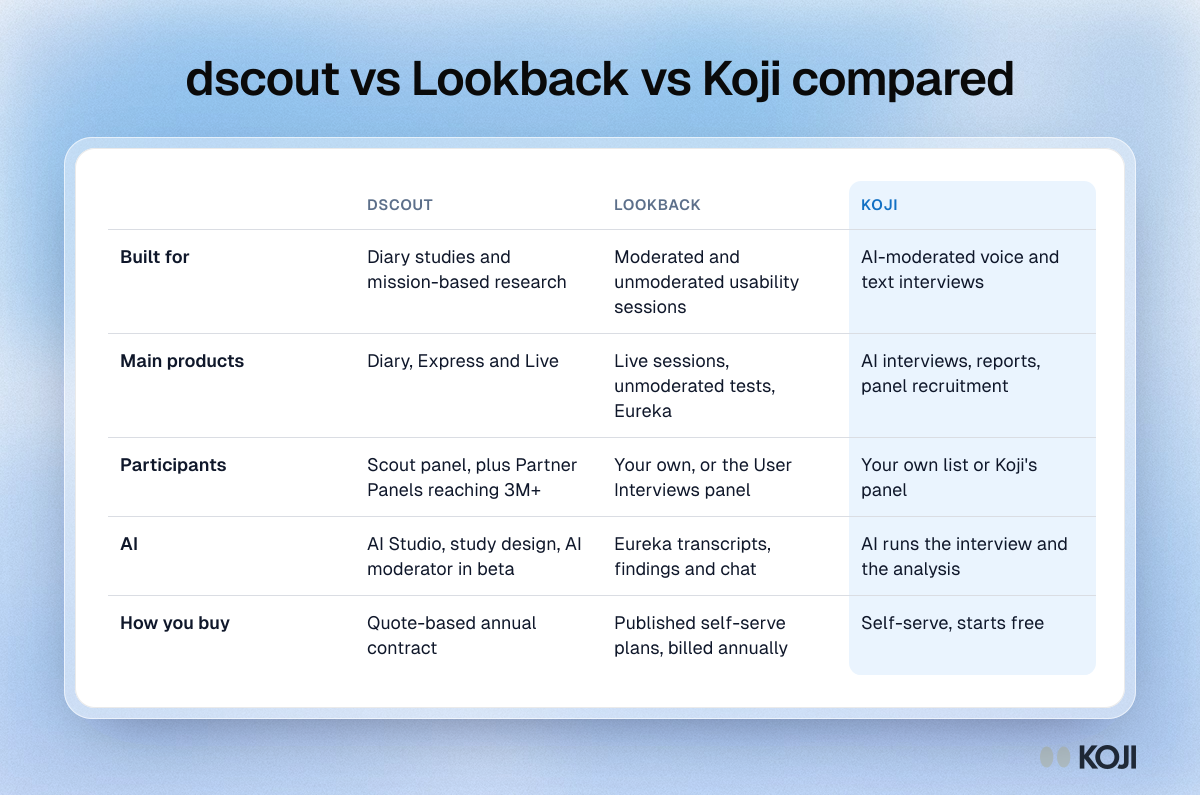
Table comparing dscout, Lookback and Koji on what each is built for, main products, participants, AI features and how you buy

Reference table

dscout vs Lookback vs Koji compared
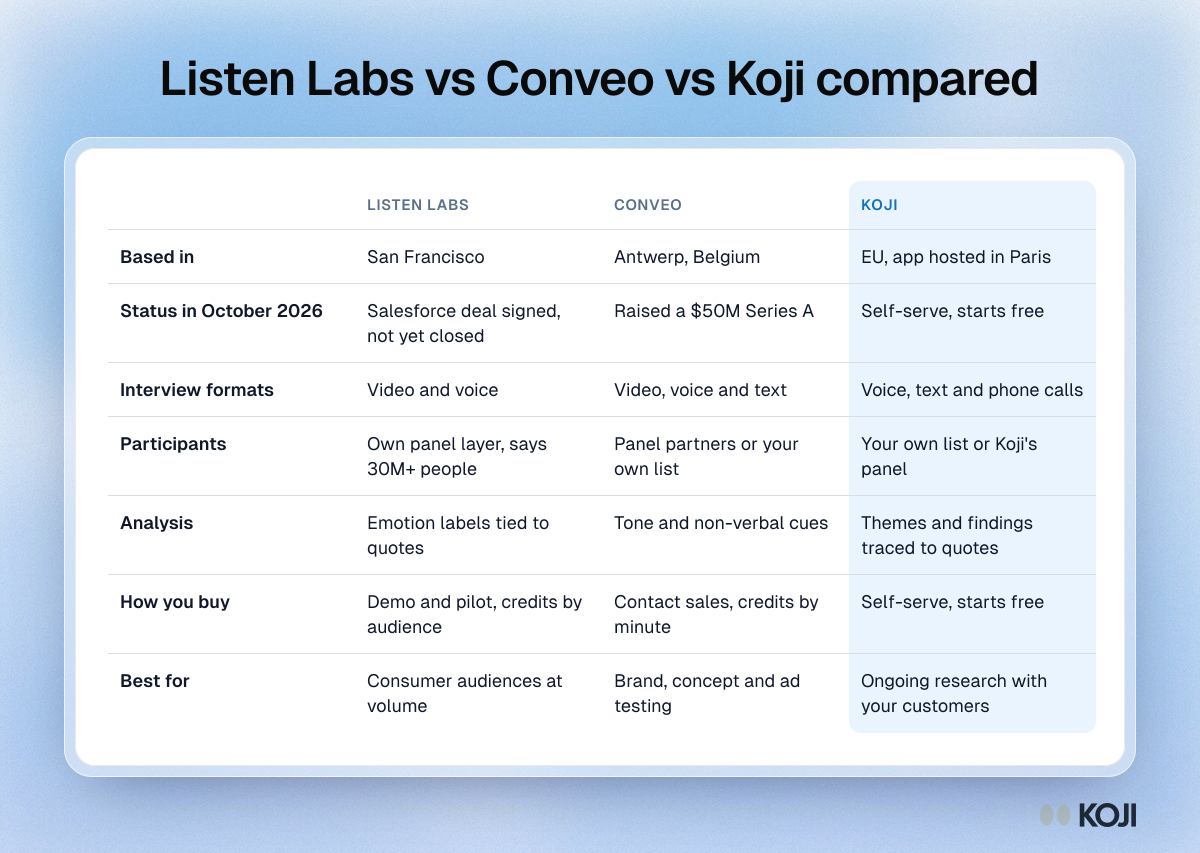
Table comparing Listen Labs, Conveo and Koji on where they are based, status, interview formats, participants, analysis and how you buy

Reference table

Listen Labs vs Conveo vs Koji compared
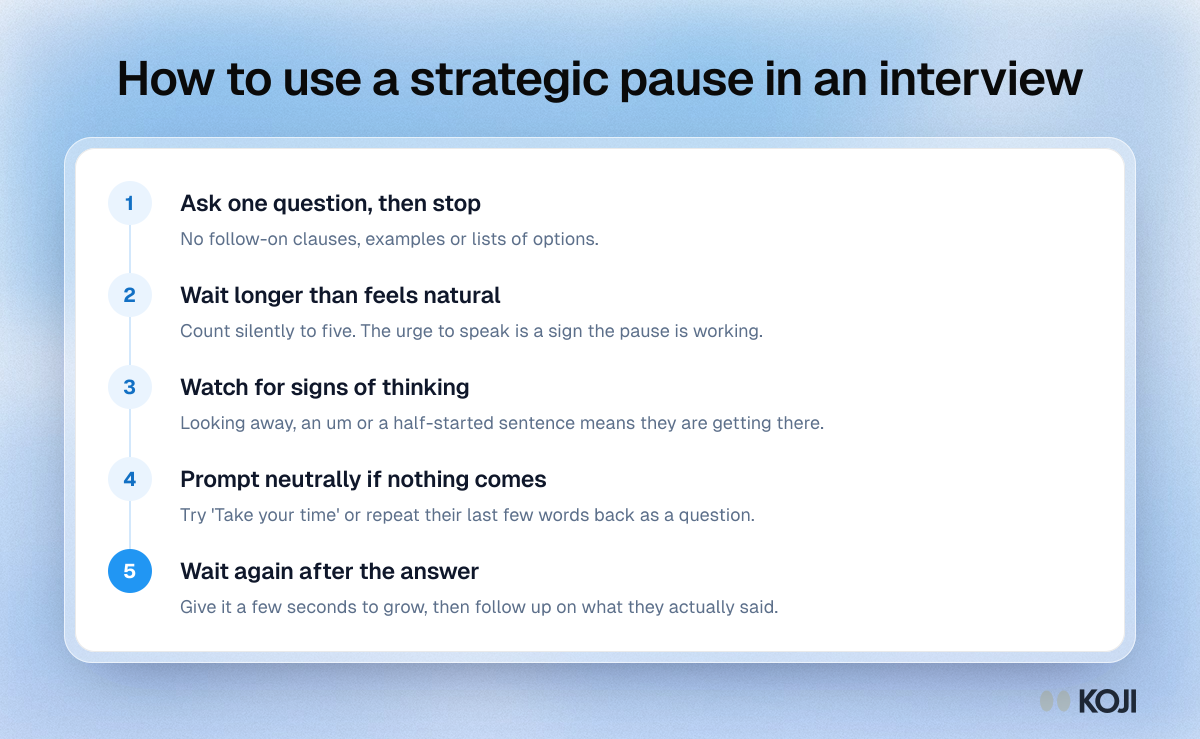
Process of five steps for using silence in an interview, from asking one question to pausing again after the answer before moving on.

Process

How to use a strategic pause in an interview
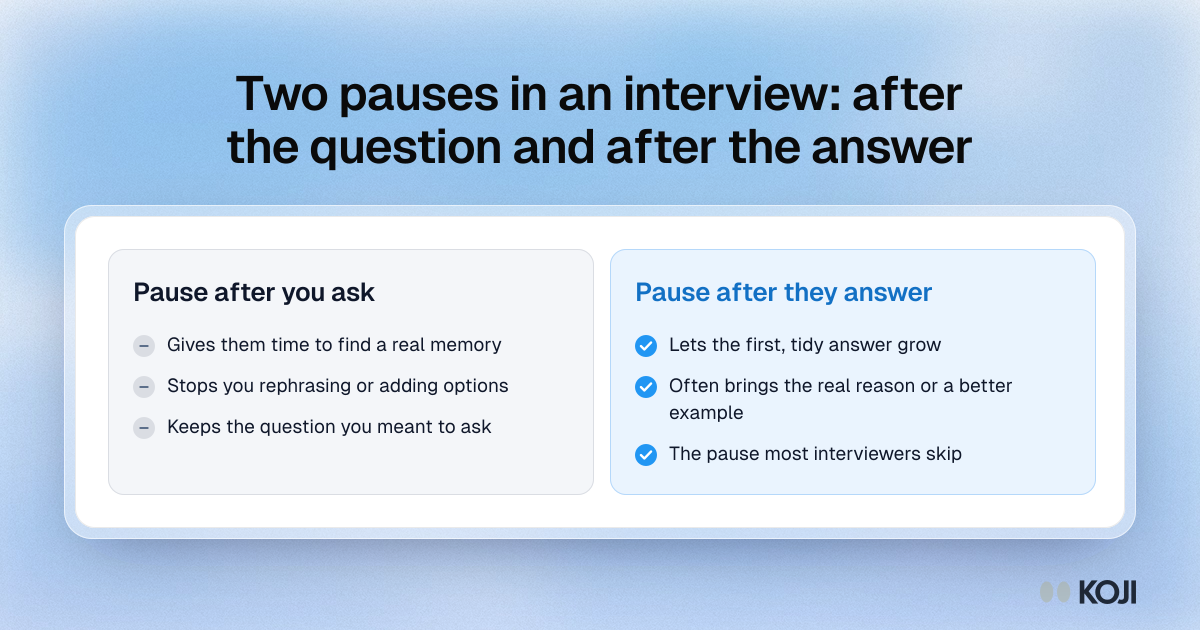
Comparison of the pause after asking a question with the pause after the participant answers, and what each one gets you in a research interview.

Comparison

Two pauses in an interview: after the question and after the answer
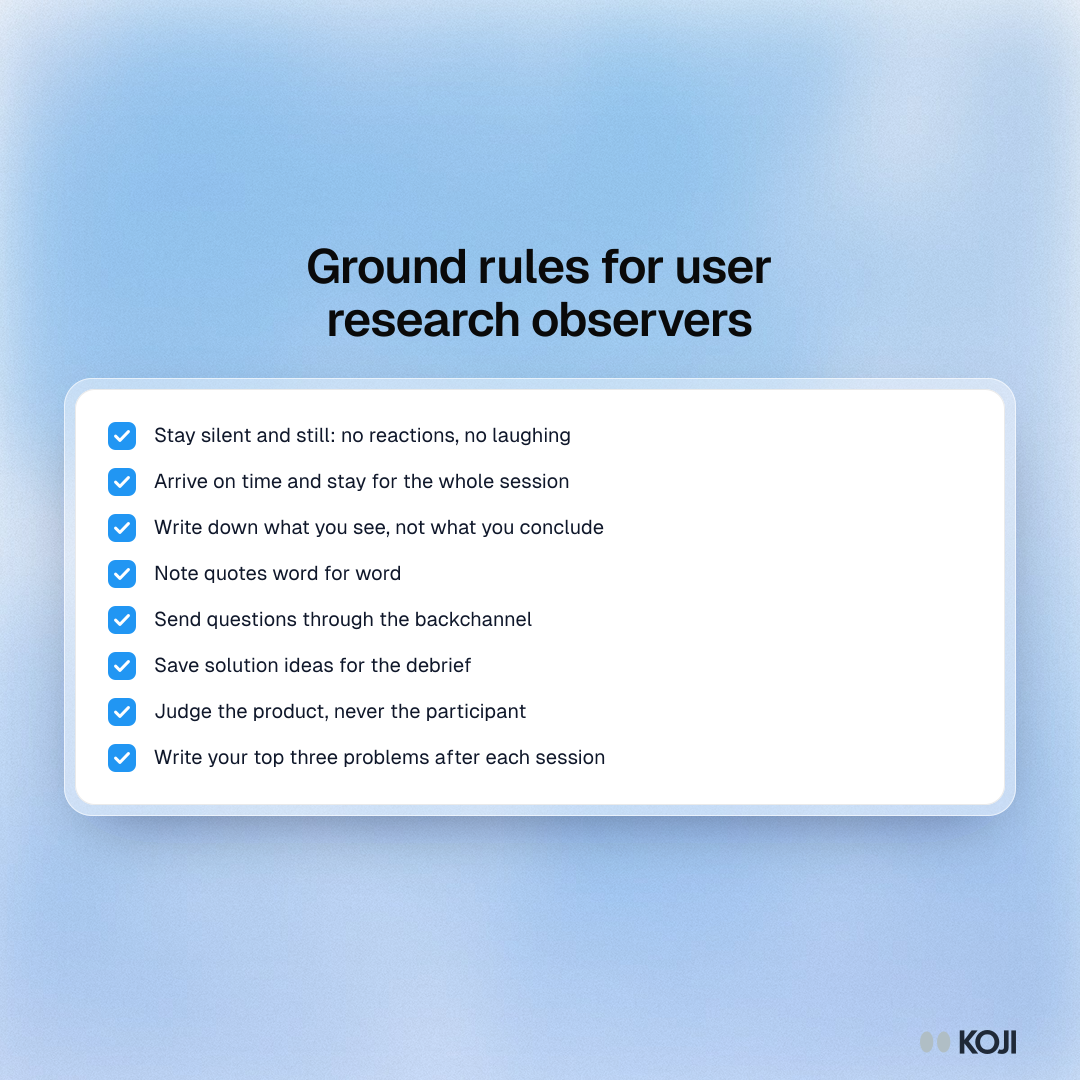
Checklist of eight ground rules for observers of a user research session, from staying silent to writing down the top three problems after each session.

Checklist

Ground rules for user research observers
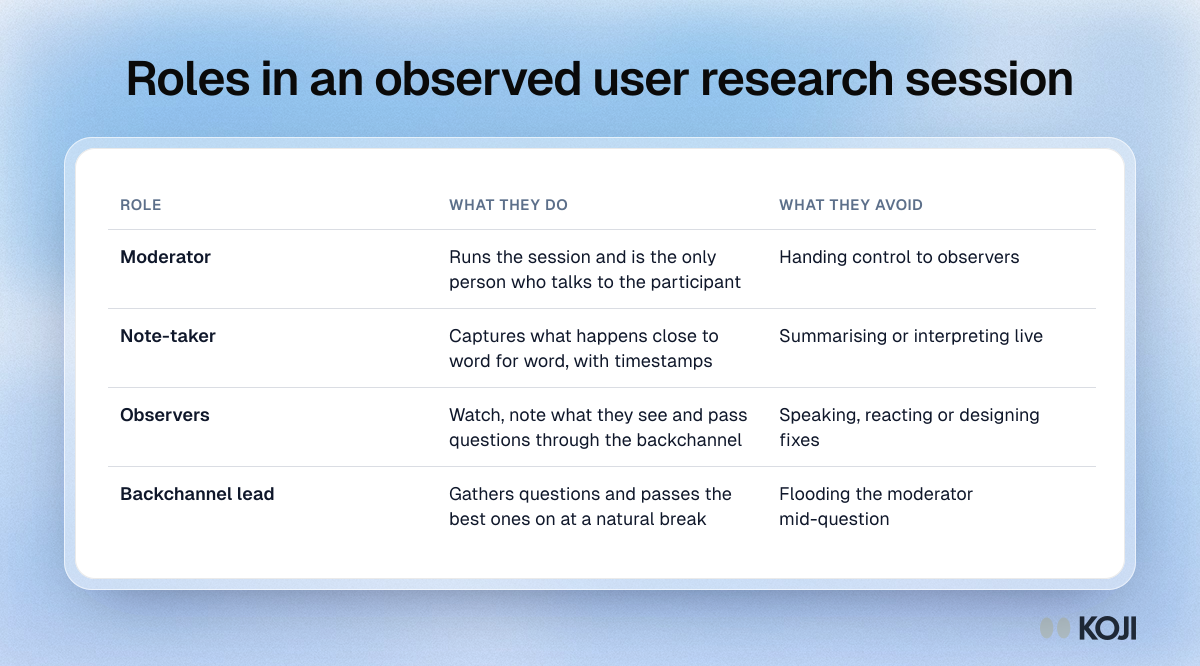
Table of the four roles in an observed research session: moderator, note-taker, observers and backchannel lead, with what each does and avoids.

Reference table

Roles in an observed user research session
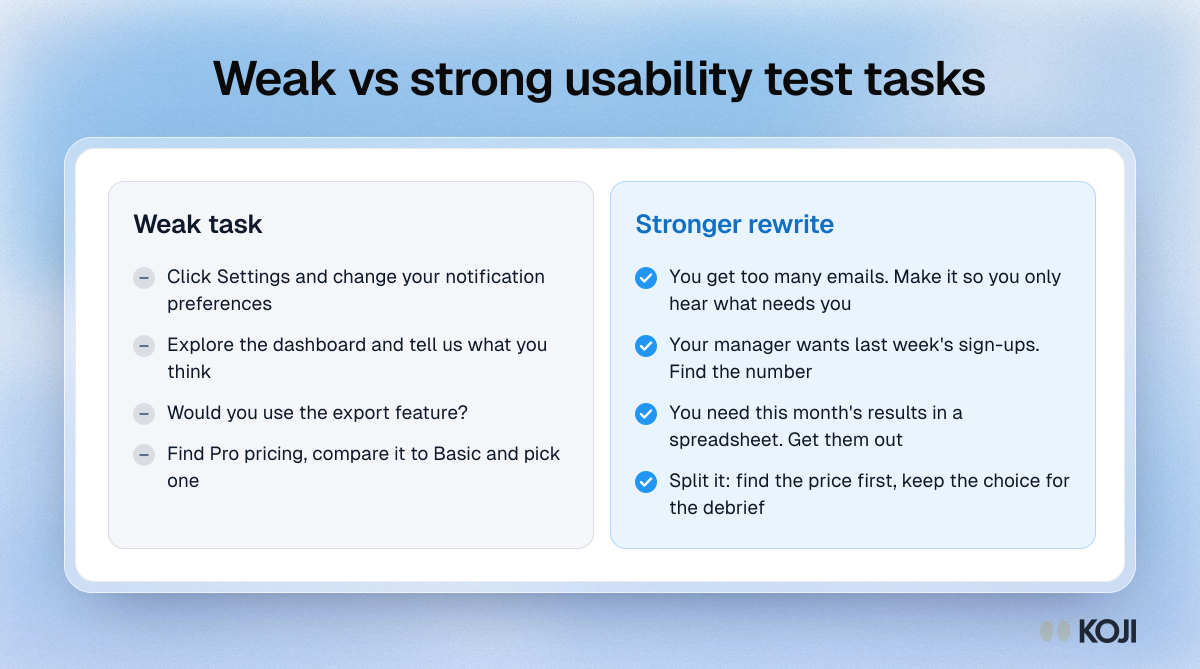
Comparison of weak usability tasks that leak the answer or ask for opinions with stronger rewrites that state a realistic goal.

Comparison

Weak vs strong usability test tasks
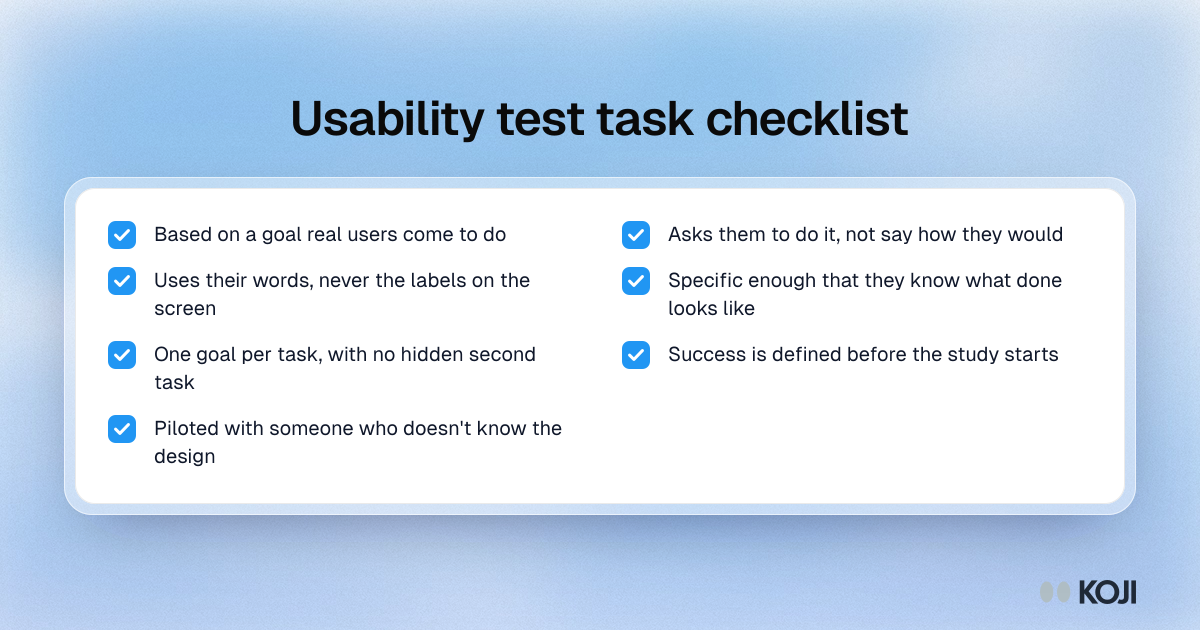
Checklist of seven checks for a usability test task, from basing it on a real user goal to piloting it before the study.

Checklist

Usability test task checklist
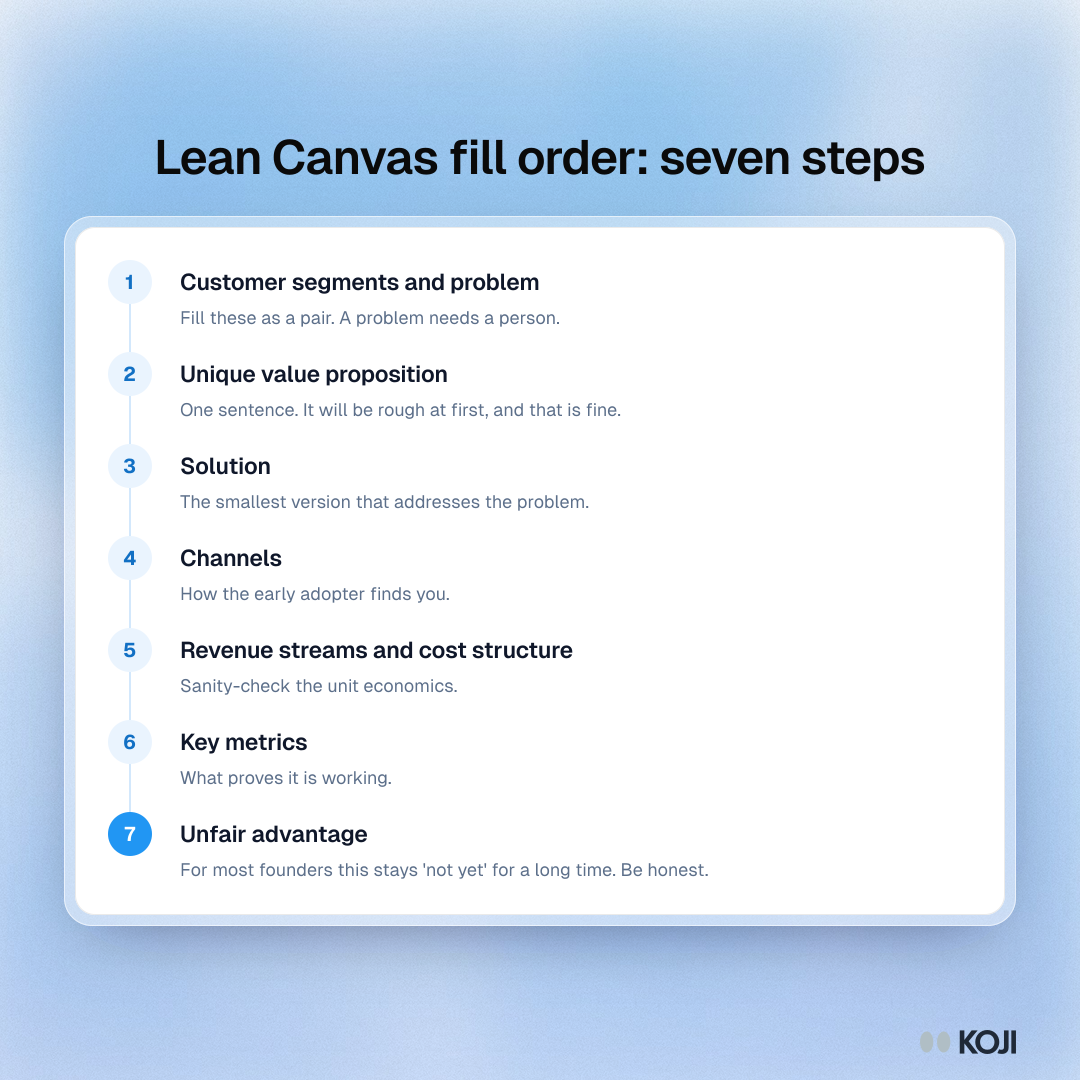
Process showing the order to fill a Lean Canvas, from customer segments and problem first to unfair advantage last.

Process

Lean Canvas fill order: seven steps
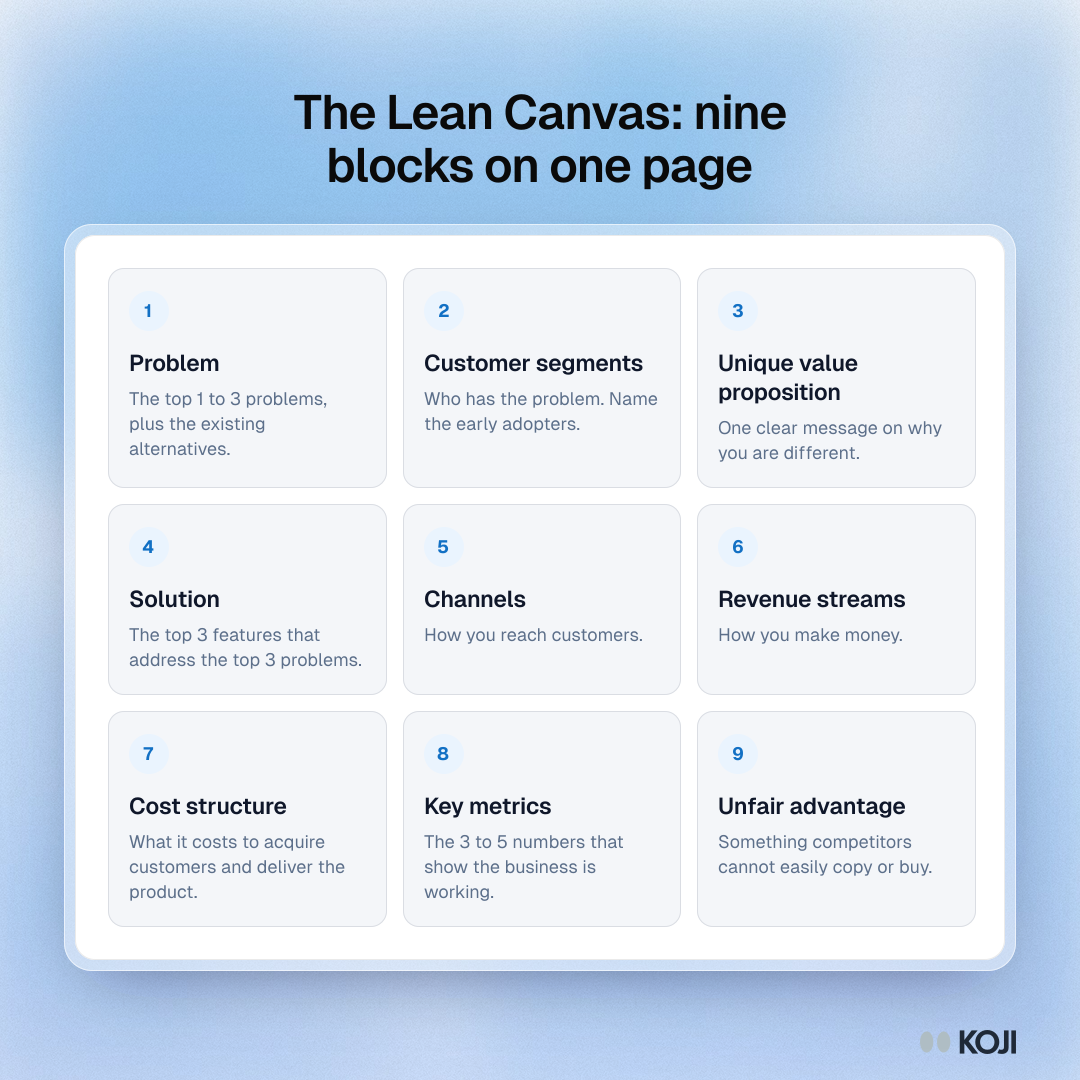
Framework of the nine Lean Canvas blocks, from problem and customer segments to key metrics and unfair advantage.

Framework

The Lean Canvas: nine blocks on one page
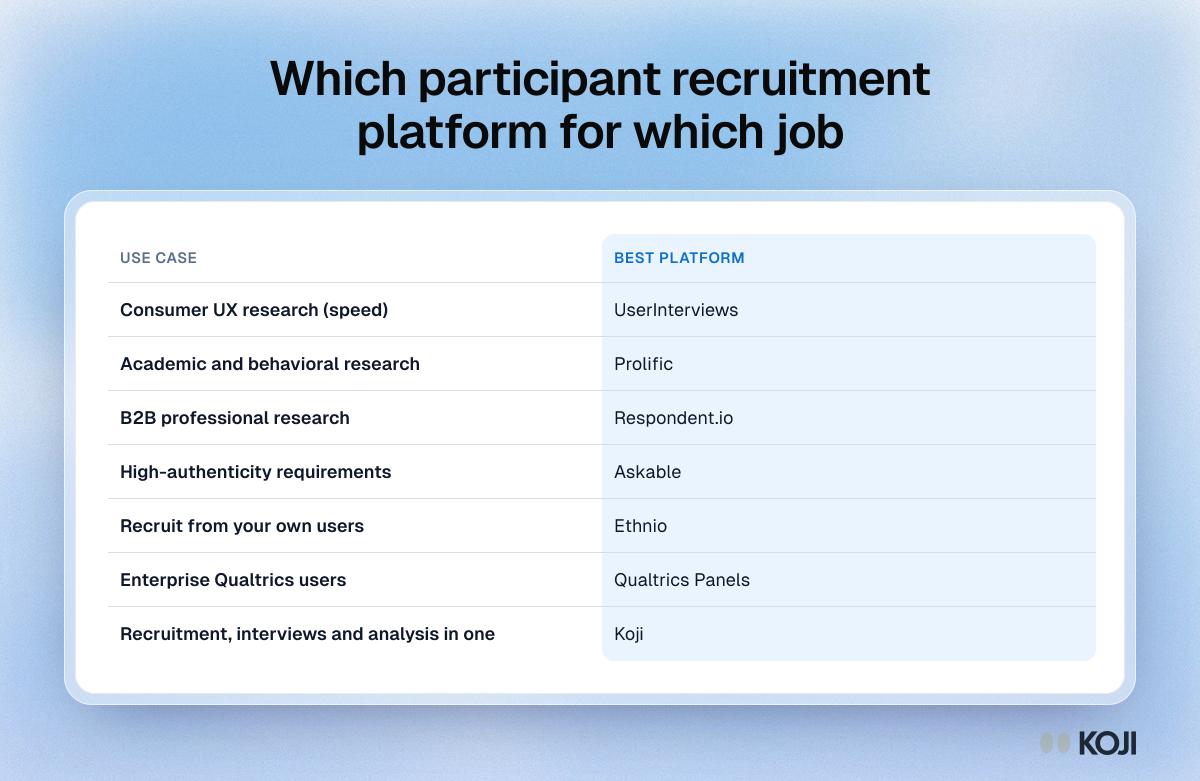
Table matching seven research use cases to a recruitment platform, from consumer UX speed and B2B professionals to recruiting your own users.

Reference table

Which participant recruitment platform for which job
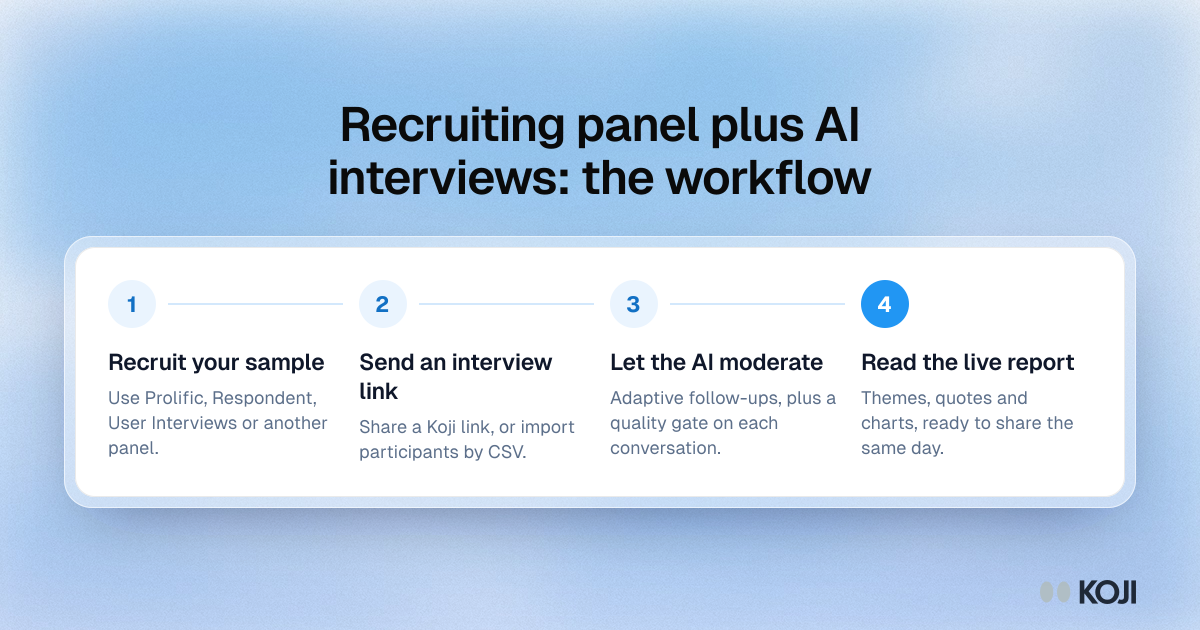
Process in four steps for pairing a recruiting panel with AI-moderated interviews: recruit a sample, send a link, let the AI moderate, read the live report.

Process

Recruiting panel plus AI interviews: the workflow
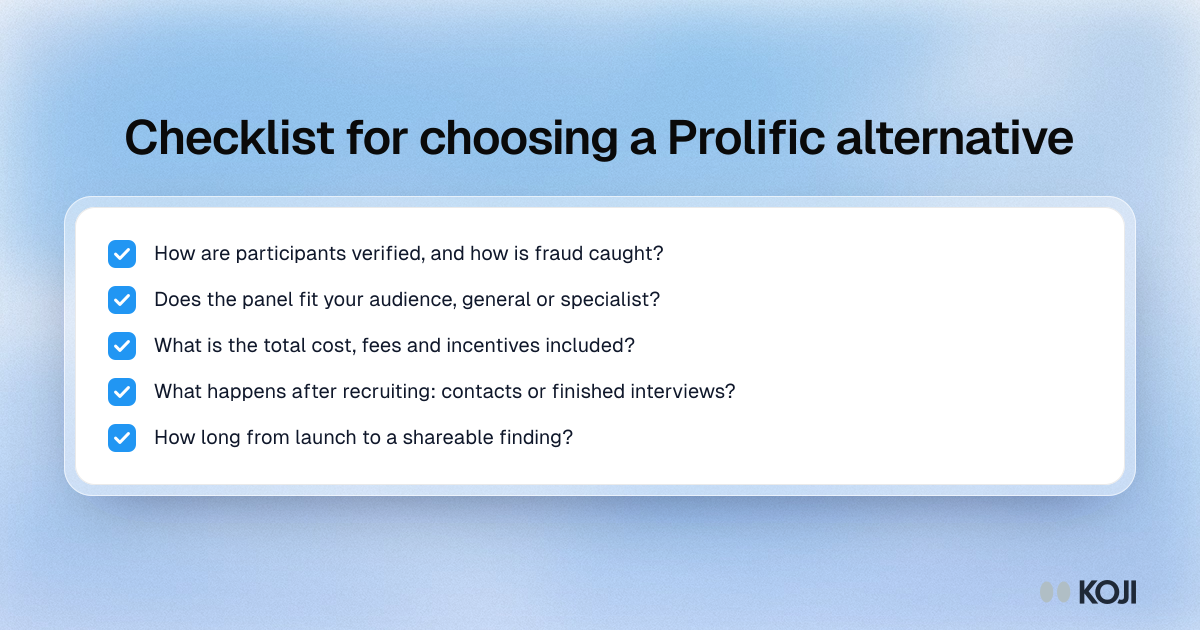
Checklist of five questions for choosing a Prolific alternative, from sample vetting and audience fit to total cost and speed to insight.

Checklist

Checklist for choosing a Prolific alternative
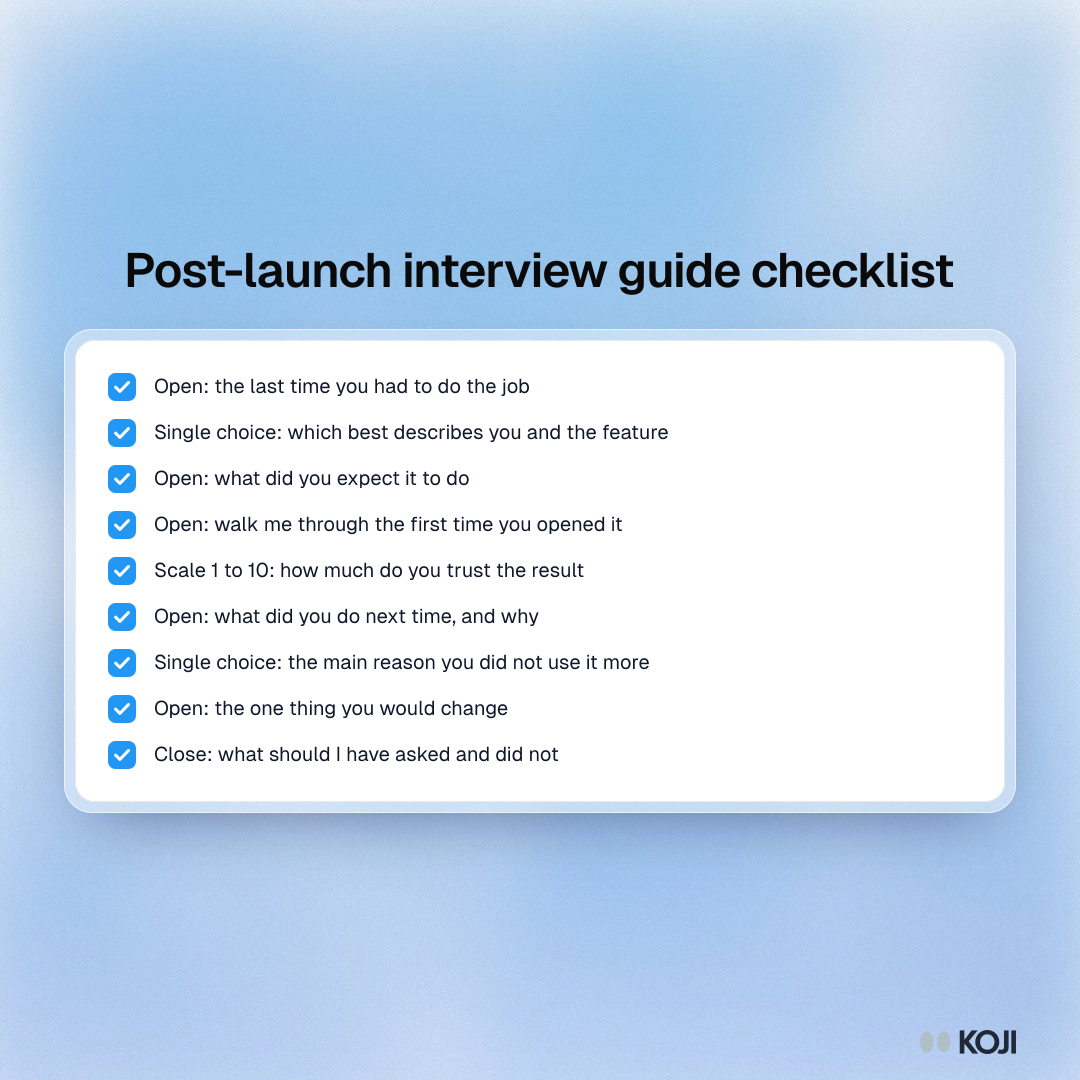
Checklist of the nine questions in a post-launch interview guide, from the last time the job came up to what the interviewer should have asked.

Checklist

Post-launch interview guide checklist