Free to save and share

Frameworks and cheat sheets for customer research

Every framework, checklist and comparison from our guides, as an image you can download, drop into a deck or share with your team.
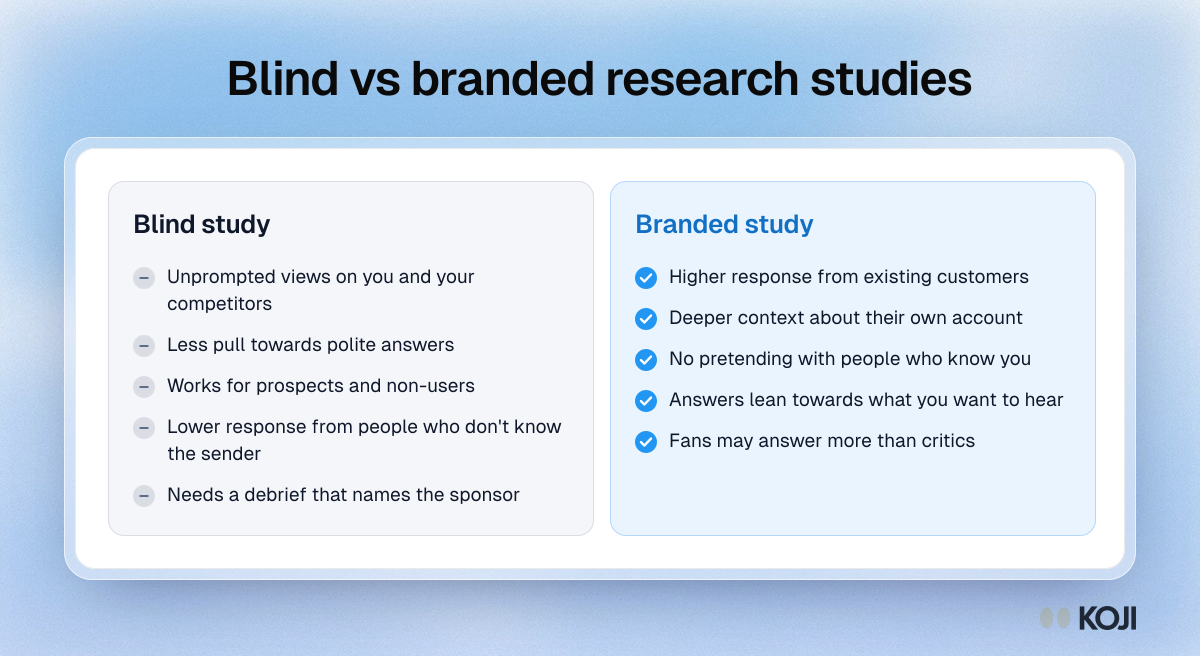
Comparison of blind and branded research studies, listing what each does well and where each skews answers

Comparison

Blind vs branded research studies
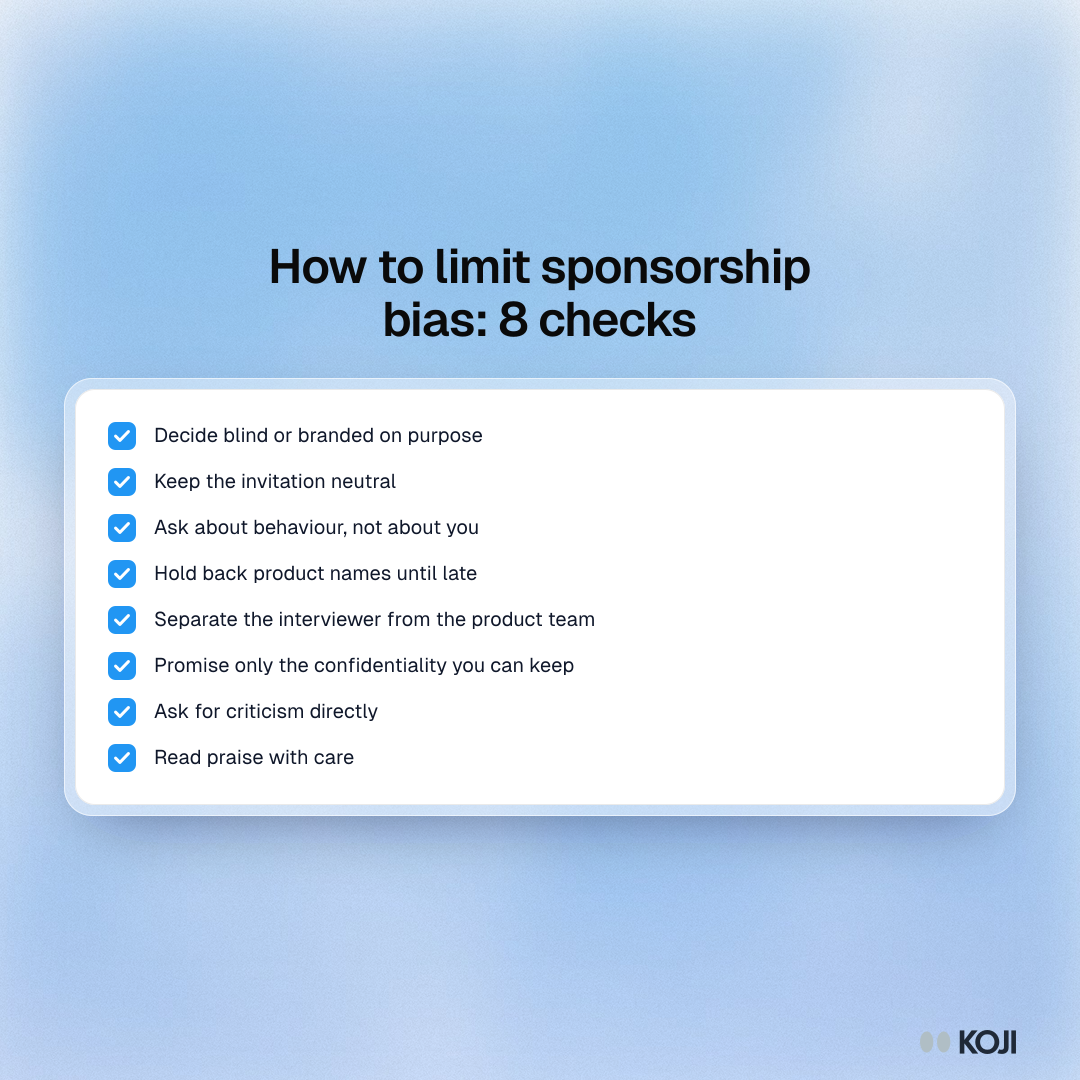
Checklist of eight ways to limit sponsorship bias in surveys and interviews, from choosing blind or branded on purpose to reading praise with care

Checklist

How to limit sponsorship bias: 8 checks
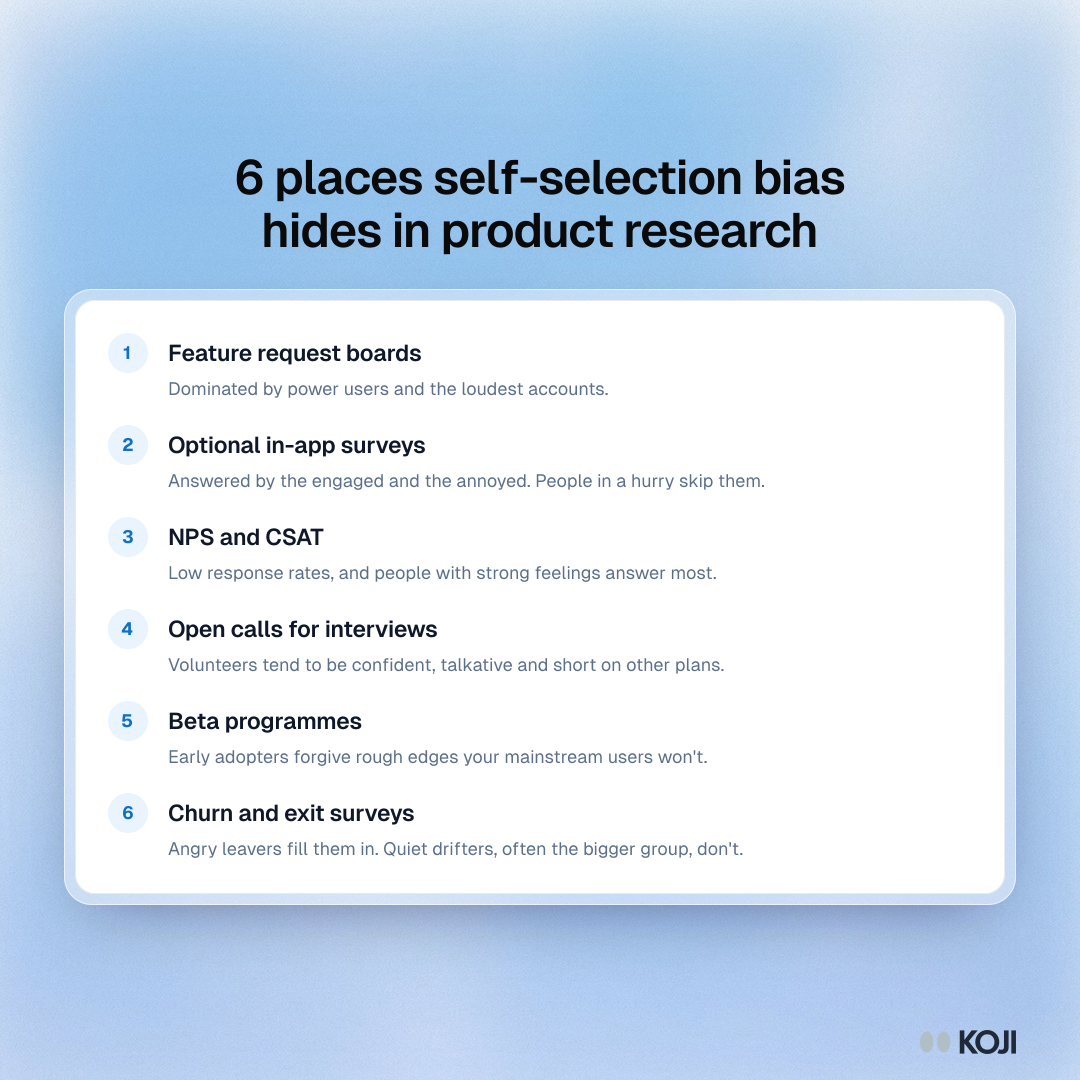
List of six common places self-selection bias hides in product research, from feature request boards to churn surveys

Guide

6 places self-selection bias hides in product research
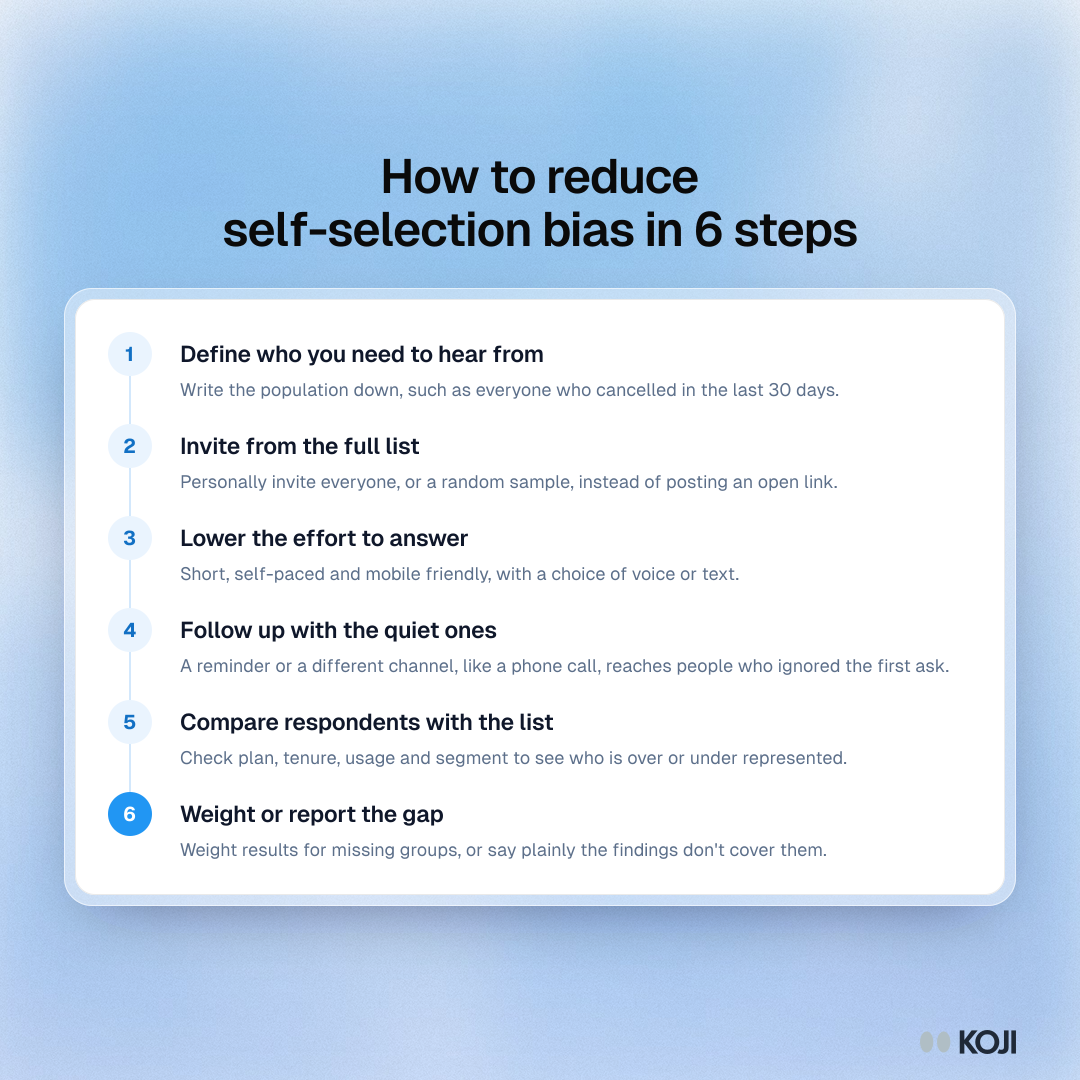
Six-step process to reduce self-selection bias, from defining the population to reporting who is missing

Process

How to reduce self-selection bias in 6 steps
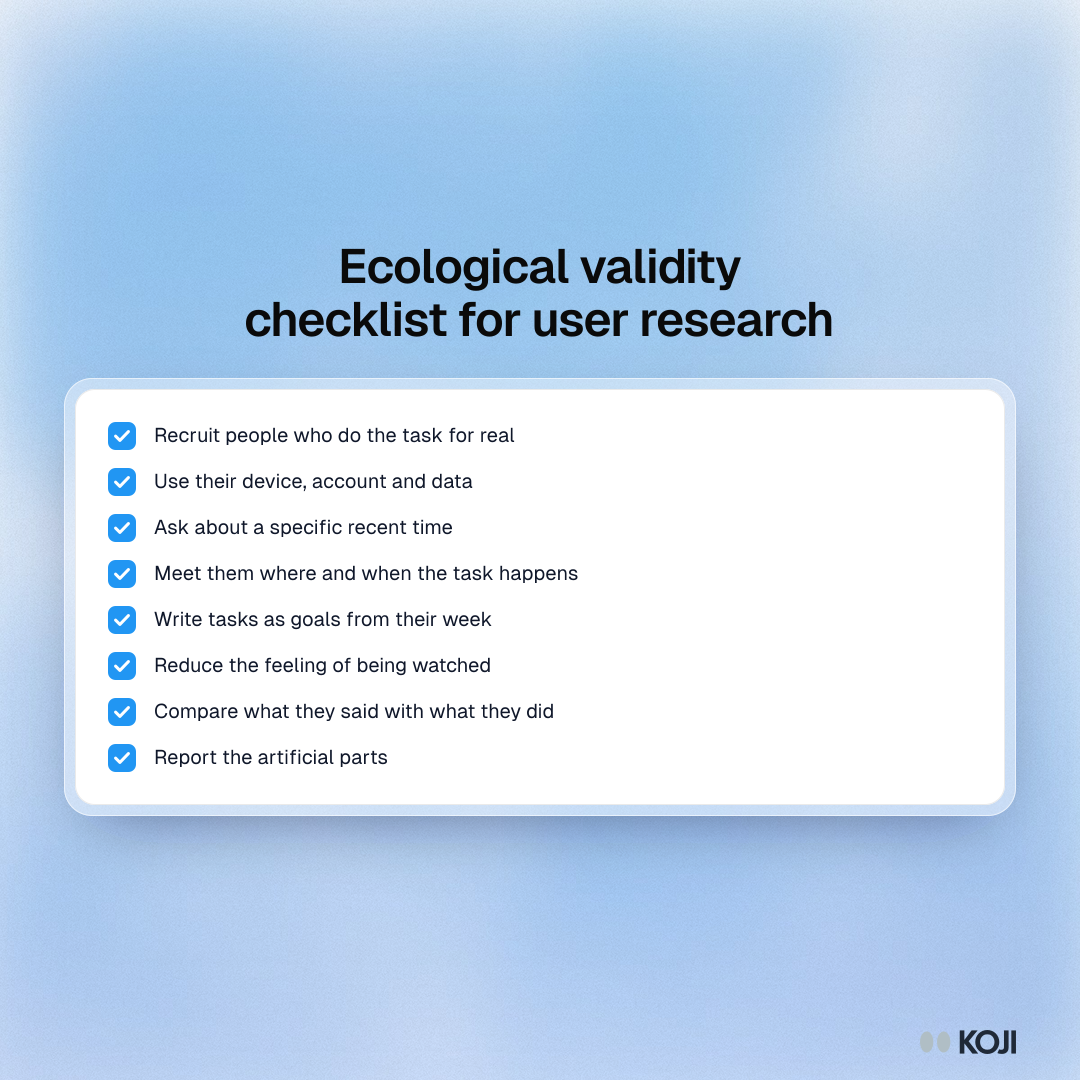
Checklist of eight ways to raise ecological validity in a user research study, from recruiting real users to noting artificial conditions in the report

Checklist

Ecological validity checklist for user research
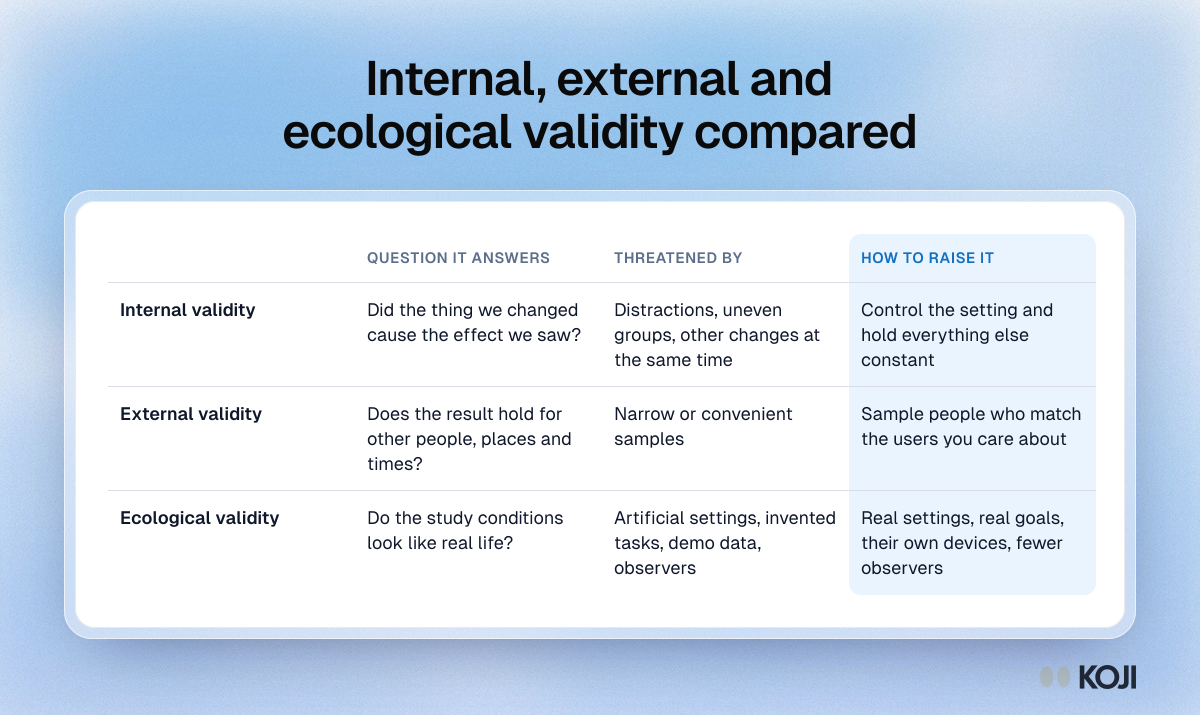
Table comparing internal, external and ecological validity: the question each answers, what threatens it and how to raise it

Reference table

Internal, external and ecological validity compared
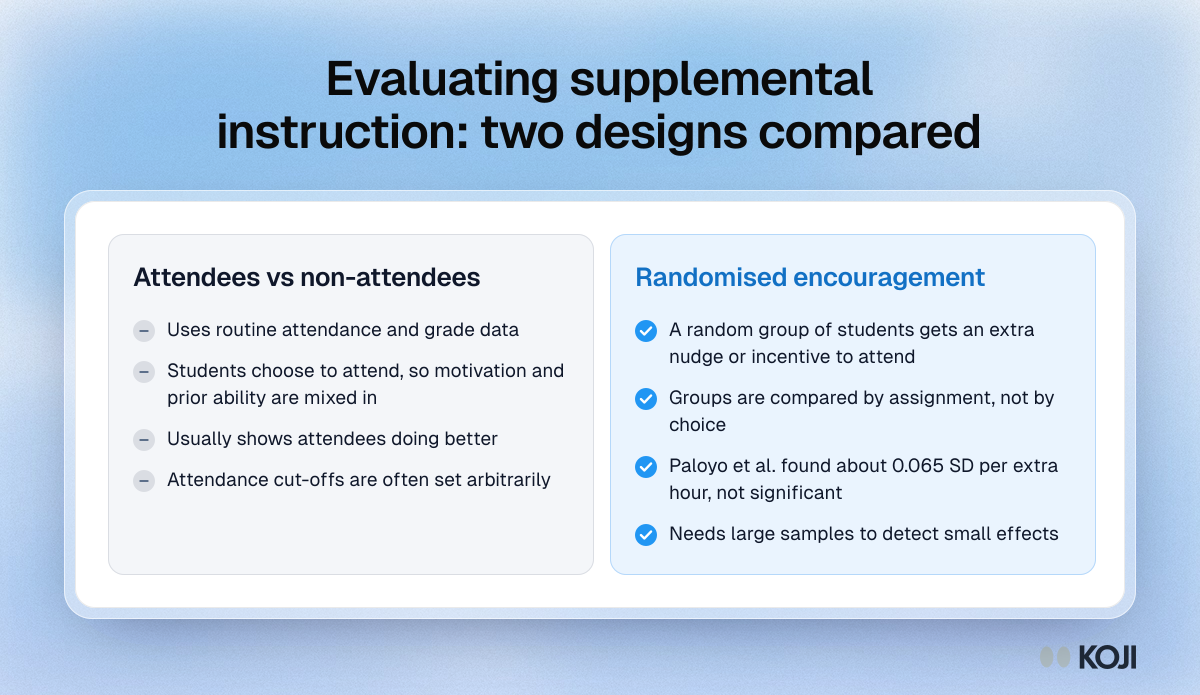
Comparison of two ways to evaluate supplemental instruction: comparing attendees with non-attendees, and a randomised encouragement design.

Comparison

Evaluating supplemental instruction: two designs compared
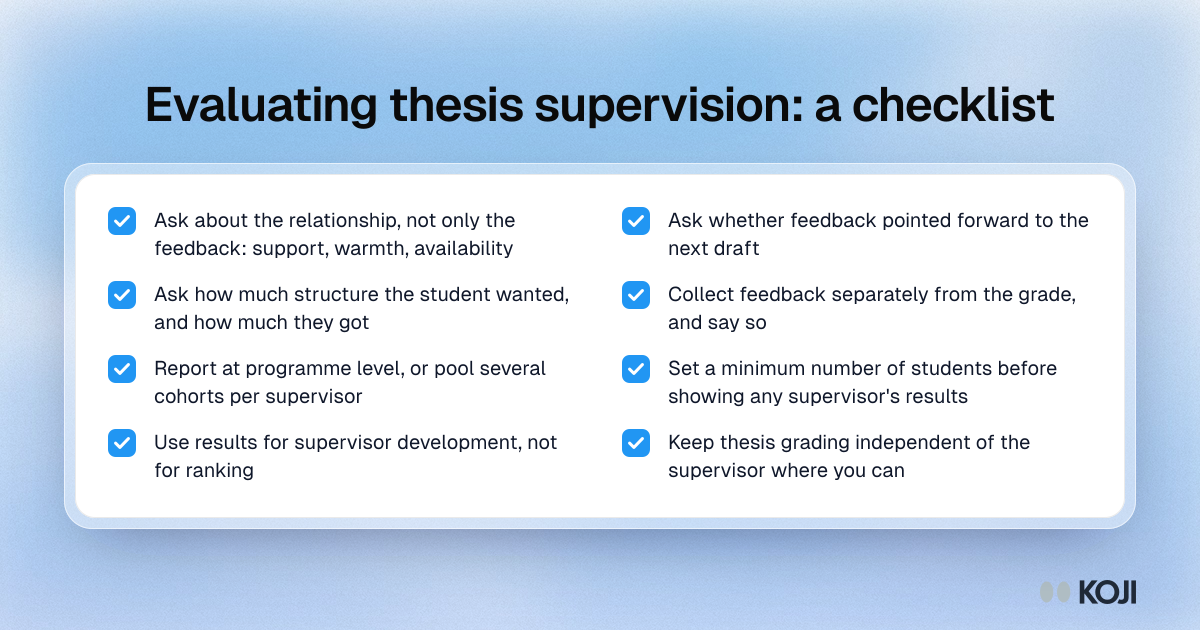
Checklist of eight points for evaluating master's thesis supervision, from asking about the relationship and feedback to small-group reporting rules.

Checklist

Evaluating thesis supervision: a checklist
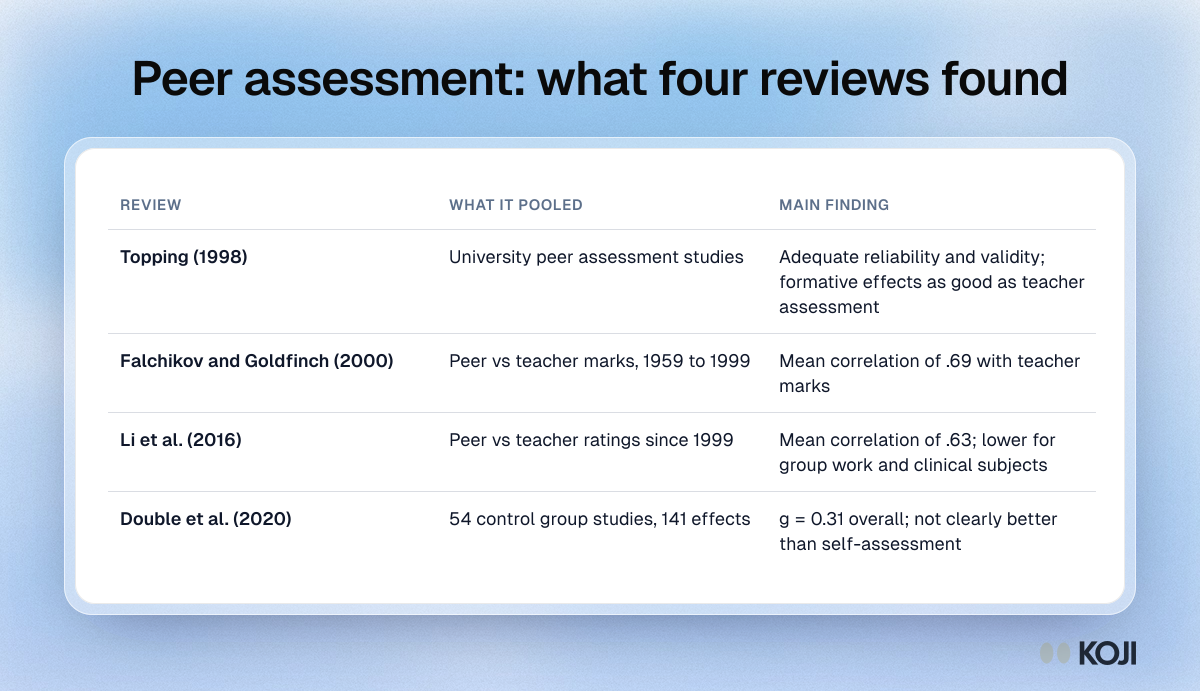
Table comparing four peer assessment reviews, from Topping 1998 to Double et al. 2020, with what each pooled and its main finding.

Reference table

Peer assessment: what four reviews found
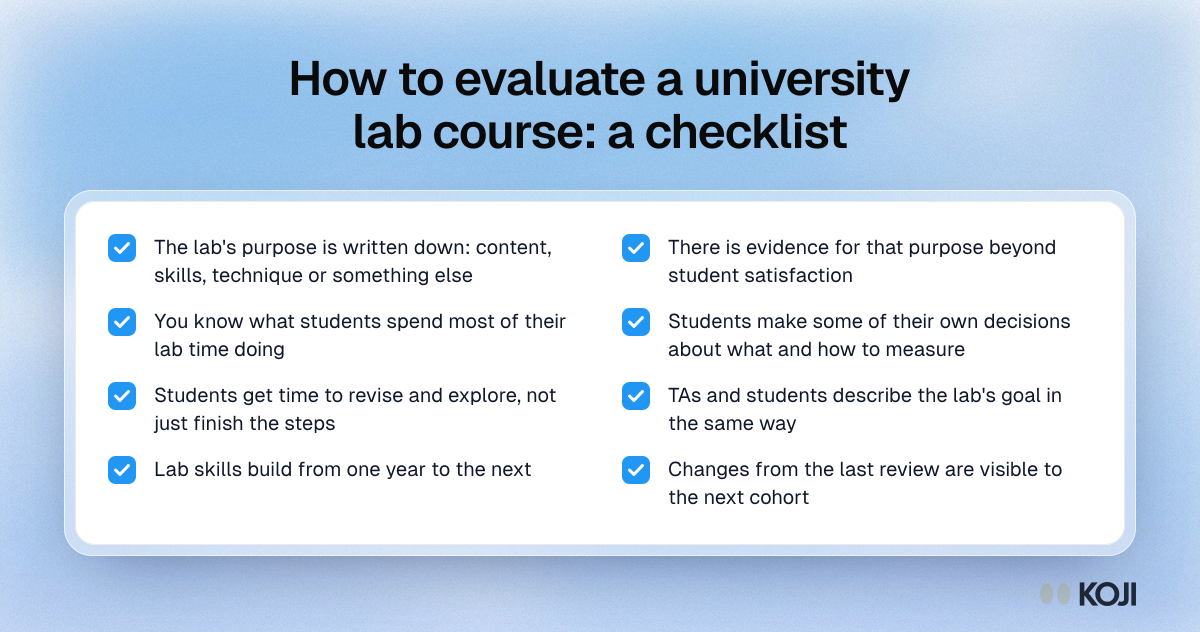
Checklist of eight points for evaluating a university lab course, from a written purpose and evidence beyond satisfaction to skills that build across years.

Checklist

How to evaluate a university lab course: a checklist
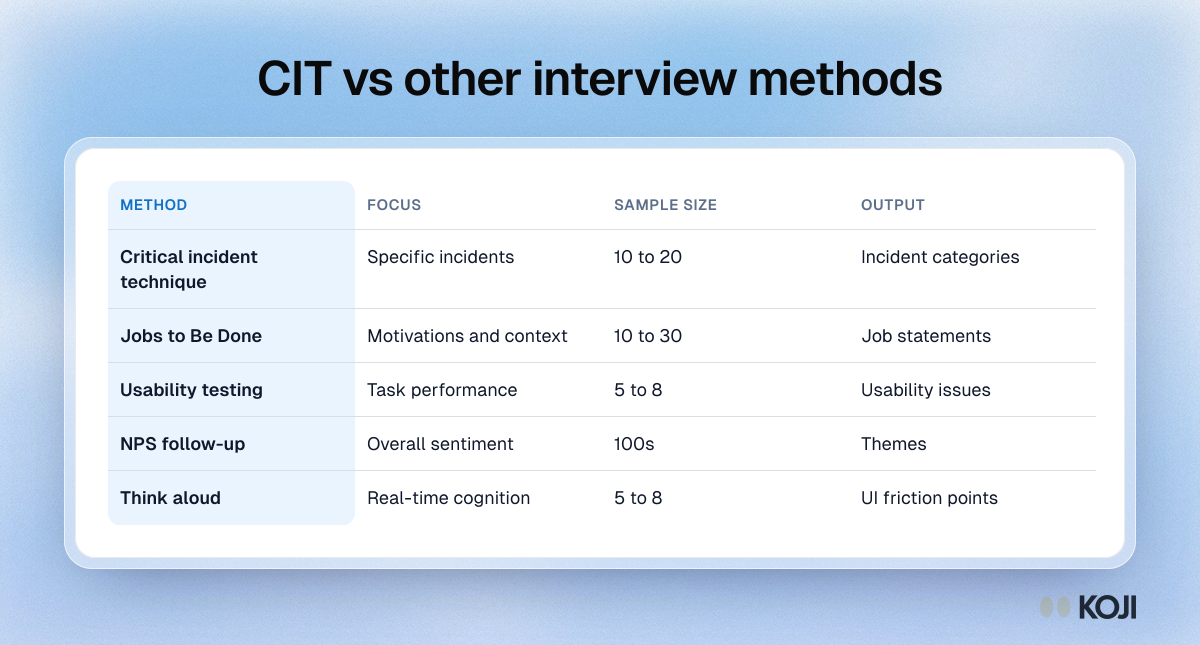
Table comparing critical incident technique, Jobs to Be Done, usability testing, NPS follow-up and think aloud by focus, sample size and output.

Reference table

CIT vs other interview methods
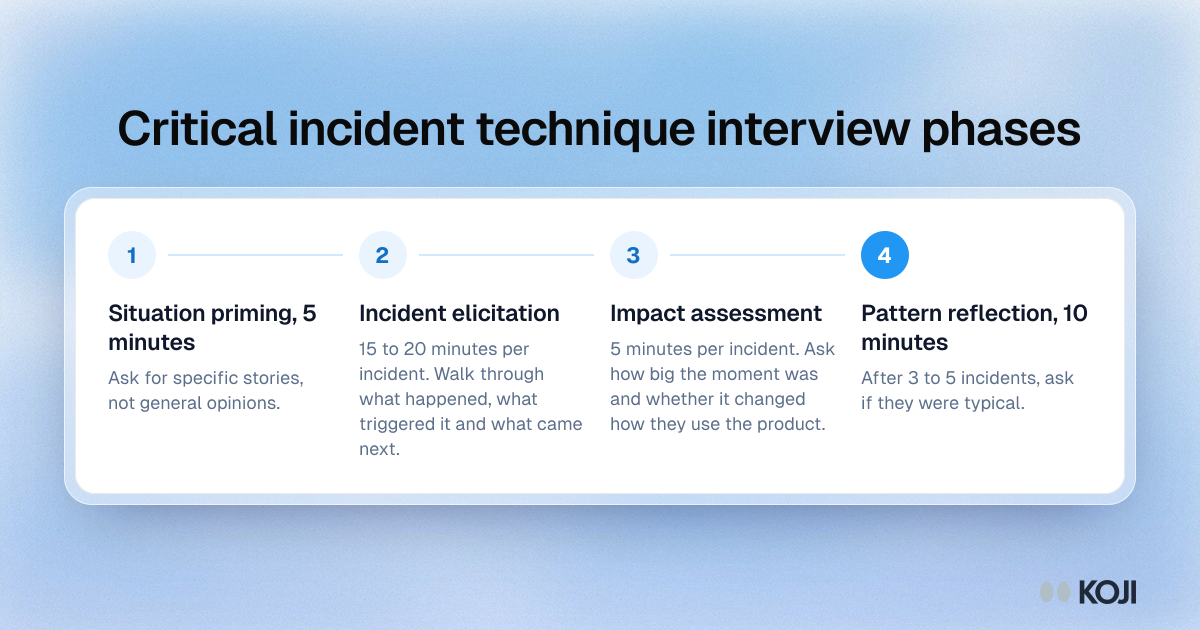
Process of the four critical incident technique interview phases: priming, incident elicitation, impact assessment and pattern reflection.

Process

Critical incident technique interview phases
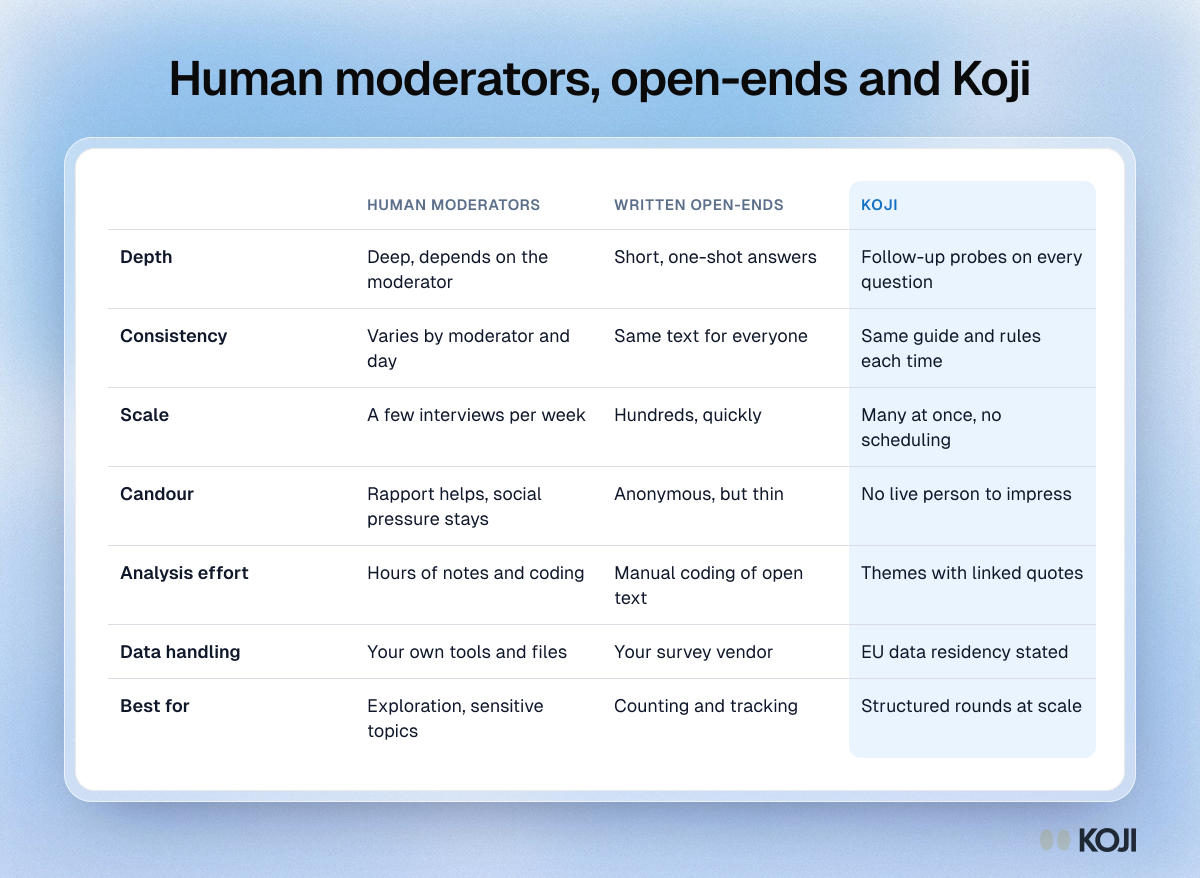
Table comparing human moderators, written open-ends and Koji on depth, consistency, scale, candour, analysis effort and data handling.

Reference table

Human moderators, open-ends and Koji
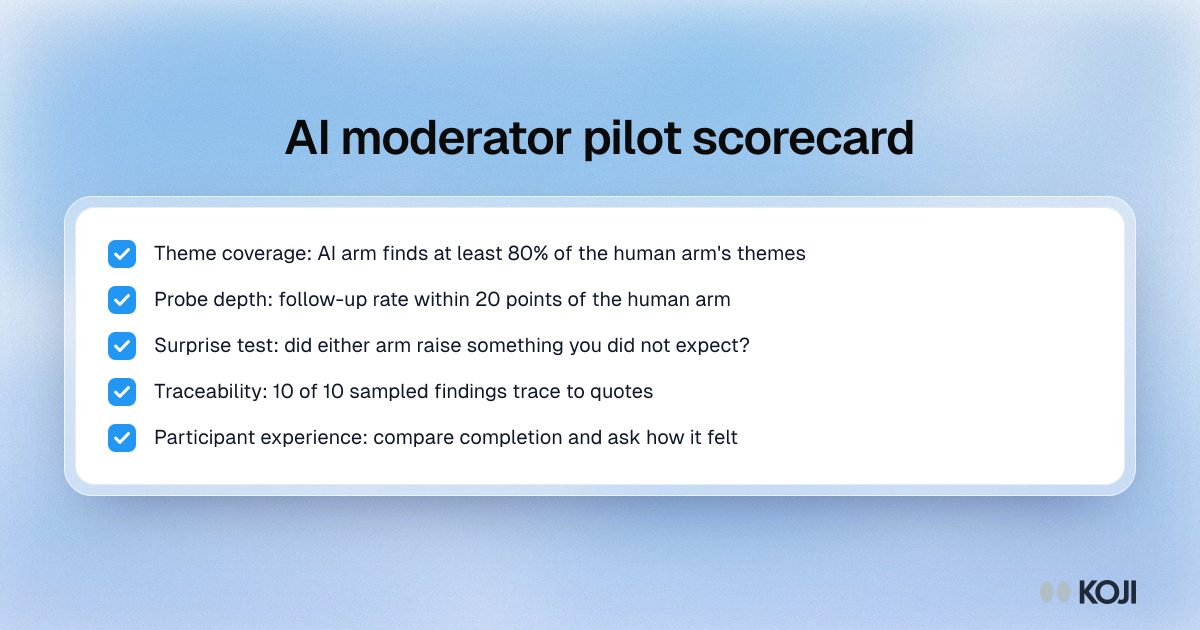
Checklist of five criteria for scoring an AI moderator pilot: theme coverage, probe depth, surprise test, traceability, participant experience.

Checklist

AI moderator pilot scorecard
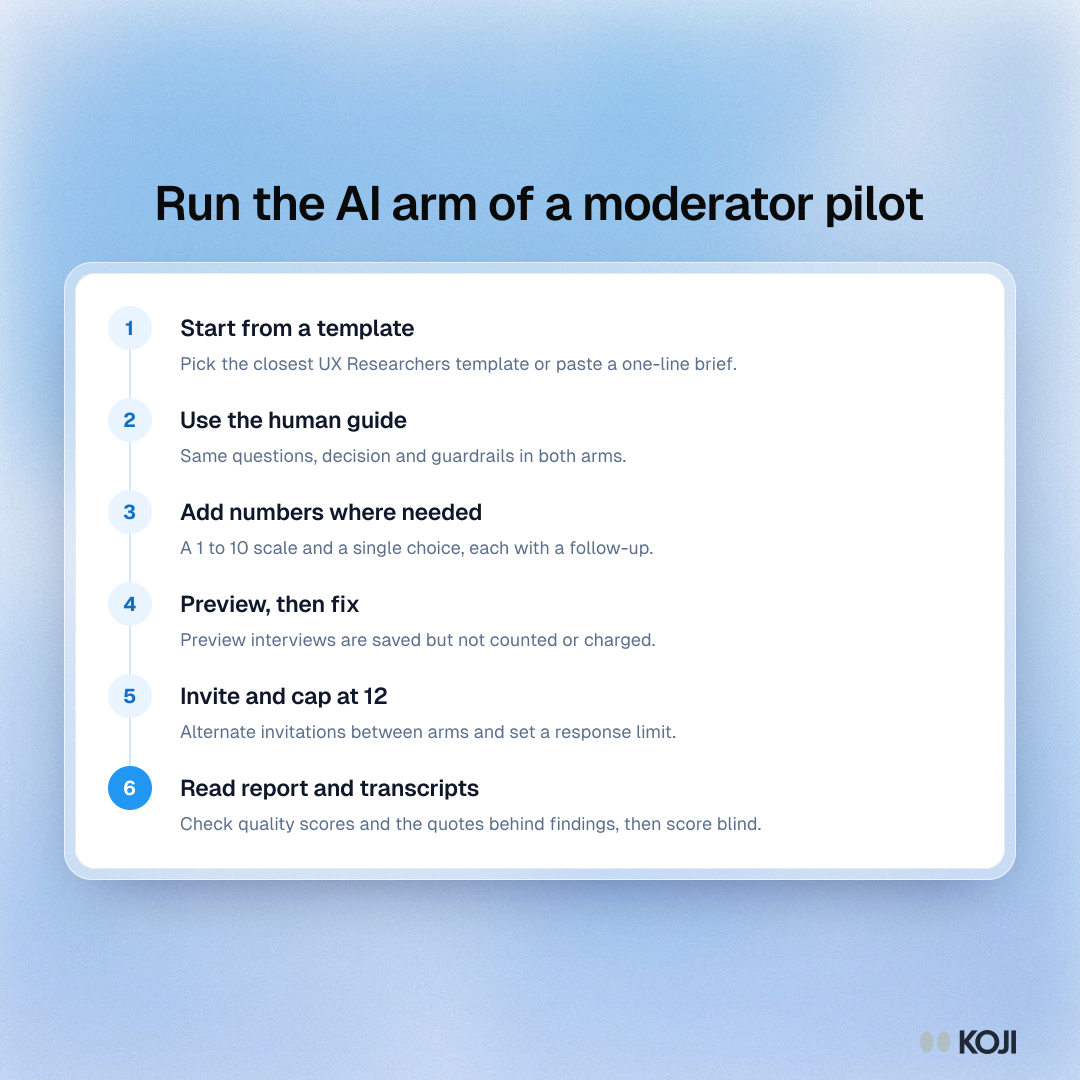
Process with six steps for running the AI arm of a moderator pilot in Koji, from writing the brief to preview, field and read the report.

Process

Run the AI arm of a moderator pilot
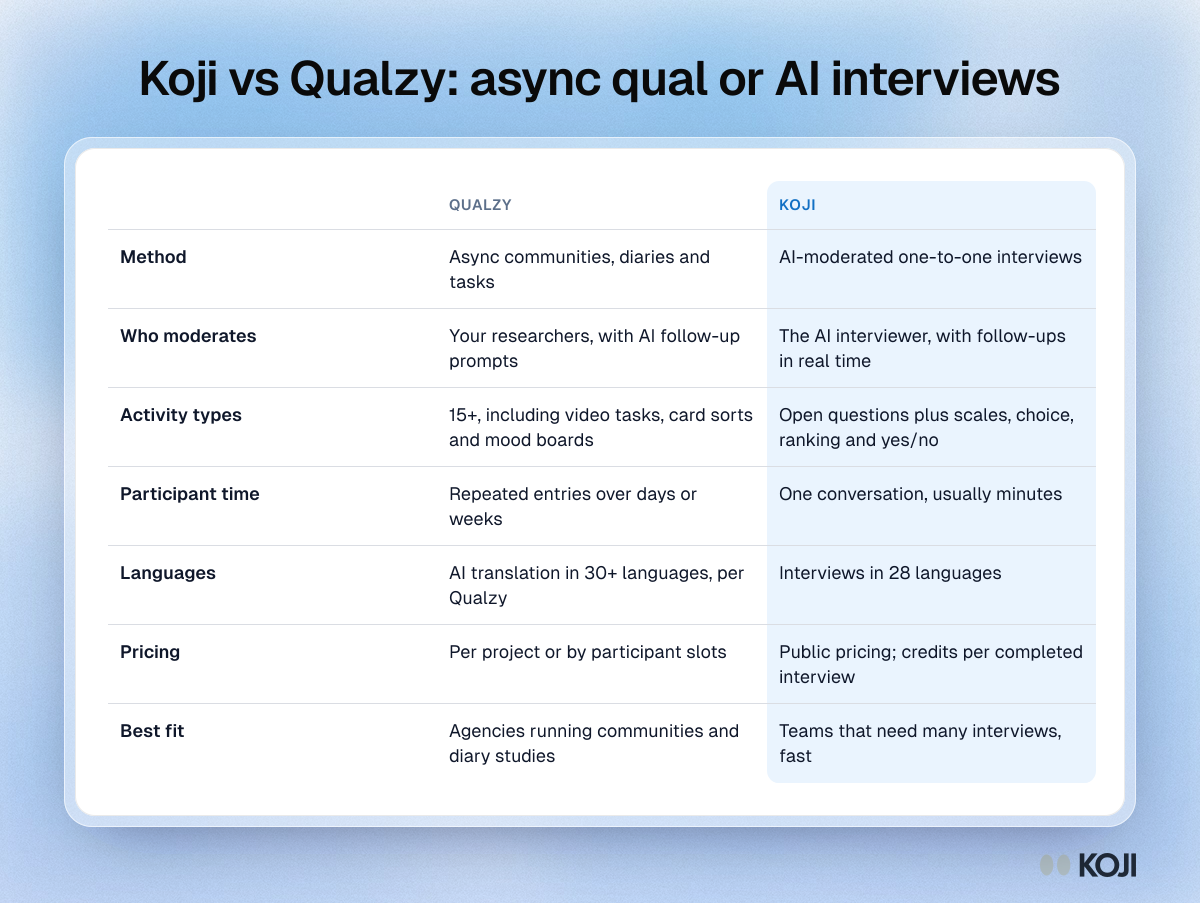
Table comparing Qualzy and Koji on method, moderation, activity types, participant time, languages, pricing and best fit

Reference table

Koji vs Qualzy: async qual or AI interviews
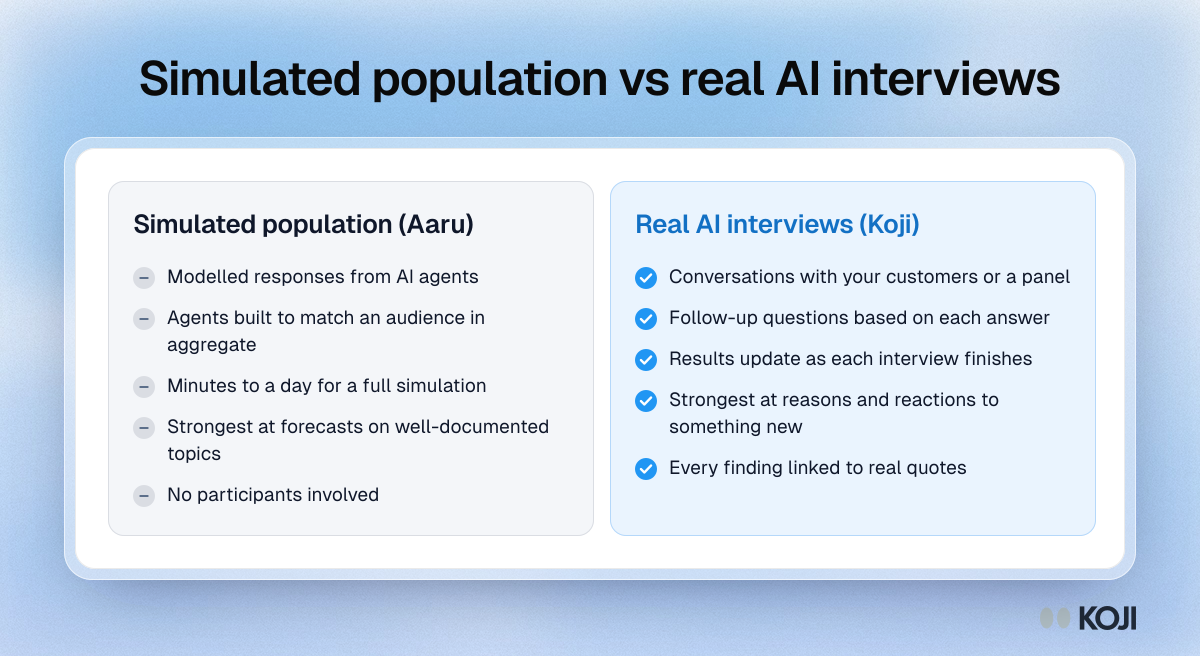
Comparison of a simulated population and real AI interviews on what each produces, who answers and where each is strongest

Comparison

Simulated population vs real AI interviews
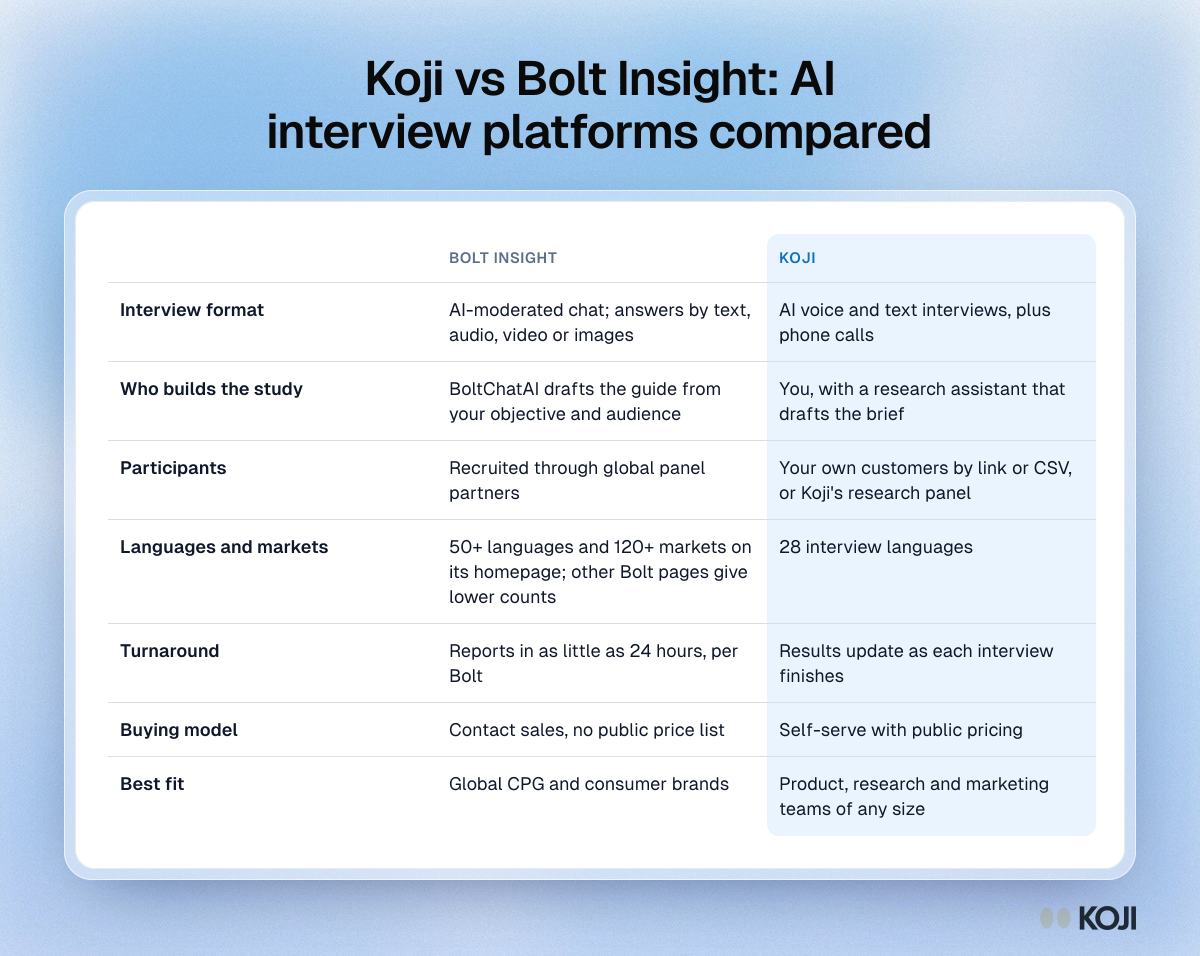
Table comparing Bolt Insight and Koji on interview format, study setup, participants, languages, turnaround, buying model and best fit

Reference table

Koji vs Bolt Insight: AI interview platforms compared
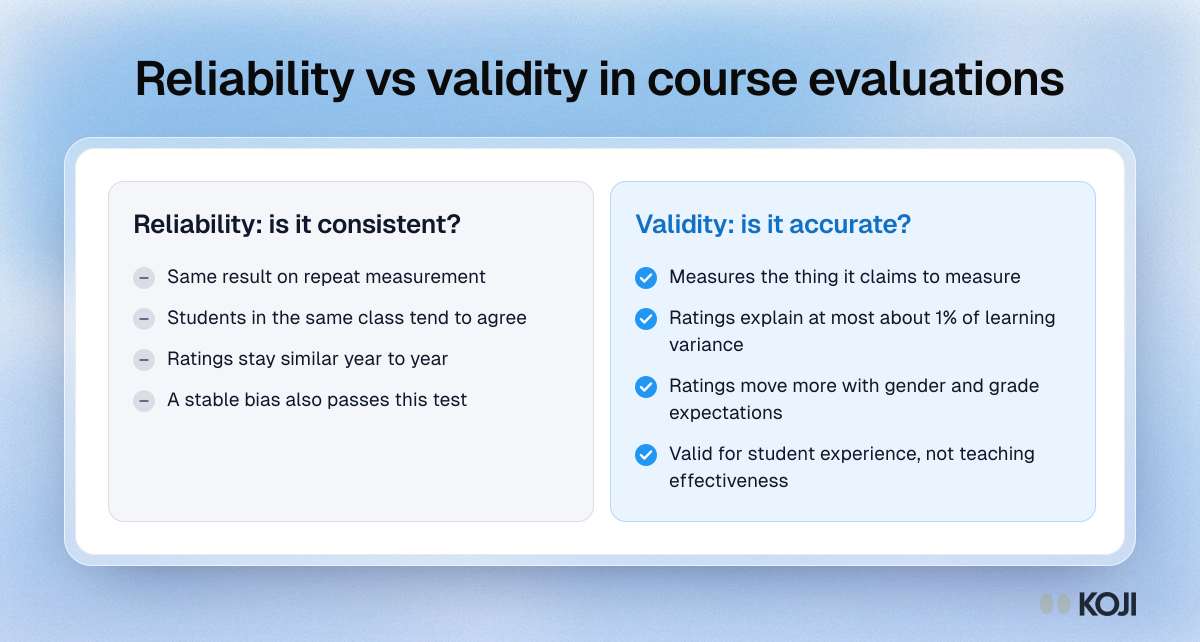
Comparison of reliability and validity in student evaluations of teaching: ratings are consistent, but barely track learning and respond to bias.

Comparison

Reliability vs validity in course evaluations
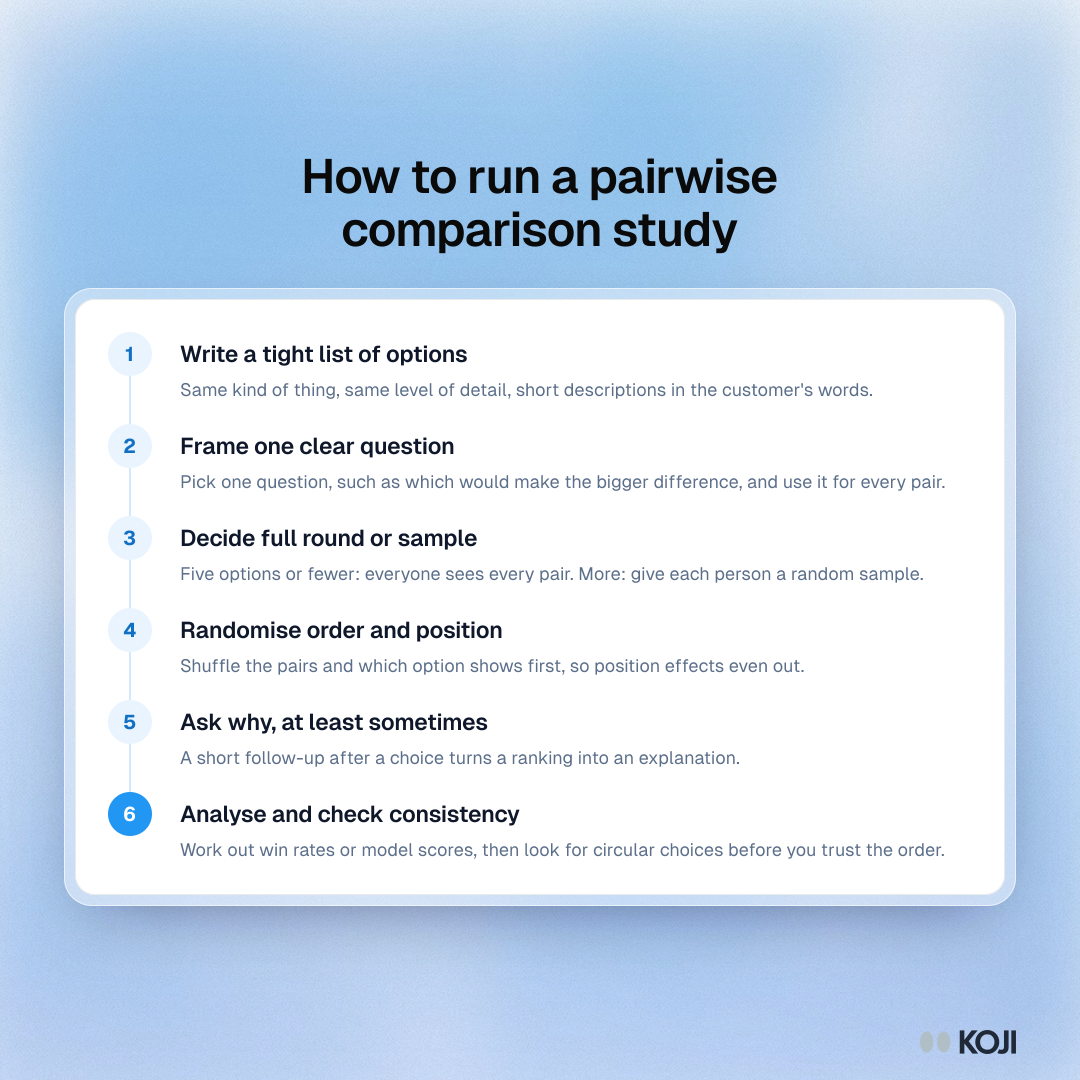
Process showing six steps to run a pairwise comparison study, from writing a tight option list to checking consistency in the results

Process

How to run a pairwise comparison study
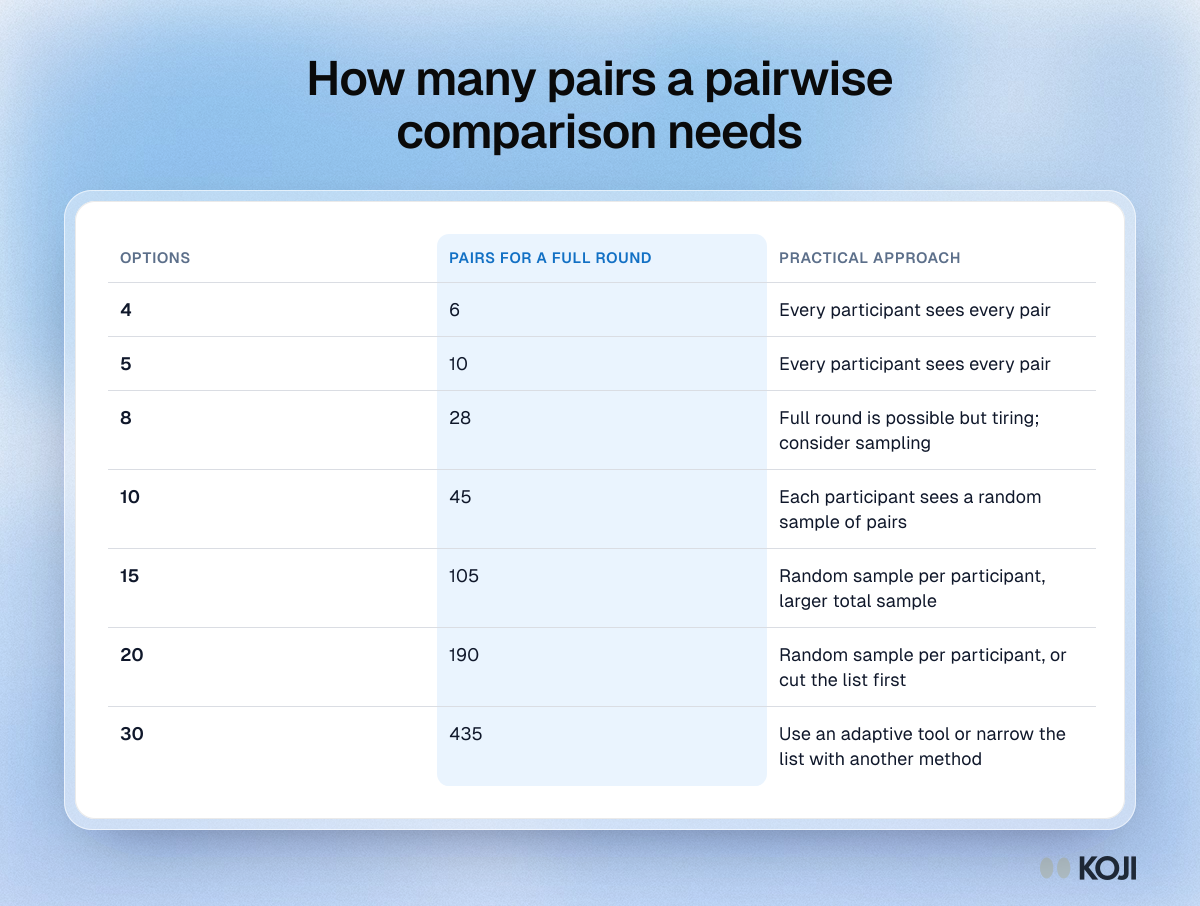
Table showing how many pairs a full pairwise comparison needs for 4 to 30 options, and the practical approach for each size

Reference table

How many pairs a pairwise comparison needs
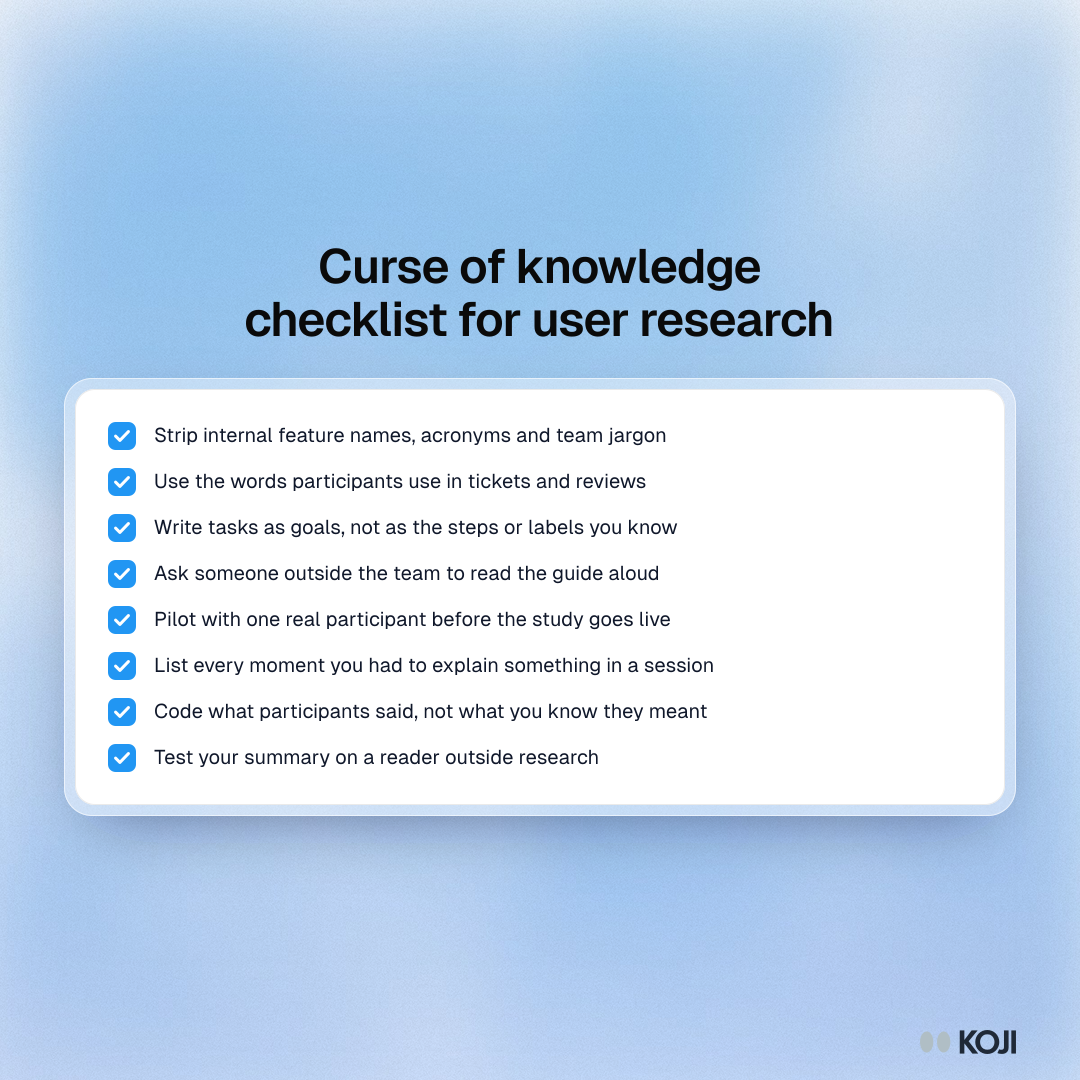
Checklist of eight ways to catch the curse of knowledge before a study goes live, from removing internal names to piloting with a newcomer

Checklist

Curse of knowledge checklist for user research
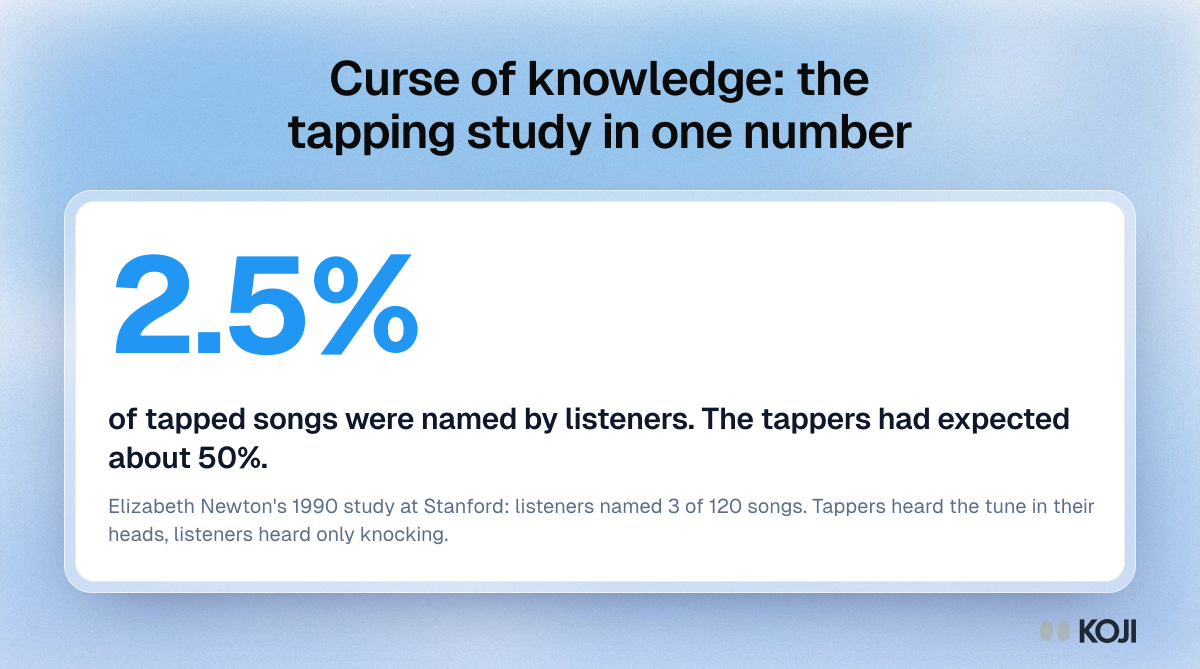
Stat card showing listeners named only 2.5% of tapped songs, while tappers had expected about 50%

Key figure

Curse of knowledge: the tapping study in one number
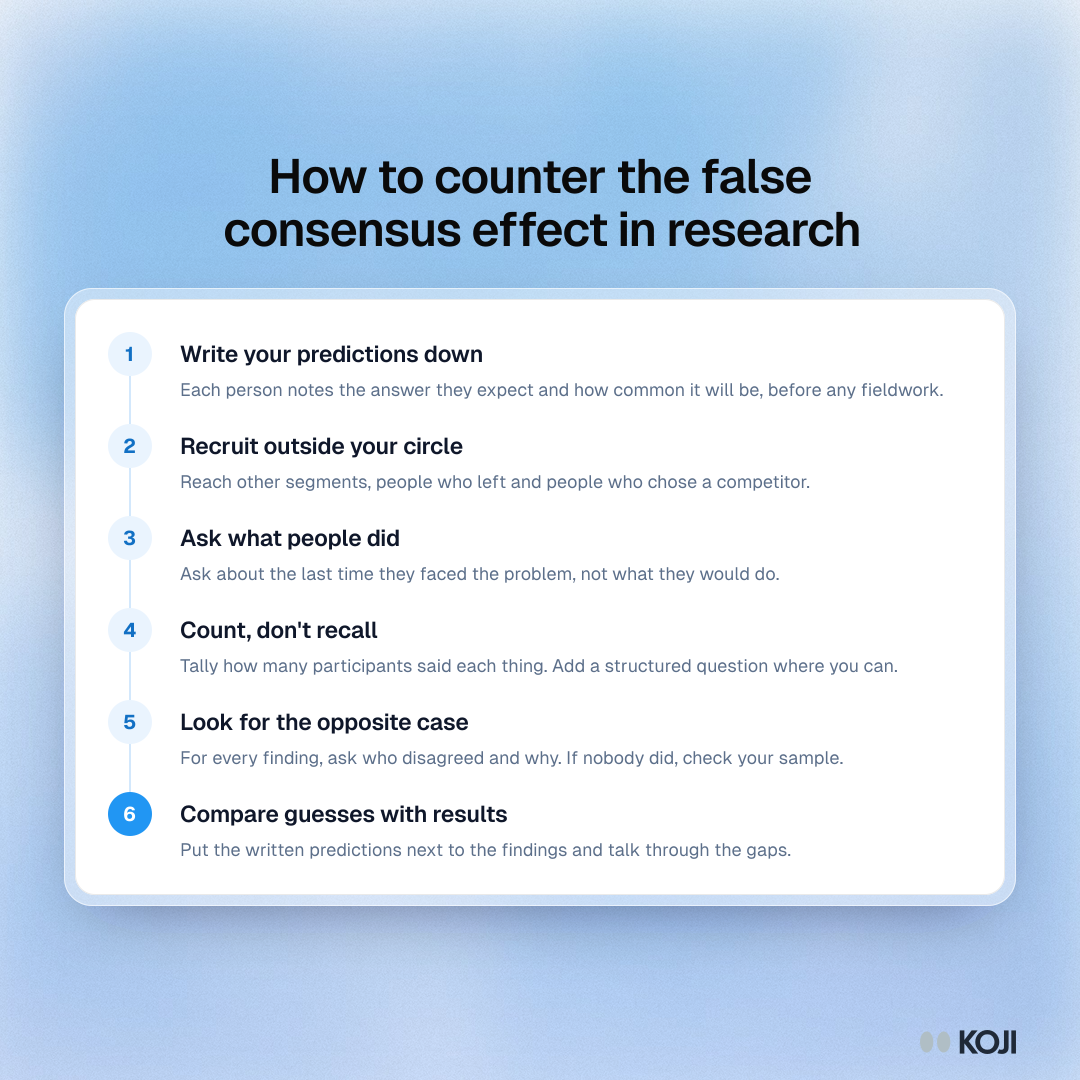
Process showing six steps to counter the false consensus effect in research, from writing predictions down to comparing them with what people said

Process

How to counter the false consensus effect in research
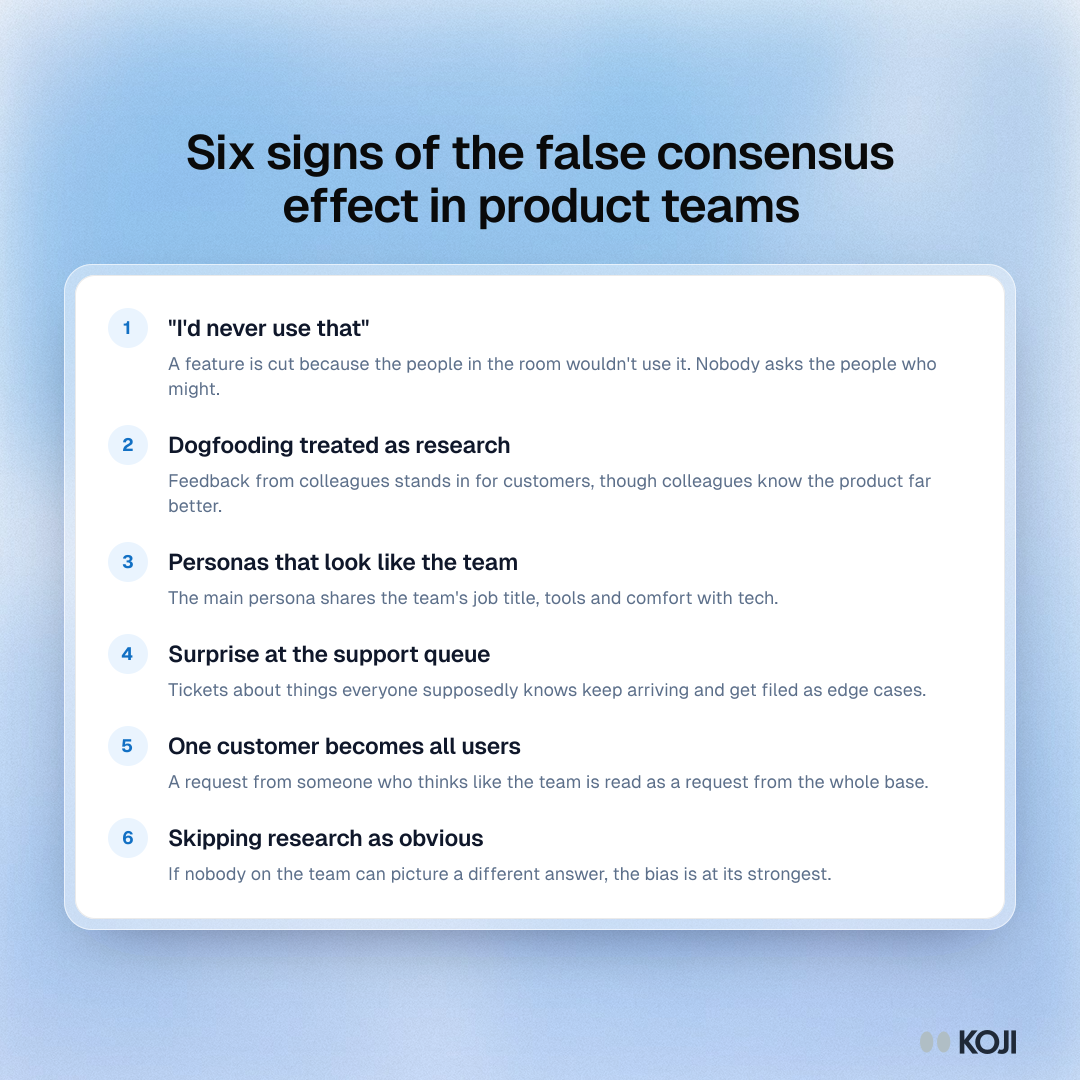
Listicle of six signs of the false consensus effect in product teams, from "I'd never use that" to skipping research because the answer feels obvious

Guide

Six signs of the false consensus effect in product teams
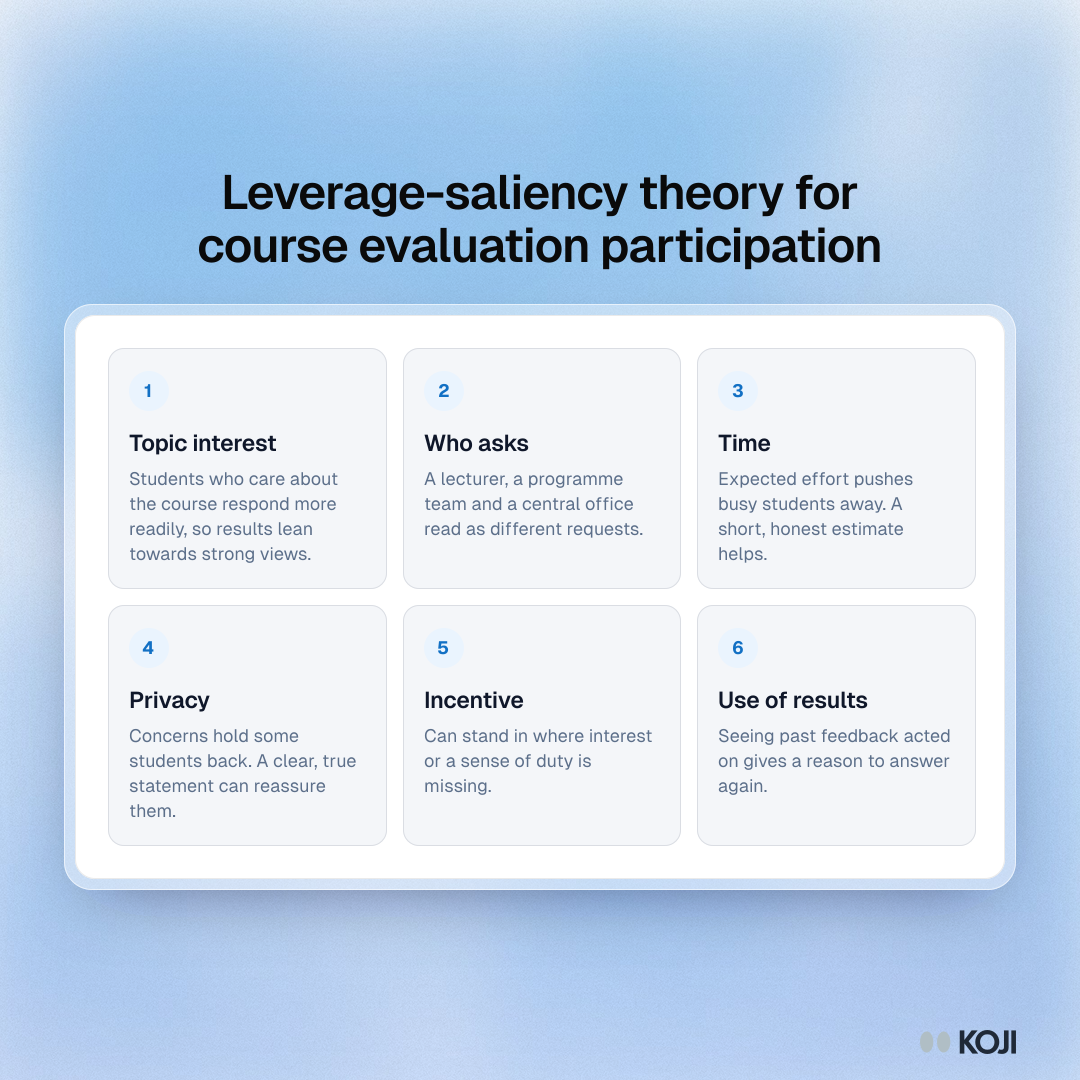
Framework of six leverage-saliency attributes that move students towards or away from a course evaluation: topic, sender, time, privacy, incentive, use.

Framework

Leverage-saliency theory for course evaluation participation
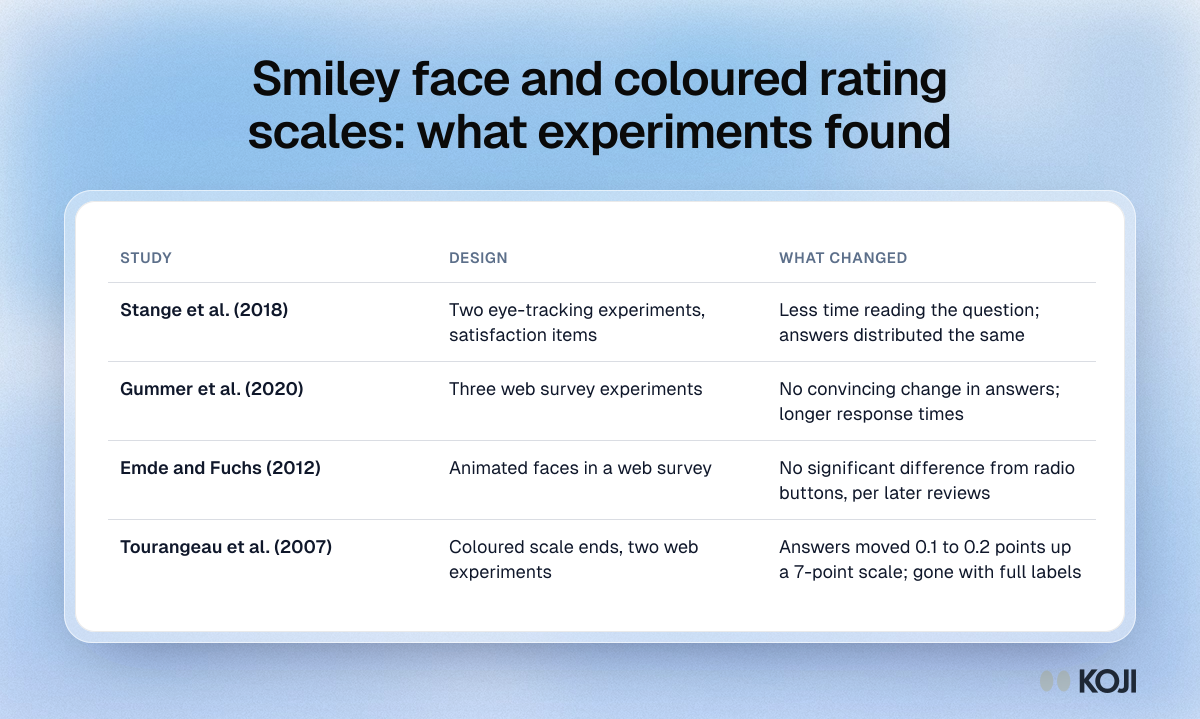
Table of four experiments on smiley face and coloured rating scales, showing faces changed reading time but not answers, and labels removed colour effects.

Reference table

Smiley face and coloured rating scales: what experiments found
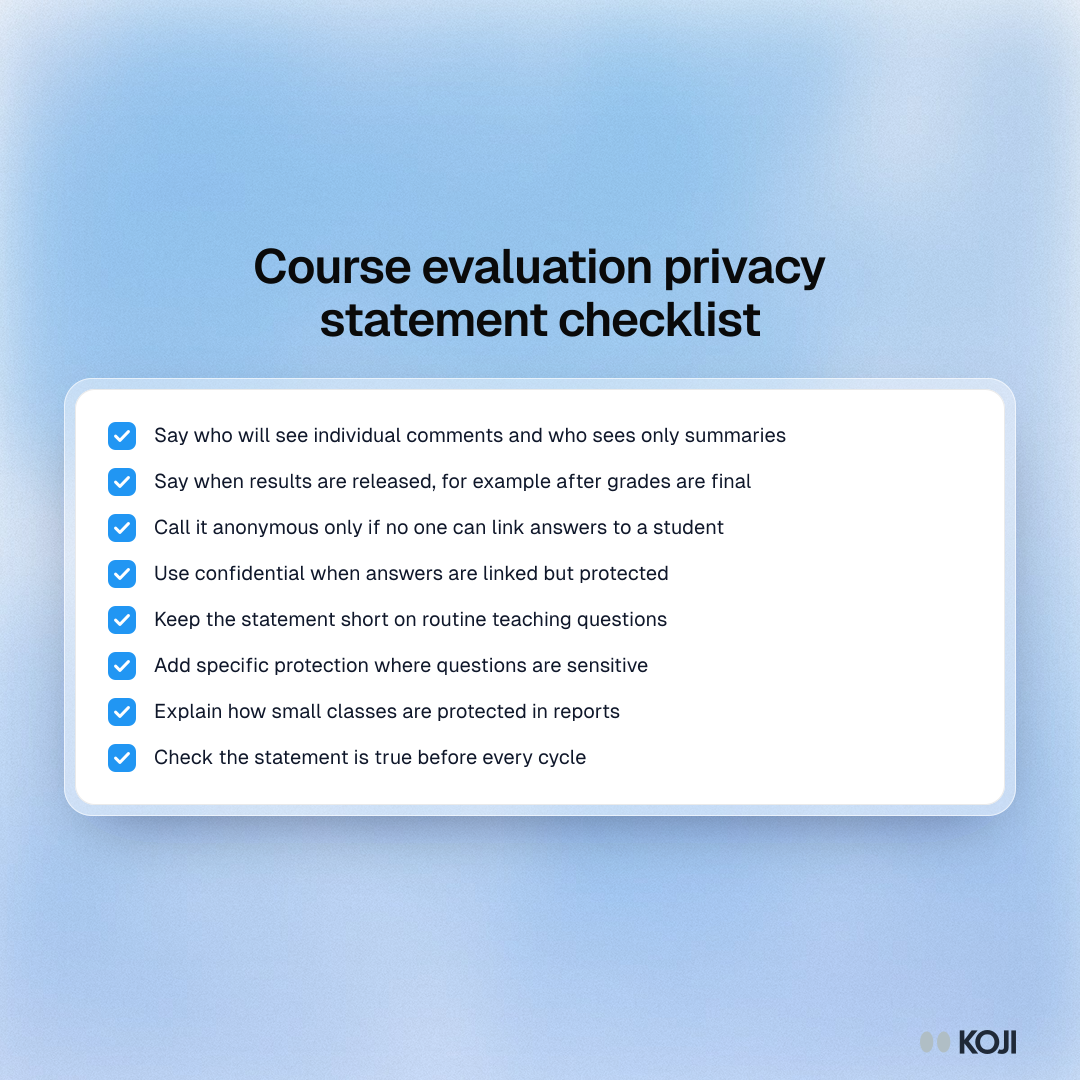
Checklist for writing a course evaluation privacy statement: who sees comments, when results are released, anonymous versus confidential, small classes.

Checklist

Course evaluation privacy statement checklist
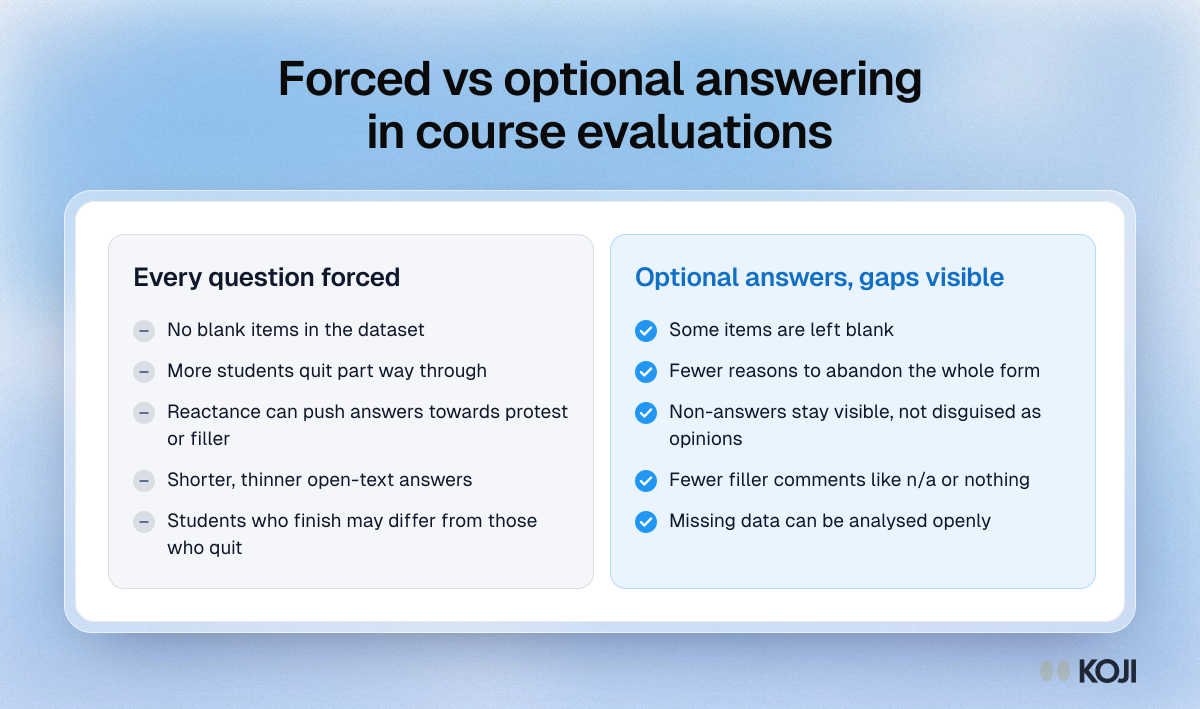
Comparison of forced and optional answering in course evaluations: forcing answers fills every item but raises dropout, reactance and filler answers.

Comparison

Forced vs optional answering in course evaluations
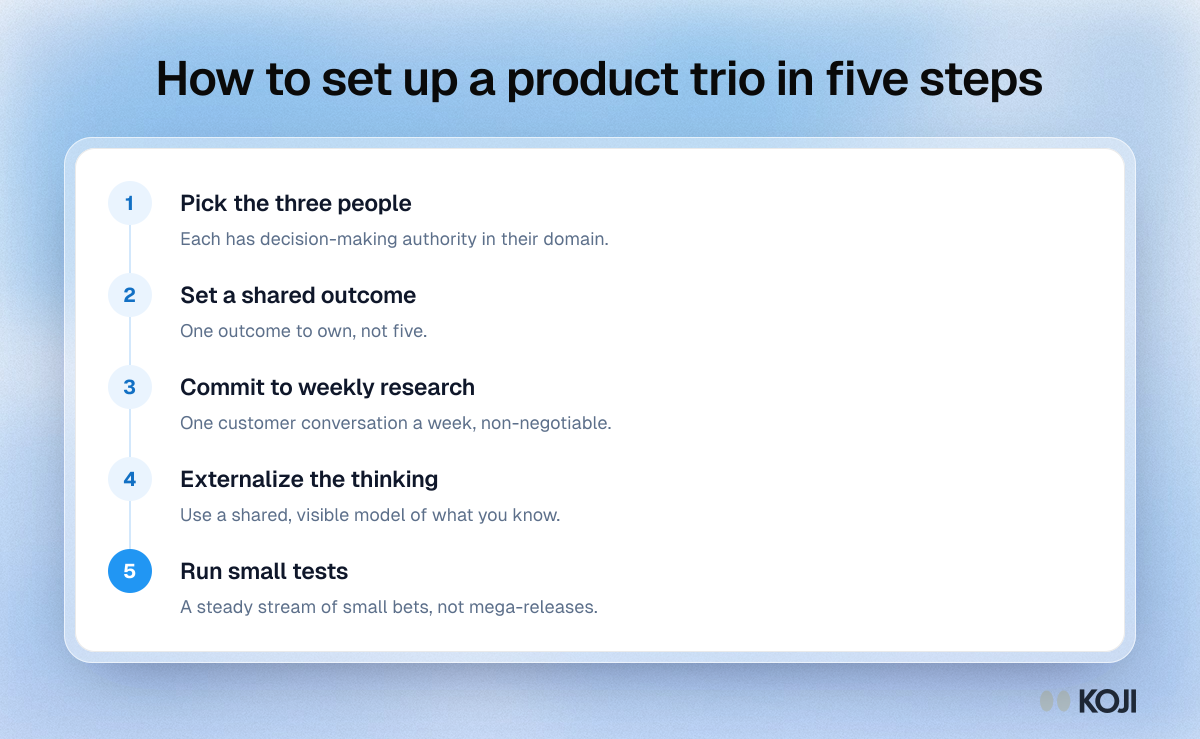
Process diagram of five steps to set up a product trio: pick three people, set a shared outcome, commit to weekly research, externalize, run small tests.

Process

How to set up a product trio in five steps
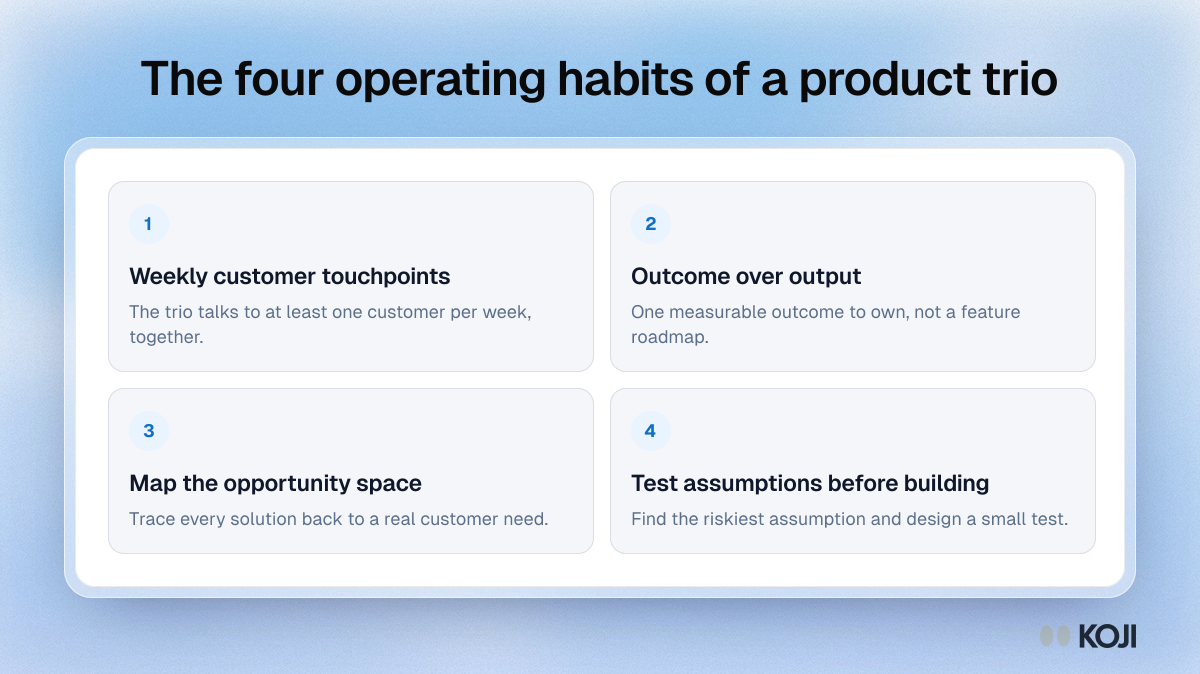
Framework of the four operating habits of a product trio: weekly customer touchpoints, outcome focus, mapping opportunities and testing assumptions.

Framework

The four operating habits of a product trio
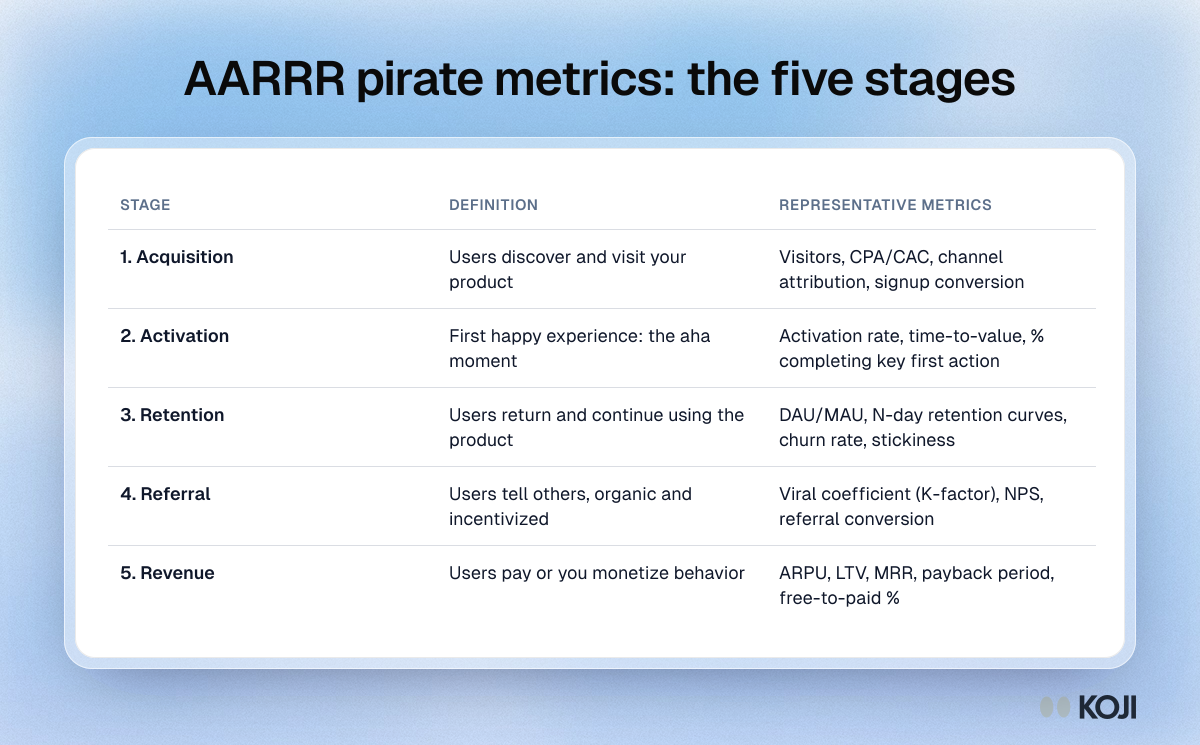
Table of the five AARRR pirate metrics stages (acquisition, activation, retention, referral, revenue) with a definition and typical metrics for each.

Reference table

AARRR pirate metrics: the five stages
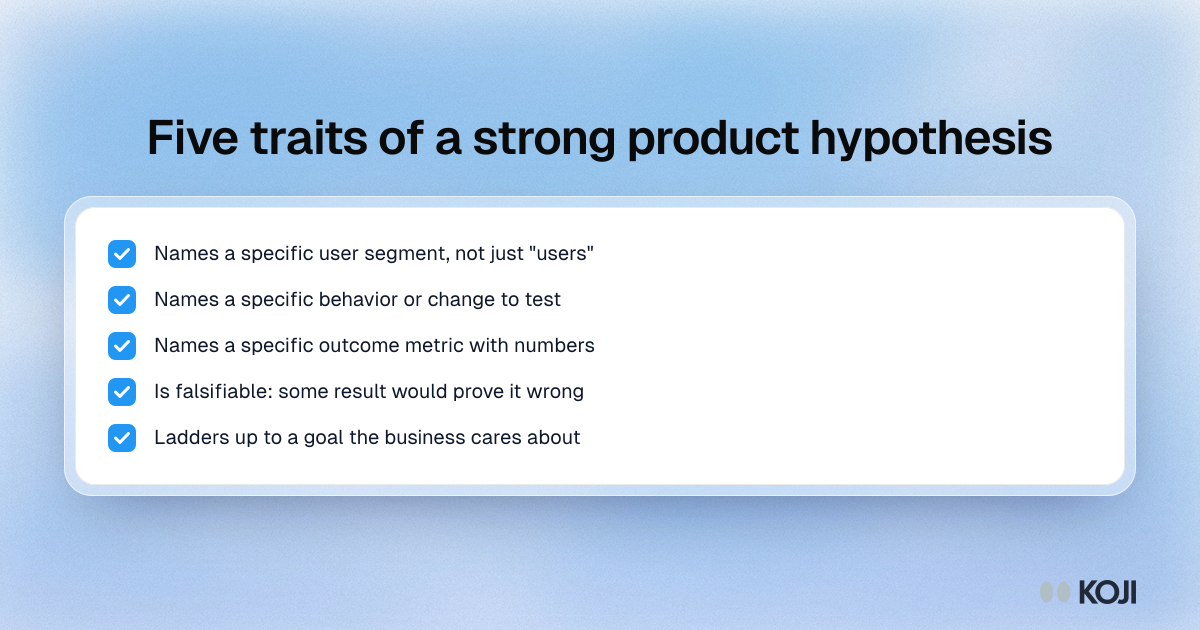
Checklist of five traits of a strong product hypothesis: a specific segment, behavior and metric, falsifiable, and linked to a business goal.

Checklist

Five traits of a strong product hypothesis
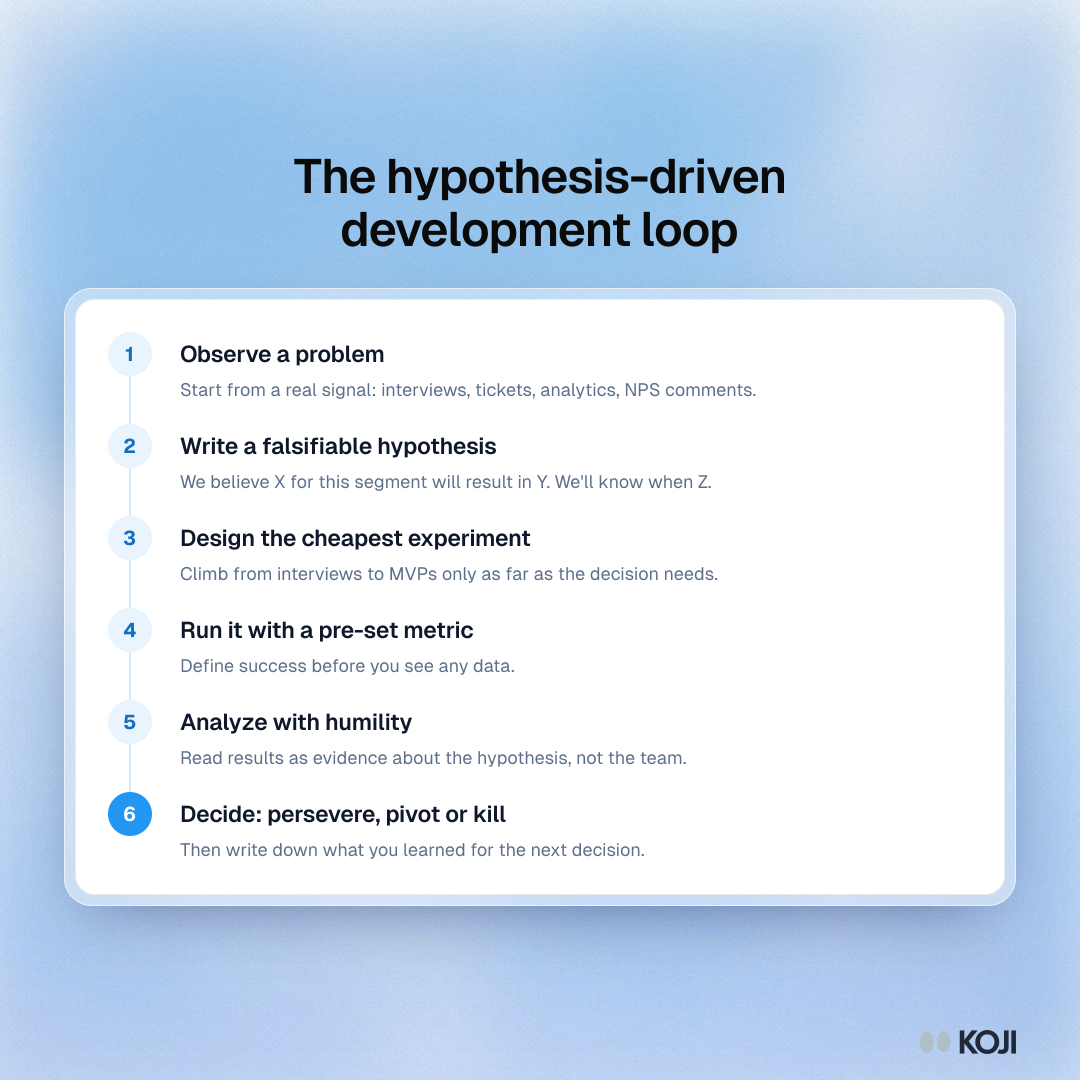
Process diagram of the six-step hypothesis-driven development loop: observe, write a hypothesis, design an experiment, run it, analyze, decide.

Process

The hypothesis-driven development loop
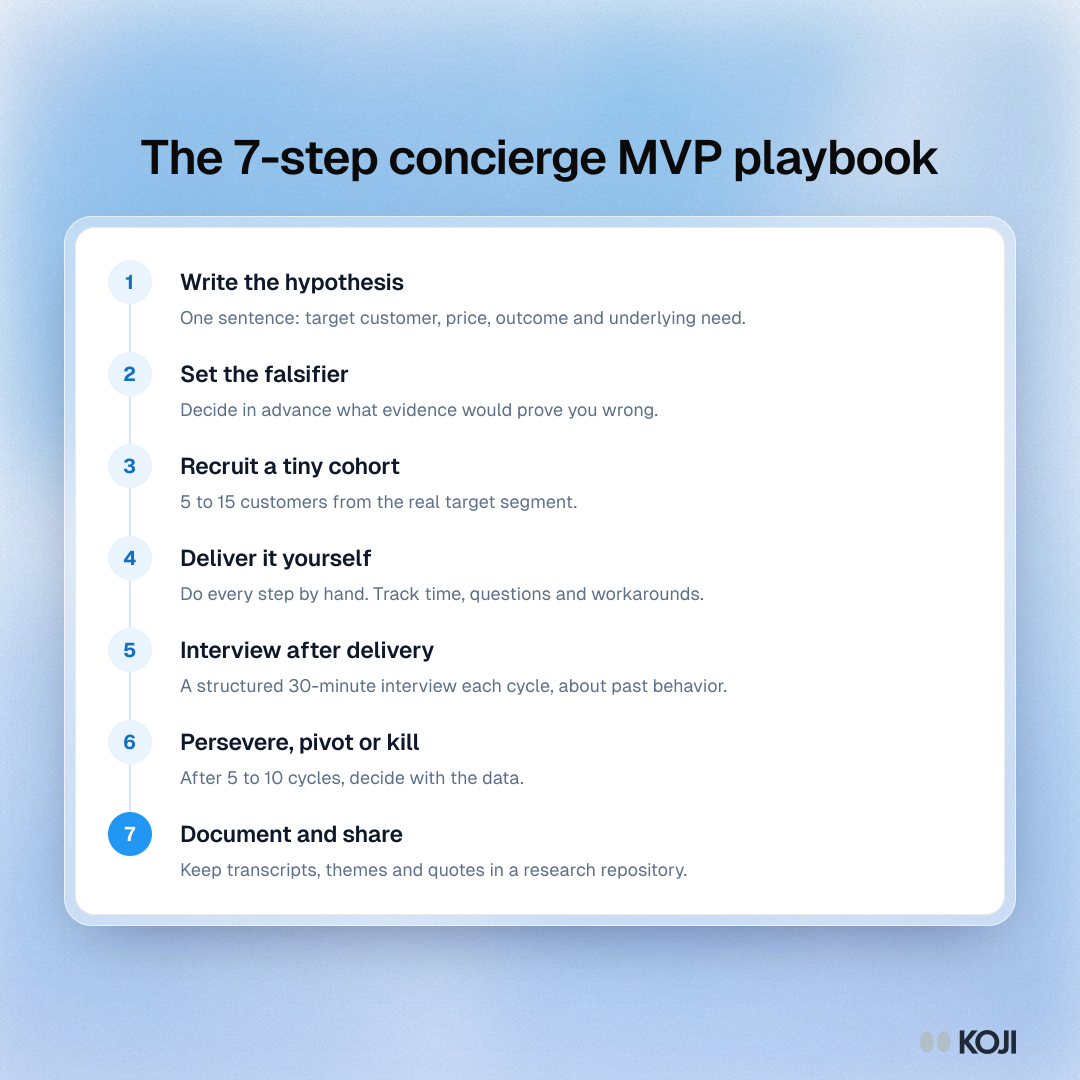
Process showing seven steps of a concierge MVP, from writing a hypothesis to a persevere, pivot or kill decision.

Process

The 7-step concierge MVP playbook
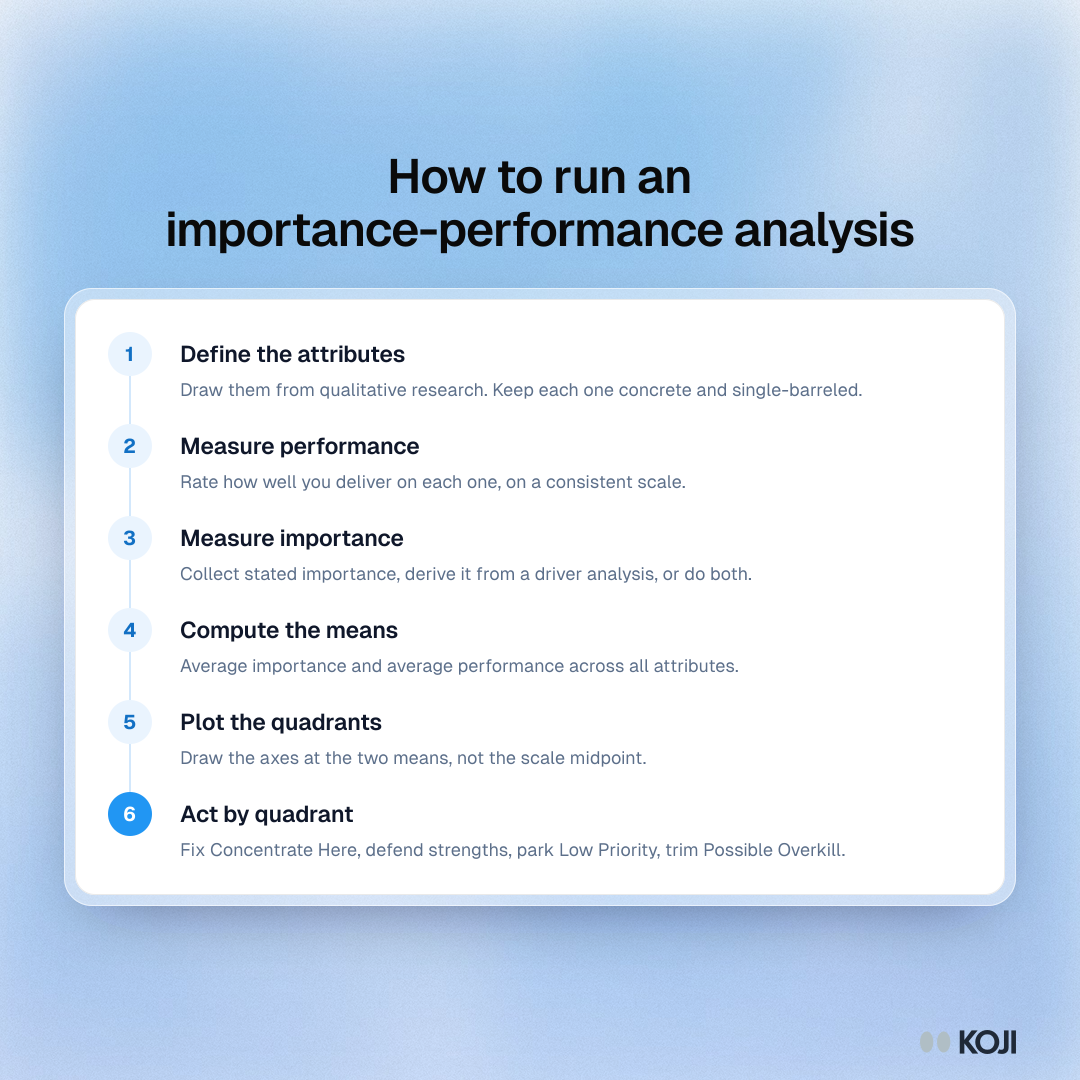
Process showing six steps of an importance-performance analysis, from defining attributes to acting on each quadrant.

Process

How to run an importance-performance analysis
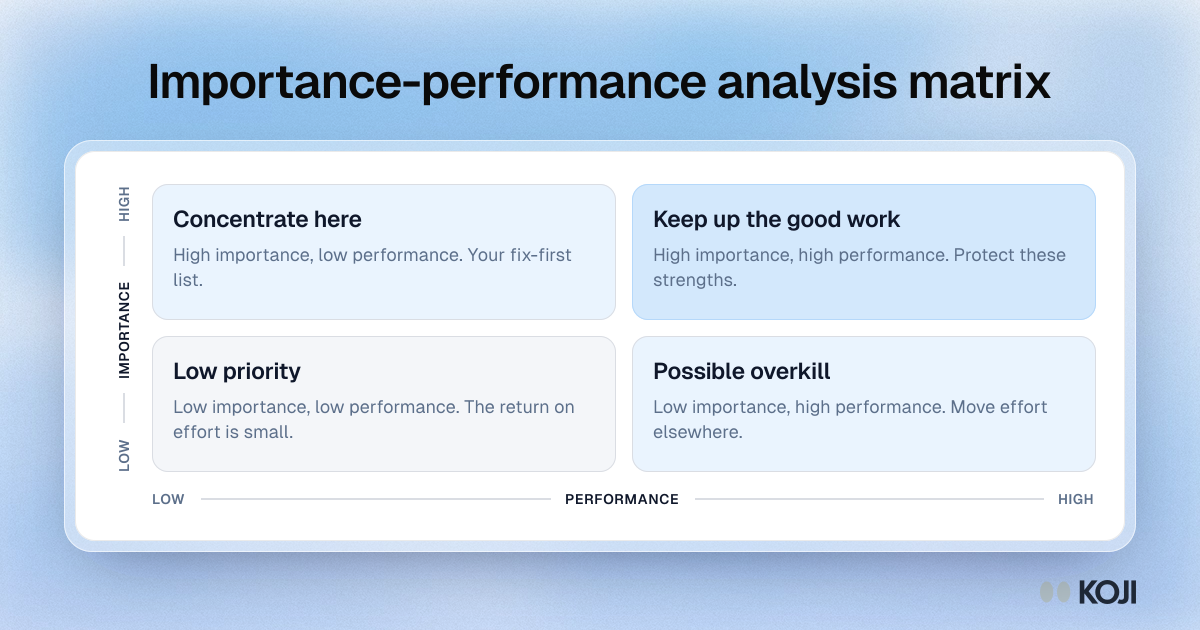
Matrix of importance against performance showing the four IPA quadrants: Concentrate here, Keep up the good work, Low priority, Possible overkill.

Matrix

Importance-performance analysis matrix
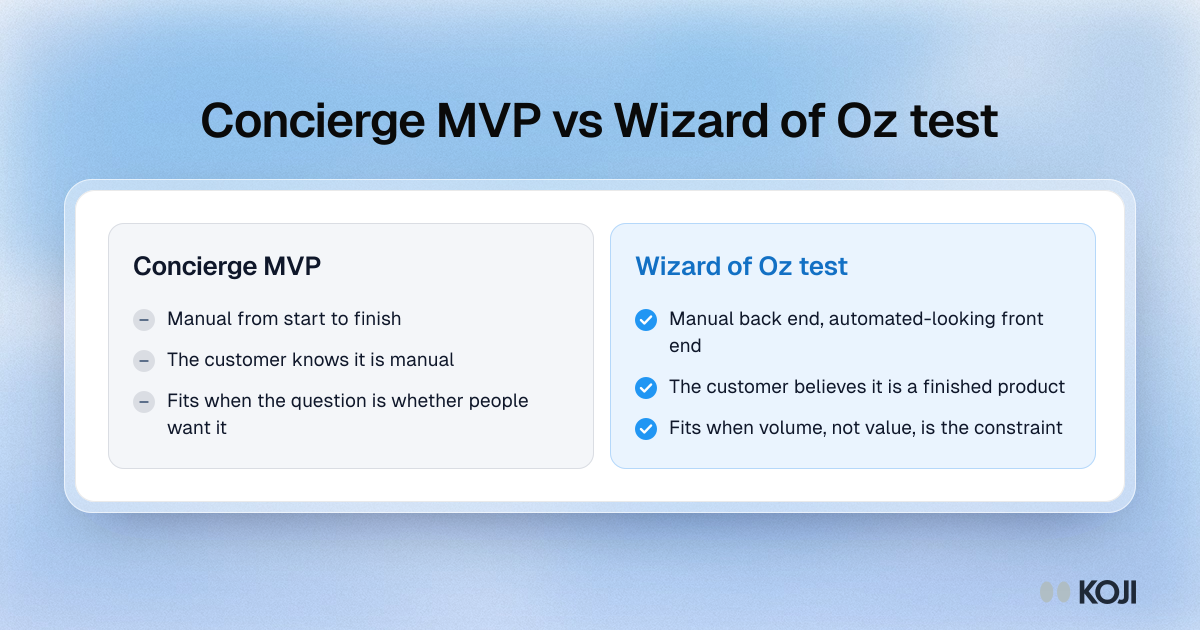
Comparison of a concierge MVP and a Wizard of Oz test: whether the customer knows the work is manual, how the product looks, and when each one fits.

Comparison

Concierge MVP vs Wizard of Oz test
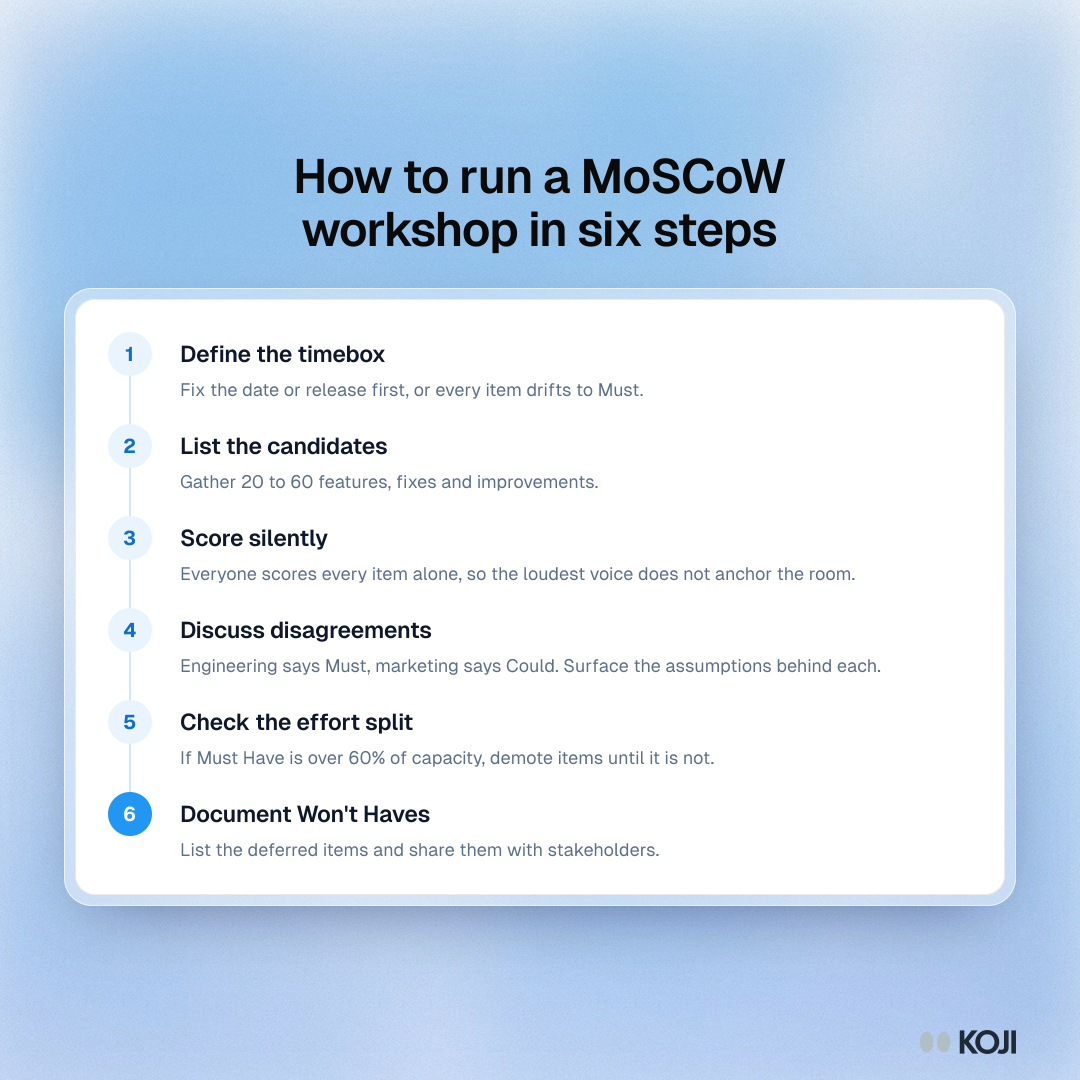
Process showing six steps of a MoSCoW workshop: define the timebox, list candidates, score silently, discuss, check the effort split and document Won't Haves.

Process

How to run a MoSCoW workshop in six steps
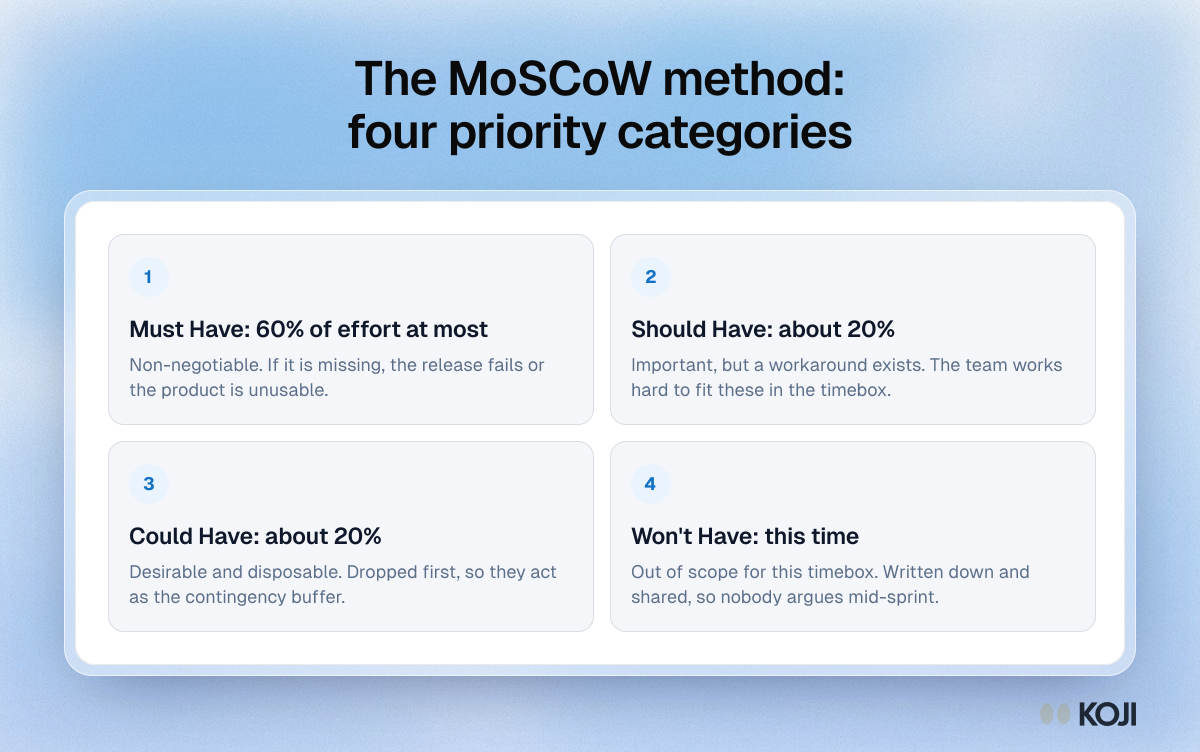
Framework showing the four MoSCoW categories, Must Have, Should Have, Could Have and Won't Have, with the share of effort each gets in a timebox.

Framework

The MoSCoW method: four priority categories
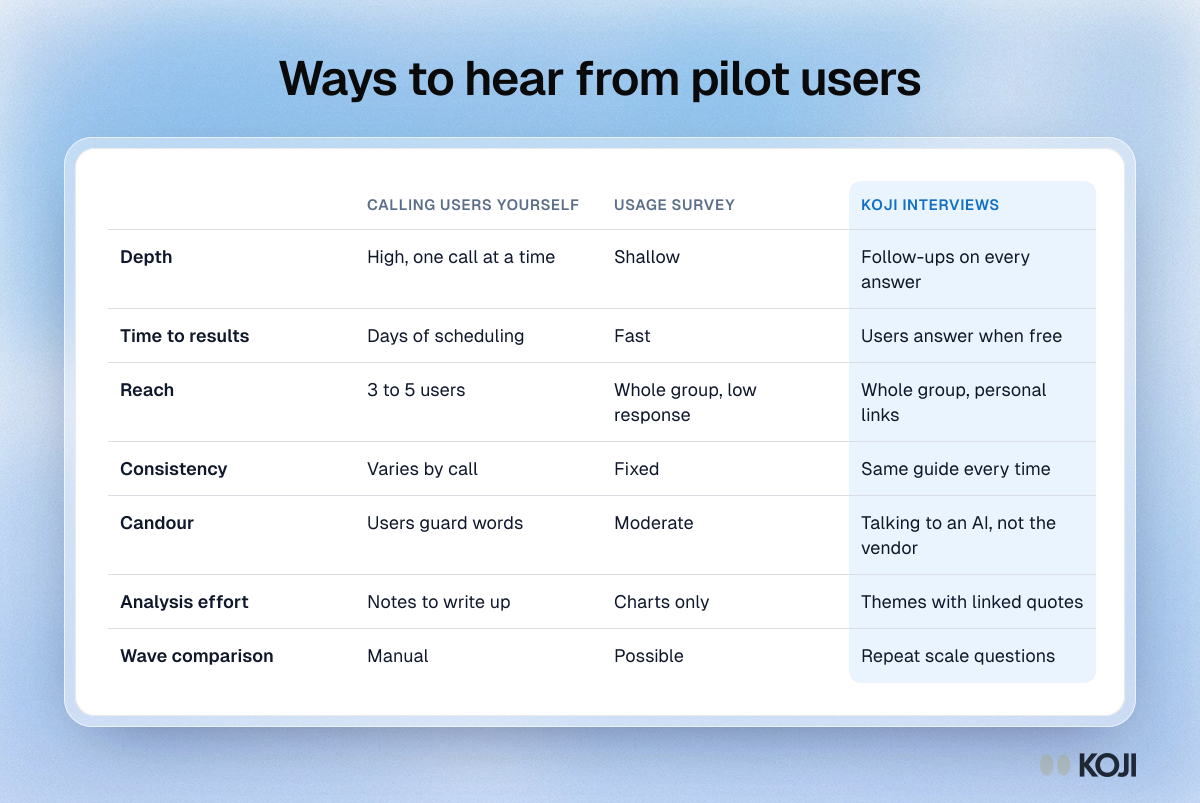
Table comparing calls, usage surveys and Koji interviews for hearing from pilot users, across depth, speed, reach, consistency and analysis effort.

Reference table

Ways to hear from pilot users
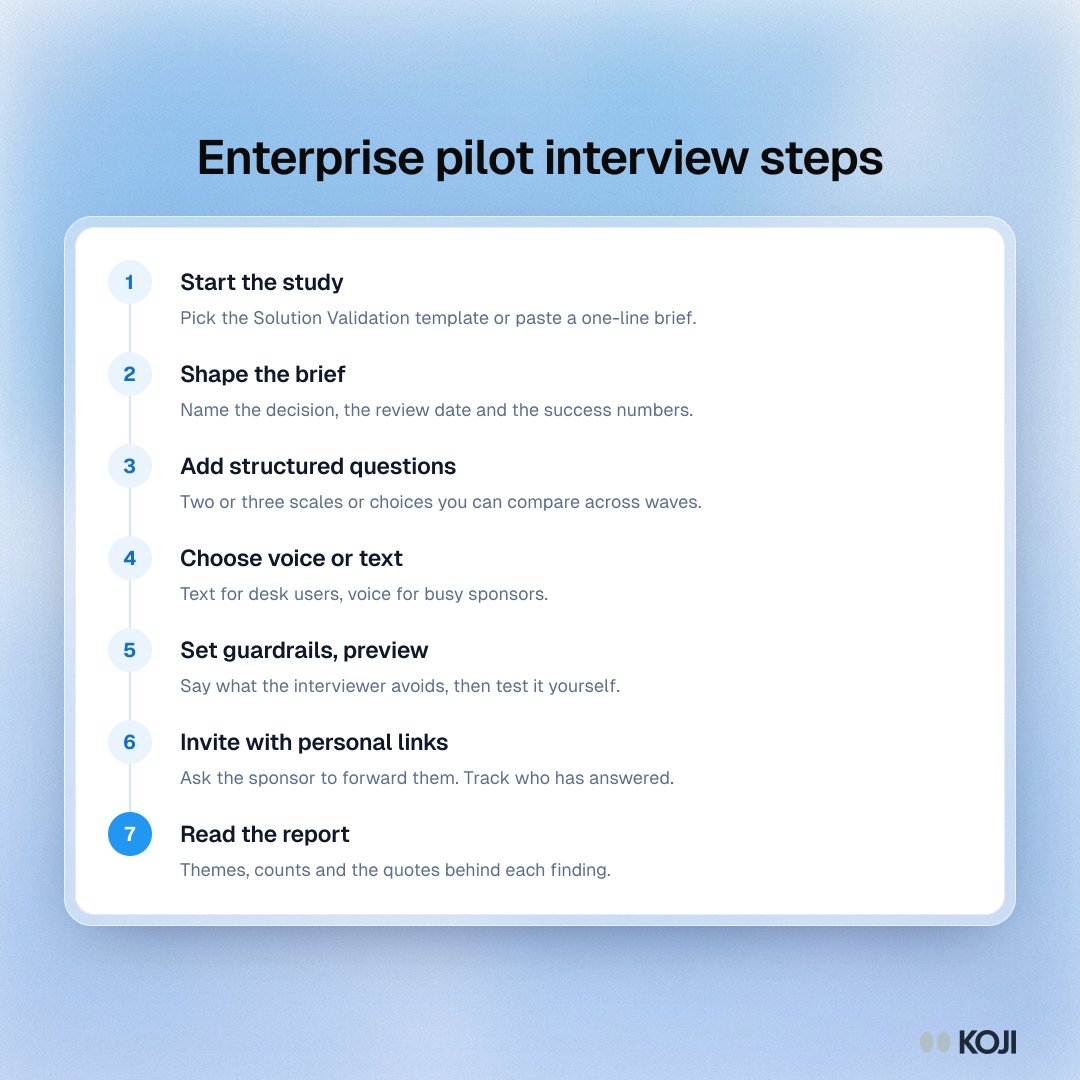
Process of seven steps to run enterprise pilot user interviews, from starting the study and shaping the brief to inviting users and reading the report.

Process

Enterprise pilot interview steps
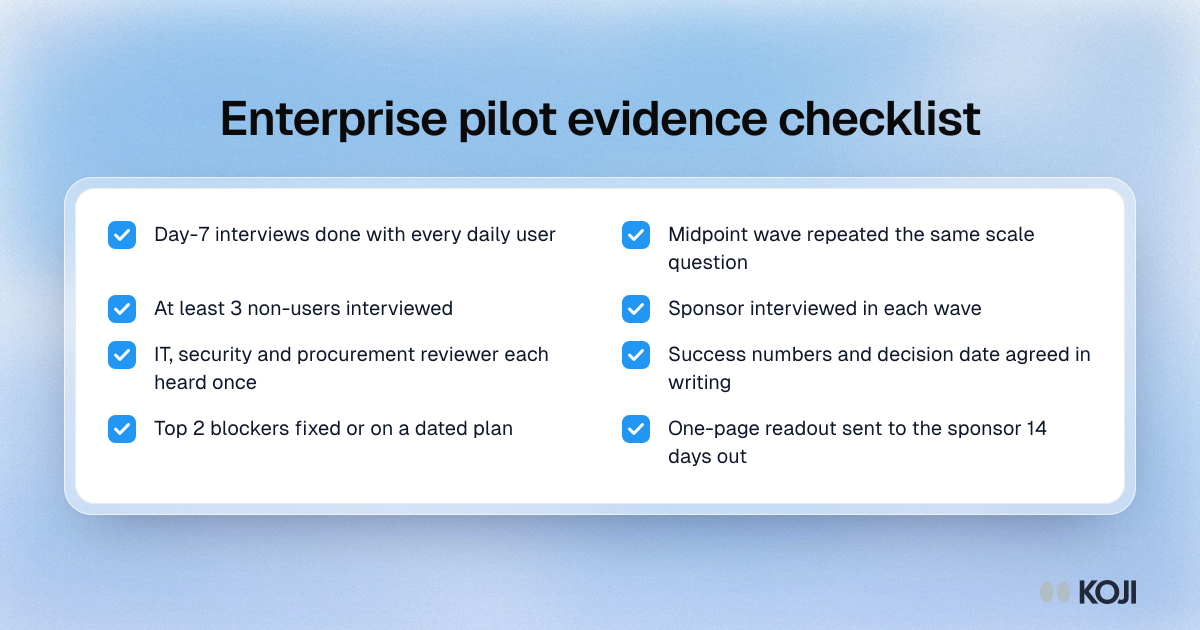
Checklist of evidence to have before an enterprise pilot review: user and non-user interviews, sponsor verdict, reviewer concerns, decision date.

Checklist

Enterprise pilot evidence checklist
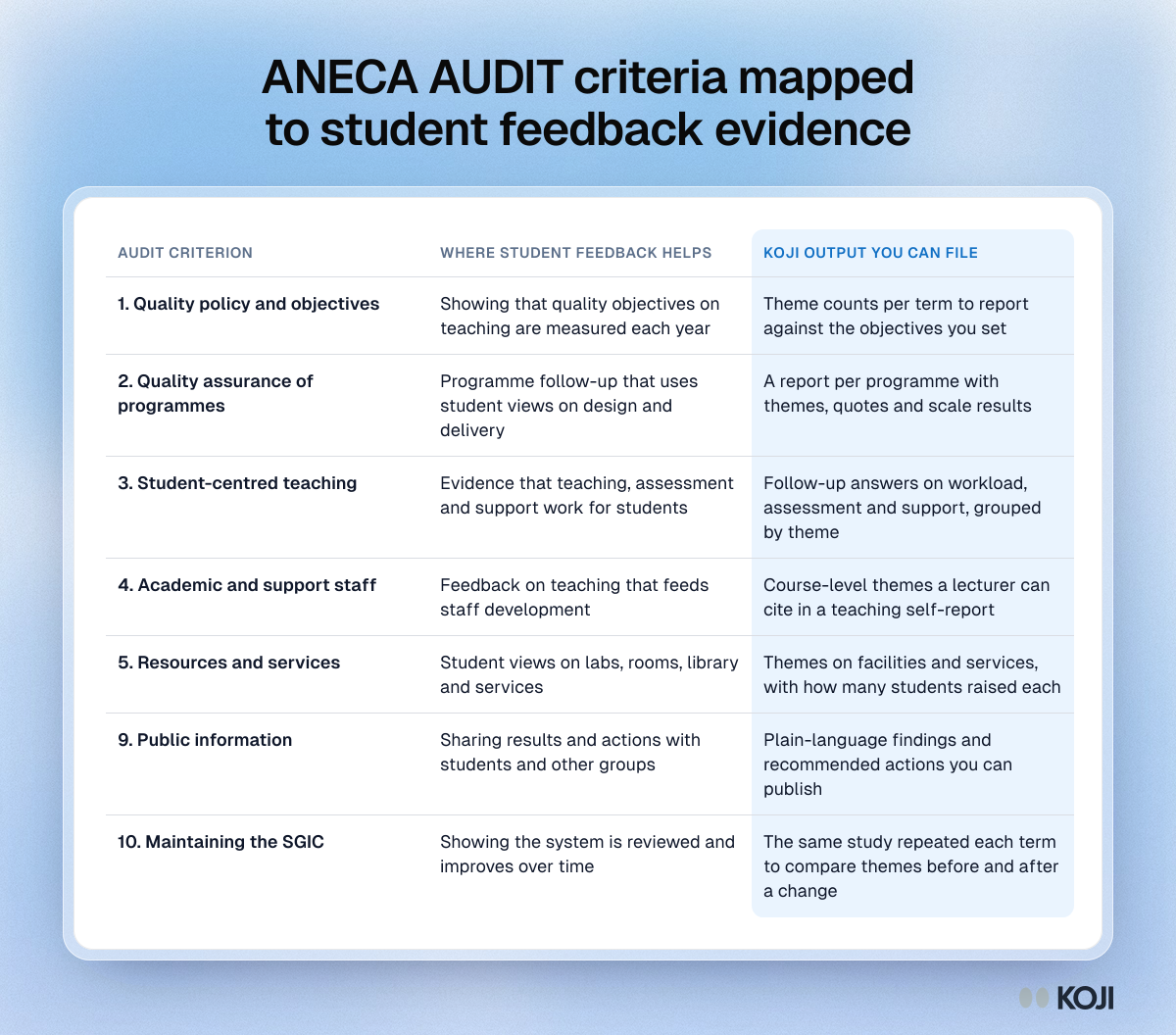
Table mapping ANECA AUDIT criteria 1 to 5, 9 and 10 to where student feedback helps and the Koji course evaluation output for each.

Reference table

ANECA AUDIT criteria mapped to student feedback evidence
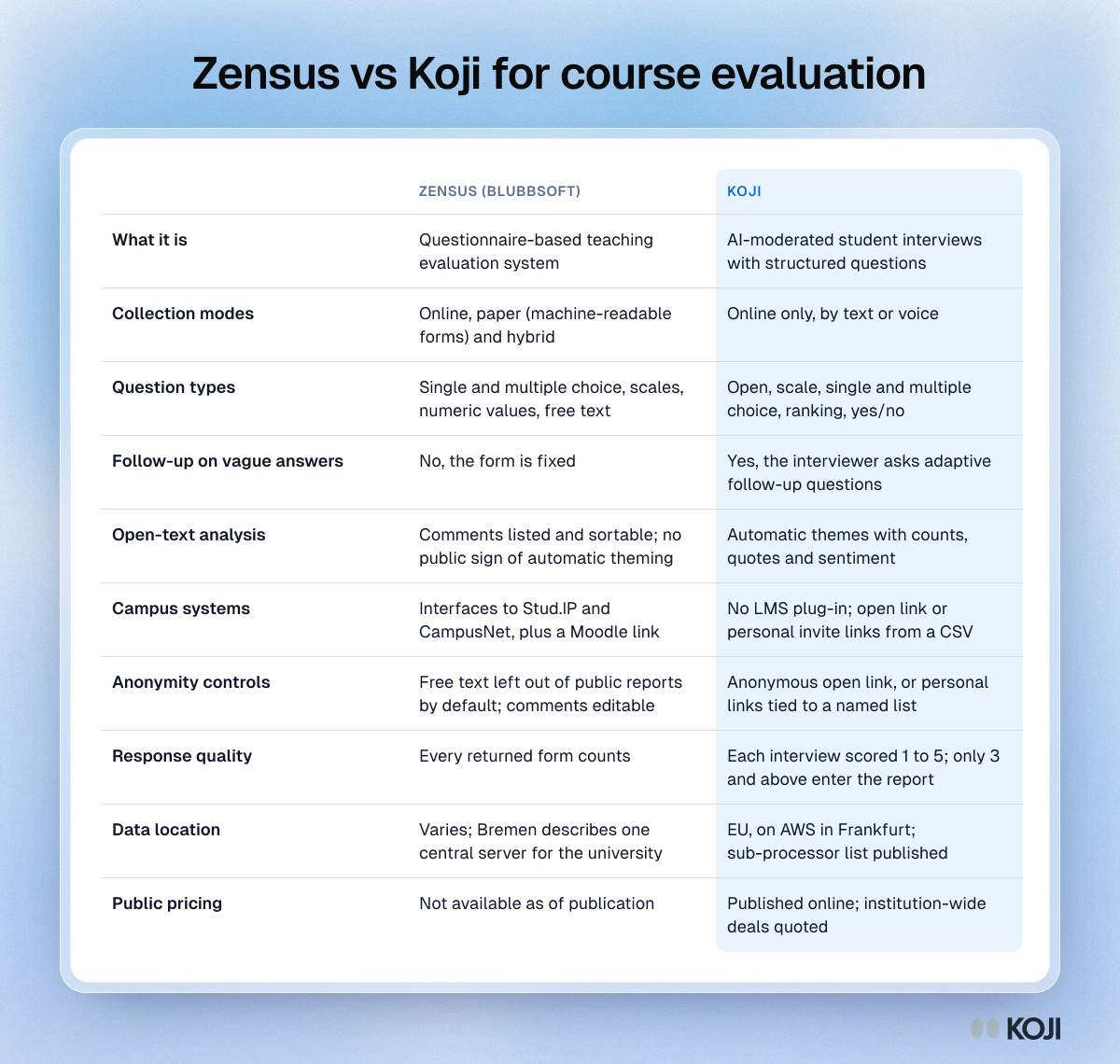
Table comparing Zensus and Koji for course evaluation: collection modes, question types, follow-up, comment analysis, campus links and data location.

Reference table

Zensus vs Koji for course evaluation
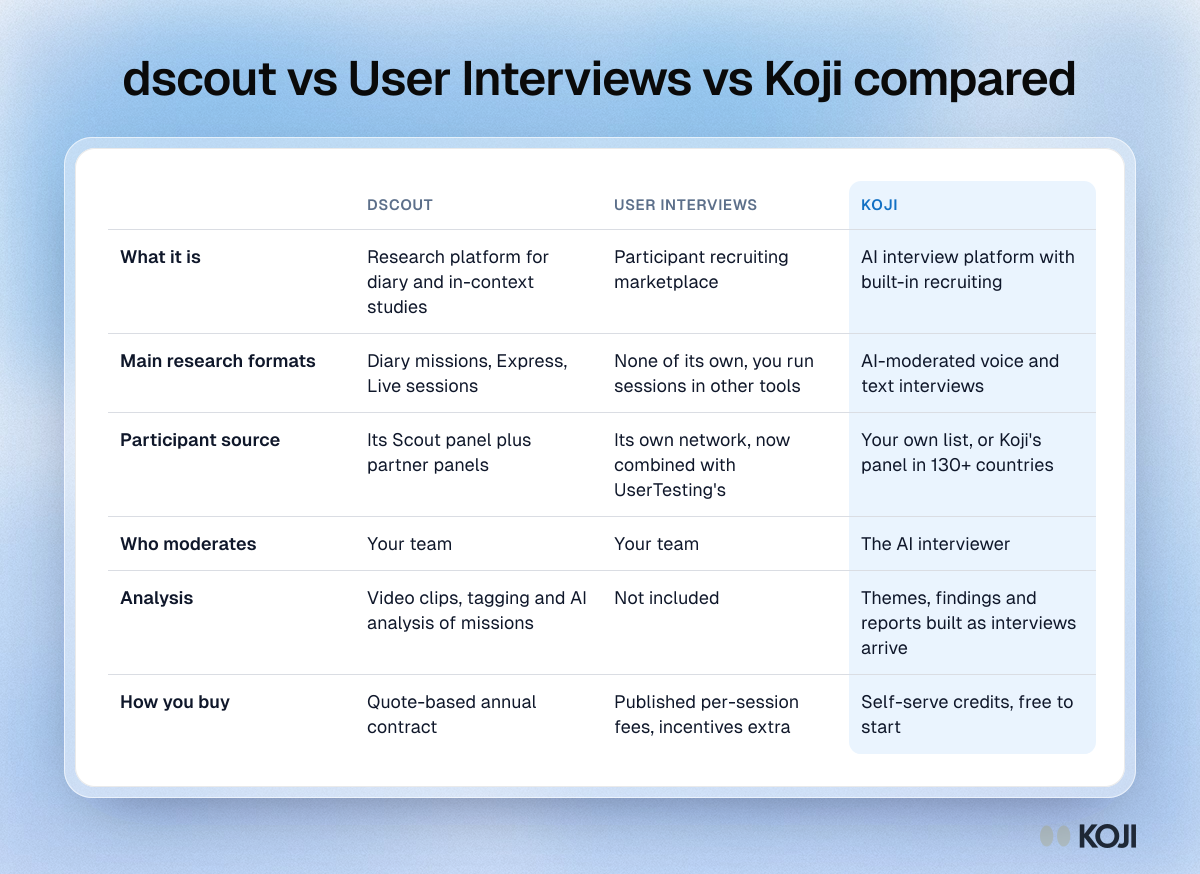
Table comparing dscout, User Interviews and Koji on what each is, research formats, participant source, who moderates, analysis and how you buy

Reference table

dscout vs User Interviews vs Koji compared
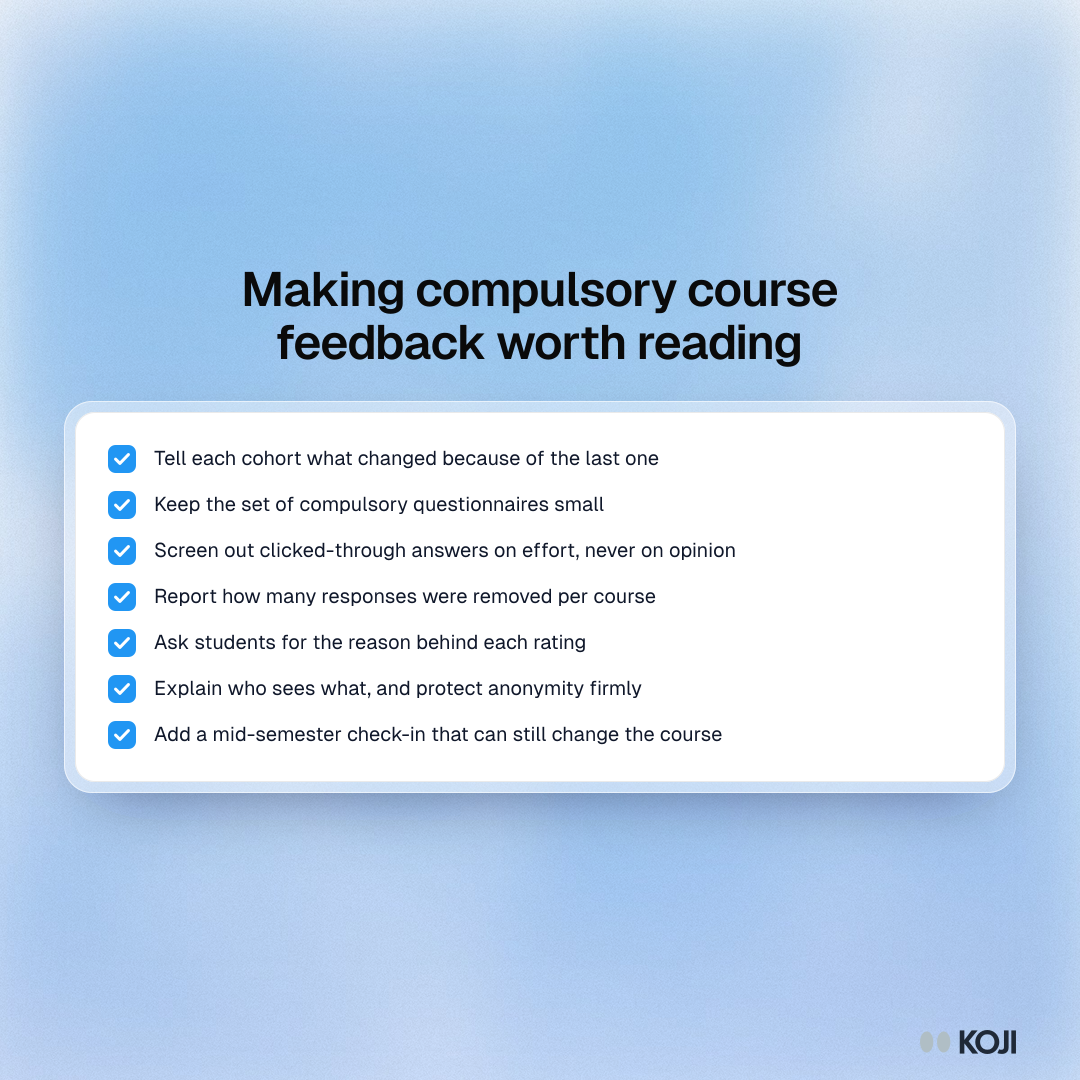
Checklist for making compulsory course feedback worth reading, from closing the loop to screening clicked-through answers and protecting anonymity.

Checklist

Making compulsory course feedback worth reading
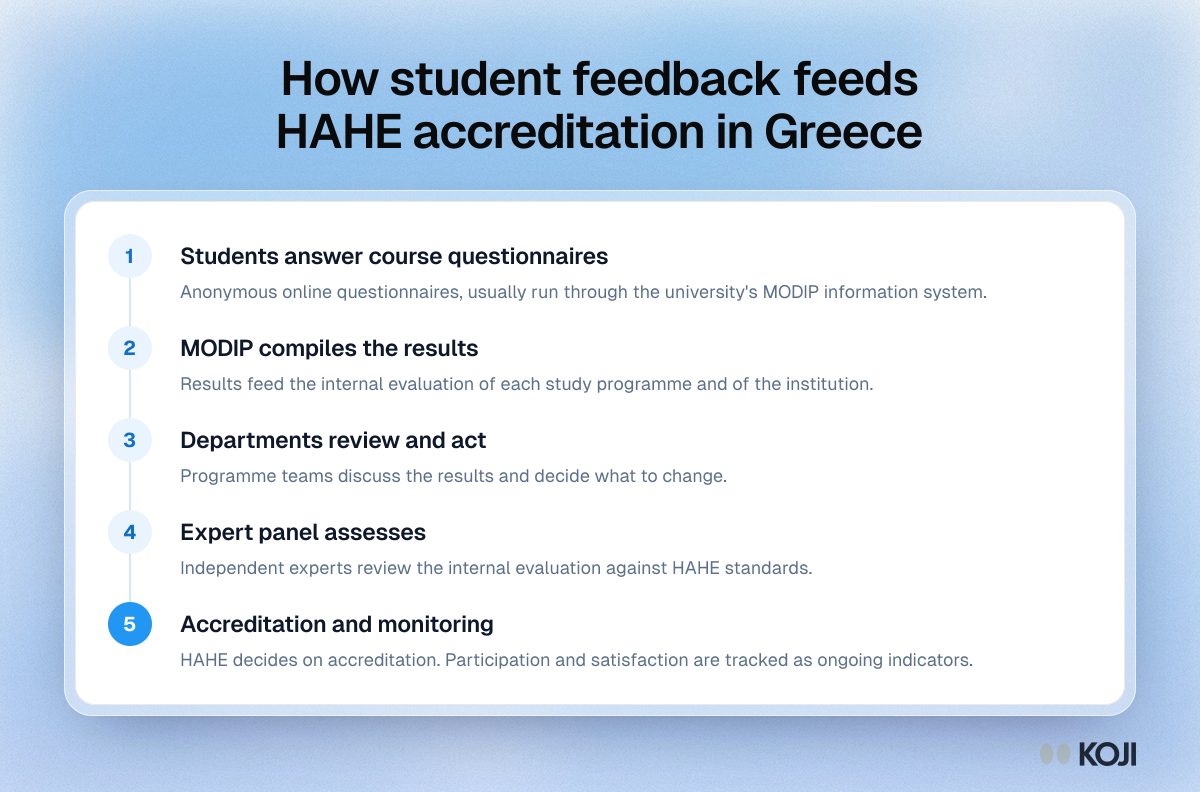
Process showing how student course feedback in Greece moves from questionnaires through MODIP and expert review to HAHE accreditation.

Process

How student feedback feeds HAHE accreditation in Greece
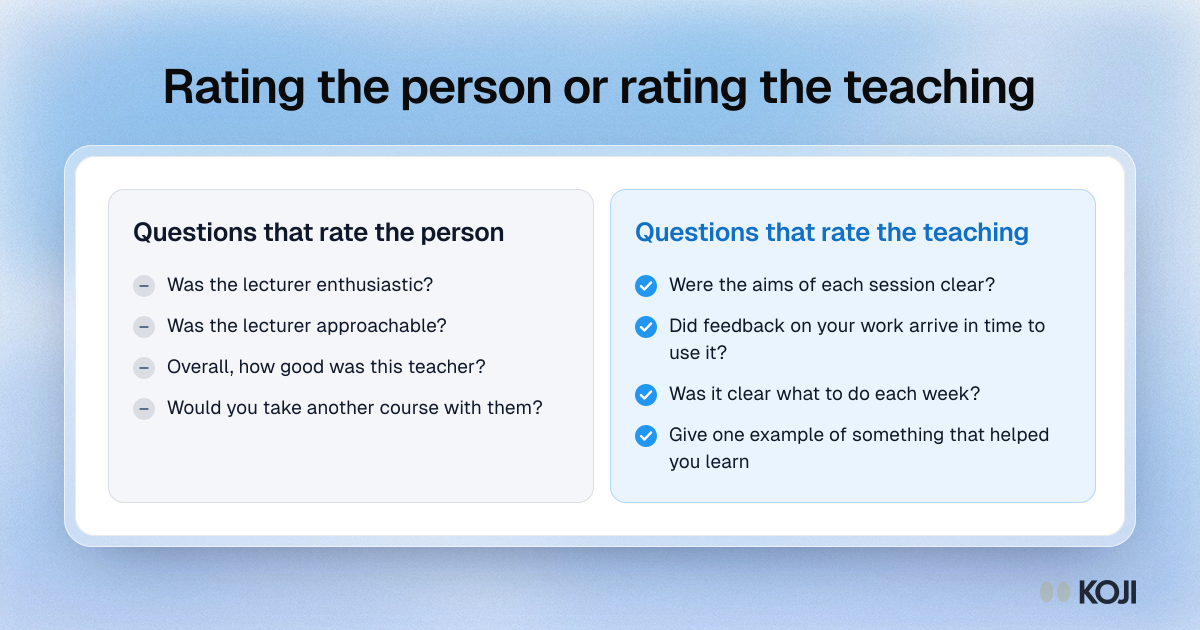
Comparison of course evaluation questions that rate the lecturer as a person with questions that rate observable teaching behaviour.

Comparison

Rating the person or rating the teaching
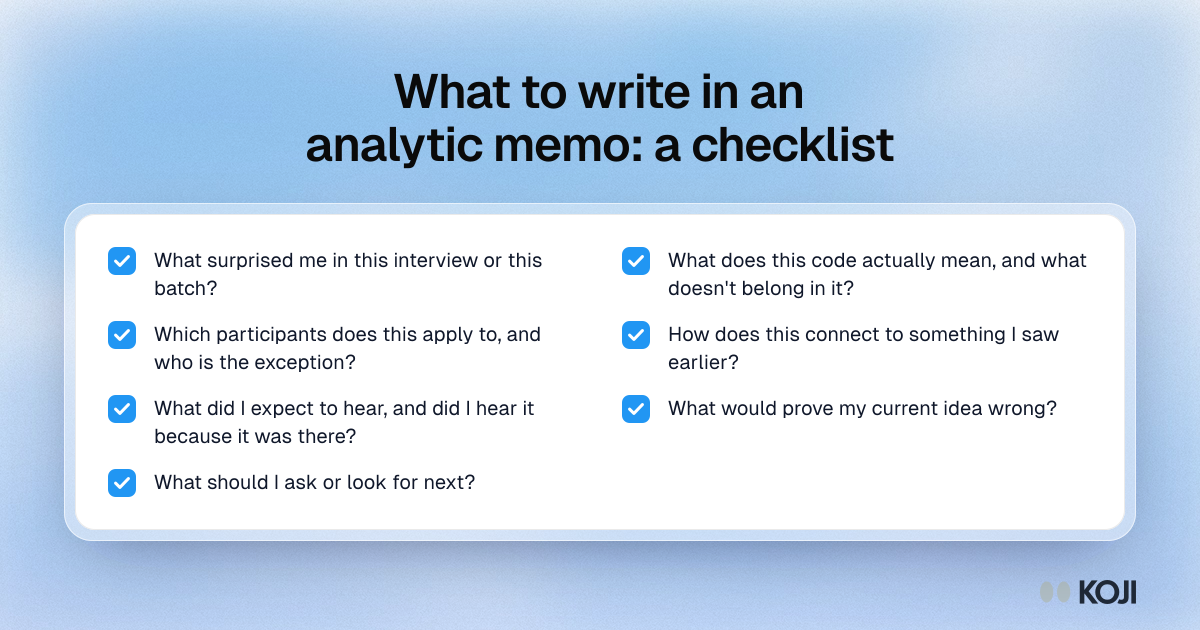
Checklist of questions to answer in an analytic memo, from what surprised you to what would prove your current idea wrong and what to ask next.

Checklist

What to write in an analytic memo: a checklist
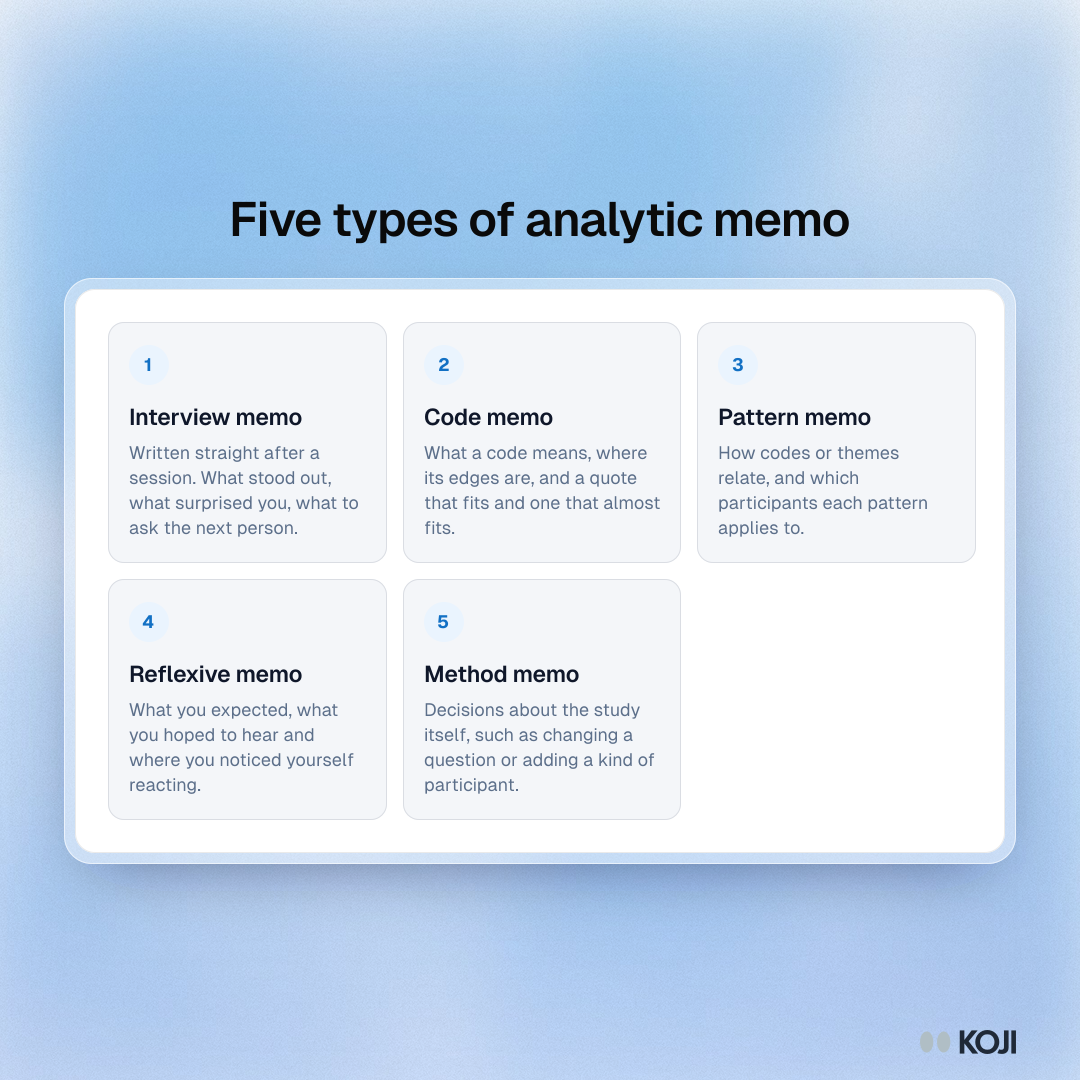
Framework of five types of analytic memo: interview, code, pattern, reflexive and method memos, with what each one records during qualitative analysis.

Framework

Five types of analytic memo
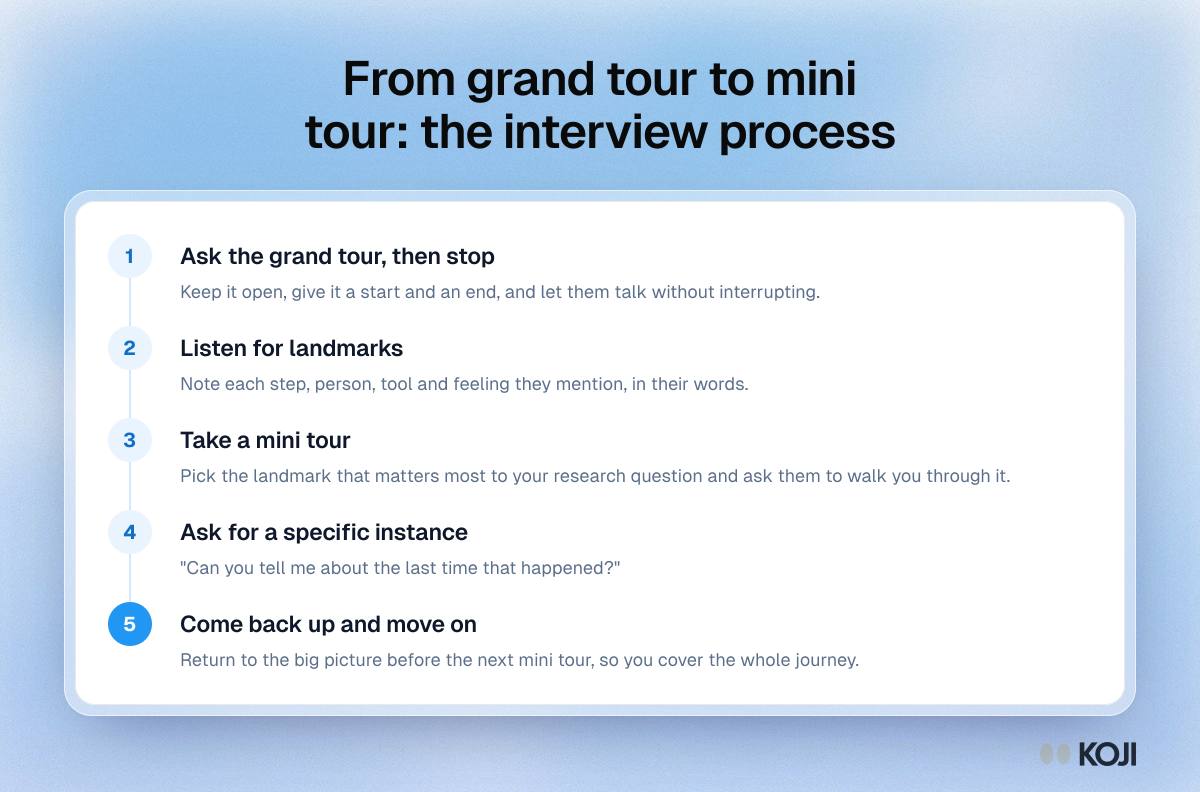
Process of five steps from asking a grand tour question to mini tours on the landmarks the participant mentions and a return to the big picture.

Process

From grand tour to mini tour: the interview process
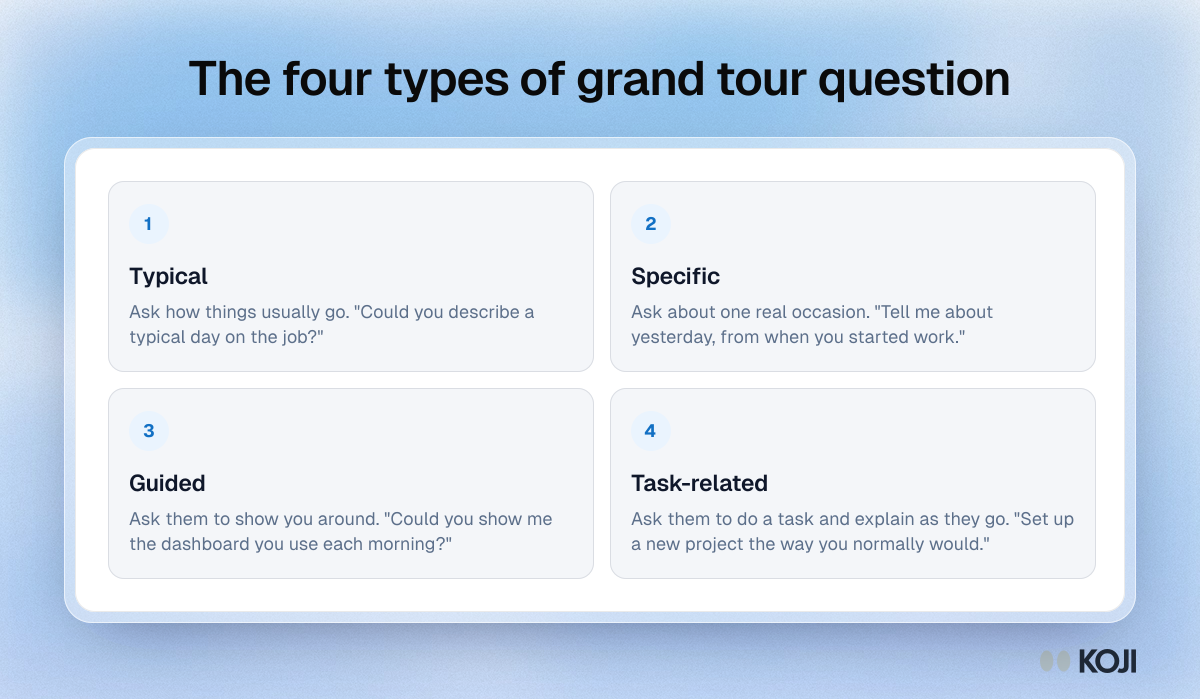
Framework showing James Spradley's four types of grand tour question: typical, specific, guided and task-related, each with an example.

Framework

The four types of grand tour question
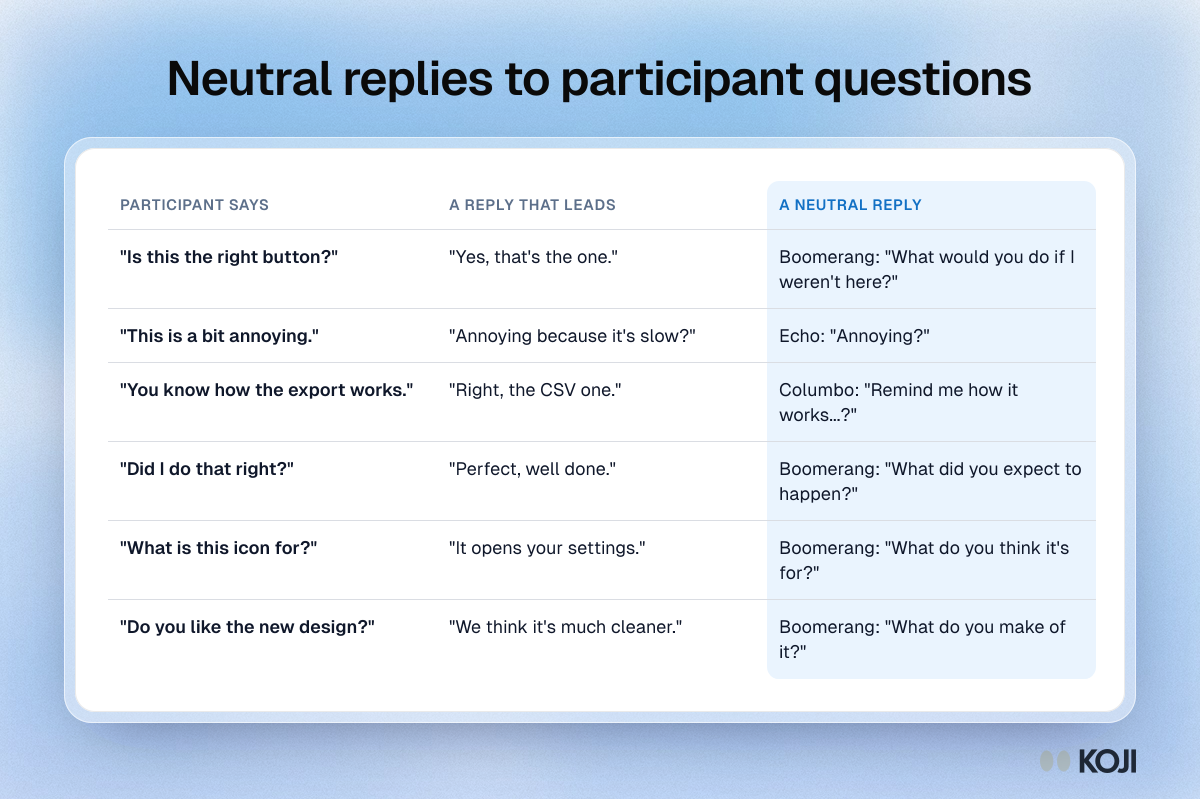
Table pairing common participant questions with a leading reply and a neutral Echo, Boomerang or Columbo reply that keeps the answer theirs.

Reference table

Neutral replies to participant questions
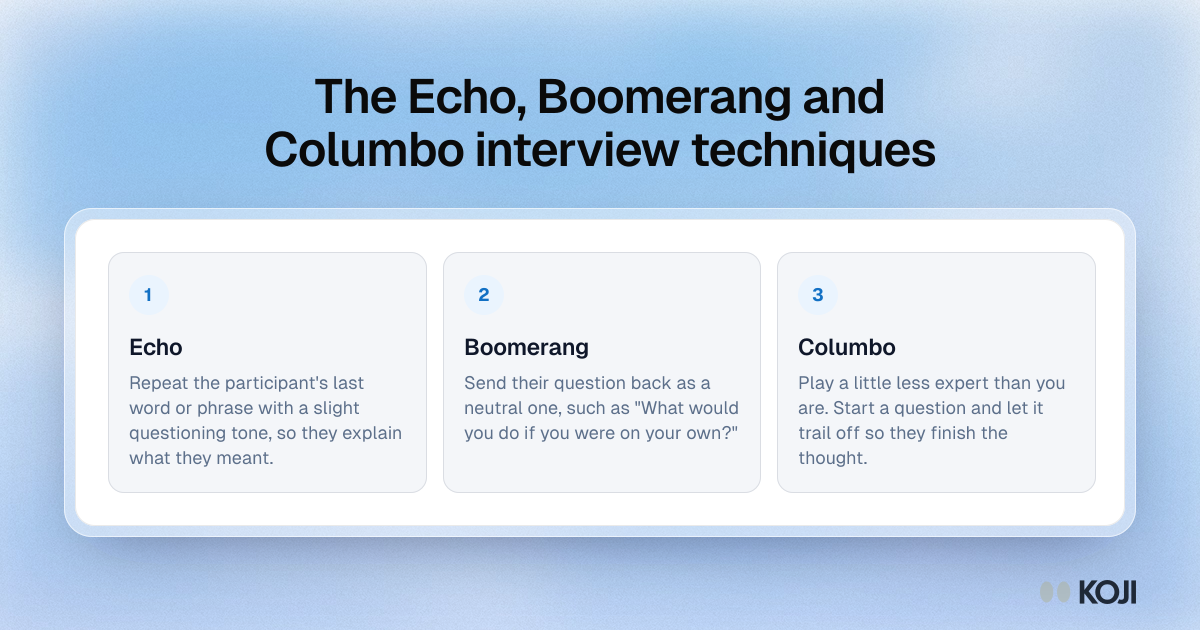
Framework showing the Echo, Boomerang and Columbo techniques for replying to participants without leading them in interviews and usability tests.

Framework

The Echo, Boomerang and Columbo interview techniques
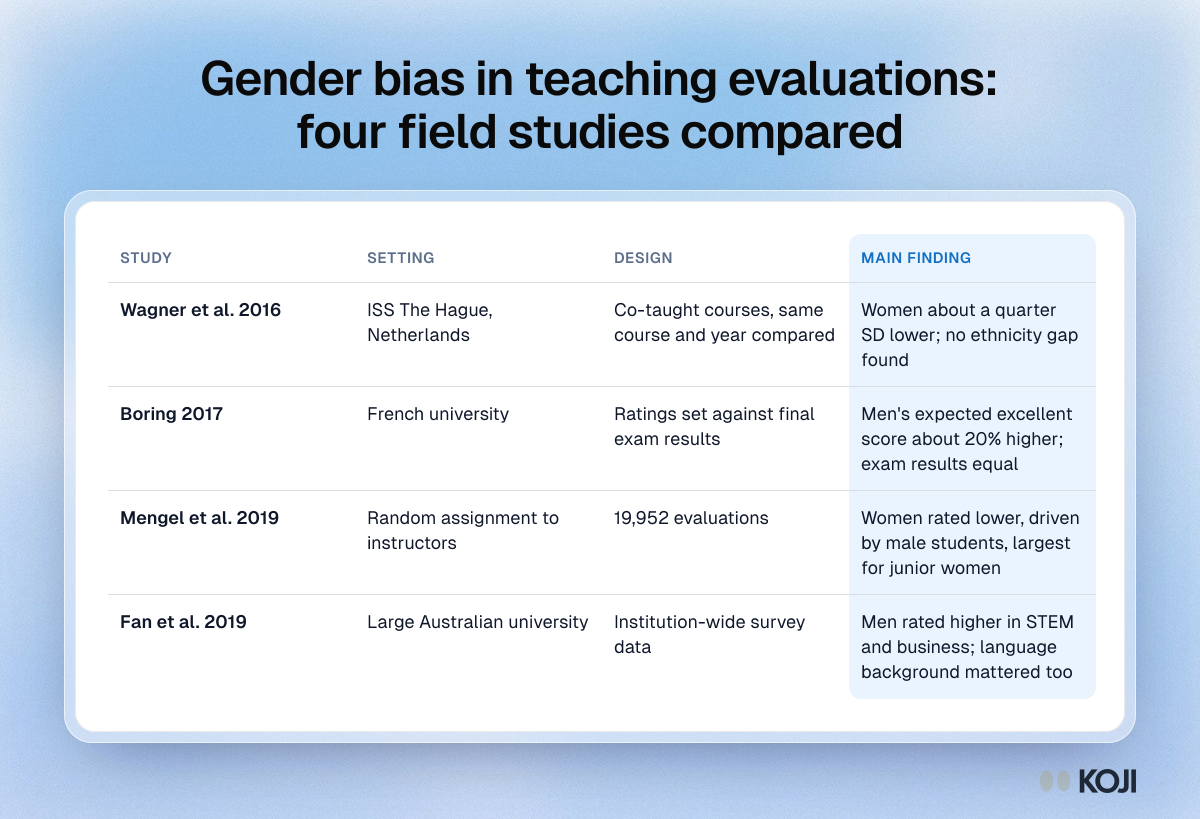
Table comparing four field studies of gender bias in student evaluations by setting, design and main finding: Wagner, Boring, Mengel and Fan.

Reference table

Gender bias in teaching evaluations: four field studies compared
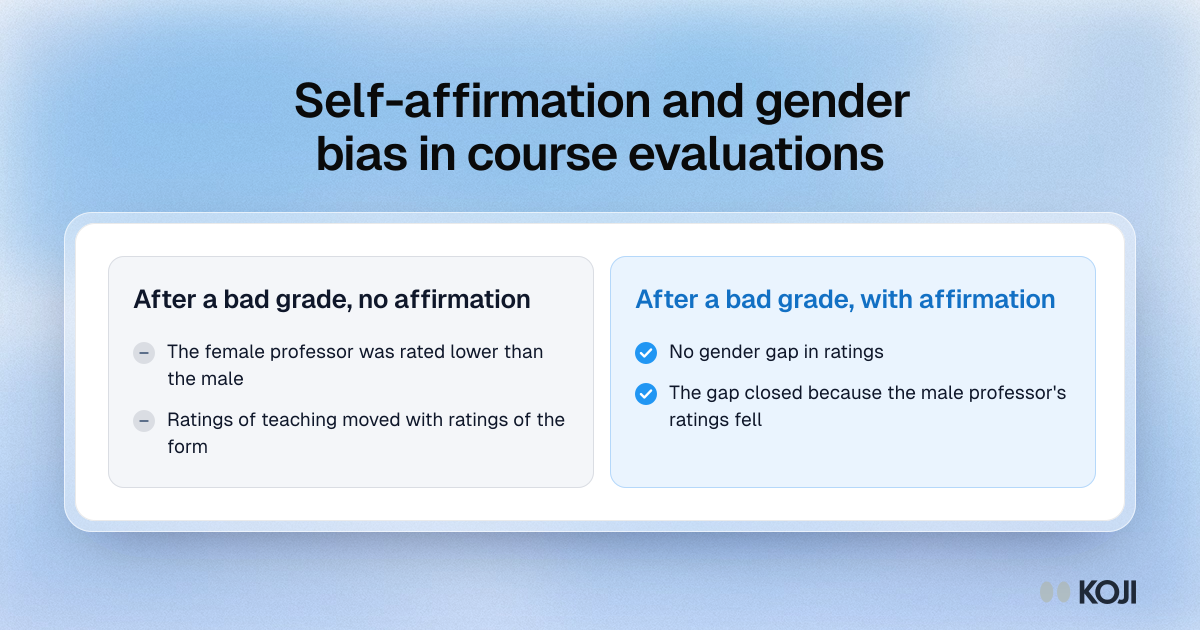
Comparison of ratings after a bad grade: without self-affirmation the female professor was rated lower; with it the gap closed as the male rating fell.

Comparison

Self-affirmation and gender bias in course evaluations
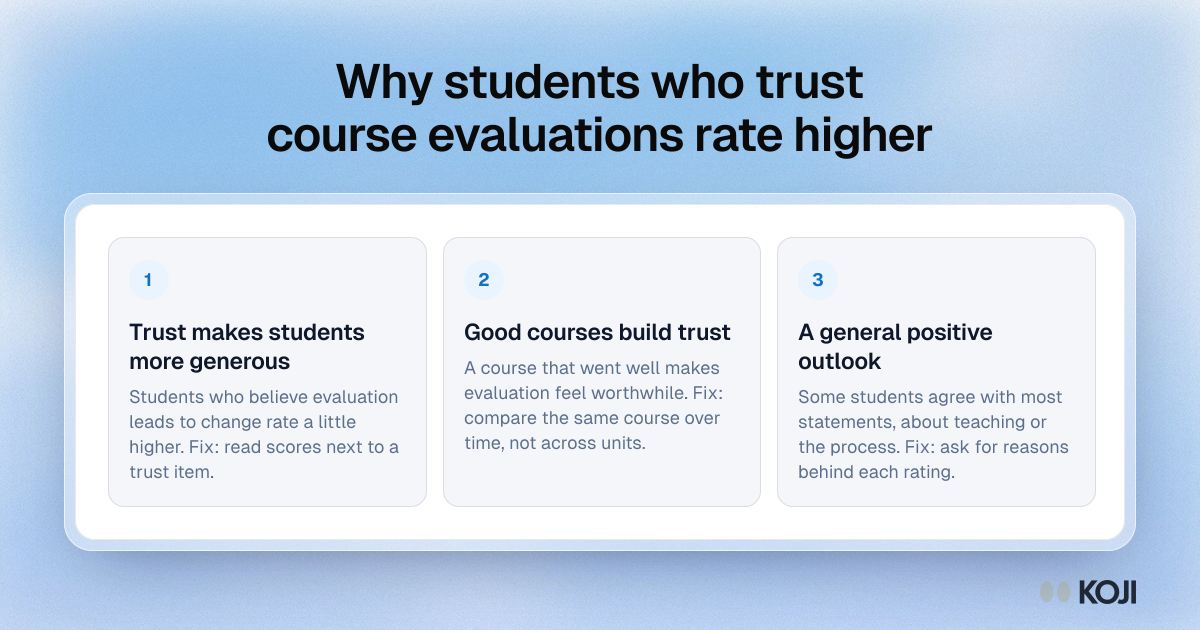
Framework with three explanations for why students who trust course evaluations give higher scores: generosity, good courses and a positive outlook.

Framework

Why students who trust course evaluations rate higher
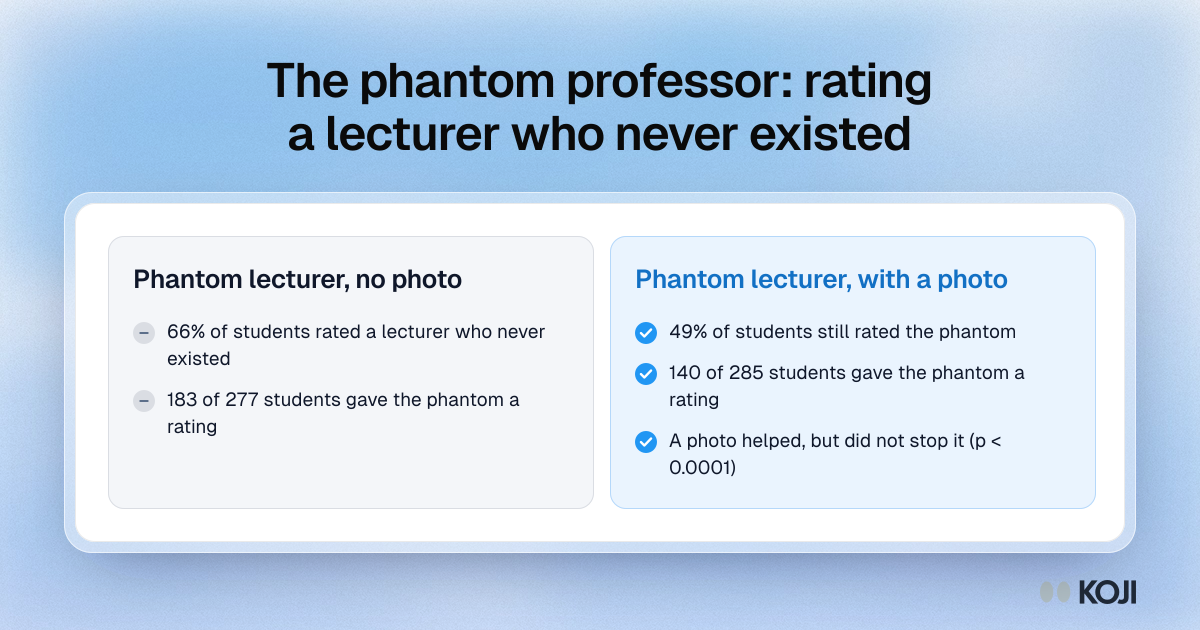
Comparison showing 66% of medical students rated a fictitious lecturer when no photo was shown, and 49% still did when a photo was added.

Comparison

The phantom professor: rating a lecturer who never existed
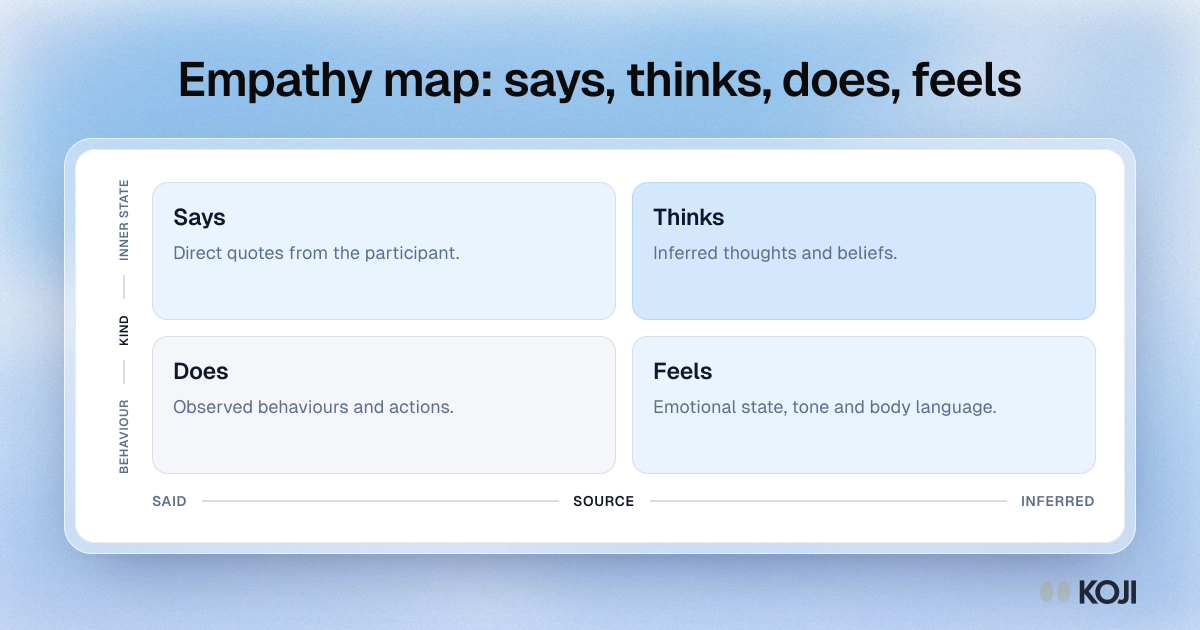
Empathy map with four quadrants used to synthesise interviews: says, thinks, does and feels, each with what to capture from the participant.

Matrix

Empathy map: says, thinks, does, feels