Free to save and share

Frameworks and cheat sheets for customer research

Every framework, checklist and comparison from our guides, as an image you can download, drop into a deck or share with your team.
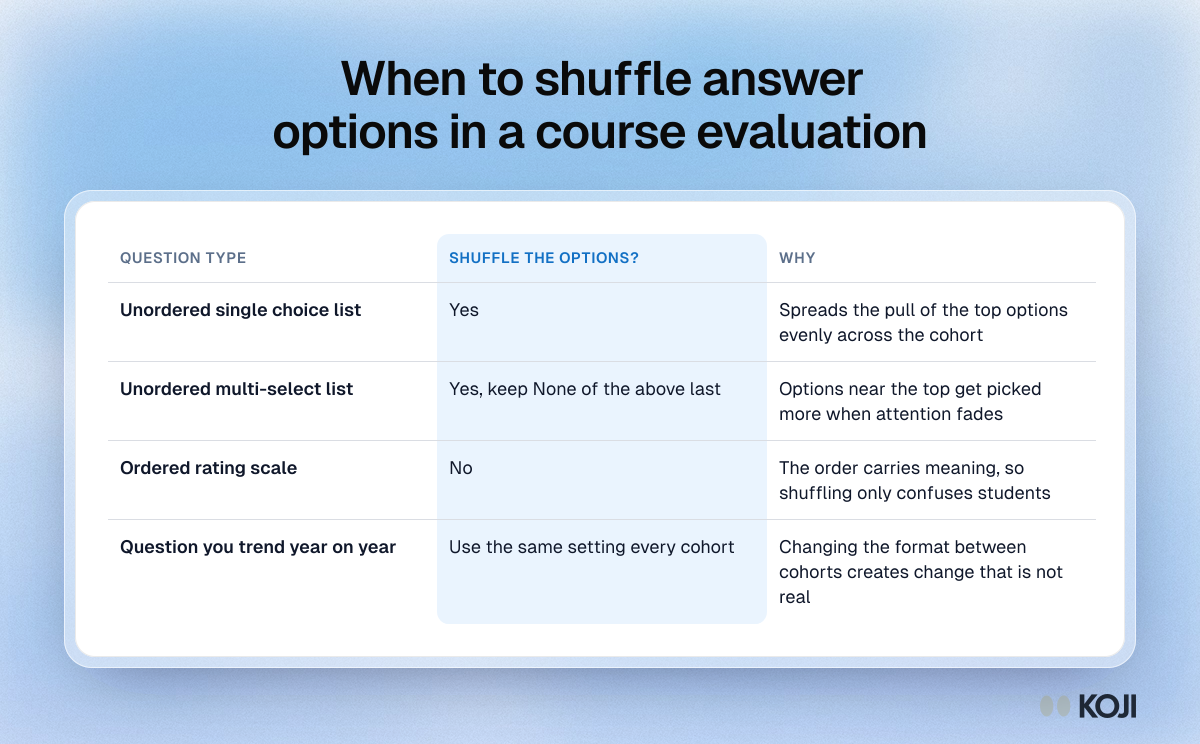
Table showing when to shuffle answer options in a course evaluation: yes for unordered lists, never for ordered rating scales, same setting for trended items

Reference table

When to shuffle answer options in a course evaluation
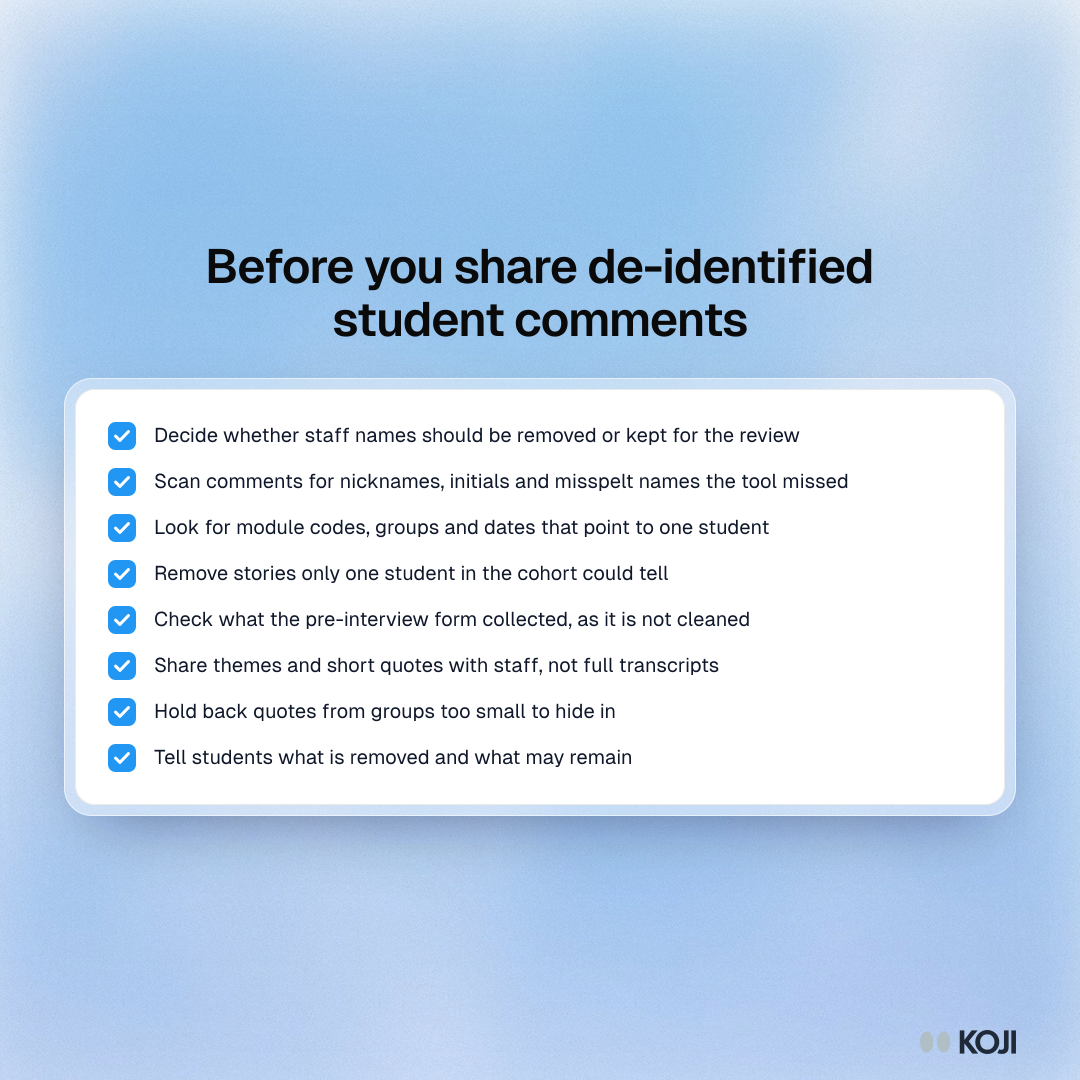
Checklist of eight checks before sharing de-identified student comments, from deciding the policy on staff names to telling students what may remain

Checklist

Before you share de-identified student comments
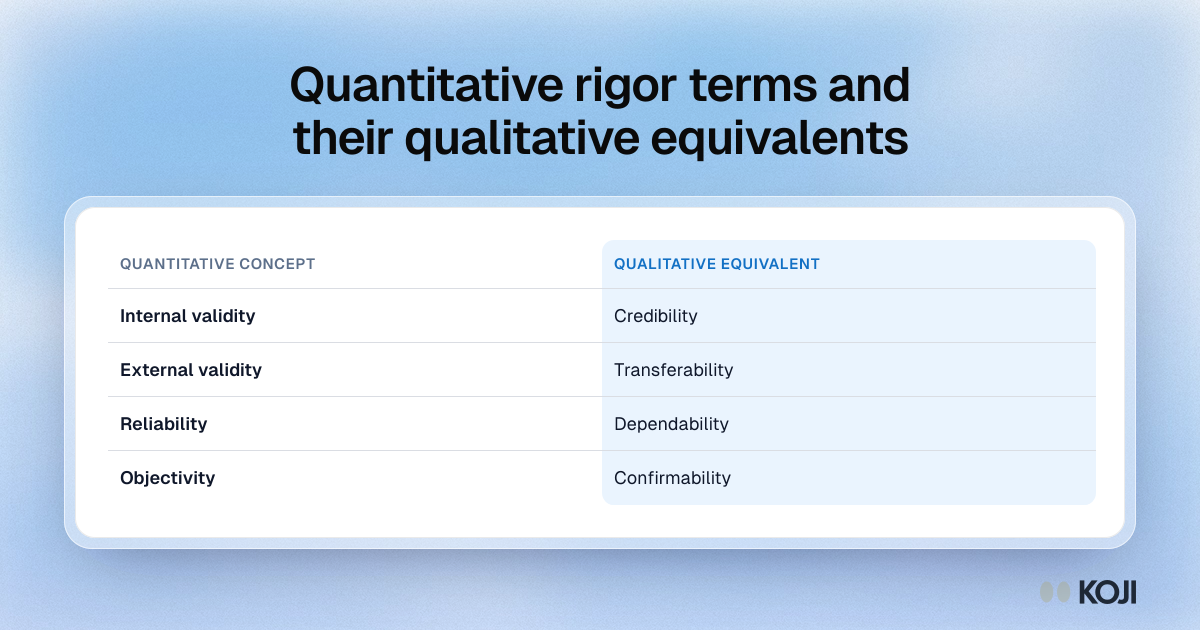
Table pairing quantitative rigor terms with qualitative ones, such as internal validity with credibility and reliability with dependability.

Reference table

Quantitative rigor terms and their qualitative equivalents
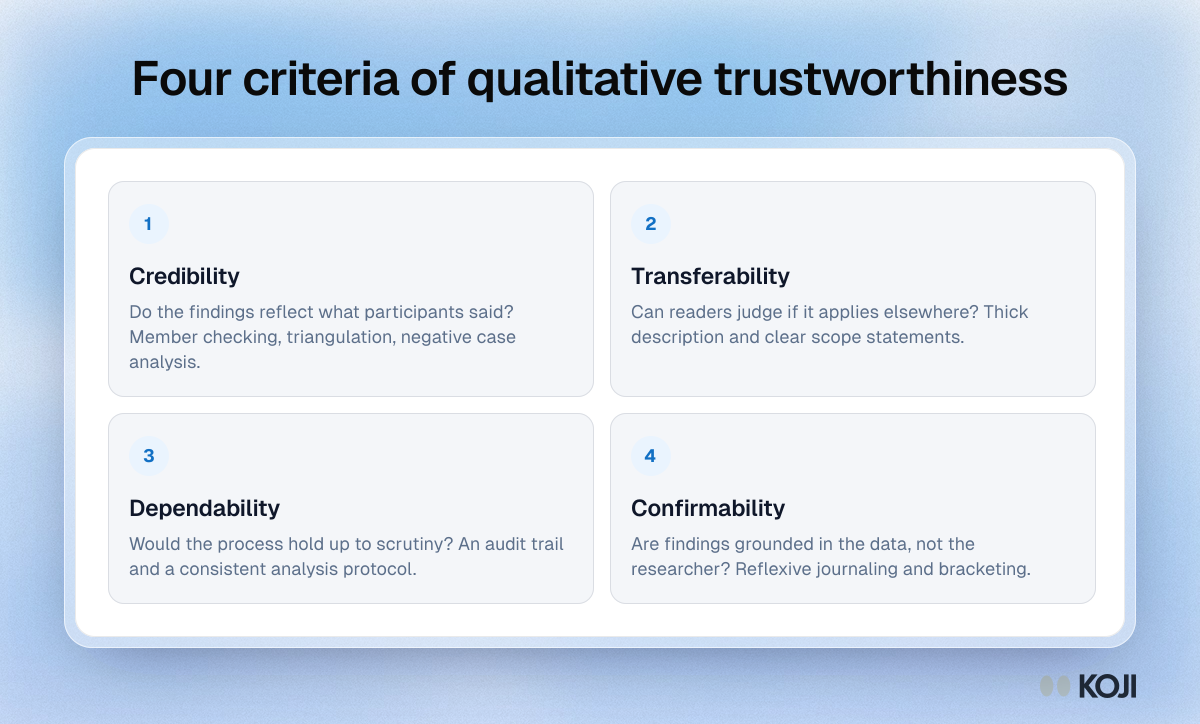
Framework of the four qualitative trustworthiness criteria: credibility, transferability, dependability and confirmability, with the main technique for each.

Framework

Four criteria of qualitative trustworthiness
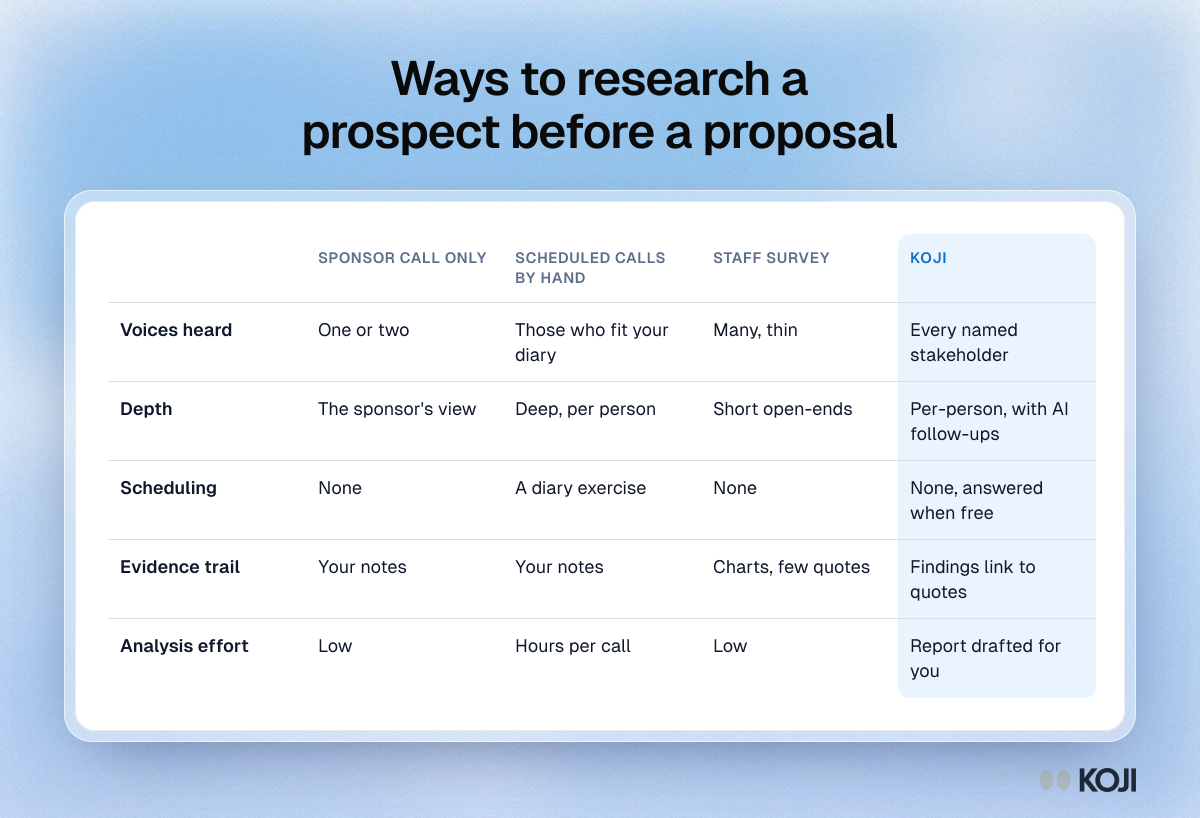
Table comparing four ways to learn about a prospect before a proposal: sponsor call only, scheduled calls by hand, a survey, and Koji.

Reference table

Ways to research a prospect before a proposal
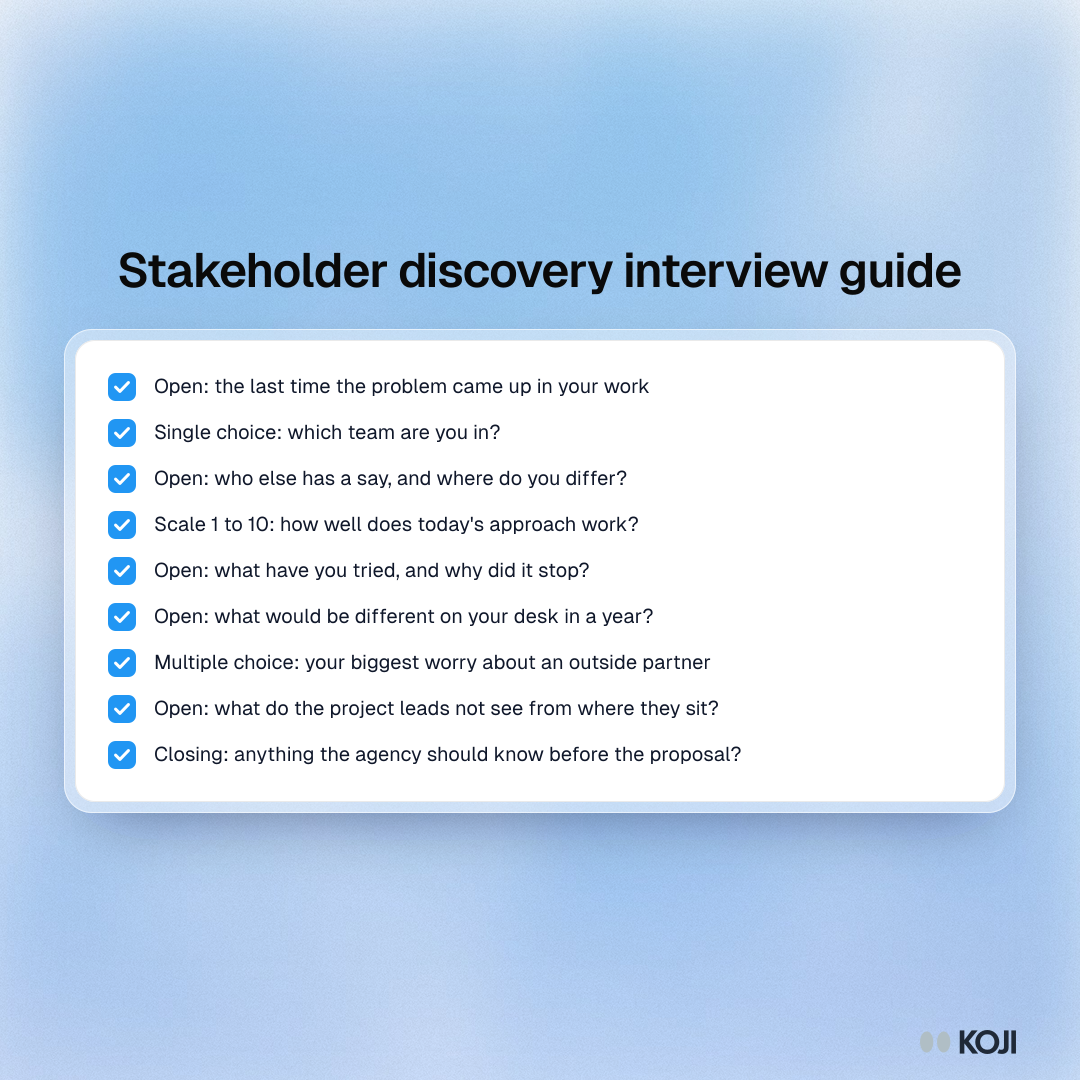
Checklist of the eight questions and closing question in the stakeholder discovery interview guide.

Checklist

Stakeholder discovery interview guide
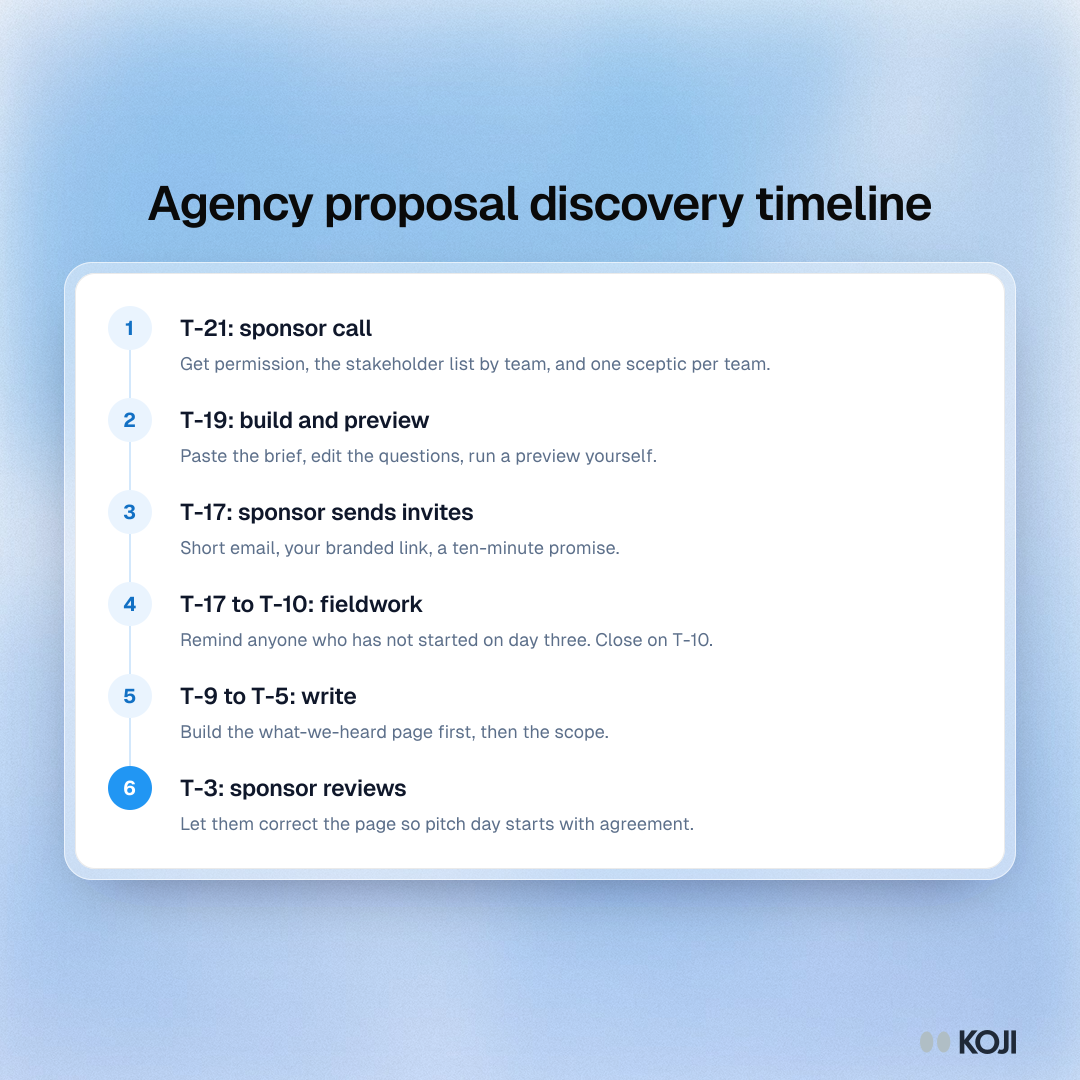
Process showing the six steps of agency proposal discovery, counted back from pitch day.

Process

Agency proposal discovery timeline
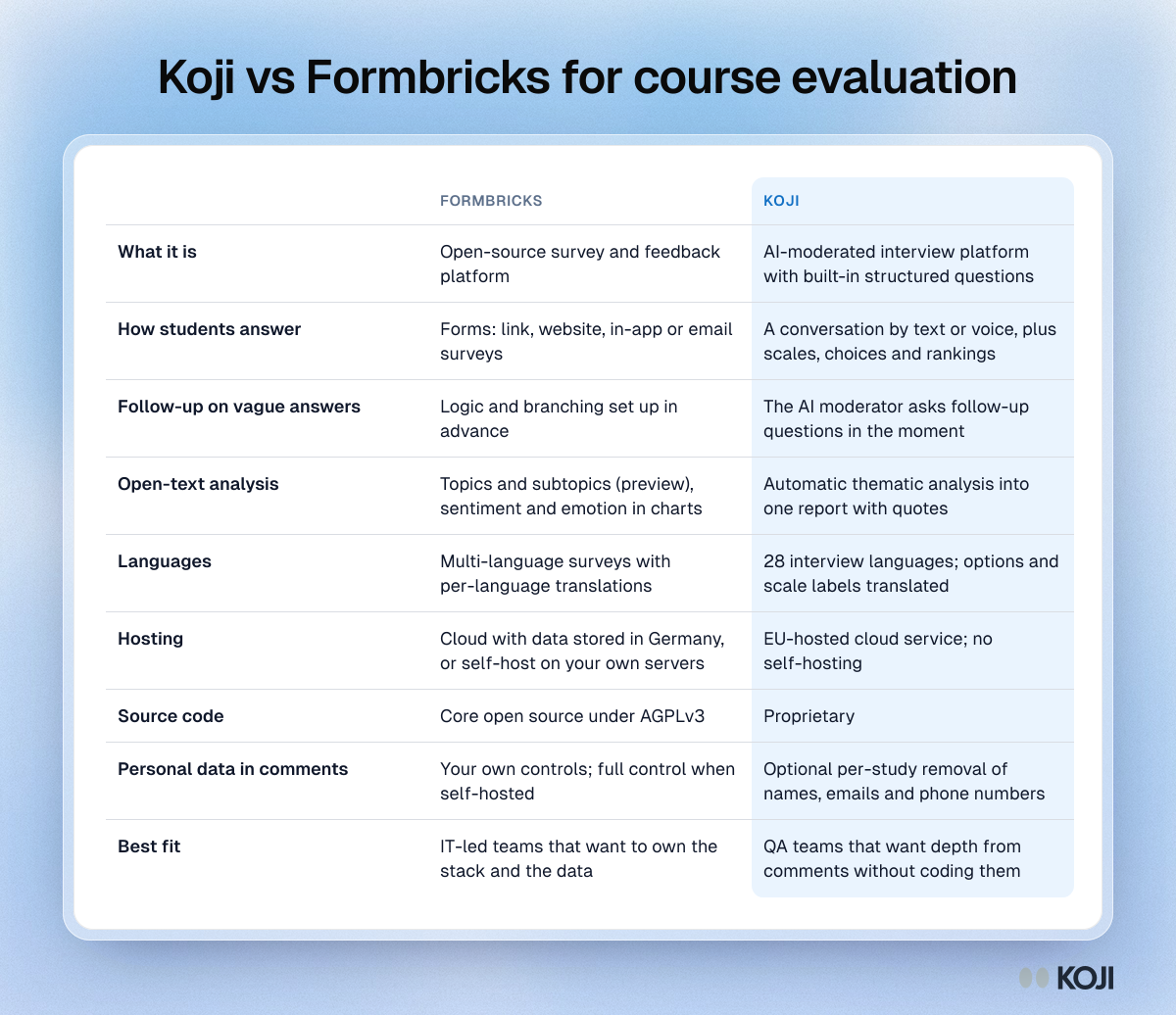
Table comparing Formbricks and Koji for course evaluation across format, follow-up questions, text analysis, languages, hosting, source code and best fit.

Reference table

Koji vs Formbricks for course evaluation
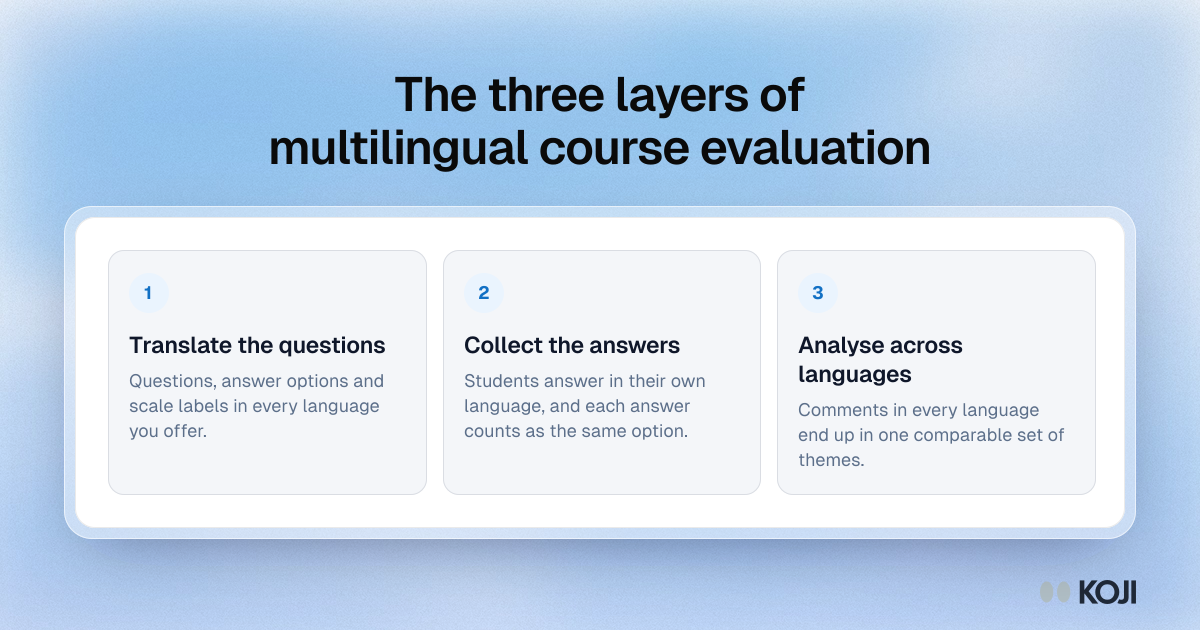
Framework showing the three layers of multilingual course evaluation: translating questions, collecting answers and analysing comments across languages.

Framework

The three layers of multilingual course evaluation
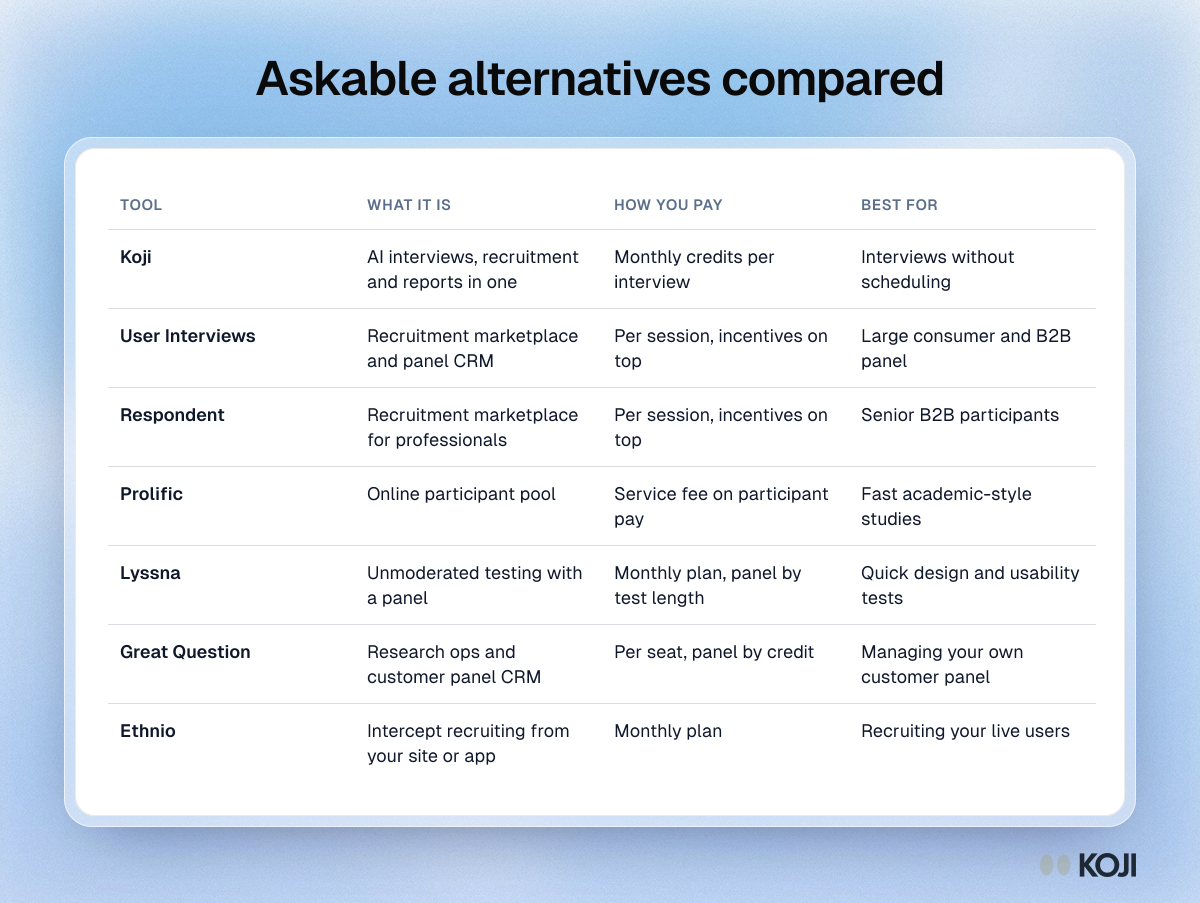
Table comparing Askable alternatives Koji, User Interviews, Respondent, Prolific, Lyssna, Great Question and Ethnio by what they are, how you pay and best use

Reference table

Askable alternatives compared
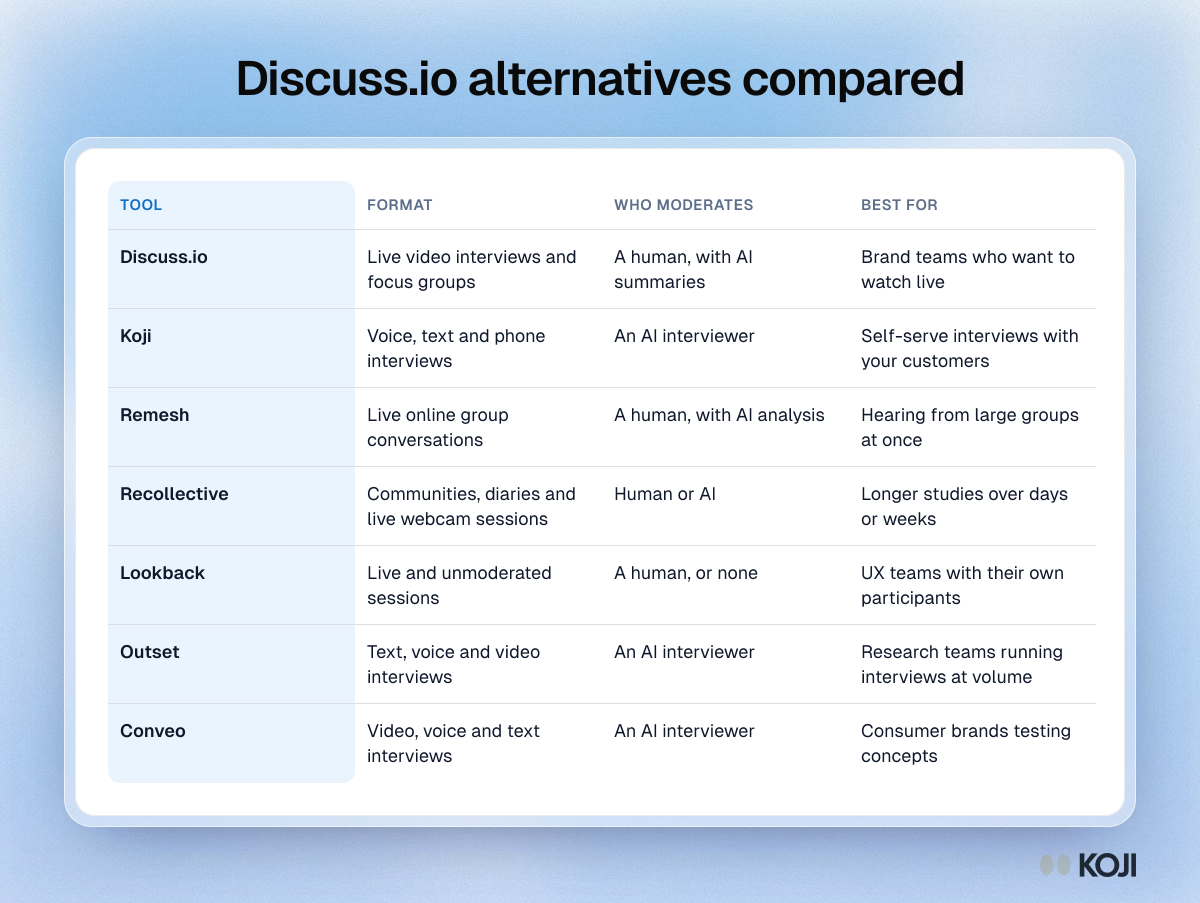
Table comparing Discuss.io with six alternatives, Koji, Remesh, Recollective, Lookback, Outset and Conveo, by format, moderator and best use

Reference table

Discuss.io alternatives compared
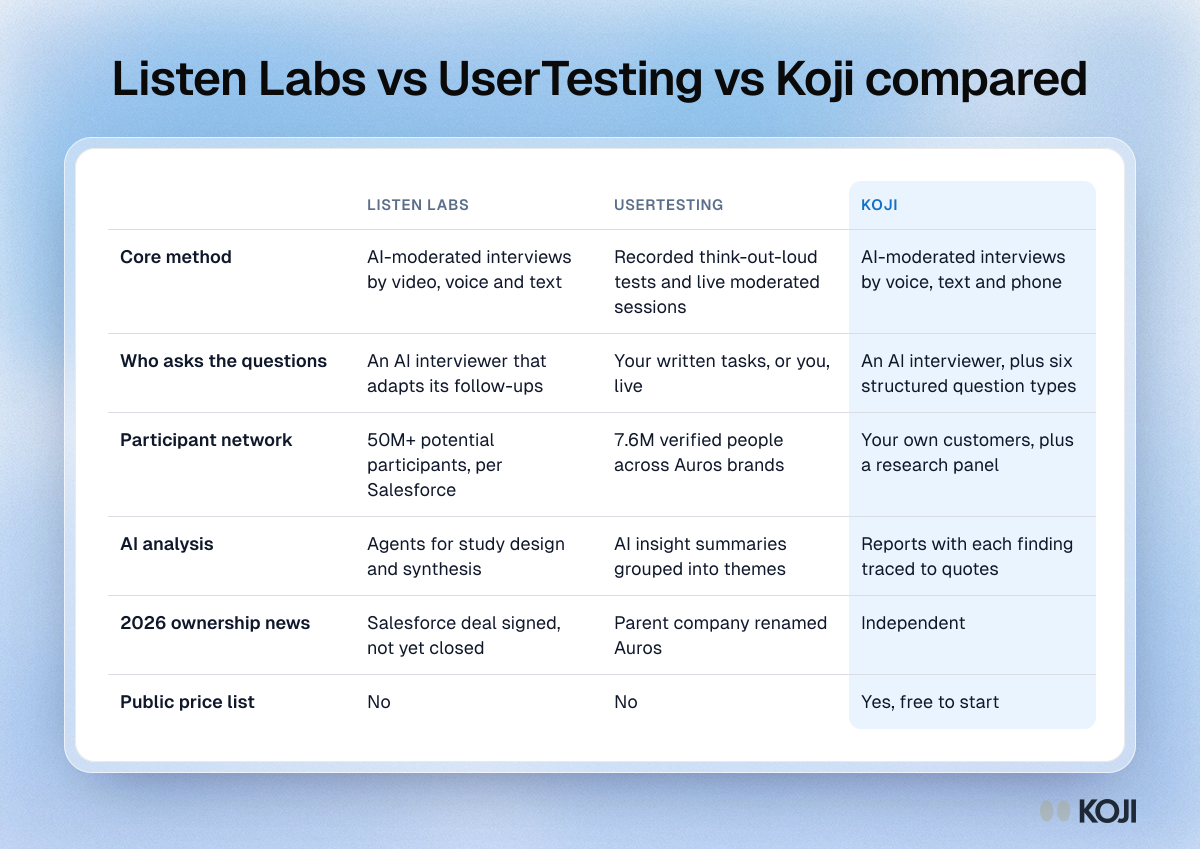
Table comparing Listen Labs, UserTesting and Koji on research method, who asks the questions, participant network, AI analysis, 2026 news and pricing

Reference table

Listen Labs vs UserTesting vs Koji compared
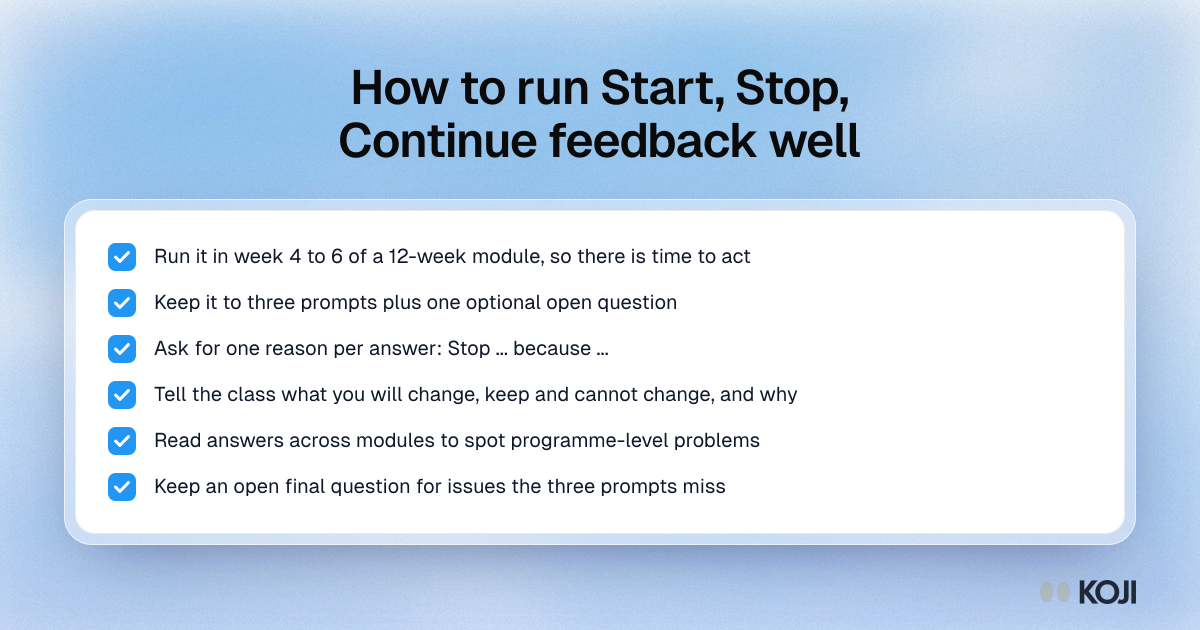
Checklist for running Start, Stop, Continue course feedback: timing, length, reasons, reporting back to students and reading across modules.

Checklist

How to run Start, Stop, Continue feedback well
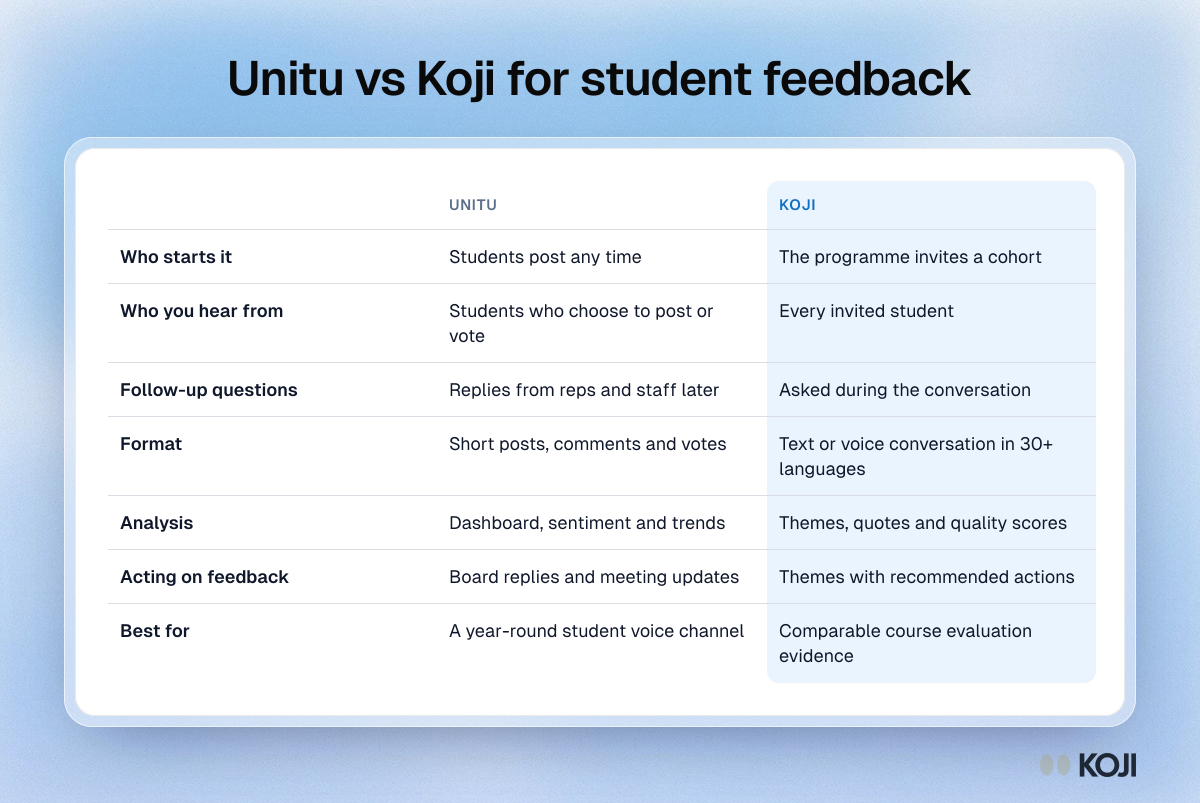
Comparison table of Unitu and Koji for student feedback: who starts it, who you hear from, follow-up questions, analysis and acting on feedback.

Reference table

Unitu vs Koji for student feedback
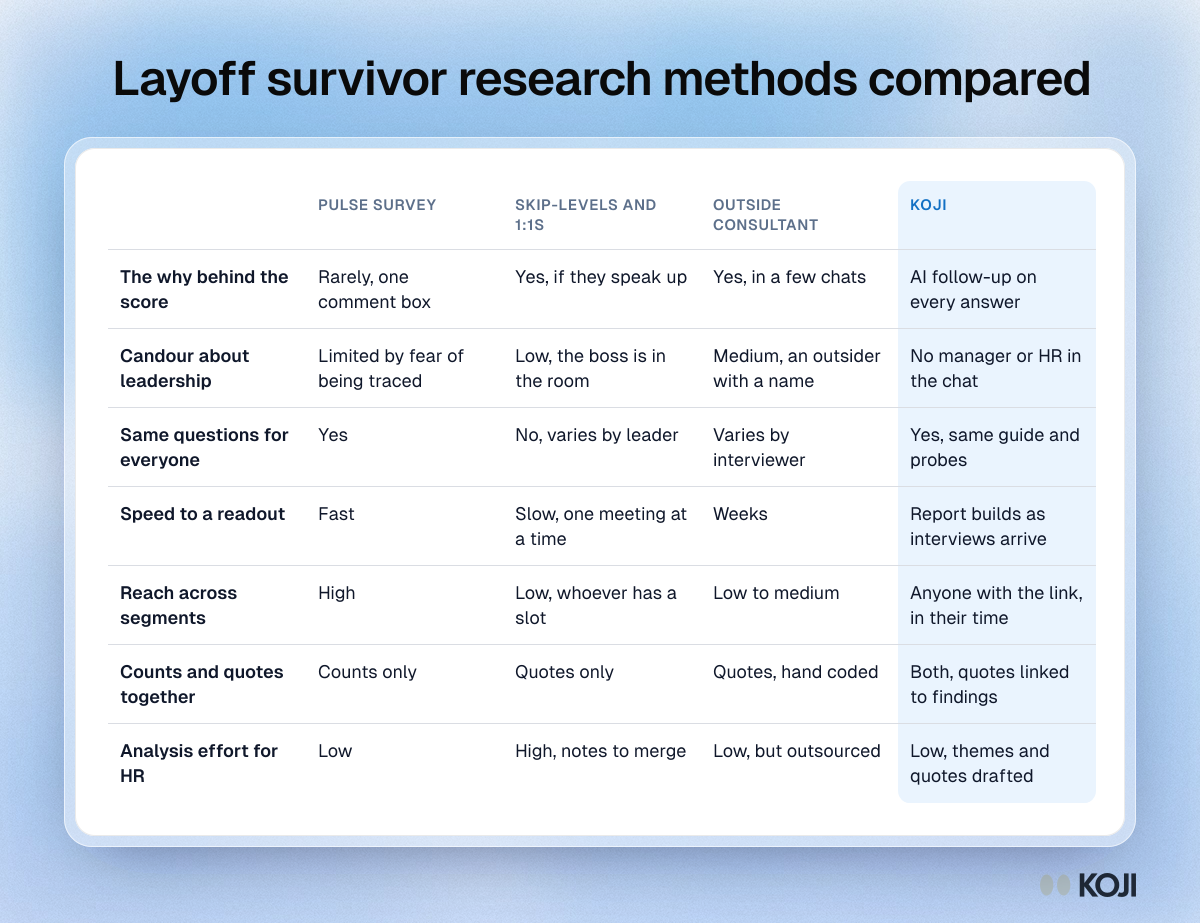
Table comparing a pulse survey, skip-levels and one-to-ones, an outside consultant and Koji for layoff survivor research on seven criteria.

Reference table

Layoff survivor research methods compared
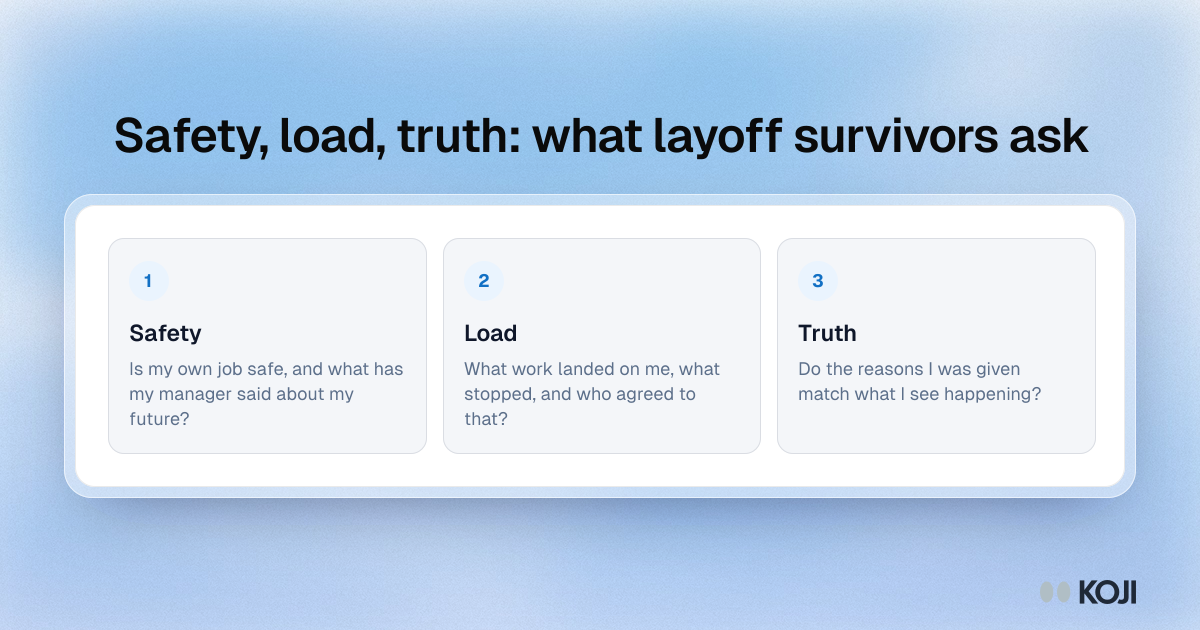
Framework of the three questions layoff survivors are working out: is my job safe, what work landed on me, and do I believe what I was told.

Framework

Safety, load, truth: what layoff survivors ask
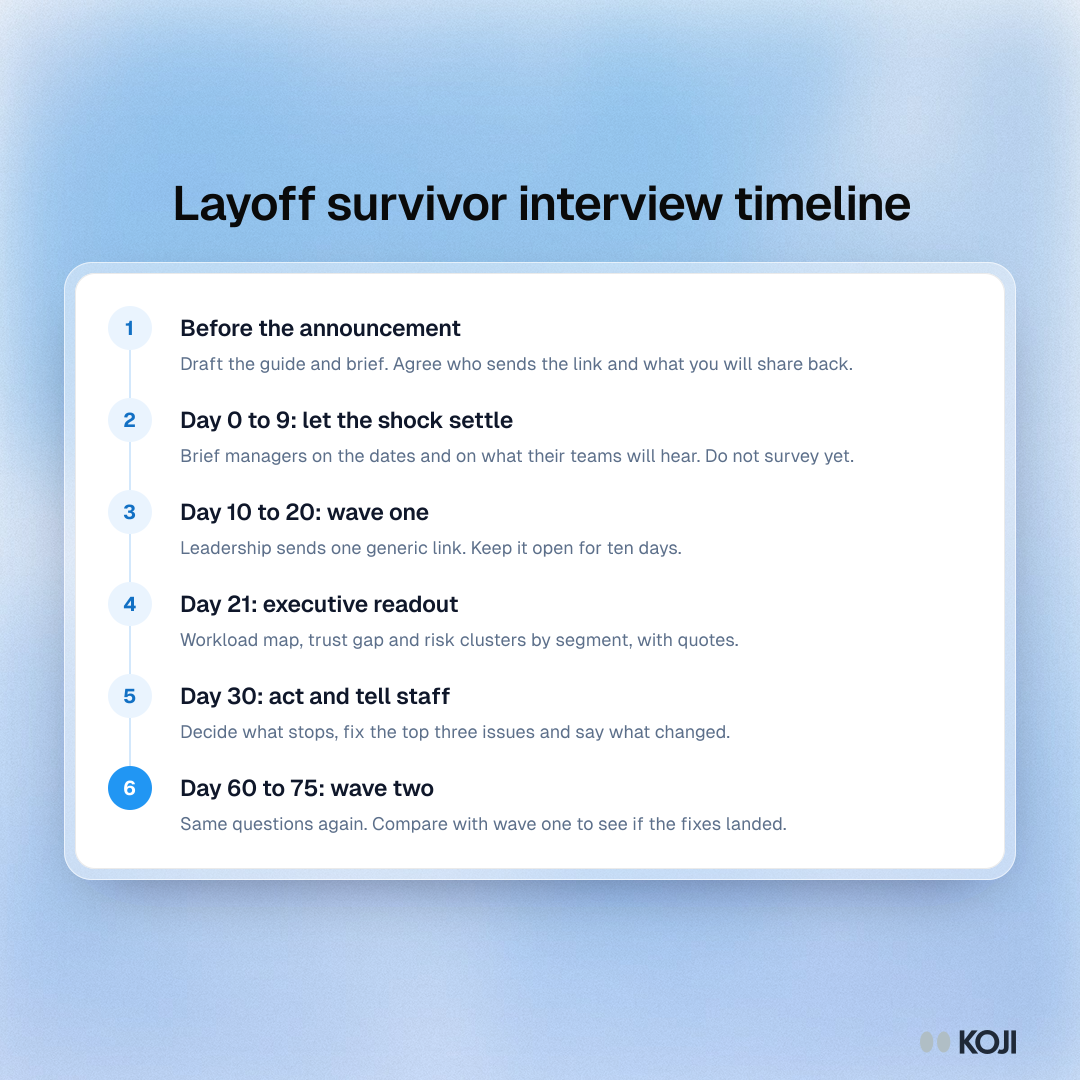
Process showing six steps of a layoff survivor interview round, from drafting the guide to a day 60 repeat of the same questions.

Process

Layoff survivor interview timeline
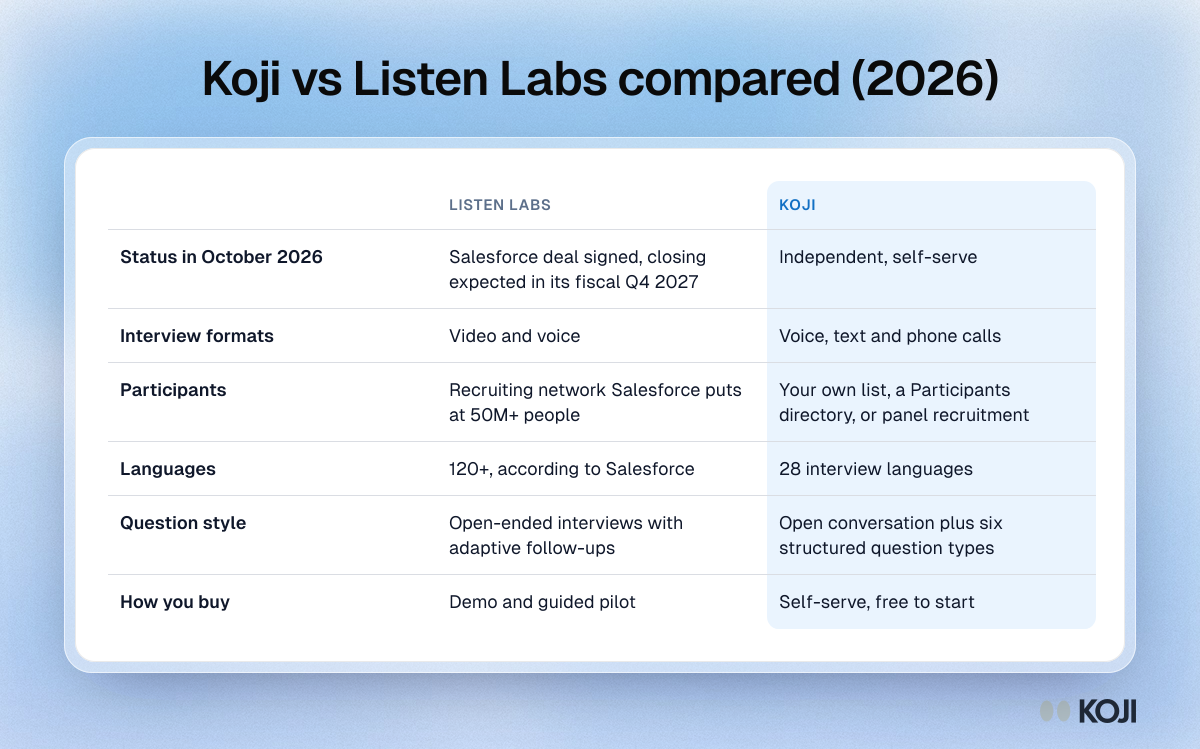
Table comparing Listen Labs and Koji on status, interview formats, participants, languages, question style and how you buy in 2026

Reference table

Koji vs Listen Labs compared (2026)
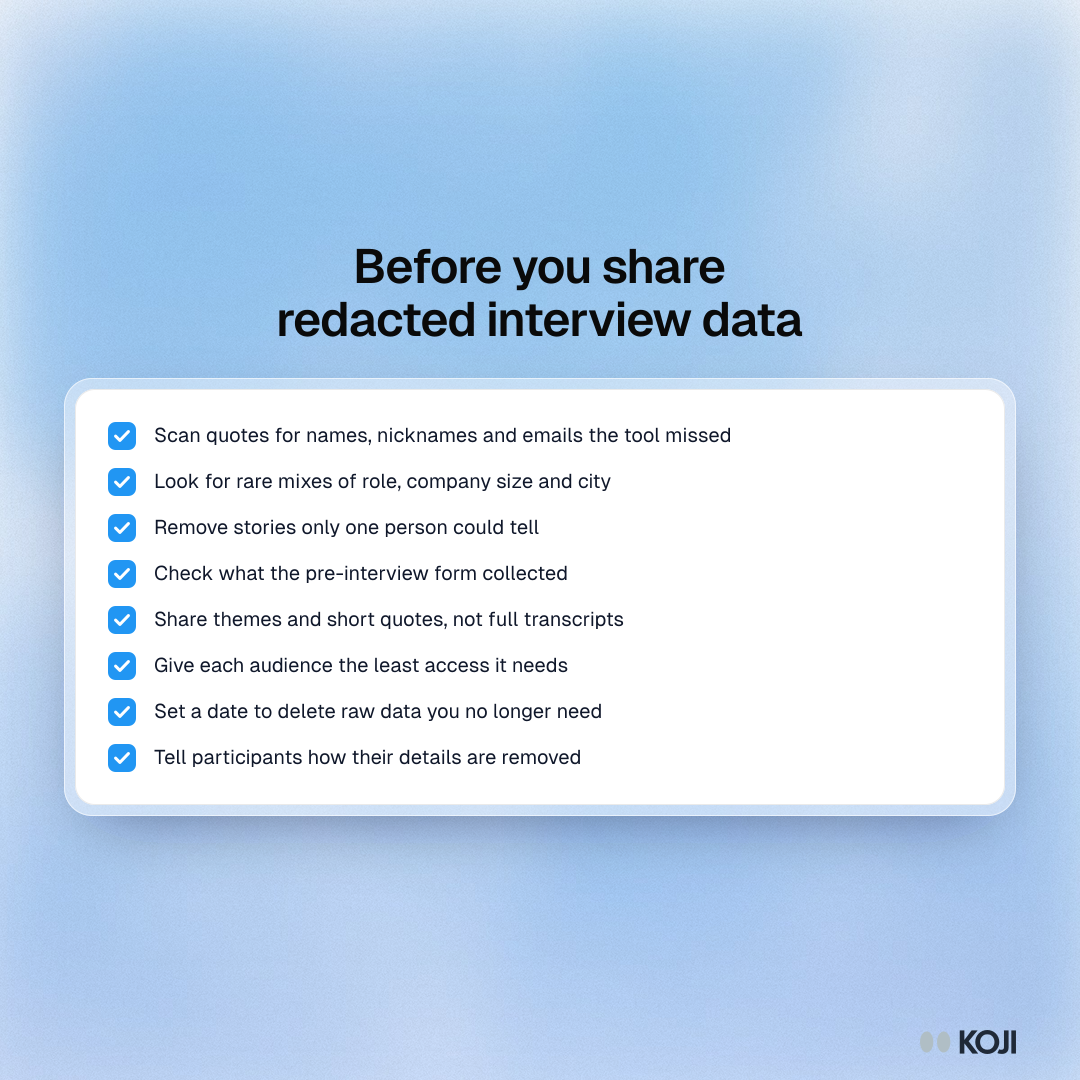
Checklist of eight things to check before sharing redacted interview data, from scanning quotes for missed names to setting a deletion date

Checklist

Before you share redacted interview data
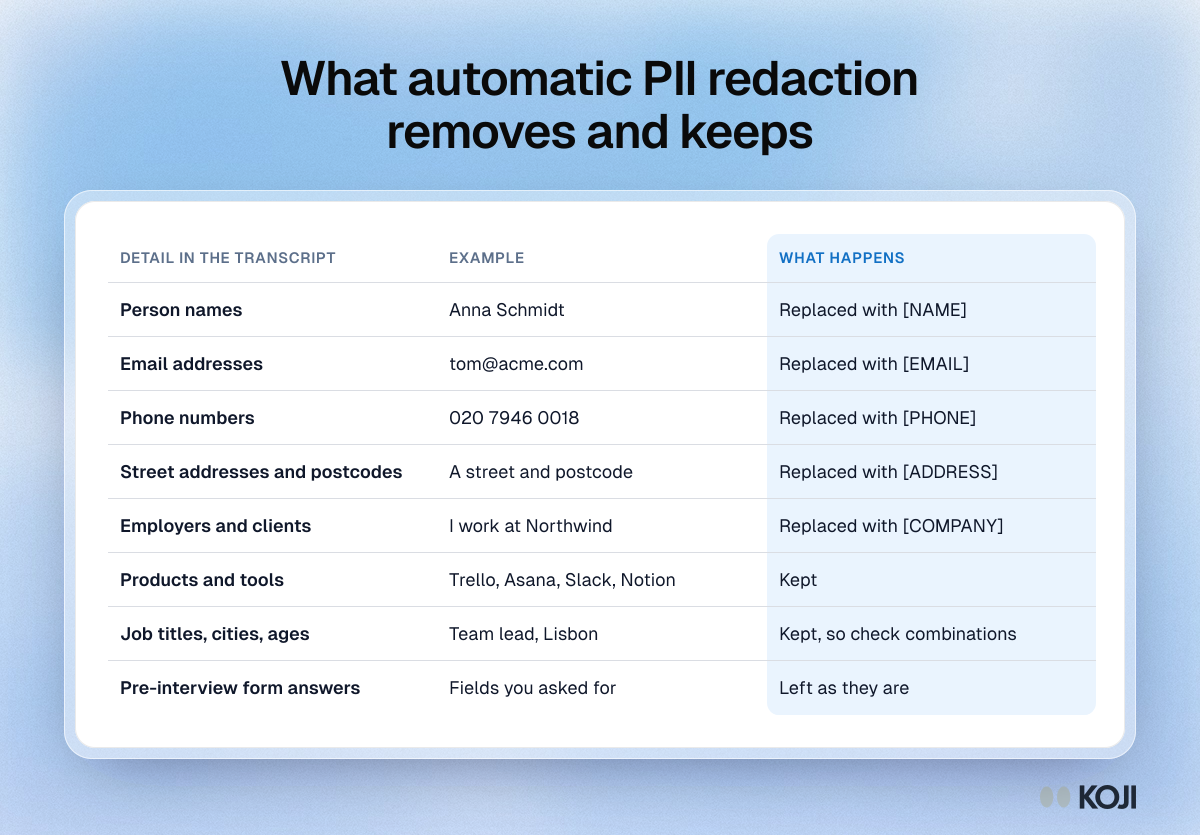
Table comparing what automatic PII redaction removes from an interview transcript, such as names, emails, phones, addresses and employers, with what it keeps

Reference table

What automatic PII redaction removes and keeps
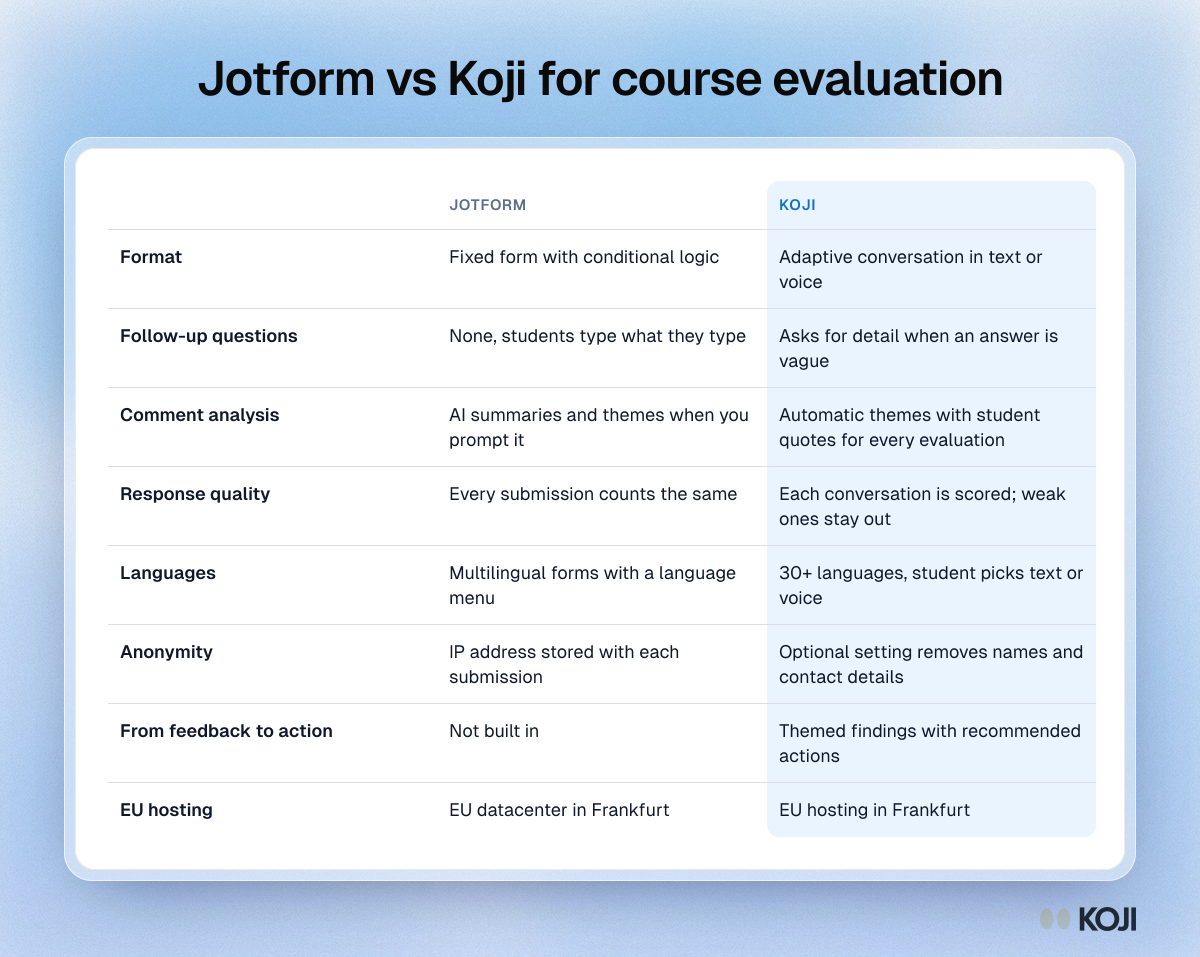
Table comparing Jotform and Koji for course evaluation: format, follow-up questions, comment analysis, languages, anonymity and next steps.

Reference table

Jotform vs Koji for course evaluation
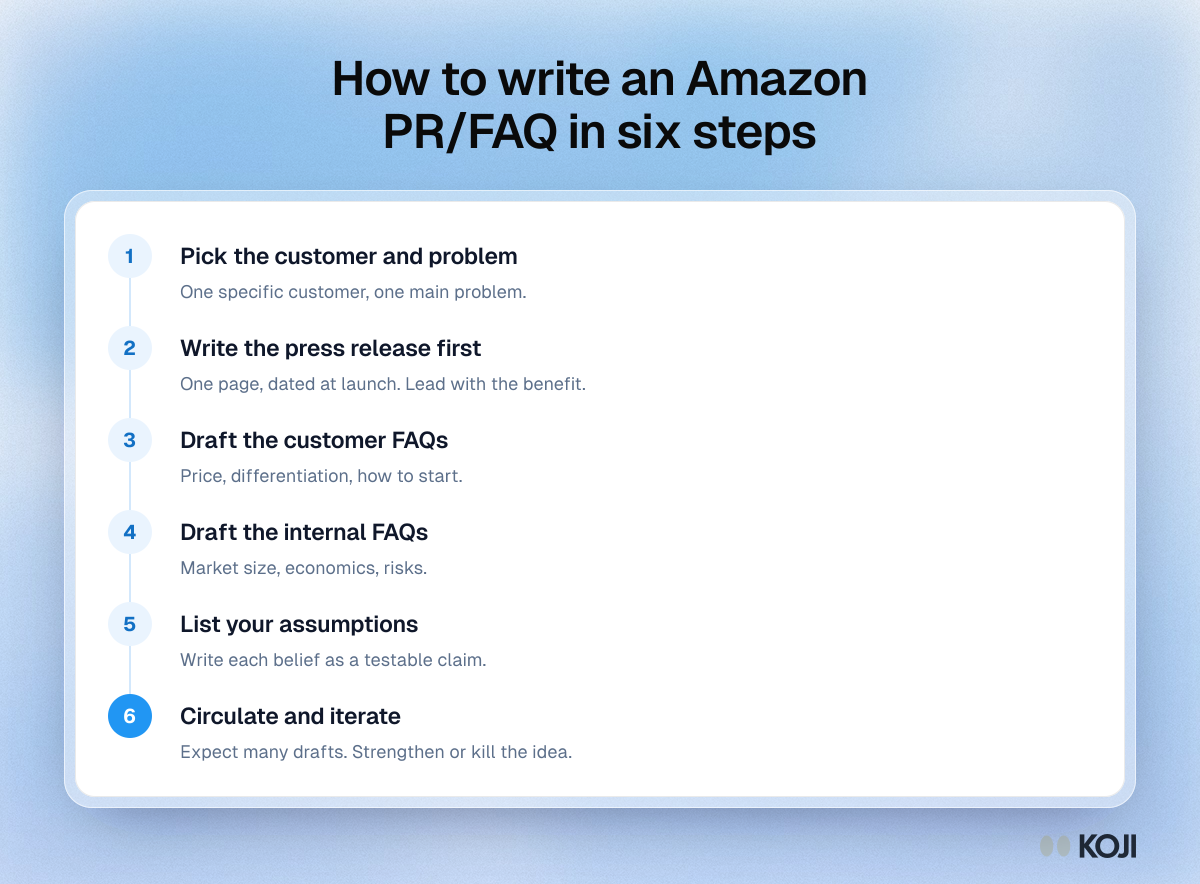
Process showing six steps to write an Amazon PR/FAQ: pick the customer, write the press release, draft both FAQs, list assumptions, iterate.

Process

How to write an Amazon PR/FAQ in six steps
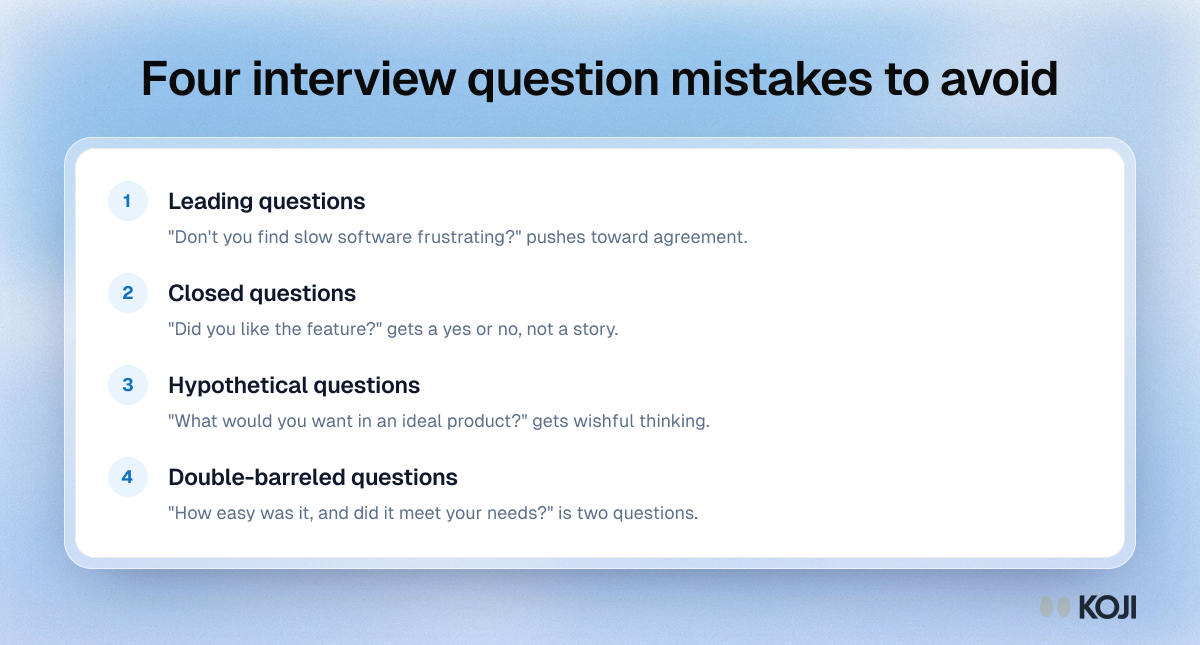
Listicle of four interview question mistakes: leading, closed, hypothetical and double-barreled questions, each with an example and what it gets wrong.

Guide

Four interview question mistakes to avoid
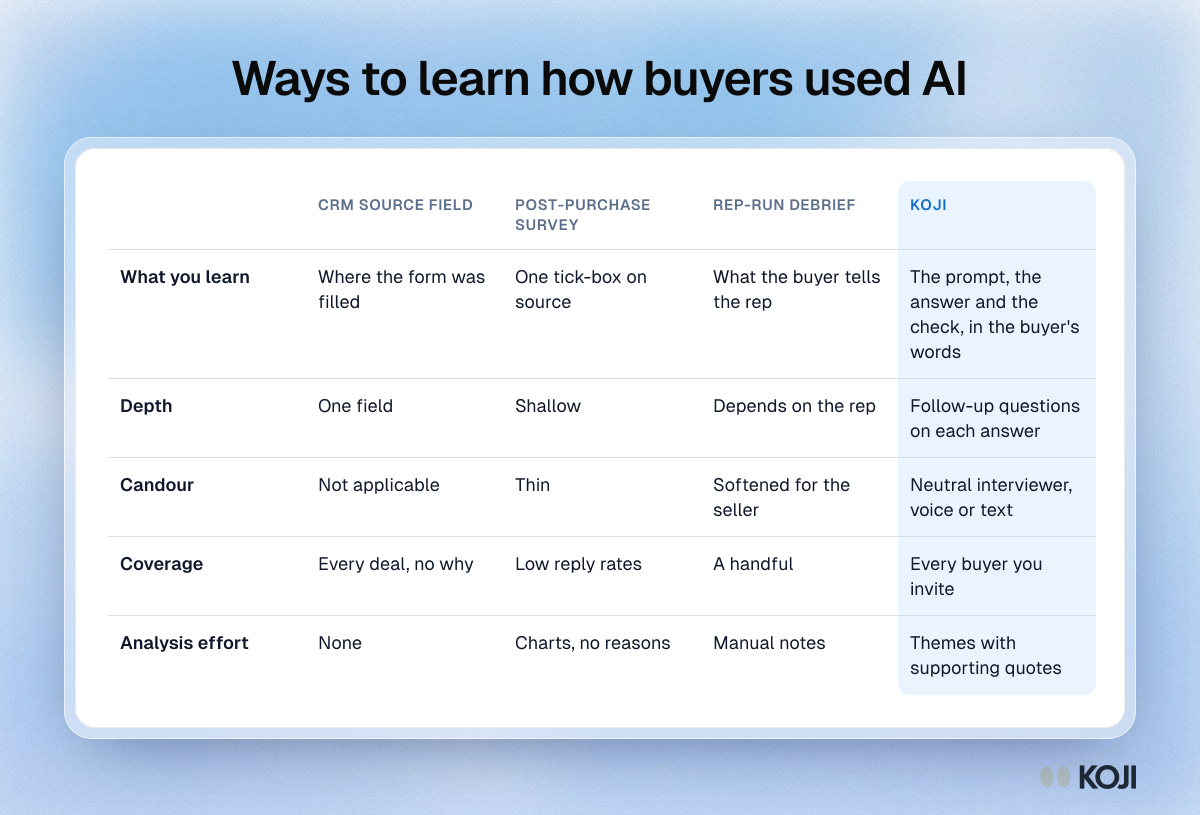
Table comparing a CRM source field, a post-purchase survey, a rep-run debrief and Koji for researching how buyers use AI to shortlist vendors.

Reference table

Ways to learn how buyers used AI
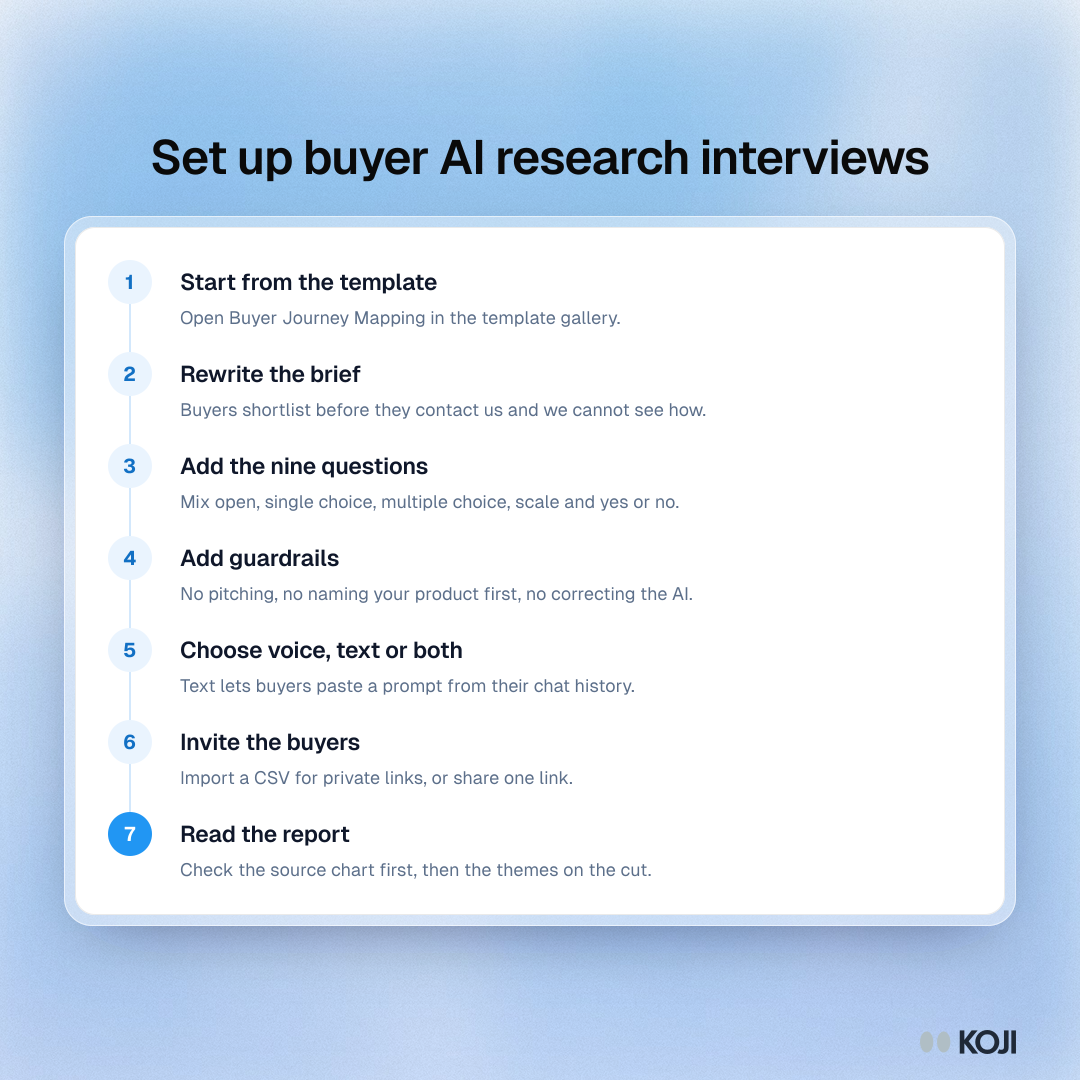
Process showing seven steps to set up buyer AI research interviews in Koji, from the template to reading the report.

Process

Set up buyer AI research interviews
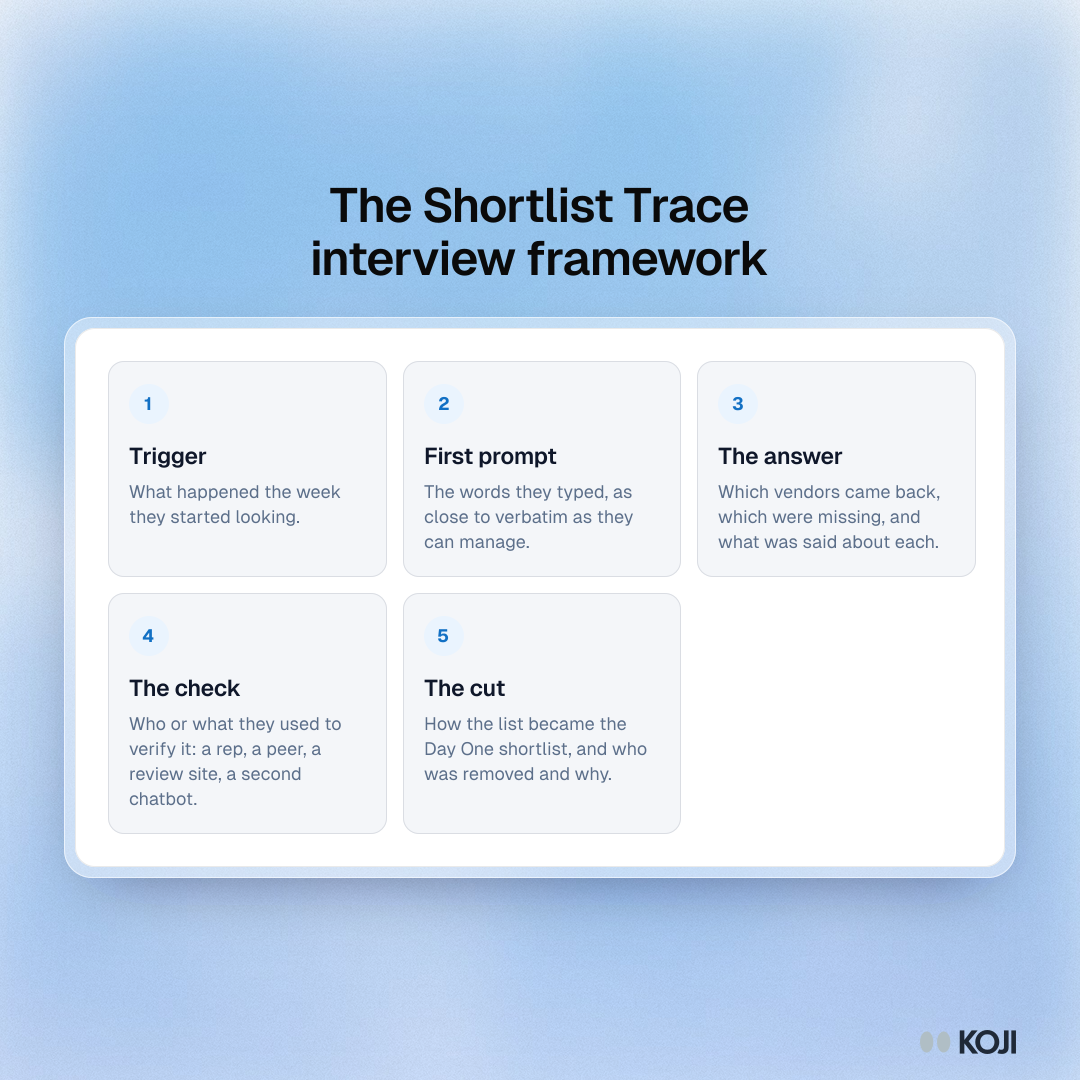
Framework showing the five passes of the Shortlist Trace interview: trigger, first prompt, the answer, the check and the cut.

Framework

The Shortlist Trace interview framework
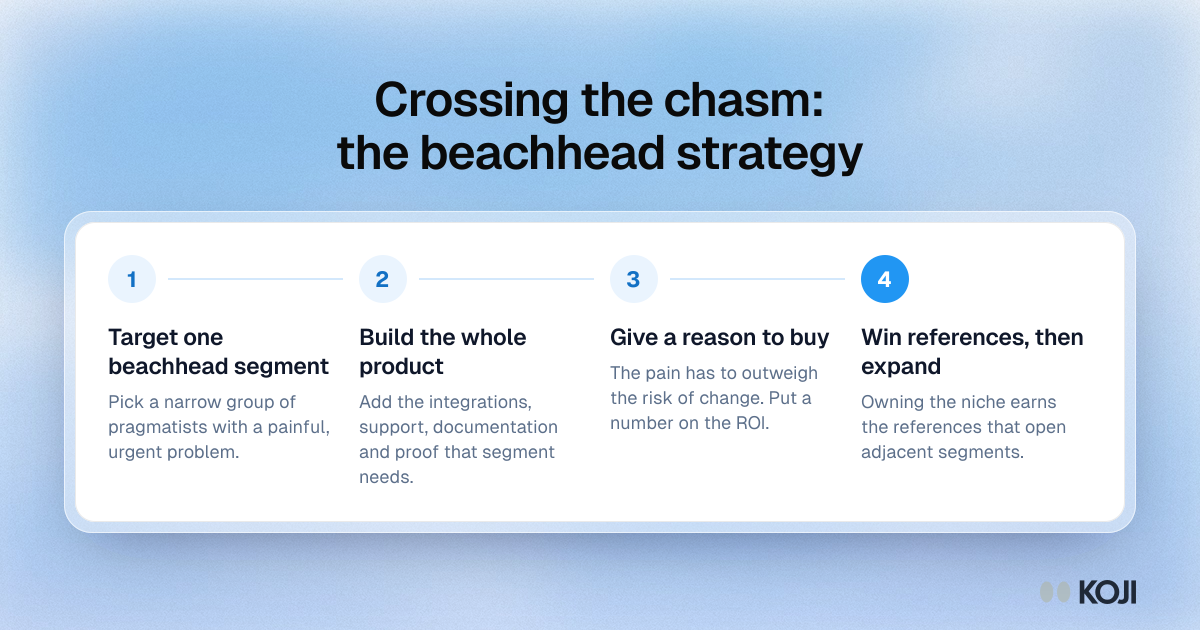
Process showing Moore's four beachhead steps for crossing the chasm: target one segment, build the whole product, give a reason to buy, win references.

Process

Crossing the chasm: the beachhead strategy
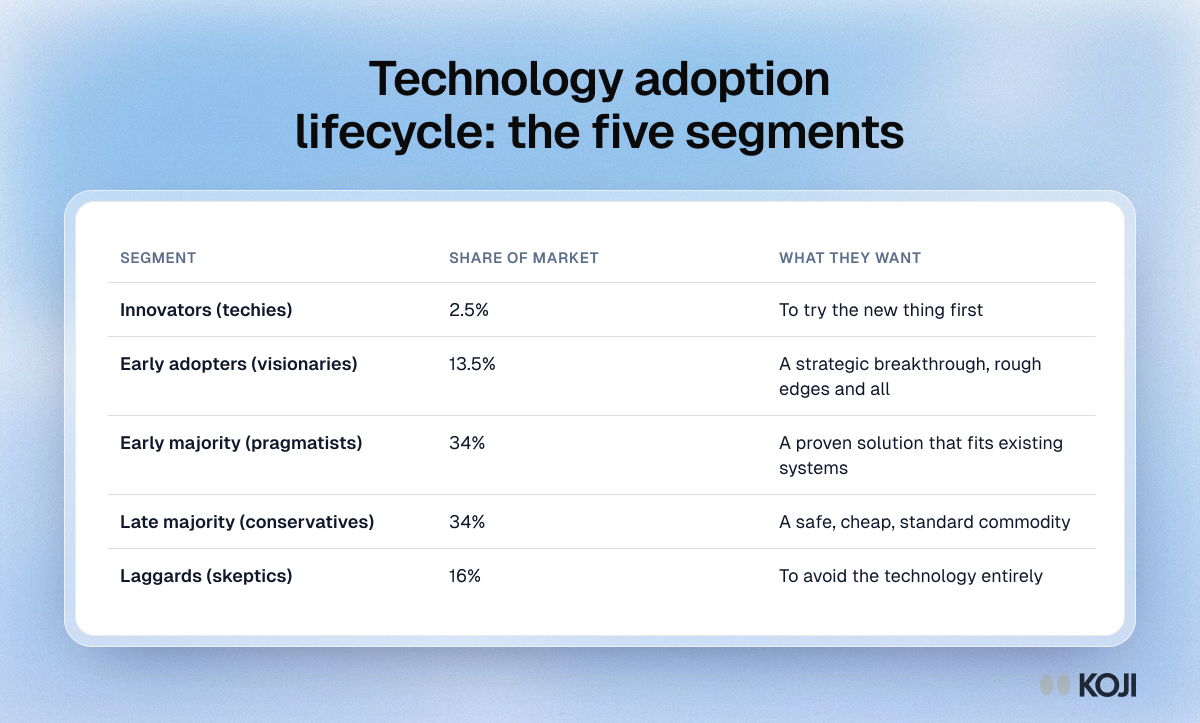
Table of the adoption lifecycle: innovators 2.5%, early adopters 13.5%, early majority 34%, late majority 34% and laggards 16%, plus what each wants.

Reference table

Technology adoption lifecycle: the five segments
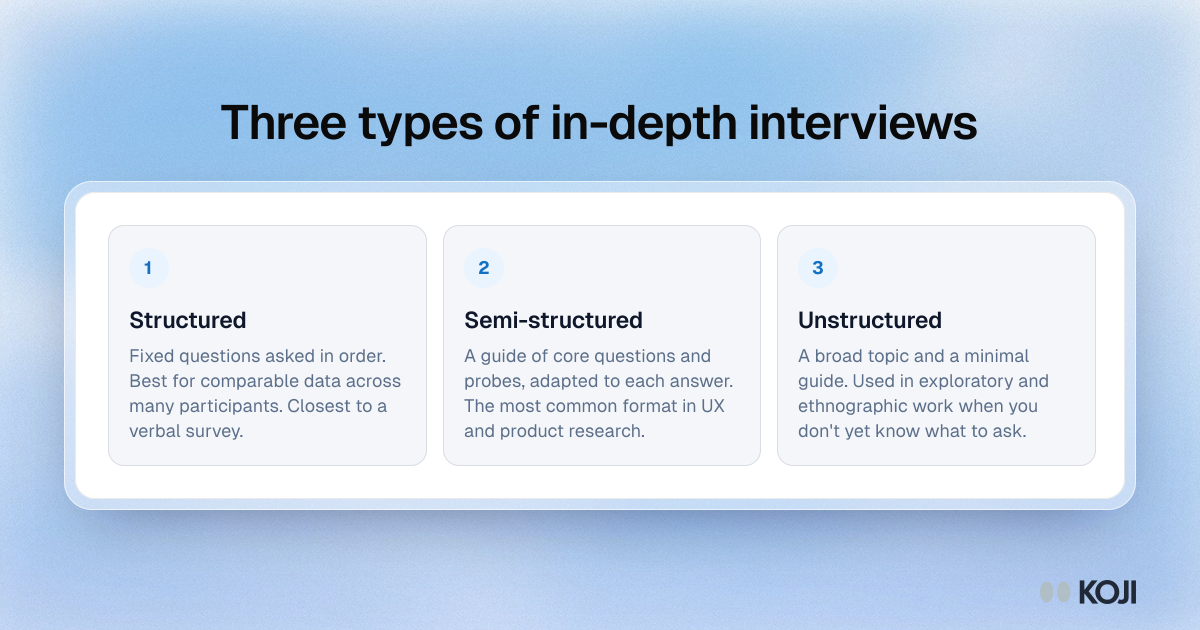
Framework showing three types of in-depth interviews, structured, semi-structured and unstructured, and when to use each one.

Framework

Three types of in-depth interviews
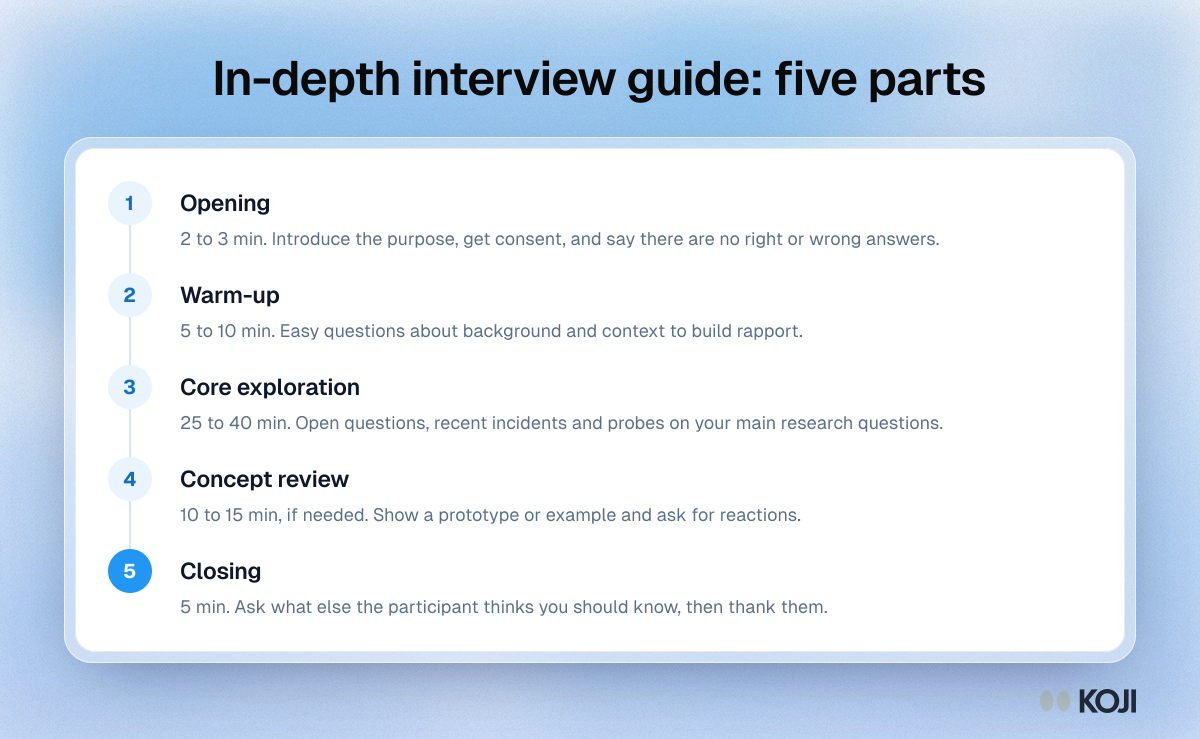
Process showing the five parts of an in-depth interview guide: opening, warm-up, core exploration, concept review and closing, with timings.

Process

In-depth interview guide: five parts
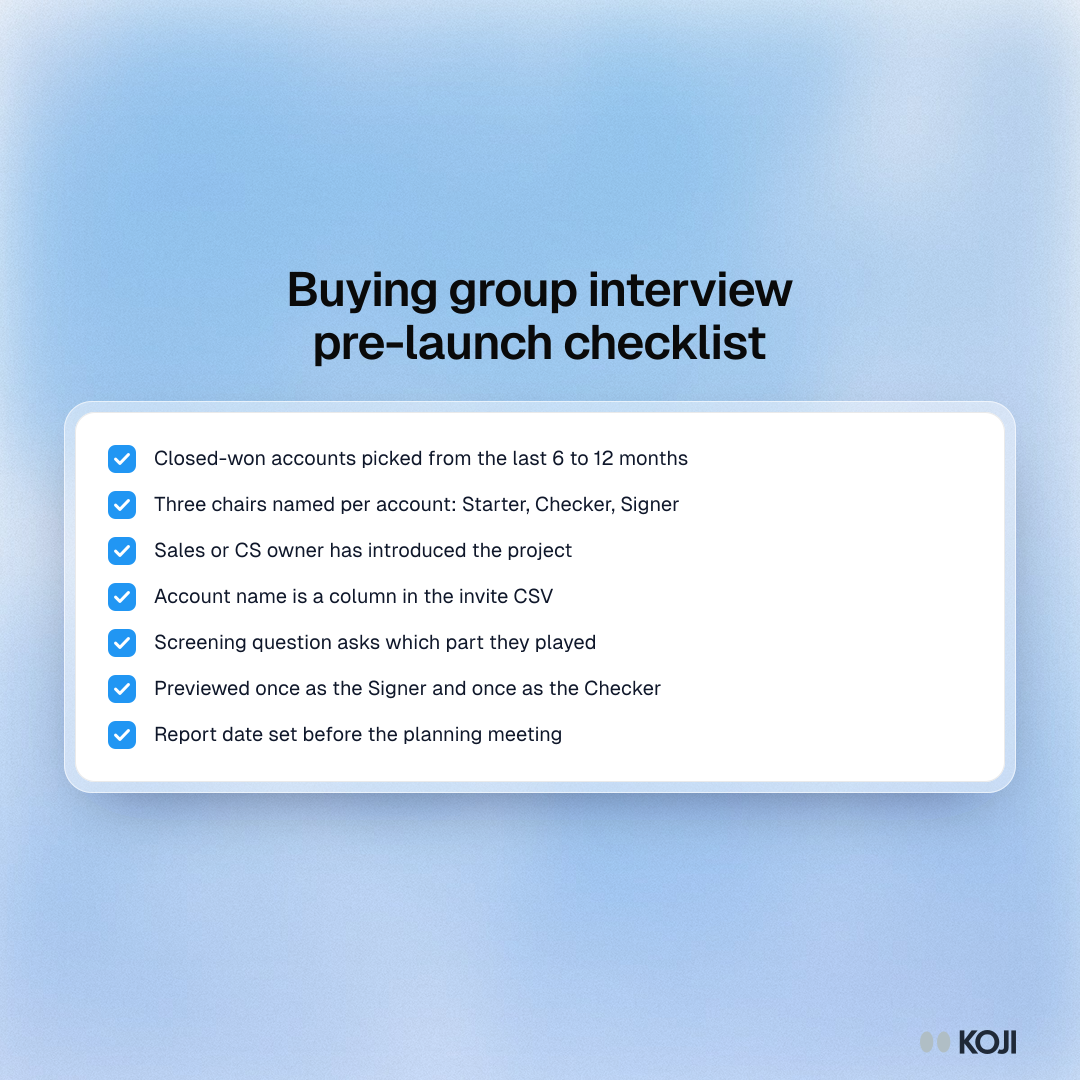
Checklist of seven checks before launching a buying group interview study, from the account list to the report date.

Checklist

Buying group interview pre-launch checklist
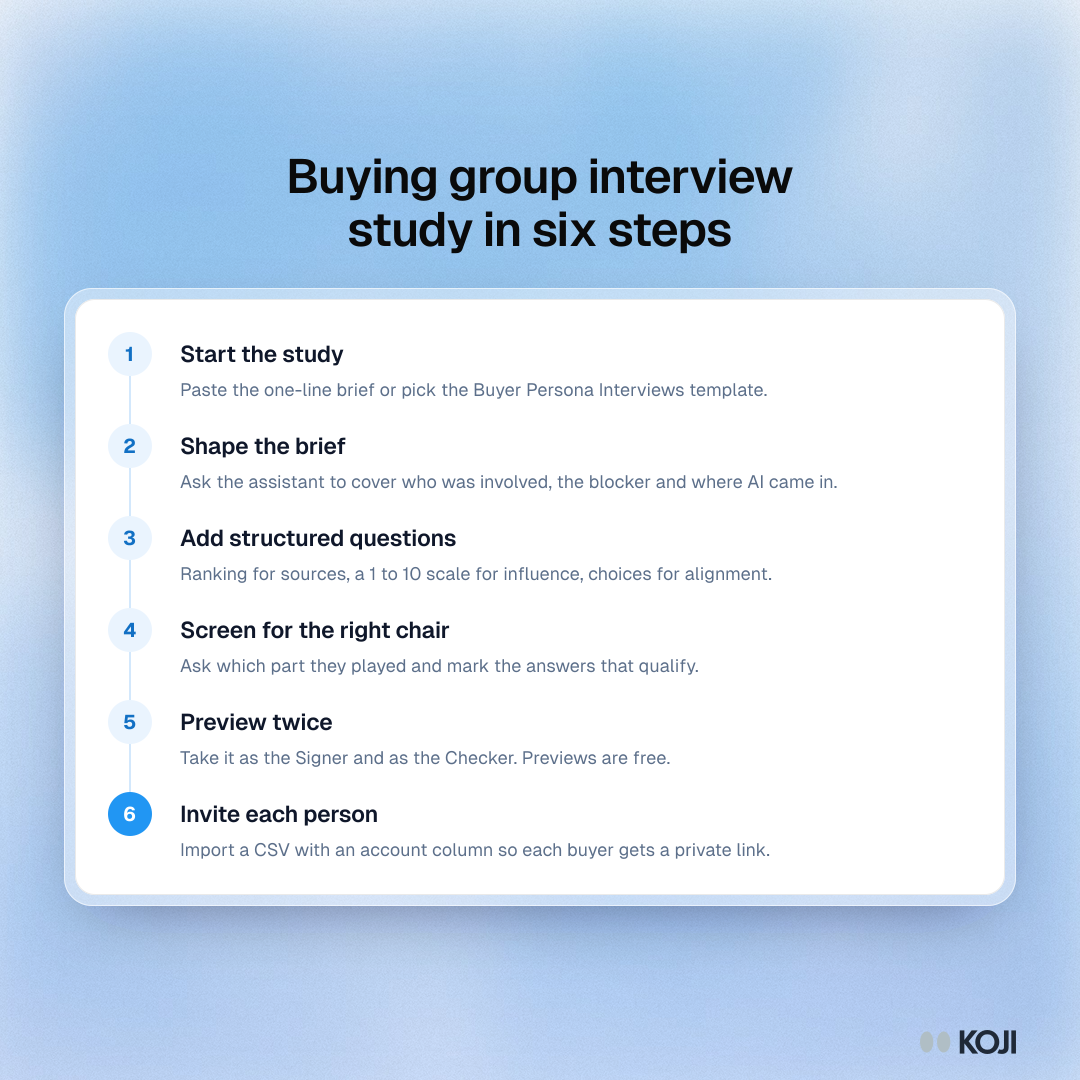
Process of six steps to set up a buying group interview study, from the brief to personal invite links for each buyer.

Process

Buying group interview study in six steps
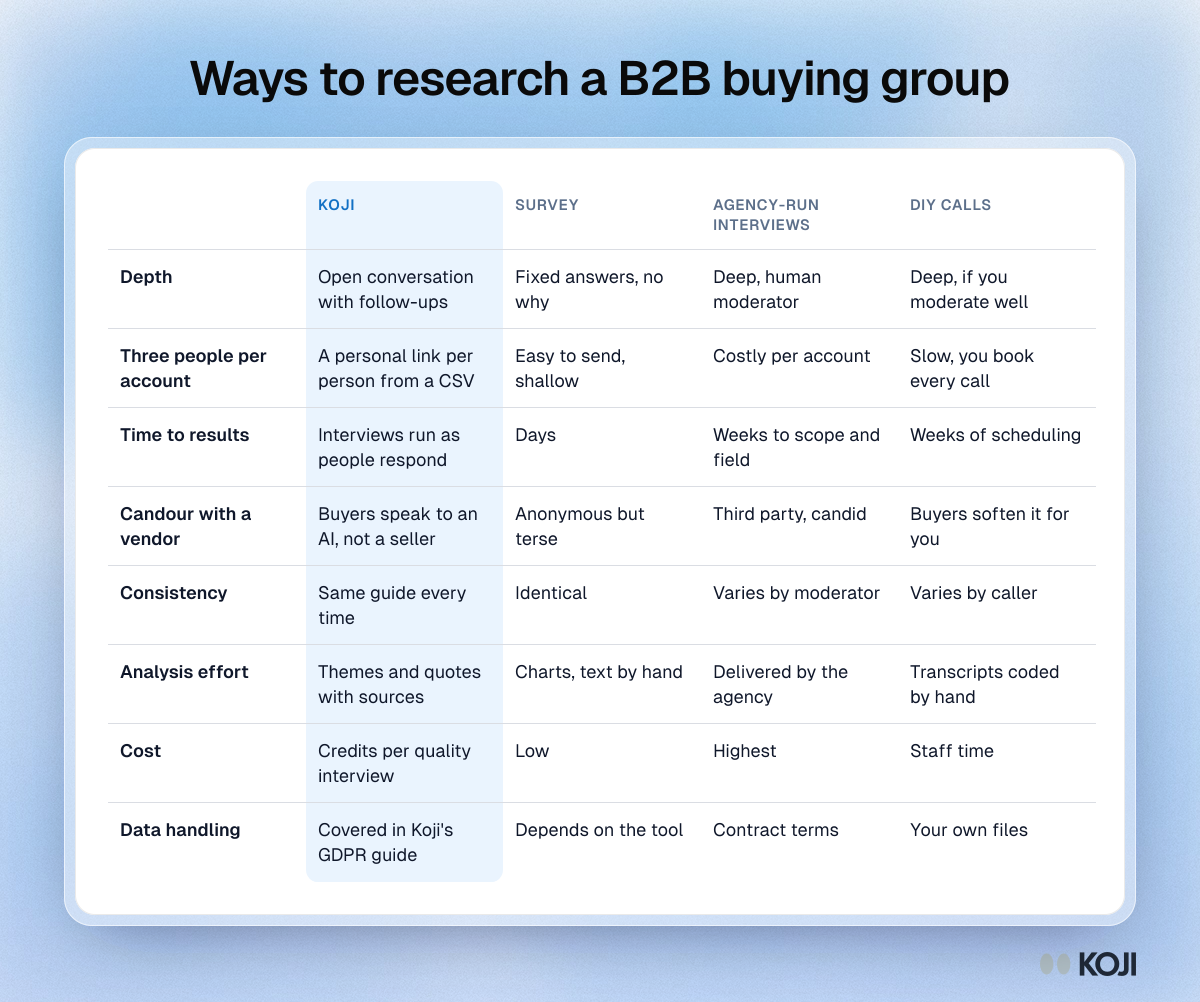
Table comparing Koji, surveys, agency interviews and DIY calls for researching a B2B buying group across eight criteria.

Reference table

Ways to research a B2B buying group
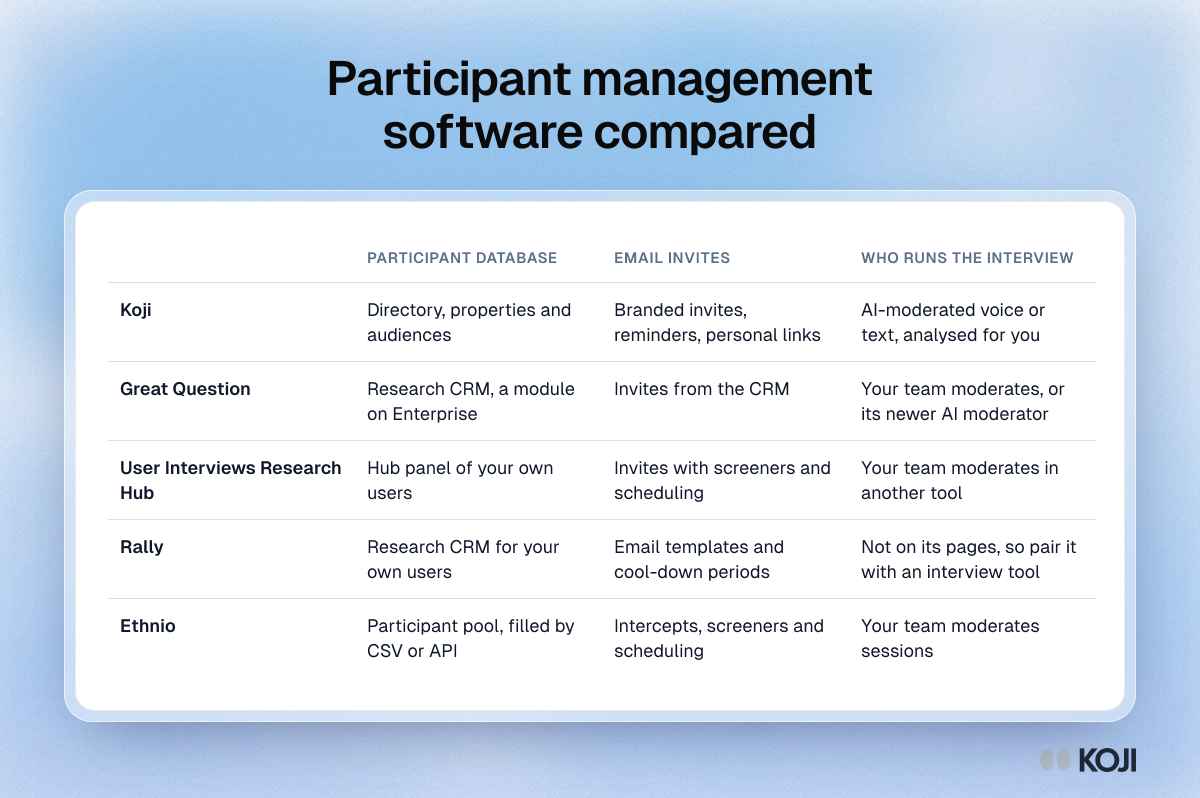
Table comparing Koji, Great Question, User Interviews Research Hub, Rally and Ethnio on participant database, email invitations and who runs the interview.

Reference table

Participant management software compared
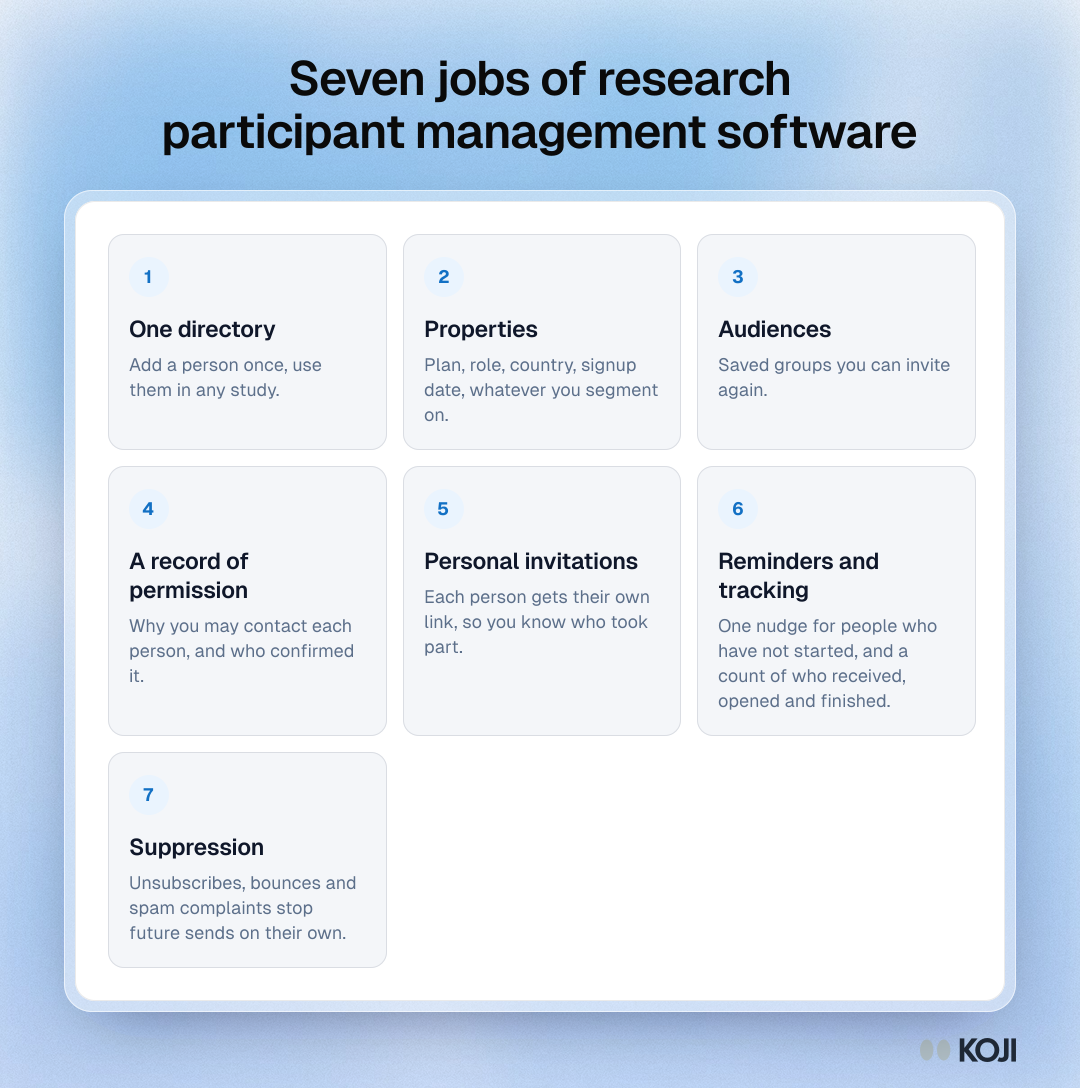
Framework showing seven jobs of research participant management software: directory, properties, audiences, consent, invites, reminders and suppression.

Framework

Seven jobs of research participant management software
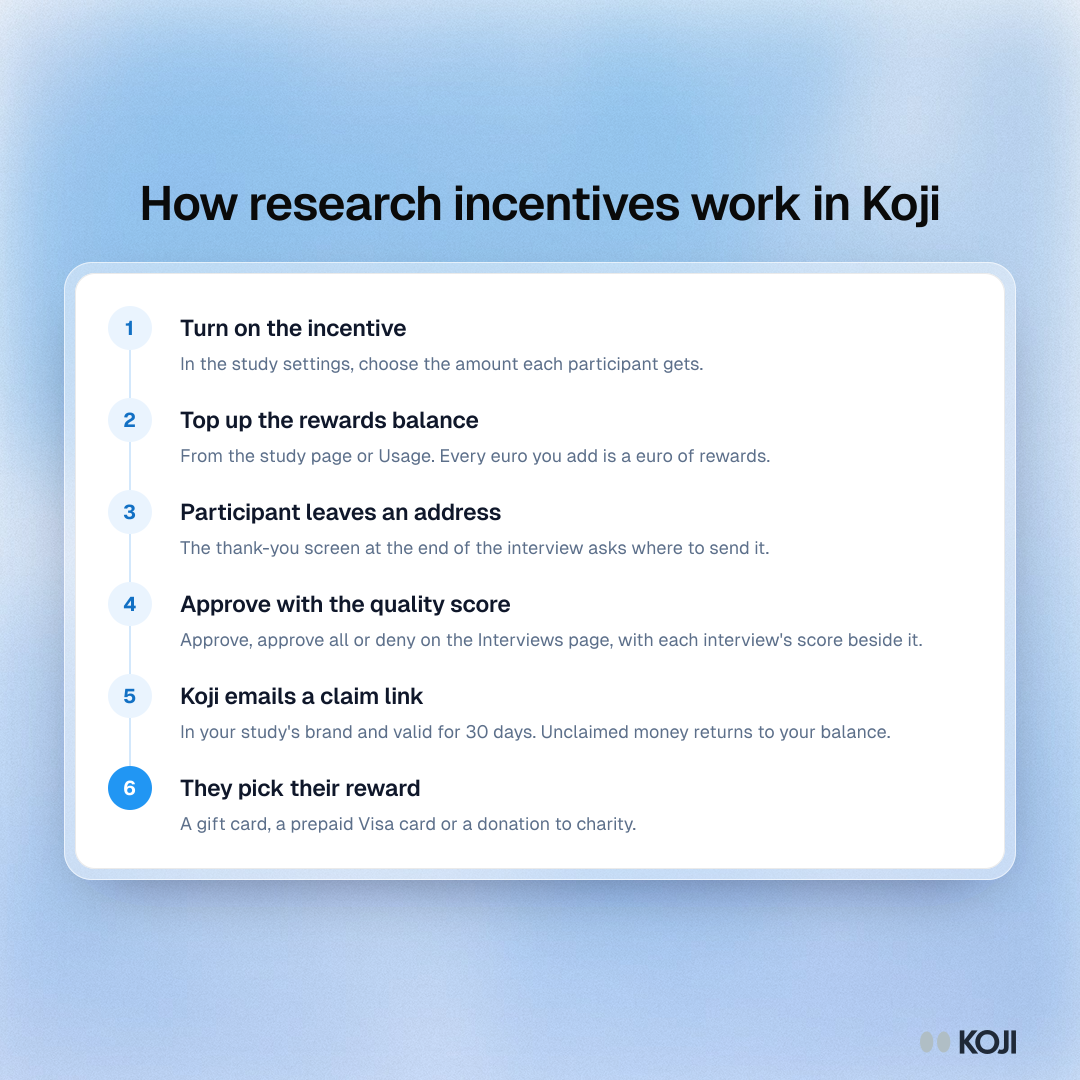
Process showing the six steps of paying a research incentive in Koji, from setting the amount to the participant claiming their reward.

Process

How research incentives work in Koji
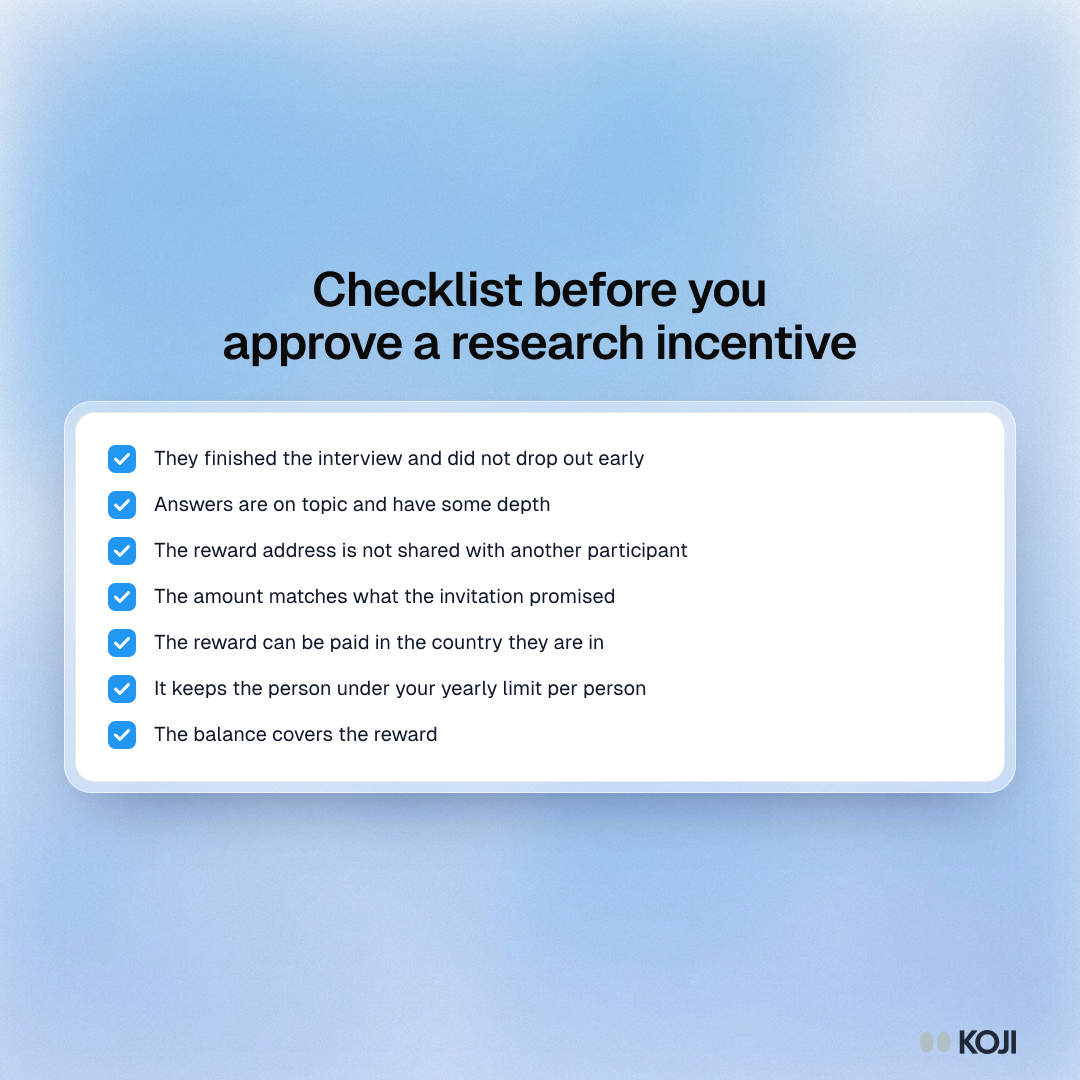
Checklist of seven things to check before approving a research incentive, from completion and answer quality to repeat respondents and tax limits.

Checklist

Checklist before you approve a research incentive
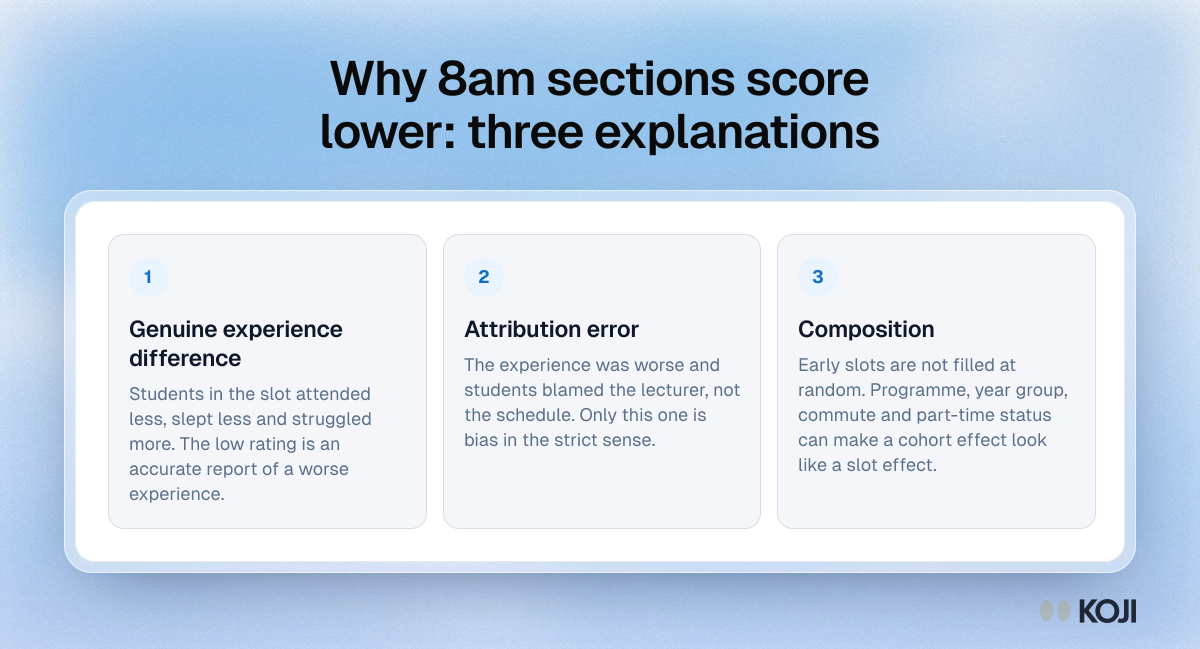
Framework showing three explanations for lower ratings in early timetable slots: a real experience difference, attribution error and cohort composition.

Framework

Why 8am sections score lower: three explanations
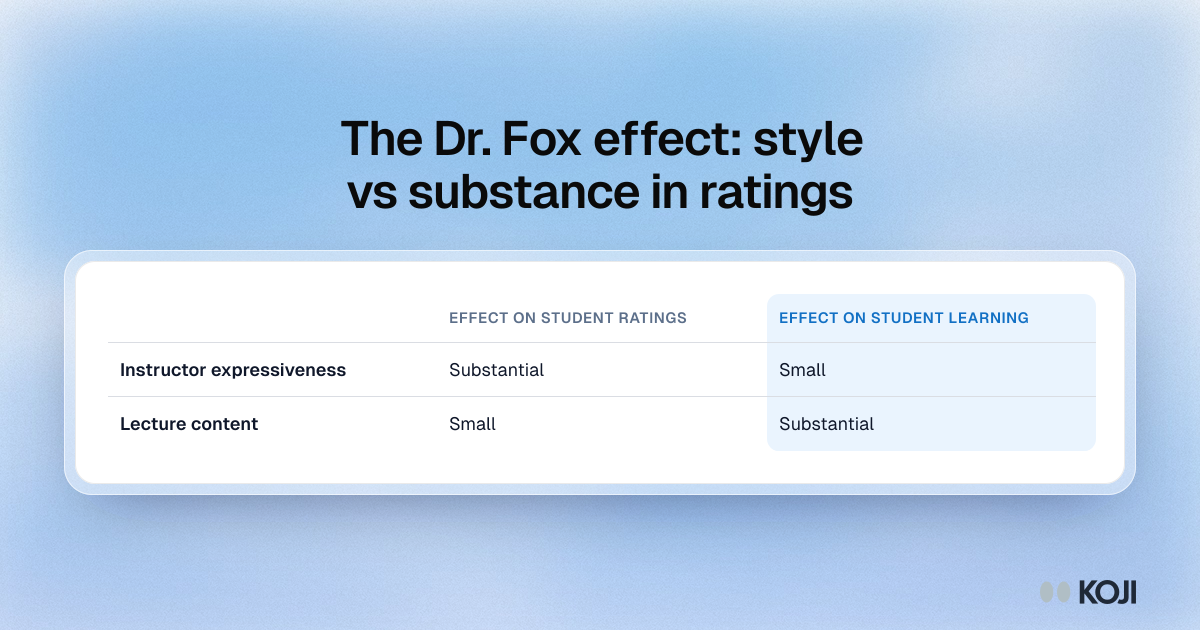
Table showing that instructor expressiveness has a substantial effect on student ratings and a small one on learning, while lecture content shows the reverse.

Reference table

The Dr. Fox effect: style vs substance in ratings
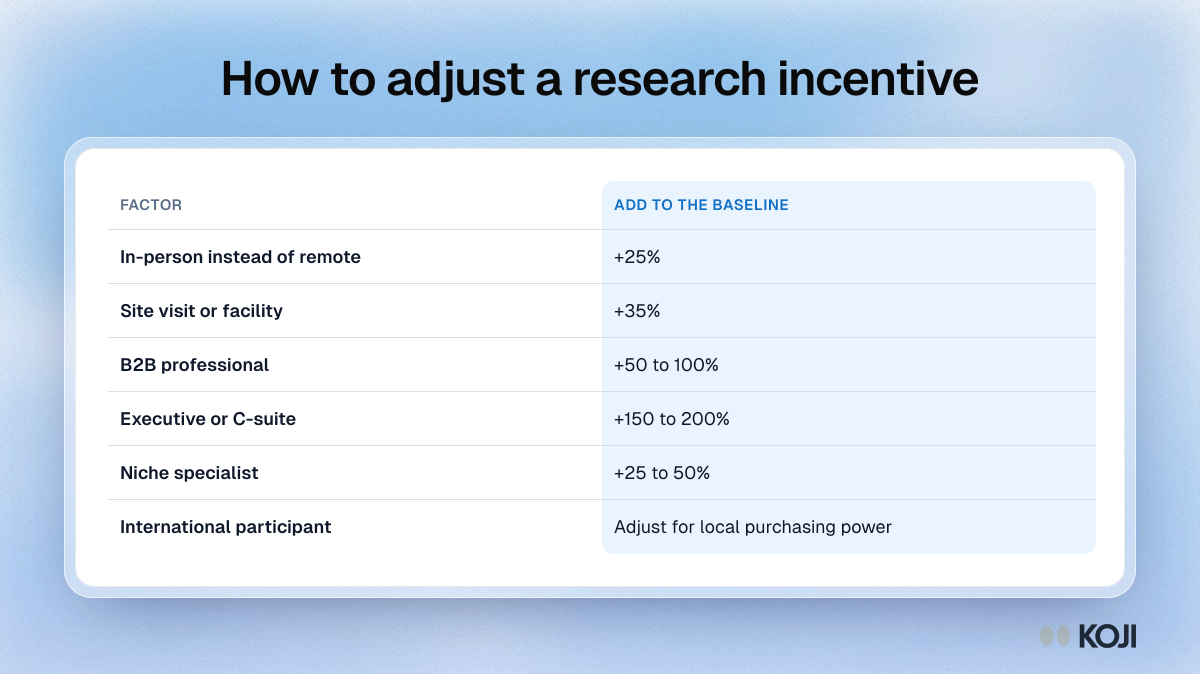
Table showing how much to raise a research incentive for in-person sessions, site visits, B2B and executive participants, specialists and other countries.

Reference table

How to adjust a research incentive
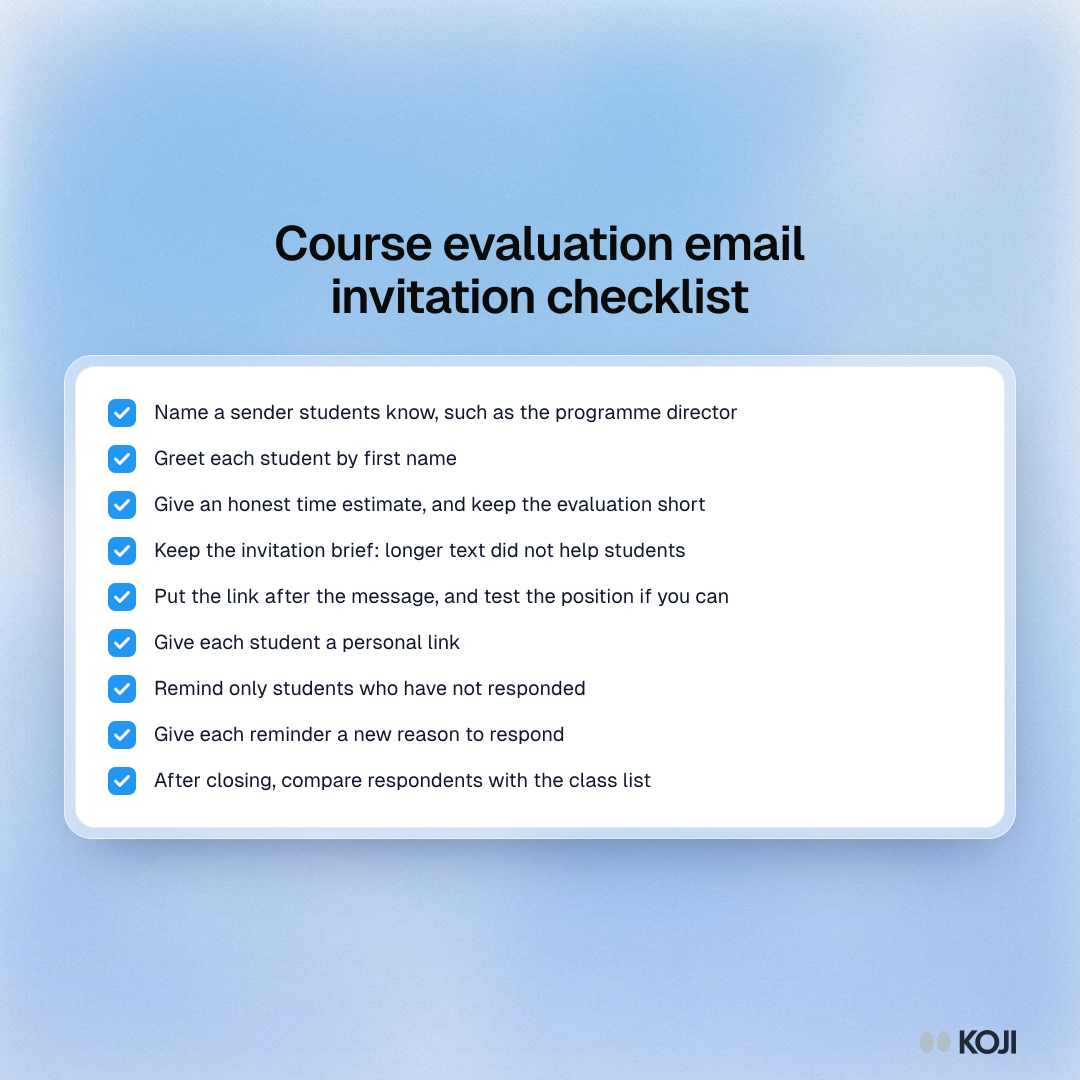
Checklist of nine steps for a course evaluation email invitation, from a known sender and a first-name greeting to reminding only non-responders.

Checklist

Course evaluation email invitation checklist
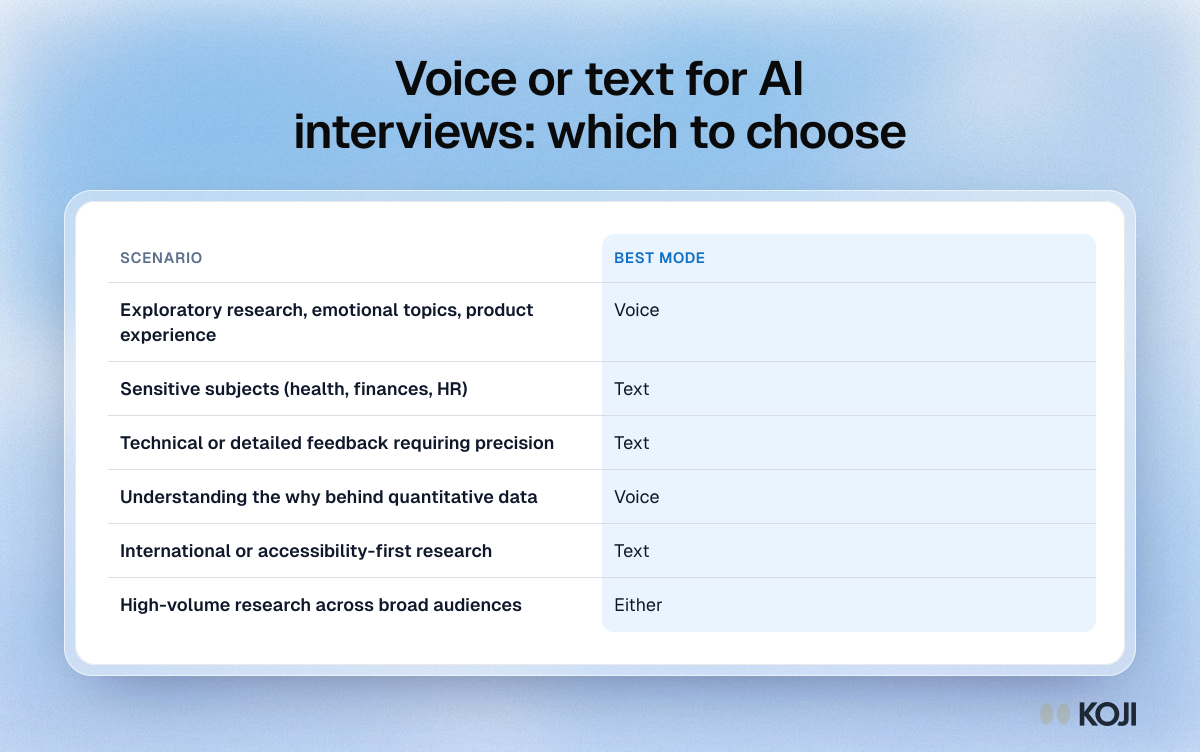
Table matching six research scenarios to voice or text mode for AI-moderated interviews, such as sensitive topics suiting text.

Reference table

Voice or text for AI interviews: which to choose
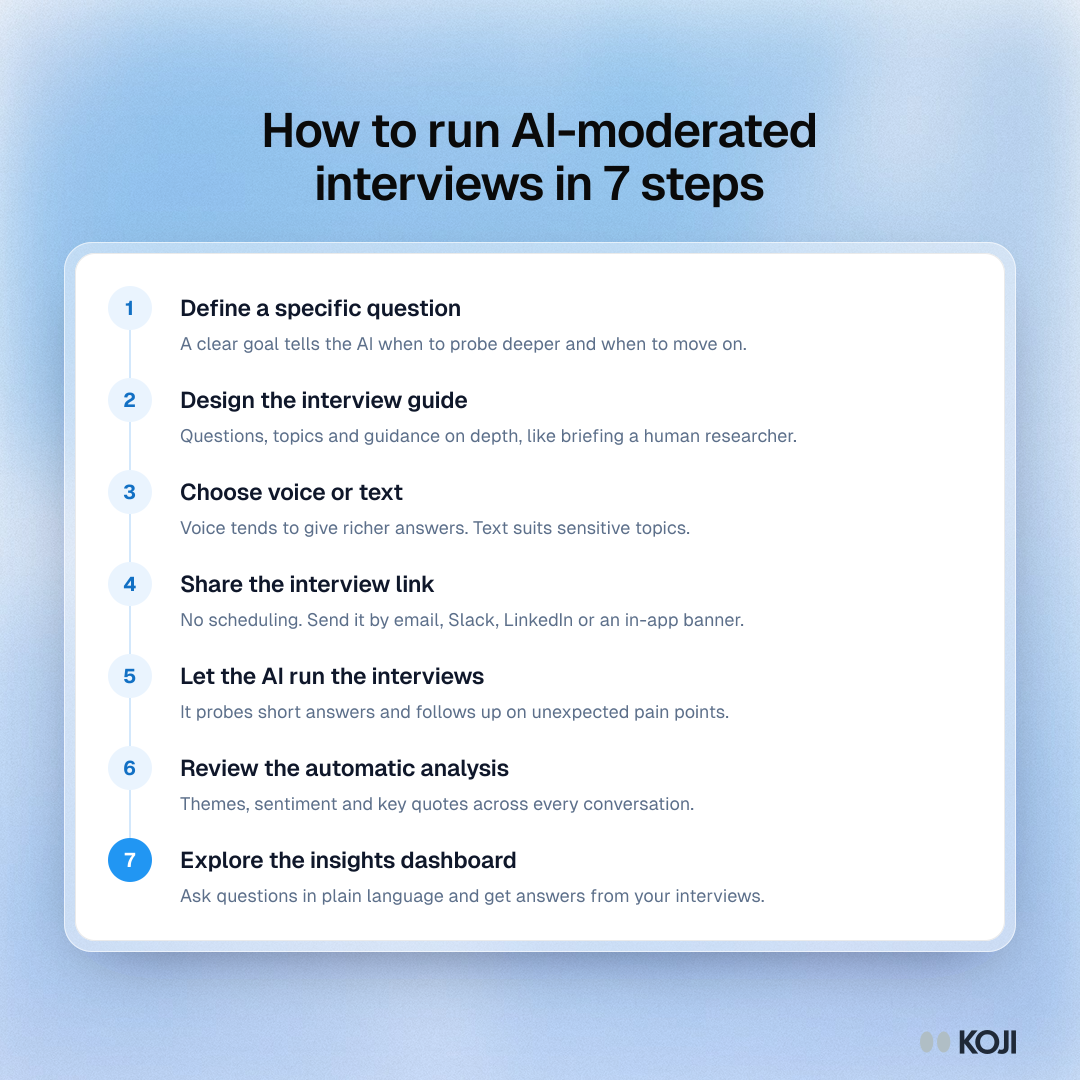
Process showing seven steps to run AI-moderated interviews, from defining a research question to exploring the insights dashboard.

Process

How to run AI-moderated interviews in 7 steps
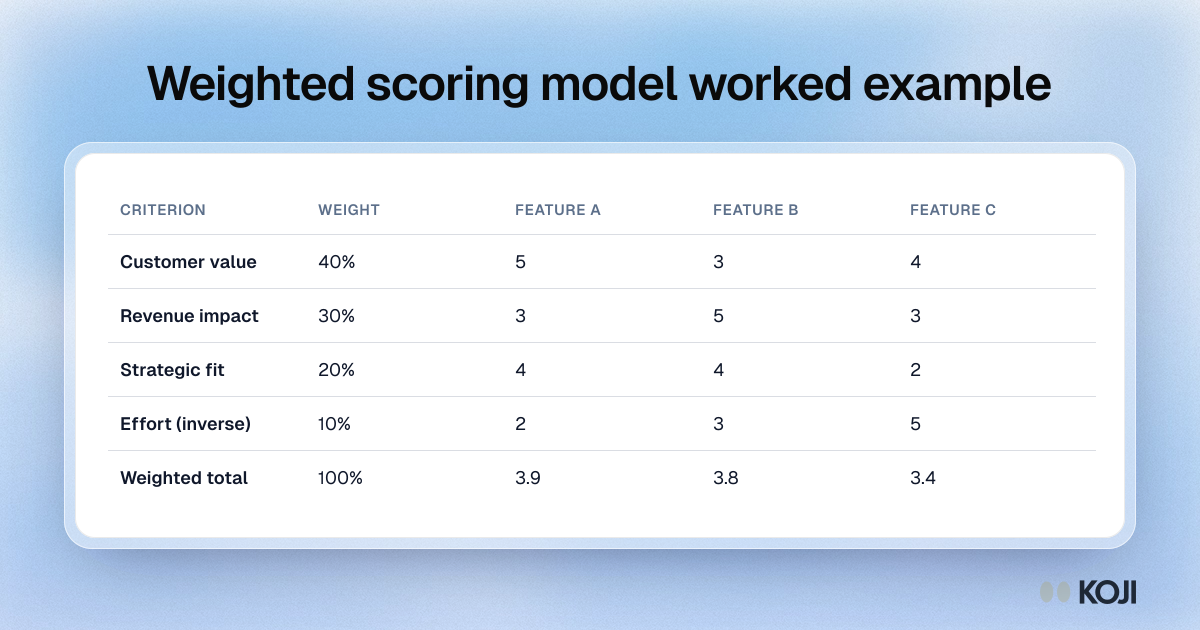
Table scoring three features against four weighted criteria, with weighted totals of 3.9 for Feature A, 3.8 for Feature B and 3.4 for Feature C.

Reference table

Weighted scoring model worked example
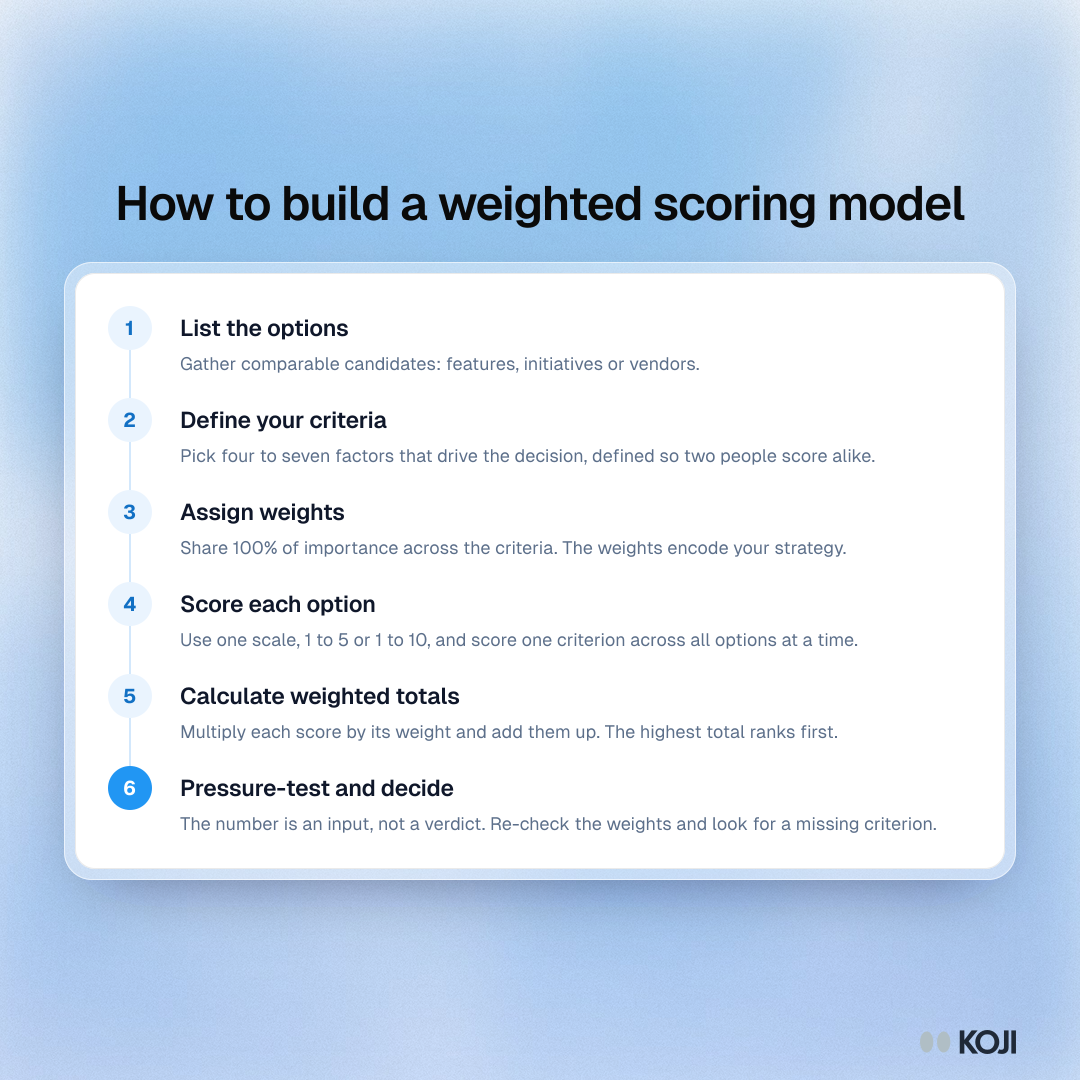
Process showing six steps to build a weighted scoring model: list options, define criteria, assign weights, score, calculate totals and pressure-test.

Process

How to build a weighted scoring model
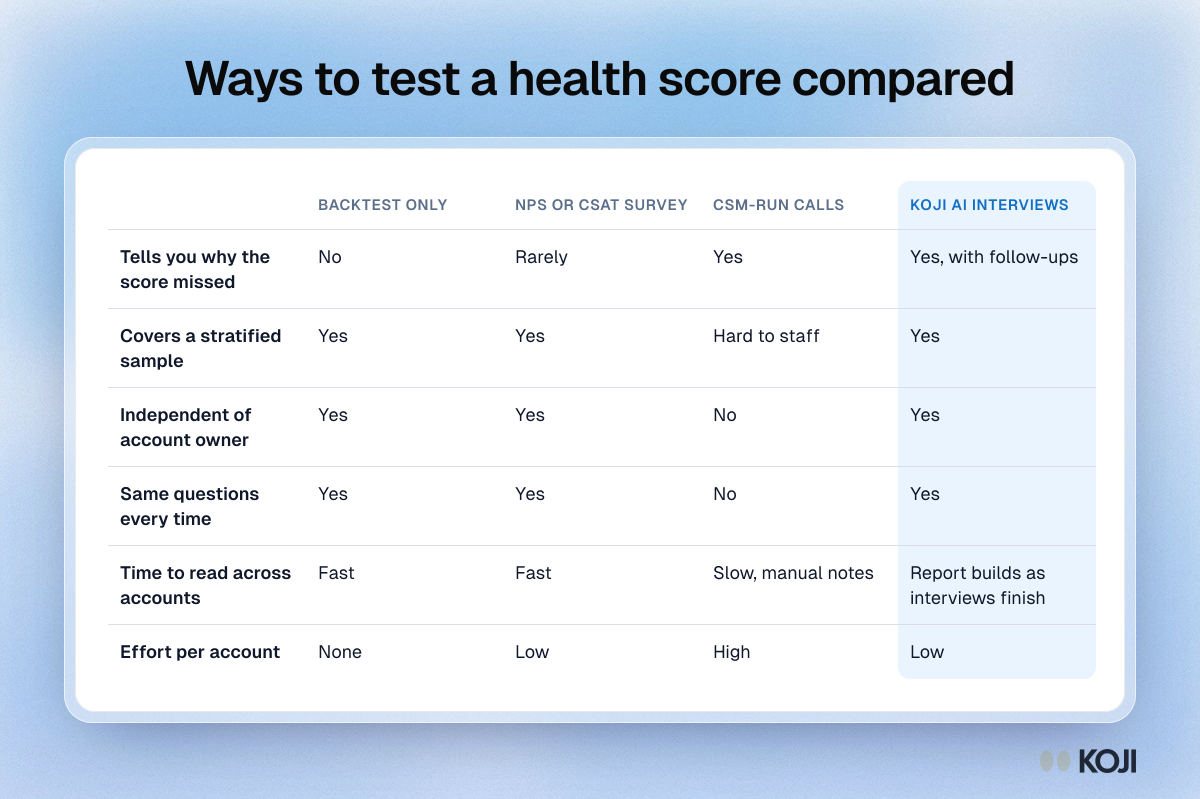
Table comparing a backtest, NPS or CSAT surveys, CSM-run calls and Koji AI interviews for testing a customer health score.

Reference table

Ways to test a health score compared
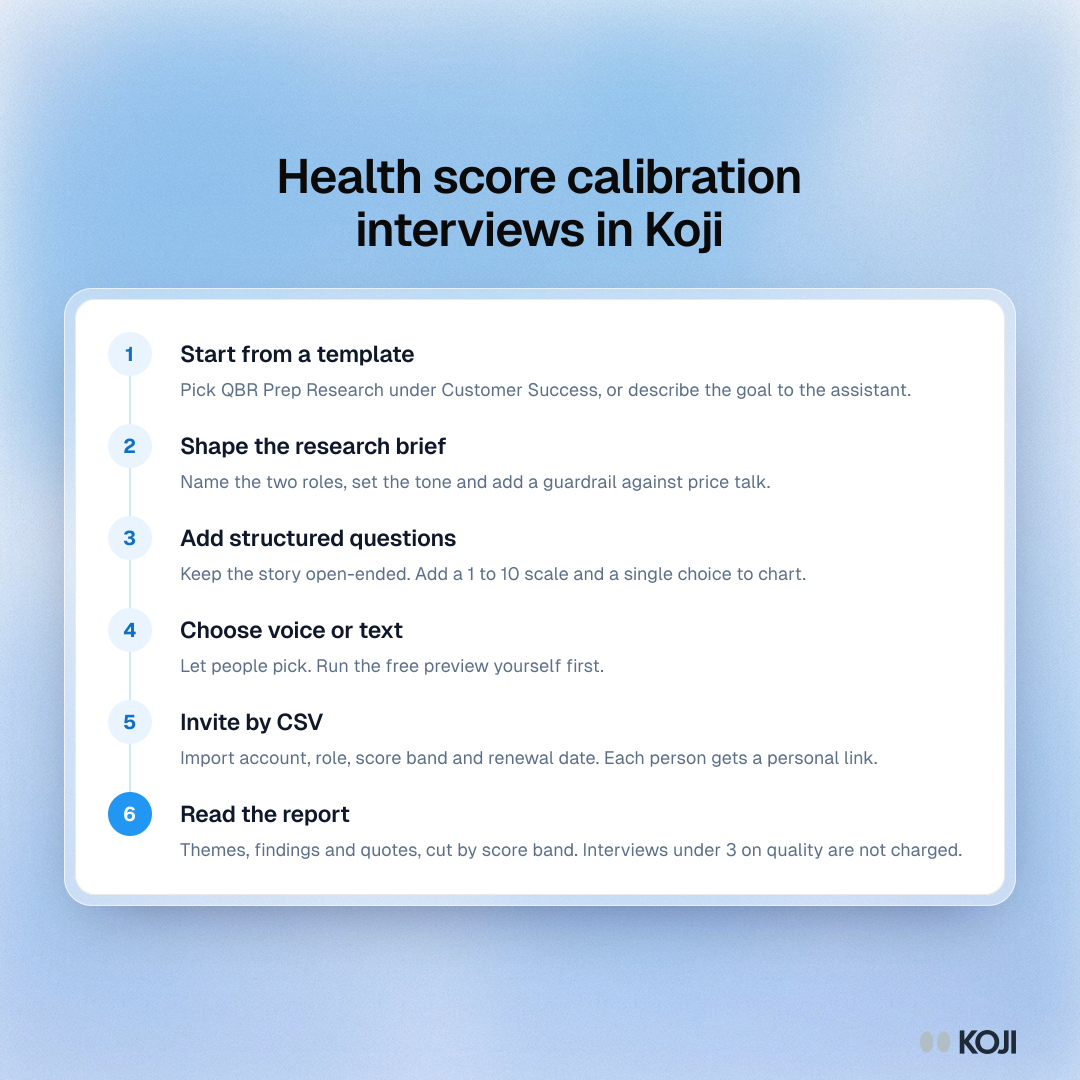
Process of six steps to run health score calibration interviews in Koji, from a template to a report cut by score band.

Process

Health score calibration interviews in Koji
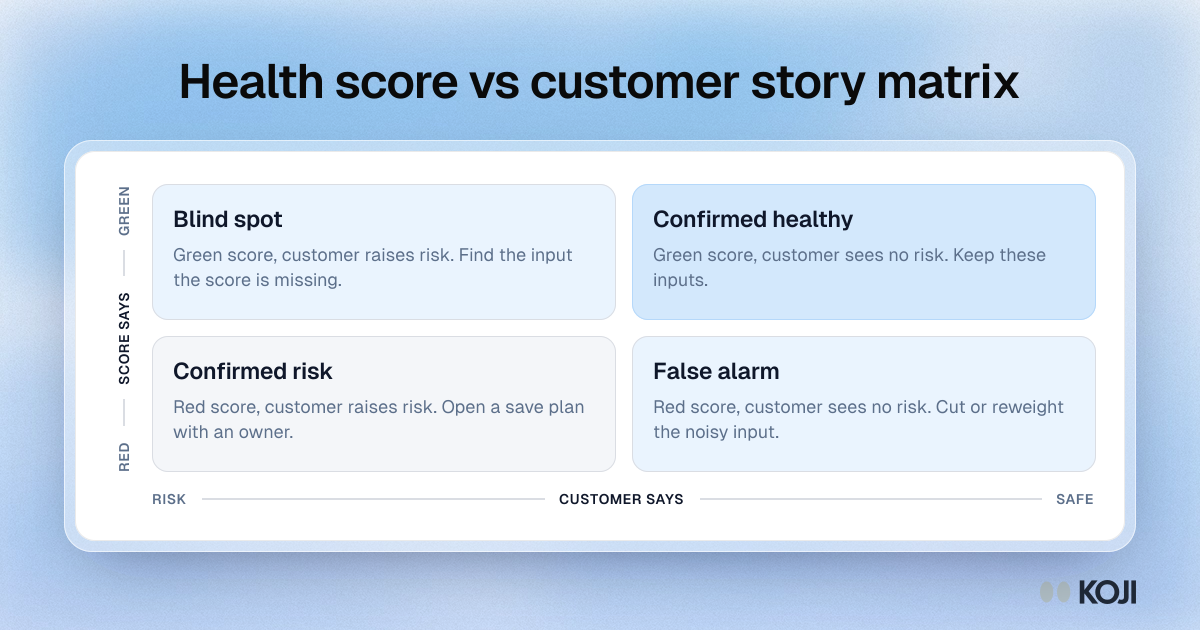
Matrix placing accounts by health score colour and by what the customer says: blind spot, confirmed healthy, confirmed risk and false alarm.

Matrix

Health score vs customer story matrix
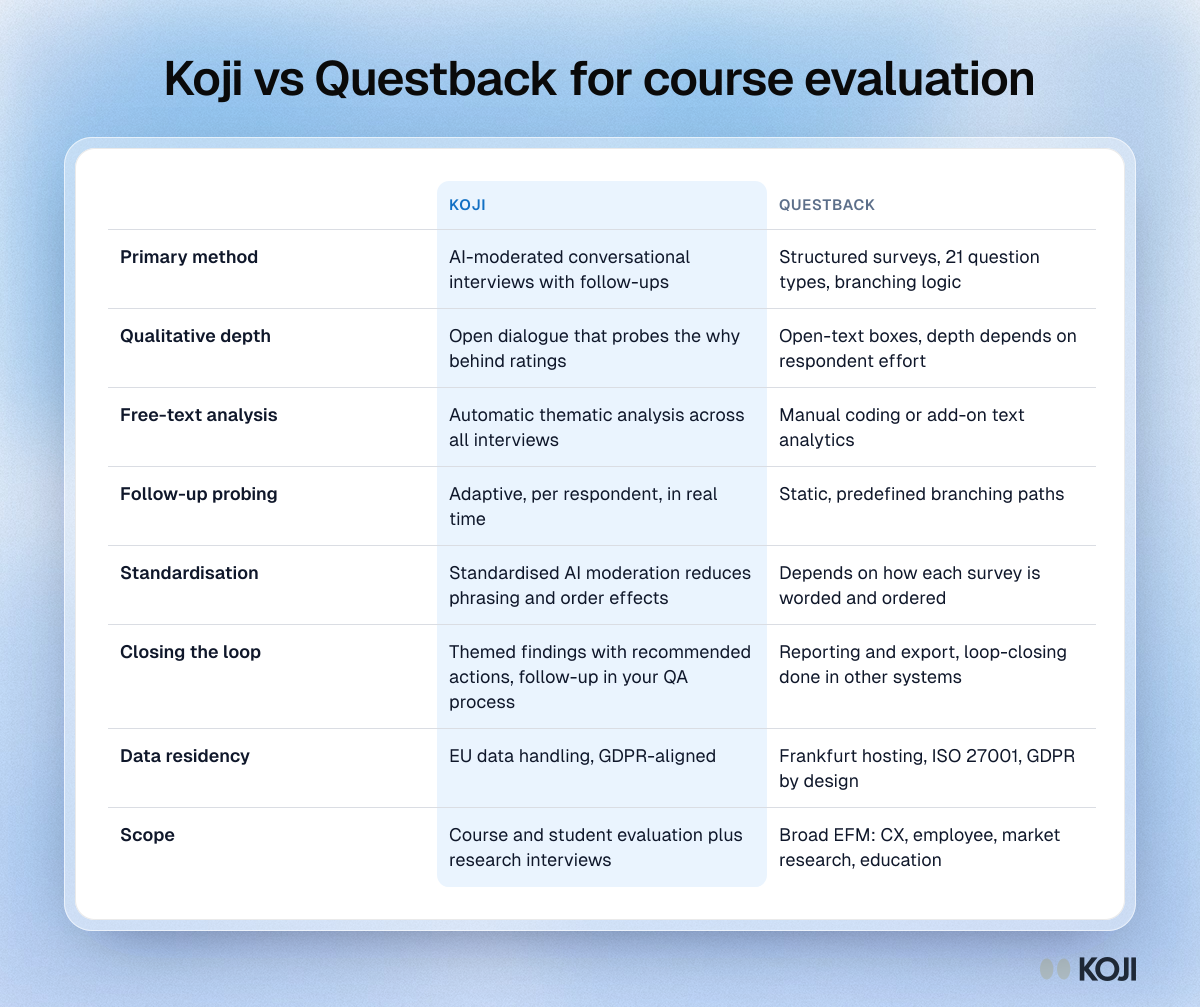
Table comparing Koji and Questback for course evaluation on method, qualitative depth, free-text analysis, follow-up, standardisation and data residency.

Reference table

Koji vs Questback for course evaluation
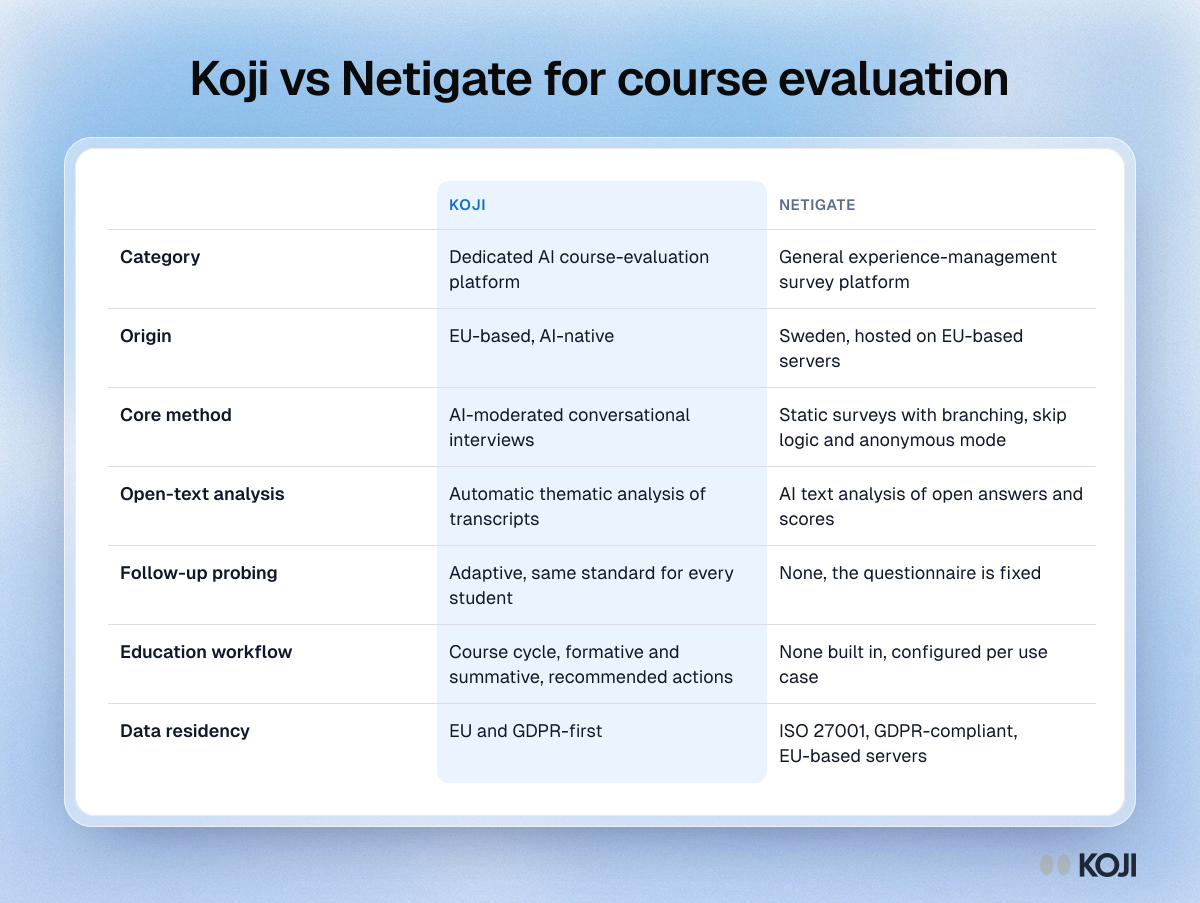
Table comparing Koji and Netigate for course evaluation on category, method, open-text analysis, follow-up probing, education workflow and data residency.

Reference table

Koji vs Netigate for course evaluation
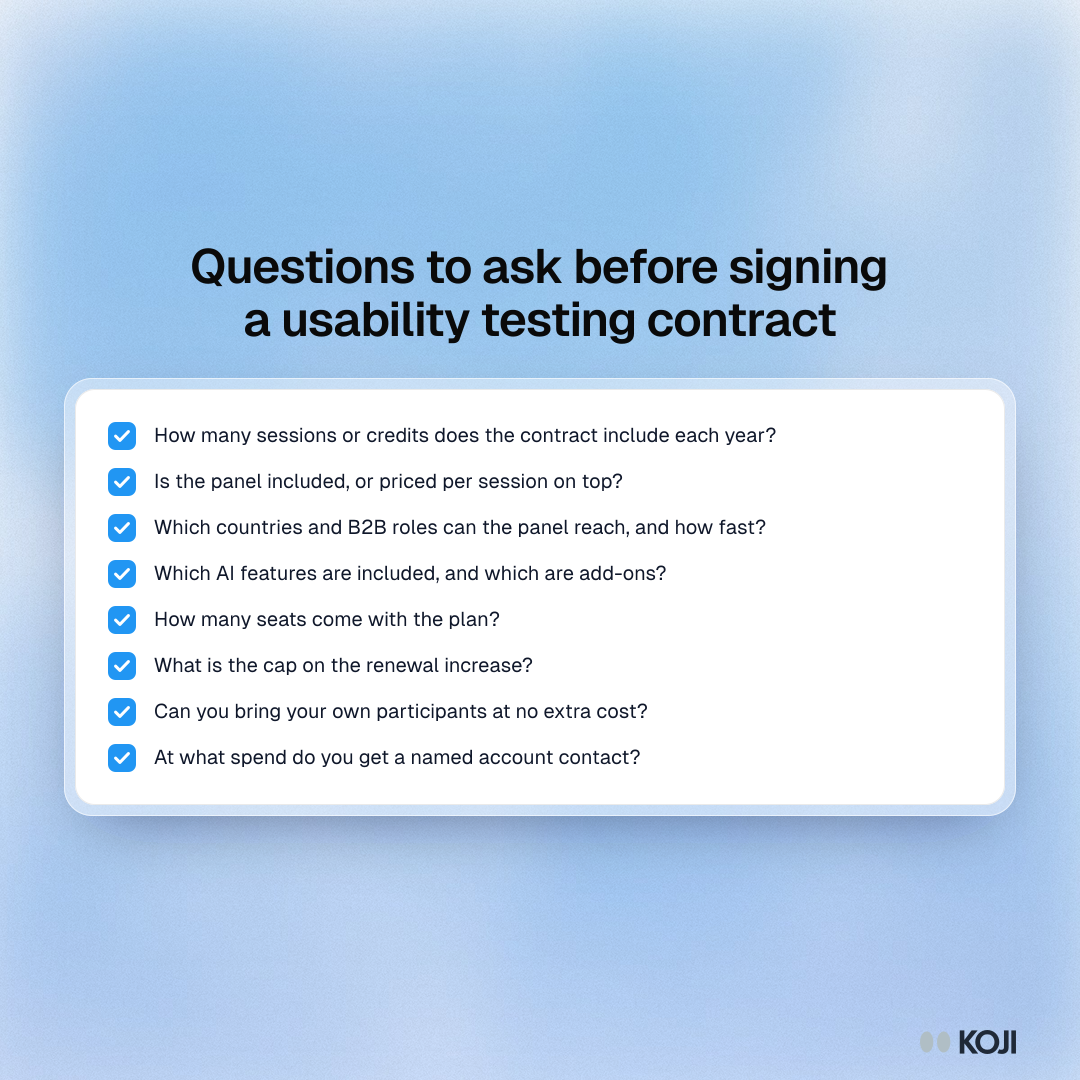
Checklist of questions to ask before signing a usability testing contract with UserTesting, Userlytics or a similar platform.
Checklist

Questions to ask before signing a usability testing contract

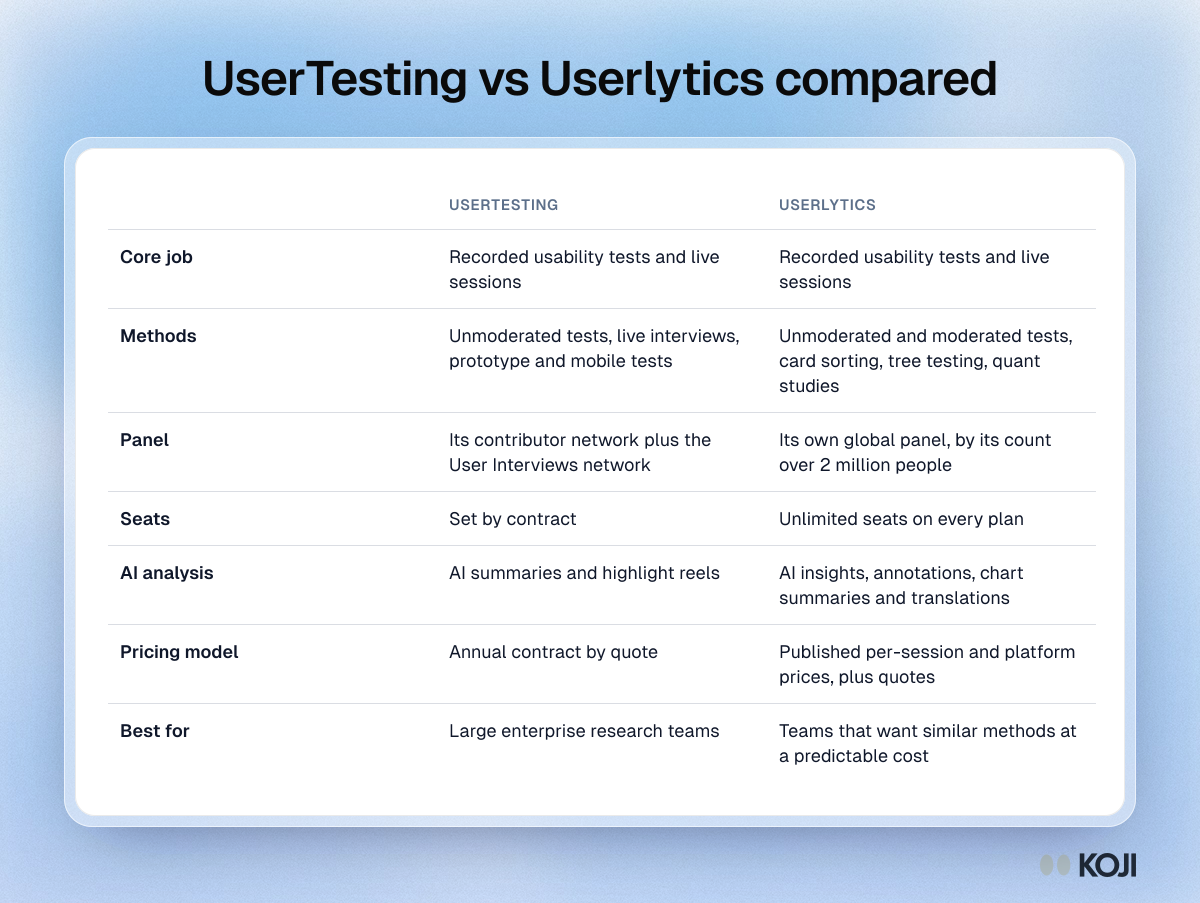
Table comparing UserTesting and Userlytics on methods, panel, seats, AI analysis, pricing model and the teams each one suits best.

Reference table

UserTesting vs Userlytics compared
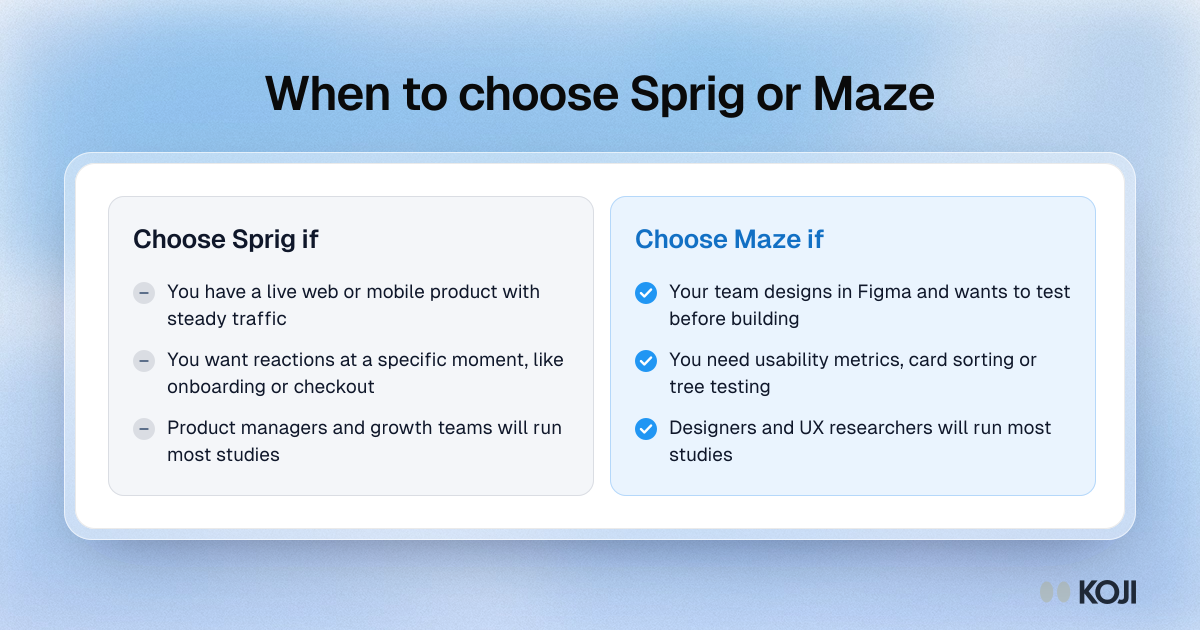
Comparison of when to choose Sprig and when to choose Maze, by product stage, research question and the team that runs the studies.

Comparison

When to choose Sprig or Maze
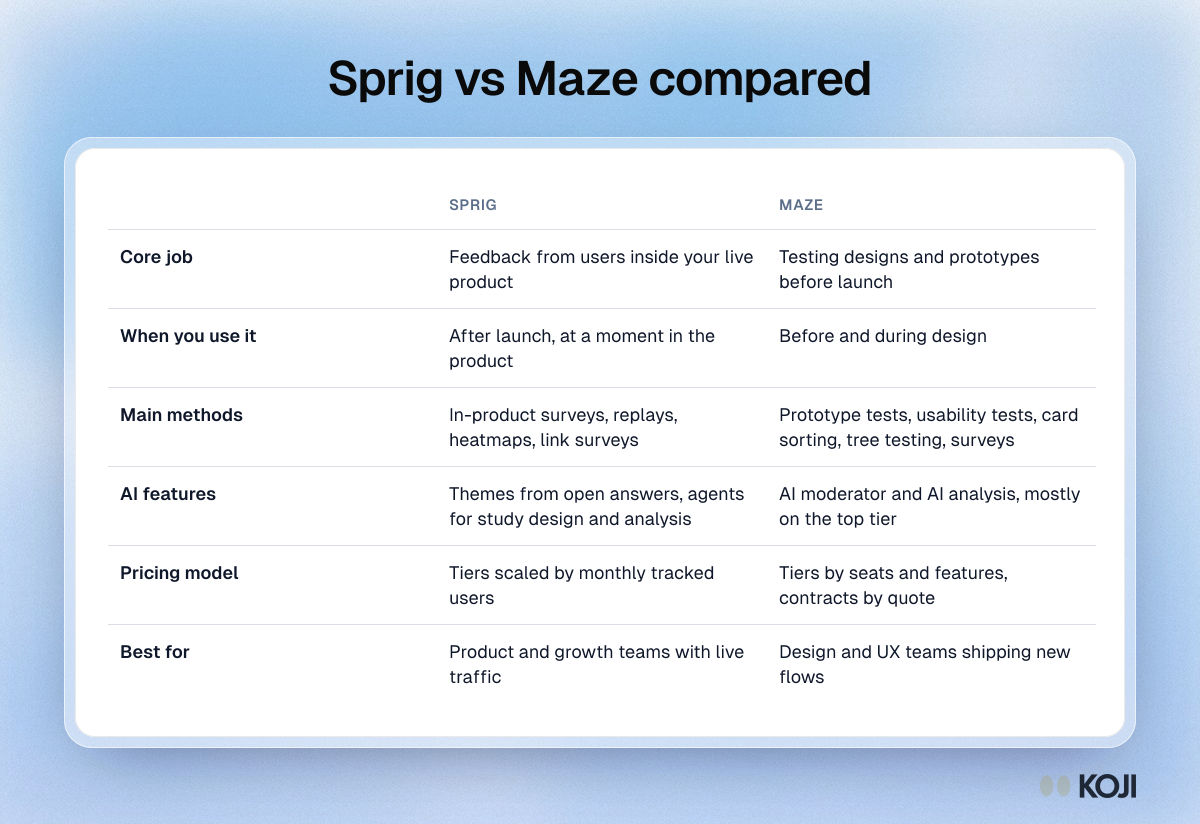
Table comparing Sprig and Maze on core job, timing, methods, AI features, pricing model and the teams each one suits best.

Reference table

Sprig vs Maze compared
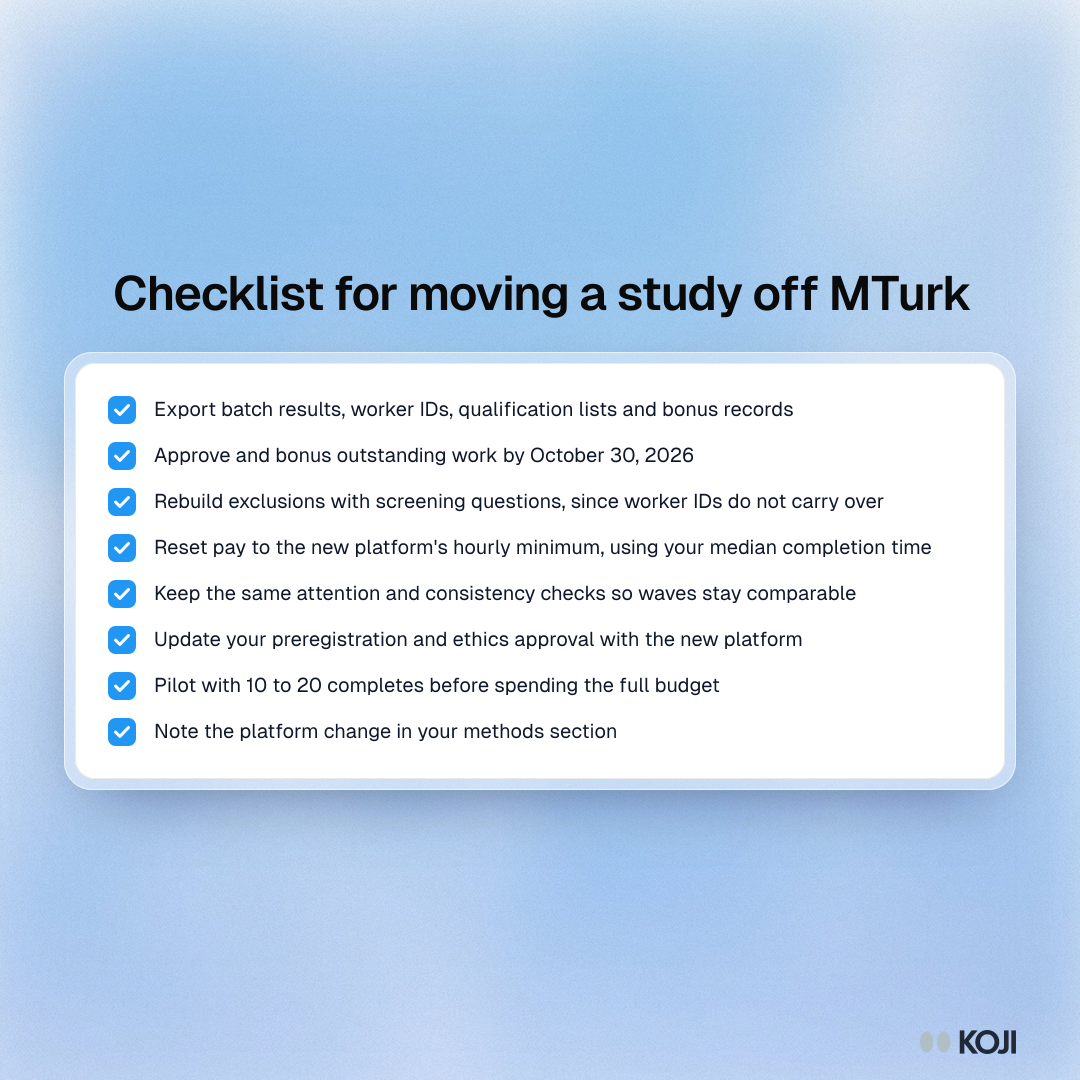
Checklist for moving a research study off Mechanical Turk, from exporting worker IDs to piloting with a small sample on the new platform.

Checklist

Checklist for moving a study off MTurk
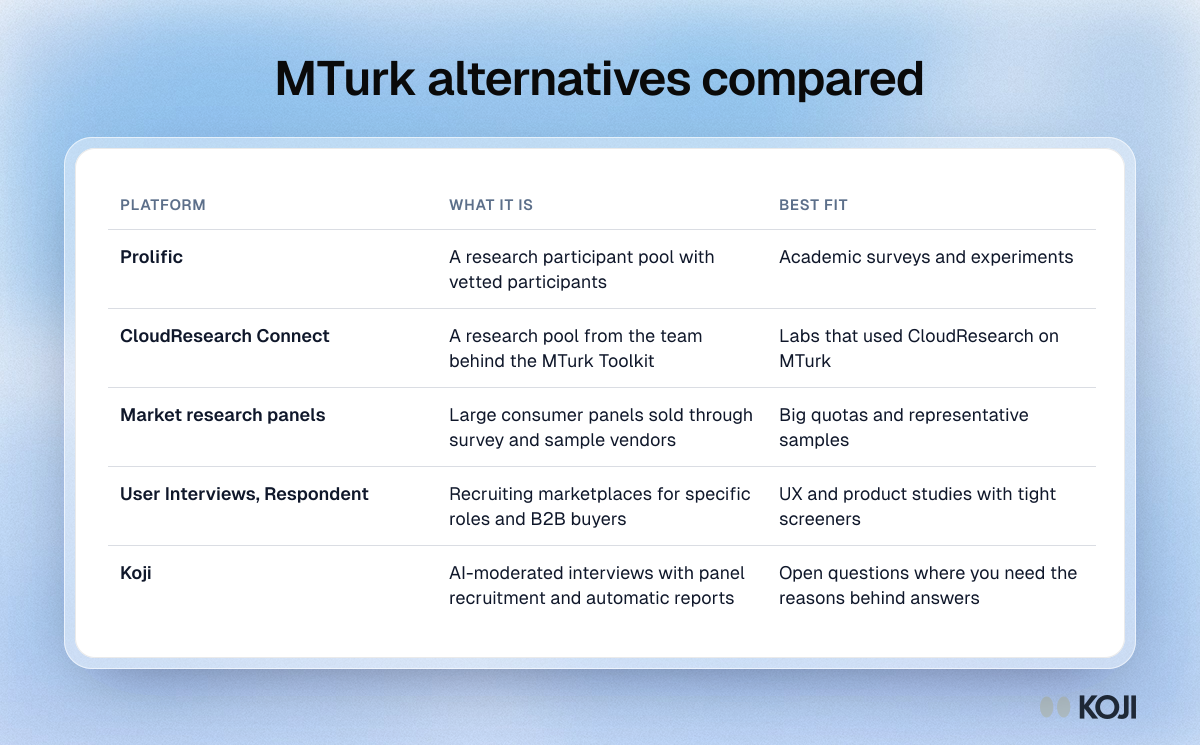
Table comparing five MTurk alternatives, from Prolific and CloudResearch Connect to Koji, by what each platform is and the studies it suits.

Reference table

MTurk alternatives compared
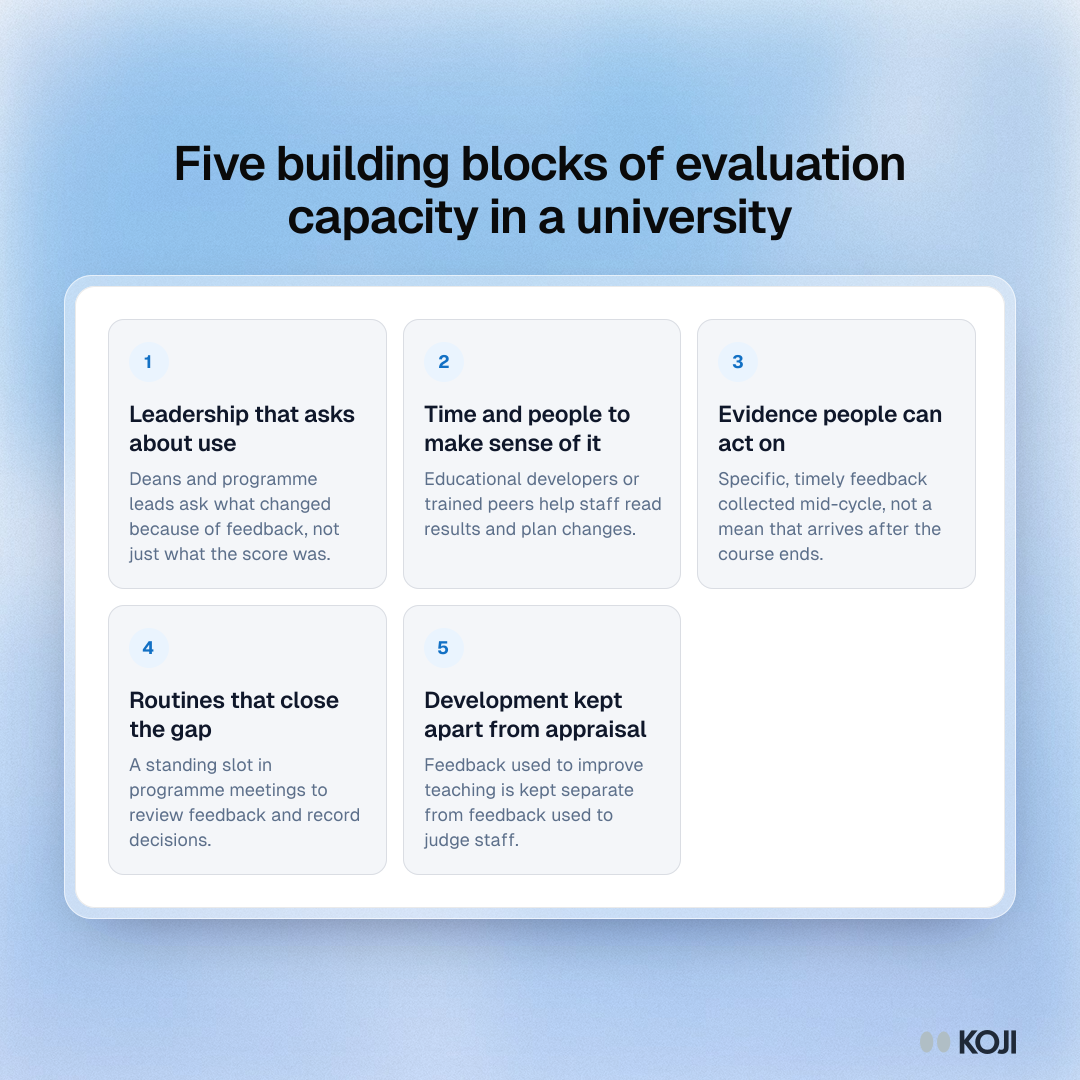
Framework showing five building blocks of evaluation capacity in a university, from leadership that asks about use to keeping development apart from appraisal.

Framework

Five building blocks of evaluation capacity in a university
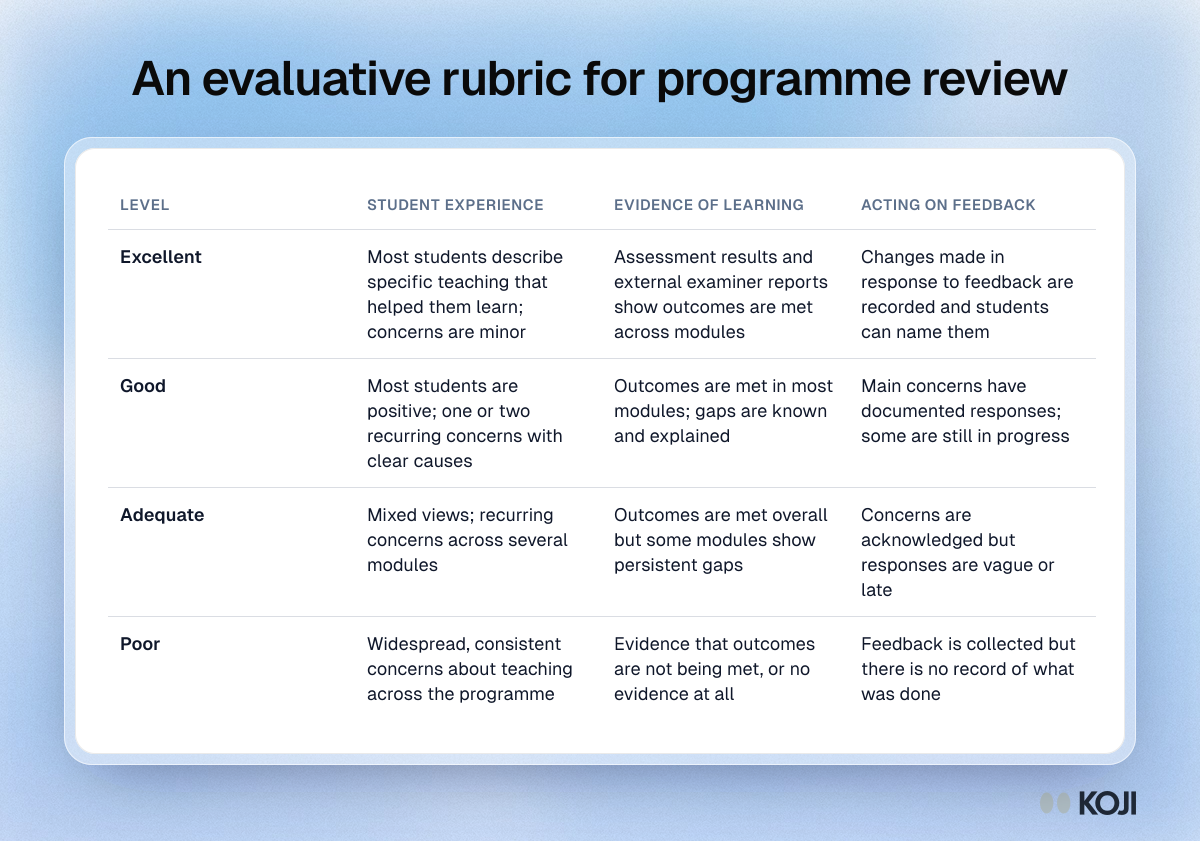
Table showing an evaluative rubric for programme review that rates student experience, learning evidence and acting on feedback from excellent to poor.
Reference table

An evaluative rubric for programme review

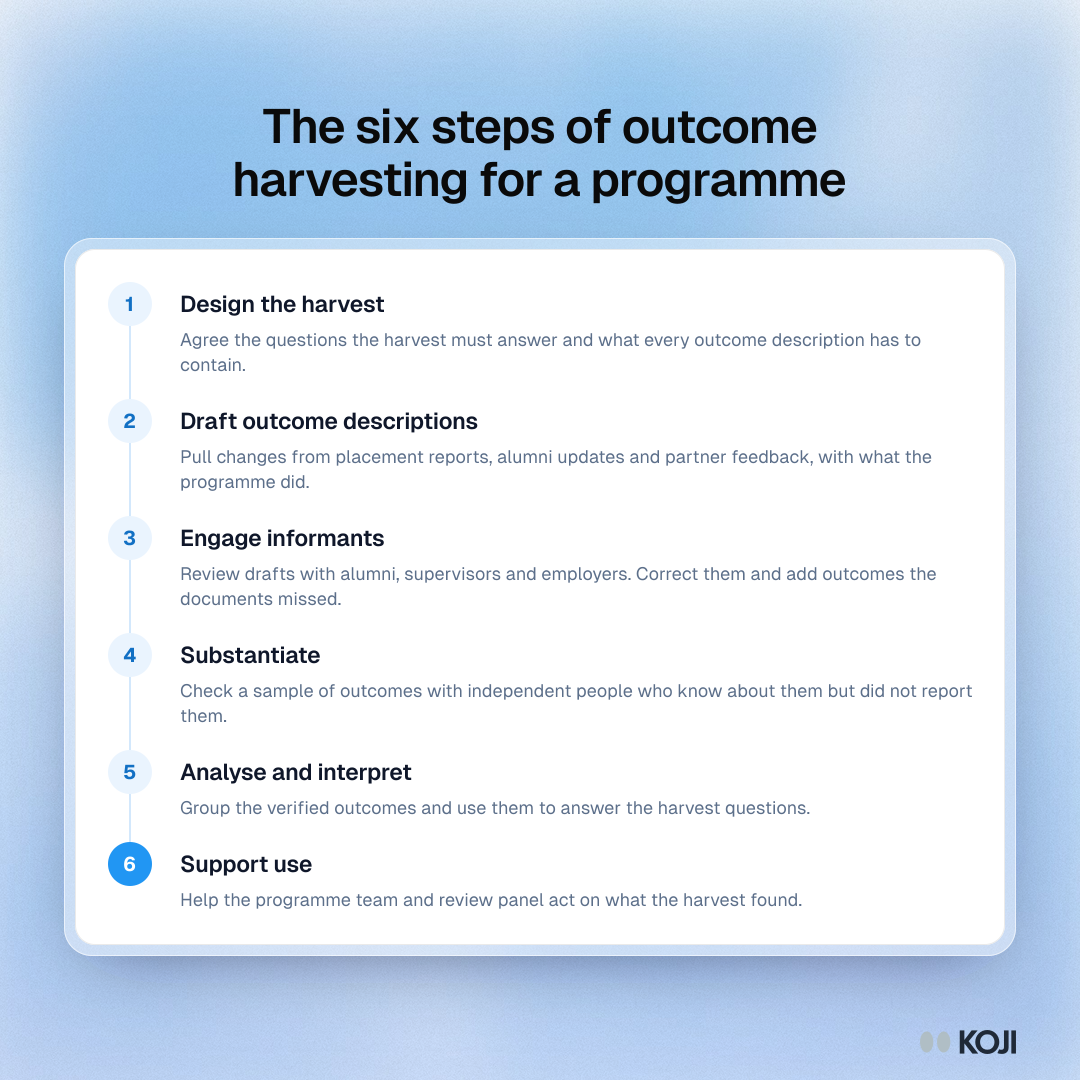
Process showing the six steps of outcome harvesting for a programme: design, draft outcomes, engage informants, substantiate, analyse and support use.

Process

The six steps of outcome harvesting for a programme
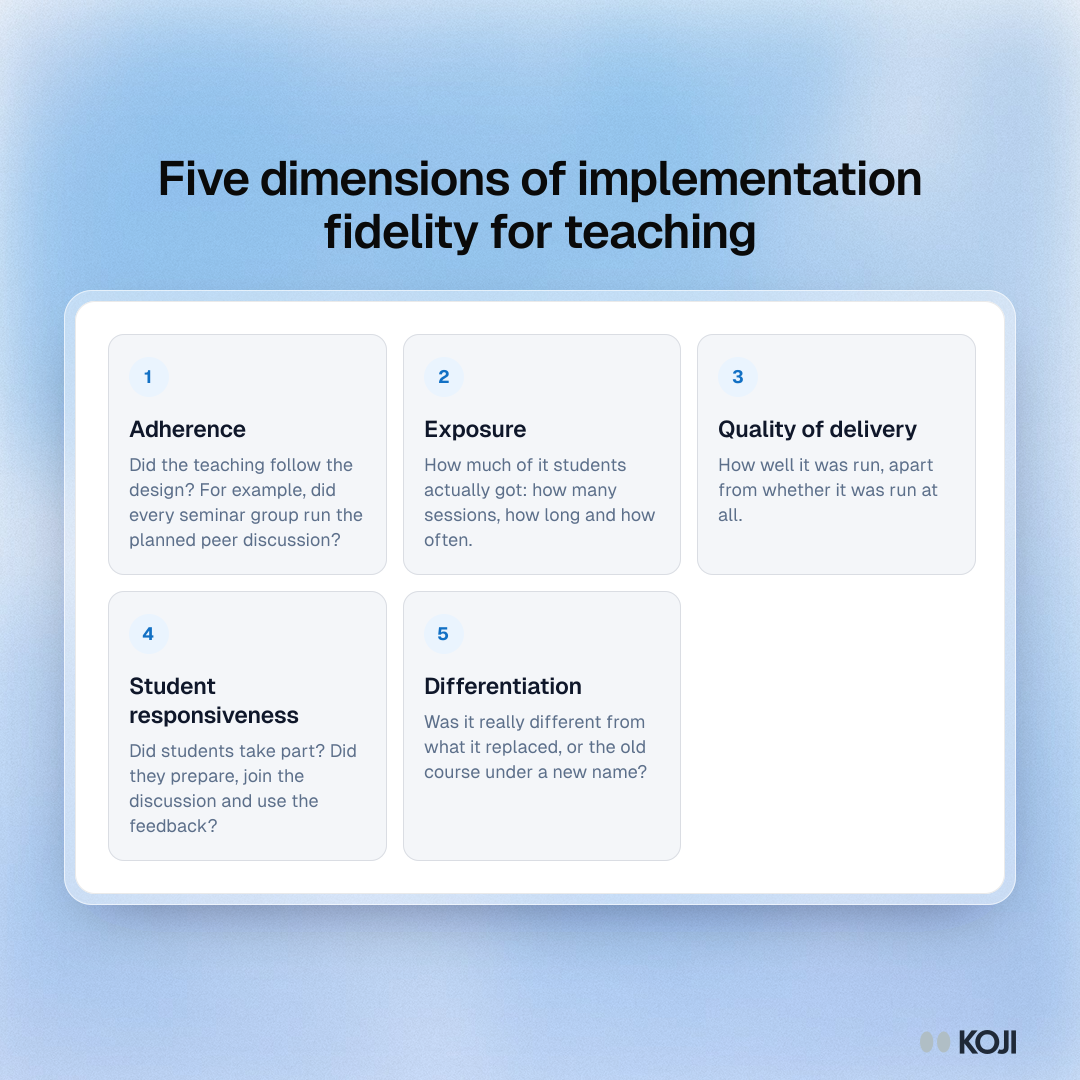
Framework showing the five dimensions of implementation fidelity: adherence, exposure, quality of delivery, student responsiveness and differentiation.

Framework

Five dimensions of implementation fidelity for teaching